


When setting up a home office the way furniture lines up against the walls often decides whether the room supports steady work or just adds daily friction.
Dedicated storage walls can gather files and supplies into one clean stretch so the desk area stays clear for actual tasks.
That shift changes how the space feels right away.
I have noticed that offices only settle into a workable rhythm once the layout keeps the main path open and the storage tucked along a single wall.
Trying a couple of these setups in my own room first would show which ones fit the actual dimensions and daily flow.
Built-In Storage Walls Above A Desk

A storage wall built right into the desk area gives you a place for everything without needing extra furniture. The shelves sit at a comfortable height for grabbing binders or books while you work, and the long run of drawers underneath keeps the surface clear. This setup works especially well in smaller rooms where floor space is limited.
It suits homes that need a dedicated workspace but do not want a separate room full of cabinets. Keep the shelves organized by grouping similar items together, and leave a little open space so the wall does not feel crowded. Avoid overloading the lower shelves if you want easy legroom at the desk.
Built-In Storage Walls For Compact Offices

Tucking a desk into a recessed niche with full cabinetry above and around it turns a small corner into a complete workspace. The overhead cabinets hide clutter while the open shelf keeps everyday items within reach, and the whole setup stays out of the way when the doors are closed.
This layout works best in apartments or multi-use rooms where you need the office to disappear at times. Measure the depth carefully so the chair and monitor arm have enough clearance, and keep the finish simple if you want the cabinetry to blend with the surrounding walls.
Dedicated Storage Walls For Compact Offices
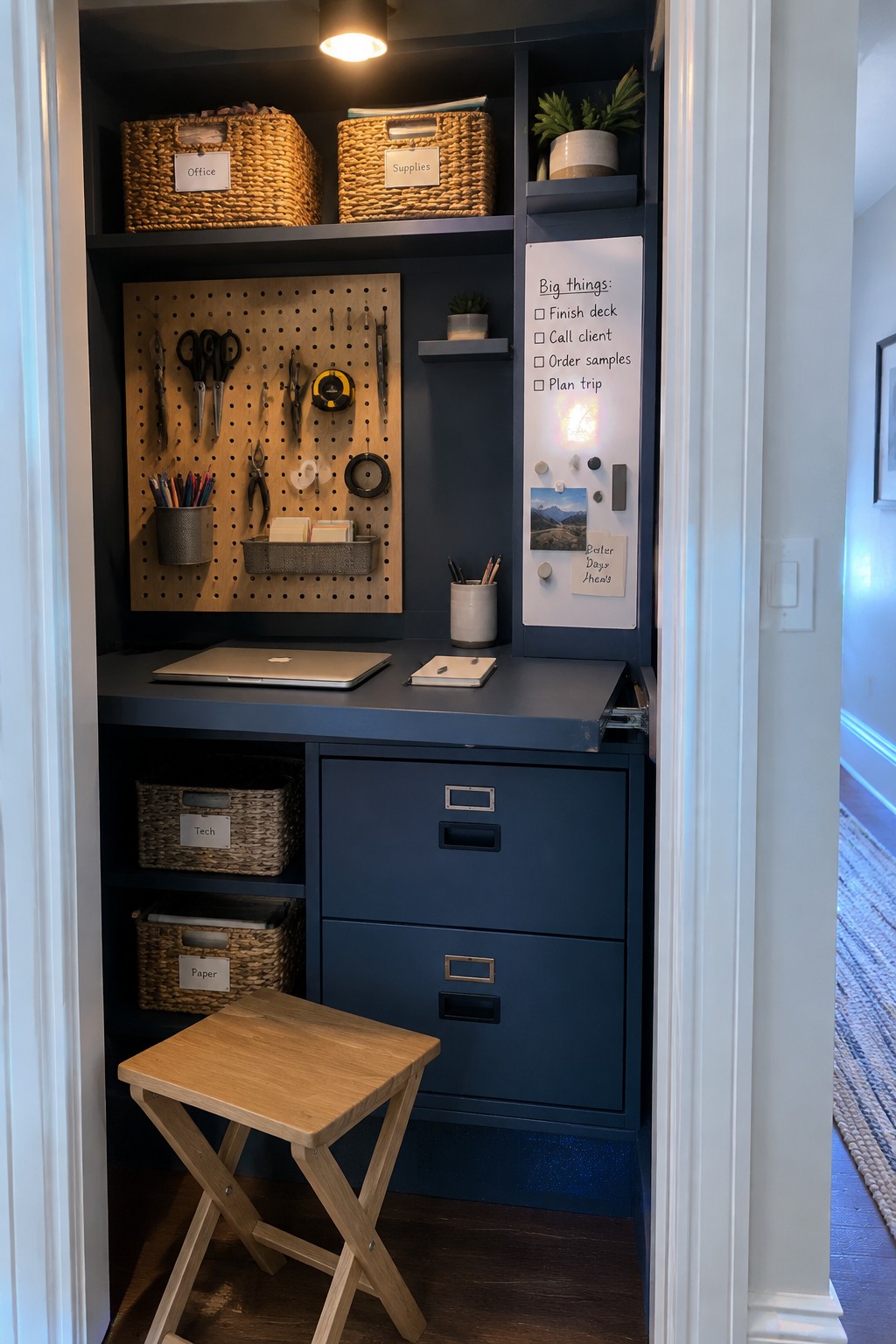
A storage wall built into a small closet or alcove gives you a complete workspace without spreading things across the room. Shelves, drawers, and a pegboard keep supplies, tools, and files in one spot, so the desk stays clear for actual work.
This approach suits apartments or homes with limited square footage. A simple stool tucks away when not in use, and the whole setup can close off at the end of the day.
Built-In Storage Walls Around the Desk

One layout that keeps a home office organized is running built-in storage along the full length of the desk. Open shelves above hold books and supplies while the row of drawers below keeps papers and smaller items out of sight. This approach turns the wall into the main storage area instead of relying on separate bookcases or filing cabinets.
It works best in rooms that already have some wall space to spare and need to hold a lot of materials in one spot. The cabinets and shelves should line up with the desk height so the whole setup feels connected and leaves more open floor space in front.
Built-In Storage Walls That Include The Desk

A full wall of built-ins can turn one side of a room into a complete home office without crowding the floor. The cabinets hold supplies and books while the desk section stays clear for daily work. This kind of setup keeps everything in one place and cuts down on the need for extra pieces.
It works best in smaller rooms or spaces that need to serve more than one purpose. Painted cabinetry that blends with the walls helps the whole thing feel less heavy. Just make sure the desk height lands at a comfortable level before the cabinets go in.
Mount The Desk Against A Storage Wall

Mounting the desk directly to the wall lets you keep the floor clear and gives you room to add real storage on either side. The grid panel above the desk holds notes and quick references without taking up surface space, which keeps the work area practical day to day.
This layout works best in smaller offices or rooms that double as guest space. Place the grid where you can reach it easily, then use the side shelves for books and supplies you need often. It suits homes with sturdy walls and works well if you want storage that stays visible rather than hidden behind doors.
Built-In Storage Walls For A Home Office

A wall of built-ins right at the desk can turn a small room into a place that actually works for daily use. The shelves hold what you reach for often, while the lower section tucks away the rest so the surface stays clear.
This setup suits rooms that need to serve more than one purpose. Keep the upper shelves open for books and a few personal items, then use baskets or closed bins below for supplies and papers. It works best when the desk sits against the same wall so everything stays within arm’s reach.
Built-In Storage Walls For Everyday Office Use

A full wall of storage behind the desk makes a home office feel more organized without much extra effort. Open shelves hold books and supplies you reach for often, while drawers below keep everything else out of sight. The desk sits right in the middle so the whole setup stays practical and easy to use.
This kind of wall works best in smaller rooms where you need both workspace and storage in the same spot. It suits older homes or any space that already has some built-in character. Just keep the top shelves lighter so the wall does not feel too heavy over time.
Corner Desk With Built-In Storage Walls

Placing an L-shaped desk into a corner lets you add storage on two sides without crowding the room. Cabinets on the left and right plus shelves overhead keep supplies close while the desk surface stays clear for daily work. This setup works especially well in smaller rooms or spaces that already have a window for light.
The layout suits homes where the office shares space with other rooms because the storage walls hide clutter and keep everything in one spot. Try matching the cabinet depth to the desk so the whole area feels like one unit rather than separate pieces.
Built-In Storage Walls Behind The Desk

A built-in storage wall gives the desk area plenty of room for books, files, and supplies without adding extra pieces of furniture. The dark wood cabinetry runs floor to ceiling and includes both open shelves and closed drawers, so everything stays within reach but out of sight when not needed.
This layout works well in rooms that already have some wall space to spare and pairs best with a desk that sits a few feet out from the wall. It keeps the floor clear and makes the office feel more organized, though it does require a bit more planning during installation than freestanding pieces.
Built-In Storage Walls Around A Simple Desk

A wall of open shelves mixed with closed cabinets gives you room for books, supplies, and decor without crowding the floor. The desk stays narrow and floats in front so the space still feels open even when the shelves are full.
This layout suits smaller rooms or corners where you need both a workspace and plenty of storage. It works best when you keep the desk surface clear and let the wall behind it handle the clutter.
Built-In Storage Walls For Attic Offices

Attic rooms often leave awkward angles that standard furniture cannot fill. Running built-in cabinets and drawers along the full length of the sloped wall turns that leftover space into useful storage while keeping the desk area open and clear.
This setup works best in homes where the office needs to stay organized without feeling crowded. The cabinets can hold supplies, files, and equipment so the work surface stays free, and the whole arrangement fits neatly under the roofline without wasting floor space.
Storage Walls With An Integrated Desk

A storage wall that folds the desk right into the unit gives you a place to work without letting the office take over the rest of the room. Everything stays in one spot so papers and supplies do not end up scattered across other surfaces.
This layout suits smaller homes or rooms that need to serve more than one purpose. Keep the desk depth comfortable for your chair and leave enough knee room underneath so daily use stays practical.
Storage Walls With Two Built-In Desks
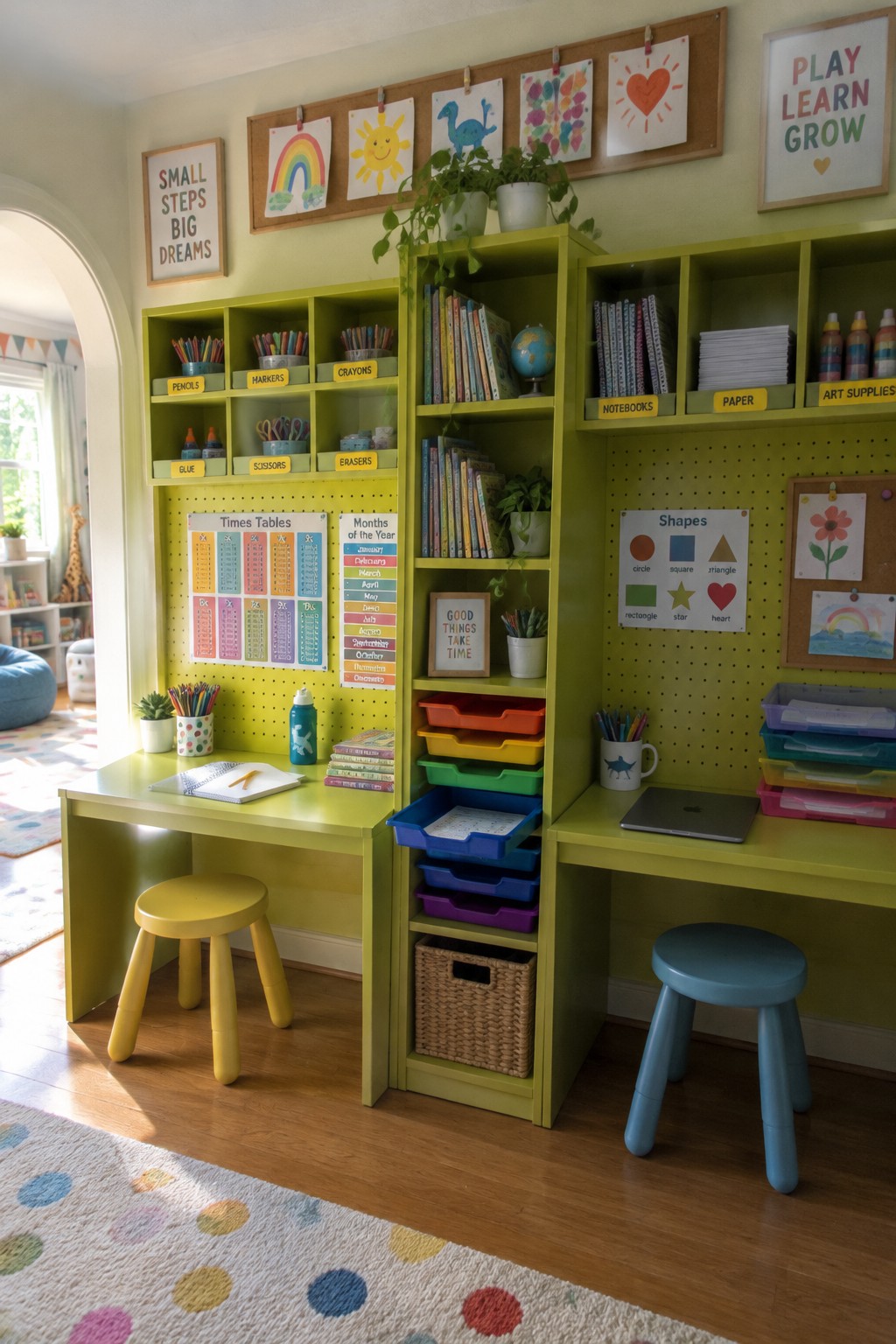
A storage wall that runs behind two small desks gives kids plenty of room to work without the usual clutter spreading across the floor. Everything stays sorted in cubbies and bins right at arm’s reach, so the desks themselves stay clear for homework or projects.
This layout works best in a shared playroom or family room where space is tight but kids still need their own spots. Keep the lower shelves open for younger children and use the pegboard areas for things they reach for often.
Built-In Desks That Fit Inside A Storage Wall
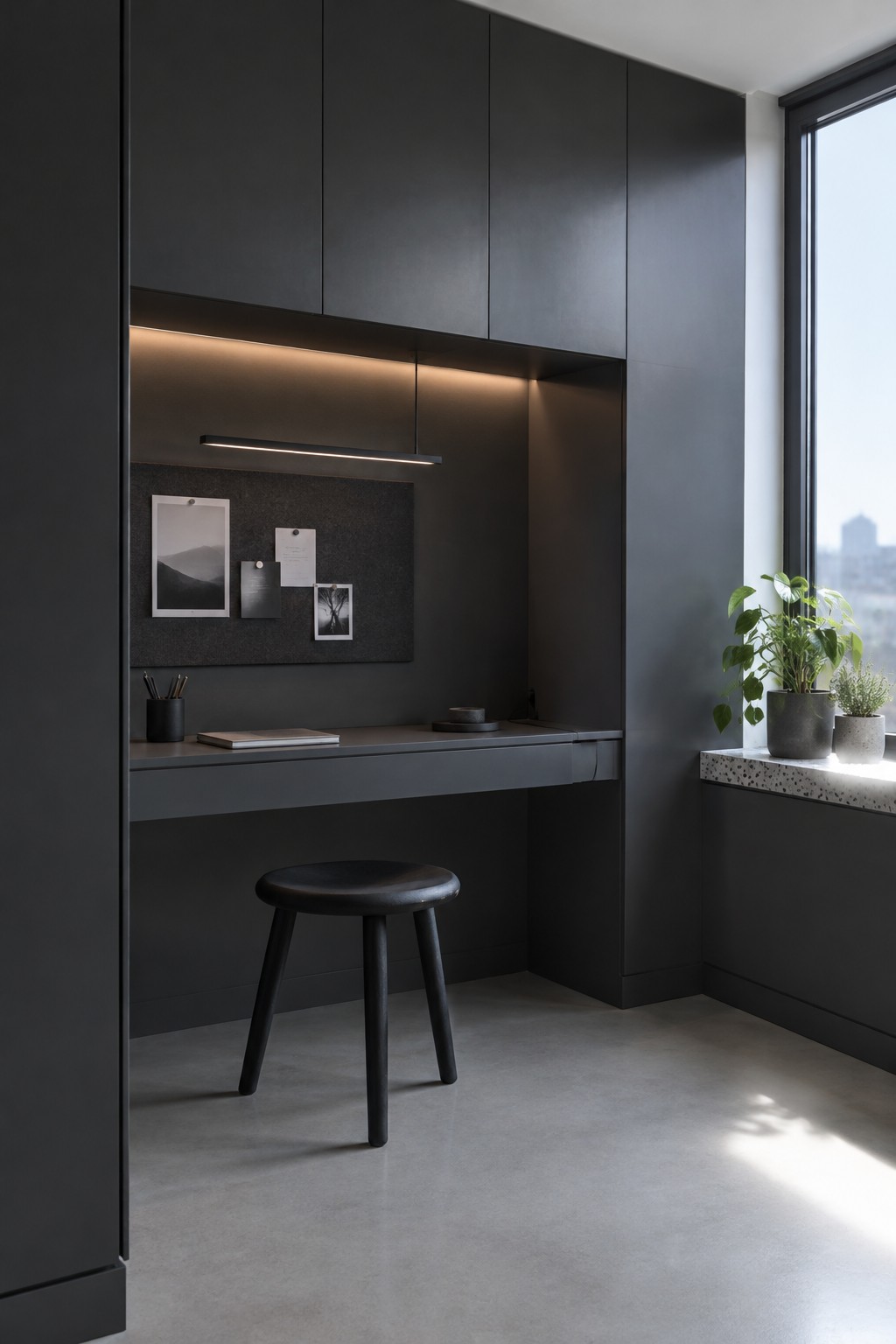
A desk tucked into a storage wall keeps the whole setup compact without losing function. The wall provides overhead cabinets and a recessed spot for the desk surface, so papers and supplies stay within reach but out of sight when not needed.
This layout works best in smaller rooms or multi-use spaces where you need both a work area and storage in the same footprint. It suits apartments or homes that already have built-in cabinetry, and it helps if you add task lighting inside the niche so the desk does not feel dark.
Built-In Storage Walls That Organize A Home Office

A storage wall like this turns one side of the room into the main workspace. Open shelves hold books and plants while lower cabinets and drawers keep supplies out of sight. The desk sits right against it so everything stays close without cluttering the floor.
This setup works well in smaller rooms or spaces that need to stay tidy. It suits homes where the office shares space with other rooms. Just watch the depth of the shelves so the wall does not feel too heavy in a tight area.
Built-In Storage Walls With Rolling Ladders

A wall of built-in shelves turns an ordinary room into a real working office without crowding the floor. The shelves hold books, files, and supplies while the rolling ladder keeps everything reachable even on the top rows.
This layout suits smaller rooms or homes that need the office to double as a library or guest space. Keep the desk facing the shelves so the wall does the storage work and the rest of the room stays open for movement.
Built-In Storage Walls For A Home Office

A storage wall that runs the full height of the room gives you a place for everything without crowding the floor. Open shelves hold the printer and paper, lower cabinets hide the rest, and a pegboard section keeps tools right where you need them. The desk sits in front so supplies stay within arm’s reach.
This layout works best in smaller offices or any space where you want the work surface to stay clear. It suits people who like to stand at an adjustable desk and grab what they need without opening drawers or walking across the room. Just make sure the shelves are not too deep or they can start to feel heavy.
Built-In Storage Walls With An Integrated Desk

A full wall of built-in cabinetry can handle both storage and a workspace without eating up floor space. The cabinets run the length of the room with a mix of closed doors below and open shelving above, while the desk surface sits right in the middle of that same wall run. It keeps supplies, files, and display items close at hand while the work area stays part of the storage system instead of a separate piece of furniture.
This approach suits smaller home offices or rooms that need to stay tidy. It works especially well when you want the room to feel calm rather than cluttered with standalone bookcases and filing cabinets. Just check that the desk height lines up with a standard chair so the whole wall still feels practical for daily use.
Built-In Storage Walls With Fold-Down Desks

A wall of built-in shelves and bins turns a narrow space into a working home office without eating up floor area. The fold-down desk stays out of the way when not needed, while the labeled bins keep supplies sorted so you can grab what you need and put it back without hunting.
This approach suits smaller homes or rooms that serve more than one purpose, like a family room or guest space. Keep the bins clearly marked and stick to a few neutral colors so the wall stays calm rather than cluttered.
Frequently Asked Questions
Q: What if my room is too narrow for a full storage wall behind the desk? A: Place the wall unit on the side instead and angle your desk slightly toward it. This keeps the main walkway open while putting every shelf within easy reach from your chair.
Q: How do I stop papers from piling up on open shelves? A: Use a few shallow trays or baskets on the lower levels for active files. Keep the top shelves for books and supplies you reach less often so the surface stays clear for daily work.
Q: Does the desk have to line up perfectly with the storage wall? A: No need for perfect alignment. Set the desk where the light and outlet placement feel right and let the wall serve as background storage. The layout still works as long as you can swivel or roll over to grab what you need.
Q: Can I build the storage wall myself if I am not handy? A: Start with ready-made bookcases and add simple brackets for extra shelves. Secure them to the wall studs right away so nothing tips when you load them up.
