

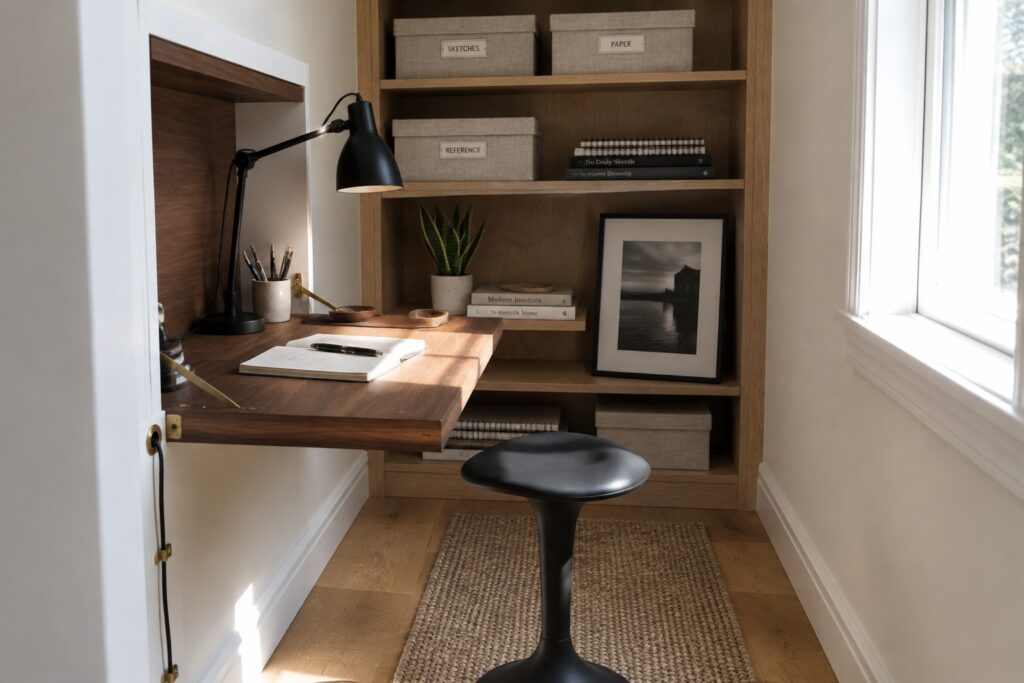
I often notice that a home office only starts to feel workable once the desk stops eating up all the walking space in the room.
Vertical storage tends to keep the floor clear while still holding the papers and supplies that pile up during the week.
Small changes in layout make the biggest difference once you actually work there every day.
I tested a narrow desk against one wall last year and found that adding shelves above it cut the clutter without making the room feel closed in.
Ideas like these show how a few practical tweaks can turn a leftover corner into a space that supports focus instead of fighting it.
Vertical Storage Above Compact Desks
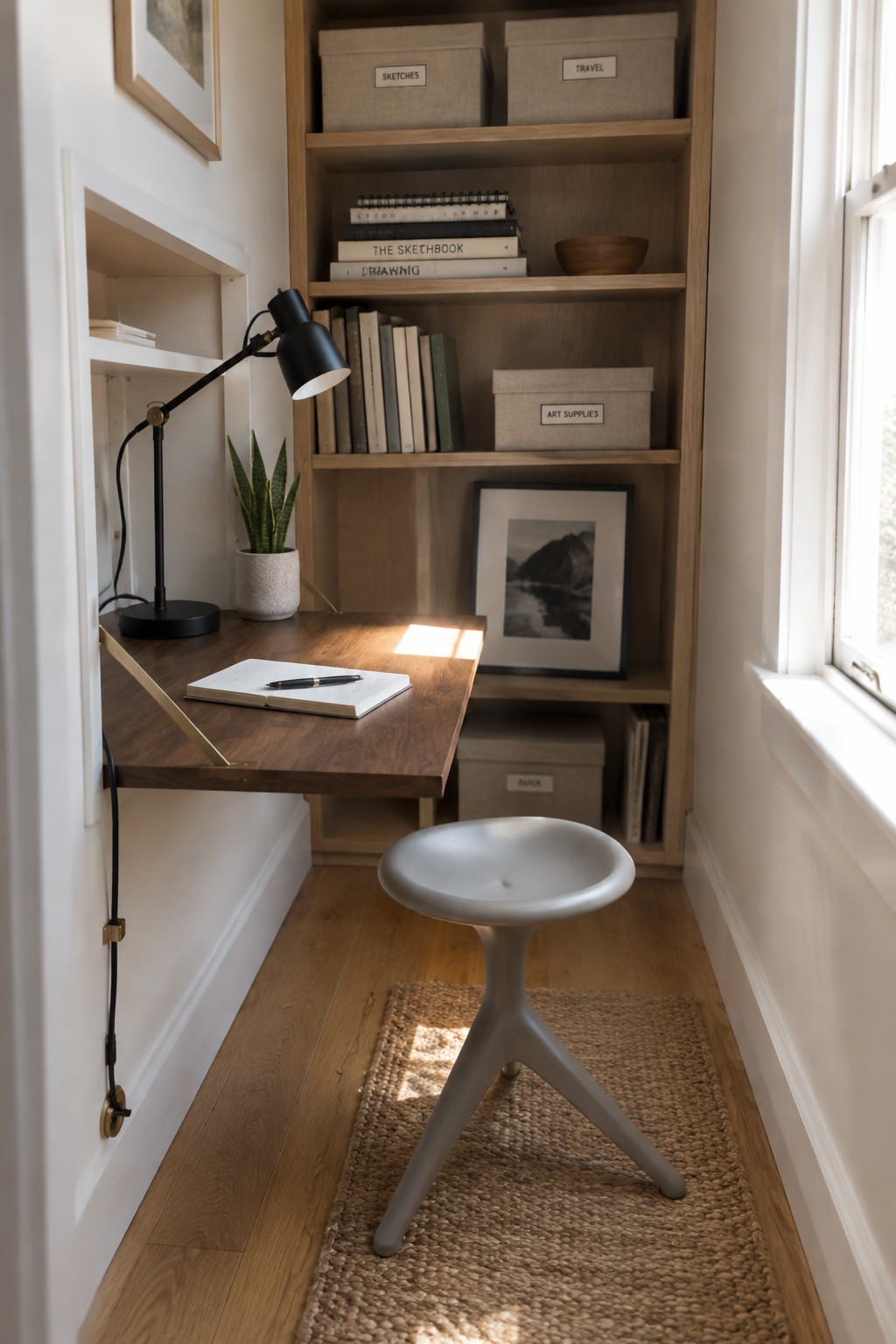
Small homes often lack room for a full office, so many people turn to narrow spots that would otherwise sit empty. A compact desk paired with built-in shelves above it turns that unused wall into a complete workspace without spreading out across the floor.
This works best in hallways, alcoves, or corners where a standard desk would feel cramped. Keep the surface clear for daily tasks and use the shelves for books, supplies, and labeled boxes so nothing piles up on the desk itself. Make sure the stool or chair fits neatly underneath when not in use.
Using Vertical Storage In Small Offices
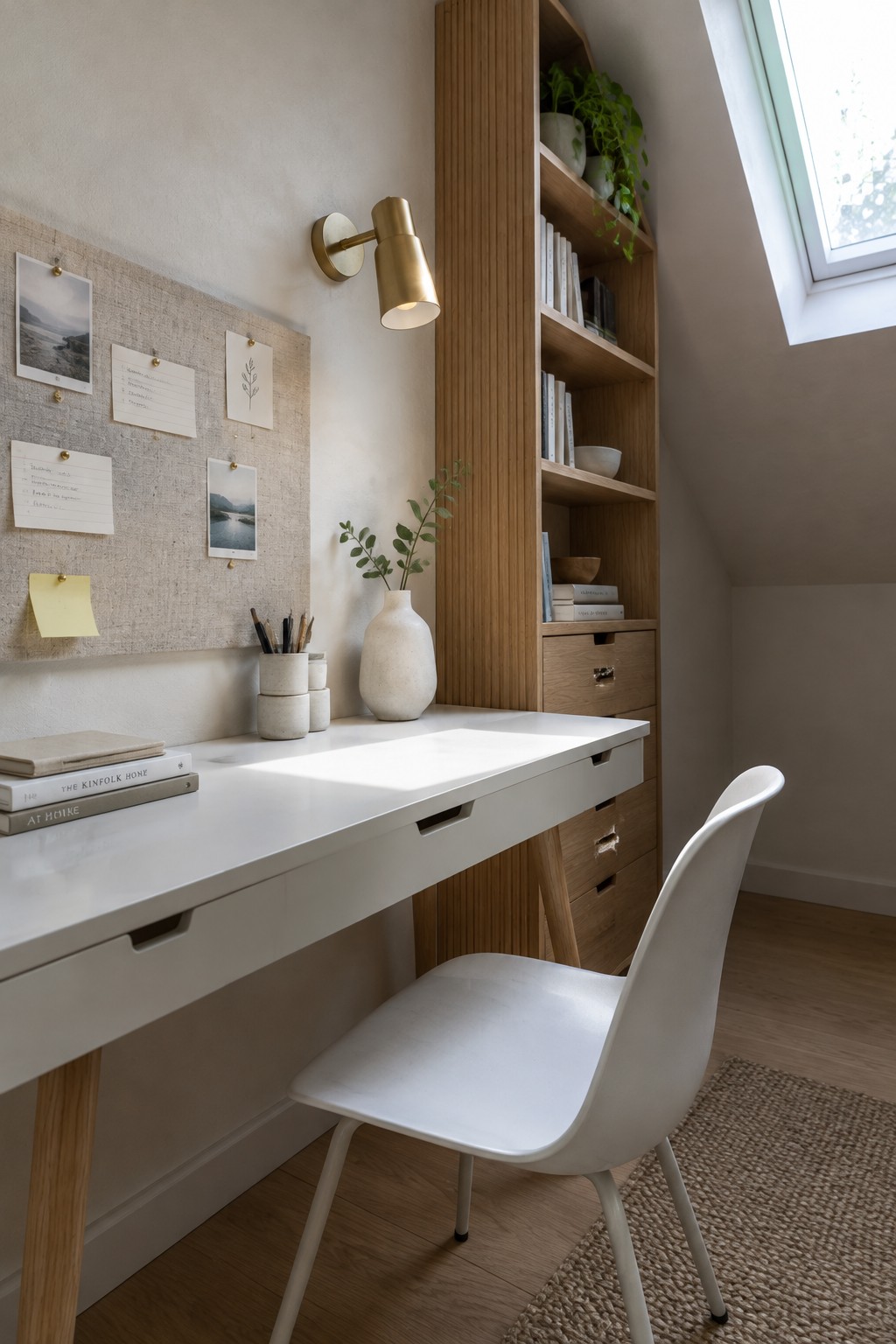
A tall narrow storage unit next to a compact desk gives you room for books and supplies without spreading everything across the work surface. This keeps the desk itself clear and simple while still holding what you need close by.
It works well in smaller rooms or spaces with slanted ceilings where floor space is tight. The vertical shape draws the eye upward and leaves more room to move around the desk.
Floating Desks With Vertical Shelving
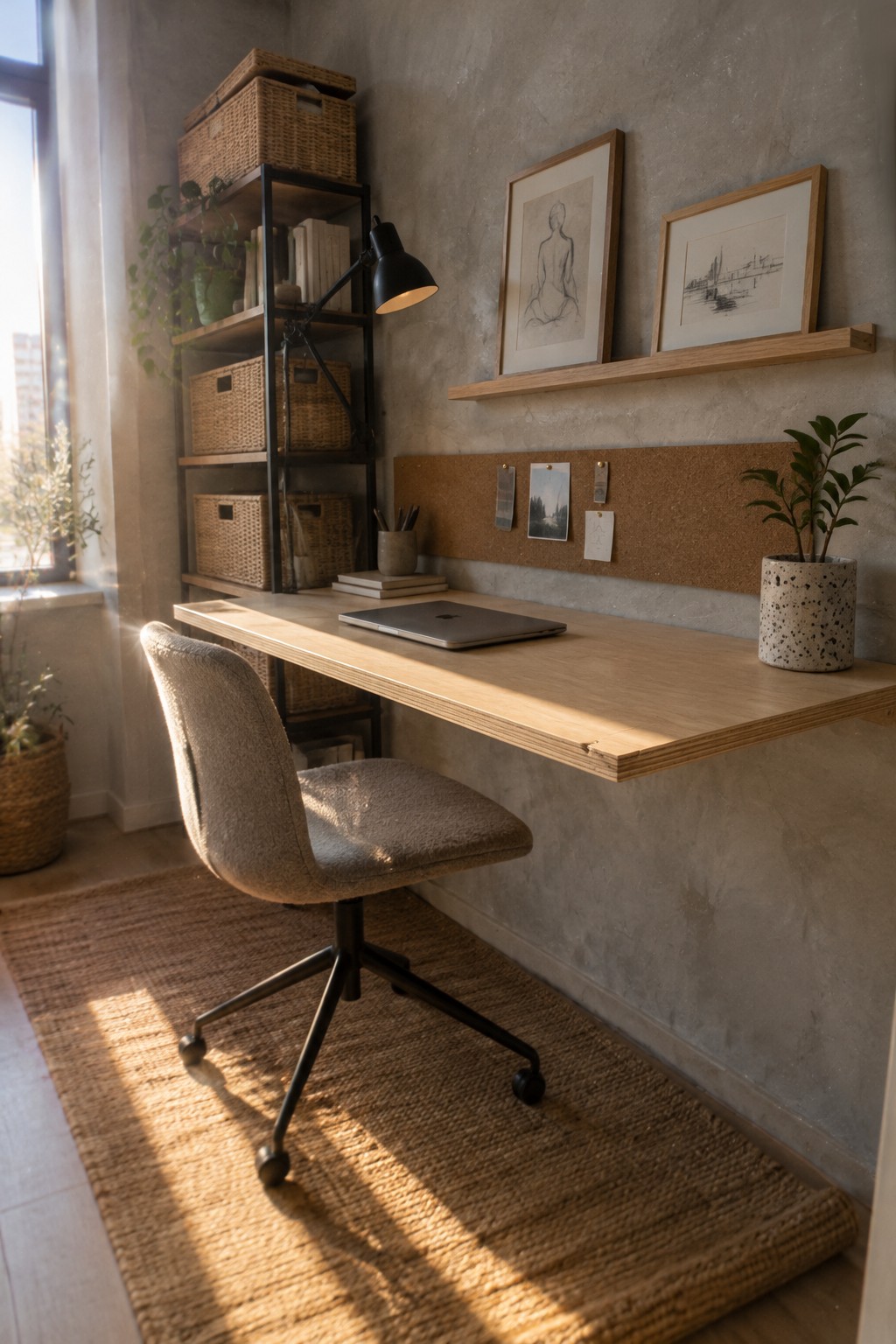
A floating desk leaves the floor open and pairs well with a tall shelving unit that holds baskets and books. This keeps the workspace from feeling crowded while still giving you room for storage and daily supplies right where you need them.
It suits small rooms or apartments where space is tight. Place the shelving to one side of the desk and add a simple wall board for notes so everything stays within reach without extra pieces of furniture taking up floor space.
Pegboard Storage Helps Keep Compact Desks Organized
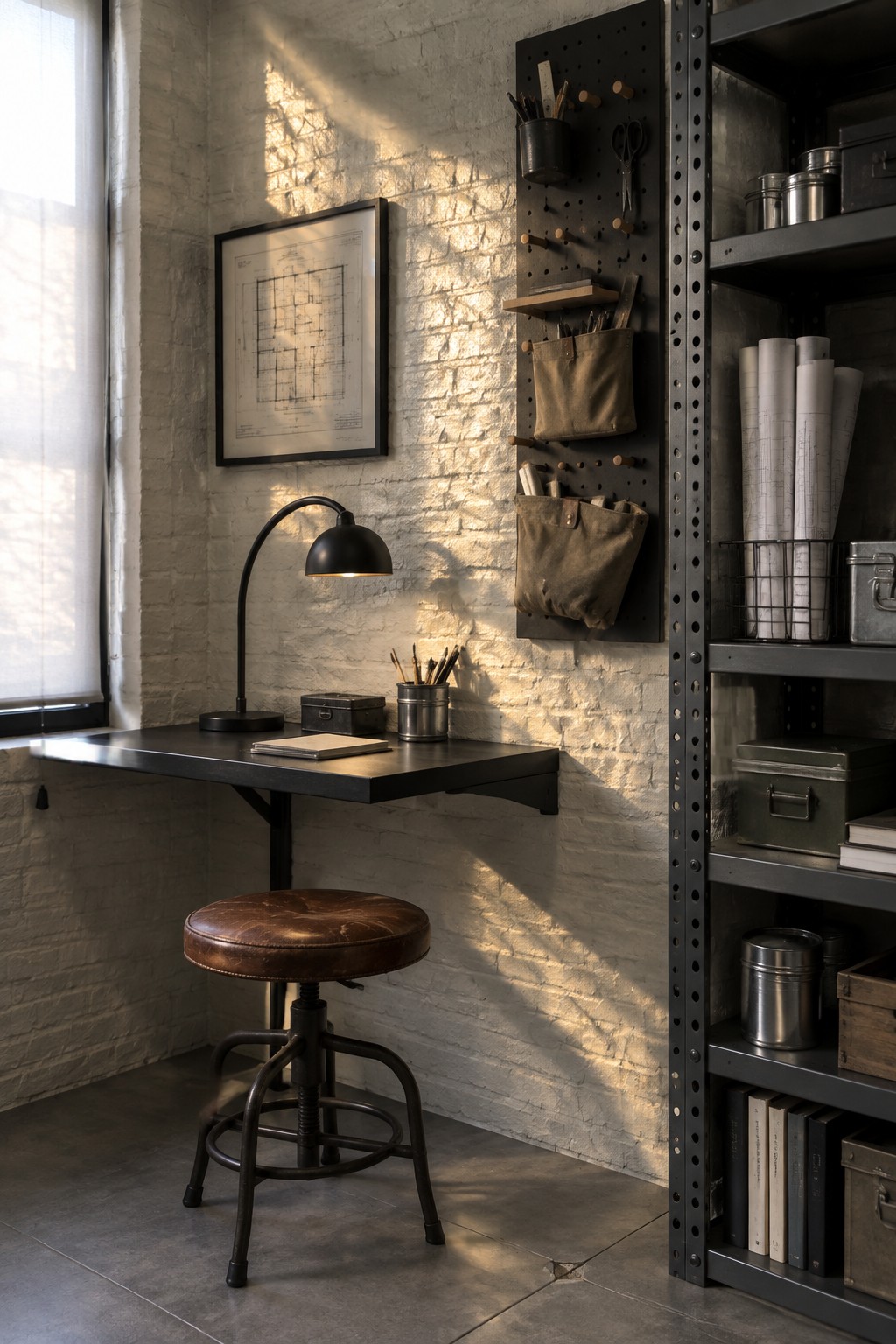
A pegboard mounted right above a small desk gives you a place to store tools and papers without adding more furniture. It keeps everything visible and within reach while leaving the work surface clear for actual tasks.
This approach works best in tight rooms or minimalist setups where floor space is limited. It suits apartments and small homes because it uses the wall instead of adding cabinets or shelves that take up room. Just keep the items you use most often at eye level so the system stays practical day to day.
Vertical Storage For Compact Office Spaces
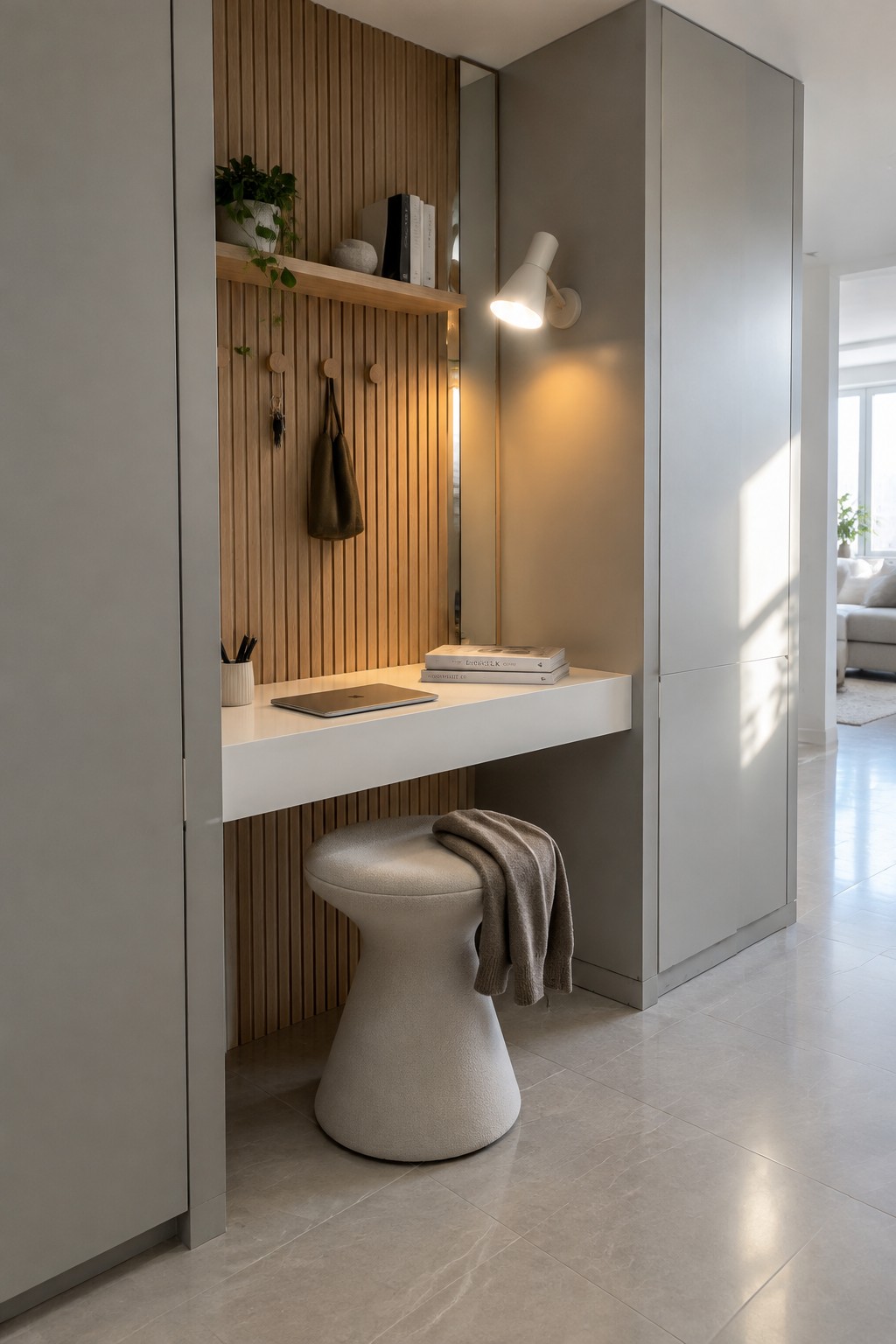
One simple way to fit a home office into a small area is to shift storage upward along the wall instead of adding more furniture on the floor. A narrow floating desk paired with vertical slats and a slim shelf above it keeps the workspace clear while still holding books, bags, and supplies within reach.
This approach works best in hallways, corners, or rooms that already feel tight. Keep the desk shallow, add a few hooks or a single shelf, and choose a stool that tucks fully underneath. It suits apartments and smaller homes where floor space matters more than extra surface area.
Vertical Shelves Keep Compact Desks Practical
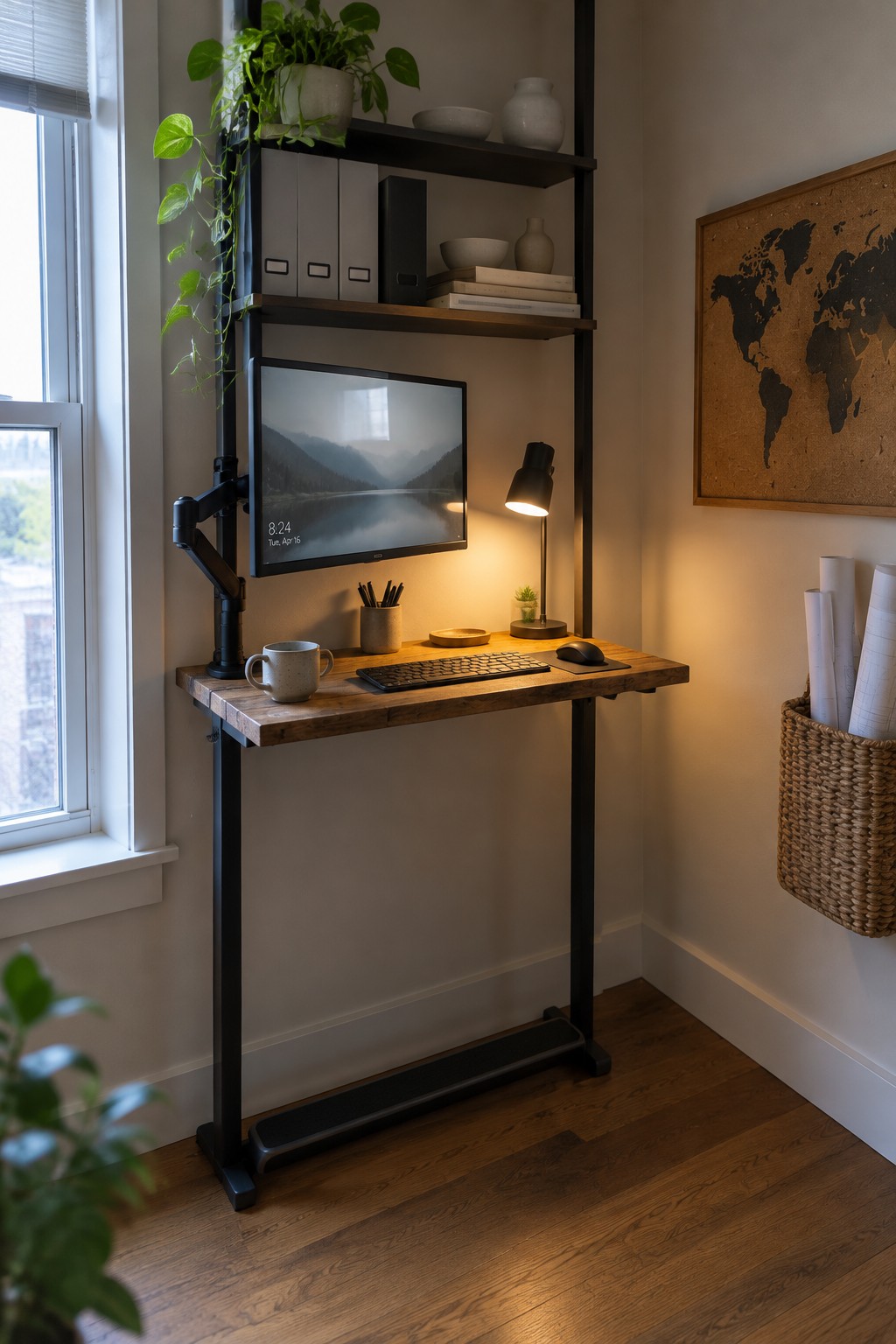
Many small offices feel cramped once you add a desk, chair, and basic supplies. Placing shelves directly above the desk gives you room for binders, books, and small items without widening the work surface or crowding the floor.
This approach suits apartments and spare rooms where every inch counts. Mount the monitor on an arm so the desk stays clear, and keep only daily items on the lower shelf. It works best when you limit what goes up there to avoid a heavy look.
Built-In Closet Offices With Vertical Storage
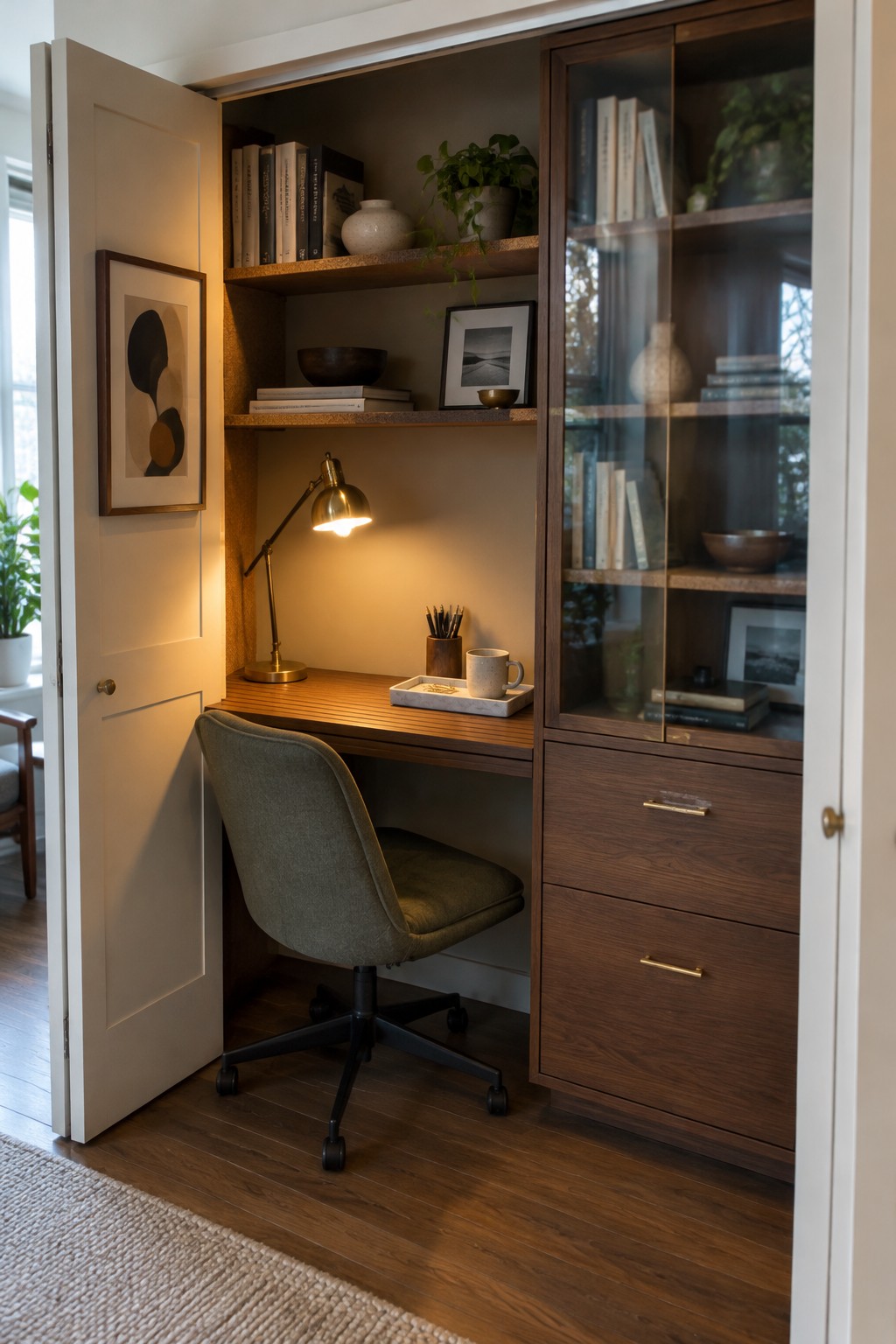
Many people are finding that a closet can become a practical office by adding shelves above a simple desk and closed storage below. The vertical layout keeps supplies and papers organized without spreading into the rest of the room.
This setup suits apartments or smaller homes where floor space is limited. It works best when the closet is deep enough for a chair to move freely and when the doors can stay open during the day.
Built-In Shelves Around A Window Desk

Built-in shelves on both sides of a window make it easier to fit a compact desk into a small room. The vertical storage holds books and supplies without taking up floor space, so the desk can stay narrow and the room stays open.
This idea suits older homes or any space where you need to keep things simple and functional. It works well when the shelves match the wall color and the desk sits right under the window for light.
Vertical Storage Above A Compact Desk
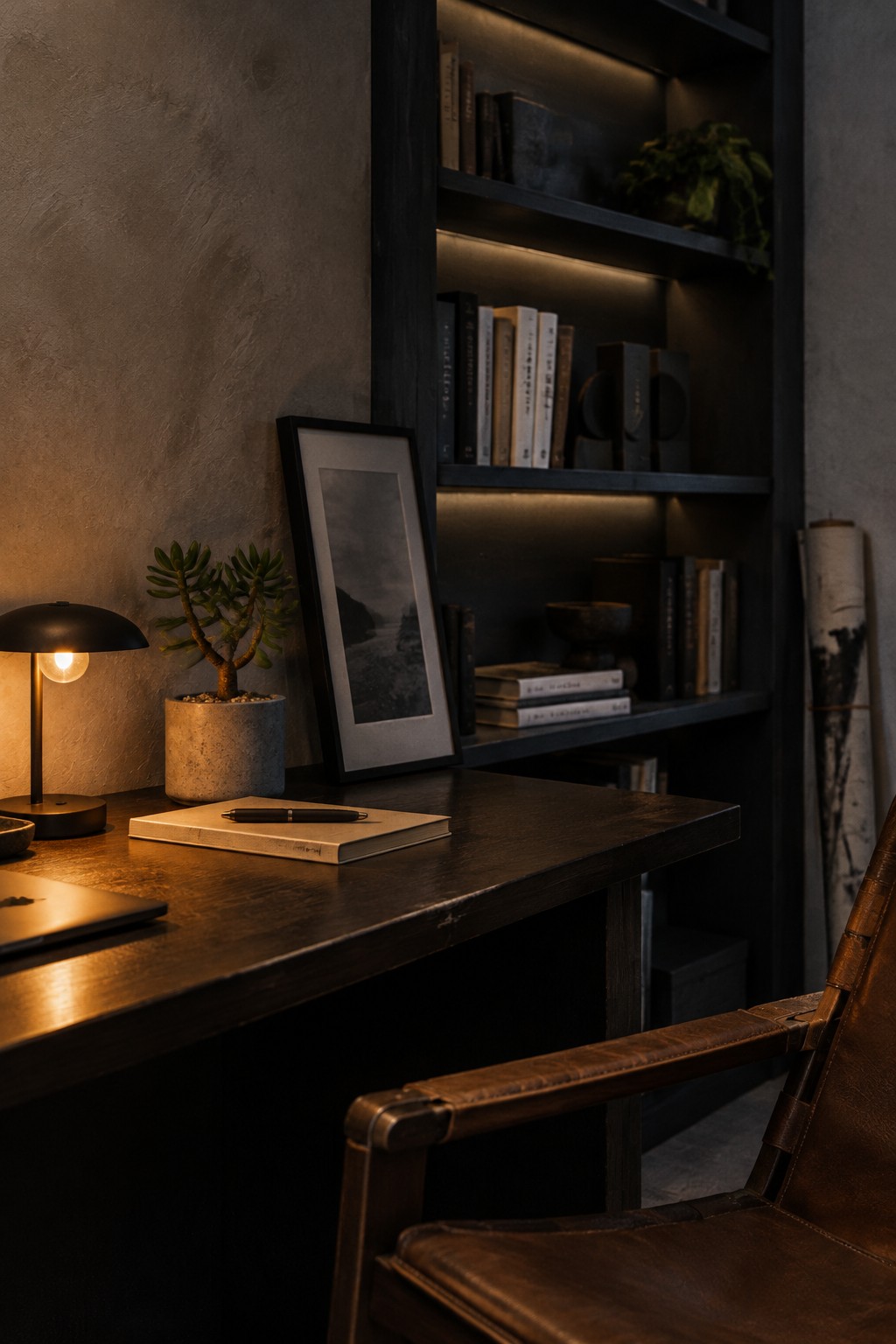
One of the simplest ways to keep a small office feeling open is to move storage up instead of out. The dark built-in shelves here hold books and a few objects without crowding the desk surface, and the built-in lighting makes the whole wall work harder at night.
This setup works well in rooms that cannot spare floor space for extra cabinets. It suits apartments or spare bedrooms where the desk needs to stay clear for daily work. Just keep the shelves from getting too full so the wall still feels calm rather than heavy.
Vertical Storage For Compact Office Nooks
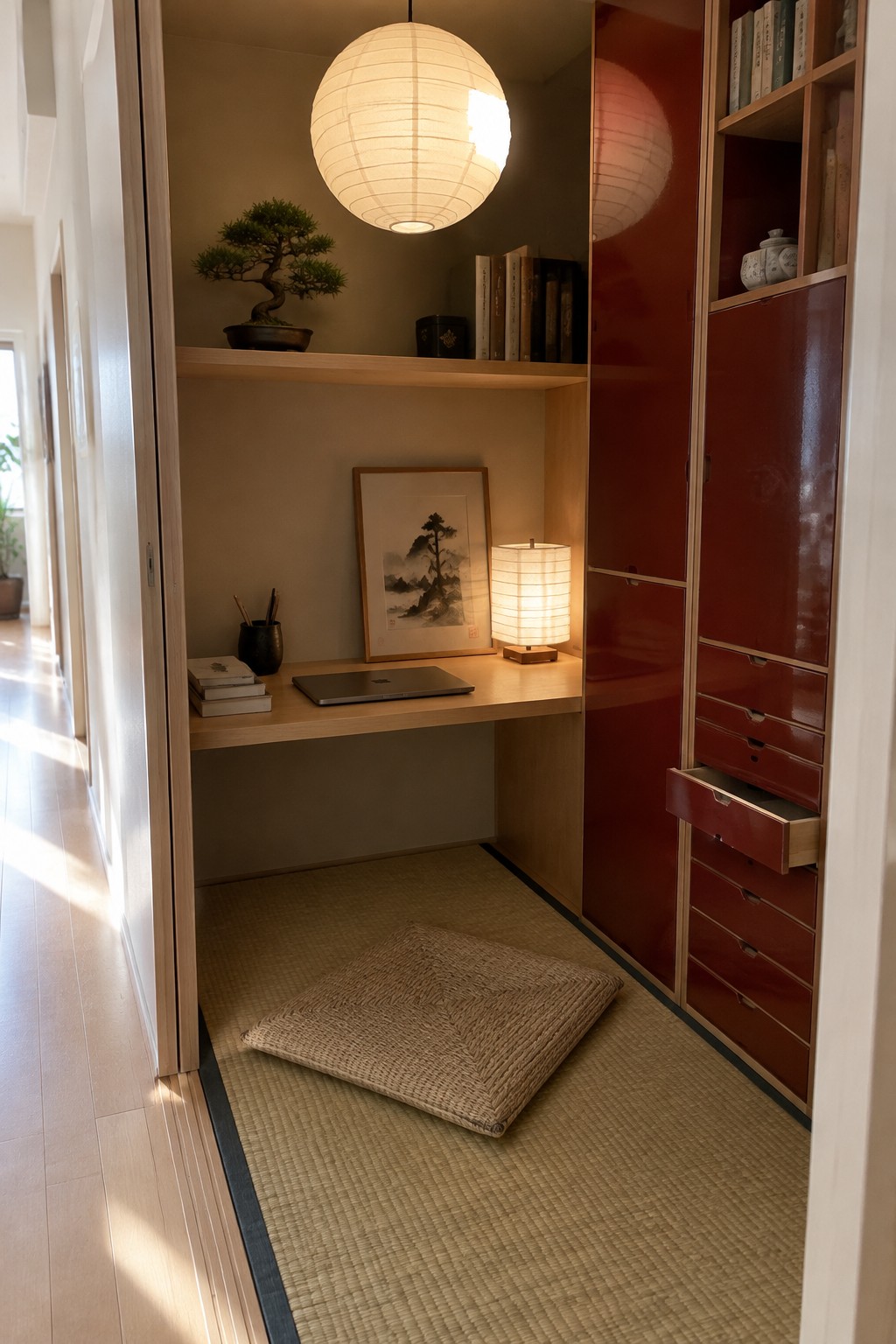
Tall vertical cabinets solve a common problem in small homes. They hold files, supplies, and equipment without spreading out across the floor, so a simple desk can stay compact and the room stays open.
This works best in alcoves or narrow leftover spaces. Keep the cabinet finish close to the wall color and limit the desk depth so the whole setup does not feel heavy in a tight room.
Built-In Shelves Over a Compact Desk

Many small offices feel more open when the storage sits above the desk instead of beside it. The shelves hold books and a few items without taking up floor space, so the desk stays clear and the room stays calm.
This layout suits bedrooms, guest rooms, or any space that needs to double as an office. Keep the shelves shallow and stick to a light color on the walls so the whole area feels simple rather than crowded.
Floating Desks With Vertical Storage Units
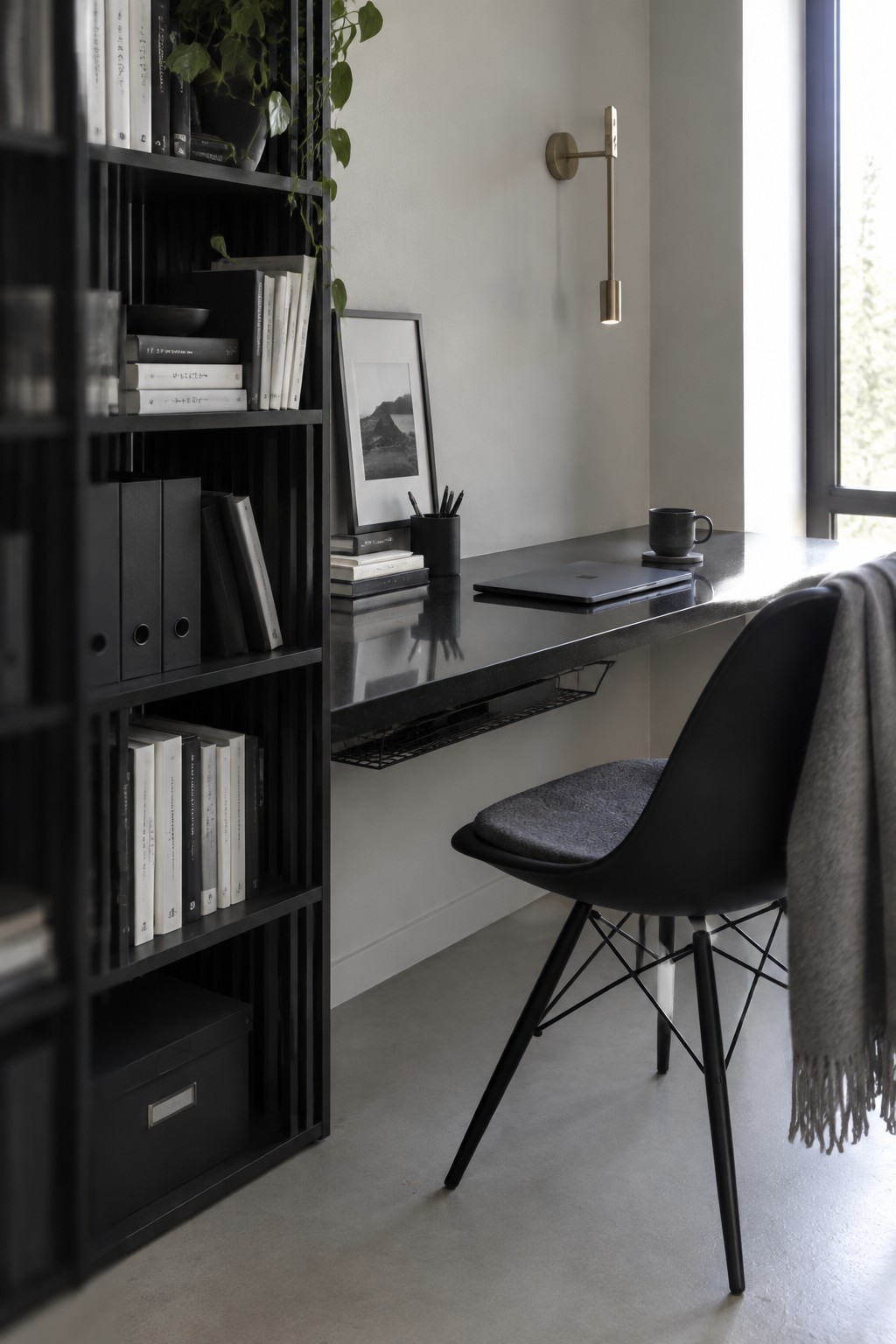
A floating desk keeps the floor open and gives the room a lighter feel. Pairing it with a tall shelving unit right beside it adds storage without taking up extra floor space, which helps the whole office stay simple and uncluttered.
This works best in smaller rooms or apartments where you need both a work surface and room for books and supplies. Keep the desk narrow and the shelves tall so the layout stays balanced and easy to move around in.
Vertical Storage That Fits Beside A Compact Desk
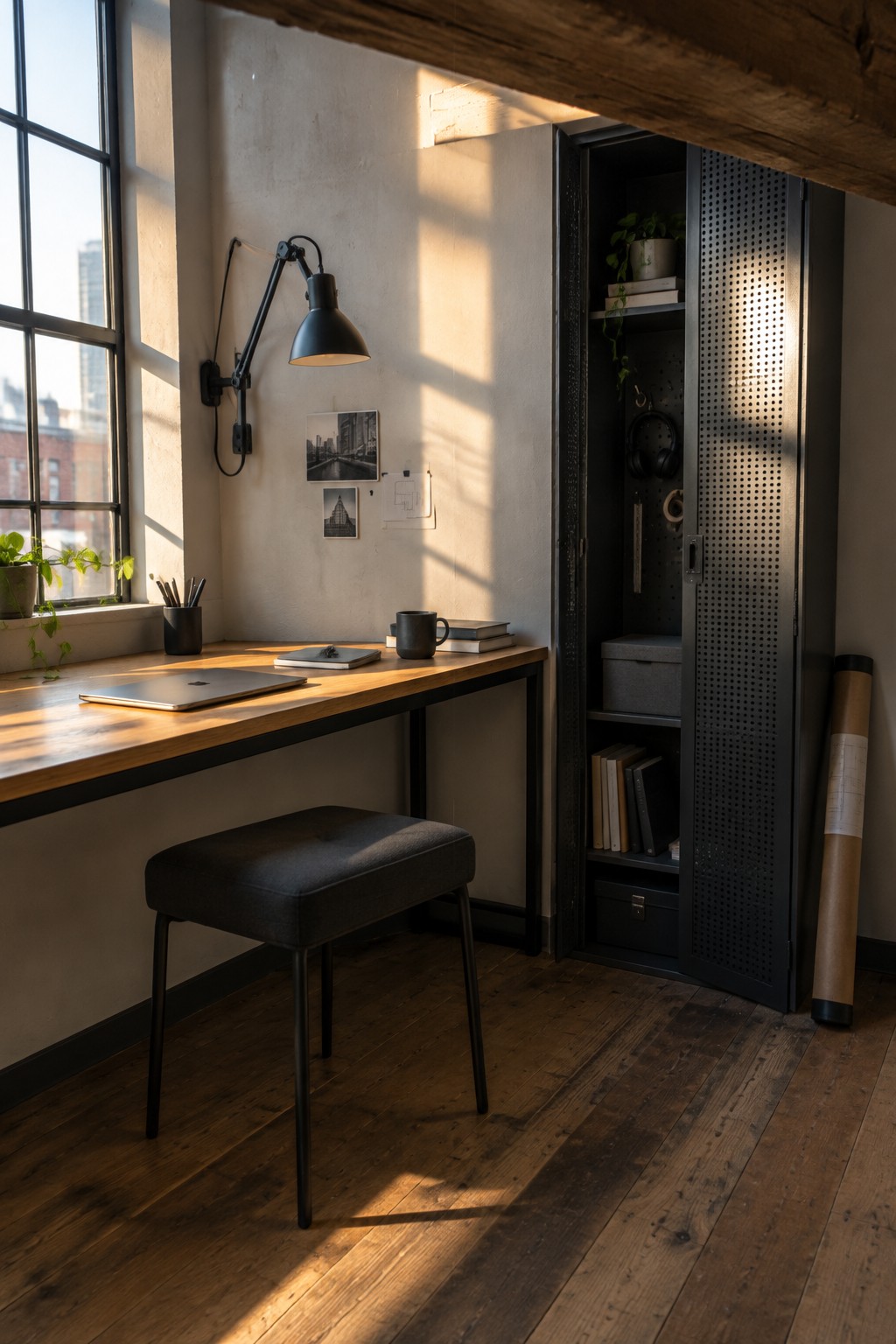
Many small offices stay usable when a tall narrow cabinet takes the spot right next to the desk. It holds books, supplies, and gear without crowding the work surface, and the pegboard panel lets you hang a few items in plain sight so nothing gets lost in deep shelves.
This setup works best in rooms with decent ceiling height and one clear wall. Keep the cabinet depth shallow and match the desk length so the two pieces sit together without blocking light or chair movement.
Pairing Compact Desks with Tall Storage Cabinets
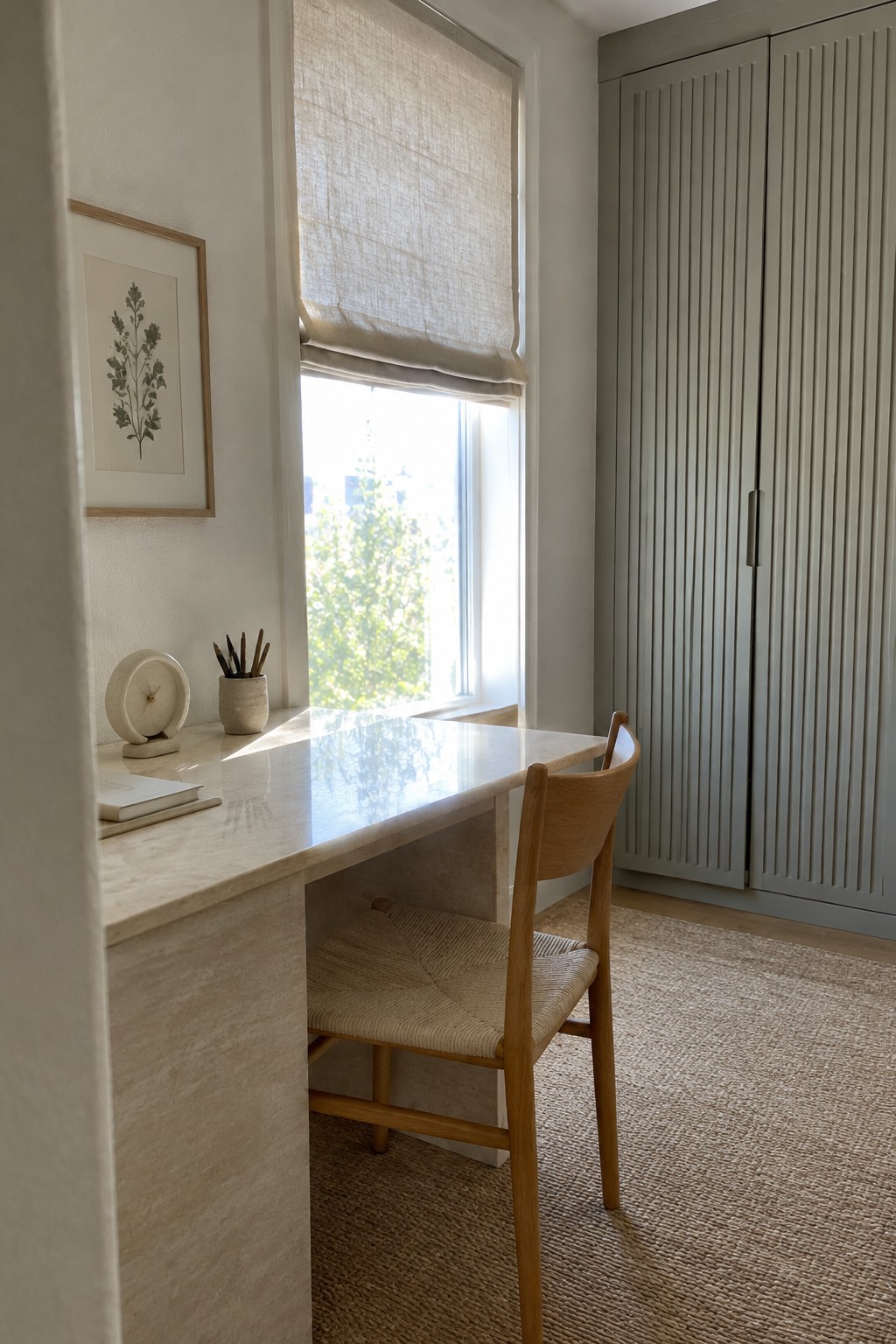
A slim desk along a window works better when storage stays off the floor. A tall cabinet next to it holds everything without crowding the workspace or making the room feel smaller.
This layout suits small rooms or shared spaces where the desk needs to stay minimal. Keep the cabinet color close to the wall so it blends in rather than drawing attention.
Wall Storage That Works with Compact Desks
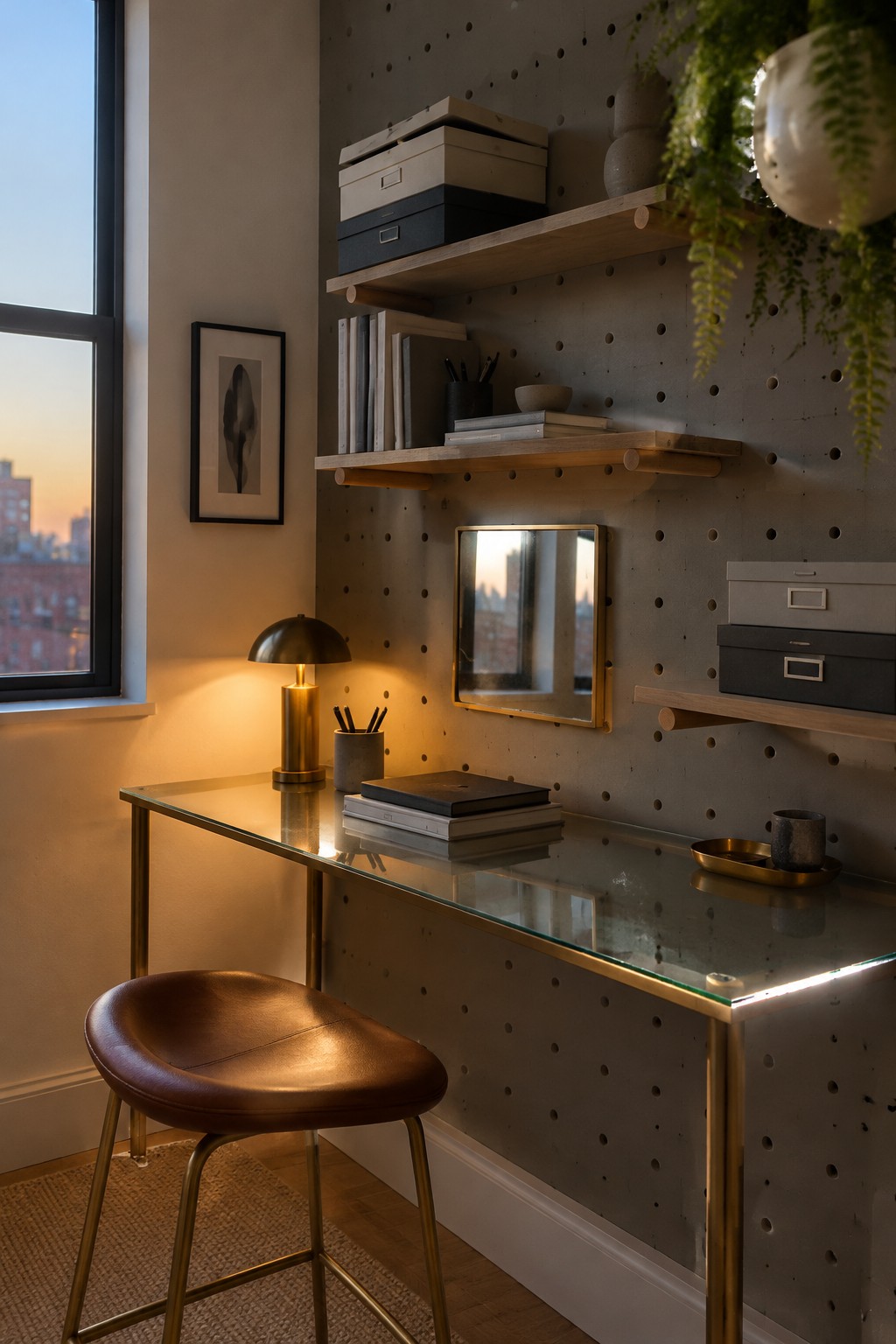
One way to keep a small office from feeling tight is to move most of the storage up onto the wall. Floating shelves and a simple pegboard give you room for boxes, books, and supplies without taking up floor space around the desk. The desk itself can stay slim and clear, which helps the whole room feel more open.
This setup works well in apartments or spare rooms where the workspace has to share space with other uses. Keep the shelves at a height that is easy to reach and use matching boxes so the wall stays neat. Just watch that you do not overload the shelves and create visual clutter right above the work surface.
Pairing Compact Desks with Vertical Shelving
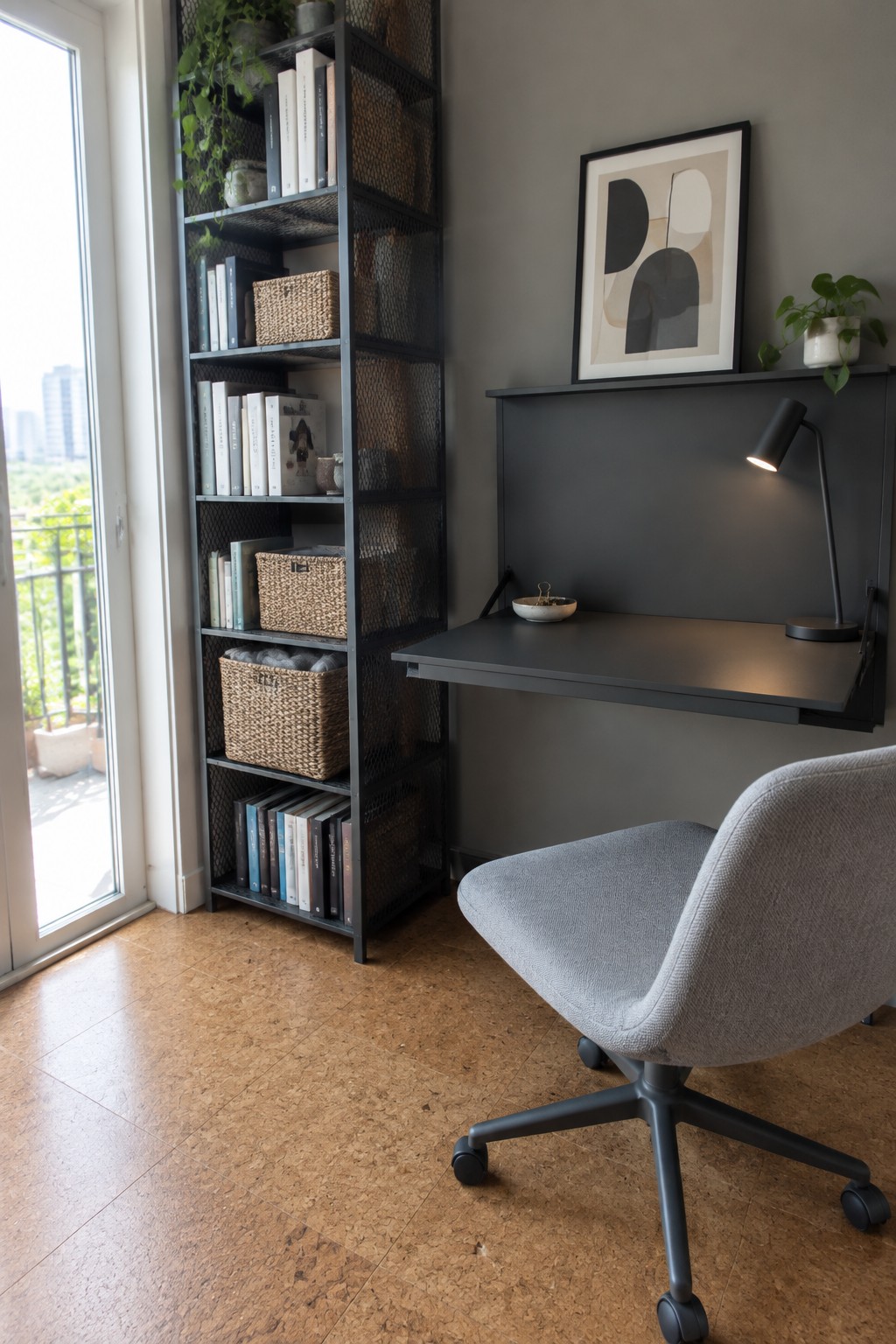
A wall-mounted desk paired with tall open shelving next to it makes good use of a small corner. The vertical unit holds books and baskets without taking up floor space, so the room stays open even when the desk is in use.
This setup works best in apartments or any home office where width is limited. Keep the shelving unit narrow and the desk surface clear so the area does not feel crowded.
Built-In Storage That Works With A Compact Desk

One useful way to handle a small workspace is to run storage straight up the wall instead of adding separate pieces around the room. A single built-in unit with open shelves above and closed cabinets below can hold books, supplies, and linens while the desk surface stays narrow and clear.
This setup suits bedrooms or guest rooms that need to serve as offices too. Keep the desk depth shallow and the storage simple so the room stays open and easy to move around in.
Vertical Storage Above a Compact Desk
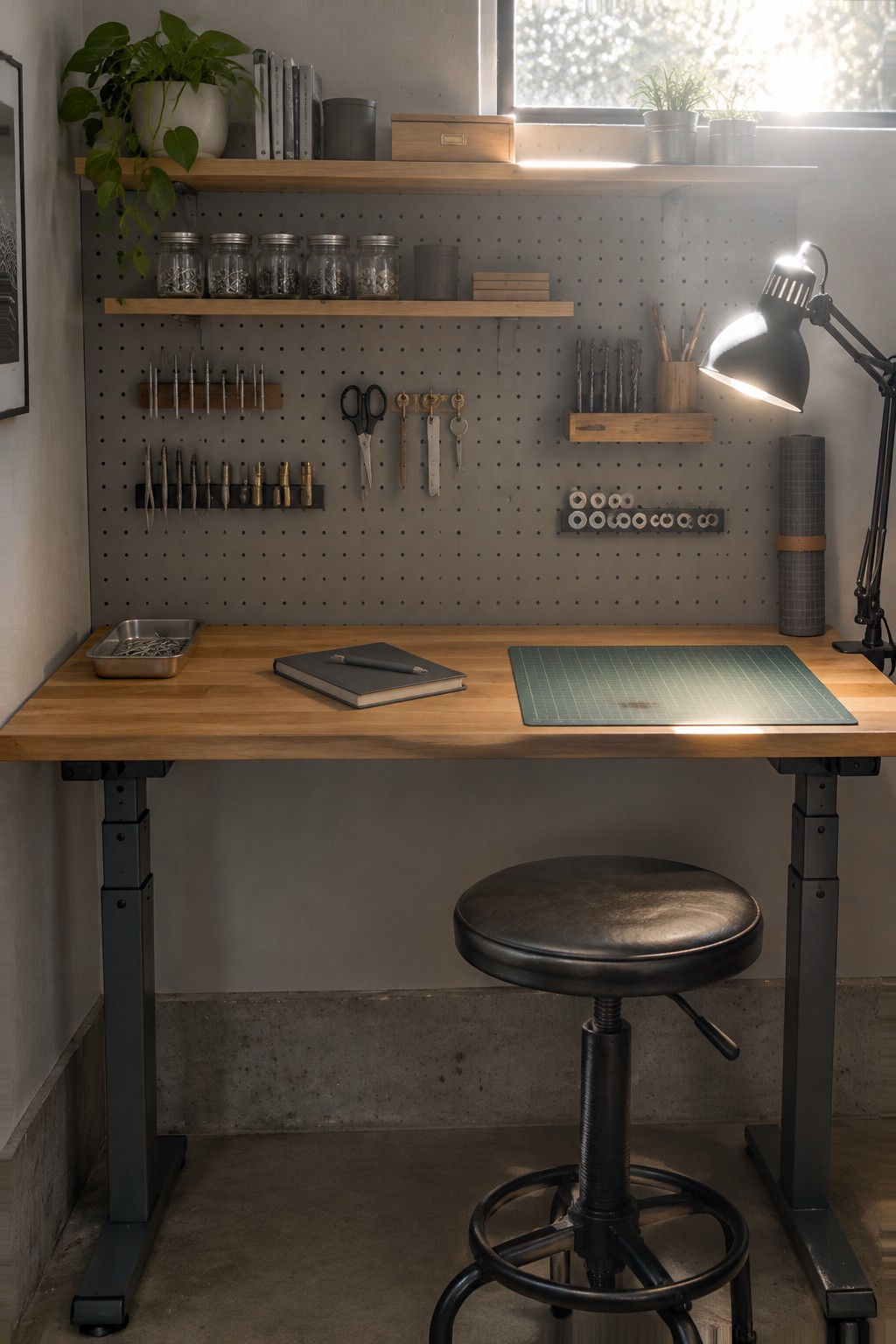
A small desk can quickly feel cramped when everything sits on the surface. Adding a pegboard and a shallow shelf overhead moves tools, jars, and supplies onto the wall instead, which keeps the work area clear and the room feeling more open.
This approach suits apartments or any space where the office shares a room with other uses. Place the pegboard at a comfortable reach height and keep the shelf narrow so it does not overhang the desk too far.
Frequently Asked Questions
Q: How much clearance should I leave around a compact desk so the room still feels open?
A: Leave at least three feet on the main walking sides. This prevents the desk from blocking natural movement through the space. Test the layout by walking around it a few times before you commit to the final spot.
Q: What’s a simple way to stop vertical shelves from looking overloaded?
A: Group items by how often you use them and keep daily stuff at eye level. Leave a little empty space between groups so the wall does not feel packed. Rotate seasonal items into a lower bin when they are not needed.
Q: How do I hide cables without running them across the floor?
A: Clip cords along the back edge of the desk or down the wall leg. Drop a small basket underneath to catch the power strip and excess length. This keeps the floor clear and the view tidy from the doorway.
