


In my own apartment I have rearranged the bedroom more than once to fit a desk without losing the open path from the door to the bed.
The room starts to feel off as soon as the desk or chair blocks the natural route across the floor.
Layout matters more than I expected.
Keeping the walking space clear changes how the room feels when I get up in the morning or come back in the evening after work.
I usually test a few placements first because what looks workable on paper can still leave the space tight once the chair is pulled out.
Built-In Desks That Keep Bedroom Floors Open
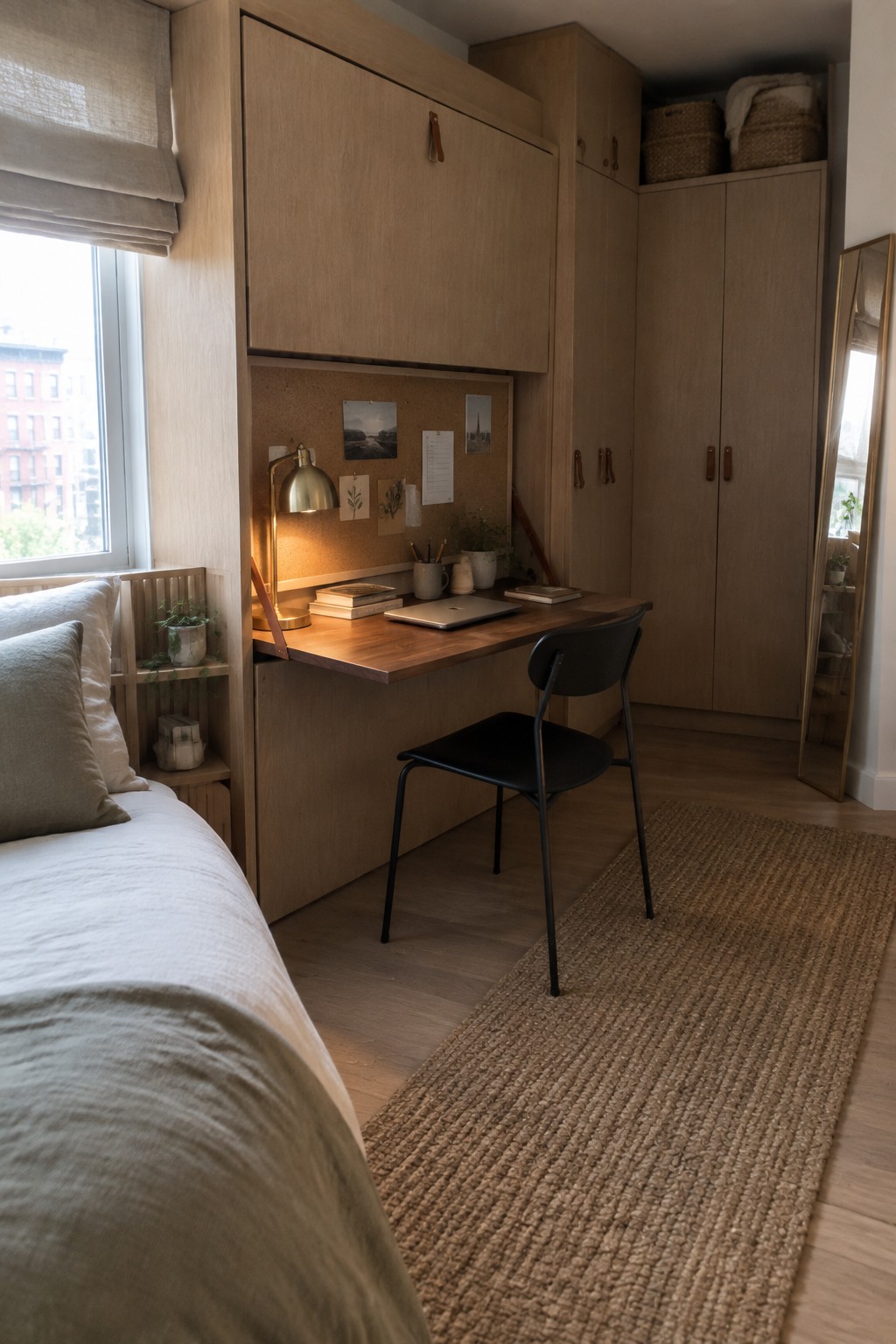
A built-in desk with storage above it works well in small bedrooms because it pulls the work area tight against the wall instead of letting a separate desk eat into the middle of the room. This leaves more open floor for walking between the bed and closet without feeling cramped.
It suits apartments where the bedroom has to handle both sleeping and working. Place the unit along a side wall with a chair that tucks in fully when not in use, and keep the surface narrow so the room still feels easy to move through.
Loft Beds Free Up Space For A Desk Below

Many small apartments leave little room for both a bed and a proper workspace. Lifting the bed onto a loft frame opens up the floor underneath so a desk can sit there instead of taking over the main walking area.
This approach suits studio layouts and compact bedrooms where every foot of floor space matters. It keeps the room easier to move through and lets the desk feel like part of the space rather than an afterthought squeezed beside the bed.
Tuck A Slim Desk Next To The Bed

Many apartment bedrooms feel bigger when the workspace stays narrow and sits right beside the bed. This keeps the middle of the room open so you can walk through without stepping around furniture.
It works best in small spaces where you need both a bed and a place to work. Choose a desk with thin legs and a shallow top, and keep the chair simple so it tucks away when not in use.
Tuck a Slim Desk Beside the Bed

One simple way to add a workspace in a small bedroom is to place a narrow desk right next to the bed. This keeps the middle of the room open and avoids the need for a separate office zone.
It works best in apartments where space is tight. Choose a desk no deeper than about 18 inches so the chair can tuck in without blocking the path around the bed.
Mount A Desk To The Wall With Vertical Storage

One idea that helps a lot in small apartments is mounting the desk directly to the wall and adding a pegboard above it for pens, notes, and small items. This keeps the floor clear so you can walk through the room without stepping around furniture legs or bulky storage.
It works especially well in bedrooms that need to serve as an office too. Keep the desk narrow, add one or two floating shelves, and choose a chair that slides all the way under when you are done for the day.
Platform Beds That Add Storage Without Losing Floor Space

A raised platform bed with built-in drawers underneath gives you extra storage while keeping the floor clear. In small apartments this matters because it removes the need for a separate dresser or extra bins that would otherwise crowd the walking path.
This approach works best in narrow bedrooms where you need room to move around the bed itself. Add a few shallow shelves or cabinets along one wall for books and daily items so nothing sits on the floor. The tatami surface and low profile also help the room feel less boxed in.
Window Seat Storage That Keeps The Floor Open
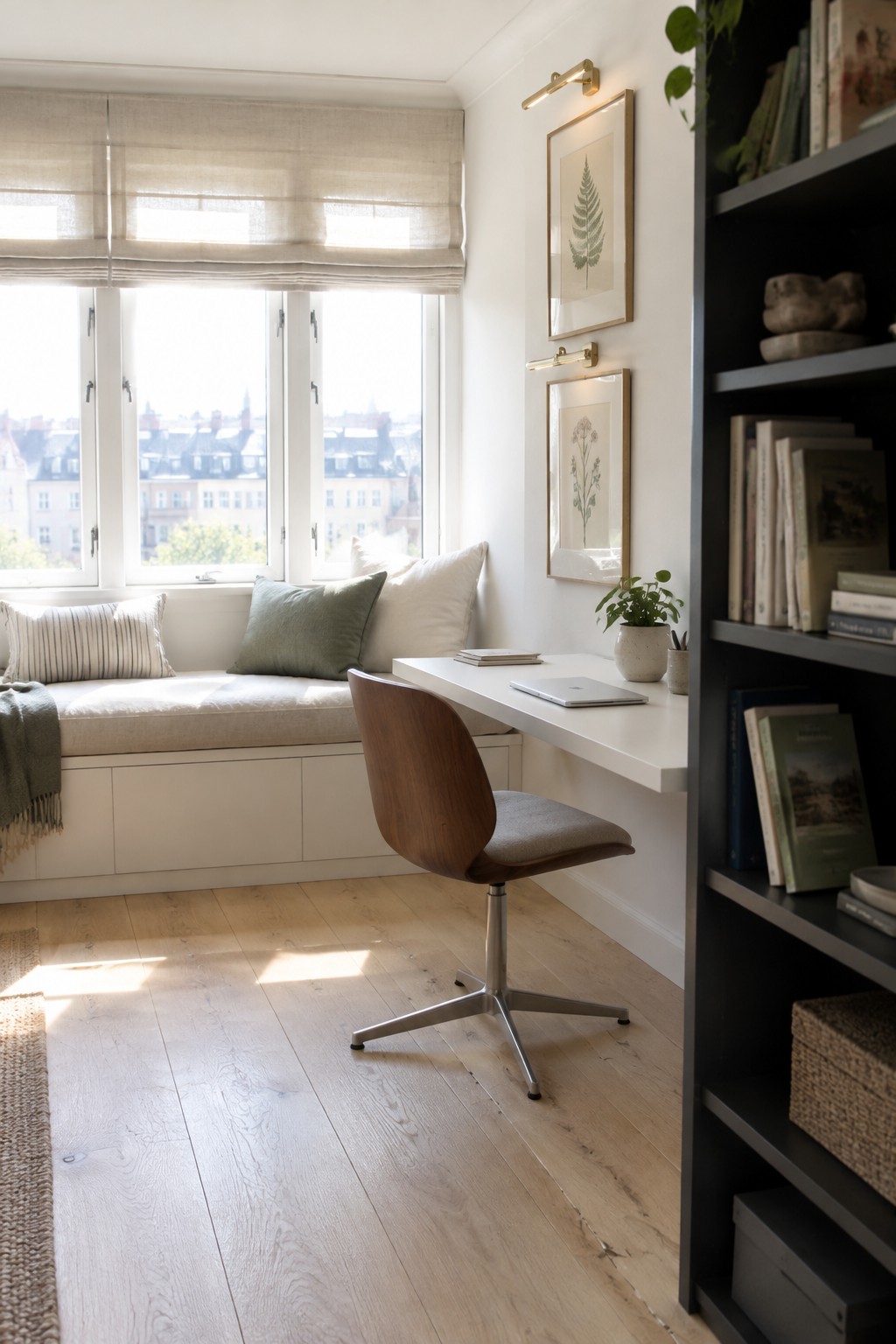
In a small bedroom office, a built-in window seat with storage underneath cuts down on the need for extra dressers or bins. It turns what would be dead space into something useful while keeping the middle of the room clear for walking.
This setup works best in apartments where every wall counts. Keep the desk slim and pushed against one side so the open floor stays usable. The cushions and simple shape also make the seat feel like part of the room instead of added furniture.
Run a Desk Along One Wall

Placing a long desk against the wall works well in a bedroom office combo because it leaves the center of the room open. This setup keeps the floor clear for walking between the bed and the rest of the space without squeezing past furniture.
It suits smaller apartments where every foot of floor space counts. Choose a low piece with closed storage so the desk blends into the room instead of feeling like a separate office zone.
Wall Mounted Desks Keep The Floor Open

A wall mounted desk works well in apartment bedrooms because it leaves the floor clear underneath. You still get a usable work surface and some storage above it, but nothing blocks the path from the bed to the rest of the room. The setup feels less crowded than a full desk with legs or a credenza.
This approach suits small apartments where every foot of walking space matters. Use sturdy brackets and keep the chair on wheels so it can tuck in when not in use. It works best on a solid wall and may need extra support if the wall is not masonry.
Built-Ins Turn A Window Into A Workspace

A built-in bench and desk along the window wall gives you a place to work without adding a full desk that eats into the floor. The seat tucks under the window and the surface extends just far enough to be useful, so the middle of the room stays open for walking through.
This setup works best in smaller bedrooms where every foot of floor space counts. Keep the bed and other pieces on the opposite wall so the path from door to closet stays clear.
Tuck The Desk Into Its Own Alcove

Placing the desk in a separate alcove helps keep the main bedroom floor open. The bed stays the main focus while the work area sits just out of the way, so there is room to walk around without squeezing past furniture.
This works best in apartments where the bedroom has a small recessed spot or a wide doorway to another area. It keeps the walking path clear and makes the room feel less crowded overall.
Fold Down Desks Save Floor Space
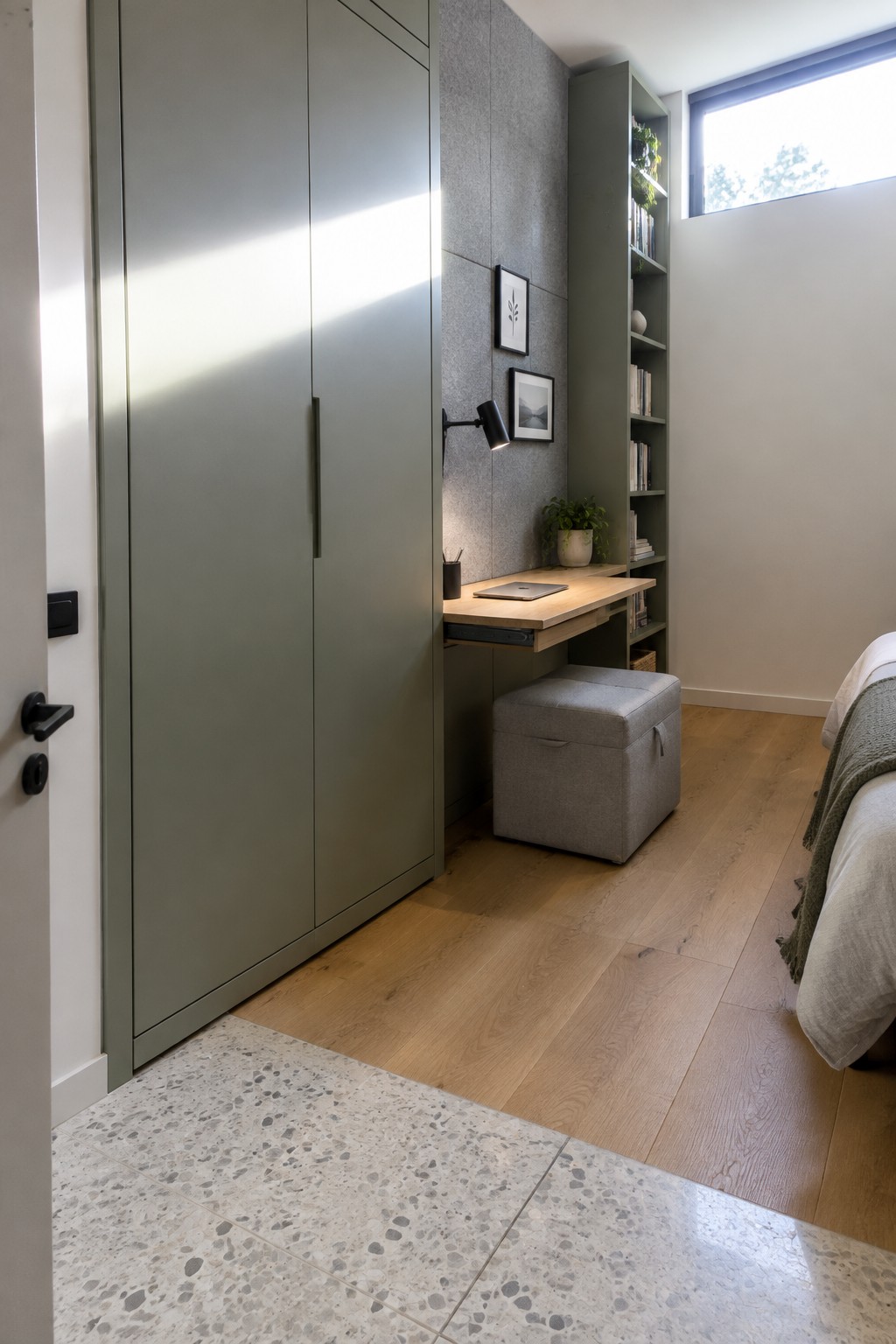
A fold down desk works well in small bedrooms because it only takes up room when you actually need it. The rest of the time it tucks back toward the wall, so you keep a clear path between the bed and the rest of the room.
This setup suits apartments where the bedroom has to double as an office. Place the desk along a side wall rather than at the foot of the bed, and use a storage ottoman as a seat that can slide out of the way when not in use.
Loft The Bed To Fit Two Desks

Raising the bed off the floor is one of the simplest ways to keep a narrow bedroom usable as both a sleeping space and a work area. With the bed up high, you can run desks along both long walls and still leave a clear path down the middle. The room stays easy to walk through even when both chairs are pulled out.
This approach suits small apartments where every foot of floor space counts. The desks can hold laptops, notebooks, and supplies without blocking movement, and the benches along the windows add storage without eating into the walkway. Just make sure the loft height leaves enough headroom above the desks for daily use.
Under-Bed Storage Opens Up The Floor
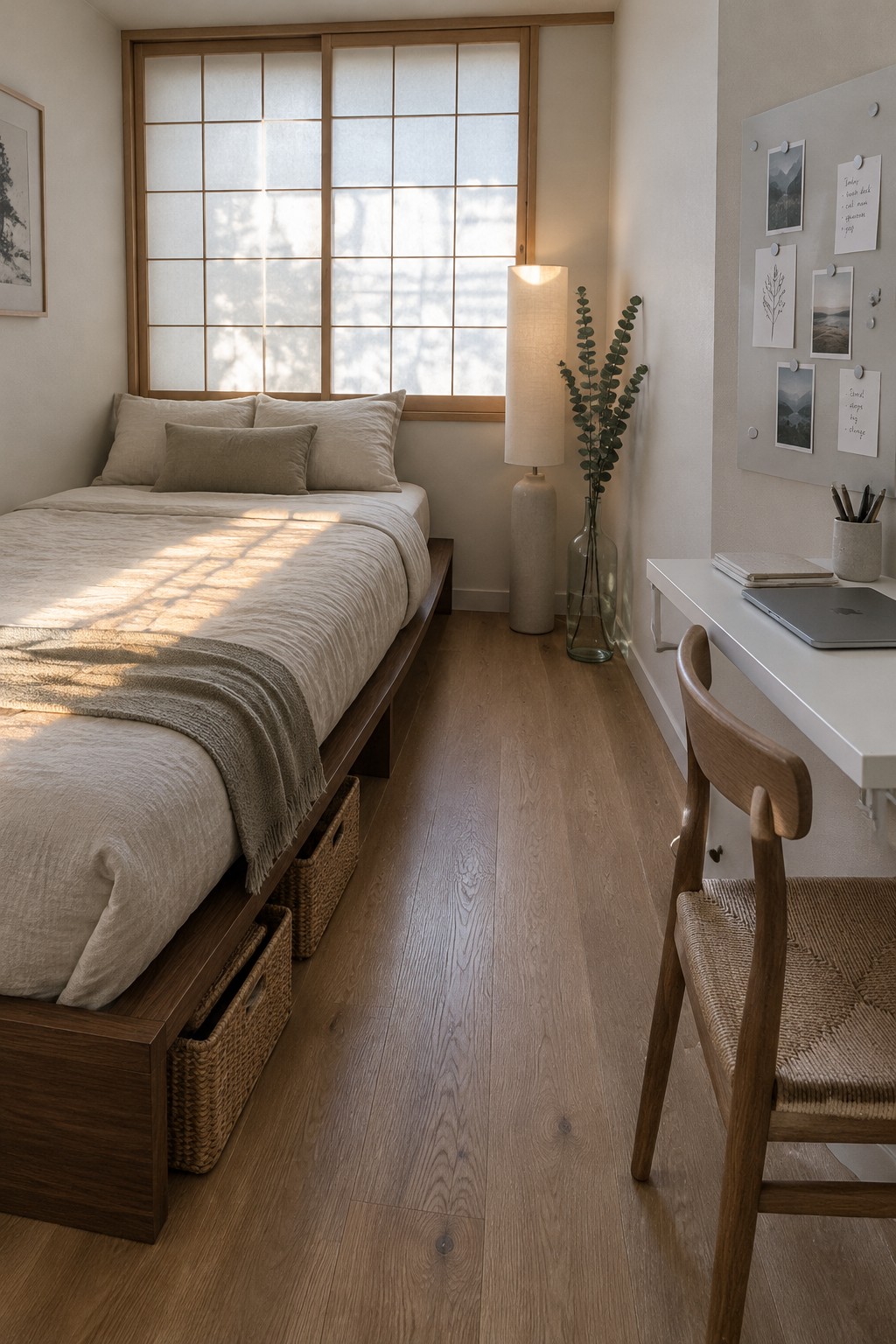
Small bedrooms often lose walking space once you add a desk and chair. A low platform bed with open baskets underneath pulls storage down low so the middle of the room stays clear. The desk can then sit along the opposite wall without the whole layout feeling crowded.
This works best in narrow or studio spaces where the bedroom must also serve as an office. Keep the bed frame simple and low, and choose a slim desk that does not stick out far. Avoid tall dressers or bulky nightstands that push everything toward the center.
Tuck A Slim Desk Next To The Bed

Placing a narrow desk right beside the bed turns a small bedroom into a usable workspace without eating up floor space. The desk stays tucked along the wall so the middle of the room stays open for walking through.
This layout works well in apartments where rooms serve double duty. Keep the desk shallow and choose a chair that slides in close so nothing blocks the path from the door to the bed.
Frequently Asked Questions
Q: My closet doors swing out and eat up floor space already. Which layout still leaves room to walk around?
A: Try placing the desk against the opposite wall from the closet. This keeps the path clear between your bed and the door. You can also angle the chair slightly so it tucks in when not in use.
Q: How do I stop the office chair from blocking the walkway during the day?
A: Pick a chair that rolls easily but stays put when you stand up. Position it so the back faces the walking path instead of sticking out. A simple mat under the wheels helps it move without taking extra room.
Q: What if I work late and the computer light keeps me awake?
A: Add a small lamp on the desk with a warm bulb. Turn off the monitor screen an hour before bed and use the lamp instead. It keeps the space functional without turning your bedroom into an all-night office.
