

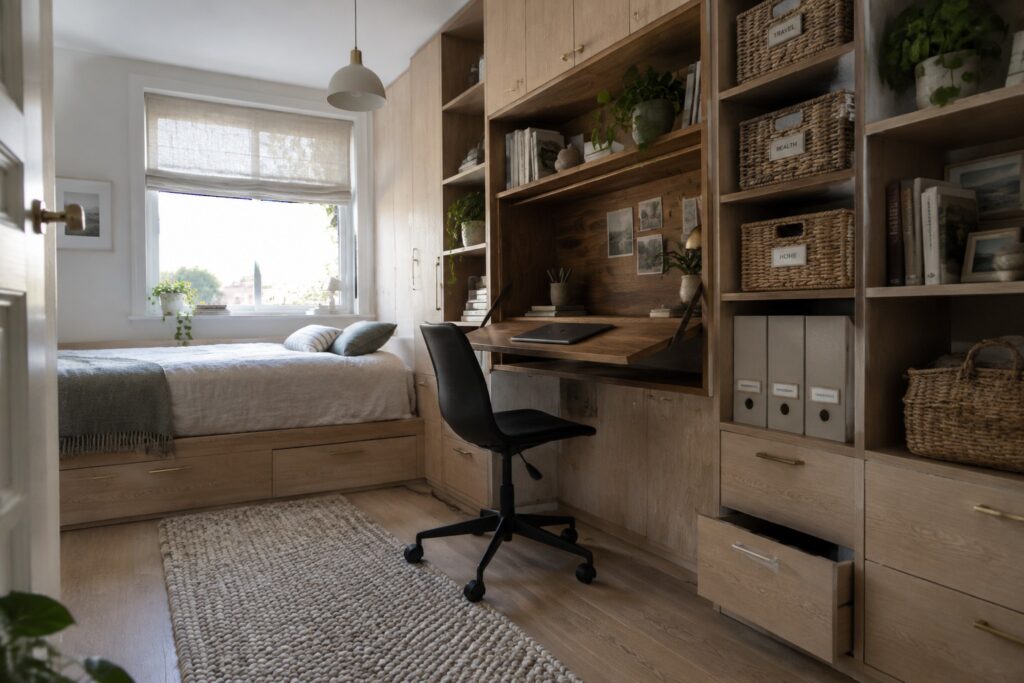
When my bedroom started doubling as an office, I noticed how quickly papers and cables took over the nightstand and dresser.
It became clear that regular storage solutions often fall short in a space that needs to serve two very different purposes.
Small changes made a big difference.
I looked for ways to tuck things away that still let me reach what I need during the workday without creating visual noise.
Over time I found that the setups that work best are the ones that respect how the room feels when the work is done.
Built-In Desk Units That Add Bedroom Storage
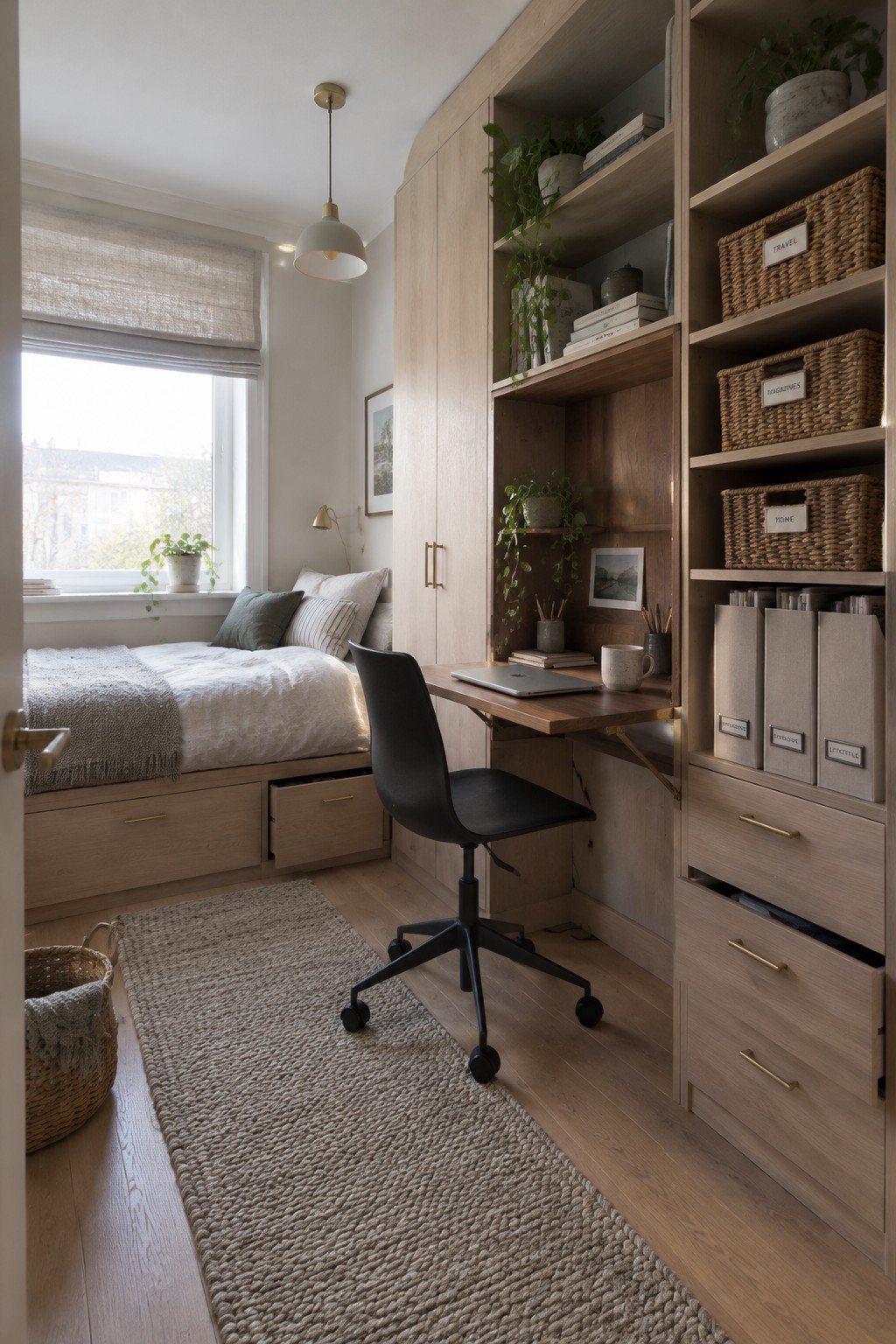
One of the simplest ways to keep a bedroom office from feeling crowded is to build the desk and shelves straight into the wall. This approach gives you workspace plus plenty of hidden storage without adding more furniture that takes up floor space.
It suits small bedrooms especially well since the vertical shelving holds baskets, files, and supplies while the desk stays clear for daily use. Under-bed drawers can handle overflow items that do not need to stay visible.
Built-In Storage Around The Desk
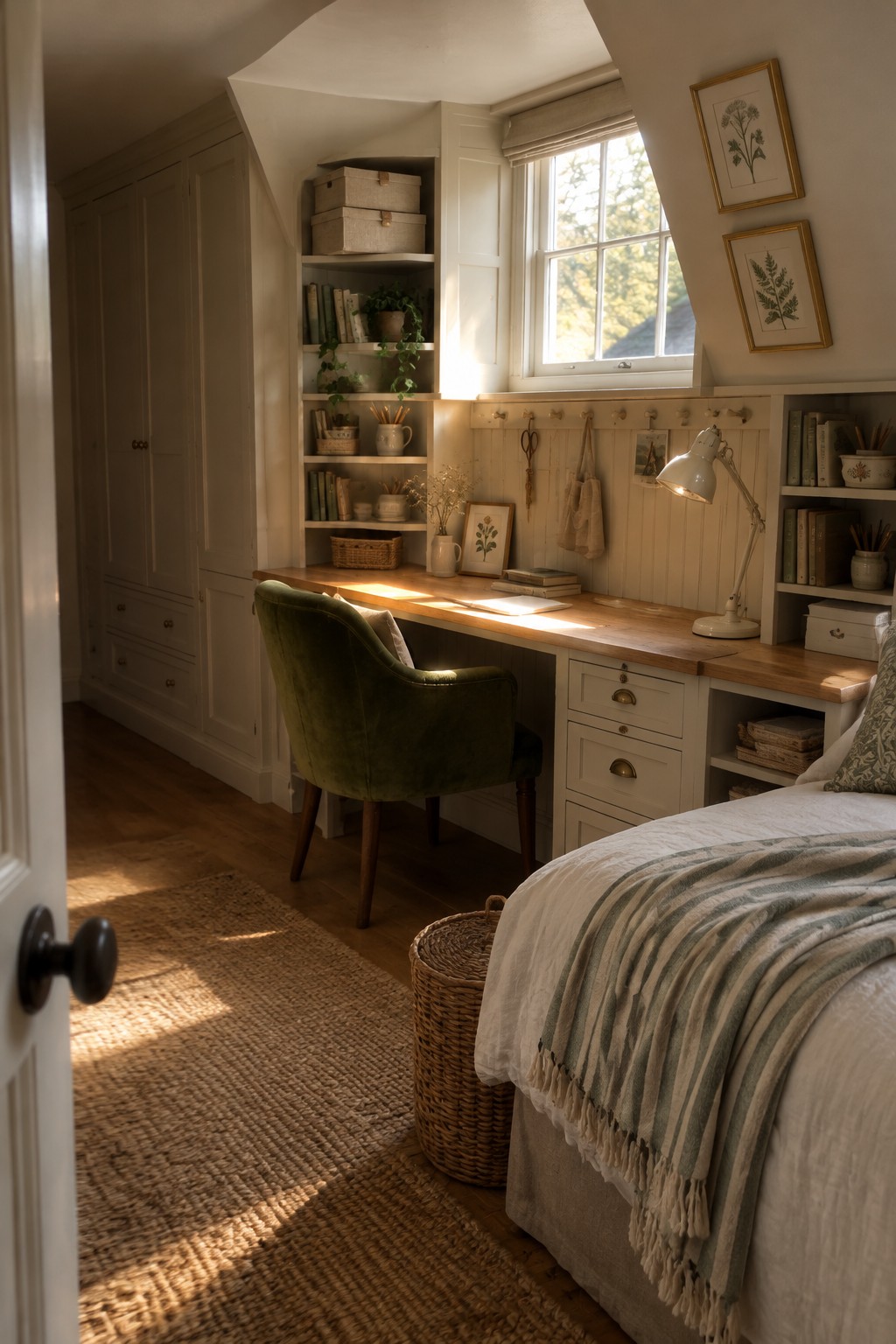
Many bedrooms already have a desk but not enough places to put the papers, books, and supplies that pile up. Built-ins solve this by turning the wall space into useful storage without eating up floor room.
This works best in smaller homes where the bedroom doubles as an office. Tuck the desk under a window and use the shelves above for books and the drawers below for anything you want hidden. It keeps the surface clear while still giving you room for what you need.
Build A Desk Into Bedroom Cabinetry

One of the simplest ways to keep a bedroom office tidy is to build the desk right into existing cabinetry instead of adding a separate piece of furniture. The dark cabinet unit in this room creates a recessed spot for the desk, so the work area stays contained and does not eat up floor space. Under-bed drawers add even more storage without any extra pieces showing.
This setup works especially well in smaller bedrooms where every inch counts. It keeps the desk surface clear for daily use while hiding papers and supplies behind closed doors when work is done. The look stays calm because nothing stands out as office furniture.
Fold-Down Desks Built Into Storage Shelves
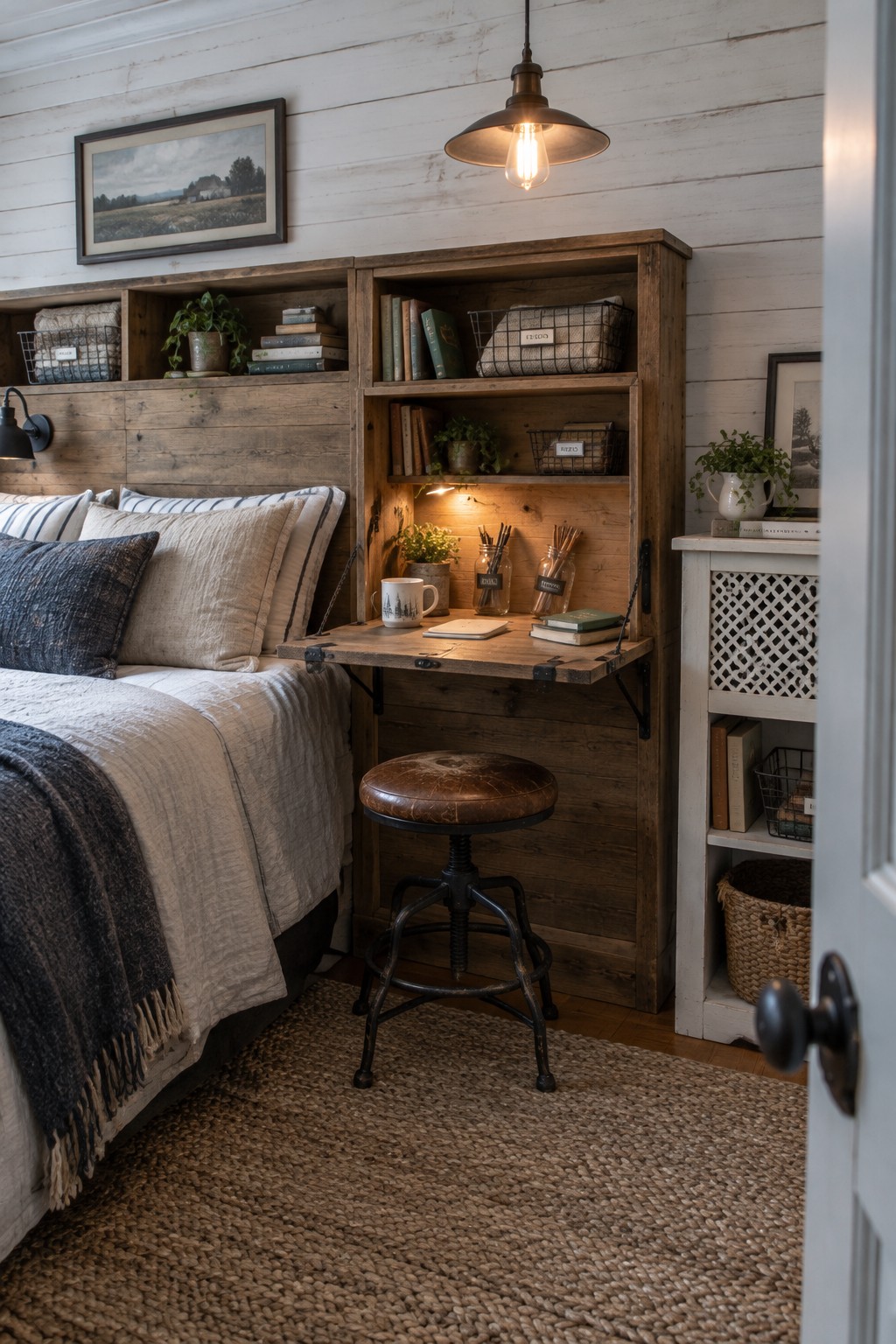
A drop-down desk that lives inside a set of open shelves keeps the workspace out of the way most of the time while still giving you a place to work. The shelves above and beside it hold books, bins, and supplies so everything stays in one spot instead of spreading across the room.
This setup works best in bedrooms that already have some wall space next to the bed or along a blank wall. It suits smaller homes or guest rooms where a full desk would crowd the floor. Just make sure the drop-down surface sits at a comfortable height and that the shelves above it do not block the light you need when the desk is open.
Loft Beds Free Up Floor Space For A Desk

Lifting the bed off the floor gives you a full workstation underneath without squeezing everything into a tiny room. The open space below stays usable for a desk, chair, and even a few shelves, which helps keep papers and supplies from spreading across the rest of the bedroom.
This setup works best in studio apartments or small guest rooms that need to serve as both sleeping and working areas. Keep the desk simple with one or two drawers, and add a narrow bookcase beside it so everything has a place without cluttering the surface.
Wall Mounted Storage Bins Clear Desk Space
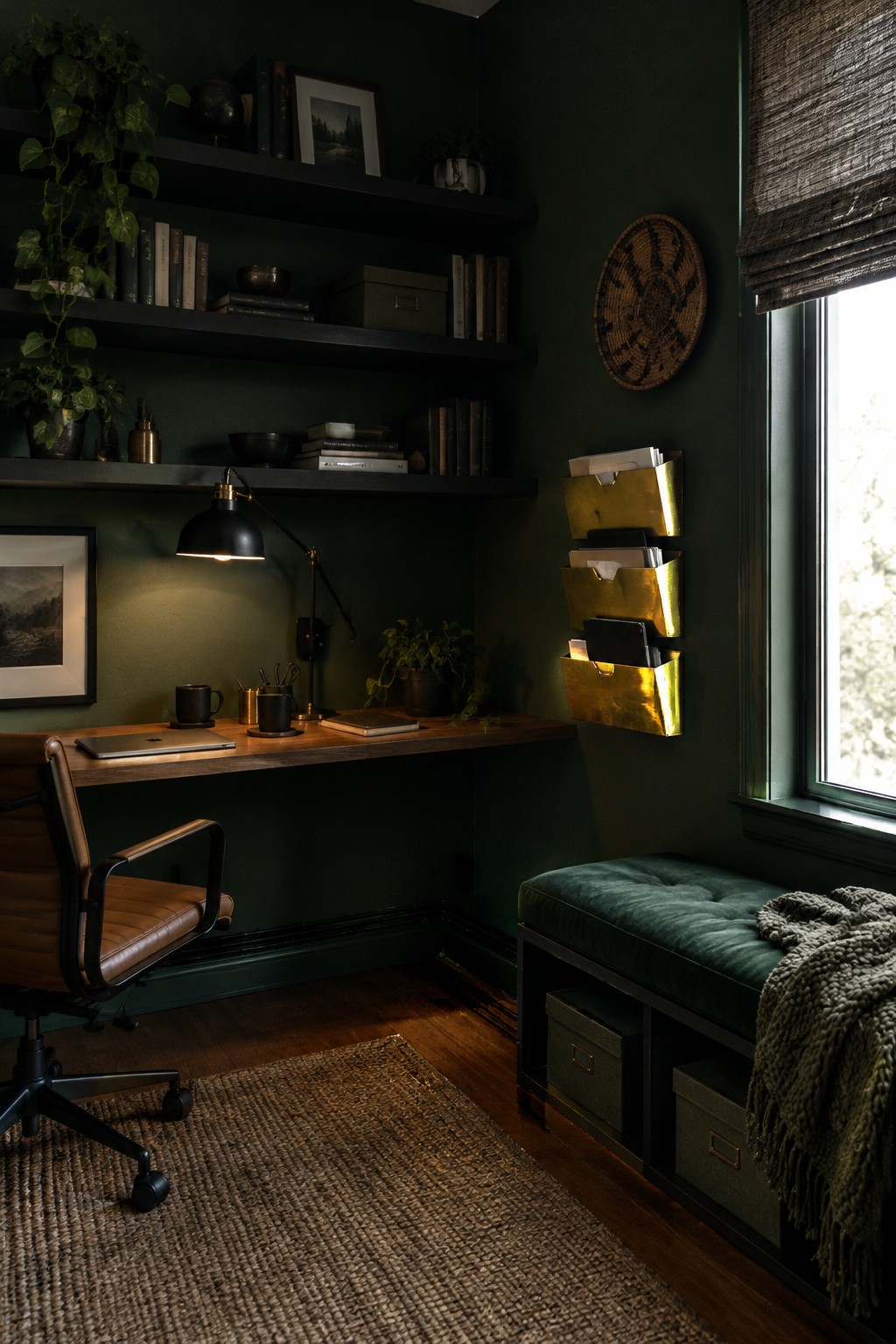
One simple way to keep a workstation from feeling crowded is to move papers, mail, and folders off the desk surface and onto the wall. Wall mounted bins hold everyday items within reach while leaving the work area open for actual tasks.
These bins work best in smaller rooms or corner setups where floor space is limited. They suit homes that already use open shelving above the desk, since the combination keeps most supplies visible but off the main surface. Just avoid overfilling them or the wall can start to look messy too.
Built-Ins Keep A Bedroom Office Organized
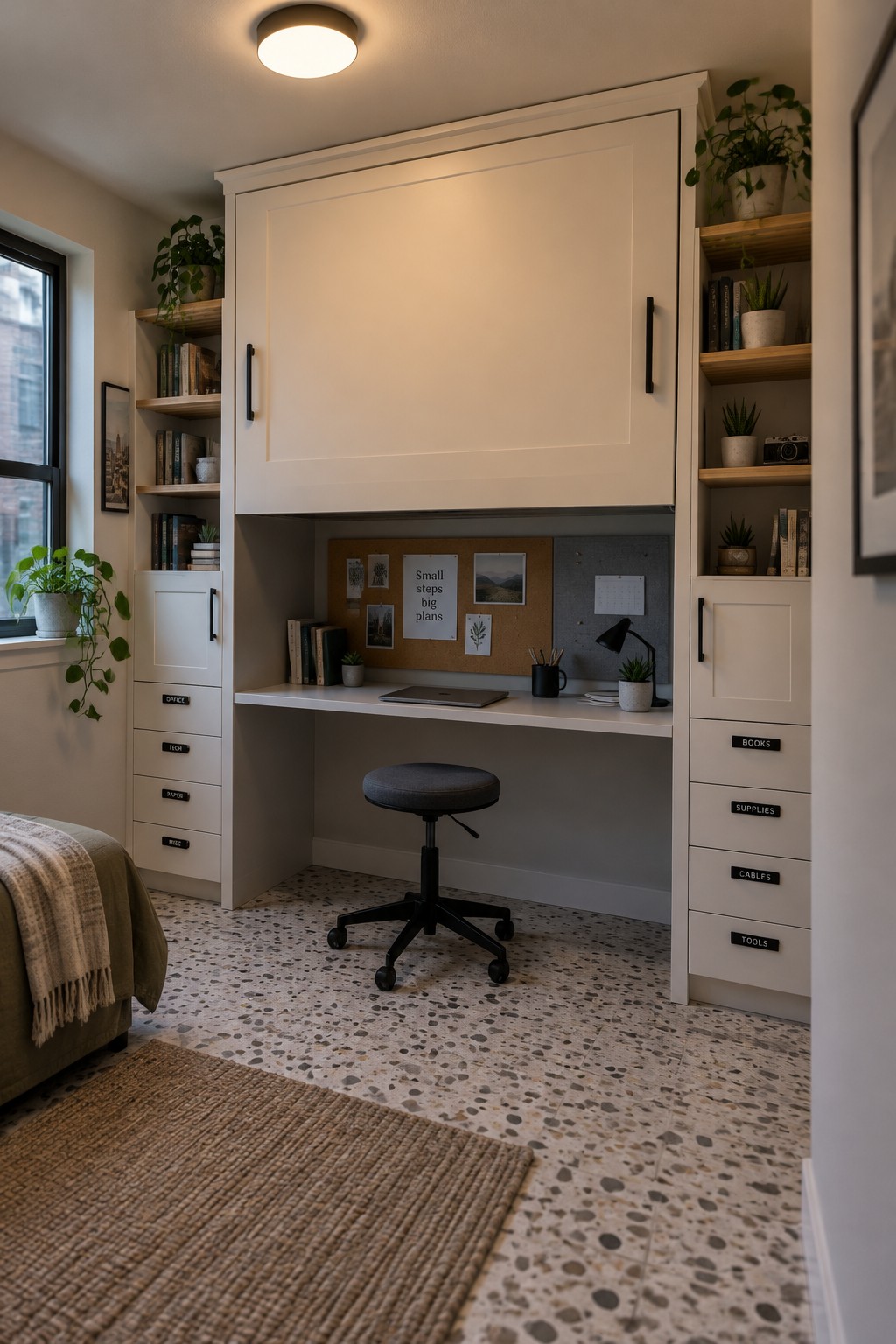
Built-in cabinets and drawers around a desk give you a place for everything without adding extra furniture that eats up floor space. The setup works especially well when the office shares a room with the bed, since the storage stays vertical and leaves the rest of the room open.
This approach fits smaller homes or guest rooms where the workspace needs to stay tidy at the end of the day. Label the drawers so papers, cables, and supplies stay separated, and keep the top surface clear except for what you use daily.
Built-In Storage Around A Desk Holds Everything In Place

A desk tucked between built-in shelves and cabinets gives you storage right where you need it. The open shelves keep books and small items within reach, while the closed cabinets hide the rest so the surface stays clear for actual work.
This setup works especially well in bedrooms that double as offices, since it uses the wall space without eating into floor area. A rolling file cabinet underneath adds flexibility if you need to move things around, and the mix of open and closed storage helps keep daily clutter from building up.
Built-In Units Create Practical Bedroom Offices
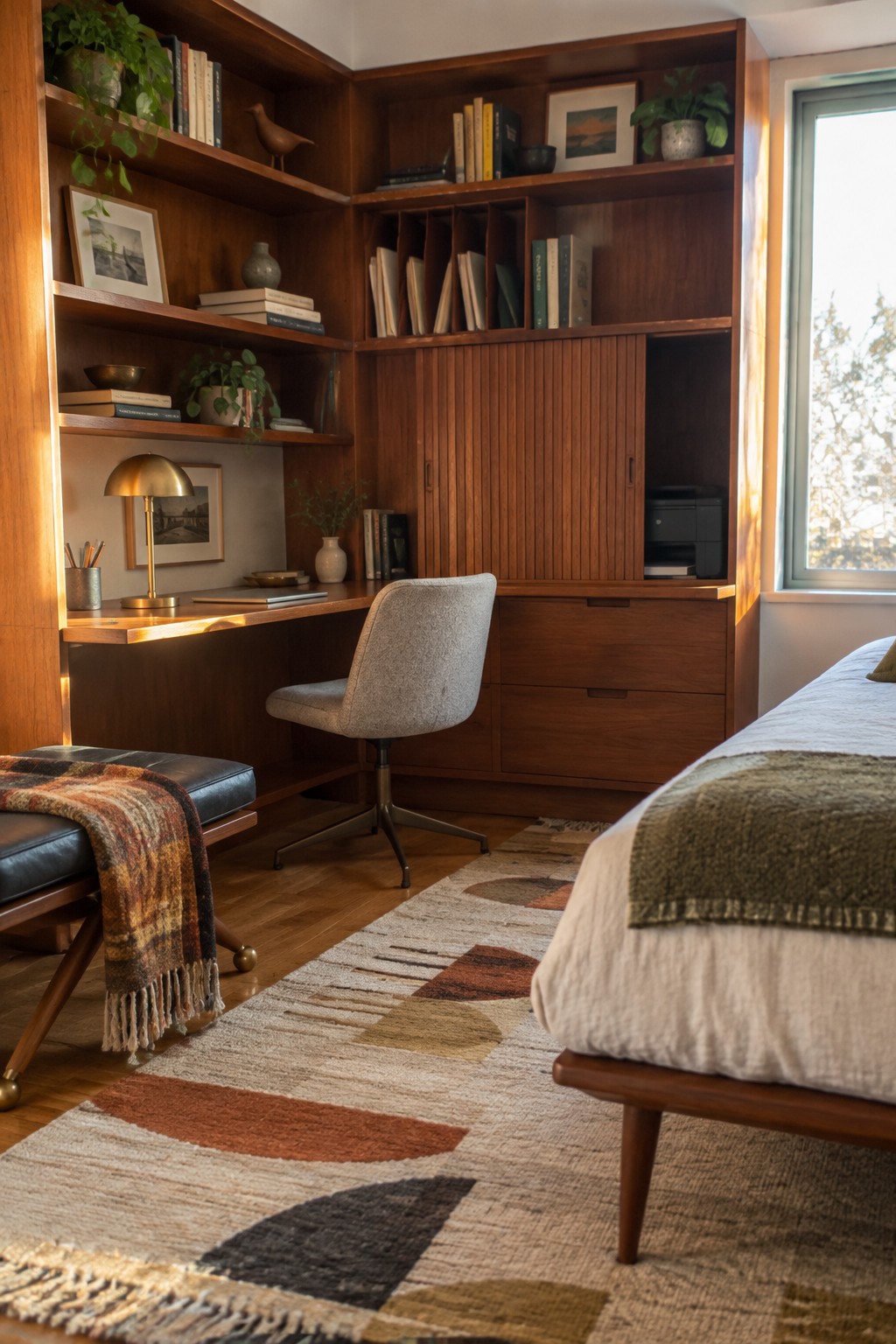
Built-in desk and shelving units work well when a bedroom needs to double as a workspace. They give you storage at arm’s reach without adding extra furniture that can crowd the room. The continuous wood surface and hidden drawers keep papers and supplies out of sight while still leaving the desk clear for daily use.
This approach suits smaller homes or guest rooms that serve multiple purposes. It works best when the unit runs along one wall and matches the room’s trim and flooring so the whole setup feels like part of the space rather than an add-on. Keep the open shelves for a few books and plants, and reserve the closed sections for anything you want out of view.
Hide the Desk Behind Sliding Screens
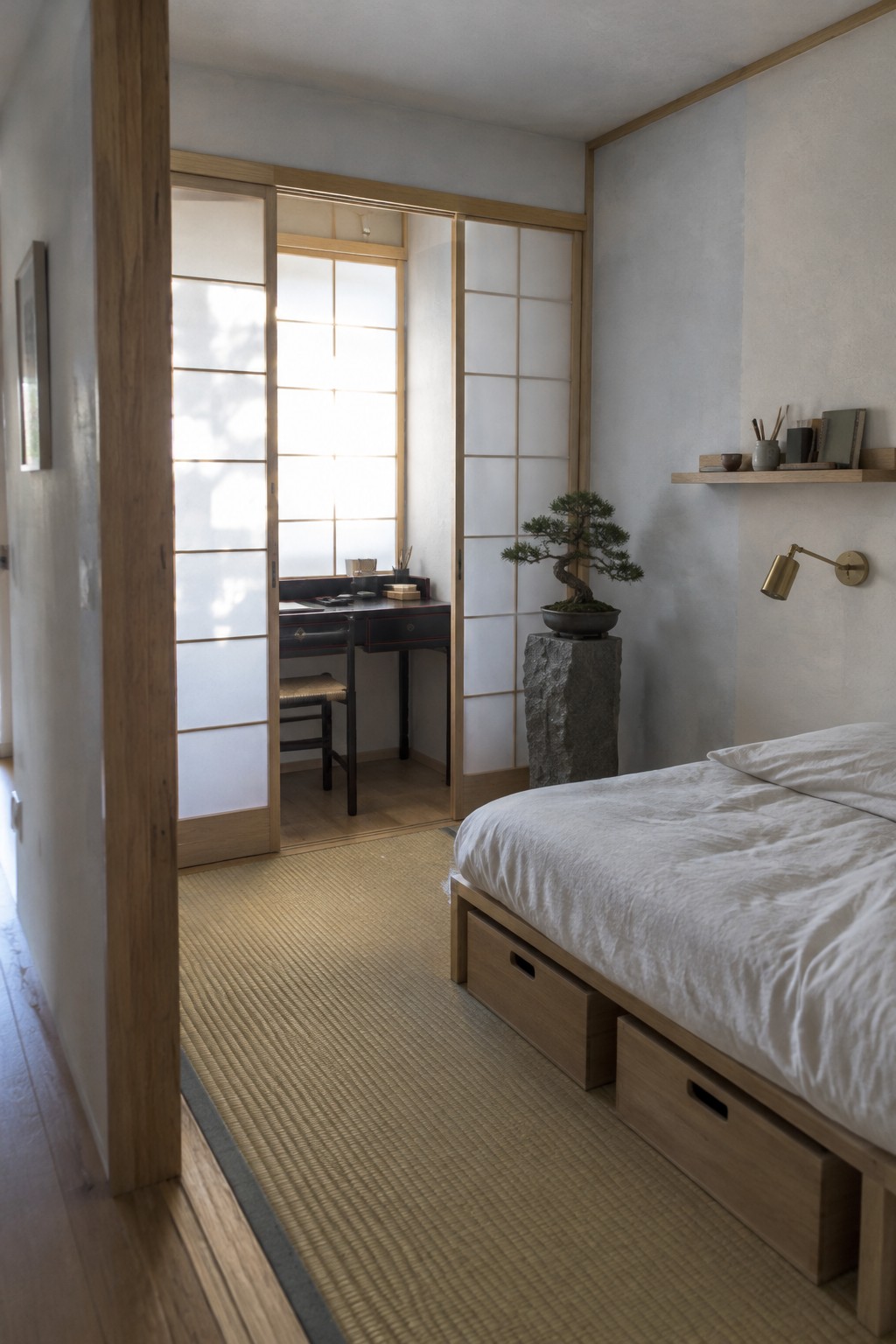
One simple way to keep a bedroom from feeling like an office is to tuck the desk into its own small alcove and close it off when you are done working. Sliding screens let you do that without building walls or losing natural light.
This approach works well in smaller bedrooms or apartments where space has to serve two purposes. Pair the hidden desk with low storage drawers under the bed so papers and supplies stay out of sight but still within reach.
Loft Beds Create Space For A Compact Office Below
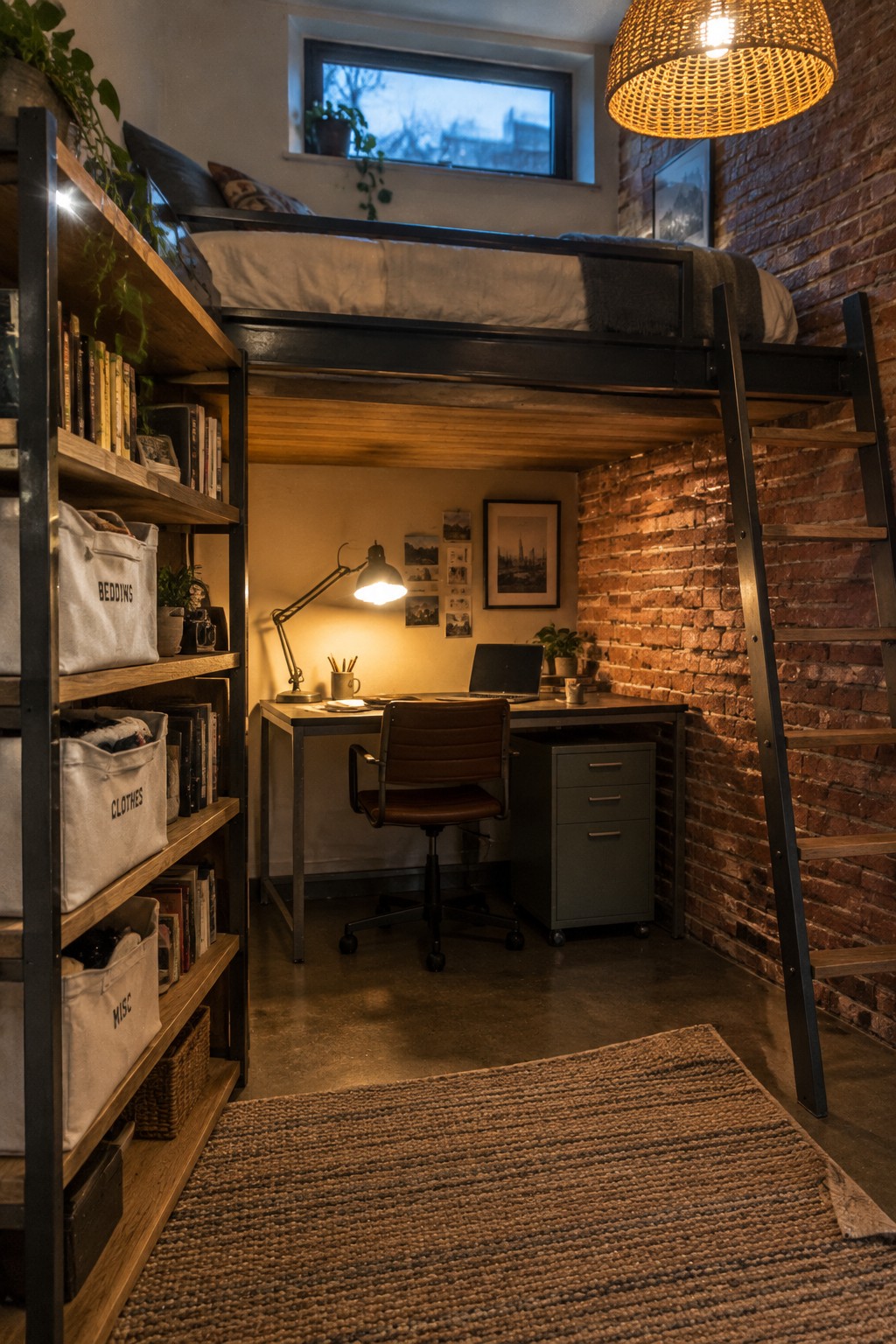
Many small bedrooms struggle to fit both a bed and a proper desk without feeling cramped. Raising the bed on a loft frame opens up the floor below for a workstation, letting you keep the room functional instead of sacrificing one use for the other.
This approach suits studio apartments and guest rooms that double as offices. Tuck a filing cabinet under the desk for papers and use nearby shelves for books and supplies so the work area stays tidy without extra furniture crowding the floor.
Built-In Window Desks For Bedroom Offices

Built-in cabinetry around a window turns an awkward spot into a practical workstation without eating up floor space. The shelves and drawers give you room for papers, books, and supplies while keeping everything behind closed doors when you want the room to feel like a bedroom first.
This setup works best in smaller bedrooms where a freestanding desk would crowd the floor. Keep the finish the same as your other built-ins so the desk blends in rather than stands out as a separate piece of furniture.
Hide Your Desk Behind Closet Doors
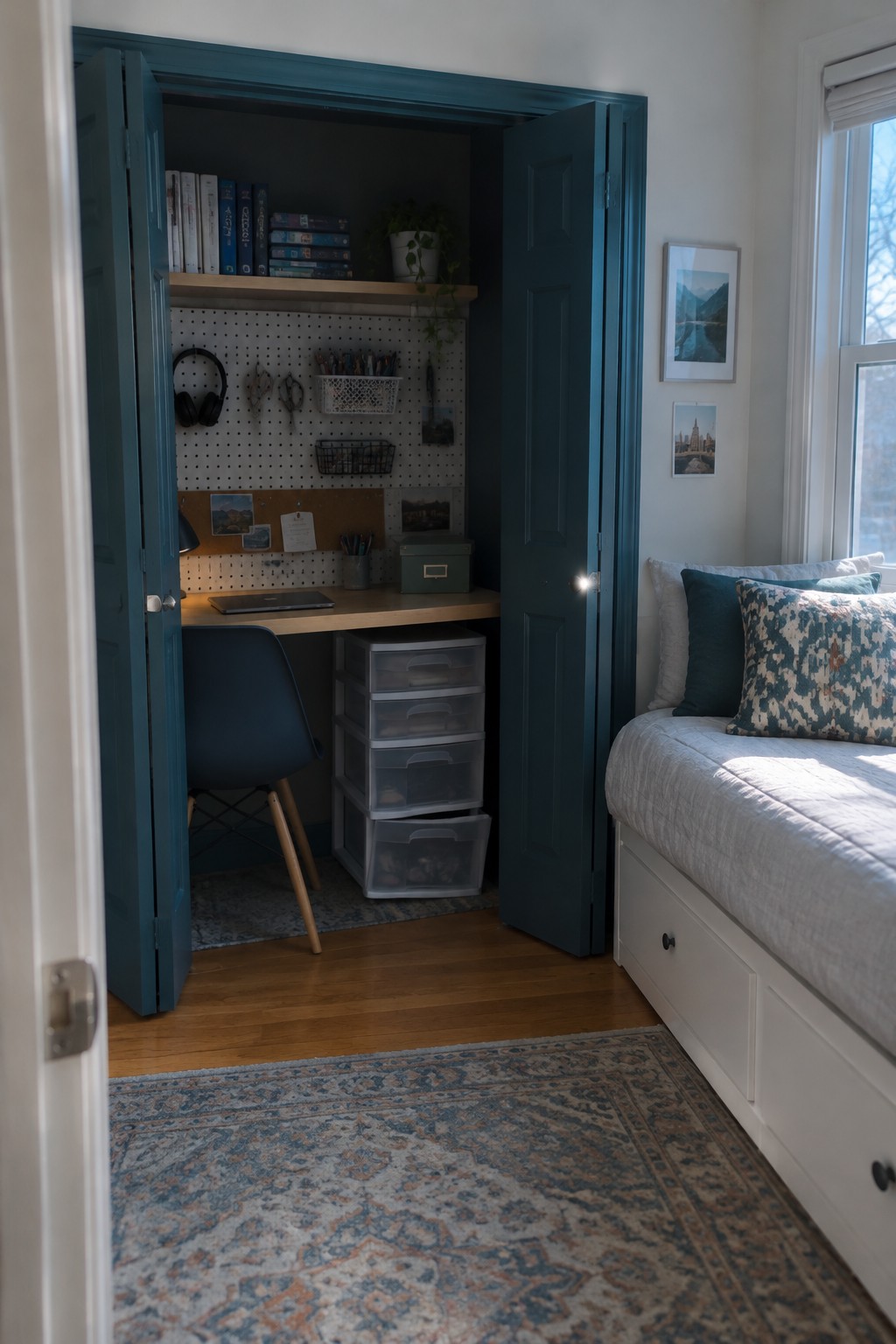
One idea that works well in smaller bedrooms is tucking the workspace behind a pair of doors. It lets you close everything away at the end of the day so the room still feels like a place to rest.
This setup works best when you have a narrow closet or alcove to work with. Add a pegboard for tools and some drawers underneath the desk to keep papers and supplies out of sight.
Built-In Desks Behind The Bed
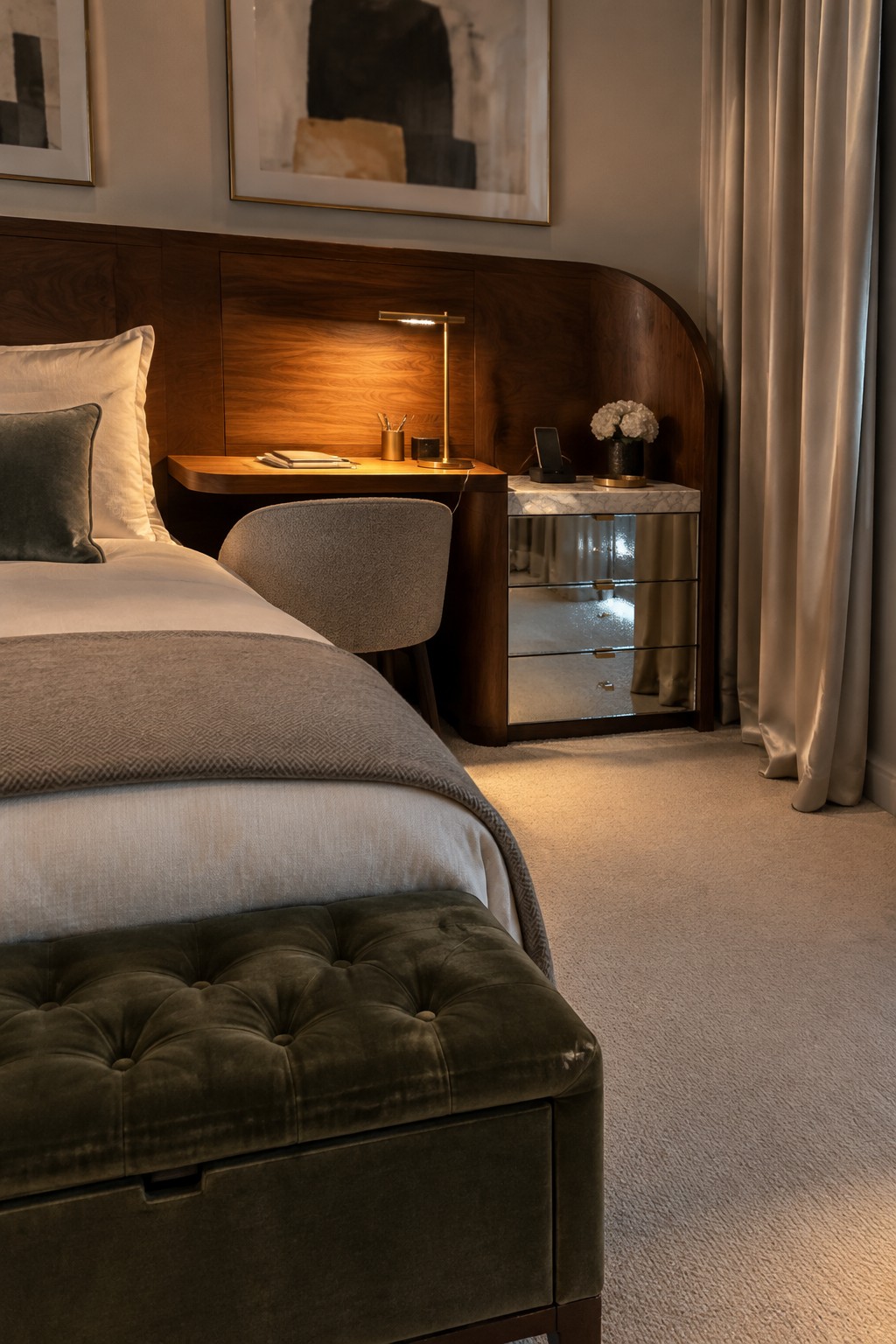
A built-in desk tucked into the wall behind the bed gives you a workspace without eating up extra floor space. It keeps the room feeling open while still giving you a spot to work, and the surrounding wood paneling helps the whole thing blend in rather than stand out as office furniture.
This setup works best in smaller bedrooms where a freestanding desk would feel too big. Add a low chest with drawers nearby to hold papers, chargers, and other supplies so the surface stays clear at the end of the day.
Labeled Bins On Wall Shelves
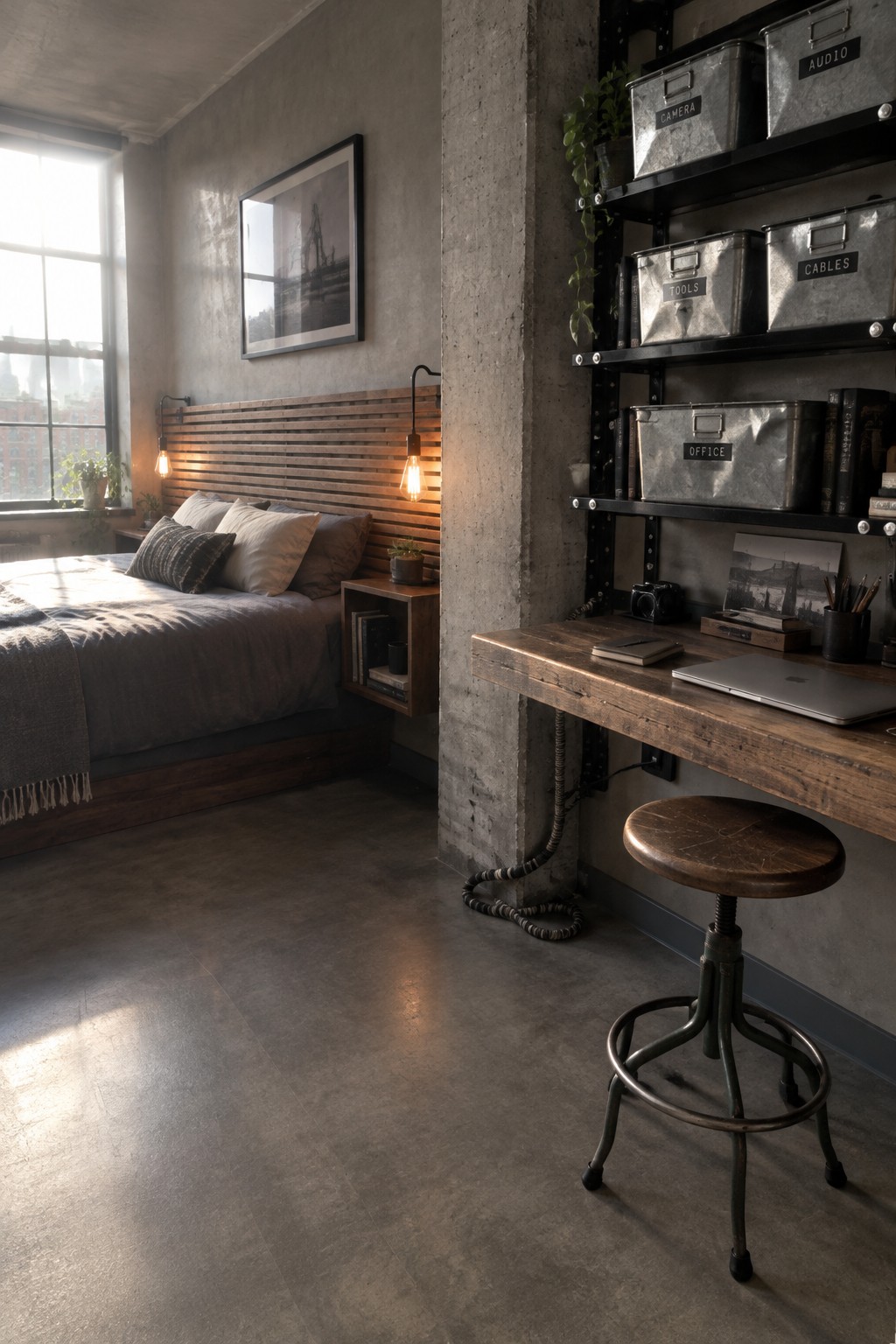
One simple way to keep a bedroom office tidy is to move storage up onto the wall. Labeled bins let you see what is inside at a glance and keep small items from piling up on the desk or floor.
This setup works best in rooms where space is limited. Mount strong open shelves above the desk, choose bins that match in size and style, and group things like cables, tools, and papers into their own containers so the surface stays clear for work.
Window Seat Storage For Bedroom Offices
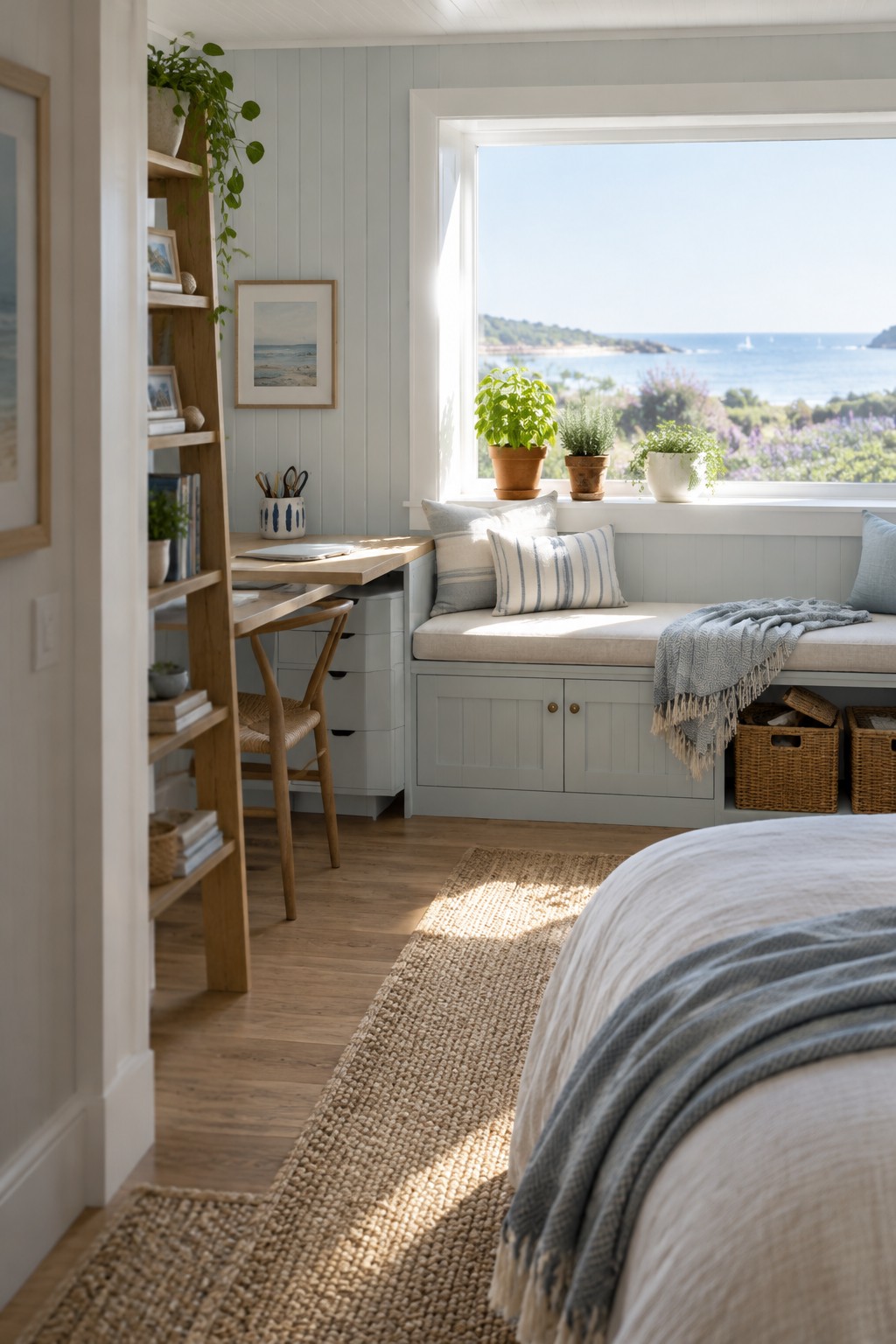
A window seat with cabinets below gives you a built-in spot to store office supplies, files, and other items that would otherwise pile up on the desk. This setup keeps the work area clearer while still making use of the space under the window.
It suits smaller bedrooms where every bit of storage counts. Place the desk nearby so the seat can double as extra seating or a spot to spread out papers when needed. Just check that the cabinet doors have enough room to open without hitting the desk chair.
Built-In Shelving Keeps A Bedroom Office Organized
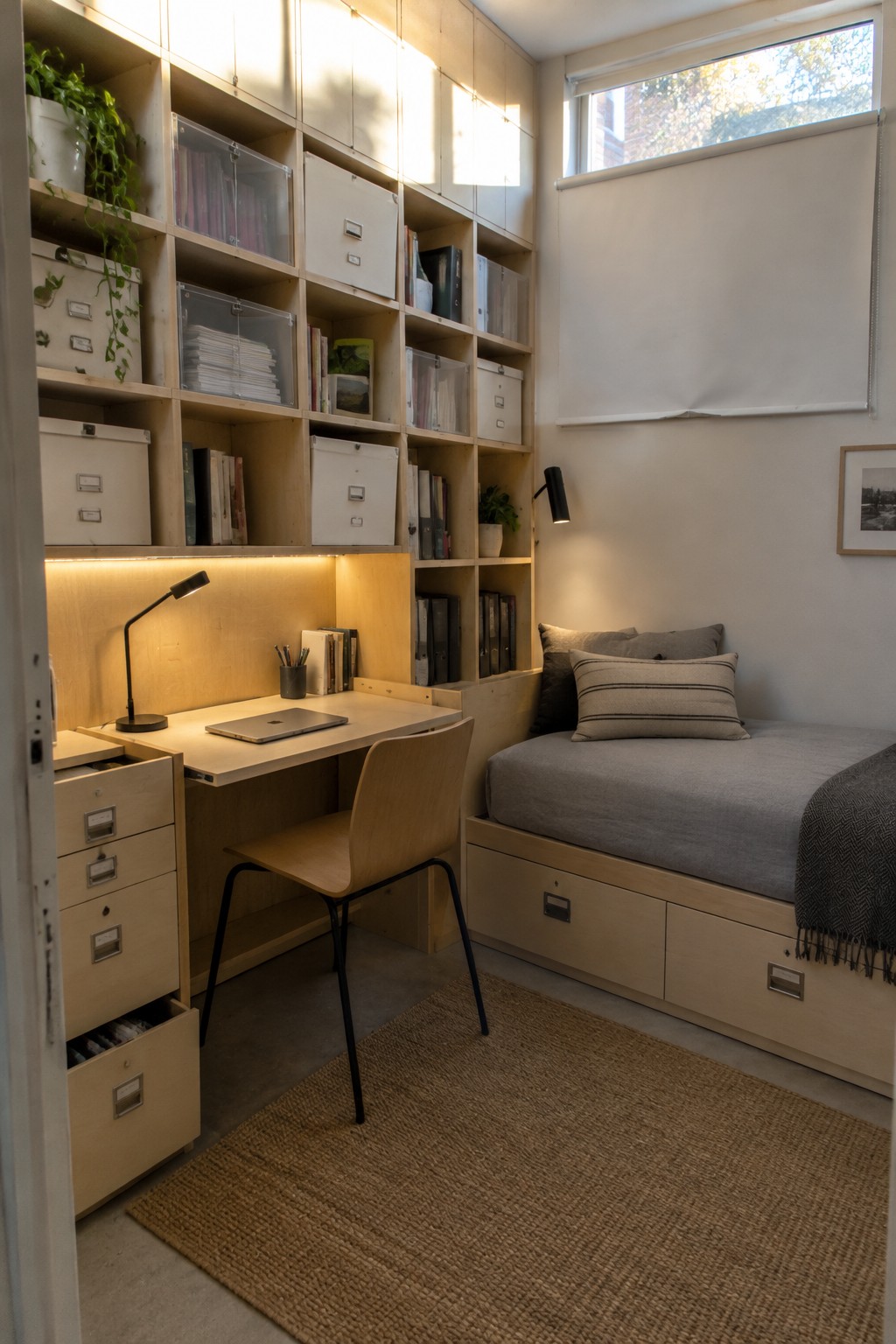
Small rooms often need every inch of wall space to do more than one job. Here the shelves run from floor to ceiling around the desk, turning what could be empty wall into rows of boxes, files, and books that stay off the work surface. The desk itself sits in a shallow nook so the chair can tuck in without blocking the rest of the room.
Under-bed drawers take care of the overflow that does not need to be reached daily. This kind of built-in wall works best in apartments or guest rooms where floor space is limited and you want the room to feel calm rather than crowded. Keep the cubbies fairly shallow so the wall does not push forward and shrink the room further.
Hide the Desk Behind Sliding Doors
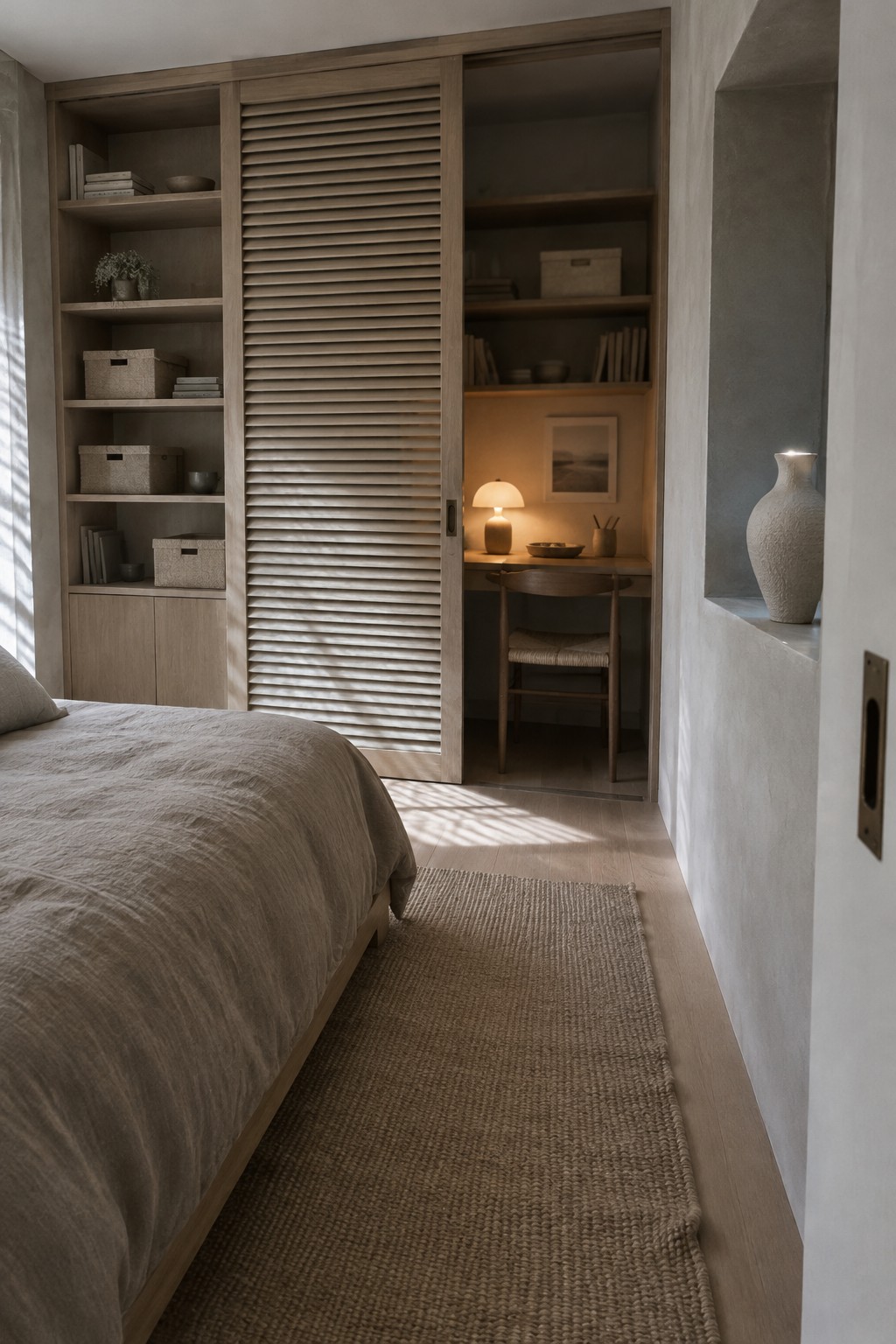
A small workspace tucked into bedroom storage can be useful, but only if it stays out of the way when you are done for the day. Sliding doors make that possible by covering shelves and a desk without taking up extra floor space or requiring a separate room.
This works well in bedrooms that already have deep closets or built-in units. Keep the door closed during rest hours and open it only when you need to work so the room does not start to feel like an office all the time.
Use a Corkboard for Everyday Notes and Reminders
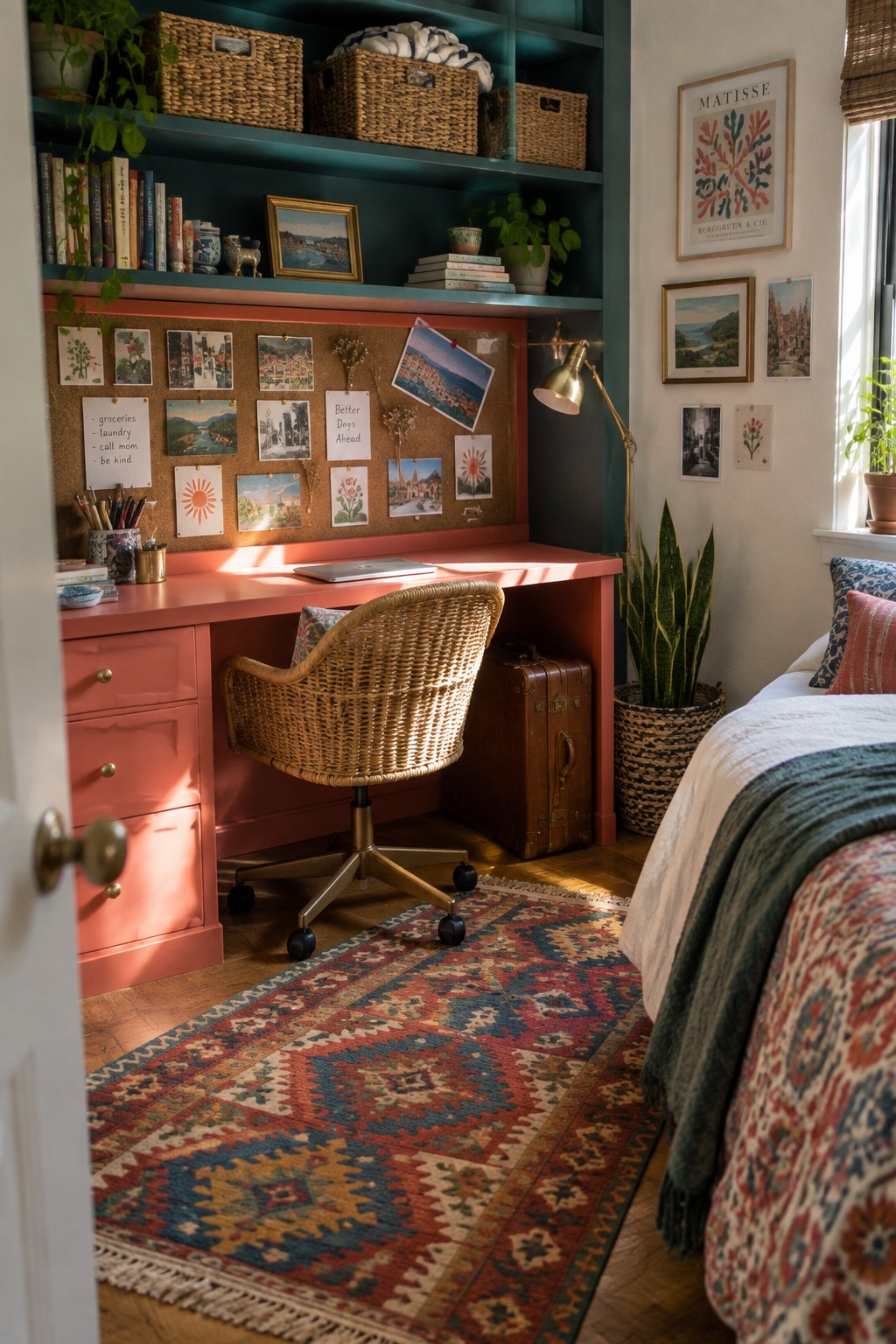
A corkboard mounted right above the desk gives you a simple spot to pin lists, reminders, and small prints without letting papers pile up on the work surface. It keeps the desktop clear while still letting you see what matters most each day.
This works especially well in a bedroom office where space is tight. Hang it at eye level from your chair, and swap items out every few weeks so the board stays useful instead of turning into another layer of clutter.
Pegboard Storage Keeps Supplies Within Reach
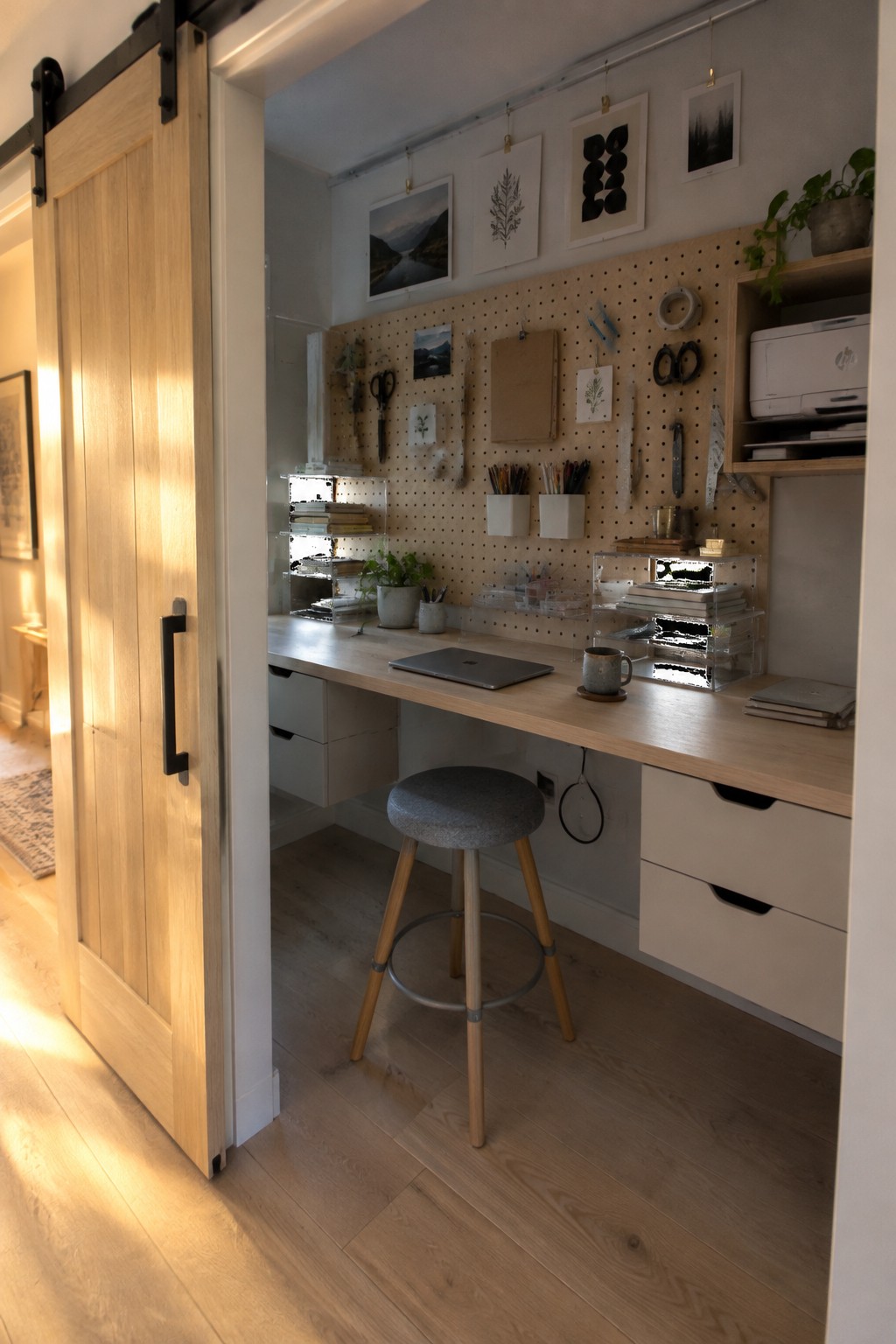
A pegboard wall above the desk gives you a simple way to store everyday office items without crowding the surface. It turns an empty wall into usable space while keeping pens, scissors, and notebooks visible and easy to grab.
This setup works best in smaller bedrooms or guest rooms where floor space is limited. Mount the board at a comfortable height, add a few cups and hooks for what you reach for most often, and leave the rest of the wall open so the area still feels calm.
Built-In Cabinets Keep Desk Supplies Out of Sight

Built-in cabinets above a desk give you real storage without crowding the room. They turn an empty wall into useful space for binders, baskets, and supplies that would otherwise pile up on the work surface.
This approach works best in bedrooms that double as offices. Closed doors hide the mess while open shelves hold things you use every day, so the desk stays clear and the whole space feels calmer.
Frequently Asked Questions
Q: My desk always ends up covered in papers by the end of the week. How do I stop that?
A: Grab a simple folder or tray that fits on a shelf nearby. Sort papers into it each evening before you wrap up work. This keeps the surface clear for the next day.
Q: What works for hiding all those wires from my laptop and lamp?
A: Run the cords along the back of the desk and secure them with clips. Then tuck the excess into a small basket underneath. You will not trip over them or see the mess anymore.
Q: I have no room for big storage units in my small bedroom. Any ideas?
A: Look up instead. Mount a few narrow shelves above the desk for books and supplies. You free up floor space without adding clutter below.
