


When I set up a room that doubles as a bedroom and office the wood finishes end up shaping how the space feels day to day more than any single piece of furniture.
Green walls help quiet the work side of the room but only when the surrounding wood tones keep everything from looking patched together.
The right finish makes the whole layout feel settled.
I have found that mismatched grains and stains tend to stand out once the desk is actually covered in papers and the bed is unmade.
A few of these coordinated approaches look worth testing in a real layout to see which ones hold up once the room is in daily use.
Matching Wood Tones Across The Room
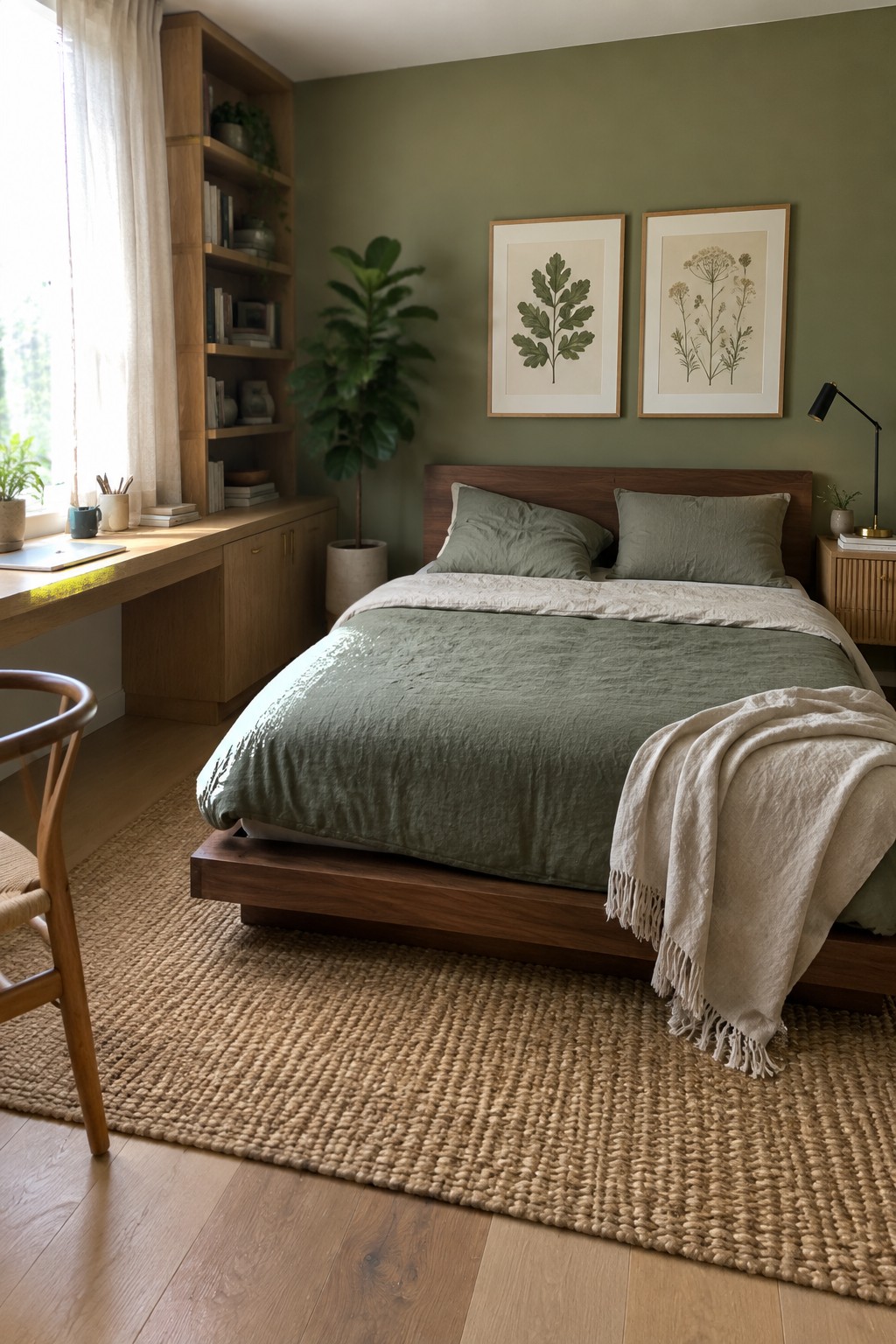
One of the simplest ways to make a green bedroom feel pulled together is to use the same wood finish for the bed, desk, and shelving. The warm oak tones here link the sleeping area with the workspace without adding extra color or contrast. It keeps the room calm even though it serves two functions.
This approach works especially well in smaller bedrooms where you want the space to feel quiet rather than busy. Stick with one wood tone throughout and let the green walls do the rest of the work. It suits homes that already lean toward natural materials and simple layouts.
Built-In Green Cabinetry For A Bedroom Office

One way to fit a workspace into a bedroom without it taking over is to use built-in cabinetry that holds the desk, shelves, and storage all in one unit. The deep green finish on the cabinets helps the office area blend into the room instead of standing out as a separate zone.
This setup works best in rooms that already have some wood tones to balance the green. Keep the desk surface and smaller pieces like a nightstand in matching wood so the whole space feels pulled together rather than split between work and rest.
Green Cabinetry That Coordinates With Wood Tones

One way to keep a bedroom office from feeling like two separate spaces is to paint the desk cabinets the same green used on the walls. The matching finish makes the workspace read as part of the room instead of an added piece of furniture. The wood desk top and bed frame then provide the only contrast, which keeps the whole area calm and connected.
This approach works well in smaller homes where the bedroom has to serve double duty. Choose a soft green with some gray in it so the color stays quiet next to the wood. Avoid bright greens that can start to feel busy once the desk is in daily use.
Coordinating Wood Finishes In Green Bedroom Offices
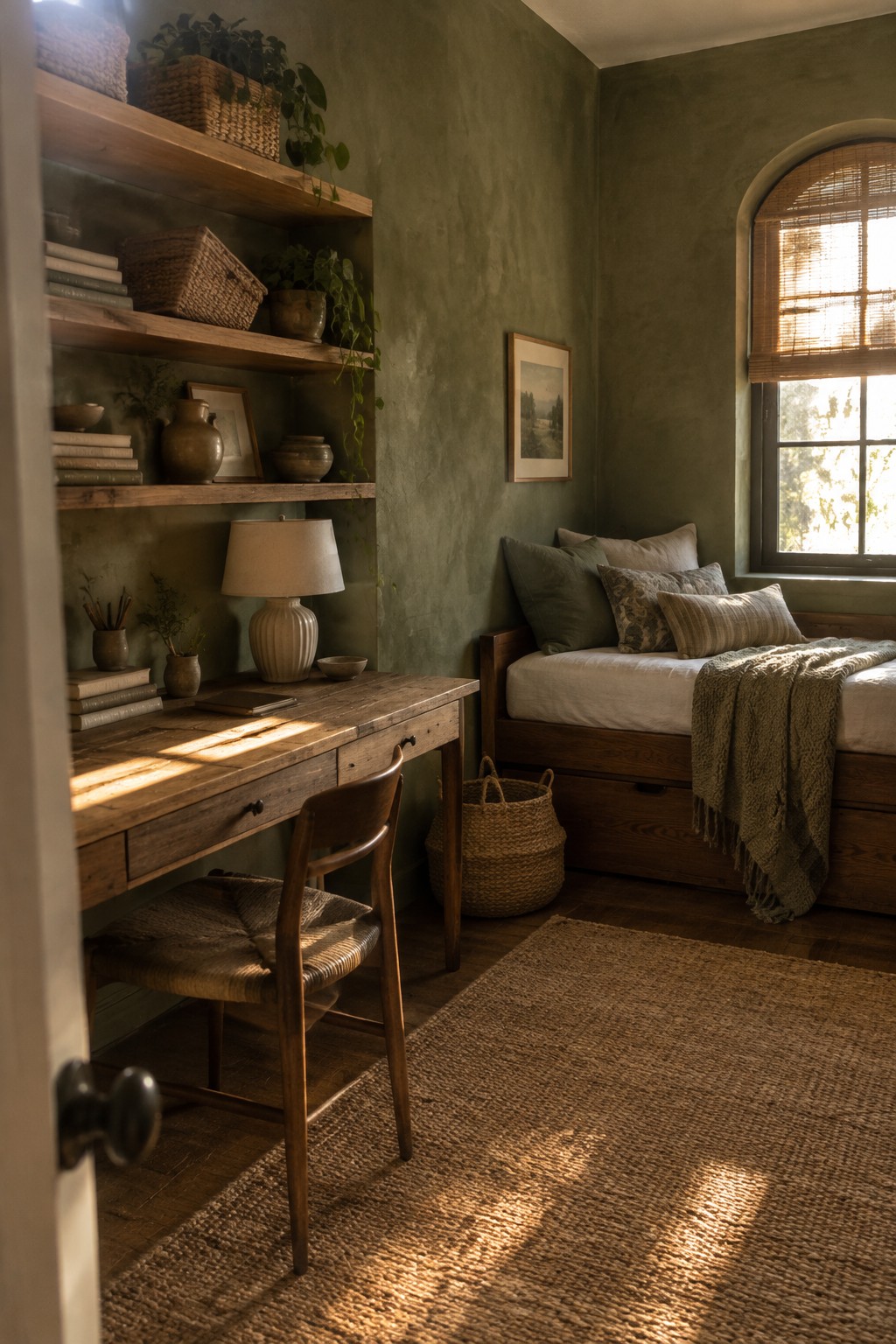
Using the same wood tone on the desk, bed frame, and shelves helps a green bedroom feel calm and connected even when it doubles as an office. The green walls keep the wood from feeling heavy, and the matching finishes make the room read as one space instead of two separate functions.
This approach works best in smaller homes or guest rooms where the desk needs to sit near the bed. Keep the wood finishes close in color and avoid adding too many other materials. It suits older houses with existing wood floors or trim that can tie in easily.
Coordinating Wood Finishes For A Bedroom Desk

One simple way to add a workspace to a bedroom without making it feel separate is to match the desk wood to the bed frame and headboard. The same tone runs through both pieces here, so the desk sits naturally along the wall instead of standing out as office furniture.
This approach works best in rooms that already use wood as the main material. Keep the desk low and narrow, and let the wall color do the rest of the work. A darker green behind it helps the wood stand out just enough without fighting for attention.
Match the Wood Tones
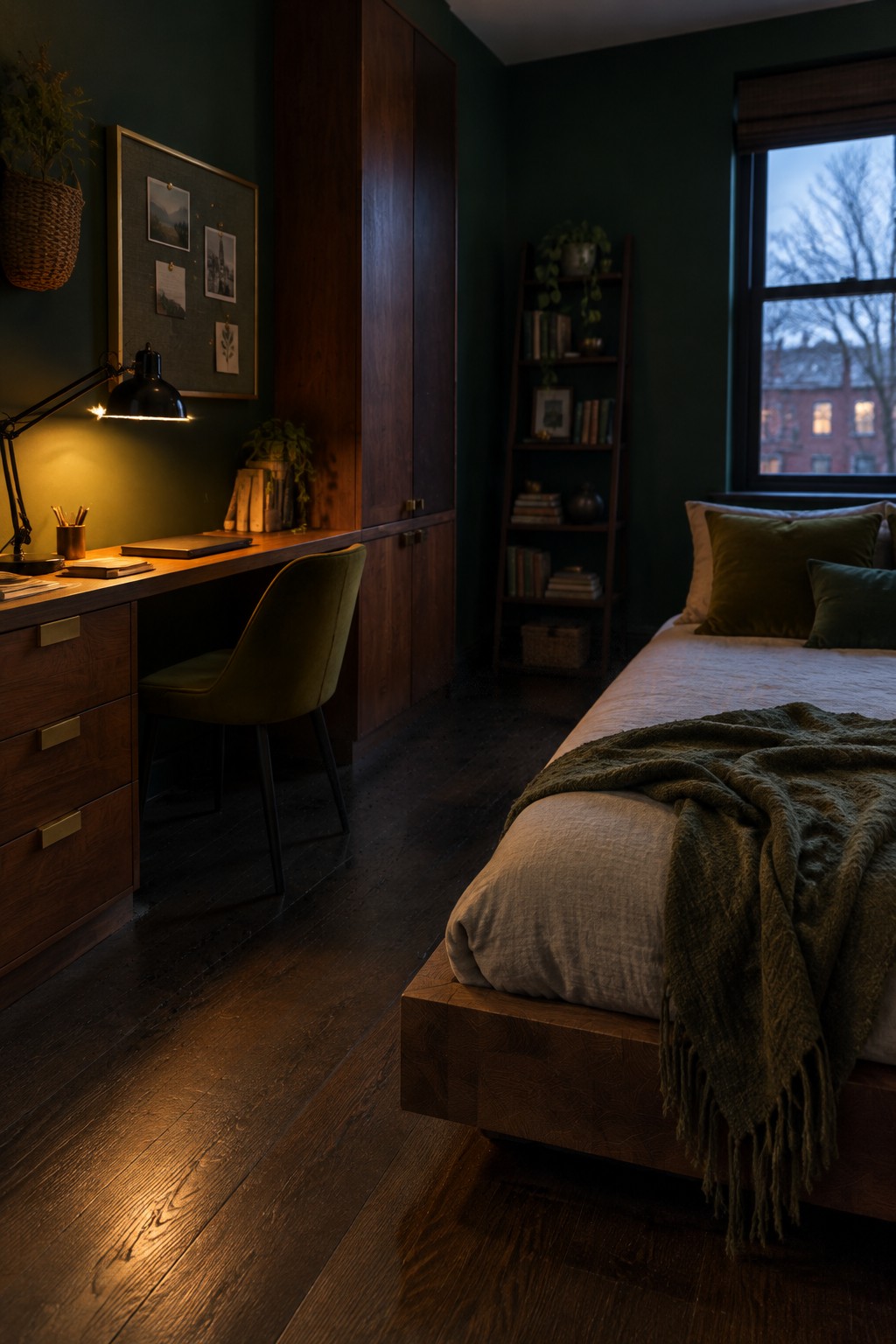
Using the same wood finish on the desk, bed frame, and tall storage cabinet helps the bedroom and workspace read as one calm space. The dark tone stands out against the deep green walls without adding extra contrast that might split the room in two.
This approach works best in smaller homes where the bedroom has to pull double duty. Stick with one wood color and let the green paint do the rest of the work.
Built-In Desk And Shelves In Matching Wood Tones

Using the same light wood for the desk, floating shelves, and window seat makes the workspace feel like it belongs in the bedroom instead of sitting on its own. The consistent finish keeps the green walls and bedding from feeling too divided, and the whole area stays calm even with books and a laptop out.
This setup works best in smaller bedrooms or guest rooms that double as an office a few days a week. Keep the hardware simple and match the wood tone across every built-in so the storage under the window does not break the flow.
Coordinating Wood Finishes With Green Walls
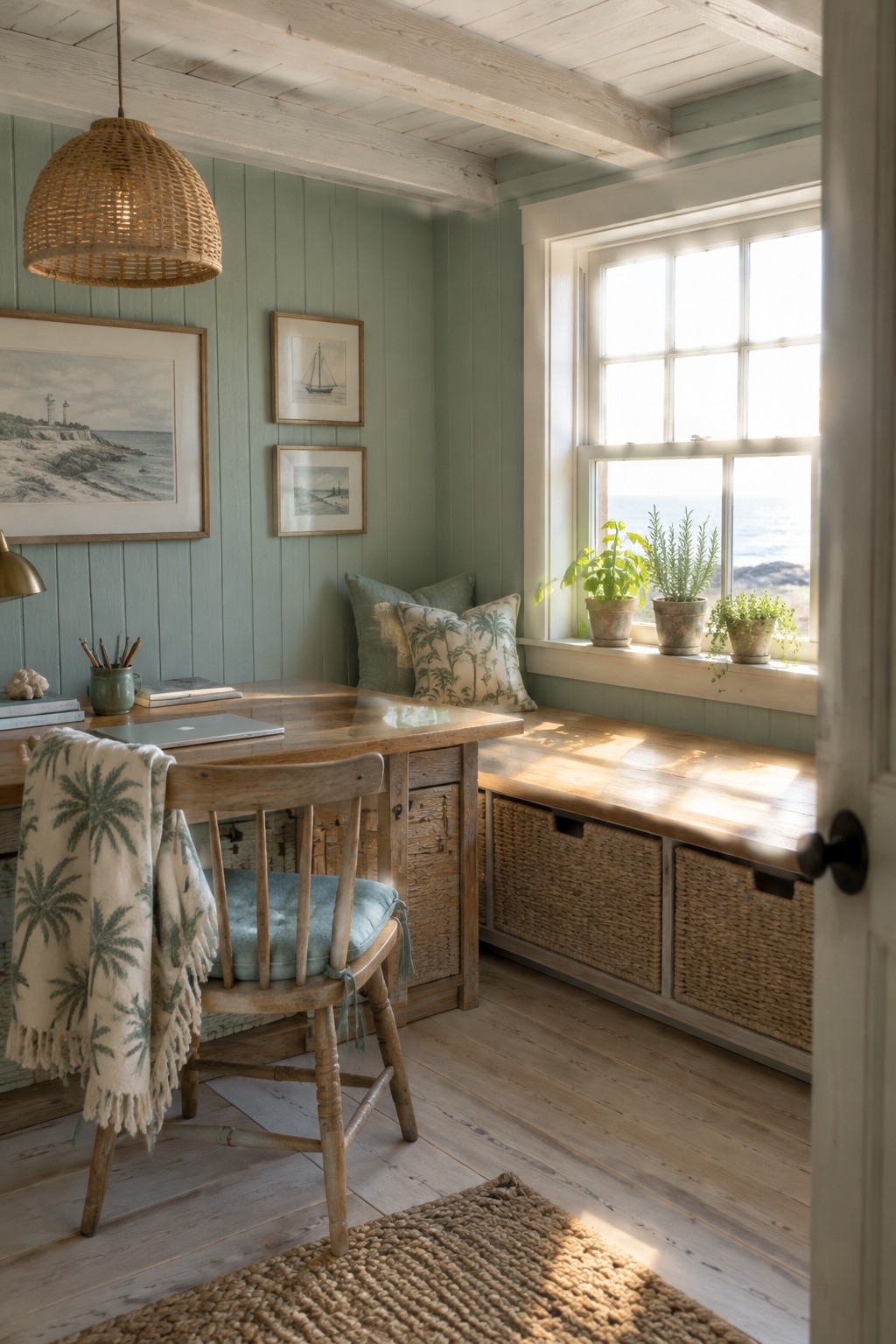
One simple way to keep a green bedroom office from feeling scattered is to match the wood tones on the desk, chair, and any built-in seating. The same warm finish pulls everything together and lets the soft wall color stay the main focus.
This works best in smaller rooms where you want the space to feel calm and useful at the same time. Stick with natural wood rather than painted pieces, and let the grain show so the finishes read as one material even if the furniture styles differ slightly.
Coordinated Wood Finishes in Green Bedroom Offices

Using wood finishes that match across the desk, bed frame, and nightstands helps a green bedroom feel like one complete space instead of two separate areas. The warm tones of the furniture stand out nicely against the deep green walls and keep the room from feeling too dark or flat.
This works best in smaller homes where the bedroom doubles as a workspace. Stick with similar wood tones throughout and let the green paint do most of the color work so the furniture can tie everything together without extra effort.
Matching Wood Finishes Across Bedroom And Desk Furniture

Carrying the same light wood tone from the bed and nightstand over to the desk and chair keeps the room from feeling split in two. The finish ties the sleeping area and workspace together without needing extra walls or dividers, and the green paint on the back wall gives the wood something simple to sit against.
This works best in smaller homes or guest rooms that need to handle both sleeping and working. Choose oak or ash pieces with similar grain and finish, then keep other materials like the rug or bedding in soft neutrals so the wood stays the main connection.
Coordinated Wood Finishes For A Bedroom Office

Matching the wood tones across the bed frame, desk, and shelving helps a bedroom feel like one complete space even when it includes a workspace. The consistency keeps the room from splitting into separate zones that fight each other visually.
This works best in smaller homes or guest rooms that need to handle both sleeping and working. Limit yourself to one main wood finish and let the green walls and textiles handle the rest of the mood.
Matching Wood Finishes on Loft Beds and Desks
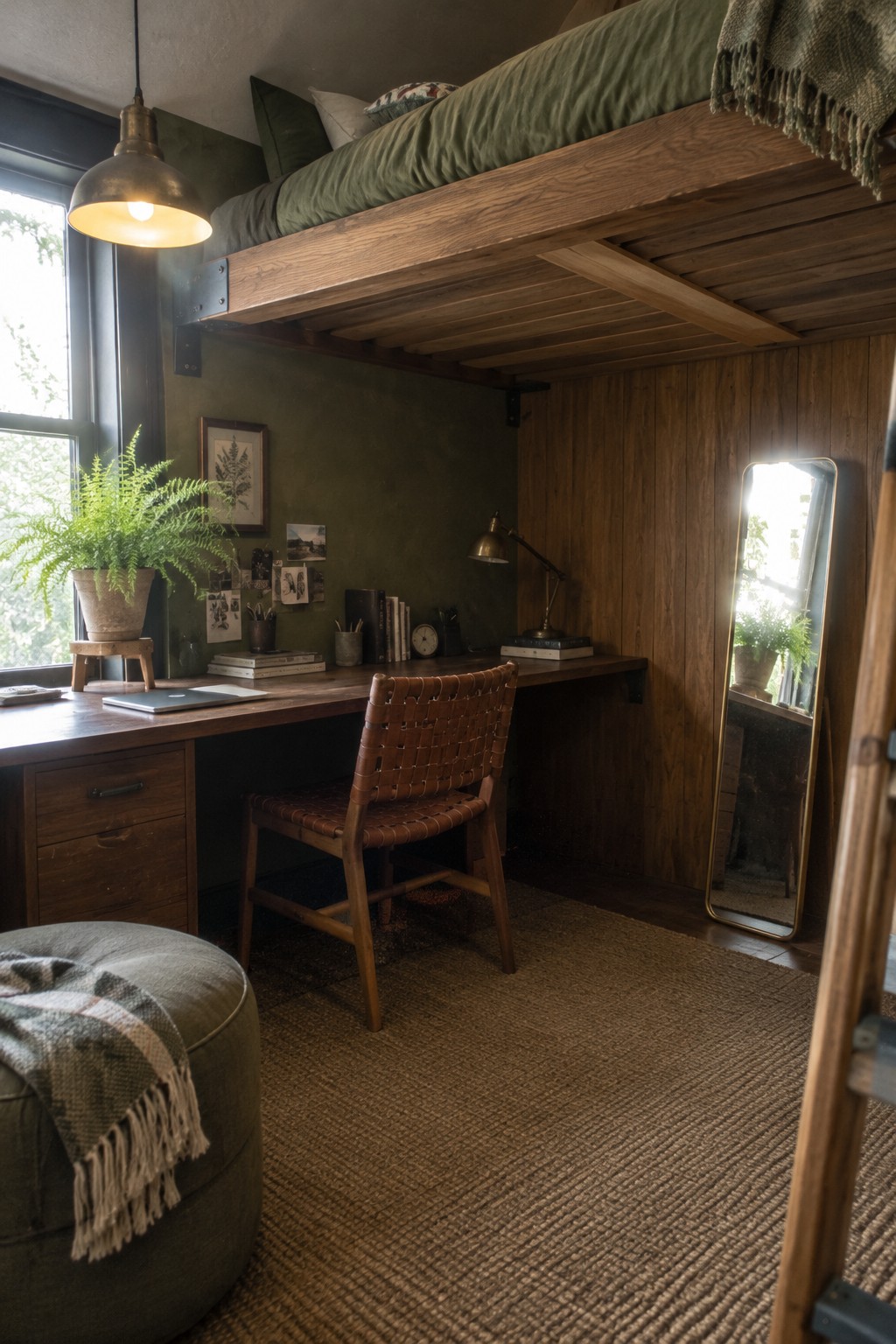
A loft bed built with the same wood tone as the desk below it keeps the whole setup from feeling like two separate pieces jammed together. The matching finish lets the eye move easily from the bed frame down to the work surface, which helps a small room feel more organized even when it has to handle both sleeping and working.
This approach works best in tighter bedrooms where you need the vertical space but still want a calm, put-together look. Stick with one wood species or a close stain match across the main built elements, and keep other materials like the chair or rug in softer textures so the wood does not overwhelm the green walls.
Built-In Cabinetry Painted to Match Bedroom Walls

Painting built-in storage the same color as the walls helps a bedroom office feel calmer and more put together. The cabinetry blends into the background instead of breaking up the space, which leaves more room for the wood desk and chair to stand out without competing.
This approach works best in smaller bedrooms where you need both sleep and work areas. Stick with warm wood tones on the desk and seating so the green does not take over, and keep the shelves functional rather than overly styled.
Coordinating Wood Finishes In Green Bedrooms
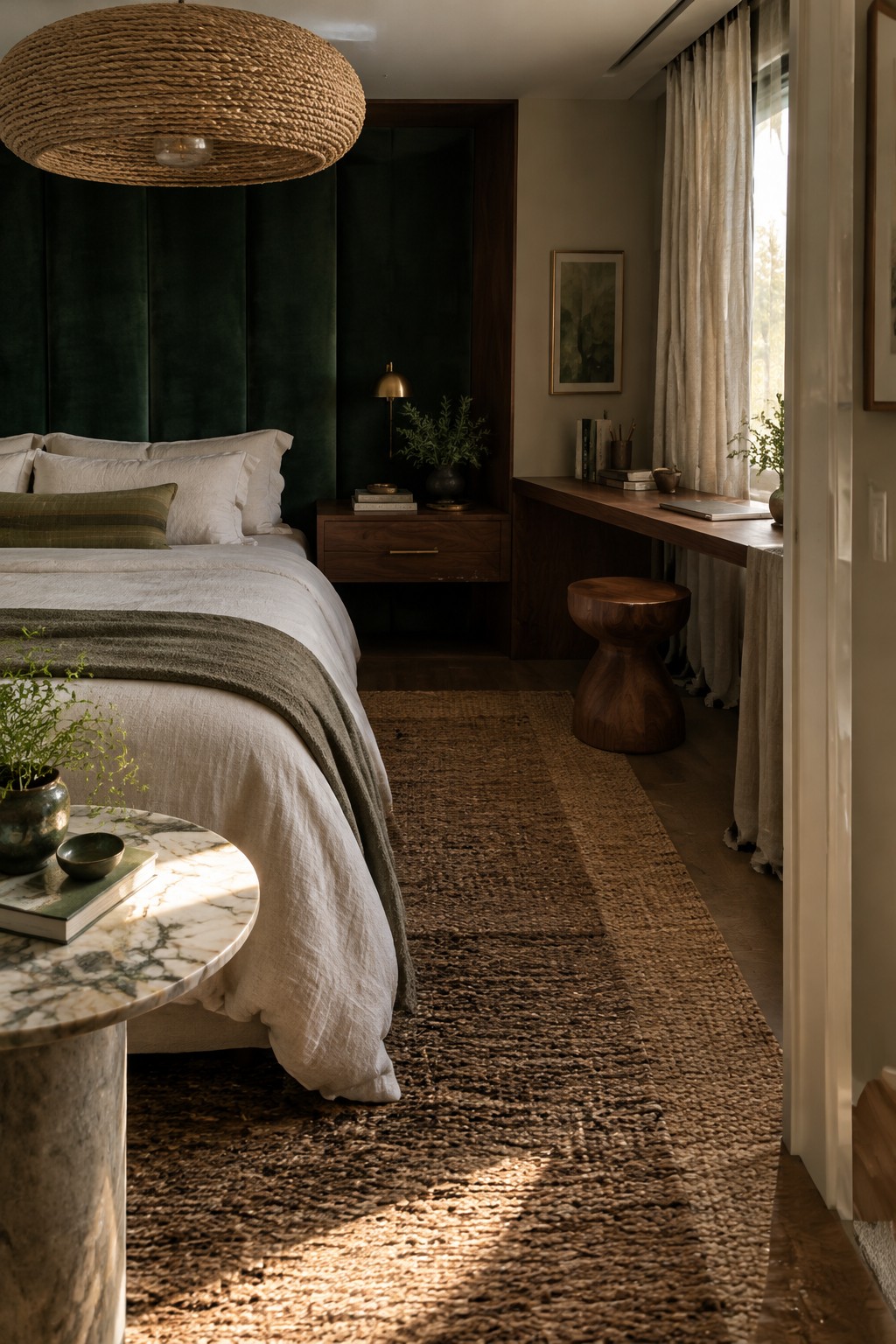
Matching the wood tones on the desk, nightstand, and stool helps a bedroom with a workspace feel pulled together instead of divided. The deep green wall gives the room its main color, while the consistent wood keeps the furniture from competing with it or with each other.
This setup works best in rooms that need to handle both sleeping and working without feeling cramped or cluttered. Choose woods with similar warmth and grain so the pieces read as part of one scheme rather than separate purchases.
Coordinated Wood Finishes In A Green Bedroom Office

Matching the wood tone across the desk, bed frame, and bookshelf keeps a room that doubles as a bedroom and office from feeling split in two. The same finish ties the workspace to the sleeping area so the whole space reads as one calm room instead of two separate zones.
This approach works best in smaller homes where the bedroom has to handle work as well. Choose one wood species or stain and repeat it on the main pieces, then let the green walls do the rest of the work.
Match Wood Tones Between Bed and Workspace
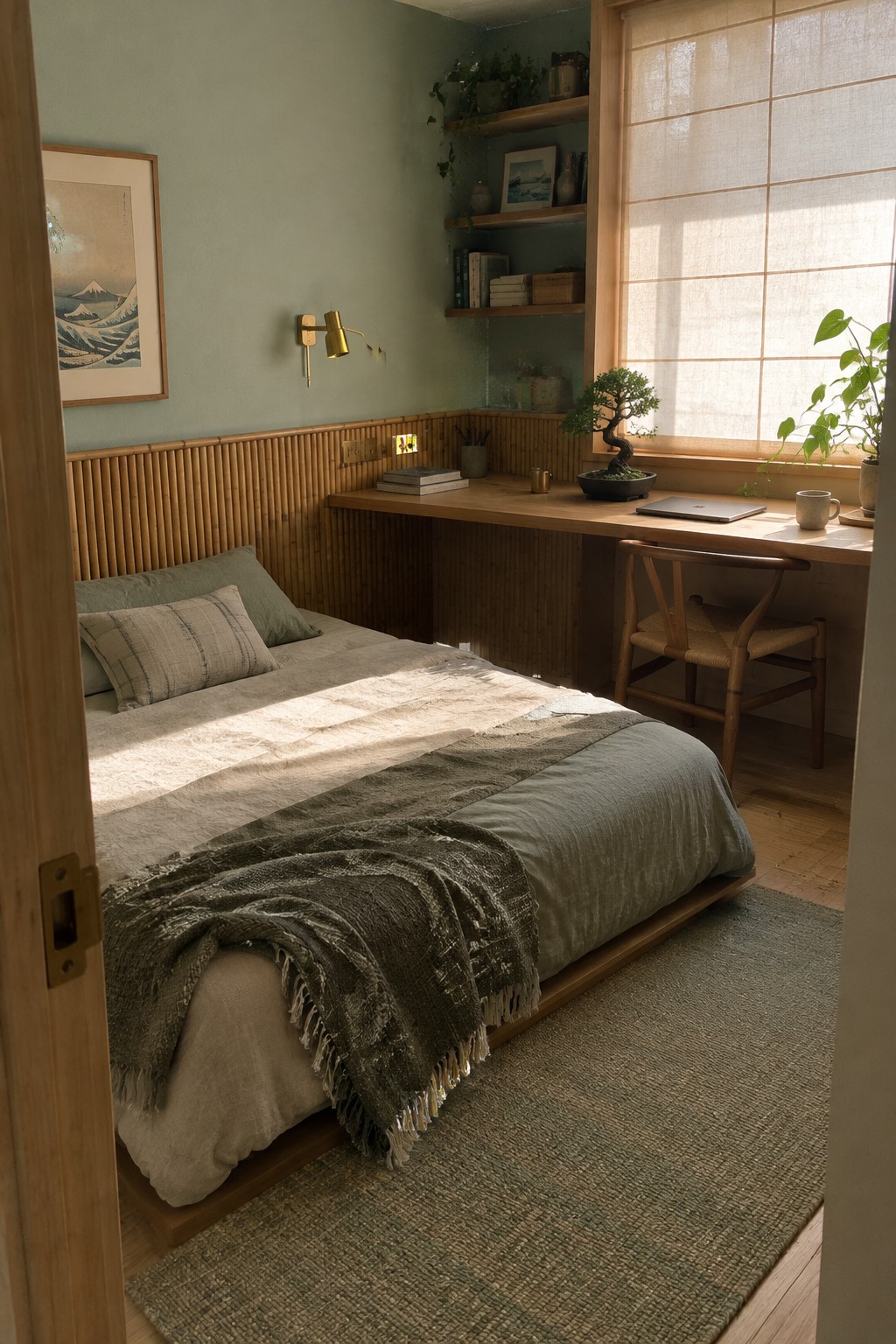
One simple way to make a green bedroom office feel settled is to carry the same wood tone from the bed frame through to the desk and any wall paneling. The match keeps the room from splitting into two separate zones even when the layout puts the workspace right next to the bed.
This works best in smaller rooms where you need the space to feel calm rather than busy. Stick with one or two wood species and finishes so the bamboo, oak, or pine all sit at the same warmth level.
Using Matching Wood Finishes in a Green Bedroom Office

One wood tone running through the desk, headboard, and floor keeps the room feeling connected even with the strong green walls. The green stays the main color while the wood gives everything a steady base that does not fight for attention.
This works best in smaller homes where the bedroom also needs to function as a workspace. Stick with the same finish on any new pieces you add and skip mixing oak with pine or light with dark.
Coordinating Wood Finishes In A Green Bedroom Office

One idea that works well in combined spaces is sticking with the same wood finish for the main pieces of furniture. The desk and bed frame share a similar light tone here, which helps the room feel calm and organized instead of busy.
This approach suits smaller homes or apartments where one room needs to handle both work and rest. Try to match the wood on the desk, bed, and any shelves so nothing stands out too much against the green walls.
Frequently Asked Questions
Q: What woods work best together in a green bedroom office?
A: Pick two similar wood tones like oak and walnut. Use the lighter one for bigger pieces and the darker for accents. This creates balance without extra effort.
Q: How can I add green without repainting the whole room?
A: Bring in a few green plants near the window. Hang some artwork with green tones above the desk. A throw blanket in green on the chair pulls it together too.
Q: My desk faces the bed. Will that feel odd with the wood finishes?
A: Keep the wood tones consistent between the desk and bed frame. It helps the two areas blend into one calm space.
Q: Do I need to match my window frames to the desk wood?
A: Only if they are both natural wood. Paint them a soft white instead to highlight the green and wood combo.
