


A small home office can feel cramped or comfortable depending on how the light falls across the desk and the rest of the room.
I’ve found that a single ceiling fixture often leaves awkward shadows, especially when a workspace shares a corner with another part of the home.
Layering a desk lamp with wall, floor, or indirect lighting can make it easier to focus while keeping the room useful after work hours.
The best solutions also fit the layout, avoid adding clutter, and make the space feel connected to the home around it.
Some of these ideas may be worth trying with the lamps and surfaces you already have.
Use Layered Lighting At A Small Desk

A small workspace feels more useful when light comes from more than one source. A wall lamp can handle general light while an adjustable desk lamp shines directly on your work, so you can keep the desk clear and aim the light where you need it.
For a compact office or bedroom desk, choose fixtures that attach to the wall or have a small base. Use warm bulbs for a comfortable feel, but make sure your task light is bright enough for reading and writing.
Add Task Lighting to a Small Office

A focused desk lamp is a practical choice for a small home office. It puts light where you need it for reading or working, without requiring a large overhead fixture. Here, an adjustable lamp sits at the edge of the desk, leaving the work surface mostly clear.
Choose a lamp with an arm you can move as your tasks change, and aim it away from your screen to reduce glare. It works especially well in a tucked-away desk area where there is little room for extra lighting.
Use A Desk Lamp For Focused Light

A desk lamp is a practical choice for a small home office because it puts light where you need it without taking up much room. Here, a slim lamp leaves most of the desk free for work.
Choose a lamp with a compact base and an adjustable shade so you can direct the light onto your work area. A warm bulb can make evening work more comfortable, but keep the beam off your screen to reduce glare.
Use Task Lighting To Make A Small Office More Practical

A desk lamp gives you focused light right where you need it, so you do not have to rely on one bright ceiling fixture. A curved lamp that reaches over the work surface can keep the desk clear and light a notebook or keyboard without taking up much room.
Place the lamp near the back or side of the desk, and angle it to avoid glare on screens. In a small office, choose a compact design that fits the desk and provides enough light for the work you do.
Use Built-In Lighting Around a Fold-Down Desk

A small office can feel more comfortable when its lighting is built into the workspace. A wall-mounted picture light brightens the desk area without taking up room on the work surface, which is useful when the desk folds away or has limited space.
Place the fixture so it lights the work surface evenly, and add a dimmer if you want softer light outside work hours. A warm bulb works well in a compact office, but make sure it is bright enough for reading and close-up tasks.
Use a Pendant to Light a Narrow Office

A ceiling pendant can provide general light without taking up any desk space. In a small office, that leaves the work surface free while helping the room feel usable beyond the immediate pool of a desk lamp.
Choose a pendant that suits the room’s scale, and hang it high enough to keep the walkway clear. A warm shade works well in a book-lined office, but make sure the bulb is bright enough for everyday tasks.
Use Wall-Mounted Lighting to Free Up Desk Space

A wall-mounted desk keeps the work surface open, and a swing-arm lamp brings focused light right where it is needed. It’s a useful setup for a small office where every bit of desk space counts.
Choose an adjustable lamp that can reach your main work area, and aim it away from the screen to reduce glare. A plug-in model is easier to add than hardwired lighting, but plan the cord route so it does not get in the way.
Use a Window Desk for Daylight

A desk built into a window nook makes good use of a small area and brings daylight right to the work surface. It can also make a compact office feel like a natural part of the home rather than a separate room.
If you have a bay window or an underused alcove, a shallow built-in desk can fit neatly without taking up much floor space. Add a small lamp for cloudy days and evening work, and keep the desktop fairly clear so there’s room to work.
Use a Wall Sconce to Save Desk Space

A wall sconce can light a small office without taking up room on the desk. Here, the adjustable brass fixture directs light toward the work area while leaving space for books and an open notebook.
Choose a sconce with an arm you can move, so the light reaches the desk when you need it. It works especially well where the desk sits against a wall, though a separate task light may still help with close reading.
Use a Pendant to Light a Small Workspace

A pendant can bring useful light to a small office without taking up room on the desk. Here, the blue shade hangs over the work surface, leaving space for a separate lamp to focus light on a book or writing area.
Hang the pendant where it lights the desk without getting in the way of your view or movement. It works especially well above a compact desk, but keep a task lamp nearby for close-up work.
Use Under-Shelf Lighting for a Compact Desk

A short light strip mounted beneath a shelf can brighten a small desk without taking up any work surface. It gives you even light across the desk, which is handy for writing or using a laptop.
This works well in a kitchen nook or other spot where shelves sit above a desk. Choose a warm or adjustable strip, and position it toward the front of the shelf so the light reaches the work area rather than getting blocked.
Make Use Of A Sloped Ceiling

A desk tucked beneath a sloped ceiling can make an awkward attic corner useful without taking up much floor space. A roof window brings daylight to the work surface, while the angled ceiling helps define the office area.
Place the desk where you can sit comfortably without bumping your head, and keep the task light low enough to avoid glare on the screen. This setup suits small attic rooms, though it helps to leave enough clearance behind the chair.
Use a Table Lamp for Gentle Office Lighting

A table lamp can make a small work area feel comfortable without relying on bright overhead light alone. Here, a fabric-shade lamp sits at the edge of the desk, giving the space a softer pool of light for reading or winding down after work.
Choose a lamp with a stable base and a shade that directs light onto the desk rather than into your eyes. In a compact office, keep it to one side so it doesn’t take over the work surface.
Use a Wall Sconce for Flexible Desk Lighting

A wall sconce is a useful choice for a small office because it gives you focused light without taking up room on the desk. An adjustable arm lets you direct the light toward your work, then move it aside when you need more open space.
Mount it beside or above the desk, where it can reach the work surface without shining into your eyes. A warm bulb works well for evening tasks, but make sure the light is bright enough for reading and writing.
Use Lamps To Layer Light At A Long Desk
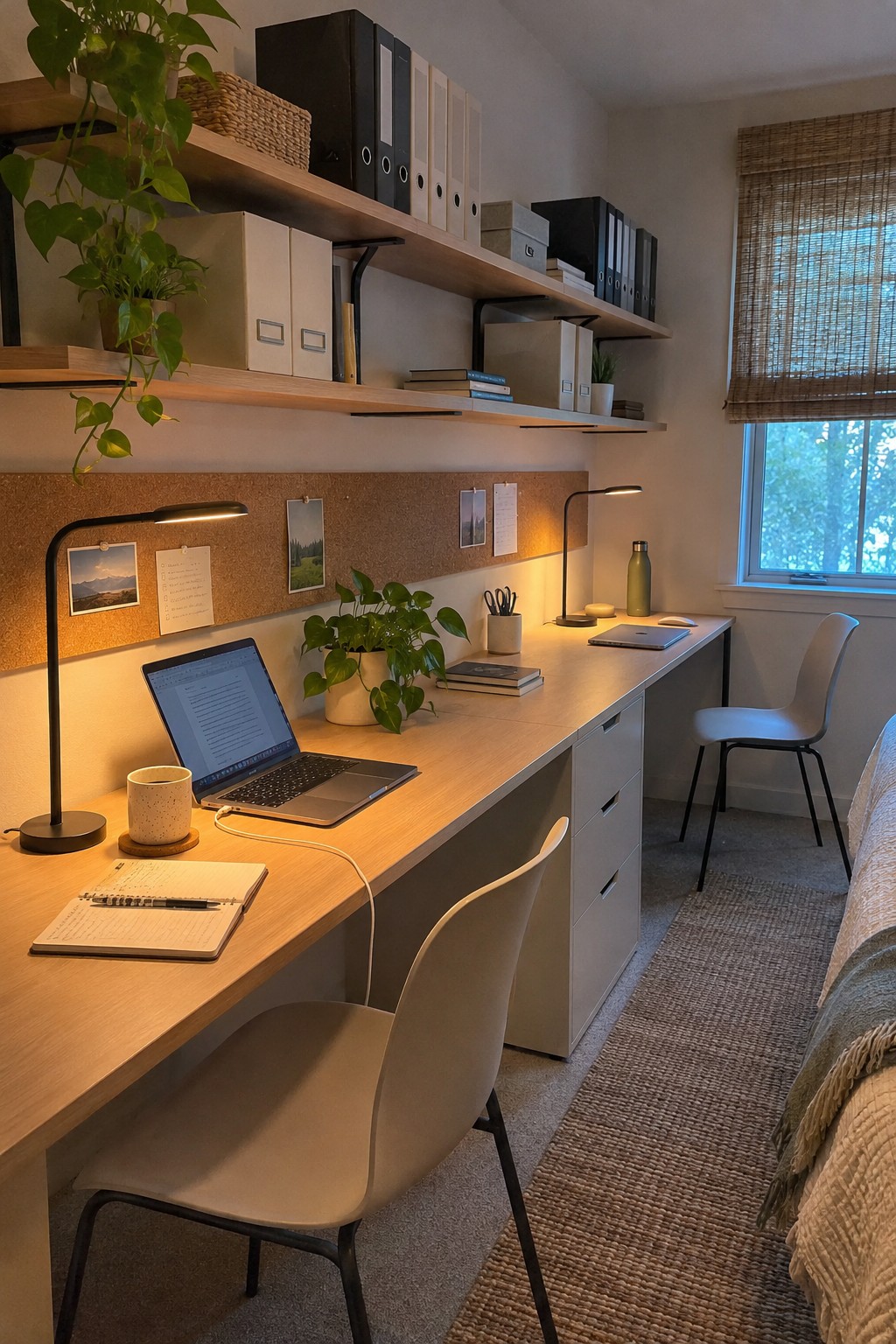
A small office can feel easier to work in when light comes from more than one source. A desk lamp gives you focused light for reading or writing, while another lamp farther along the desk helps cover the rest of the work surface.
This works especially well when two people share a desk or when one workspace serves several tasks. Place each lamp where it lights the work area without shining directly into your eyes, and use warm bulbs for a comfortable evening glow.
Use A Desk Lamp For Focused Light

A small desk lamp gives you light right where you need it, which can make a compact workspace easier to use without brightening the whole room. An adjustable lamp is especially handy because you can aim it at a notebook or move it aside when you need more desk space.
Choose a lamp with a sturdy base and an arm that reaches over the work area. A warm bulb suits a traditional room, but make sure it is bright enough for reading and writing.
Use A Bright Desk Lamp For Focused Work

A movable desk lamp makes it easier to direct light where you need it, which is especially useful in a small workspace. Here, the blue lamp provides focused light across the desk without taking up much room.
Choose a lamp with an adjustable arm so you can shift it as your work changes. A compact model works well on a narrow desk, but leave enough clear space to use the surface comfortably.
Use Lamps to Light a Small Office

A small office can feel more comfortable when its light comes from a few different sources. Here, a table lamp gives the desk a steady pool of light, while a small adjustable lamp on the bookcase helps brighten the shelves without taking up desk space.
Use a warm table lamp for general evening work, then add a focused light where you read or write. Keep the bulbs comfortable to look at, and aim them away from your screen to avoid glare.
Add Under-Shelf Lighting to a Small Office

A strip of light beneath a shelf can brighten a desk without taking up space on the work surface. It is especially useful in a small office tucked into a hallway or alcove, where a regular desk lamp might feel in the way.
Mount the light near the front edge of the shelf so it reaches the work area evenly. A warm, dimmable strip is a good choice for evening use, and hiding the cord helps keep the desk tidy.
Use Warm Pendant Lighting In A Small Office

A pendant can provide the main light for a small work area without taking up any desk space. Here, the woven shade gives off a warm glow, while the desk lamp can be used when more focused light is needed.
Choose a pendant that suits the size of the room, and hang it high enough that it does not get in the way. A simple shade works well above a compact desk, especially when paired with a task lamp for reading or computer work.
Use a Warm Ceiling Light for General Office Lighting

A ceiling fixture can give a small office a steady layer of light before you switch on a desk lamp for focused work. A warm-toned fixture, like the flush-mounted light here, also keeps the room comfortable for reading or working in the evening.
This works well in a compact office where there isn’t much room for extra lamps. Choose a fixture that spreads light across the room, then use a task lamp at the desk so your work area is bright enough without relying on the ceiling light alone.
Frequently Asked Questions
Q: What kind of light is easiest on my eyes while I work?
A: Choose a soft white bulb that feels comfortable rather than harsh or blue. If you can, pick a lamp with adjustable brightness so you can turn it down when daylight fills the room.
Q: Where should I put a desk lamp to avoid shadows?
A: Place it on the side opposite your writing hand, aimed toward your work rather than your eyes. That keeps your hand from casting a shadow across the page.
Q: How can I light a desk when there’s barely any room?
A: A clamp-on lamp or a slim wall-mounted light frees up space on the desk. Look for an adjustable arm so you can move the light where you need it.
Q: Is one ceiling light enough for a small home office?
A: It can light the room, but it often leaves your desk dim or creates glare. Pair it with a focused desk lamp for more comfortable work.
