

A home office can feel focused and comfortable in the daytime, then flat and tiring once the sun goes down.
I’ve found that light behind a desk works best when it softens the wall without shining into my eyes or competing with the screen.
LED strips make it easy to add that gentle layer, but placement and brightness matter more than flashy colors.
Some setups keep the glow subtle, while others use it to bring color and character to a plain corner.
I’d start with ideas that suit the desk, wall color, and evening routine, then adjust the light until the space feels right to work in.
Use LED Strips To Light The Wall Behind Your Desk
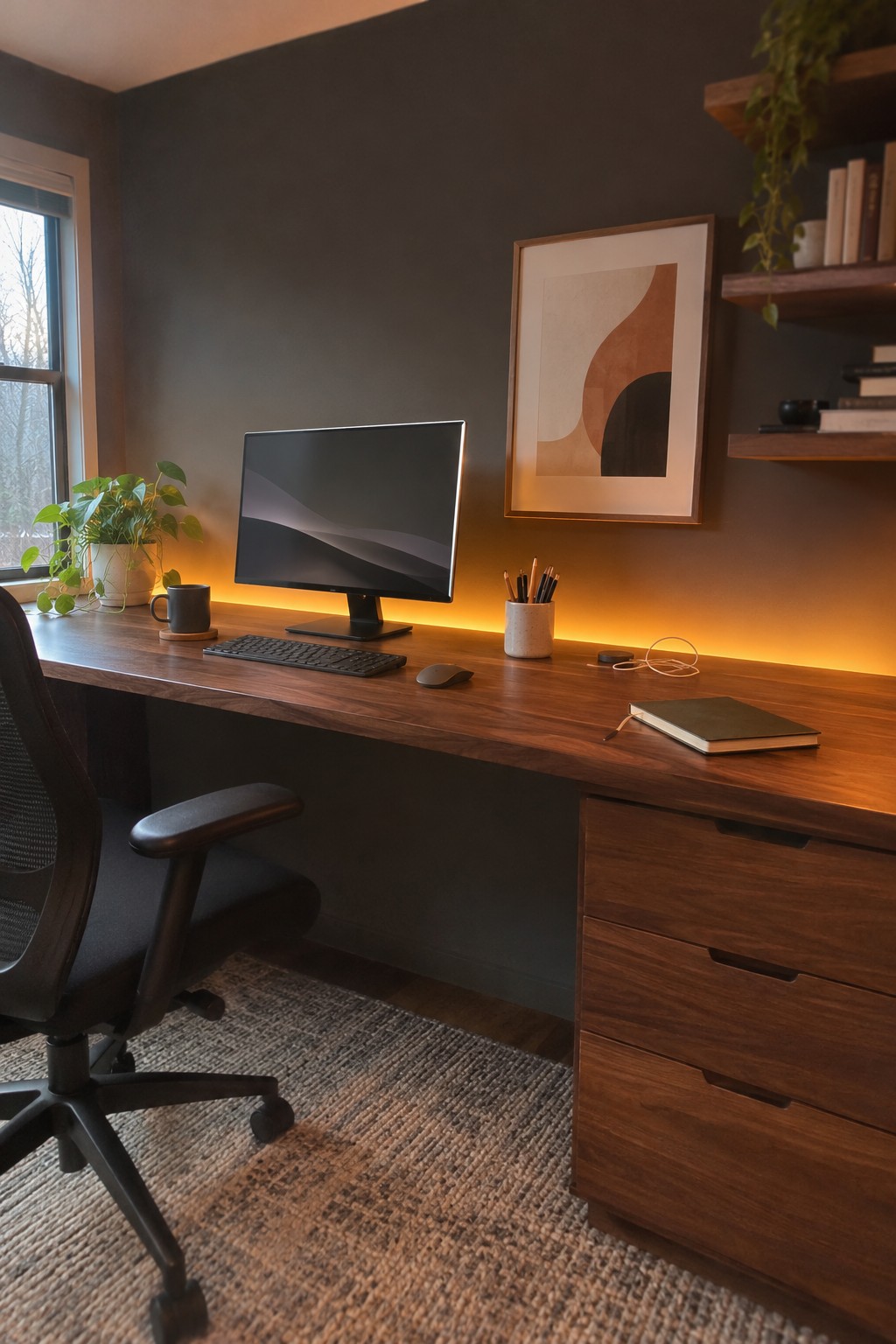
A strip of warm LED lighting behind a desk can make a home office more comfortable to work in, especially when the room feels a little dim in the evening. Tucked along the back edge of the desk, it sends light up the wall without shining directly into your eyes.
Choose a warm white tone if you want a softer feel, and make sure the strip is hidden from your usual seat. It works well with a simple desk setup, but keep the glow low enough that it does not distract you from the screen.
Add Subtle LED Strips Behind the Desk
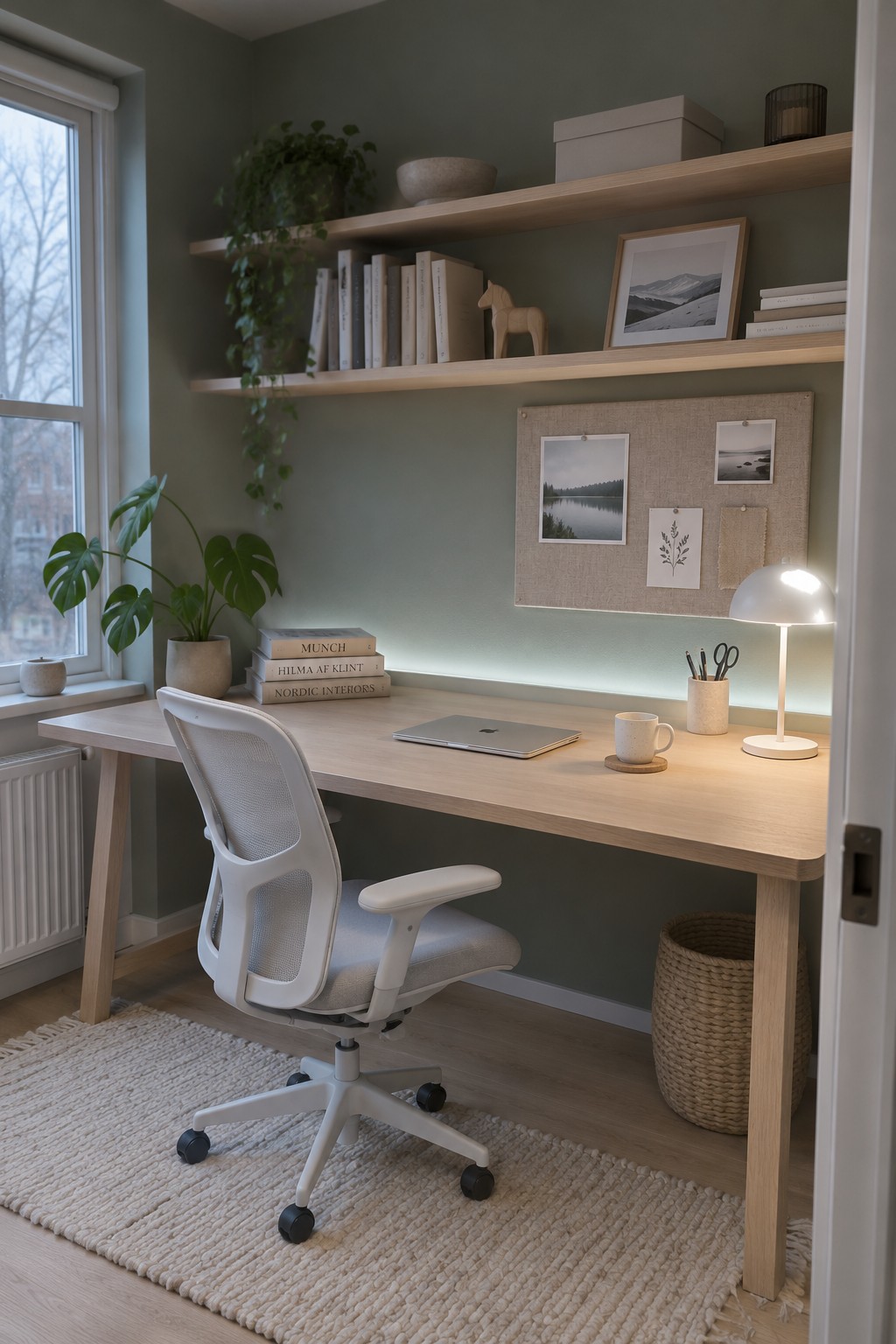
LED strips tucked behind a desk can provide a soft glow along the wall without taking up workspace. In this setup, the light follows the back edge of a pale wood desk, making it a practical choice for a compact home office.
Use a dimmable strip and hide it behind the desk so the LEDs themselves aren’t visible. A warm white setting works well for evening use, while a wall-mounted desk may need a small cable channel to keep the wiring tidy.
Add Blue LED Strips Behind the Desk
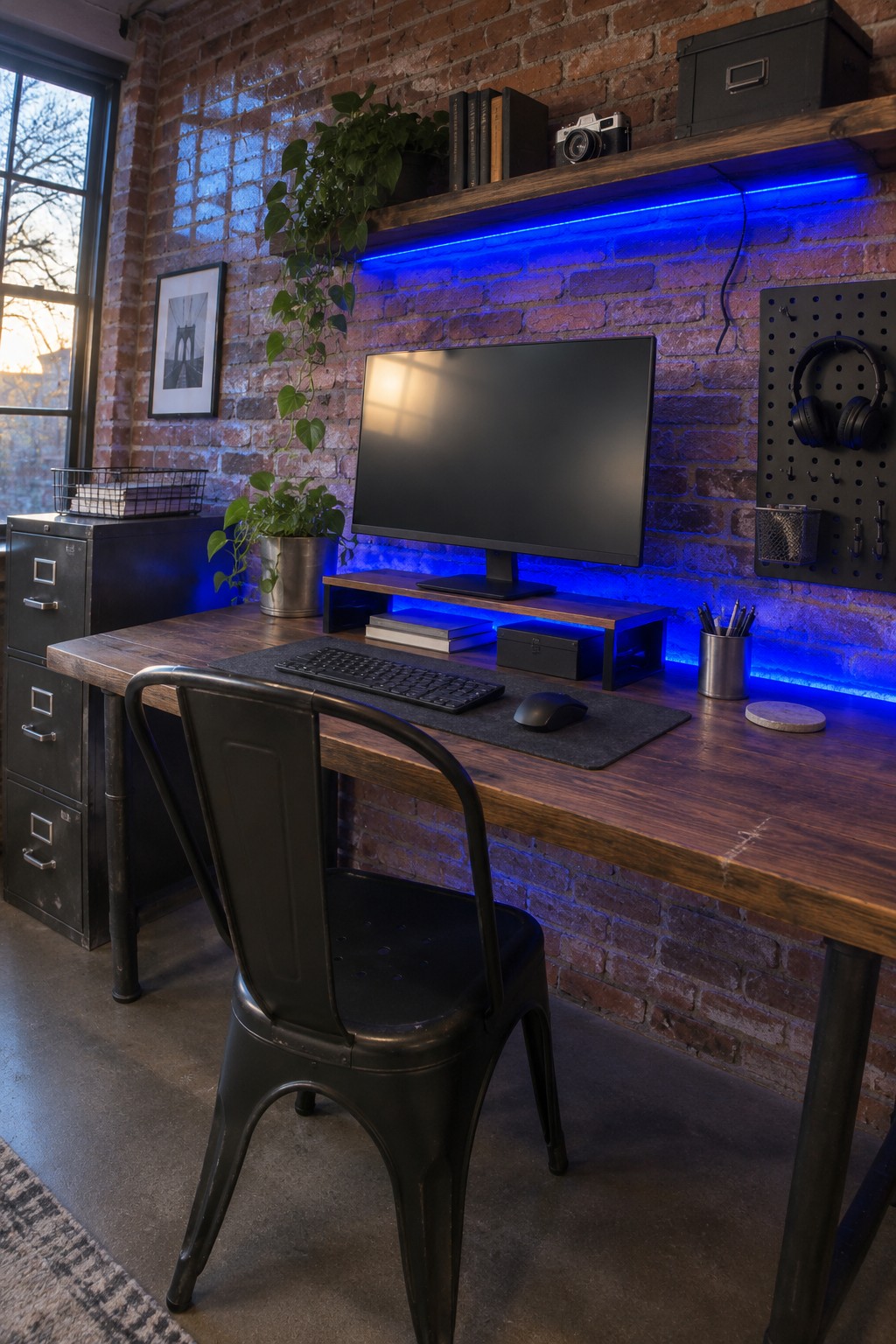
Blue LED strips behind a desk can make a home office feel more focused and give the wall behind the screen a clear wash of color. Here, the light runs beneath a shelf and along the back of the desk, so the glow reaches the brick without taking up workspace.
For a similar setup, place the strip out of direct view along a shelf edge or behind the desktop. Keep it dim enough that it does not compete with the monitor, and choose a softer shade if you use the office for long stretches.
Add LED Strips Behind the Desk

A strip of LED lighting behind a desk can add a soft glow without taking up any workspace. Here, the purple light runs along the back edge of the desk, giving the dark wall a little color while the desk lamp handles focused light.
Place the strip out of direct view so you see the glow rather than the LEDs themselves. It works well in a home office where you want a bit of evening ambience, but choose a dimmable strip so the color does not distract you while working.
Use Warm LED Strips To Highlight A Wooden Desk

Warm LED strips tucked behind a desk can give a home office a gentle glow without making the light feel harsh. This works especially well with a wooden desktop, where the soft light brings out the grain and makes the work area feel comfortable in the evening.
Place the strip along the back edge of the desk, aimed toward the wall, and choose a warm white setting that you can dim. It suits a simple office setup like this one, but avoid making the strip itself visible from your chair.
Use A Bright Strip To Define The Desk Area

A strip of LED lighting along the back edge of a desk can make the work area stand out without taking up desk space. Here, the pink light works especially well against the warm wall color.
For a similar look, mount the strip beneath a shelf or along the back of the desk so the light washes onto the wall. Choose a dimmable strip, since bright colored light can become tiring during long work sessions.
Use Warm LED Strips To Highlight A Dark Desk Nook

Warm LED strips along the back edge of a desk can give a dark workspace a softer, more comfortable feel. The light gently brightens the wall without taking up desk space or shining directly into your eyes.
This works especially well in a small office with dark walls or built-in furniture. Choose a warm white strip and hide it behind the desk so you see the glow, not the bulbs. Keep a task lamp for reading and writing, since indirect light alone may not be enough.
Use Warm LED Strips Along Wood Wall Panels
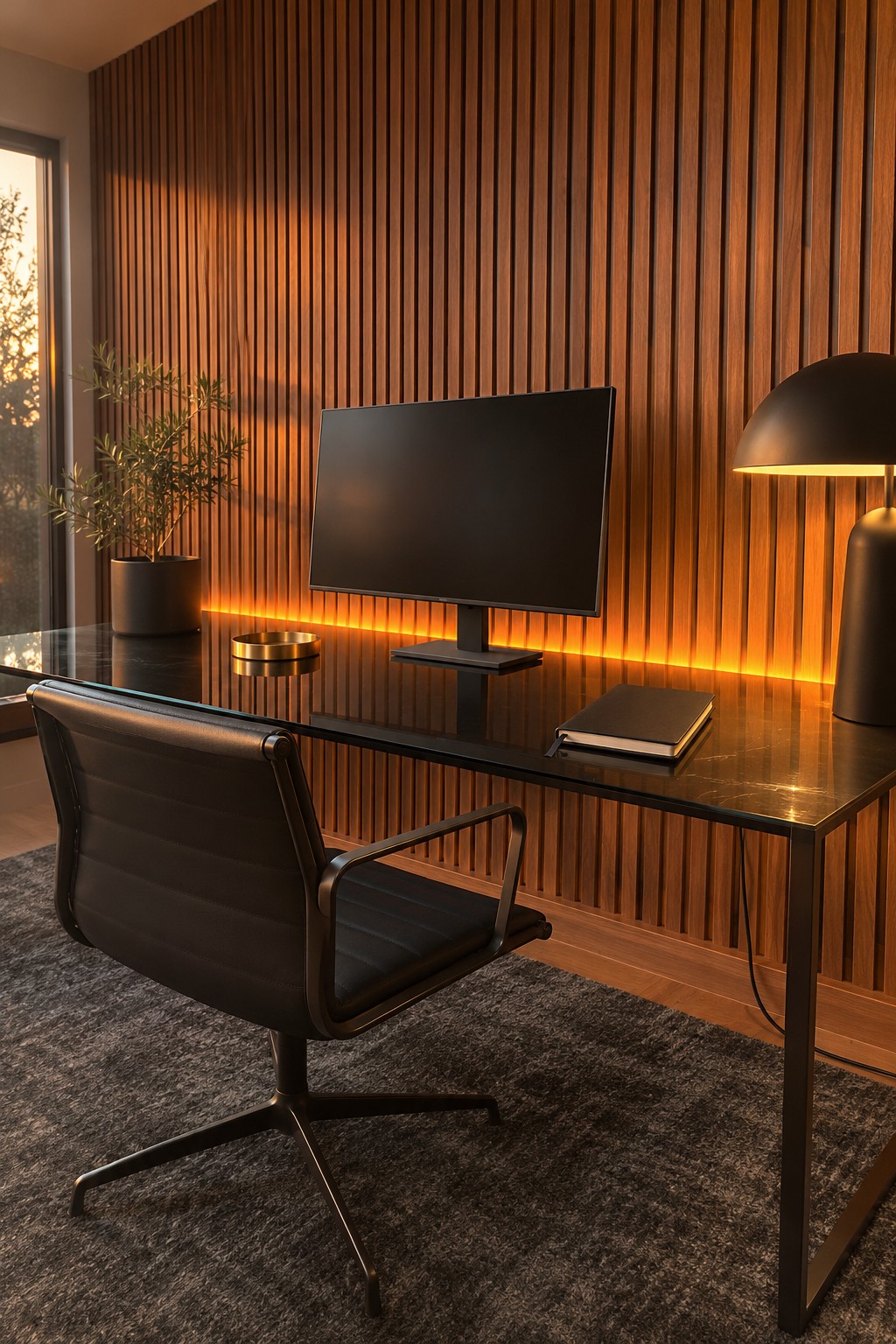
LED strips can highlight a wood-paneled wall and give a desk area a comfortable, focused glow. Placing them near the bottom of the panels lets the light wash upward without putting a bright strip directly in view.
This works well in a home office with a slatted or textured wall. Choose warm white LEDs for a softer look, and use a dimmer so the light stays comfortable when you’re working at a screen.
Use Green LED Strips To Mark Out A Desk Area

A green LED strip behind a desk can give a small work area its own look without adding more furniture or taking up space. Here, the glow runs along the back edge of a wooden desk, making the wall behind the laptop feel distinct.
This idea works well in a compact office or a desk tucked into a living room. Choose a strip with adjustable brightness so the light stays comfortable while you work, and keep it aimed at the wall rather than directly at your eyes.
Use LED Strips To Light A Long Desk
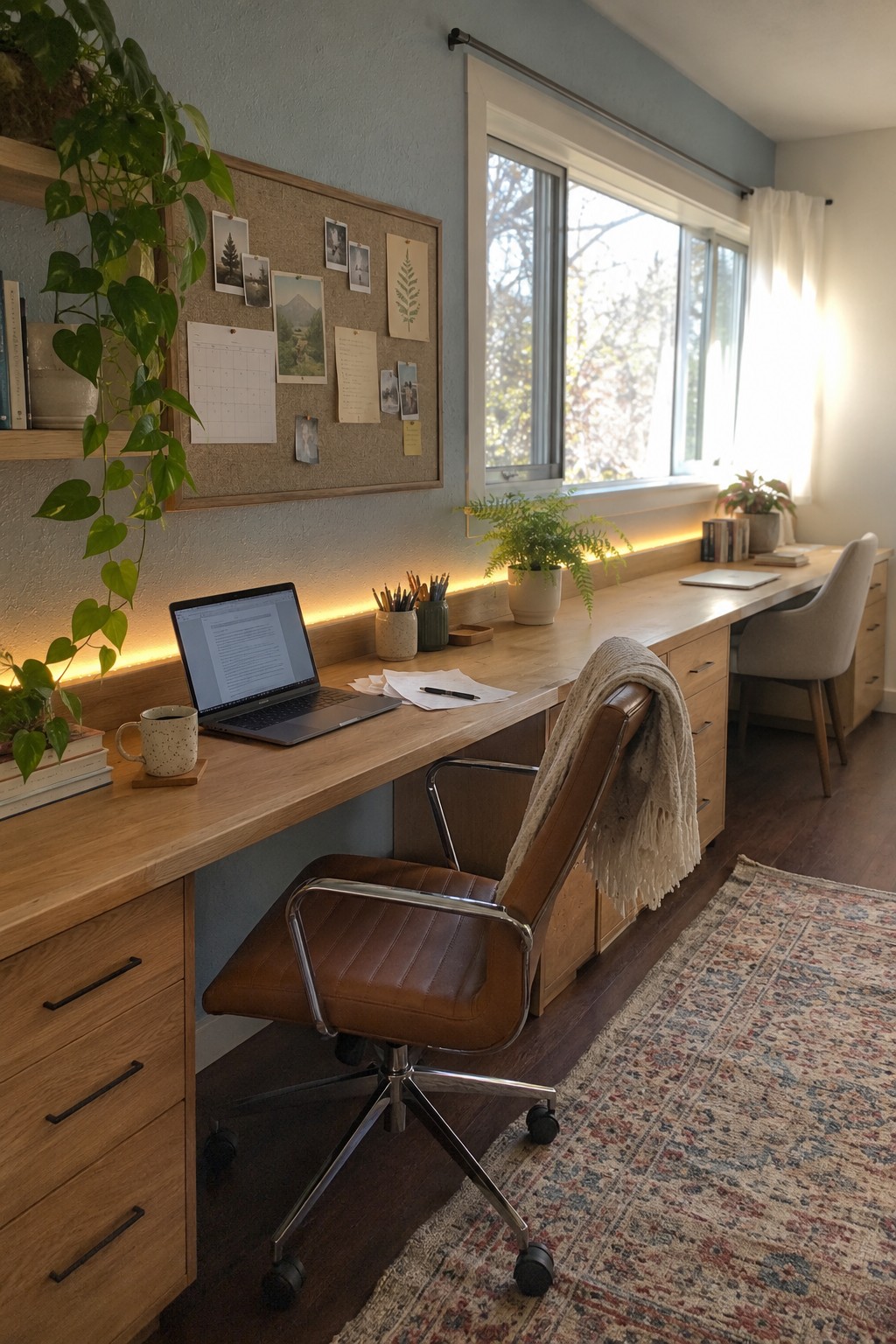
A long desk can be hard to light evenly, especially when it serves more than one work area. A warm LED strip along the wall behind the desk gives the whole surface a steady glow and makes the setup feel more connected.
Place the strip out of direct view, just behind the back edge of the desktop, and choose a warm white tone for a comfortable everyday light. It works well in a home office with a built-in or wall-to-wall desk. Check that the strip is diffused so you see a smooth line of light rather than individual dots.
Use Warm LED Strips To Highlight A Brick Wall
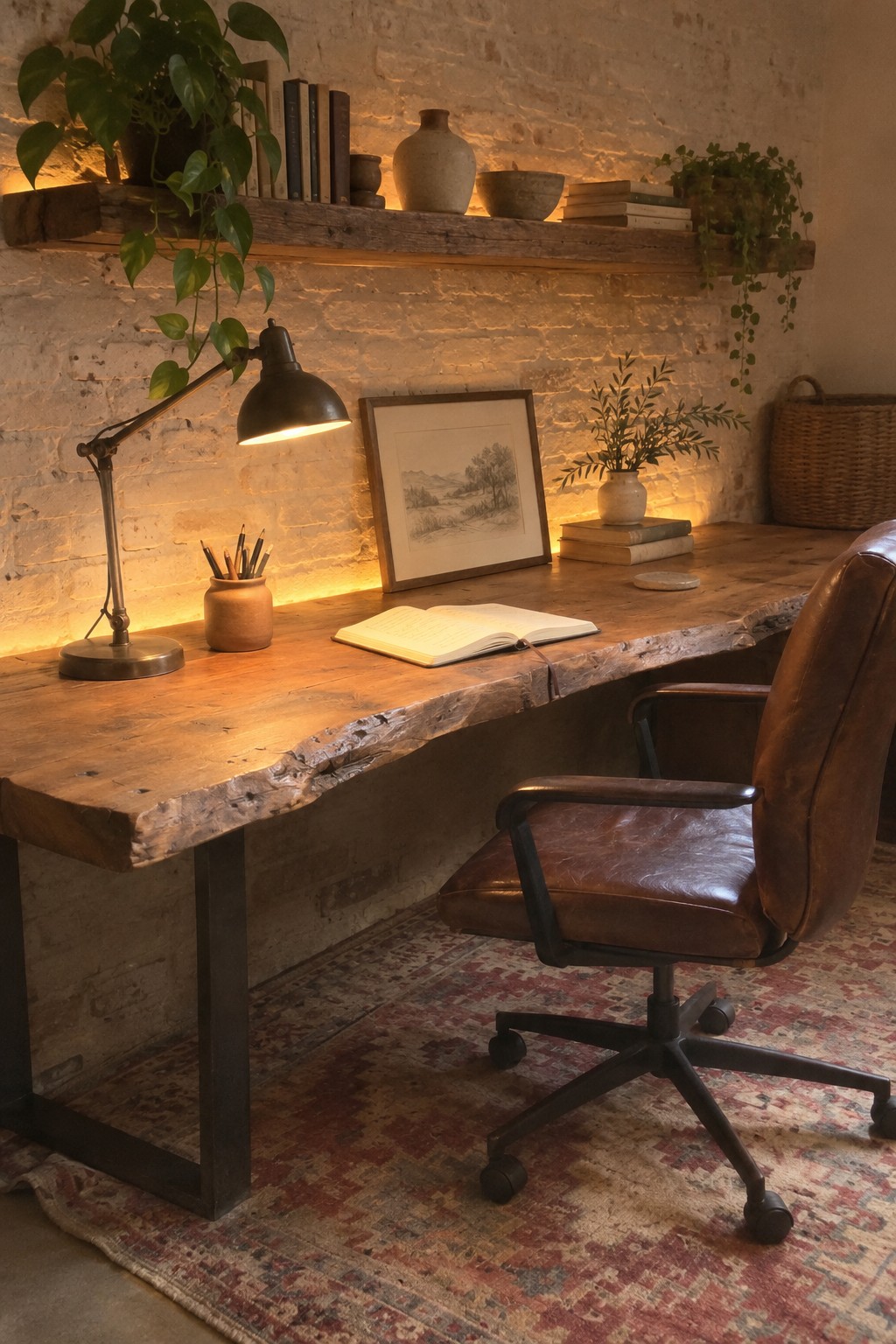
Warm LED strips can make a home office feel comfortable without taking up desk space. Placing them behind a desk washes the wall with light, and the effect works especially well with textured brick.
For a similar look, hide the strip along the back edge of the desk or on a shelf just above it. Choose a warm white tone, and keep the light indirect so it does not shine into your eyes while you work.
Use Warm LED Strips To Set Up A Creative Desk
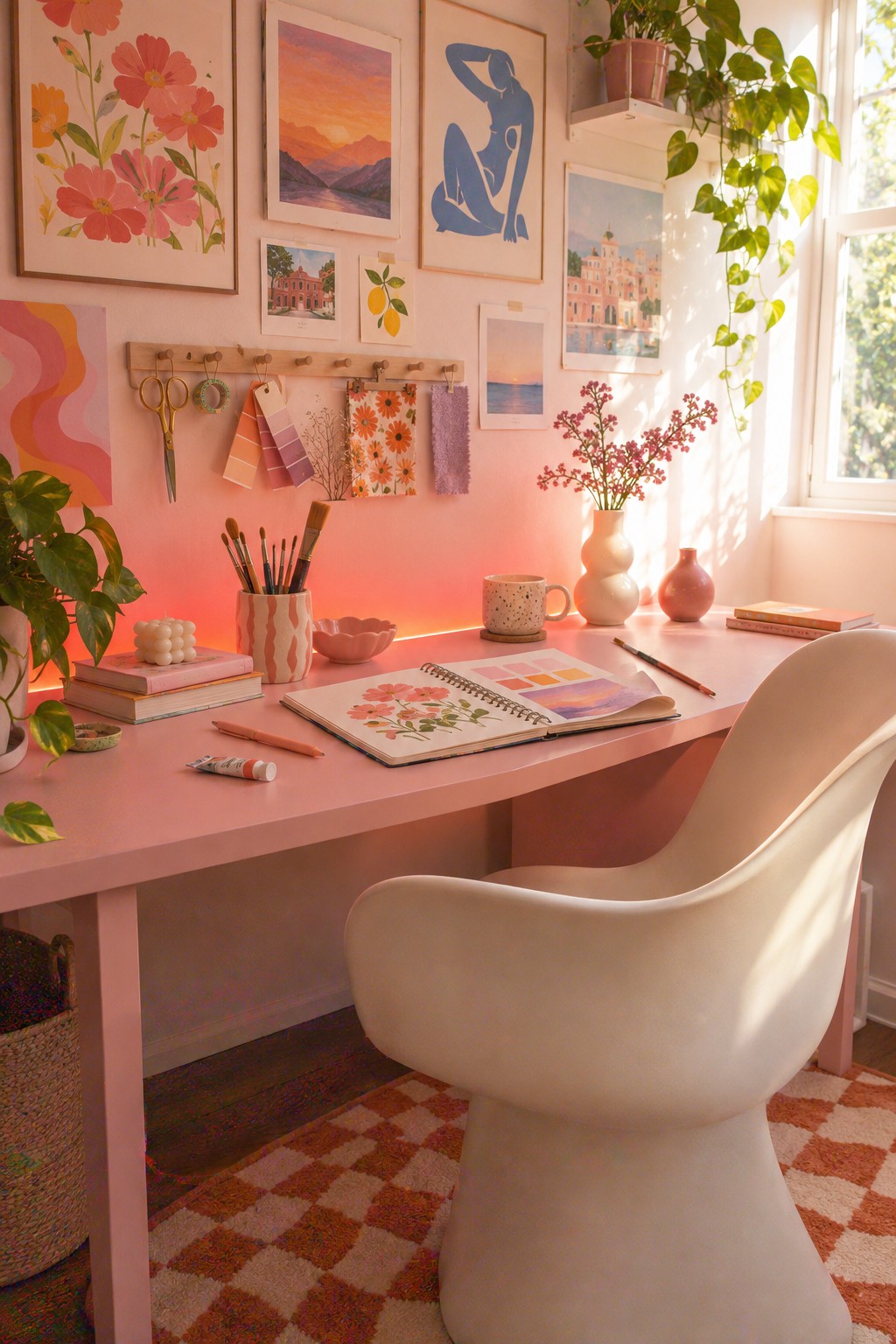
A warm LED strip behind a desk can make a work area feel cozy and comfortable, especially in a room used for hobbies as well as work. It gives the wall a gentle glow without needing another lamp on the desk.
Place the strip along the back edge of the desk or behind a wall shelf, and choose a dimmable option so the light stays easy on your eyes. Warm white works well in a colorful space like this, but keep the strip hidden from direct view to avoid glare.
Use Colorful LED Strips To Separate Your Desk From The Wall

LED strips behind a desk can make a work area feel distinct without adding more furniture or taking up desk space. Here, blue and purple light washes across the dark wall, giving the monitors a clear backdrop.
For a similar setup, place the strip along the back edge of the desk or behind the monitors, then keep the brightness low enough to avoid glare on the screens. Color-changing strips are useful if you want to switch the look for work or gaming.
Choose a Traditional Desk for a Home Office

A substantial wooden desk can give a home office a comfortable, established feel. The broad work surface is useful for spreading out papers, while the dark finish suits a room with classic trim and furnishings.
This look works well in a study or a dedicated office where there is room to move around the desk. For the article’s lighting idea, a warm LED strip behind the desk can highlight the wall without competing with the desk lamp.
Use LED Strips To Highlight A Coastal Desk Nook

A hidden LED strip can make a desk area feel like its own little workspace, even when it sits in a bedroom or other shared room. Here, the glow behind the pinboard picks out the work surface without needing a bulky desk lamp.
For a similar effect, place the strip behind a board or along the back edge of the desk, and choose a soft color that suits the room. Keep the light indirect so it does not shine into your eyes while you work.
Use Warm LED Strips To Highlight A Rustic Desk
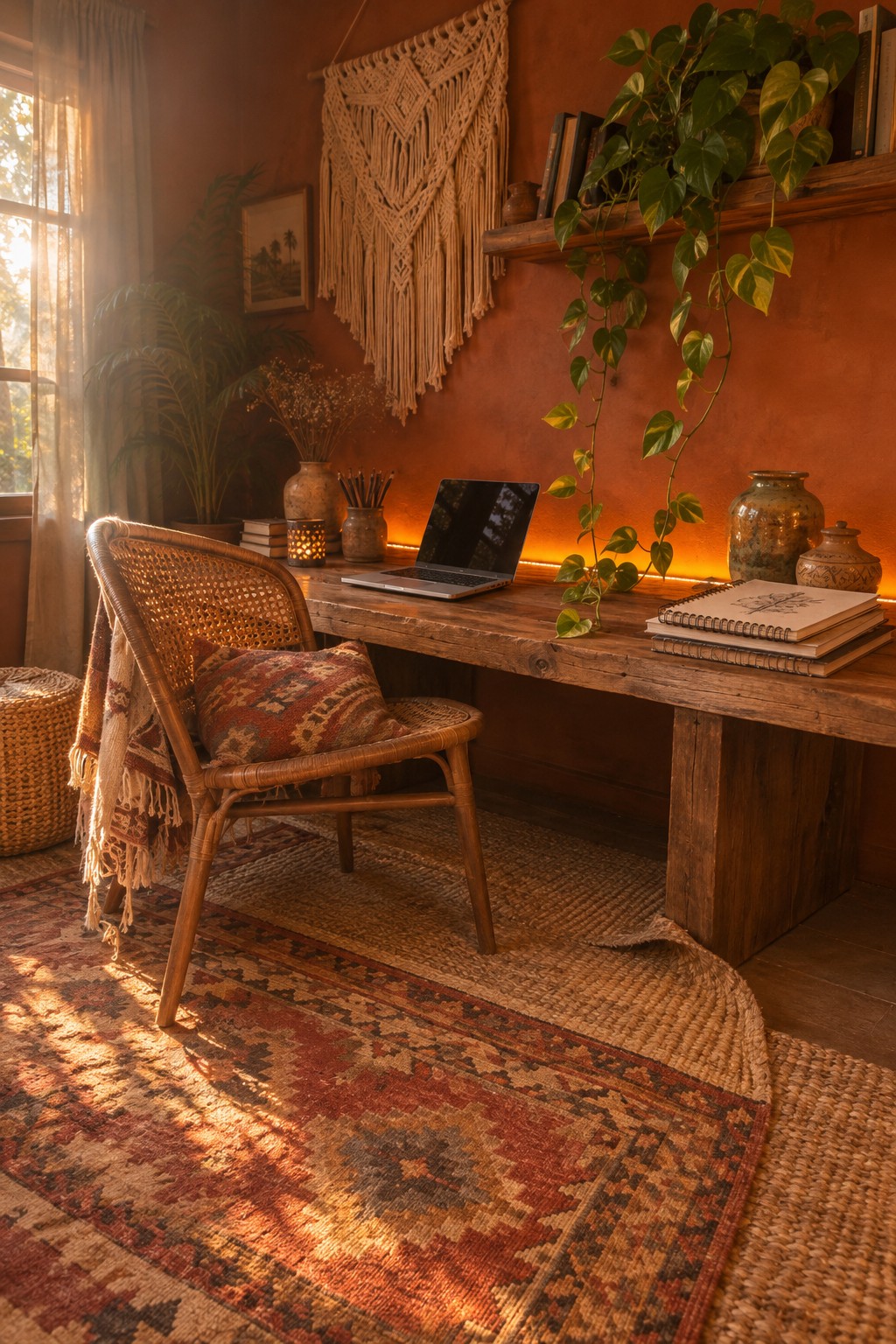
A warm LED strip tucked behind a desk can bring out the character of rough wood without making the work area feel harsh. It is a simple way to make a plain wall feel more finished, especially when the desk is made from reclaimed or solid wood.
For a similar look, place the strip along the back edge of the desk so the light washes up the wall. Choose a warm white tone, and keep the strip hidden from your direct line of sight to avoid glare while you work.
Use Purple LED Strips To Add Color Behind Your Desk

A purple LED strip along the underside of a shelf gives a home office a clear wash of color without taking up desk space. It stands out against the plum wall here, while the warm desk lamp keeps the work area comfortable rather than overly bright.
Try this idea where a shelf sits above the desk, and choose a strip with adjustable brightness so the color can be toned down for focused work. A dimmer setting also helps the glow feel less distracting in a small office.
Use Warm LED Strips To Brighten A Desk

Warm LED strips tucked beneath the shelf light the wall behind this desk and make the work surface easier to use. It’s a simple way to bring useful task-area lighting into a home office without relying on a desk lamp.
For a similar setup, mount the strip along the underside of a shelf just above the desk. Choose a warm tone for a relaxed feel, and check that the LEDs aren’t visible from your chair.
Add Warm LED Strips Behind a Simple Desk

Warm LED strips can give a home office a softer glow without taking up desk space. Hidden behind the desk, they wash the wall with light and make a practical work area feel more comfortable in the evening.
For a similar setup, place the strip along the back edge of the desk or just behind it, keeping the light source out of direct view. A warm white tone suits neutral walls and wood finishes, and a dimmer helps keep the glow gentle enough for focused work.
Use Purple LED Strips To Light A Small Desk Nook

A strip tucked behind the desk gives this compact work area a clear pool of light without taking up any desk space. The purple glow adds a bit of color to the wall, while a separate desk lamp keeps the work surface useful for reading and writing.
This approach suits a small office or an awkward corner where there isn’t much room for extra lighting. Place the strip along the back edge of the desk or wall, and choose a dimmable option so the color stays comfortable during long work sessions.
Use LED Strips To Connect Two Desk Areas

A long desk can make a shared home office feel like one work zone instead of two separate setups. A warm LED strip along the wall behind it gives both seats a consistent glow, while still letting each person keep their own workspace.
This works well in a spare room or a wide office where two people need to work side by side. Place the strip just behind the desk so the light washes up the wall, and choose a warm, dimmable setting to keep it comfortable in the evening.
Frequently Asked Questions
Q: Should I put LED strips behind my monitor or along the back edge of the desk?
A: If you want a soft glow around the screen, attach the strip to the back of your monitor. For a wider wash of light, place it under the desk’s back edge and aim it at the wall.
Q: How do I keep the lights from reflecting on my screen?
A: Point the LEDs toward the wall rather than toward you, and avoid placing them where they shine directly across the monitor. A quick test at your usual sitting position can save you from annoying glare later.
Q: Can I use LED strips if my desk is against a dark wall?
A: Yes, but the glow may look softer and less noticeable than it would on a light wall. Choose a brighter setting or add a small strip beneath the desk to spread the light around your workspace.
Q: How can I hide the strip and its wires?
A: Stick the strip behind the desk’s rear edge, then guide the wire down one leg with clips or reusable ties. Leave a little slack near the plug so you can move the desk without pulling the connection.
