


A compact cubicle can feel cramped fast when the desk, chair, and everyday supplies all compete for the same small patch of floor.
I find that a clear work surface and a sensible place for each item often matter more than adding extra décor.
Simple colors, open shelving, and a few well-chosen organizers can make the space feel calmer without making it look bare.
Small changes to lighting and layout also affect how comfortable it is to spend the day there.
I’d start with the ideas that solve a real workday frustration, then adapt the details to fit the desk and storage you already have.
Keep a Compact Cubicle Clear
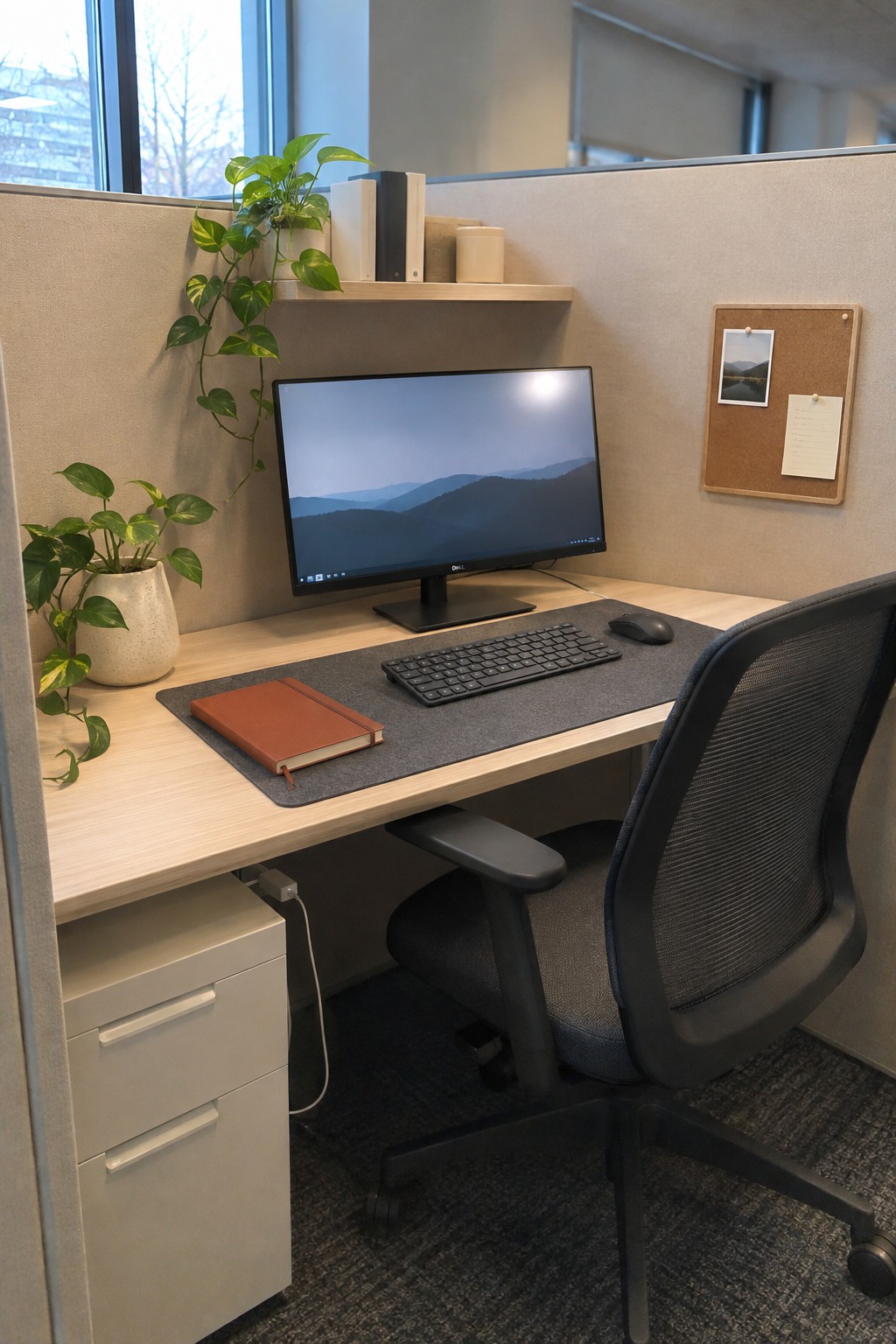
A simple workstation can feel more usable when the desktop stays open for the tasks at hand. A large desk mat helps define the work area, while keeping supplies to a minimum prevents a small cubicle from feeling crowded.
Use this approach in a shared office or at home, and make sure everyday items still have a handy place. A small shelf or drawer unit can hold the extras without taking over the desk.
Make a Wall-Mounted Desk Work Harder

A wall-mounted desk is a useful choice for a compact office because it leaves more floor space open than a traditional desk. A slim wooden surface can still provide enough room for a keyboard and monitor without making the cubicle feel crowded.
Use a wall-mounted desk in a nook or small work area where every bit of floor space matters. Check that the wall and brackets can support the desk and its equipment, and keep the work surface deep enough for comfortable use.
Use a Corner Desk To Make a Cubicle Work Better
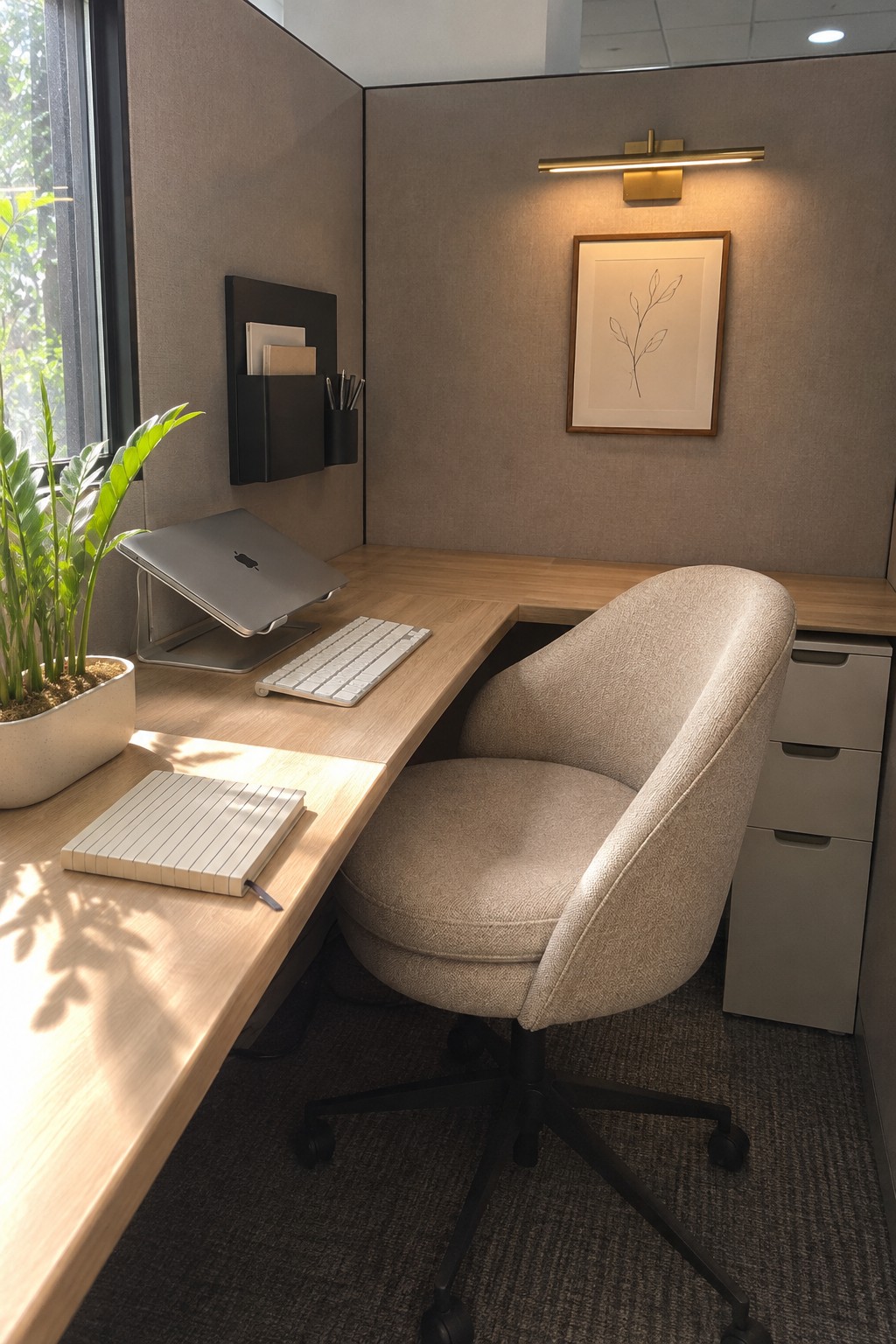
A corner desk gives a compact workstation more usable surface without taking up extra floor space. The L-shaped layout leaves room for a monitor and keyboard while keeping everyday papers close at hand.
This setup works well in a small office cubicle where a standard desk feels cramped. Keep one side clear for writing or sorting documents, and choose a chair that fits neatly beneath the desk so the walkway stays open.
Use Vertical Storage to Free Up Desk Space

A small cubicle works better when supplies have a place to go besides the desktop. Wall-mounted shelves and a pegboard use space that might otherwise sit empty, leaving more room for everyday work.
Try this approach in a compact office where the desk cannot be much wider. Keep frequently used items within reach, and leave some shelf space open so storage does not feel crowded. A pegboard also makes it easy to change the setup as your needs shift.
Add a Small Shelf for Extra Workspace

A narrow shelf above the desk gives a compact cubicle a useful second surface. It can hold a few everyday items without taking up room where you need to work.
Choose a simple shelf that fits the desk and leave enough clear space below it for your laptop and hands. A low profile keeps the cubicle practical rather than crowded.
Add a Standing Desk Converter

A standing desk converter makes it possible to switch between sitting and standing without replacing a cubicle’s existing desk. The raised platform keeps the monitor and keyboard together, while the original desktop remains available for other essentials.
Choose a converter that fits the desk and leaves enough room to move it up and down. A compact cubicle benefits from a simple setup, so keep only the equipment you use regularly on the raised surface.
Add a Desk Riser for More Storage

A desk riser can make a compact cubicle easier to organize by creating a second level for supplies. It keeps everyday items close without using up the main work surface.
Choose a riser that fits the desk and leaves enough room for your keyboard and chair. Small storage boxes underneath can hold papers or accessories, while a plant or framed print keeps the setup personal without crowding it.
Use Warm Lighting to Make a Cubicle More Comfortable

A small desk lamp can make a cubicle feel more comfortable without taking up much room. Its focused light is useful when overhead office lighting feels harsh or when you want a calmer spot for reading and computer work.
Choose a lamp with a compact base and an adjustable shade, then place it where it won’t crowd your main work area. A warm bulb works well for a softer glow, but keep the desk bright enough for tasks that need close attention.
Use a Calm Color Palette for a More Focused Cubicle

A restrained color palette can make a small cubicle feel less busy and easier to work in. Here, muted blue on the desk divider works with the gray furnishings without competing for attention.
Try this approach when you want a compact workstation to feel settled without adding much decor. A colored divider or a few coordinating accessories can be enough. Keep larger surfaces neutral so the workspace stays easy on the eyes.
Use a Simple Desk Setup to Keep a Cubicle Practical

A compact workstation works better when the desk has room for the few things you use every day. A laptop stand lifts the screen without taking up much space, while a small desk mat gives you a clear spot to write.
This setup suits a narrow cubicle or home office where a full-size desk is not an option. Keep supplies in a small file box nearby, and leave enough open surface to work comfortably.
Use Built-In Storage to Keep a Compact Office Tidy

Overhead cabinets make a small workstation easier to keep organized without taking up desk space. The simple cabinet fronts also help the work area feel less busy, which is useful when the desk has to serve as a full-time office.
In a compact cubicle, use wall-mounted cabinets for supplies and items you do not need every hour. Keep everyday tools within easy reach, and leave enough open desk space to work comfortably.
Make a Small Cubicle Feel More Personal

A simple inspiration board can make a compact workstation feel less like a temporary desk without taking up room on the work surface. A few pinned notes or images give the wall a purpose and let you add a personal touch while keeping the desk clear.
Use a fabric or cork board above the monitor, and leave some open space around it so the cubicle does not feel crowded. Keep the display small and easy to update, especially in a shared workspace.
Use a Curved Desk to Make Better Use of a Cubicle

A curved desktop can give a compact workstation more usable surface without making the whole desk feel oversized. The inward edge leaves room to sit comfortably, while the broader work area can hold a keyboard and mouse.
This shape works especially well in a corner cubicle where two walls meet. Leave enough clearance for the chair, and keep the center of the desk open so the curved edge stays useful rather than becoming another place to pile things.
Use a Two-Level Desk to Separate Work and Storage

A two-level desk can make a compact cubicle easier to use by giving equipment its own place above the main work surface. The upper shelf keeps the monitor and computer off the area where you type, leaving more room for everyday tasks.
This setup works well when a cubicle has limited floor space but enough wall height for a shelf. Keep the lower surface clear, and store only a few frequently used items up top so the workstation stays easy to manage.
Use a Monitor Riser to Make More Room

A monitor riser lifts the screen and gives a compact cubicle a little extra space underneath. Here, the wood stand also supports a laptop, keeping both screens at a comfortable height without taking over the desk.
Choose a riser that fits your monitor and leaves room for your keyboard below. A simple wood finish works well with neutral cubicle walls and other small organizers.
Use a Curved Desk to Make Better Use of a Cubicle

A curved desk can make a compact cubicle easier to work in by giving you a little more usable surface without taking up extra floor space. The wraparound shape keeps your work close at hand and leaves room to move your chair.
This layout works well in corner cubicles, especially when you need space for a monitor and a notebook. Keep the center area open, and avoid filling every edge with supplies so the desk stays comfortable to use.
Set Up a Window-Side Desk for Natural Light

A desk beside a window can make a compact cubicle feel more pleasant to work in. Natural light helps the setup feel less enclosed, while a clear view gives your eyes a break from the screen.
Place the desk near the window if the layout allows, and angle the screen to limit glare. Keep the desktop simple so there’s still room to work, and use a small lamp for cloudy days or evening hours.
Choose Furniture That Fits the Cubicle
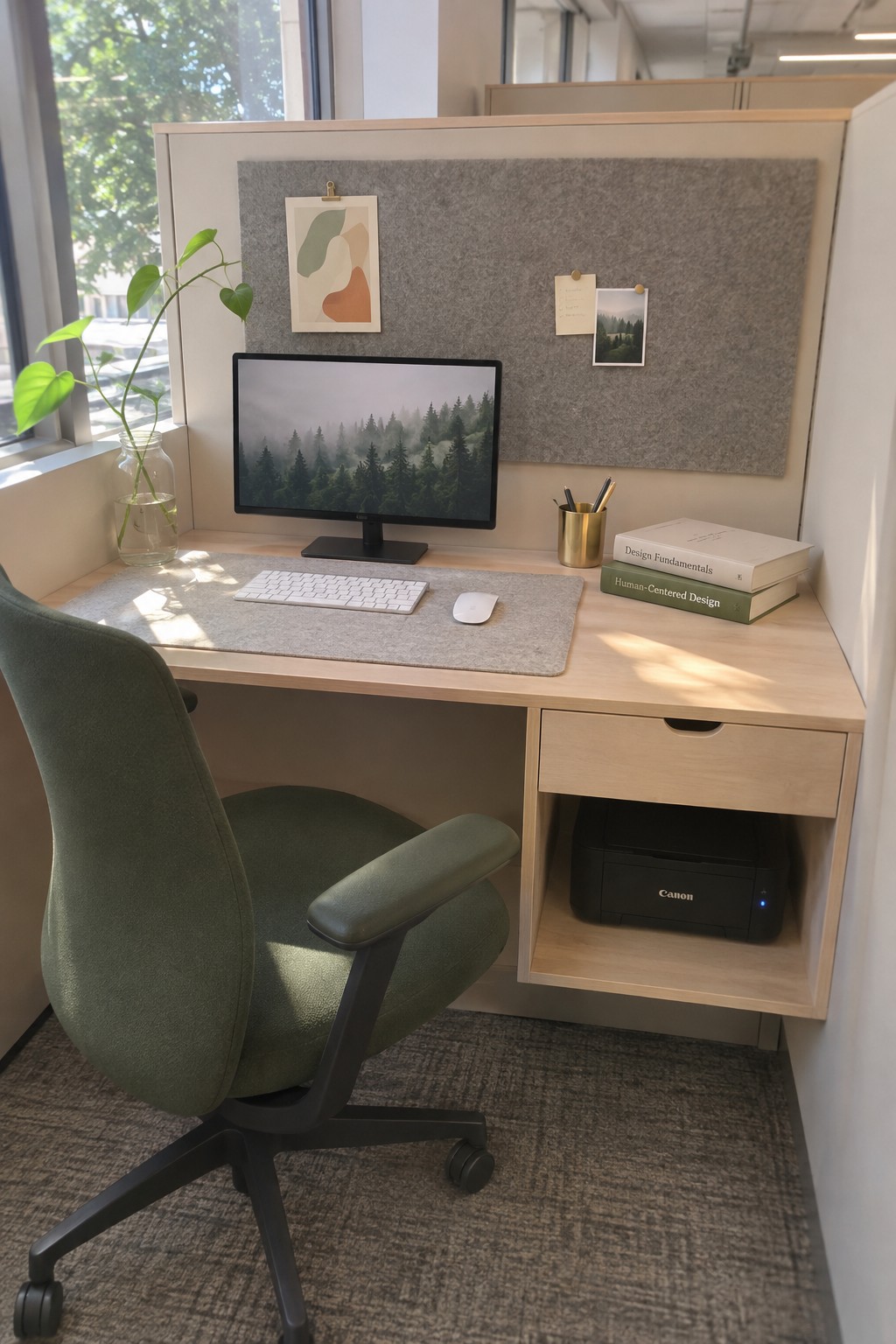
A desk with built-in drawers and an open printer shelf can make a compact cubicle easier to keep organized. The storage stays close at hand, while the desktop remains available for everyday work.
Look for a desk that fits the cubicle’s width without crowding the chair or legroom. A small drawer and an open shelf are often enough; too many compartments can make a compact workstation feel cramped.
Use Warm Lighting to Make a Cubicle More Comfortable
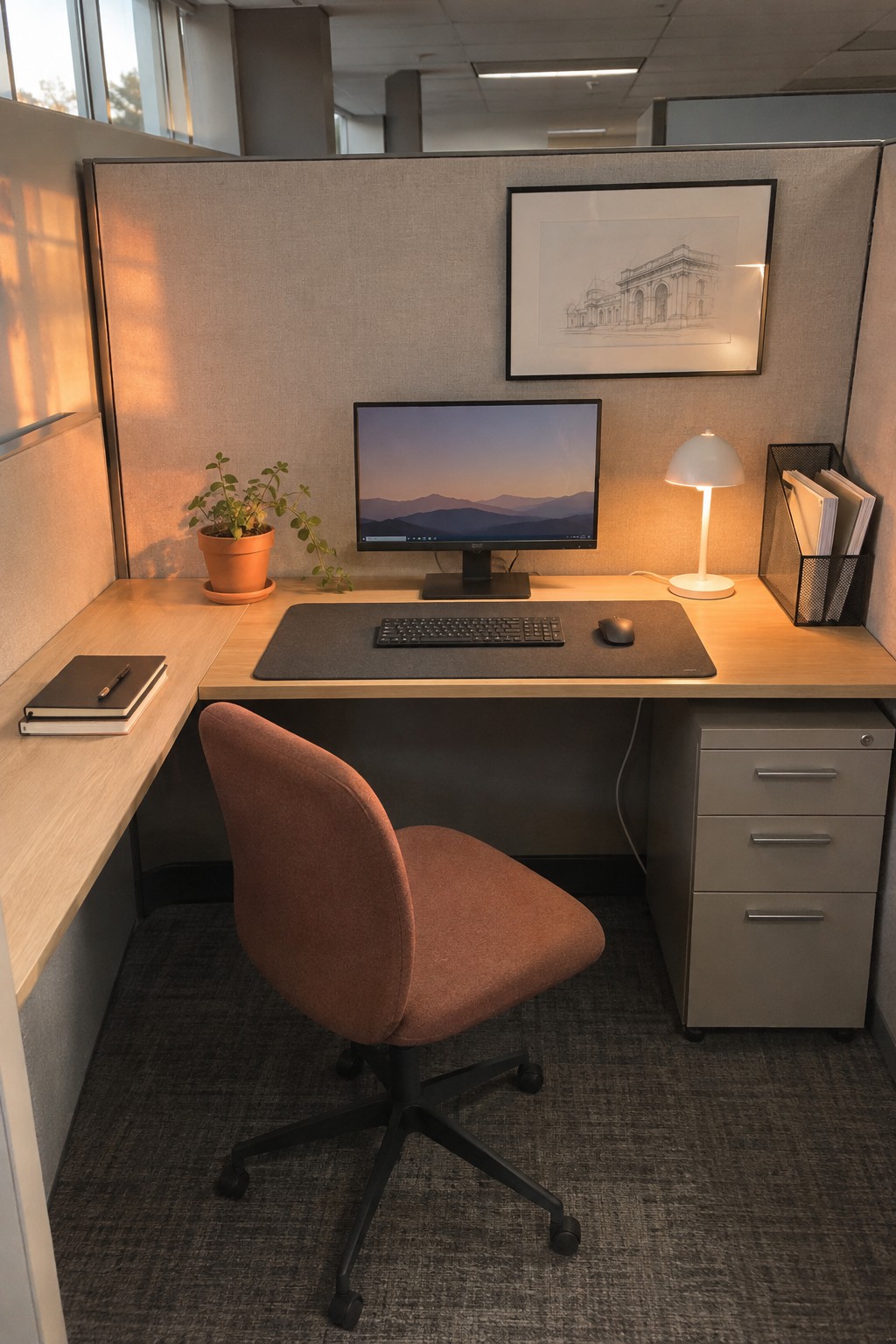
A small desk lamp can make a cubicle feel more comfortable without changing the layout. It gives you a softer light for late afternoons or cloudy days, and you can keep the main desk area clear by placing it at one end.
Choose a lamp with a compact base and a shade that directs light onto the desk rather than into your eyes. A warm bulb works well for a home office or a shared workspace, especially when overhead lighting feels harsh.
Frequently Asked Questions
Q: How can I make a small cubicle feel less cramped without giving up useful storage?
A: Keep the desktop mostly clear and move storage upward with a slim shelf or a few wall pockets. Use one small tray for daily essentials so loose items don’t spread across your work surface.
Q: What’s a good way to add personality without making the cubicle look cluttered?
A: Pick one or two things you genuinely enjoy, like a small plant and a favorite photo. A simple color palette helps them feel intentional rather than like extra stuff.
Q: How do I keep cords from taking over my desk?
A: Group cords together with clips or a reusable tie, then route them along the back edge of the desk. Leave enough slack to move your keyboard or charge a device comfortably.
Q: Can I make a rental or shared cubicle feel more like mine without damaging it?
A: Yes. Try removable hooks, freestanding organizers, or a desk lamp that doesn’t need to be mounted. Skip permanent changes, and check workplace rules before attaching anything to the walls.
