


An attic office can feel tucked away and calm, but a sloped ceiling quickly becomes awkward if the desk, chair, and storage do not fit the room.
I find it helps to notice where the ceiling drops before deciding on a layout, since even a small shift can make the work area feel more open and comfortable.
Light colors, simple furniture, and a few well-placed shelves can keep the room useful without making its unusual angles feel crowded.
The details matter: a desk under the highest part of the roof may work better than one pushed against a low wall.
I’d save the ideas that suit your attic’s shape and test the layout with everyday routines in mind.
Use a Built-In Desk Along the Sloped Wall

A desk fitted into the attic’s lower wall makes good use of space that can be awkward to furnish. It gives you a roomy work surface without needing a separate desk and storage pieces in the middle of the room.
This setup works especially well where a sloped ceiling limits standing space. Keep the desktop simple, and add drawers or cabinets below if you need storage. A large window nearby can make the work area more pleasant to use.
Use the Sloped Ceiling for Open Shelving
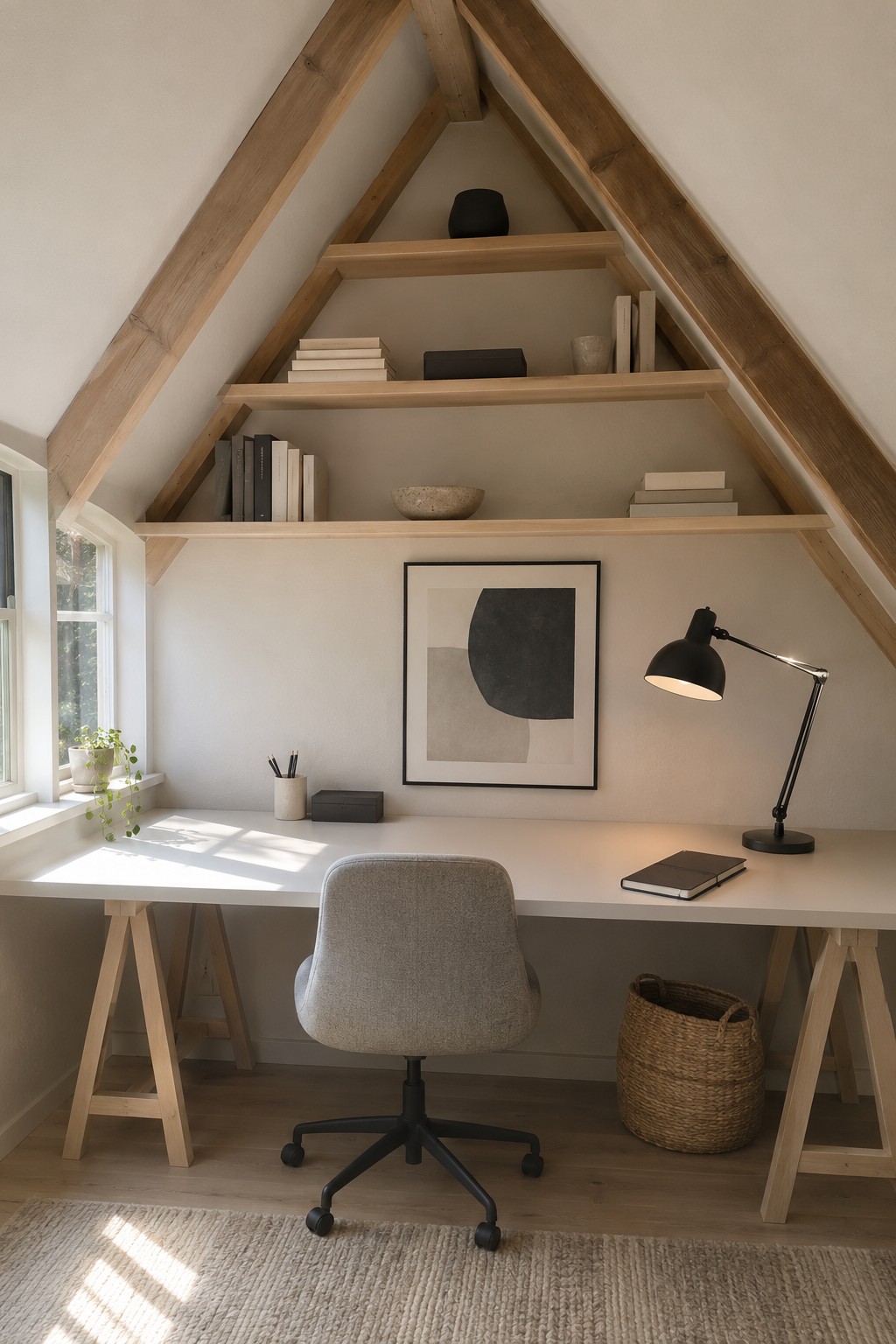
Open shelves fitted between the exposed rafters make good use of an attic wall that can be awkward to furnish. They provide space for books and a few workday essentials without taking up room beneath the desk.
This approach works especially well in a small office where floor space matters. Keep the shelves shallow and leave some room between items so they stay easy to reach and don’t feel crowded.
Build Storage Into the Sloped Wall

A desk tucked into the attic’s low side makes good use of space that might otherwise go unused. Built-in drawers keep supplies close at hand, while the wood surface gives the work area a practical, continuous feel.
This setup works best where the ceiling slopes too low for regular furniture. Measure carefully before adding drawers or shelving, and leave enough room to pull out the chair comfortably.
Let the Skylight Shape the Desk Layout

A skylight can make a sloped attic feel like a natural place to work. Placing the desk where daylight reaches it keeps the setup simple and makes good use of a roofline that can be awkward for taller furniture.
Keep the desk low and close to the wall, leaving the higher part of the room open for a chair and movement. This layout suits a small attic office, but check that the desk does not block the window or leave you working in direct glare.
Set Up a Compact Attic Work Nook
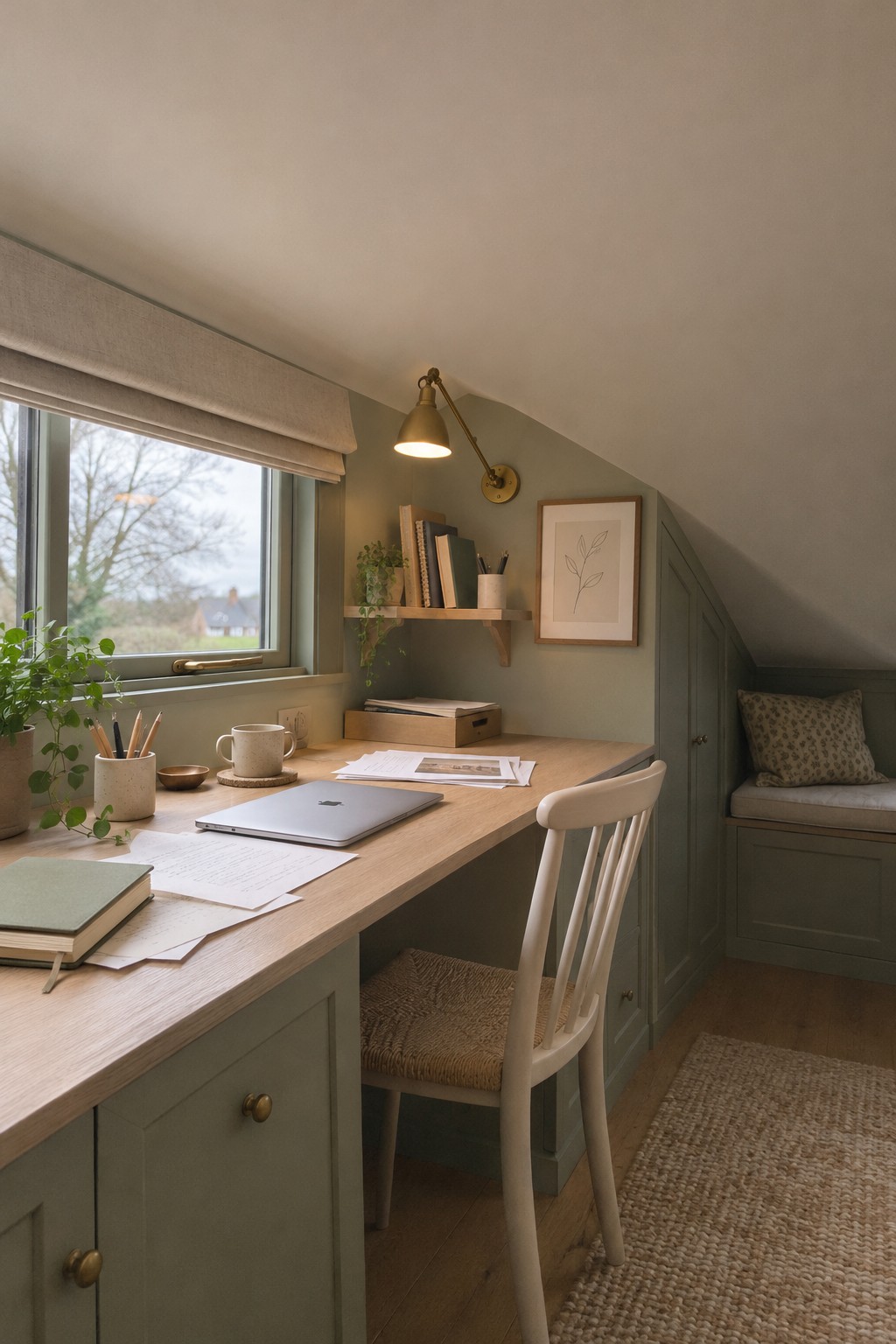
A desk tucked into the low side of an attic makes good use of space that can be awkward to furnish. Keeping the work surface simple leaves room to spread out papers without making the nook feel crowded.
This layout suits a small office or spare room beneath a sloped ceiling. Use the taller wall for a shallow shelf, and check that there’s enough headroom to sit and get in and out of the chair comfortably.
Set Up a Compact Desk Beside Attic Shelving
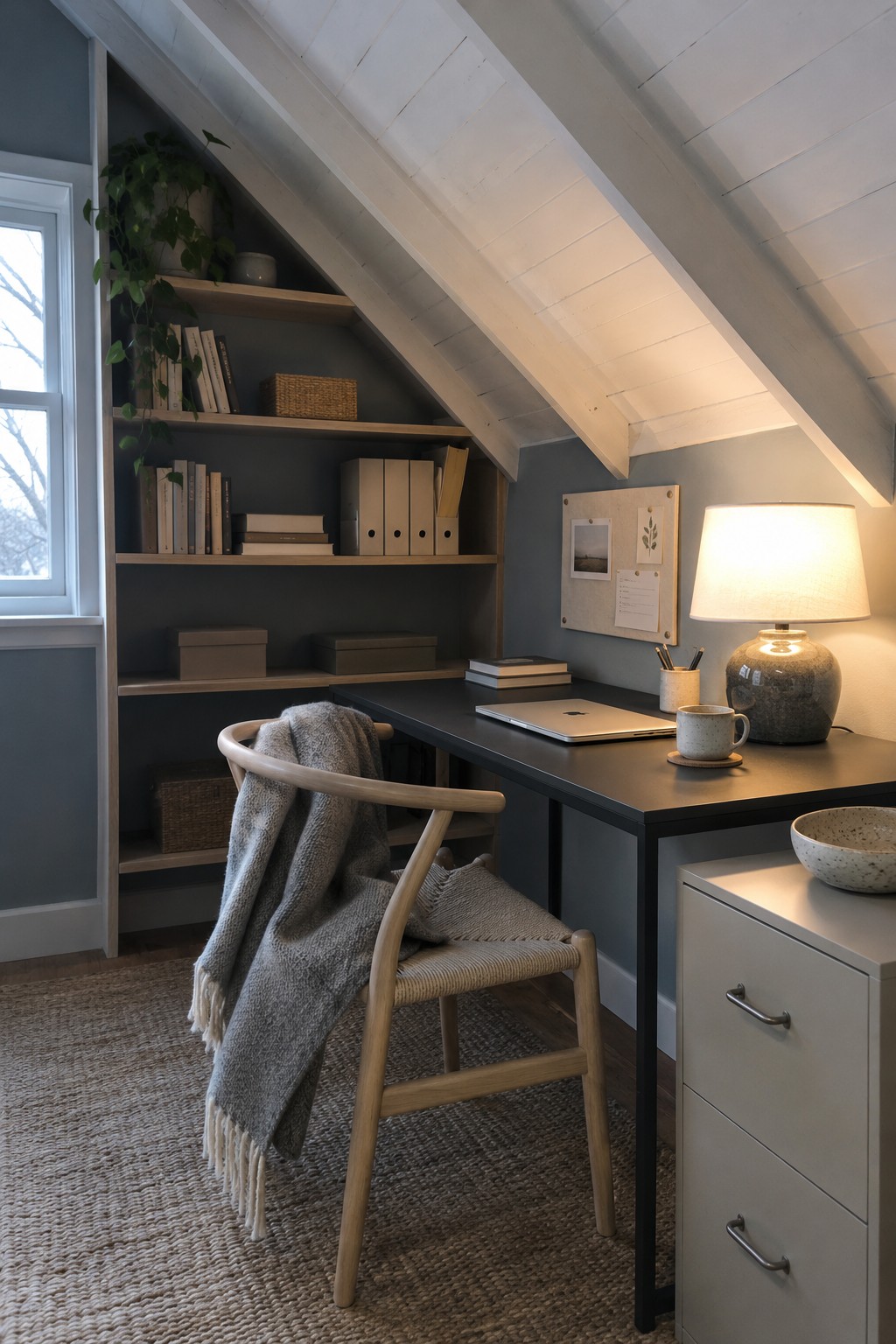
A small desk can make good use of the lower part of an attic, especially when shelves already fit into the sloped wall. Keeping the work surface close to storage makes books and everyday supplies easy to reach without needing a separate office area.
This arrangement suits a spare room or a narrow attic nook. Leave enough room behind the chair to pull it out comfortably, and keep the desk low enough that the roof slope does not crowd the work area.
Set Up a Desk Beneath the Attic Windows

A desk beneath attic windows makes good use of a spot that might otherwise be awkward to furnish. The long work surface fits neatly along the wall, while the windows bring daylight to the desk without taking up floor space.
This layout works well in a small attic office where the sloped ceiling limits taller furniture. Keep the desk shallow enough for a comfortable chair and leave the window area clear so the workspace stays easy to use.
Use Exposed Beams to Give an Attic Office Character

Exposed beams can make an attic office feel warm without needing much extra decoration. The dark wood ceiling gives this simple workspace a clear focal point, while the pared-back desk keeps the room practical.
This approach suits an attic where the beams are in good condition and worth showing off. Keep nearby furniture and finishes simple so the ceiling does not make a small workspace feel crowded.
Choose a Warm Wood Desk for the Attic
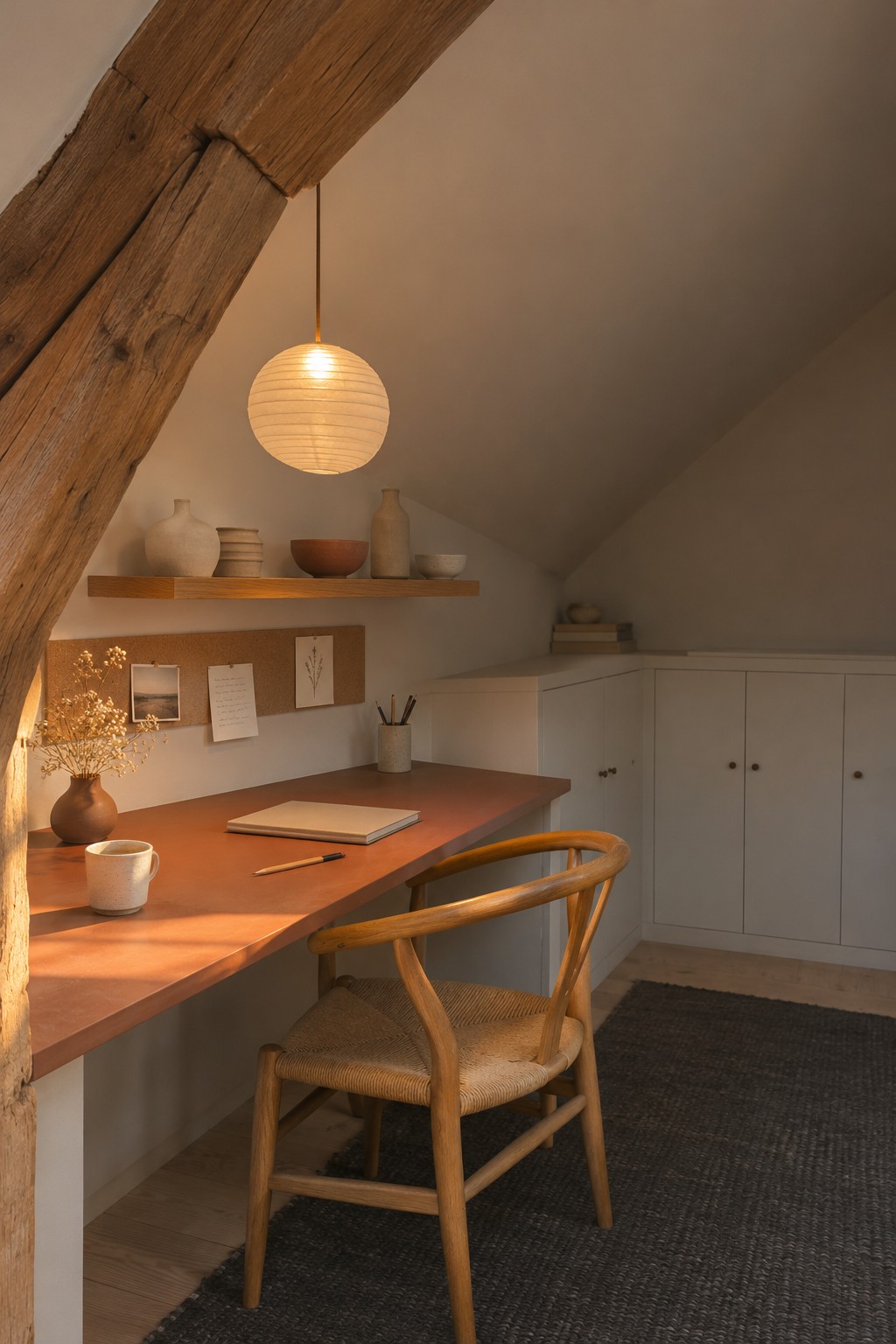
A wood desk can make an attic office feel comfortable without adding much decoration. Here, the reddish desktop stands out against the pale walls and built-in cabinets, giving the work area a clear place in the room.
This approach suits a small office beneath a sloped ceiling, especially when the rest of the finishes are simple. Choose a desk depth that leaves enough room to move the chair, and keep the surface fairly clear so the wood remains the main feature.
Add a Window Seat Beside the Work Area
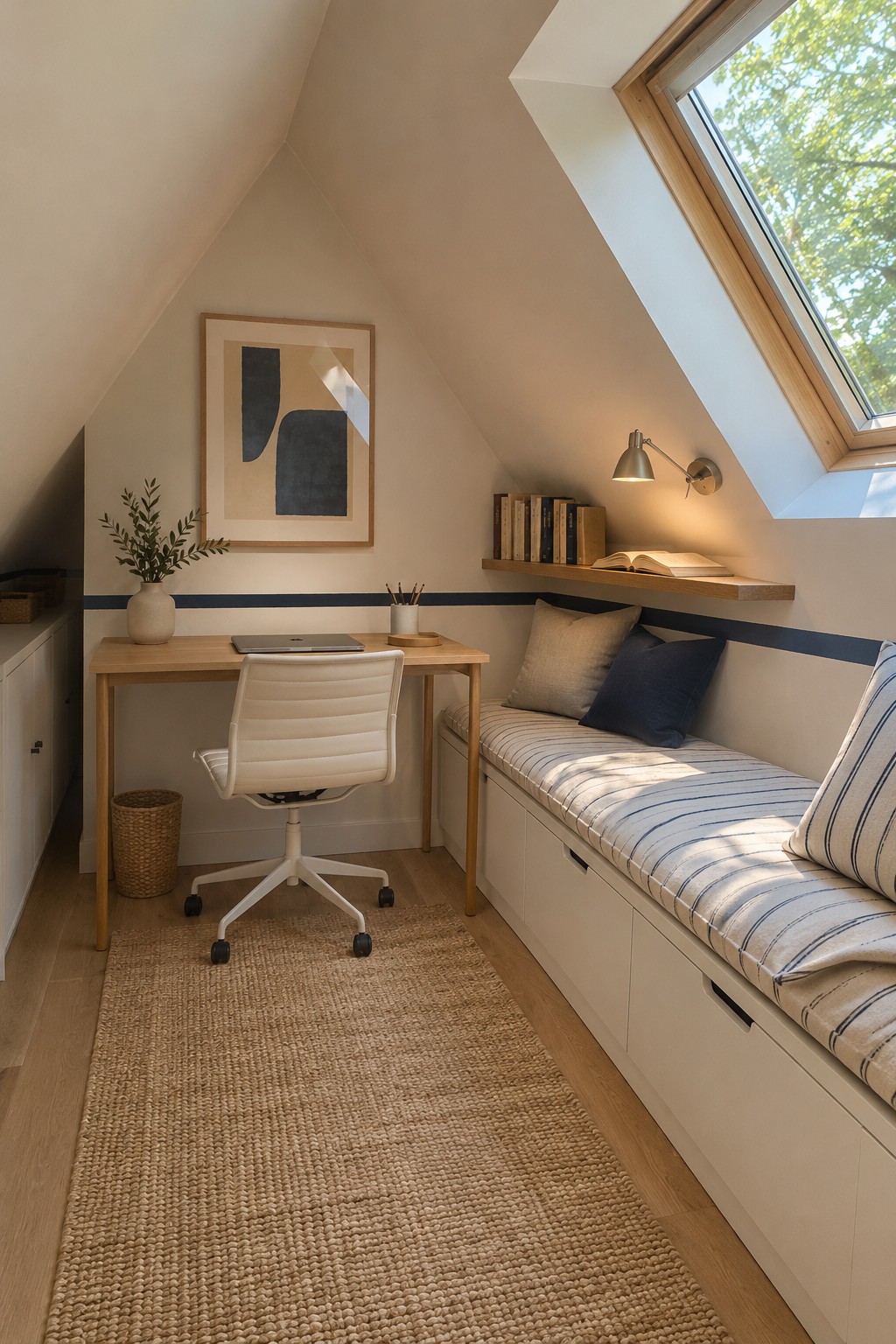
A built-in window seat can make an attic office more useful without taking up much floor space. Here, the seat runs along the low wall, giving the room a place to pause while keeping the central area open for a desk.
This layout suits a narrow attic where a standard sofa would feel too bulky. Add drawers beneath the seat for supplies or extra linens, and keep the desk close by so the two areas work together without crowding each other.
Keep the Desk Tucked Into the Eaves
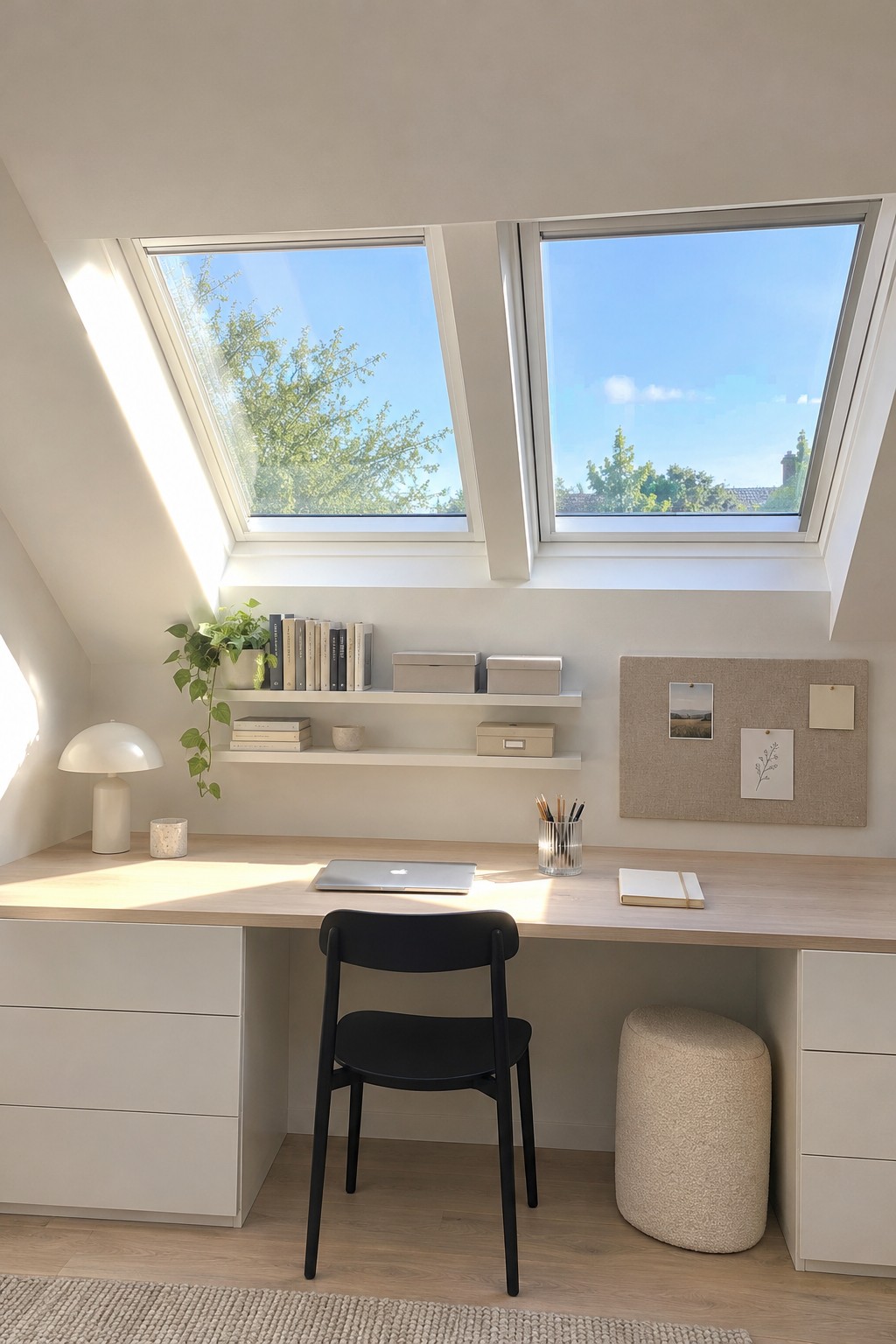
An attic desk can make good use of the low space beneath a sloped ceiling, leaving the taller part of the room open. A long, simple work surface also gives you room to spread out without making the office feel crowded.
For a similar setup, place drawers at the ends of the desk and keep the middle clear for your chair. Skylights help bring daylight to the work area, but leave enough wall space for shelves or a pinboard.
Make the Desk Fit the Attic

A long desk fitted along the attic wall makes good use of the space beneath the sloped ceiling. It leaves the middle of the room open while providing a generous work surface, and the wood top gives the office a practical, finished feel.
This approach suits an attic where the ceiling is too low for much else along the wall. Keep the desk depth modest so the chair can move comfortably, and use drawers at one end for supplies without crowding the work area.
Choose a Simple Desk and Chair for the Attic

A straightforward desk and comfortable wooden chair can make an attic office useful without crowding the room. The open space beneath the sloped ceiling stays easy to move through, while the desk provides a clear place to work.
This approach suits small attics where built-ins might feel too bulky. Leave enough room behind the chair to pull it out, and use a desk that fits the lower wall rather than trying to fill every available corner.
Keep the Attic Desk Area Simple
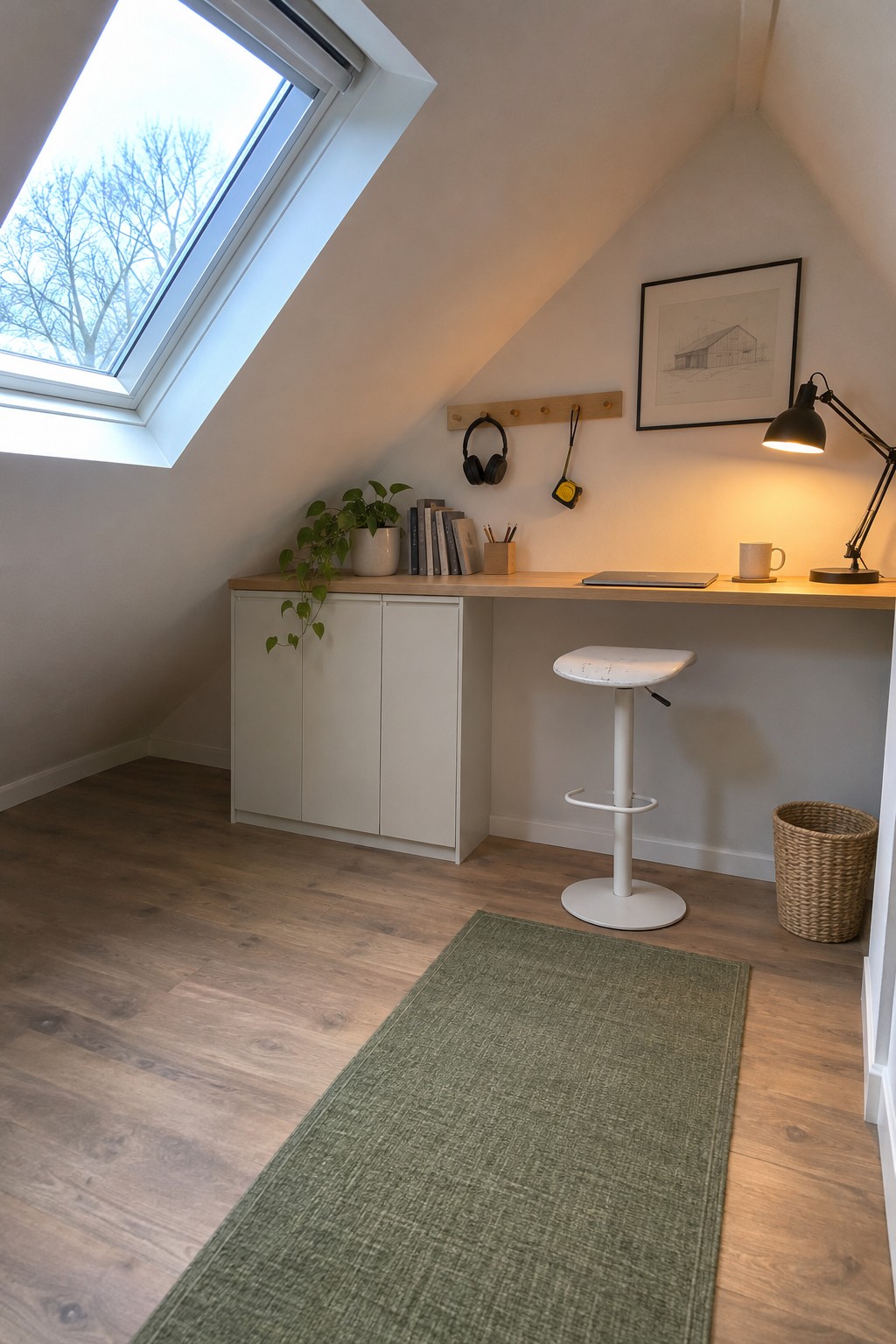
A long desk along the low wall makes good use of space that might otherwise be awkward to furnish. The open legroom beneath it keeps the work area from feeling cramped, while a small cabinet at one end provides a place to tuck things away.
This setup suits an attic office where the ceiling limits headroom near the walls. Keep the desktop fairly clear and use a few shelves or wall hooks for everyday supplies, so the desk stays practical without crowding the room.
Use a Warm Accent Wall Behind the Desk

A muted terracotta wall gives this small attic office a clear work zone without adding much furniture. It also makes a tucked-away desk feel considered rather than squeezed into an awkward corner.
Try this on the vertical wall beneath a sloped ceiling, where paint can define the area without competing with the roofline. Keep the desk and larger pieces simple, and test the color in different daylight before painting.
Use Built-In Shelves to Keep an Attic Office Organized

Built-in shelves make good use of an attic’s narrow side walls, leaving the center of the room open for a clear walkway. They also keep books and work supplies close by without crowding the desk.
In a long, narrow attic, shelves with lower cabinets can add useful storage without taking up extra floor space. Keep the shelves shallow enough that the room still feels easy to move through, especially near the desk.
Use a Desk That Fits Between the Eaves
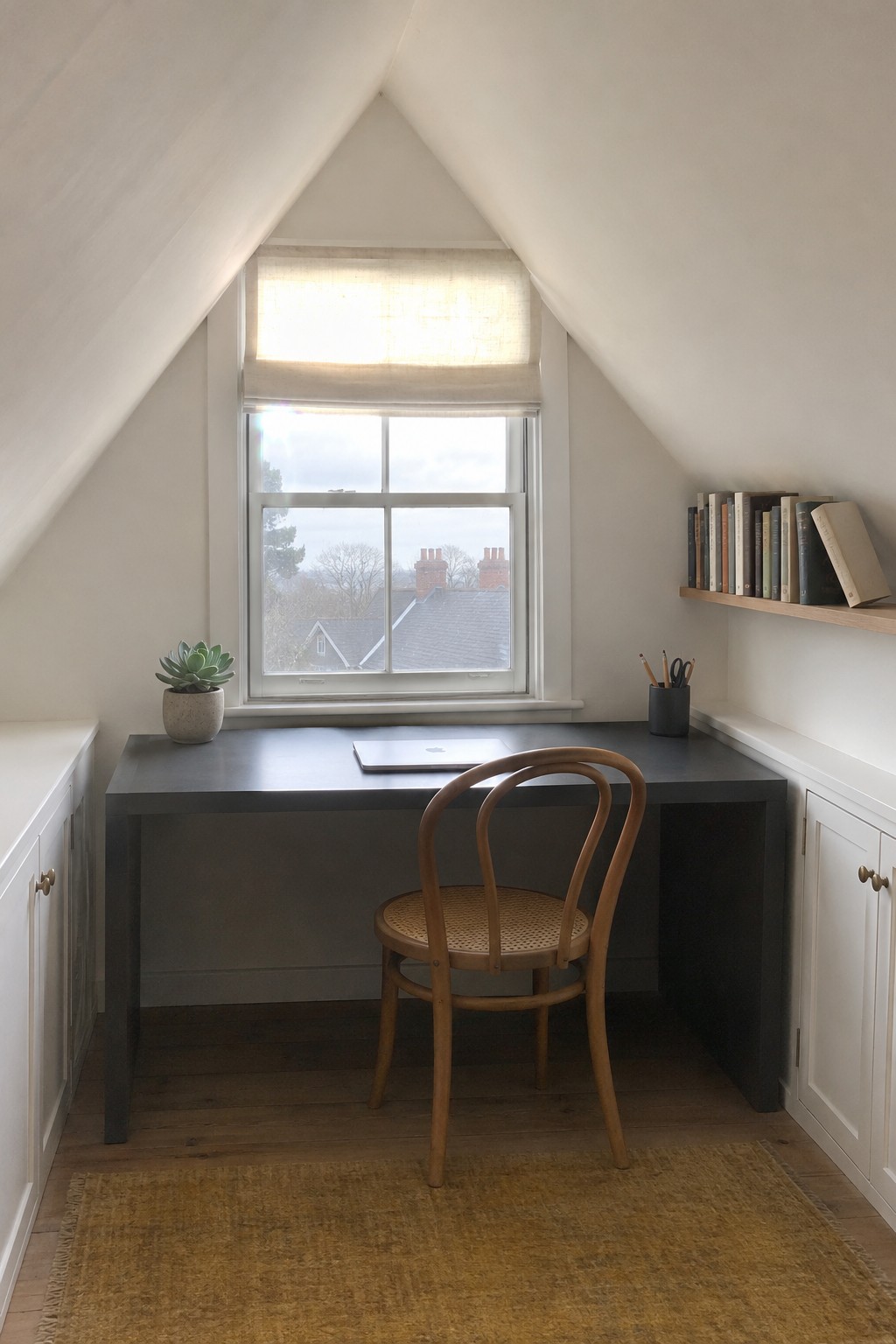
A desk sized to the narrow space between sloped walls makes an attic office feel practical without crowding it. The simple rectangular work surface here leaves room to move around the chair and keeps the area focused on work.
This layout suits small attics where a full-size office setup would feel bulky. Measure the usable width carefully, and leave enough clearance for the chair to pull out comfortably.
Use a Long Desk to Make the Attic More Practical

A long work surface makes good use of the open floor beneath a sloped ceiling. It gives you room to spread out papers and tools without needing a large desk that takes up the middle of the room.
This layout works well in an attic office where the ceiling limits wall space. A simple trestle desk and a few drawers or cabinets along the lower wall can provide storage while keeping the work area easy to reach.
Use a Long Desk Along the Attic Wall
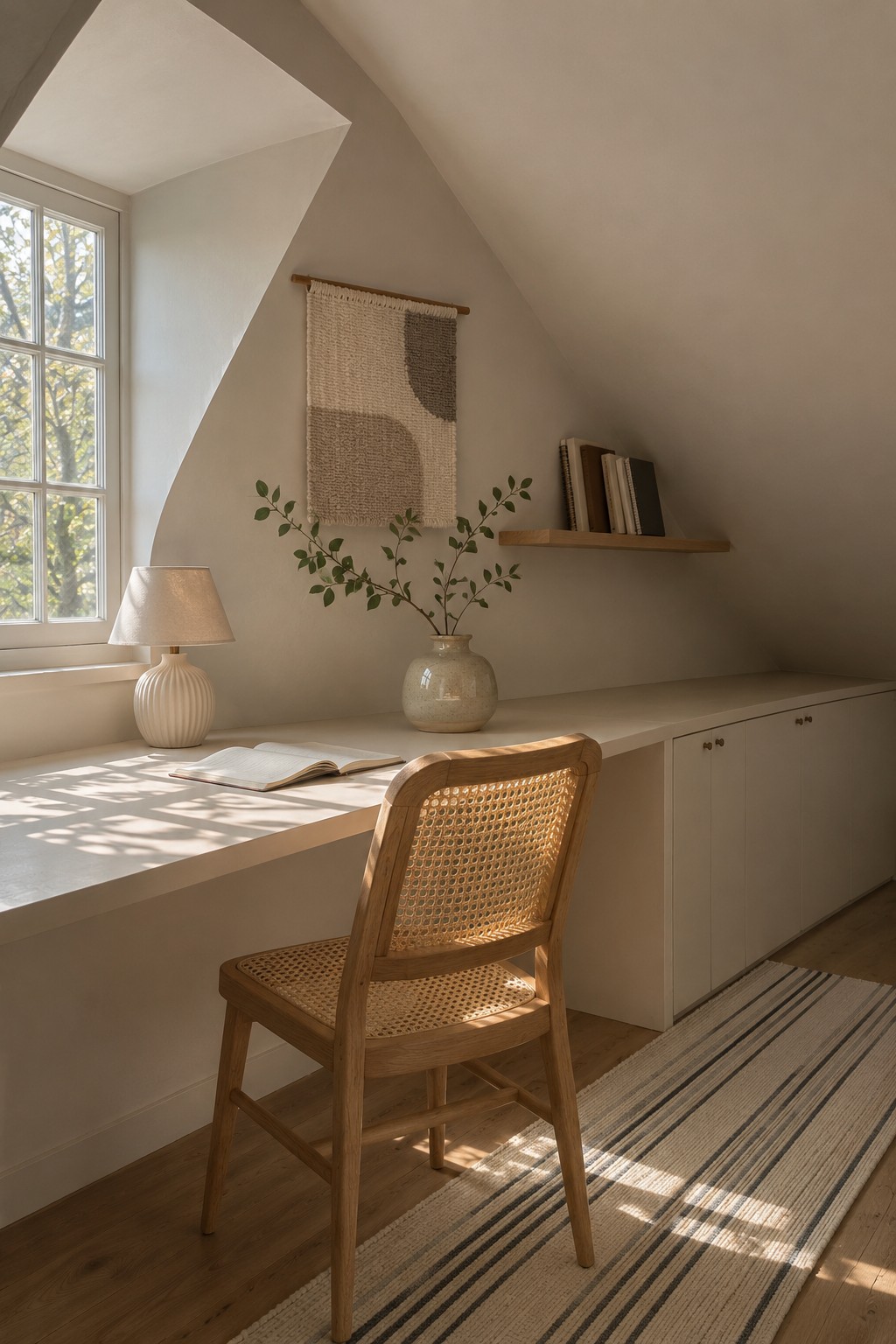
A long, built-in desk makes good use of the low wall beneath a sloped attic ceiling. It gives you a generous work surface without needing to place a bulky desk in the middle of the room.
This layout suits a narrow attic office where floor space is limited. Keep the desk shallow enough to leave room for a chair and clear walkway, and use closed cabinets below for supplies. The light wood chair and woven wall hanging show how a few natural textures can keep the work area from feeling too plain.
Use Low Cabinets to Make the Eaves Useful
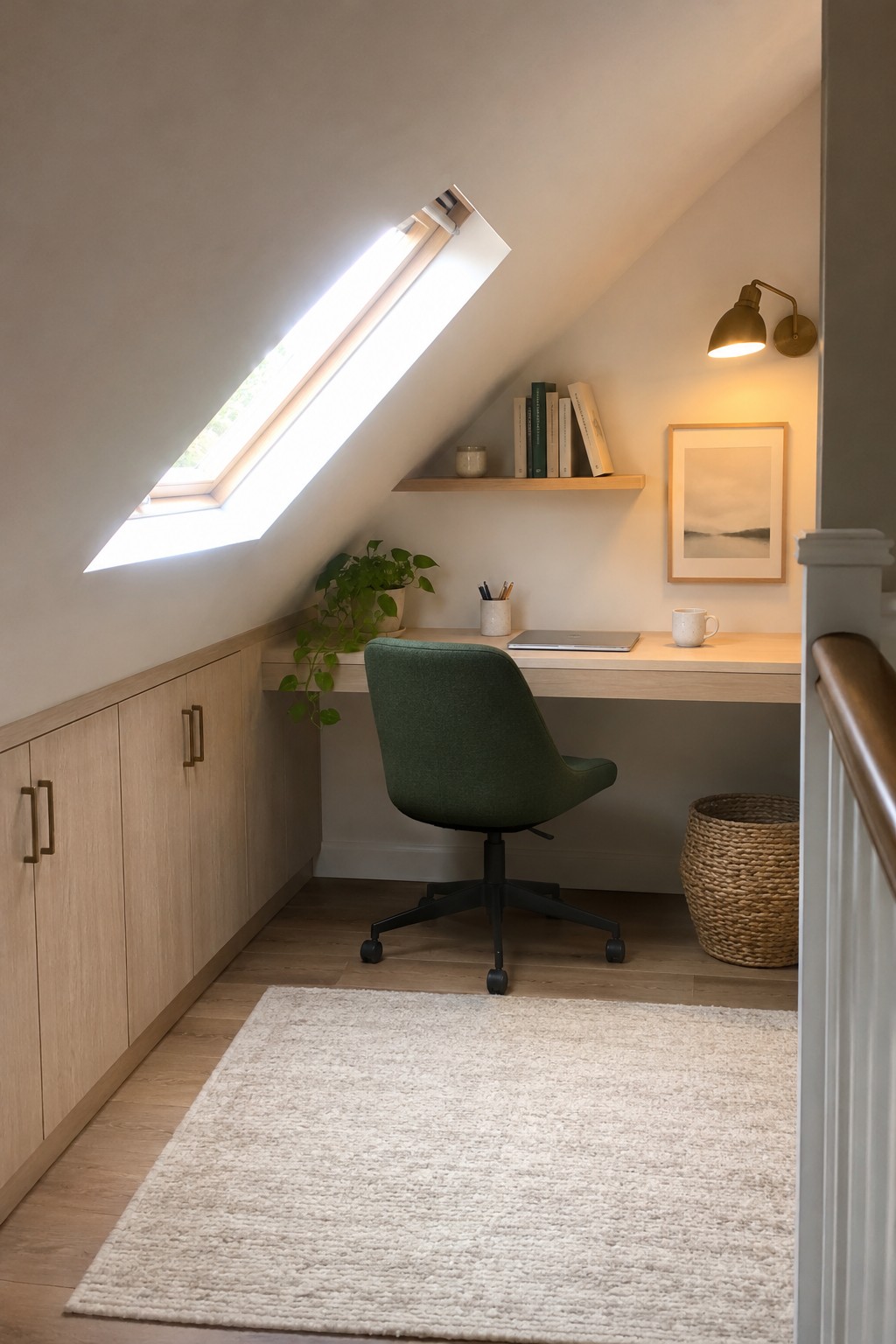
Low cabinets follow the line of a sloped ceiling, turning an awkward edge into handy storage without taking up the main work area. In this attic, the light wood cabinetry also gives the office a simple, consistent look.
This approach works well where full-height furniture would feel cramped. Keep the cabinets low enough to leave room for a desk and chair, and choose doors that make it easy to tuck away supplies.
Frequently Asked Questions
Q: How do I fit a desk under a sloped ceiling?
A: Measure the lowest part of the ceiling before choosing a desk. A low, narrow desk can sit beneath the slope, while a taller chair and shelves work better near the room’s highest point.
Q: How can I make a small attic office feel less cramped?
A: Keep the floor as clear as you can and choose furniture with simple lines. Light wall colors and a mirror can also help the space feel more open without adding clutter.
Q: What’s the best lighting for an attic office with limited headroom?
A: Use a desk lamp or wall-mounted light instead of a floor lamp that takes up space. If you have a skylight, place your desk nearby, but angle the screen to avoid glare.
Q: How do I add storage without crowding the room?
A: Use the low spaces along the eaves for drawers or shallow cabinets. They make use of awkward corners while keeping the main work area open.
