

A home office can feel cramped or unfinished when the desk area has no clear lighting of its own, even if the rest of the room is well put together.
I find that a pendant can help define the workspace, but its height and shape matter just as much as its style, especially when it needs to light a desk without getting in the way.
The first thing I notice in a room is often how the light falls across the surfaces people actually use, rather than how a fixture looks on its own.
Some of these designs could work well in a small corner, while others make more sense above a larger desk or in a shared office.
I’d save the ideas that suit your room’s layout and test the scale before settling on a fixture.
Choose a Wide Pendant for Your Desk

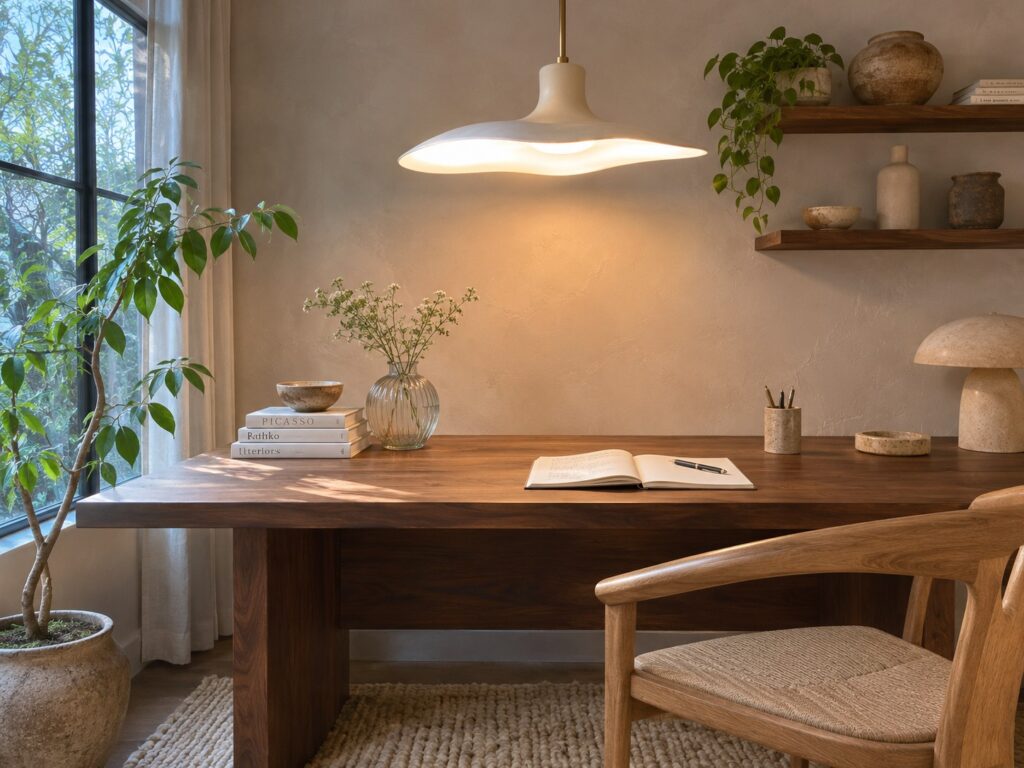
A broad pendant can spread light across a desk, making it easier to read or write without relying only on a small task lamp. A simple shade also suits a home office where you want the lighting to feel useful without adding visual clutter.
Hang it so the shade lights the work surface without getting in your line of sight. In this setup, the low, wide pendant sits above a wood desk, so check the height carefully, especially if you use a tall monitor or frequently move around the workspace.
Use A Pendant To Make A Desk Feel More Settled

A pendant can give a home office a clear pool of light without taking up any desk space. A simple globe shade suits a small, quiet workspace and feels less intrusive than a large fixture.
Hang it so the light falls over the work surface, but keep it high enough that it does not block your view or get in the way when you stand. In a narrow office, check the scale before choosing a shade so it does not crowd the desk.
Choose A Pendant That Lights The Work Surface

A pendant can give a home office a clear pool of light right where you need it. A simple metal shade suits a built-in desk especially well, where it can feel like part of the workspace rather than an extra lamp taking up room.
Hang it so the light reaches the desk without shining into your eyes, and check that the shade clears your monitor. In a darker office, a warm bulb can help, but make sure it is bright enough for reading and writing.
Use a Fabric Pendant To Make Desk Lighting Feel Softer

A fabric pendant is a good choice when you want focused light at a desk without the hard, utilitarian look of a typical office fixture. A pleated shade gives the light a softer quality and brings a bit of pattern into the workspace.
Hang it high enough to keep your view clear, but check that the bulb lights the desktop well. This approach suits a reading nook or home office with a traditional feel; choose a shade size that fits the desk rather than overwhelming it.
Use a Brass Pendant to Warm Up a Home Office

A brass pendant is a useful choice when a home office needs a little more character than a basic ceiling light can offer. Its broad shade gives the desk area a clear focal point, while the warm metal suits traditional furniture and neutral finishes.
Hang the fixture so it lights the work surface without blocking your view across the room. In a space with a large desk, choose a shade with enough width to feel in scale, and check that it does not hang too low.
Use Multiple Pendants to Light a Desk
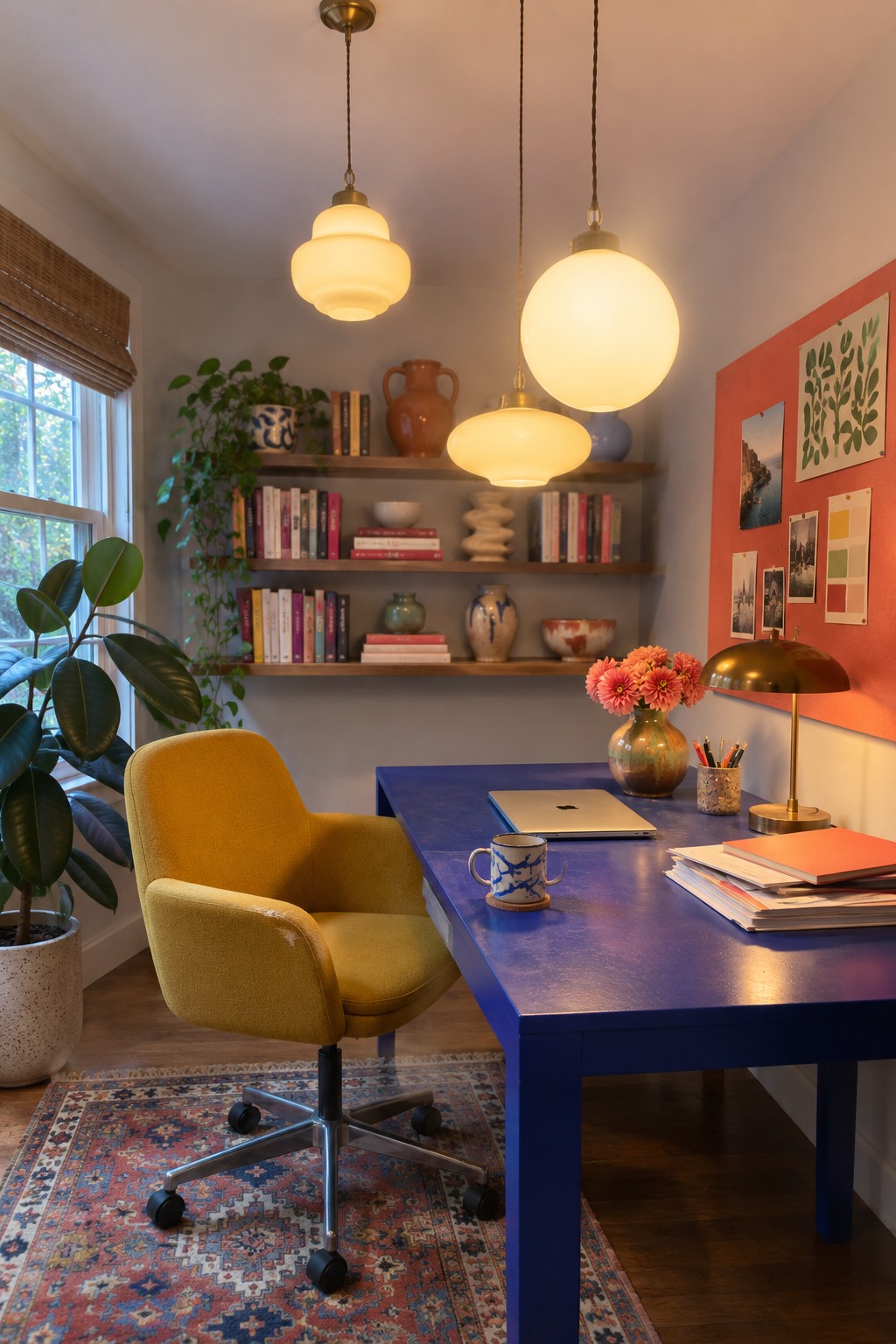
Several pendants can spread light across a desk instead of concentrating it in one spot. Different shade shapes keep the setup from feeling too uniform, while the warm bulbs make the light feel comfortable for everyday work.
This approach suits a wider desk or a room where a single pendant would leave parts of the work surface dim. Hang the lights at slightly different heights, and make sure they do not block your view or create glare on a screen.
Choose an Industrial Pendant for a Rustic Office

A metal cage pendant is a natural fit for a home office with exposed timber and a sturdy wood desk. Its simple, practical shape suits the room’s rustic materials without making the lighting feel too decorative.
Hang it above the desk, with the bulb positioned to light the work surface without shining into your eyes. In a smaller office, check the pendant’s size and drop so it does not crowd the desk or obstruct movement.
Use a Linear Pendant for Even Desk Lighting

A long, slim pendant is a practical choice for a desk because it spreads light across a wider work surface than a small hanging fixture. The simple black design also suits a home office that leans modern or Scandinavian.
For a built-in desk or a long shared workspace, hang the fixture parallel to the desk and high enough to keep it out of your line of sight. Check that it lights the whole surface without creating glare on a screen.
Use an Amber Glass Pendant for a Warmer Desk

An amber glass pendant gives a home office a warmer feel while still putting the light right above the desk. The tinted shade is a simple way to make a work area feel less stark, especially in a room with wood furniture.
This look suits a mid-century or otherwise warm, casual office. Choose a bulb that is comfortable to work near, and hang the fixture high enough that it does not get in your line of sight.
Use a Woven Pendant for a Softer Home Office

A woven pendant can make desk lighting feel less utilitarian. Its open texture lets the bulb show through, while the natural material suits a relaxed home office.
Choose a shade that spreads light across the work area, and use a warm bulb for a comfortable glow. Since woven shades can cast patterned light, keep a task lamp nearby for detailed work.
Choose a Smoked Glass Pendant for a Home Office

A smoked glass pendant gives desk lighting a softer look than a bare bulb, while still leaving the light source visible. It suits a home office that shares space with a living room or bedroom, where a more decorative fixture can help the desk feel at home.
Hang it high enough to keep sightlines clear, and check that the bulb provides enough light for focused work. A warm bulb can make the glass glow, but task lighting nearby may still be useful for reading.
Use a Dark Pendant to Add Contrast to a Rustic Office

A dark metal pendant is an easy way to give a rustic desk area a clear focal point. Here, its simple shape stands out against the pale plank wall and suits the worn wood without making the office feel too formal.
This idea works well in a small study or a corner set up for focused work. Hang the fixture so it lights the desk without getting in the way, and choose a shade size that fits the work surface.
Choose a Green Pendant to Bring Color to the Desk

A pendant can do more than light a work surface. Choosing one in a rich green gives the desk area a clear point of color, especially in a room with dark walls.
This idea works well when you want the office to feel coordinated without matching every accessory. Repeat the pendant’s color in a chair or a small decorative detail, and check that the light reaches the desk comfortably.
Use a Paper Pendant for Gentle Desk Lighting

A paper pendant can make a home office feel calmer while still giving the desk a clear source of light. Its broad shade spreads light more softly than a small, exposed bulb, which suits a simple work area without making it feel too formal.
Hang it above the desk, and check that it lights the work surface without shining into your eyes or reflecting on a screen. A round paper shade works especially well in a quiet room with natural wood and a restrained palette.
Use a Classic Pendant to Light a Writing Desk

A single pendant can give a writing desk its own pool of light without taking up space on the work surface. A simple metal fixture with a broad shade works especially well above a traditional desk, where it feels at home among older furniture and wall trim.
Hang it low enough to light papers comfortably, but high enough to keep the bulb out of your line of sight. A dimmer is useful if the desk also serves for reading or quiet work in the evening.
Use Pendant Lights to Define a Shared Desk

Two pendant lights can give a long shared desk clear lighting at each work area. This is a useful option when two people work side by side and a single ceiling light leaves parts of the desk dim.
Hang each pendant above its own work zone, keeping the fixtures high enough that they do not block sightlines or get in the way of screens. A pair suits a home office with a wide desk, but check that both lights spread illumination evenly across the surface.
Use a Pleated Pendant for Gentle Desk Lighting

A pleated shade spreads light across the desk instead of concentrating it in a small, bright spot. Its broad shape also suits a home office where the pendant can serve as the main light above the work area.
Choose a size that lights the desk without blocking your view across the room, and hang it high enough to leave comfortable headroom. A warm bulb works well with a dark office, but make sure it is bright enough for reading and writing.
Choose a Woven Pendant for a Cozy Desk

A woven pendant can give a home office a softer, more relaxed feel than a plain metal fixture. Its open shade lets light spread through the room, while the natural texture suits a small writing desk especially well.
Hang it high enough to keep the bulb out of your line of sight, and check that the desk still gets enough light for reading or writing. A warm bulb works nicely with a woven shade, but use a task lamp too if you need brighter, more focused light.
Use a Ribbed Glass Pendant for a Home Office

A ribbed glass pendant is a practical choice when you want focused light to feel less stark. The ridged shade spreads the glow across the desk while still giving the fixture a clear presence in the room.
Hang it high enough to keep your view open, and check that the bulb does not create glare on a laptop screen. This style suits a home office with simple furniture and a few traditional or industrial touches.
Frequently Asked Questions
Q: How low should a pendant hang above my desk?
A: Leave enough room to work without bumping your head or blocking your view. A good starting point is about 30 to 36 inches above the desktop, then adjust to suit your height and the pendant’s size.
Q: Will one pendant light be bright enough for a home office?
A: It can be, especially over a smaller desk, but a pendant often works best with a desk lamp or other room lighting. Choose a shade that directs light onto your work without shining into your eyes.
Q: What kind of pendant shade helps prevent glare on a computer screen?
A: Look for an opaque or downward-facing shade that keeps the bulb out of your direct line of sight. Positioning the pendant slightly to the side of your screen can also help cut reflections.
Q: Can I hang a pendant if my desk isn’t under a ceiling light?
A: Yes. A plug-in pendant lets you place the light above the desk without moving ceiling wiring. Just route the cord neatly and keep it clear of your chair and walking path.
