

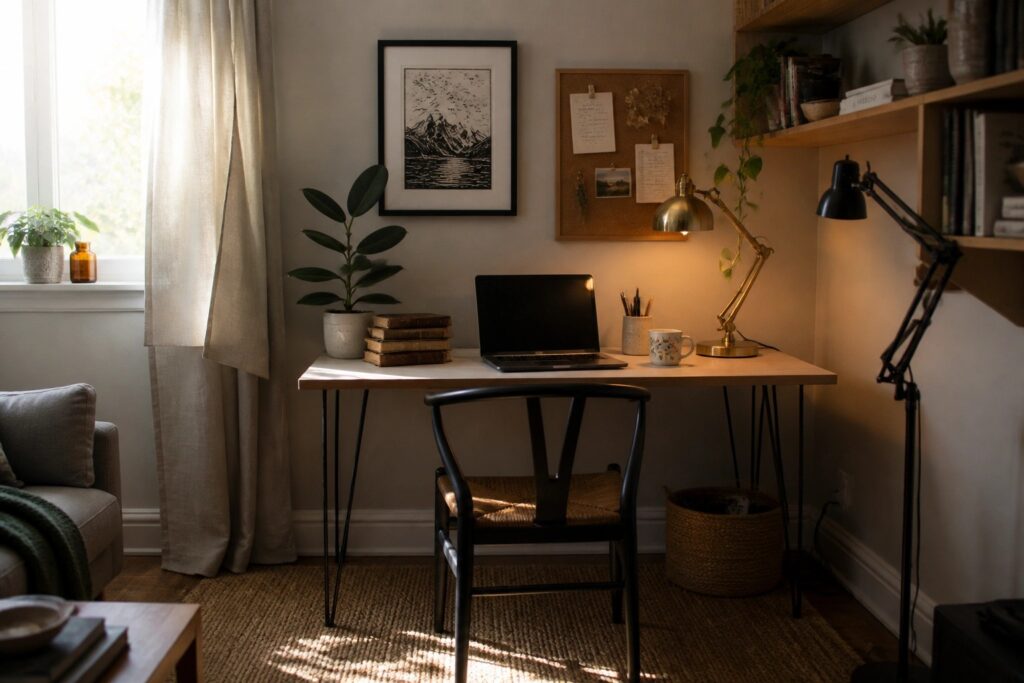
I’ve noticed that home offices tend to feel more usable when the layout accounts for how often you actually move between the desk and other spots in the room.
Good lighting and clear pathways usually stand out first once you spend a full day working there.
Small tweaks add up.
In my own space I always test storage options before adding anything decorative, since piles on the desk quickly make the room feel smaller than it is.
Ideas worth trying are the ones that match how the room gets used day to day rather than just how it looks in a quick photo.
Narrow Desk In A Corner For Small Workspaces
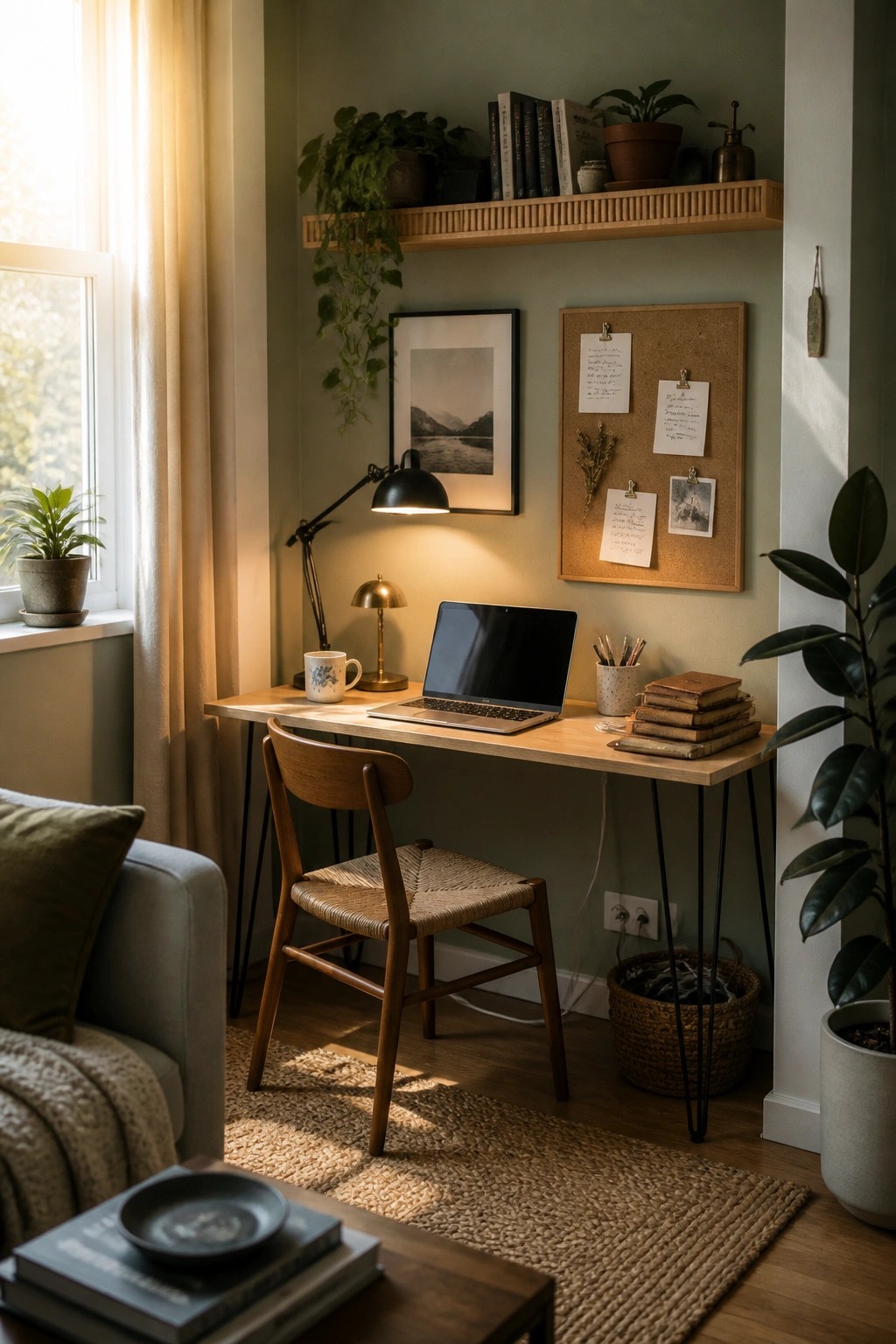
A narrow desk tucked into a corner gives you a workable office without taking over the room. This setup works especially well in starter homes or apartments where space is limited and you need the rest of the room to stay open for other uses.
Choose a simple top and affordable legs, then keep everything else light so the area does not feel crowded. A few plants and a basic chair are usually enough to make it feel finished.
Turn a Closet Into a Workspace

Many homes have a spare closet that rarely gets used. Adding a desk, a few shelves, and basic storage turns that empty space into a practical spot for work without giving up an entire room.
This approach works especially well in smaller homes or apartments where space is tight. Keep the doors so you can close everything off at the end of the day, and use wall-mounted storage to hold supplies without crowding the floor.
Use A Filing Cabinet As A Desk Base

A filing cabinet makes a solid base for a desk when you want something sturdy without spending much. The flat top gives you a good work surface, and the drawers keep papers and supplies out of sight. It works especially well in small rooms where every piece needs to earn its space.
This setup suits starter offices or any workspace that needs to stay organized on a budget. Choose a cabinet that sits at a comfortable height, then add a wood top or even a simple board cut to size. Keep the rest of the room light so the desk does not feel heavy.
Pegboard Storage For Small Offices
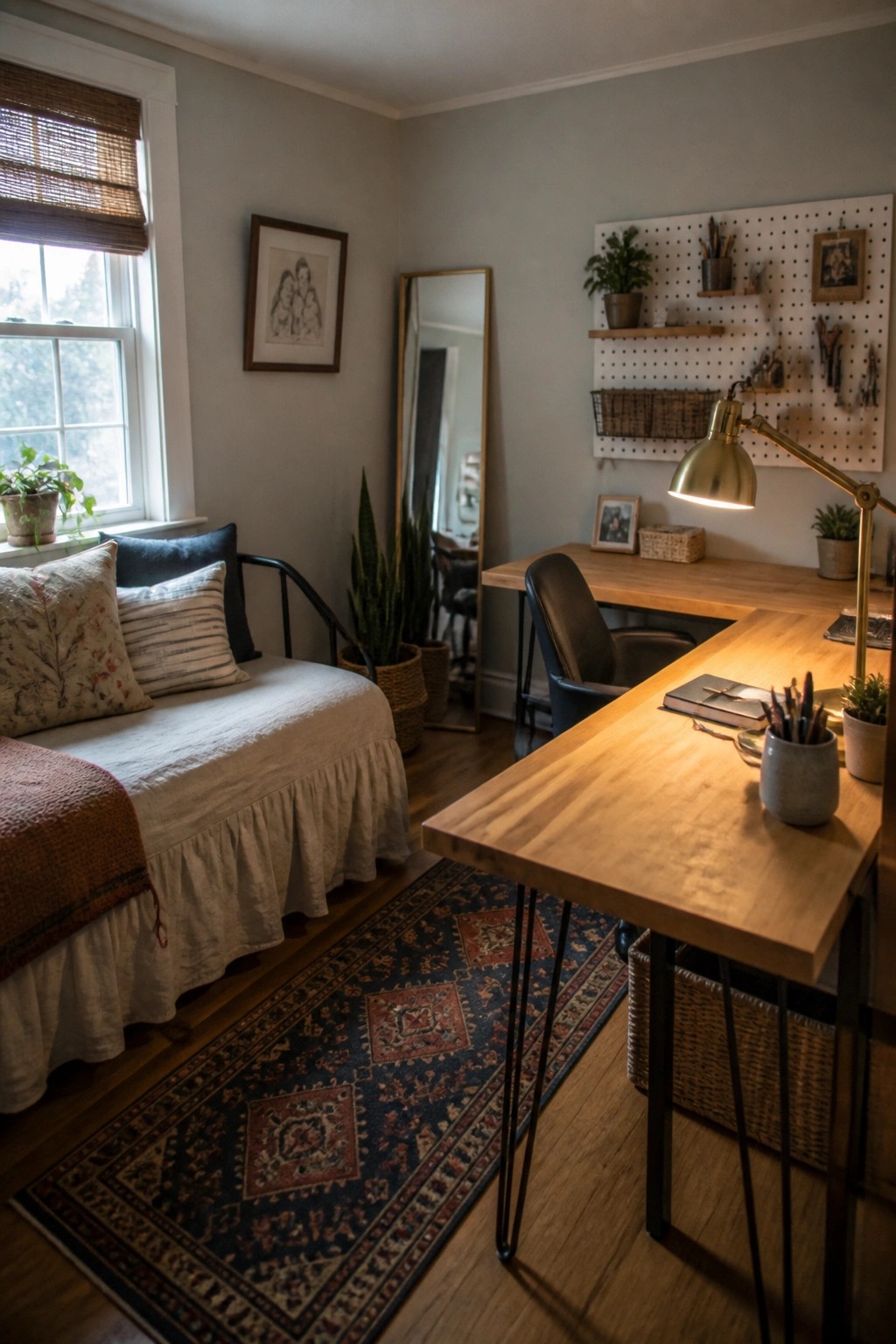
A pegboard gives you flexible wall storage without spending much. It keeps tools, supplies, and small plants within reach while freeing up desk space in a compact room.
This works well in starter offices or any space that needs to handle both work and everyday items. Mount it above the desk, add a few hooks and baskets, and rearrange as your needs change. Just leave enough wall room so the board does not feel crowded.
Using An Alcove For A Compact Desk

Small homes often have narrow spots that sit empty. Adding a simple desk and a couple of shelves turns one of those spots into a place to work without needing a full room.
This setup suits apartments or older houses where space is limited. Keep the furniture light so the area stays open and the chair can slide in and out easily.
Pegboard Walls For Flexible Storage

A pegboard wall gives you storage that changes as your needs change. You can move hooks and shelves around without tools, which makes it useful in a starter office where things are still taking shape.
This works best in small rooms or apartments where wall space is easier to find than floor space. Paint the board to match your wall color if you want it to blend in more, or leave it dark like the one here for a stronger industrial feel.
Support a Wood Desk with Matching Drawer Units

A long wood top resting on two sets of basic white cabinets gives you a wide work surface and real storage without spending much. The setup works well in smaller rooms because the cabinets double as legs and keep everything off the floor. It feels sturdy and looks finished even when the pieces come from different places.
Place the cabinets first to set the width you need, then lay the wood across them. This works best in starter spaces or spare rooms where you want to add drawers without buying a full desk unit. Keep the top simple so the focus stays on the storage underneath.
Desk With Shelf Above For Small Workspaces

A floating shelf above the desk adds storage without crowding the floor. This setup keeps things simple and leaves room to move around, which helps in tighter spaces or shared rooms.
It suits starter workspaces or bedroom corners where you need a place to work but do not want a full office. Use the shelf for a few books or supplies and keep the desk surface mostly clear so the area feels calm rather than cluttered.
Layer Plants And Woven Accents
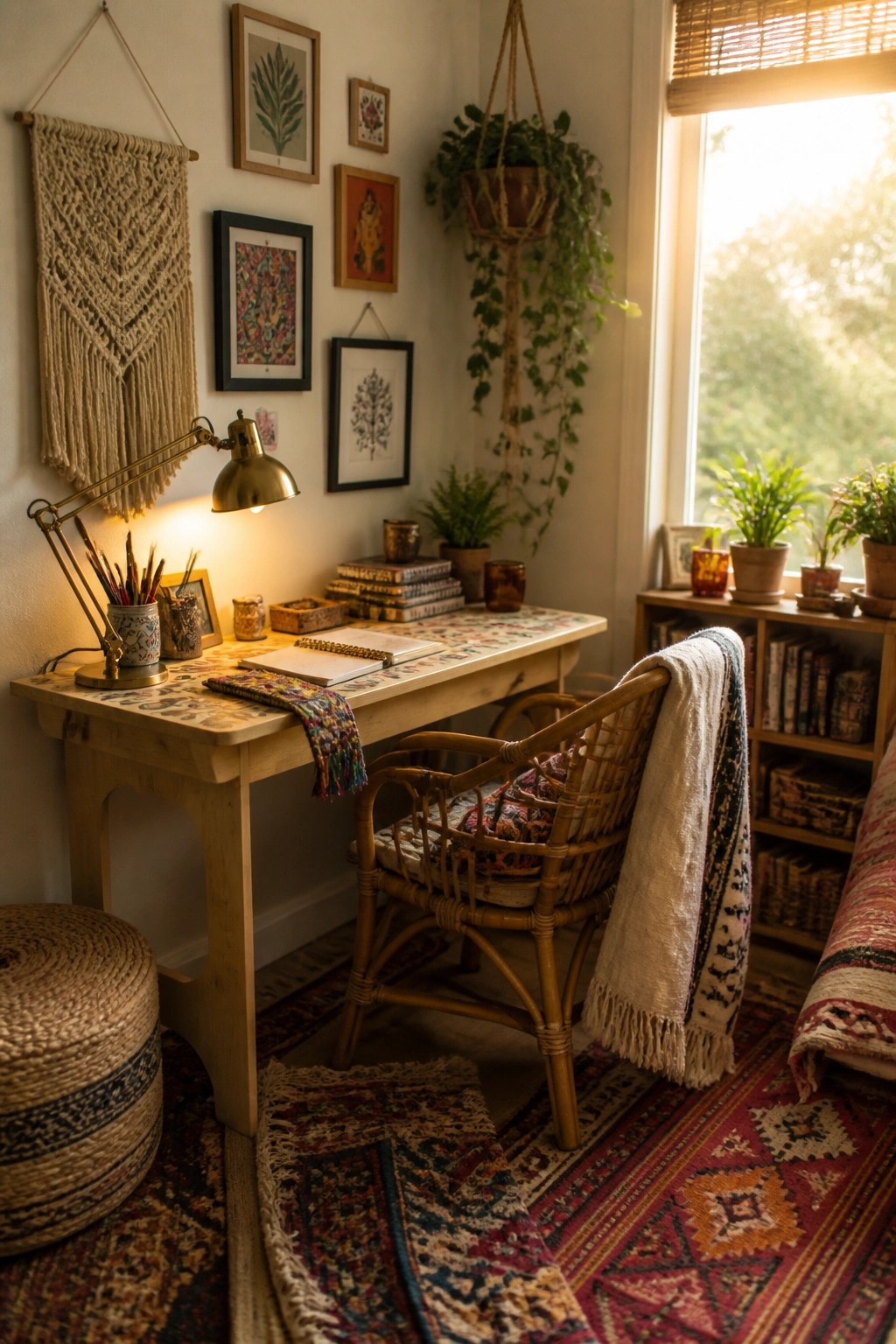
Many starter offices begin with just a desk and a chair, which can leave the room feeling flat. Adding several houseplants along with woven pieces like macrame or a rattan chair brings in texture and makes the space feel finished without a big budget.
This approach works in almost any small room or rental. Begin with a couple of easy plants on the desk or a low shelf and hang one woven item on the wall. The mix keeps things simple while making the workspace feel more personal and comfortable to use every day.
Convert A Closet Into A Shared Office
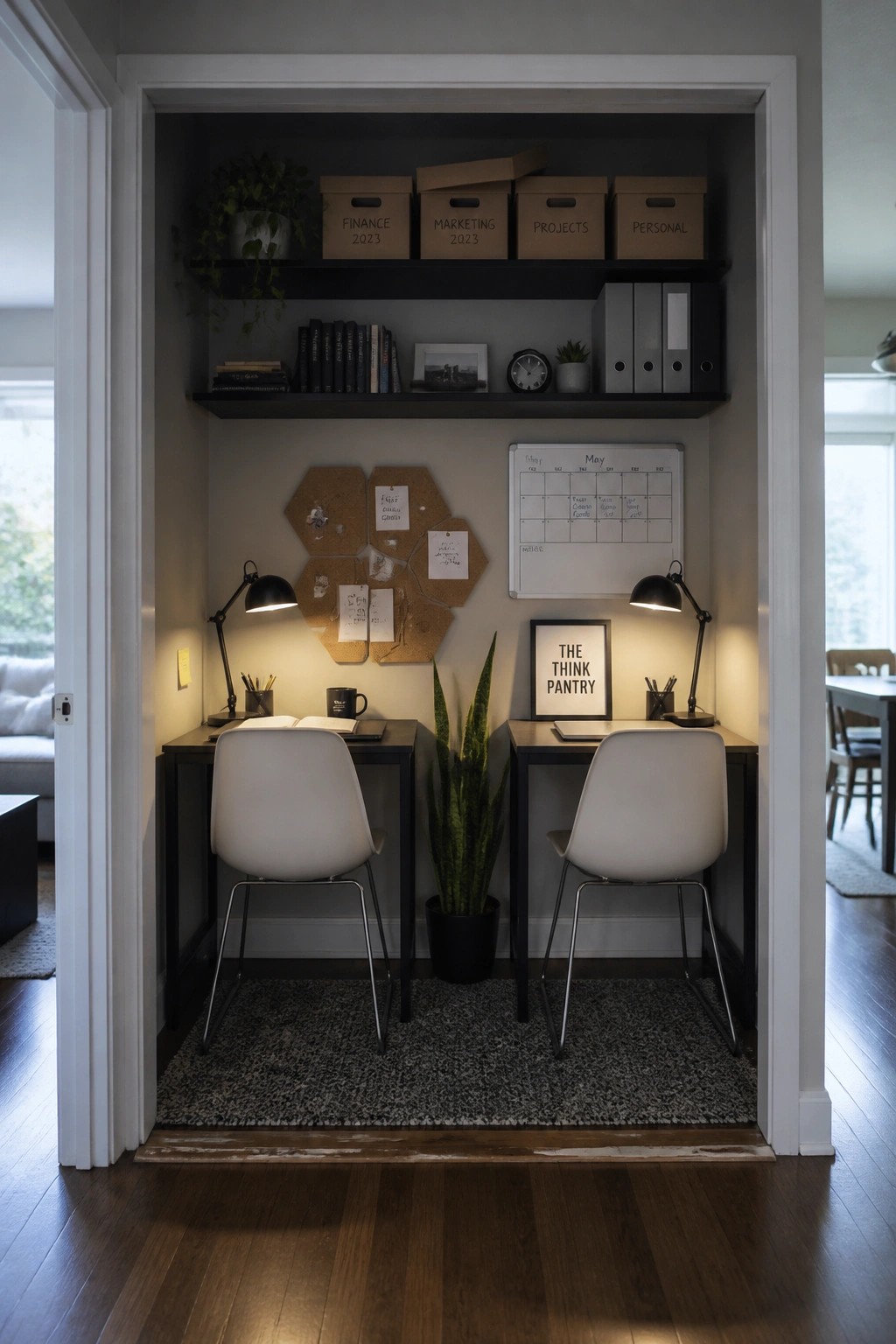
A small closet or alcove can become a practical workspace when you add two simple desks and overhead shelves. This keeps the office contained and leaves the rest of the room free for other uses.
The setup works best in apartments or smaller homes where every square foot counts. Label a few storage boxes for papers and supplies, add task lamps on each desk, and keep the chairs light so the space does not feel crowded.
Turn Unused Space Under Stairs Into a Simple Desk
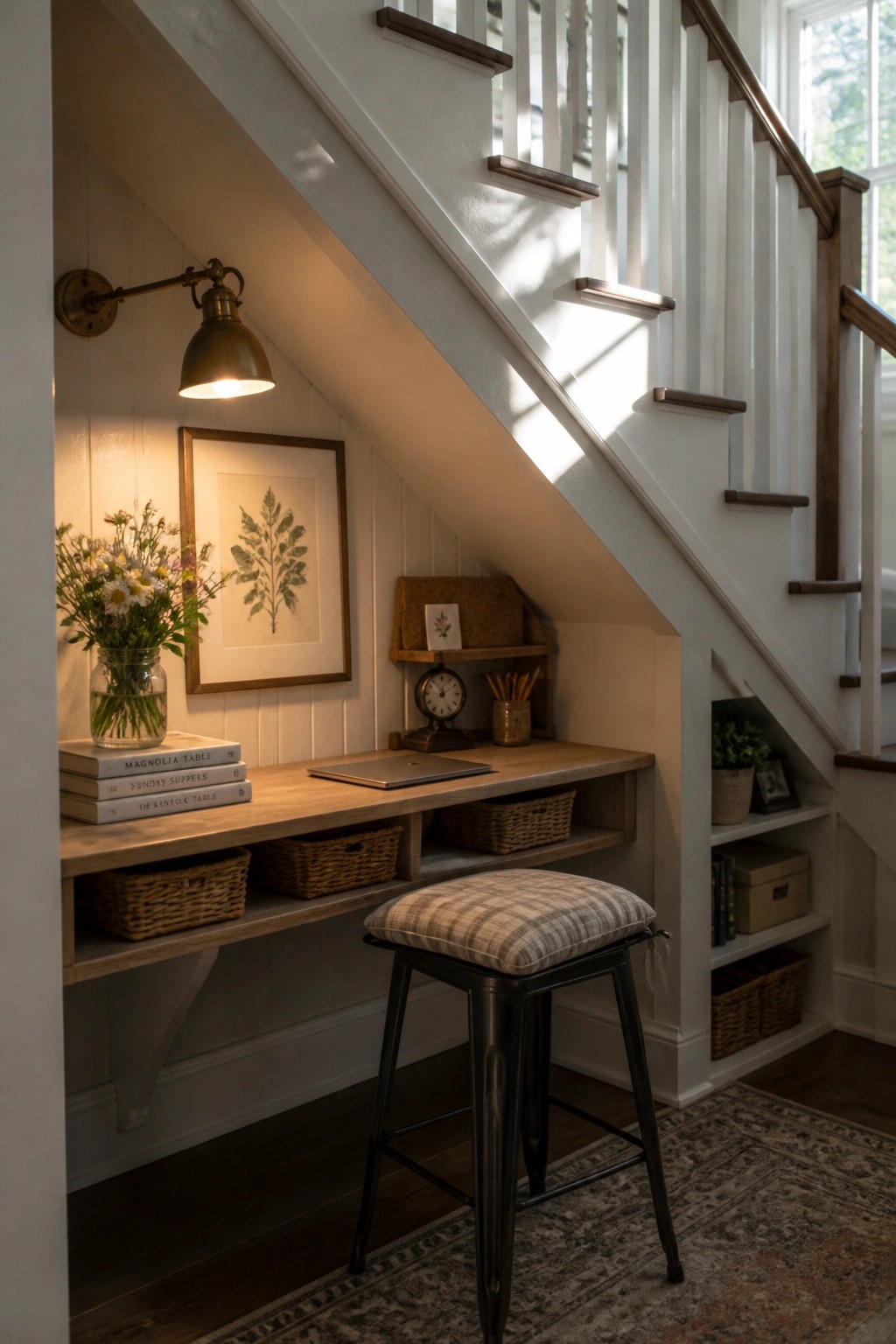
Many homes have that empty spot under the stairs that never gets used for much. Adding a basic counter and a stool turns it into a small workspace that feels separate from the rest of the house.
This setup works best in smaller homes or when you need a quiet spot without building a full room. Keep the surface narrow so it does not crowd the walkway, and add a single light above the desk so the area stays usable in the evening.
Dark Walls For A Focused Workspace
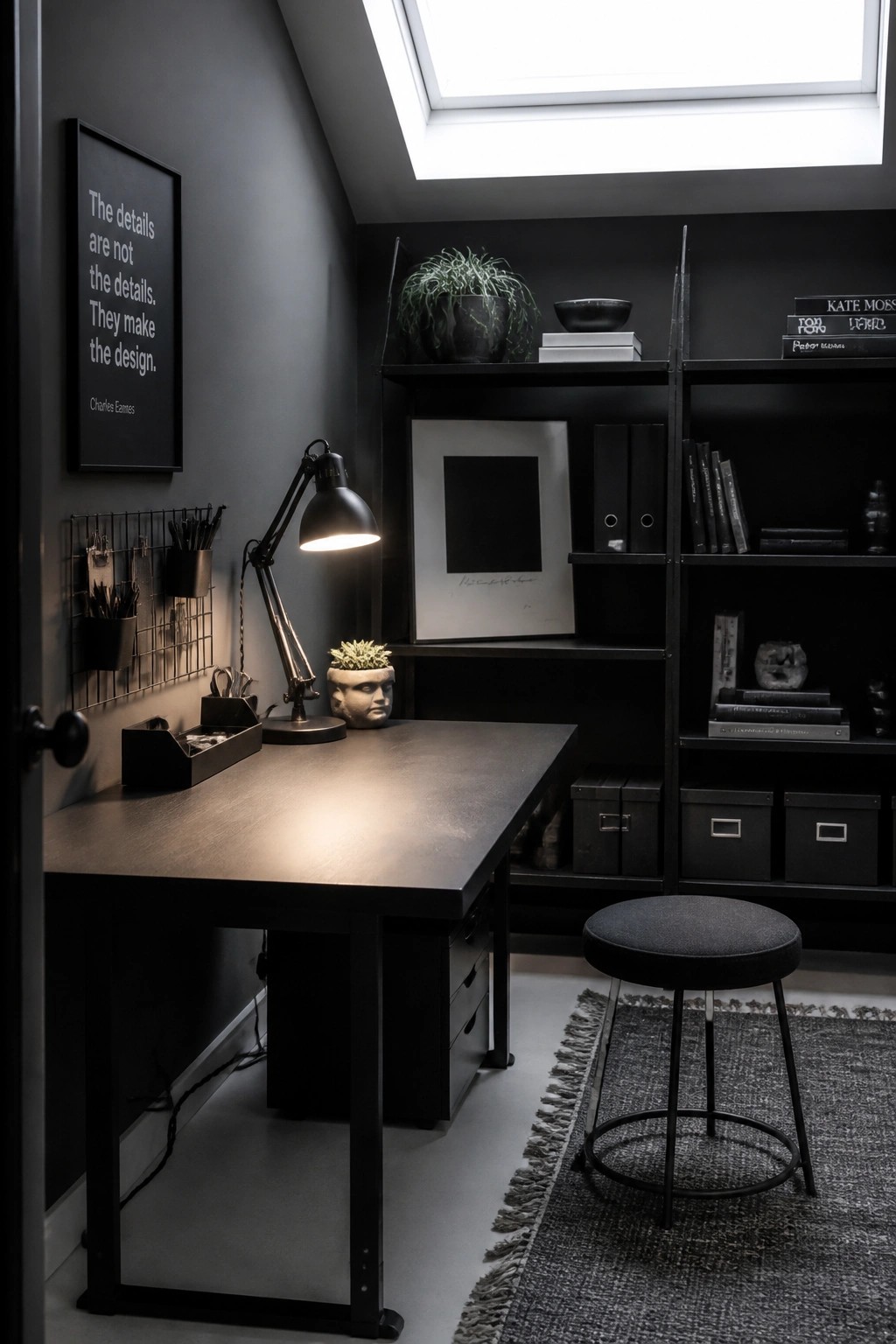
A dark color on the walls can make a small office feel more contained and easier to concentrate in. Many people choose black or deep charcoal because it hides marks well and keeps the space from feeling scattered with too many colors.
This works best in rooms that get some natural light from above or a window. Keep the furniture simple and match the tone so everything blends without extra effort.
A Drop Down Desk Works Well In A Small Nook
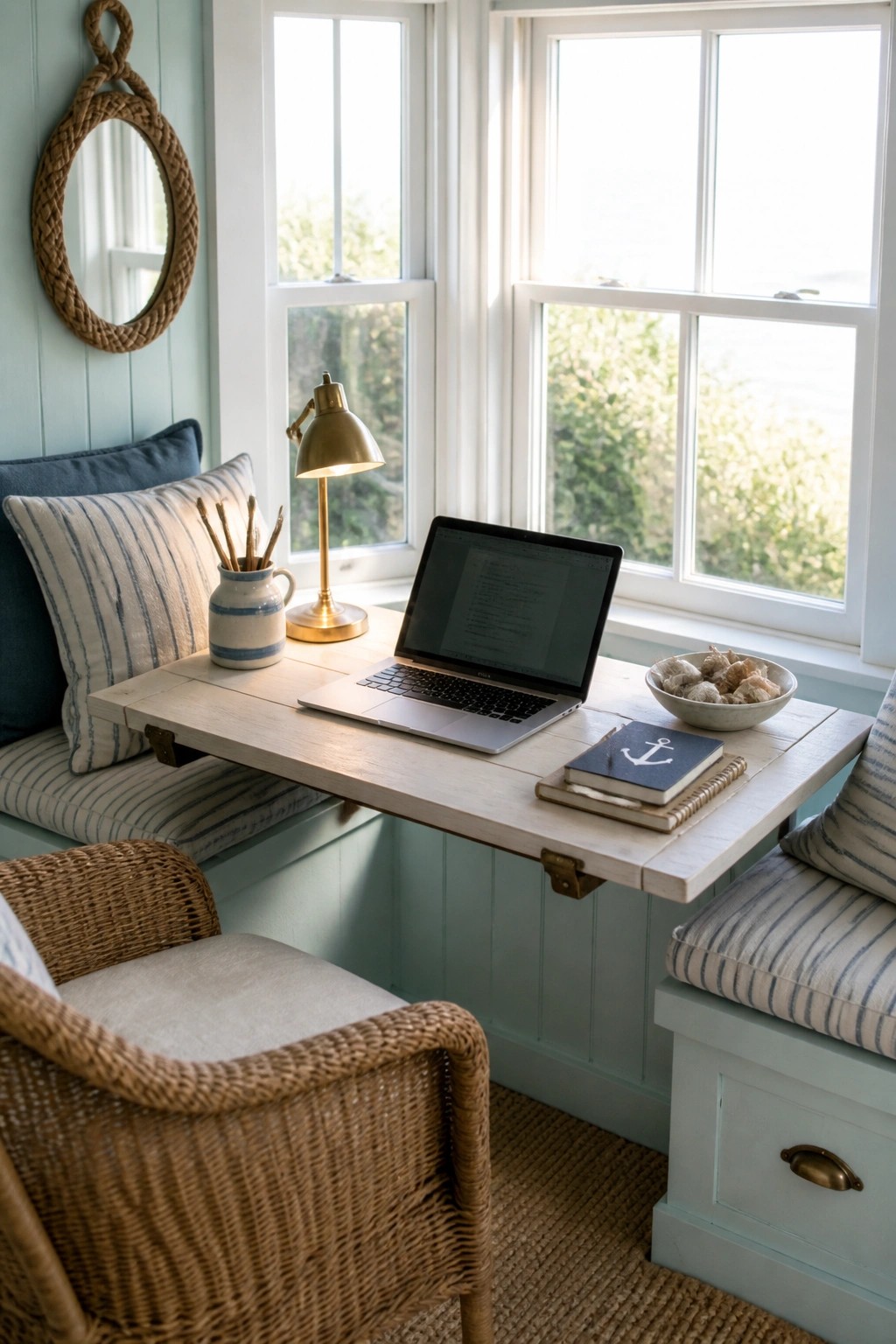
A hinged desk that drops down from the wall gives you a real workspace without eating up floor space. It stays flat against the wall when you do not need it, which keeps the room feeling open and simple.
This setup works best in a bedroom corner, a narrow hallway, or any room with a window seat already in place. Use a sturdy board with basic hinges and brackets, then add a lamp and a small chair when you want to work.
Chalkboard Walls Keep Office Tasks Organized
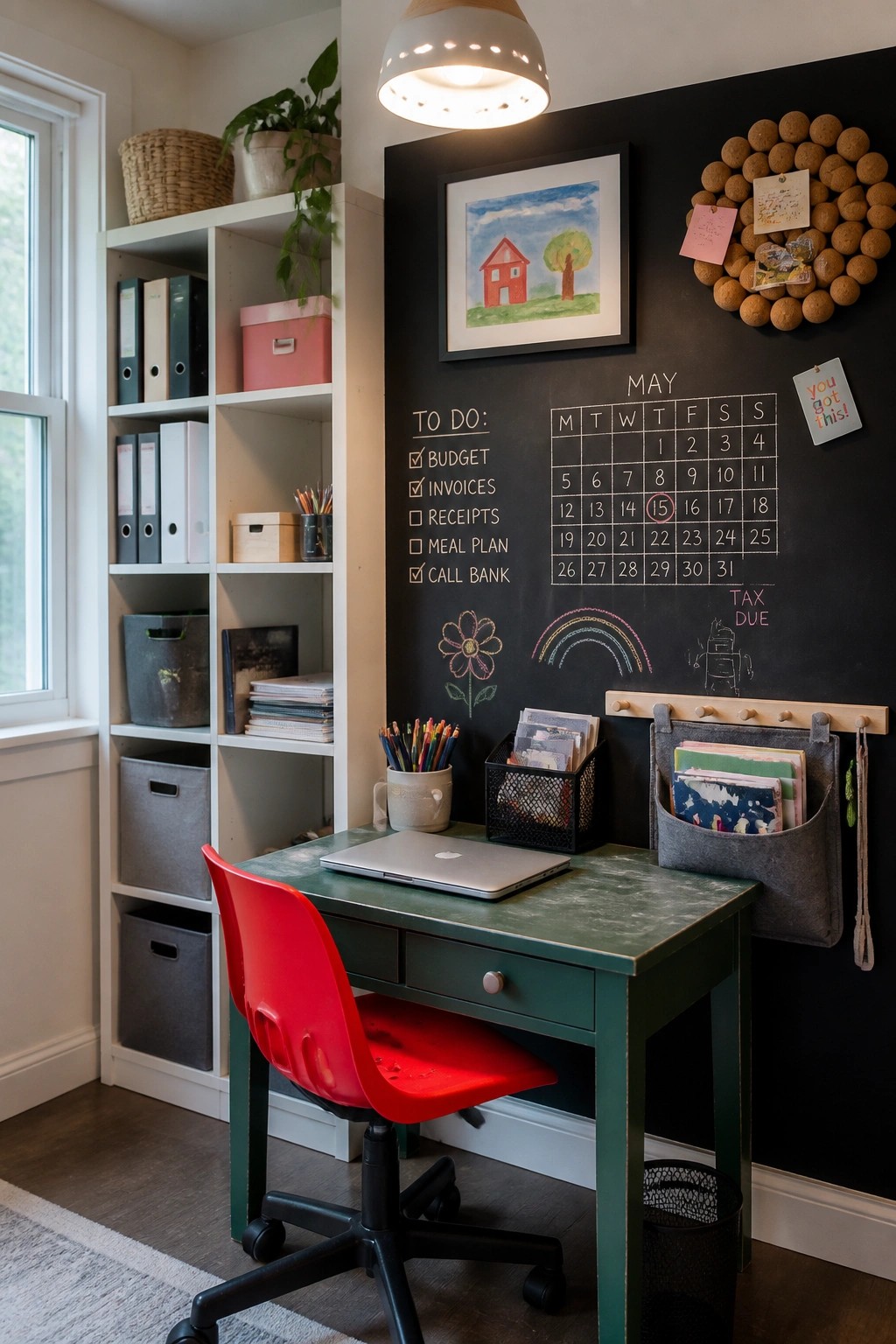
Covering one wall with chalkboard paint gives you a built-in spot for calendars, lists, and notes without buying extra boards or frames. It turns empty wall space into something useful that changes as your schedule does.
This works best in smaller offices or starter setups where every surface needs to earn its place. Keep the rest of the room simple so the wall stays easy to read and update.
Try Sawhorses For A Simple Desk Base
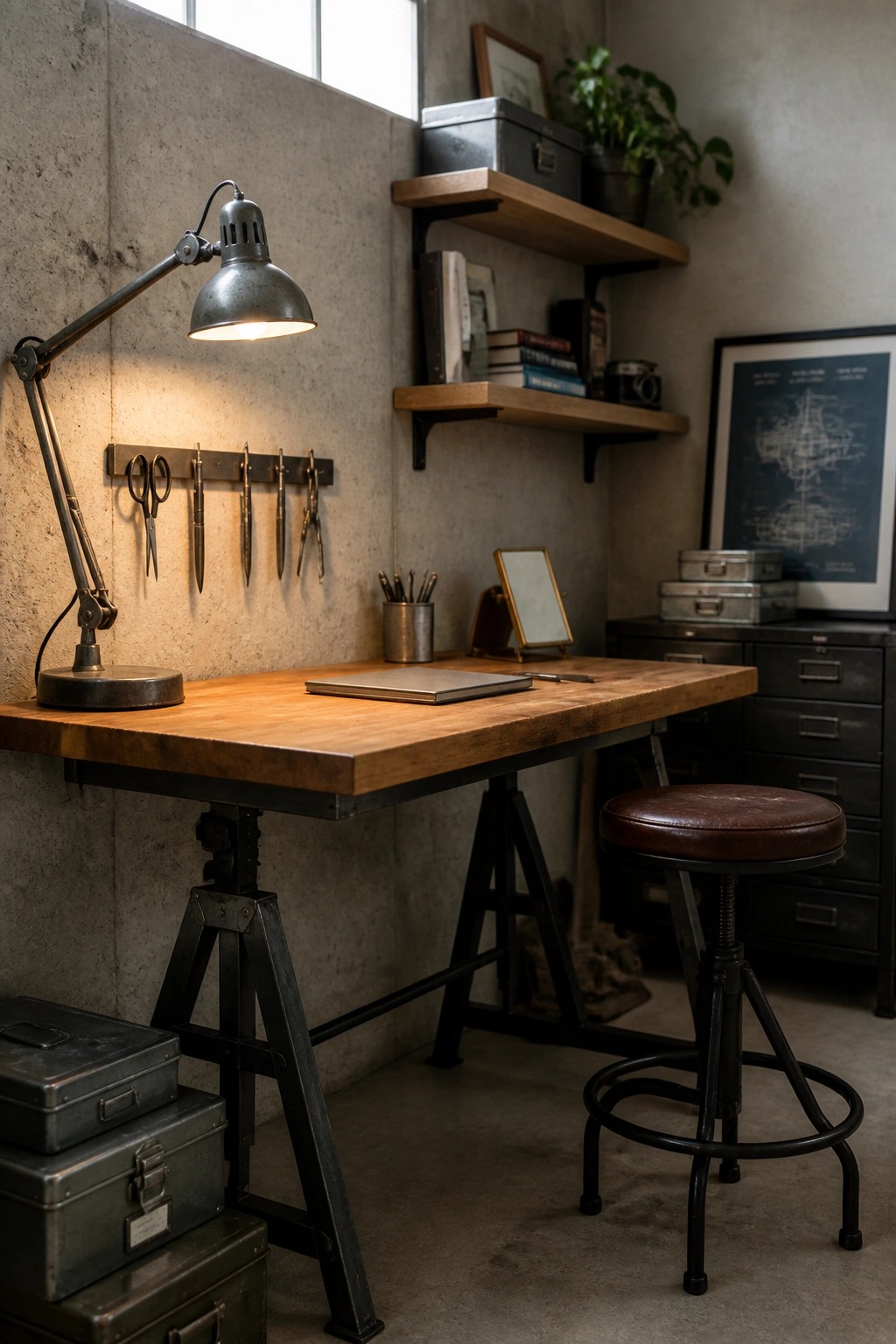
Sawhorses give you a sturdy desk without a big purchase. A wood plank laid across a pair of them creates a wide work surface that holds up well and leaves room for your legs underneath.
This approach suits small starter offices or any space where you want to keep costs low and still have something solid. You can swap the top later or move the whole thing if your layout changes.
Repurpose a Closet for a Small Home Office

Many homes have a closet that rarely gets used. Adding a simple desk and a few shelves inside turns that space into a quiet place to work without taking over another room.
This works best in bedrooms or narrow hallways where a full office would feel too big. Keep the doors so you can shut the whole thing away when you are done for the day.
Acoustic Panels For A Quieter Home Office

Acoustic panels are one of the simplest upgrades for a home office that actually gets used every day. They cut down on echo and make the space feel calmer, which matters if you take calls or just want to focus without background noise bouncing around. A few panels placed where sound hits most can change how the room feels without a big budget.
They work especially well in smaller rooms or spaces with hard floors and bare walls. Mount them behind or beside your desk where you sit most, and keep the rest of the room simple so the panels stay the main fix. They are easy to find at reasonable prices and can be painted to match if you want them less noticeable.
Warm Terracotta Walls Behind The Desk

A warm wall color can make a basic desk area feel much more inviting without spending much. Terracotta brings a grounded, earthy tone that works especially well in smaller rooms or corners where you want the space to feel calm rather than stark.
This approach suits starter workspaces or budget refreshes because paint is inexpensive and easy to change later. Keep the rest of the room simple with natural wood tones and minimal pieces so the wall color does the main work.
Add A Desk Mat To A Basic Wood Desk
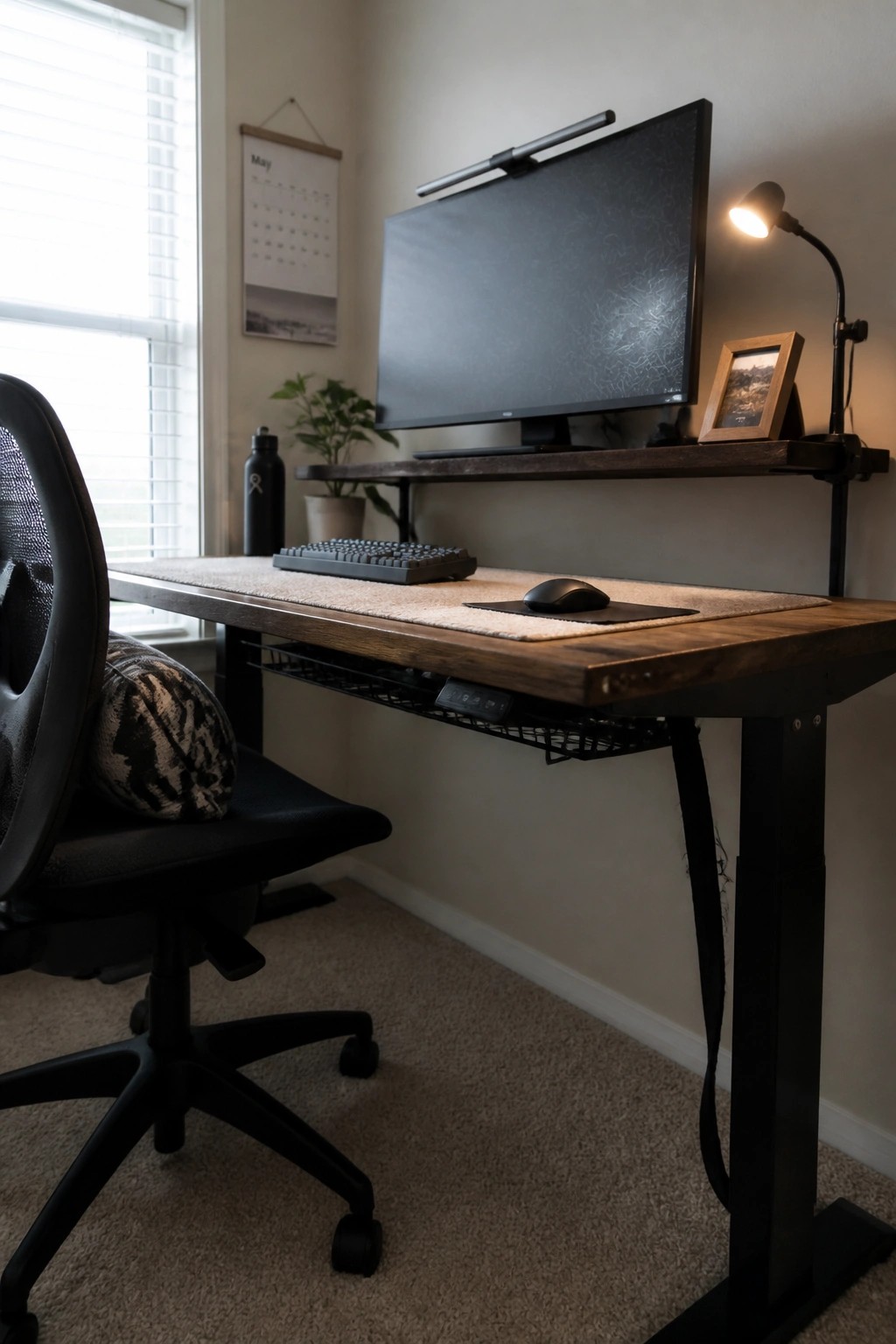
A desk mat gives a plain wood surface more function without much cost. It protects the top from wear and creates a steady spot for your mouse and keyboard while keeping the overall look simple.
This works best in small starter offices or budget setups where you already have a basic desk. Pick a neutral mat that covers most of the work area and pair it with a monitor light if you need extra brightness during the day.
Choose A Desk Lamp For Focused Light
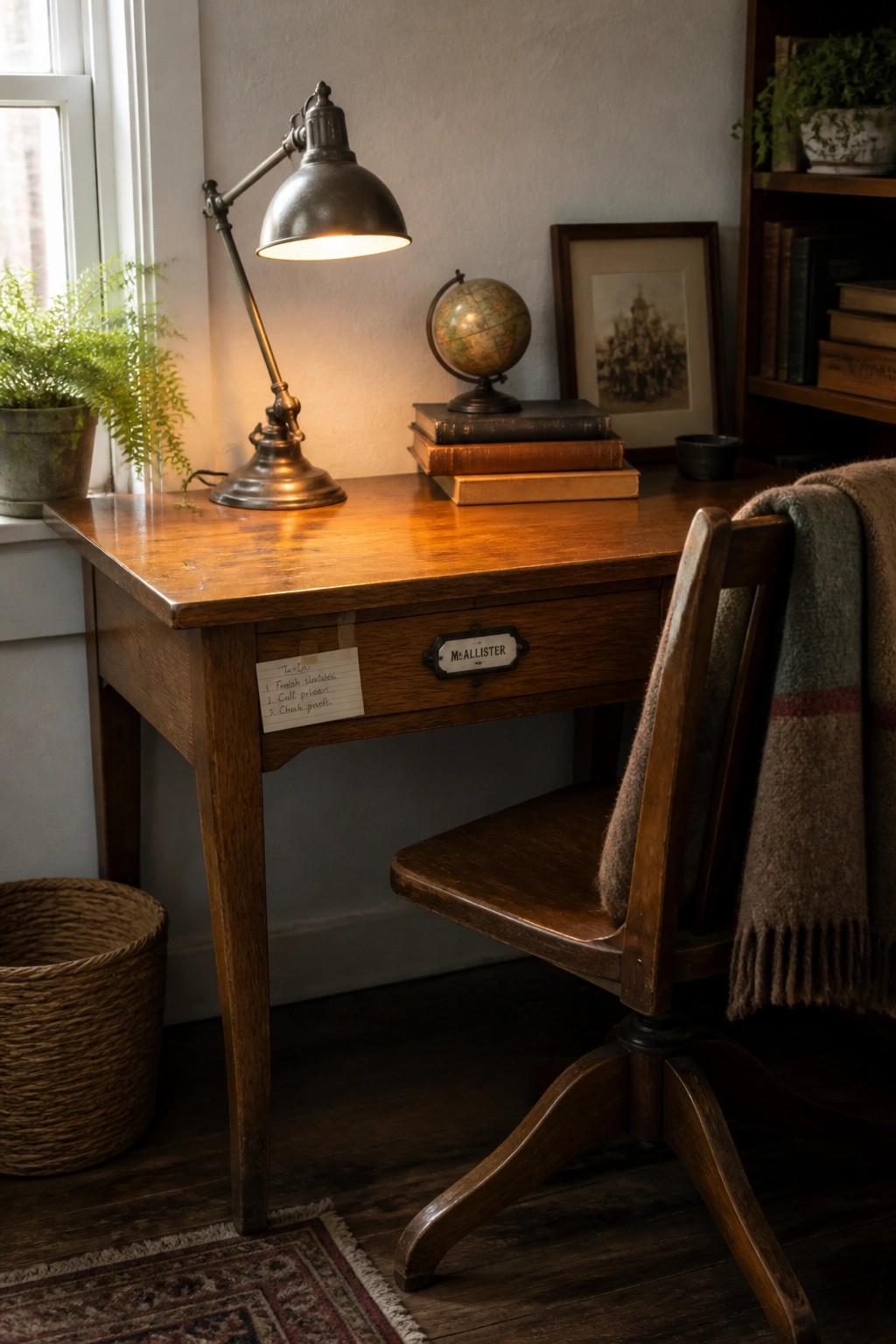
A simple task lamp changes how usable a small desk feels. It puts light exactly where you need it for reading or writing, without brightening the whole room.
Set the lamp on one side of the desk and angle the shade toward your work area. This works in any starter office or corner of a larger room, especially if you want to keep costs low and avoid ceiling fixtures.
Overhead Shelving Keeps The Desk Clear
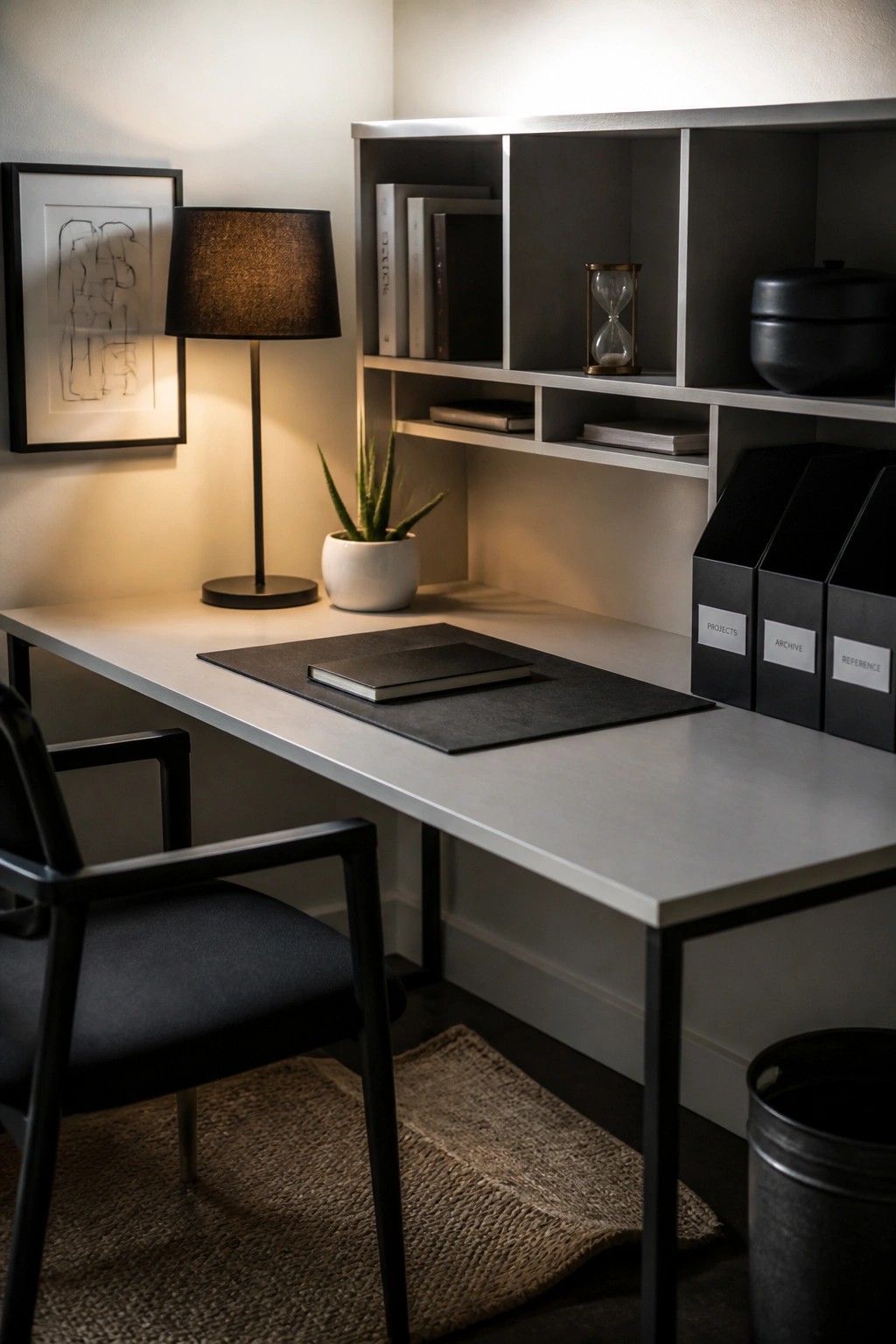
Many small offices end up cluttered because there is nowhere to put the everyday things you need. A simple set of shelves mounted right above the desk gives you that space without adding another piece of furniture to the room.
This approach works especially well in starter workspaces or tight corners. Keep the lower area open for the chair and legs while using the upper shelves for books, files, and a few bins so the actual work surface stays usable.
Frequently Asked Questions
Q: How do I choose a desk when space is tight? A: Measure your area first and look for narrow tables with good depth. A simple wood slab on sturdy legs often costs less than a full desk unit. It gives you room to spread out papers without crowding the floor.
Q: What helps most with bad lighting in a starter office? A: Place a tall floor lamp behind your chair to bounce light onto the ceiling. This brightens the whole spot without harsh desk lamps. Swap in a warm bulb to avoid that cold office feel.
Q: How can I keep supplies organized without spending much? A: Use clear bins stacked on a shelf so you see what you have at a glance. Label them with tape and a marker. ( Metal shelves from a hardware store hold more weight than plastic ones)
