


I have noticed that a basic room meant for work often feels incomplete until the layout actually supports how someone moves through the day.
Small adjustments to desk placement and lighting can shift the whole sense of the space without requiring a full overhaul.
I usually test these kinds of changes in my own home first because they show quickly whether the room will hold up to real use.
Storage that fits the actual workflow tends to make the biggest difference in how settled everything starts to look.
Over time those practical touches are the ones I return to when a room still feels like it is missing something.
Position the Desk Near a Window
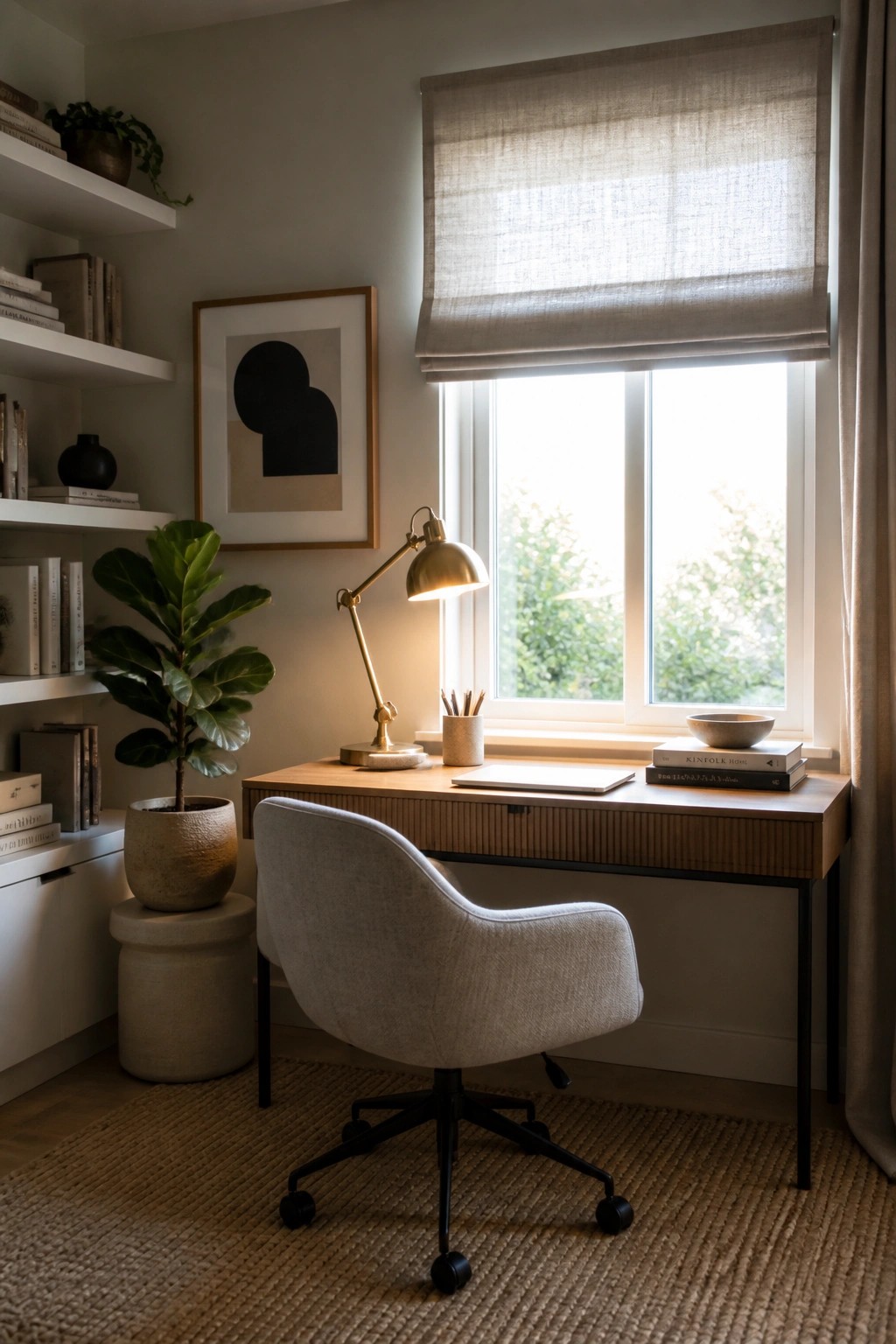
Placing a desk right in front of a window is one of the simplest ways to make a basic office feel finished. The natural light reduces the need for harsh overhead lighting during the day and gives the space a calmer, more open feel without adding much else.
This setup works especially well in smaller rooms or spare bedrooms where you want the workspace to feel intentional rather than temporary. Keep the desk low and simple so the window remains the main feature, and add just one focused light source for evenings.
A Large Wooden Desk Can Finish an Office

A big, solid wood desk gives an office real presence. It pulls the room together and makes even a basic space feel more complete without needing lots of extra pieces.
Set the desk on a rug toward the middle of the room and keep other furniture low and simple. This approach works best in spaces with exposed brick or older architecture where you want something sturdy to balance the texture.
Built-Ins Make An Office Feel More Finished

A built-in desk with overhead shelving and cabinets turns an empty wall into a complete workspace. It gives you storage right where you need it and keeps the floor clear so the room does not feel crowded.
This setup works well in spare bedrooms or smaller spaces that need to double as an office. Match the wood tone to other trim in the room and add a simple rug underneath the chair for a bit of comfort underfoot.
Build A Desk Into A Closet Alcove

Many homes have a closet that sits empty or half used. Turning that space into a small built-in desk gives you a real workspace without crowding the rest of the room.
This setup works best in bedrooms or guest rooms where you want the office to feel separate but still part of the house. Add a few outlets and a simple shelf above the desk so the area stays useful without extra furniture.
Built-In Shelving Gives An Office A Finished Look

Built-in shelves next to a desk can turn a plain room into something that feels more complete. They add storage for books and small items while keeping everything in one tidy area instead of scattered around the room.
This works especially well in smaller offices where you want to avoid freestanding bookcases that take up floor space. Paint them the same color as the walls if you want a quiet look, or choose a soft contrast if you prefer a bit more definition.
Dark Walls Make an Office Feel Finished
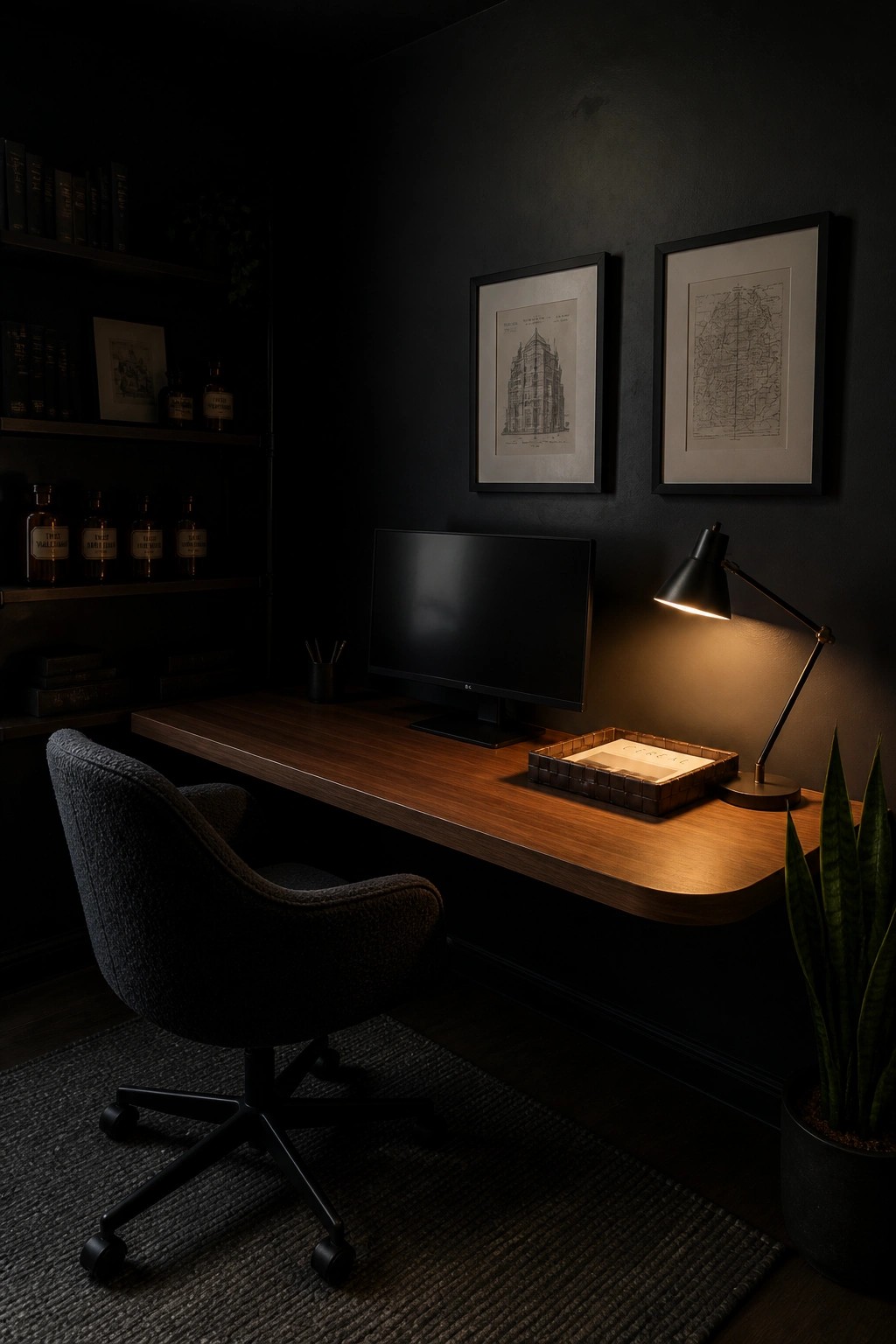
A deep wall color can turn a plain office into something that feels more complete without a lot of extra pieces. The dark background lets the wood desk and simple furniture stand out instead of blending into a blank space.
This works best in smaller rooms or spaces that get used for focused work. Keep the lighting warm and limited to one or two sources so the room stays cozy rather than heavy.
Built-In Storage Makes A Simple Office Feel More Finished

A basic desk can start to feel like part of the room once you add storage around it. Built-in shelves and drawers give the space structure without needing a lot of extra furniture.
This setup works best in smaller rooms or spaces that serve more than one purpose. Keep the shelves lightly filled so the area stays open, and use the drawers for anything you want out of sight.
Anchor the Desk With a Large Area Rug

A large rug under the desk helps turn an ordinary room into a defined workspace without any major changes. It adds texture underfoot and keeps the furniture from feeling like it is just floating on the floor.
This approach works best in rooms that serve more than one purpose. Make sure the rug is big enough for the chair to stay on it when you pull back, and pick a pattern or tone that fits the rest of the room rather than trying to match everything exactly.
Layer Plants Into Office Shelves
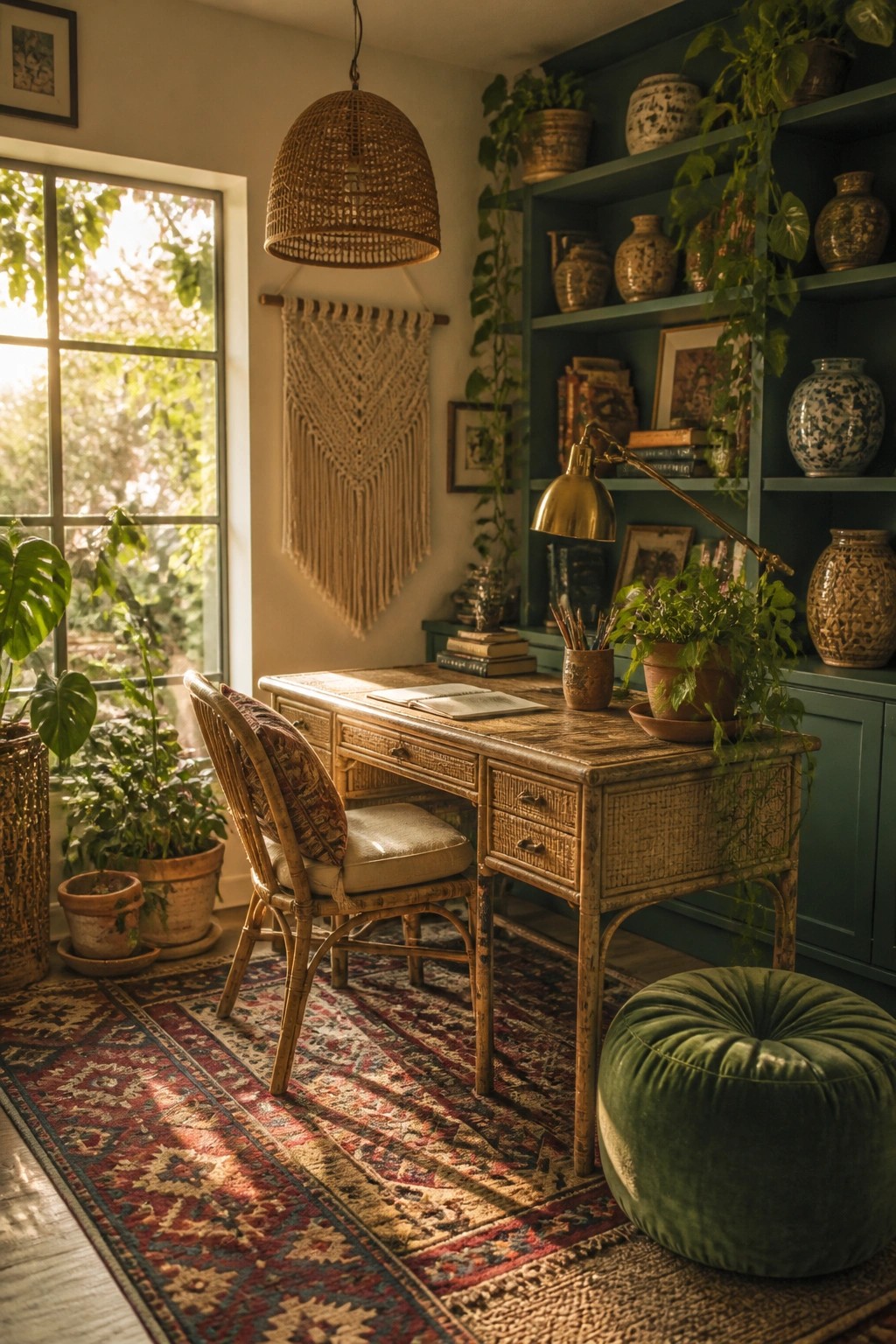
Plants can turn a plain desk area into something that actually feels finished. They break up the straight lines of furniture and add softness without needing much else.
Mix them among books and a few simple pots on open shelves. Let some trail down the sides. This works best in rooms that already get decent daylight, since the plants stay healthy and the whole setup looks more natural.
Black And White Color Ideas For Offices
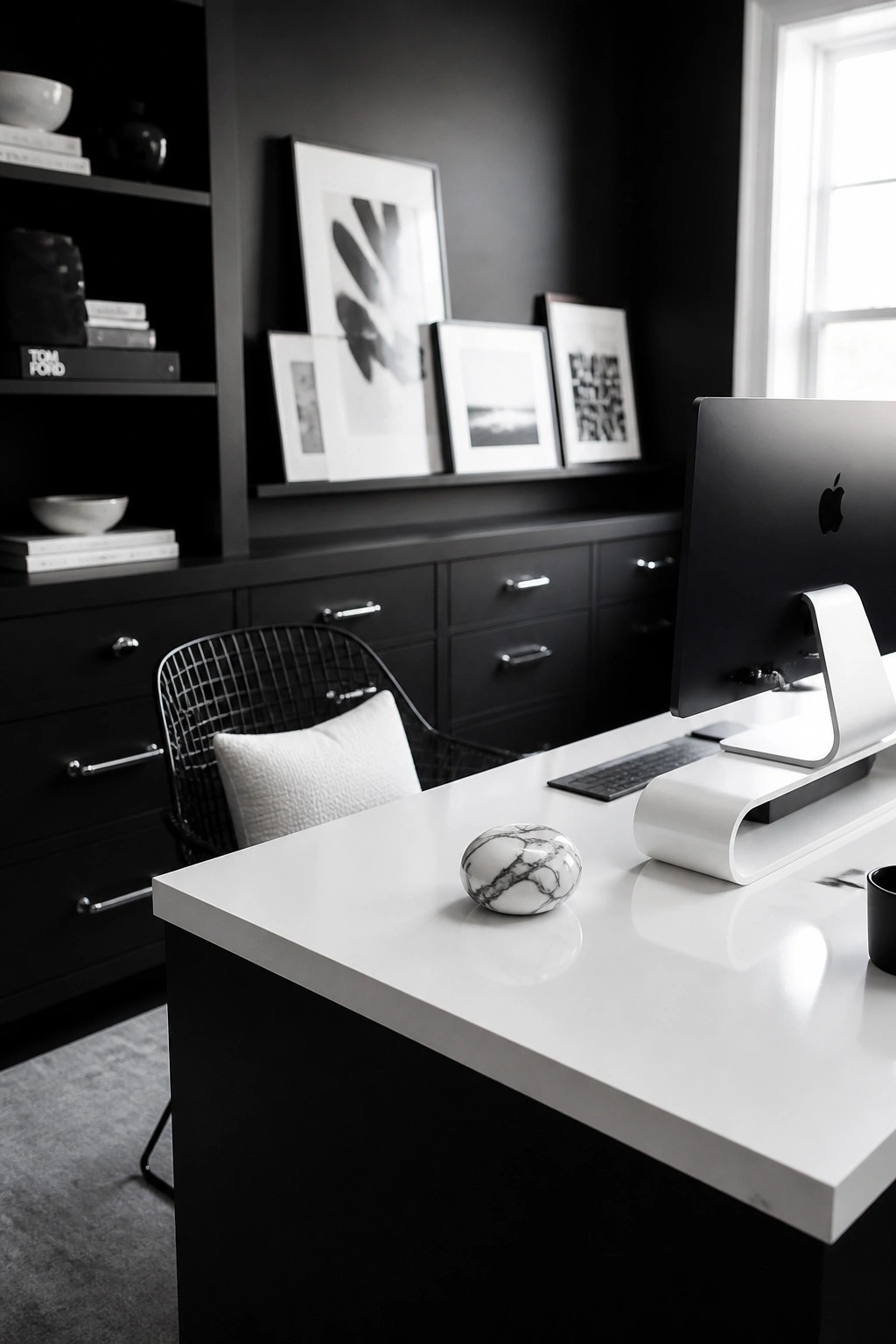
A black and white color scheme gives an office a clean, finished look that feels intentional even when the room is simple. Dark walls and cabinetry add depth while the white desk surface keeps the space bright and open.
This works especially well in smaller rooms or spaces that double as other things during the day. Keep the accessories minimal so the contrast stays the focus.
Built-In Storage That Keeps A Home Office Organized

Built-in cabinetry and open shelving work well together in a home office because they give you both hidden storage and quick access to what you use often. The labeled baskets lined up on a high shelf make it easy to sort paperwork by category without pulling out files every time.
This setup works best in a room that already has some wall space to spare. Keep the lower cabinets for things you rarely need and use the pegboard and baskets for daily items so the desk stays clear. It suits smaller homes where the office has to double as a guest room or shared workspace.
Dark Walls With Built-In Shelving
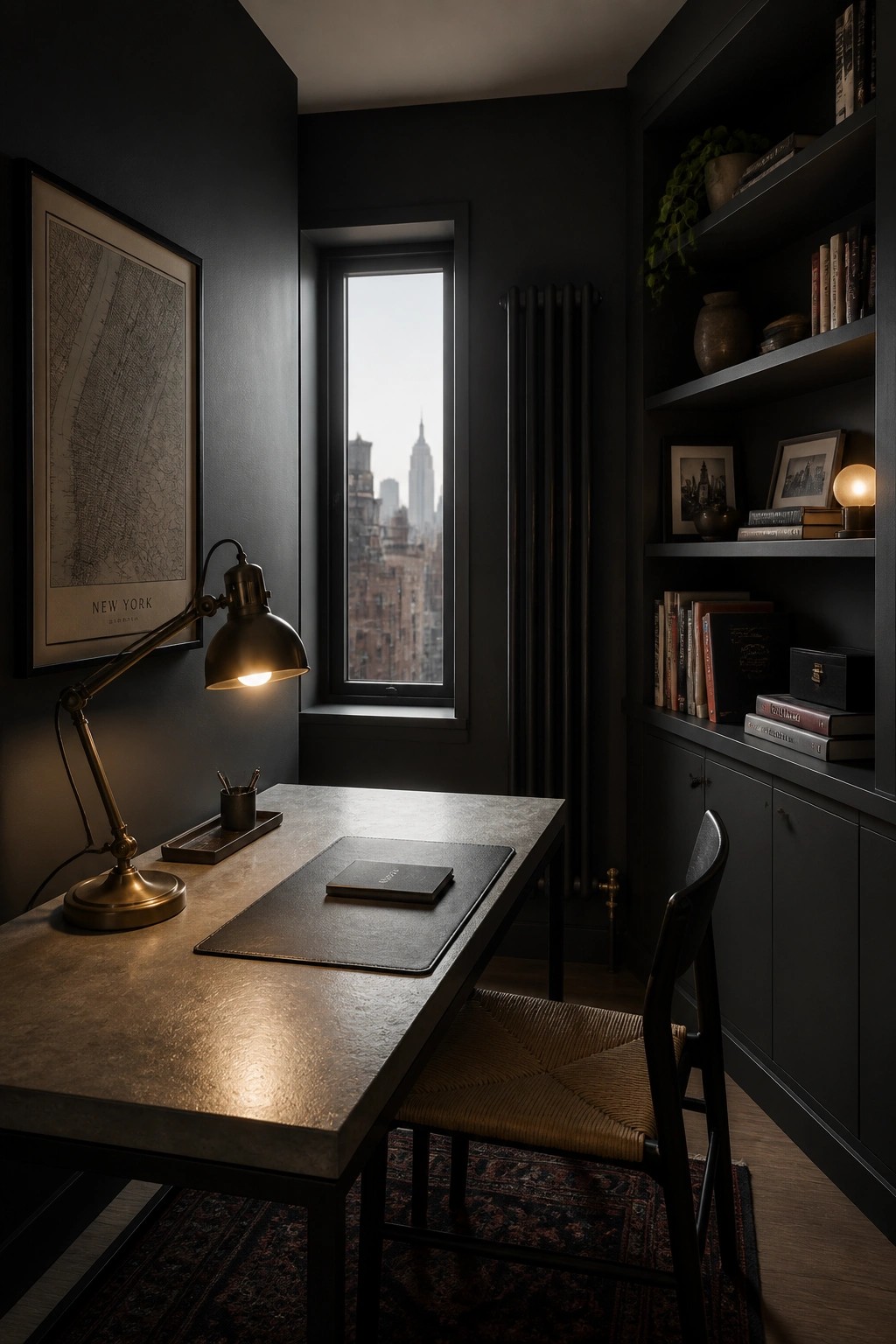
A deep wall color paired with matching built-ins can turn a plain room into a real office without much extra effort. The dark tone makes the space feel enclosed and purposeful, while the shelving and lower cabinets give it structure that freestanding pieces often lack.
This approach works well in smaller rooms where you want the office to feel intentional rather than temporary. Keep the palette consistent across walls, trim, and cabinetry, then add only a few practical items on the shelves so the storage stays useful instead of crowded.
Built-Ins Help An Office Feel More Finished

Built-ins give an office real storage without crowding the room. The shelves and cabinets hold books, supplies, and a few plants while keeping everything in one place, so the desk stays clear for actual work.
This setup works best in a spare room or corner that needs to serve as a workspace every day. Match the color to the walls if you want the space to feel open, or pick a deeper tone if you like a bit more structure around the desk area.
Built-In Bookshelves For A Finished Office

A basic office often feels unfinished because the walls stay empty and the furniture stays light. Built-in bookshelves change that by giving the room real weight and a sense of purpose. They turn four plain walls into a space that looks like it was meant to be an office from the start.
This works best in rooms that already have decent height and at least one long wall. Keep the wood dark and let the shelves run floor to ceiling so the whole setup feels solid rather than added on later. A heavy desk in the same tone helps tie everything together without extra effort.
Add a Drafting Table to Define the Workspace
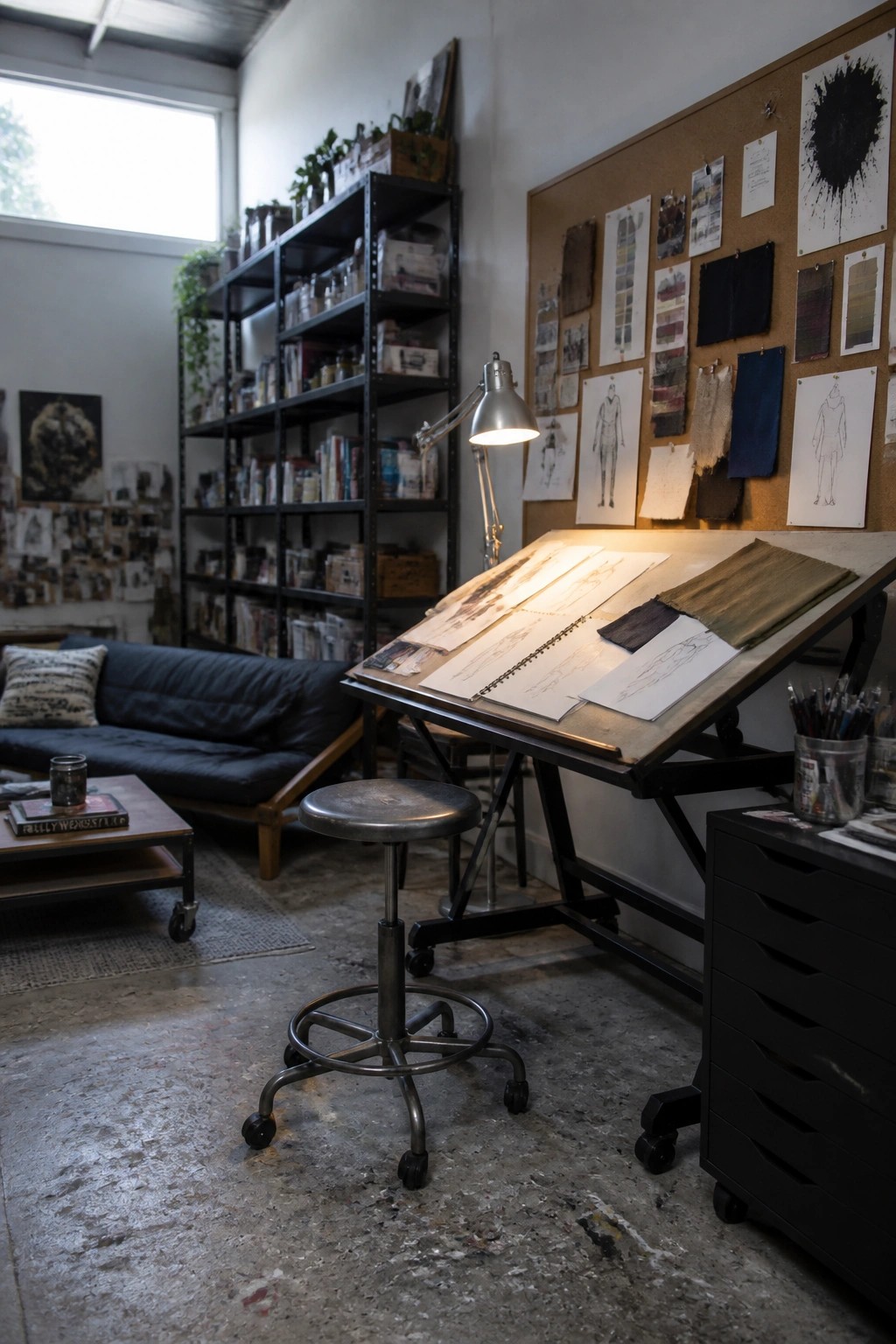
A drafting table gives an office a clear sense of purpose that a regular desk often lacks. The angled surface and built-in lamp create a dedicated spot for focused work, and the scale of the table makes the room feel more finished right away.
This setup works well in spare rooms or converted spaces where you want to keep things practical. Keep the surrounding furniture simple so the table remains the main feature, and leave enough room to move around it during the day.
Dark Colors Give an Office More Weight
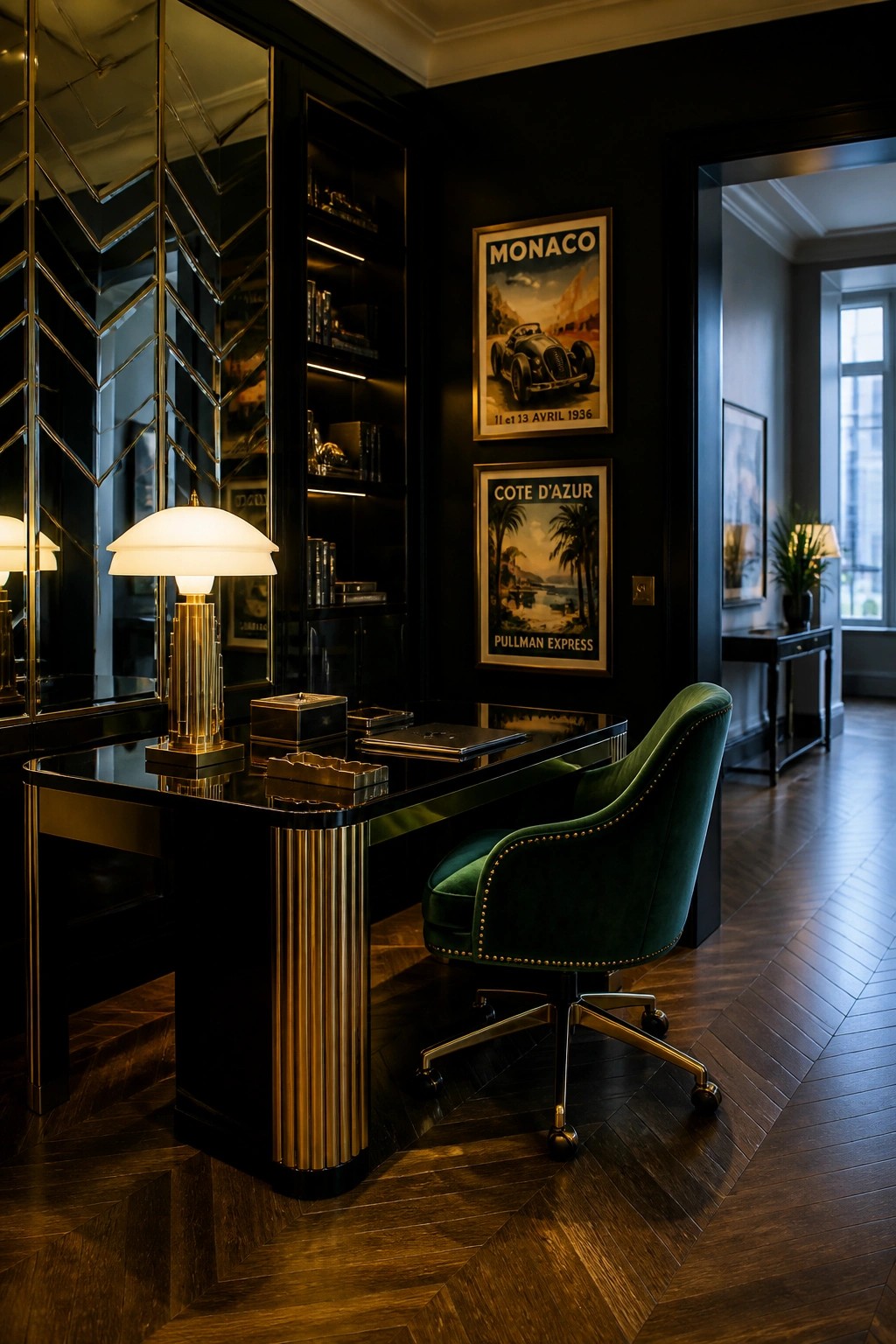
Many home offices end up feeling half-finished because everything stays too light and safe. Switching to dark walls and a matching dark desk changes that fast. The room suddenly feels grounded and intentional instead of like a leftover corner.
This works best in spaces that get decent daylight or already have some trim and molding to keep the look from going flat. Keep the rest simple so the depth does the work. A single strong chair color or a couple of framed pieces is usually enough.
Choose A Slipcovered Chair For The Desk

A slipcovered chair brings softness to a workspace that can otherwise feel too rigid. The fabric skirt hides the legs and makes the piece look more like living room furniture than office seating. This small swap helps the whole room feel finished without adding much extra decor.
It works especially well in a smaller home office or a corner that needs to double as a guest space. Pick a neutral linen or cotton cover so it blends with the rest of the room. Just make sure the chair still sits at the right height for the desk so it stays practical for daily use.
Natural Wood and Tatami in an Office

A light wood desk paired with tatami mats brings a quiet warmth to an office that plain carpet or hard flooring often misses. The natural tones keep the space feeling open while still giving it enough weight to look complete instead of bare.
This approach works best in smaller rooms or spaces that already have neutral walls. Keep the rest of the furniture low and simple so the wood and woven texture can do the work without adding clutter.
Add Shelf Lighting Over The Desk

A simple way to make a basic desk area feel more finished is to add lighting under the shelves above it. The warm glow draws attention to the wall, gives the space depth, and makes the whole setup look more intentional than a plain desk against an empty wall.
This works especially well in smaller rooms where you want the workspace to feel defined without adding more furniture. Keep the shelves fairly shallow so they do not crowd the desk, and use a strip light that stays hidden from view. It suits most home offices and works with both standing and sitting desks.
Build a Gallery Wall Above the Desk

A gallery wall gives an office wall purpose and makes the room feel more finished without adding much furniture. It works especially well when the rest of the space stays simple, so the frames become the main point of interest.
This approach suits smaller rooms or spaces that need to feel personal but still functional. Keep the frames in a similar style or color range so the wall reads as one idea rather than a scattered collection.
Built-Ins That Give an Office a Finished Look

Built-in shelving and cabinetry around a desk can turn a plain room into something that feels complete. The storage sits right where you need it, and the open shelves keep things from looking too heavy while still adding plenty of visual interest.
This setup works especially well in smaller home offices where you want the space to feel organized without adding extra furniture. Keep the colors soft and the items on the shelves fairly simple so the whole area stays calm rather than busy.
Add a Vertical Plant Wall

A vertical plant wall gives a basic office space more life without crowding the floor. The greenery adds texture and a finished feel that plain walls often lack, especially in smaller rooms where you want some natural softness.
This setup works best near a window so the plants get decent light. Keep the rest of the room simple with wood tones and a few potted plants on the desk so the wall stays the main feature.
Built-In Shelving Keeps An Office From Feeling Bare
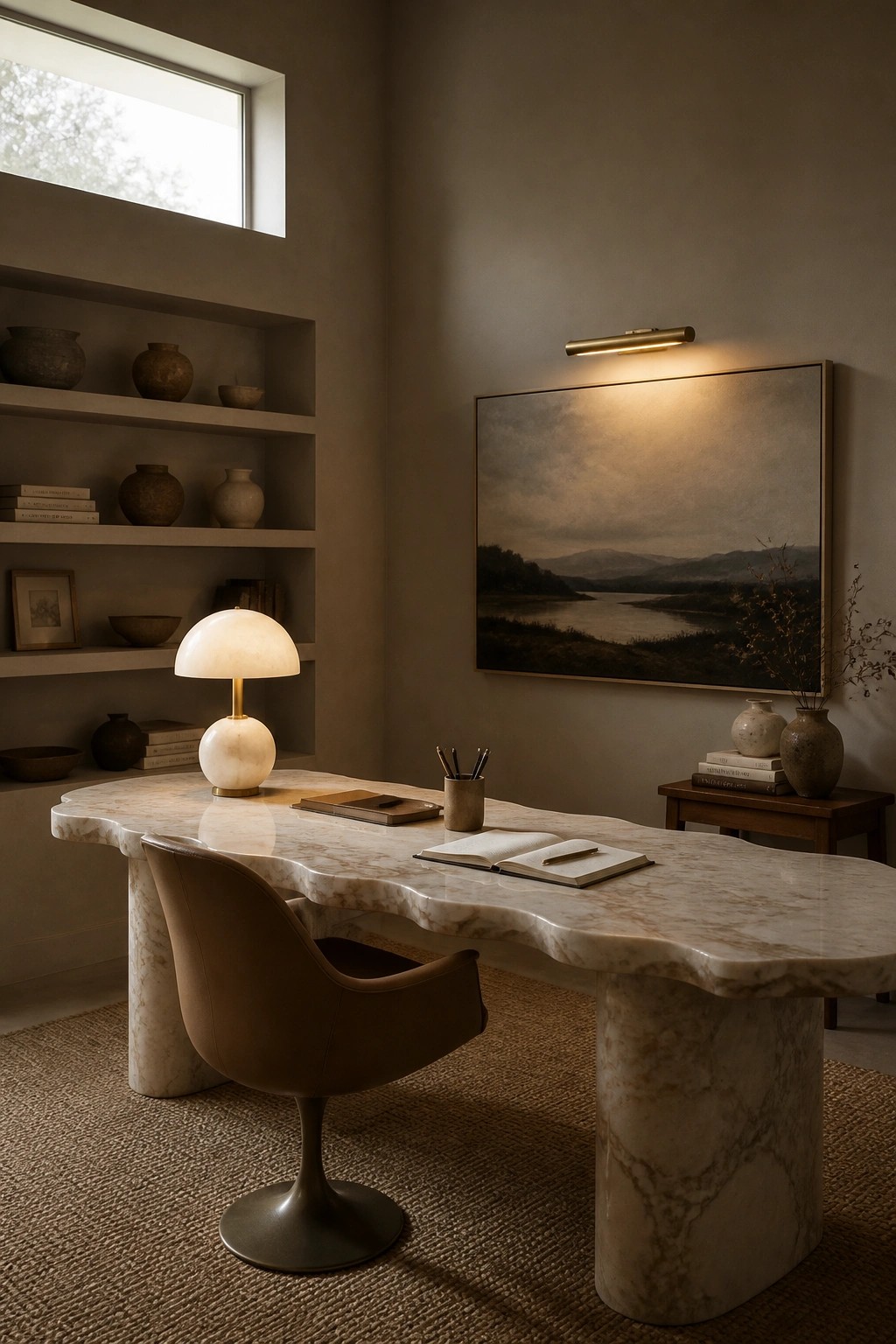
Open shelving along one wall gives an office a place to hold books, pottery, and small objects without crowding the desk. It turns empty wall space into something useful and makes the room feel like it was planned instead of just filled with furniture.
This works well in rooms that already have a strong desk or table. Keep the shelves at a comfortable height for reaching, and mix in a few larger pieces with smaller ones so the arrangement does not look too neat or too sparse.
Frequently Asked Questions
Q: Where should I start if my room feels too empty right now? A: Grab one main piece like a sturdy desk or an armchair first. It sets the scale for everything else and makes the space feel purposeful right away. From there you can add a lamp or a small rug to tie it together.
Q: How do I keep lighting from making the room feel flat or tiring? A: Use a desk lamp with a warm bulb angled from the side plus one overhead source. This combo reduces shadows on your work surface without needing fancy fixtures. Test the setup at different times of day so you can adjust as needed.
Q: What if I want storage but hate the look of filing cabinets? A: Try a low credenza or open shelving with baskets to tuck away papers and supplies. Place it against the longest wall so it doubles as a visual anchor. Keep the top clear except for one or two items you use daily.
Q: How can I test ideas without committing to big purchases? A: Move furniture you already own into the room first and live with the layout for a week. Swap in a few borrowed accessories like a throw or a plant to see what feels right. This shows you which changes are actually worth buying.
