


Working in a small home office quickly shows how storage choices shape the way the room feels each day.
I have noticed that cabinets placed along one wall often leave the center open enough for movement without any sense of clutter.
Layout matters most.
Trying a few tape outlines on the floor before buying anything has helped me see which options will actually stay practical once the desk and chair are in place.
Ideas that keep surfaces clear while still hiding files and supplies tend to make the space feel larger over time.
Floating Shelves Add Storage Without Crowding The Desk

Floating shelves above a desk give you extra room for books and small items while leaving the work surface clear. This setup works especially well in tight corners or alcoves where floor space is limited. The open shelves keep things visible but contained, so the area still feels open.
Place a low cabinet or drawer unit beneath one end of the desk for items you want out of sight. This combination suits small homes or apartments where every inch counts. Just keep the top shelf light so the space does not start to feel top-heavy.
Overhead Cabinets Keep Small Desks Clear

Wall cabinets mounted above a desk give you useful storage without taking up any floor space. The desk stays open for daily work, and everyday items stay tucked away instead of piling up around the edges.
This setup works best in small rooms where every inch counts. Match the cabinet finish to the desk so the whole wall reads as one calm surface rather than a stack of separate pieces.
Built-In Desks In Unused Closets

Many small homes have a closet that sits empty most of the time. Fitting a desk and storage inside it turns that space into a working area without taking up floor space in the rest of the room.
This works best in bedrooms or open living areas where you want the office to stay out of sight when not in use. A pegboard and a few floating shelves above the desk give you places for supplies and papers while keeping the surface clear.
Built-Ins Under The Stairs

Many homes have unused space under the stairs that ends up as dead storage or nothing at all. Turning that area into a built-in desk with integrated cabinets and drawers gives you a working spot without taking up floor space elsewhere in the room. The key is keeping the desk surface shallow and letting the surrounding cabinetry handle all the storage.
This setup works best in houses with a clear staircase run and enough headroom for a chair. Pull-out elements like a printer drawer keep daily items hidden when not in use, while open cubbies with baskets hold supplies that need quick access. Just make sure the lighting is strong enough so the desk does not feel like a dark corner.
Built-In Cabinetry Adds Storage In Narrow Spaces
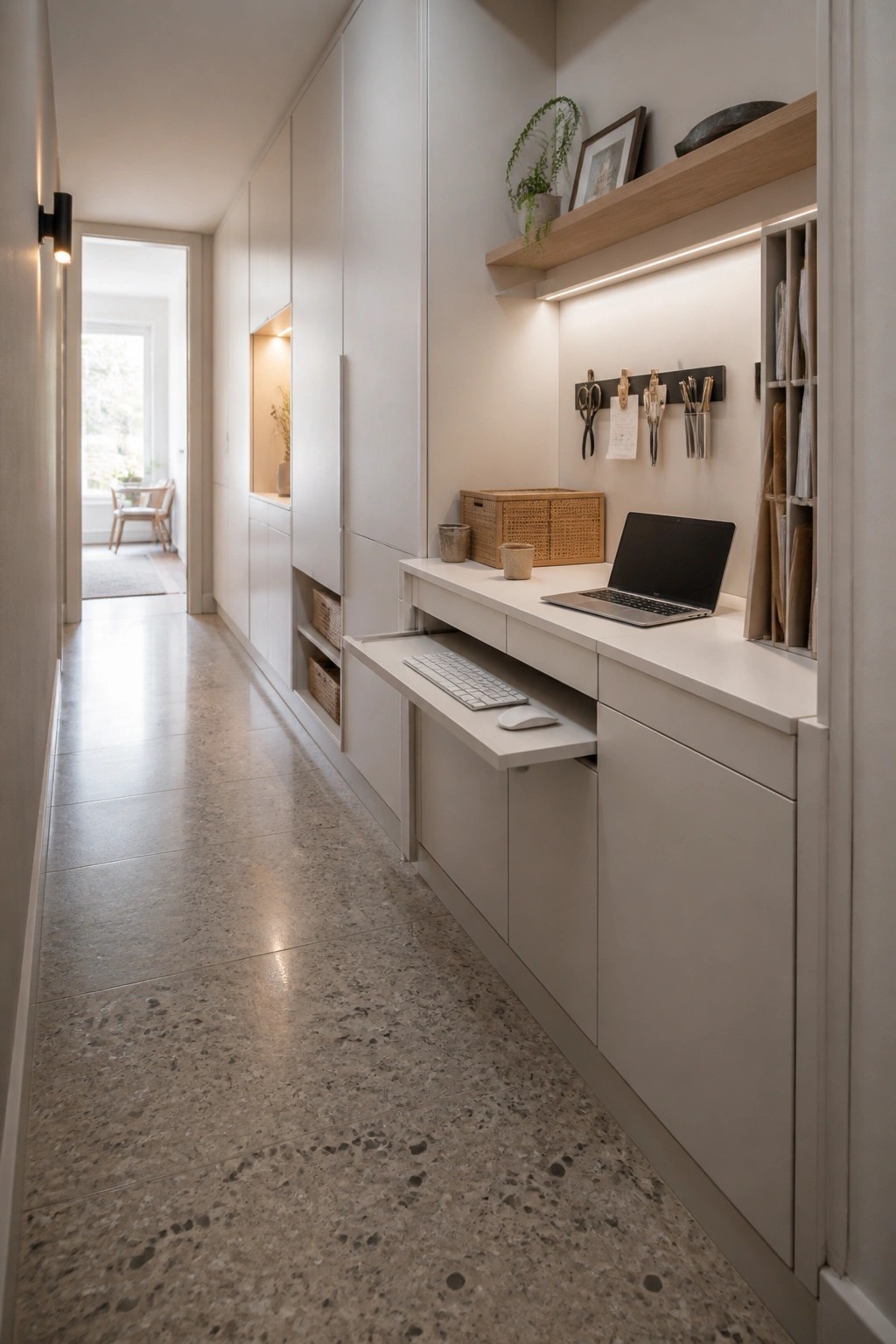
Running storage along one long wall turns a hallway or tight corridor into a working office without taking up extra floor space. The cabinets sit flush with the wall, and a slim desk surface pulls out only when needed, so the room stays open and easy to walk through.
This setup works best in homes where rooms are small or multipurpose. Keep the finish simple and light so the cabinets blend in rather than stand out. Avoid adding too many open shelves or loose items on top if you want the space to stay calm.
Built-In Window Seats That Hide Storage

Built-in seating along the windows gives a small office extra places to sit without adding furniture that takes up floor space. The storage tucked underneath keeps everyday items out of sight, so the room stays open and calm even when it holds quite a bit.
This idea works best in homes with existing window nooks or bay windows. You can line the benches with simple baskets or drawers for files and supplies, then keep the desk surface clear. It suits smaller rooms where you want both function and a sense of breathing room.
Fold-Down Desks With Basket Storage

A fold-down desk mounted to the wall gives you a real workspace without taking up floor space all the time. The shelves above and beside it hold woven baskets that keep supplies sorted and easy to reach, so the area stays open instead of crowded.
This kind of unit works best in a living room, bedroom, or hallway nook that has to serve as an office part of the day. Keep the baskets simple and labeled so you can put things away quickly at the end of the day.
Wall Storage That Leaves The Desk Open

Built-in cabinets and shelves along the back wall give you a place to keep books, supplies, and everyday items without stacking them on the desk. The closed doors hide most of the clutter, while a few open spots let you reach what you need quickly.
This setup works best in smaller rooms where floor space matters. Keep the desk surface mostly clear and use the wall storage for anything that does not need to stay out all the time.
Built-In Shelving Along One Wall

Built-in shelving gives you a lot of storage in a small office without eating up floor space. When the shelves run floor to ceiling along one wall, they keep books, boxes, and supplies tucked away so the room still feels open.
This approach works best in offices that are already tight on space. Paint the built-ins the same color as the walls and add simple lower cabinets so the storage stays quiet and does not take over the room.
Add Storage Baskets Under The Desk

One easy way to keep a small office neat is to slide storage baskets right under the desk. They hold papers, cords, and supplies without taking up extra floor space or making the room feel packed.
This works especially well in rooms that already have some wall storage like upper cabinets. The baskets stay mostly out of sight but remain easy to reach when needed. They suit homes with limited square footage where every inch counts.
Built-In Shelves And A Storage Bench

Built-in shelves above the desk and a bench with baskets underneath give you plenty of places to tuck things away. This keeps the surface clear while still holding books, files, and supplies that you reach for often. The storage feels like part of the room instead of something added later.
This setup works well in a small spare room or corner of a larger space. Keep the shelves fairly open and use matching baskets or bins under the bench so the whole wall reads as one calm unit. Avoid filling every inch or the room can start to feel tight again.
Built-In Cabinetry For Hidden Storage

Built-in cabinetry above and beside a desk gives you room for all the usual office items without leaving them out in the open. The storage stays out of the way, so the work surface stays clear and the room feels larger than it is.
This works best in smaller homes where every inch counts. Use the upper cabinets for less-used supplies and add vertical slots inside the doors for papers so nothing piles up on the desk itself.
Built-In Cabinets Keep Small Offices Feeling Spacious

Floor-to-ceiling cabinets along one wall give a small office plenty of storage without eating up floor space. The cabinets stay flush and simple, so the room still feels open even when almost every item is tucked away.
This setup works best in narrow rooms or spaces that double as guest rooms. Match the cabinet color to the walls and keep the desk surface clear so the storage does not start to feel heavy.
Wall Storage Keeps Small Offices Feeling Open

Wall storage works well in small offices because it moves everyday items up and off the desk. Shelves, hooks, and a chalkboard let you keep supplies, notes, and tools within reach without crowding the work surface. This setup leaves the desk mostly clear, which makes the room feel larger even when space is tight.
It suits older homes or any room where floor space is limited. Place hooks and a narrow shelf above the desk for scissors, twine, and small baskets, and use the chalkboard for daily lists. The key is to keep the storage simple and not overfill it so the area stays calm and usable.
Pegboard Storage Keeps Small Offices Organized

A pegboard mounted above the desk gives small offices a simple way to store tools and supplies without adding bulky furniture. It keeps everyday items visible and within reach while leaving the work surface clear for actual tasks.
This approach works best in compact rooms where floor space matters most. Group supplies into labeled bins on the board so the system stays neat over time and does not start to feel cluttered.
Built-In Cabinets Painted To Match The Walls

One simple way to add real storage in a small office is to run cabinets and shelves across the wall in the same color as the paint. The storage blends in instead of standing out, so the room still feels open even when there is quite a lot tucked away.
This works best in tight corners or alcoves where you can build right into the space. Keep the hardware minimal and the desk surface clear so the cabinets do the work without adding visual weight.
Include A Storage Bench For Seating And Hidden Storage

A storage bench gives you a place to sit without adding another chair or crowding the floor plan. The baskets tucked underneath hold files, extra supplies, or seasonal items so the room stays open and easy to move around in.
This setup works well in small offices that double as guest rooms or reading spots. It suits homes where every piece needs to earn its space, and it keeps the overall look calm rather than overloaded with visible clutter.
Use a Closet for a Compact Office With Built-In Storage

A closet office works well when you need storage but do not want a desk taking over the rest of the room. The built-in shelves, mail slots, and drawers keep papers and supplies out of sight while still giving you a usable workspace. This setup feels especially useful in smaller homes where every room has to serve more than one purpose.
It fits best in a spare bedroom or hallway where a door can close off the whole area at the end of the day. Keep the finishes light and match the surrounding trim so the closet blends in rather than stands out.
Wall Pockets Keep Small Offices Organized

Many small offices feel cramped once you add filing cabinets or shelves. Wall pockets solve this by holding papers and notebooks flat against the wall so the desk stays clear for actual work.
They suit narrow spots or corners where floor storage would block movement. Keep the rest of the setup minimal with just a floating desk and a few hooks so the space stays open and easy to use every day.
Frequently Asked Questions
Q: How do I pick storage pieces that fit around my existing desk without eating up floor space? A: Start with slim wall units or floating consoles placed above or beside the desk. These keep daily items within reach while leaving the floor open for movement. Measure twice before buying so nothing sticks out too far.
Q: What works for hiding papers and supplies if I hate the look of filing cabinets? A: Go for a low credenza with doors that doubles as extra surface area. Tuck folders and small bins inside so the top stays clear for work. This setup keeps things tidy and the room feels bigger overall.
Q: My office is a rental so I cannot build anything in. Any simple fixes? A: Stackable bins on a narrow rolling cart let you move storage around as needed. Choose neutral colors that match your walls and the cart stays out of the way when not in use.
