

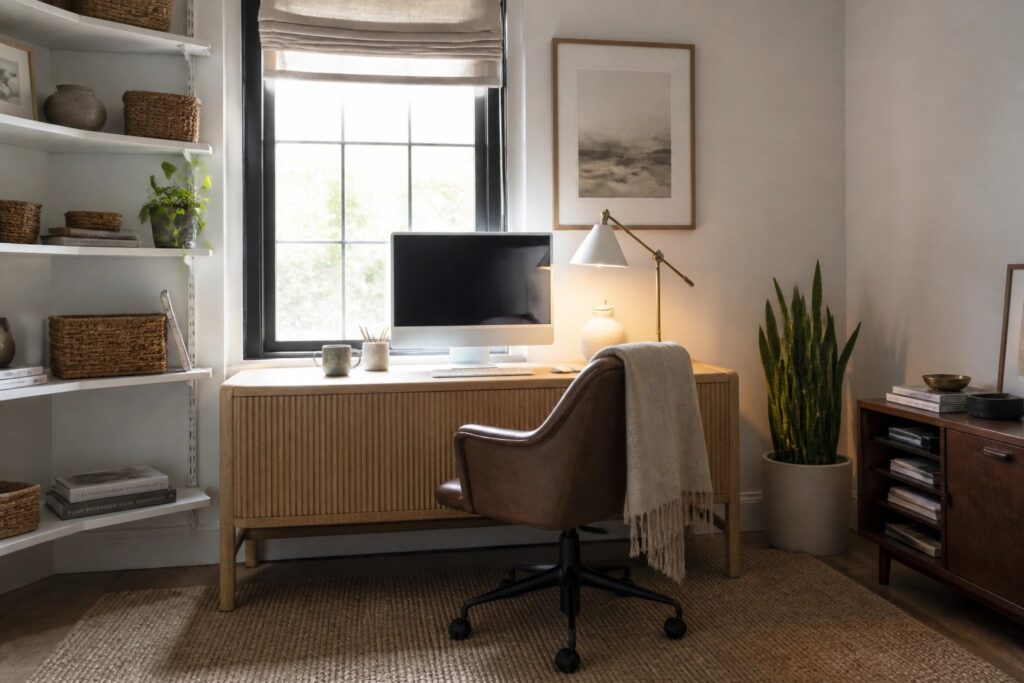
When setting up a workspace at home the wall behind the desk quickly starts to affect how the whole room feels during long hours.
I noticed this after moving my own desk a couple of times and realizing the backdrop could either steady the space or make it feel scattered by midday.
Small changes to that area often matter more than bigger furniture swaps once daily use begins.
Clean surfaces alone do not solve the problem.
Trying a few simple adjustments has helped me see which ones hold up once the room is actually lived in.
Open Shelves Keep Desk Storage Within Reach
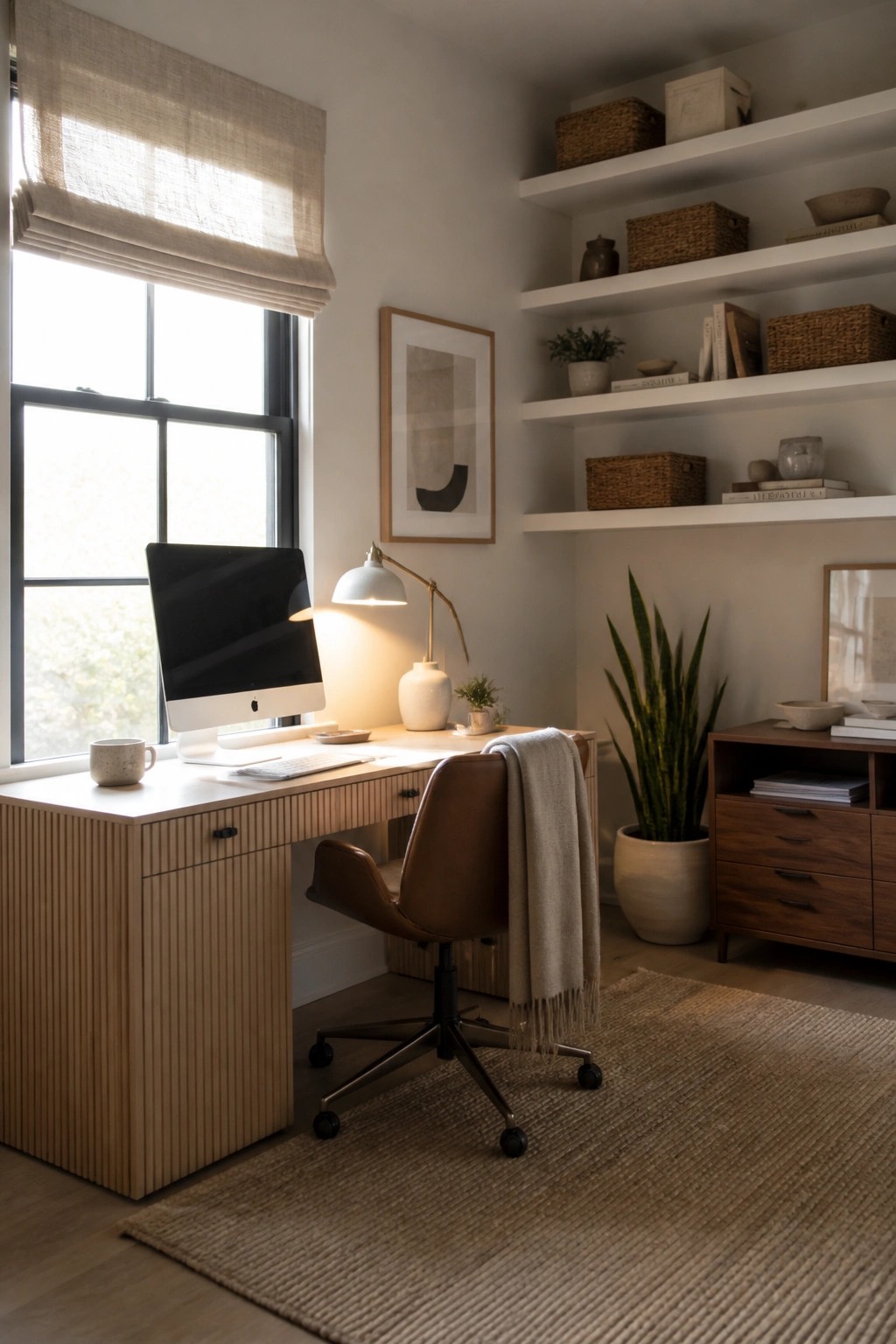
Many home offices end up with papers and supplies scattered across the desk because there is nowhere else to put them. Floating shelves above the work surface solve that by moving everyday items up and out of the way while still keeping them easy to reach.
This approach works best in smaller rooms or spaces where adding a big cabinet would feel too heavy. Use baskets or simple bins on the shelves to hold smaller things and avoid a messy look. It fits homes that already lean toward clean lines and neutral colors.
Dark Accent Walls Behind The Desk
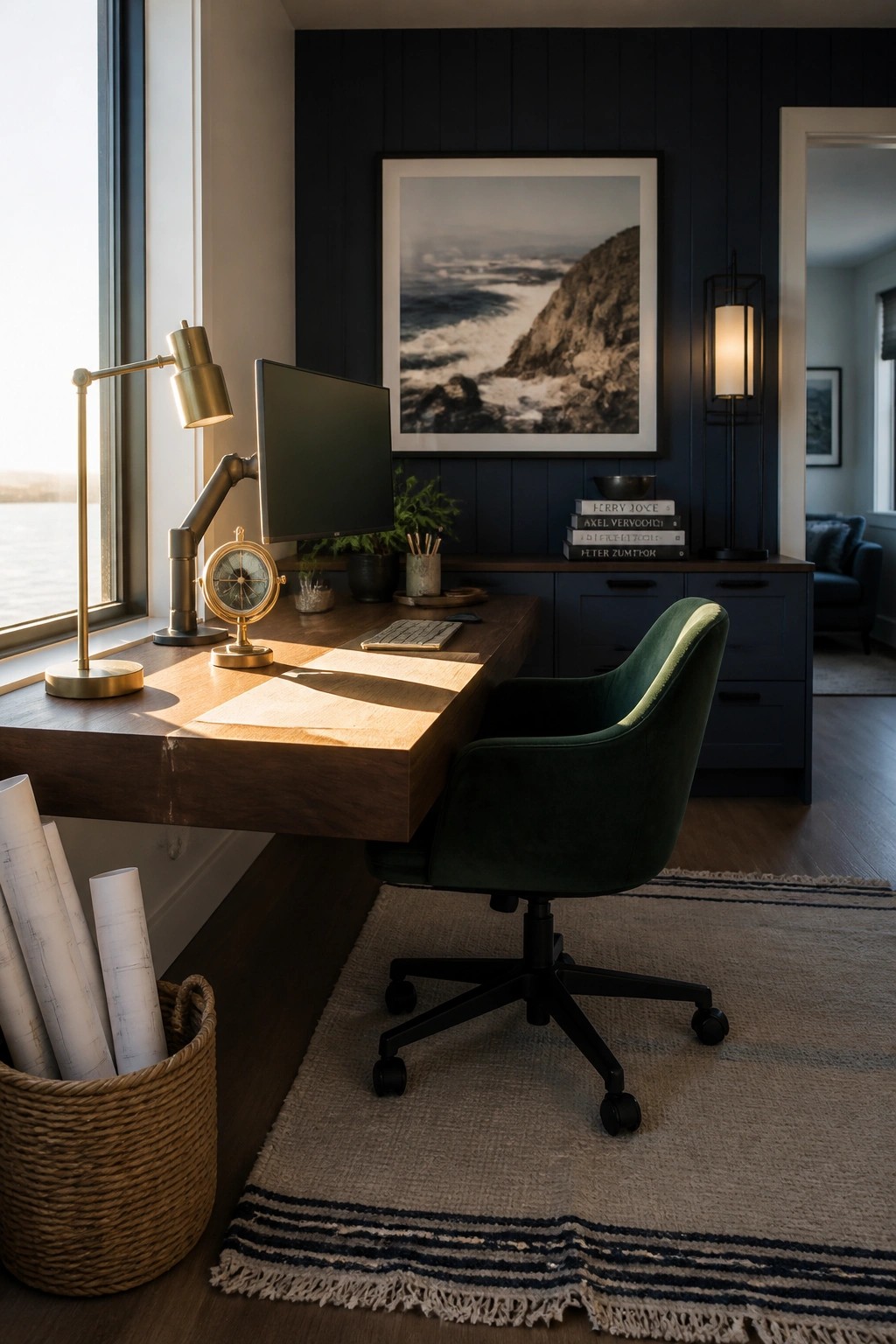
A dark accent wall behind the desk gives the workspace a grounded and professional feel. It makes the area look more intentional without adding extra furniture or clutter.
This approach works best in rooms with decent natural light. Keep the desk surface simple so the wall stays the main feature and the whole zone feels calm and focused.
Floating Desks Free Up Floor Space
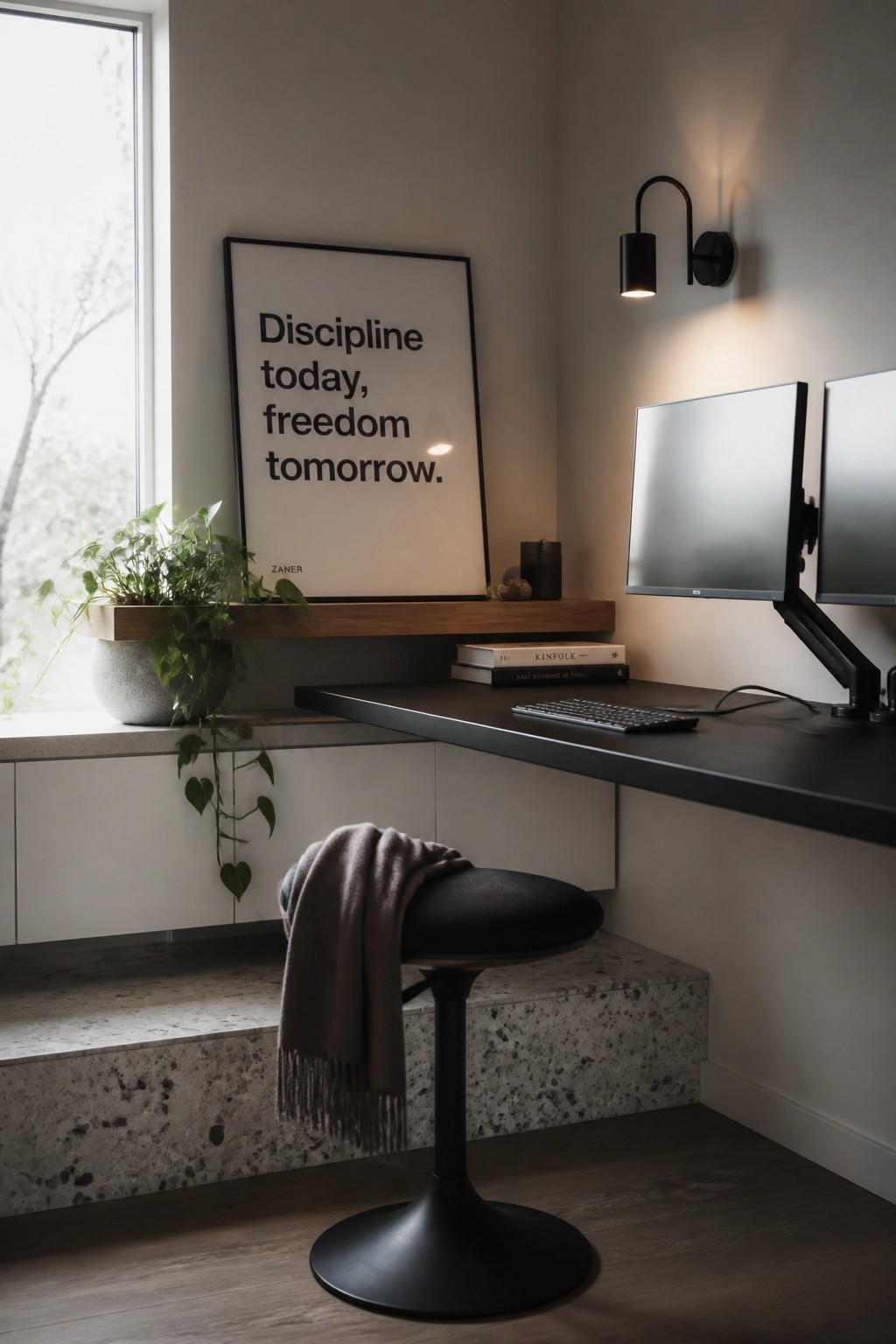
A wall mounted desk keeps the floor clear and makes a small room feel larger. It works especially well when the office shares space with another room or sits near a window.
This style suits homes that need the area to stay open during the day. Choose a sturdy mount, keep cables hidden, and pair it with a stool that slides out of the way when not in use.
Floating Shelves For Extra Storage

Many people add floating shelves above a desk because they free up the work surface while still giving a place for books and small items. It keeps the main area open for writing or a laptop without feeling bare.
This works best in rooms that already have a solid desk and need a bit more organization. Keep the shelves fairly shallow so they do not cast heavy shadows or make the space feel smaller.
Built-In Cabinetry Keeps The Desk Clear

Built-in cabinetry works well in a home office because it gives you plenty of hidden storage while leaving the work surface open. Dark finishes on the cabinets create a solid backdrop that makes the desk area feel grounded without adding visual noise.
This approach suits smaller rooms or spaces where you want the desk to stay functional rather than crowded. Keep the countertop light and simple, and use the cabinetry for files, supplies, and anything that does not need to sit out.
Built-Ins Keep The Desk Zone Clean
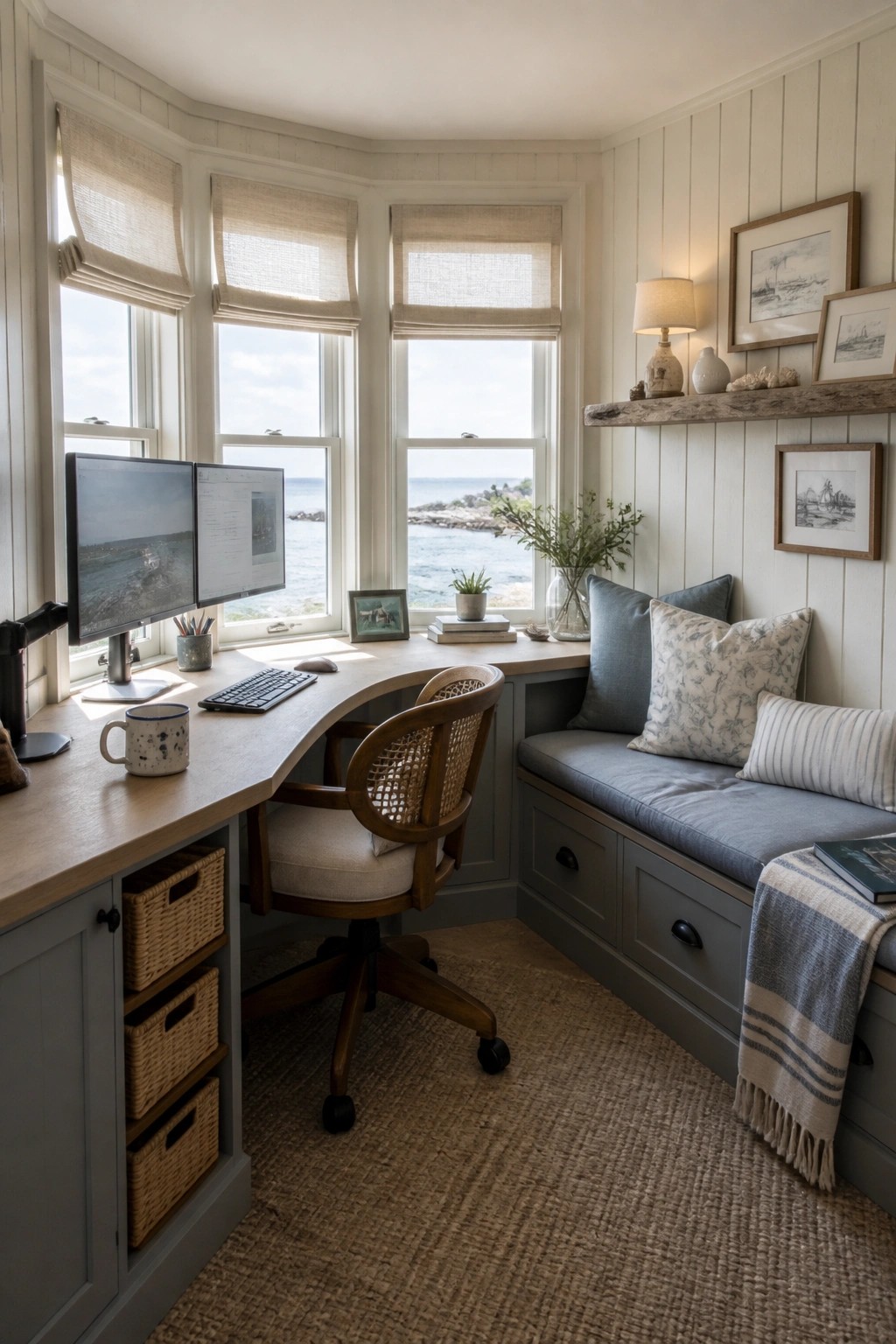
Built-in cabinets and a wraparound desk make it easier to keep a workspace tidy. The storage stays hidden in the lower cabinets and drawers, so the surface stays clear for actual work.
This kind of setup works best in rooms with limited floor space or awkward window placements. It gives you room for files and supplies without adding extra furniture that can crowd the area.
Pegboard Storage For A Clean Desk
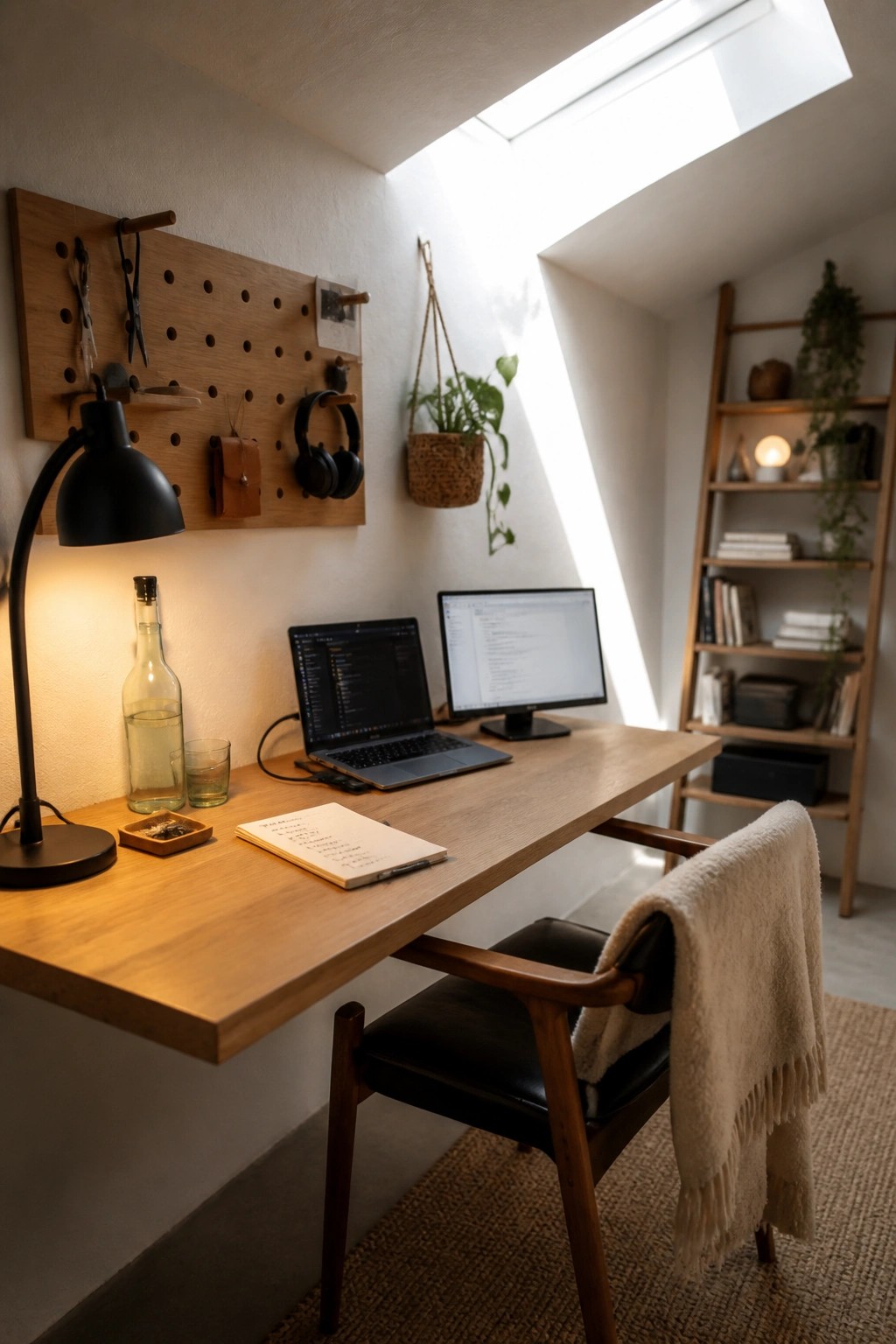
A pegboard on the wall above the desk gives you an easy way to keep tools and small items off the work surface. Everything stays visible and close at hand without adding bulk or taking up floor space.
This setup works well in smaller rooms or any office where you want to avoid extra cabinets. Mount it at a comfortable height and use simple hooks or small shelves to hold what you reach for most often.
Exposed Brick as Your Desk Backdrop
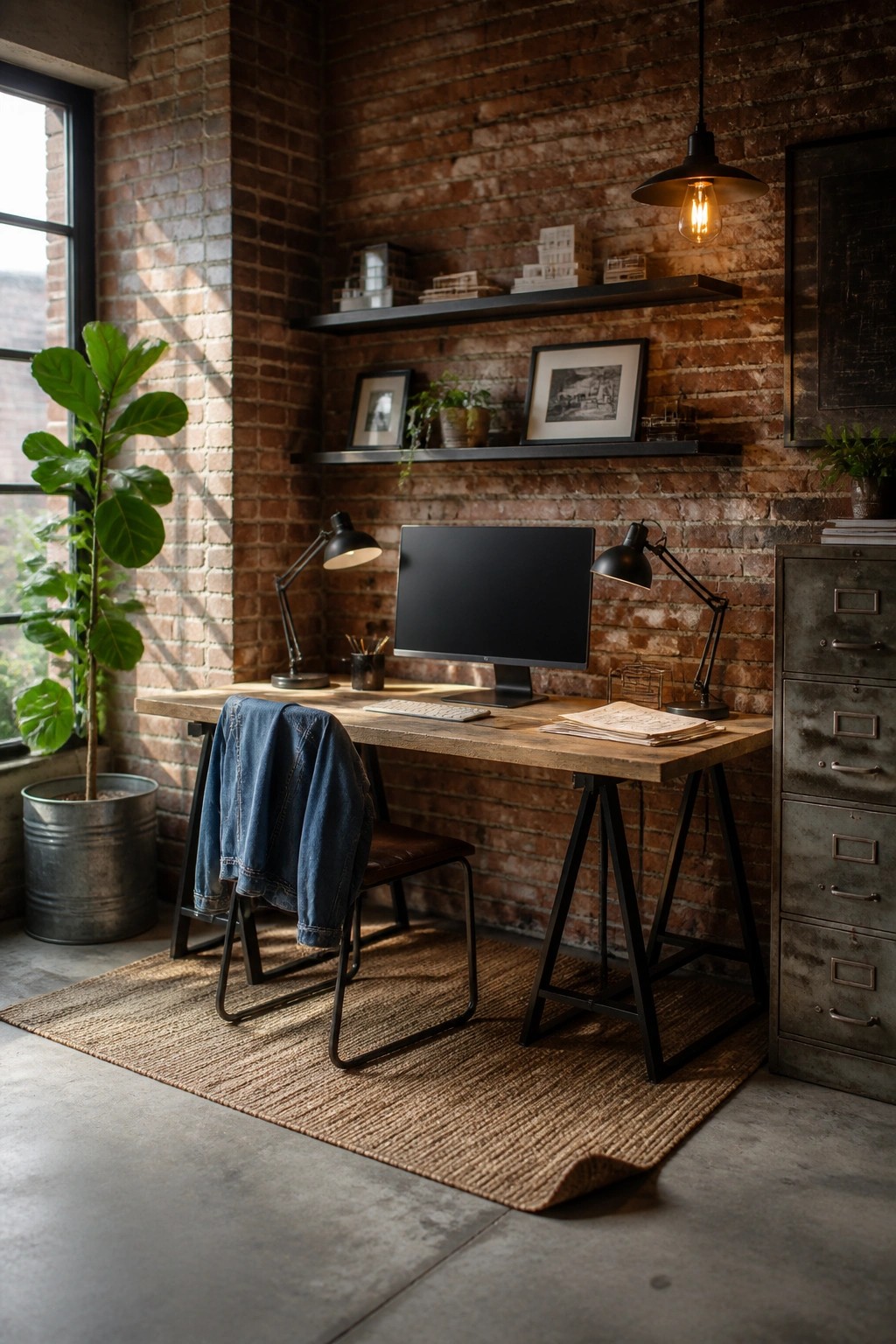
An exposed brick wall gives a home office real presence without extra decoration. The rough texture and warm tones create a professional backdrop that still feels grounded and easy to work in.
This works especially well in older buildings or spaces with industrial leanings. Pair it with a plain wood desk and minimal metal accents so the wall stays the focus rather than competing with too many other pieces.
Low Desk With Floor Seating

A low desk sitting right on the floor creates a simple and steady workspace. It removes the usual bulk of a standard desk and lets the room feel more open and quiet.
This works best in smaller rooms or spaces where you want less visual clutter. Keep the top mostly clear and use a firm cushion so the setup stays comfortable for longer hours.
Built-In Desks That Keep The Workspace Clear
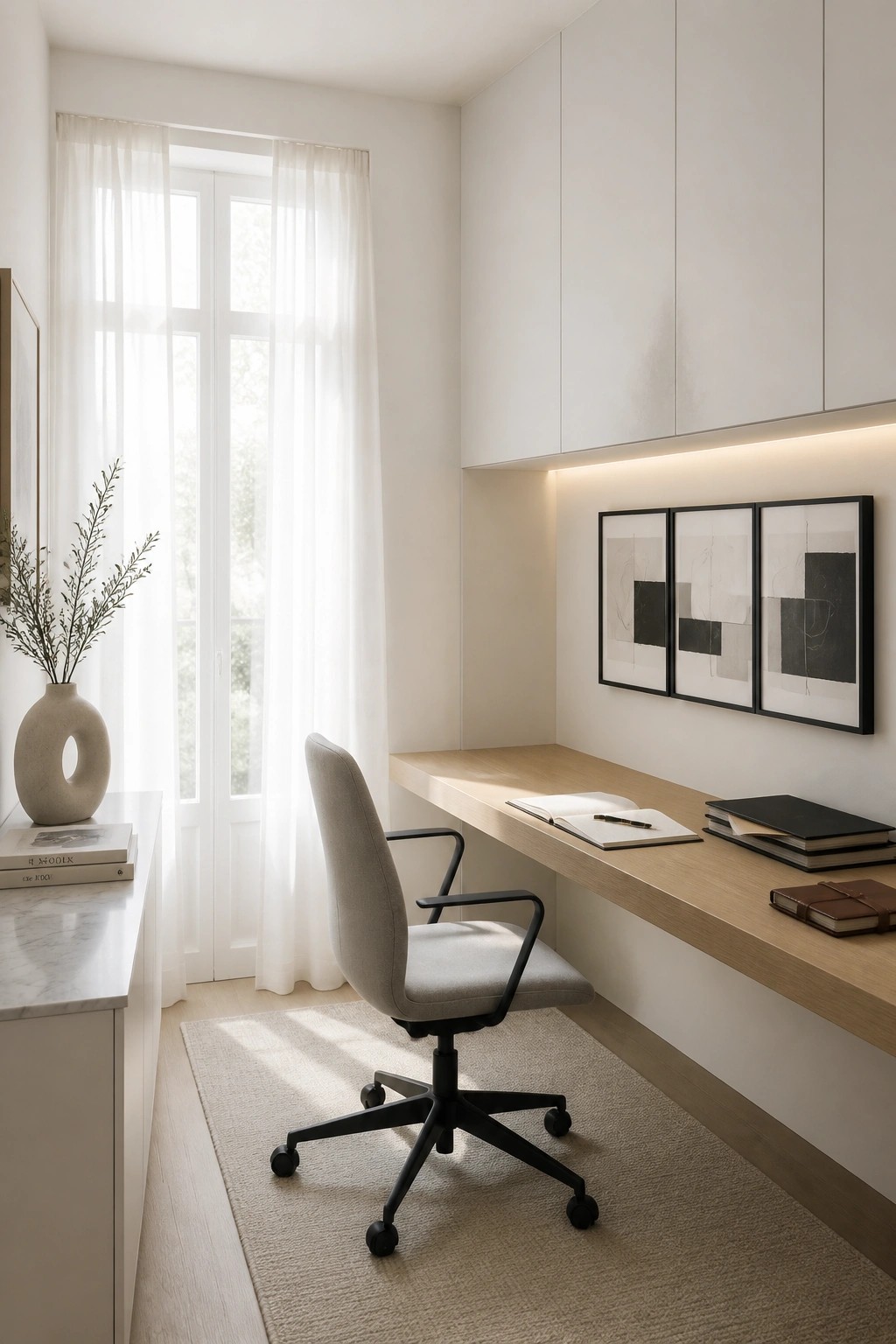
A built-in desk with overhead cabinets gives you a steady work surface without eating up floor space. The cabinets keep supplies and papers tucked away so the top stays mostly empty.
This approach works best in smaller rooms or any home that needs one focused spot for work. Check that the desk height lines up with your chair and the light under the cabinets does not shine straight onto a screen.
Built-In Alcoves For Compact Workspaces

A narrow alcove can become a useful workspace when the desk fits tightly into the space and the monitor mounts on the wall. This keeps the surface clear and turns an unused spot into a focused area without spreading into the main room.
The approach works best in hallways, landings, or small homes where every corner counts. Keep the desk narrow, add overhead cabinets for supplies, and choose a simple chair that tucks in fully when not in use.
L-Shaped Desks That Work Well in a Corner

An L-shaped desk in the corner gives you more surface space while keeping the work area contained. It turns an awkward spot into the main focus of the room and leaves the rest of the space open.
This layout suits smaller offices or rooms that double as guest spaces. Keep the desk surface mostly clear and use the shelves above for books and supplies so the area stays practical for daily use.
A White Desk In A Neutral Room For A Clean Work Area

A large white desk stands out in a room with gray walls and dark furniture. It reflects light and keeps the surface feeling open, which helps the whole workspace stay calm and easy to use. The minimal setup lets you focus on work without extra visual noise.
This approach works best in smaller home offices where you want the desk to feel like the main feature. Keep the top mostly clear and add only a few dark accessories so the contrast stays sharp. Avoid filling the surface with too many small items.
Wooden Desk with Open Storage Below

A desk that leaves the lower space open can make a small office feel less crowded. It keeps everyday items close without piling them on the work surface, which helps the room stay calm and ready for use.
This approach suits homes that already use wood tones elsewhere and need the office to blend in rather than stand out. Place bins or soft bags underneath for papers and supplies, and keep only the tools you reach for daily on top.
Wall Shelves Keep The Desk Surface Clear
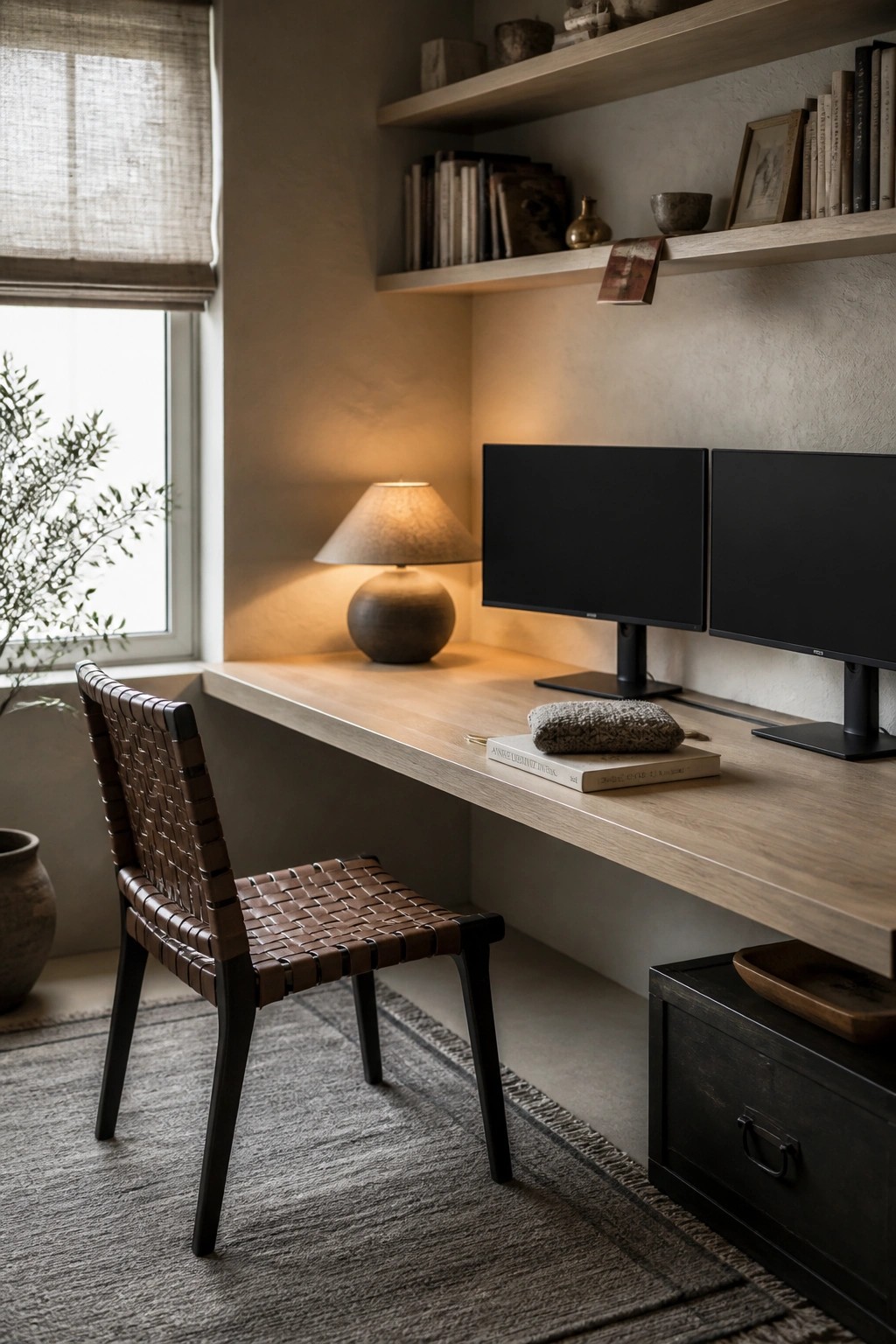
Many people like adding a simple shelf or two above a desk because it moves books, decor, and supplies off the work surface. This leaves more room to spread out papers or a laptop without the space feeling crowded right away.
The setup works well in smaller rooms or any spot where floor space is limited. Keep the shelves at a comfortable height so you can reach what you need without standing up, and avoid overfilling them so the area still feels open.
Textured Panels for a Clean Desk Backdrop
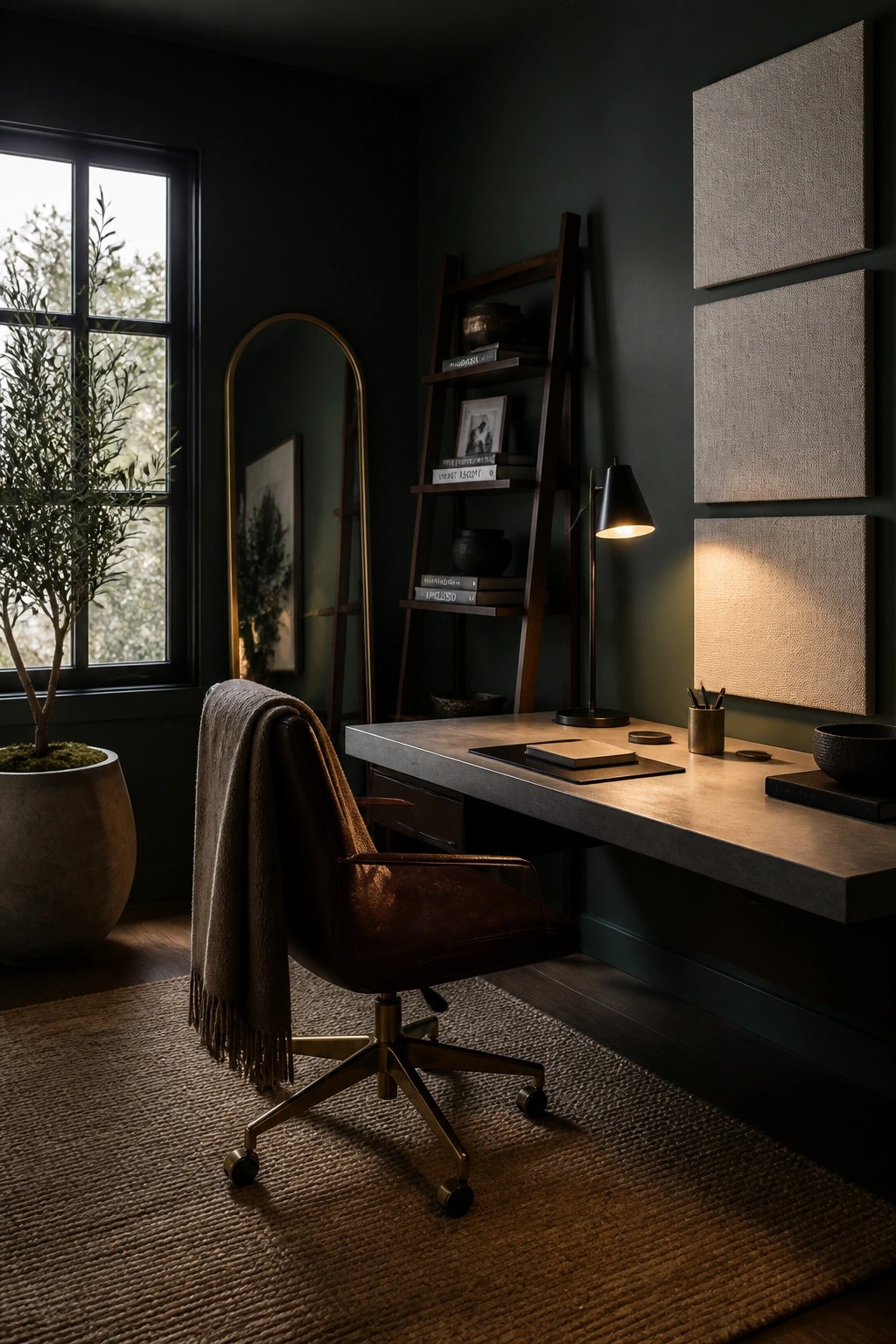
Many people like adding texture to the wall right behind the desk because it gives the space some interest without crowding the surface. A few simple panels can make the area feel more finished while keeping everything else minimal.
This works especially well in smaller rooms or with darker wall colors. It suits homes that need the workspace to look professional during video calls but still feel calm at the end of the day.
Extend Your Kitchen Counter Into A Desk

Many homes work better when the kitchen counter runs long enough to hold a simple workspace. A clean white surface gives you room for a monitor and laptop without carving out a whole separate room. The setup stays open and easy to keep tidy because everything sits on one level.
This works best in smaller homes or open layouts where the kitchen already serves as the main living area. Match the counter height and materials so the desk does not feel added on later. A low stool keeps the look light and lets you move it out of the way when you need the full counter for cooking.
Place Your Desk Near A Window
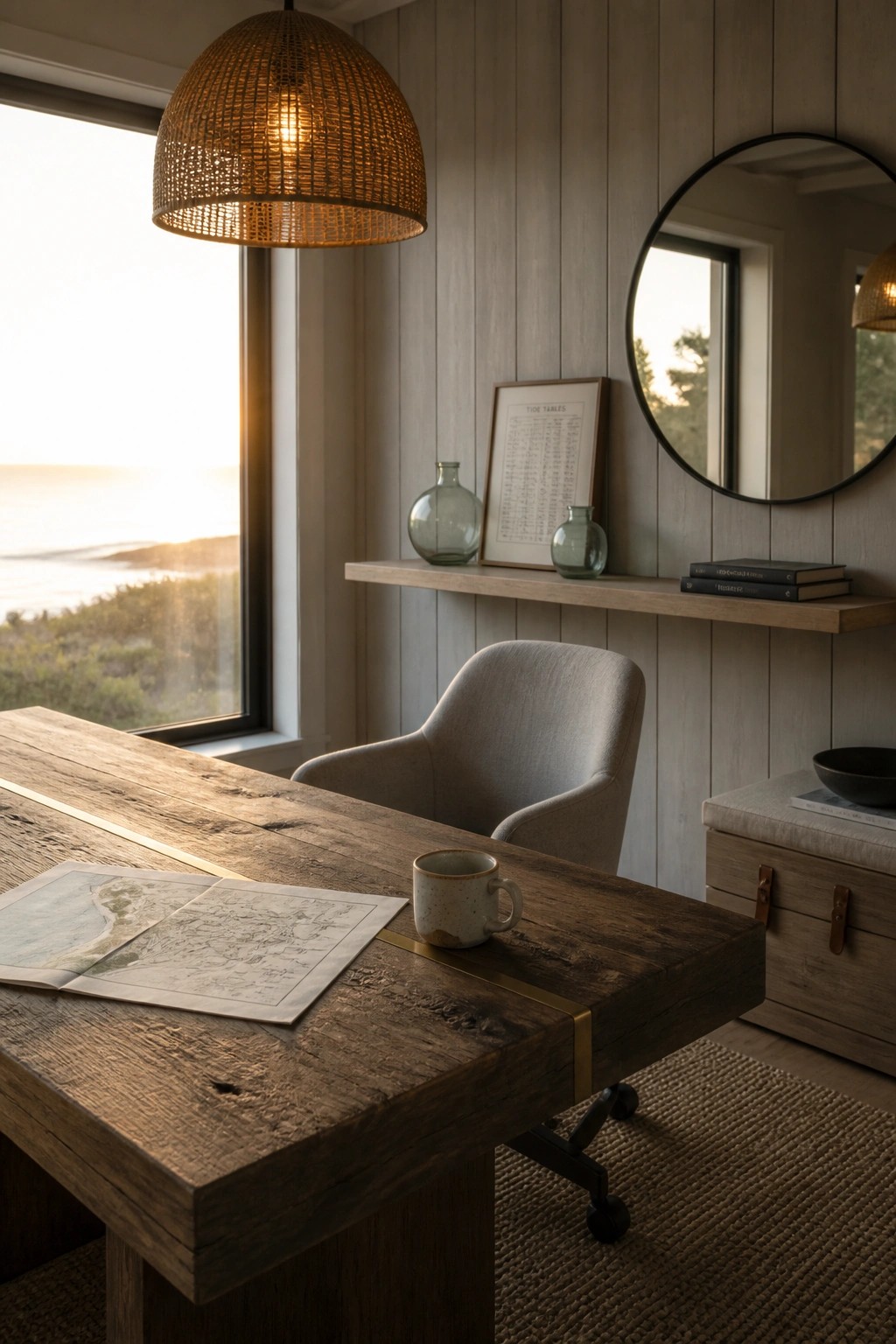
A desk set right by a window gives you steady natural light and turns the view into the main backdrop. This keeps the surface itself simple, with just a few everyday items, so the space feels open and easy to work in without extra styling.
It works best in a room where the view is calm and steady, like a garden or shoreline. Keep the desk clear of clutter and let the light do the rest.
Glass Desk With Tech Stored Below

A glass desk works well when you want the workspace to stay clear but still need room for a full computer setup. The see-through surface keeps the room feeling open while the tower sits underneath instead of crowding the top.
This setup suits smaller home offices or anyone who likes a modern look without visible clutter. Just make sure the desk frame is sturdy enough to support the weight and that cables are routed neatly so they do not show from the front.
Built-In Bookshelves For A Professional Backdrop

Built-in bookshelves give a home office an instant sense of structure and purpose. They turn an empty wall into useful storage while creating a steady background that makes the desk area feel more intentional and complete.
This approach works well in rooms that already have some traditional trim or wood tones. Keep the shelves filled with books and a few smaller items so the overall look stays full without crowding the desk itself. A simple desk surface then stands out more clearly against all that depth behind it.
Adding an Adjustable Standing Desk
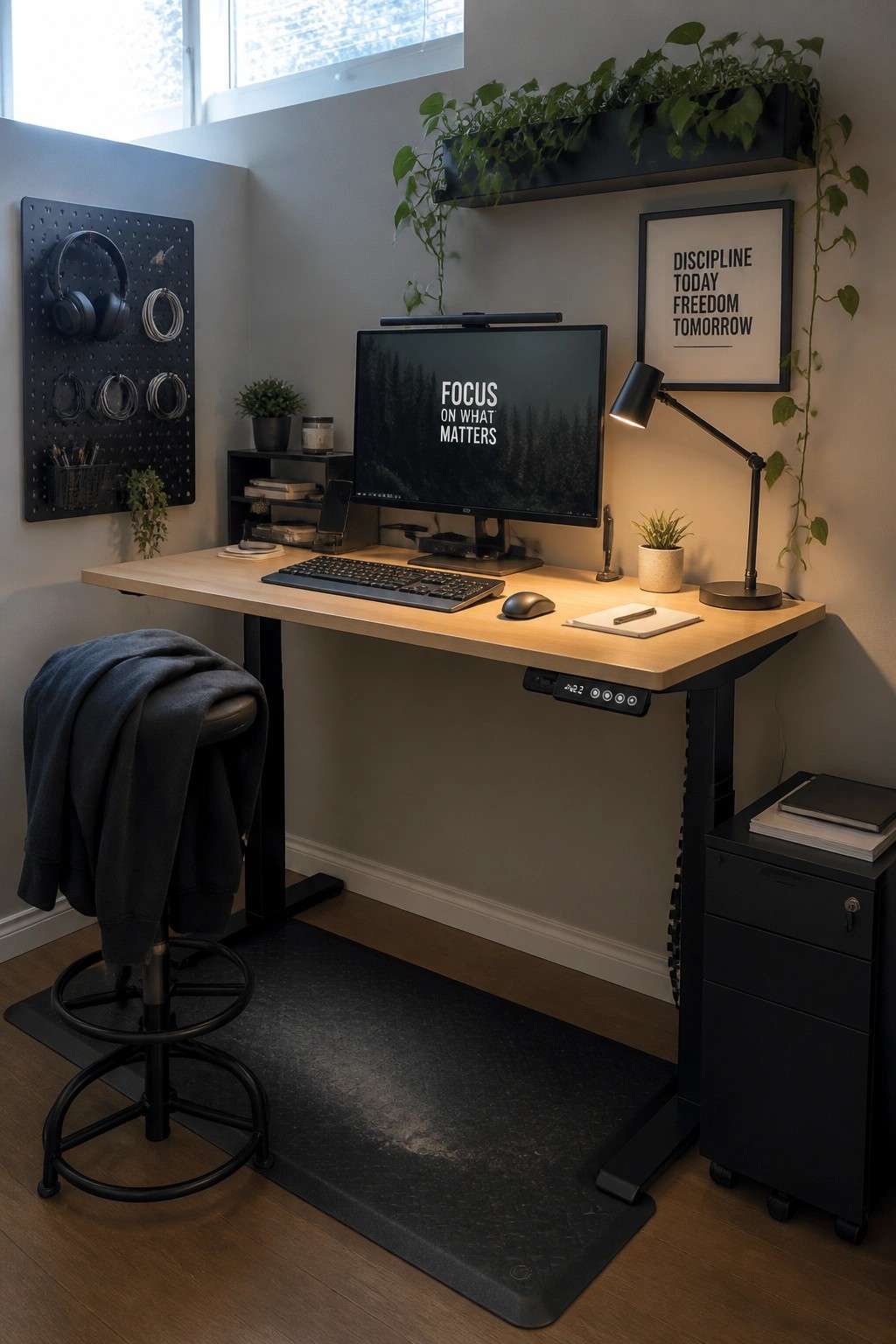
An adjustable standing desk gives you the option to switch positions throughout the day without rearranging the whole room. It works well in smaller spaces because the desk itself stays compact while still offering enough surface for a monitor, keyboard, and a few essentials.
Place it against a wall with simple storage nearby so cables and small items do not pile up on the desk. This setup suits most home offices where people want to stay comfortable during long work hours without adding extra furniture.
Built-Ins That Keep The Desk Clear
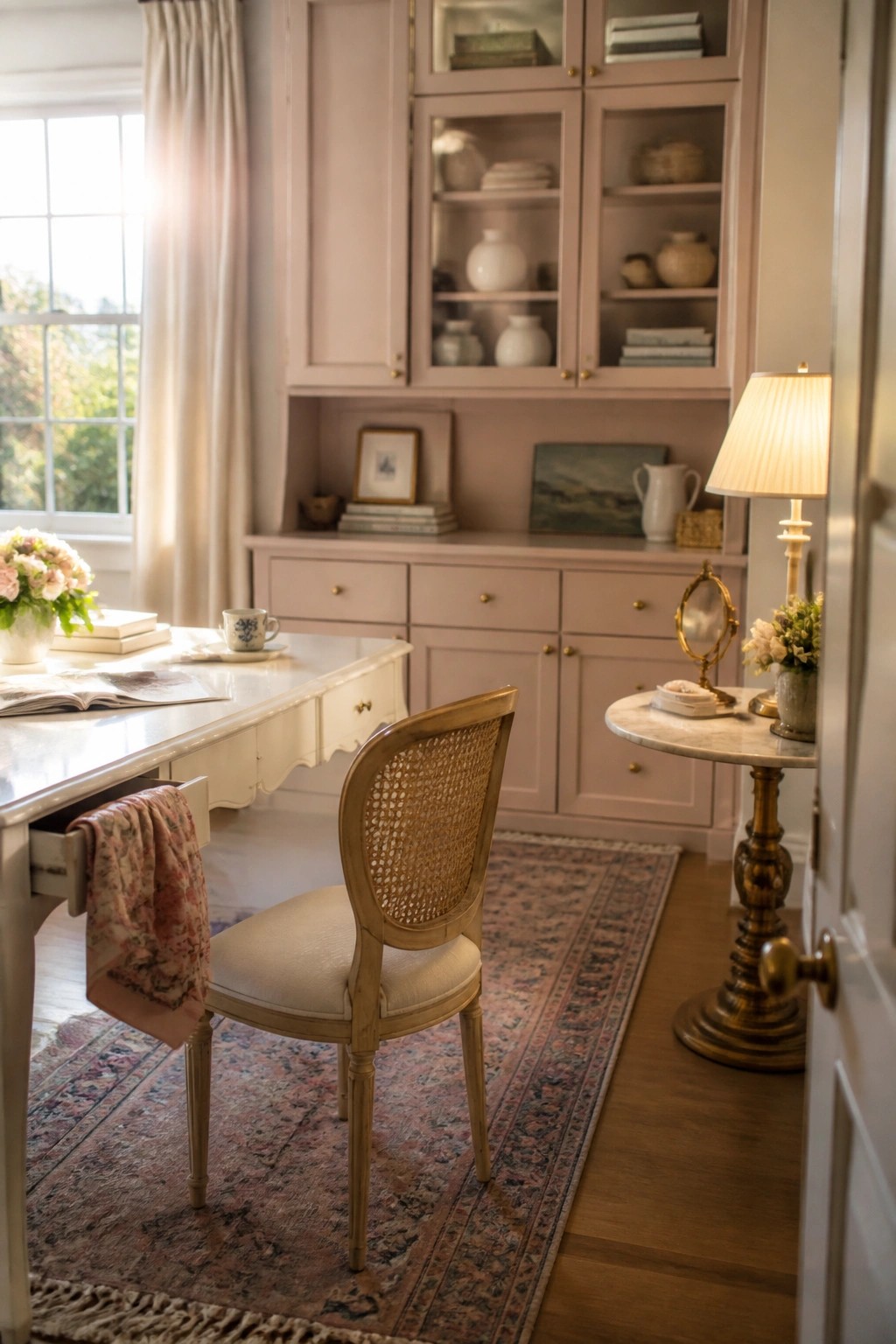
Built-in cabinets painted the same soft color as the walls give you plenty of hidden storage without adding extra furniture around the room. This setup lets the desk stay open and ready for work, which makes the whole space feel calmer and easier to keep tidy day to day.
The approach works best in smaller offices or rooms that double as guest spaces. Choose a color that matches the wall so the cabinets recede instead of standing out, and leave the desktop mostly empty except for a lamp and a few daily items.
Positioning the Desk by Large Windows

Placing a desk right along a big window keeps the workspace bright during the day and cuts down on the need for extra lighting. The natural light makes the surface feel more open and helps the room stay simple without looking bare.
This setup works best in rooms that already have decent window access. Keep the desk length long enough for papers and a laptop but leave most of the surface clear so the light stays the main feature rather than clutter.
Position Your Desk Beside A Window
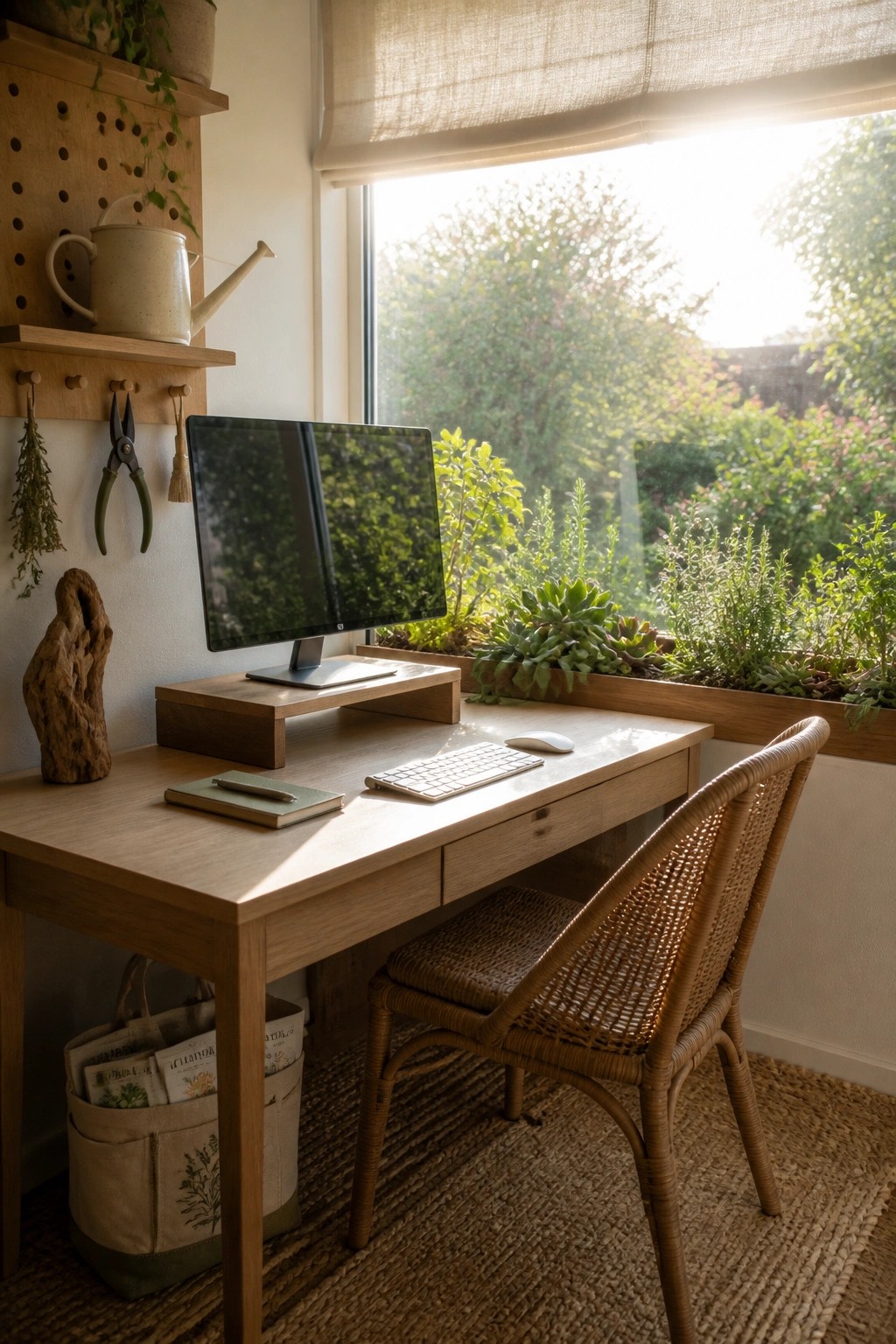
Placing the desk right next to a window brings steady natural light into the workspace and keeps the surface from feeling closed in. The view outside also gives the eyes a place to rest during long hours, which helps the whole room feel less like a separate office and more like part of the home.
This approach suits smaller rooms or homes that already have good outdoor greenery. Keep the desk surface clear and let the window ledge or built-in box hold the plants so the work area stays simple and easy to maintain.
Dark Walls For A Professional Backdrop
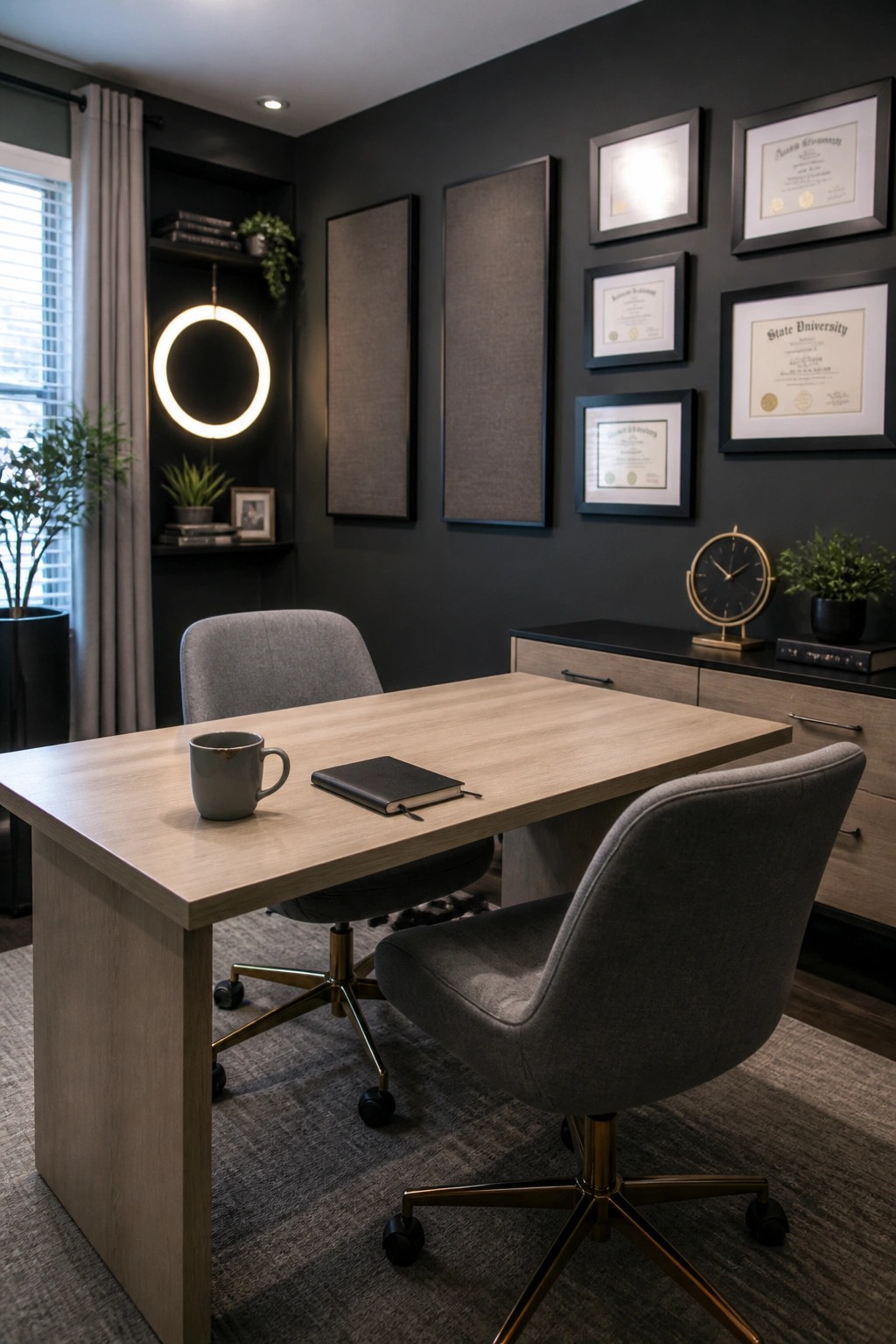
A dark wall behind the desk gives the office a more serious tone without much effort. It makes framed certificates stand out and keeps the overall look from feeling too light or casual.
This approach works best in smaller home offices or rooms used for video calls. Keep the desk surface mostly clear and limit the wall to a mix of frames and a couple of larger panels so it stays balanced.
Frequently Asked Questions
Q: How do I keep cables from showing up in video calls? A: Route them behind the monitor stand and secure them with a clip or two on the desk edge. This leaves the front view clean during meetings. Check the setup once a week and tighten anything that shifts.
Q: What if my wall is too plain for a professional backdrop? A: Add a single framed print or a slim fabric panel at eye level behind your chair. Keep the color neutral so it does not pull focus from you on screen. Move it slightly if reflections show up in your camera.
Q: How often should I rearrange my desk setup? A: Shift things around every few weeks when the layout starts to feel stale. Move one or two items at a time.
Q: Can plants fit without crowding a small desk? A: Choose one low plant and set it on a corner tray away from your keyboard. Wipe the leaves during your regular wipe-down of the surface. Skip it if space gets tight during busy workdays.
