


When I set up my own home office, the wall right behind the desk always ends up being the spot that shapes how the whole room feels during long workdays.
Gallery walls seem to work well there because they add layers without taking up floor space or blocking light from the window.
I have noticed that mixing different frame sizes and a few personal photos keeps the area interesting but still calm enough to focus.
Some setups I have tried only clicked once I left a bit of empty space between the pieces so the wall did not feel overwhelming.
Balance matters most.
Gallery Wall With A Floating Shelf Below

A gallery wall works well in a home office when you give it a little extra structure. The floating shelf under the frames creates a natural boundary that keeps the arrangement from feeling scattered while adding a spot for plants, books, and small items that would otherwise crowd the desk.
This setup suits smaller rooms or anyone who wants the wall to feel finished without filling every inch with art. Keep the shelf narrow so it does not compete with the desk, and choose pieces that share a similar tone or frame style so the whole wall reads as one calm backdrop rather than a busy collection.
A Gallery Wall of Botanical Prints
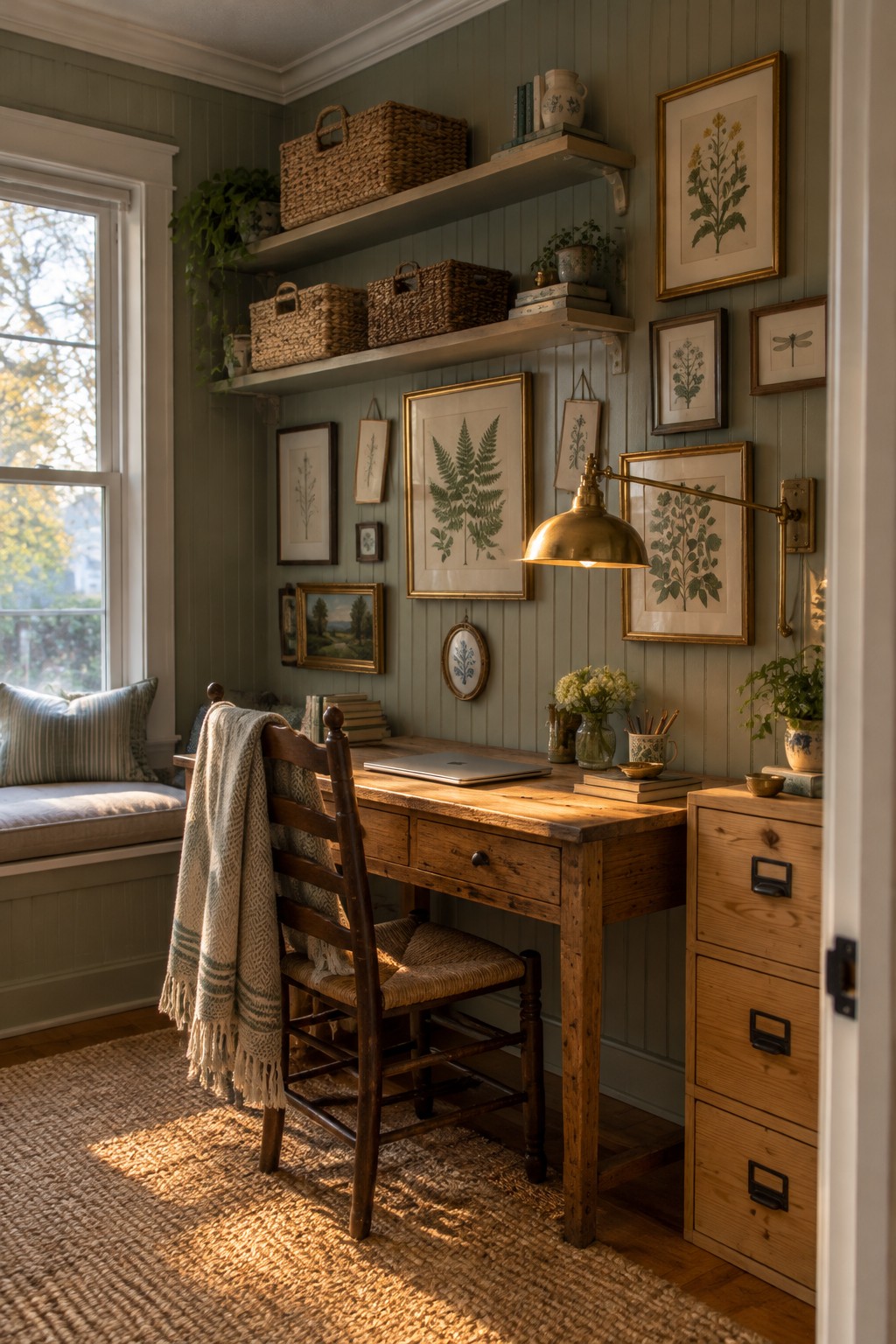
One simple way to make a home office feel finished is to hang a group of botanical prints on the wall right behind the desk. The mix of frame sizes and subjects keeps the wall interesting without crowding the work surface or needing extra shelves.
This approach suits older homes or smaller rooms where the wall can carry some visual weight. Start with prints that share a similar color or theme, then add a few different frame styles so the arrangement feels collected rather than matched.
Black And White Gallery Walls Behind The Desk
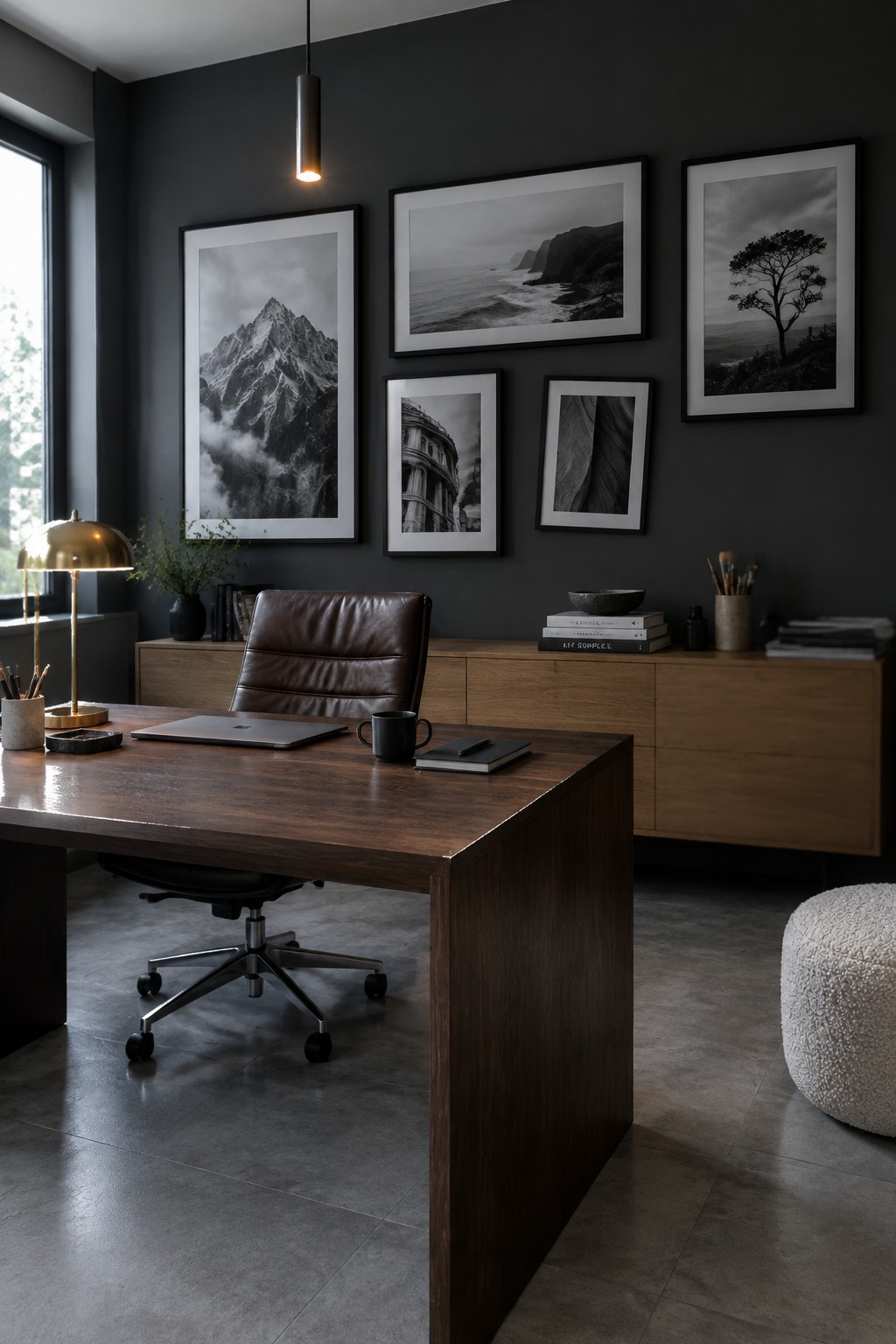
A gallery wall of black and white photos gives an office wall a quiet, finished look without adding color or clutter. The matching frames and similar subject matter keep the arrangement feeling calm rather than scattered.
This style works best on a darker wall where the white mats and frames stand out clearly. Use it in a smaller office or any workspace that already has wood furniture and leather seating so the photos add interest without competing for attention.
Mix Framed Prints With Woven Hats On A Gallery Wall

One easy way to keep a gallery wall from feeling flat is to add a few three dimensional pieces like woven hats alongside the framed prints. The hats bring texture and a bit of shape that drawings or photos alone cannot provide, and they work especially well in a home office where the wall sits right behind the desk.
This mix suits rooms that already lean coastal or relaxed, since the hats echo natural materials like the desk and chair. Start with two or three hats in similar tones, then fill in around them with smaller framed pieces so the arrangement stays balanced rather than busy.
Mixing Different Prints In A Desk Gallery Wall
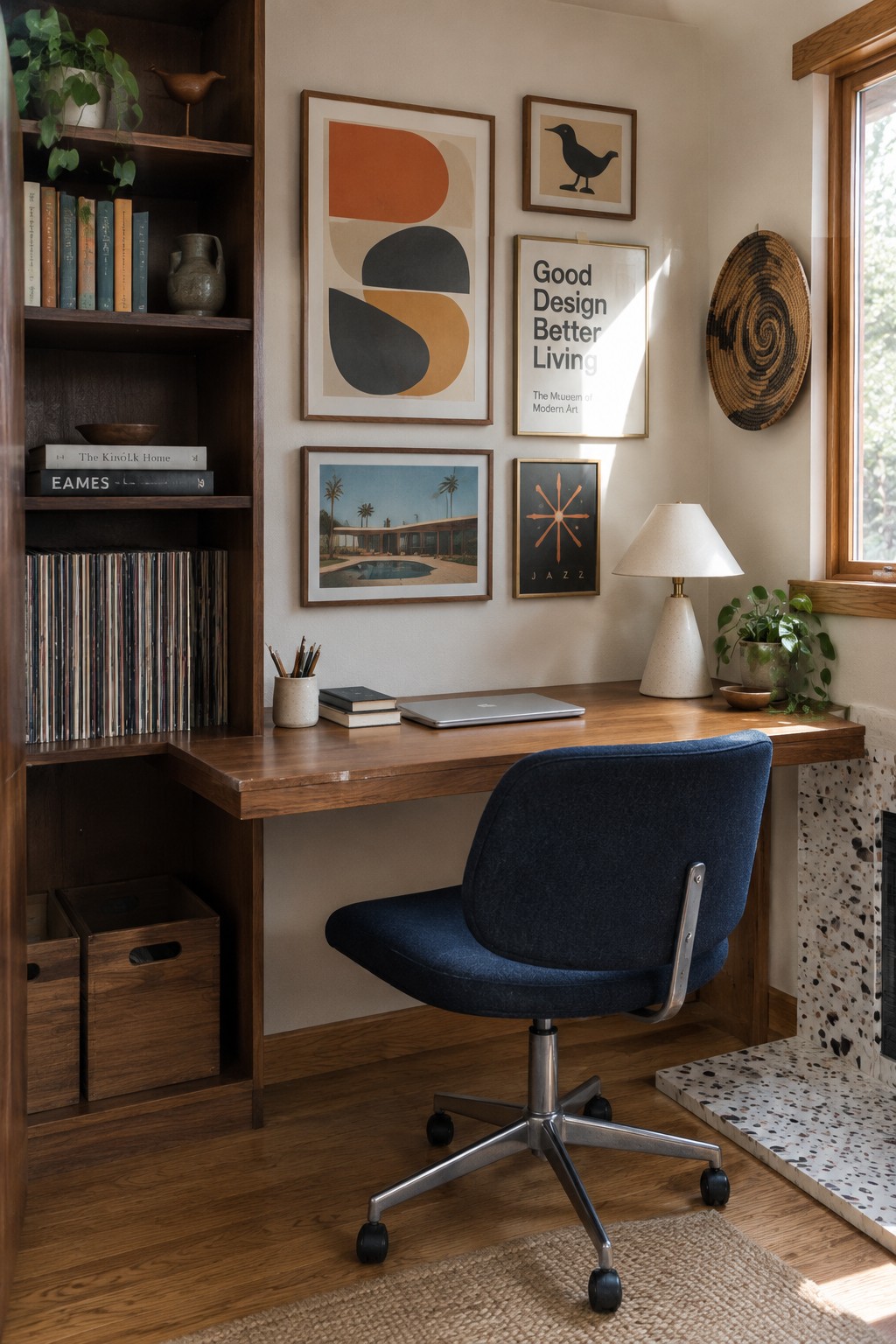
One simple way to make a home office feel finished is to hang several different prints together on the wall right behind the desk. The mix of sizes, subjects, and frame styles adds interest without crowding the surface or making the room feel busy.
This approach works best in smaller workspaces where you want the wall to carry some of the visual weight. Keep the arrangement loose rather than perfectly lined up, and let a few pieces with text or simple graphics balance out the ones with more detail.
Mixing Different Art Pieces For A Desk Gallery Wall
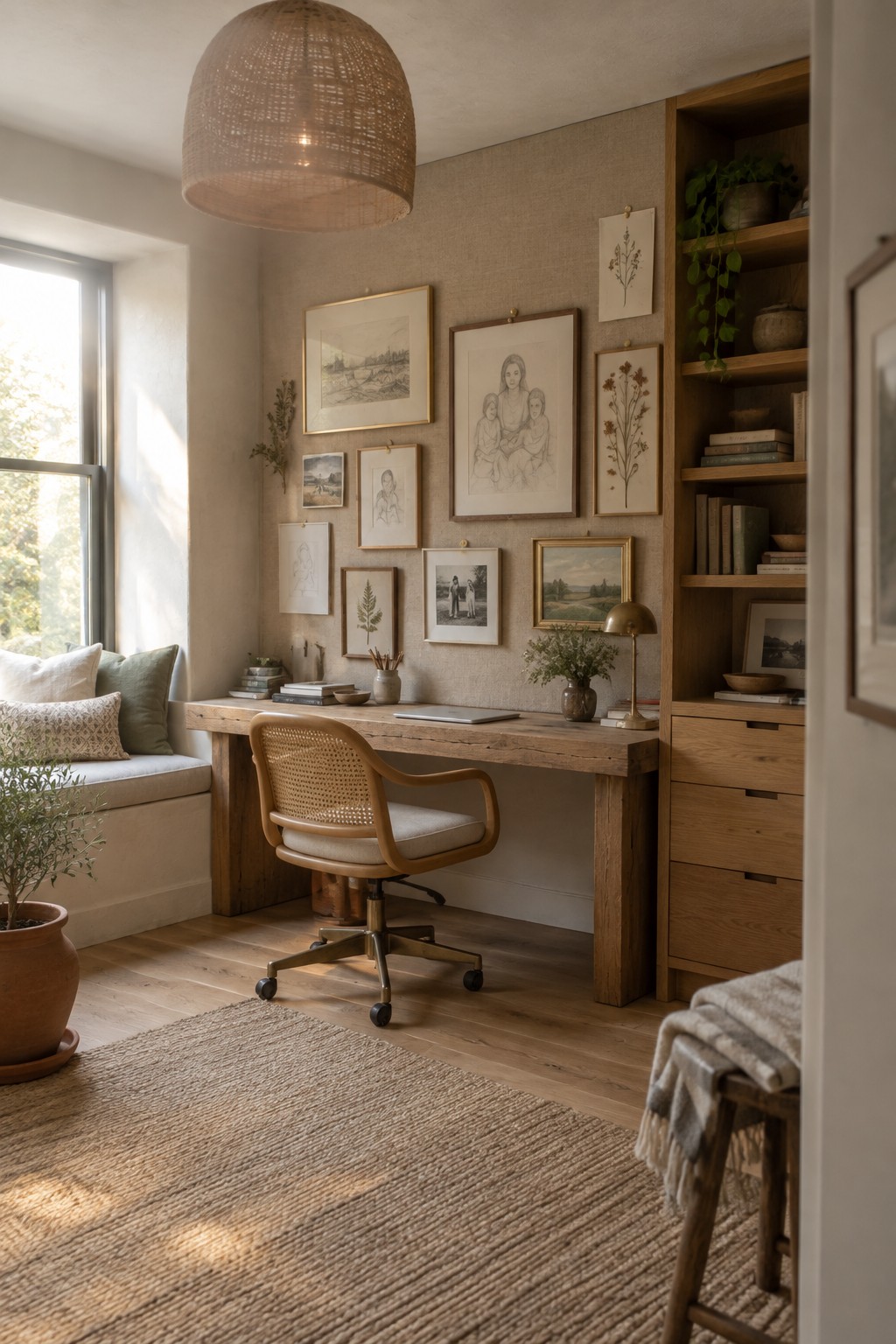
A gallery wall works especially well behind a desk because it gives you something to look at without crowding the surface itself. The mix of sketches, photos, and botanical prints keeps the arrangement interesting while still feeling quiet enough for work.
This style suits smaller offices or rooms where you want the wall to feel personal rather than styled. Start with a few larger frames and add smaller pieces over time so the collection grows naturally.
Mix Framed Art With Textiles In A Gallery Wall

Mixing framed prints and paintings with woven textiles gives a gallery wall more depth without needing a strict layout. The different textures catch the light differently and keep the arrangement from feeling flat or overly planned. This approach works especially well behind a desk where you spend hours looking at the wall.
It suits homes that already lean a bit collected or eclectic. Hang a few larger framed pieces first, then tuck in smaller woven hangings around them so the whole wall feels balanced rather than crowded. Stick to a limited color palette if the room already has strong wall color.
Abstract Gallery Walls Above a Desk
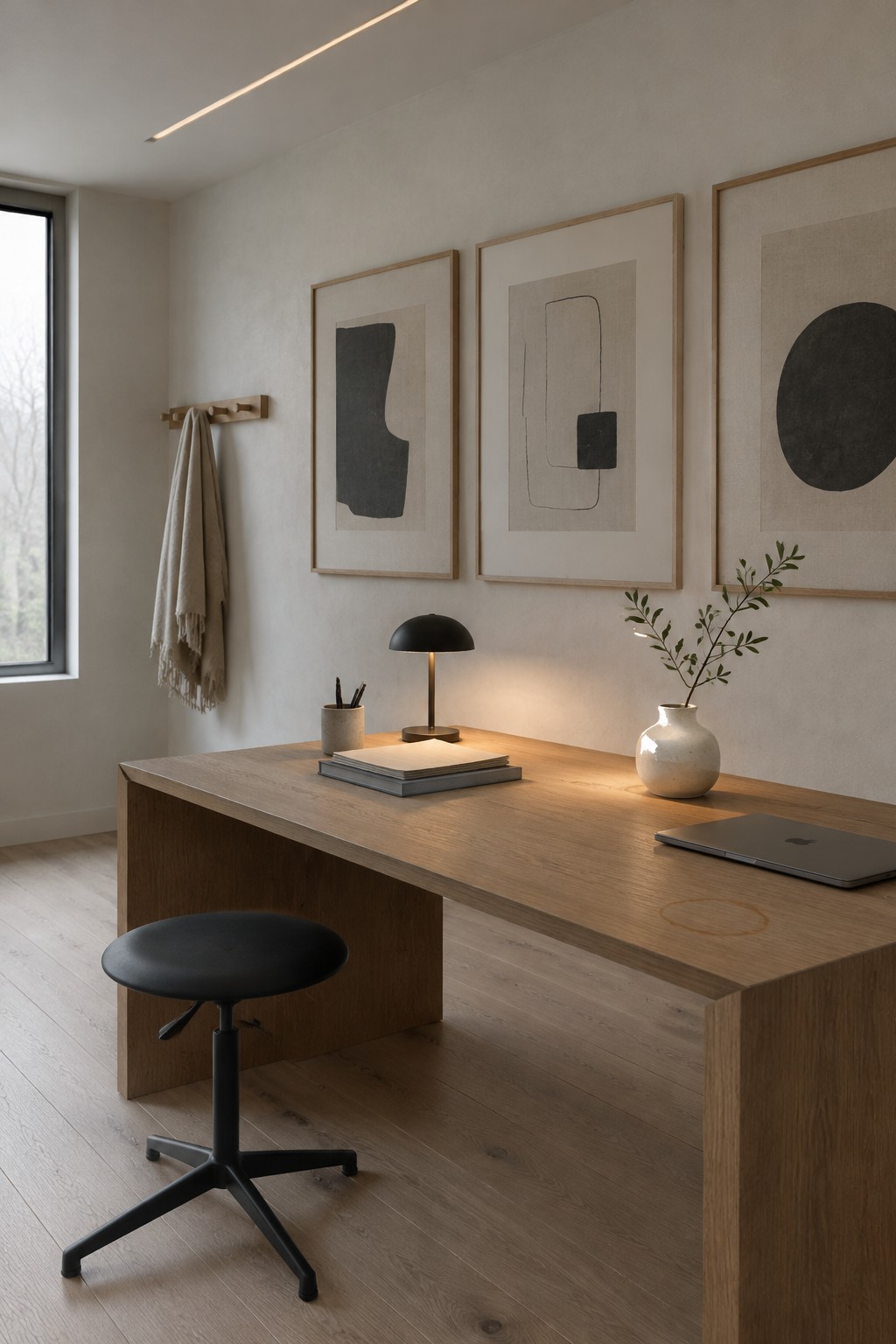
A row of abstract prints hung at the same height behind a desk gives the wall purpose without crowding the space. The simple shapes and muted tones keep the background quiet, which helps when you need to focus on work for long stretches.
This approach works best in smaller offices or rooms with limited wall space. Stick to three or four pieces in similar frames and neutral colors so the arrangement feels balanced rather than overwhelming.
Build A Gallery Wall Behind Your Desk
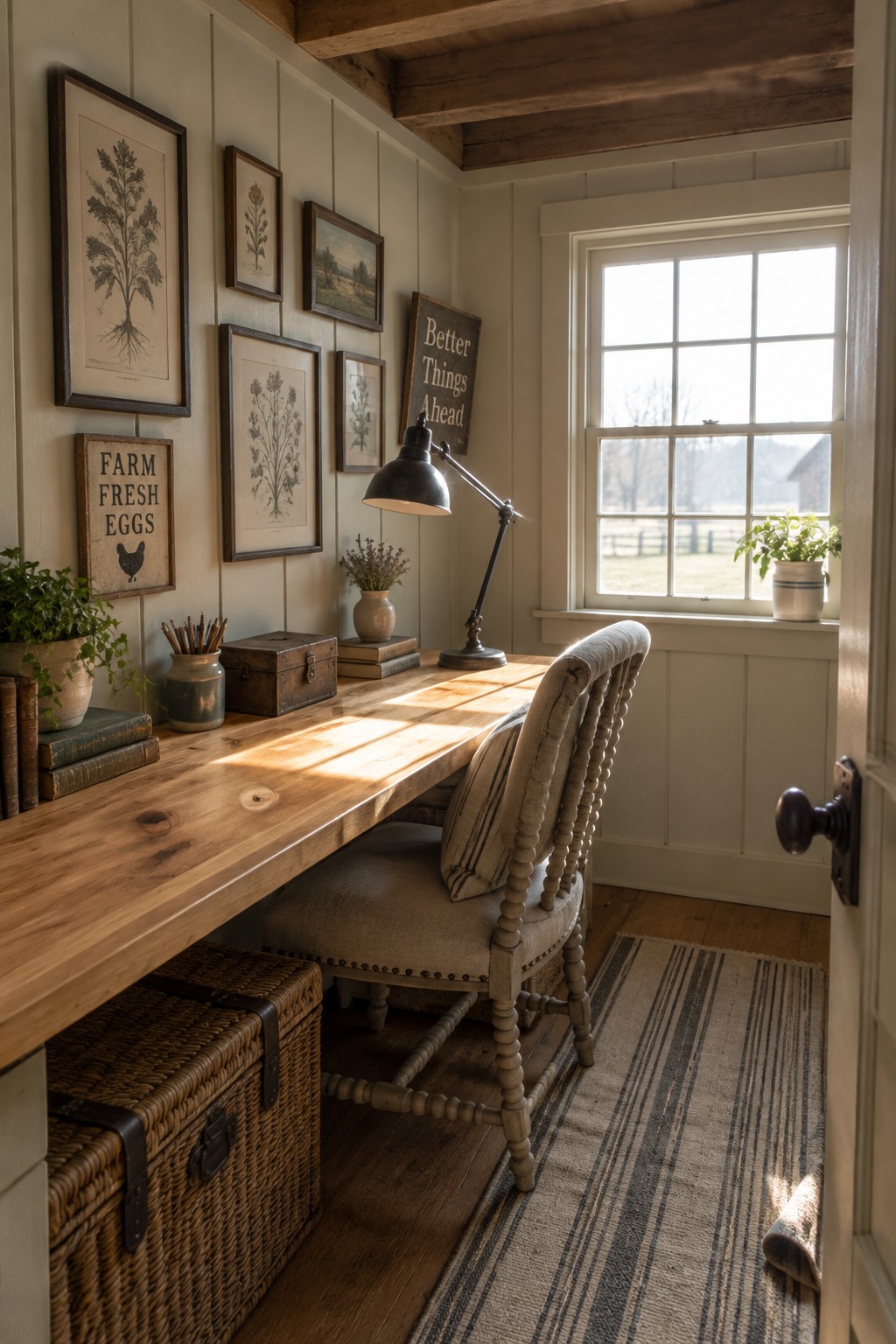
A gallery wall behind the desk gives the room some character while leaving the work surface clear. It works because the art sits at eye level when you are seated, so you get the benefit of the view without any extra clutter on the desk itself.
This approach fits smaller home offices or spaces that need to feel more personal. Keep the frames in a similar finish and choose prints that share a loose theme so the arrangement stays easy to look at during long workdays.
Black and White Prints on a Gallery Wall
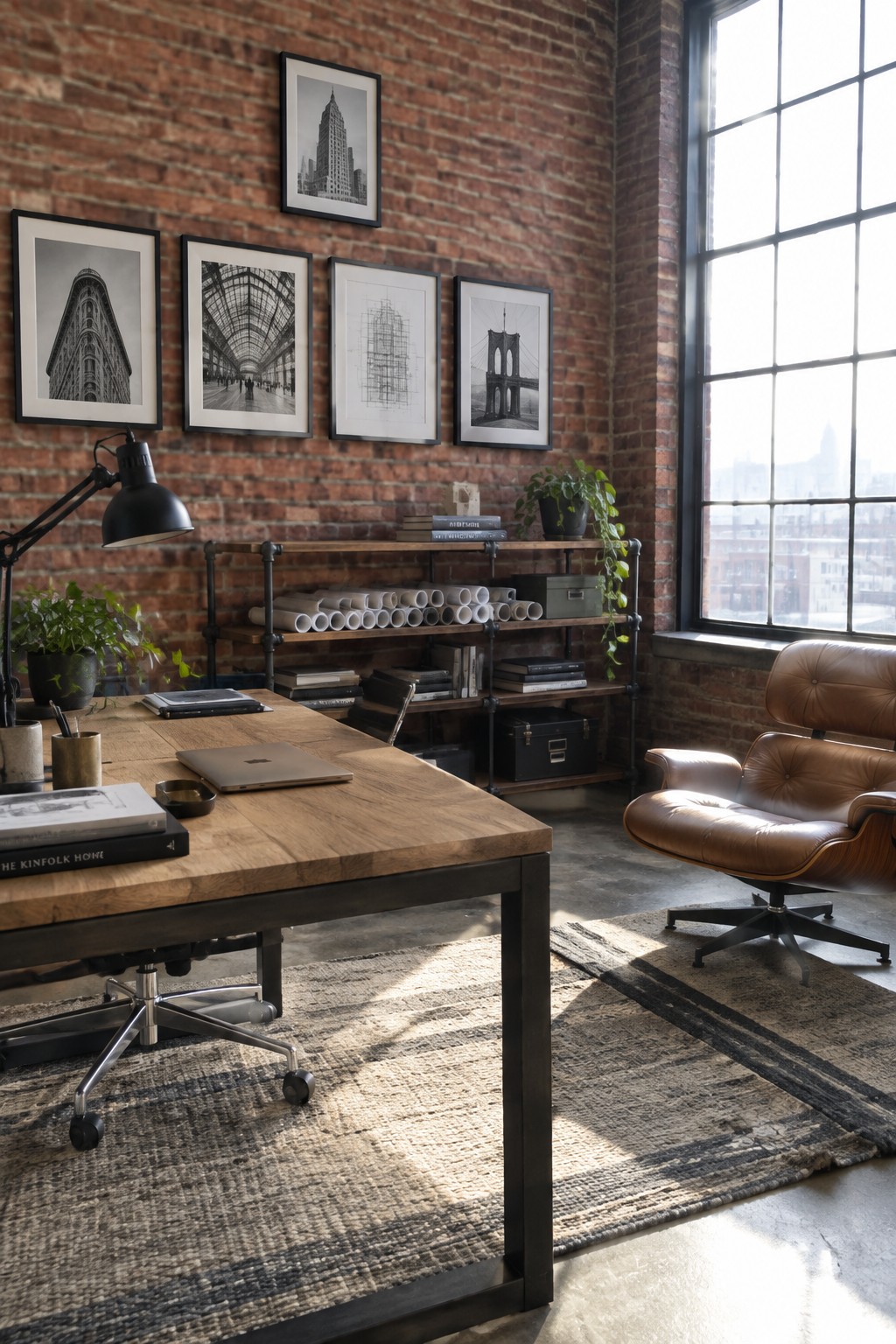
One simple way to give a home office more character is to line up a row of matching black and white prints above the desk. The framed architectural photos sit nicely against the brick and keep the wall from feeling bare while still leaving the workspace feeling open.
This approach works best in rooms with strong textures like brick or concrete, where the clean lines of the frames can balance out the roughness. Stick to the same frame style and a limited color palette so the arrangement reads as one thoughtful group rather than a random collection.
Hang a Gallery Wall Around Your Desk
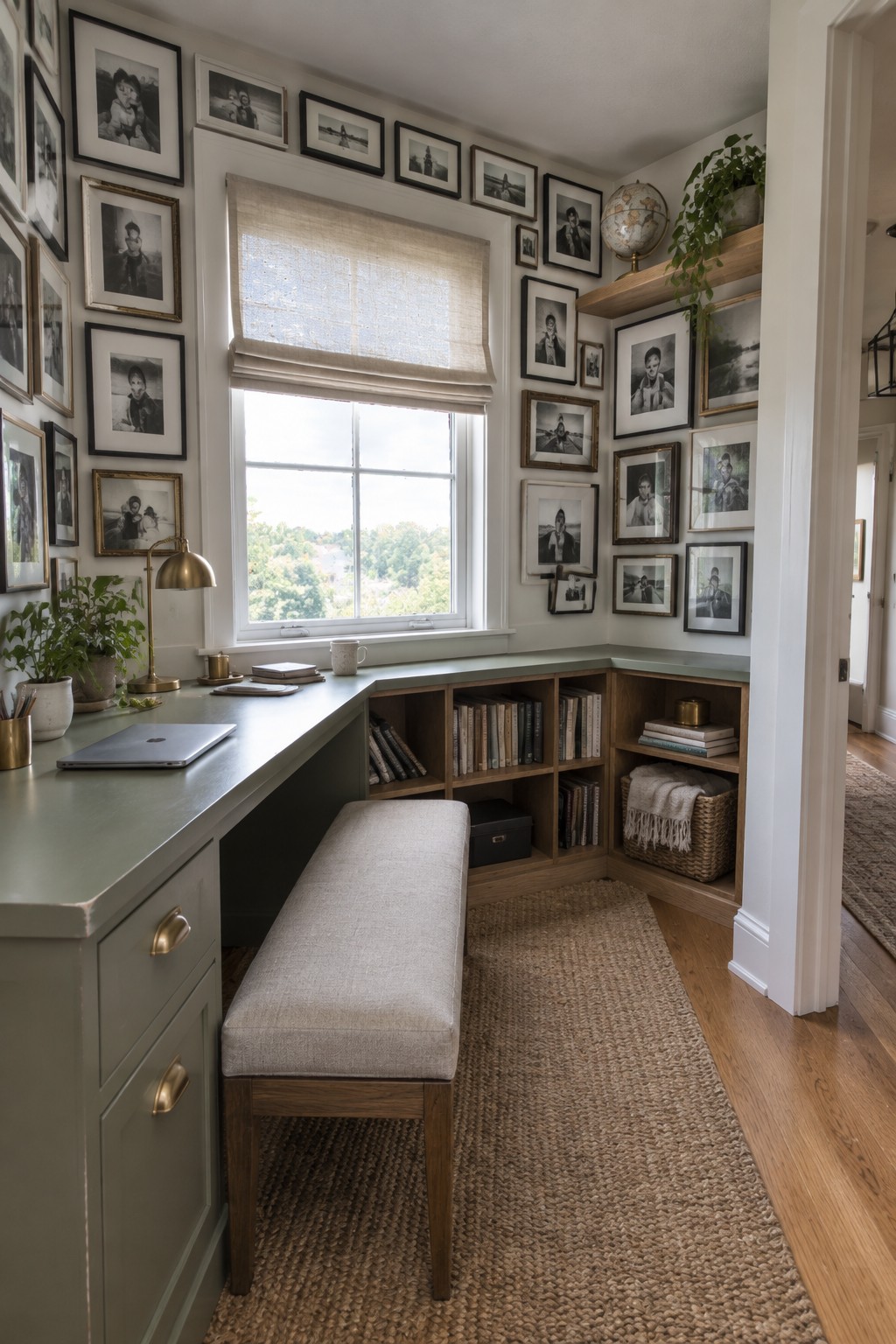
One simple way to make a home office feel more personal is to cover the walls around the desk with a collection of framed photos. The mix of sizes and the way they cluster above and beside the window gives the space a collected look without needing extra decor.
This works best in smaller offices or corners where the desk sits against two walls. Keep the photos in one tone, like black and white, so the arrangement stays calm even when the frames are packed close together.
Gallery Walls With Alphabet Prints
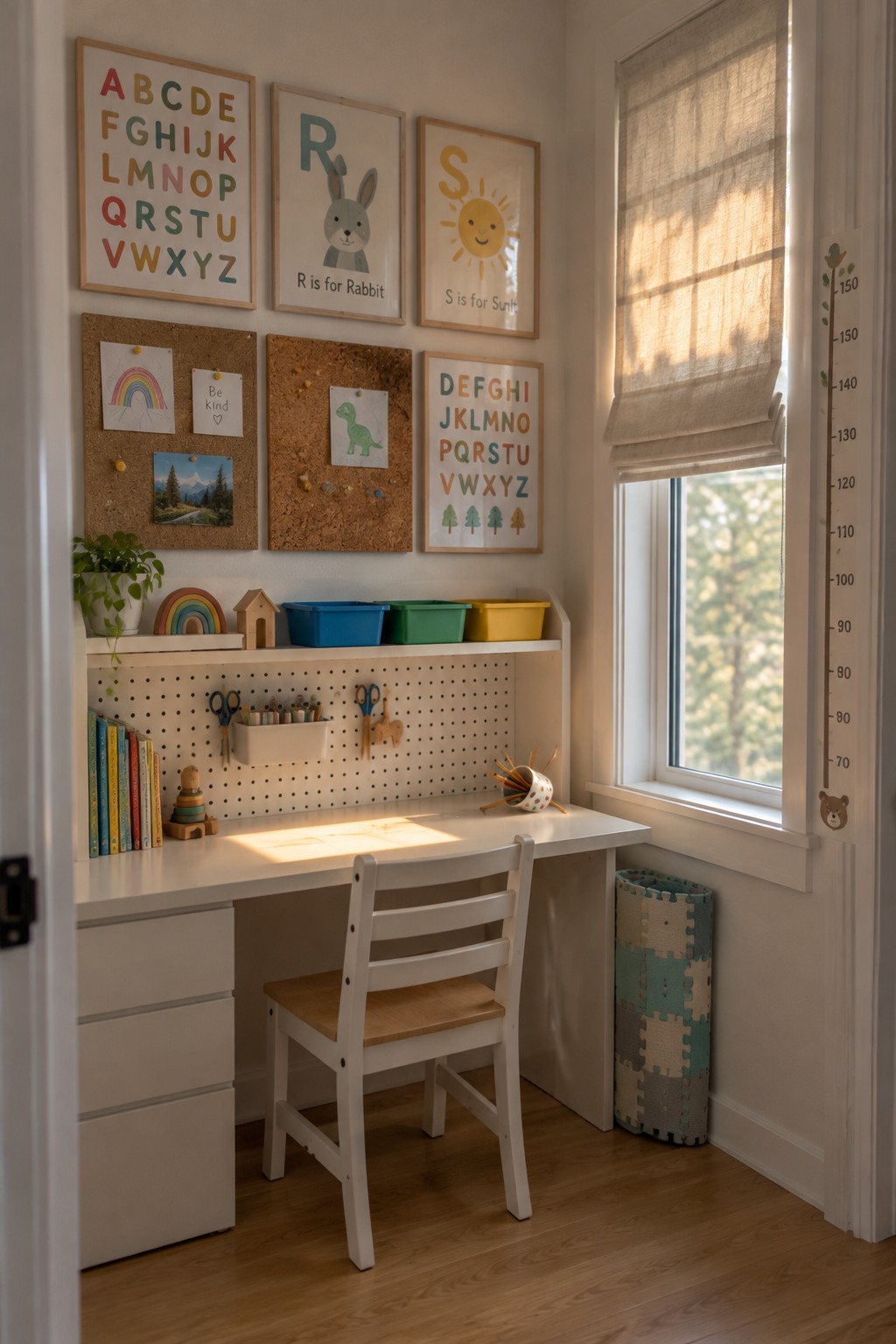
Many people turn the wall behind a desk into a simple gallery using alphabet prints and letter art. The mix of colors and shapes keeps the space interesting without feeling busy, and it gives kids something to look at while they work or play.
This idea works best in a child’s room or small study area where you want the wall to do more than just look good. Add a corkboard or two nearby so drawings and notes can join the framed pieces over time.
Mix Art Prints With A Pinboard Behind The Desk
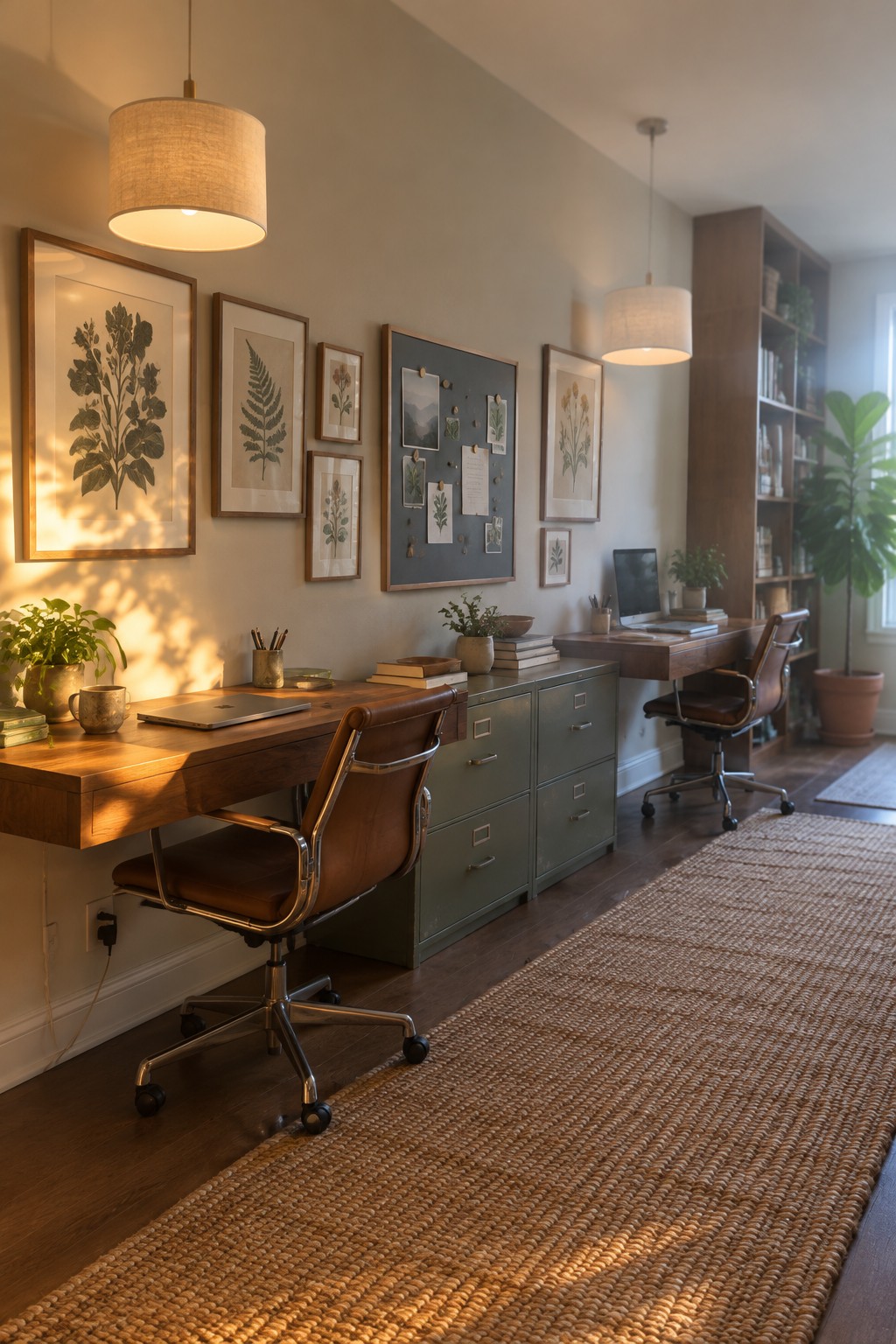
One way to keep a gallery wall useful is to add a pinboard right into the mix. It gives you space for notes, reminders, and small photos without needing to swap out frames every time something changes.
This setup works best in a home office where you want both decoration and a spot to post ideas. Group a few framed prints around the board and keep the overall colors calm so the wall stays easy to look at during long workdays.
Building A Gallery Wall Behind Your Desk
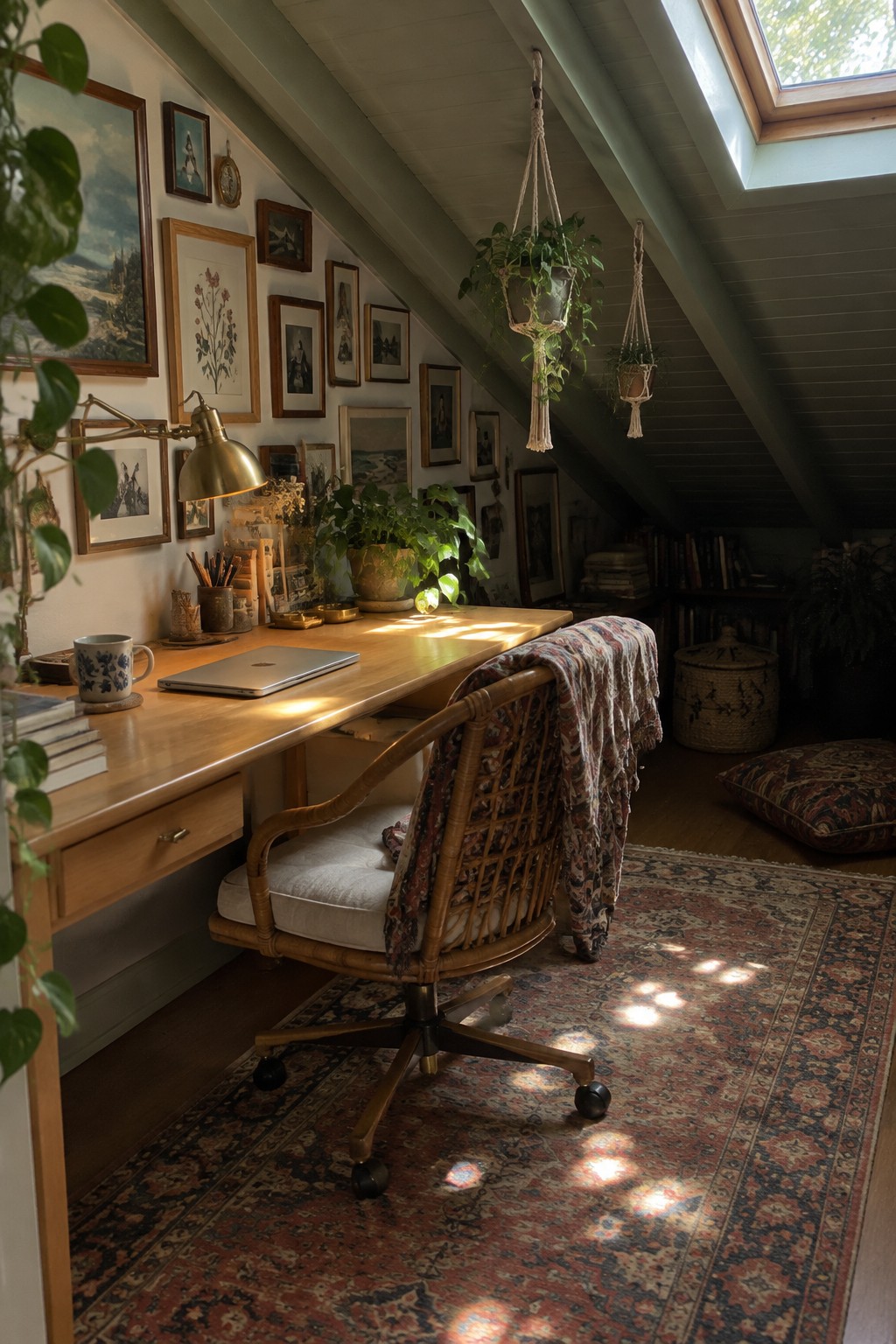
A gallery wall behind the desk turns an otherwise blank surface into something useful and personal. In smaller or oddly shaped rooms like attics, it gives the eye something to rest on without crowding the workspace itself. The mix of frame sizes and subjects keeps things interesting while the desk stays clear for actual work.
Start with a few larger pieces you already have and add smaller ones as you find them. This works well in homes where someone wants to display photos or prints without committing to a single big statement piece. Just leave enough space above the desk so nothing gets in the way when you stand up or lean back.
Mix Frame Styles in a Gallery Wall

Mixing frame styles keeps a gallery wall from feeling too planned or stiff. In a home office this approach adds some personality without needing a lot of color or bold patterns. The mix of thin black frames, wider gold ones, and varied sizes creates a collected look that still feels calm behind the desk.
This idea works best when the wall sits directly behind a work surface where you spend time every day. Start with two or three larger pieces to set the shape, then fill in with smaller frames until the arrangement feels balanced. It suits older homes or any space where you want the wall to look like it grew over time rather than being installed all at once.
Blend Framed Art With A Corkboard Panel
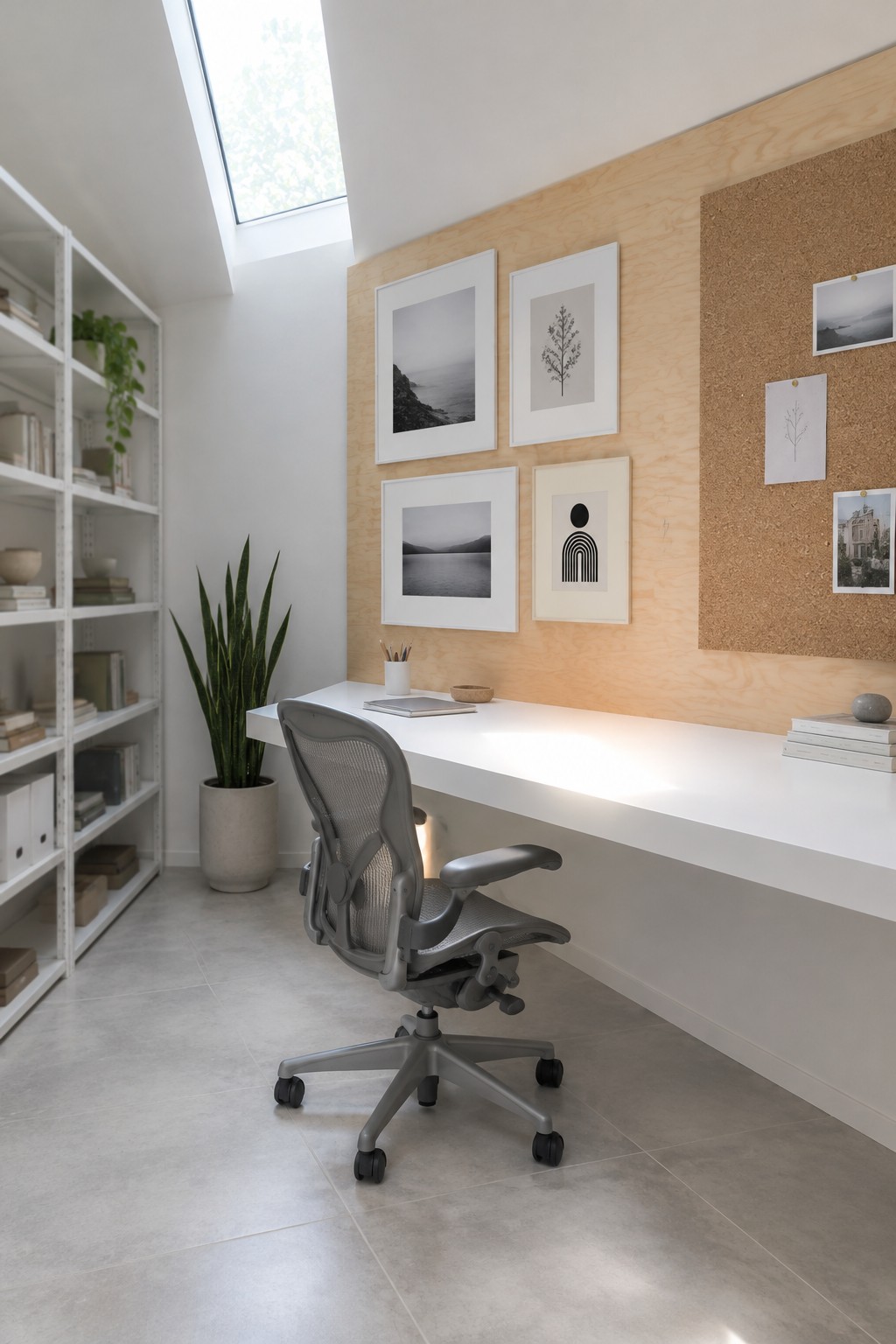
A gallery wall behind the desk works better when it gives you a place to pin things you actually use. Adding a corkboard section next to the frames keeps the wall interesting while turning part of it into a working surface for notes, cards, or small prints.
This setup fits home offices that need both decoration and daily function without adding extra boards elsewhere. It works especially well on a simple wood backdrop that helps the frames and corkboard feel connected instead of separate.
Mix Tiles Into a Gallery Wall
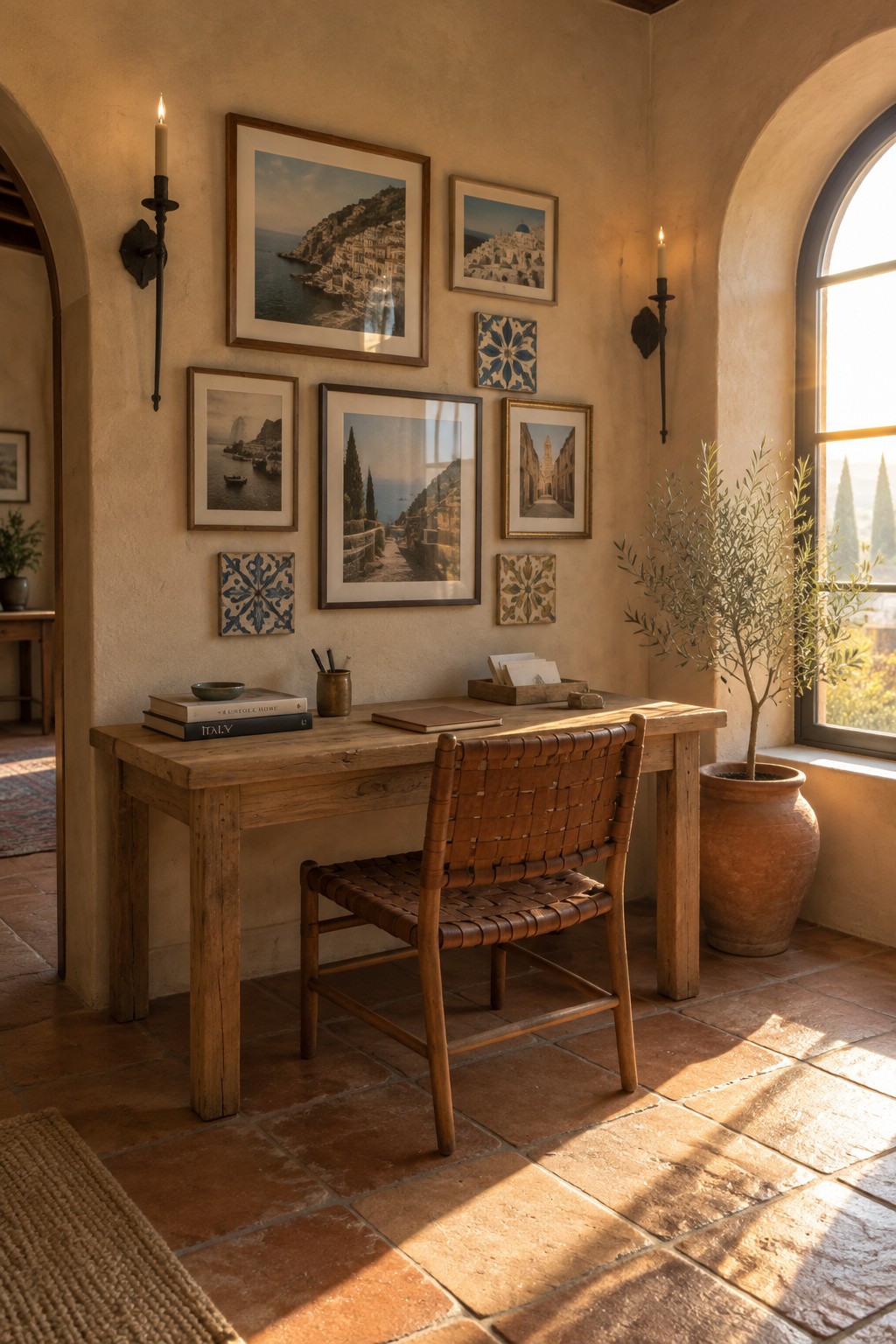
One simple way to keep a gallery wall from feeling flat is to tuck in a few decorative tiles between the frames. The tiles add color and pattern without needing more pictures, and they help break up rows of similar frames.
This approach suits homes with warm materials like wood desks and clay floors. Space the tiles so they sit at different heights rather than lining them up, and keep the overall number small so the wall stays easy to look at.
Mixing Frames And Collections On A Gallery Wall
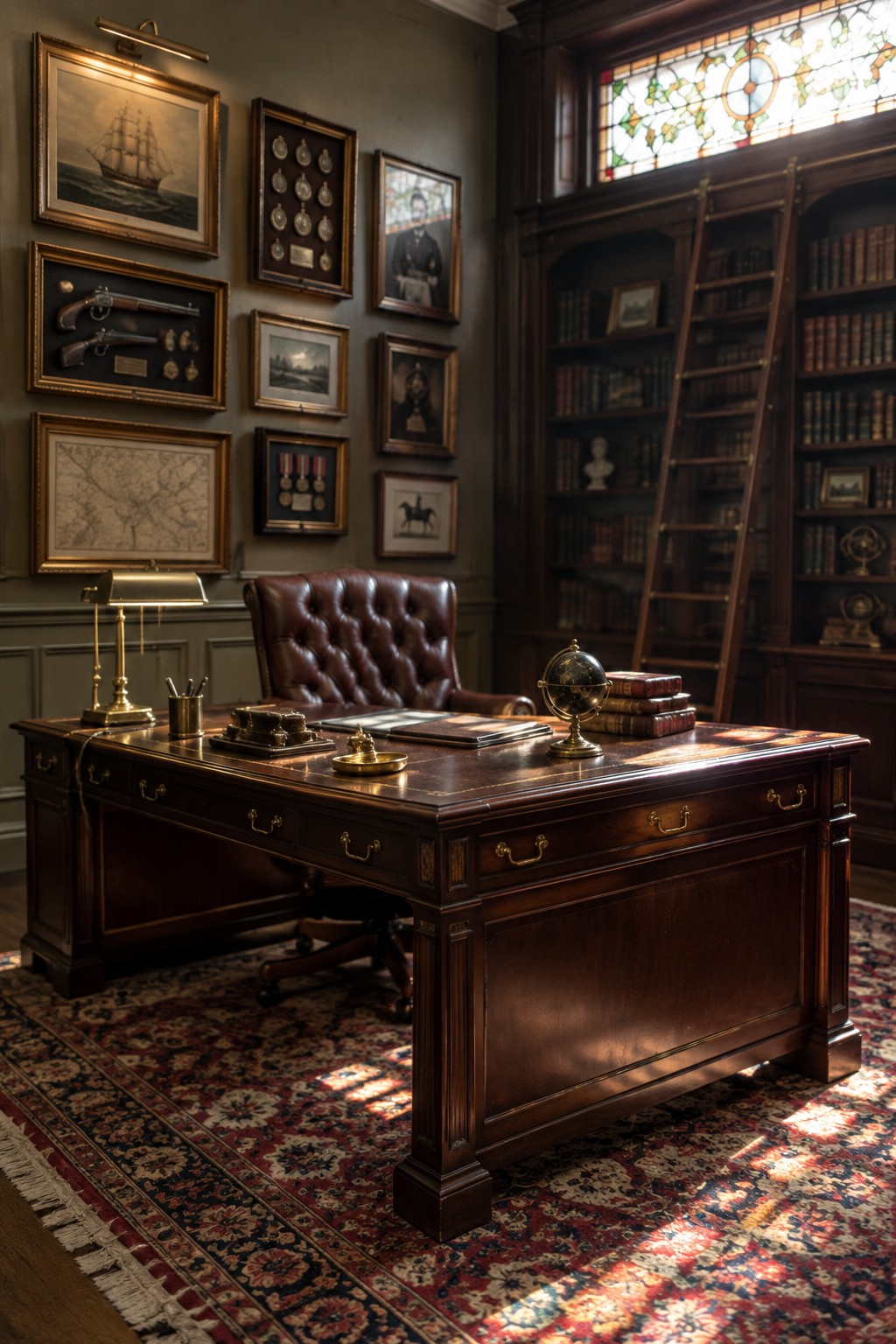
One approach that works well in a home office is filling the wall behind the desk with a mix of framed pieces and small collections. The variety in size and type keeps the arrangement from feeling flat, and it gives the space a personal touch that plain art alone might not provide.
This setup suits traditional or classic style offices where you already have a large desk taking up visual space. Group items loosely by theme or color rather than trying to make every piece match, and leave a bit of breathing room between clusters so the wall does not feel crowded.
Framed Maps Make A Simple Gallery Wall
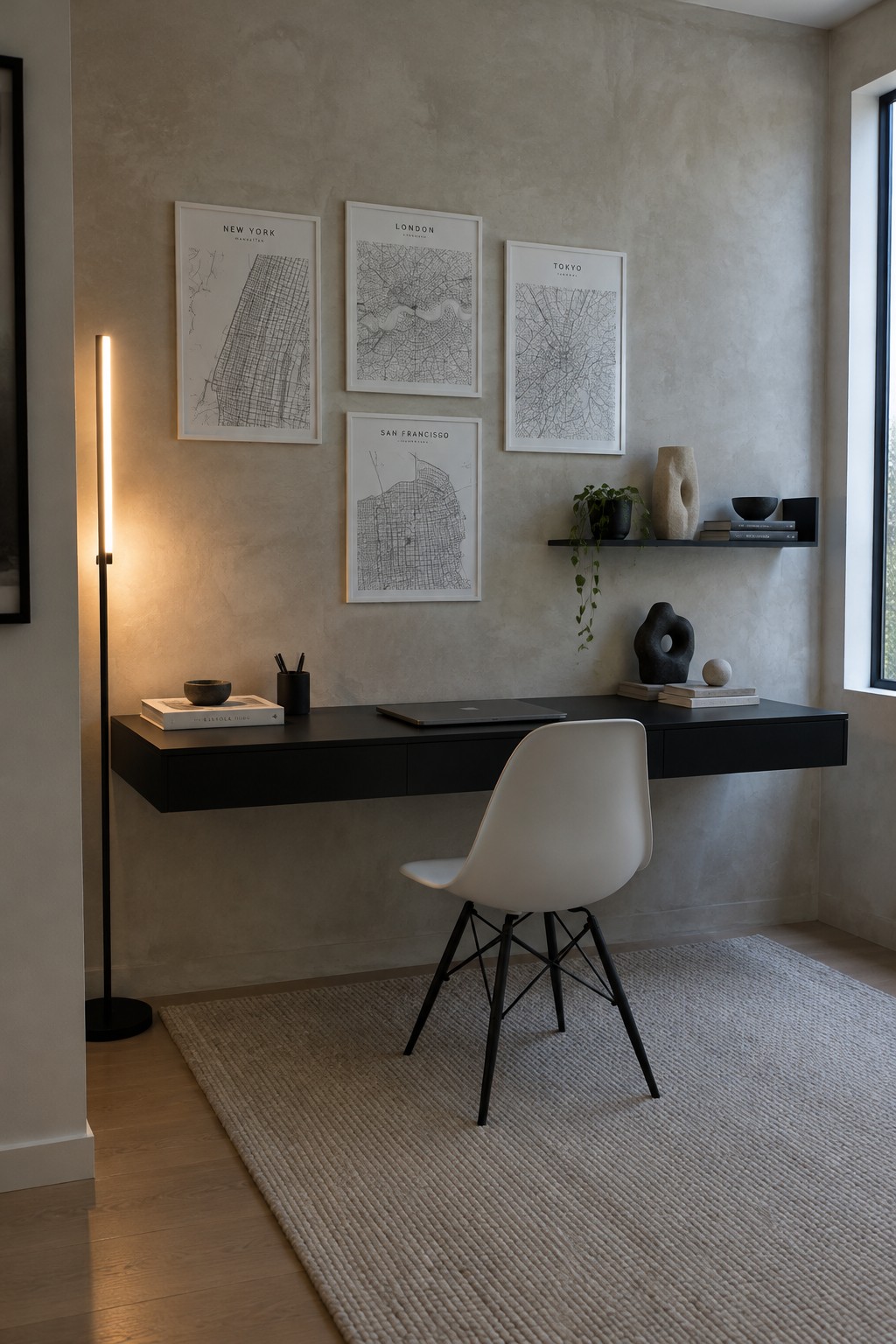
Many people turn to maps for gallery walls because the grid lines and clean layouts add interest without feeling busy. In a home office, this choice keeps the wall behind the desk looking organized while still giving the eye something to rest on during long work sessions.
This approach works best in smaller rooms with plain walls. Use four or five prints in matching frames, space them evenly, and hang the whole group at seated eye level so it stays visible without crowding the desk surface.
Gallery Walls With Botanical Prints
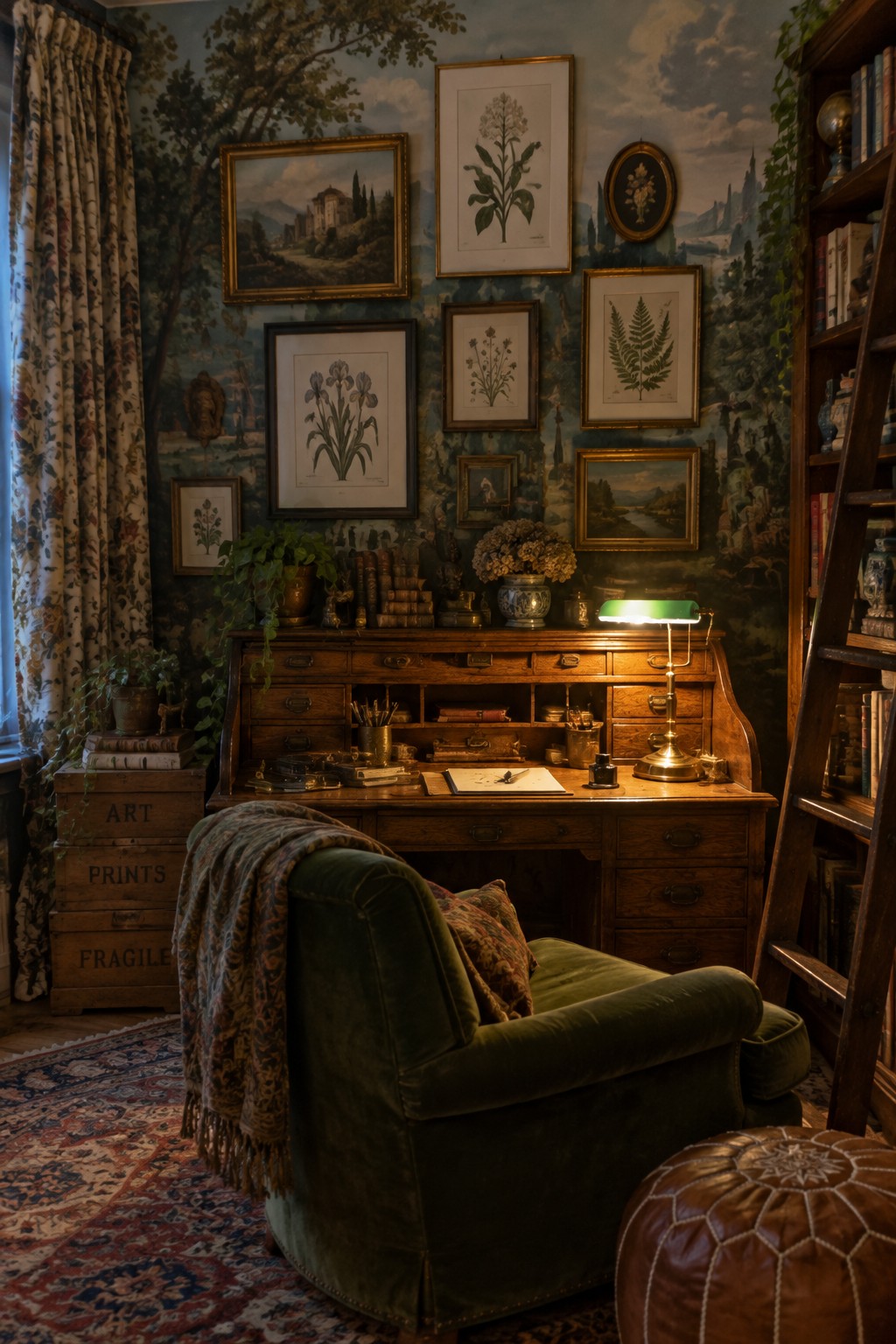
Many home offices end up with blank walls that feel unfinished. A simple gallery of botanical prints fills the space nicely and gives the desk area something to look at without adding clutter or bright colors.
This approach works best in rooms with wood furniture and older finishes. Stick to similar frame styles and let the prints vary in size so the wall feels collected over time rather than perfectly matched.
Mix Framed Art With Woven Baskets

Plenty of home offices stick to framed prints or photos above the desk, but adding woven baskets changes the feel without much effort. The baskets bring texture and round shapes that soften the straight lines of the frames, and they keep the wall from looking too flat or formal.
This idea works best in smaller rooms or offices with simple, light walls. Group two or three baskets with a few framed pieces, vary the sizes slightly, and keep the overall colors calm so the arrangement stays easy to look at during long workdays.
Gallery Walls That Work in Narrow Offices

A gallery wall gives the space right behind a desk some character without taking up any floor room. In a tight or narrow office, this keeps the area from feeling plain while the desk and chair stay the main focus for work.
It works best when the frames stay fairly simple and the arrangement stays a bit loose. This approach suits small homes or apartments where the office has to share space with other rooms and you want the wall to feel finished without adding more furniture.
Mix Tools Into A Gallery Wall
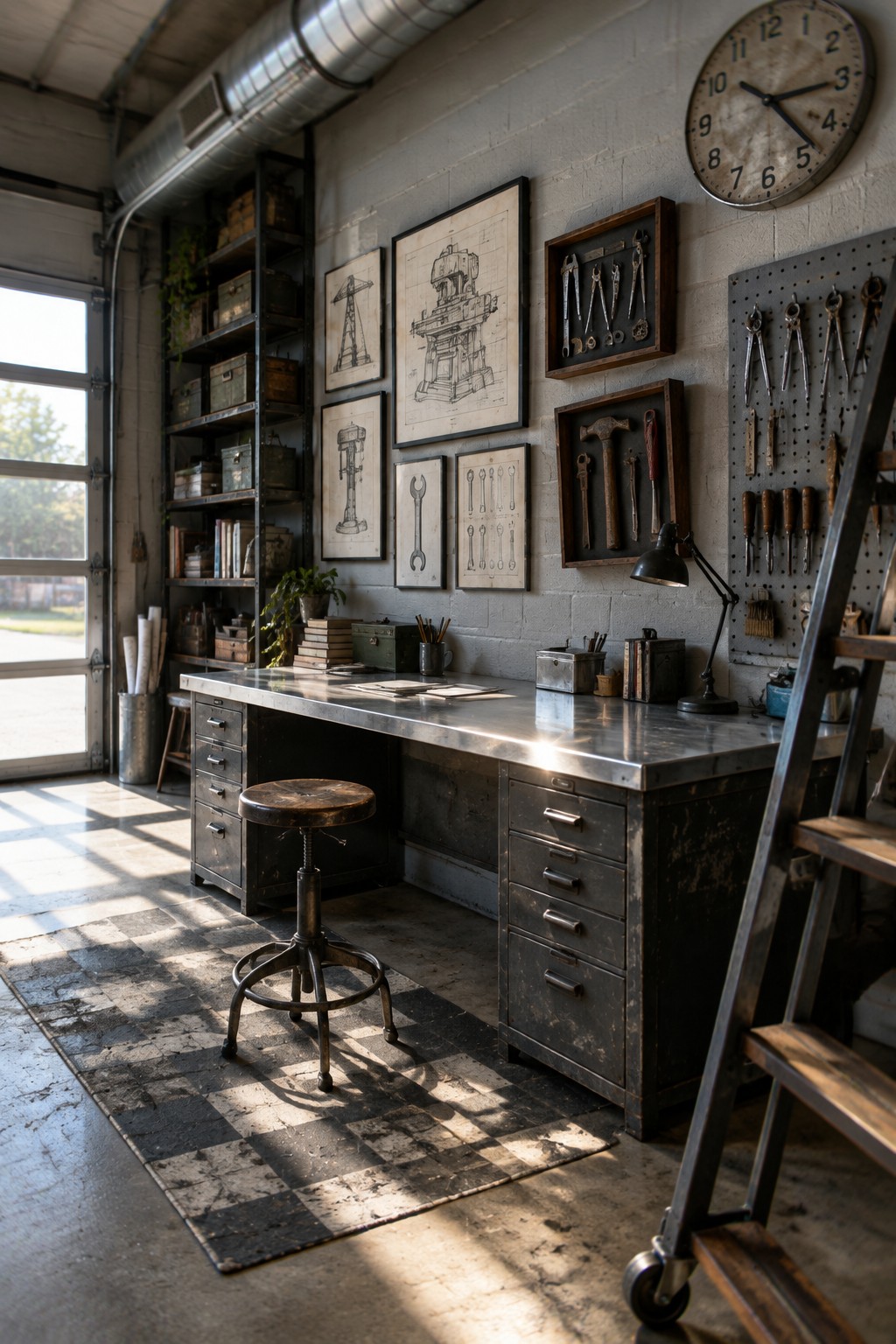
One way to make a gallery wall feel more useful is to bring in a pegboard with real tools alongside the framed prints. The mix keeps the wall from looking like just another set of pictures and turns it into something that shows what actually happens in the space.
This approach works best in a home office that doubles as a workshop or maker area. Keep the pegboard on one side of the desk and balance it with a few larger prints on the other so the wall stays organized but still has some breathing room.
Frequently Asked Questions
Q: How do I choose the right pieces for my gallery wall? A: Pick photos or art that you actually enjoy looking at every day. Mix in some personal shots with prints that match your office colors. This keeps the wall feeling like yours instead of just decoration.
Q: What if I can’t hang anything heavy on my wall? A: Use lighter frames and command strips instead of nails. Test the weight first on a small area. You can still create a full gallery without damaging the wall.
Q: How high should the bottom row sit above my desk? A: Leave about six inches of clearance (more if you have tall monitors). That way you won’t bump anything when you reach for things.
