


When setting up a home office the materials really shape how long I can sit there without the space starting to feel heavy.
Light wood keeps things bright even on overcast days and pairs well with furniture that does not crowd the floor.
I have found that sticking to fewer pieces often makes the room feel larger and easier to keep tidy through a busy week.
Simple choices matter most.
Testing one or two of these setups in my own room showed me which ones hold up once the laptop and papers are actually in place.
Light Wood Furniture for a Simple Workspace
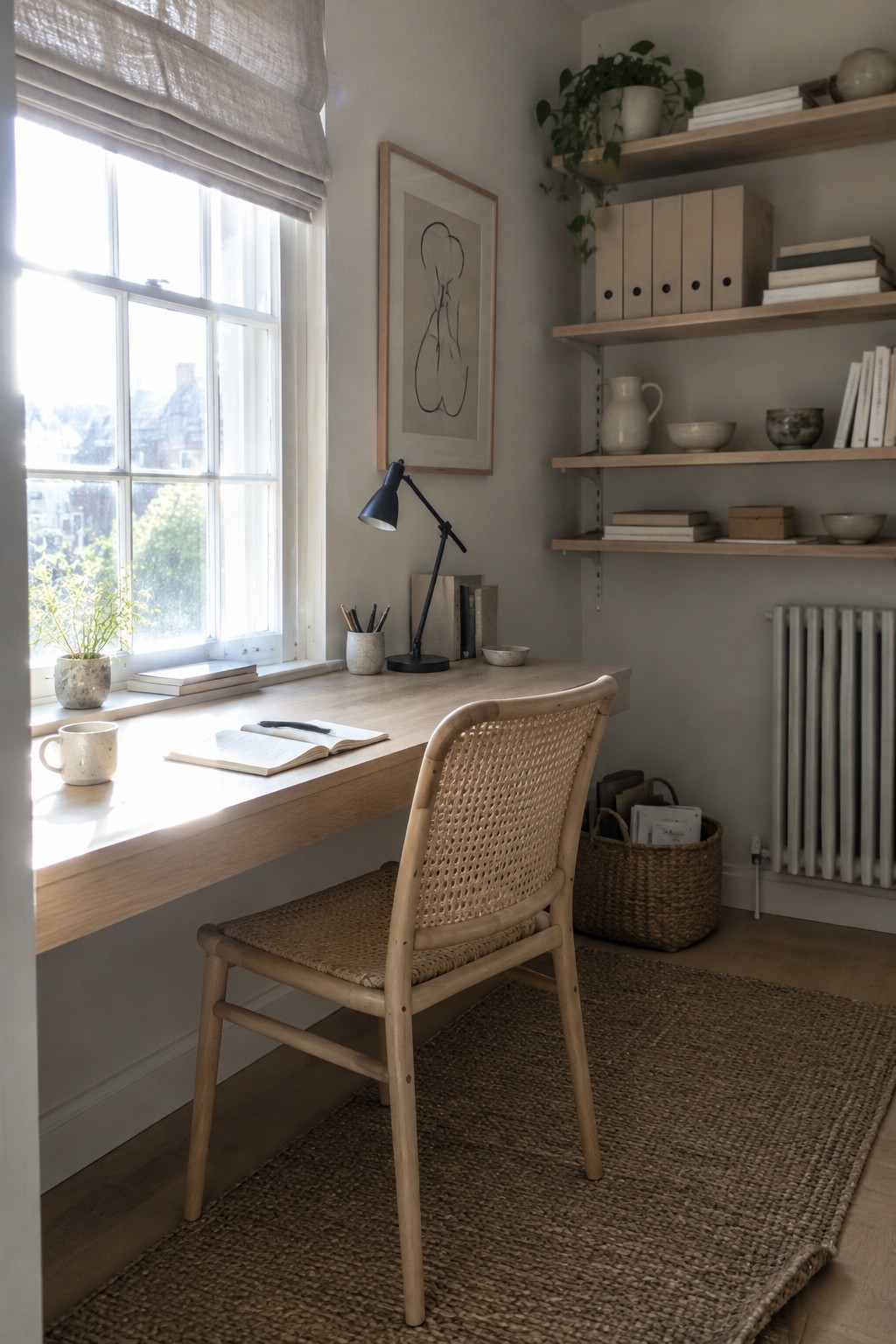
Light wood works well in a home office because it keeps the space from feeling heavy or closed in. The pale tone of the desk blends with the walls and floor, so the whole room stays bright even on days with less sun. A simple shape also helps. When the desk has clean lines and no extra trim, it is easier to keep the surface clear.
This approach suits smaller rooms or any space where you want the focus on work rather than decoration. Use one or two natural textures, such as a woven chair seat, and skip extra color. The result feels calm and easy to maintain over time.
Light Wood Built-ins for Attic Offices
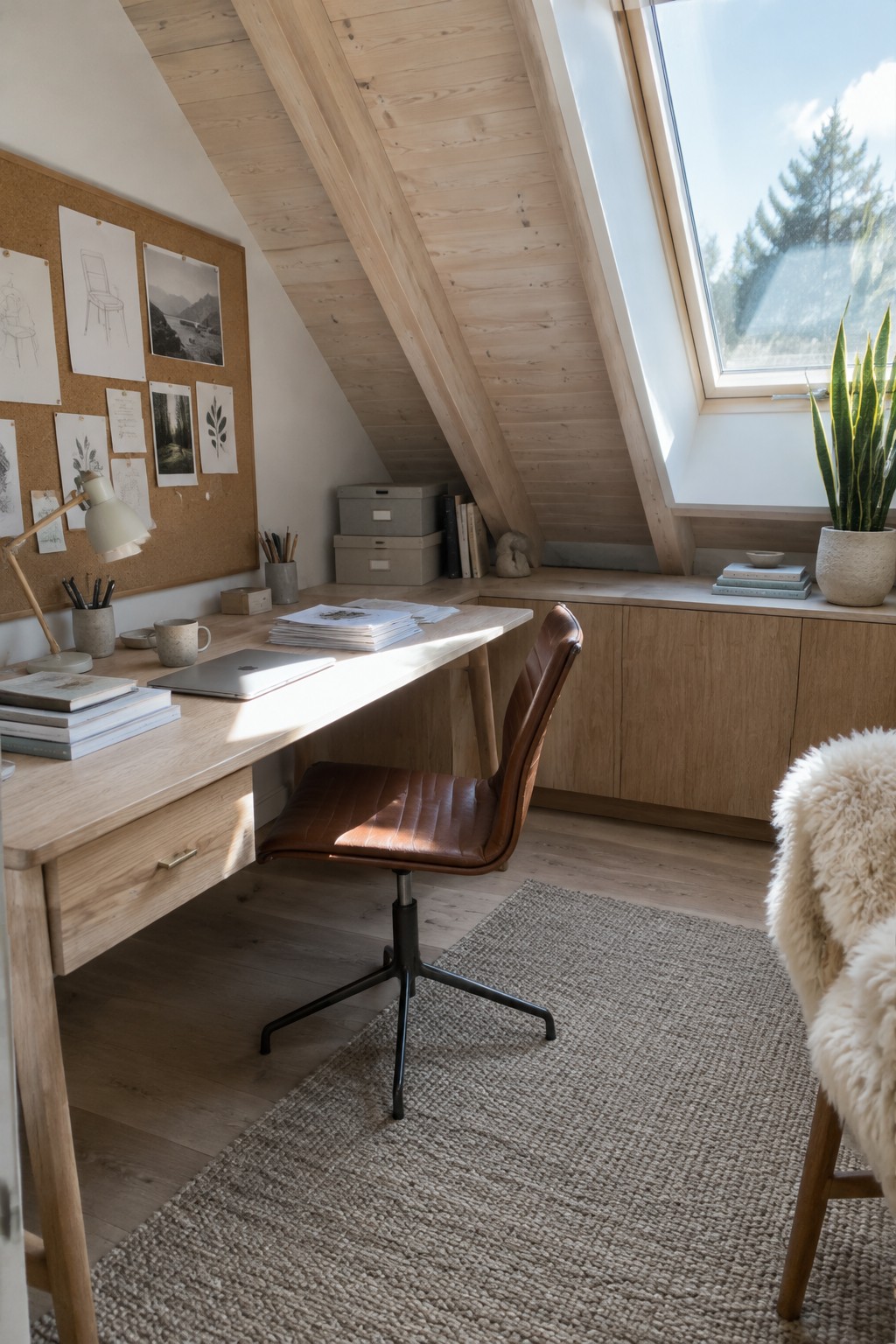
Light wood works especially well in attic offices because it keeps the space from feeling closed in. The pale tones on the desk, ceiling, and cabinetry reflect the light from the skylight and make the whole room feel connected rather than chopped up by the slope.
This approach suits homes where the office has to share space with storage or sit under low eaves. Keep the furniture simple and let the wood carry the look, rather than adding too many dark pieces that would make the room feel smaller.
Wall Shelves Add Storage Without Crowding The Floor

Many home offices feel tighter than they need to once you add a full bookcase or tall storage unit. Wall shelves solve that by using the space above the desk instead. They keep the floor open and make the room feel calmer and more open at the same time.
This works best in smaller rooms or spaces where you want to stick with light wood and simple lines. Place everyday items you reach for often on the lower shelves and leave the desk surface clear for actual work. Just watch the depth so nothing hangs too low over your chair.
Desk Along The Window

Placing a long desk right under the window works well because it turns the natural light into the main feature of the workspace. The continuous surface gives room to spread out without adding extra furniture that would make the space feel tight.
This idea fits smaller rooms or homes where you want the office to stay calm and simple. Keep the stools low and plain so they do not block the view or the light coming in.
Wall-Mounted Desks Keep The Workspace Feeling Open

A wall-mounted desk in light wood is a simple way to keep a home office from feeling crowded. It sits right against the wall so the floor stays clear, and the pale tone blends into the room instead of standing out.
This setup works best in smaller rooms or spaces that need to stay flexible. Pick a sturdy bracket system and a chair that slides underneath when you are done for the day.
Light Wood Desks For Smaller Workspaces

A light wood desk stands out because it keeps the space feeling open even when the room is tucked under the eaves. The natural tone blends with the walls and floor without adding weight, and it works with just a few simple pieces around it.
This approach suits homes that want a calm spot for daily work without a lot of visual clutter. Place the desk near a window for light, add one or two natural textures like a woven seat, and leave most of the surface clear so the wood itself stays the focus.
Light Wood Furniture Keeps A Home Office Feeling Open
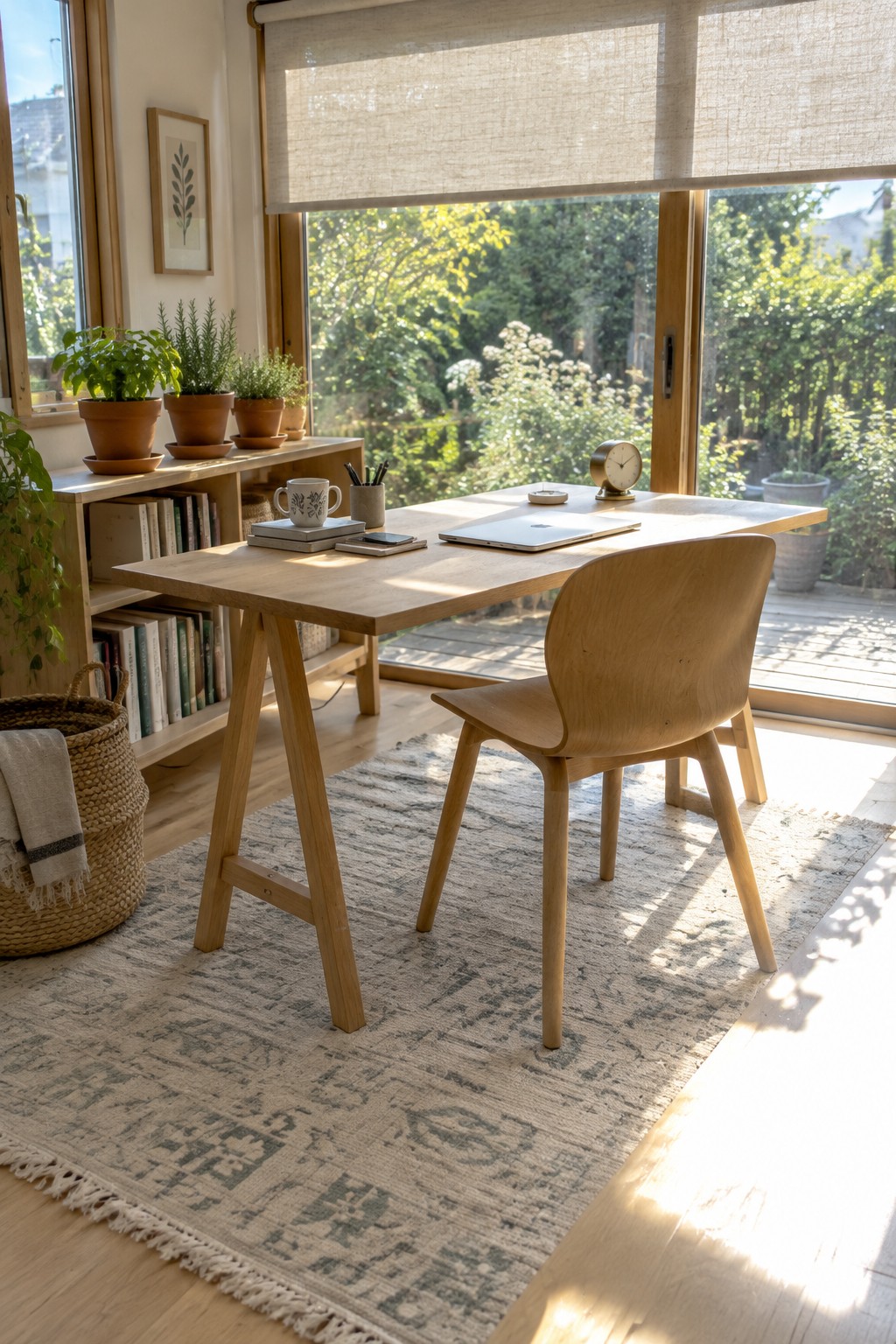
Light wood desks and chairs work well in home offices because they avoid the heavy look that darker furniture can bring. The simple shape and pale tone let the room stay bright, which helps the space feel bigger even when there is not much room to spare.
This approach suits smaller homes or rooms that double as offices. Keep other pieces to a minimum so the wood stays the main focus and the desk area does not start to feel crowded.
Light Wood Desk With Open Shelving
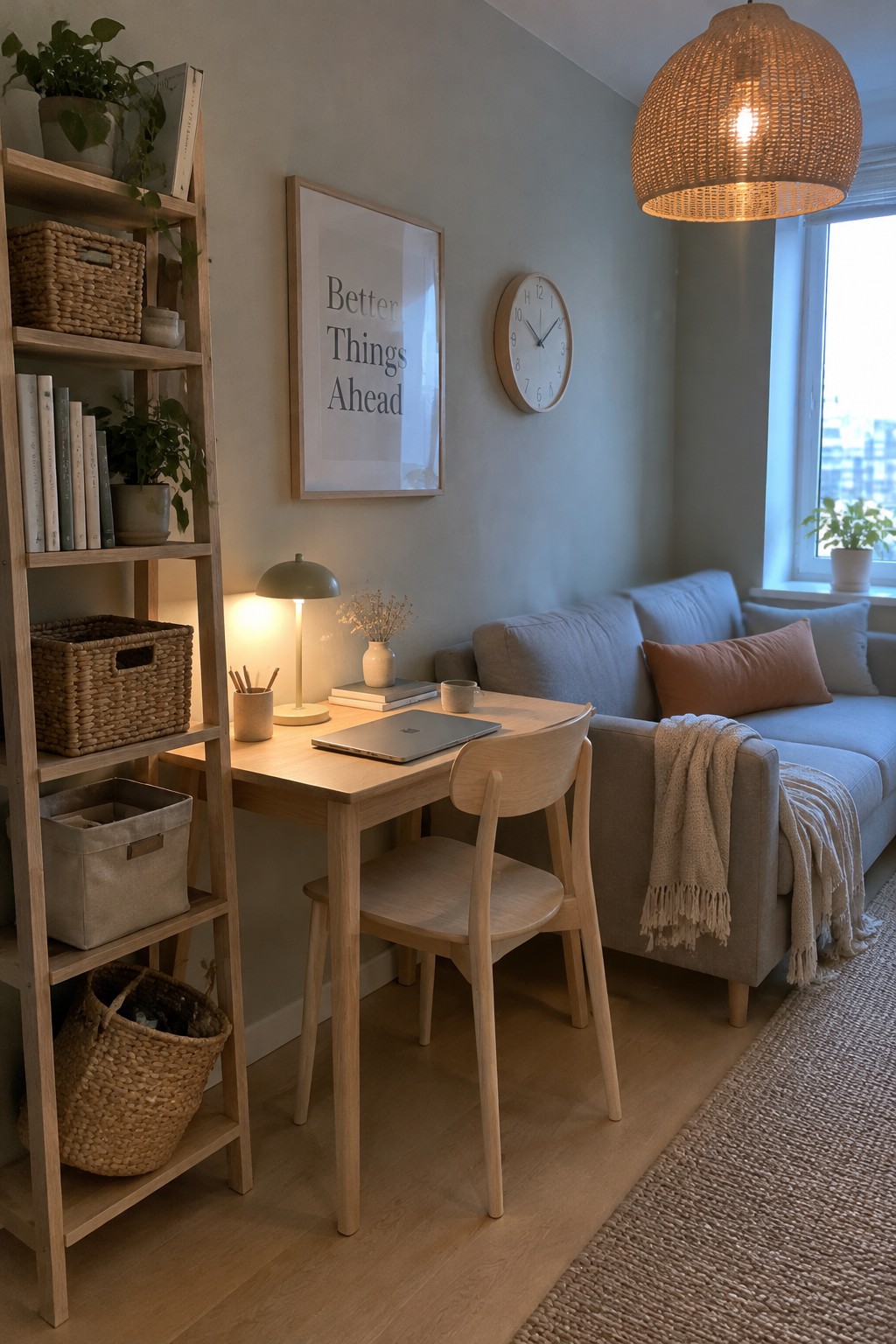
A light wood desk paired with tall open shelving keeps a workspace feeling open and easy to use. The wood tones match across the pieces, which helps the setup blend into the rest of the room without adding visual weight. This approach works especially well when the office shares space with a living area.
Place the shelving unit against the same wall as the desk so everything stays within reach. Use baskets on the lower shelves for items you want out of sight, and keep the top surfaces clear except for daily essentials. This setup suits smaller homes where a separate room is not available.
Fold Down Desks Keep Small Offices Practical

A fold down desk gives you a real workspace without claiming the whole room once the day is over. In smaller homes this kind of desk keeps the floor clear and the space feeling open instead of cramped.
It works best in spare bedrooms, hallways, or any corner that needs to serve more than one purpose. Choose a sturdy bracket system and a light stool that slides underneath so the area stays usable when the desk is folded away.
Built-Ins Make Small Spaces Work As Offices
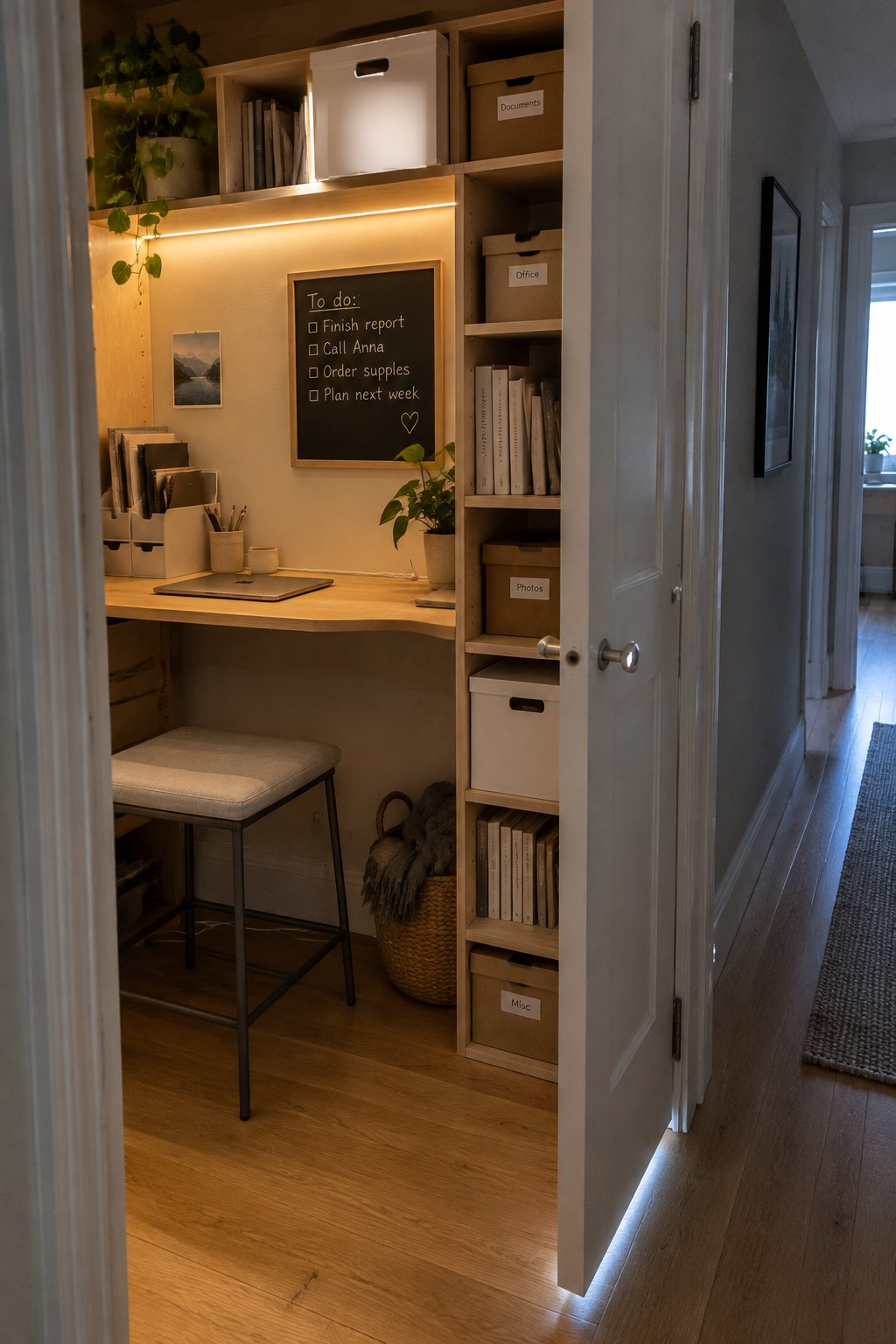
Built-in shelves and a desk can turn a closet or narrow alcove into a working office without taking over the rest of the room. The light wood keeps the area from feeling closed in, and the simple layout means everything stays within reach.
This setup suits homes where a full office room is not an option. Use open shelves for things you reach often and closed bins for the rest, and add a basic stool so the space does not feel too heavy.
Light Wood Desks Keep a Home Office Feeling Open
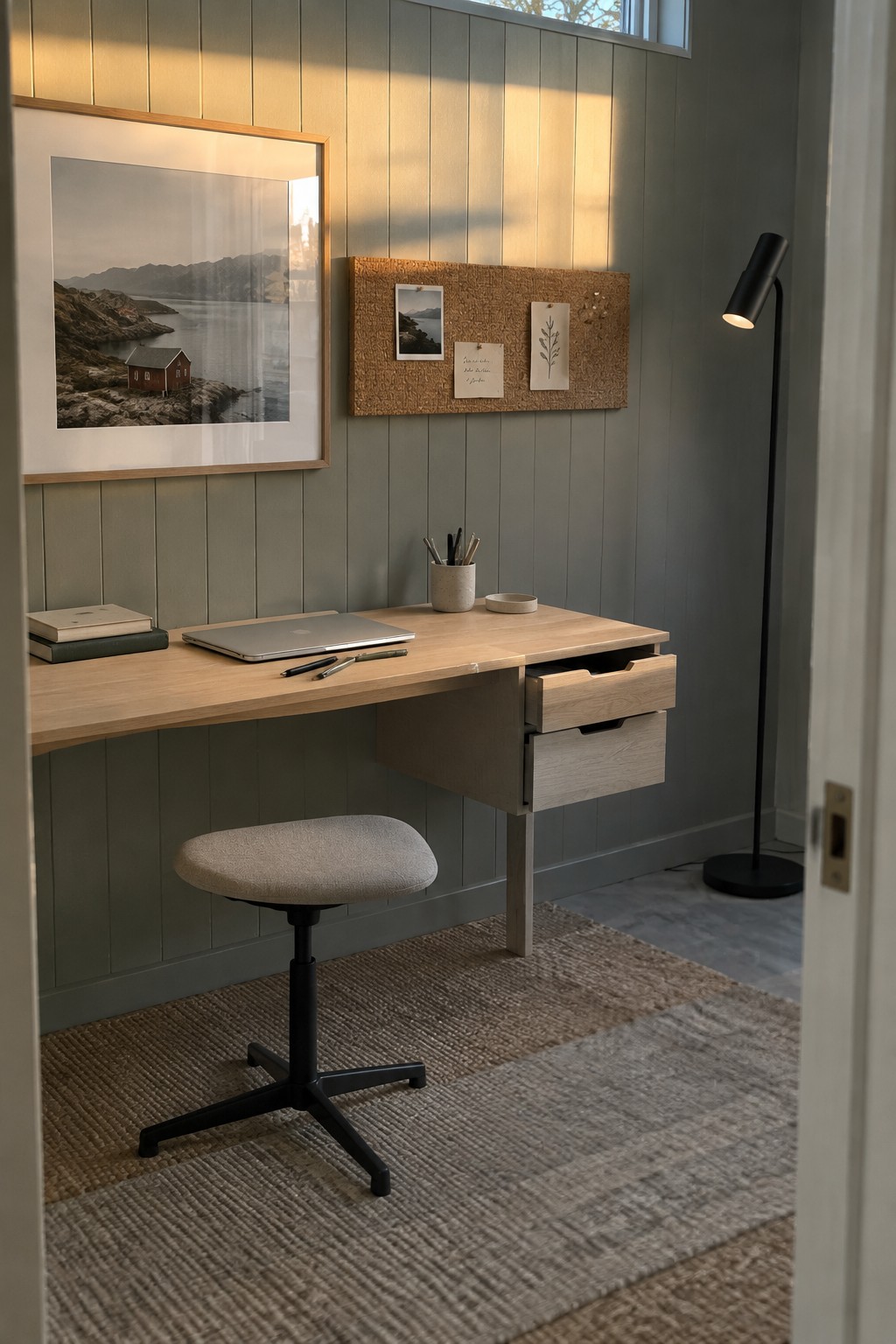
A light wood desk with simple lines and built-in drawers works well when you want the room to feel calm and uncluttered. The natural tone of the wood adds a bit of warmth against a soft gray wall, and the low profile means the space does not feel crowded even with a few everyday items on top.
This setup suits smaller rooms or anyone who prefers to keep the focus on the work itself rather than the furniture. It pairs best with plain seating and minimal extras so the desk stays functional without taking over the room.
Shape Your Desk to Follow a Bay Window
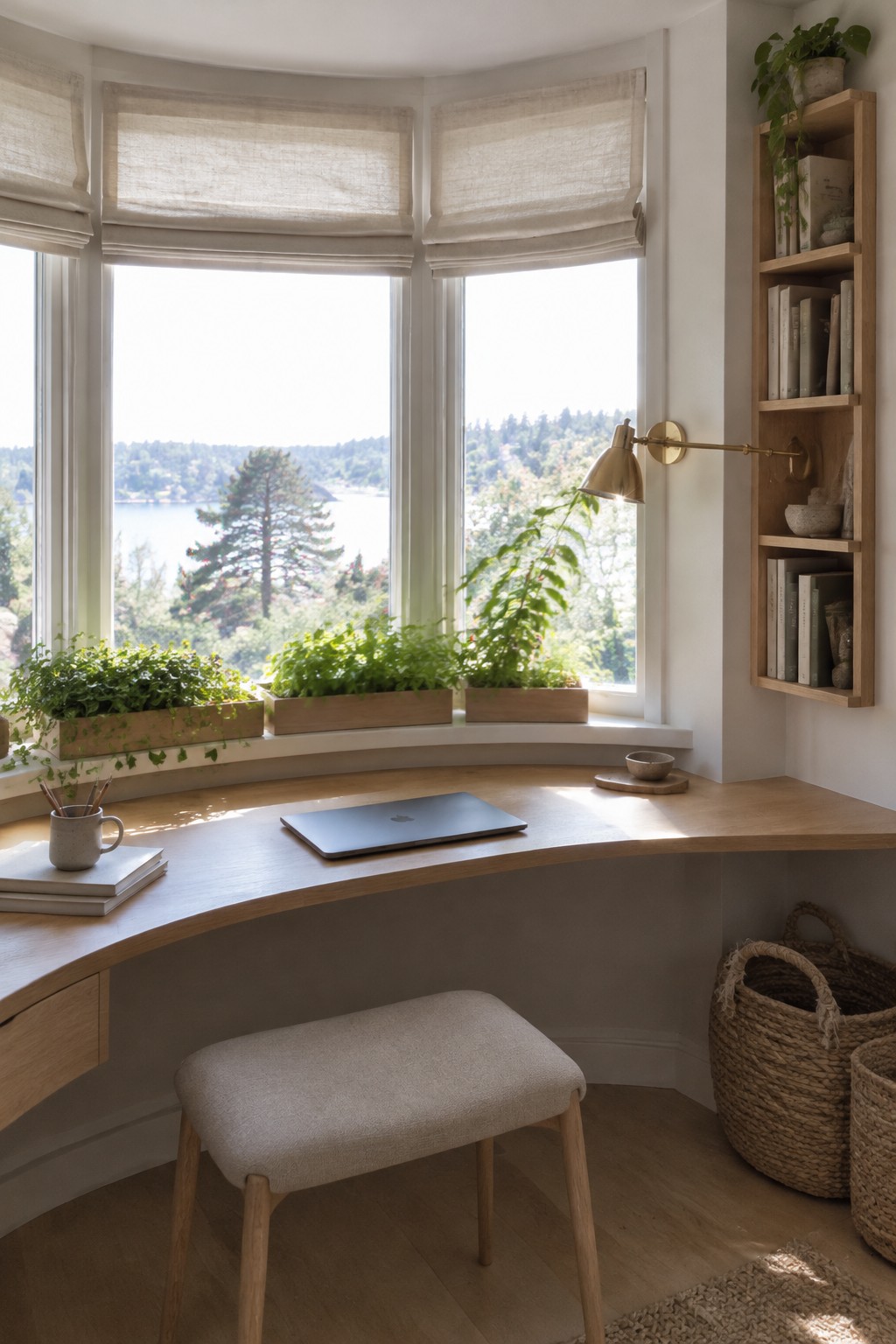
A curved desk that follows the line of a bay window makes good use of an awkward spot. It turns the window into the main workspace instead of leaving the area empty or trying to force a straight desk against the curve. The light wood keeps the whole thing feeling open, and the simple stool tucks away easily when you need the floor space.
This works best in smaller homes or rooms where you want to keep the furniture minimal. A wall shelf on one side holds books and a few small items without crowding the desk. Skip extra storage pieces if the window already gives you enough surface area.
Light Wood Corner Desk With Simple Storage
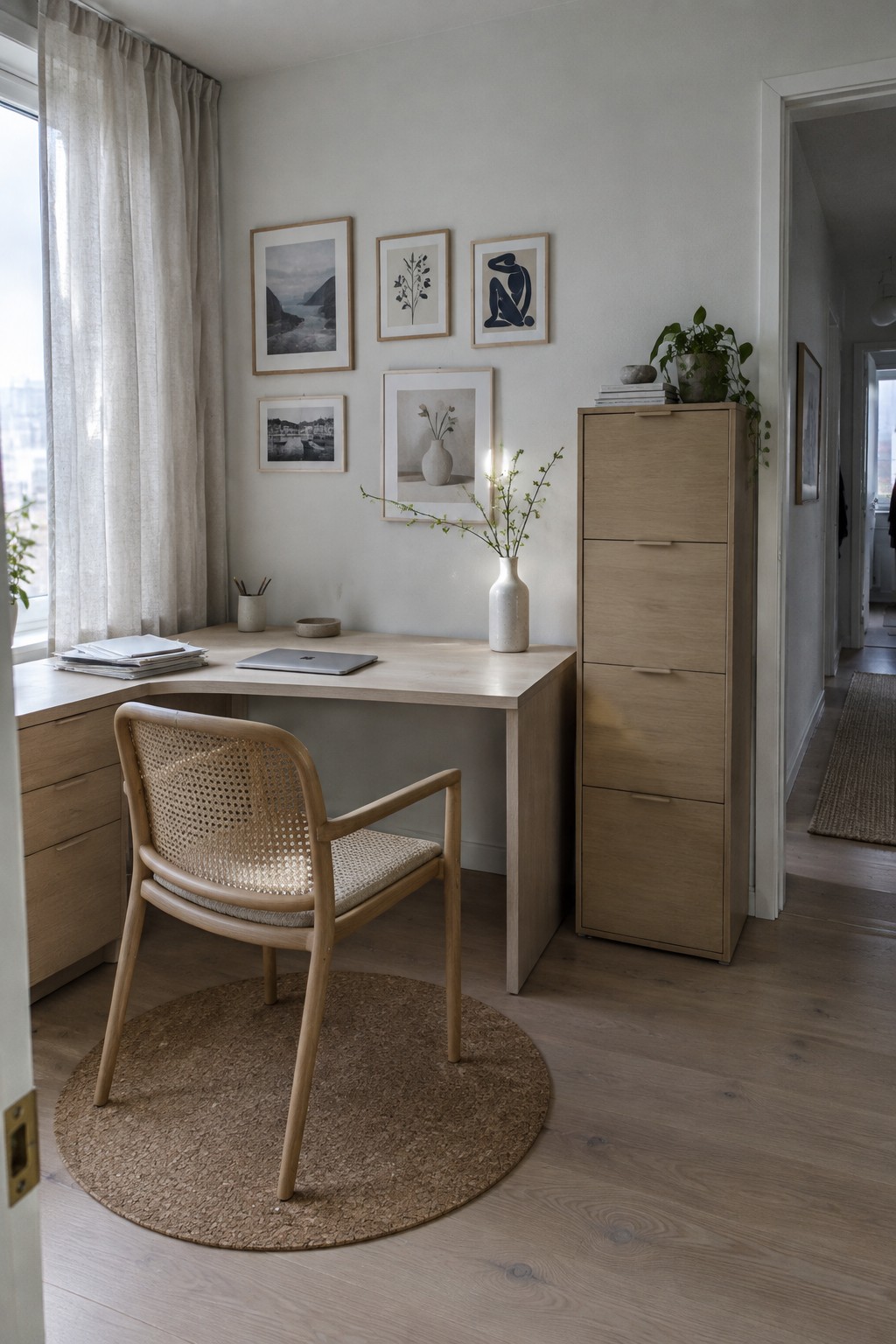
Light wood works especially well in a home office because it keeps the room from feeling closed in. Placing the desk in the corner and adding a tall matching cabinet beside it gives you plenty of surface area and storage without crowding the floor.
This arrangement suits smaller rooms or open-plan spaces where the office needs to feel part of the home rather than a separate zone. Keep the shapes simple, add one or two natural textures, and let the wood tone do most of the work.
Keep the Desk and Chair Simple
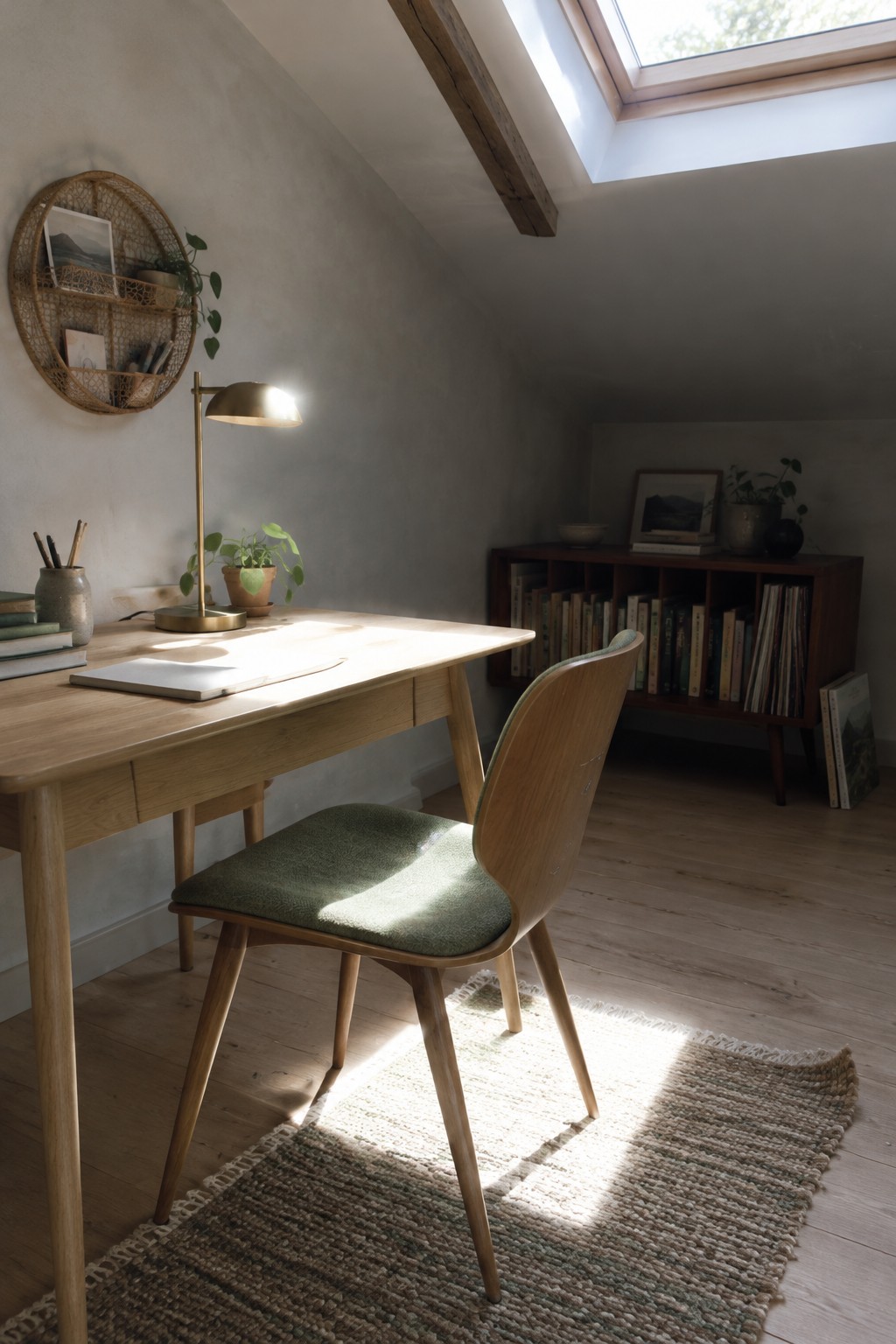
Light wood furniture works well in a home office because it does not crowd the room. A single desk and chair in a pale tone let the space feel open, especially when the ceiling slopes or the room is on the smaller side.
This approach suits most homes that need a quiet workspace without extra pieces getting in the way. Place the desk near a window or skylight, add a low shelf for books, and stop there. The result stays practical and easy to keep tidy.
Light Wood Furniture For A Simple Workspace
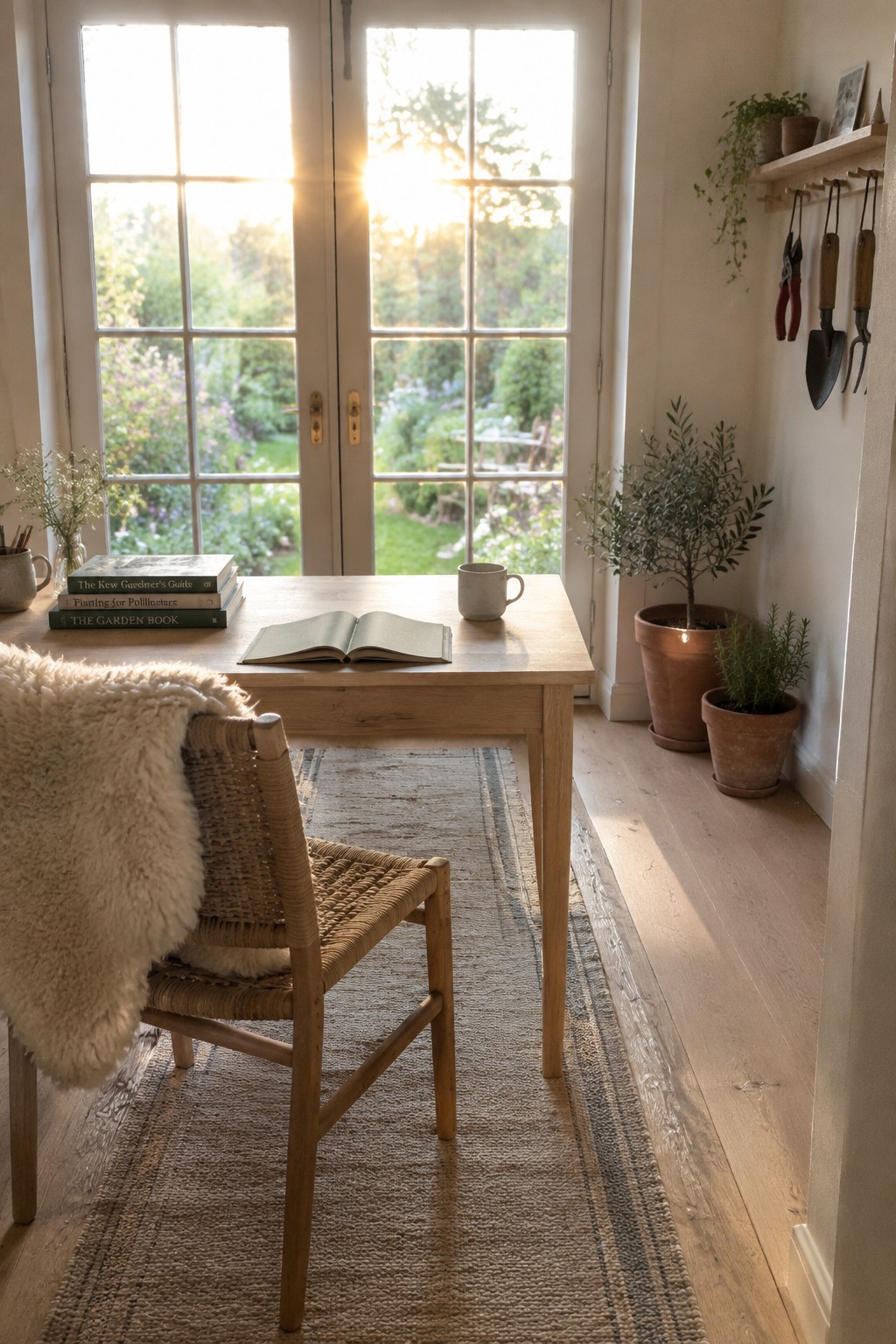
Light wood furniture gives a home office an easy, open feel without much effort. The pale tones reflect light from nearby windows and keep the room from feeling closed in, which works especially well in smaller spaces or rooms that double as other things during the day. A single desk and chair in the same finish can be enough.
This approach suits homes that already have wood floors or trim, since the pieces blend rather than stand out. Keep accessories low and useful so the wood stays the main material you notice. Avoid crowding the surface with too many items if you want the calm look to last.
Built-In Desks That Blend With The Walls
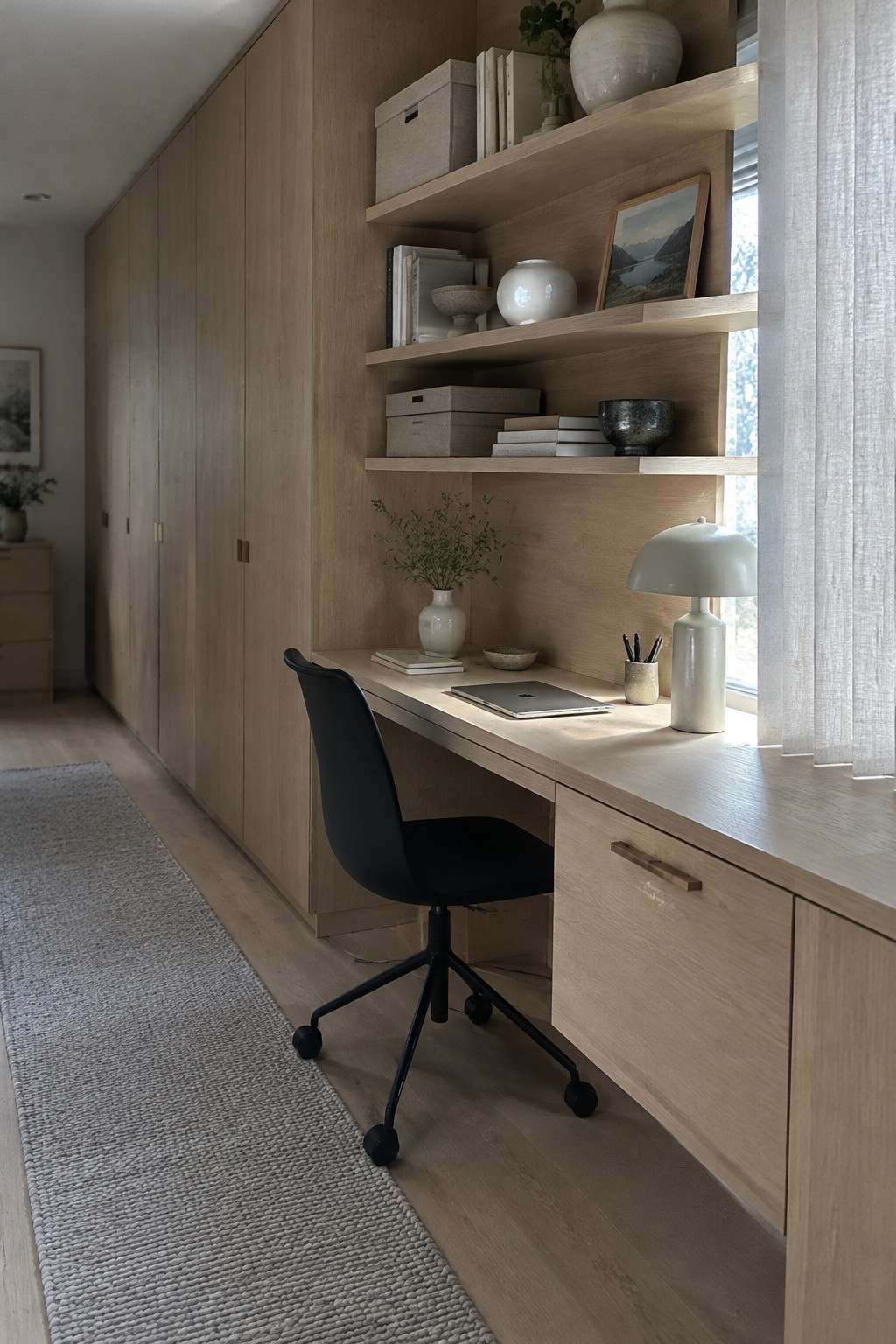
One idea that works well in Scandinavian home offices is building the desk right into the surrounding cabinetry using the same light wood. It removes the visual break of a freestanding desk and keeps the whole wall looking calm and continuous.
This setup suits smaller rooms or anyone who wants storage and workspace without crowding the floor. Match the desk height to standard chair clearance and leave plenty of open shelf space above so the area still feels light.
Light Wood Desks for Small Corners
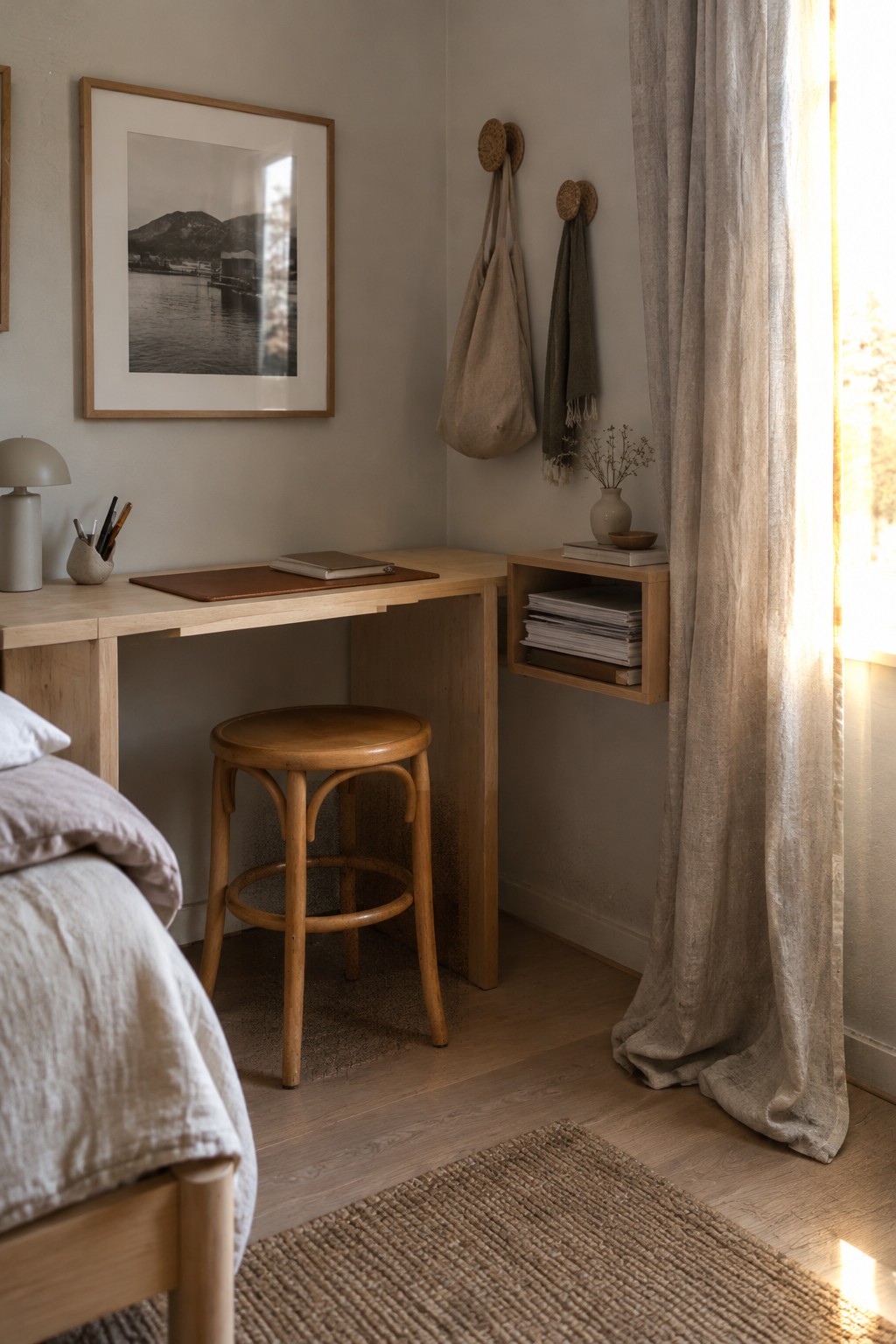
Light wood desks work well when you want a workspace that does not take over the room. The pale tone blends into the walls and floor, so the desk feels like part of the space rather than a heavy addition.
This setup suits bedrooms or guest rooms where you need a place to work but still want the room to feel restful. Keep the stool simple and round so it tucks away easily, and limit the surface to just a few daily items.
Long Wooden Desks Keep Small Offices Feeling Open
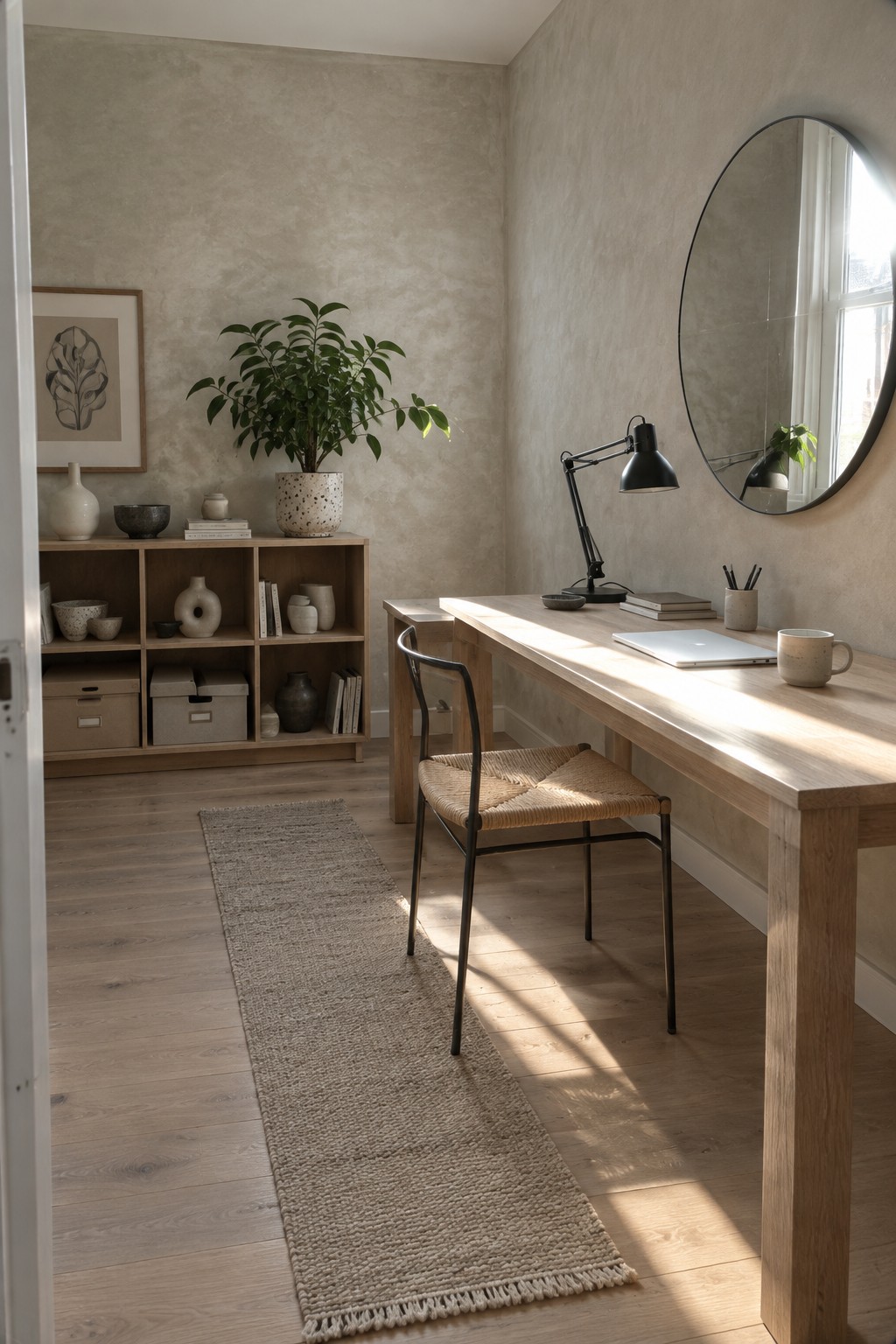
A long desk along one wall gives you real workspace without crowding the room. The light wood stays bright under natural light and pairs easily with simple chairs and open storage nearby. It avoids the boxed-in look that shorter or bulkier desks can create.
This works best in modest rooms where you want the space to feel calm rather than crowded. Keep the surface mostly clear, choose a lightweight chair, and let the wood tone carry the warmth. It suits Scandinavian homes that rely on clean lines and everyday function over heavy furniture.
Built-In Desks That Use Vertical Wood Slats
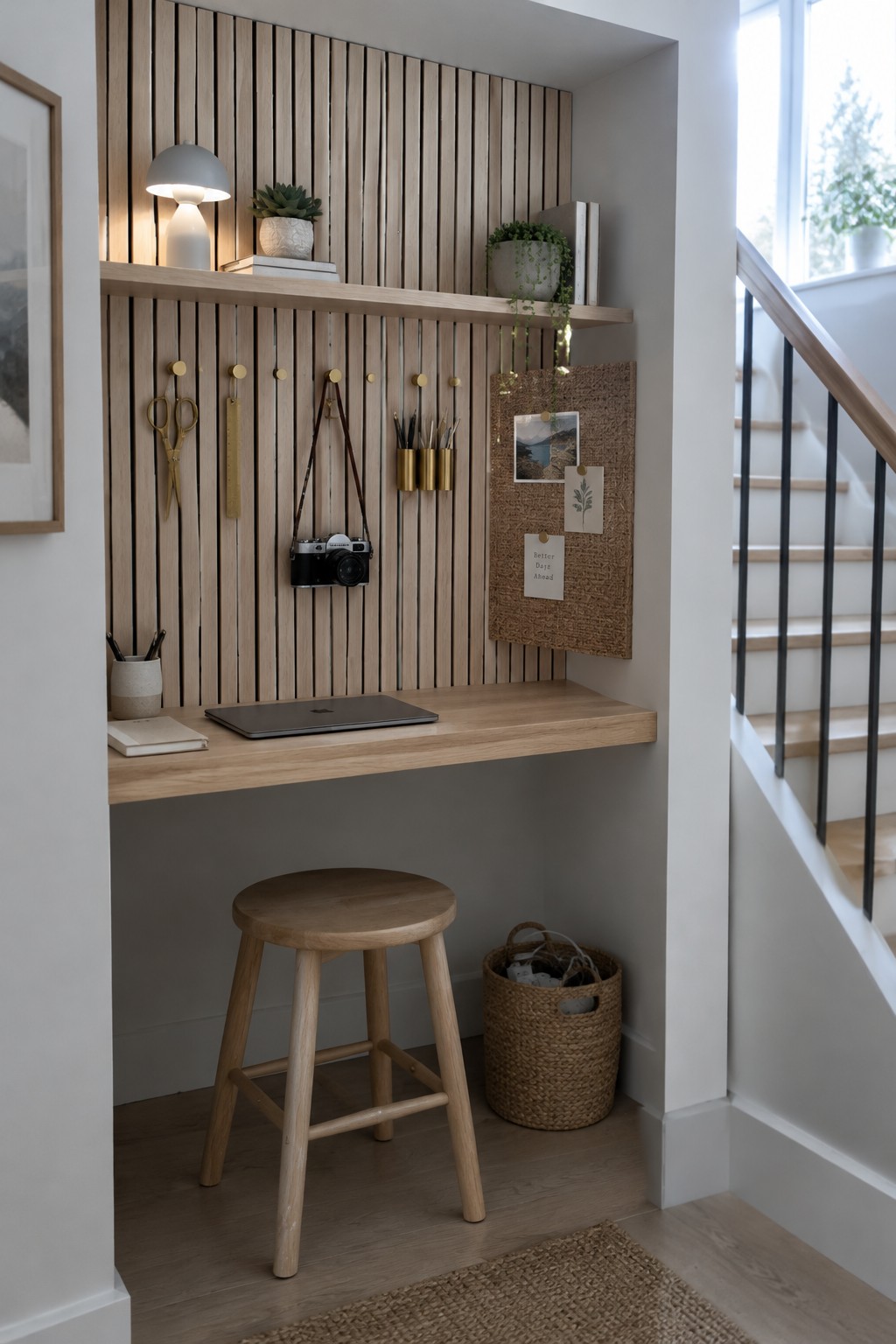
Vertical wood slats on the wall can turn a narrow spot into a proper workspace without making the room feel crowded. The slats give the area some structure and a bit of texture while still keeping the overall look light and simple.
This setup works well in homes that need to fit an office into leftover space like under a staircase. A floating desk keeps the floor open, and you only need a basic stool to make the spot usable.
Pegboard Storage Keeps Supplies Organized And Visible

A pegboard above the desk turns an empty wall into useful storage without adding bulk. Bins hang right where you need them, so crayons, markers, and paper stay in reach while the surface below stays clear for work.
This idea fits well in a family room or small home office where kids do crafts or homework. It works best with light wood furniture and a simple color palette so the wall stays calm rather than busy. Keep the bins shallow and swap contents as needs change.
Built-In Shelving For Simple Storage
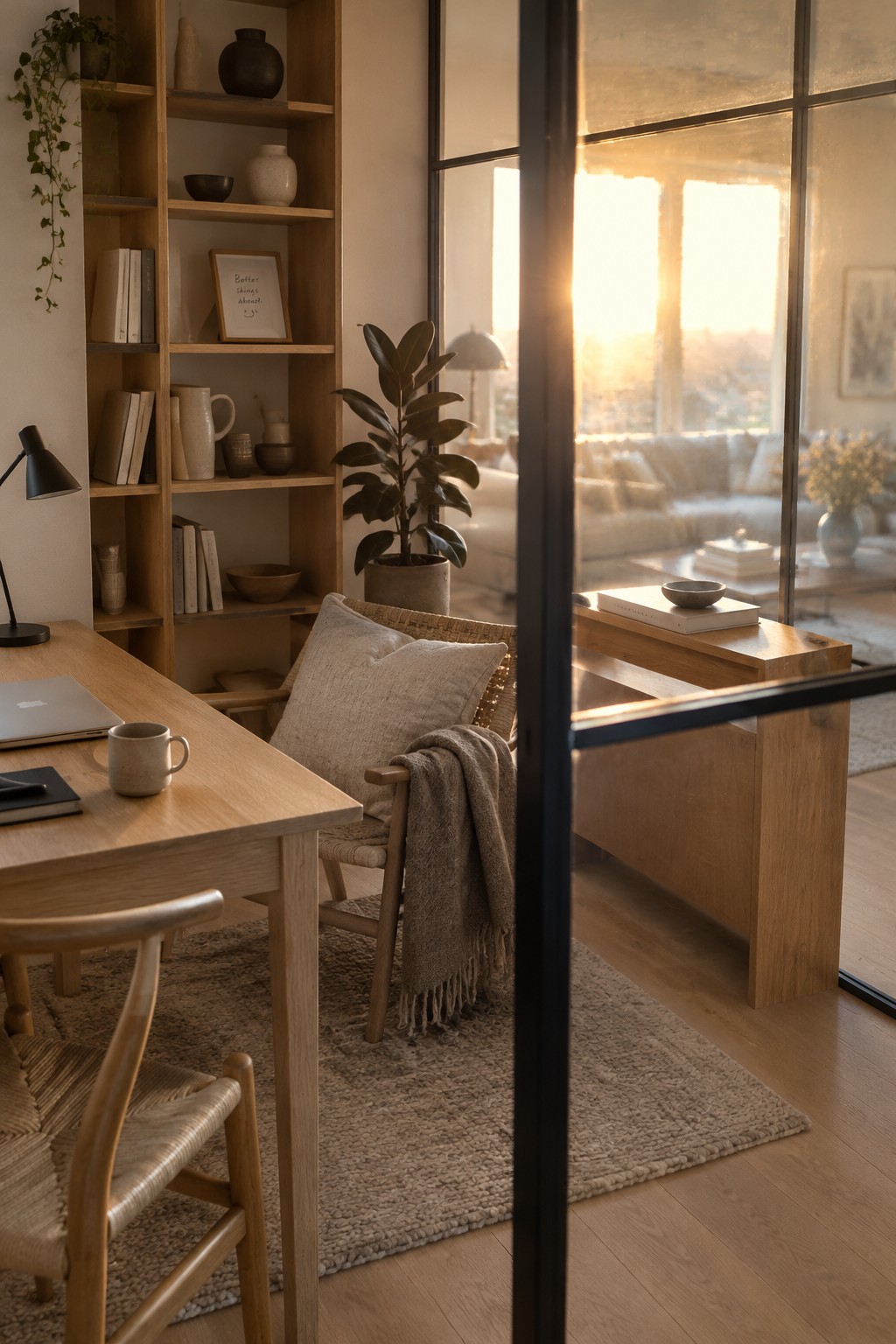
Built-in shelves work well in a home office because they give you room for books and a few small items without adding more furniture to the space. The light wood ties the desk and shelves together, so the whole area feels open and easy to keep tidy.
This setup suits smaller rooms or anyone who wants storage that does not take over the room. Keep the shelves lightly filled and let the wood grain show through.
Creating A Workspace On The Balcony

A small balcony can work as an office when the furniture stays light and simple. Light wood pieces like a narrow wall desk and a folding chair keep the space open and easy to move around in, while still giving you a solid spot to sit and focus.
This setup suits apartments or homes where indoor space feels tight. Keep the pieces minimal so the balcony does not get crowded, and choose materials that handle a bit of weather without extra fuss.
Built-In Shelving For Small Workspaces

A built-in desk and shelving unit tucked into an alcove makes good use of otherwise wasted space. Light wood keeps the whole setup feeling open rather than heavy, which works well in smaller homes where every corner counts.
This approach suits apartments or modest houses that need a quiet spot without dedicating an entire room. Keep the stool simple and the surface clear so the nook stays functional instead of cluttered.
Light Wood Desks With Leather Chairs

A light wood desk paired with a leather swivel chair keeps the workspace feeling open and easy to use. The natural tone of the wood stays bright while the leather adds a bit of comfort that makes long hours at the desk more bearable.
This combination works best in rooms that already lean on simple lines and natural materials. It suits smaller offices where you want the desk to take center stage without crowding the space or adding extra visual noise.
Frequently Asked Questions
Q: My walls are already a soft gray. Will that still work with light wood pieces?
A: Soft gray pairs nicely with light wood because it keeps the room calm. Choose furniture in pale oak to brighten things up. Add a few white accents if the gray feels too heavy.
Q: How can I hide my printer and other gear without adding bulky cabinets?
A: Tuck the printer inside a simple wood credenza that matches your desk. Use a cord organizer to keep wires out of sight. This maintains the clean lines of the Scandinavian style.
Q: What if I need a bigger desk for two monitors but want to stay simple?
A: Pick a long narrow table in light wood instead of a heavy desk. Place it against the wall to save space.
