

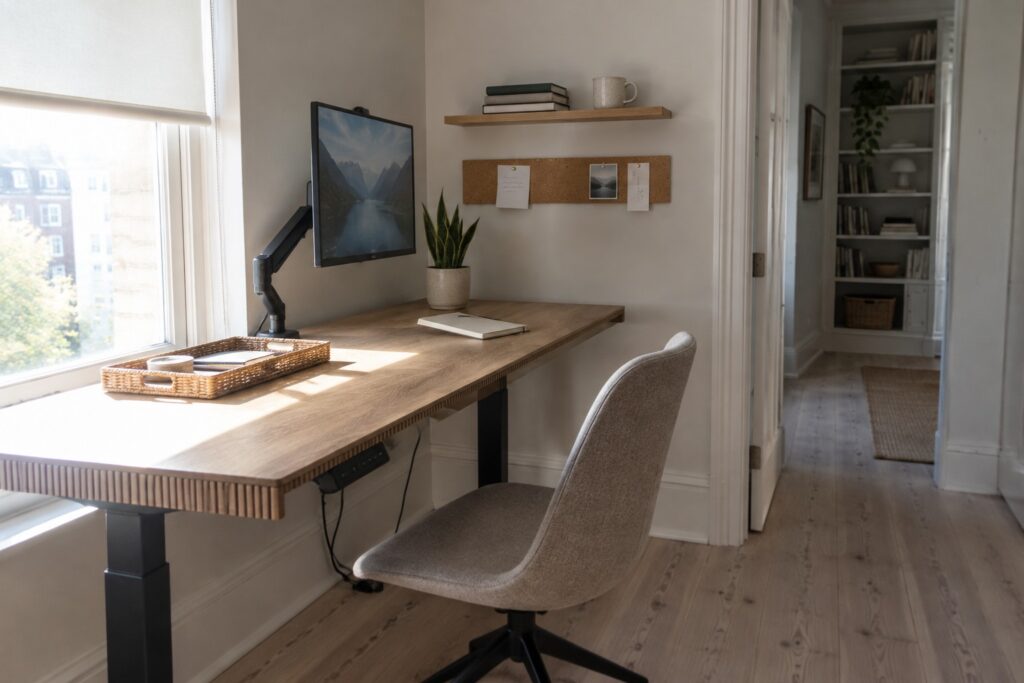
When I switched to a standing desk I quickly realized that the extra movement made every extra cable and notebook feel twice as noticeable in the room.
The setups that actually stay usable are the ones where I can adjust the height without knocking anything over or losing my workflow.
Clutter builds fast otherwise.
Over time I have learned to keep only the items I touch every hour on the surface and store the rest within arm’s reach but out of sight.
Testing small adjustments like that has helped me figure out which ideas hold up in a real home office rather than just looking clean in photos.
Mount Wall Storage To Keep The Desk Surface Clear
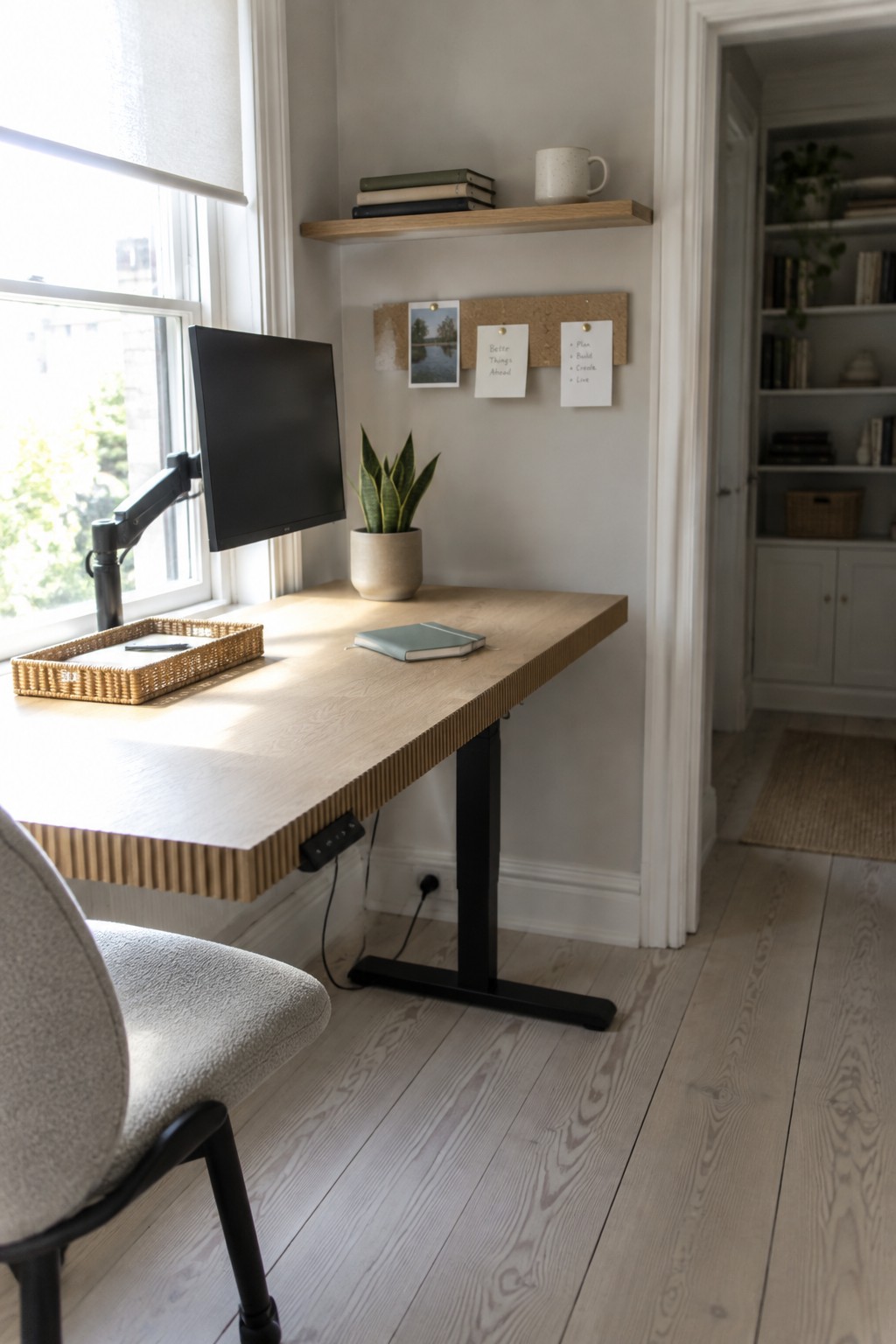
A standing desk stays more useful when the surface stays open. Putting a floating shelf and a small corkboard on the wall above it moves books, notes, and small items off the desk without losing easy access.
This setup works best in smaller rooms or shared spaces where extra furniture would crowd the floor. Keep the items on the wall light so the desk can adjust up and down freely and the whole corner stays simple.
Use an Ottoman With Your Standing Desk
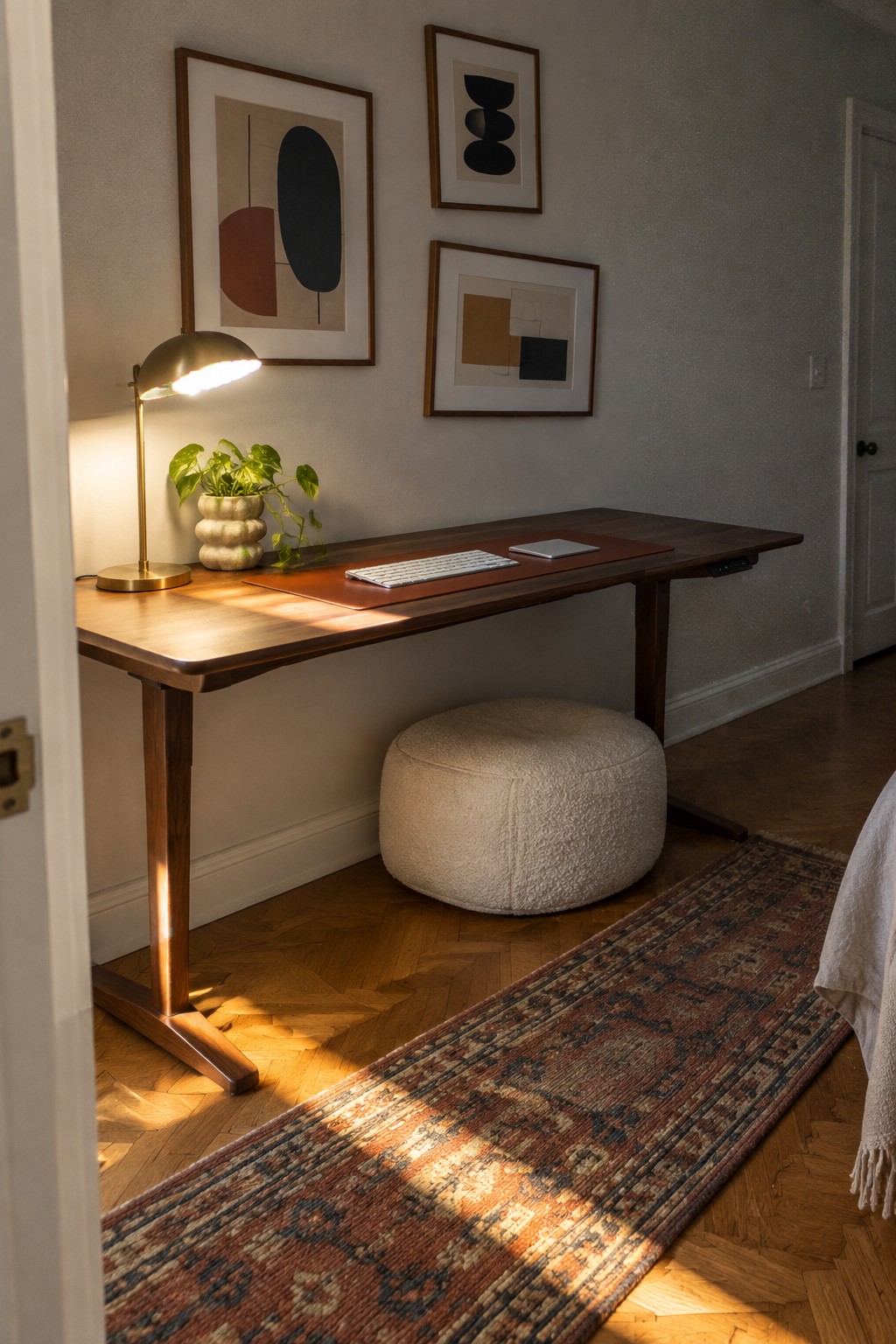
A full office chair often adds bulk and visual noise around a standing desk. An ottoman gives you a place to sit for short stretches while staying low and out of the way when you stand.
This setup works best in smaller rooms or shared spaces where you want the desk area to feel open. Choose a neutral fabric so the ottoman does not compete with the desk or the rest of the room.
Keep Surfaces Clear With Under-Desk Storage
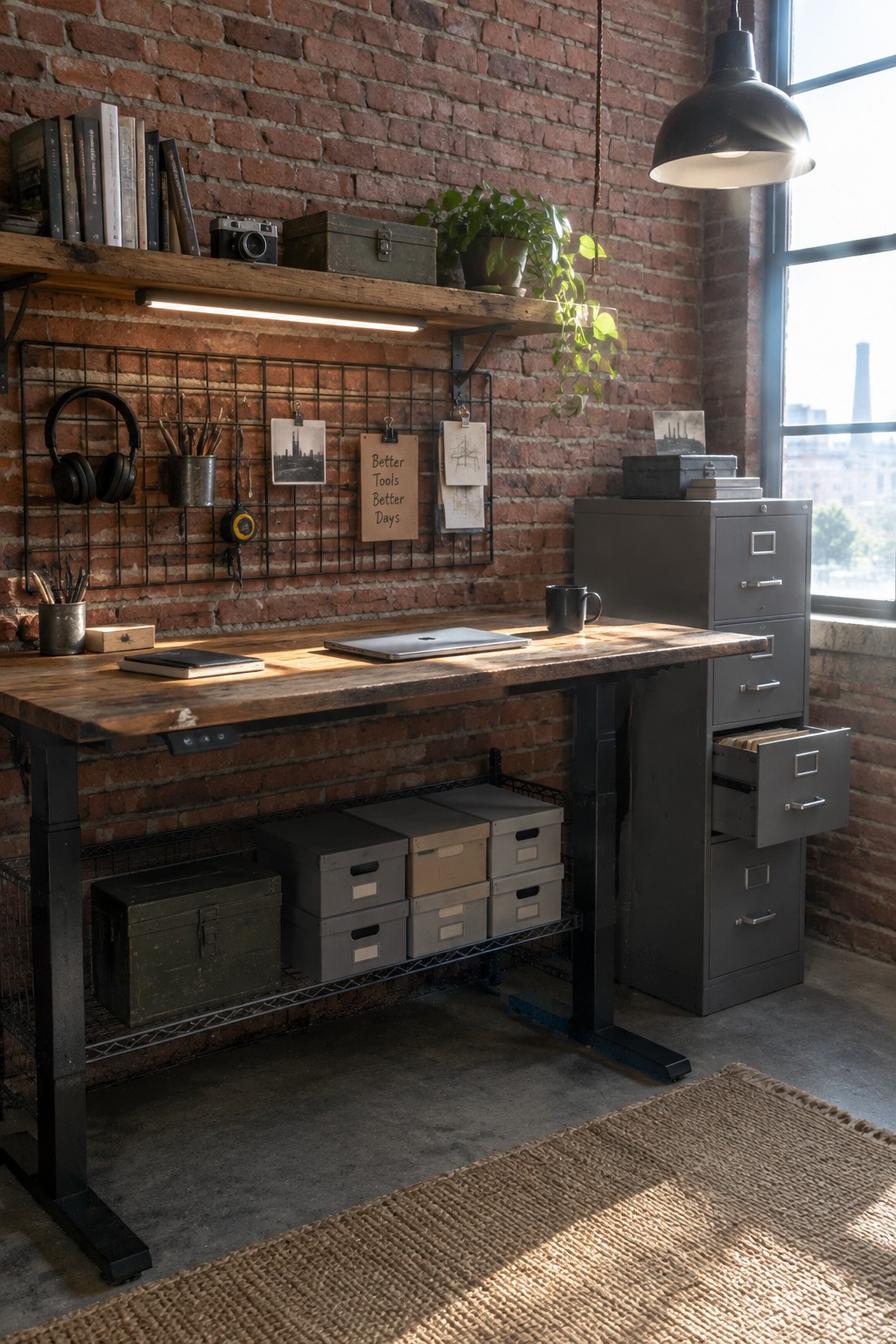
A standing desk works best when the top stays open. Moving storage down below frees up room for the desk to move and keeps the work area from feeling crowded.
Wire racks or simple shelves under the desk can hold bins and boxes for papers and supplies. This approach works well in smaller rooms where you need easy access without adding more furniture on the floor.
Wall-Mounted Desks For Less Clutter
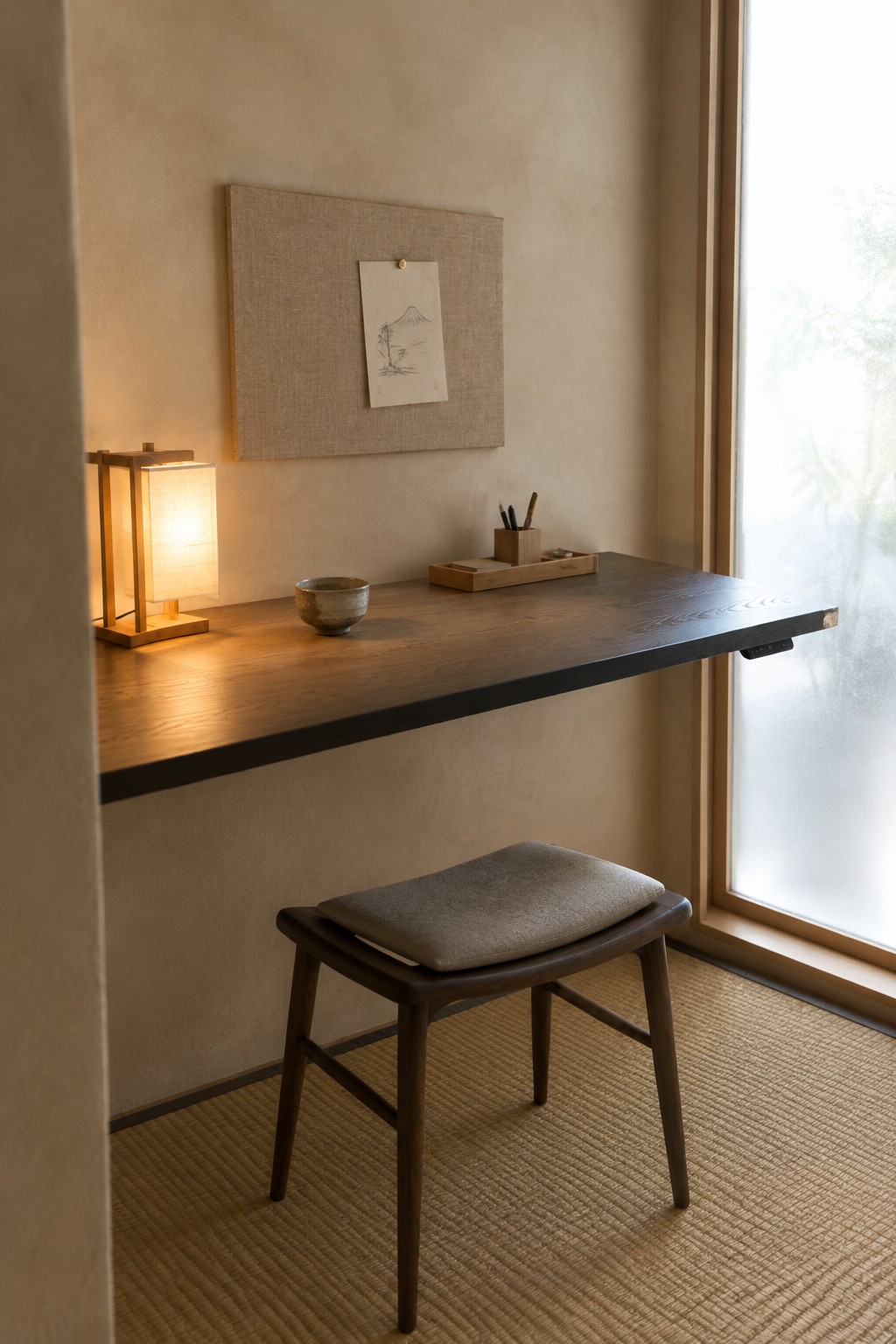
Mounting a desk straight to the wall cuts down on bulk and leaves the floor clear. This setup works especially well when you want the workspace to feel calm instead of crowded, since there are no legs or heavy frames taking up space underneath.
It suits smaller rooms or homes that already lean minimalist. Keep only a few items on top, like a lamp and a small tray, and pair it with a low stool so the whole corner stays open and easy to move around.
Use A Pegboard For Standing Desk Storage
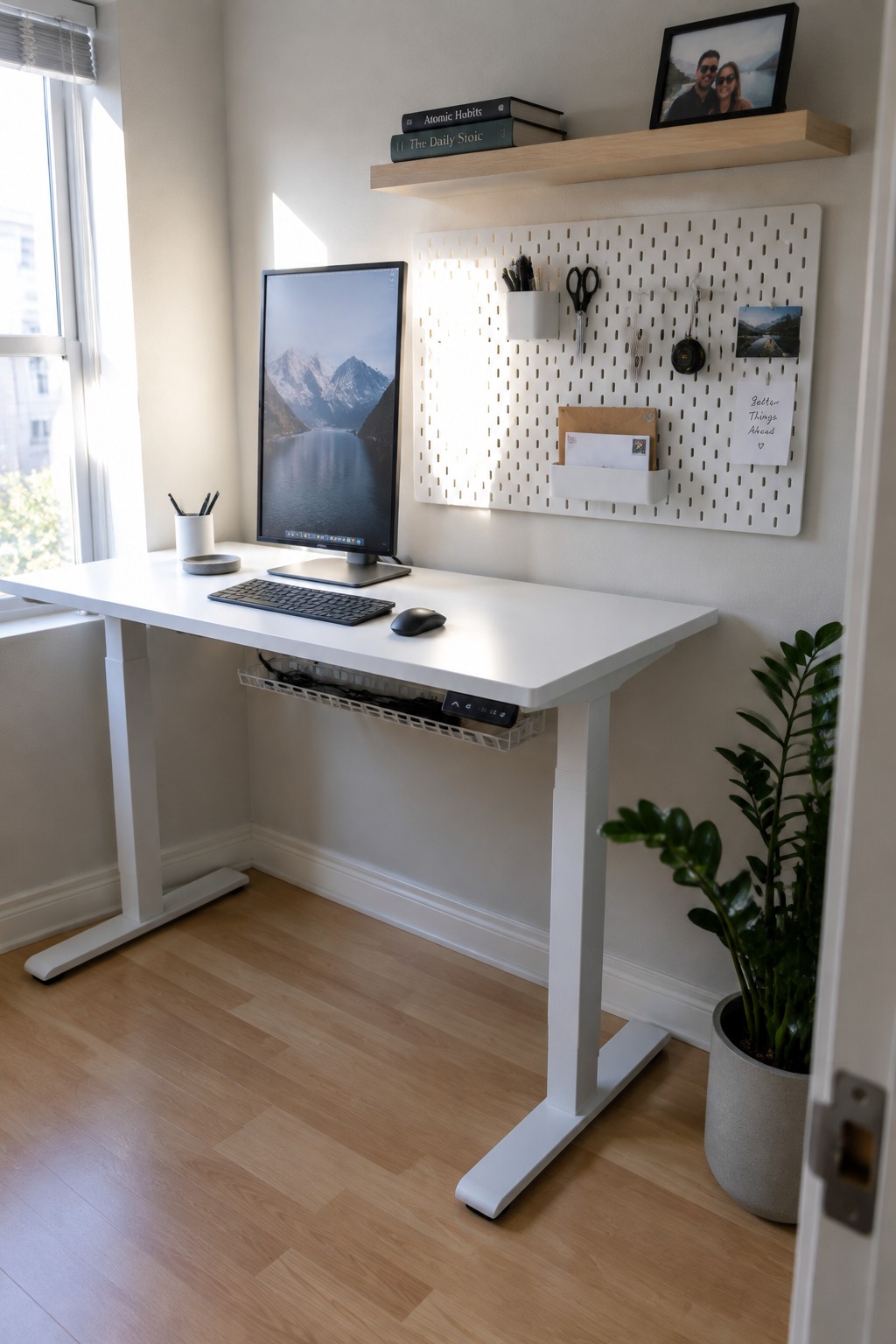
A pegboard above the desk keeps everyday items off the surface while still within reach. This matters with standing desks because the height makes it easy for clutter to feel more noticeable and harder to ignore during the day.
Mount the board at a comfortable height and add only the hooks or small bins you actually use. It works best in smaller offices where drawer space is limited and you want the desk itself to stay clear for focused work.
Built-In Desks That Hide In Cabinetry
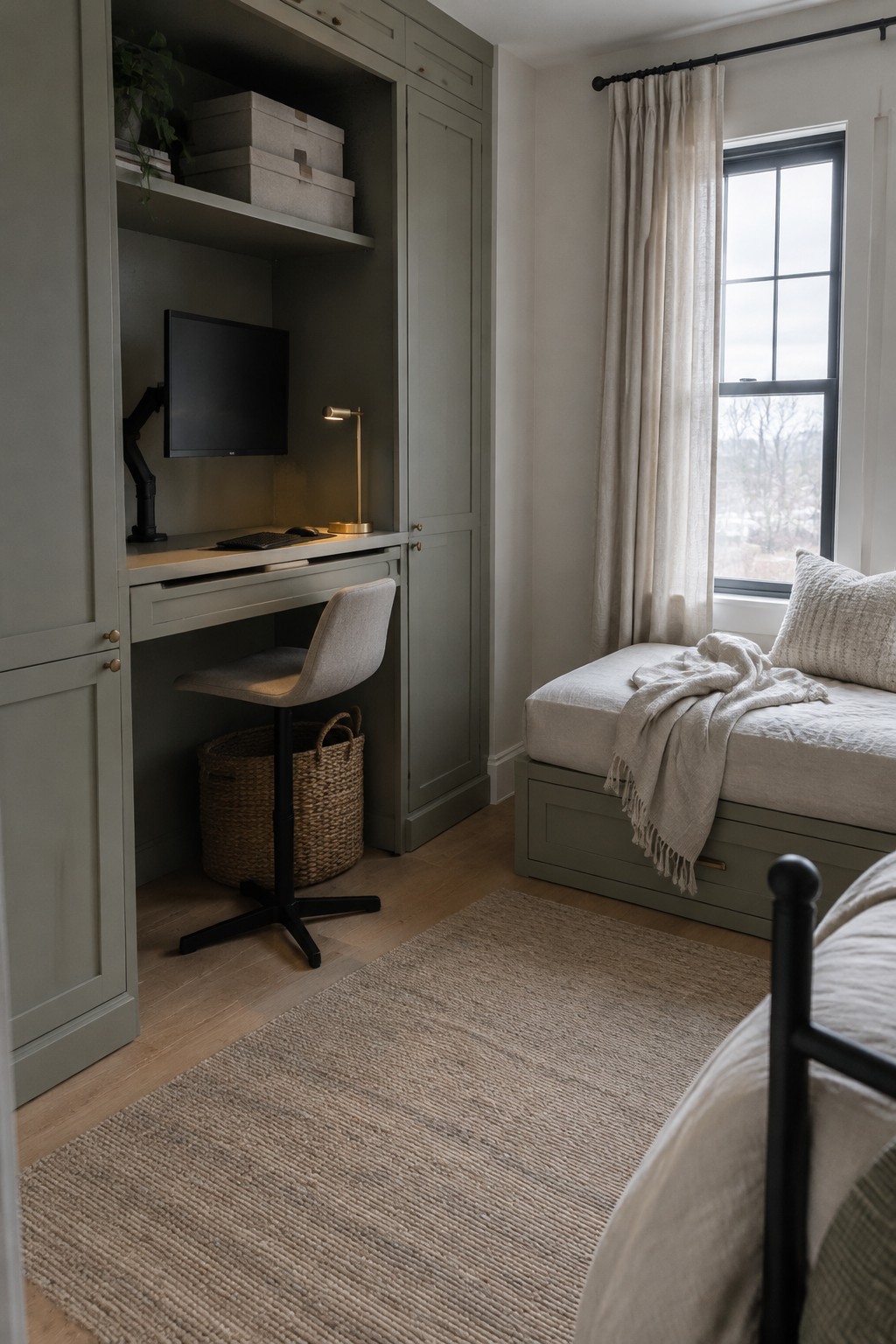
One of the easiest ways to keep a desk from cluttering up a bedroom is to build it straight into the cabinetry. The whole setup stays contained behind doors or inside the unit, so the room still feels like a place to rest instead of a workspace that never goes away.
This approach suits smaller homes or guest rooms that need to function in more than one way. Match the cabinet color and hardware to the rest of the room so the desk blends in instead of standing out as a separate piece of furniture.
Add A Monitor Riser For A Cleaner Desktop
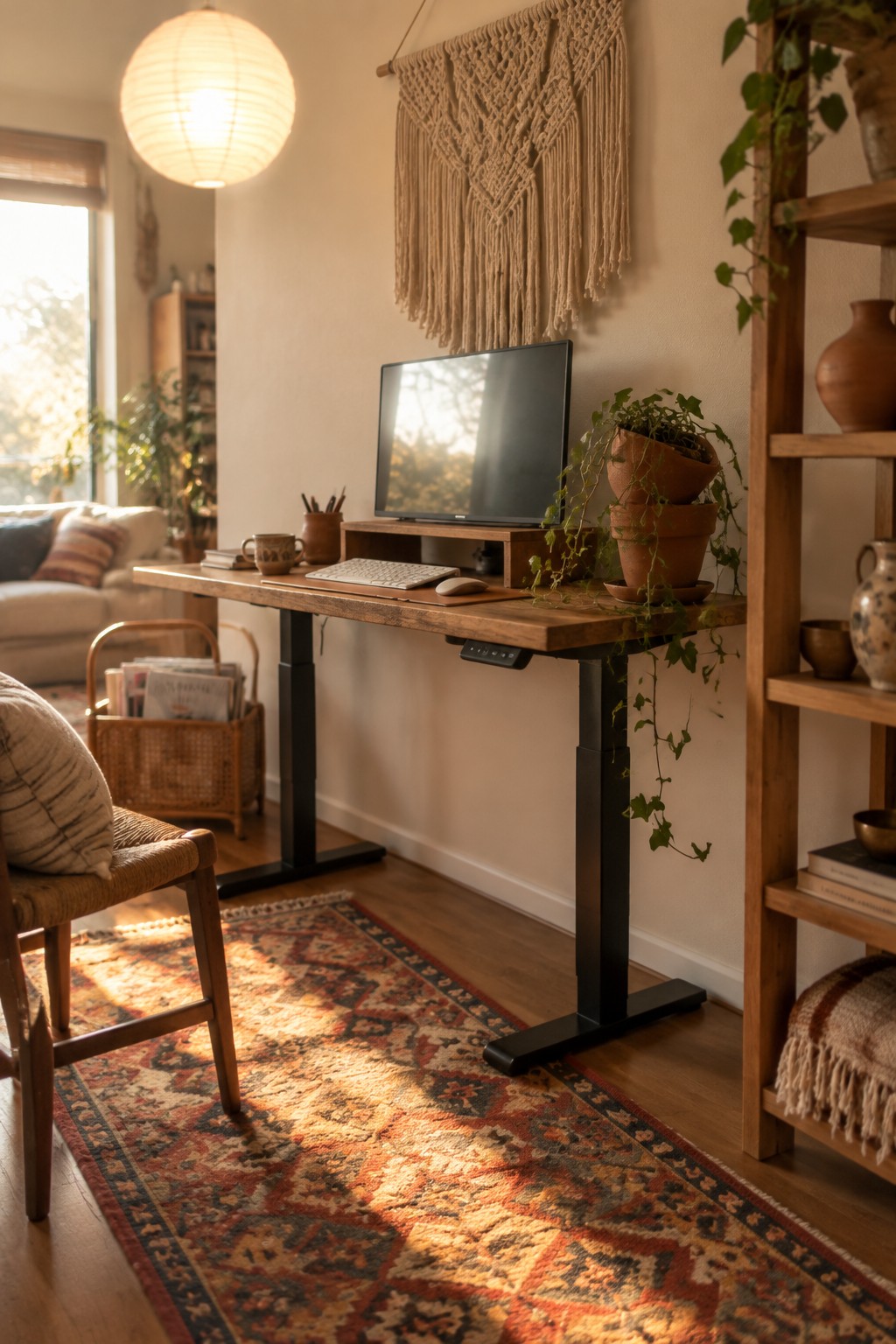
Raising the monitor on a simple platform frees up the entire desk surface. That one change keeps the keyboard and mouse as the only items you need within reach. The setup stays functional without looking crowded, which matters when the desk sits in a shared living space.
This approach works best in smaller rooms or open layouts where the desk needs to blend in rather than dominate. Choose a riser in the same wood tone as the desk top so it reads as part of the furniture instead of an add-on. Skip extra decor on the surface itself.
Build Cable Management Into The Desk Itself
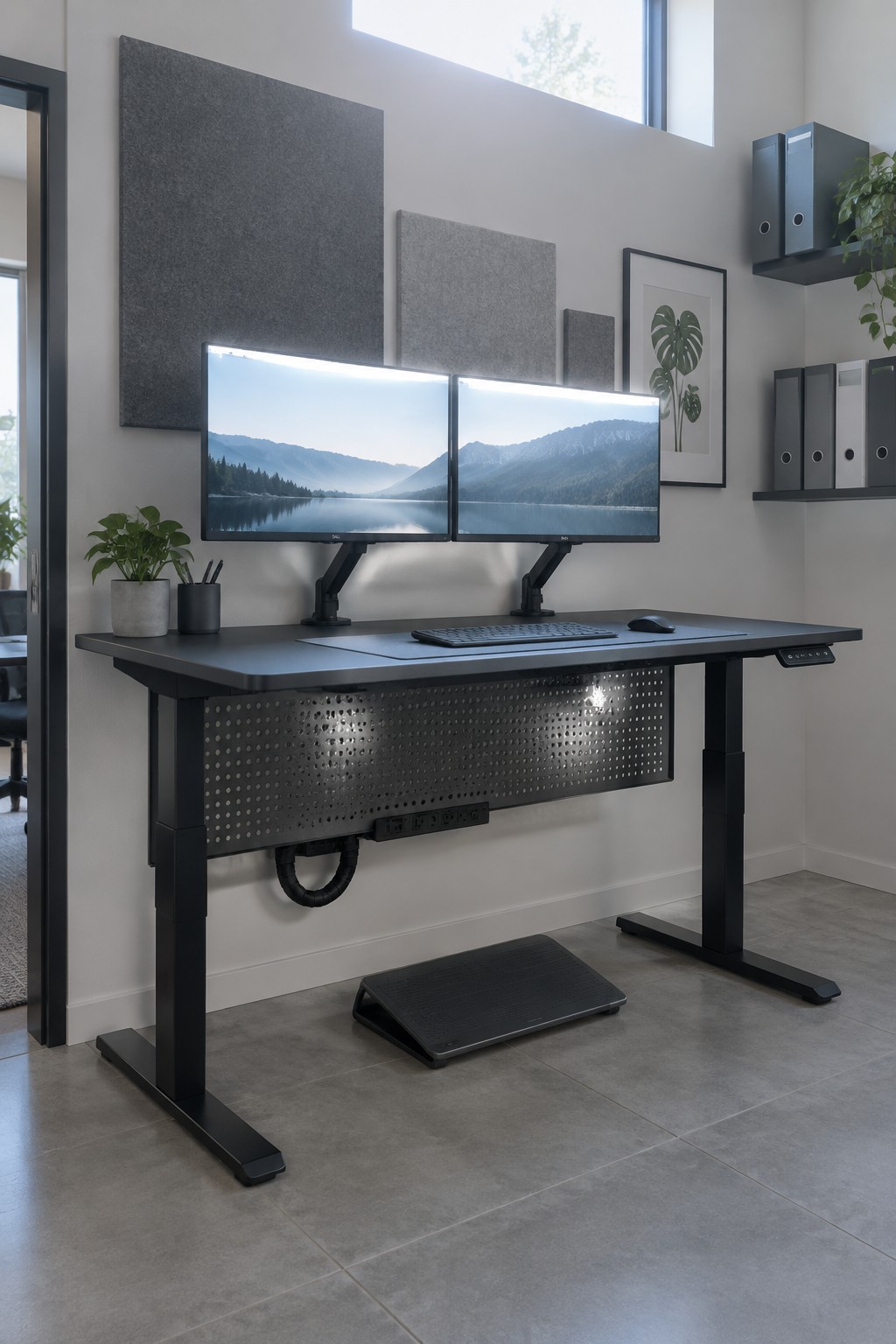
A standing desk often looks clean until you plug everything in. Running cables along the legs or across the floor quickly adds the clutter most people are trying to avoid. A desk with a built-in perforated panel along the front keeps cords contained while still letting air flow through.
This approach works best in smaller rooms where you cannot hide wiring behind furniture. Pair it with monitor arms so the desktop stays clear, and add a simple footrest underneath for comfort during long standing periods. Avoid overly wide panels that start to feel bulky.
Labeled Bins Keep Supplies Within Reach
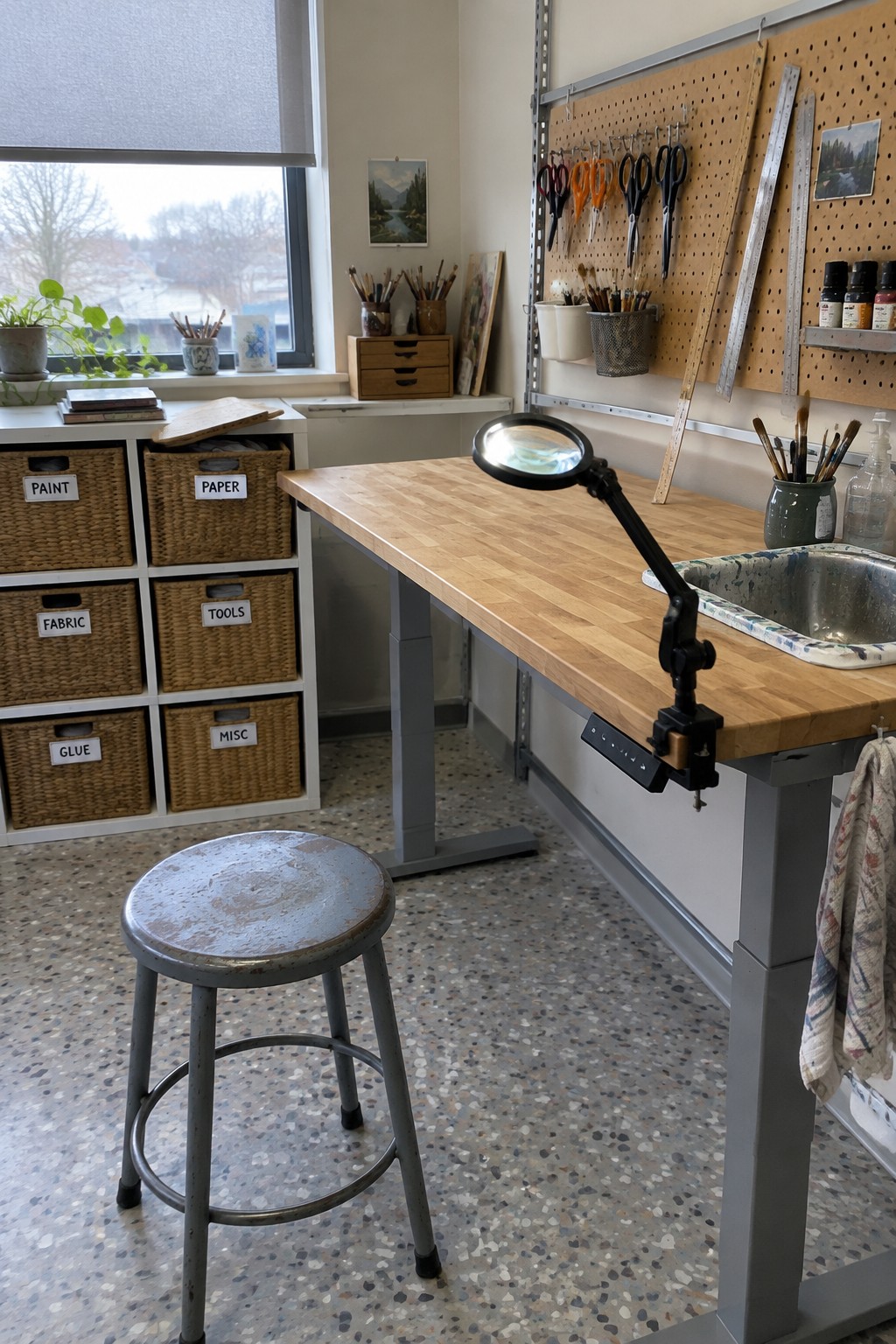
Many people struggle with clutter on a standing desk because supplies tend to spread out during a project. Placing labeled bins directly under the work surface gives everything a fixed spot so the top stays clear for actual work.
This approach suits craft rooms or home offices where materials get used often. Group items by type, use sturdy bins that slide in and out easily, and add a pegboard above the desk for tools you reach for most.
Built-In Desks That Match Surrounding Cabinetry
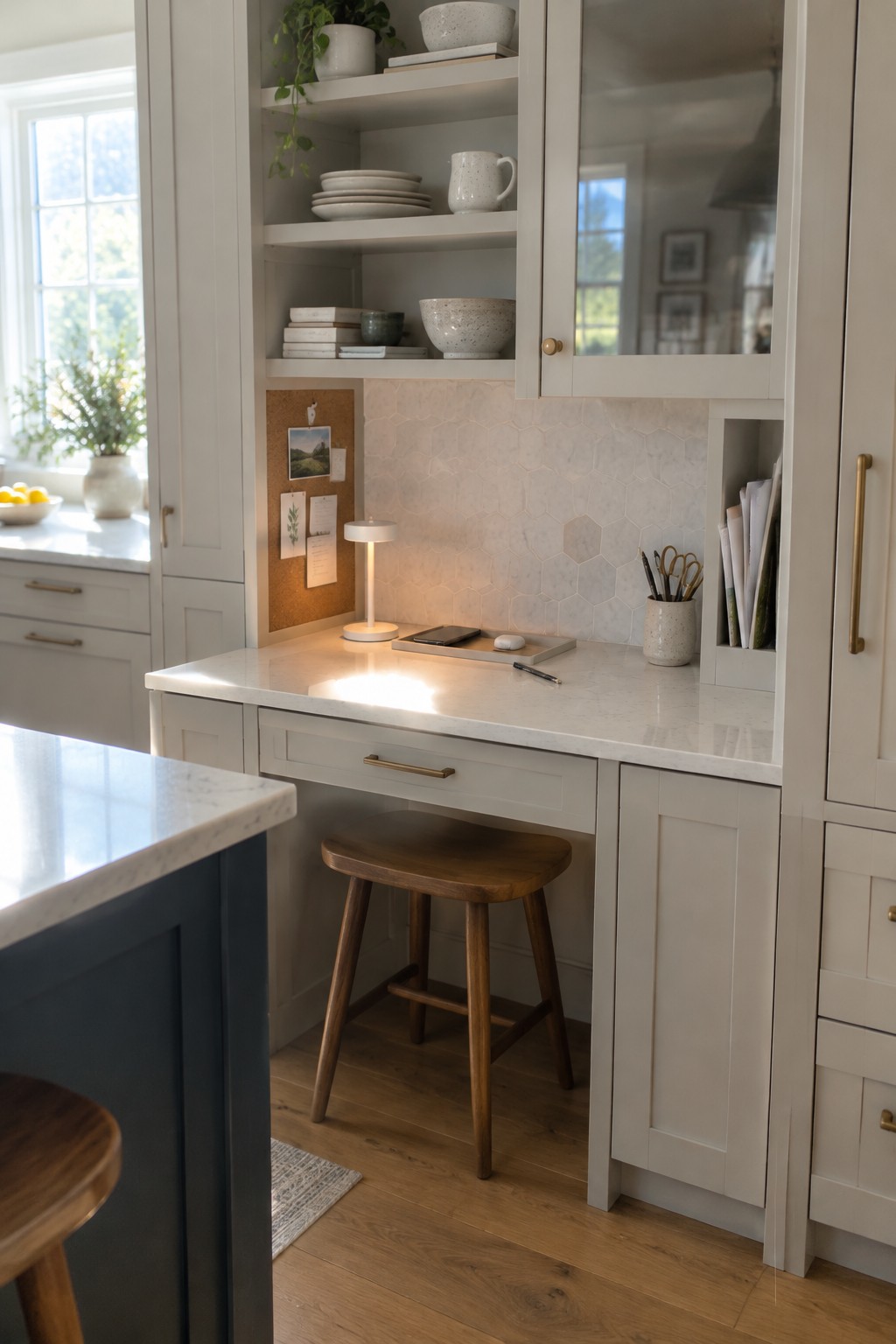
Building a desk straight into a cabinet run gives you a workspace that feels like part of the room instead of something added later. The surface stays low on clutter because the storage lives right where you need it, either in drawers below or on nearby shelves.
This setup works best in kitchens or family rooms where you want a place to handle mail or quick tasks without bringing in extra furniture. Keep the top clear by moving everyday items into the integrated storage so the desk stays ready to use.
Keep Your Standing Desk Surface Clear
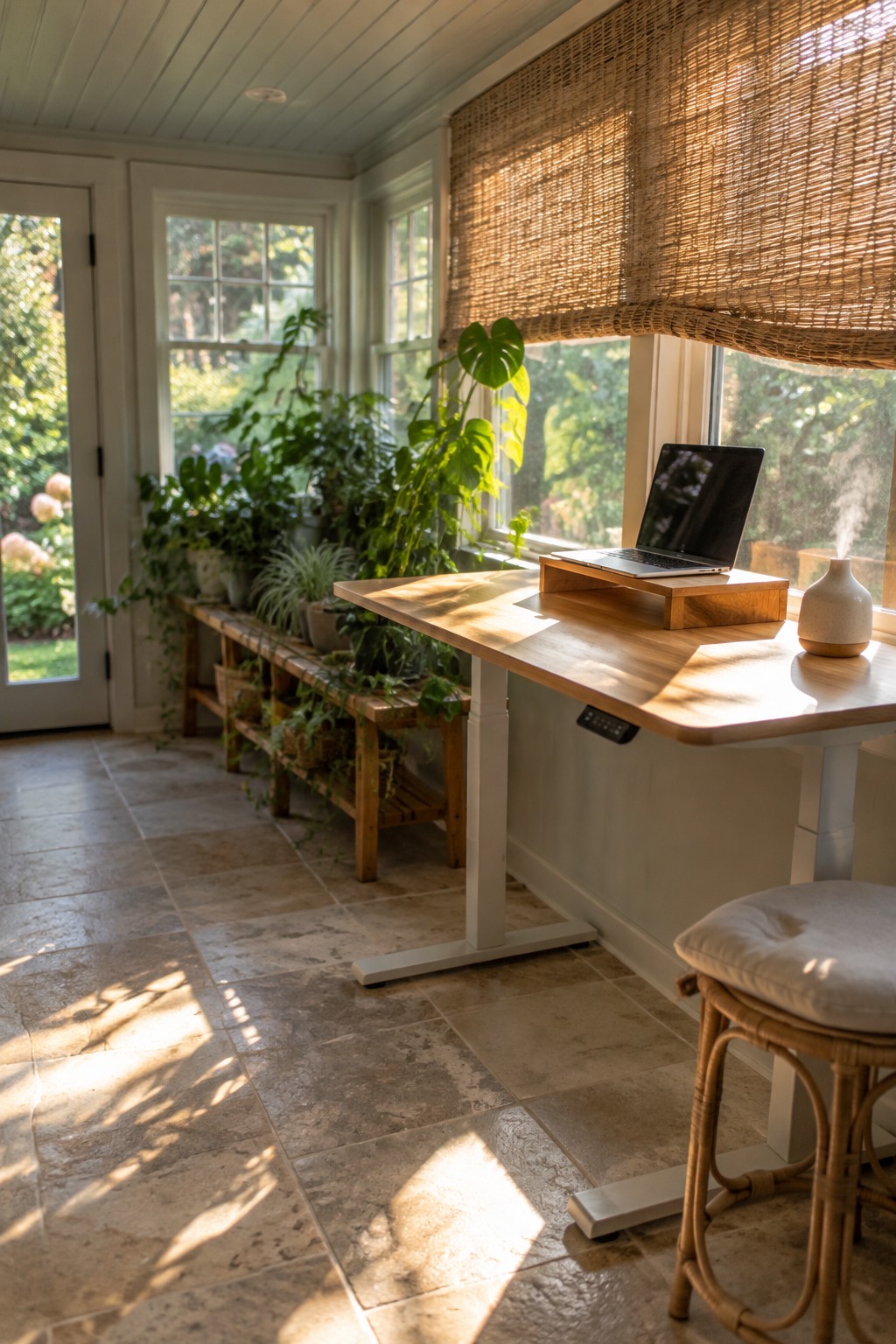
Many people get more use out of a standing desk when the top holds almost nothing. A laptop on a low riser and one small object beside it can be enough to keep the space calm and ready without extra visual noise.
This works well in rooms that already get good natural light and have plants or other elements around the edges. It suits smaller workspaces or anyone who prefers their desk to feel like part of the living area rather than a full office setup.
Wall Mounted Desks For Narrow Hallways
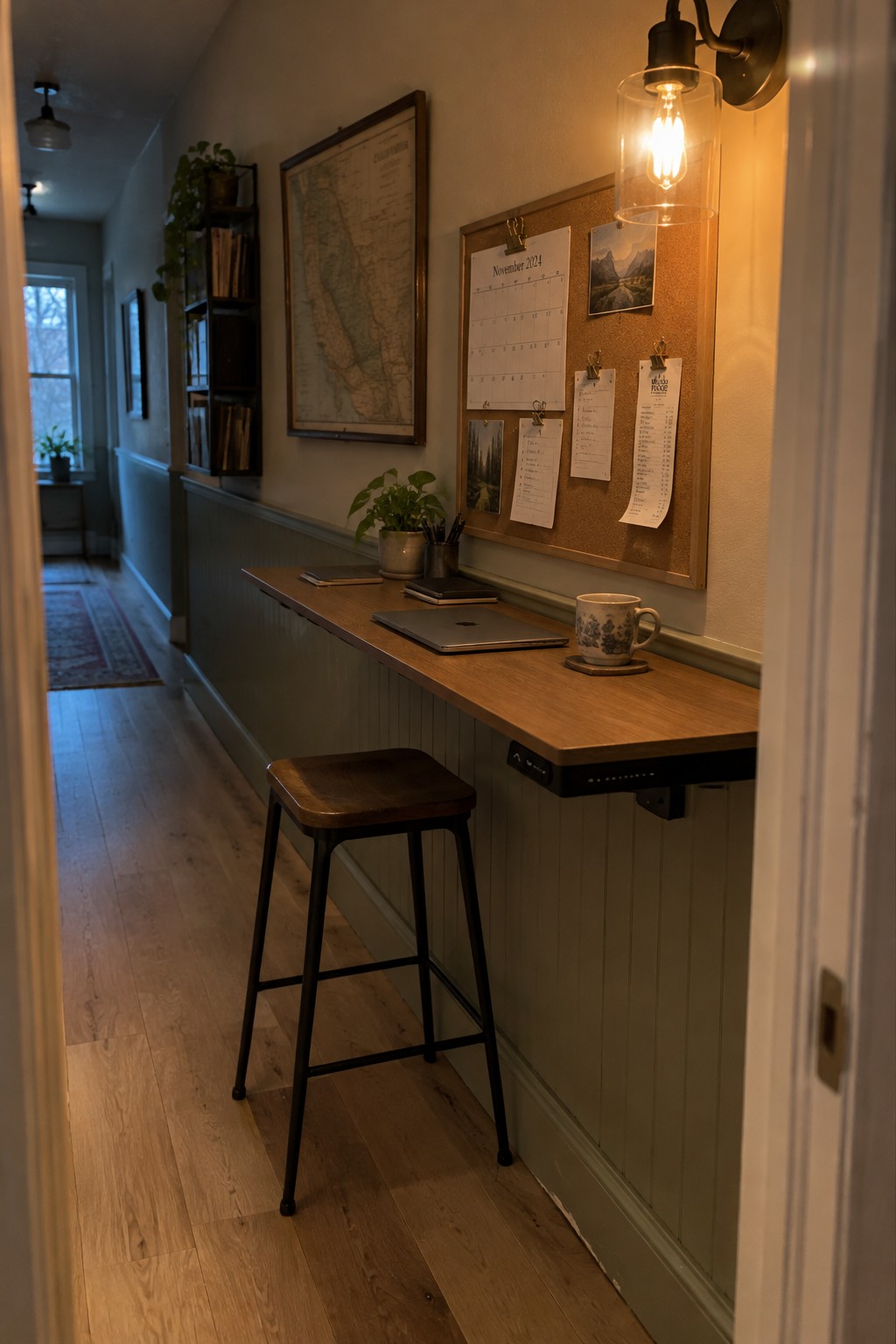
A wall mounted desk can turn an unused hallway into a workable spot without eating into floor space. In homes where every room already has a purpose, this kind of setup keeps the work area contained and out of the main living zones.
It suits older houses with wide passages or any layout where a full desk would feel too big. Keep the surface clear except for a laptop and a couple of daily items, and the whole thing stays practical rather than crowded.
Keep Speakers Off the Desk for a Cleaner Standing Setup
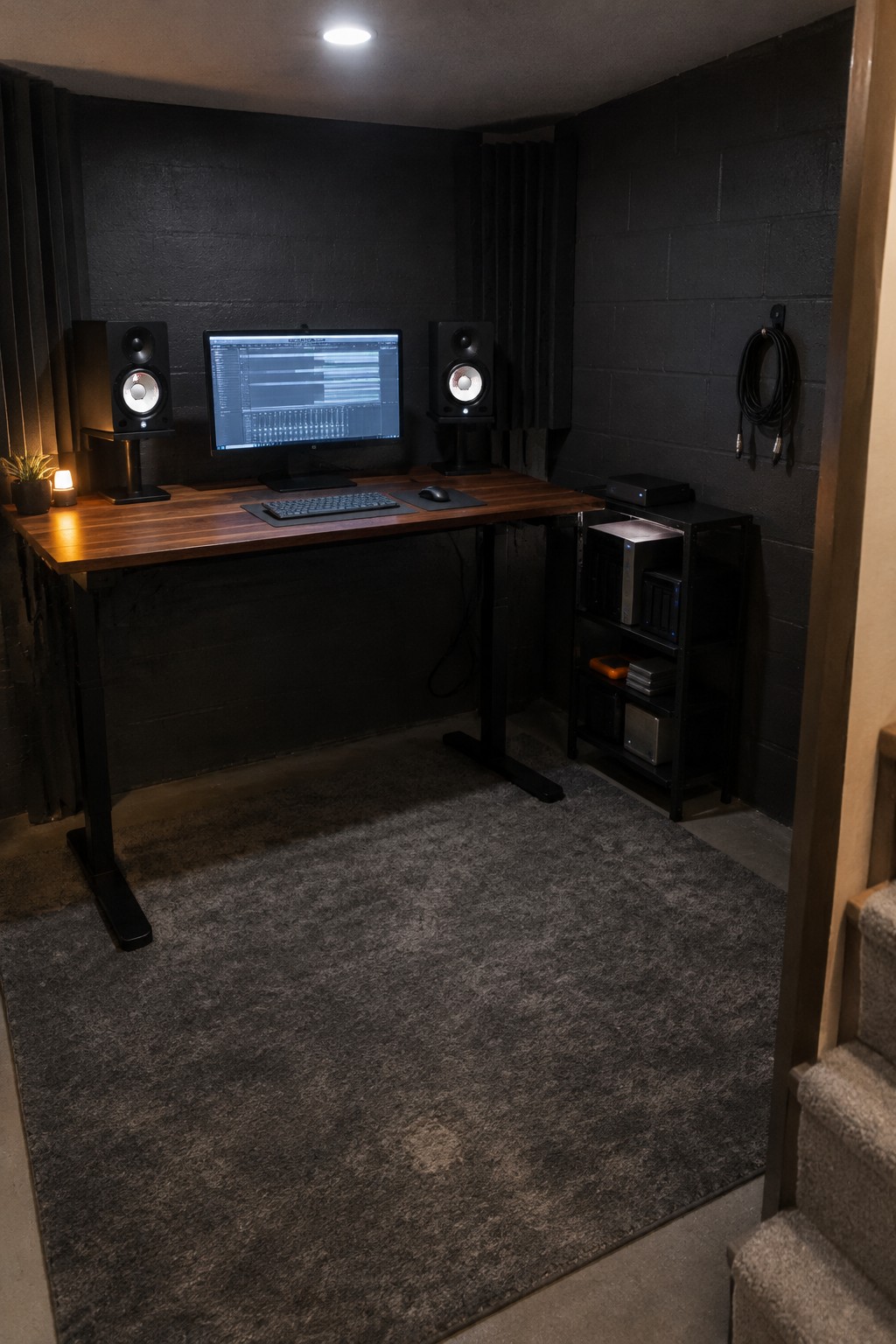
Many standing desk setups still feel crowded even when the surface looks simple at first glance. Moving the speakers onto their own stands takes the weight and bulk off the desk and leaves more room for the monitor, keyboard, and mouse. The result is a workspace that stays practical whether you are sitting or standing.
This works especially well in smaller rooms or converted basements where every inch counts. Place the stands at ear height, run the cables neatly, and keep the rest of your gear on a nearby shelf so the desk itself stays clear for daily use.
Position Your Standing Desk by a Window
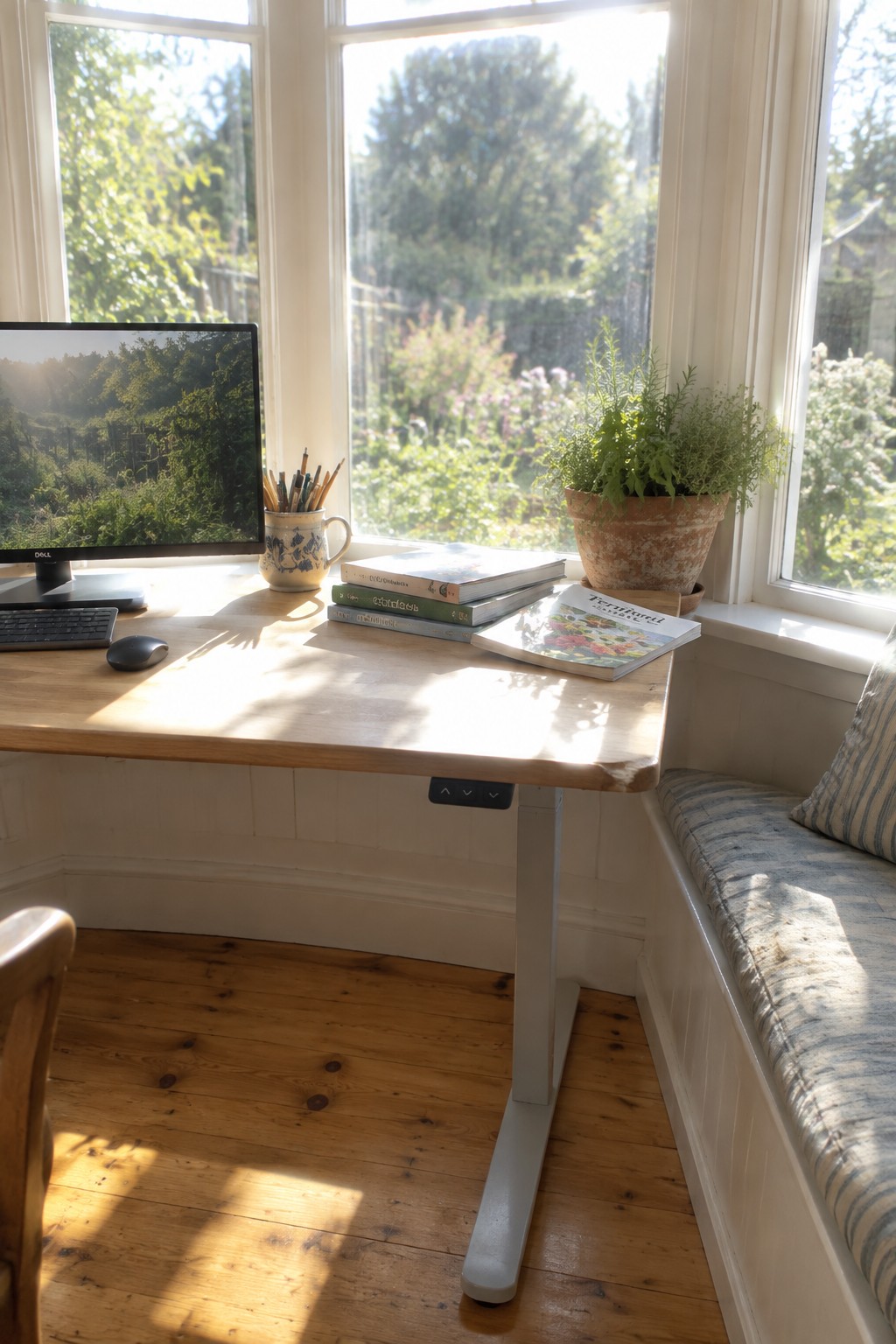
Placing a standing desk in front of a window helps keep the surface clear because the natural light cuts the need for extra lamps or cords. The sill can also hold a plant or two so those items do not end up on the desk itself.
This works best in homes where the window ledge sits at a comfortable height and the room does not get harsh direct sun all day. Just check that the desk can rise high enough without bumping the frame.
Add Overhead Storage to Cut Desk Clutter
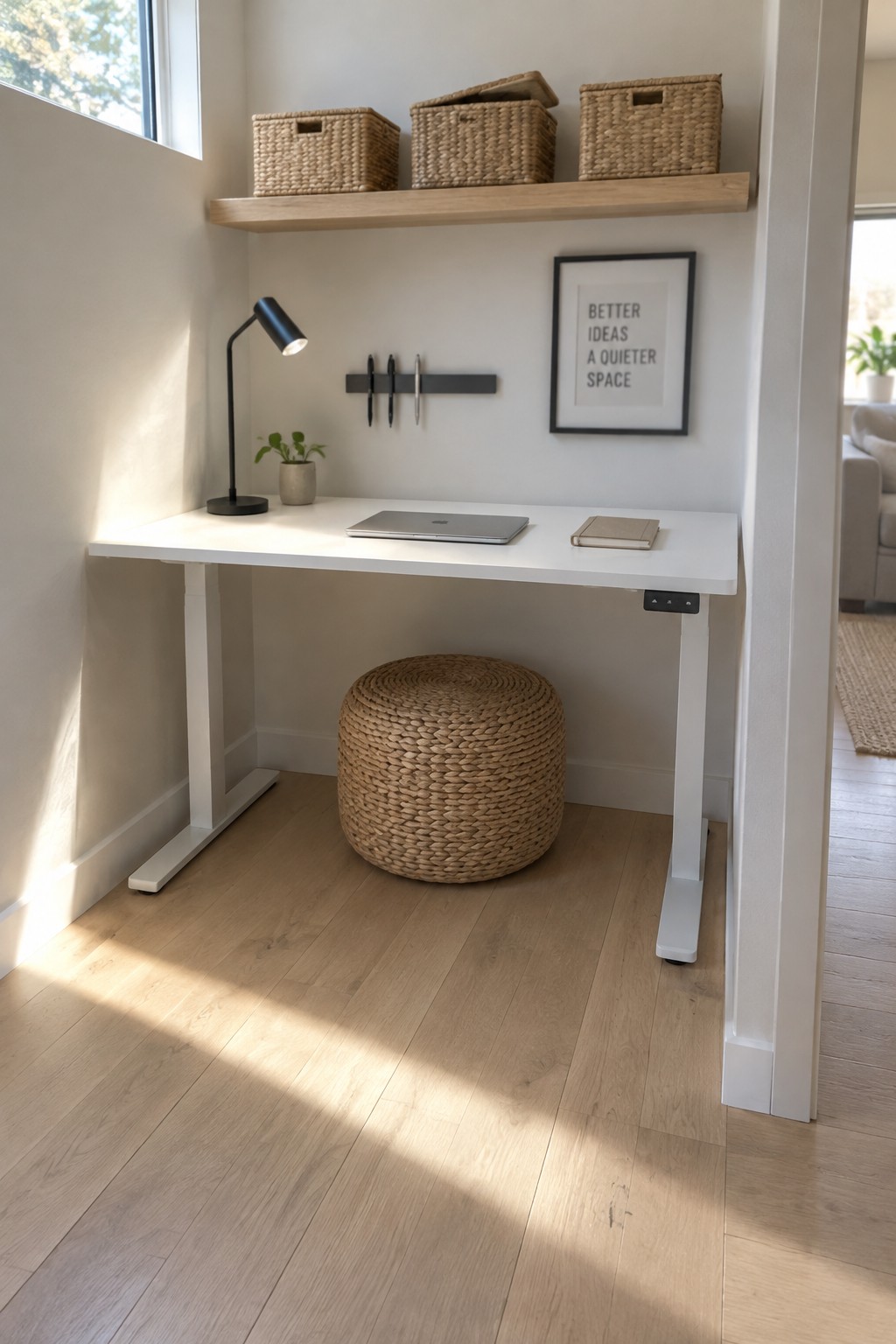
A floating shelf above a standing desk gives you a place to stash everyday items without crowding the work surface. Baskets on the shelf hold notebooks, chargers, and papers that would otherwise pile up, while the desk itself stays open for just a laptop and a lamp. This setup works especially well in smaller rooms where floor space is tight.
The idea suits homes that need the desk to double as a clean surface for other tasks during the day. Keep the baskets simple and limit what sits on the shelf so it stays useful instead of turning into another layer of stuff. A small plant or two on the desk can soften the look without adding much visual noise.
Build Storage Right Under The Desk
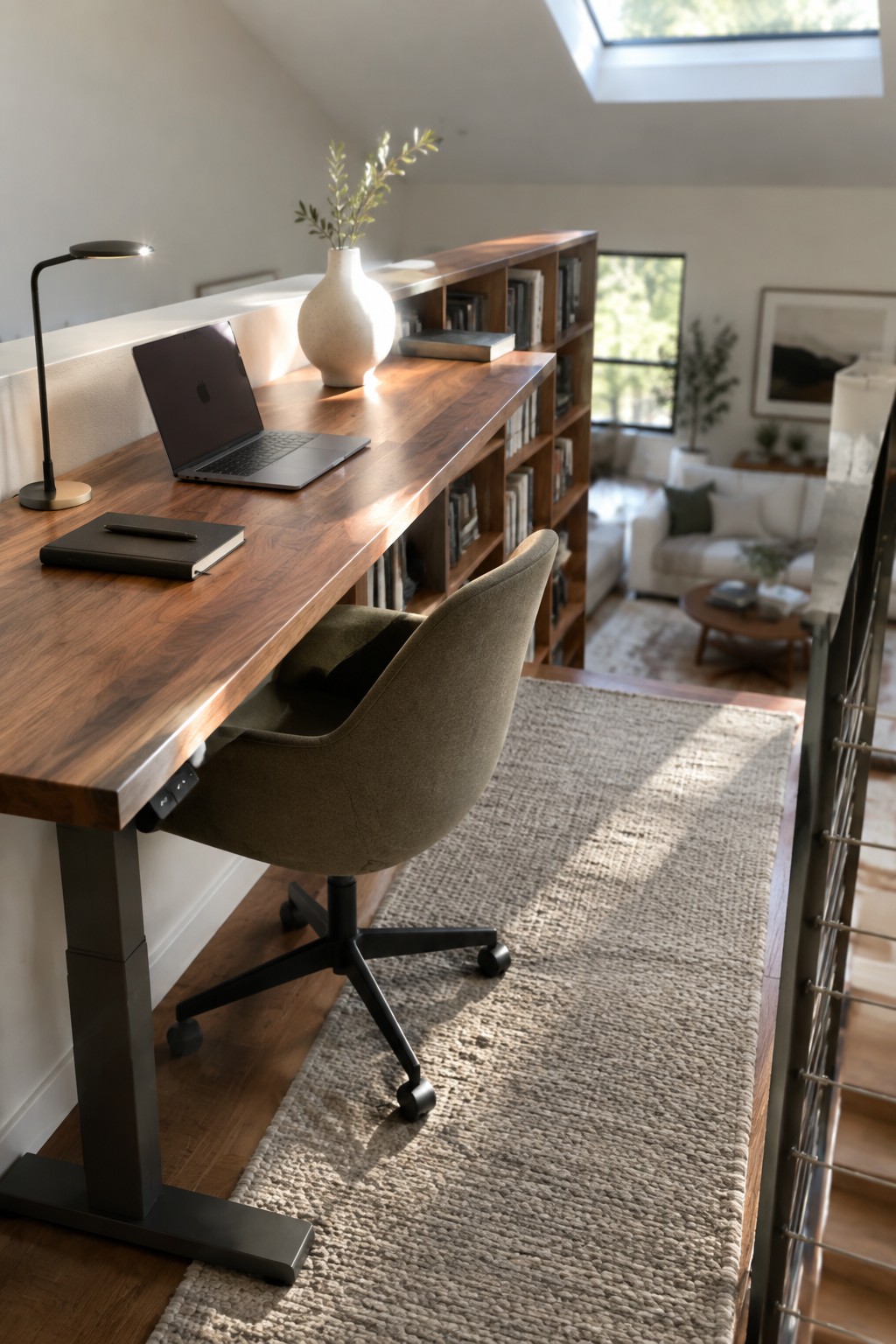
A desk with open shelving built in underneath keeps books and supplies close without crowding the work surface. This setup works especially well in open or loft-style homes where the desk can sit along a railing or half wall. The surface stays clear because everything has a place just below eye level.
This arrangement suits smaller homes or bonus rooms where you want function without a separate office. Keep the top limited to a lamp, laptop, and one notebook so the standing desk can move freely. Watch the height of the lower shelves so your chair still tucks in all the way.
Wall Storage Keeps Standing Desks Clear
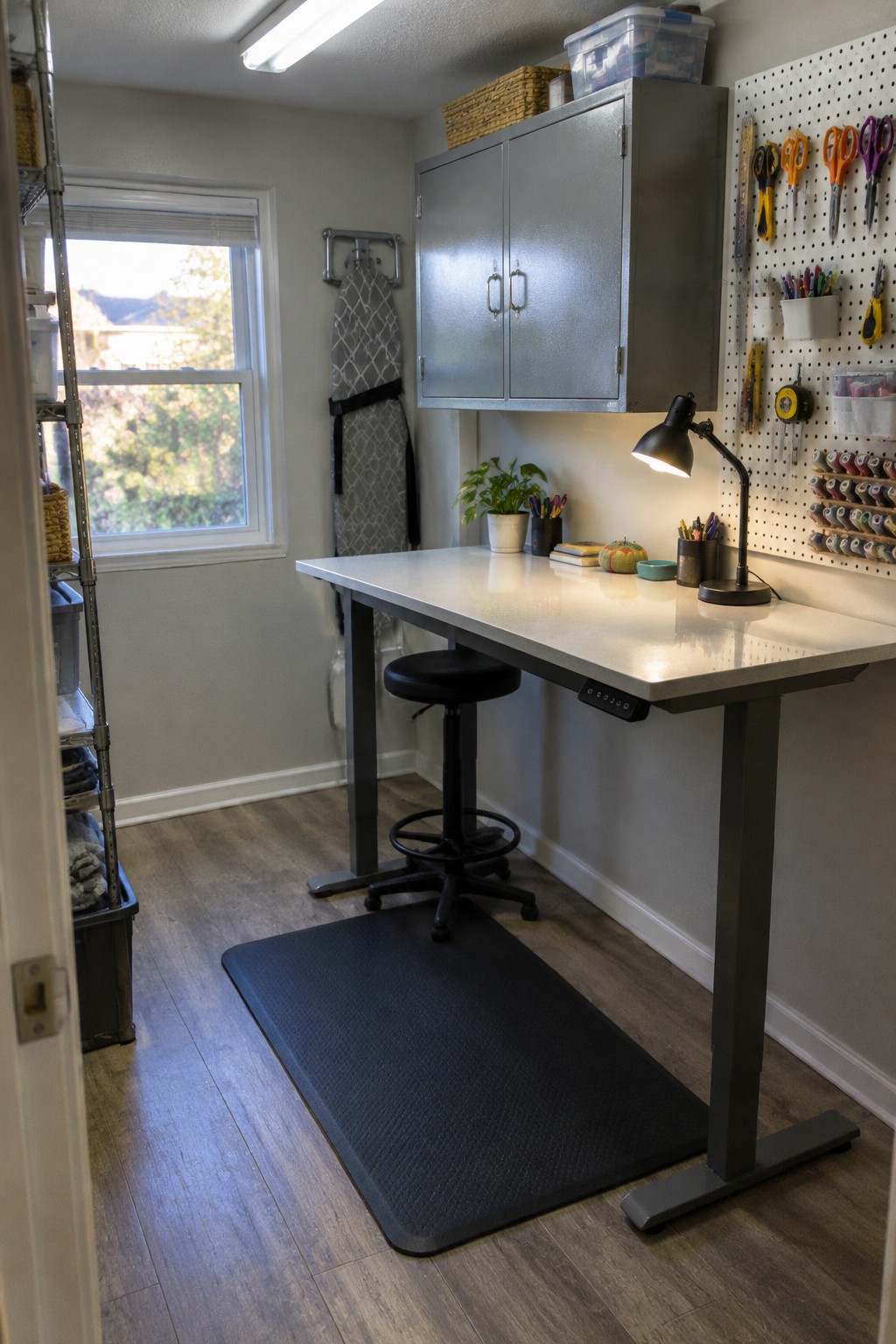
Many standing desk setups get cluttered fast when tools and supplies have nowhere else to go. A pegboard on the wall paired with overhead cabinets gives you a spot to hang scissors, store rolls, and tuck away smaller items without crowding the work surface.
This approach suits small rooms or craft spaces where floor area is limited. Keep the desk height adjustable for standing and sitting, and reserve the wall storage for things you use daily so the surface stays open for actual projects.
A Standing Desk With a Clear Wood Surface
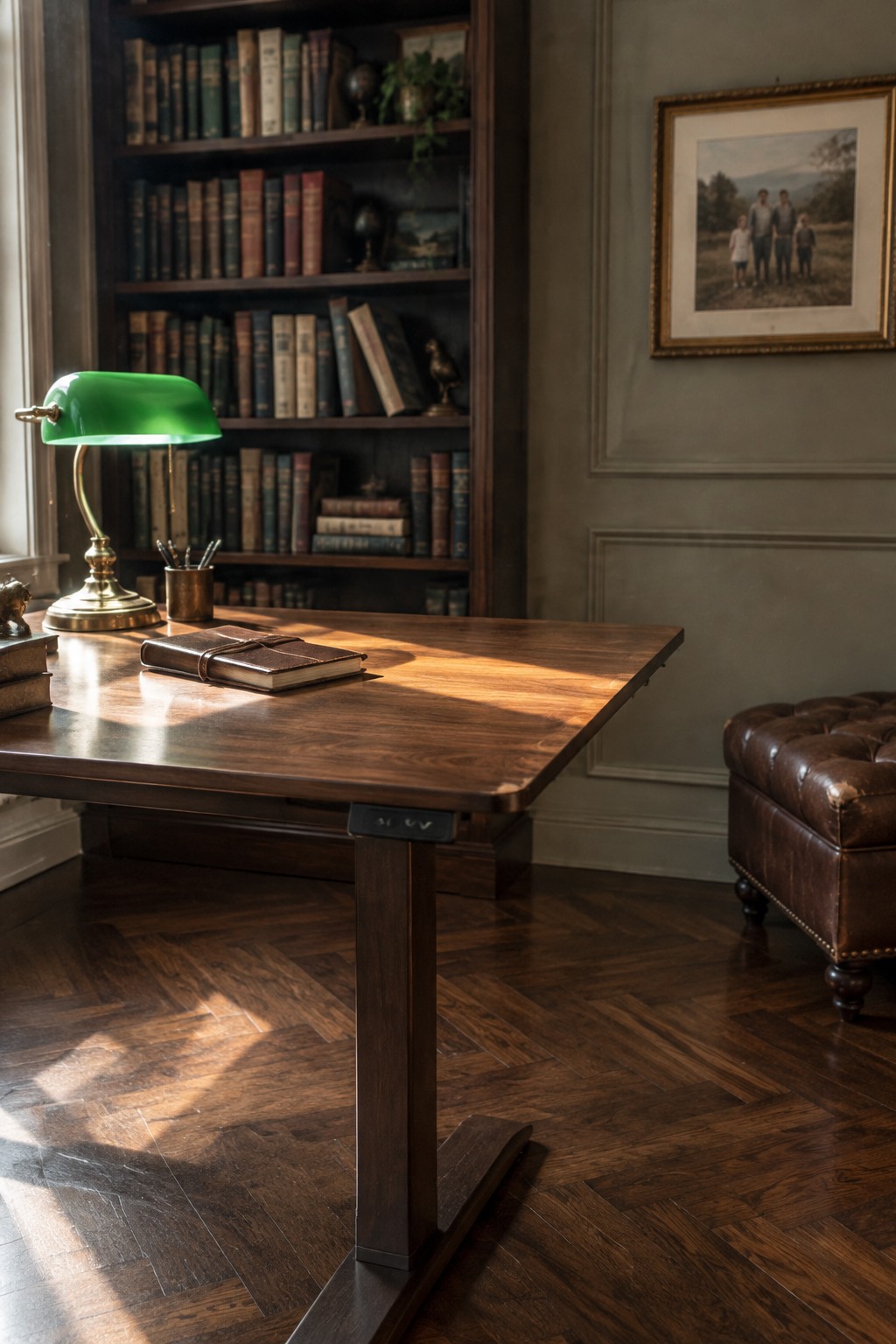
A standing desk feels more useful when the top stays mostly open. The wood grain shows through and the workspace does not compete with extra items scattered across it.
Keep a bookshelf or cabinet close by so papers and supplies have a place to go. This works best in a study or spare room where the desk can sit against a wall of storage and stay simple day to day.
Mount the Monitor to Keep the Desk Clear

A monitor arm makes a big difference on a standing desk. It lifts the screen off the surface so the desk stays open for just a keyboard and mouse, which helps prevent the clutter that builds up fast during daily use.
This setup works especially well in smaller home offices or anywhere you want the space to feel open and simple. The arm also lets you adjust screen height without moving other items around.
Use Under Desk Baskets For Everyday Storage
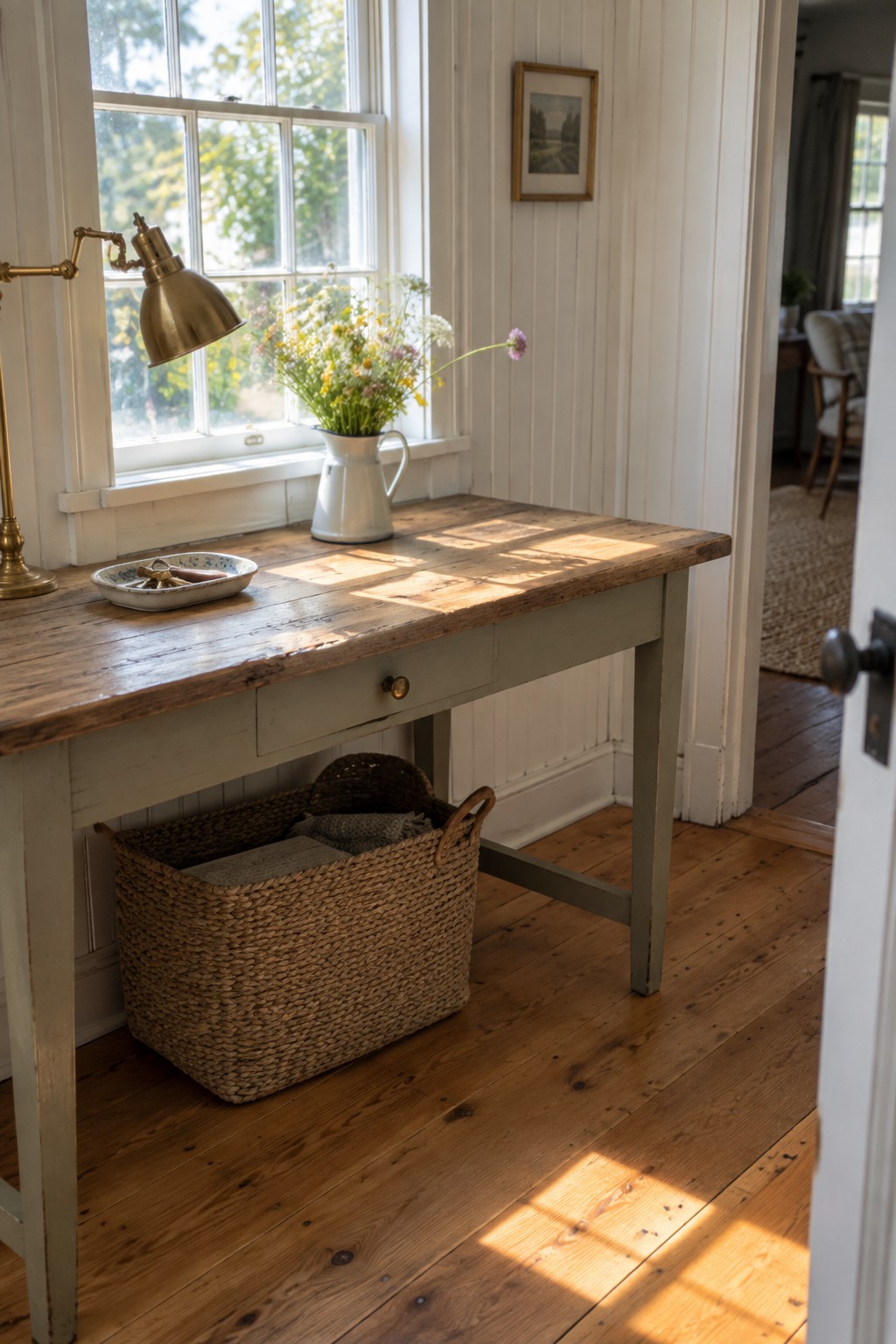
One simple way to keep a desk surface clear is to move the storage down low. A basket slid underneath holds papers, extra supplies, or folded items without adding anything to the top.
This approach works best in smaller rooms or anywhere you want the desk ready for use without constant tidying. Choose a basket that slides out easily and fits the scale of your desk so it stays practical day to day.
Glass Tops Keep Standing Desks Looking Open
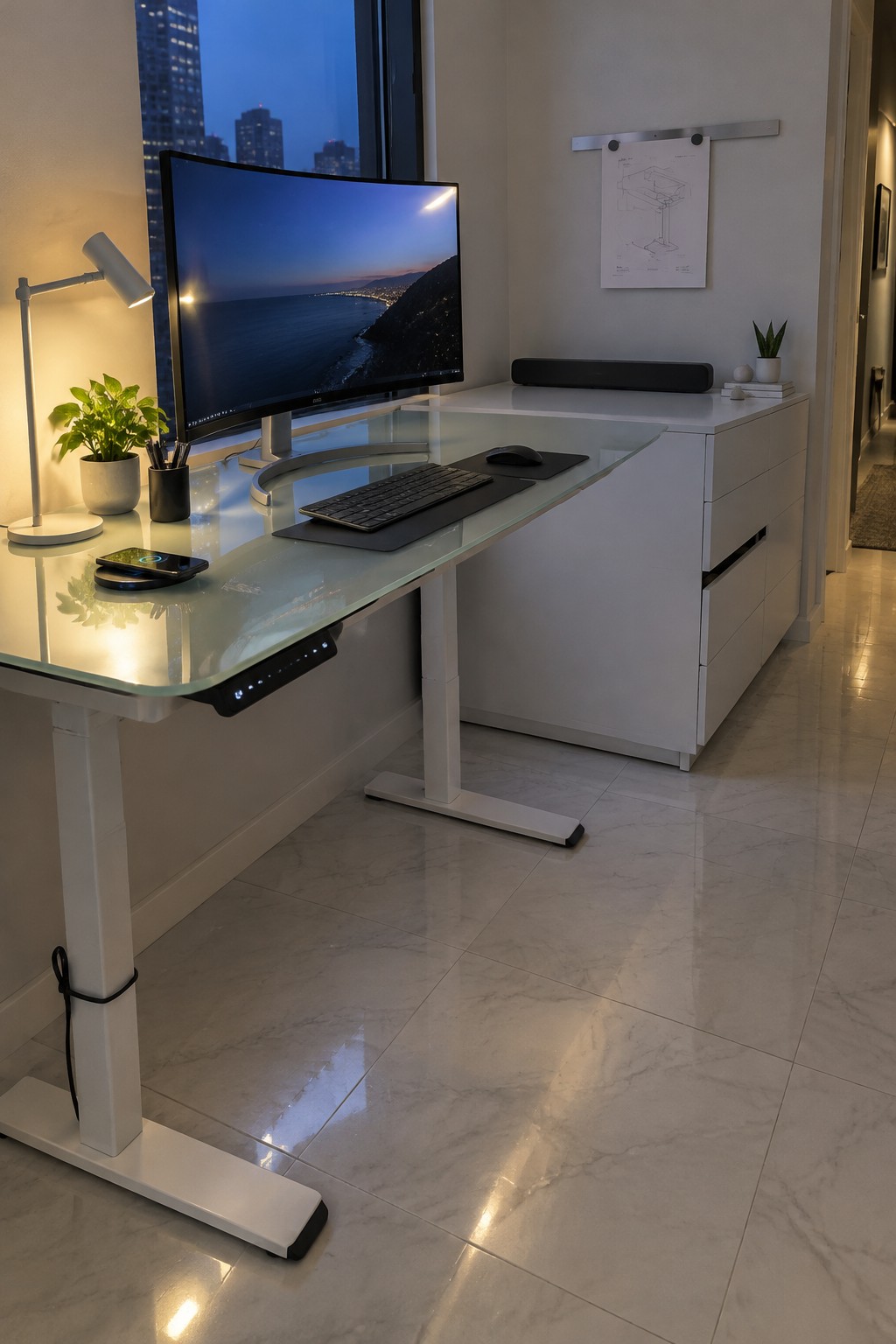
A glass top on a standing desk lets the space feel lighter because you can see through it. The floor and base stay visible, so the desk does not block the room even when everything is set up for work.
Keep only the monitor, keyboard, and mouse on the surface. Tuck papers, chargers, and extra gear into a cabinet or drawer unit placed right next to the desk. This setup suits smaller rooms or apartments where you want the workspace to stay practical without looking crowded.
Frequently Asked Questions
Q: How do I stop cables from dangling when I raise the desk to stand? A: Tuck them into a slim under-desk channel and use a couple of adhesive clips along the leg. This way everything stays out of sight and you avoid tripping when you move around.
Q: My monitor base eats up most of the surface. Where does the keyboard go? A: Switch to a monitor arm that clamps on the back edge. The keyboard then slides underneath the raised screen when you stand up.
Q: Do I need anything special under my feet for longer standing sessions? A: A basic foam mat works fine. It gives just enough give so your legs do not ache after an hour.
Q: What happens when I need a notebook open but hate extra stacks on the desk? A: Lean it on a small easel that folds flat against the monitor arm. You flip it down only while you write and store the easel behind the screen the rest of the time.
