

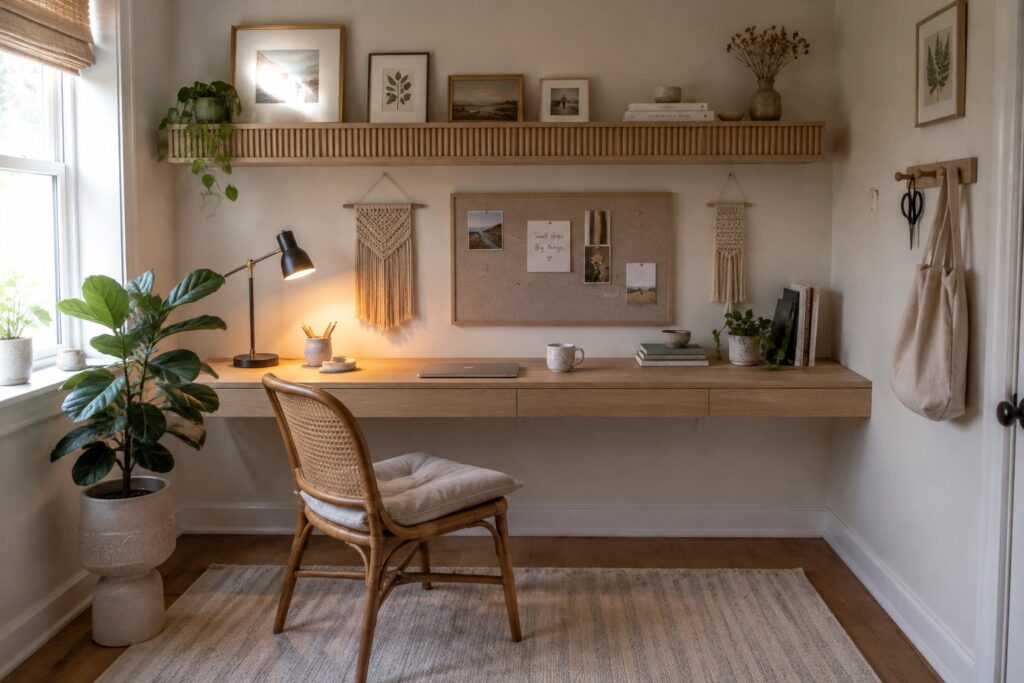
When I first turned a spare room into my workspace, the empty walls made the whole place feel temporary rather than like a spot where I could settle in and focus.
People tend to notice the surfaces around them most when they sit in one place for hours at a time.
That detail matters more than it seems at first.
Simple DIY wall art made from things I already owned helped the room come together without adding clutter or cost.
I keep coming back to those approaches whenever the space starts to feel off after a few months of use.
Floating Shelves For Simple Wall Displays
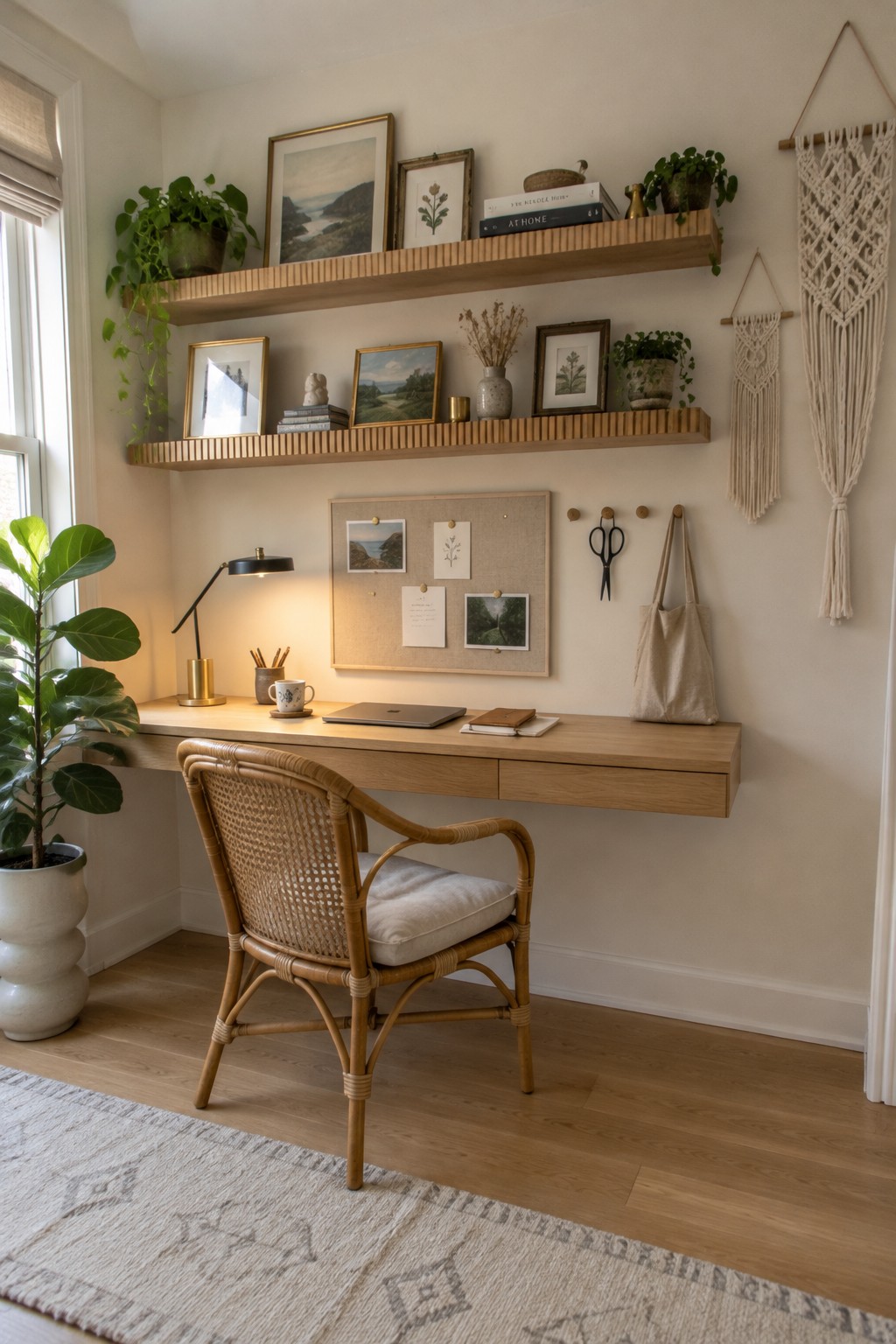
Floating shelves work well in a home office because they turn empty wall space into useful storage while giving you room to show off art and small items. They keep everything at eye level without needing a big piece of furniture or a heavy frame collection.
This setup suits smaller rooms where you want both function and a bit of personality. Start with one or two long shelves, then add a few framed prints and books you already own. Swap pieces out when you find something new, and the display stays fresh without much cost.
Lean a Ladder Shelf for Easy Art Changes
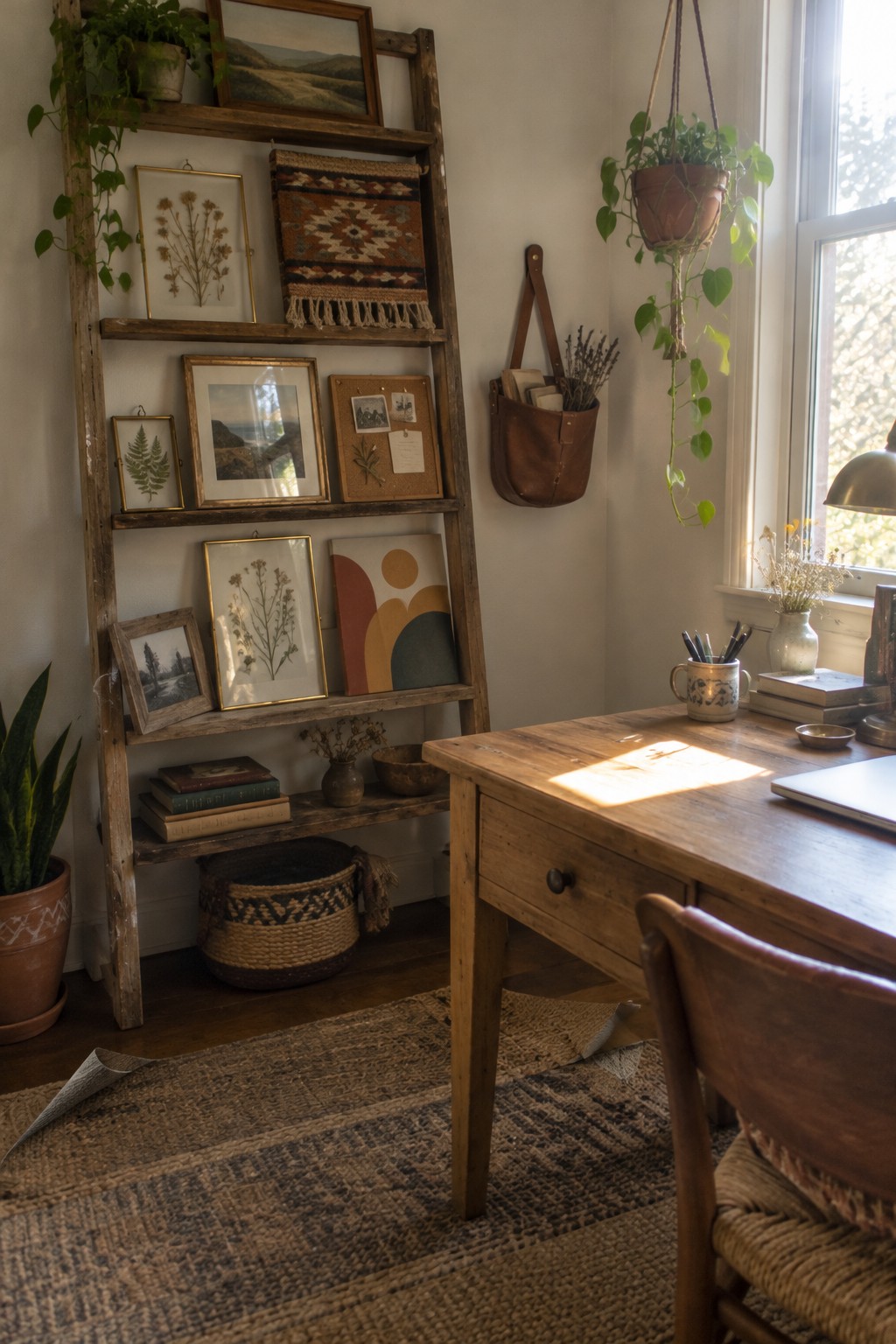
A leaning ladder shelf gives you a simple way to show off wall art without putting holes in the wall. You can mix small frames, larger prints, and even a textile or two on the rungs, then move things around whenever you want something new. It works especially well in a home office where you might want a fresh look now and then but do not have the time or budget for constant updates.
This approach suits smaller spaces and rented rooms because the whole setup stays movable. Just prop the ladder where it gets good light, layer in whatever affordable pieces you already have or find secondhand, and stop when the arrangement feels balanced. Keep heavier items on the lower rungs so it stays steady.
Mix Framed Prints With Wall Shelves For Extra Display Space
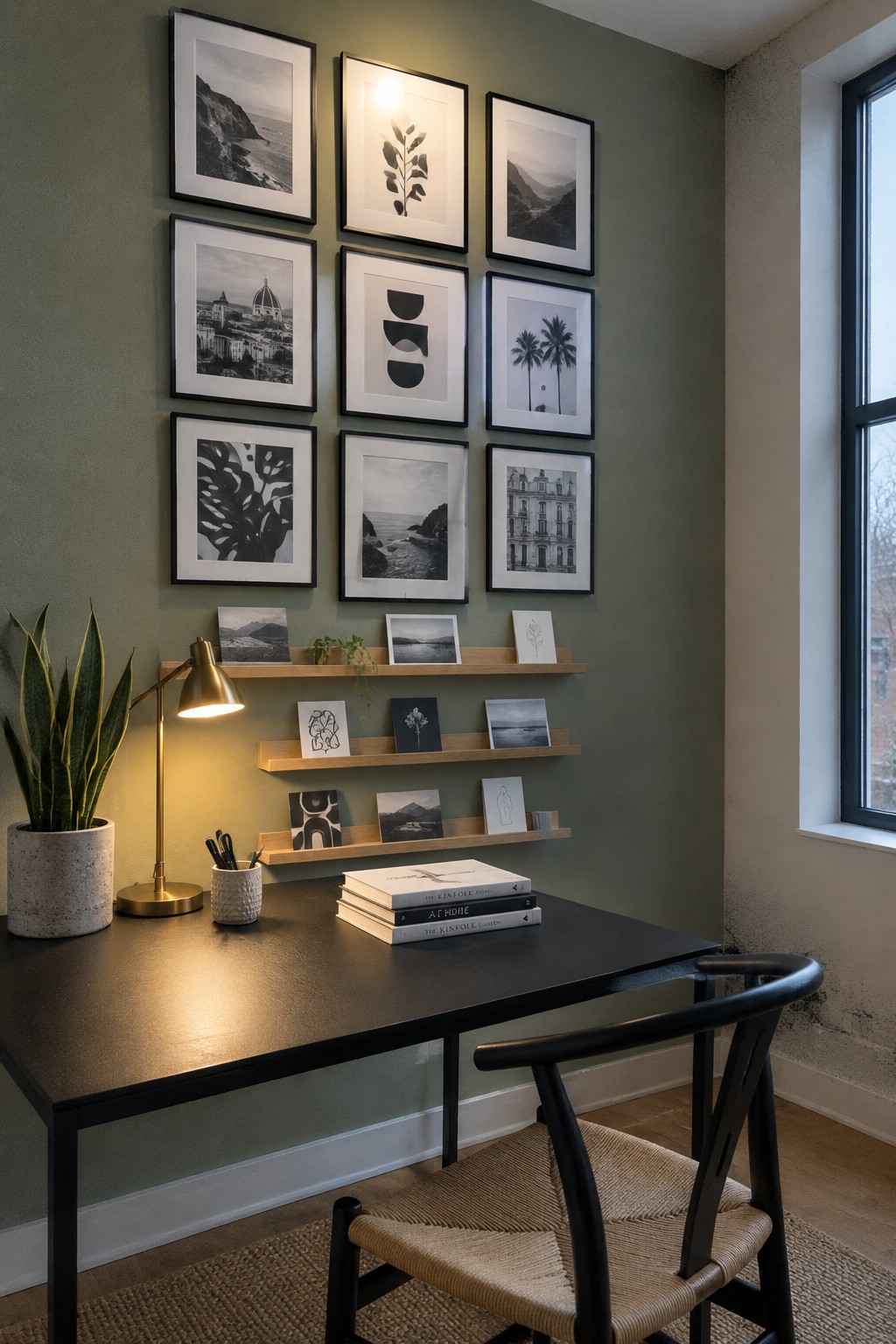
One easy way to cover a large wall on a budget is to combine a group of matching frames with a few narrow shelves tucked underneath. The shelves give you room for smaller pieces that would otherwise get lost, and they let you add or swap things out without rehanging everything.
This setup works well in a home office because it keeps the wall interesting without making the space feel crowded. Start with whatever prints or photos you already have, then fill in gaps with inexpensive downloads or thrift finds. The mix of sizes and the simple wood shelves keeps the whole thing feeling relaxed rather than overly planned.
Clipboards Keep Wall Art Simple
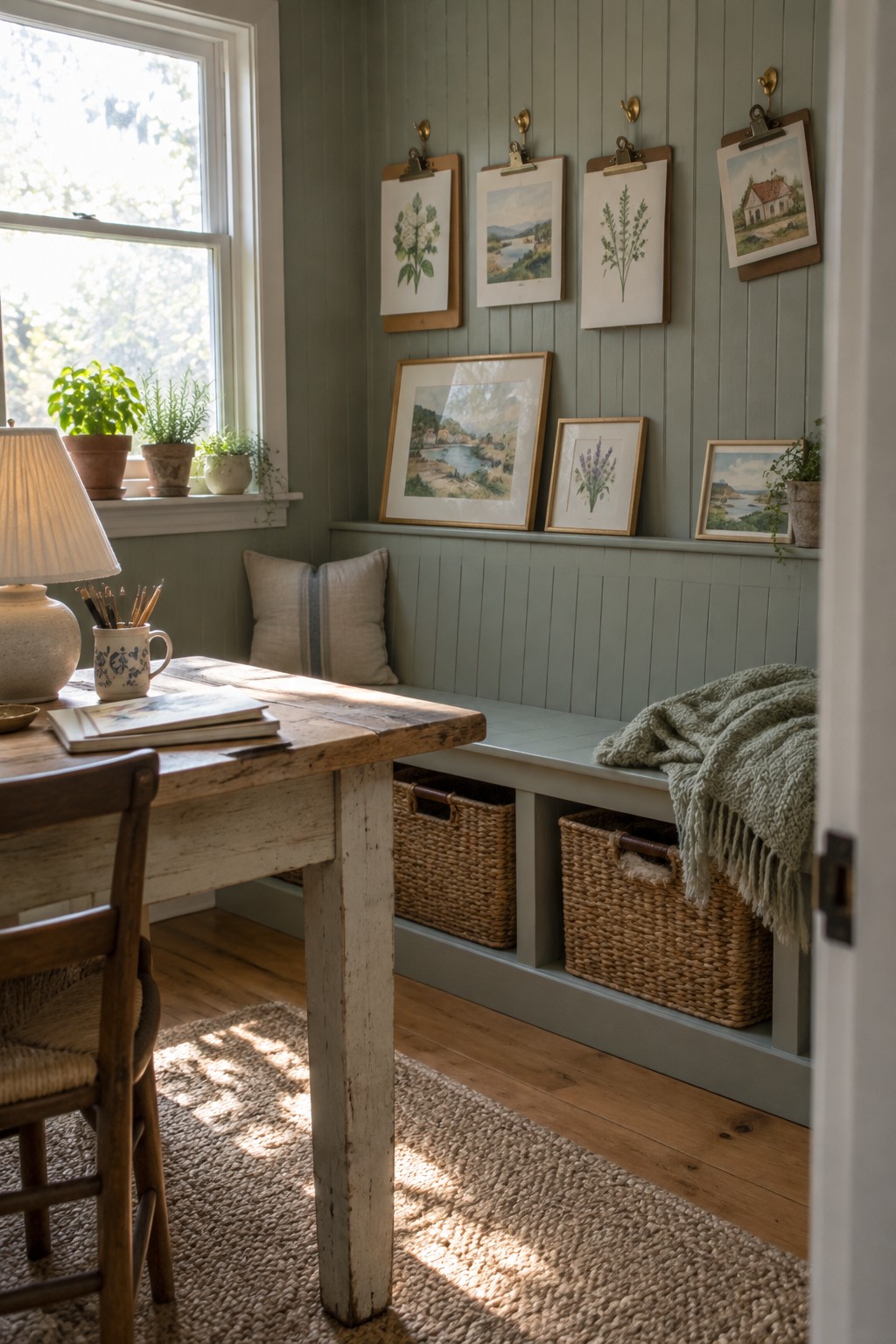
Using clipboards to hang prints gives you a quick way to change what is on the wall without buying frames or dealing with glass. The boards are cheap, light, and easy to move around, which makes them useful in a home office where the work changes often.
This idea works best on a wall that already has some texture or paneling, since the wood of the boards adds a little warmth without looking too finished. Keep the clips and hooks simple so the focus stays on the art itself rather than the hardware.
Mix Vintage Maps With Framed Prints For Wall Art
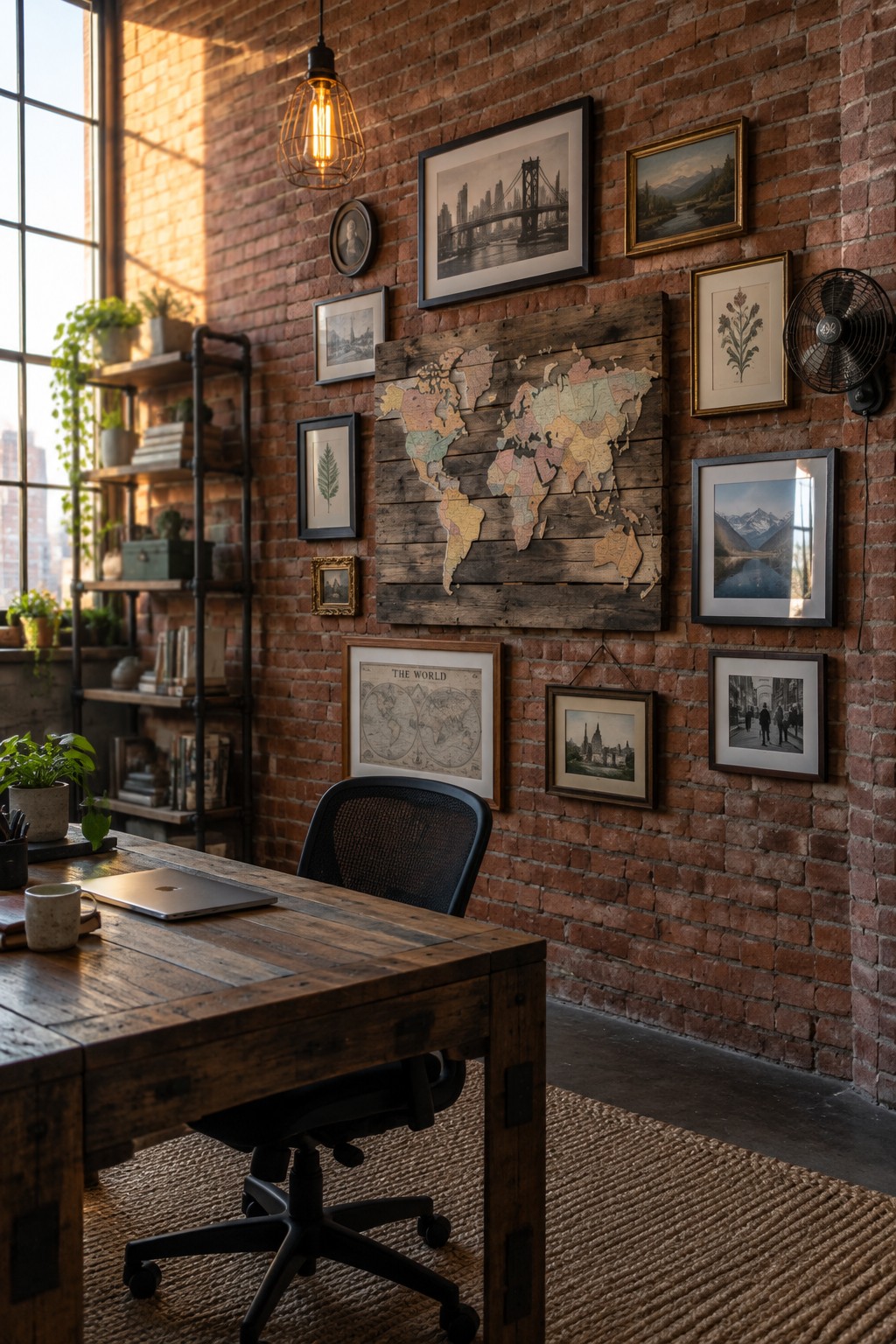
Mixing vintage maps with other framed prints creates an easy gallery wall that fills space without costing much. The mix of old maps, small illustrations, and one larger wooden piece keeps the wall interesting while letting the brick show through in places.
Start with a big central map if you have the room, then add smaller frames around it in no strict pattern. Thrift stores and secondhand sites are the easiest places to find old maps and cheap frames, and the loose arrangement works in most home offices where you want some color and history without a big budget.
Frame Fabric Swatches for Wall Art
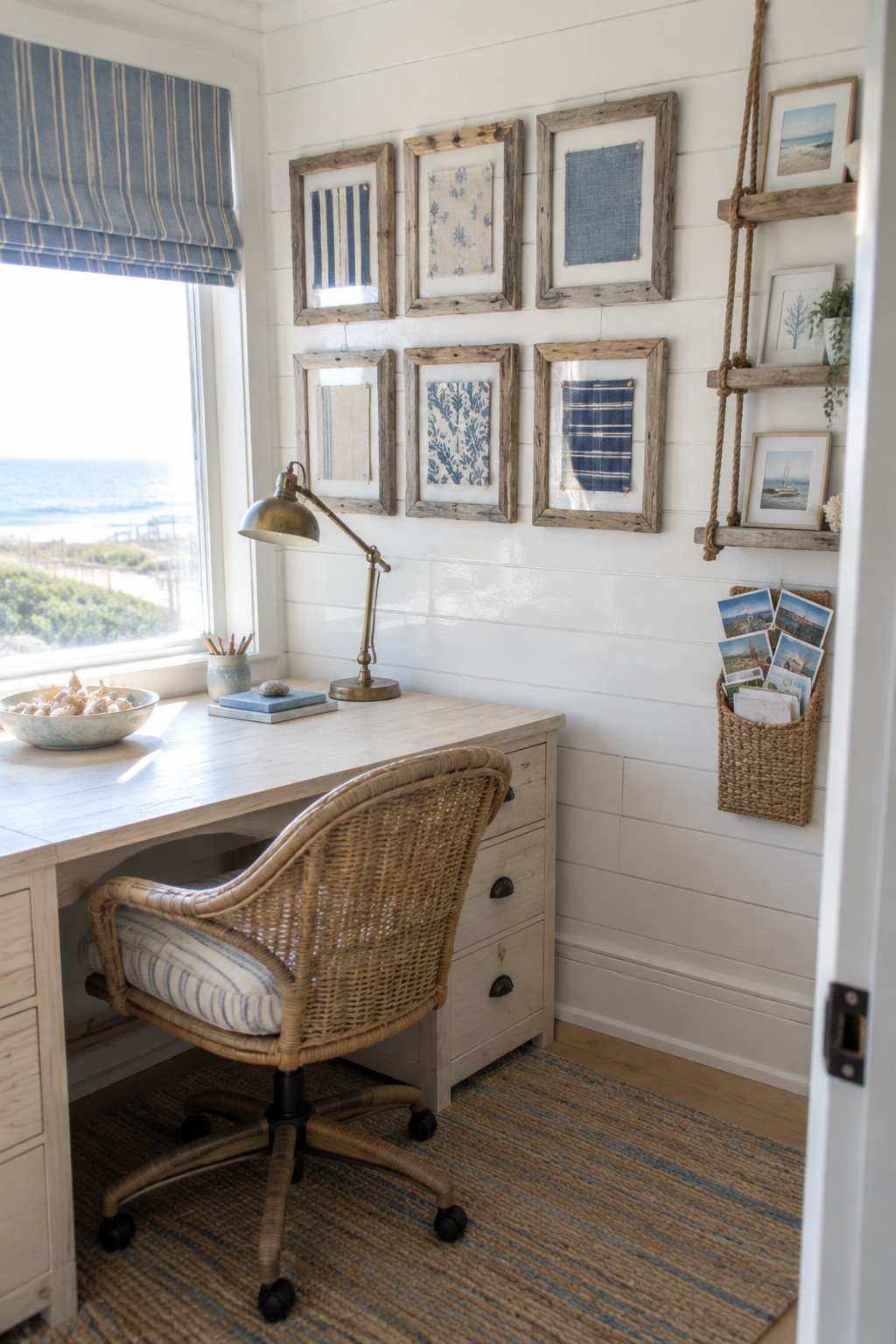
One simple way to fill wall space in a home office is to frame small pieces of fabric. Fabric swatches come in all kinds of patterns, and when you put them behind glass in basic wooden frames they start to look like real art without the high price tag. The mix of textures and the slight variation in frame finish keeps the display interesting but still relaxed.
This works best above a desk or along a long wall where you need something to look at but do not want anything too heavy. You can collect the fabrics over time from remnant bins or old projects, and the whole arrangement stays easy to change when you want something new. Just keep the frames roughly the same size so the grouping feels intentional rather than scattered.
Mix Framed Prints With Cork And Peg Boards
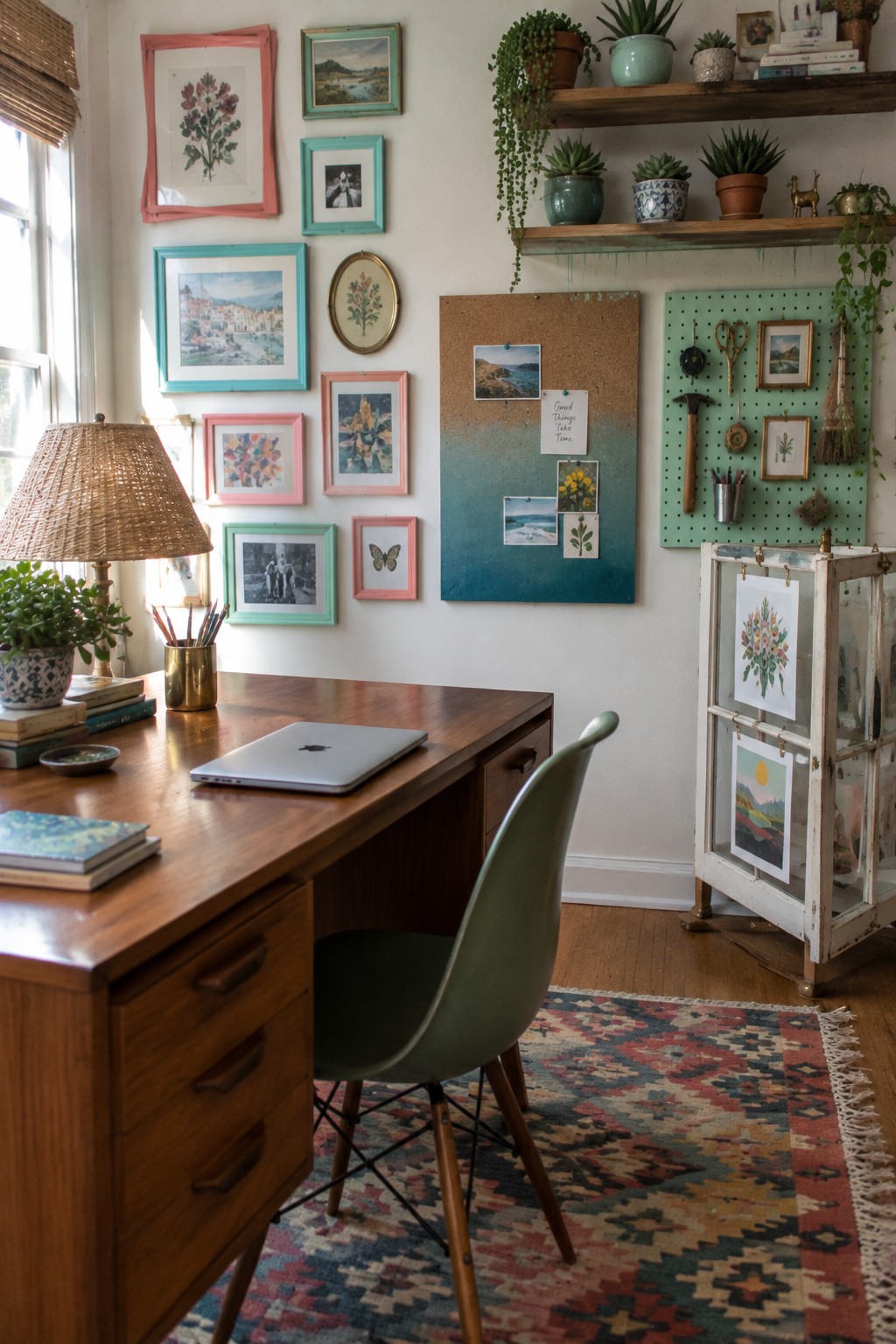
One simple way to build an office wall on a budget is to combine framed prints with a corkboard and a pegboard. The mix keeps the space from feeling too stiff while giving you room to pin up notes, photos, or small pieces you find along the way.
Hang the boards first so you have a flexible base, then add frames around them in whatever sizes you already own. This setup works especially well in smaller rooms where you need both decoration and a place to keep papers or tools within reach.
Hang Photos from a Wire for Easy Changes
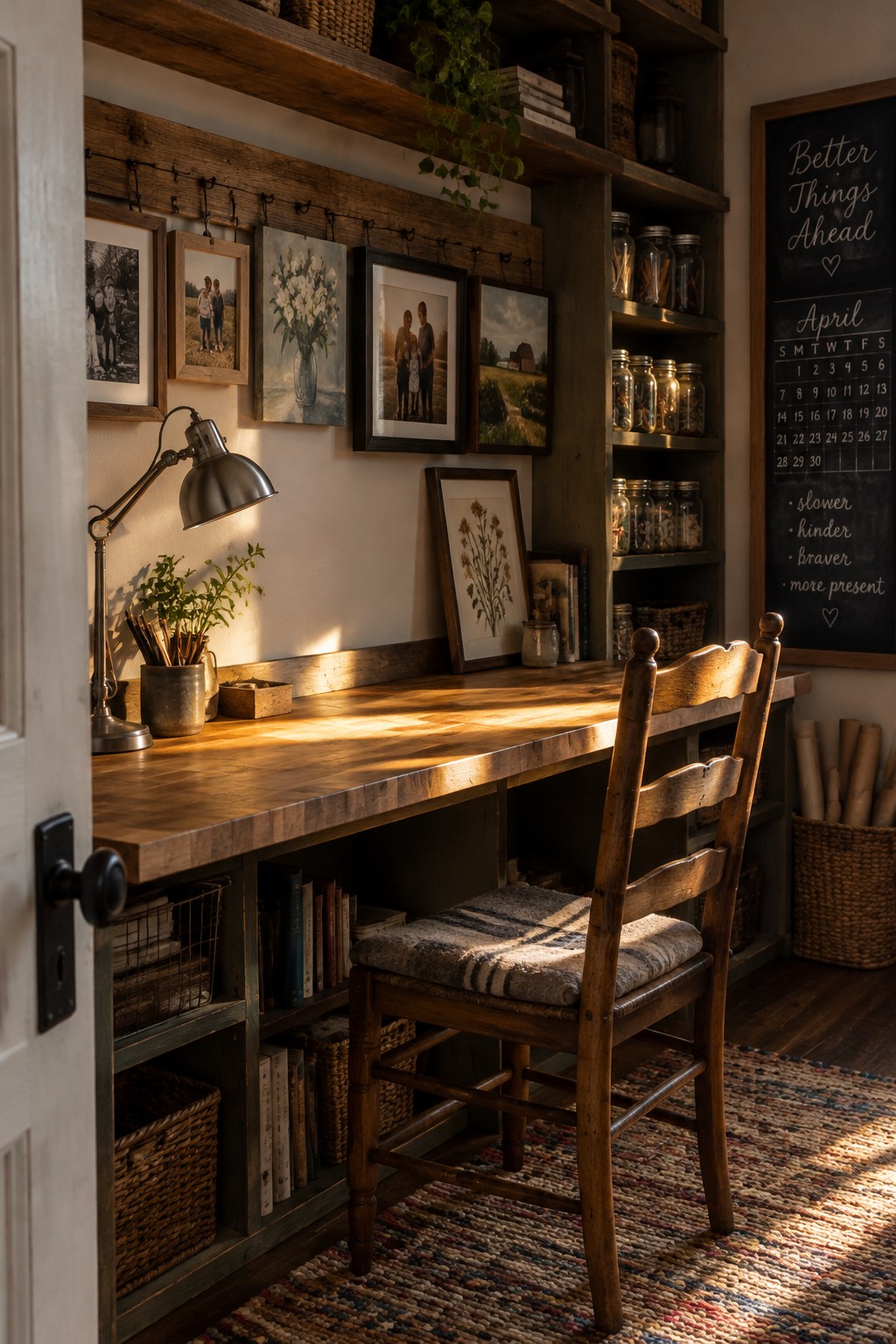
A wire stretched across the wall with simple clips lets you hang framed photos and prints without adding lots of nail holes. It keeps the display looking casual and makes it simple to swap pieces in and out whenever you want something new.
This works well in a home office where you have personal photos or budget prints you like to rotate. Use it over a desk or work table so the art stays at eye level and you can reach it without moving furniture. Just check that the wire and clips can handle the weight of the frames you choose.
Make a Gallery Wall for Your Home Office
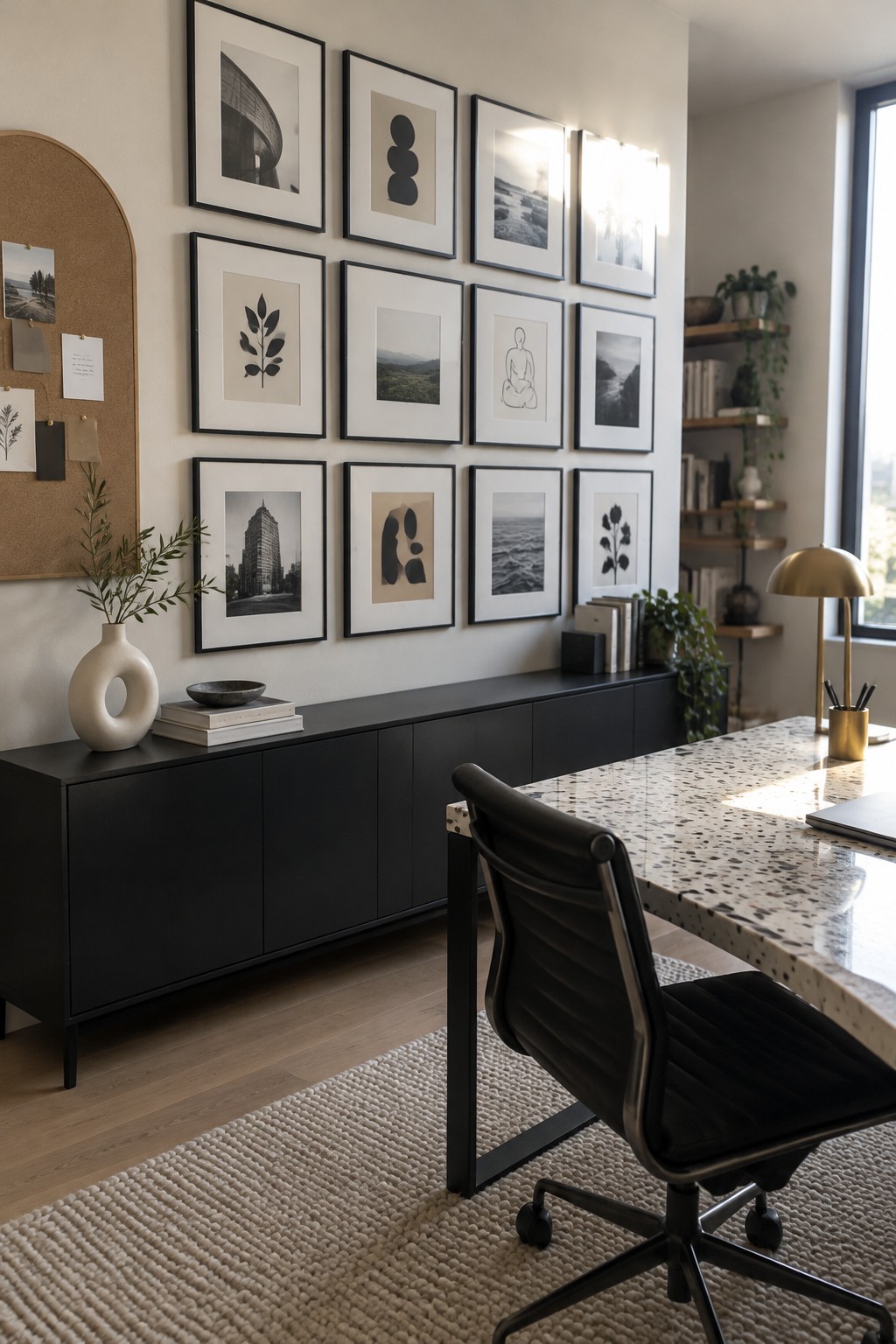
A gallery wall works well in a home office because it fills a large blank wall without needing much furniture or expensive pieces. You can mix photos, prints, and simple artwork in matching frames to create order while still keeping things personal.
Place the frames in a loose grid above a low cabinet or credenza so the art stays at eye level when you are seated. This setup suits smaller offices and makes it easy to swap pieces later if you want a change.
Vintage Maps As Wall Art
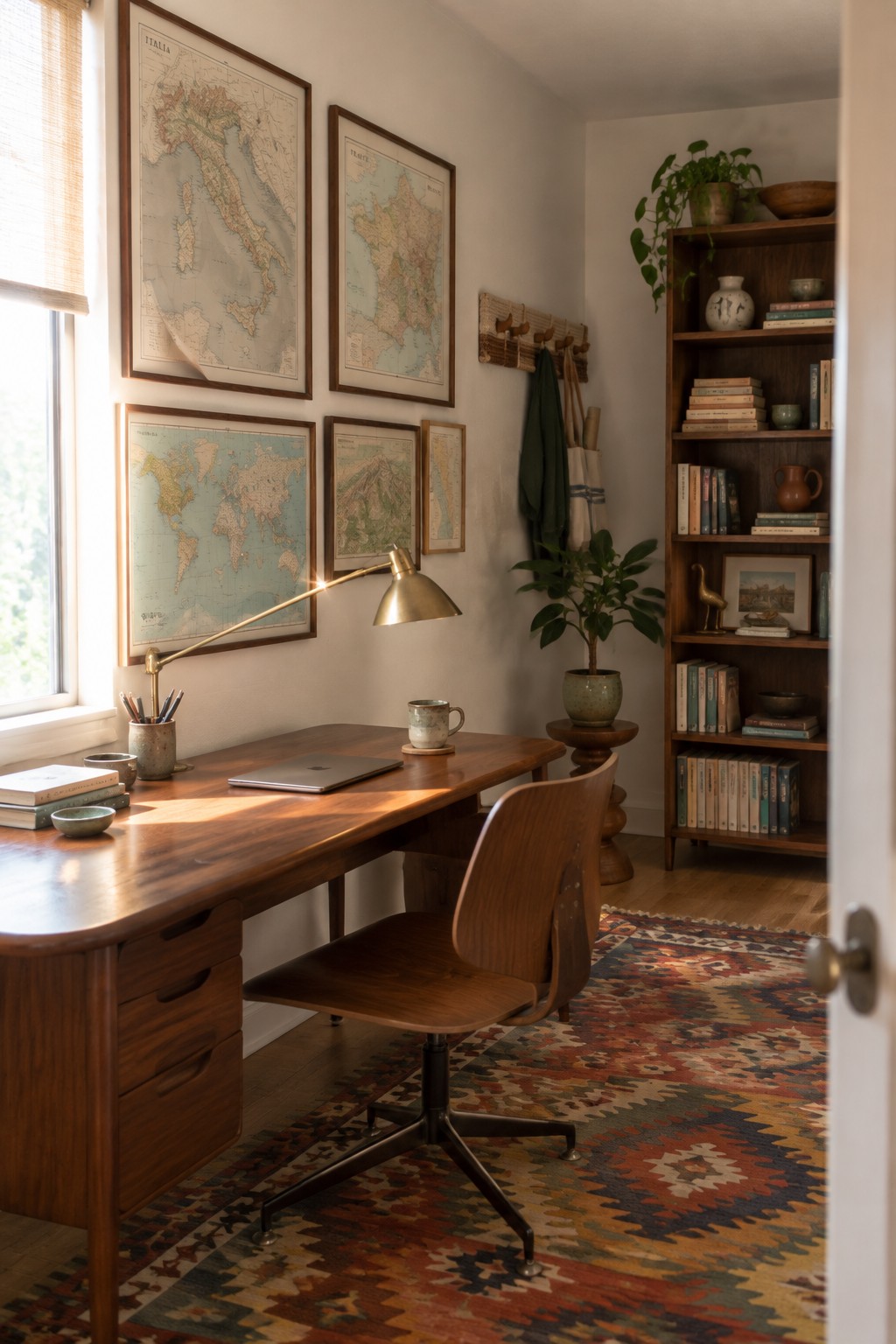
Hanging a few framed maps together above a desk gives an office wall quick character without much expense. Old maps or good prints cost little to frame, and the mix of colors and lines adds interest that feels personal rather than generic.
This approach works best in smaller workspaces where you want something to look at while sitting at the desk. Keep the frames simple and similar so the maps stay the focus, and leave a bit of wall space around the group so it does not feel crowded.
Pegboard Walls For Simple Art Changes
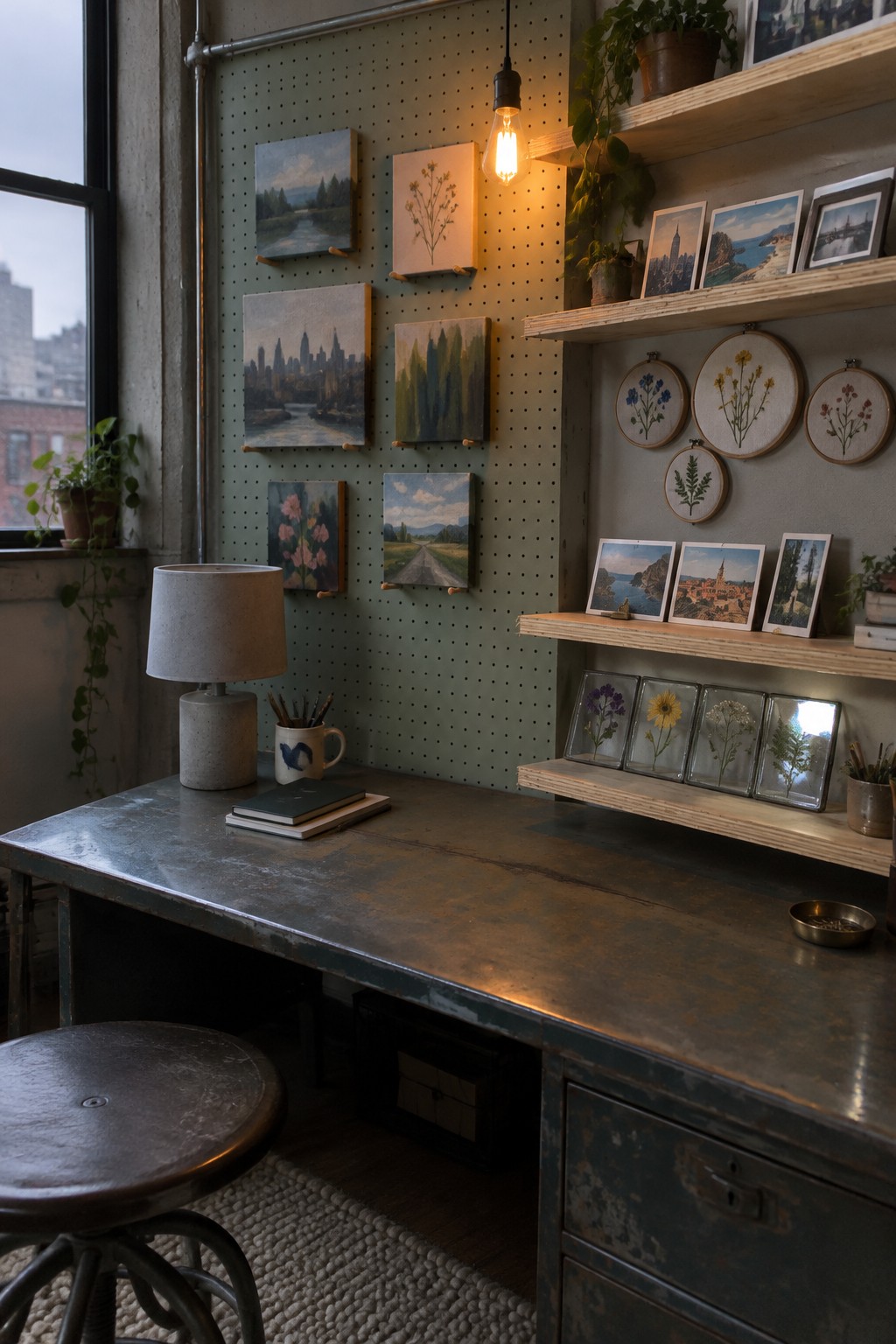
A pegboard gives you one surface that can hold all kinds of small art without needing new holes every time you want a different look. You can mix canvases, embroidery hoops with dried flowers, and framed photos on the same wall and move them around whenever you feel like it.
This setup works especially well in a home office where the space is small and you want the view to stay fresh. Get a basic pegboard from any hardware store, add a few hooks or small ledges, and start with whatever prints or pieces you already have.
Repurpose An Old Shutter For Photo Displays
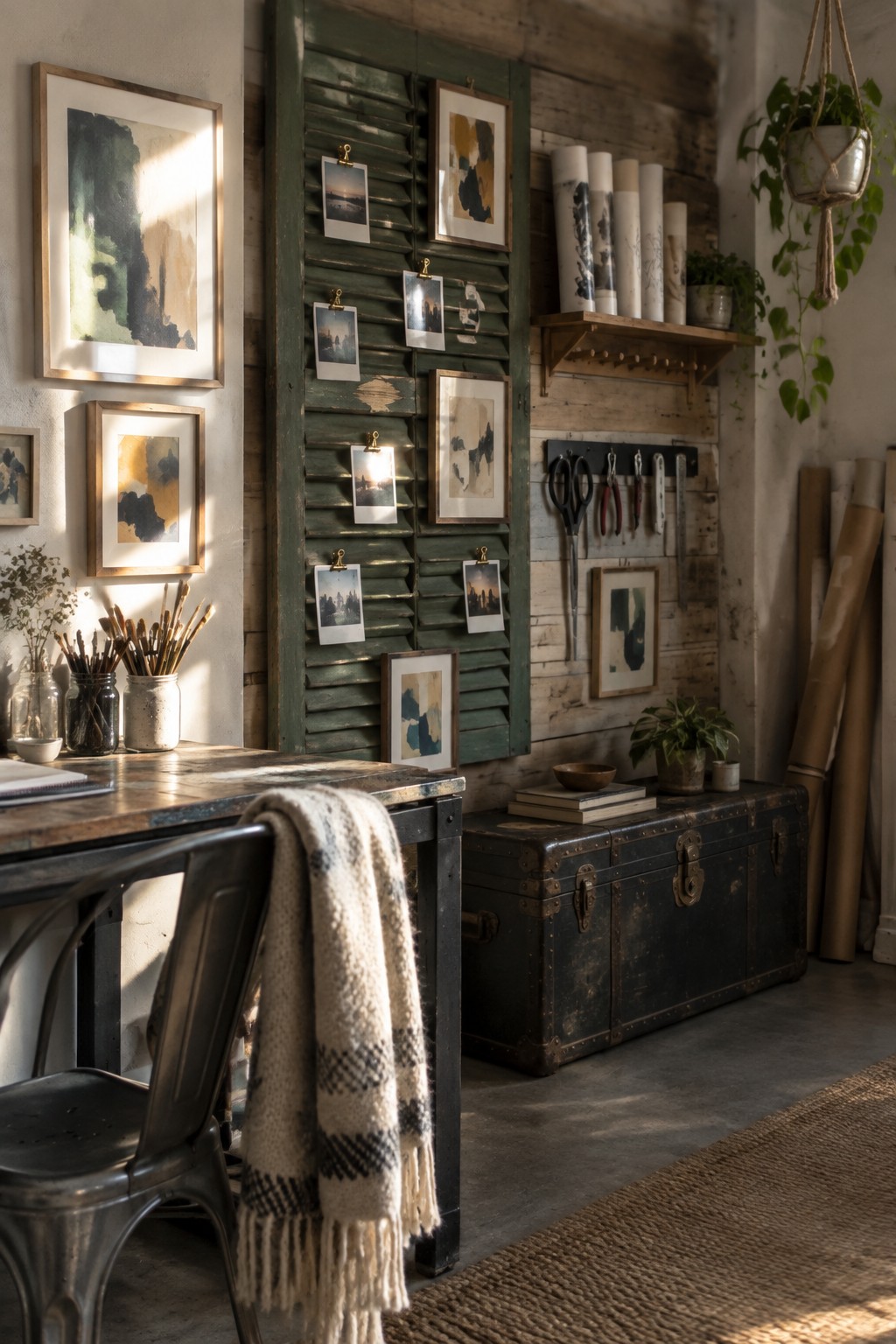
An old shutter gives you an easy way to hang photos and small prints without needing a lot of frames. The slats already have gaps, so you can clip things on and move them around whenever you want. It works especially well in a home office where you might change the display often.
This approach suits older homes or any space with a bit of texture already. Look for shutters at salvage yards or flea markets, give them a quick coat of paint if needed, and add a few clips. Keep the rest of the wall simple so the display stays the main focus.
Use A Wire Grid To Change Up Wall Art Often
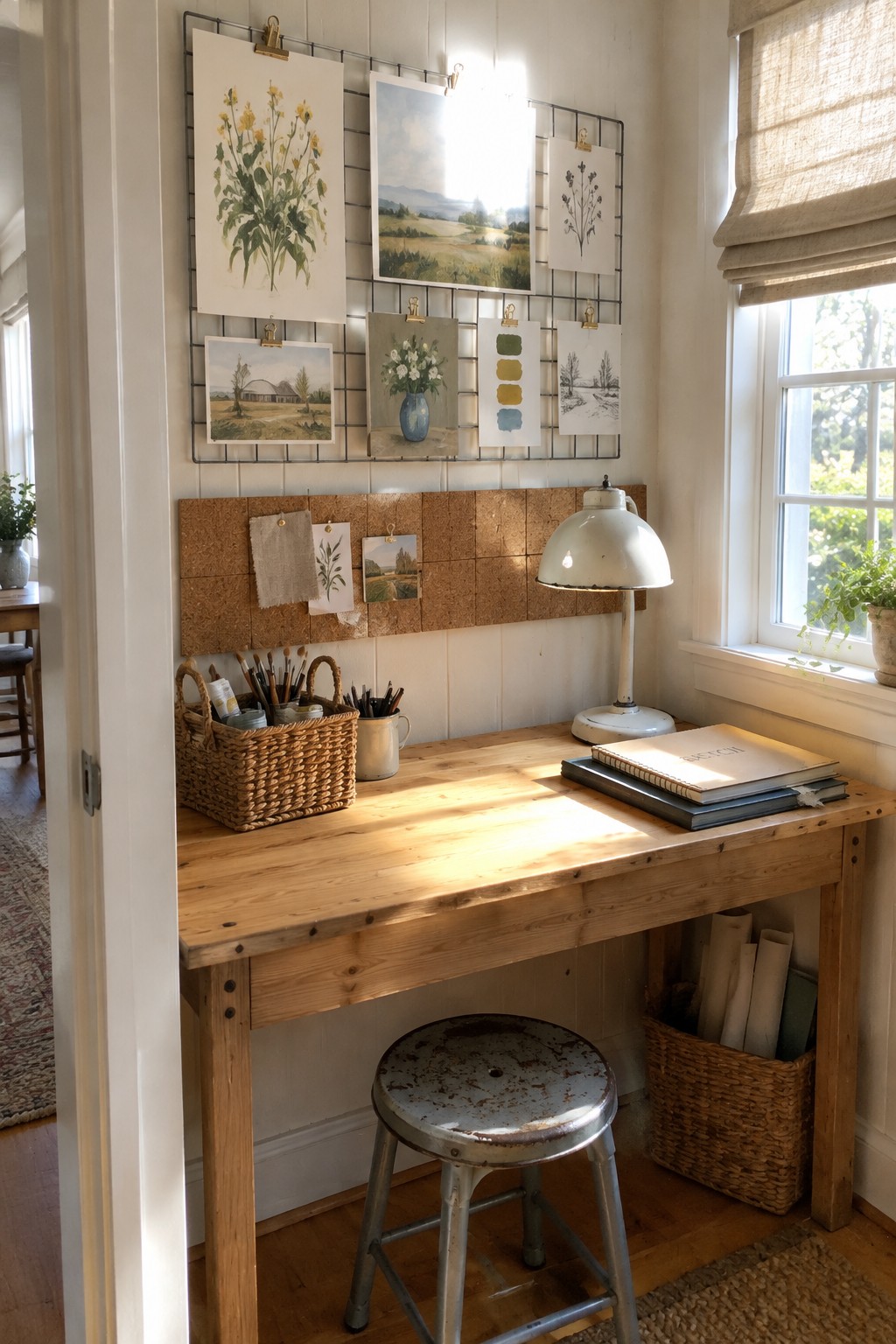
A wire grid mounted above a desk gives you a simple way to hang prints, sketches, and color samples without putting holes all over the wall. You can move things around whenever the mood strikes, which keeps the space feeling fresh without spending much money.
This works best in a home office where you want options rather than one fixed arrangement. Get a basic grid panel, hang it with a few screws, and use small clips or clothespins to attach whatever you like. The cork tiles below add a spot for quick notes or smaller pieces if you want more surface.
Group Prints into a Clean Grid
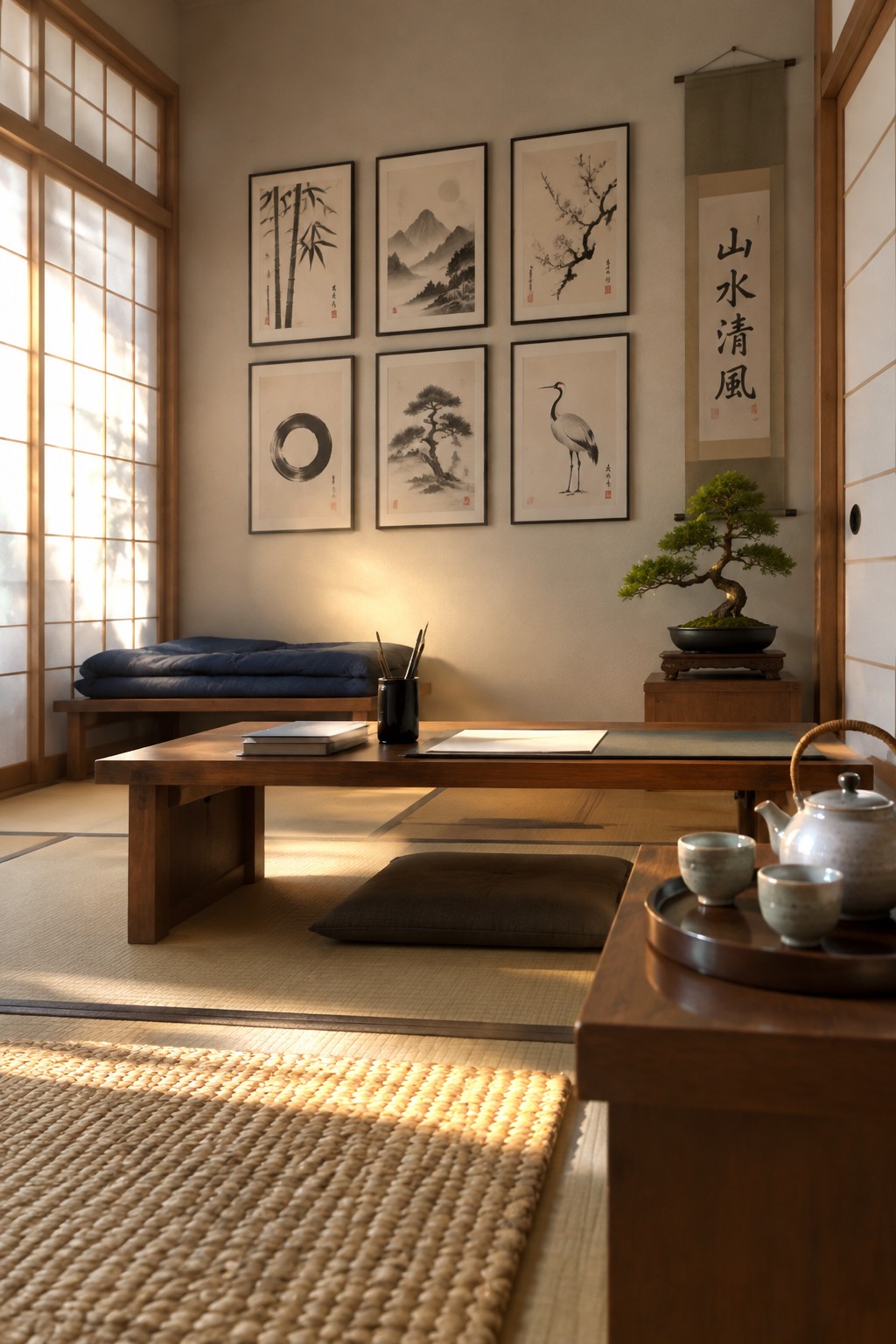
A grid of smaller prints can turn an empty wall into something useful without spending much. The even spacing and matching frames keep the look simple, which helps the space feel calm rather than crowded. This approach works especially well when the prints share a similar style or subject.
You can copy this in a home office by choosing inexpensive prints or even your own sketches, then framing them the same way. It suits smaller rooms where you want quiet visual interest behind a desk or low table. Just keep the number of pieces modest so the wall does not compete with your work.
Mixing Frames And Art Styles On One Wall
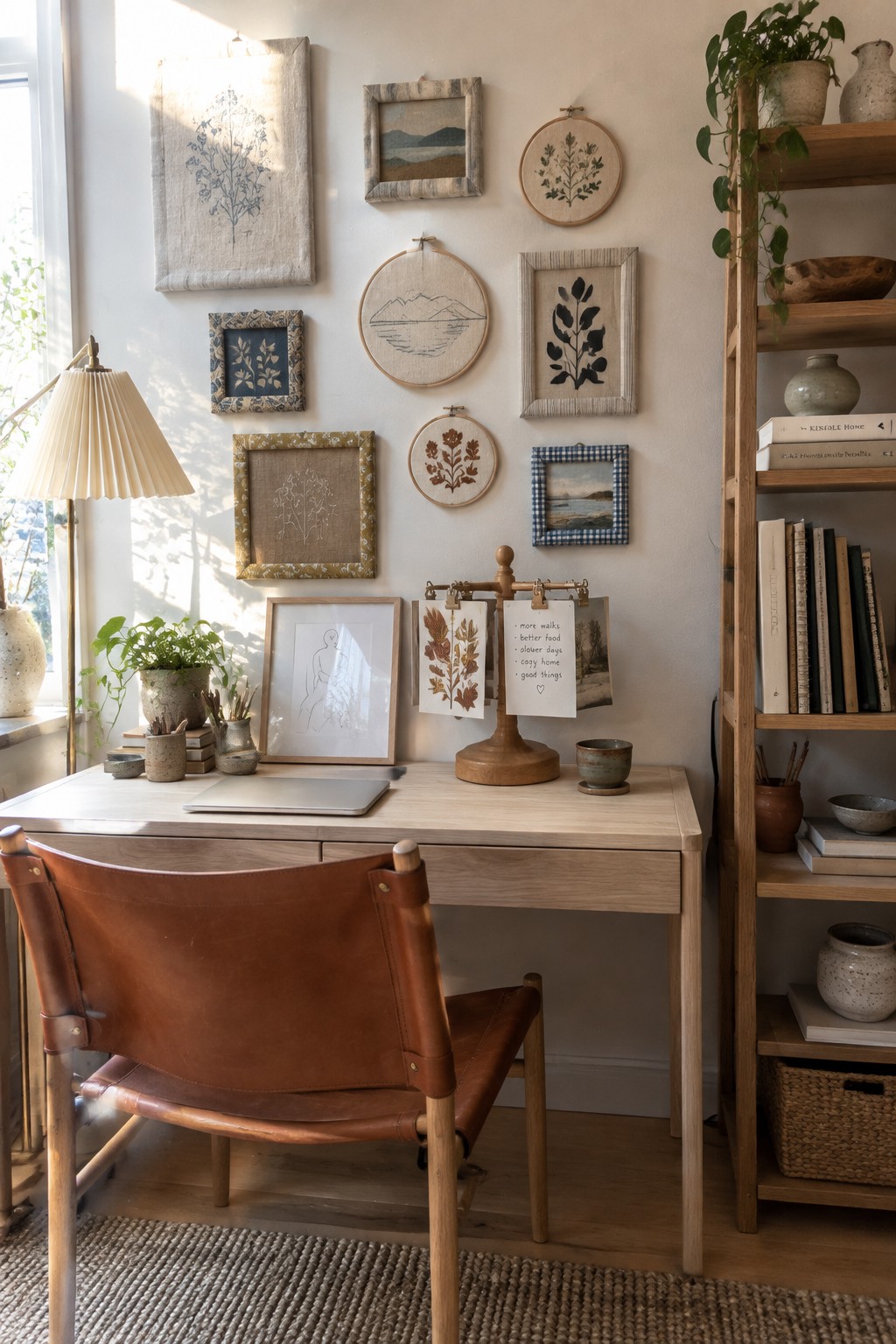
One simple way to fill a blank wall in a home office is to gather whatever prints, drawings, and small textiles you already have and hang them together without worrying about matching frames. The mix of wood tones, fabric hoops, and different sizes keeps the arrangement from feeling stiff or overly planned.
This approach works best in smaller work areas where a single large piece might feel too heavy. Start with pieces you like and add more as you find them. It suits almost any desk setup and lets you change things out easily when you want a fresh look.
Frequently Asked Questions
Q: How do I hang the art if I rent and cannot put holes in the walls?
A: Command hooks or poster putty work great for most lightweight projects. They peel off easily when you move out. Stick to smaller pieces so nothing gets too heavy.
Q: What if I have zero drawing or painting skills at all?
A: Focus on printing free images or photos and framing them simply. Cut shapes from colored paper for abstract looks. These need no talent beyond basic cutting.
Q: Can I reuse old items from around the house for these ideas?
A: Old calendars or maps make quick art when mounted on cardboard. Fabric scraps stretched over frames add texture fast. Check your junk drawer before buying anything new.
