

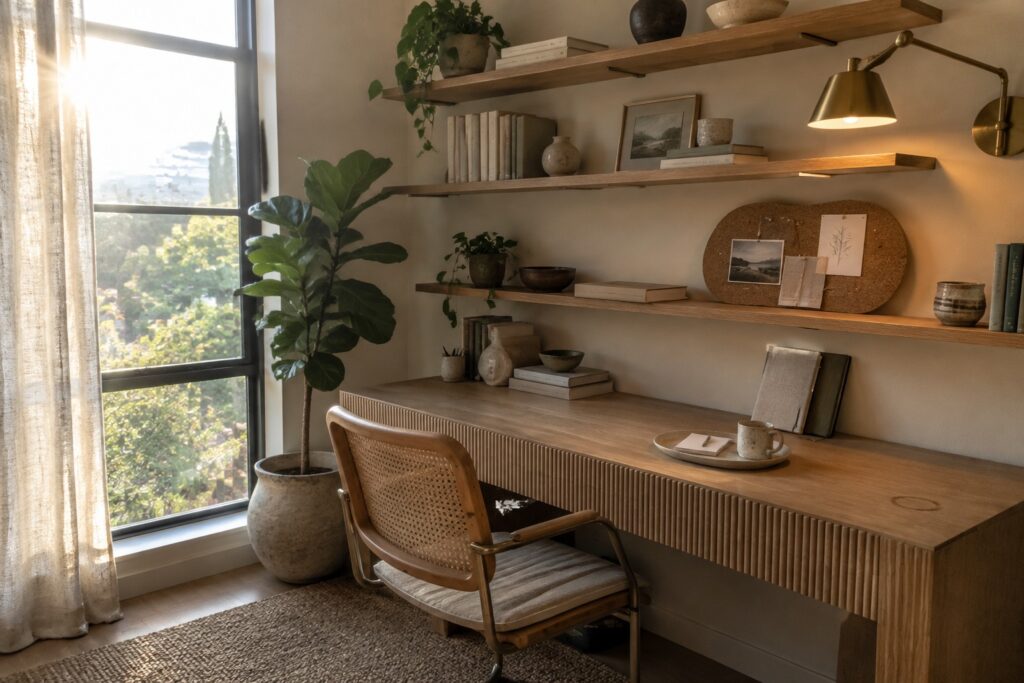
When I rearranged my home office last year, the shift to natural textures immediately made the room feel less like a temporary workspace and more like part of the house.
It changed everything.
Streamlined shelving then kept the surfaces clear while still giving me places to keep books and supplies within easy reach.
I have found that these choices work best when they account for how the light moves through the room at different times of day.
A couple of the ideas here seem worth adapting to see if they improve how the space functions over time.
Natural Textures With Streamlined Shelving
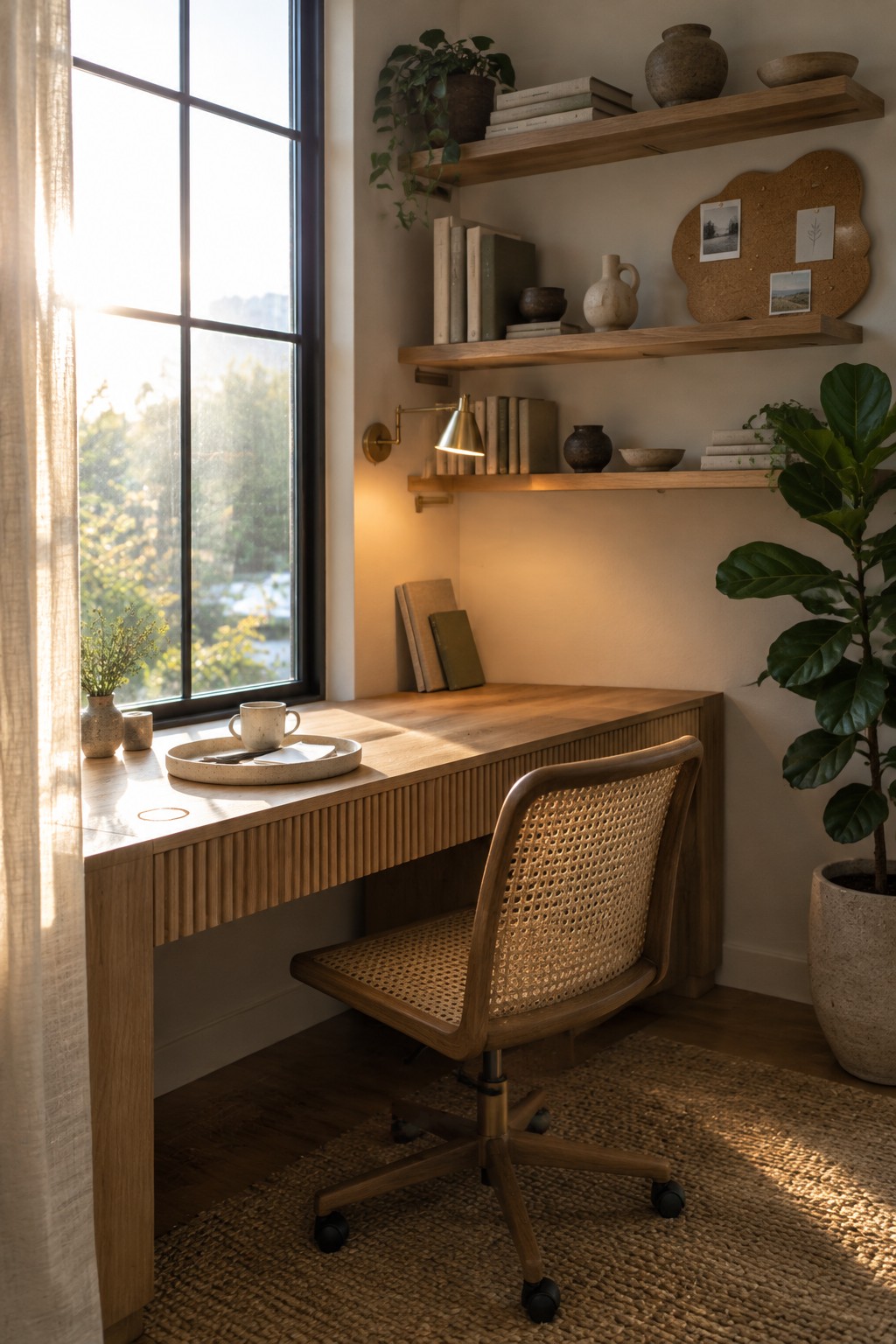
Natural materials make a workspace feel calmer without adding clutter. Wood shelves and a woven chair bring in texture while the simple lines keep everything looking neat and organized.
This setup works best in smaller rooms or offices that get steady daylight. It suits homes that want a modern look but still need the warmth that comes from real wood and natural fibers.
Built-In Shelving That Keeps the Desk Clear

Built-in shelving works well in a home office because it turns one wall into useful storage without taking up extra floor space. The wood grain and simple open shelves give the room a calm, natural feel while holding books, boxes, and a few plants. It keeps the work surface free for just the computer and a lamp.
This setup suits smaller rooms or any office that needs to stay tidy. You can copy the idea by running the shelves from floor to ceiling in the same wood tone as the desk, then adding a few closed boxes on the lower shelves to hide papers and cords.
Open Shelving With Wood And Metal

Open shelving made from thick natural wood planks on black metal supports gives an office storage without making the room feel closed in. The wood brings warmth and texture while the metal keeps the whole unit looking clean and simple.
This setup works best in spaces that already have wood tones and natural light. Leave some empty space on the shelves so the arrangement stays easy to look at and does not compete with the desk area.
Built In Shelving That Keeps The Workspace Simple
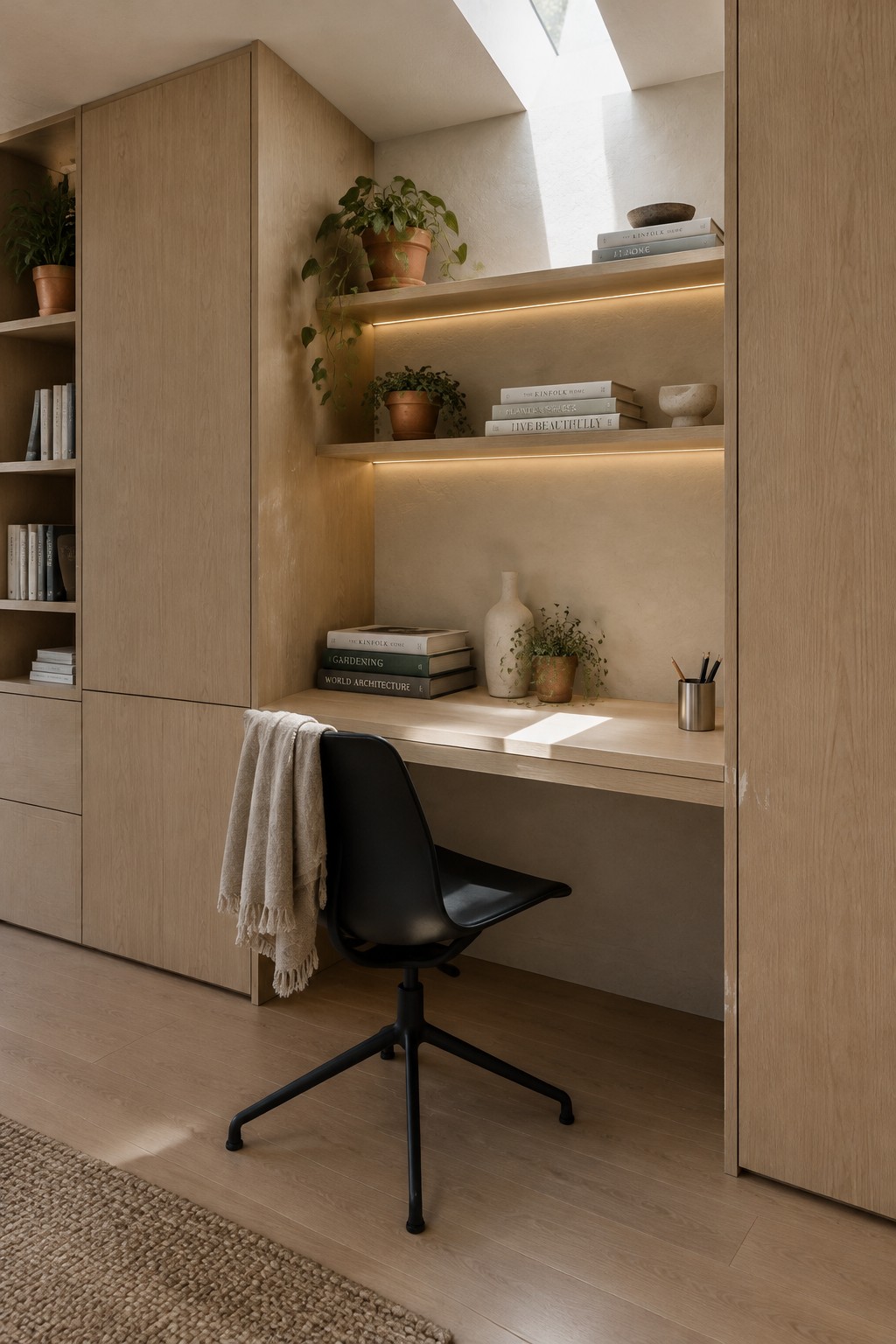
Built in shelving works well when you want storage and a desk to feel like one thing instead of several separate pieces. Light wood helps the whole wall stay bright while still giving space for books and a few plants without crowding the surface.
This setup suits smaller rooms or homes that need the office to stay calm rather than busy. Match the desk to the shelves so the wall reads as one clean unit, and keep only what you use every day within reach.
Floating Shelves Keep Storage Simple
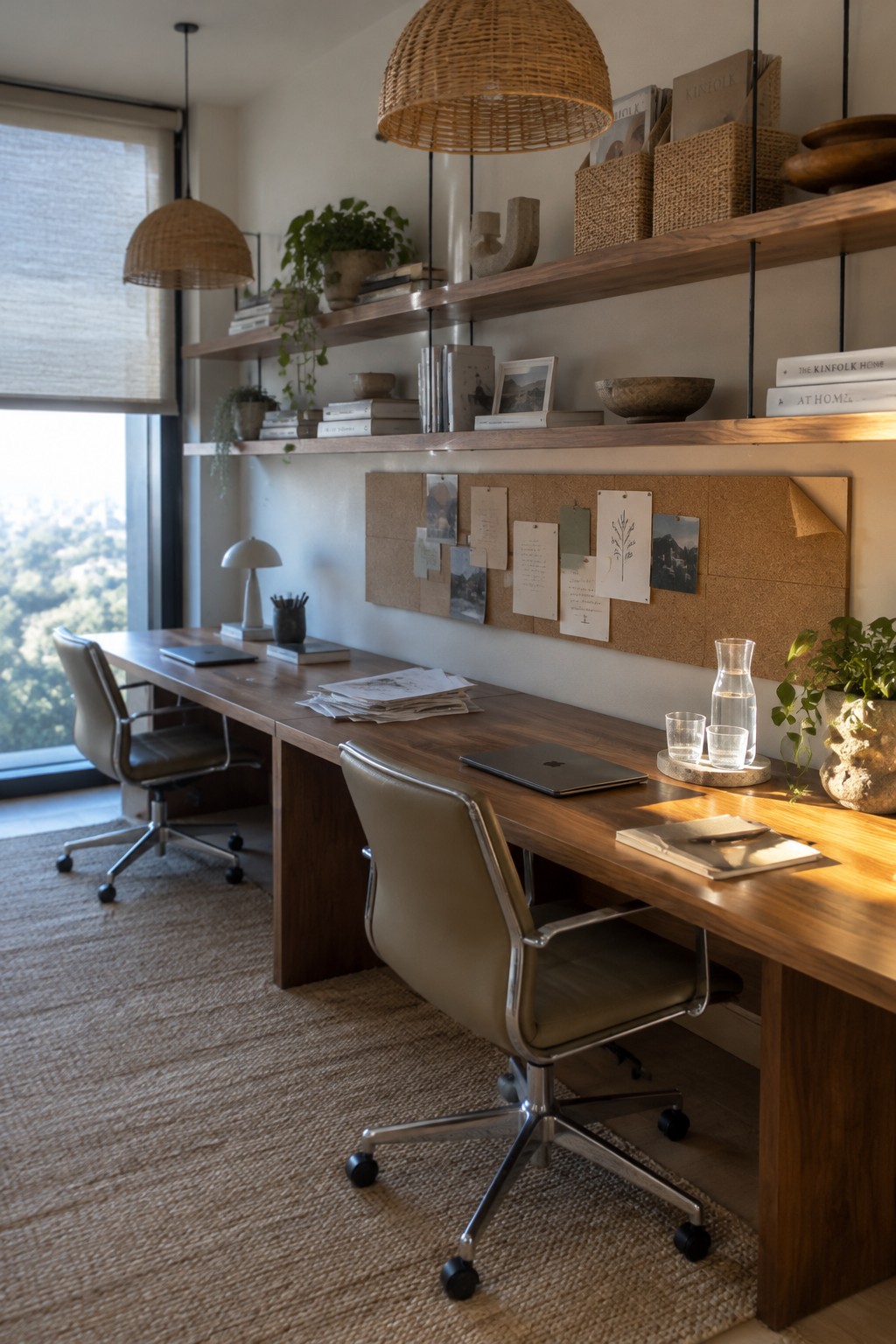
Floating shelves work well above a desk because they add storage without taking up floor space or making the room feel boxed in. The long, low profile lets you spread out books, plants, and a few baskets while the desk below stays clear for actual work.
This setup suits smaller offices or anyone who wants the space to feel calm instead of crowded. Stick to light wood, a few woven pieces, and greenery so the shelves add texture without turning into a display wall.
Built-In Shelving That Follows a Sloped Ceiling
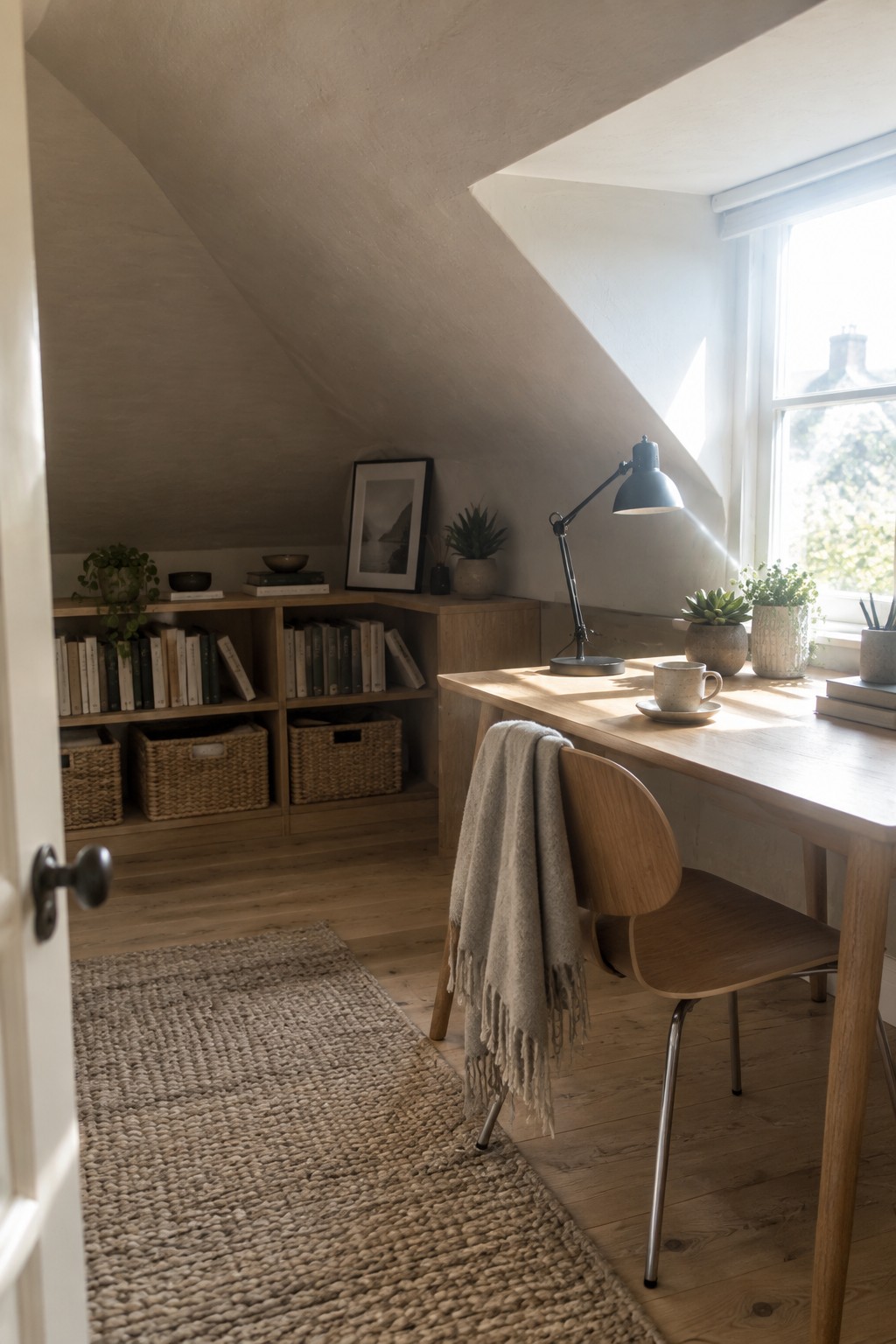
Built-in shelves can make the most of tricky ceiling angles in a home office. Instead of leaving the space under a slope empty or awkward, the shelves run along the wall and use every inch without crowding the room.
This setup works best in smaller offices or converted attic spaces where standard furniture would feel cramped. Keep the shelving in the same wood tone as the desk and floor, then add a few woven baskets and a simple rug to bring in natural texture without adding clutter.
Open Shelving That Stays Light
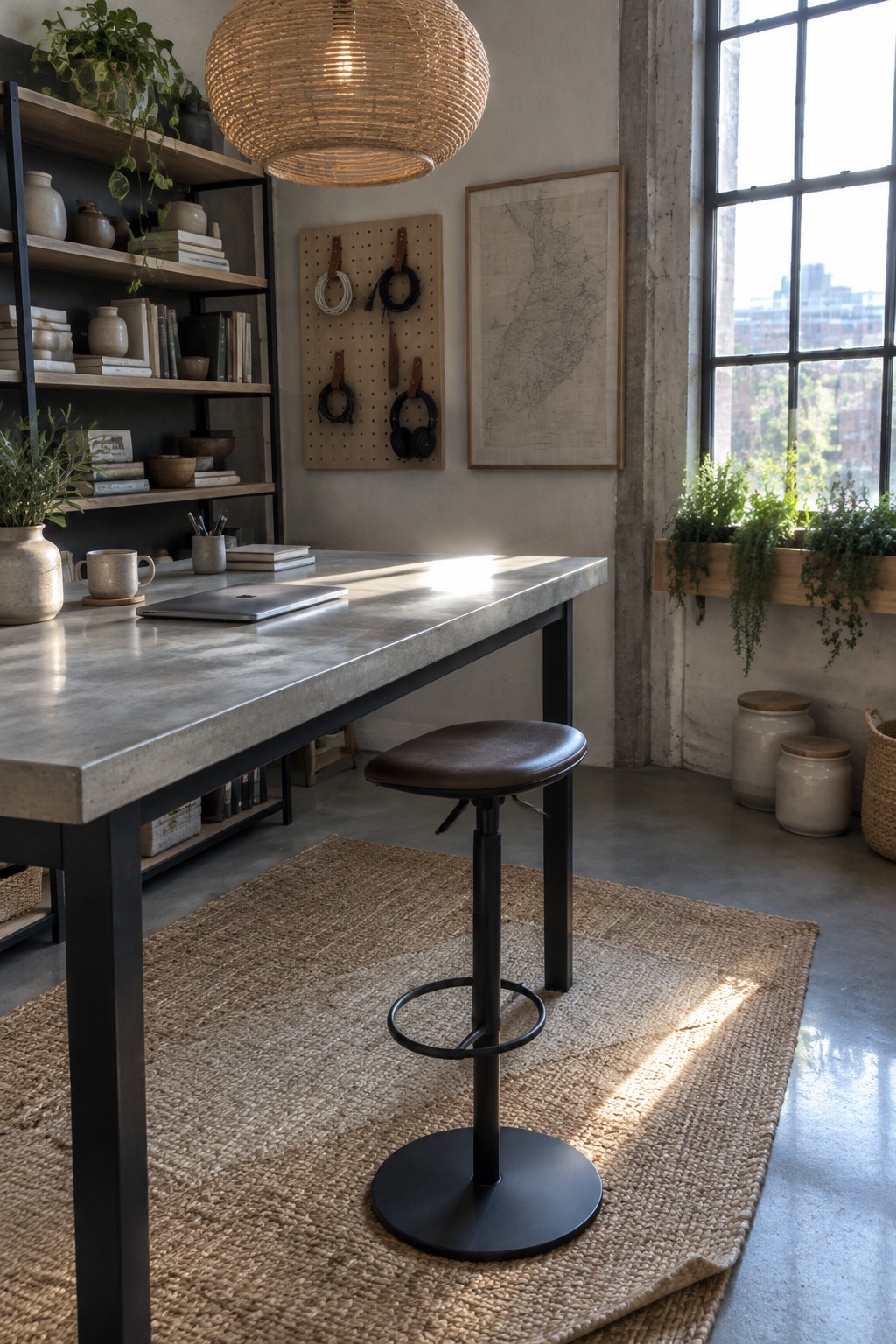
Open shelving works well in a home office because it gives you storage without closing things off. You can keep books, supplies, and a few objects you actually use within reach while the open structure keeps the room from feeling boxed in. The mix of wood tones, ceramics, and plants adds some warmth that a solid cabinet would hide.
This setup works best in smaller offices or spaces that need to feel connected to the rest of the home. Stick to a loose arrangement rather than filling every inch, and choose pieces that share a similar color range so the shelves do not start to look messy over time.
Built-In Shelving That Keeps The Office Organized
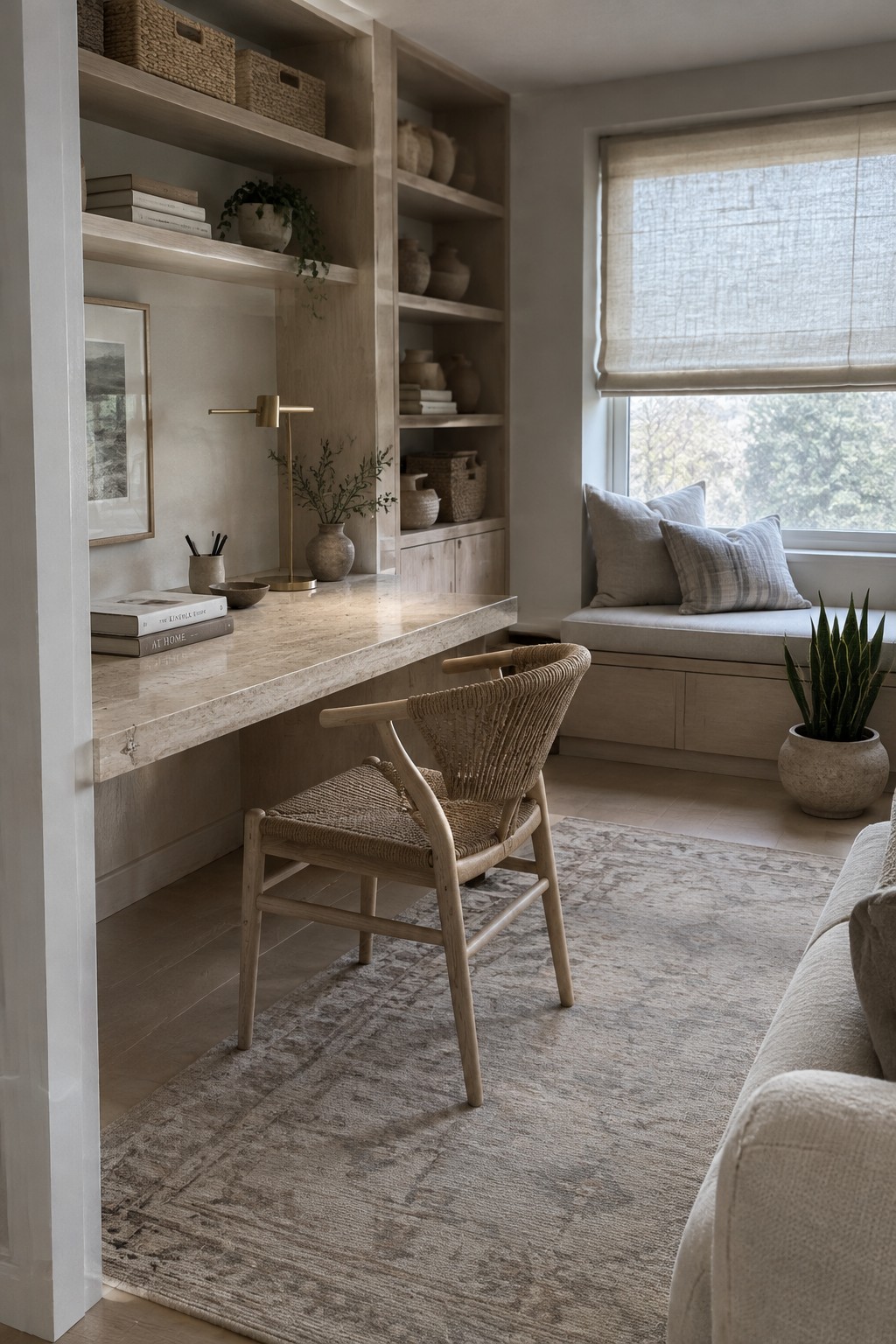
Built-in shelving paired with a desk surface works well when you want storage without extra pieces taking up floor space. The light wood and stone keep the materials simple, and the open shelves let you store what you need without closing everything off.
This layout suits smaller rooms or alcoves where you need the space to feel open. Stick to a few natural textures like wood and woven seating, and leave some empty shelf space so it does not feel crowded. It fits homes that already lean toward calm, unfussy design.
Floating Shelves Help Keep The Office Feeling Open
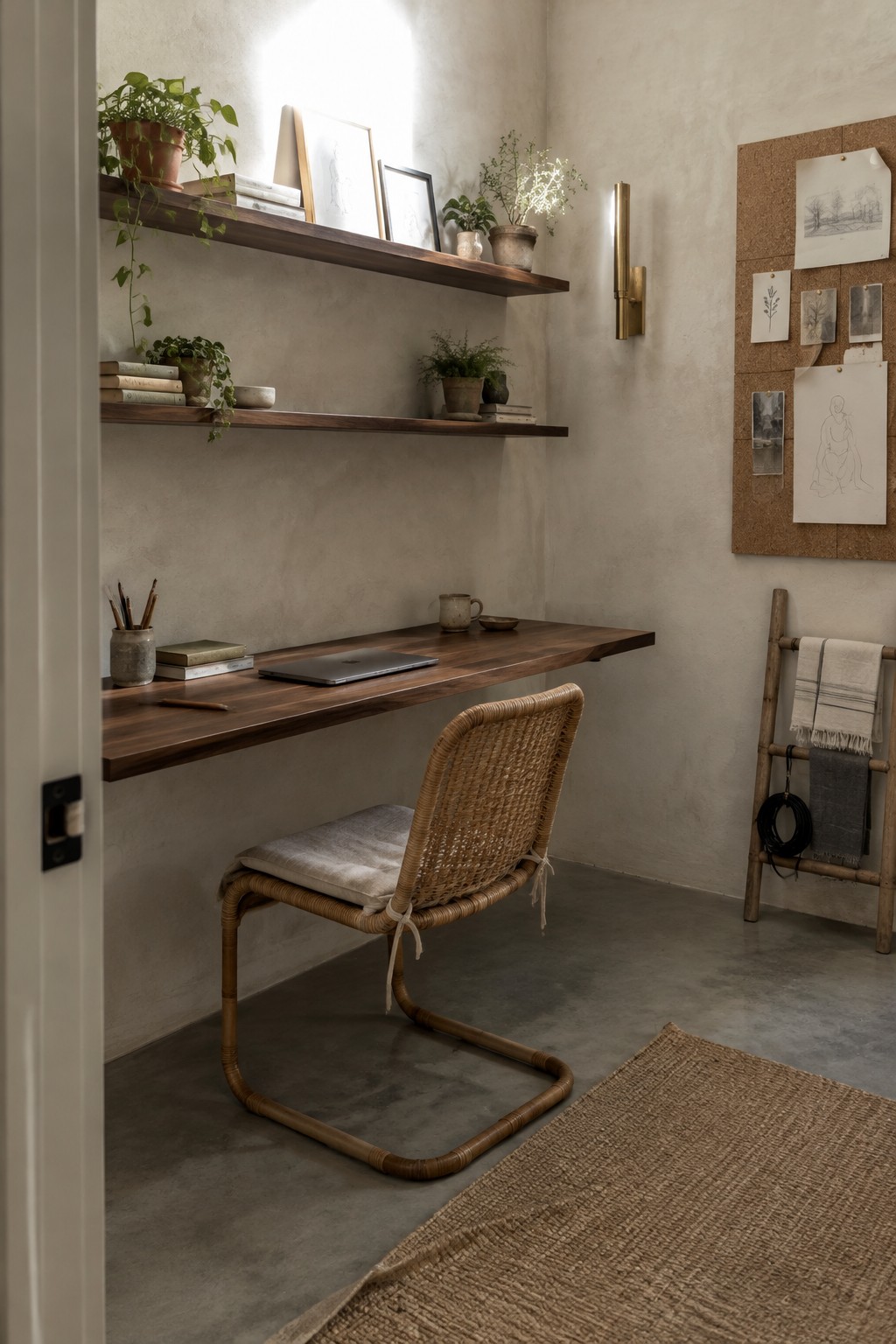
Floating shelves work well in a home office because they give you storage and a place for plants or books without taking up floor space. The clean lines keep the room from feeling crowded and let the natural textures of the desk and chair stand out more.
They suit smaller rooms or anyone who wants a simple setup that still feels warm. Keep the items on the shelves fairly minimal and mix in a few plants so the space stays balanced and easy to maintain.
Built-In Shelves Over a Desk
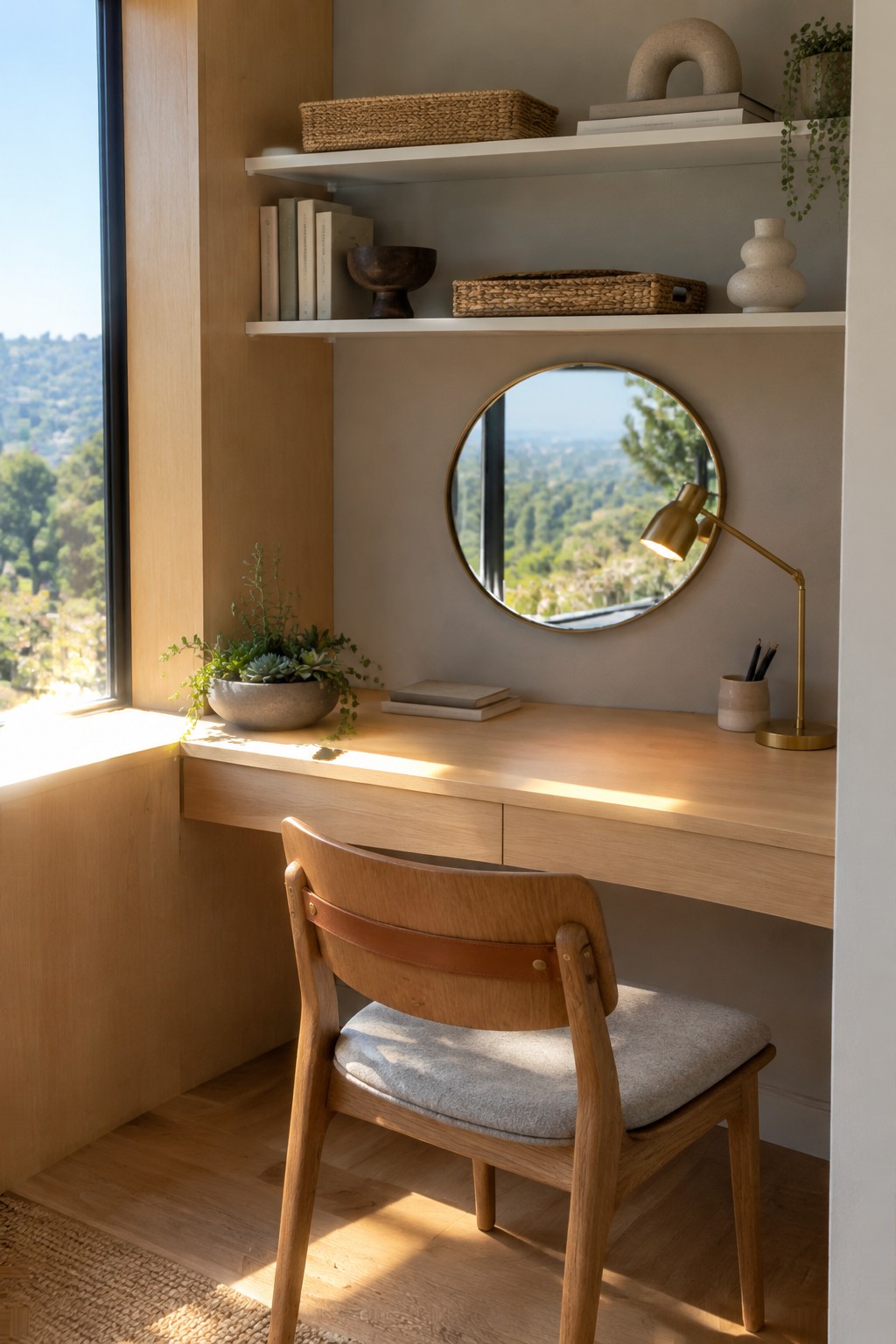
Floating shelves above a desk give you storage without crowding a small workspace. The open style keeps the wall light and lets you reach what you need quickly, which works especially well when the desk sits in a corner or near a window.
This approach suits homes that want a calm, natural look without built-in cabinets taking over the room. Use shallow shelves and simple containers so the surface stays clear and the wood tones can show through.
Fill Open Shelving With Plants And Books
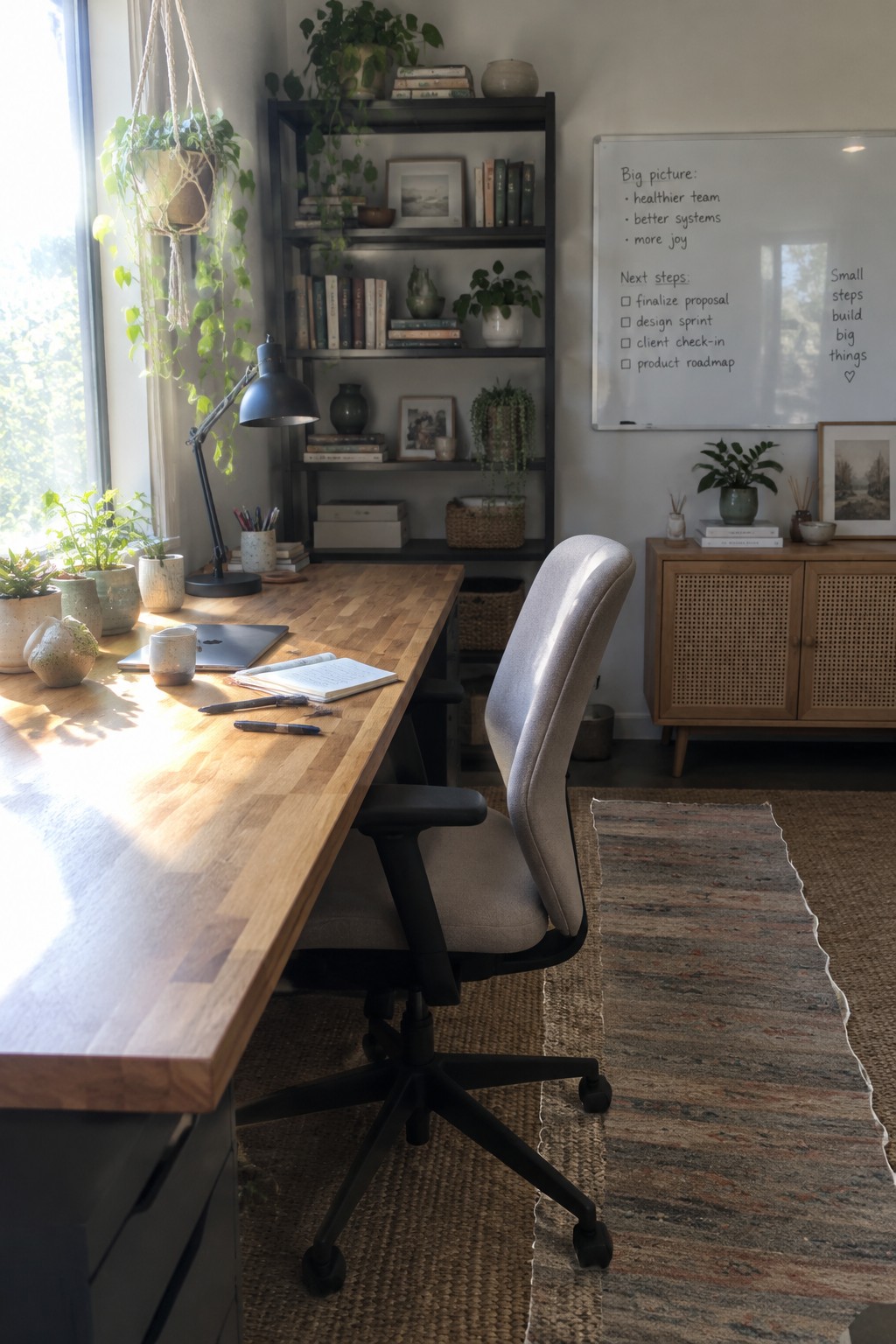
One simple way to bring natural texture into a home office is to treat open shelving as both storage and a place for plants. The mix of books, small pots, and trailing greenery softens the clean lines of the shelves while still keeping everything organized and easy to reach.
This setup works best in rooms with good natural light, where the plants stay healthy and add life to the workspace. Keep the number of objects limited so the shelves do not start to feel crowded, and choose a few larger plants to balance out the smaller ones.
Built-In Shelving In Natural Wood
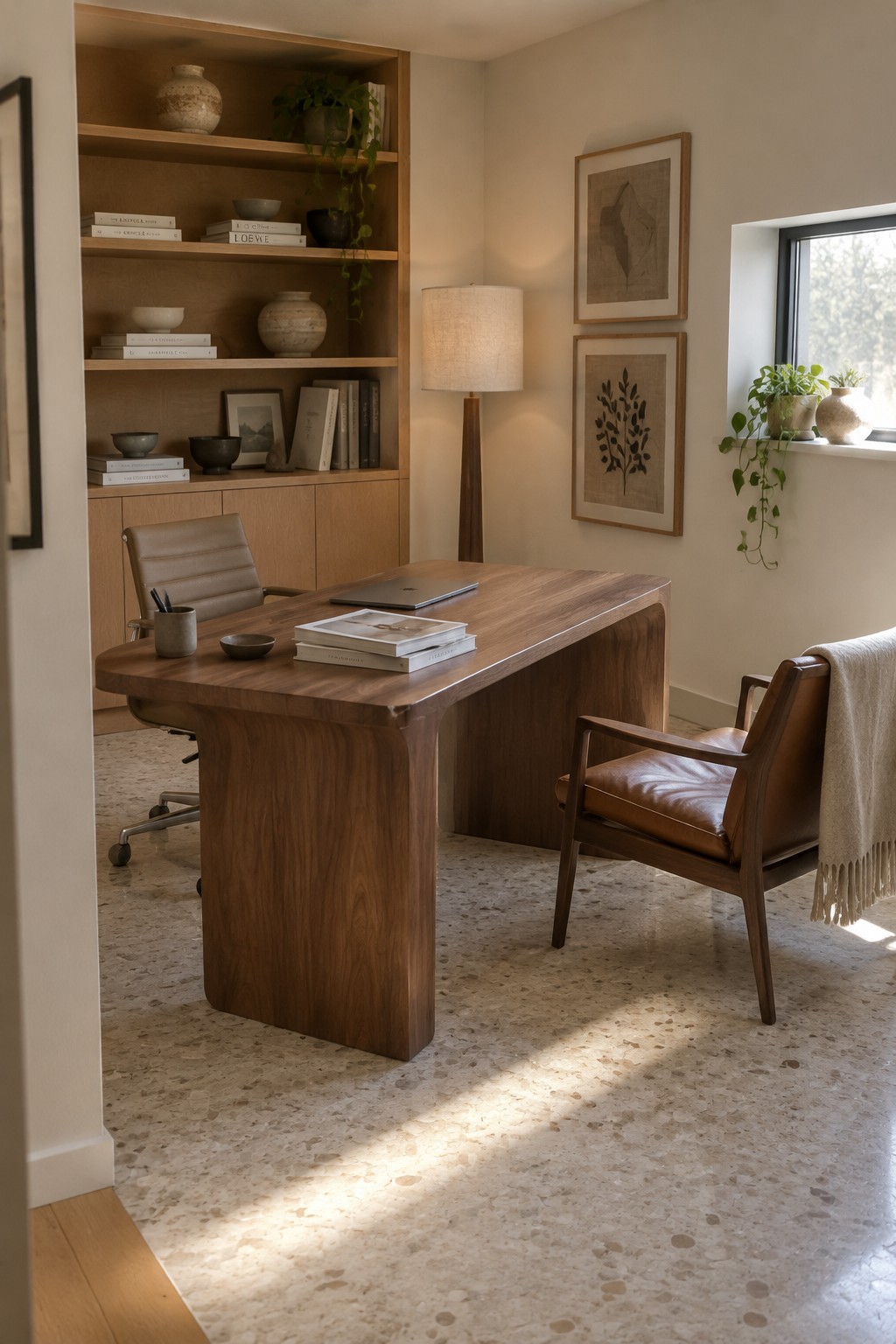
Built-in shelving works well in a home office because it turns a plain wall into useful storage without adding extra furniture that can crowd the room. The light wood tone keeps the whole space feeling open and calm while still giving you room for books and a few simple objects.
This approach fits best in smaller offices or rooms where you want storage that feels built into the house rather than added later. Keep the shelves from getting too full and leave some empty space so the wood itself stays visible.
Built-In Shelving With Woven Baskets
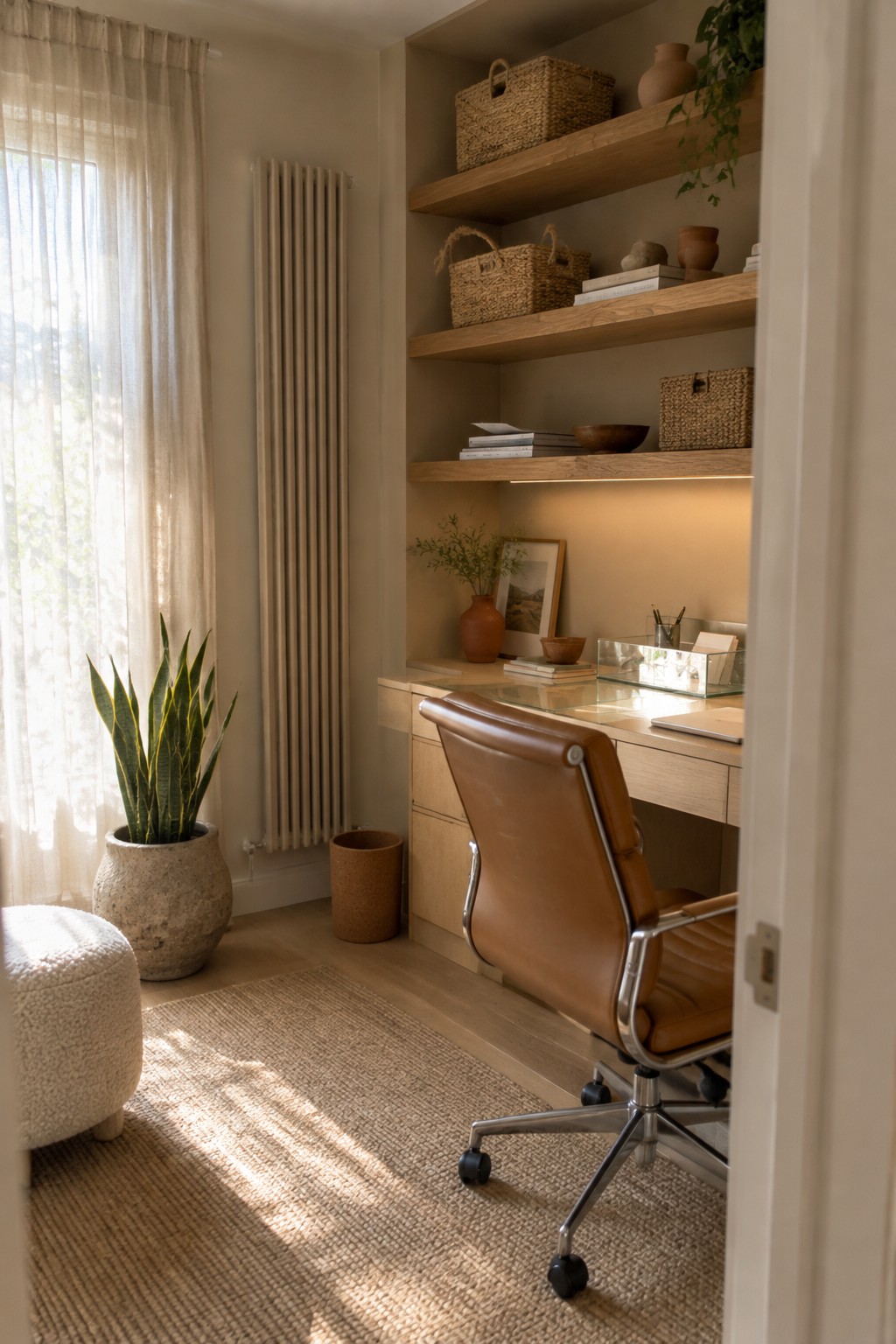
Built-in shelving gives a home office useful storage without crowding the floor. Woven baskets keep papers and smaller items out of sight while adding a natural texture that works with wood tones and neutral walls.
This setup works best in rooms where you want things to feel calm and organized. Keep the shelves from getting too full, and use the baskets for anything you reach for often so the desk area stays clear.
Floating Shelves Keep a Desk Nook Feeling Open

A floating desk with open shelves above it turns a small unused corner into a working spot without adding bulk. The wood stays light against the wall, and nothing below the desk blocks the floor, so the area still feels like part of the room rather than a separate office.
This works well in older homes or open layouts where you want the workspace to stay quiet and blended in. Use it along a hallway wall or in an alcove, and limit what sits on the shelves to avoid a cluttered look over time.
Floating Desks Fit Workspaces Into Narrow Rooms
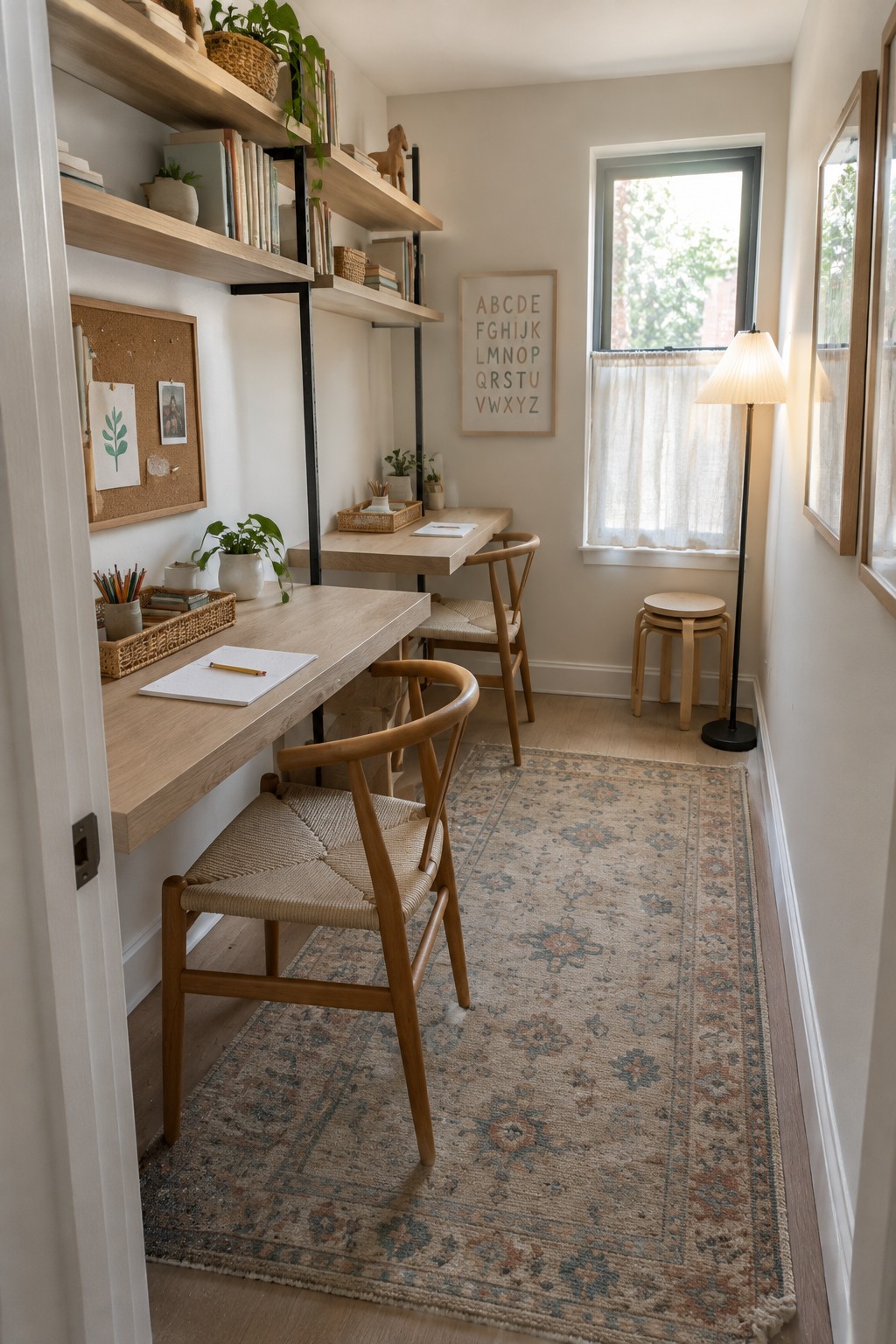
Many small homes have awkward narrow rooms that seem too tight for a real desk setup. Mounting simple wooden desks directly to the wall solves that by keeping the floor clear and the whole space feeling open rather than cramped.
This approach works especially well in slim offices or converted hallways. Keep the shelving light and open above the desks so storage stays visible but never heavy, then add natural textures through wood tones and woven chairs to soften the look without adding bulk.
Built-In Shelving That Keeps An Office Feeling Calm

Built-in shelves work well in a home office because they turn blank walls into useful storage without adding extra furniture. The wood tones and open sections let the room stay airy even when the shelves are full.
This setup suits smaller spaces or anyone who wants the room to feel organized rather than busy. Keep a few shelves lighter with boxes or simple pottery so the whole wall does not feel heavy.
Built-In Shelving Made From Light Wood

A built-in desk with open shelves above it keeps a small office tidy without feeling boxed in. The light wood ties the whole setup together and lets the natural grain show through, which works especially well when you want the room to feel calm rather than busy.
This approach suits rooms that double as guest space or reading nooks since the lower cabinets can hide extra bedding or files. Keep the shelves fairly shallow so nothing feels overcrowded, and stick to a few simple materials like wood, linen, and a woven rug.
Open Shelving That Keeps a Home Office Feeling Airy
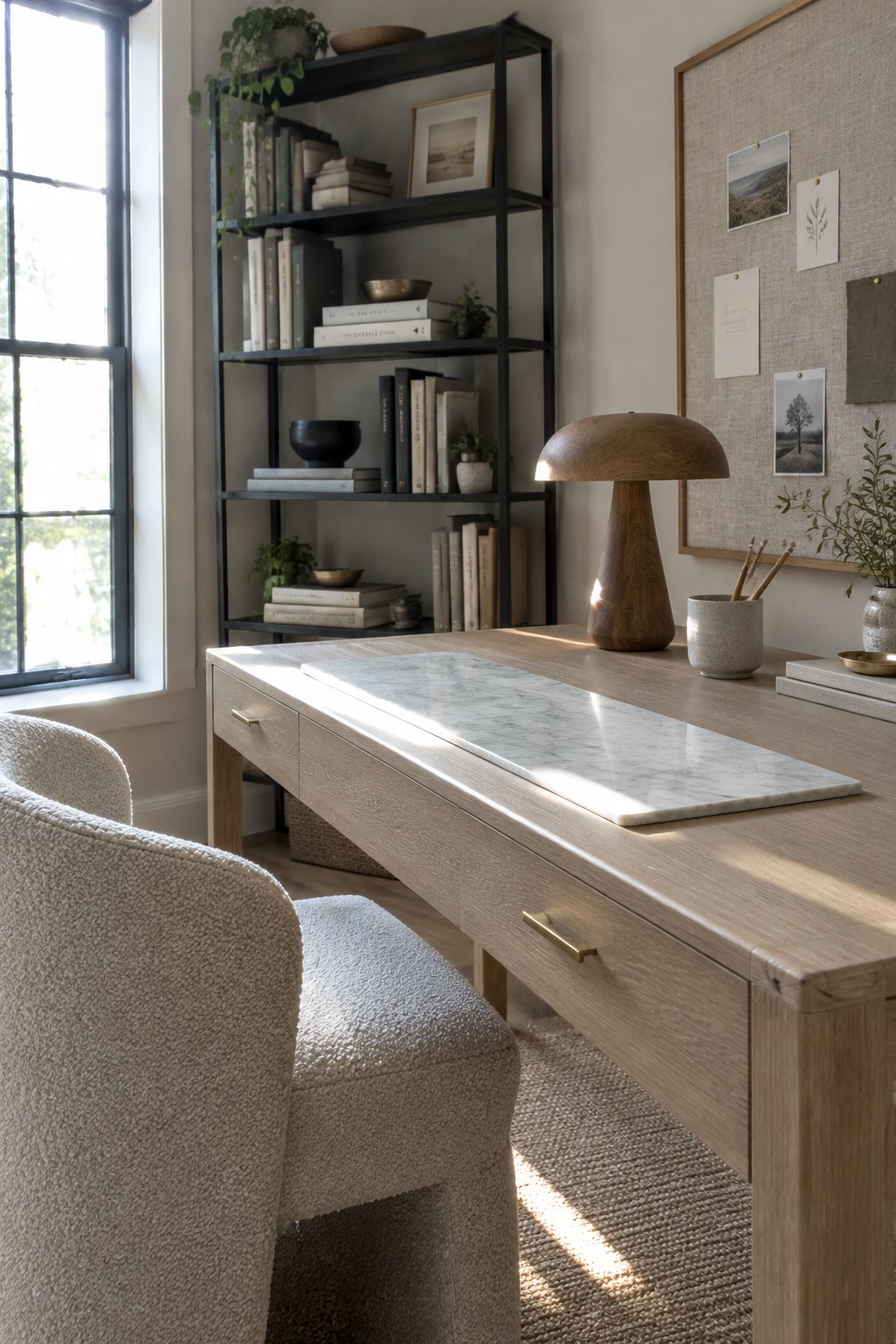
Open shelving works well in a home office because it gives you storage without closing off the room. The black metal unit in this setup holds books and plants while still letting light move through the space, which helps the whole room feel calmer and less crowded than it would with solid cabinets.
This approach suits smaller offices or any space where you want to keep things simple and natural. Use it along a wall near your desk, fill the shelves with a mix of books and a few plants or bowls, and keep the rest of the room light so the shelves do not start to feel busy.
Built-In Shelving Over A Desk

Built-in shelving above a desk gives you storage and display space without crowding the floor. It keeps the work surface clear while still letting you show off books, plants, and a few simple objects that add texture.
This setup works best in smaller rooms or offices that need to feel open. Stick with warm wood tones and add a couple of natural pieces like a woven chair or linen window shade to keep the whole space feeling balanced and calm.
Open Shelving That Shows Natural Textures
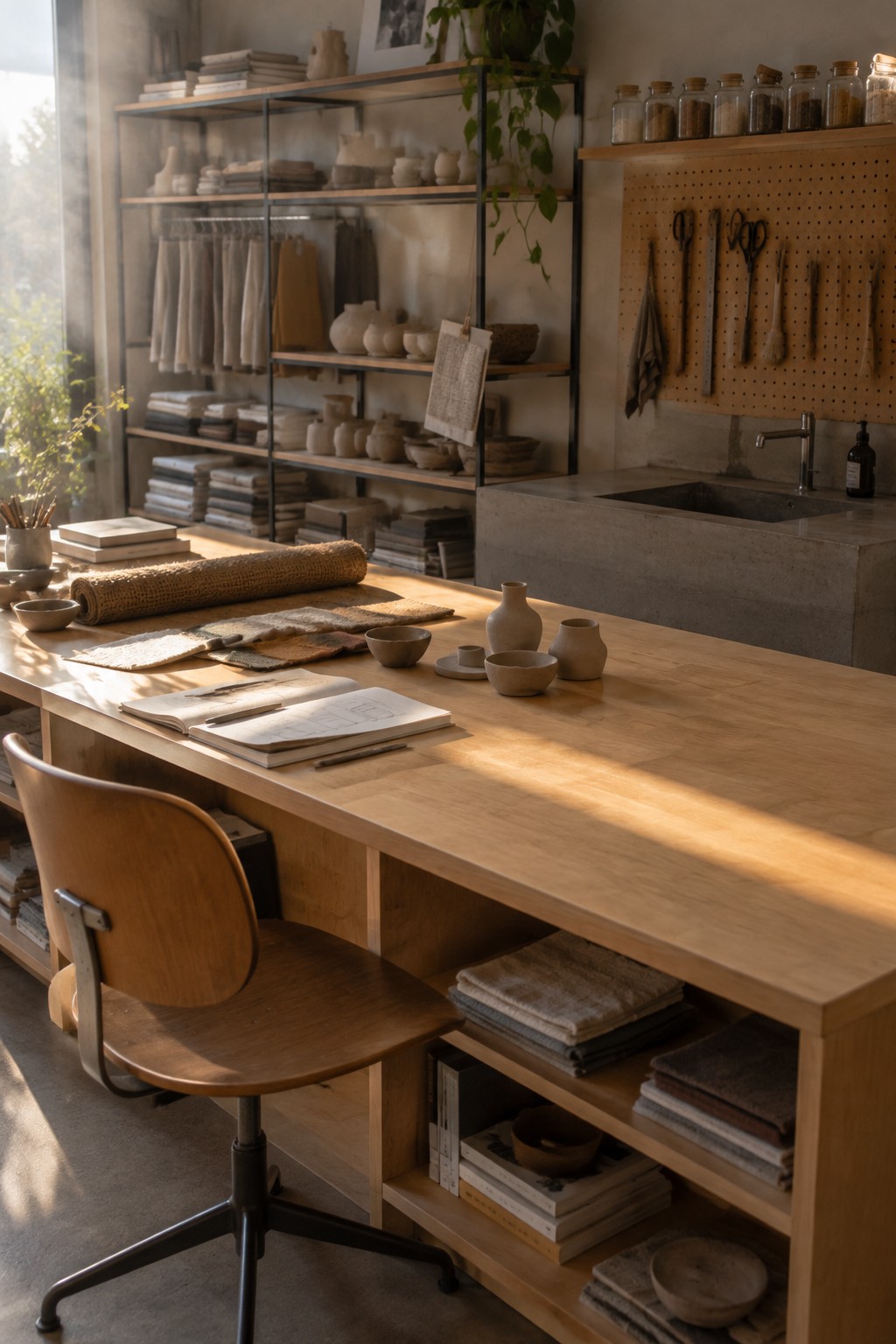
Open shelving works well in a home office when the goal is to keep useful materials visible and easy to reach. Wood, woven textiles, and clay pieces all read more clearly when they sit on simple open units rather than behind doors.
This approach suits smaller workspaces that need to feel orderly without looking bare. Use shallow shelves, group similar textures together, and leave a little breathing room so the natural surfaces stay the focus instead of turning into visual noise.
Built-In Shelving Over A Long Desk
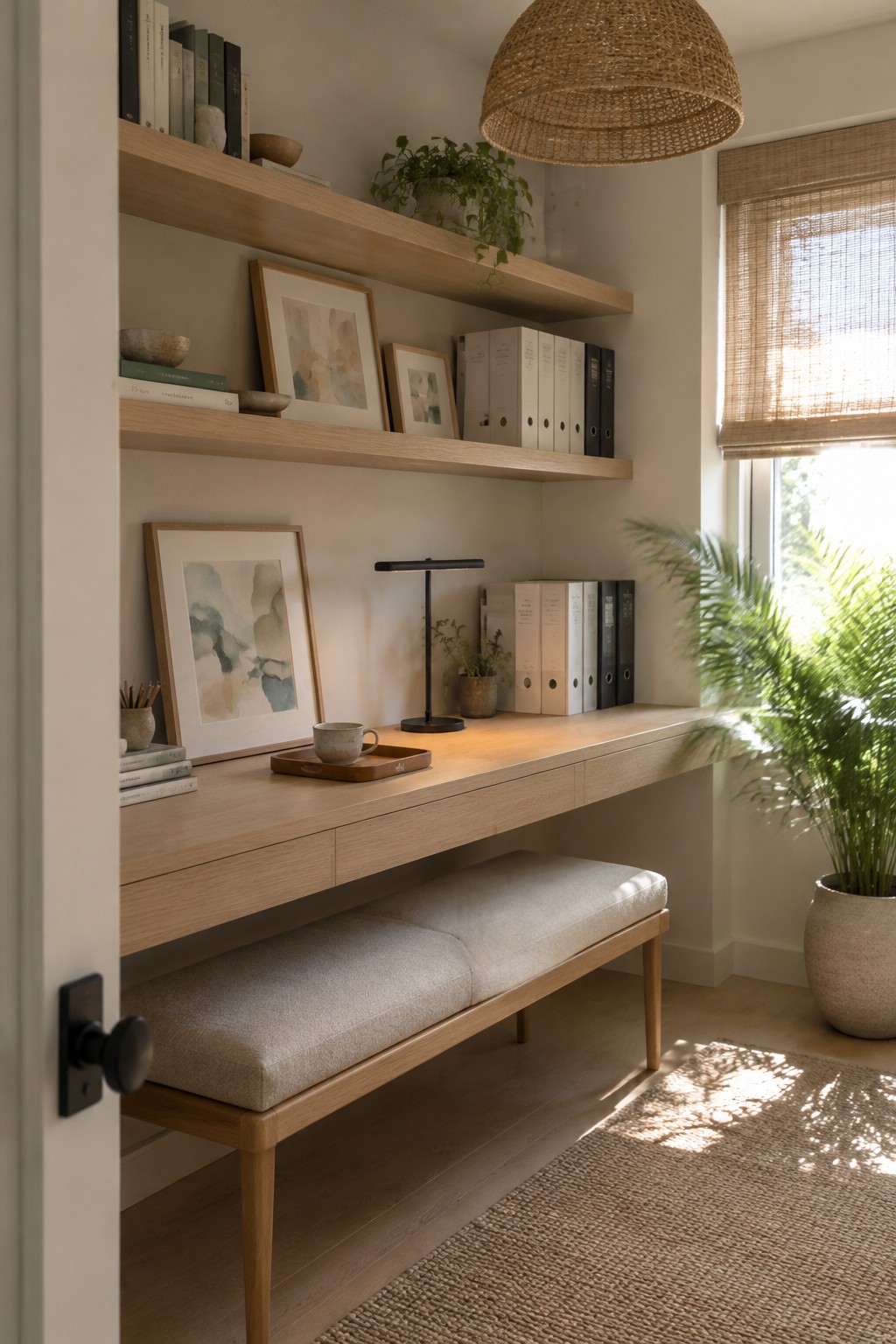
This setup works because the shelves sit right above the desk surface, so books and supplies stay close without crowding the work area. The continuous wood tone keeps everything feeling calm and connected, and the open style makes it easy to grab what you need without digging through drawers.
It suits smaller offices or rooms that need storage but still want to feel open. Keep the shelves from getting too full, and leave some empty space so the wood can show through. A bench underneath adds seating without taking up extra floor room.
Frequently Asked Questions
Q: How do I start adding natural textures on a small budget? A: Pick one or two items like a linen desk mat or a wooden pencil holder. Swap them in gradually so the changes feel natural. This keeps costs low while building the look you want.
Q: Should my shelving match the rest of the room exactly? A: Not at all. Mix in a few different wood tones to add interest. Just stick to similar finishes so things still flow together.
Q: What happens if I add too many textured pieces at once? A: The space can start to feel busy fast. Edit down to your favorites and leave some breathing room on the shelves.
