


In many homes the way a desk shares space with a fireplace determines whether the room feels balanced or constantly pulled in two directions.
I have seen setups where the warmth draws you in at first but then makes it hard to stay focused on the screen for long stretches.
Small adjustments in furniture placement often fix what looks fine on paper.
The better layouts keep the work zone defined without cutting the fireplace off from the rest of the room.
Testing a few of these ideas myself made clear how the daily flow changes once the pieces are actually in place.
Placing The Desk To One Side Of The Fireplace

Many home offices with a fireplace end up feeling cramped when the desk faces it head on. Setting the desk along an adjacent wall keeps the fire visible for warmth and atmosphere while leaving the work surface clear and practical.
This approach works especially well in narrower rooms or spaces where the fireplace already exists. It suits homes that want a calm background for calls and focused tasks without the heat or glow becoming a distraction during the day.
Desk Placed In Front Of The Fireplace

Many home offices benefit from this simple layout because the fireplace adds warmth and presence without pulling attention away from the work surface. The desk sits far enough forward that the chair can tuck in comfortably, and the stone and wood tones keep the whole corner feeling grounded rather than busy.
This setup works well in rooms that already have built-in shelves or paneling around the fireplace. It suits older homes or any space where you want the fire to feel supportive rather than central. Just leave enough room behind the chair for easy movement and make sure the rug is large enough to hold both the desk and chair fully.
Built-Ins That Blend a Fireplace With the Desk

Placing the desk right against the fireplace wall lets both features share the same stretch of space without one crowding the other. The open shelves above keep books and small decor within reach while the cabinetry below the desk adds storage that matches the fireplace surround.
This approach suits rooms that need to feel calm and organized rather than busy. It works especially well when the desk and fireplace are painted the same color so the whole wall reads as one unit instead of separate pieces added over time.
Desk Placement Next to the Fireplace
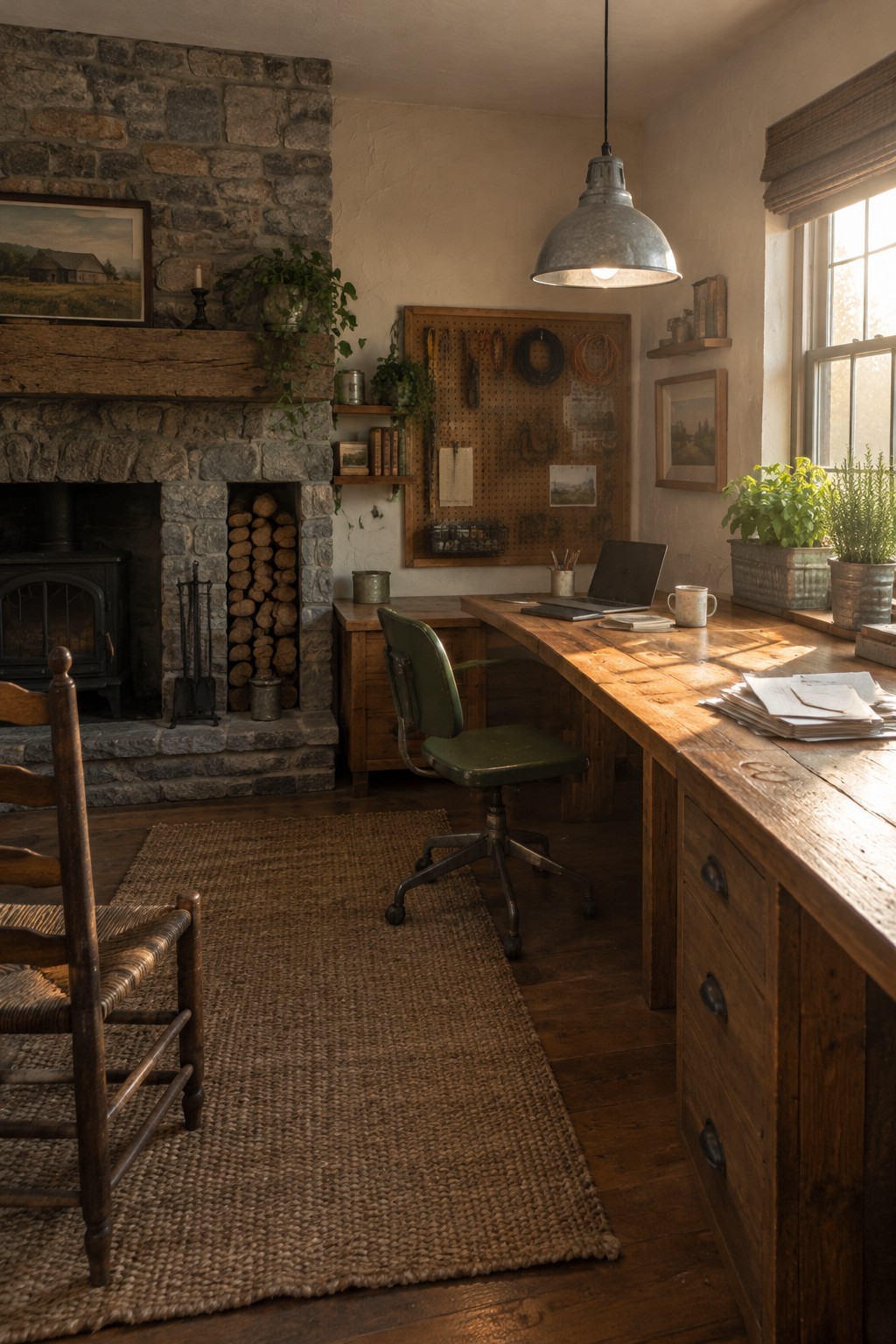
Placing the desk right beside the fireplace turns the work area into a warmer spot without making the fire the main focus. The setup keeps the heat close during colder months and lets the stone and wood surfaces work together naturally in the room.
This works best in smaller offices or homes where the fireplace already exists and you want it to feel useful rather than separate. Give the chair enough clearance to move freely, and avoid crowding the mantel with too many items so the work surface stays the priority.
Desk Along the Window with Fireplace Nearby

One way to keep a home office productive without losing the appeal of a fireplace is to run the desk along the window wall while the fire sits on the side wall. The setup gives you steady natural light for work and keeps the warmth and glow of the fire close without it interfering with the desk surface or chair space.
This layout suits rooms with mixed wall materials, like concrete next to brick, and works best when the desk is long enough to hold everything you need. It also helps if the chair can turn slightly toward the fire when you want a break from the screen.
Desk Against The Fireplace Wall
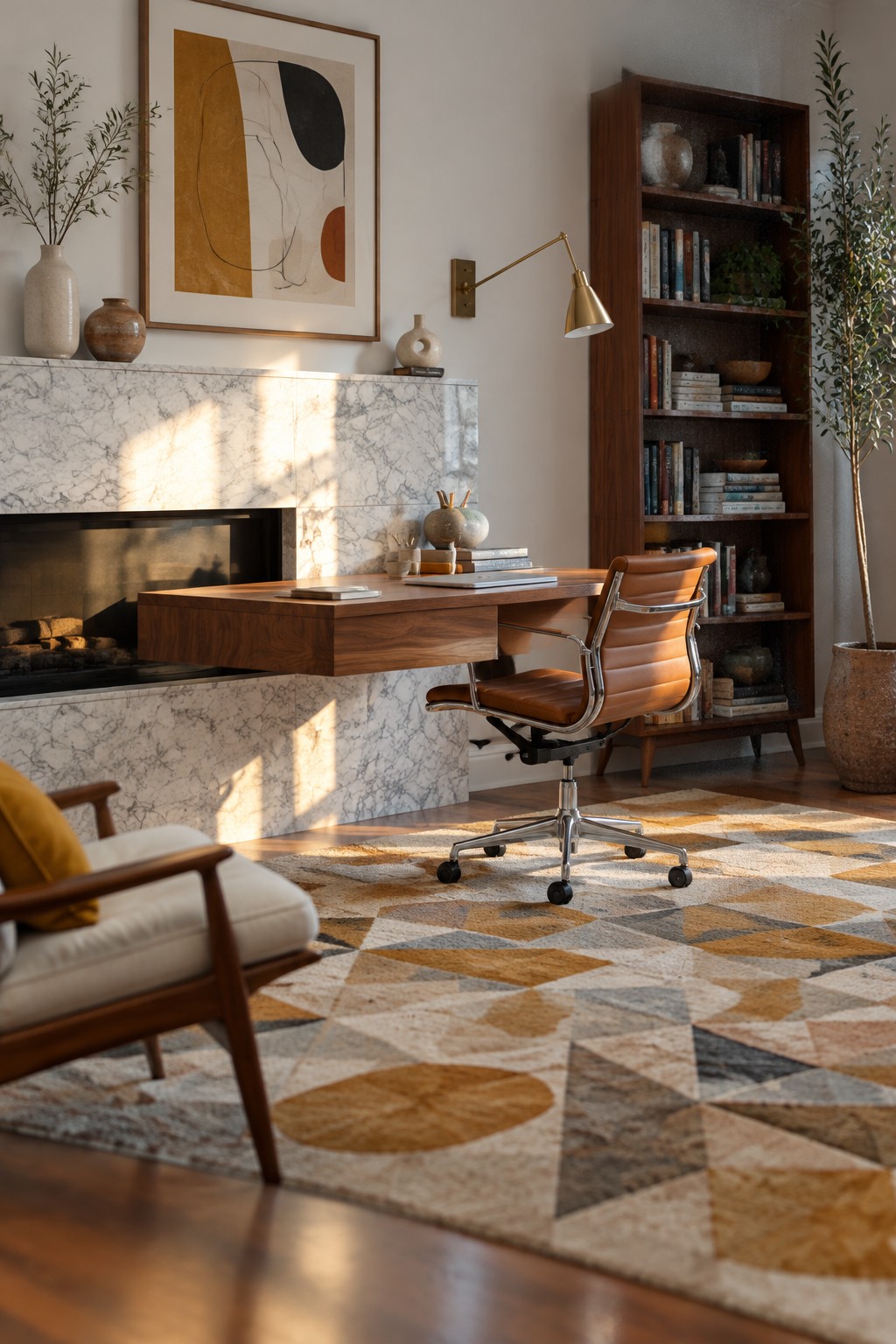
Placing a desk right up against the fireplace wall gives you a dedicated work zone without losing the warmth of the hearth. The setup keeps the room open and lets both functions share the same focal point instead of competing for space.
This works best in rooms where the fireplace already sits on a long wall. Keep the desk shallow so it does not block heat flow or make the chair too close to the fire.
Desk Positioned in Front of the Fireplace

Many home offices feel more inviting when the desk sits right in front of the fireplace. The fire adds warmth and a quiet focal point without turning the room into a lounge.
This layout works best in older homes where the fireplace already anchors the space. Keep the desk a few feet out so the chair can move freely and heat can still reach the seating area.
Fireplace Placement Along One Wall

Many home offices feel too stark without some warmth, but adding a fireplace can eat into valuable floor space. A linear model set into the wall solves this by keeping everything at eye level and leaving the floor open for a desk and chair.
This setup works best in longer, narrower rooms where you can run the work surface along one wall and the fireplace along the other. It suits homes that already have clean lines and simple finishes, and it keeps the room feeling like a place you can actually focus in rather than just a spot to sit.
Desk Placement That Shares Warmth With a Fireplace

Placing the desk near a fireplace lets the room feel useful for long hours without turning the fire into a distraction. The setup works because the desk sits angled toward a window, so natural light hits the work surface while the fireplace adds steady background warmth on the opposite wall.
This arrangement suits older homes or any space already fitted with built-in shelves. Leave enough room to walk between the chair and the hearth tools, and keep the chair facing the desk so the fire stays behind you rather than competing for attention.
Keeping the Fireplace Separate from the Desk
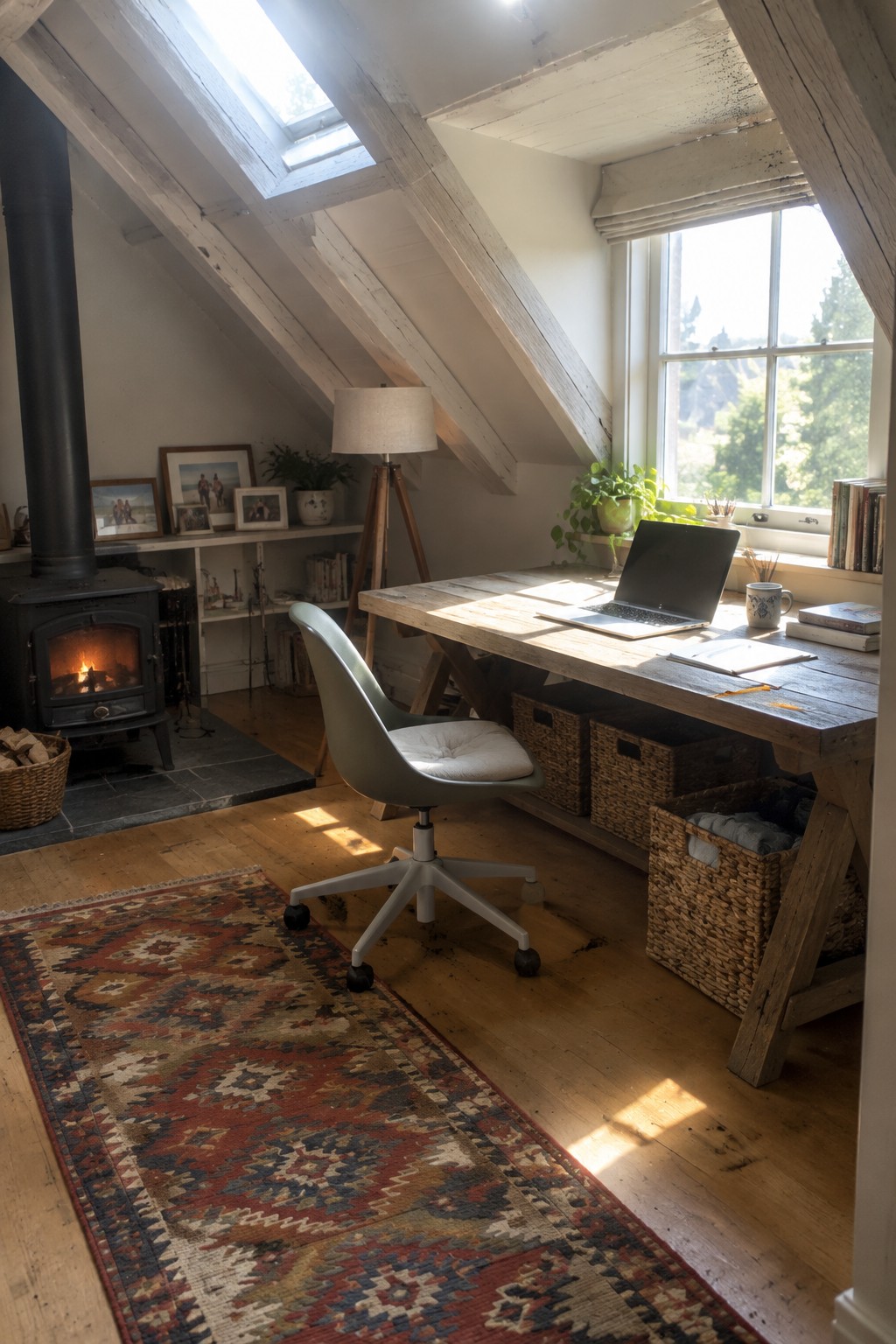
Many people want a fireplace in their office for the warmth and quiet feel it brings. The trick is to place the desk far enough away that the fire does not interfere with screens or daily tasks. In this layout the stove stays on one side of the room while the desk runs along the window wall.
This setup works best in attic rooms or narrow spaces where you have length to work with. It keeps the work zone bright and practical while the fireplace adds comfort on cooler days. Just make sure the desk faces away from direct glare if the fire will be lit during work hours.
Face the Desk Toward the Fireplace

Placing the desk so it faces the fireplace gives the room a clear center without making the work area feel separate from the rest of the space. The hearth stays visible during the day, which helps the office feel warmer and more settled than a desk pushed against a blank wall.
This layout suits rooms that already have a mantel or built-in shelves because the desk can sit at a natural distance from the fire. Leave enough room behind the chair for easy movement and keep the top of the desk clear enough that the view to the fireplace stays open.
Place Your Desk Next To The Fireplace

Putting the desk right beside the fireplace turns the work area into a naturally warm spot without needing extra heaters or lamps. The stone hearth gives the workspace a solid anchor, and the fire becomes part of the daily view instead of something you only notice after hours.
This setup works best in rooms that already use the fireplace as the main focal point. Keep the desk close enough to feel the heat but far enough that papers and electronics stay safe. It suits smaller homes or open living areas where a separate office would feel cut off from the rest of the space.
Desk Placement Next To The Fireplace

Placing the desk right beside the fireplace gives the office a natural focal point without turning the room into a lounge. The fire adds steady warmth that makes it easier to stay at the desk for longer stretches, especially during colder months when the room might otherwise feel chilly.
This layout suits smaller or medium home offices where the fireplace already exists and needs to stay usable. Keep the desk surface clear of clutter on the side facing the fire so the heat and light stay unobstructed, and use the wall above for open shelves rather than hanging anything that blocks the view of the flames.
Desk Facing the Fireplace

Placing the desk directly in front of the fireplace creates a simple and practical layout for a home office. The fire becomes the main view while you work, and the warmth helps the space feel less cold during long hours at the desk.
This arrangement works well in rooms that already have a strong fireplace wall. Keep the desk low enough so the flames stay visible, and leave enough space on either side for easy movement around the room.
Desk Placement Near a Fireplace

Placing the desk near the fireplace gives the office a warmer feel without much extra effort. The fire becomes part of the daily view while still leaving room to focus on work.
This works best in rooms where the fireplace already sits in a central spot. Keep the desk at a slight angle so the heat reaches the seating area and the chair can turn without crowding the hearth.
Working Beside a Fireplace
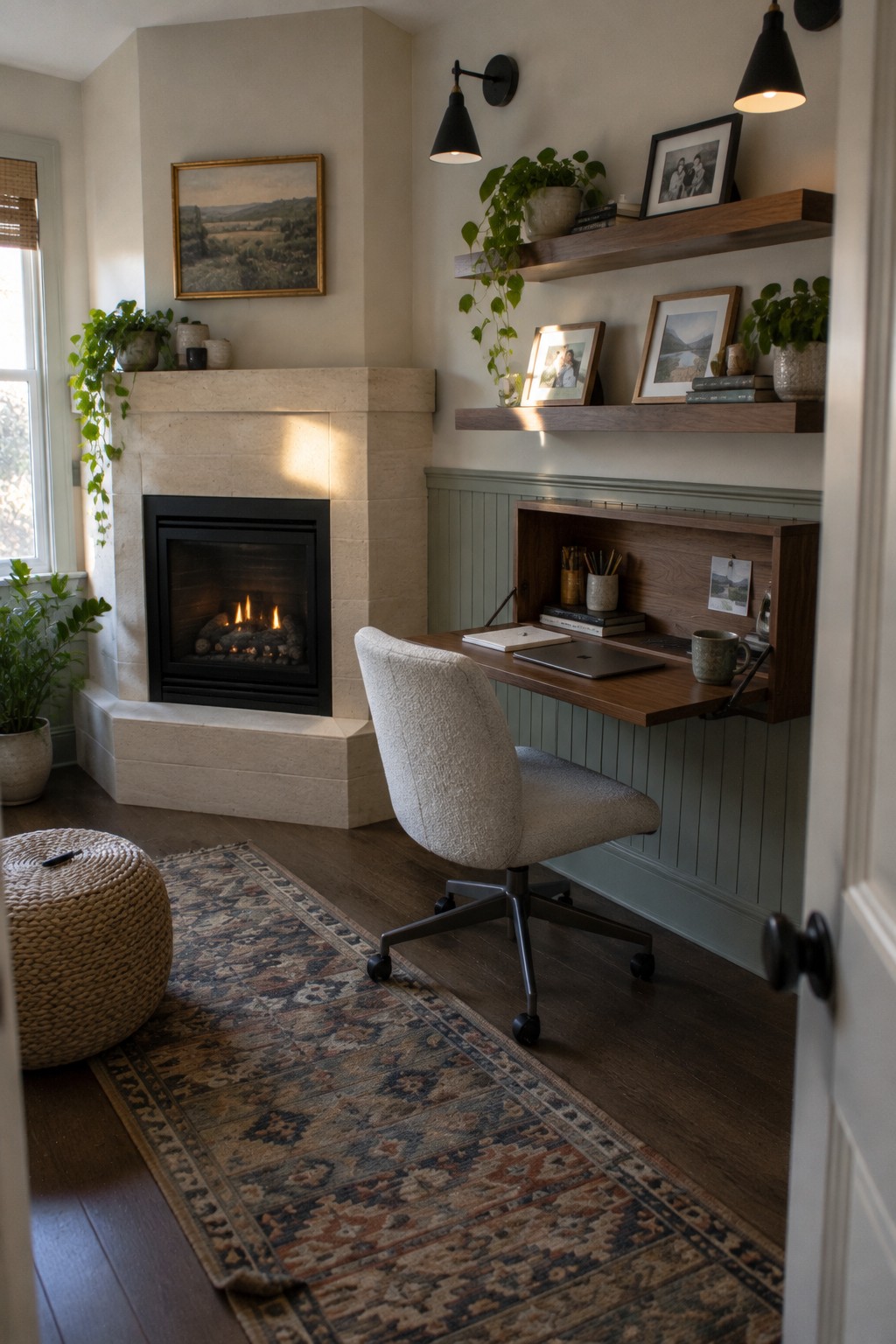
Many people find that placing a desk near the fireplace makes long workdays feel less cold and more settled. The fire adds a steady source of warmth and a natural focal point that helps the room feel used rather than purely functional.
This setup works best in smaller or shared spaces where you want one corner to handle both work and downtime. Keep the desk surface fairly open and choose a chair that can tuck in easily so the fireplace stays the main feature rather than getting crowded out.
Place the Desk in Front of the Fireplace

A desk placed right in front of the fireplace gives the room a steady sense of warmth without turning the fire into a distraction. The layout keeps the work surface clear and usable while the fireplace provides a natural anchor that makes the whole space feel settled.
This setup works especially well in older homes or any room where the fireplace already exists. Keep the desk at a comfortable distance so the heat does not interfere with electronics, and choose a chair that turns easily for access to both the work surface and the rest of the room.
Frequently Asked Questions
Q: Won’t the heat from the fire mess with my computer or monitors? A: Keep your desk at least a few feet away from the fireplace to avoid any direct warmth on your gear. Most modern electronics handle room heat fine as long as you skip the super close spots. Test the temperature with your hand before settling in for long sessions.
Q: What if the fireplace takes up too much wall space in my small room? A: Float your desk in the middle or angle it toward a corner to free up the walls. This keeps the work zone separate without crowding the fire area. You still get the cozy vibe without losing floor space.
Q: How can I make sure the office area feels distinct from the fireplace lounge spot? A: Use a rug under your desk and chair to mark the work zone clearly. A tall plant or low bookshelf can act as a soft divider too. Stick to the same color palette so everything still flows together naturally.
