

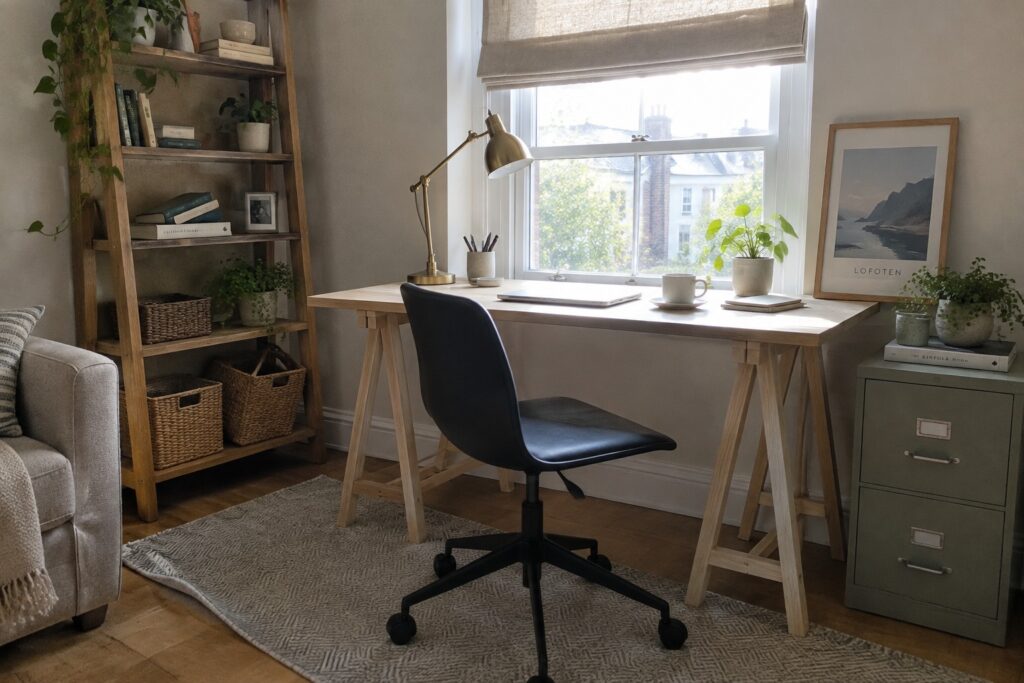
Setting up a home office in a rental often means figuring out how to make the space functional without touching the walls or floors.
Freestanding furniture lets you adjust the layout as your work habits shift or when a new lease forces another move.
Layout matters more than I expected.
I have found that keeping the desk facing into the room while sliding a low bookcase along one wall opens up walking space and keeps the area from feeling boxed in during long workdays.
Trying a couple of arrangements on my own showed me which one actually supports focus without needing any tools or landlord approval.
Add Storage With a Leaning Ladder Shelf

A leaning ladder shelf next to the desk gives you extra room for books, baskets, and plants without putting any holes in the wall. It stays put on its own and adds vertical storage in a spot that might otherwise feel empty.
This setup works best in smaller rooms or rentals where you need to keep things movable. Place the shelf so it lines up with the end of the desk, and use the lower shelves for items you reach for often while keeping the top ones lighter.
Define a Work Area With a Freestanding Screen

A freestanding screen gives you a simple way to mark off a workspace when you cannot make permanent changes. It creates a visual boundary that helps the area feel more like a dedicated office instead of just a desk tucked into a corner of another room.
This approach works best in living rooms or bedrooms where the office shares space with daily life. Choose a lightweight divider you can reposition easily, and place it behind or beside the desk so the work zone feels contained but still open to the rest of the room.
Use A Freestanding Desk And Chair For Easy Rearrangement

A solid desk paired with a rolling chair gives you a workspace that can shift around the room without any drilling or mounting. This setup stays practical because both pieces move independently, so you can adjust the angle for light or traffic flow whenever you want.
It suits rentals especially well since the whole arrangement relies on standalone items rather than built-ins. Add a filing cabinet or open shelves later if you need more storage, and the layout stays simple to pack up when it is time to leave.
Desk and Credenza Along the Wall

A desk and credenza placed side by side along one wall makes a clean, simple office that stays easy to change later. The pieces stay fully freestanding, so you can shift them around or take them with you when the lease ends.
This layout works best in smaller rooms or multi-use spaces where you need storage without adding built-ins. Keep the desk near a window for light and let the credenza handle supplies and papers. A rug underneath helps mark the work area without any permanent marks on the floor.
Freestanding Desk and Shelf Setup

A light wood desk paired with a leaning ladder shelf gives you a complete office without any wall mounting or built-ins. Everything stays movable, which makes this layout especially useful in rentals where you cannot make permanent changes. The open shelf keeps supplies and books within reach while the desk stays clear for actual work.
This arrangement works best in smaller bedrooms or living room corners where you need the space to serve more than one purpose. You can shift the whole setup easily if the room layout changes later. Just keep the pieces simple and light in scale so they do not overwhelm the room.
Use a Freestanding Desk to Shape a Flexible Office
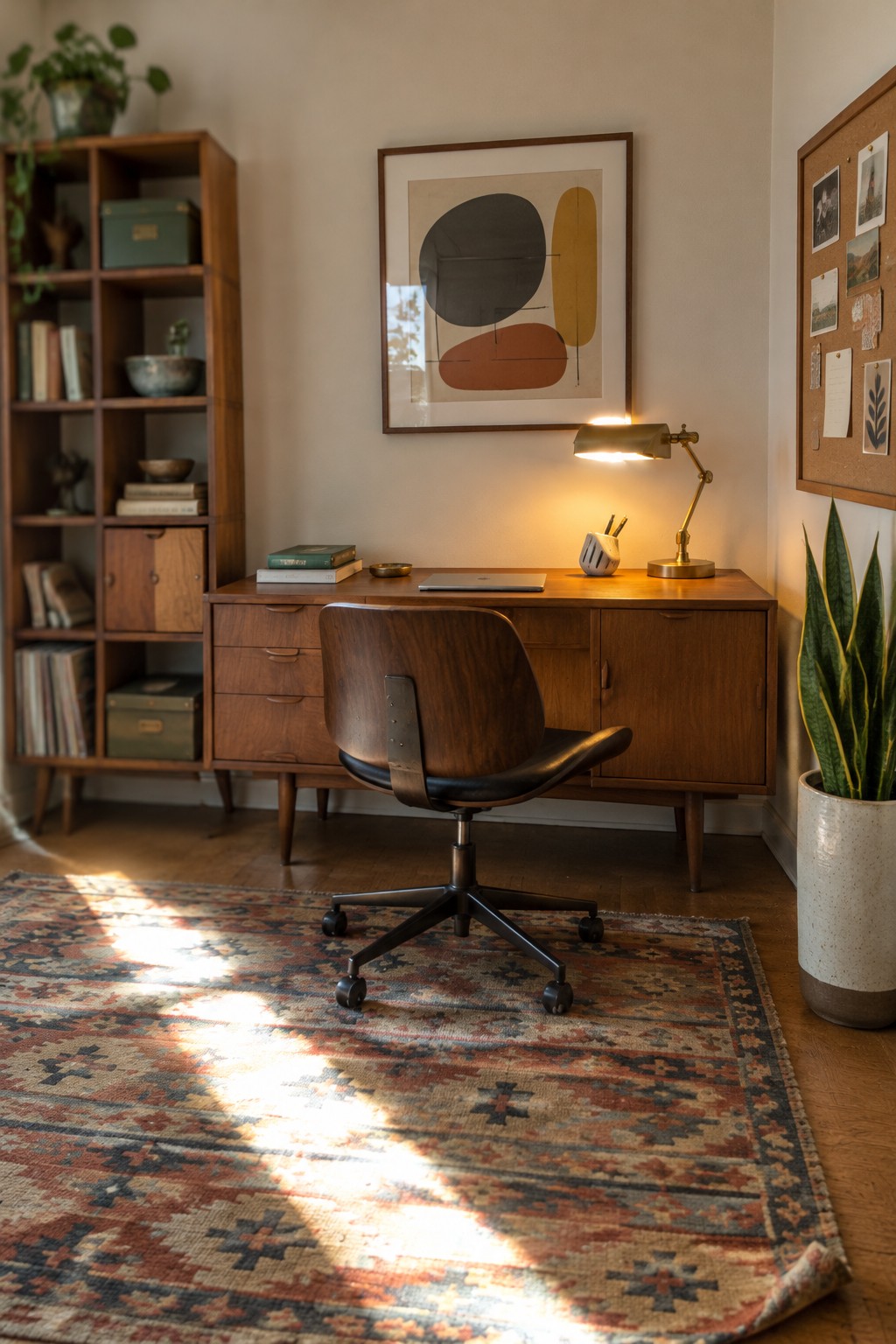
A freestanding desk with built-in storage gives you a clear work area without needing to attach anything to the walls. The desk can sit in the middle of a room or slide against a wall, and the rolling chair lets you adjust your spot easily when the light changes or you want a new view.
This approach works best in rentals because you can take every piece with you when you move. It also suits small rooms or shared spaces where a full built-in setup would feel too permanent. Keep the desk clear of clutter so the layout stays open and easy to rearrange later.
Place Your Desk Near a Window
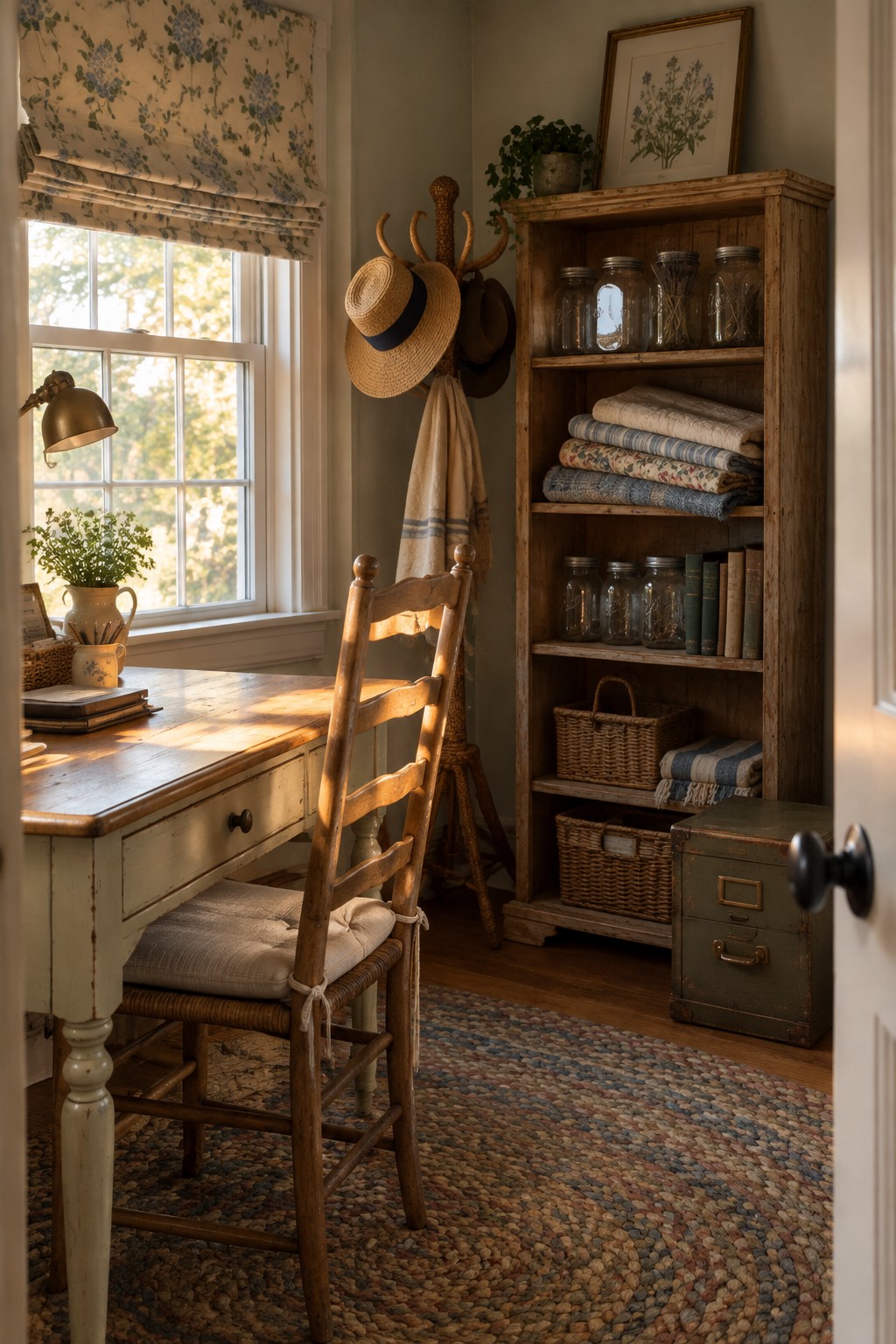
A desk set right by the window lets you work in natural light without needing any built-ins or wall changes. The freestanding table and simple wooden chair slide into place easily, and you can add a tall open shelf nearby for books and bins. This keeps the whole setup movable if you need to rearrange or move out.
It works best in smaller rooms or awkward corners where you want to carve out a workspace without construction. Try it in any rental where you can bring in your own furniture and shift things around as the seasons change or your needs shift.
Add Vertical Storage With a Freestanding Ladder Shelf

A ladder shelf gives you useful storage without any wall mounting. It fits neatly beside a desk and holds books, plants, and a few bins while leaving the floor clear underneath.
This works especially well in rentals because you can rearrange or remove it anytime. Place it near a window so the open shelves catch the light and keep everyday supplies easy to reach.
Use a Tall Bookshelf as a Room Divider

A tall freestanding bookshelf works well as a divider when you need two separate work areas in one room. It blocks sight lines just enough to give each desk a bit of privacy while still letting light move through the space. Renters like this because nothing gets attached to the walls.
Place the shelf so it runs between the two desks and leaves walking room on either side. Fill the lower shelves with storage bins and the upper ones with books to add weight and keep it steady. This idea fits long or open rooms where a wall would feel too heavy.
Use Freestanding Shelves to Frame a Desk
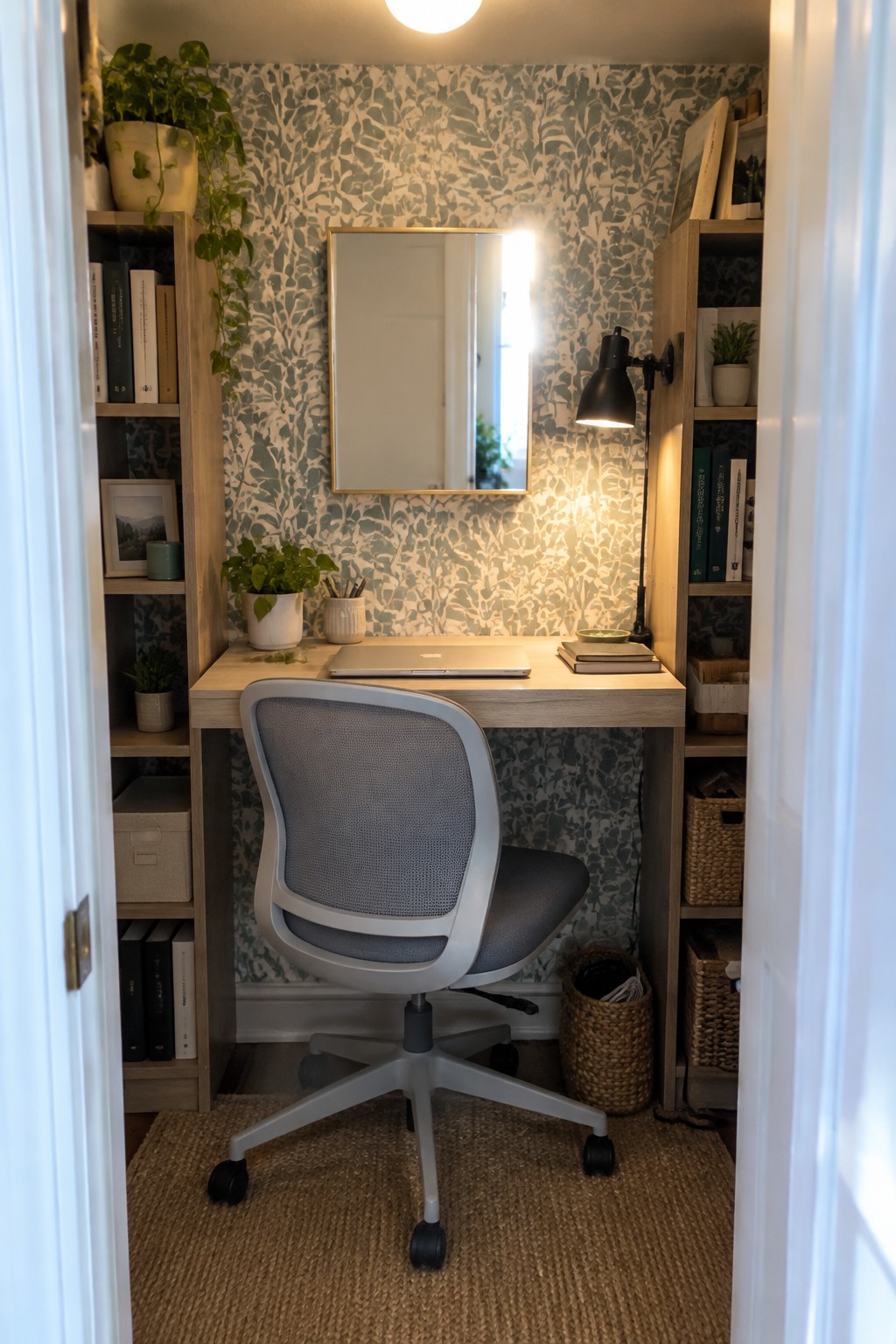
Placing tall freestanding shelves on both sides of a desk is a simple way to turn a narrow spot into a real workspace. The shelves give the area clear boundaries without any construction, and they add storage right where you need it. This setup works especially well in rentals because you can move everything later without leaving marks.
It suits small bedrooms, hallways, or unused corners that feel too tight for a full room. Keep the shelves the same height and finish so the whole thing reads as one unit, and leave enough room in front for a chair to pull out comfortably.
Tucking a Desk Under the Stairs
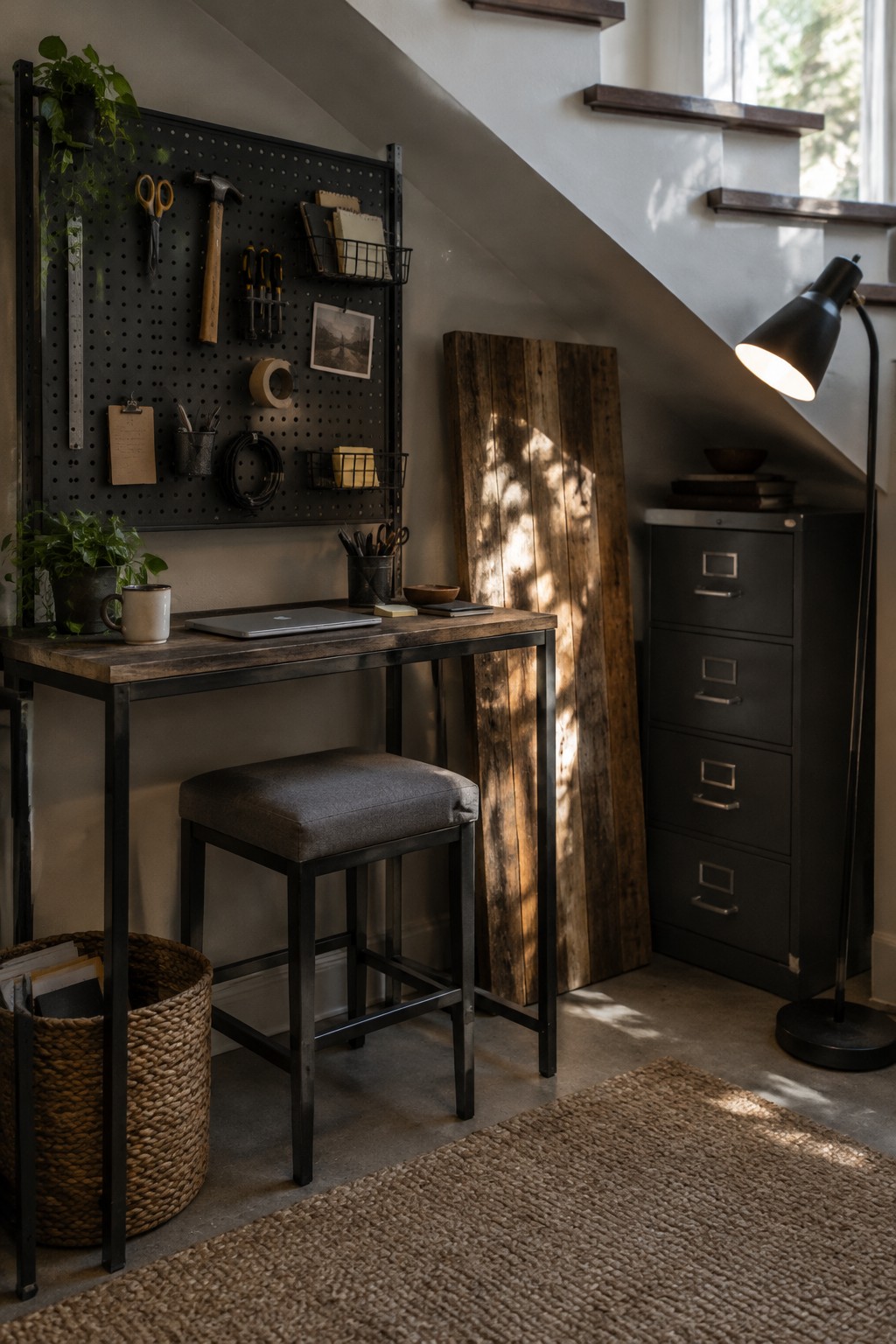
One way to make use of an awkward spot is to place a simple desk and stool right under the stairs. A pegboard mounted on the wall above it gives you vertical storage for tools and supplies without adding more furniture to the floor.
This setup works in rentals because everything stays freestanding and can be taken with you later. It suits homes with open staircases or small nooks that need to double as a workspace without any permanent changes.
A Freestanding Table as Your Main Desk
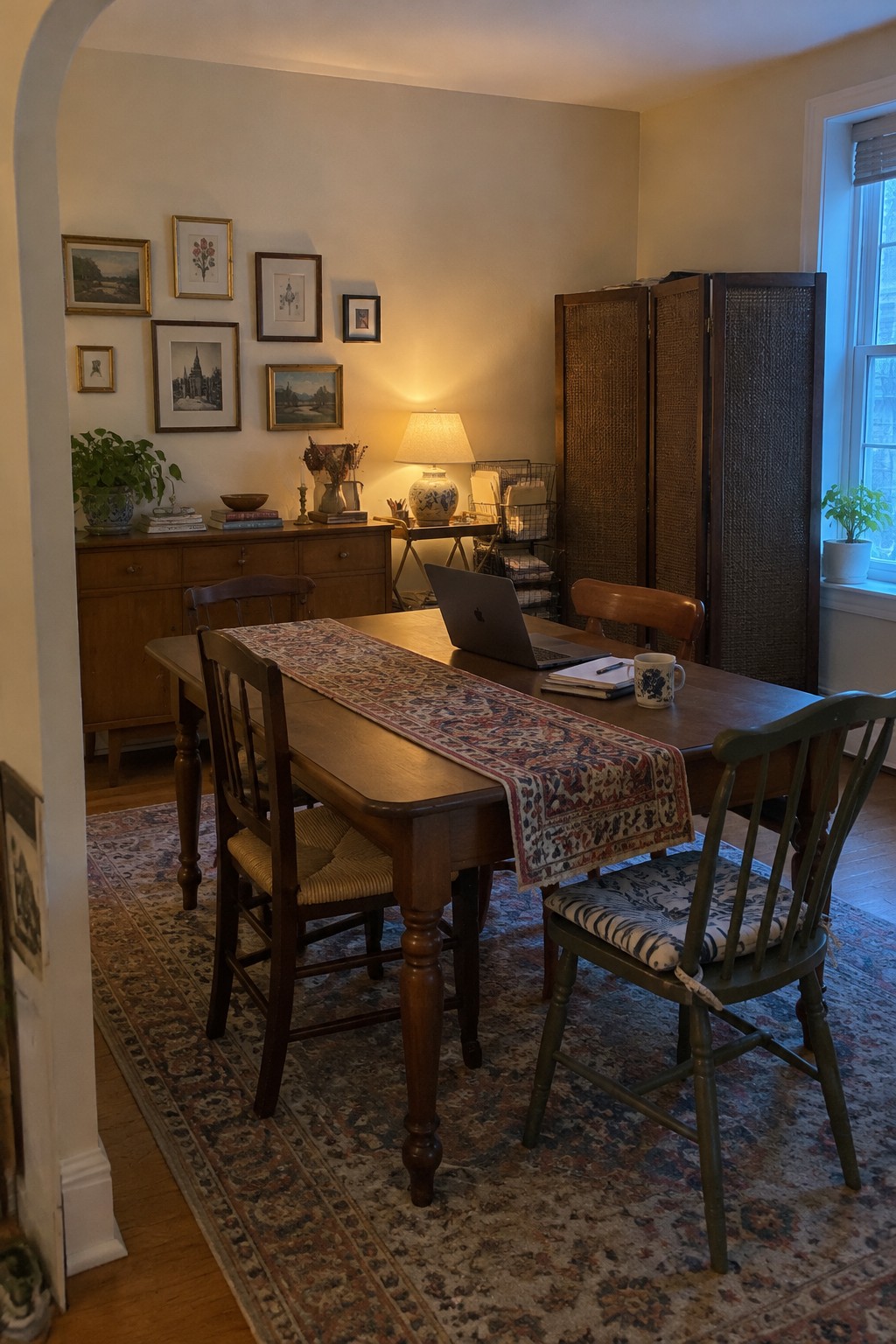
A long table placed in the middle of the room works well when you need a simple home office that can change later. It gives you one big surface for a laptop, papers, and whatever else comes up during the day. Because nothing is attached to the walls or floor, the whole setup stays easy to move if you need the space for something else.
This layout suits rentals where you cannot add built ins or make permanent changes. Set the table on a rug to mark the work area, then bring in whatever chairs you already have. The result feels open and practical without looking like a dedicated office that might be hard to undo.
A Freestanding Desk With Rolling Storage
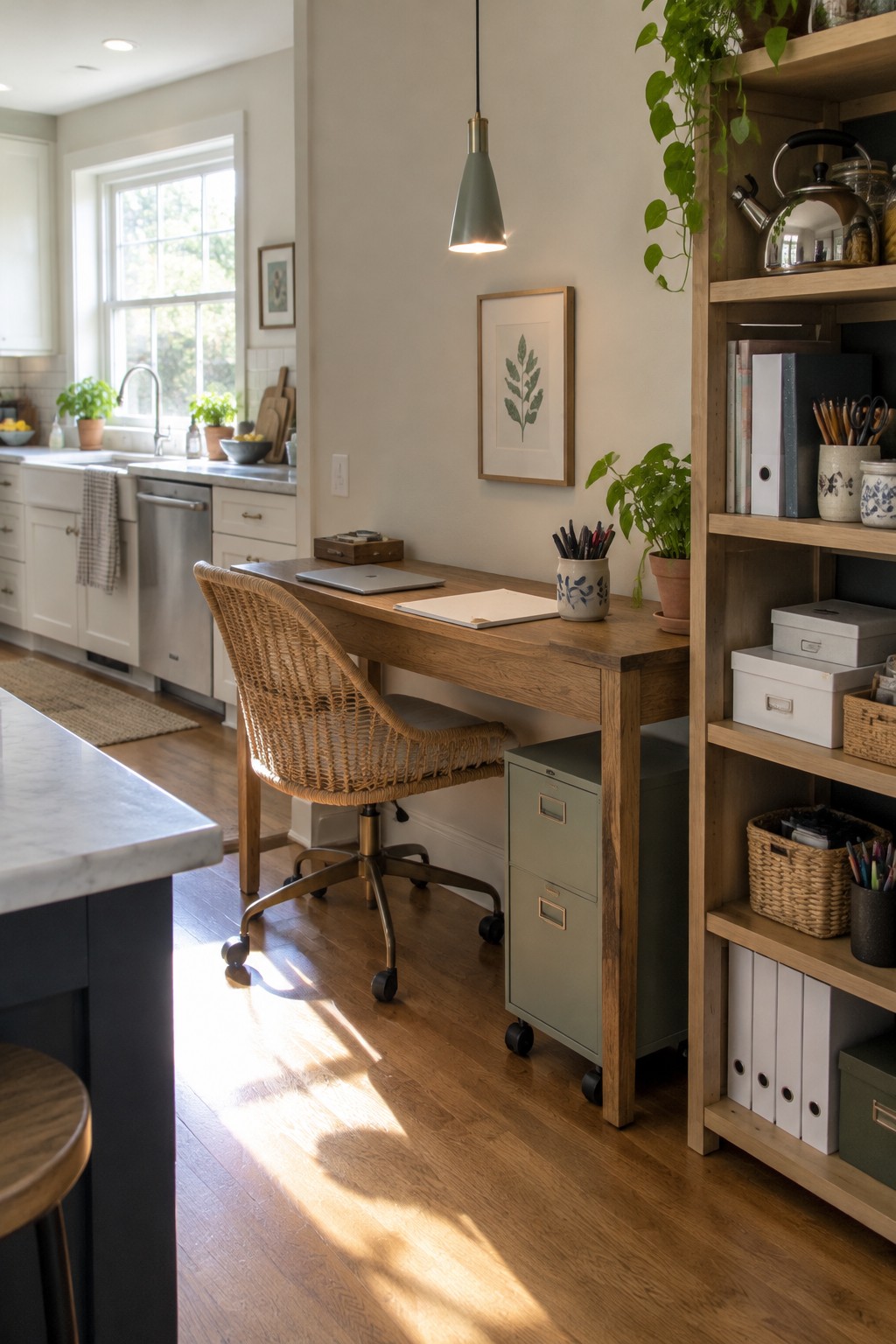
A simple wooden desk paired with a rolling filing cabinet underneath gives you a full work area without any permanent changes to the room. Everything stays movable, which matters when you rent and might need to rearrange or leave on short notice.
This layout works best in smaller homes or open spaces where the office shares room with another function. Keep the cabinet on wheels so you can pull it out for access or tuck it away, and choose pieces that can stand alone without needing wall support.
Freestanding Shelving Keeps Rental Offices Flexible

Many rental home offices benefit from tall freestanding cabinets and leaning shelves because they deliver real storage without any wall mounting or built ins. These pieces can hold books, files, and supplies while still letting you rearrange the room whenever you need to.
They suit smaller or shared spaces where you want to keep options open. Set the cabinet and ladder shelf along one wall to create a clear work zone around the desk, then move them later if the layout stops working.
Furniture On Wheels Keeps Things Flexible
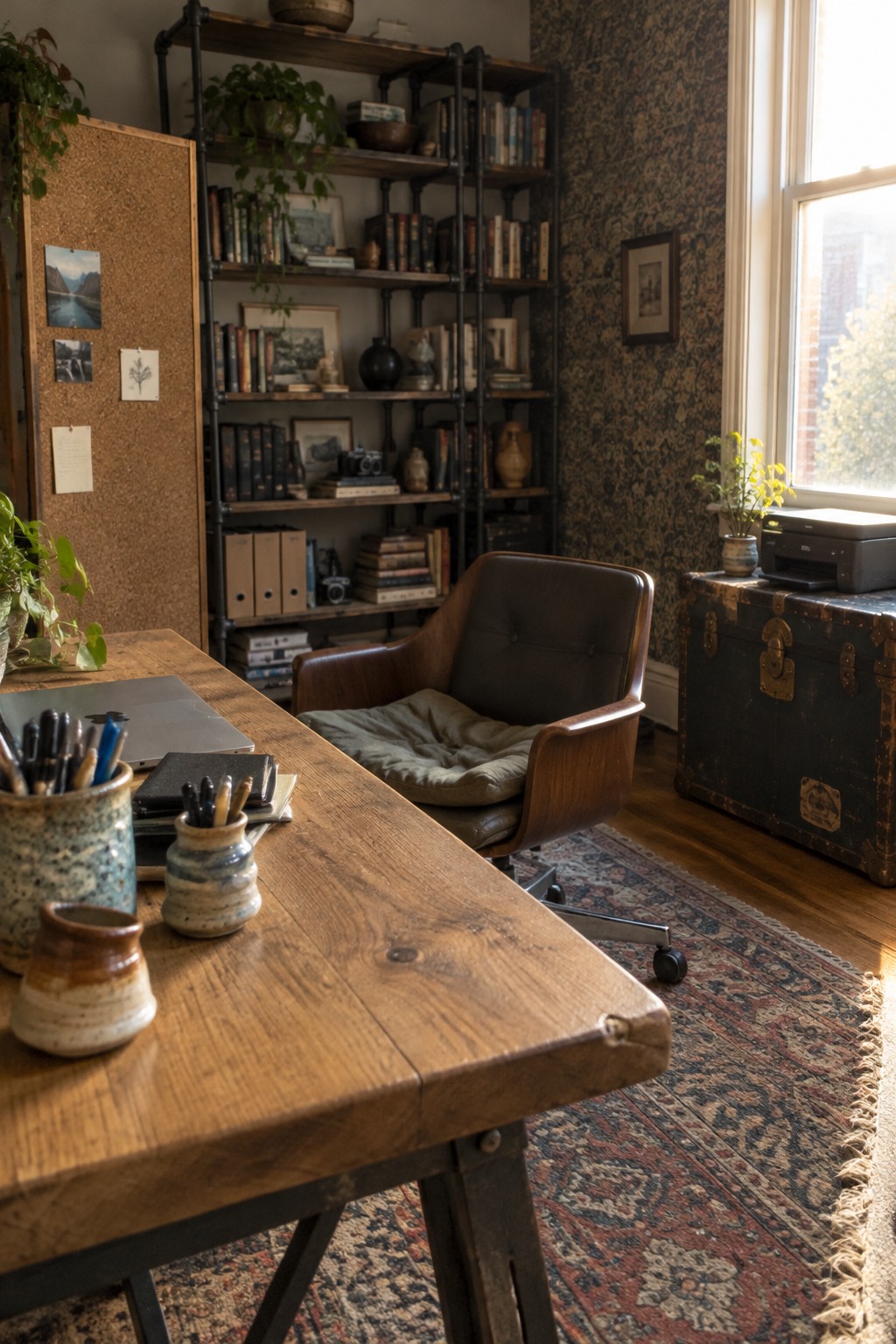
One of the easiest ways to make an office feel workable in a rental is to use pieces that move without effort. A chair on casters lets you shift position throughout the day or roll it aside when you need floor space for something else.
A trunk works the same way. It gives you a low surface for a printer or supplies and can be pushed out of the way whenever the room needs to serve another purpose. This approach suits smaller rooms or any space that has to change function often.
Define Your Workspace With a Freestanding Bookshelf
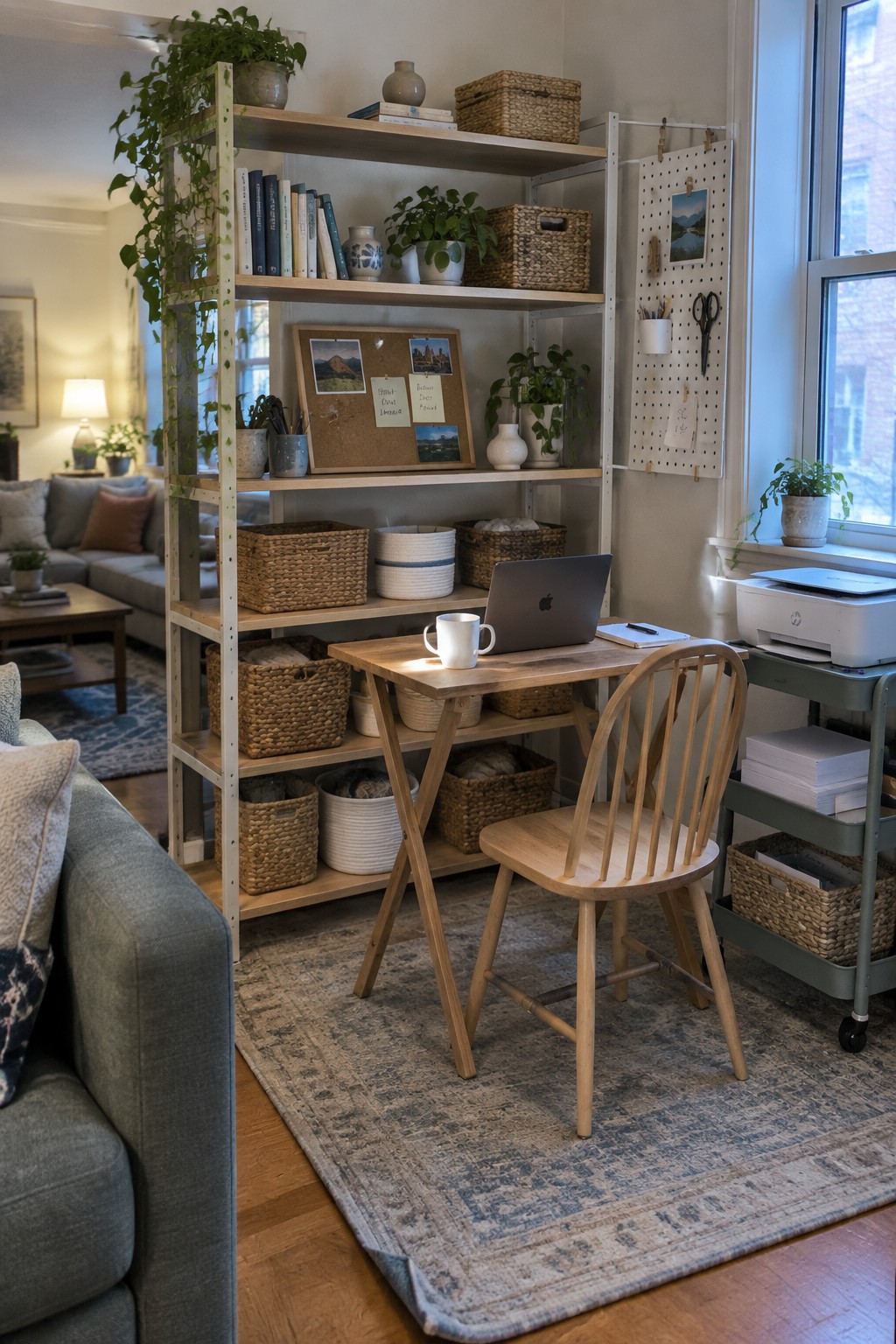
A tall freestanding shelf works well behind a desk because it gives the workspace a clear edge without any construction. In an open living area this setup keeps the office feeling separate while still letting light and air move through the room.
Try placing the shelf first to mark off the zone, then slide a simple desk in front of it. This approach suits rentals since everything can move when you leave, and it works especially well in smaller homes where a full room is not available.
Frequently Asked Questions
Q: What if my floors are slippery and the furniture keeps shifting? A: Place rubber pads under the legs of your desk and shelves. They grip without leaving marks or needing tools. Give each piece a light shove once it is in position to confirm it holds steady.
Q: How do I create privacy in an open room without touching the walls? A: Slide a tall bookcase or folding screen between your desk and the main walkway. Angle it so it blocks the view while still letting light through. Shift it a few inches if the flow feels off during daily use.
Q: My cables always end up in a mess across the floor. A: Run them along the back edge of the desk and secure with adhesive clips. Tuck the extra length behind a low cabinet or crate. This keeps the walking area clear and avoids trips.
Q: Can these layouts really work in a super tight corner? A: Pick a slim desk and pair it with a rolling cart that tucks underneath. Add one narrow shelf unit against the side wall for supplies. You end up with room to move even when space feels limited.
