


When I tried fitting a desk into my own narrow bedroom, the biggest surprise was how quickly the space started to feel closed in once the bed and storage took their usual spots.
Narrow rooms make you notice every choice about depth and clearance because there is little room to hide a layout that does not actually work day to day.
I have learned that keeping the longest wall mostly clear often helps more than any single piece of furniture, since it lets both the bed and the workspace breathe without one blocking the other.
Light and walking paths matter more than they first appear, and a small shift in where the chair faces can change whether the room feels usable or just crowded.
A few arrangements simply hold up better once you live with them.
Run A Desk Down One Side Of A Narrow Bedroom
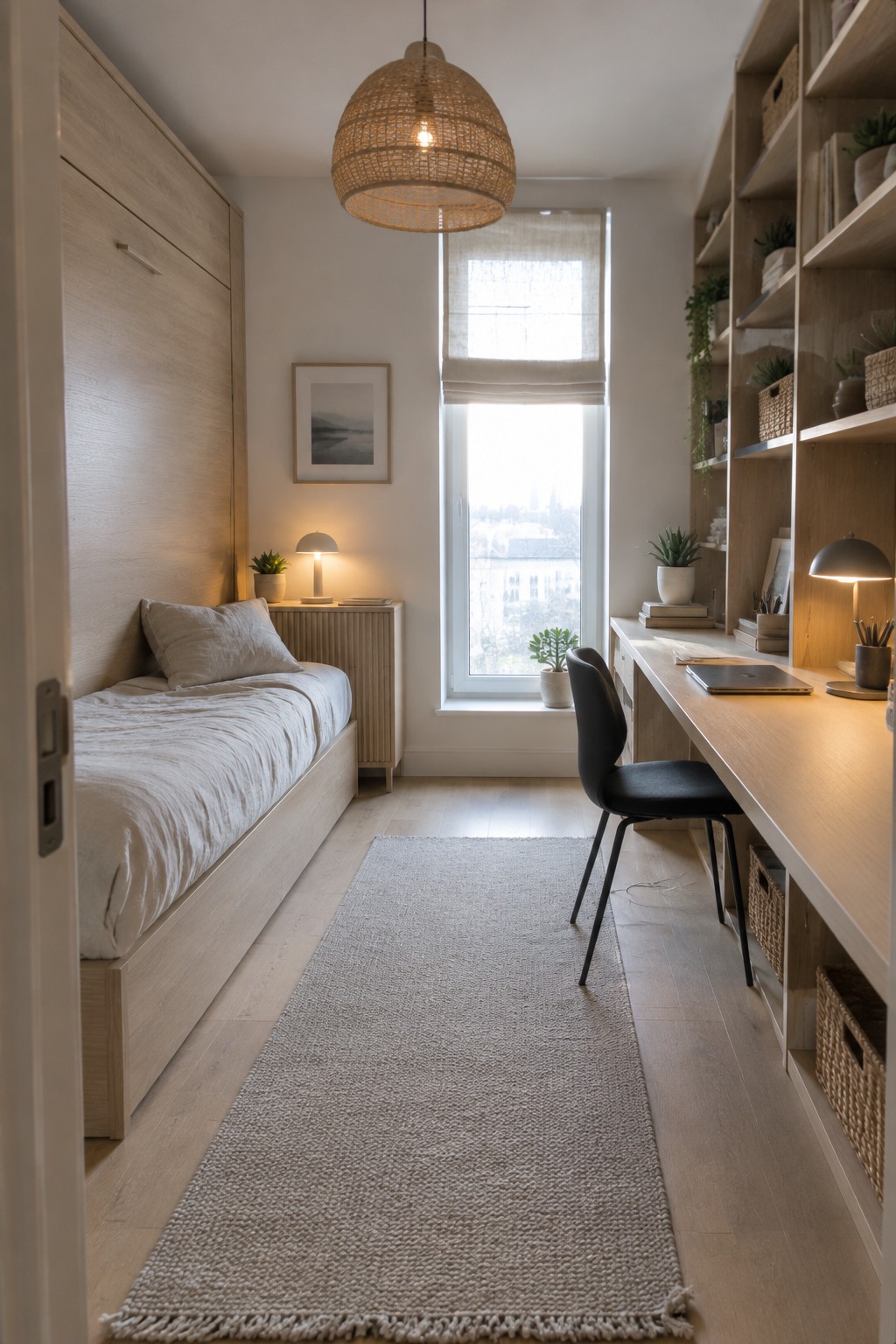
A long desk works well in narrow bedrooms because it turns the extra length into usable workspace without eating into the middle of the room. The bed stays on one wall and the desk runs along the other, so both functions fit without the space feeling cramped or split in half.
This setup suits rooms that are short on width but have decent length. Keep the desk surface clear enough for daily use and add storage underneath or on open shelves above so the floor stays open. The main thing to watch is cord clutter along the wall.
Desk and Bed on Opposite Walls

Placing the desk along one long wall and the bed along the other is a straightforward way to fit both functions into a narrow bedroom. The layout leaves a clear path down the middle, so the room does not feel cramped even when both areas are in use. Good natural light from the window makes the desk spot practical without needing extra lamps during the day.
This arrangement works best in long, tight rooms where you cannot spare floor space for separate zones. Keep the desk fairly shallow and choose a chair that tucks in fully when not in use. Avoid pushing either piece too far into the center or the walkway disappears.
Use the Window Wall for a Built-In Desk

Placing the desk under the window works especially well in narrow bedrooms because it turns an otherwise awkward wall into useful workspace. The setup keeps the bed on one side and leaves the middle of the room open, so the space does not feel cramped even when both functions are present.
This approach suits older homes or small guest rooms where you need to fit sleeping and working areas without adding furniture that sticks out. Keep the desk surface fairly shallow and add storage underneath so the room stays tidy.
Loft The Bed To Fit A Desk Below

Raising the bed on a simple loft frame turns the floor space underneath into a workable desk area. In narrow rooms this keeps the bed from eating up the only open stretch of floor, so you can still fit a chair and some storage without the whole place feeling tight.
This setup suits rooms with decent ceiling height and works best when the desk sits right under the bed frame. Keep the chair light so it slides in easily, and leave enough clearance above the mattress for sitting up without hitting the wood.
Run a Desk Along One Long Wall

A long desk against one wall is one of the simplest ways to add an office spot in a narrow bedroom. It uses the length of the room instead of taking up floor space with a separate table or bulky furniture.
This works best when you add open shelves right above the desk for books and bins. The rest of the room stays open for the bed and easy movement. It suits small bedrooms where you need both sleeping and working areas without crowding the floor.
Fold Down Desk Saves Floor Space In Narrow Bedrooms
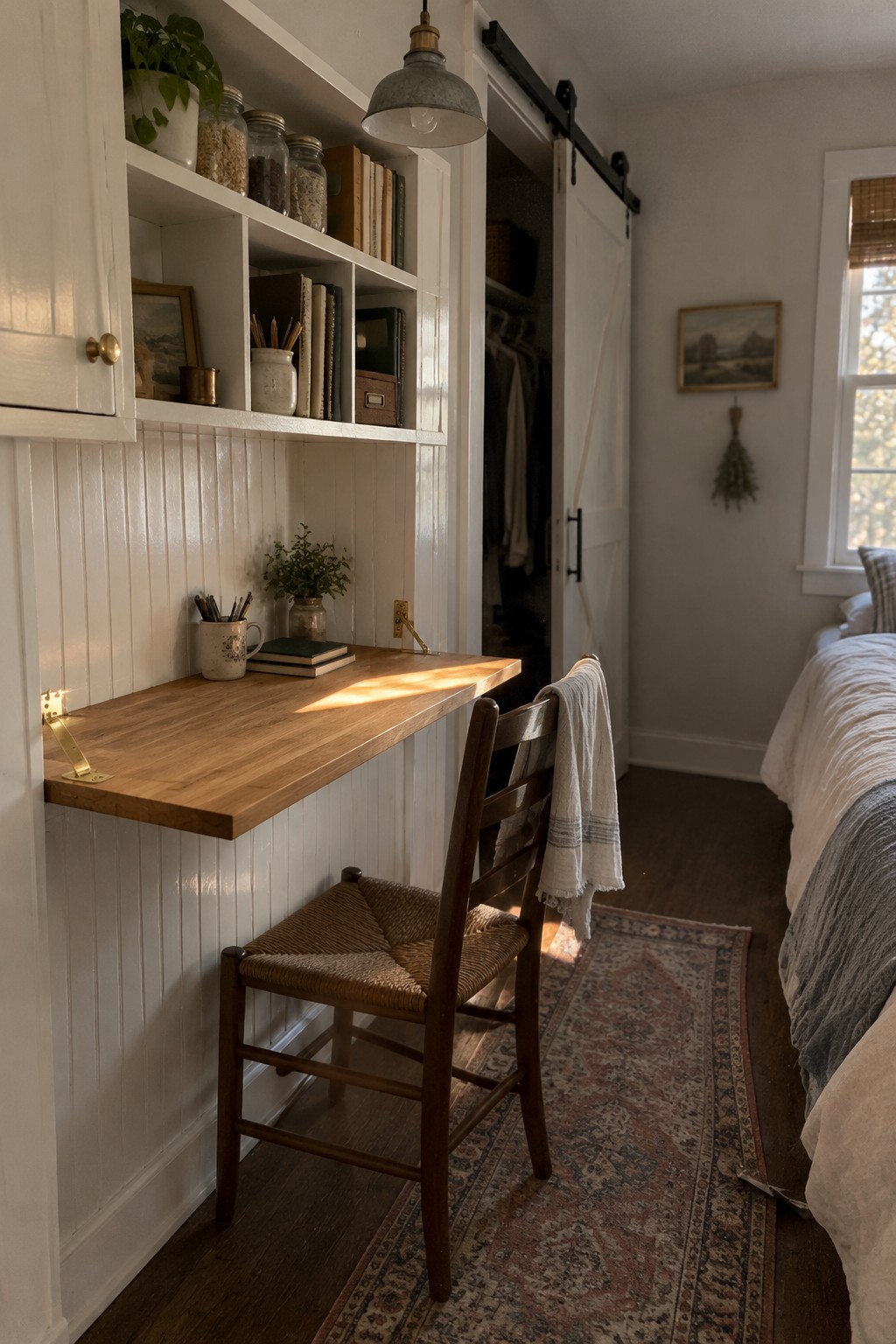
A fold down desk gives you a real workspace in a tight bedroom without eating up the floor all day. The desk stays flat against the wall when not in use, so the room still feels open for walking or other furniture.
This setup works best in long, narrow rooms where every inch counts. Mount it at a comfortable height, add a simple chair that tucks in, and keep storage on a shelf above so nothing else crowds the floor.
A Daybed Opposite The Desk Works In Narrow Rooms

A daybed along one wall lets you fit both sleeping space and a desk in rooms that feel too tight for a regular bed. The low profile keeps the layout open, and the desk on the facing wall makes the most of the length without blocking the walkway.
This works best in small apartments or guest rooms where the space needs to serve two purposes. Use a daybed with built-in drawers for extra storage, and keep the desk surface clear so the room stays usable during the day.
Built-In Beds Free Up Space For A Desk

Many narrow bedrooms end up feeling cramped when you try to fit both a bed and a workspace. A built-in bed with shelves above it and storage below turns the sleeping area into a single compact unit. This leaves the rest of the floor open for a simple desk along the opposite wall.
This setup works best in rooms that run long and tight. Keep the desk surface shallow and the chair slim so the walkway stays clear. It suits apartments or older homes where the bedroom doubles as an office without room for standard furniture arrangements.
Place the Desk Under the Window

In a narrow bedroom, putting the desk right under the window keeps the main floor area open. It uses the wall space that would otherwise sit empty and brings in natural light for work without needing extra lamps during the day.
This layout suits older homes or rooms with deep window sills. Keep the desk narrow so the chair can tuck in, and choose light curtains that let the sun through while softening the view outside.
Run a Long Desk Along One Wall
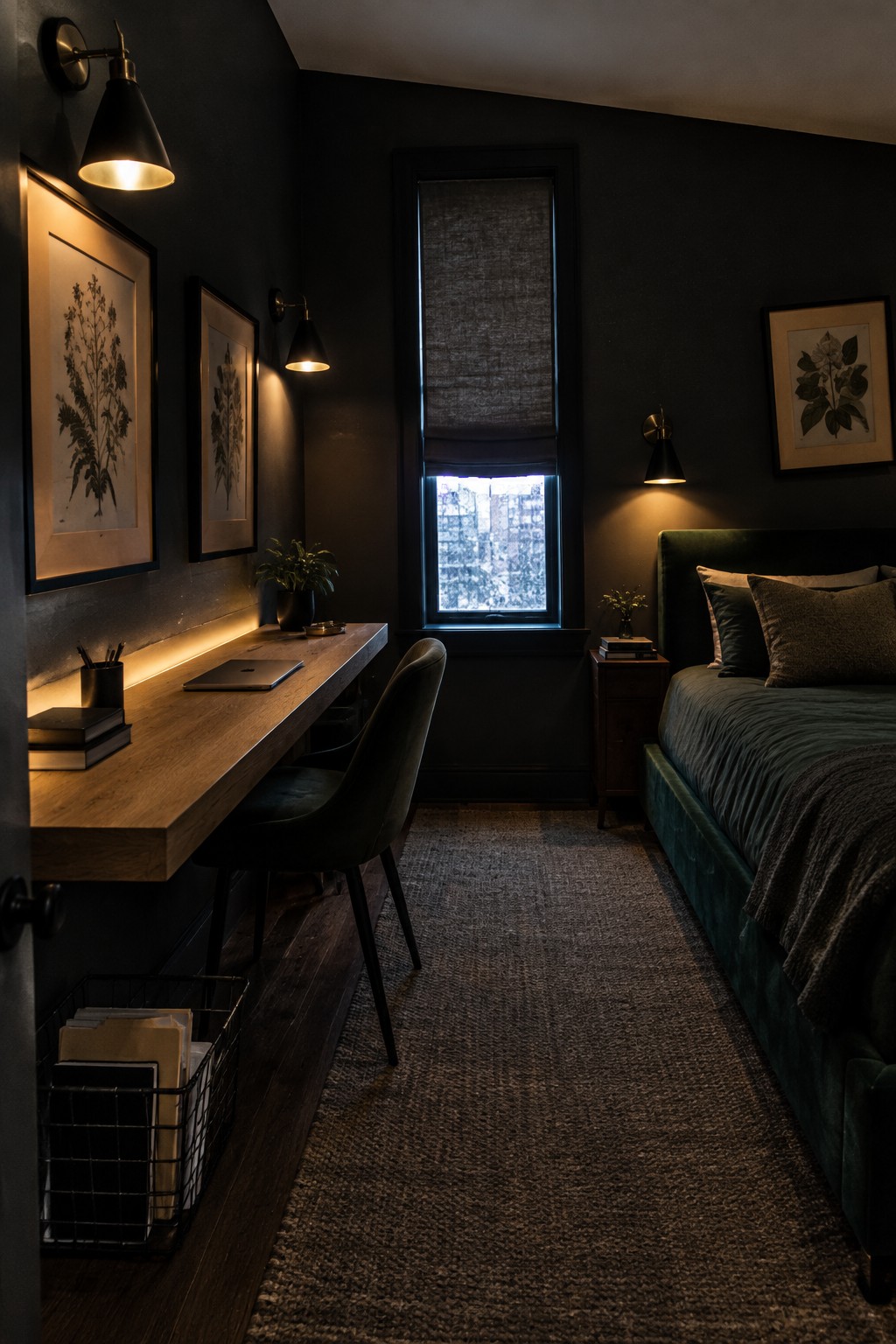
A narrow bedroom often has more length than width, and that is exactly what makes a long desk work so well. Instead of trying to squeeze a separate desk into the room, you can mount or place one along the full length of the longest wall. This keeps the middle of the floor open and leaves room for the bed on the opposite side.
This layout works best in rooms that are at least eight feet wide. Use wall sconces instead of table lamps so the desk surface stays clear, and choose a narrow chair that can tuck in when not in use. Avoid placing the desk near the foot of the bed if you want the room to feel less cramped during the day.
Built-In Desks That Fit Narrow Bedrooms
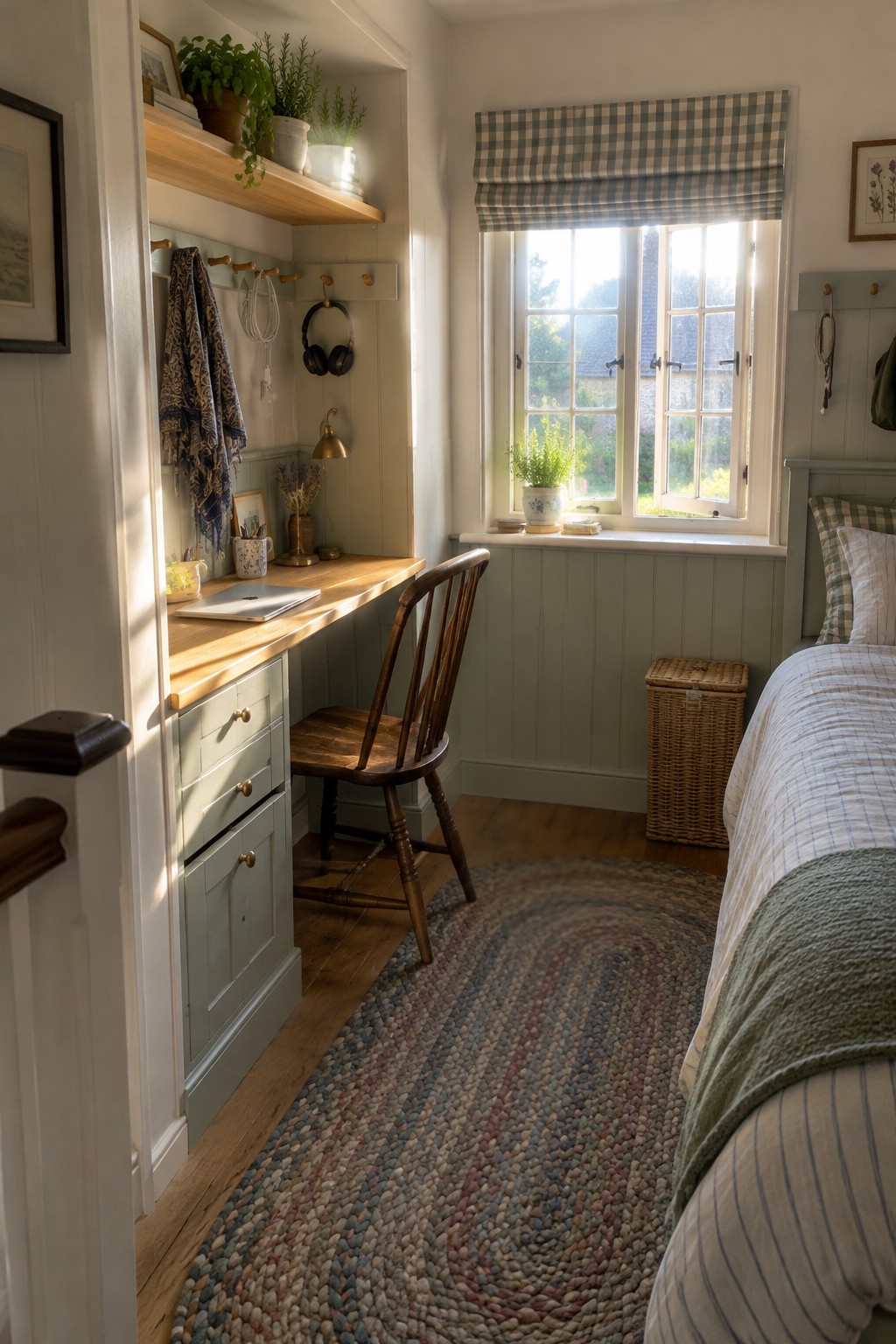
A built-in desk along one wall gives you a workspace in a narrow bedroom without eating up floor space. The desk stays shallow, the drawers underneath hold supplies, and the whole setup keeps the room feeling open instead of cramped.
This works well in older homes or small cottages where bedrooms run long and thin. Tuck the chair in when it is not in use, and keep any shelves above the desk light so the area does not feel heavy.
Daybed And Tall Shelving For Narrow Bedroom Offices

One simple way to fit both sleeping and working space into a narrow room is to use a daybed instead of a full bed. It takes up less visual weight and leaves the floor open for a desk and chair near the window.
Pair it with a tall open shelving unit on the long wall. The vertical storage keeps books, files, and supplies off the floor while the open frame stops the room from feeling boxed in. This setup works best in long, skinny rooms where every foot of width counts.
Daybed And Desk Pairings In Narrow Bedrooms

In narrow bedrooms, fitting both a sleeping spot and a workspace often means choosing pieces that do double duty. A built-in daybed with drawers below paired with a simple desk along the same wall keeps the layout efficient without crowding the floor space.
This works especially well in smaller homes or converted rooms where you need the bed to double as seating during the day. The drawers give hidden storage for bedding or supplies, and the desk can tuck in without blocking the walkway. Just make sure the desk height lines up comfortably with the daybed so the whole area feels balanced.
Built-In Desks in Alcoves

A desk built into an alcove keeps the work area from sticking out into the room. In narrow bedrooms this matters because the main walkway stays clear and the bed or other furniture can still fit without crowding. The desk feels like part of the wall rather than an extra piece that takes up floor space.
This works best in rooms that already have a recessed spot or a shallow niche along one wall. Keep the desk top fairly shallow and choose a chair that slides all the way in when not in use. Add a small sconce or task light so the area stays useful even when the rest of the room is dim.
Built-Ins Turn Narrow Rooms Into Bedroom Offices
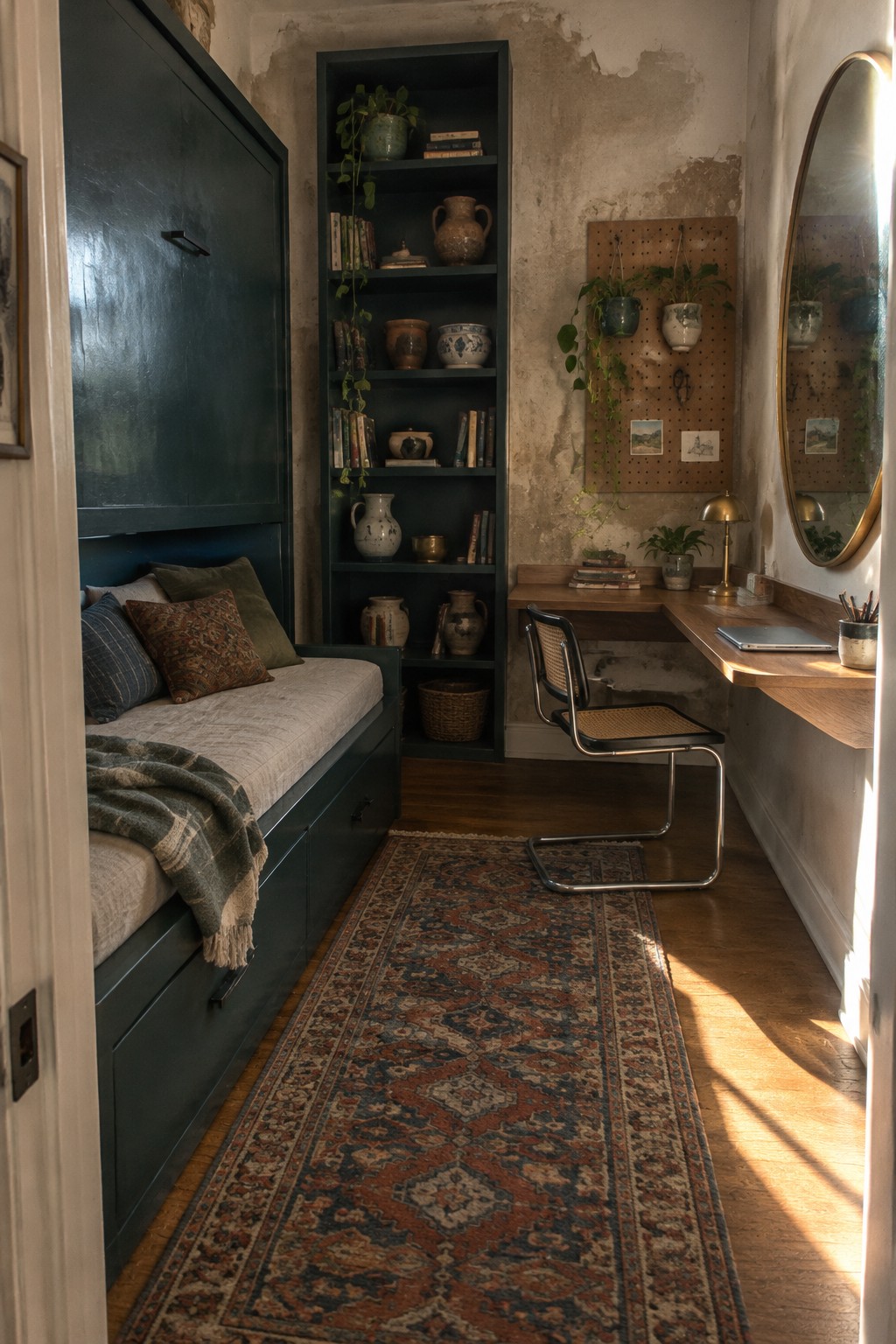
In narrow rooms, built-ins along the walls let you fit both sleeping and working areas without the space feeling cramped. A bed that runs the length of one wall with drawers underneath keeps the floor open, while a tall unit on the opposite side adds storage that reaches up instead of out.
This setup works best in older apartments or small homes where rooms are long and tight. Place the desk at the end or along the free wall and use a simple chair that tucks in when not in use. Avoid adding too many freestanding pieces that would block the walkway.
A Long Desk Along One Wall
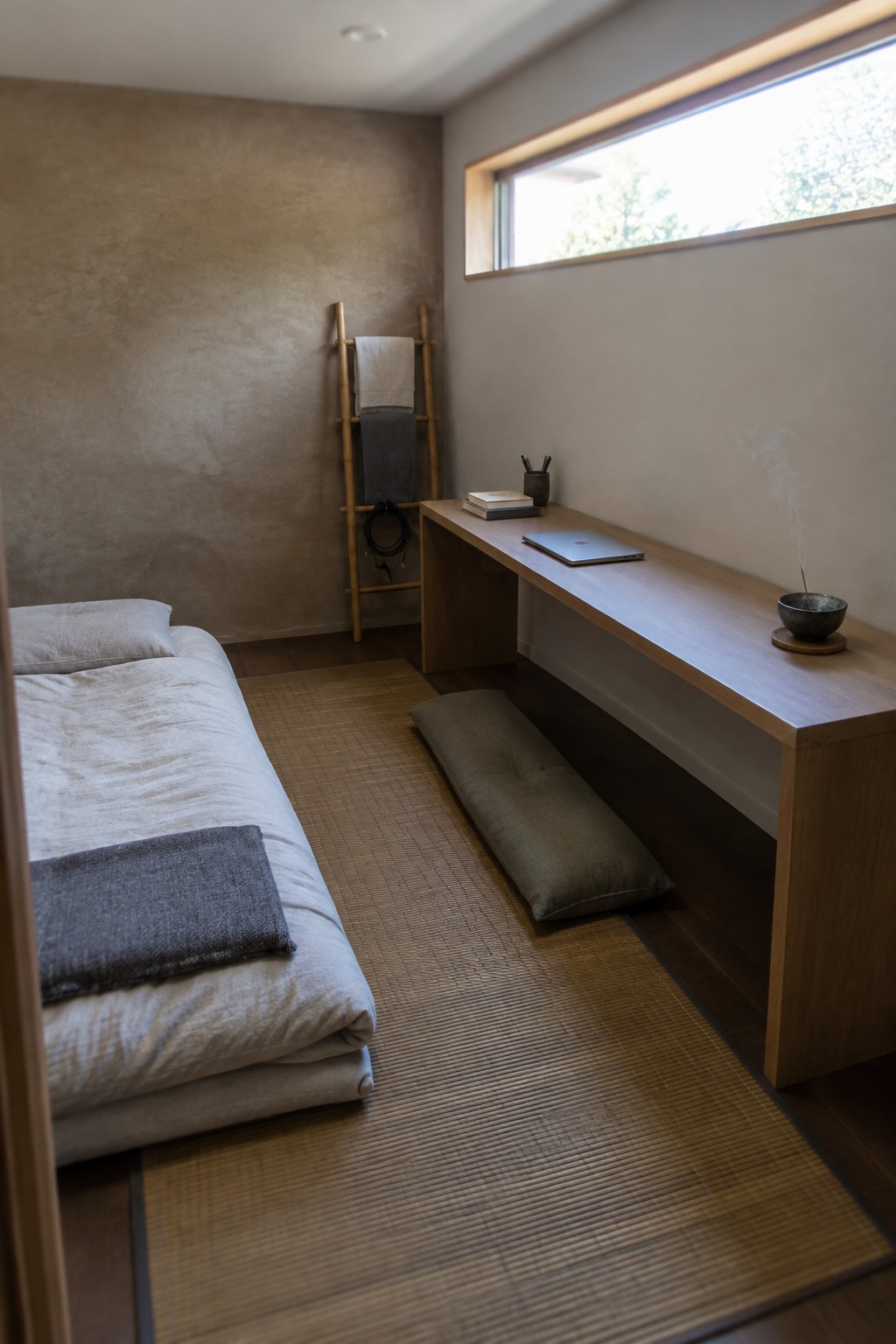
A long desk running the full length of one wall works well in narrow bedrooms because it turns the available space into a usable work area without adding bulky furniture that would crowd the room. The low profile keeps sight lines open and leaves plenty of floor space for movement.
This setup suits small homes or apartments where the bedroom has to double as an office. Keep the desk surface clear except for a few daily items, and use a floor cushion instead of a chair so nothing stands out visually when the space is used for rest.
Roll Top Desks Work Well In Narrow Rooms
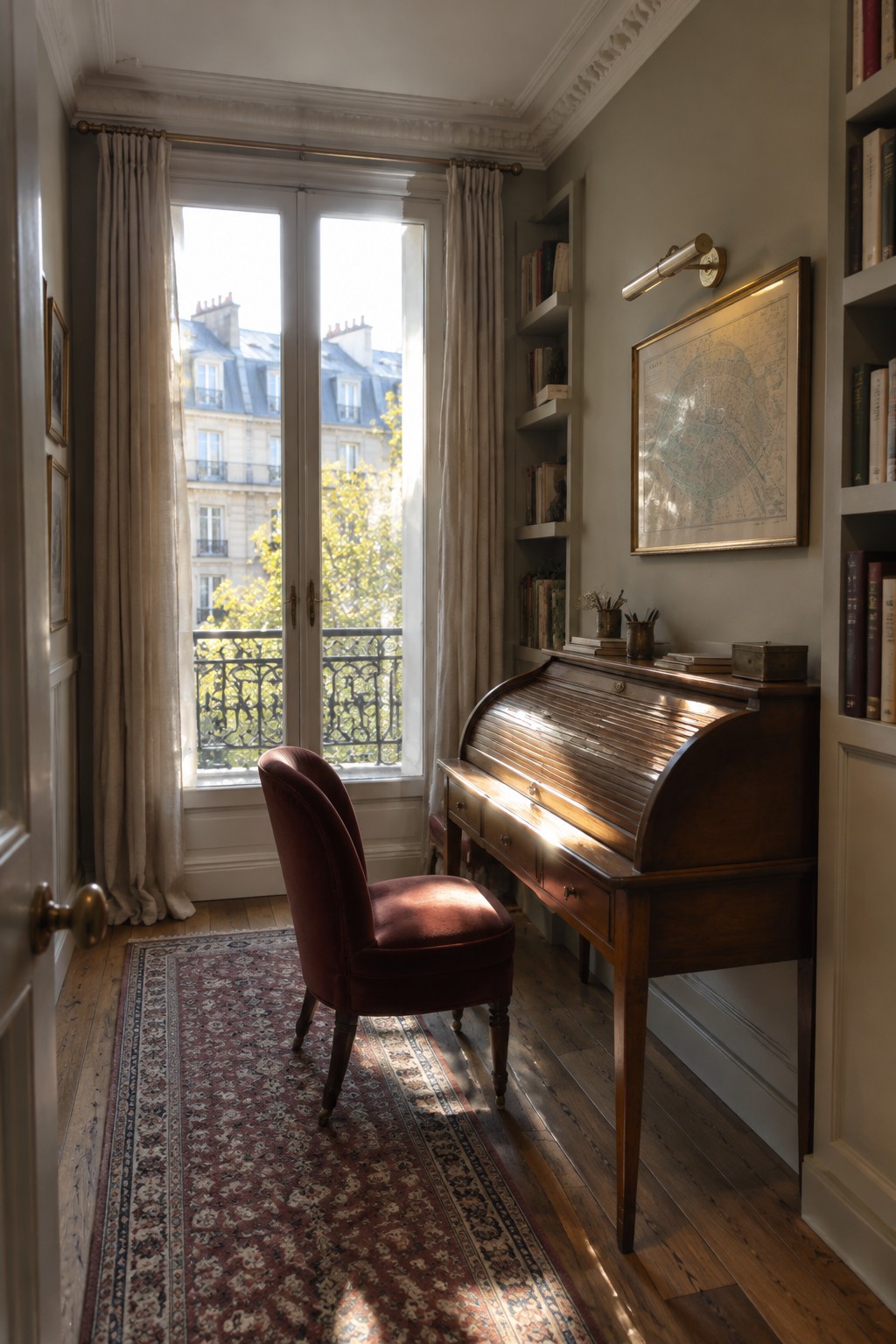
A roll top desk gives you both a workspace and hidden storage in one piece. That matters in narrow rooms where every inch of floor space counts and extra furniture quickly makes things feel cramped.
Place it against the longest wall near a window so natural light hits the surface. Keep the chair small and the surrounding shelves built in rather than freestanding. This layout suits older apartments or slim bedrooms where a standard desk would block movement.
Frequently Asked Questions
Q: How wide should my desk be for a narrow bedroom?
A: Measure the wall space first and choose a desk under 20 inches deep. This keeps the middle of the room open for walking through without bumping into anything.
Q: Where can I put my office chair without it taking over the space?
A: Pick a chair on wheels that slides under the desk when not in use. You will gain back floor area and still have easy access during work hours.
Q: What about storing papers and supplies in such a small setup?
A: Mount floating shelves above the desk for notebooks and files. Keep only the daily items on the surface so the area stays clear and functional.
