


A shared home office can feel crowded quickly when two people need space to focus, store supplies, and move around comfortably.
I find that the room works best when each workstation has a clear place without making the whole space feel divided.
A pared-back look helps, but minimalism still needs practical storage, good lighting, and enough surface area for everyday work.
The first thing I notice is often how the desks sit in relation to the windows, doors, and each other.
Small choices, such as matching desk finishes or using separate task lamps, can help the room feel calm while giving each person a setup that suits their routine.
I’d be most likely to adapt the layouts that make shared space feel balanced without asking either workstation to do too much.
Set Up Two Workstations Along One Desk
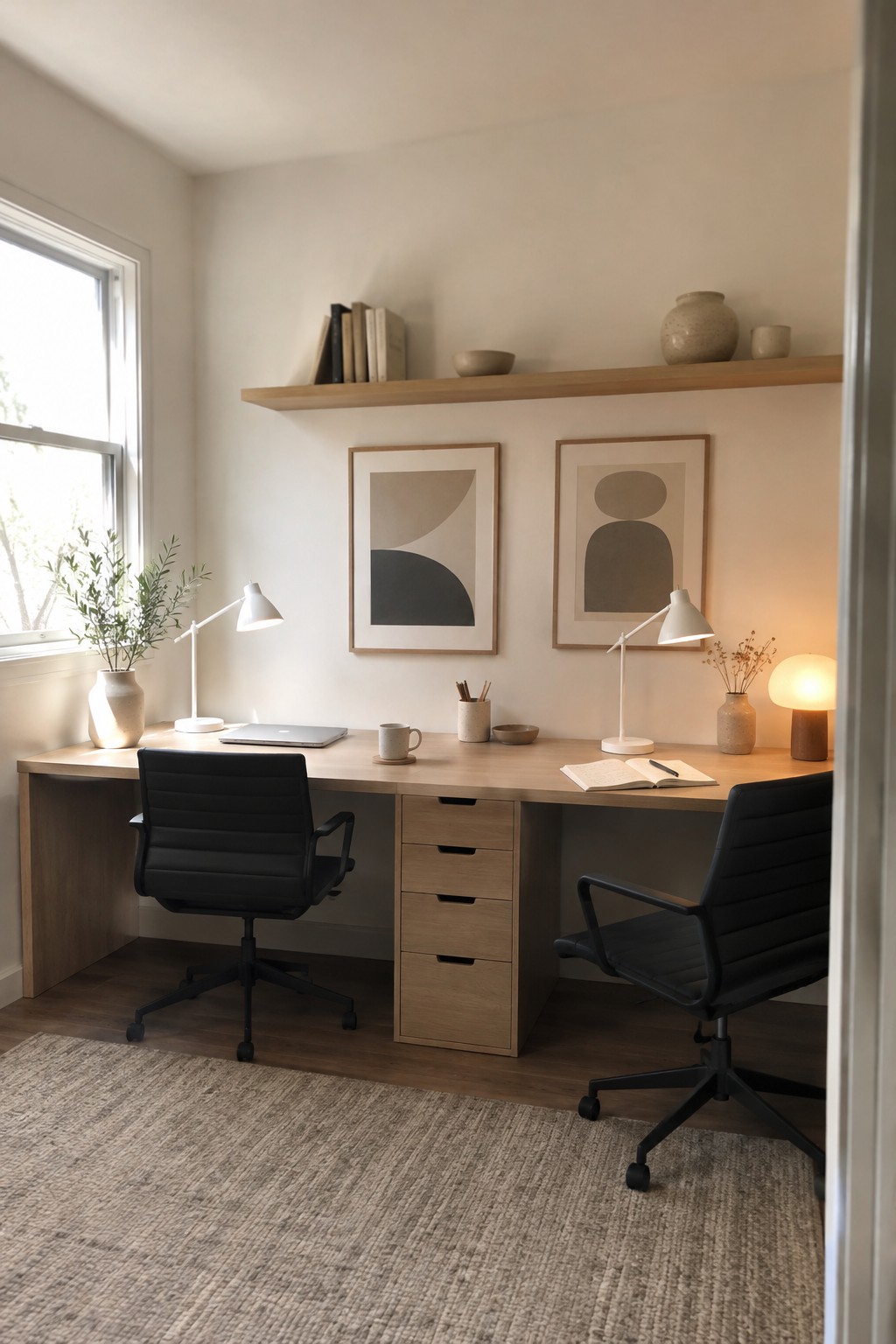
A shared desk is a practical way to give two people room to work without filling the office with separate furniture. A central drawer unit helps divide the work areas while keeping supplies close at hand.
This layout works well in a spare room or a wide home office. Leave enough space for both chairs to move comfortably, and keep each person’s everyday items to their own side of the desk.
Set Up Two Desks Along One Window

A shared window can make a two-person office feel more open without taking up extra wall space. Long desks placed side by side give each person a clear work area, while keeping the room simple and easy to use.
This layout suits a spare room or a wide window wall. Leave enough room between the chairs to move comfortably, and use drawers or slim desk organizers to keep everyday supplies from spreading across both work surfaces.
A Long Desk Can Make Two Workstations Feel Connected
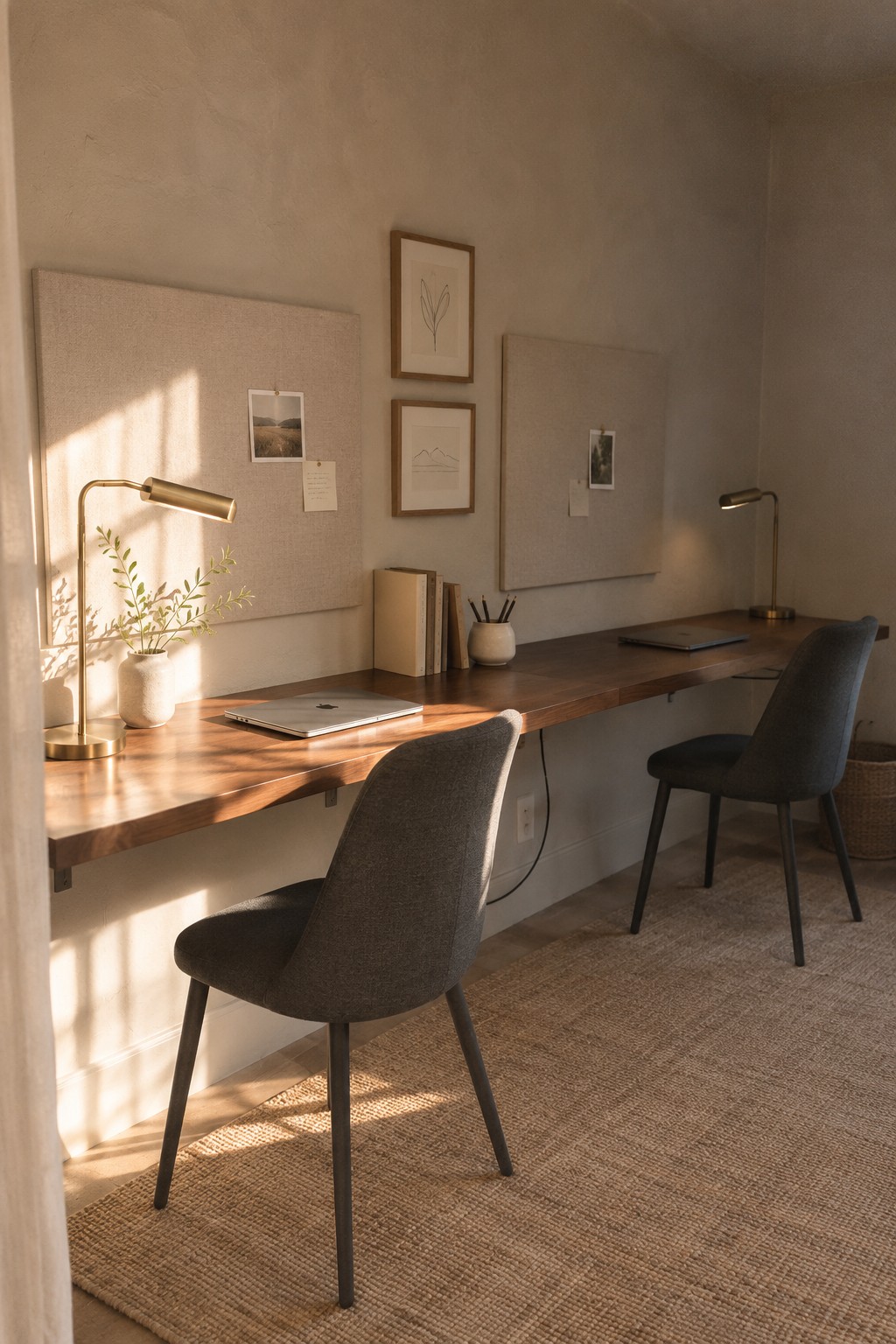
A shared desk gives two people room to work without dividing a home office into separate corners. The long wooden surface in this setup keeps both work areas connected, while each person still has space for a chair and a laptop.
This layout works well along a spare wall in a home office or guest room. Leave enough room between seats to work comfortably, and keep the desktop fairly clear so both workstations stay practical.
Use Built-In Storage to Keep Two Workstations Tidy

A shared office is easier to use when storage is planned into the room instead of added wherever there is space. Cabinets above the desks keep everyday paperwork close by while leaving the work surface clear.
For two workstations, give each person a shelf or cabinet section for their own files. Matching storage can make the setup feel orderly, but keep frequently used items within easy reach so the desks stay practical.
Choose a Shared Table for Two Workstations
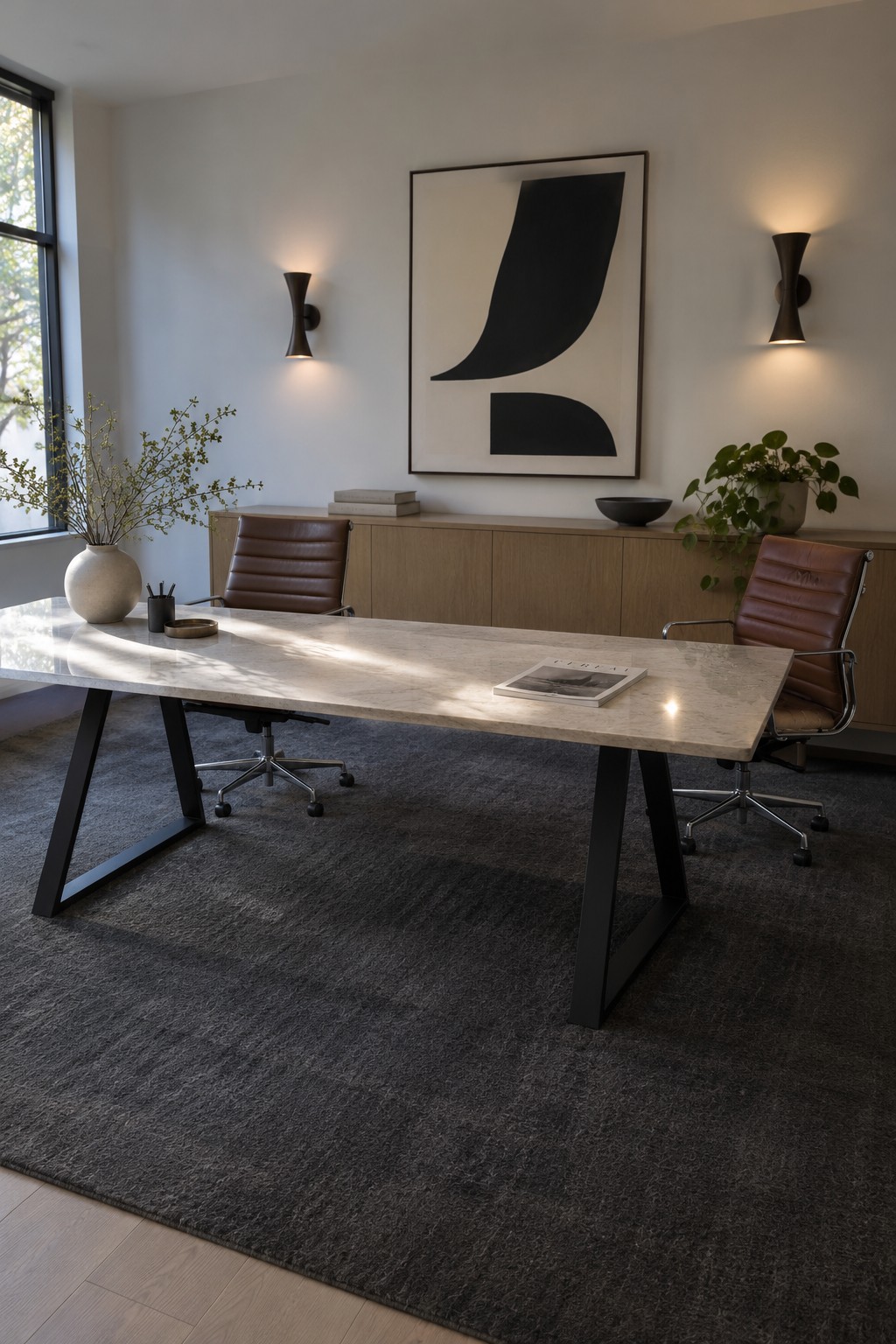
A single conference-style table gives two people room to work without making the office feel divided. The open space between the chairs keeps each workstation comfortable, while the simple black legs leave the room feeling uncluttered.
This setup works well in a home office used for meetings or shared projects. Choose a table with enough depth for screens and notebooks, and leave clear space around the chairs so both people can move easily.
Give Each Workstation Its Own Space

A shared desk can work well for two people when each person has a clear place to sit and work. In this setup, a long counter runs along the wall, with a separate chair and task lamp at each end.
This arrangement suits a spare room or a wide nook where two people need to work at the same time. Leave enough elbow room between seats, and keep supplies within reach so the shared surface stays usable.
Use a Shared Desk to Save Space
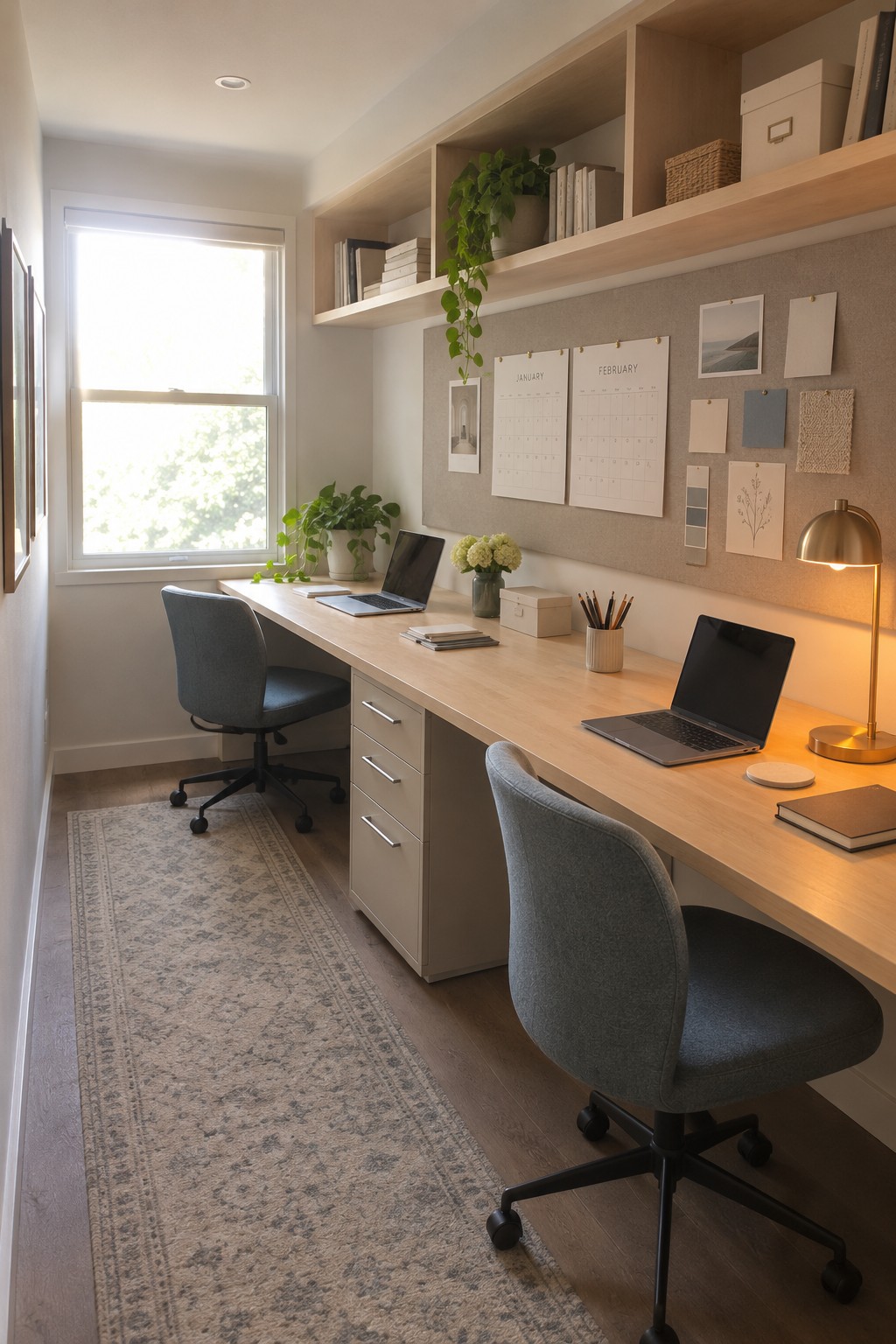
A single long desk gives two people room to work without taking up space for separate desks. The drawer unit in the middle offers storage and helps mark out each person’s area.
This setup suits a narrow office or a spare room used by two people. Leave enough space between the chairs so they can move comfortably, and keep each workstation’s supplies close at hand.
Give Each Workstation Its Own Desk

Separate desks make a shared office easier to use when each person needs a little room to spread out. Here, the two wooden desks sit on opposite sides of the room, so neither workstation has to share its main work surface.
This arrangement suits a spare room with enough floor space for two chairs and a clear path between desks. Keep each setup fairly simple, and use shared storage, such as a low bookcase, for supplies both people need.
Use An L-Shaped Desk To Share A Home Office

An L-shaped desk lets two people work in the same room while keeping separate stretches of surface for each person. It makes good use of a corner, and each workstation can feel distinct without needing two separate desks.
This layout suits a spare room or a compact office where floor space is limited. Keep the corner clear enough to move between seats, and use drawers beneath the desk to keep shared supplies close at hand.
Use a Wall-to-Wall Desk for Two Workstations

A long desk gives two people room to work side by side without making the office feel divided. Keeping both work areas on one continuous surface also makes it easier to share the room while still having space for separate laptops and supplies.
This setup works well in a spare room or a wide window alcove. Drawer units at the ends can hold office supplies, while a pair of simple chairs helps each person settle into their own spot.
Use a Long Desk to Share One Office

A long desk gives two people room to work side by side without making the office feel divided. The matching chairs and simple wood surface keep the setup easy to use for different tasks.
This layout works well in a shared room where floor space is limited. Leave enough elbow room between work areas, and use drawers or small organizers to keep each person’s supplies separate.
Use a Shared Desk in a Small Office

A shared desk is a practical choice when two people need to work in one room but there isn’t space for separate desks. The long, simple surface gives each person room to spread out while keeping the setup straightforward.
Leave enough space between work areas so both people can work comfortably, and use separate desk mats to mark each spot. This arrangement suits a spare room or a quiet corner of the home, especially when you want the room to stay uncluttered.
Use Built-In Cabinets to Divide a Shared Office

Built-in cabinets can give two workstations a little separation without splitting the room into separate offices. Here, a tall glass-front cabinet sits between the desks, while the long countertop keeps the work areas connected.
This setup suits a room where two people need to work side by side but also want a clearer boundary between their spaces. A central cabinet can hold office supplies and books, though it helps to keep the countertop clear so both people have enough room to work.
Use a Long Desk to Make Room for Two

A long desk gives two people separate work areas without making the room feel divided. Each person can keep their own chair and lamp, while the shared surface helps the office feel connected.
This setup works well in a spare room or along an open wall. A desk with drawers can handle shared supplies, but leave enough clear space between the work areas so both people can spread out comfortably.
Use a Slatted Divider to Give Each Workstation Its Own Space

A narrow divider can help two people share a home office without making the room feel closed off. The vertical wood slats mark out each workstation while still letting light and conversation pass through.
This works well when two desks sit along the same wall or counter. A divider with open gaps takes up little visual space, but make sure it does not block access or leave either person short on elbow room.
Keep a Shared Desk Clear With Drawer Storage

A long desk gives two people room to work side by side, but shared space can get cluttered quickly. Drawer units at the ends keep everyday supplies tucked away while leaving the main work surface open.
This setup suits a spare room or home office where two people need to work at the same time. Leave enough space between each seat, and use separate drawers or organizers so each person can find their things without crowding the desk.
Use Separate Desks Along the Same Wall

Two desks placed along one wall let two people work in the same room without sharing a single work surface. Each person gets room for their own supplies, while the matching wood tops help the setup feel connected.
This arrangement works well in a narrow office or a room with a long, open wall. Leave enough space between chairs to move comfortably, and use a rug or similar chairs to help the separate work areas feel like part of one office.
Use Matching Lamps to Mark Each Workstation

Two people can share a desk without making the setup feel like one long, crowded workspace. A lamp at each end gives both workstations a clear place, while keeping the overall arrangement simple.
This works well when a shared desk is more practical than fitting in two separate desks. Choose lamps that suit the desk’s size, and leave enough room for each person’s laptop and everyday work items.
Use Shelving to Separate Two Workstations

A tall open shelf can divide a shared office without closing it off. It gives each person a little visual space while keeping both workstations connected, which is useful when two desks need to fit in one room.
Use a narrow bookcase between desks to store files and supplies within easy reach. Keep some shelves open so the divider does not feel bulky, and check that it does not block natural light or make either chair area cramped.
Use Separate Desks to Give Each Person Room

Two desks make a shared home office easier to use when each person needs a clear work area. The matching light wood tables keep the setup feeling consistent without making the workstations feel crowded together.
This arrangement suits a bright spare room or a room with windows along more than one wall. Keep the desks far enough apart for chairs to move freely, and use a small shared cabinet for supplies so neither work surface has to hold everything.
Make Use of the Space Under the Stairs
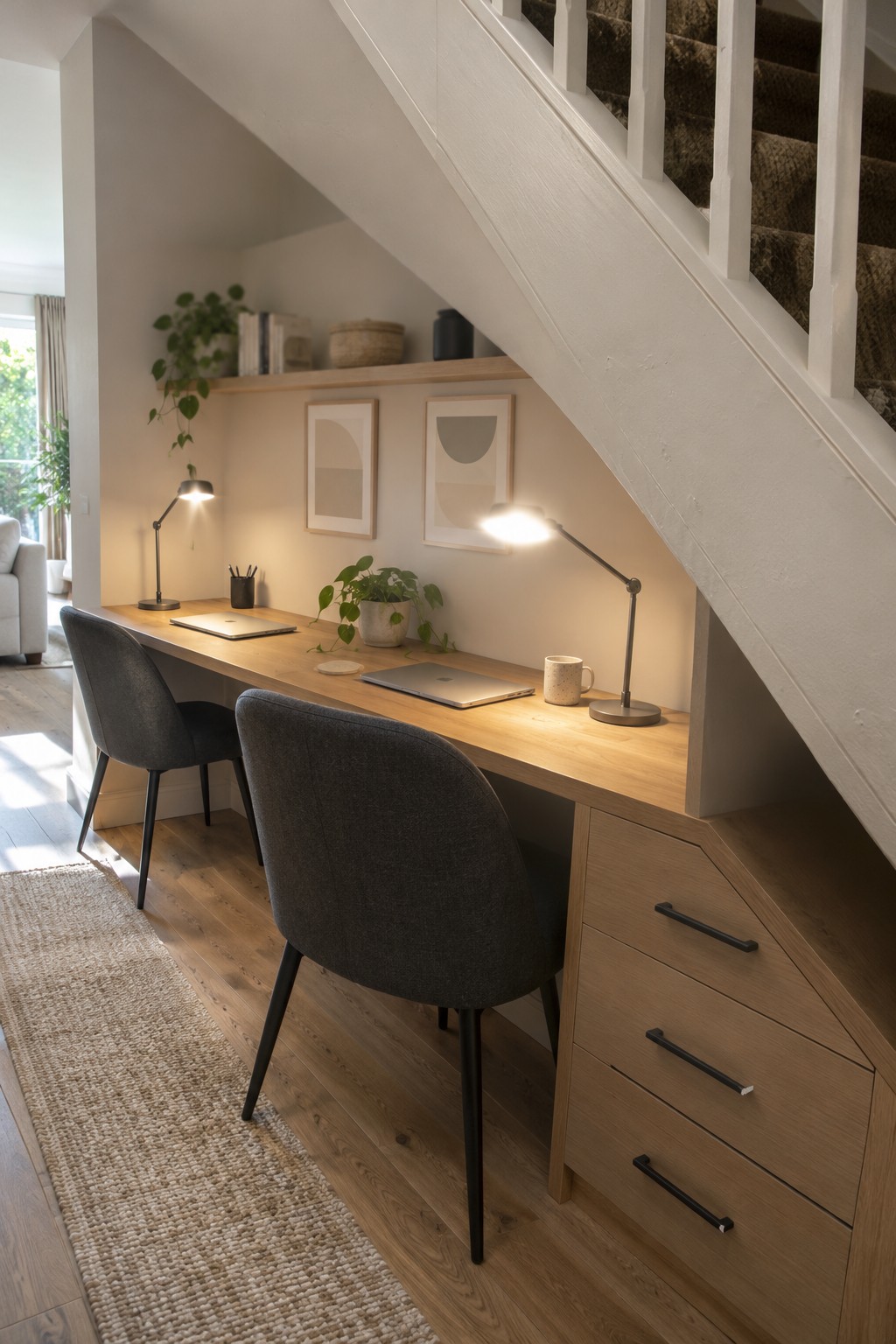
A desk tucked beneath the stairs is a practical way to fit two workstations into an area that might otherwise go unused. A long shared desktop gives each person room to work while keeping the setup in one compact zone.
A layout like this suits a hallway or open-plan home where a separate office is not available. Add drawer storage at one end, as shown here, and leave enough clearance for chairs so the sloping ceiling does not make the desks uncomfortable.
Use a Height-Adjustable Desk for Two

A long shared desk gives two people room to work side by side, while an adjustable frame lets each person change the desk height when needed. That can make a shared office more comfortable without taking up space for two separate desks.
Choose a desk wide enough to keep each workstation distinct, and check that the legs leave room for stools or chairs to move freely. A simple wall board can help keep notes and papers off the work surface.
Add a Storage Tower Between Two Workstations

A narrow built-in shelving unit can mark the boundary between two work areas without separating them completely. It gives each person a little visual space while keeping the shared office open.
Use the shelves for baskets and a few everyday items, and keep the desk surfaces clear. This setup works especially well when both people need a place to work in one room but don’t have space for separate offices.
Use Different Desk Setups for Two Workstations

Two workstations do not have to use the same kind of desk. A larger table and a smaller desk can give each person a comfortable work area while making better use of an attic office’s sloped walls.
Leave enough space between the desks for chairs to move without bumping into each other. A simple rug can help define the shared work zone, but keep the walking path clear.
Frequently Asked Questions
Q: How can two people share a small home office without feeling cramped?
A: Try one long desk along a wall, with each person’s supplies kept to their own side. If space is tight, wall shelves can hold work gear without taking up more floor space.
Q: What’s the best way to keep two workstations looking balanced?
A: Repeat a few details, such as matching chairs or desk lamps, while letting each person choose their own accessories. The room will feel connected without looking overly matched.
Q: How do we handle video calls when we’re working side by side?
A: Set desks so you aren’t both facing the same plain wall, and use a bookcase or screen between work areas if calls overlap. Even a little separation can help with focus and privacy.
Q: How can we hide cables without making the setup complicated?
A: Use a cable tray under the desk and route each person’s cords toward one side. Keeping a small charger or power strip within easy reach also cuts down on cable clutter.
