


A bedroom office can feel calm and workable, but only when the two uses have enough separation to keep work from taking over the room.
I find that the first thing I notice is whether the desk feels like it belongs there, rather than looking like it was squeezed into the nearest open corner.
A simple layout, a change in lighting, or a rug under the desk can help mark a work zone without making a small bedroom feel crowded.
Storage matters too, since papers and equipment can quickly undo the quiet feel of a pared-back space.
I’d be most inclined to test ideas that make the work area easy to use during the day and easy to set aside at night.
Keep The Work Area Separate From The Bed
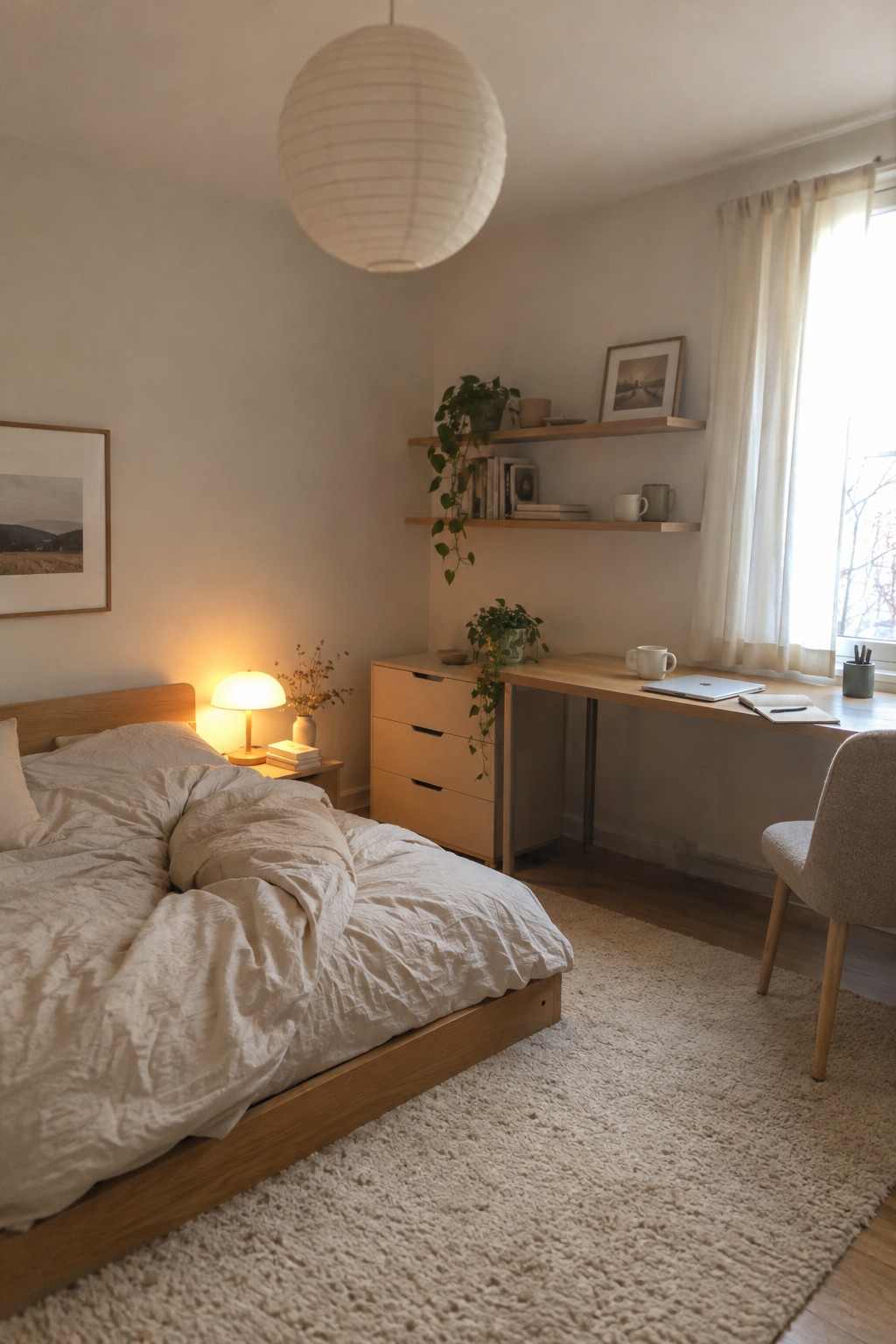
A desk can fit into a bedroom without making the whole room feel like an office. Placing it along a wall away from the bed gives work its own spot, while a small drawer unit helps keep everyday supplies close by.
This setup works especially well in a compact room where a separate office is not an option. Keep the desk surface fairly clear, and use a chair that can tuck away when the workday is done.
Use a Slatted Divider to Separate Work and Sleep

A vertical wood divider gives a bedroom office its own zone without closing off the room. The open slats provide a visual boundary while still letting daylight pass through, which helps a small space feel less boxed in.
This approach works well when a desk shares a room with the bed but a full wall would make the layout feel cramped. Keep the divider narrow enough to leave an easy path between zones, and choose a finish that suits the other wood in the room.
Use a Bookcase To Separate Work And Sleep Areas

A narrow bookcase can help a bedroom office feel like its own work zone without closing off the room. It provides useful storage while marking a gentle boundary between the desk and bed.
This works especially well in a small bedroom where there isn’t space for a full divider. Choose a slim bookcase that leaves the walkway clear, and keep heavier items on the lower shelves for stability.
Use a Desk To Separate Work From Rest
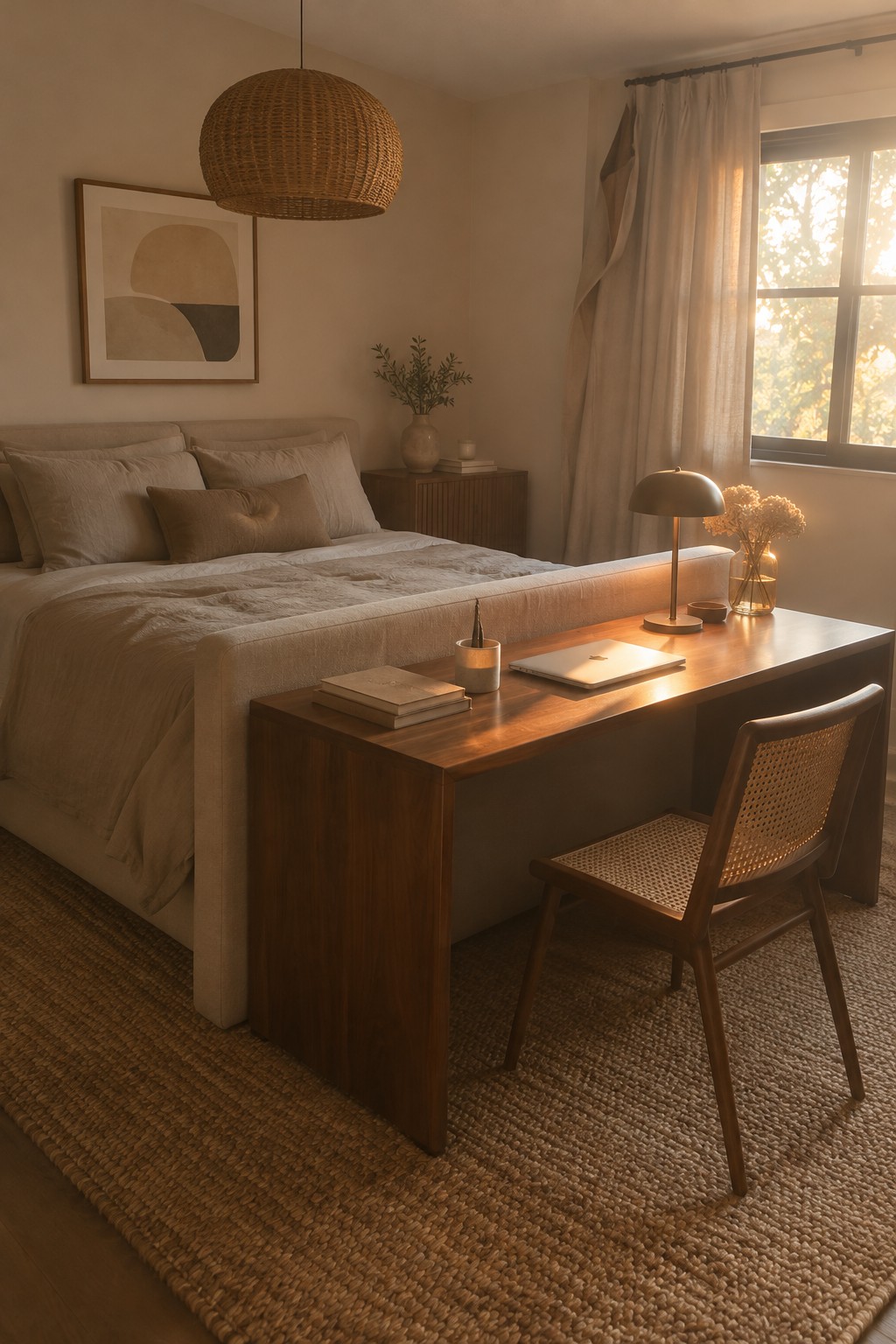
A desk at the foot of the bed makes room for work without needing a separate office. It gives the bedroom a clear work zone, while keeping the bed area available for rest. A simple wood desk can suit the room without taking over.
Leave enough space to pull out the chair and walk around the desk comfortably. This setup works especially well in a larger bedroom; in a tighter space, a narrower desk can keep the walkway open.
Use a Low Shelf to Mark the Work Zone

A short bookcase can separate a desk from a bed without making a small bedroom feel closed off. It gives the work area a clear edge, while keeping the room open enough for light and easy movement.
Choose a shelf that sits around desk height, then keep its contents fairly tidy so it doesn’t become visual clutter. This works especially well when a bedroom needs to serve two purposes but has little room for a full divider.
Use a Wall Desk To Make A Small Office Zone

A wall-mounted desk can create a useful work spot without taking up much floor space. It gives a bedroom office its own place, while leaving the bed as a separate area for rest.
This setup works especially well in a narrow room, where a freestanding desk might crowd the walkway. A simple stool can tuck away when the workday is done, and a shelf above the desk can hold office supplies without spreading them across the bedroom.
Use Low Storage to Divide a Small Room

A low bookcase can mark the edge of a work area without closing off a bedroom. It gives books and office supplies a place to go, while its open top keeps the room feeling connected.
This works well in a narrow bedroom where a full-height divider would block light or make the layout feel cramped. Place the shelves between the desk and bed, and keep the top fairly clear so it stays useful as a surface rather than turning into extra clutter.
Use Curtains to Create a Separate Work Zone
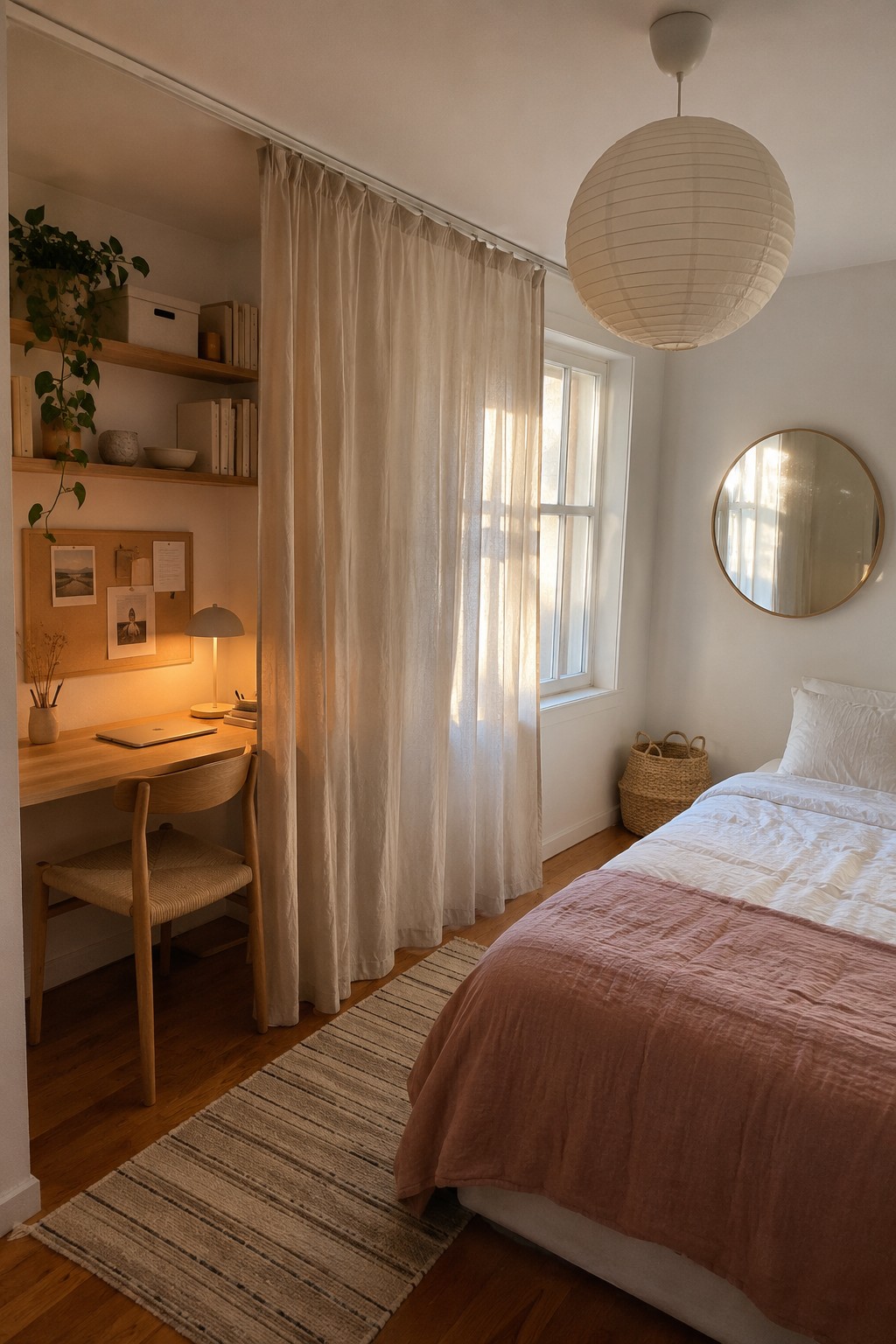
A ceiling-mounted curtain can divide a bedroom office without taking up the floor space a screen or bookcase would need. It makes the desk area feel more distinct, while still letting you open up the room when you want it to feel larger.
Choose a light fabric that can slide easily, and make sure the curtain is wide enough to close across the work area. This works especially well in a small bedroom where a permanent divider would feel bulky.
Use a Built-In Desk to Define the Office Zone
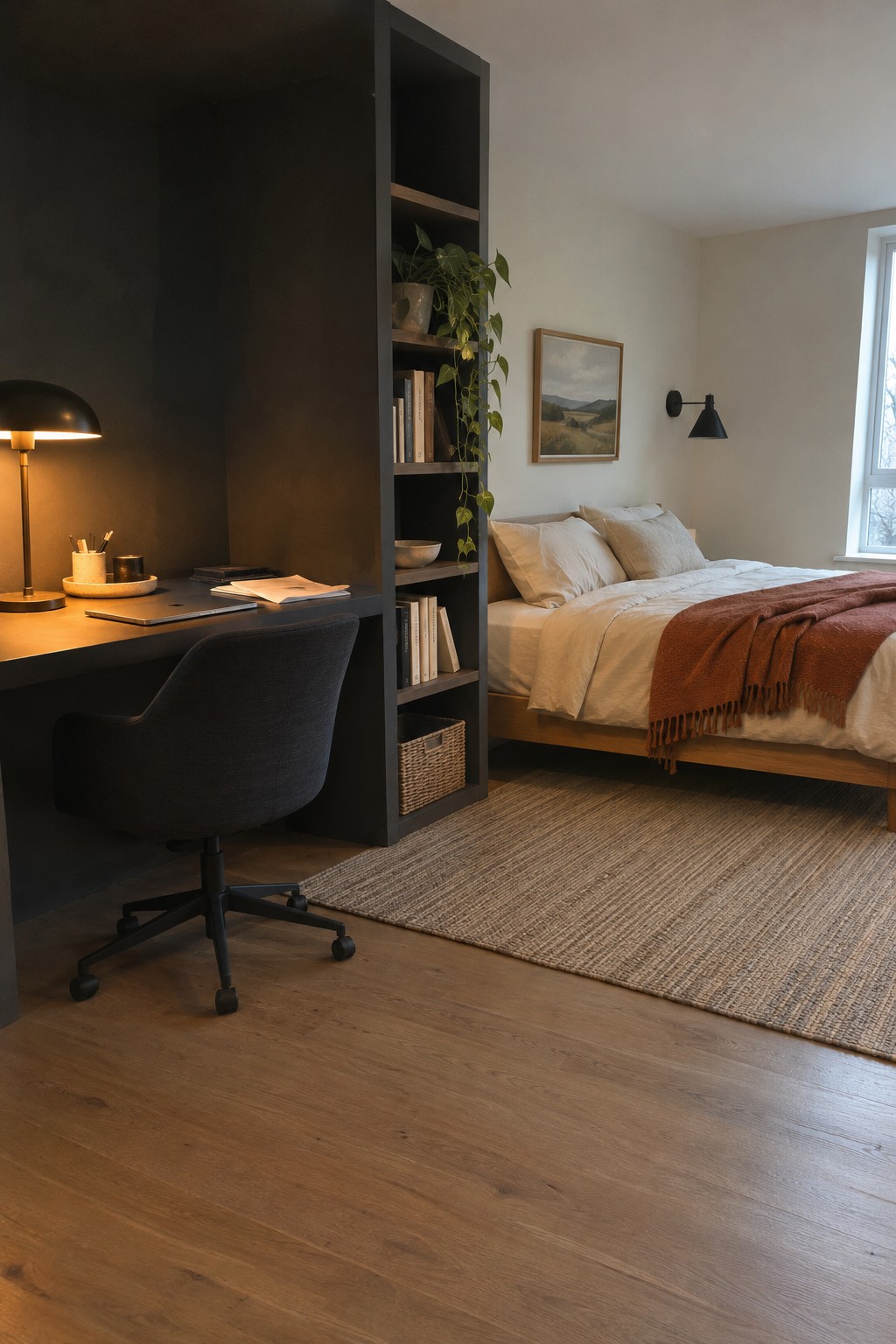
A desk built into a tall shelving unit gives a bedroom office its own clear place without closing off the room. The shelves provide storage and a little visual separation, while the sleeping area can still feel open.
This setup works well when you can dedicate one wall or corner to work. Keep everyday office items on the desk and use the shelves for books or baskets, so the work zone stays useful without spreading into the rest of the bedroom.
Build a Desk Into Bedroom Shelving

A built-in desk can make a bedroom office feel like part of the room instead of a separate setup. Here, the long work surface sits below open shelves, so books and a few personal items have a home without crowding the desk.
This approach works well when you have a wall or alcove that can hold a fitted desk. Keep the work surface clear enough for daily tasks, and use closed drawers for supplies that would otherwise spill into the sleeping area.
Put the Desk Near a Window
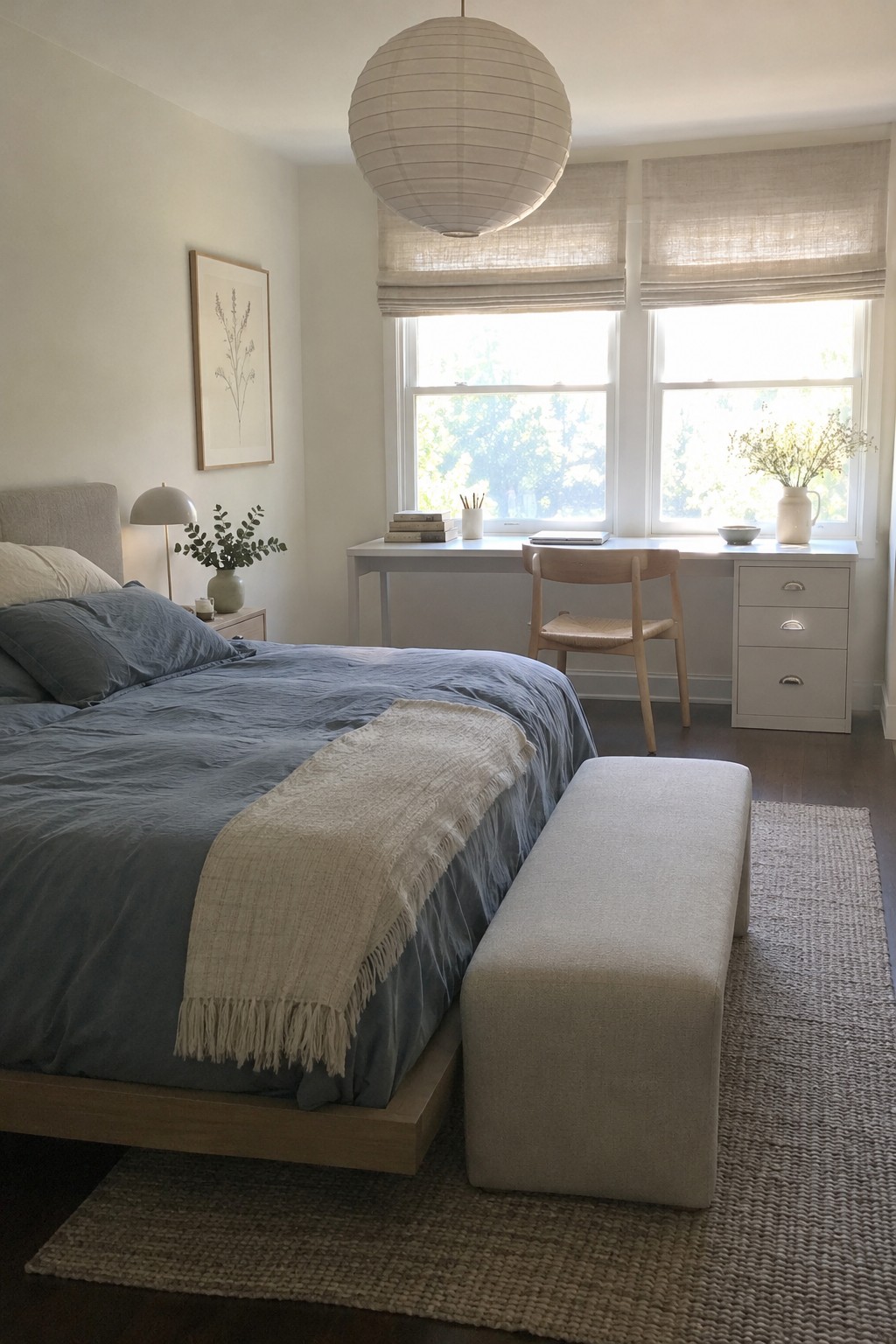
A desk by the window gives a bedroom office its own spot without needing a divider. It makes good use of a bright area, while keeping the bed available for rest instead of work.
This setup suits bedrooms where a window wall has enough room for a narrow desk. Keep the desktop fairly clear, and choose a chair that can tuck in so the work area stays compact.
Place a Desk Beside the Bed
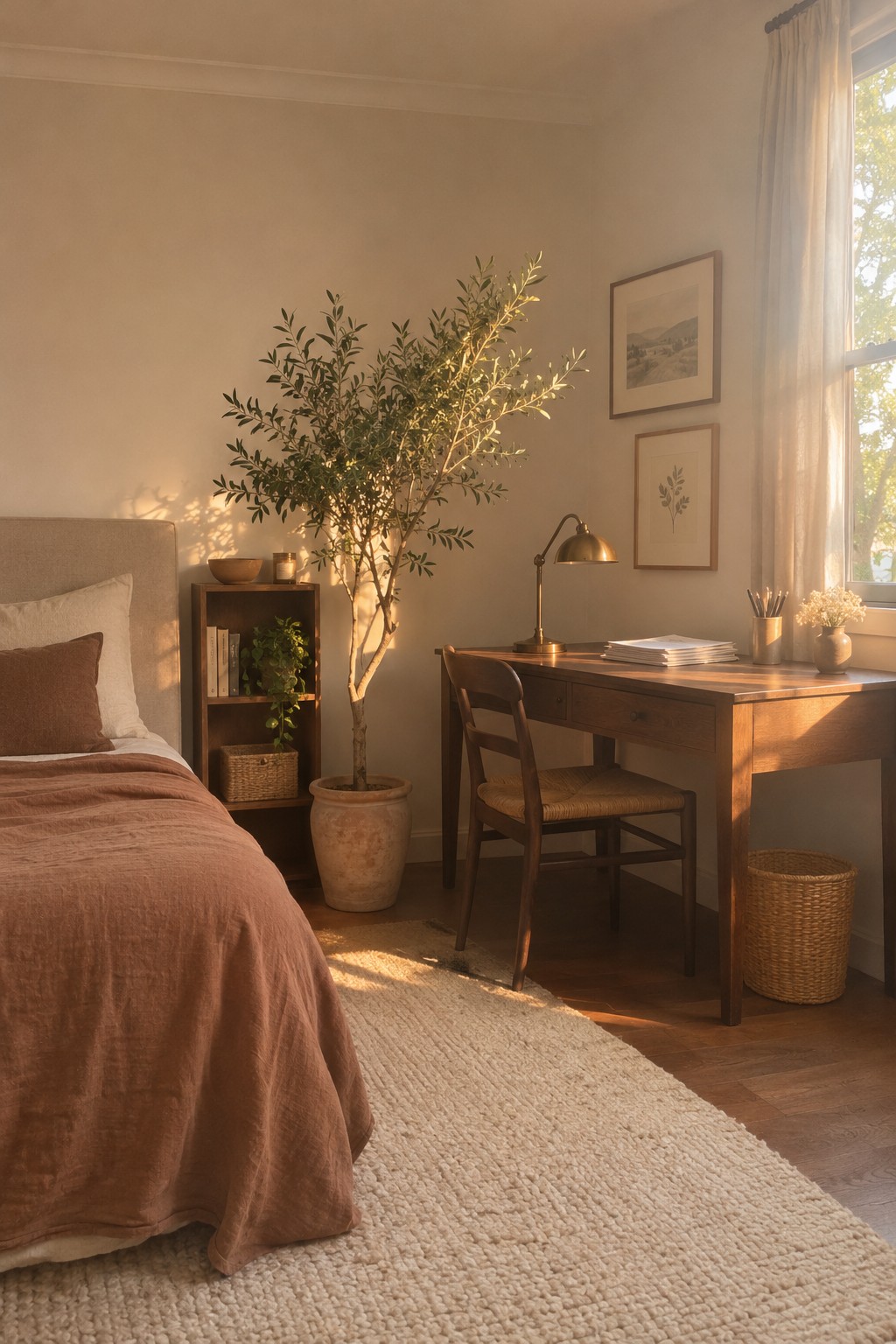
A desk can fit naturally into a bedroom without making the room feel like an office. Keeping it along a wall near the window gives the work area its own spot while leaving the bed as the main place to rest.
Choose a desk that suits the room’s scale, and keep the surface fairly clear so it is easy to switch off at the end of the day. A small writing desk and chair work well when there is not enough room for a separate office.
Add a Desk to Built-In Bedroom Storage
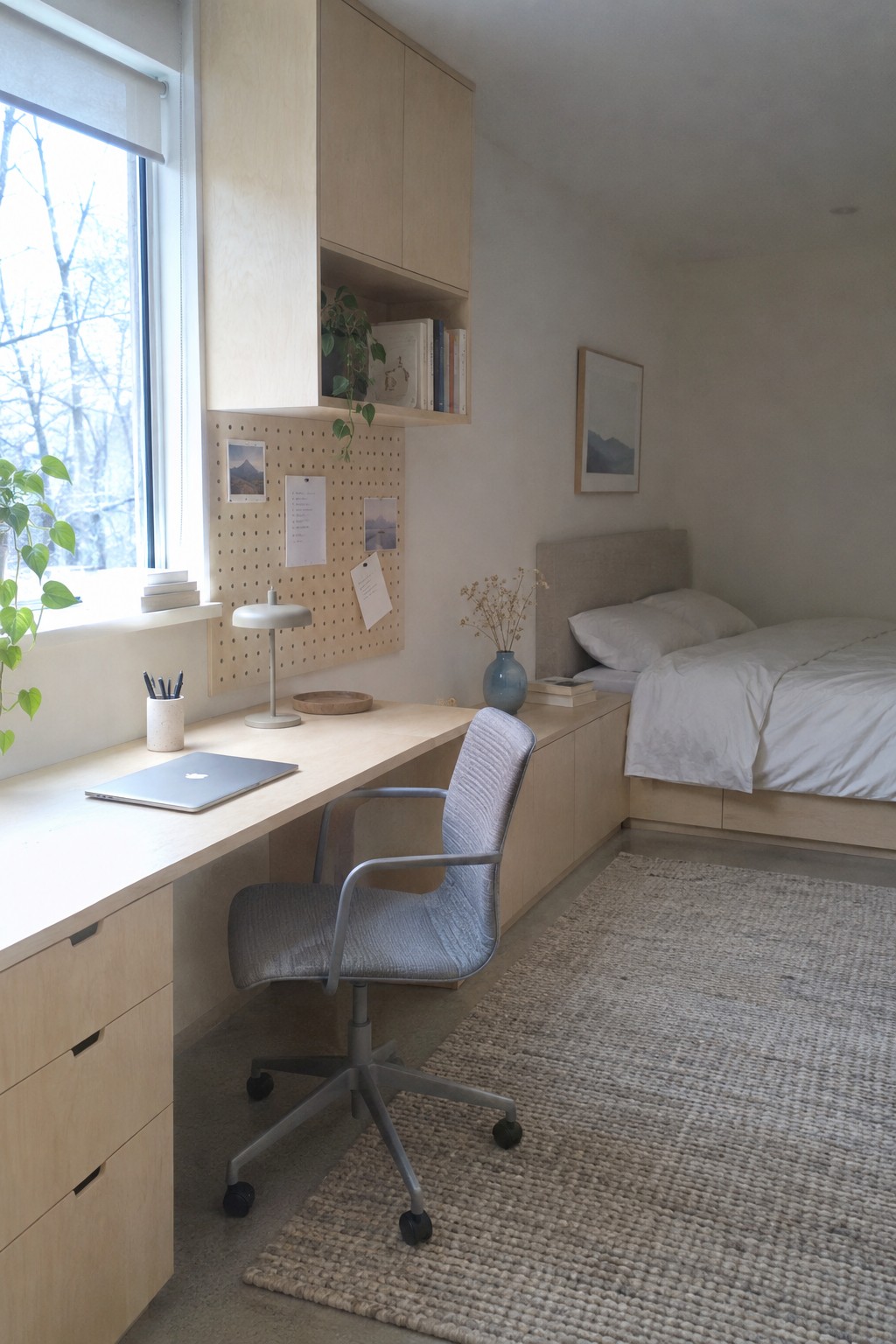
A desk that continues into built-in storage makes a bedroom office feel planned rather than squeezed in. Here, the pale wood cabinetry gives the work area a clear place while keeping it connected to the rest of the room.
This approach works especially well in a narrow bedroom where freestanding furniture would take up too much floor space. Use drawers below the desk for office supplies, and keep the work surface simple so it stays easy to use.
Use a Narrow Desk to Keep the Office Compact

A slim desk can fit a useful work area into a small bedroom without taking over the room. Here, the desk sits along the wall beside the bed, leaving a clear path through the center.
In a narrow room, choose a desk just deep enough for a laptop and a few supplies. Keep the chair easy to tuck away when work is done, so the office zone stays practical without crowding the bedroom.
Use a Shared Table for Work and Writing

A small table can serve as a bedroom office without making the room feel like a separate workspace. Keeping the setup simple, as with a laptop and notebook, leaves room for everyday use and helps the desk area stay easy to tidy.
This works best when the table has enough surface for your usual tasks but does not crowd the bed or walking path. Choose a comfortable chair and a lamp for focused work, then put away work items when the day is done.
Use a Desk to Divide a Shared Bedroom

A desk can do more than provide a place to work. When it sits between the bed and the rest of the office area, it gives each part of a bedroom its own purpose without adding a bulky divider. A wood desk also makes the transition feel natural.
This layout suits a room where a separate office isn’t possible. Keep the desk deep enough for daily work, but leave a clear path around it so the sleeping area doesn’t feel boxed in.
Use a Bookcase to Create a Separate Work Zone

A bookcase can mark the edge of a bedroom office without closing off the room. It gives the work area a little separation while keeping the space open, and the shelves offer handy storage for books and supplies.
This works especially well in a narrow room where a full divider would make things feel cramped. Choose a shelf that is low enough to let light through, and keep the items on it fairly tidy so the boundary feels useful rather than cluttered.
Use Glass Partitions to Separate Work and Sleep

A glass partition gives a bedroom office its own zone without closing it off completely. The dark frame marks where the work area begins, while the transparent panels let the room keep an open feel.
This approach suits a bedroom with enough room for a desk behind the divider. Keep the partition simple, and choose clear or lightly tinted glass if you want daylight to pass through. It can still offer some separation, but it won’t block sound or fully hide a busy desk.
Use a Recessed Nook for a Compact Office

A desk tucked into a wall niche gives a bedroom office its own clear spot without taking up much floor space. The built-in shelves provide room for books and supplies, while the rust-colored backdrop helps mark the work area as separate from the sleeping zone.
This setup works especially well in a small bedroom where a freestanding desk would crowd the walkway. If you’re planning a similar nook, make sure the work surface is deep enough for your laptop and leave space for a comfortable chair.
Use the Sloped Ceiling to Define a Small Office

A desk tucked beneath a sloped ceiling can make use of a spot that might otherwise go unused. In a bedroom office, placing it away from the bed helps the work area feel distinct without adding a divider.
This layout suits attic bedrooms where floor space is limited. Keep the desk shallow enough for the available headroom, and place it near a window if possible. The bed can then stay in the lower part of the room, separate from the work zone.
Use a Tall Headboard to Define the Sleep Zone

A tall upholstered headboard gives the bed a clear boundary, which can help a bedroom office feel like its own area rather than part of the sleeping space. It also makes the bed feel settled without adding a separate screen or divider.
This approach works well in a room where the desk sits behind or beside the bed. Choose a headboard that leaves enough room to move around, and keep the work area visually simple so the two zones still feel distinct.
Use a Slatted Screen to Divide the Room

A vertical slat screen gives a bedroom office its own zone without closing it off completely. It marks the change from sleeping to working, while the gaps let light and sightlines pass through.
This works well in a small room where a full wall would feel too heavy. Choose a screen that still leaves a clear path between the bed and desk, and keep the desk area simple so the divider does not make the room feel crowded.
Use Built-In Shelving to Keep Work and Sleep in One Room

A long desk joined to bedroom storage makes good use of wall space while keeping the work area close to the bed. The desk and drawers feel like one piece of furniture, so the room stays orderly without needing a separate office setup.
This approach works well in a small bedroom where floor space is limited. Keep the desktop clear enough for daily work, and use closed drawers for supplies you do not want in view when the workday is over.
Frequently Asked Questions
Q: How can I make the bedroom feel separate from my desk without adding a wall?
A: Turn the desk so it faces away from the bed, then use a rug, open shelf, or floor lamp to mark the work zone. Even a small visual break can help the room feel less like an office after hours.
Q: Where should I put my desk in a small bedroom?
A: Try a spot near a window for natural light, but avoid blocking the main path through the room. If space is tight, a slim desk along an empty wall can keep the layout open.
Q: How do I hide work clutter when the day is done?
A: Choose a desk with drawers or tuck supplies into a simple storage box. A clear desktop makes it easier to switch off and settle into the bedroom.
Q: What if my desk has to sit right beside the bed?
A: Keep the setup compact and use a small divider, bedside table, or change in lighting to distinguish the two areas. And avoid letting work items spill onto the bed.
