

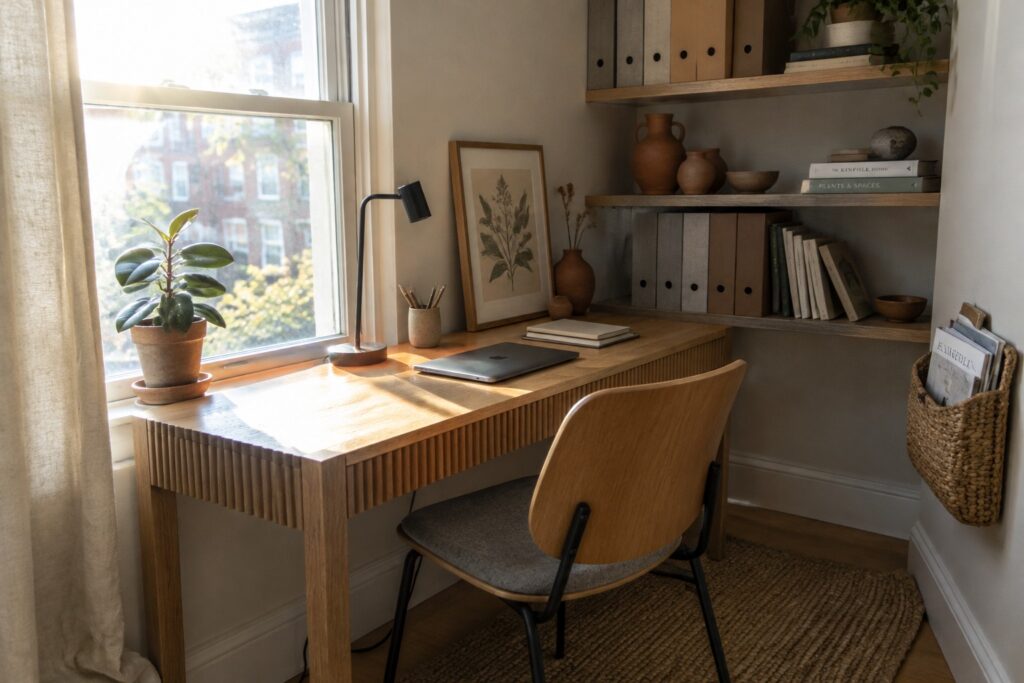
When I tried squeezing a workspace into a narrow corner of my living room last year, the desk size turned out to matter more than the chair or the lighting combined.
People usually notice first whether the surface leaves enough room to pull a chair back without hitting the wall or a nearby cabinet.
That balance matters more than most expect.
Over time I have found that adding just one vertical element, like a slim wall panel or a hanging organizer, can keep the area from feeling closed off even when the floor space stays tight.
A few of these setups strike me as worth testing because they seem to handle both daily work needs and the way the room still has to look when the laptop is closed.
Position the Desk Under a Window
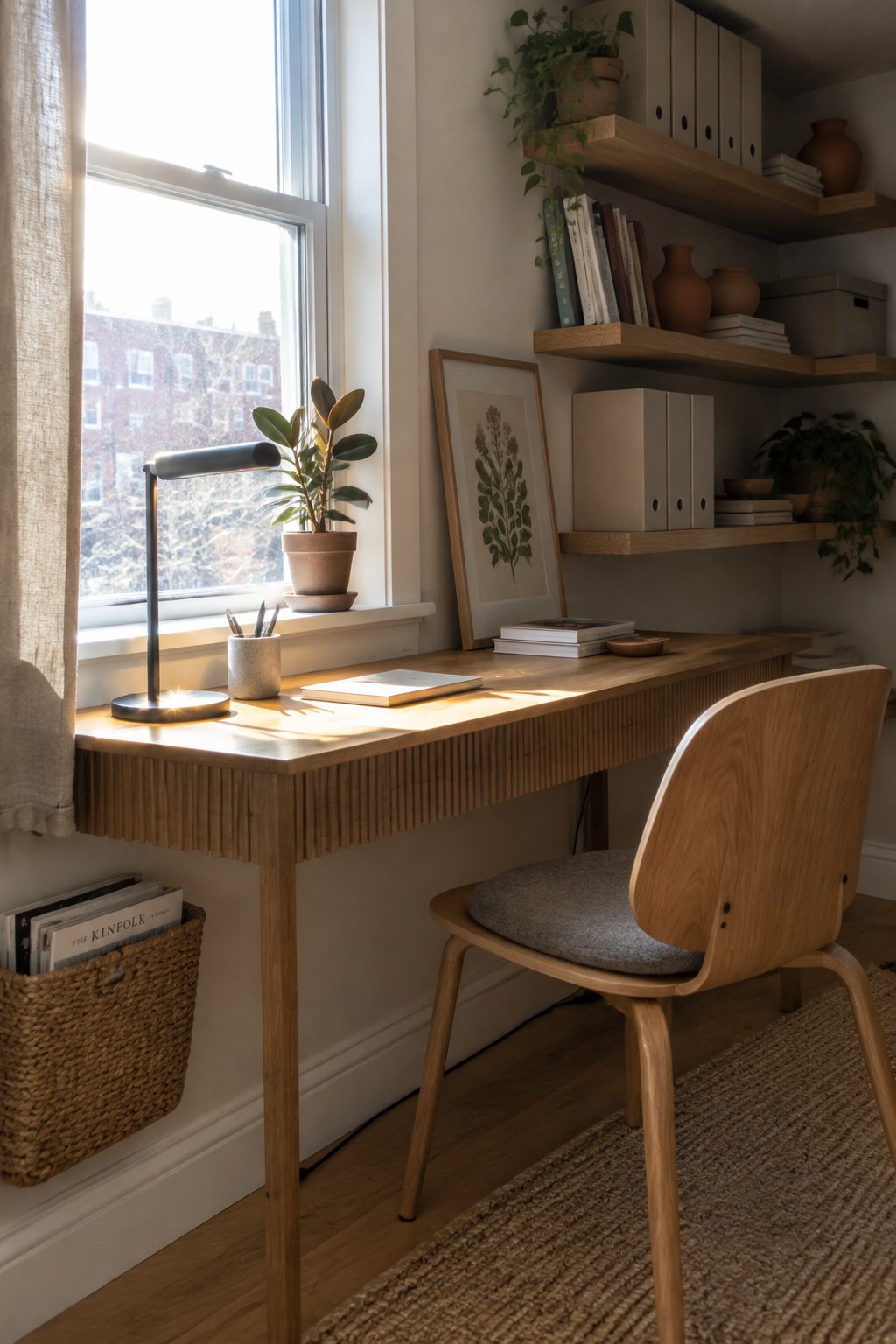
Placing a compact desk directly beneath a window brings steady natural light across the work surface throughout the day. This simple move makes the space feel more open and keeps people from relying on a lamp until evening. The light also helps the room feel less cramped when the desk and chair take up most of the floor area.
This arrangement suits small apartments or any room where floor space is tight. Add a narrow set of floating shelves above the desk for books and supplies so nothing extra has to sit on the floor. Keep window coverings light so they do not cut off the daylight when pulled closed.
Add Open Shelving Above a Compact Desk
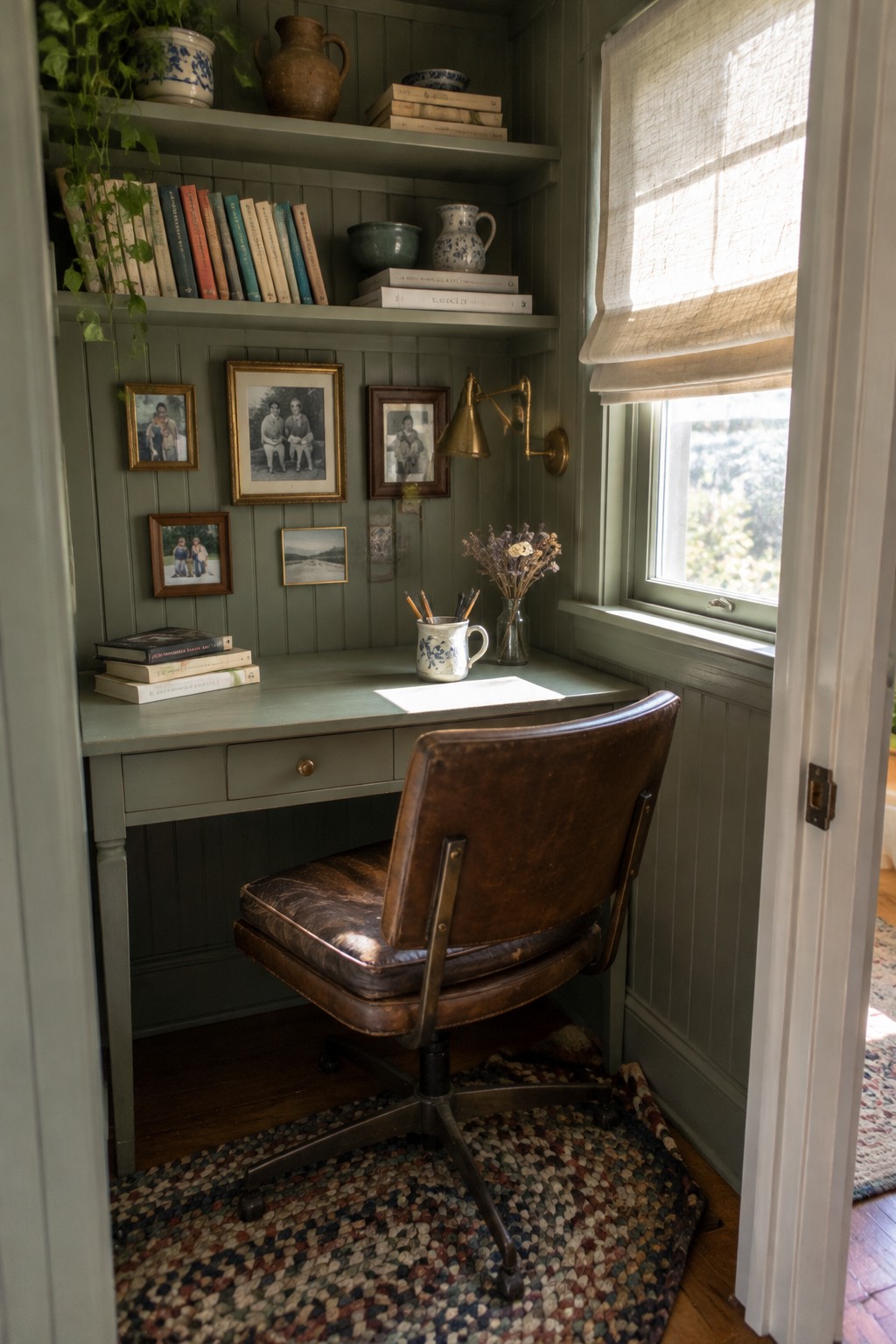
Small workspaces often run out of room fast once you add the basics. Putting open shelves directly above the desk gives you storage for books and supplies without bringing in another piece of furniture that would crowd the floor.
This setup works best in narrow corners or alcoves where every inch counts. Keep the shelves shallow and do not overload the front edge so the desk still feels open and usable during the day.
Tuck a Rolling Cabinet Under a Compact Desk
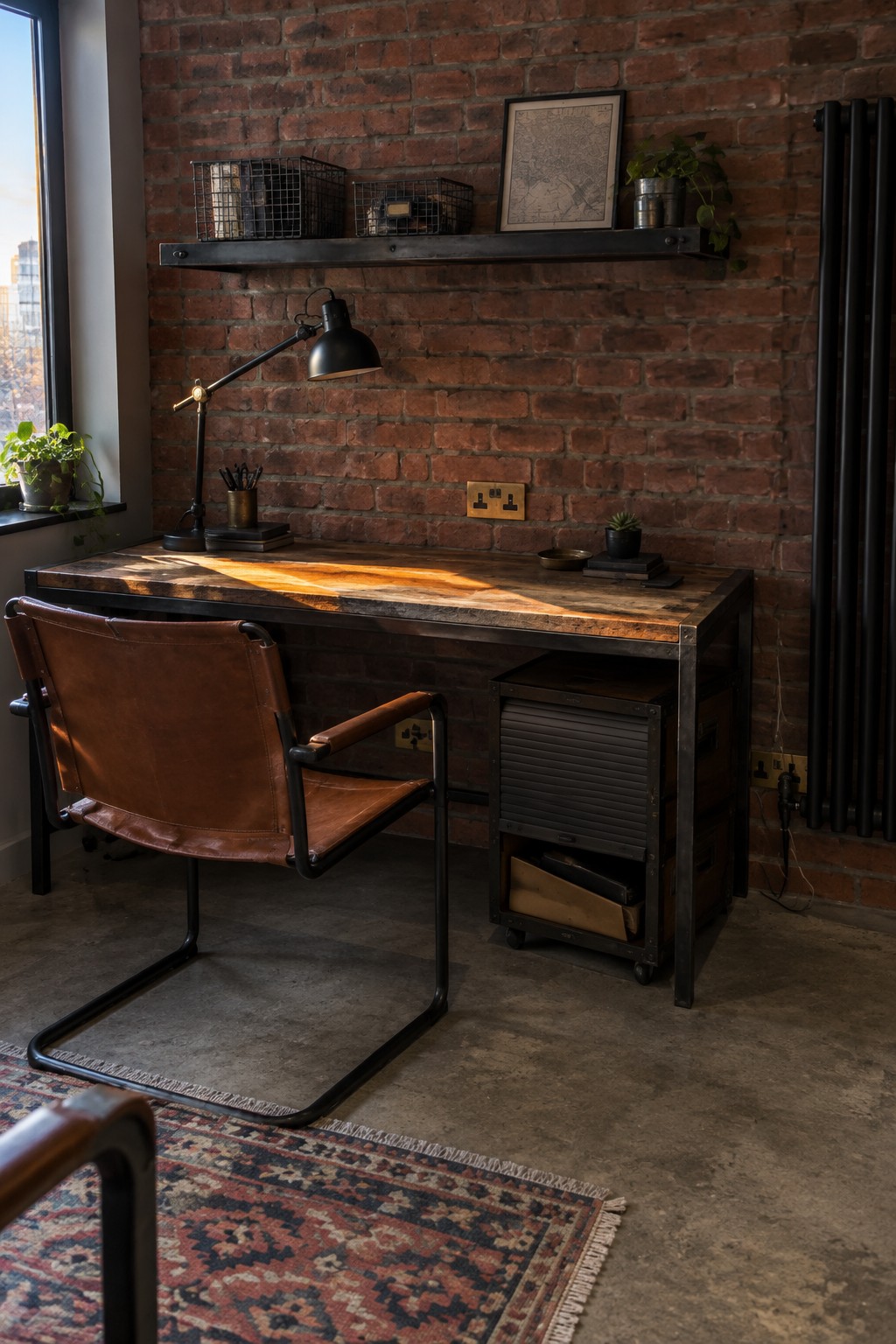
A rolling cabinet that slides under one end of the desk keeps papers and supplies close without crowding the floor. This setup works especially well in tight corners where a full credenza would feel too big.
It suits older apartments or homes with exposed brick because the low profile leaves the wall texture visible. Look for a cabinet on casters so you can pull it out for access and push it back when you want the room to feel open.
A Woven Chair Keeps The Desk Corner Relaxed

A compact white desk can feel a bit stark on its own. Pairing it with a woven rattan chair adds natural texture and a softer shape that makes the whole setup more comfortable to sit in for hours.
This works best in smaller rooms where you want the space to feel open but still inviting. The light material of the chair keeps things from looking heavy, and it suits casual or coastal homes that already lean on natural finishes.
Hang a Bulletin Board Above a Compact Desk
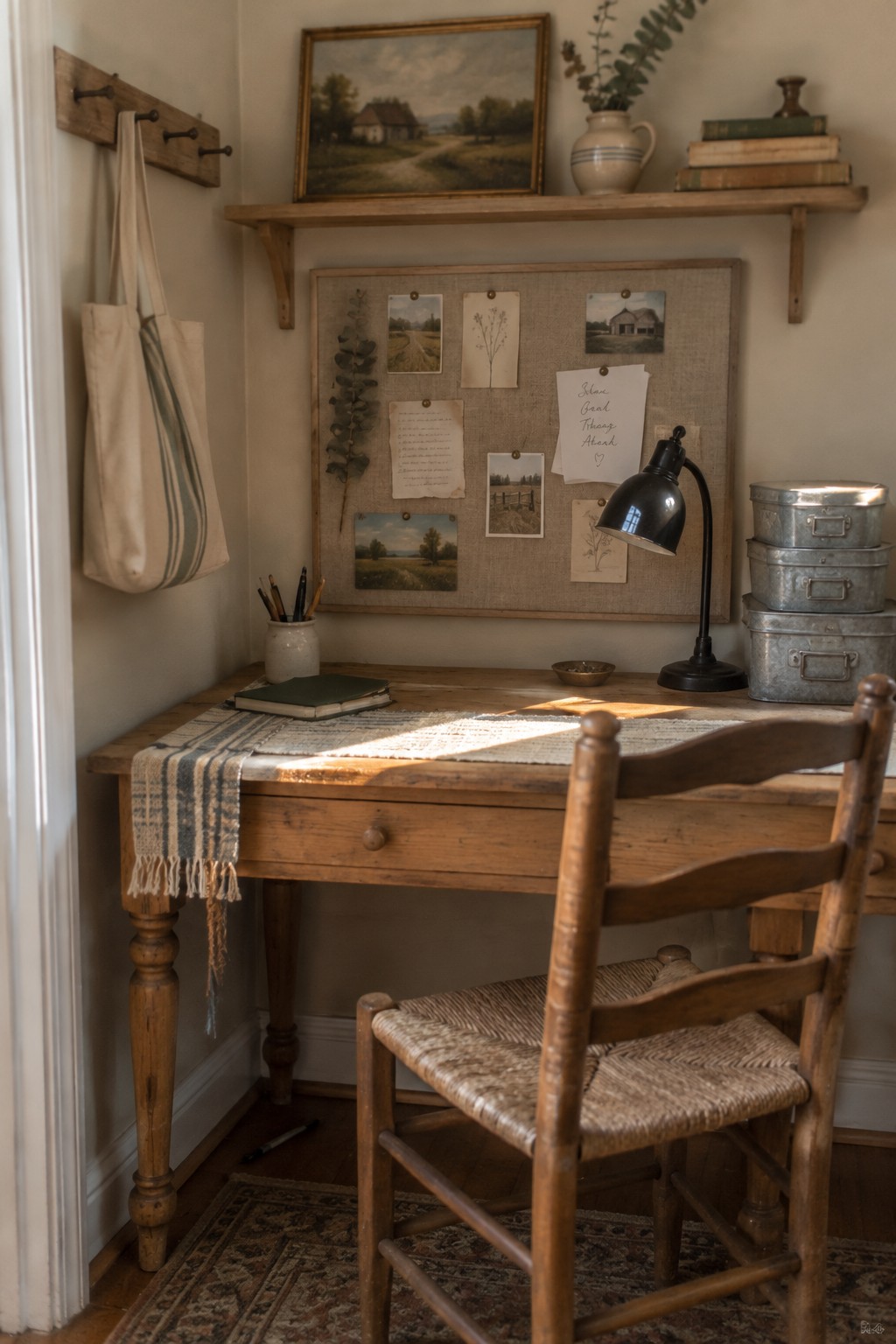
Mounting a large bulletin board directly above a small desk gives you a place to pin notes, photos, and reminders without adding more furniture. The board keeps daily papers and ideas visible while the desk stays clear for actual work.
This setup works best in corners or alcoves where space is tight. Use it in a guest room, hallway nook, or any room that doubles as an office. Stick to a few favorite images and short lists so the board helps rather than distracts.
Low Desk Placement for a Quieter Corner
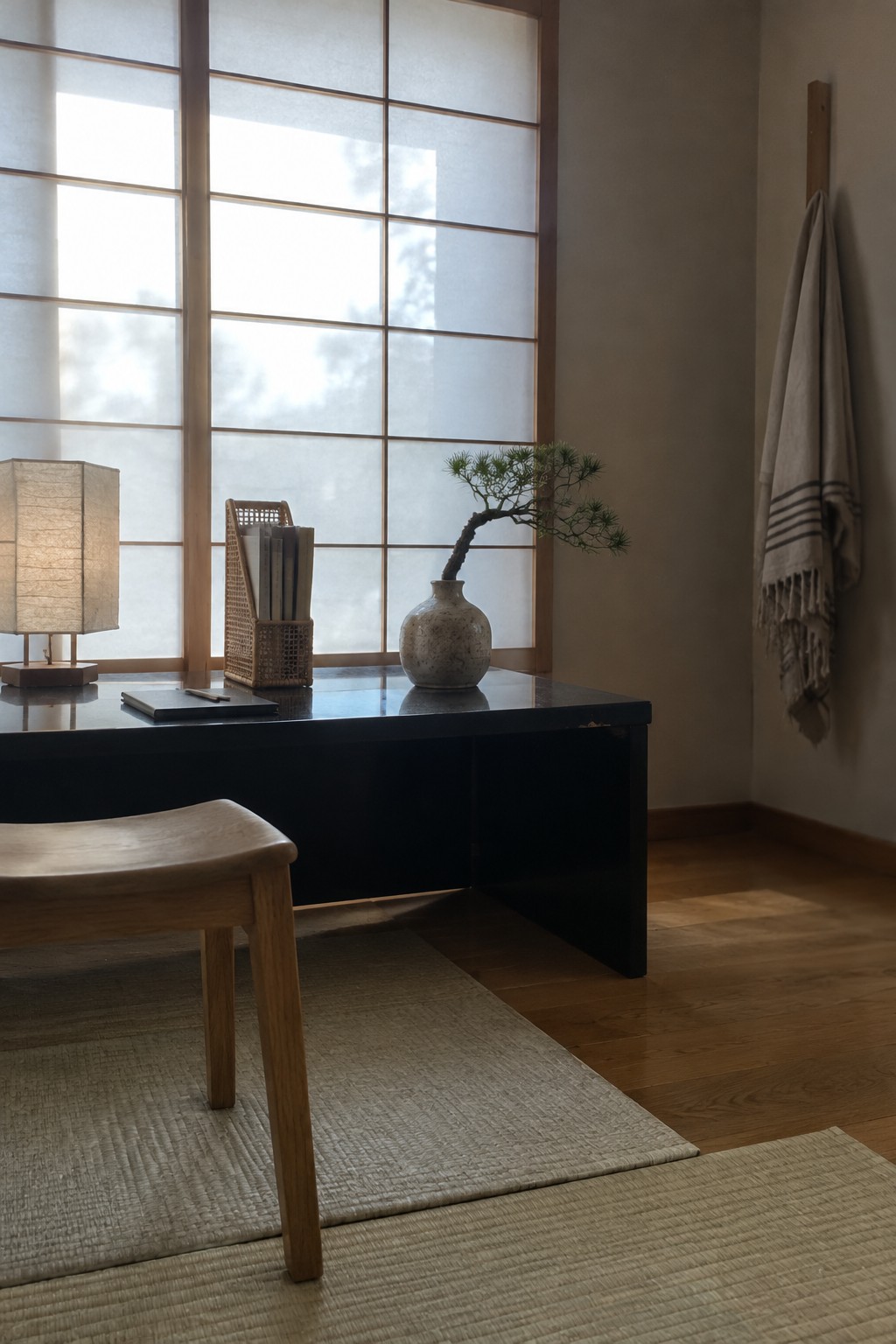
Many people find a low desk changes how an office corner feels right away. Sitting closer to the floor makes the space feel more settled and less like a standard work setup.
This works best in smaller rooms with wood floors or simple mats. Keep the surface mostly clear and use one small lamp and a single plant so the desk stays open for actual work.
Warm a Compact Desk with Woven Accents
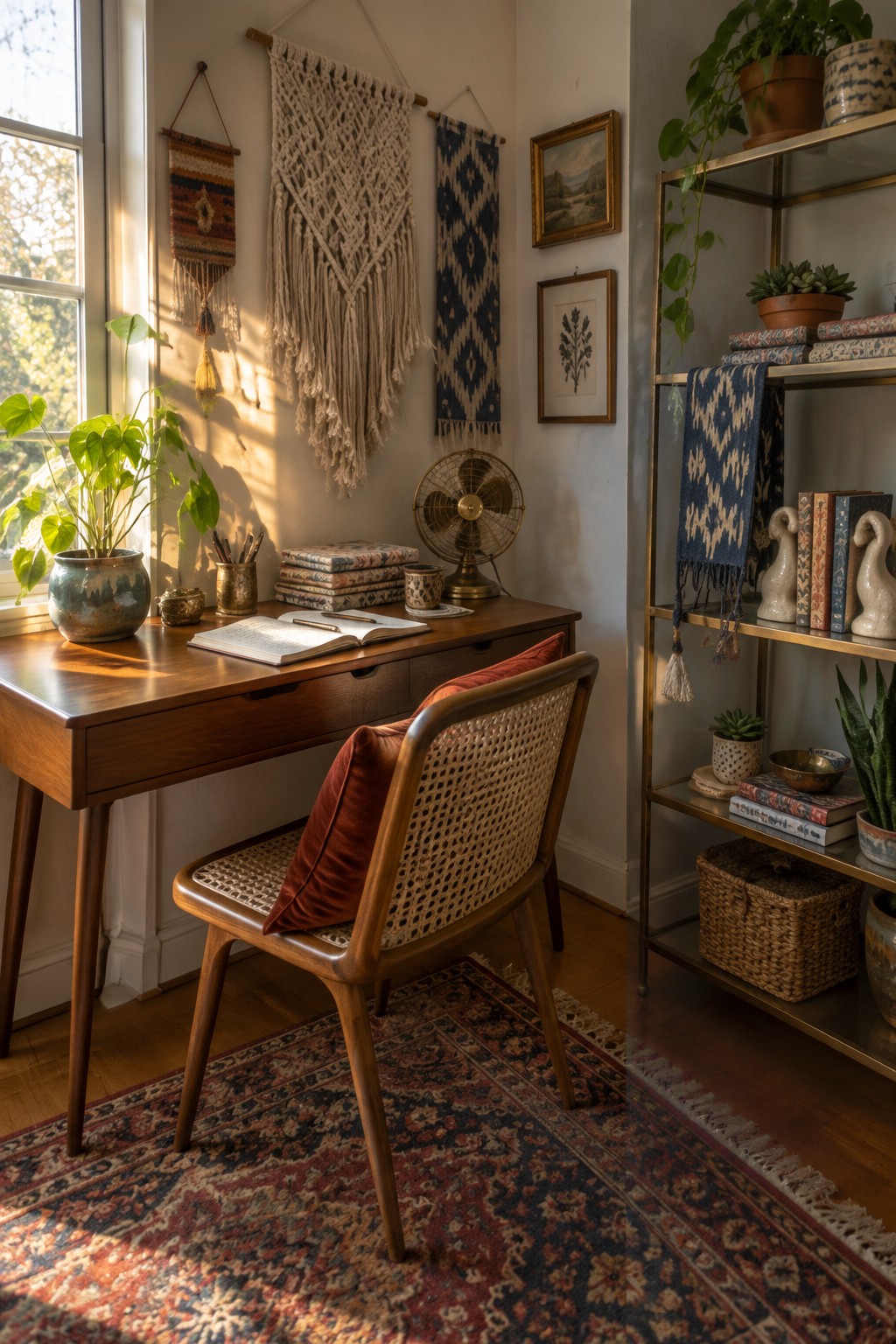
A small desk can feel much more inviting when you bring in natural woven pieces. The cane chair and macrame wall hanging add texture that softens the wood surface and keeps the whole corner from looking too plain or office-like. Many people find this mix helps the workspace feel like part of the rest of the room instead of a separate work zone.
This approach works best in older homes or smaller rooms where you want the desk to blend in. Keep the woven elements simple and let one or two pieces stand out against the wood rather than adding too many patterns at once.
Add a Sheepskin Throw to Your Desk Chair
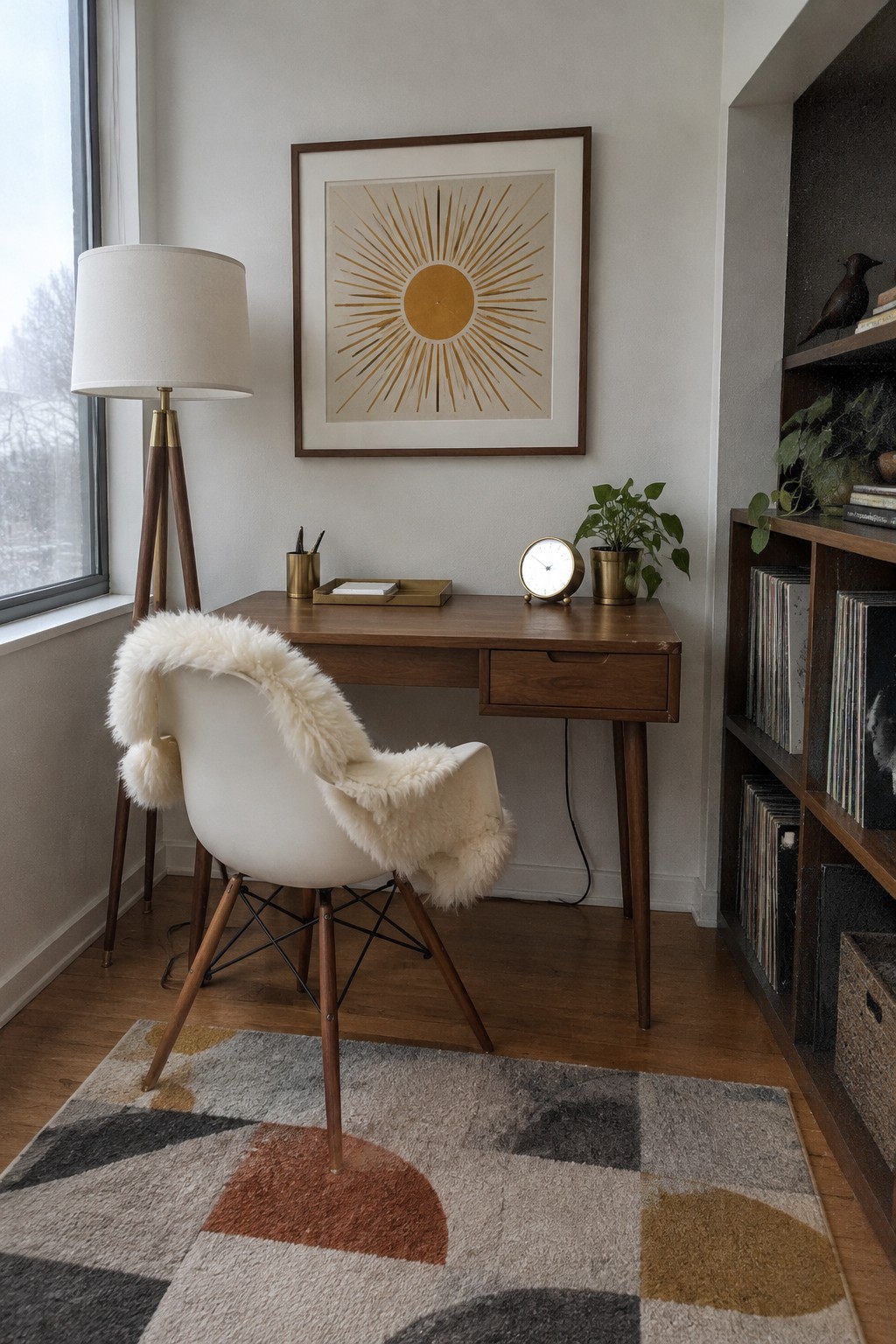
One easy way to make a small desk setup feel more comfortable is to drape a sheepskin throw over the chair. The soft layer turns a basic molded seat into something you actually want to sit in for long stretches.
This trick works best in tight corners where you cannot add much else. Pick a throw in a light tone so it does not overpower the desk or the rest of the room.
Dark Walls Make a Small Desk Feel More Intimate

Dark paint turns a tight corner into a calm workspace instead of a cramped one. The deep color wraps around the desk and creates a quiet pocket that feels separate from the rest of the room, while the warm light from a wall-mounted lamp and a couple of candles keeps the space from going flat or cold.
This setup works best in homes where space is limited but you still want a dedicated spot to work. Keep the desk surface clear, add a narrow shelf above for books, and use one strong task light so you do not need extra lamps taking up room.
Built-In Shelves Beside a Compact Desk
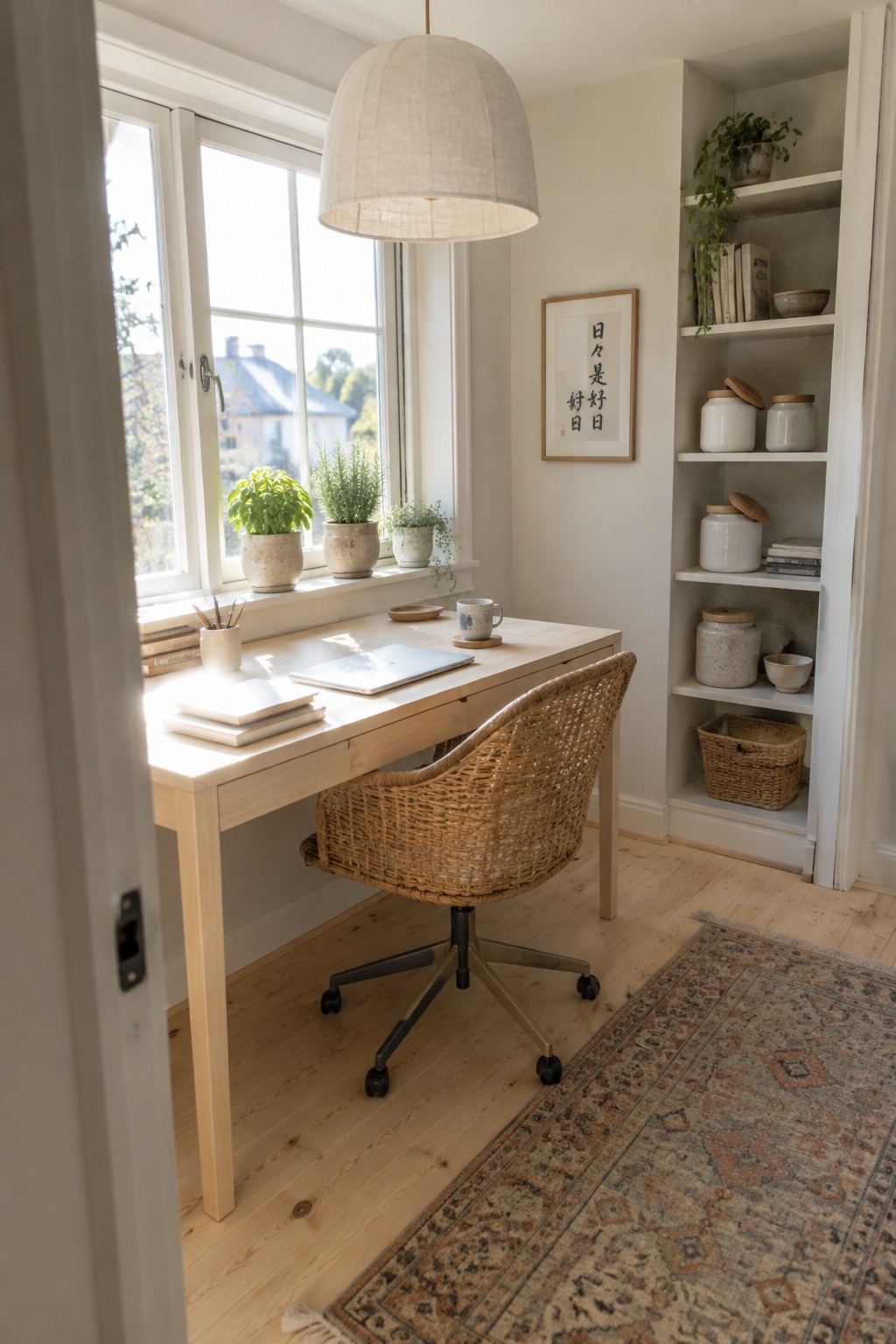
Placing built-in shelves right next to a compact desk turns a small corner into a working office without adding extra furniture. The shelves hold books, supplies, and everyday items so the desk surface stays clear and the room does not feel crowded.
This approach works best in bedrooms or living areas where floor space is limited. Keep the shelves fairly open and use simple containers so the setup stays practical and easy to maintain over time.
Roll Top Desks For Compact Corners
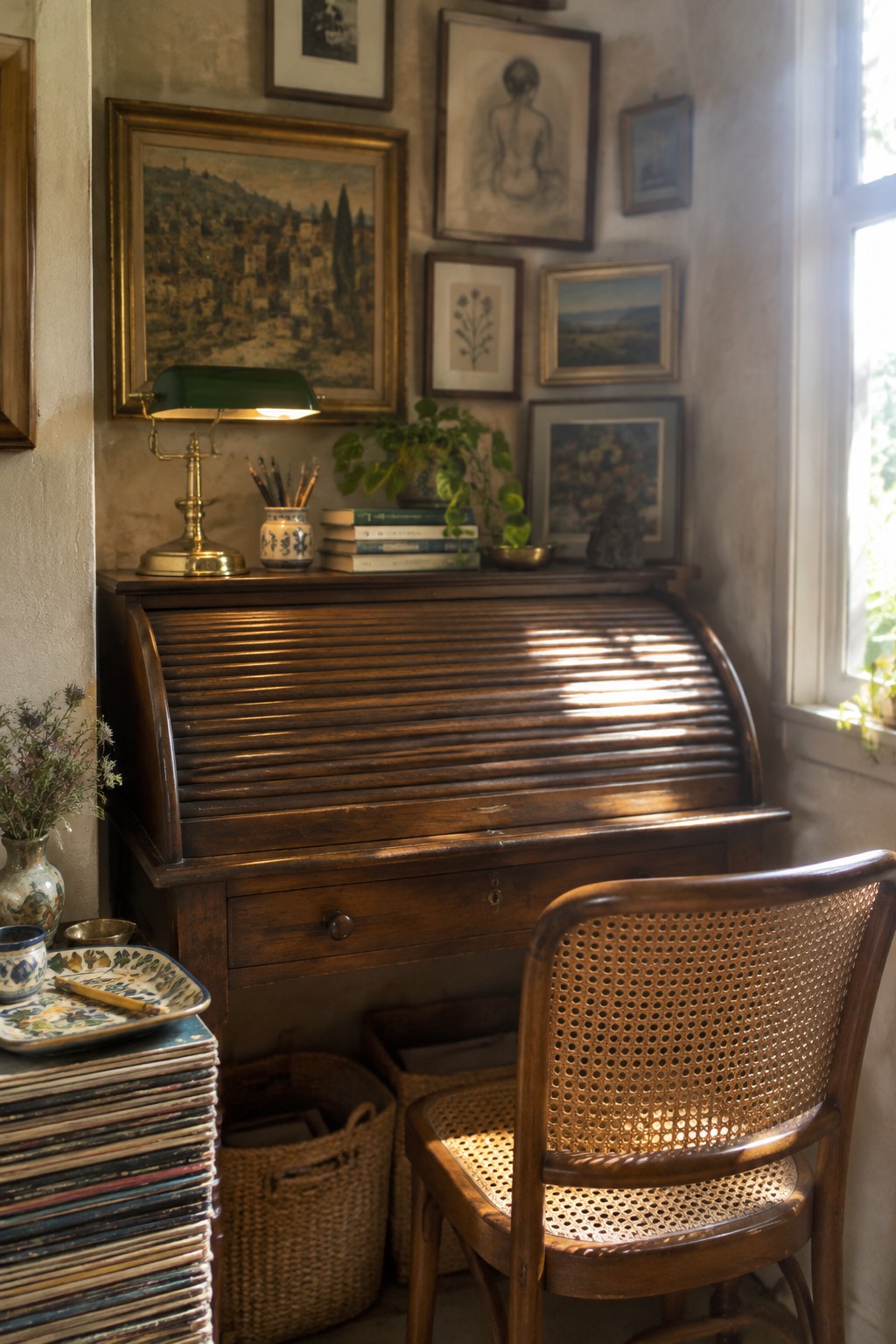
A roll top desk gives you a real workspace in a small corner without letting papers and clutter take over the room. When the top comes down, the whole area feels calmer and the desk blends into the background instead of dominating it.
This setup works especially well in older homes or apartments where every square foot counts. Tuck the desk near a window for natural light and keep the surrounding wall simple so the corner stays quiet and useful.
Tuck a Small Desk Under the Window
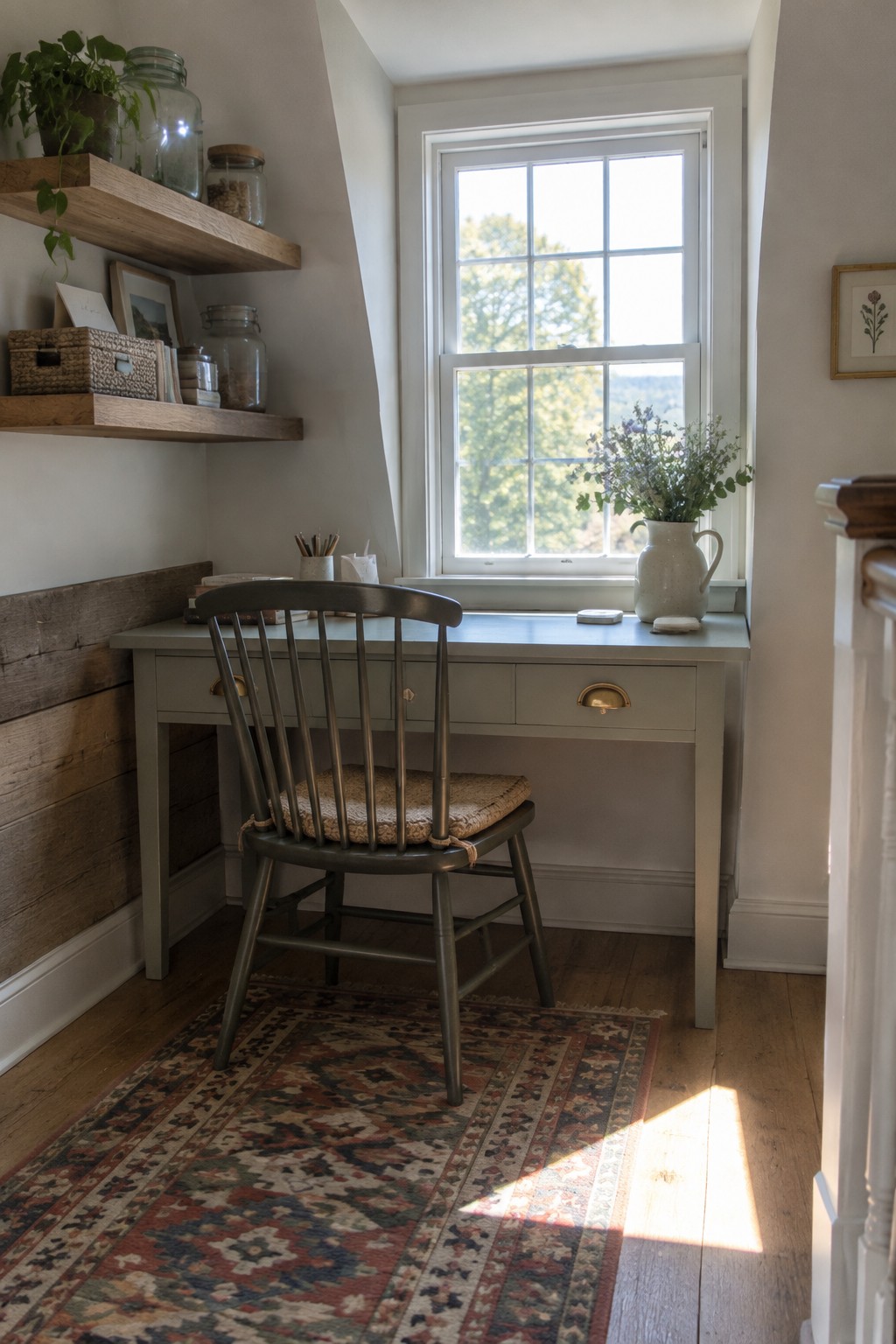
A compact desk fits neatly under a window because the natural light does most of the work. It keeps the corner from feeling closed in and gives you a pleasant view while you sit, which makes long hours at the desk easier to manage.
This works especially well in older homes or small bedrooms where space is tight. Choose a desk no deeper than about 20 inches so the chair can still slide back, and keep the top fairly clear so the light stays the main feature.
Position Your Desk by a Window
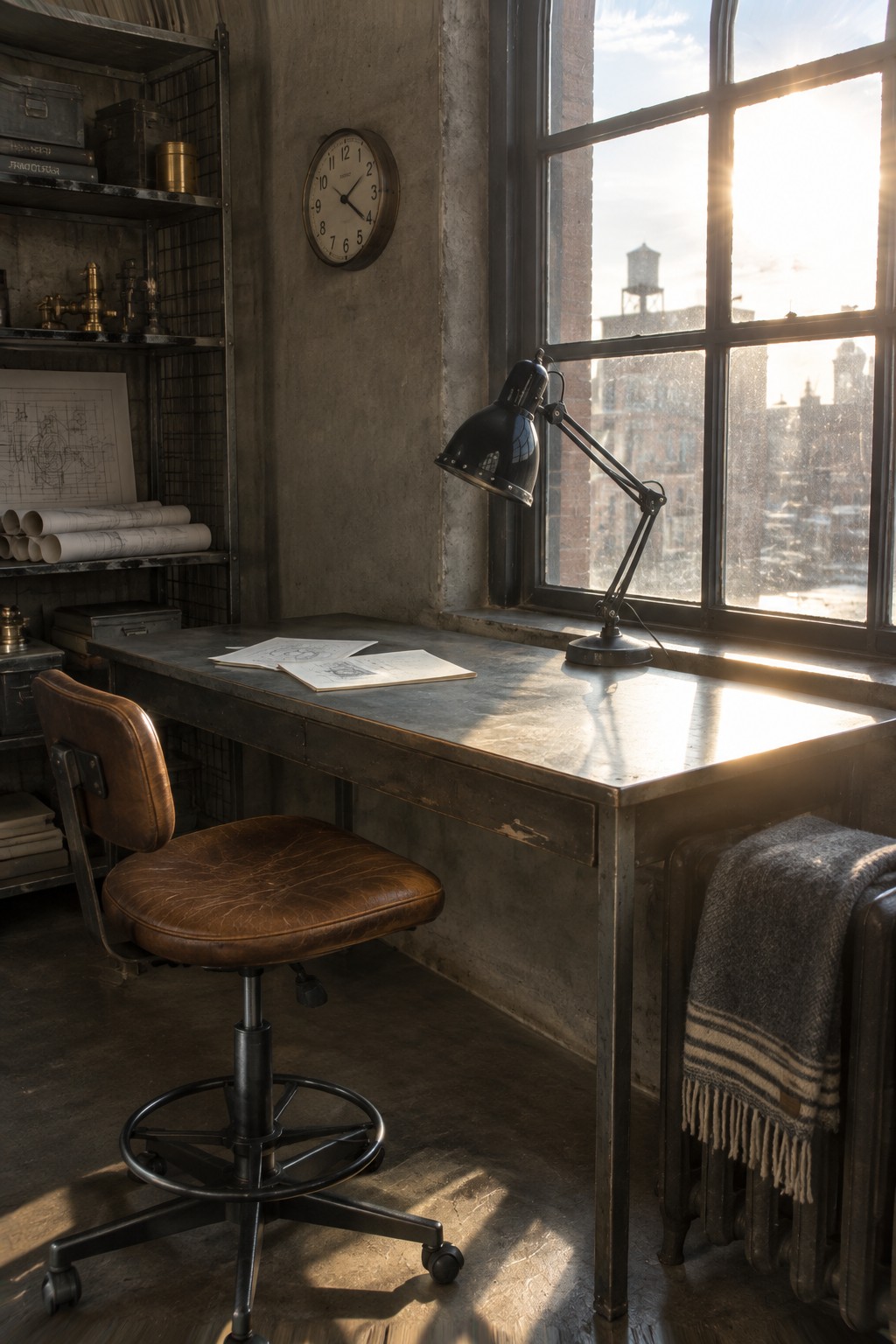
Placing a compact desk right in front of a window changes how a small workspace feels during the day. The natural light cuts down on eye strain and makes the corner feel more open without needing extra lamps or bright paint.
This works best in rooms that already have decent window access. Keep the desk surface fairly clear, add one adjustable task light for evenings, and make sure the chair can slide in close when the desk is not in use.
Use a Pegboard for Flexible Storage Above a Compact Desk
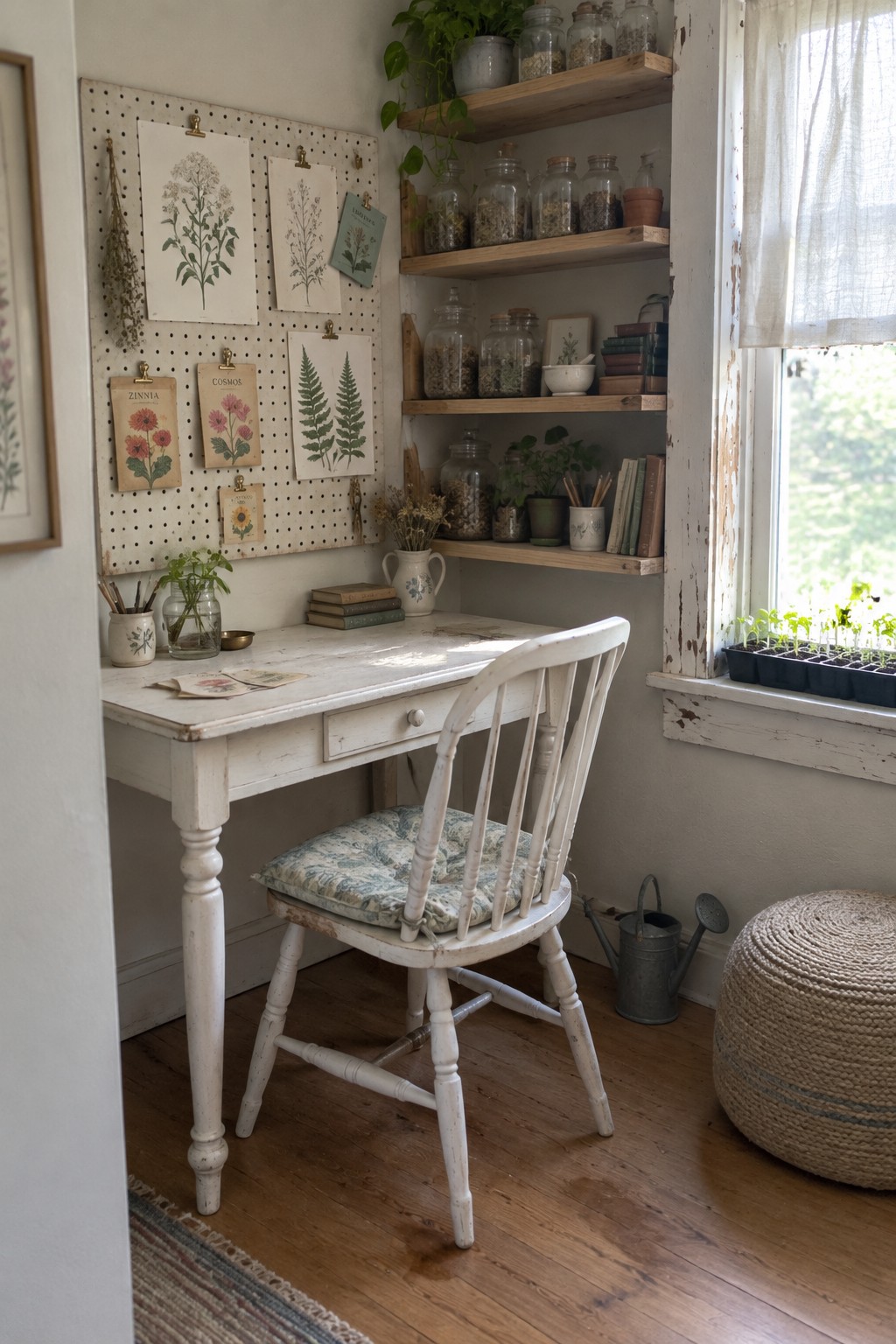
A pegboard turns the wall into useful space without crowding a small desk. You can pin up prints, notes, or supplies so everything stays visible and within reach while the desktop stays clear for writing or a laptop.
This setup works best in older homes or tight corners where built-in shelves are not an option. Mount the board at a comfortable height, leave room for the chair, and swap items out as seasons or projects change.
Adding Tall Shelving Next to a Compact Desk
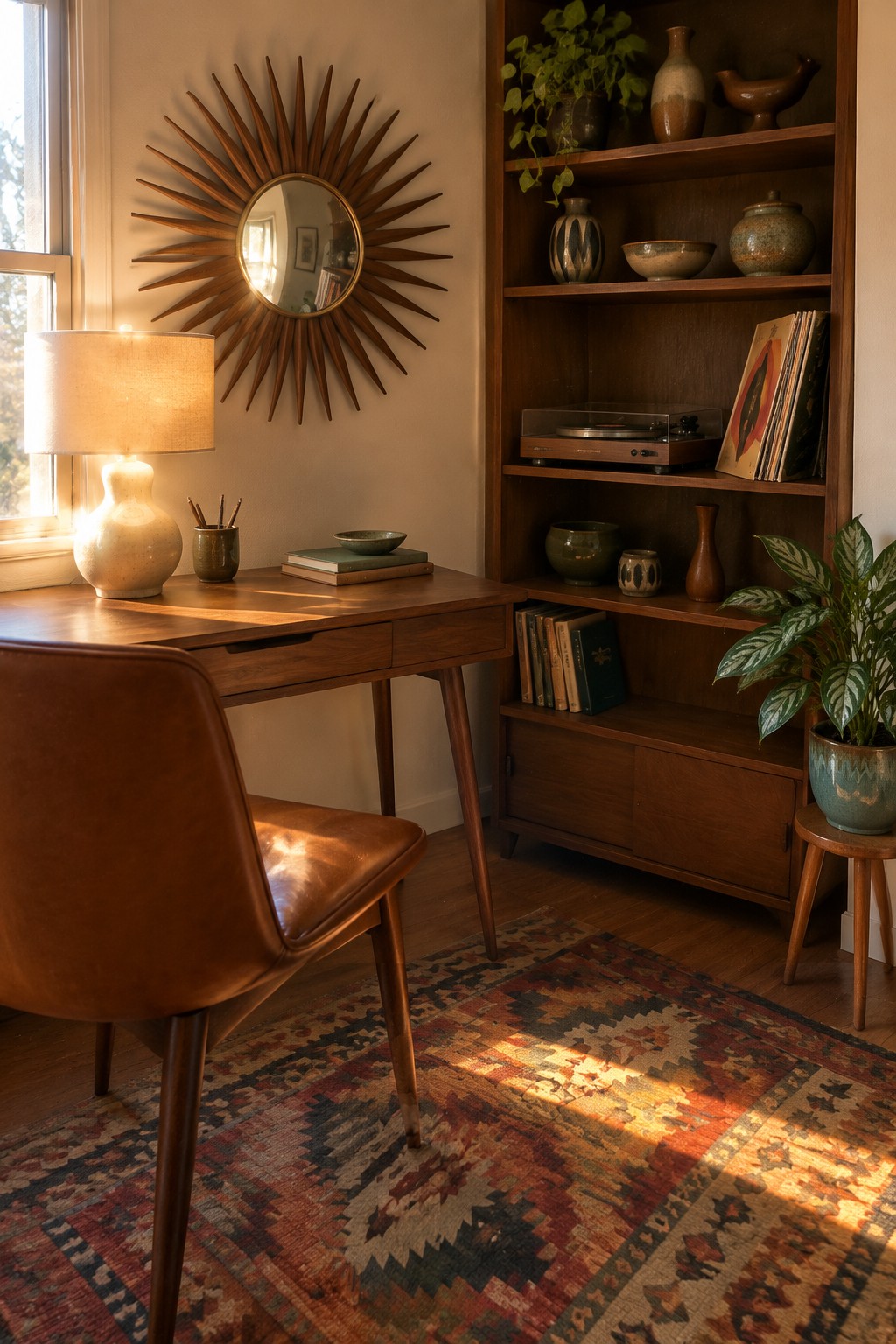
Placing a tall bookcase right beside a small desk gives you storage and display space without spreading out across the floor. The vertical unit holds books, a record player, and a few decorative pieces while the desk stays clear for daily work. Warm wood tones on both pieces help the corner feel pulled together instead of cramped.
This setup suits older homes or smaller rooms where every inch counts. Keep the bookcase to one side so natural light from a nearby window can still reach the desk surface. Avoid overloading the lower shelves if you want the space to stay open and easy to move around in.
Floating Desks Work Well In Small Corners

A floating desk gives you a workspace without taking up floor space with legs or a heavy base. That matters in a small corner where you still want room to move around and keep the area from feeling crowded.
This approach fits apartments or any home where space is tight. Mount the desk at a comfortable height, slide a low stool underneath when not in use, and keep the surface clear so the corner stays practical instead of cluttered.
Add Open Shelves Next to a Compact Desk
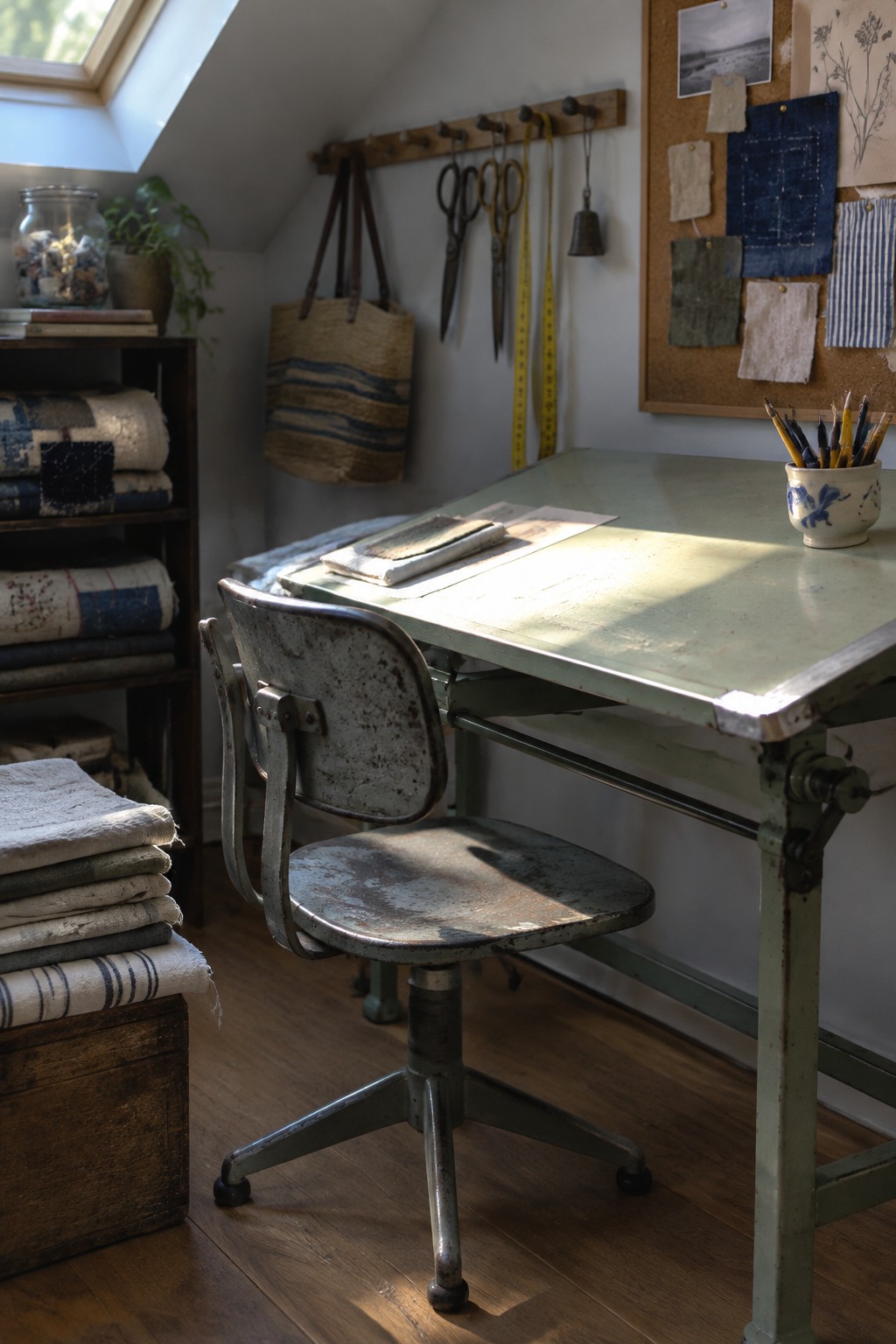
Placing open shelves right beside a small desk turns a tight corner into a working space that feels ready for use. Everything stays visible and within reach, so you spend less time hunting for supplies and more time focused on the task.
This setup suits small rooms or attic nooks where floor space is limited. Keep similar items grouped together on the shelves and choose sturdy brackets so the arrangement holds up to daily use without looking messy.
Built-In Shelves Around a Compact Desk

One simple way to make a small desk feel like a real workspace is to wrap it with built-in shelves. The shelves give you storage without taking up extra floor space, and they help the desk look like it belongs in the room instead of just sitting there on its own.
This approach works best in homes that already have a window nook or corner with some depth. Keep the shelves fairly shallow so they do not crowd the desk or block natural light from the windows.
Add a Ladder Shelf for Extra Plants
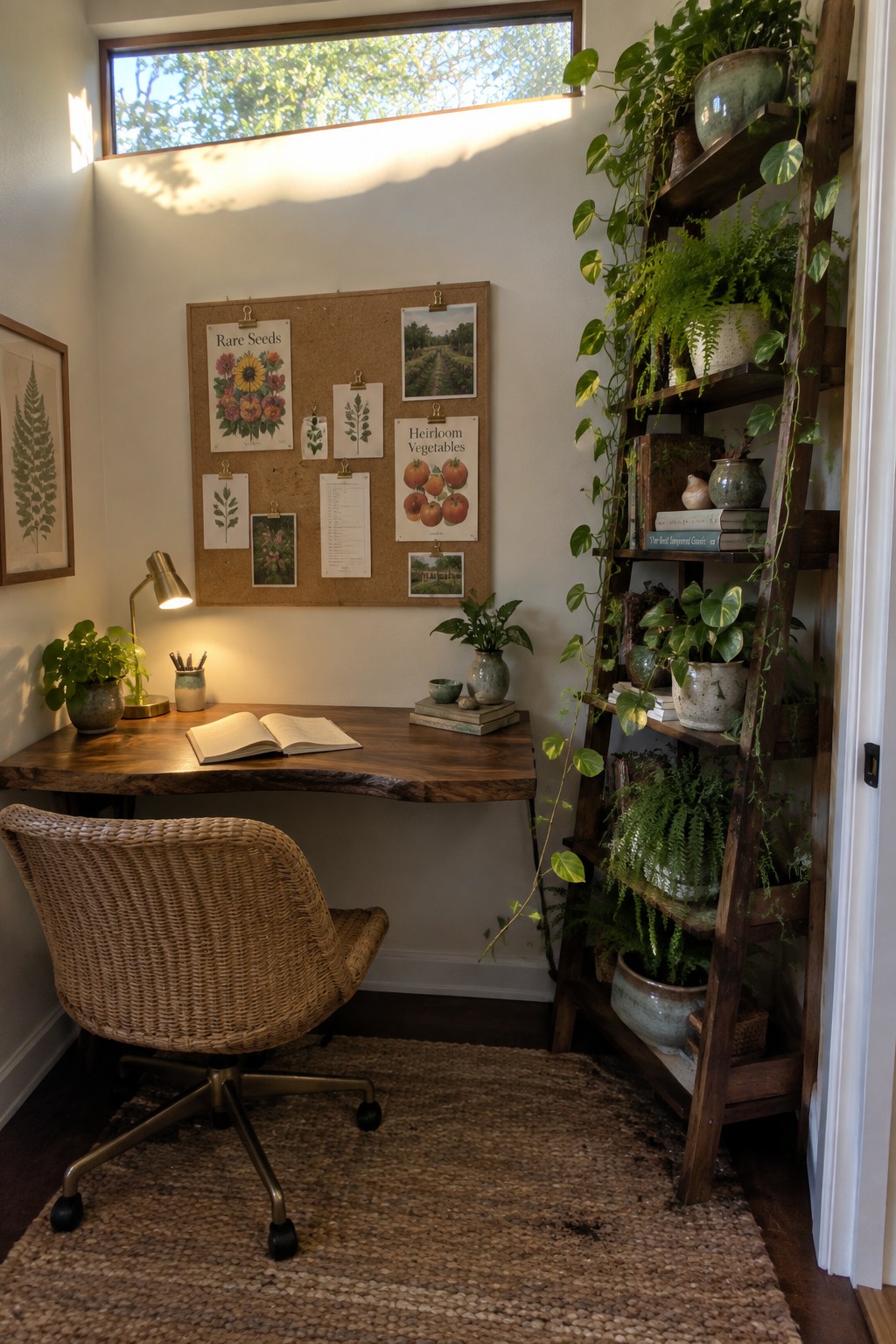
A ladder shelf gives you a simple way to bring in more plants without taking up floor space around a small desk. The vertical structure keeps things organized while the greenery softens the corner and adds life to the room.
This setup works best in tight spaces where you need both storage and a bit of nature. Keep the bottom shelves lighter so the whole thing feels balanced and does not crowd the desk area.
Frequently Asked Questions
Q: Where should I put my papers and supplies so they do not crowd the desk surface?
A: Mount a couple of floating shelves right above the desk. This keeps everything within reach but off the work area. You will reach up naturally instead of shuffling stacks around.
Q: How can I warm up the corner with light after the sun goes down?
A: Pick a small lamp with a soft bulb and place it on the desk or a nearby shelf. It creates a gentle glow that makes the space inviting for longer sessions.
Q: Does the chair really matter if the desk stays small?
A: Yes. Choose one that supports your back fully. A comfortable seat lets you stay focused without shifting around every few minutes.
