


I often notice that a guest room loses its sense of calm once a desk takes up permanent space and starts to shape how the whole room feels.
The layout only works when the office elements can disappear without forcing the bed or seating into an awkward corner.
I have watched setups where the desk stays out and the room never quite settles into either purpose no matter how neatly it is arranged.
Concealed desks solve that tension by letting the space change with whoever is using it.
A few of these solutions seem worth testing if the room has to handle both roles without constant rearranging.
Hide The Desk Behind Slatted Doors
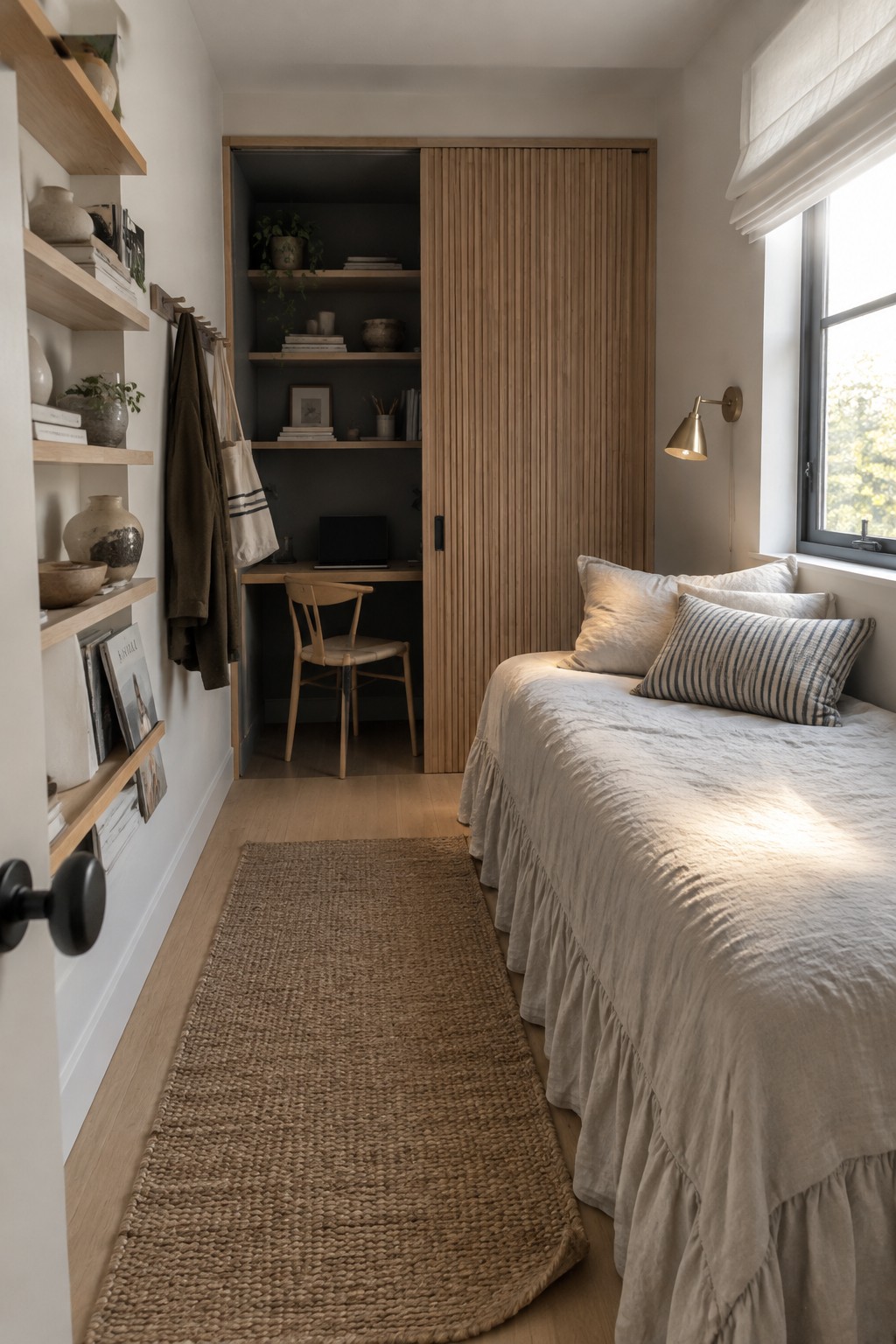
A desk that disappears makes a guest room far more useful. When the doors close, the space feels like a bedroom again instead of an office that happens to have a bed in it. The vertical wood slats keep things simple and let the wall read as one surface instead of two separate zones.
This works best in homes where the guest room sees regular use as a workspace during the week. Match the door material to other wood tones in the room so the whole thing blends in. Keep the inside of the alcove dark enough that the open doors do not feel jarring when someone is staying over.
Hide The Desk Behind A Sliding Door

A sliding door that doubles as a chalkboard gives you a simple way to keep a workspace out of sight in a guest room. When the door is closed the room still reads as a bedroom, but roll it back and the desk is right there ready for use. The chalkboard surface also gives you a place to jot notes without adding another board on the wall.
This setup works best in homes where the guest room needs to shift between uses often. Keep the door color dark so it blends with the rest of the room when closed, and make sure the track runs smoothly so it is easy to open and shut every day.
Built-In Desks That Close Away

A desk that tucks behind cabinet doors lets the room work as both a guest bedroom and an office without one use taking over the other. When the doors stay shut the space feels calm and furnished like a regular bedroom, yet the workspace is always there when needed.
This approach fits homes where rooms serve more than one purpose and storage space runs tight. It works best in smaller or older houses that already have built-ins, since the cabinetry can match existing trim and keep the look consistent.
Hide The Desk Behind Sliding Screens
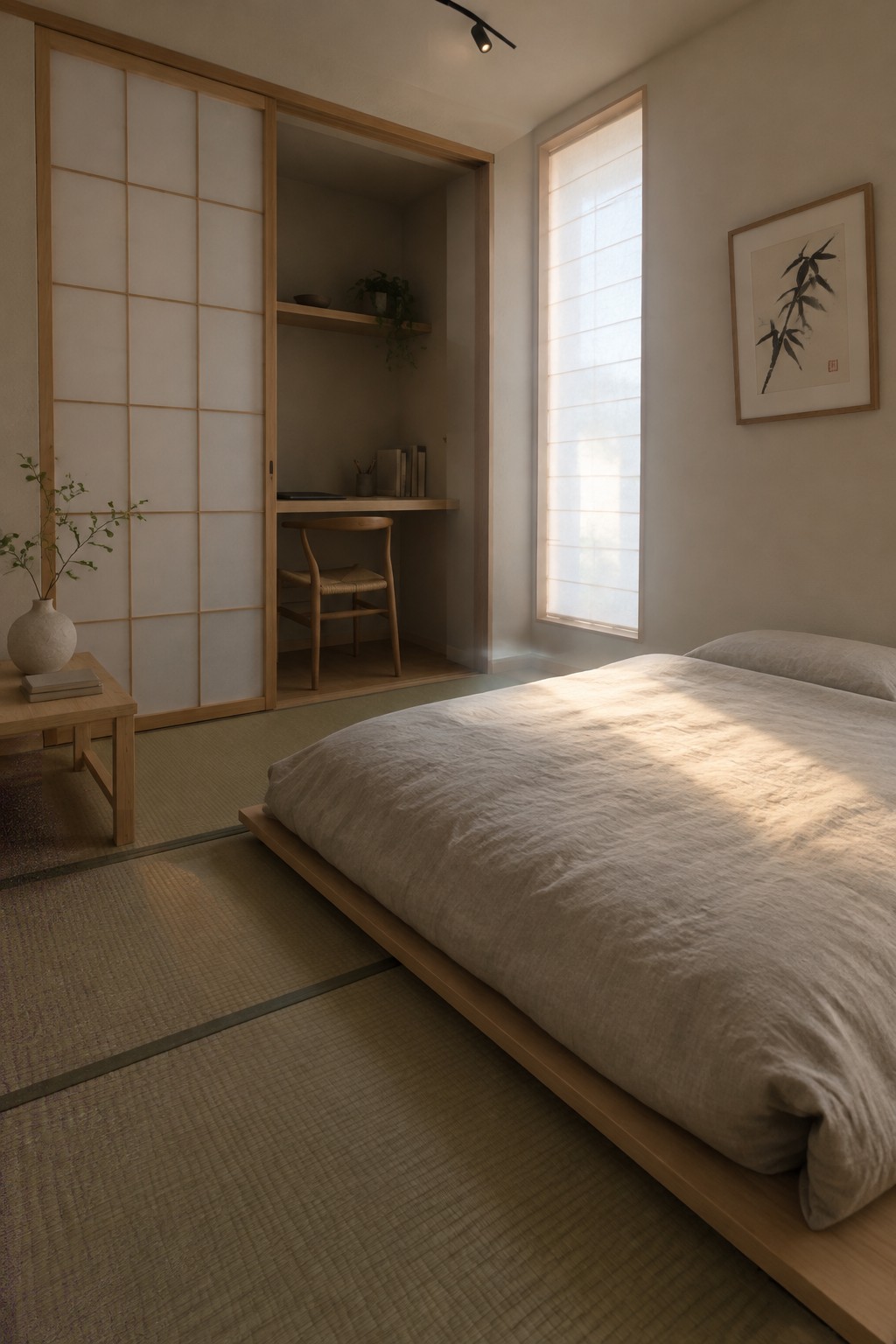
A desk that stays out of sight until you need it solves a common problem in guest rooms. Sliding screens let the space feel like a bedroom first, then open up to a quiet workspace when the room shifts to office use.
This setup works best in smaller homes or apartments where one room handles both roles. The screens create a soft division without adding bulk, and they suit homes that already lean toward simple or traditional finishes. Keep the desk surface clear so the alcove does not start to feel like storage.
Built-In Desks In Guest Bedrooms

One simple way to turn a guest room into a workspace is to build the desk into the room’s existing cabinetry or shelving. The desk stays part of the furniture rather than sitting out as a separate piece, so the room still feels like a bedroom first.
This setup works best in homes where the guest room gets used for visits only a few times a year. Add a chair that tucks fully underneath and use baskets or doors to hide papers and supplies when company arrives.
Built In Cabinetry That Hides The Desk
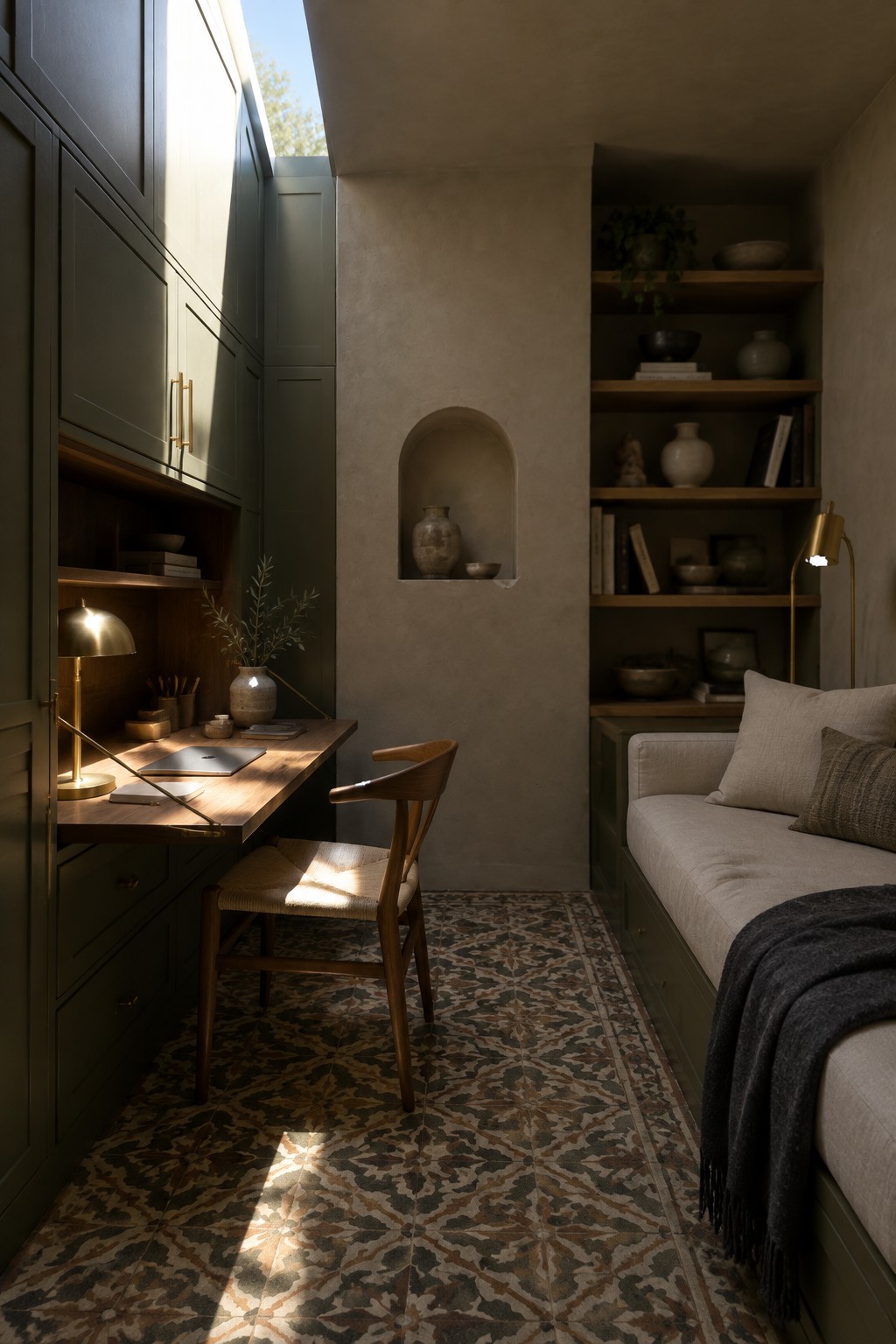
One useful approach in small guest rooms is to build the desk into the cabinetry so it stays out of the way when not needed. The tall doors close over the workspace and keep the room looking simple and restful for overnight visitors.
This setup works best in narrow rooms where floor space is limited. It gives you a real desk surface and storage without adding extra furniture that would crowd the bed or seating area.
Built-In Cabinetry That Conceals The Desk
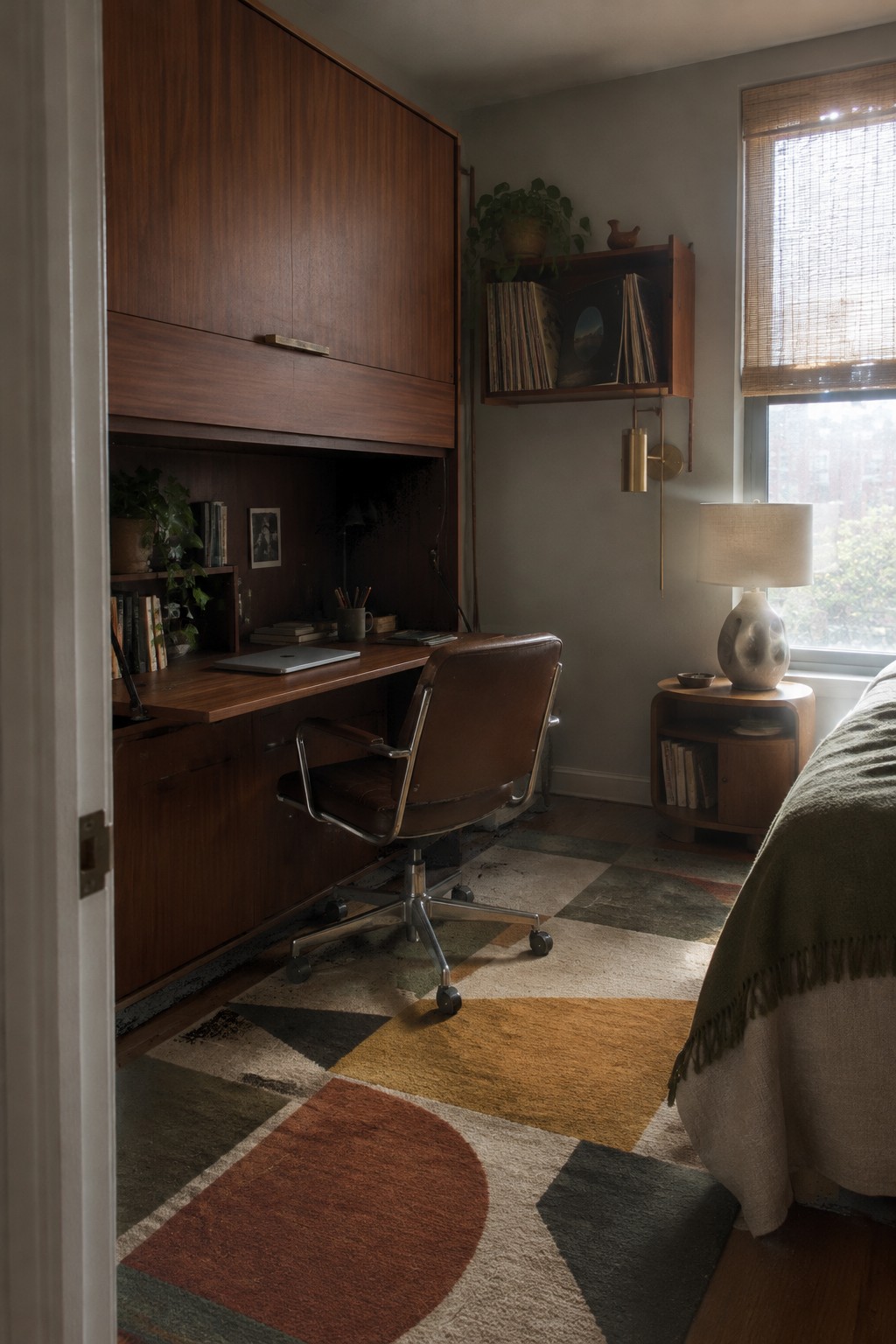
Many guest rooms need to work as an office without looking like one all the time. A tall built-in unit with upper cabinets and a recessed desk area lets you close off the workspace when guests arrive, while still giving you a solid surface and storage when you need it.
This approach suits smaller homes or rooms that serve multiple purposes throughout the year. Keep the wood tones simple and match any surrounding trim so the whole piece reads as furniture rather than an obvious office setup.
Built In Cabinetry That Hides A Desk

One simple way to make a guest bedroom work as an office too is to tuck the desk inside a cabinet. When the doors close the workspace disappears and the room feels like a regular bedroom again.
This setup suits older homes or smaller spaces where you cannot dedicate a whole room to an office. Keep the cabinet color close to the walls so it blends in and the desk stays out of sight until you actually need it.
Built-In Alcoves For Guest Room Desks

Many guest rooms end up with awkward corners or recessed spots that never quite work as sleeping space. Turning one of those into a small built-in desk keeps the room flexible without taking over the floor.
This approach suits older homes or cottages where the walls already have depth. A simple surface that folds or slides away, plus a chair that tucks in, lets the room shift between bedroom and workspace without much effort.
Hide The Desk Inside A Wardrobe

A desk can turn a guest room into a workspace that never quite feels like a bedroom again. Sliding the whole setup behind wardrobe doors solves that by letting the room switch back to a calm sleeping space when company arrives.
This works best in homes where the guest room gets used for both overnight stays and daily work. Look for doors with a woven or textured front so the office area stays hidden even when the wardrobe is closed.
Built-Ins That Hide The Desk

Tucking a desk into cabinetry lets a guest room stay functional for work without the desk taking over the space. The roll-top detail keeps the surface covered when it is not needed, so the room reads more like a bedroom than an office.
This setup works best in narrower rooms where floor space matters. Use it in homes that host guests often but still need a quiet place to work during the week.
Built-In Desks That Blend Into Cabinetry

A desk that sits inside the cabinetry instead of standing out on its own keeps the room feeling more like a bedroom than an office. The doors below the work surface hide papers and supplies, and the whole setup stays quiet when the room needs to serve as a guest space.
This approach suits attic rooms or smaller guest bedrooms where every inch has to work harder. Tuck the chair away and close the doors, and the desk disappears without any extra furniture moving around.
Building The Desk Into Bedroom Cabinetry
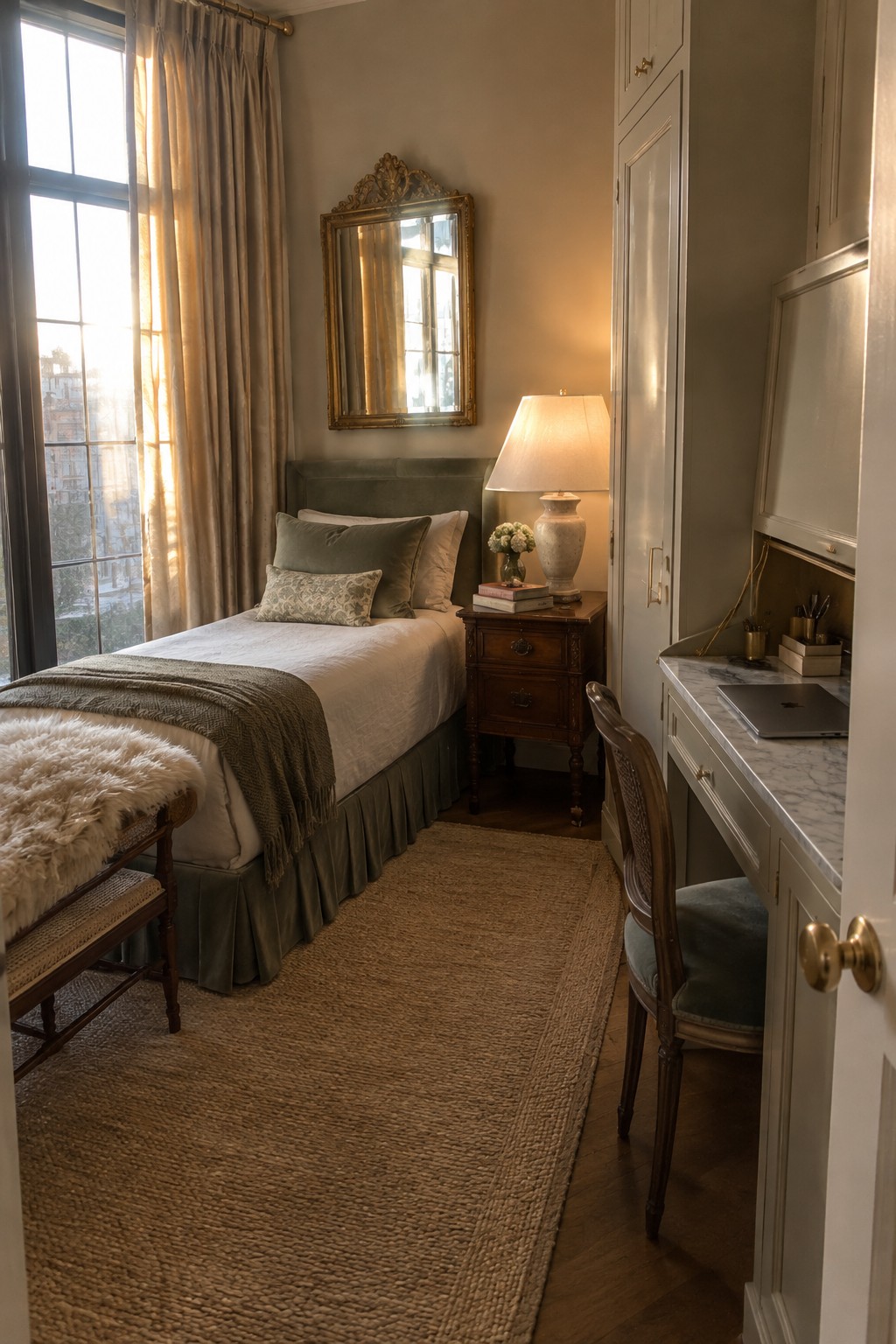
A desk that disappears into the room’s storage is one of the easiest ways to keep a guest bedroom feeling calm while still giving it a real work spot. The cabinetry here runs floor to ceiling and the desk surface sits inside it, so the whole workspace stays contained rather than floating out in the middle of the room.
This setup suits older homes or smaller guest rooms where you cannot spare floor space for a separate table. Match the desk material and hardware to the surrounding cabinets and keep the chair simple so the area still reads as storage when the laptop is put away.
Built-Ins Turn A Guest Room Into A Working Space
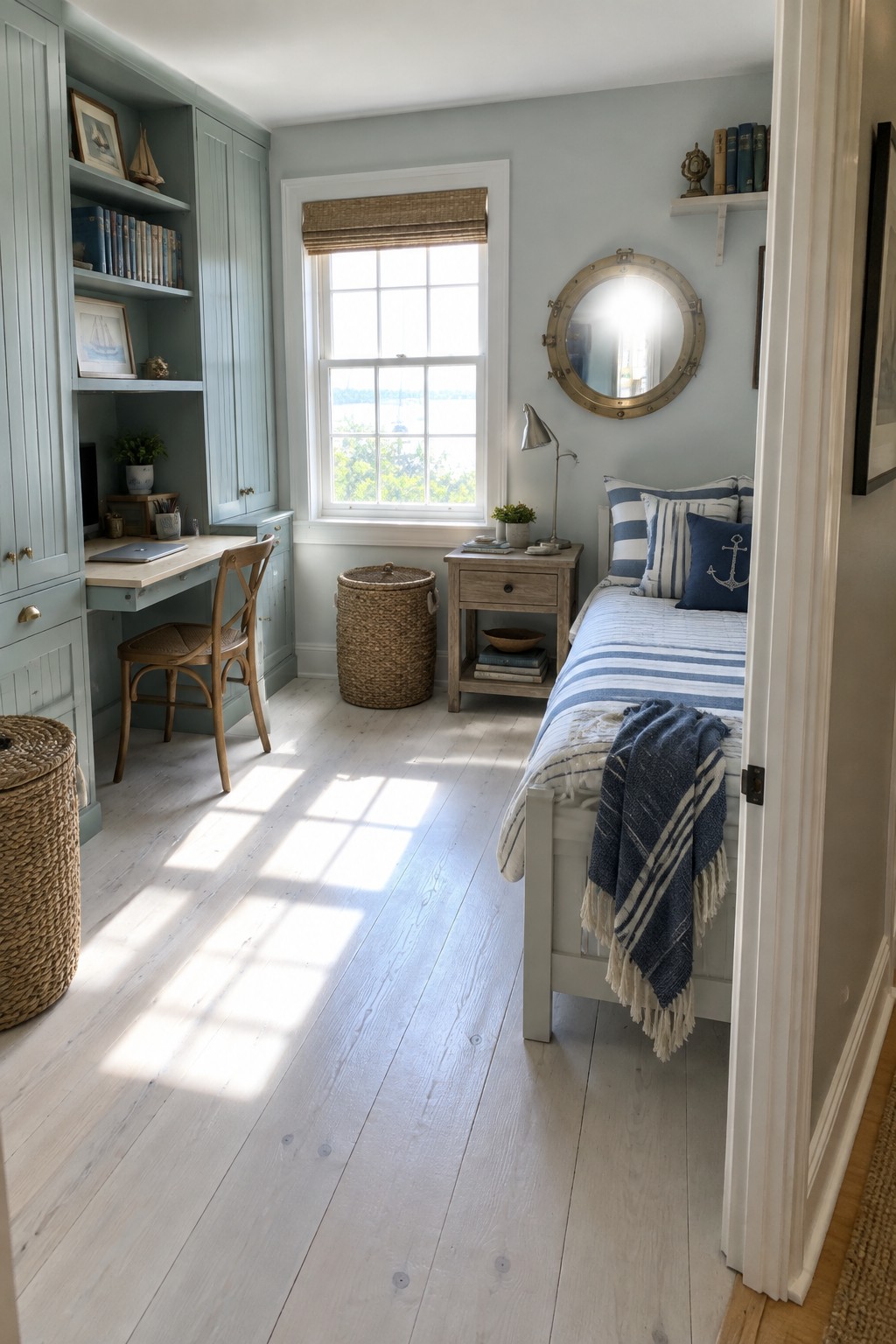
Many guest rooms end up sitting empty for months at a time. Adding built-in cabinetry with a desk tucked inside lets the room serve as an office on ordinary days while still feeling like a proper bedroom when company arrives.
This approach suits smaller homes or cottages where space has to work harder. Match the desk finish to the surrounding cabinets so the work area fades into the background, and keep the surface clear of papers when guests are expected.
Integrating Desks Into Built-In Cabinetry

One way to keep a guest room ready for work and visitors at the same time is to build the desk directly into the cabinet system. The surface sits within the unit rather than standing out as a separate piece of furniture, so the room does not feel split between two uses.
This setup works best in smaller homes or apartments where the same space needs to shift quickly. Match the desk finish to the cabinets and keep the chair simple so the whole wall reads as storage when the desk is not in use.
Hide The Desk Behind A Sliding Door
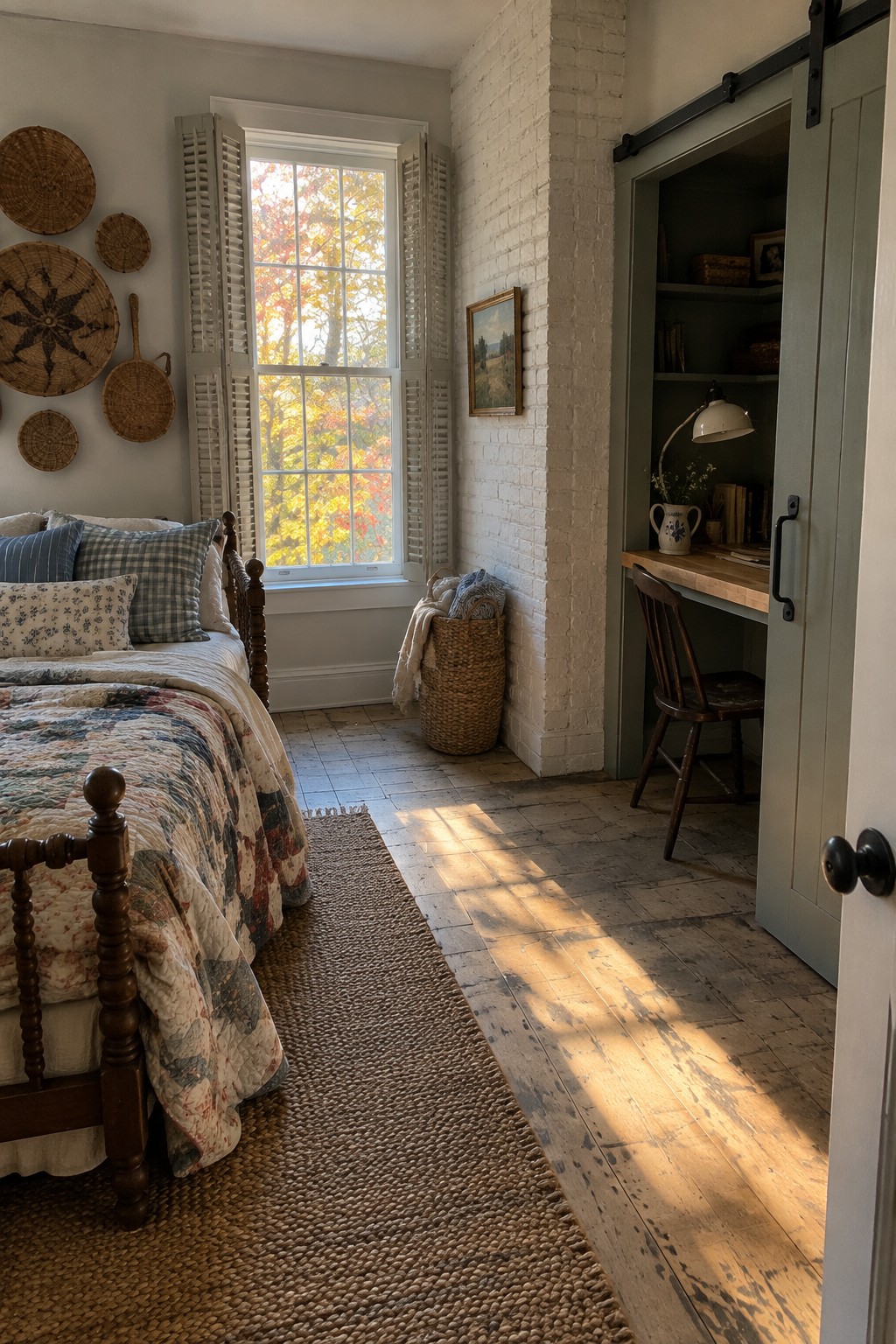
A sliding door lets you tuck the desk away when guests arrive and open it back up when you need a quiet place to work. It keeps the room feeling like a bedroom first and an office second.
This setup works best in a guest room that already has a small alcove or closet space to work with. Keep the shelves inside simple so the area does not look cluttered when the door stays open during the day.
Hide the Desk With Sliding Doors

One practical way to handle a room that serves as both office and guest space is to build the desk into a cabinet you can close off. Sliding doors let you tuck the whole setup away, so the room feels more like a bedroom when visitors arrive and less like a workspace.
This works especially well in smaller homes or apartments where space is tight. It keeps the main area open and calm while still giving you a proper desk and storage when you need it for work.
Built-In Alcoves For Hidden Desks

A built-in alcove gives you a desk without letting the workspace take over the whole room. The dark wood surround and simple shelves keep everything contained, so the space still reads as a bedroom or guest room first.
This works best in homes where the extra bed gets used a few times a month and someone needs a quiet surface for a laptop now and then. Keep the alcove depth shallow enough that a chair slides all the way in when the desk is not in use.
Built-In Desks Hidden Inside Bedroom Cabinetry
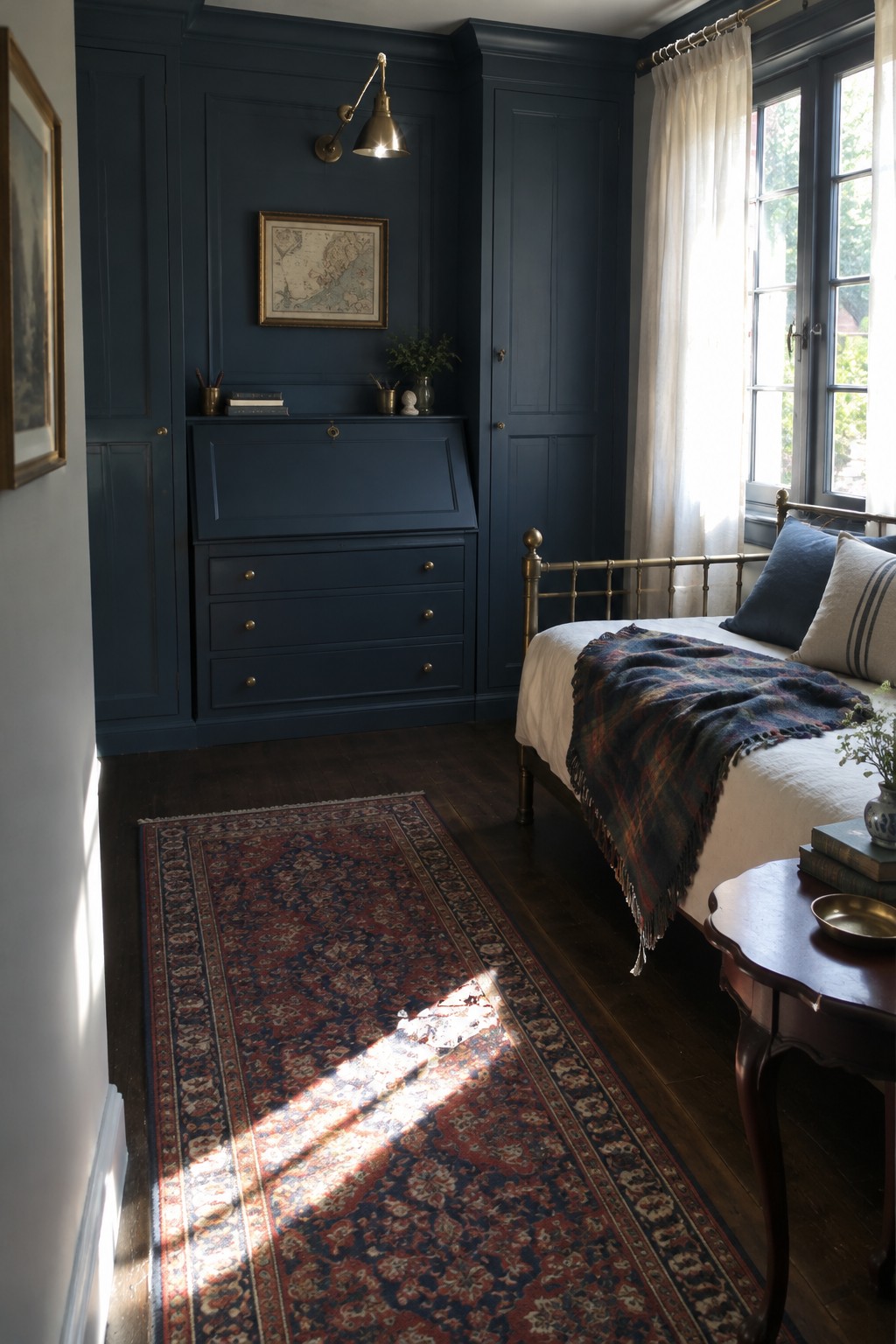
A drop-down desk built right into wall cabinetry gives you a real workspace without turning the whole room into an office. The desk folds away behind a panel that matches the rest of the storage, so the room still reads as a bedroom when guests arrive.
This setup works best in homes where the guest room needs to serve multiple purposes throughout the year. Keep the hardware simple and the finish consistent with the surrounding cabinetry so the desk does not stand out when it is closed.
Hide The Desk Behind A Sliding Barn Door

Many guest rooms double as workspaces, but the real challenge is keeping the desk from making the room feel like an office all the time. A sliding barn door solves this by letting you close off the desk area completely when you have visitors.
This approach works best in homes where the guest room needs to shift between uses often. Keep the door hardware simple and make sure the desk nook has its own light so it stays usable even when the door is pulled shut.
Frequently Asked Questions
Q: How do you hide the desk without making the room feel empty? A: Fold the desk panel back into the wall unit and slide the chair under the bed frame. This keeps the room looking like a regular bedroom. Guests won’t even notice the office setup until you need it again.
Q: Will a pull-out desk still let me use the room for a full-size bed? A: Yes. Pick a unit that mounts flat to the wall so the bed fits right beside it. The desk only takes up space when you open it for work.
Q: How do you keep daily office items handy but out of sight? A: Store papers and supplies in drawers built into the same wall unit. You grab what you need in seconds and close everything back up before guests arrive.
