

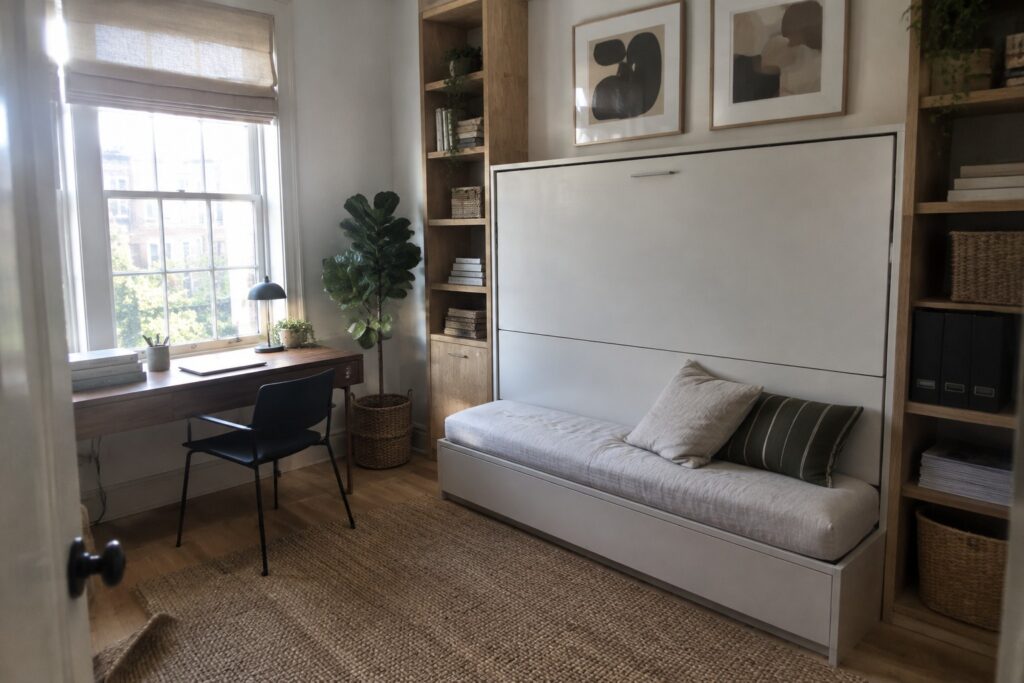
I have noticed that many people end up working from their bedrooms these days, which makes it important to keep the space comfortable for both sleep and focus.
When the bed stays visible all day it can make the room feel more like an office than a place to rest at night.
I usually look first at how the furniture layout lets the room switch between uses without a lot of effort each morning.
Murphy beds solve part of that problem by tucking away when not needed, but the real test comes in how the rest of the room stays organized around them.
Small choices like where to place the desk or what kind of lighting to add often determine whether the setup feels practical over time.
Murphy Beds That Leave Room For A Desk
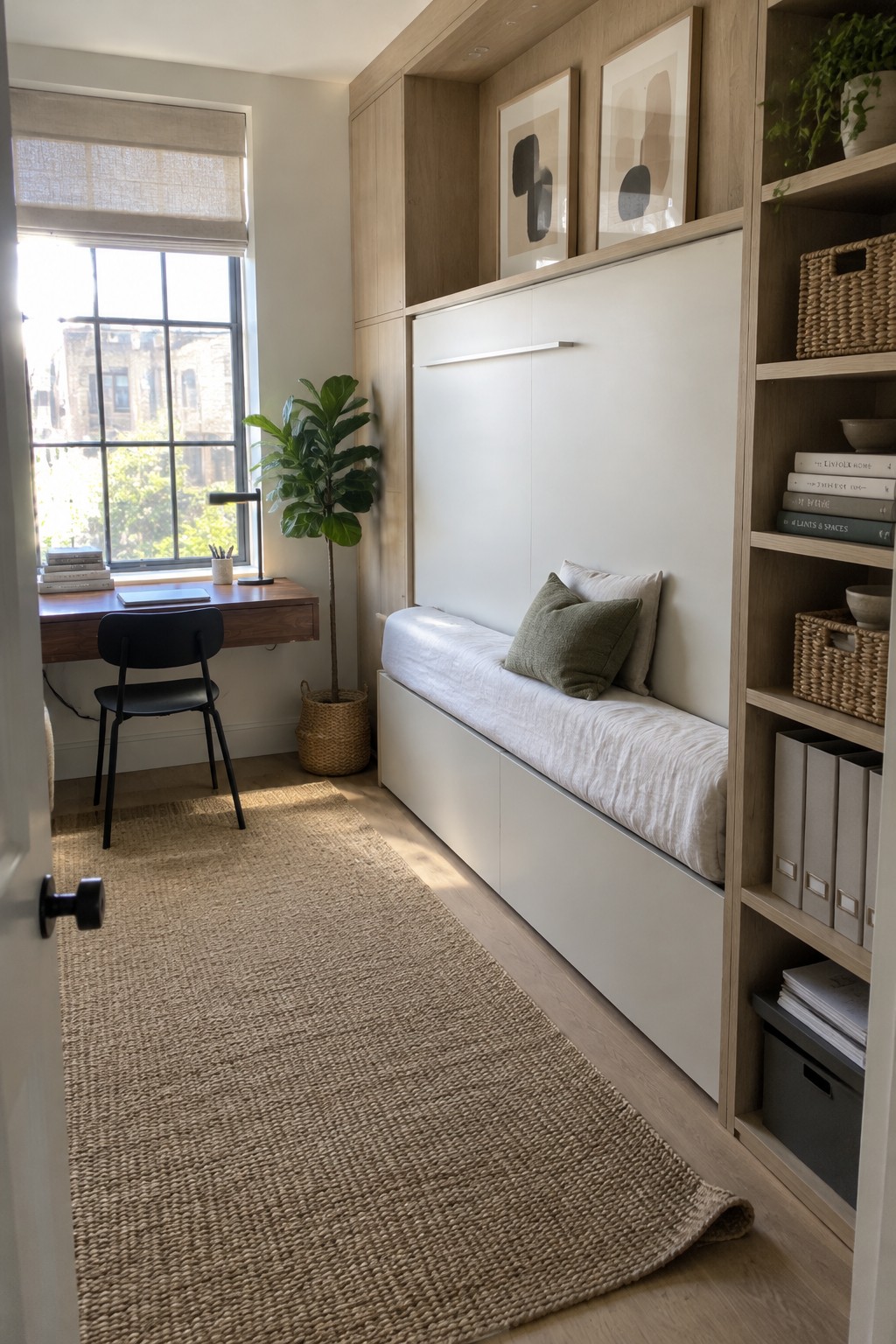
A Murphy bed lets you keep a real desk in the same room without the bed taking over the space all day. When the bed folds up into the wall, the floor stays open and the desk stays the main focus during work hours.
This setup works best in smaller bedrooms or guest rooms that double as offices. Tuck the desk near a window for light and use the built-in shelves around the bed unit for books and supplies so everything stays organized in one place.
Built-In Cabinetry That Hides A Murphy Bed

Many homes need a workspace that can turn into a bedroom without eating up extra floor space. Tall built-in cabinetry running the length of one wall makes this possible by tucking a Murphy bed behind closed doors so the room stays looking like a clean office.
This approach suits smaller homes and apartments where one room has to handle both work and sleep. Place the desk in front of the cabinet unit and keep daily items on open shelves so the bed stays out of sight until it is actually needed.
Built-In Desks In Bedroom Alcoves

A recessed spot in the bedroom can easily become a workspace when you add a simple built-in desk and shelves around it. This keeps the desk from sticking out into the room and leaves floor space open for a Murphy bed or other needs.
It suits smaller bedrooms or homes where every corner has to work harder. Use the shelves for books and supplies, and keep the desk surface clear for daily use. Just check that the height feels right before you build it in.
Built-Ins That Let A Bedroom Serve As An Office Too

Many people need a place to work at home but do not want a separate office taking up another room. Built-in cabinetry around the bed creates that workspace without crowding the floor. The desk sits right in front of the bed area so the room can switch between tasks and rest without much effort.
This approach suits smaller homes or guest rooms that double as offices on weekdays. The shelves hold books and supplies within reach, and the dark finish keeps the whole space feeling calm instead of cluttered. Just make sure the desk gets enough light during the day so it stays practical for long hours.
Built-In Murphy Beds That Double As Storage
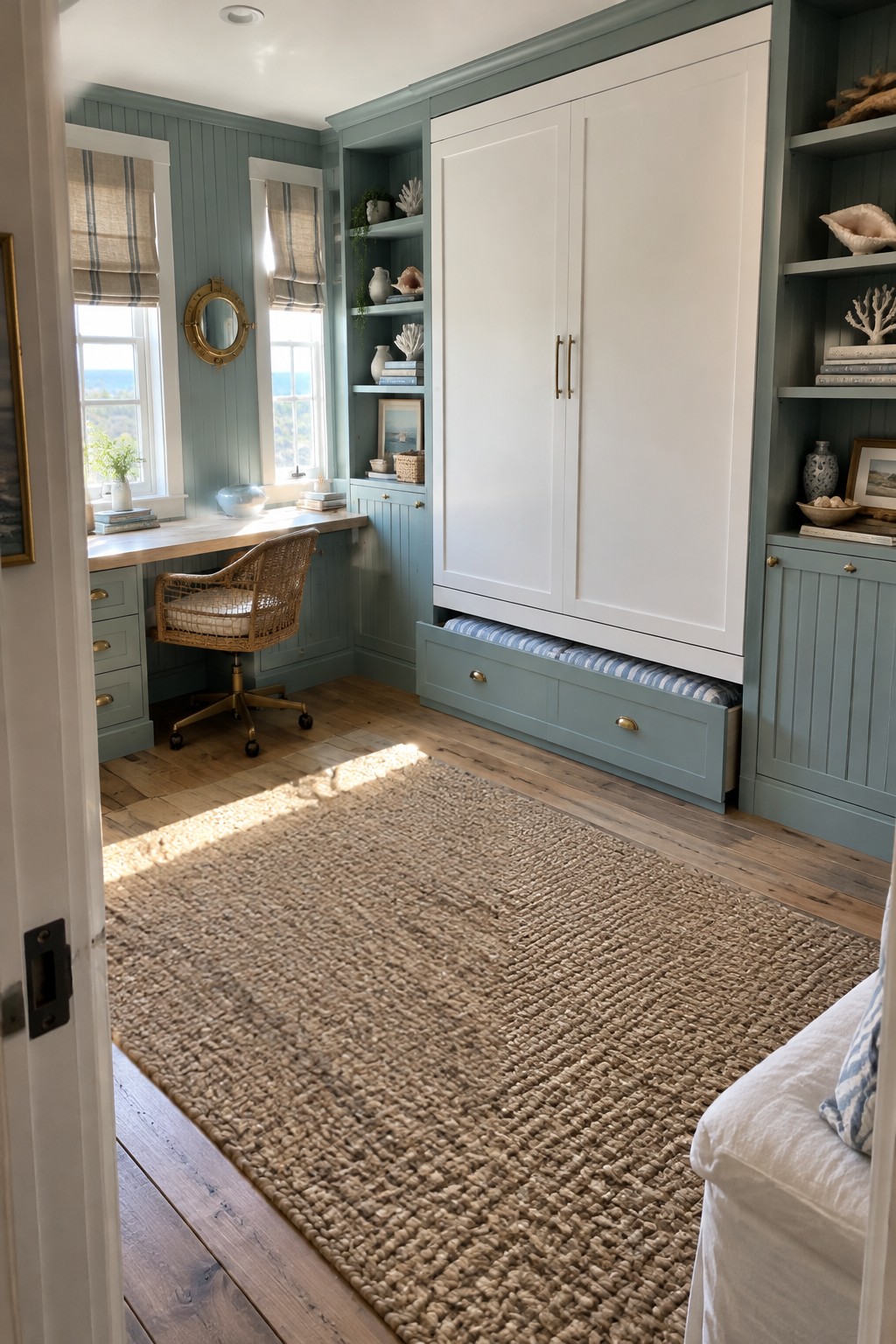
Many bedroom offices feel cramped once a bed is added, but built-in cabinetry changes that by hiding the bed completely when it is not in use. The tall white doors blend with the surrounding shelves and drawers, so the room still reads as a workspace during the day.
This setup works best in smaller homes or guest rooms where the space needs to shift quickly between uses. Keep the desk along the window wall for light and let the cabinetry run the length of the opposite wall so the bed folds down without blocking the floor.
Platform Beds With Built-In Drawers
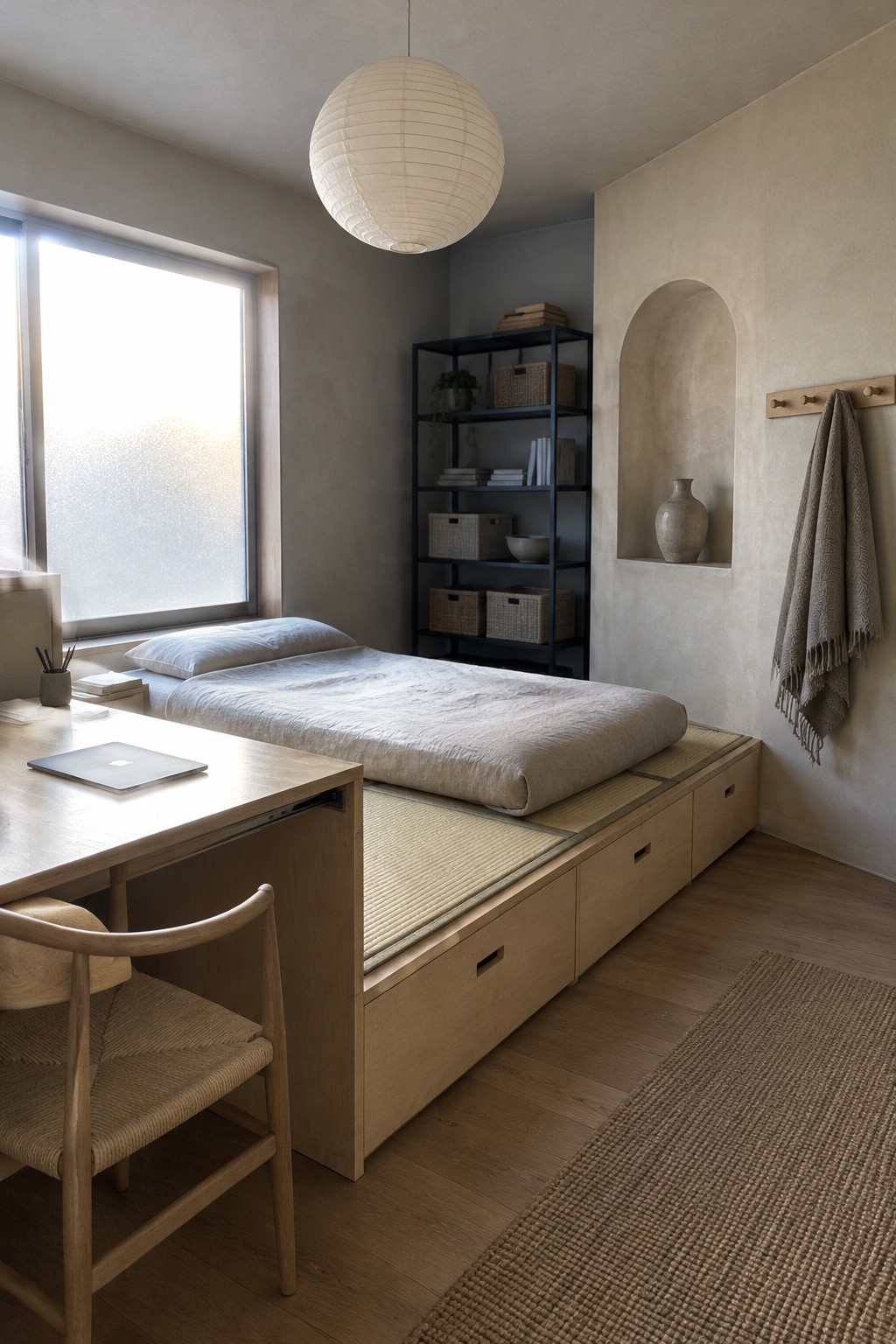
A raised wooden platform under the bed creates a simple way to add storage in a small room that needs to work as both bedroom and office. The drawers pull out easily and hold everything from extra bedding to files or supplies, so the main floor stays open for a desk and chair.
This setup suits compact apartments or guest rooms where every inch counts. It keeps the space from feeling crowded and works best when the rest of the room stays simple, with just a few other pieces of furniture.
Adding A Small Desk Next To The Bed
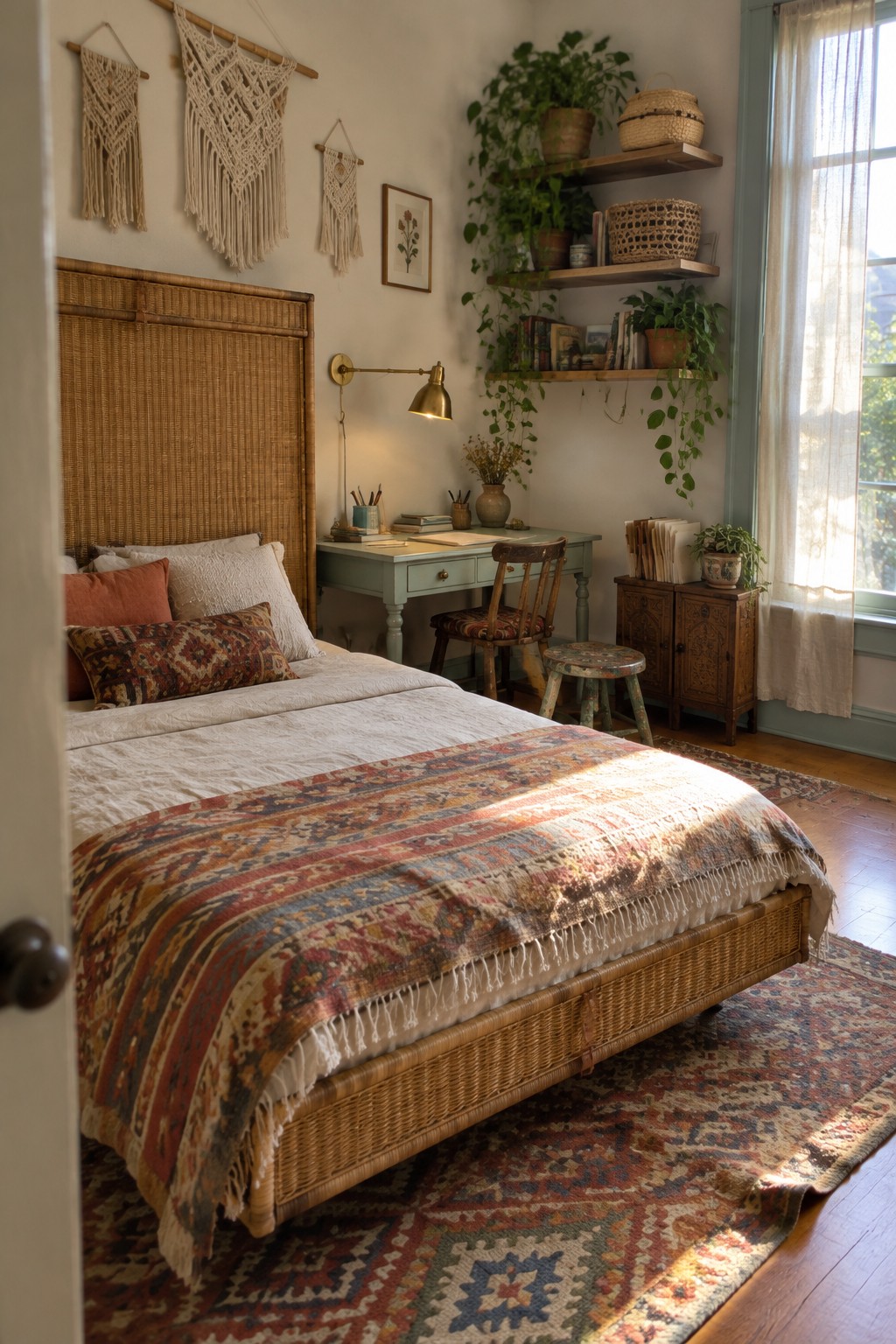
A bedroom can handle a little work space if the desk stays modest and sits right beside the bed. This keeps everything in one room without making the space feel split or crowded.
It suits apartments and smaller homes where a full office is not an option. Match the desk finish to the bed frame and leave the top mostly clear so the room still feels like a place to rest.
Hide The Murphy Bed Behind The Desk

One idea that keeps working in smaller bedrooms is hiding the murphy bed inside the same wall that holds the desk. The panels close up to look like regular cabinetry or soft upholstery, so the room reads as an office during the day without giving up the bed at night.
This works best in apartments or guest rooms that need to serve both purposes without feeling crowded. Keep the desk depth in mind so it clears the bed when it folds down, and choose hardware that feels solid for regular use.
Fitting A Workspace Into An Attic Bedroom

Placing a desk in a bedroom works especially well when the room has odd angles or limited floor space. The desk sits right under the window where the ceiling opens up, so the workspace gets good light without eating into the main sleeping area. It keeps the room feeling like a bedroom first while still giving you a spot to get work done.
This setup suits homes with finished attics or smaller bedrooms that need to pull double duty. Keep the desk narrow and the chair simple so the room does not feel crowded. Avoid filling every wall with furniture, or the space starts to feel more like an office than a place to rest.
Murphy Beds That Leave Space For A Desk

One way to fit both sleeping and working into a small bedroom is to use a Murphy bed that folds into the wall. This leaves the floor area open for a desk during the day instead of having furniture compete for space all the time.
This setup works best in studios, guest rooms, or apartments where every square foot counts. Keep the desk surface clear and choose a simple chair so the room still feels calm when the bed is down.
Pair Your Desk With A Lounge Spot
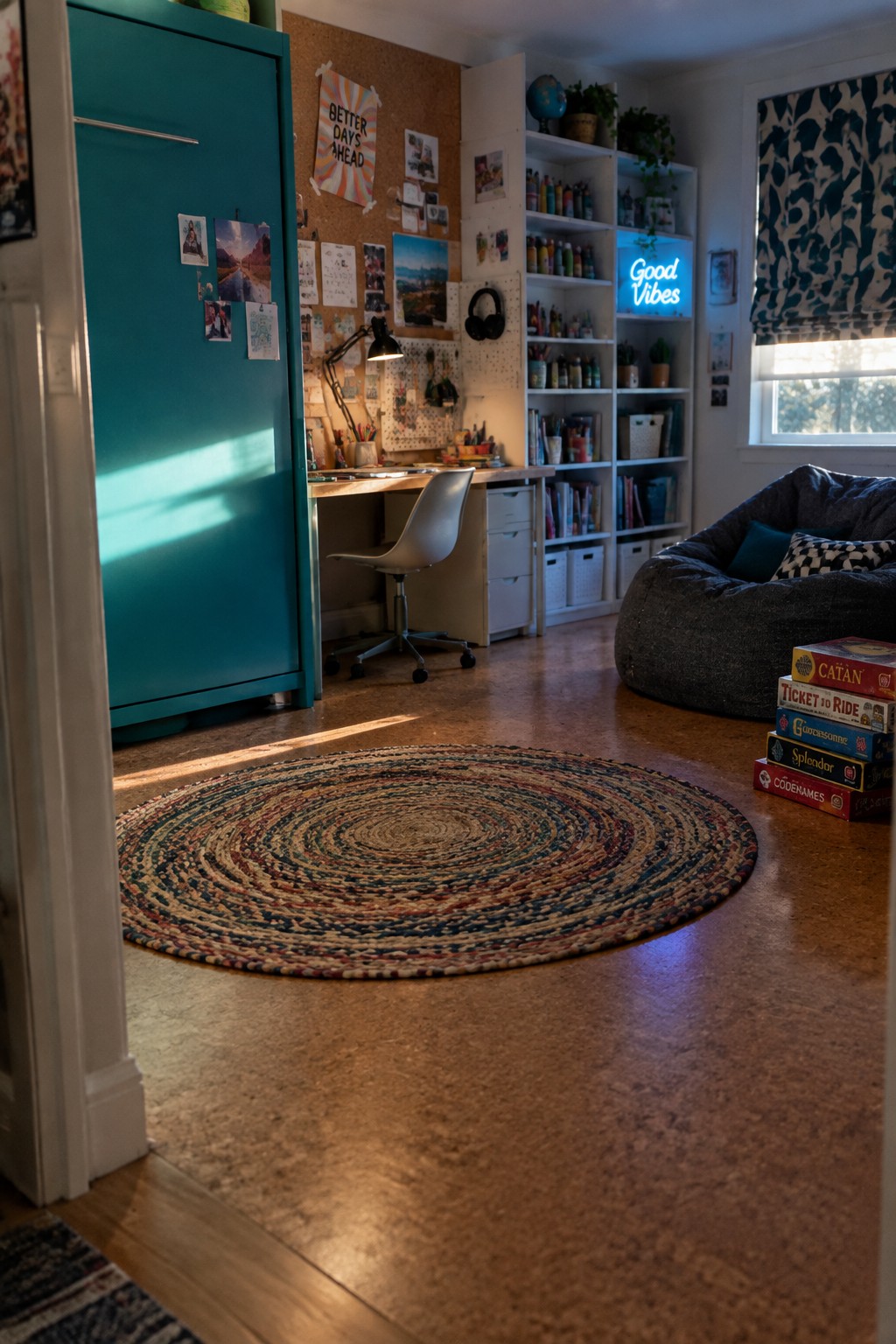
Many people set up a desk in the bedroom but then wonder why the room never feels restful. Adding a separate lounge spot like a bean bag or low chair gives the space two clear uses without forcing everything into one zone. The desk stays for work, while the lounge area handles reading or just taking a break.
This setup works especially well in smaller homes where the bedroom has to double as an office. Keep the desk against one wall and place the lounge piece a few feet away so the room does not feel crowded. Make sure both areas have their own lighting so you can switch from focused work to downtime without moving furniture around.
Murphy Beds With Built-In Desks

One practical way to fit both sleeping and working into a small bedroom is to hide the bed during the day. A Murphy bed that folds into a cabinet or closet frees up floor space for a desk and seating without making the room feel cramped.
This layout suits guest rooms or studio apartments where the space needs to serve two purposes. The built-in shelves keep work items organized, and the bench seating works for daily use or extra guests when the bed comes down.
Murphy Beds Built Above A Desk

Placing a murphy bed in the cabinet directly over a desk turns one wall into two rooms. The desk stays usable all day, and the bed drops down only when needed, which keeps the floor clear in a tight space.
This works best in guest rooms or small homes where the same area has to handle both work and overnight guests. Make sure the cabinet depth and hinge system leave enough clearance over the desk surface when the bed is in use.
Built-In Desks That Save Floor Space

A desk tucked into cabinetry works well because it uses the wall instead of pushing furniture out into the room. The wood surface sits right against the painted built-ins, so the whole setup feels like one piece rather than separate items that crowd each other.
This kind of arrangement fits best in bedrooms or small guest rooms where you need both a bed and a workspace. It suits homes that already have deep walls or existing millwork, and it keeps the middle of the floor open for other uses.
Built-In Desks With Overhead Cabinets
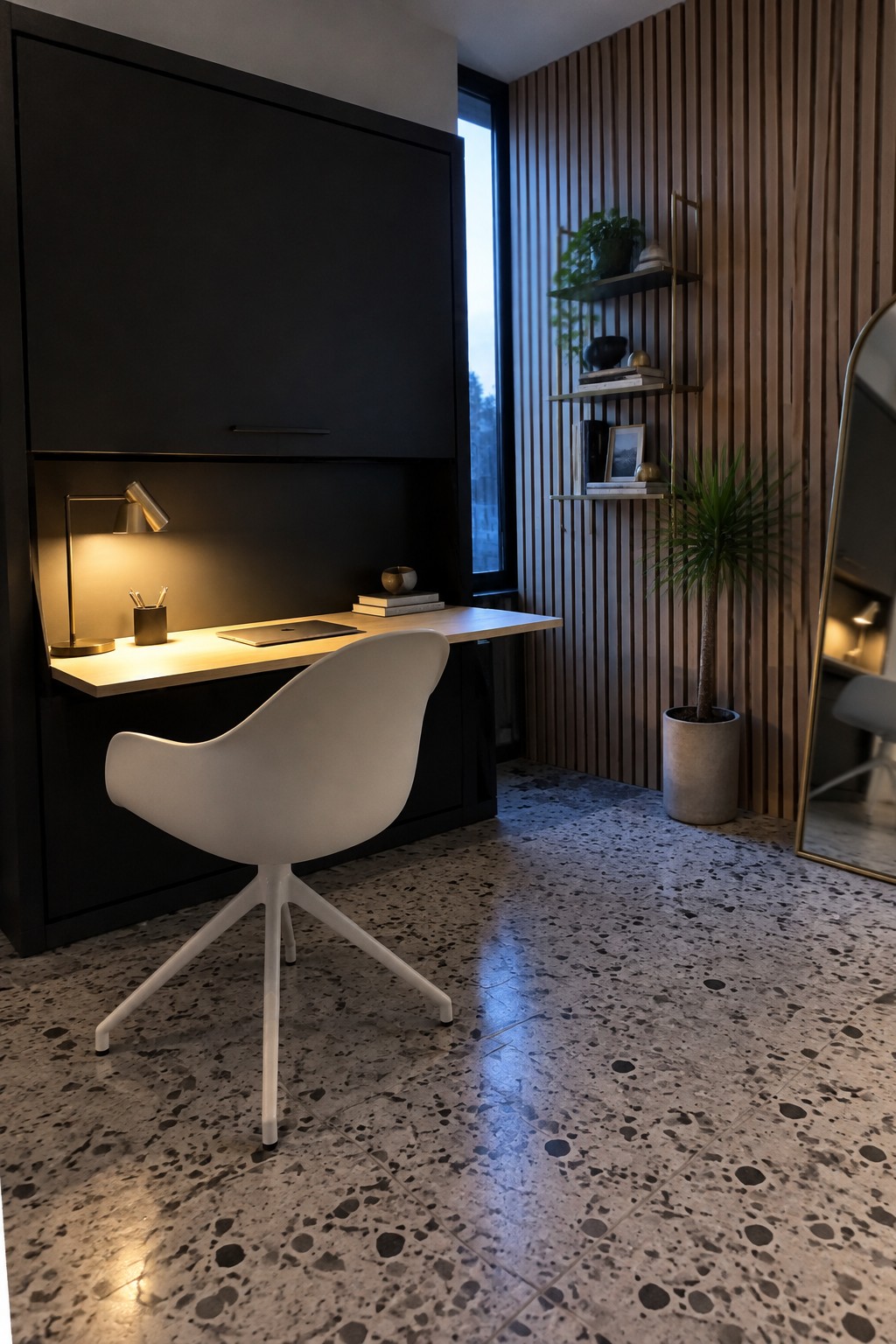
A built-in desk that sits under a run of dark cabinets gives you a real workspace without eating up floor space. The cabinets hold everything from files to supplies, so the desk surface stays clear and the room still reads as a bedroom first. This setup works especially well when you need the space to serve double duty.
It suits smaller bedrooms or guest rooms where a full office would feel too much. Keep the cabinet color deep so it recedes, and make sure the desk depth stays shallow enough for a chair to tuck in fully when not in use. That way the room stays open for other furniture, like a Murphy bed on the opposite wall.
Built In Desks That Fold Away
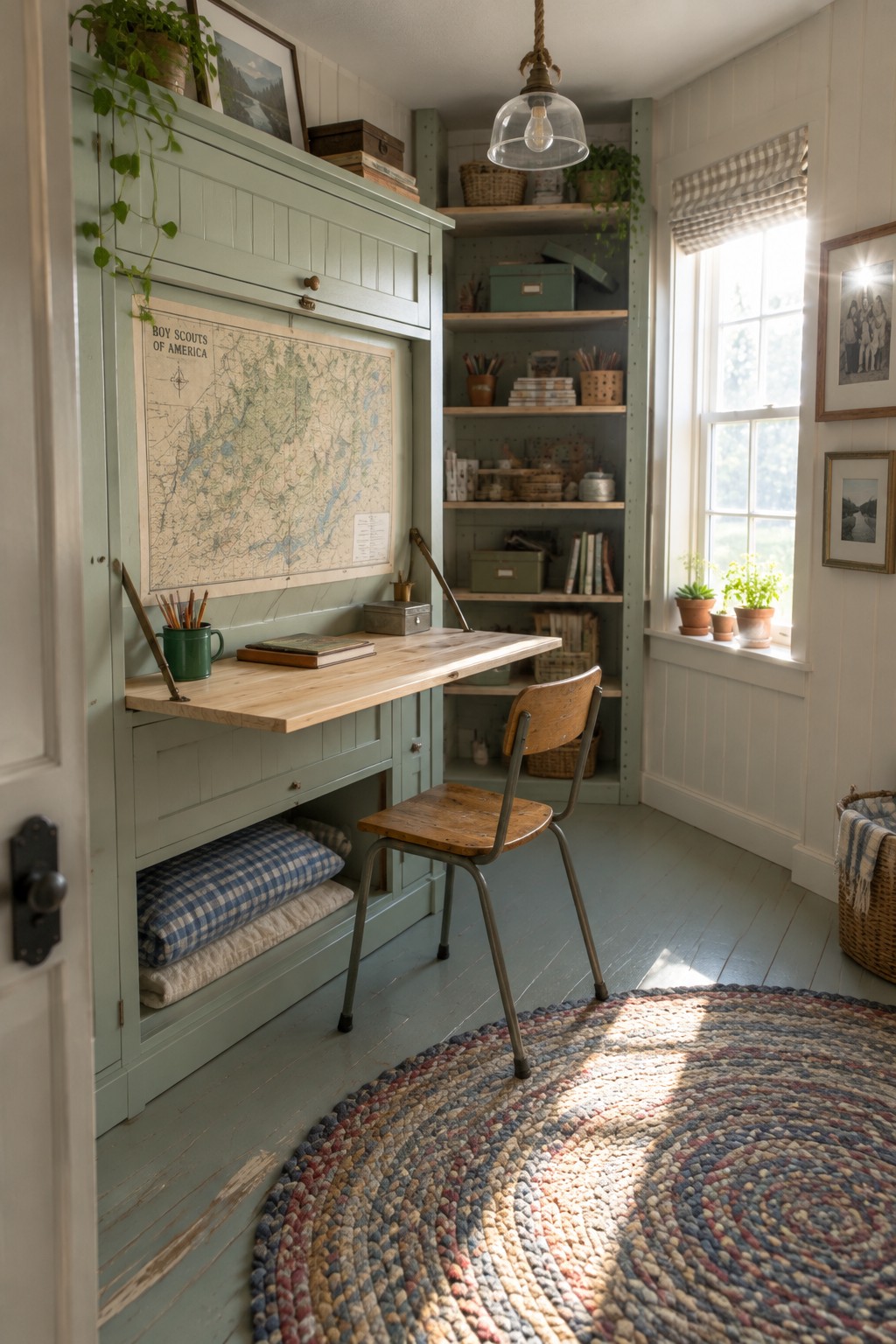
A fold down desk built into cabinetry keeps a bedroom office from feeling cramped. The desk surface tucks up when you are done working, so the room can shift back to sleeping or relaxing without a big piece of furniture in the way.
This works best in smaller bedrooms where every square foot counts. Match the cabinet color to the walls and add simple open shelves above for books and supplies. It pairs naturally with a Murphy bed since both features hide away and leave the floor clear.
Frequently Asked Questions
Q: How long does it take to switch from office to bedroom mode each day?
A: It usually takes just a minute or two once you get the hang of the hinges. Pull the bed down at night and fold it back up after you make it in the morning. This keeps your desk surface free without moving anything else around.
Q: Can guests figure out the Murphy bed on their own?
A: Yes if you show them the handle or strap once before they settle in. Most setups lock into place with a simple click so nothing shifts while they sleep. Keep the floor area clear so the bed lowers smoothly every time.
Q: What if the room starts to feel cramped with both the bed and desk?
A: Measure the space first and go with a vertical Murphy bed that tucks into the wall. This leaves more floor open for a chair that rolls out of the way during the day. People often add one tall shelf unit to hold office supplies without taking extra room.
