


I have found that small work areas in a home tend to feel cramped long before they actually run out of space, usually because the furniture placement blocks natural movement.
Thinking back to my last attempt at organizing a corner office, the key turned out to be keeping daily items within reach while tucking everything else away.
Many people overlook how traffic patterns around a desk can turn a productive spot into a constant source of frustration.
Simple changes often fix it.
Some of the setups I have tested in my own place ended up working better after I moved a few pieces around to open up the floor.
Pegboard Panels Add Useful Storage To Compact Desks

A pegboard behind the desk turns an empty wall into quick storage without taking up any floor space. It keeps tools and small items visible and easy to grab while leaving the desktop clear for actual work.
This works best in tight home offices where drawers are limited. Mount the board at a comfortable height and use simple hooks so you can rearrange things as your needs change.
Built-In Desks In Small Alcoves
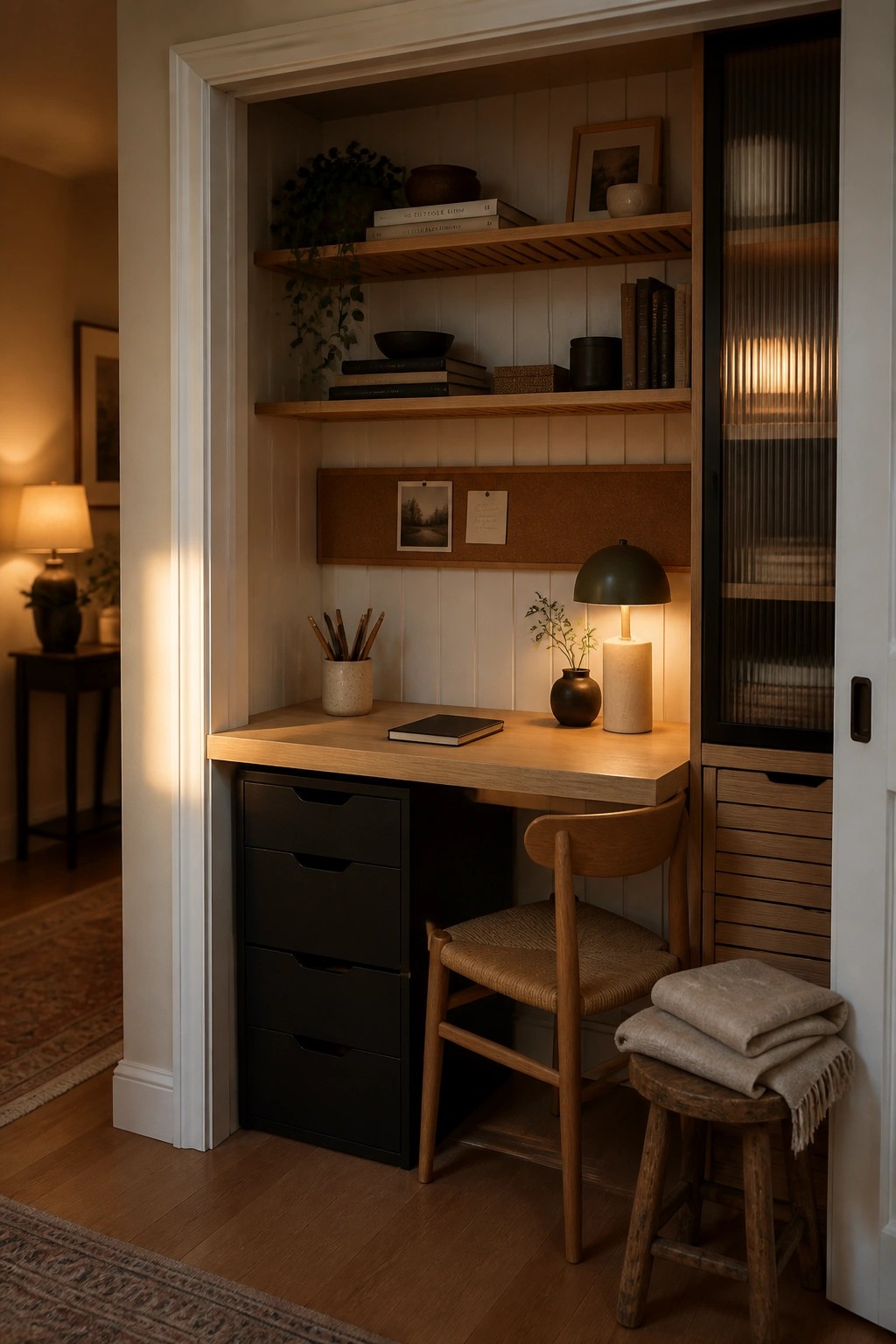
A built-in desk set into an alcove makes good use of narrow or leftover space that might otherwise sit empty. The drawers underneath hold supplies without adding extra furniture, and the open shelves above keep books and small items within reach but off the work surface.
This approach suits apartments or older homes where a full office room is not an option. Place it near a window if possible so the area feels less closed in, and choose a chair that tucks in fully when not in use.
Overhead Cubbies Keep Small Desks Organized
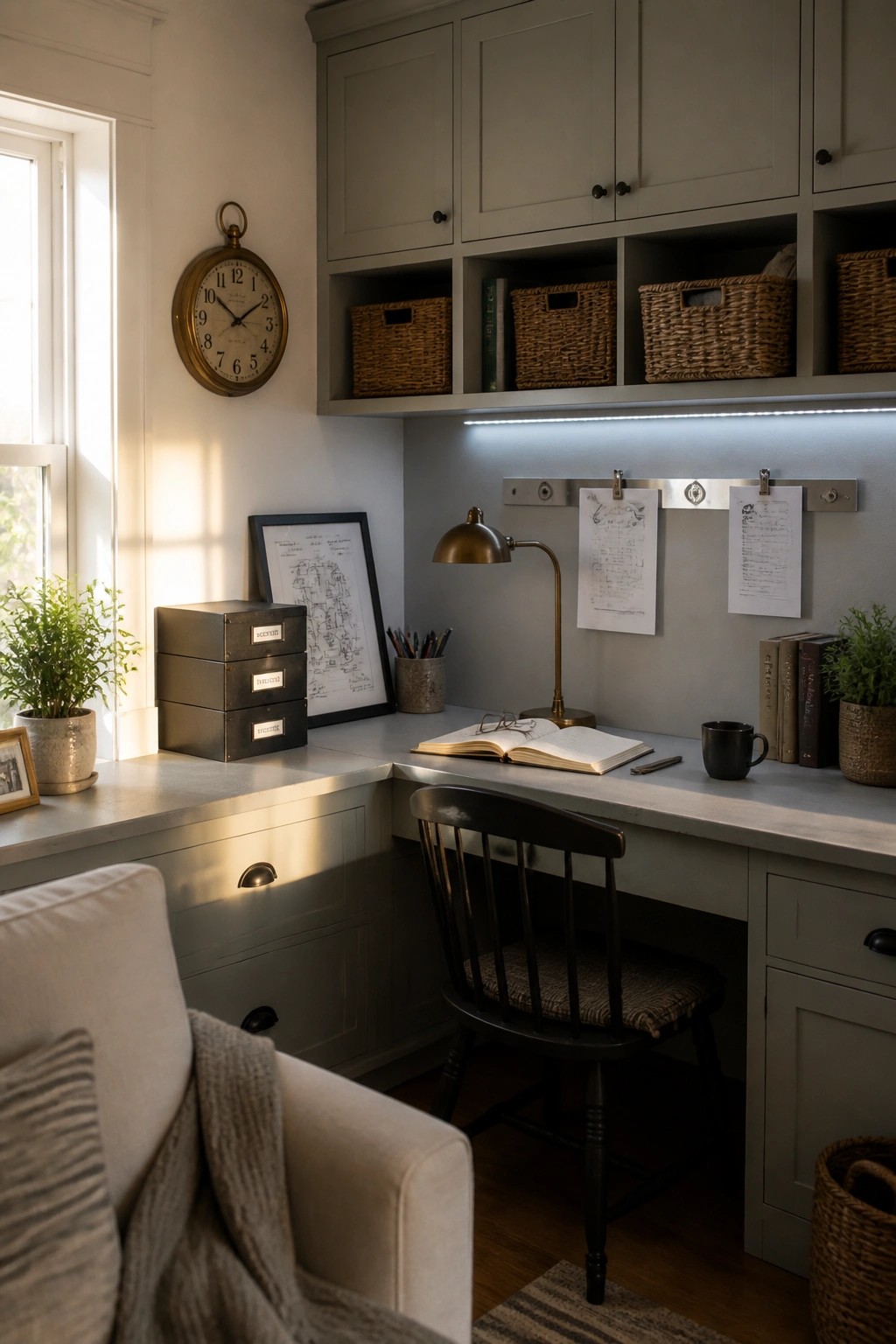
Open cubbies above a built-in desk give you extra storage without eating into floor space. Baskets slide in easily to hide papers and supplies, so the work surface stays clear even when the office is small. This setup works especially well in corners where wall space would otherwise go unused.
It suits older homes or any room that already has cabinetry nearby. Keep the lower drawers for things you reach for often and use the upper spots for less frequent items. Just watch that the cubbies do not sit too low or they can start to feel cramped when you are seated.
Fold Down Desks Work Well In Small Work Areas

A fold down desk attached to the wall gives you a usable surface only when you need it. The rest of the time it stays flat against the wall so the room does not feel crowded.
This kind of desk fits best in bedrooms or narrow spaces that serve as part time offices. Keep supplies sorted in hanging bags right beside it so everything stays close without adding extra furniture.
Alcove Desks Help Keep Small Work Areas Clear

A desk tucked into an alcove turns a narrow spot into a useful workspace without spreading clutter across the room. The built-in shelves above hold books and supplies while the surface stays mostly clear for daily tasks.
This setup works best in bedrooms or guest rooms where space is limited. Add a low cabinet on wheels underneath for files and keep the chair simple so it can slide away when not in use.
Wall Shelves Keep Narrow Offices Organized
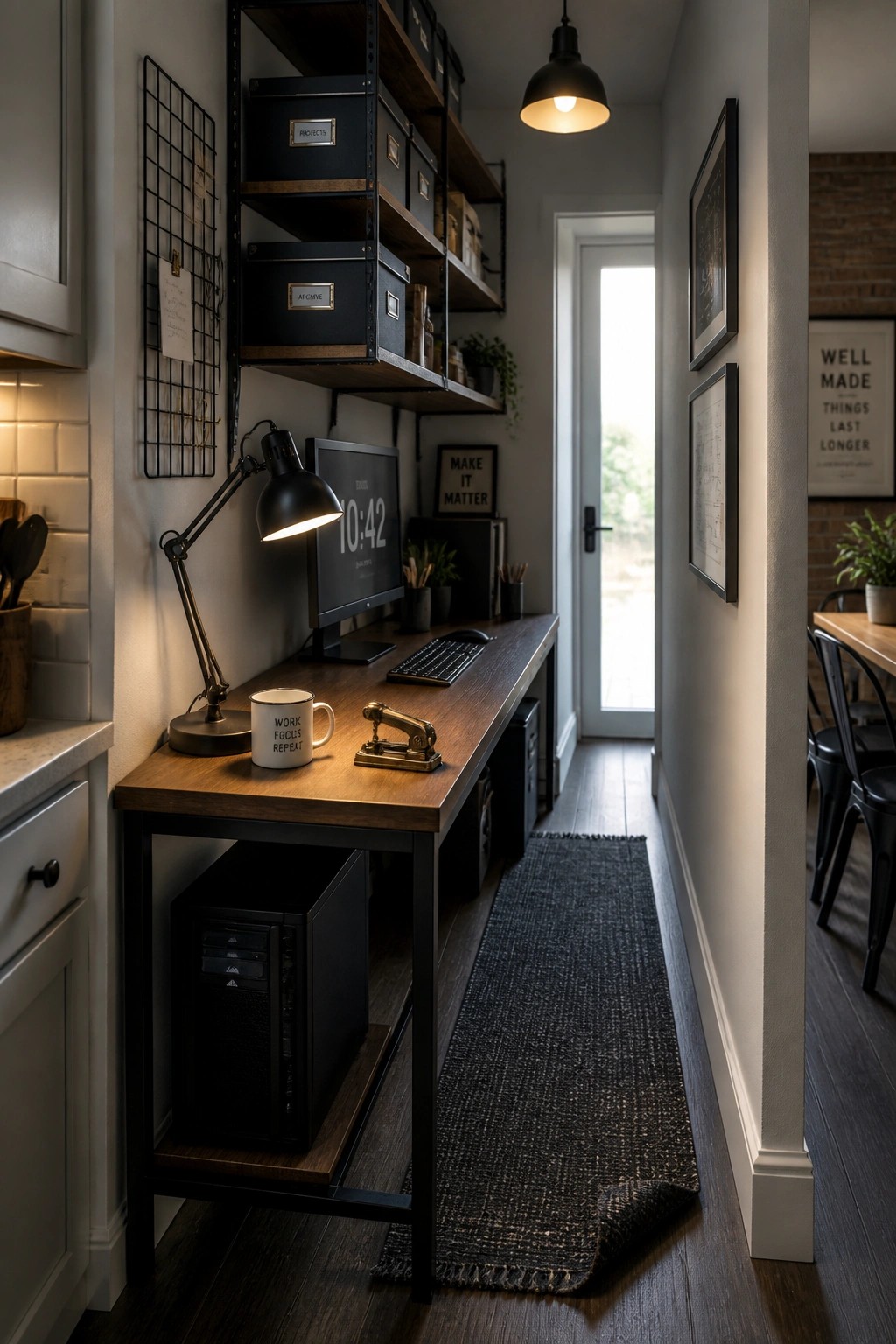
Small workspaces often feel cramped when everything has to sit on the desk. Mounting shelves above the work surface moves boxes, files, and supplies up and out of the way while still keeping them within reach.
This approach suits hallways, corners, or any spot where floor space is limited. Use matching bins with simple labels so items stay sorted and the desk surface remains clear for actual work.
Built In Fold Down Desks For Small Spaces
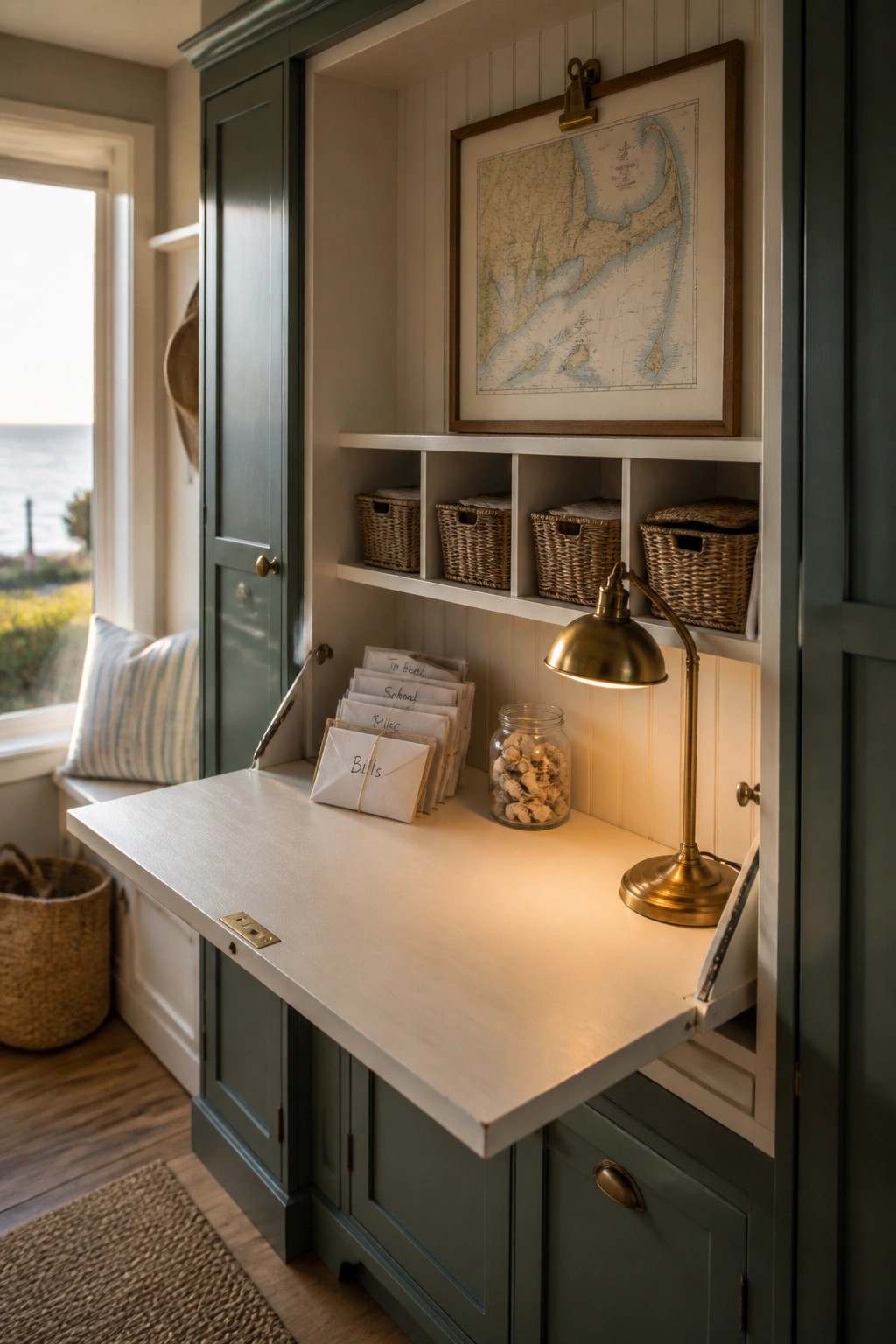
A fold down desk built into cabinetry gives you a real work surface without taking up floor space when the day is over. It tucks flat against the wall and leaves the room looking like a simple storage unit instead of an office. Many people like this setup because it keeps papers and supplies contained behind doors rather than spread across a room.
This works best in homes where a full desk would crowd the area, such as a hallway nook, guest room corner, or even a closet conversion. Place baskets or bins on the shelves above for supplies and use the door fronts for extra files. Just be sure the drop down surface sits at a comfortable height before you build it in.
Add a Desk With Drawers on Both Sides
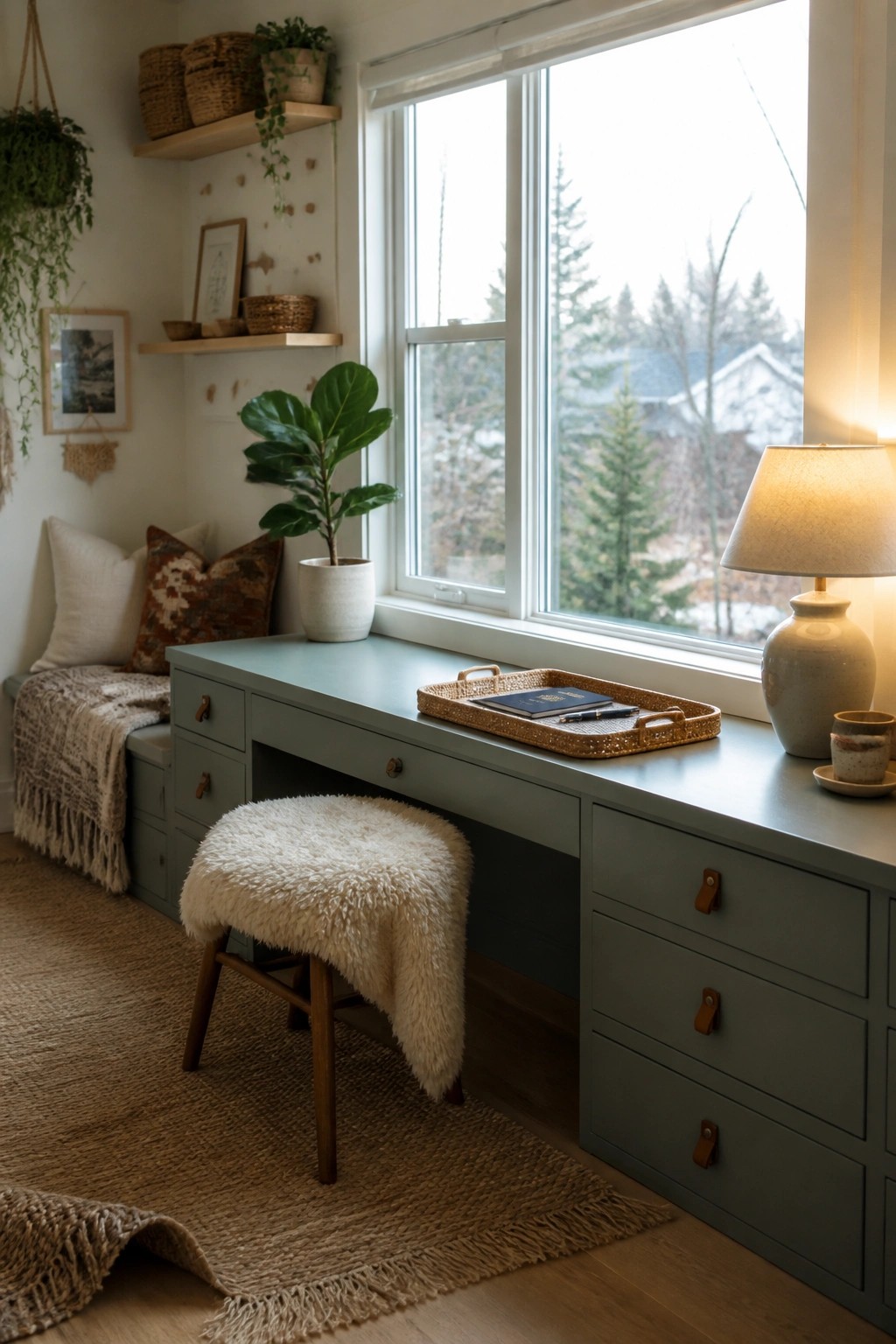
A desk that offers storage on both sides makes a small office area much easier to keep tidy. The drawers give a place for papers, supplies, and everyday items so the work surface stays clear. Placing it under a window also brings in natural light without taking up extra floor space.
This setup works well in spare rooms, guest bedrooms, or any corner that needs to double as a workspace. Keep the top surface simple with just a tray to hold a few essentials. That way the area feels open and ready to use instead of crowded.
Built-In Desks With Integrated Storage

A built-in desk that folds into cabinetry gives you a real workspace without leaving clutter out in the open. The unit keeps everything contained behind doors while still offering shelves and a solid surface when you need it.
This setup works best in homes where the office shares space with a hallway or living area. It suits smaller rooms that cannot fit a full desk and separate storage.
Kitchen Island As A Compact Work Zone
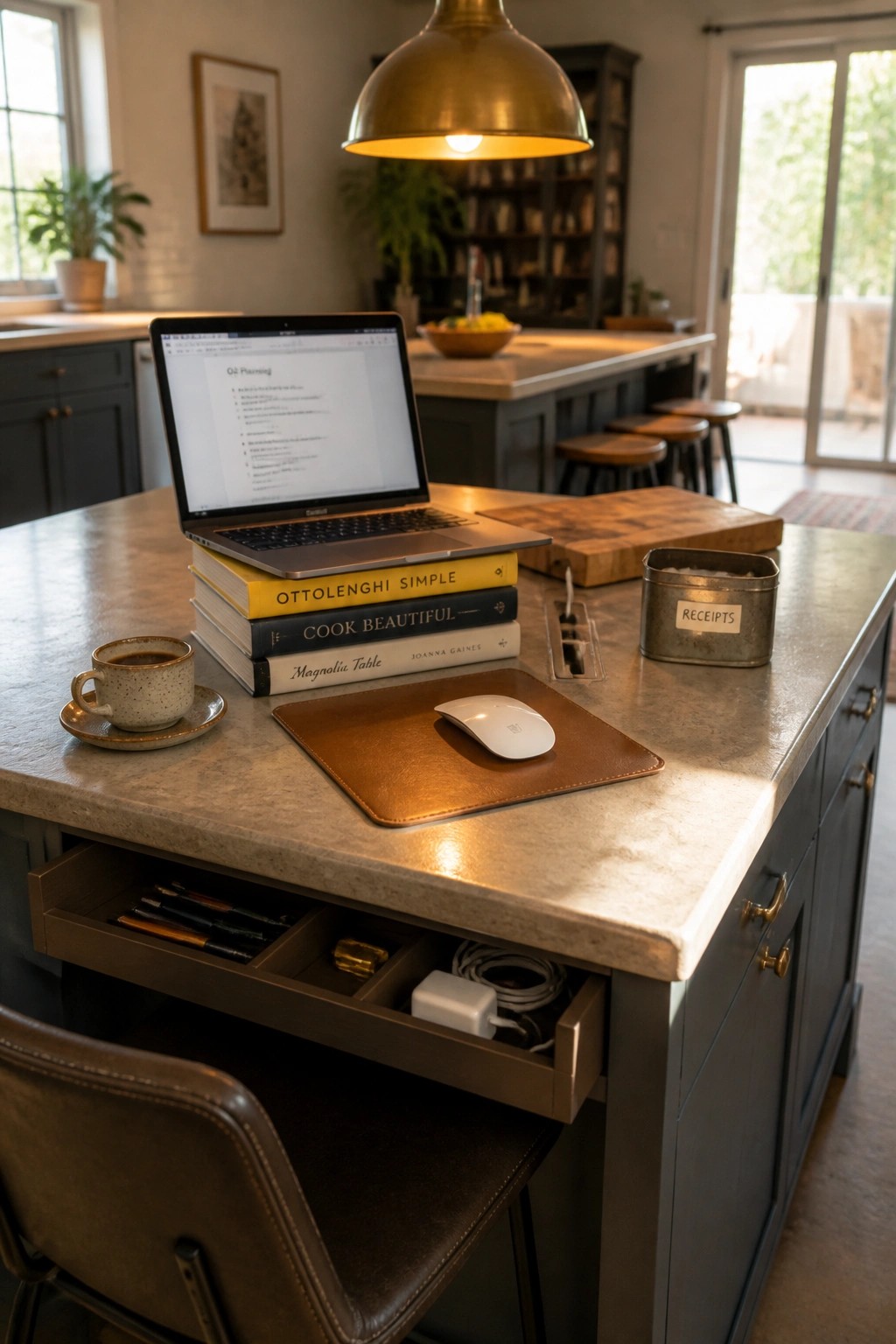
Many homes now use the kitchen island as a spot for quick work sessions. It keeps things efficient because the surface stays mostly clear while supplies stay within reach.
Open a drawer for pens, chargers, and small items so nothing clutters the counter. This setup suits smaller homes or open layouts where a full desk would take up too much space.
Built-In Desks With Overhead Cabinets
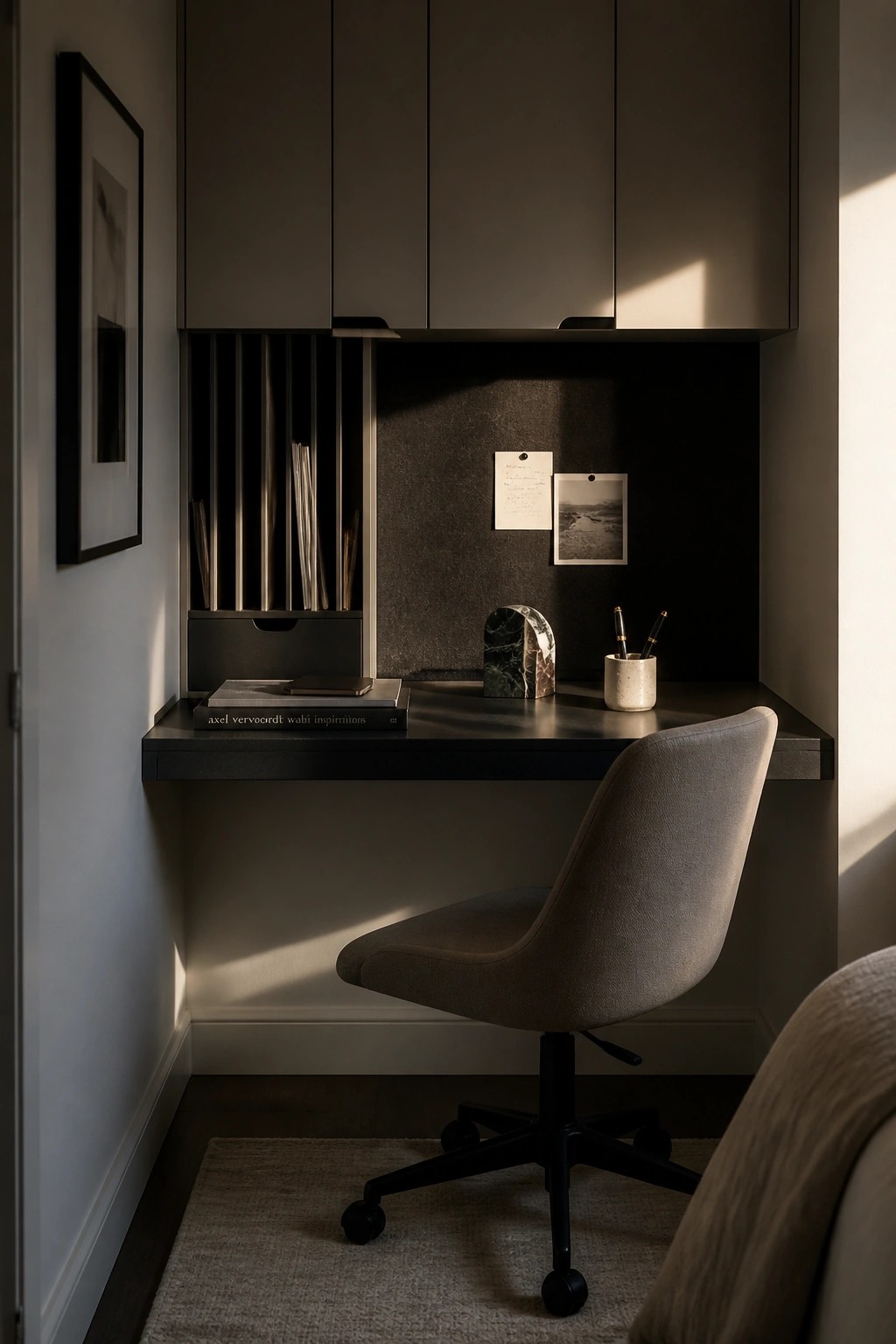
A built-in desk tucked into a narrow alcove with cabinets right above it keeps the work surface clear without needing extra furniture. The vertical storage holds papers and supplies out of sight, which helps the whole spot feel less crowded even when the room itself is small.
This setup works best in hallways, spare corners, or tight bedrooms where a freestanding desk would block movement. It suits apartments or homes that need one focused workspace without taking over the rest of the room. Keep the top mostly empty so the area stays practical day to day.
Labeled Baskets Keep Office Supplies Organized

Open shelves above a desk can quickly turn into a mess if everything is just stacked up there. Labeled baskets solve that by letting you sort items into clear categories so you can grab what you need without digging. It keeps the desk surface clear while still giving you plenty of storage right where you work.
This setup works best in small home offices where space is tight and you want supplies visible but contained. Use sturdy baskets that match the room and label them simply so everyone in the house knows where things go. Just watch that the shelves are not hung too low or they will start to feel like they crowd the workspace.
Built-Ins Keep A Small Desk Area Organized

One useful way to handle a tight work zone is to run built-in shelves and cabinets right behind the desk. This setup gives you storage for books and supplies without adding extra furniture that eats up floor space.
It works best in rooms that already have some wall depth. Set the desk in front so daily items stay within reach, then keep the surface clear except for a lamp and maybe a few essentials. Dark tones on the built-ins help the space feel calm and contained.
Built-In Desk Under Stairs

A desk tucked under the stairs with matching shelves above it turns an awkward corner into a working spot without taking over the rest of the room. The built-ins keep everything in one place so papers and books stay organized instead of spreading across other surfaces.
This setup works best in homes where the staircase leaves a natural open area underneath. Keep the desk surface mostly clear and use the shelves for items you reach for often. A simple chair that slides fully under the desk helps maintain the clean look when the space is not in use.
Open Shelving Keeps Supplies Within Reach

Open shelves along the wall give a small desk plenty of storage without crowding the floor. This layout works well because everything stays visible and easy to grab, which helps the workspace feel less cramped during daily use.
Try grouping items in clear jars or labeled baskets so you can find what you need fast. It suits apartments or spare rooms where built-in cabinets are not an option and you want the desk surface left mostly clear.
Use Wall Shelves Over A Desk For Extra Storage

A small desk can feel much more useful when you add simple shelves above it. This setup keeps books, plants, and supplies off the work surface while still keeping them close at hand. The result is a workspace that stays clear without giving up storage.
This idea works well in apartments or any room where floor space is limited. Hang the shelves at a comfortable height and use baskets or bins on the desk itself for smaller items. Just watch that the shelves do not hang too low and block light or make the area feel cramped.
Long Consoles With Storage Keep Desks Clear

A long low console gives you a place to hide papers, devices, and supplies without crowding the work surface. The raised shelf keeps the monitor at a good height while the main top stays open for a keyboard and mouse.
This layout works best in small home offices that need to stay tidy. Look for one with both drawers and cabinet doors so you can sort items by how often you reach for them.
Built-In Desks That Fit Inside Cabinetry
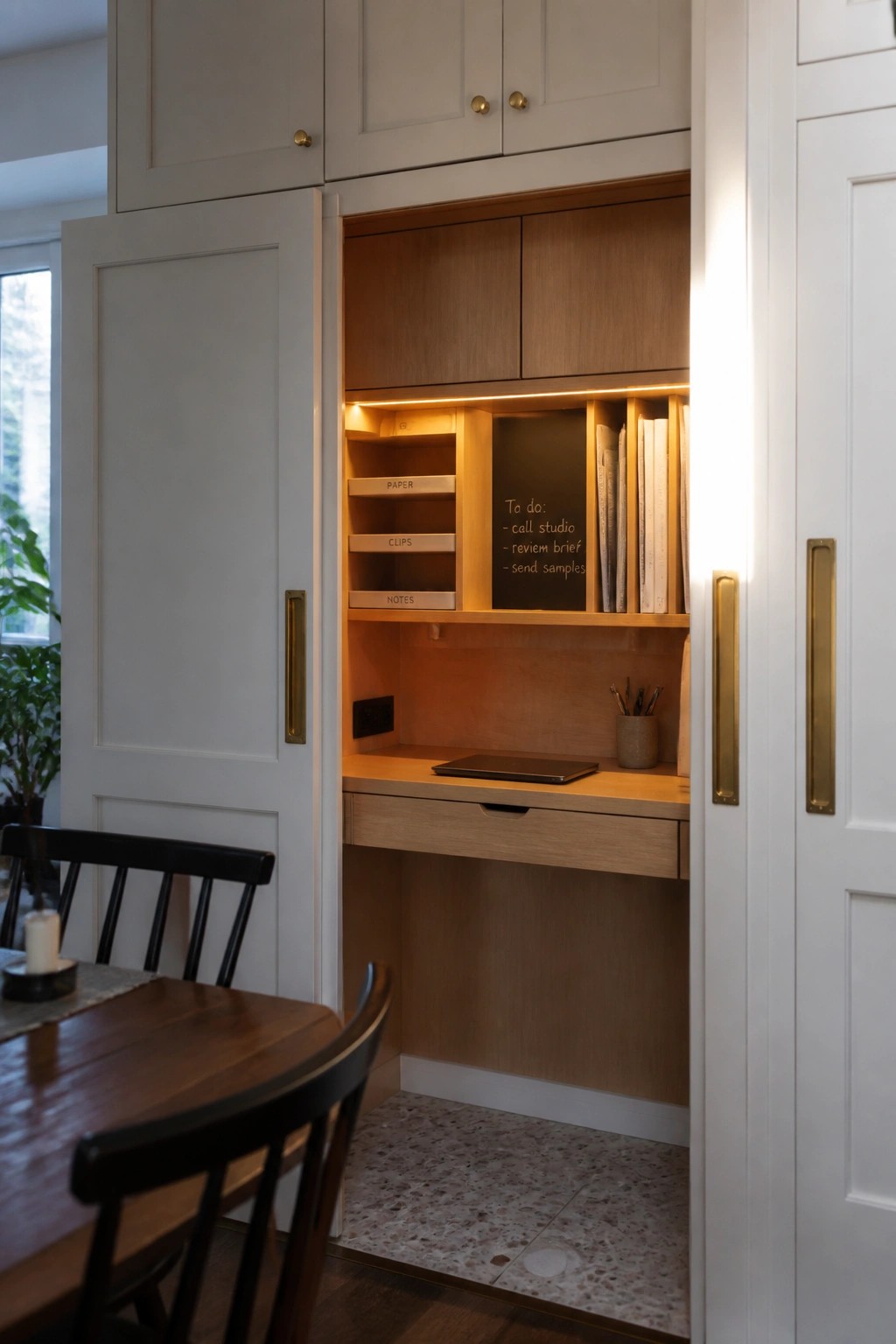
Many homes lack space for a full office, so turning part of a cabinet into a work area solves the problem without adding furniture. The setup stays hidden most of the time, which keeps the rest of the room clear and usable for other things.
This idea suits dining rooms or living spaces where a desk would otherwise crowd the floor. Keep the interior simple with a few shelves and basic lighting so the nook stays practical and easy to close up at the end of the day.
Wall Pockets Keep Small Desks Clear
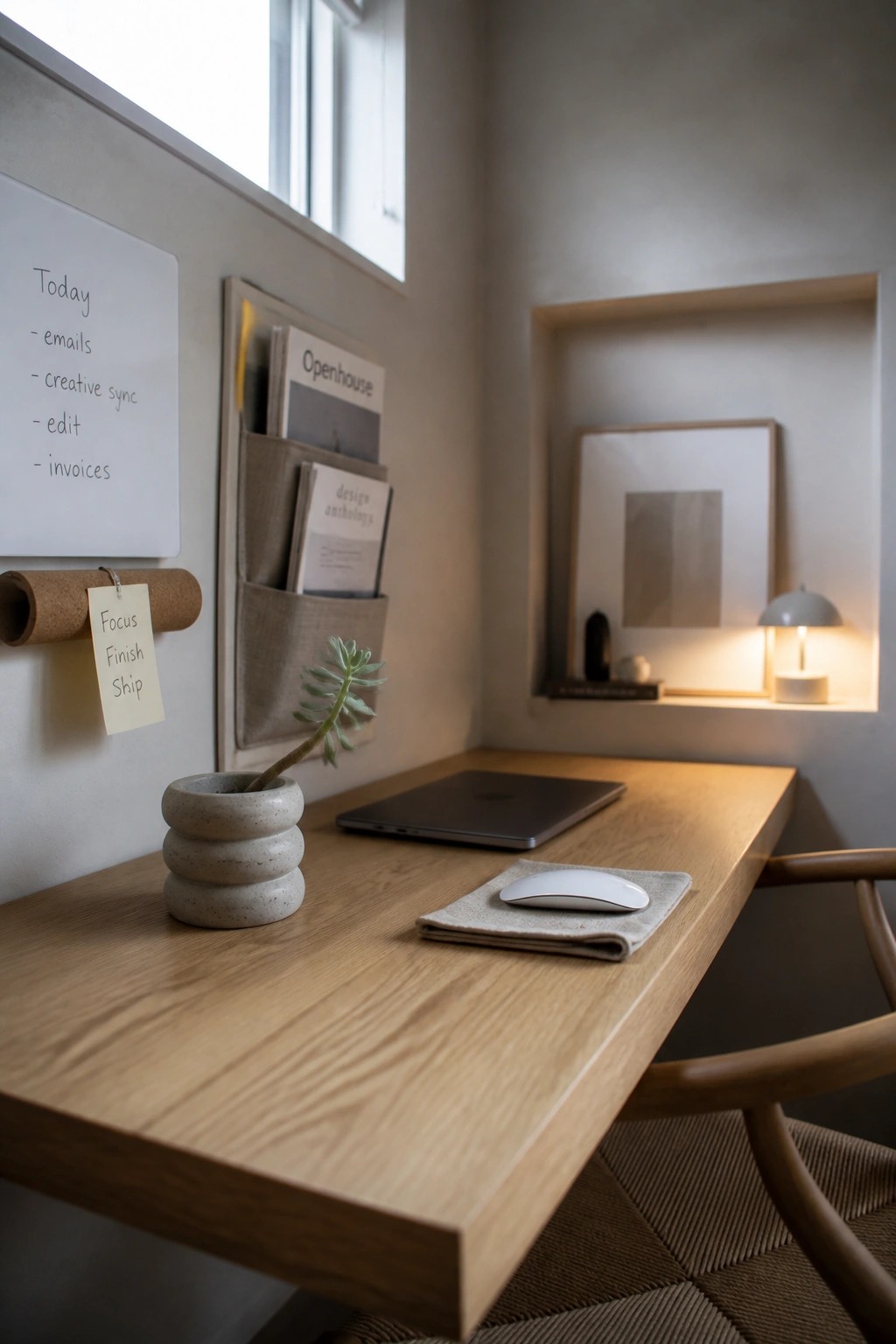
Many people find that moving papers and supplies off the desktop makes a small office feel much more workable. Fabric wall pockets hold magazines and documents without adding clutter, while a simple whiteboard keeps the daily list in view but off the main surface.
This approach suits tight corners or narrow rooms where floor space is limited. Place a recessed niche nearby for a lamp so the desk stays open for just a computer and a few essentials.
Frequently Asked Questions
Q: Where should I put my printer so it does not crowd the desk? A: Place it on a low rolling cart next to the workspace. Wheel it out only when you need it. This frees up the main surface for your computer and notes.
Q: How can I add storage without buying new furniture? A: Use the wall space above your desk for hanging organizers. Stack a couple of sturdy bins under the desk if there is room. You gain spots for papers and supplies right away.
Q: Does the chair really need to match the desk in a small office? A: Focus on comfort and size instead of perfect matches. A simple wooden stool works fine if it fits the height. Your back will thank you during long work sessions.
Q: What if cables still show even after routing them? A: Cover the visible parts with a fabric sleeve that blends with the wall. Keep the power source hidden behind a plant or box. No one notices once you step back from the desk.
