


I have noticed that home offices tend to work best when the layout actually matches how the day unfolds rather than when it follows a set style.
Desk placement near steady light and away from main household paths often decides whether concentration lasts or fades by midday.
Layout choices matter more than most people expect.
Many of the setups here show how simple storage and clear surfaces keep the room from feeling cramped once papers and devices pile up.
I would likely try rearranging my own desk and chair first to see which small shifts improve focus before adding anything new.
Desk in the Bay Window
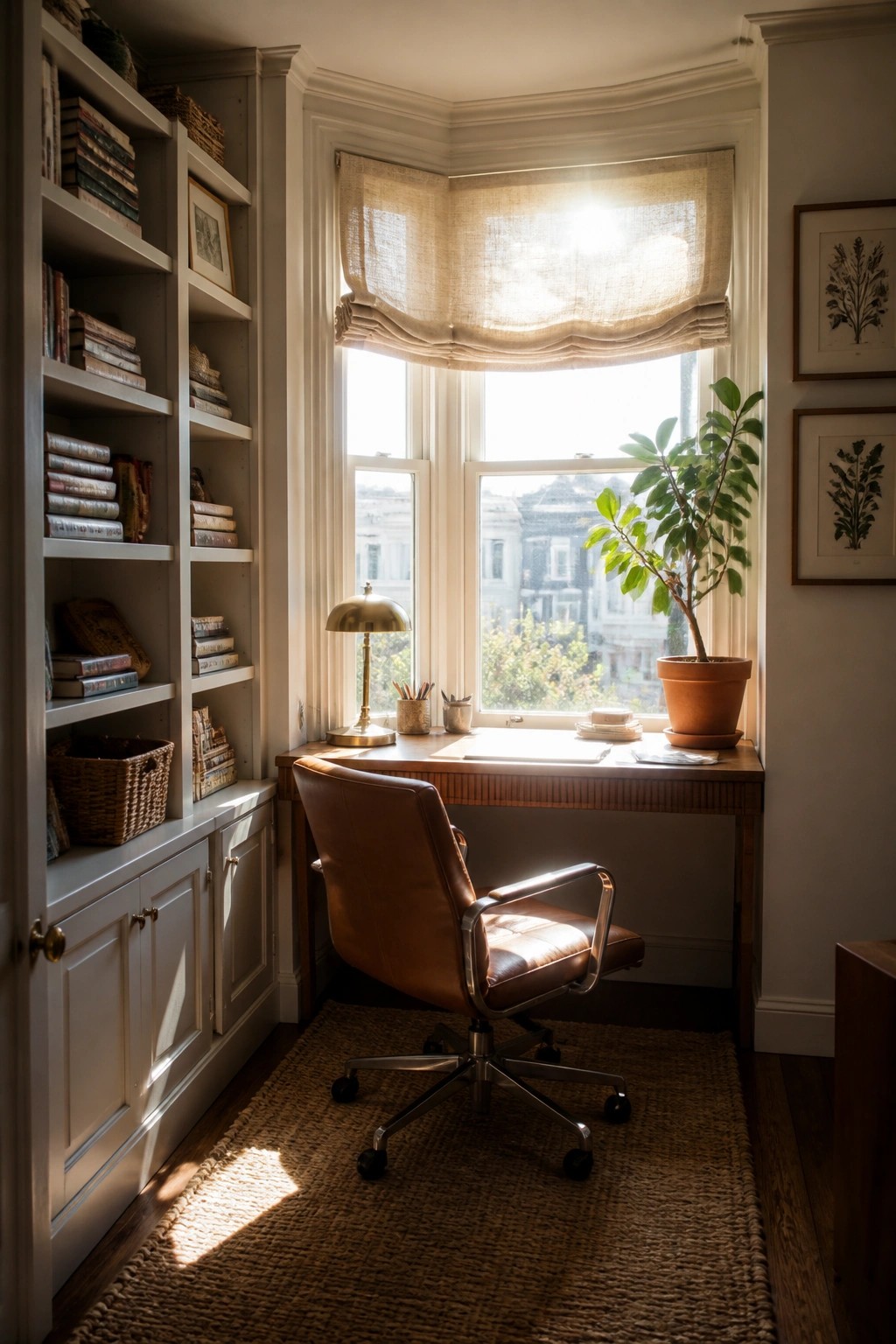
Placing a desk inside a bay window gives the workspace steady natural light from multiple angles. This helps the room feel open and makes it easier to stay focused without needing extra lamps during the day.
The setup works best in smaller rooms or homes where the window becomes the main feature. Keep the desk narrow enough to leave walking space and add simple storage on one side so the area stays practical for daily use.
Floating A Desk Under Sloped Ceilings

A floating desk works well in rooms with sloped ceilings because it follows the angle instead of fighting it. You get a usable surface without losing floor space or creating awkward gaps above the work area. The wood tone and simple front panels keep the whole setup calm and quiet.
This idea suits attic offices or any space where standard furniture would feel cramped. Keep the surface mostly clear and add only what you need each day. A low chair and minimal accessories help the room stay open and easy to move around in.
Turning A Small Alcove Into A Focused Workspace
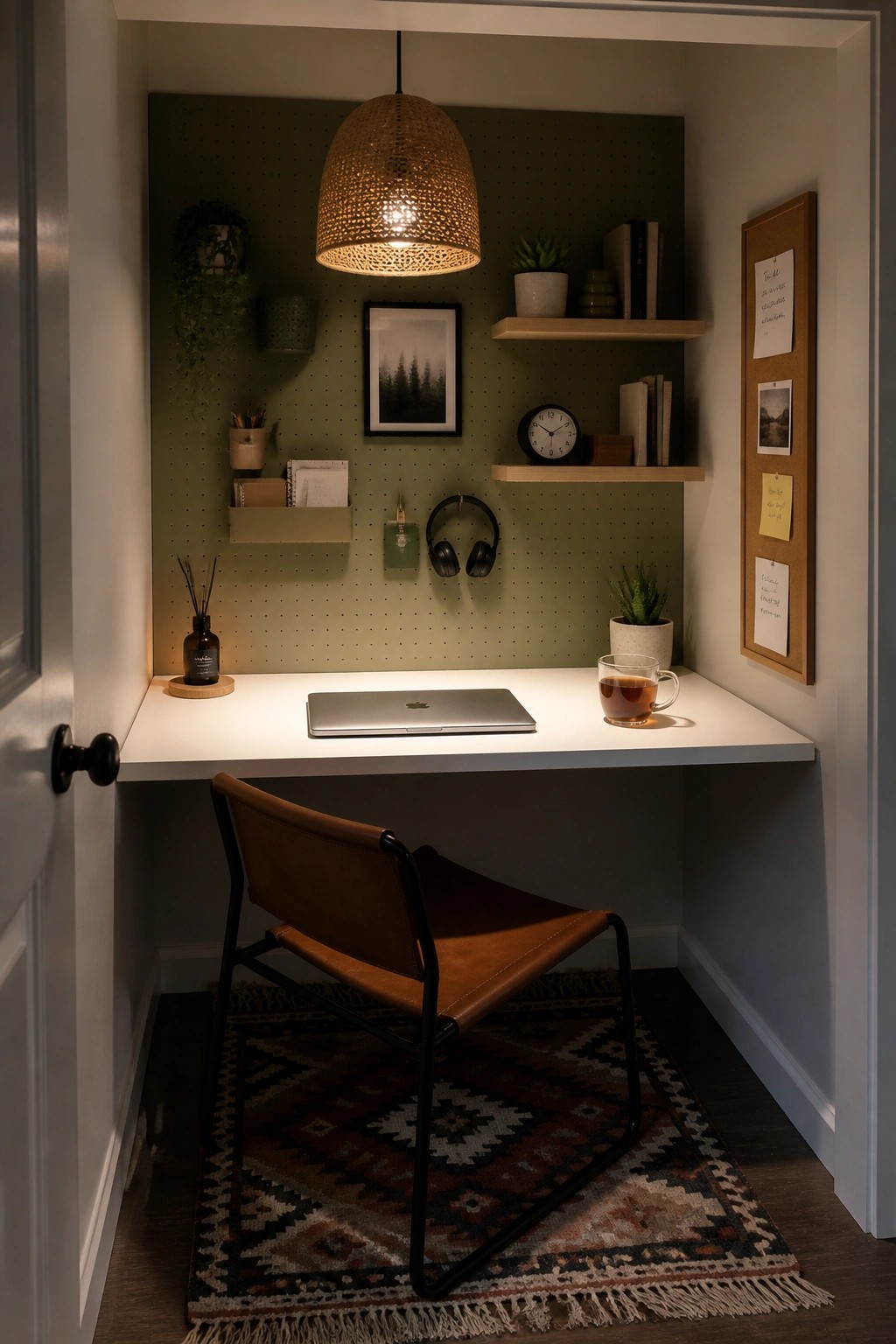
A small enclosed space often helps people stay on task because the walls themselves block out noise and visual clutter. This kind of setup turns an unused closet or narrow nook into a dedicated work spot without needing a full room.
It suits homes that have leftover alcoves or small bedrooms and works best when the desk stays simple and storage stays light. A pegboard or a couple of narrow shelves keep supplies close without crowding the surface.
Position Your Desk Near a Window

Placing the desk beside a window lets natural light handle most of the work during the day. The light keeps the space feeling open and makes it easier to stay focused without turning on extra lamps right away.
This setup works best in rooms where you spend long stretches at the desk. Keep the light coming from the side to avoid screen glare, and use a simple shade if the sun gets too strong in the afternoon.
Desk Placement Near A Window

Putting the desk right by the window lets natural light do most of the work during the day. The setup feels calmer because the light moves across the surface without needing extra lamps on all the time, and it keeps the space from feeling closed in.
This works best in smaller rooms or apartments where you want to avoid bulky lighting. Keep the area around the desk fairly clear so the light stays useful instead of getting blocked by extra pieces.
Natural Textures For A Calm Workspace

A home office feels easier to settle into when the surfaces stay simple and the materials feel familiar. Wood tones, woven pieces, and a bit of greenery help the space feel steady without adding much visual noise.
This approach works especially well in smaller rooms or corners where you want the focus to stay on the work itself. Keep the desk low on details, add just one or two textured accents, and let the natural light do the rest.
Start With a Comfortable Chair

A simple wooden desk can feel complete once you add the right chair. The soft seat and supportive back make it easier to stay put during long work sessions without the stiffness that comes from a hard surface. Many people find this setup keeps the space calm and practical at the same time.
This approach works best in smaller rooms where you want function without extra bulk. Look for a chair with a low back so it does not block light or make the desk area feel closed in. Keep the rest of the surface clear so the focus stays on the task rather than on clutter.
A Floating Desk In A Window Nook
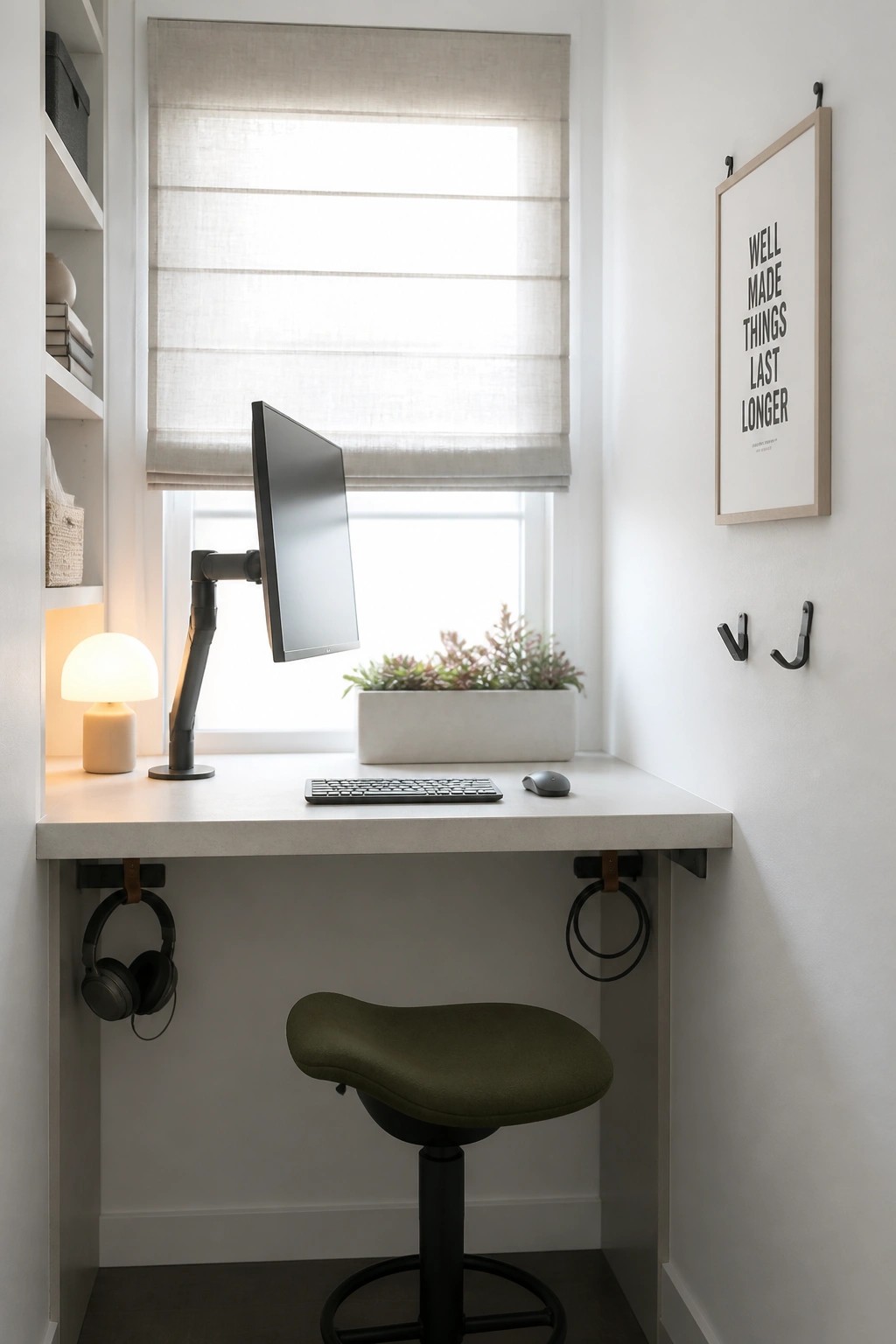
A small floating desk placed right under a window turns an unused corner into a quiet place to work. The setup stays out of the main living area, which helps keep distractions low and focus steady through the day.
This kind of desk works best in apartments or smaller homes where a full room is not an option. Keep the surface clear, hang a simple blind for light control, and make sure the chair fits comfortably underneath so the space stays practical for everyday use.
Roll-Top Desks For Everyday Order

A roll-top desk keeps a home office feeling calm and practical. The cover lets you leave work spread out during the day and close everything away at night without moving a thing.
This setup works best in smaller rooms where you want one piece of furniture to handle both the workspace and the storage. Pair it with a simple chair and a few shelves nearby so the room stays easy to keep tidy.
Desk Placement By A Large Window

Setting the desk right beside a big window brings steady natural light into the workspace. This simple move cuts down on harsh overhead lighting and helps the room feel more open during long work hours.
It suits older buildings or lofts with tall windows already in place. Keep the desk surface clear so the light reaches the whole area, and add a simple rug on the floor if the room has hard surfaces.
Desk Right by the Window

Placing a desk directly in front of a window gives the space a quiet focus that feels natural. The light changes throughout the day, and having a view helps break up long stretches of work without needing to leave the room.
This setup works best in rooms where the view is calm and not too busy. Keep the desk surface mostly clear so the eye can rest on the window instead of clutter. A simple shade lets you control glare when the sun gets strong.
A Central Divider For Two Quiet Workspaces

A structural pillar can turn one small room into two separate work areas without adding walls. It gives each person their own side while keeping the space open and simple. The desks sit on either side, and the pillar blocks direct sight lines so focus stays easier during the day.
This setup works well in narrow rooms or homes where two people need to share an office. Keep the surfaces clear on both sides and use matching task lights so each workstation feels complete on its own. Avoid crowding the middle, since the divider already does the main job of creating separation.
Shelves Right Above the Desk

Open shelves placed directly over a desk give you storage without crowding the floor. The setup keeps books and supplies in view so you can reach what you need without getting up, and the wood tones help the corner feel warmer and more settled.
This works well in older homes or smaller rooms where a full built-in unit would feel too heavy. Keep the shelves at a comfortable height and limit what goes on them to things you actually use during the day.
Dark Walls For A Focused Office
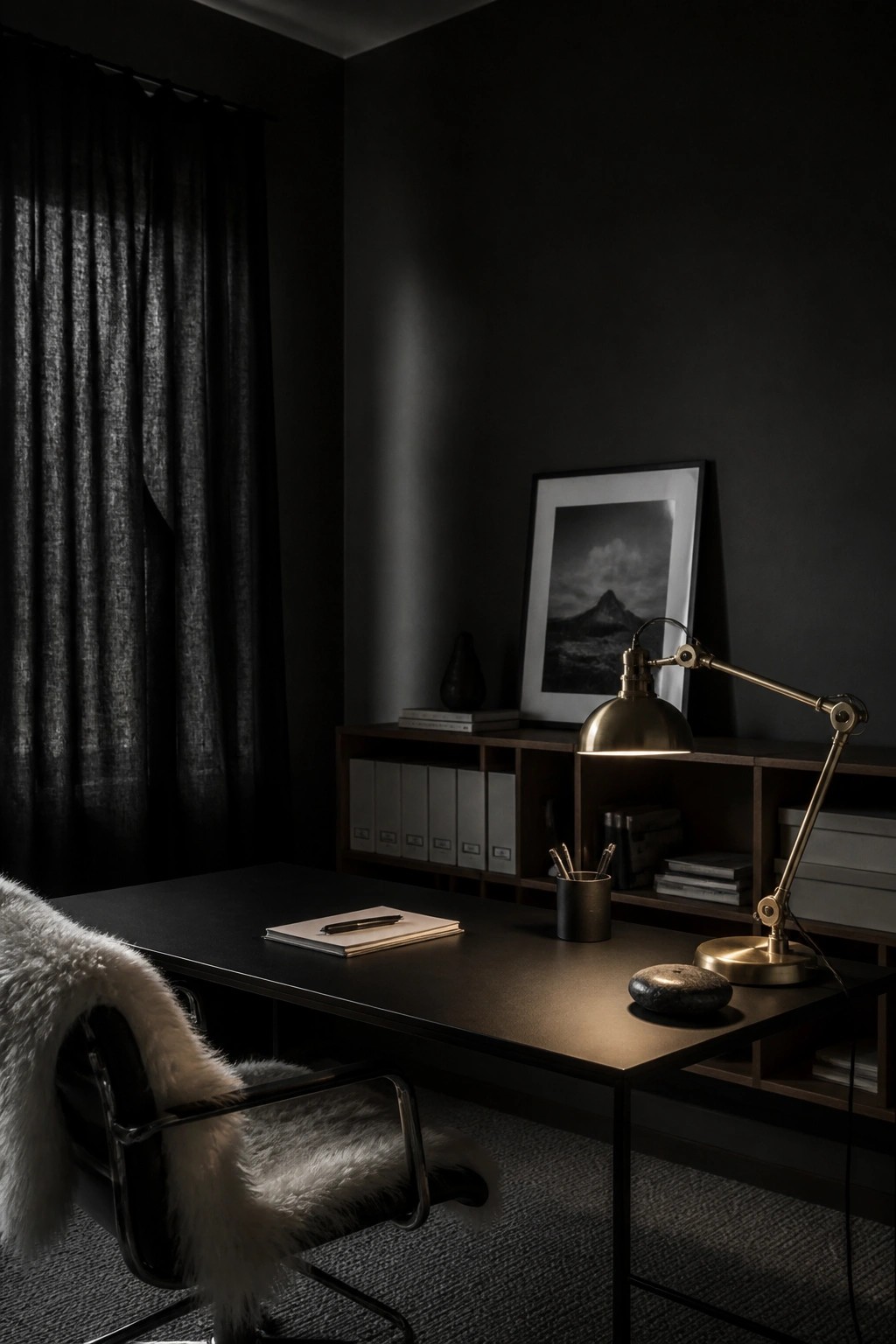
Many people find that painting an office dark helps cut down on distractions. The deep color makes the room feel smaller and more enclosed, which can actually help with concentration during long work sessions.
This approach works best in spaces that already have good task lighting. It suits homes where the office is used mainly for focused work rather than bright creative projects. Keep the furniture simple so the walls do not feel too heavy.
Built-In Shelves That Keep The Office Orderly
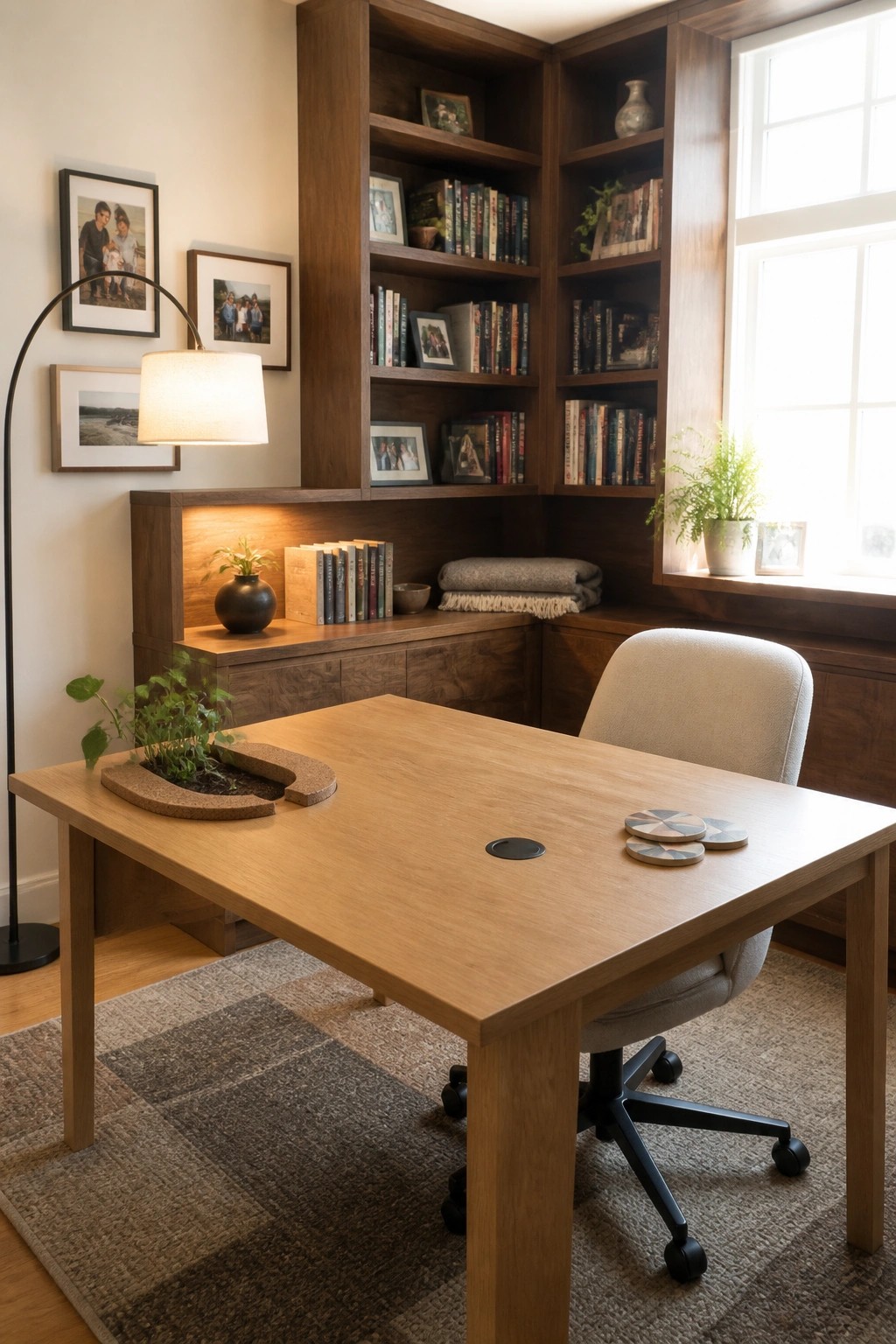
Built-in shelving around a desk gives you room for books, files, and supplies without needing extra cabinets or bookcases that take up floor space. The result is a workspace that feels contained and calm rather than scattered.
This approach works best in rooms where you want the focus to stay on the desk itself. Use the shelves for everyday items you reach for often and keep the desk surface mostly clear so the area stays practical for daily work.
A Sunroom Office Filled With Plants

Many people like the idea of setting up a desk in a bright glass room surrounded by plants. The steady natural light and the presence of greenery help keep the space feeling calm and make it easier to stay focused during a normal workday.
This kind of office works best in homes that already have a sunroom or a similar glassed-in area. Keep the furniture simple, use strong shelves for the pots, and make sure there is enough ventilation so the room does not get too warm.
Console Table With Basket Storage

A console table with open baskets underneath gives you storage without closing off the space. The bench below it turns the whole setup into seating that also keeps supplies close at hand, which works well in a small office that needs to stay simple and calm.
This arrangement suits rooms where you want quick access to papers or supplies but do not want drawers or cabinets that feel heavy. Place it along a wall near a window so the bench can double as a spot to sit and think, and keep the baskets shallow enough that nothing gets buried.
A Simple Wooden Table As Your Desk

A plain wooden table makes a good desk because it gives you a big, open surface without extra fuss. It works especially well when placed near a window so the light falls right on your work area and helps the room feel open during the day.
This setup suits smaller rooms or anyone who wants a straightforward place to focus without built-in cabinets taking up space. Keep the stool or chair low and simple so it tucks away easily when you need the floor clear.
Simple Desk Arrangements That Help With Focus

A mostly empty desk makes it easier to settle into work without feeling pulled in different directions. The long surface gives plenty of room to spread out papers or a laptop, while the lack of extra items keeps the space from feeling crowded.
This approach works best in any room where you need steady concentration rather than a lot of visual stimulation. Use one small lamp for evening tasks and leave the rest of the desk clear so the focus stays on the work in front of you.
Frequently Asked Questions
Q: How do I stop my desk from feeling cramped when the room is small? A: Push the desk against the longest wall and leave the center open. This gives you walking room and keeps the space from closing in during long work hours.
Q: What helps cut down on outside noise without buying fancy panels? A: Hang a thick curtain over the window or door. It softens sound and still fits the simple look of the designs in the article.
Q: Should the chair match the desk exactly for these setups? A: Pick a chair that feels good for hours of sitting instead. The article shows how comfort matters more than perfect matching when you work every day.
Q: How often should I change up the layout once it is set? A: Move one piece every few months if the space starts to feel stale. A small shift keeps the focus fresh without a full redo.
