


I’ve found that a one-room office tends to work best when the layout keeps daily movement simple and avoids crowding the main work area.
In my experience the setups that hold up over time are the ones where storage stays out of the way yet still within reach during a normal workday.
Small changes in desk angle can shift how the whole room feels by midafternoon.
I usually test a new storage idea first in the actual space before committing to it because photos rarely show how the flow changes once papers and equipment are added.
A few of the ideas here line up with what has helped me keep focus without constant rearranging.
Built-In Desks Under Windows
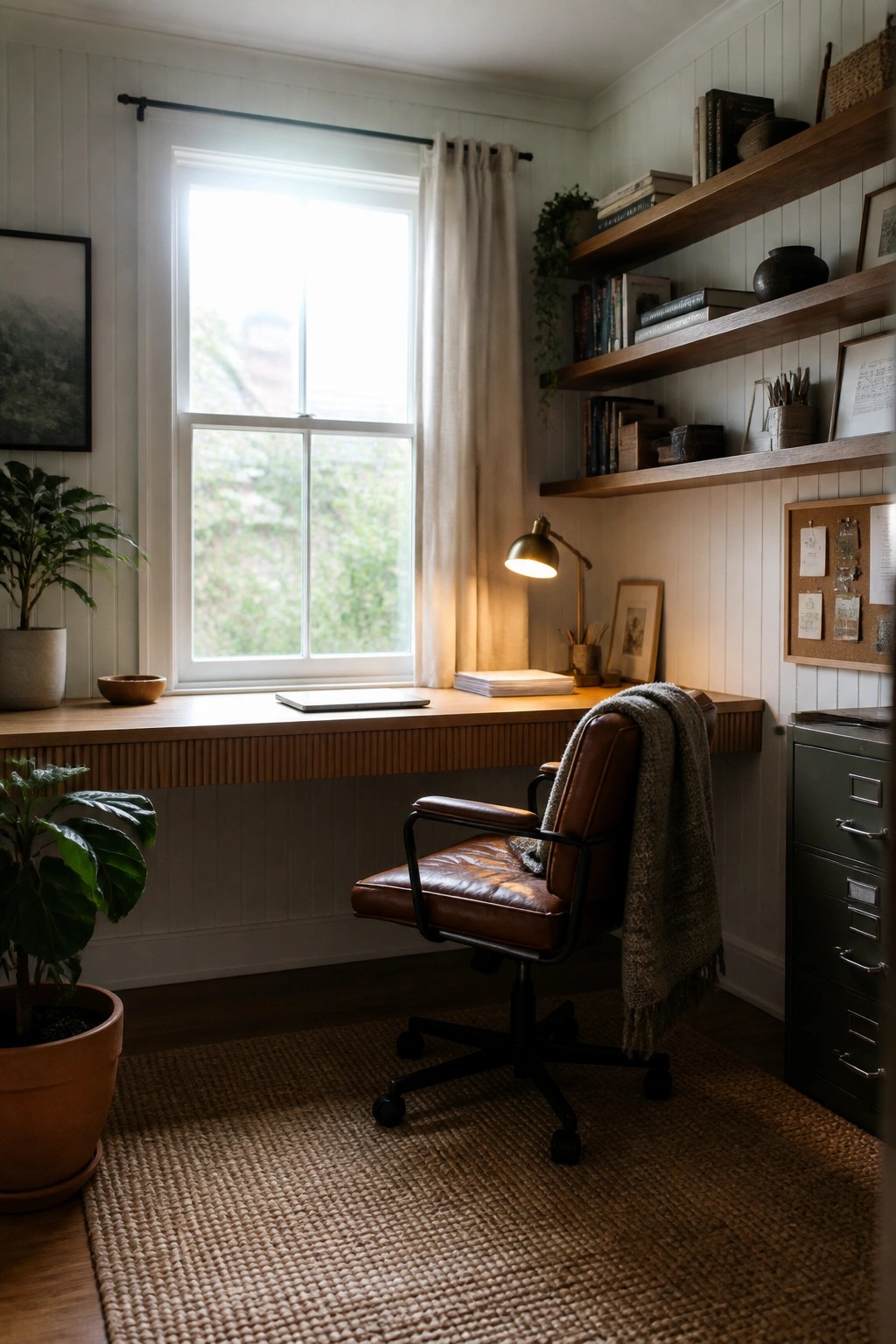
Placing a long desk right under a window gives the room steady natural light without needing extra lamps during the day. It also keeps the floor clear so the space feels less cramped, which helps when you need to focus for hours at a time.
This setup works best in smaller rooms where every inch counts. Add a few wall shelves above or beside the desk for books and supplies, and the whole area stays functional without looking busy. Just watch the chair height so it does not block too much of the lower window.
Pair Your Desk With Matching Storage

Placing a low filing cabinet right beside or under the desk keeps everyday supplies and papers within arm’s reach. This setup cuts down on extra trips across the room and helps the workspace stay clear for actual work instead of piles of clutter.
It works especially well in smaller offices where floor space is limited. Match the cabinet finish to the desk so the two pieces read as one unit rather than separate furniture. Make sure the cabinet height lines up with the desk so you can still slide the chair in close without bumping into drawers.
Add a Whiteboard for Daily Task Tracking
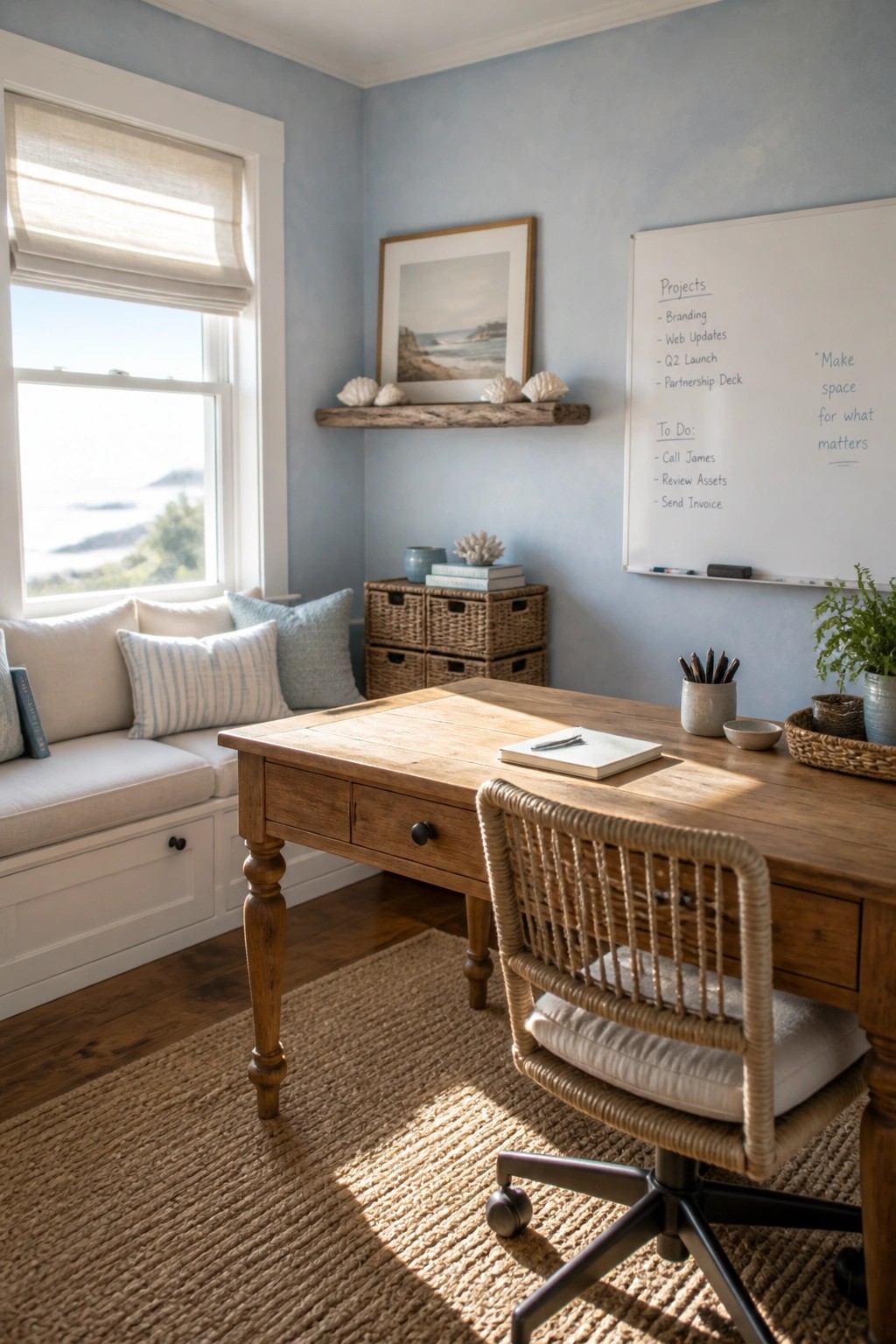
A whiteboard on the wall keeps projects and reminders visible without adding clutter to the desk. It works especially well in a one-room office where you need quick access to your list while staying focused on the work in front of you.
Mount it at eye level near your main workspace so you can update it easily. This setup suits smaller rooms or homes without a separate office, and it helps when you want to keep both digital tools and simple analog notes in the same area.
Low Desk With Floor Seating

A low desk paired with a simple floor cushion keeps the workspace feeling open and calm. Many people notice they sit more upright and stay focused longer when the setup stays close to the floor instead of using a standard chair and tall desk.
This works best in smaller rooms or homes that already use natural materials. Keep the rest of the furniture minimal so the low profile does not feel cramped, and choose a firm cushion that supports your posture for several hours.
Hide A Workspace Inside A Closet

A closet can become a practical spot for focused work when the desk folds down and everything stays contained behind doors. This setup keeps the rest of the room clear while still giving you a proper surface, lighting, and storage for daily tasks.
It works especially well in smaller homes or shared spaces where a full room is not available. Mount a pegboard on the back wall for jars and supplies, add a couple of narrow shelves, and keep the desk surface simple so papers do not pile up when the door closes.
Corner Desk With Wall Shelves For Storage

Placing a desk in the corner and adding open shelves above a low cabinet nearby gives you extra storage without crowding the floor. This keeps the work surface clear while putting books and supplies within reach, which helps the room feel more organized and easier to use every day.
It works best in smaller spaces where you need both a solid desk and room for files or reference materials. Keep the shelves at a reasonable height so they do not block light from a nearby window, and choose a depth that does not push the chair too far out into the room.
Add a Ladder Shelf for Vertical Storage

A ladder shelf works well in a small office because it gives you extra room for books, plants, and frames without crowding the desk surface. The open frame keeps the space feeling light while still holding quite a bit.
Place it against a blank wall near your workspace so everyday items stay within reach but off the main surface. It suits rooms that lack built-in storage and works best when you keep the shelves from getting too packed.
Built-In Storage Keeps A Small Office Organized

Built-in cabinetry works well when a bedroom doubles as an office. Tall units along one wall give plenty of room for files, boxes, and supplies without eating into floor space. Open shelves make it easy to grab what you need, while lower drawers hide the rest.
This setup suits apartments or guest rooms where the same space must handle sleep and work. Keep the desk surface clear by storing most items behind doors or in labeled bins. Avoid filling every shelf, or the room can start to feel crowded.
Wall Shelves Free Up Desk Space

Wall shelves above a desk give you a place to keep books, files, and a few decorative pieces without crowding the work surface. This setup works especially well when the room has to handle both focused tasks and everyday storage needs.
It suits smaller offices or spaces that double as something else during the day. Just keep the shelves from getting too full so the area still feels calm rather than busy.
A Large Desk With Storage Right At Hand

A big work surface gives you room to spread out without the desk feeling crowded. In a one-room office this helps keep your focus on the current task instead of constantly moving things around to make space.
Place wall shelves or cubbies above the desk, add drawers underneath, and keep a rolling cart nearby for supplies you use often. This mix works best in smaller homes where the office shares space with other daily activities.
Create A Private Office In A Compact Nook
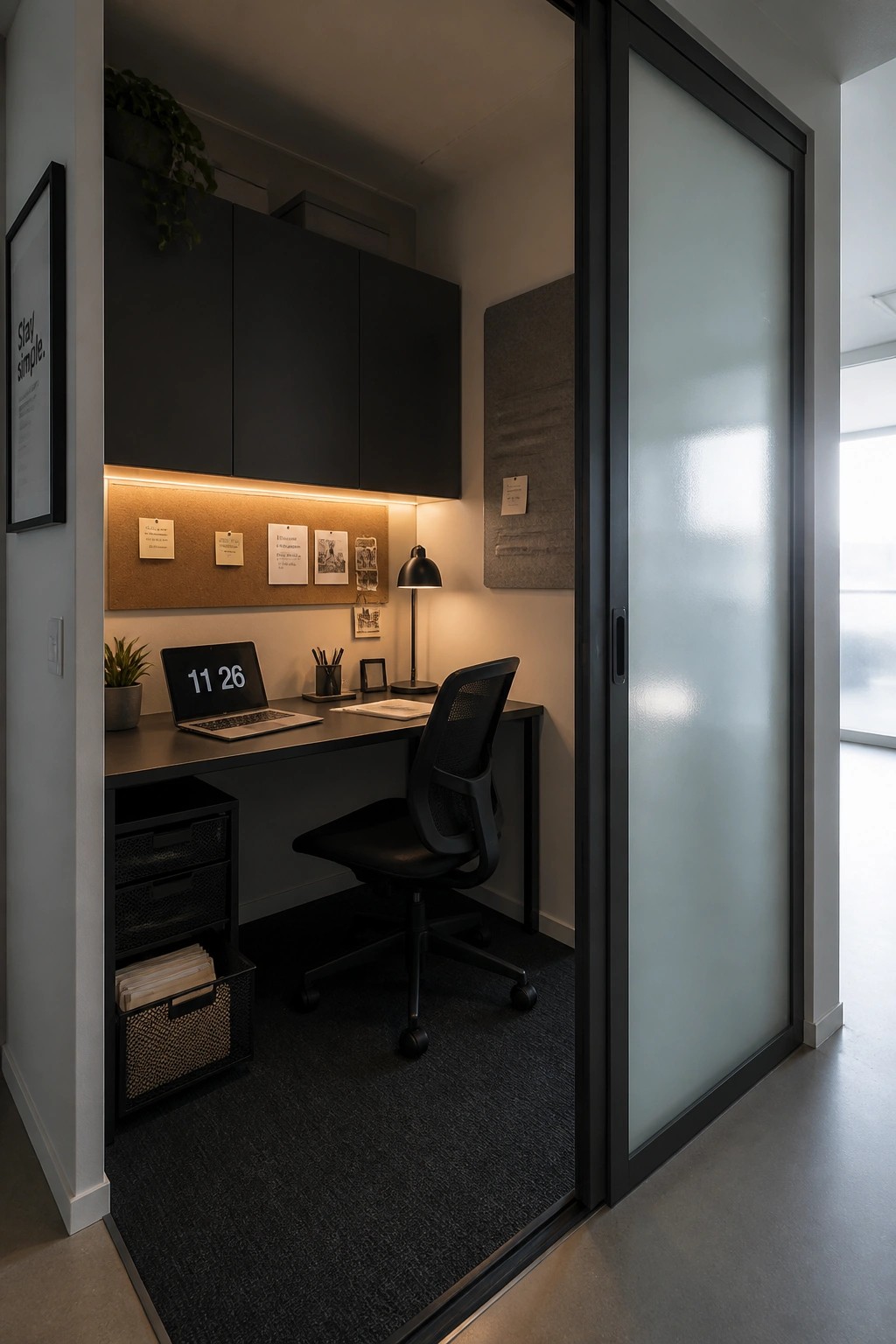
A small enclosed area can become a dedicated workspace when you add a sliding door and some overhead storage. The door lets you close everything off at the end of the day, which helps keep the rest of the room from feeling like an office all the time.
This setup works best in apartments or homes where a full room is not available. Vertical cabinets above the desk and simple under-desk bins keep supplies close without taking up floor space. Just make sure the door has some light transmission so the area does not feel too closed in during work hours.
Built-In Bookshelves With A Rolling Ladder

Built-in shelves turn an ordinary office wall into useful storage without crowding the floor. They hold books, binders, and supplies in one place, which helps keep the desk clear for actual work.
A rolling ladder makes the top shelves reachable and works best in rooms with taller ceilings. This setup suits smaller homes where the office needs to double as a library or filing area. It also adds a bit of character that feels more permanent than freestanding bookcases.
Use a Skylight to Light an Attic Office
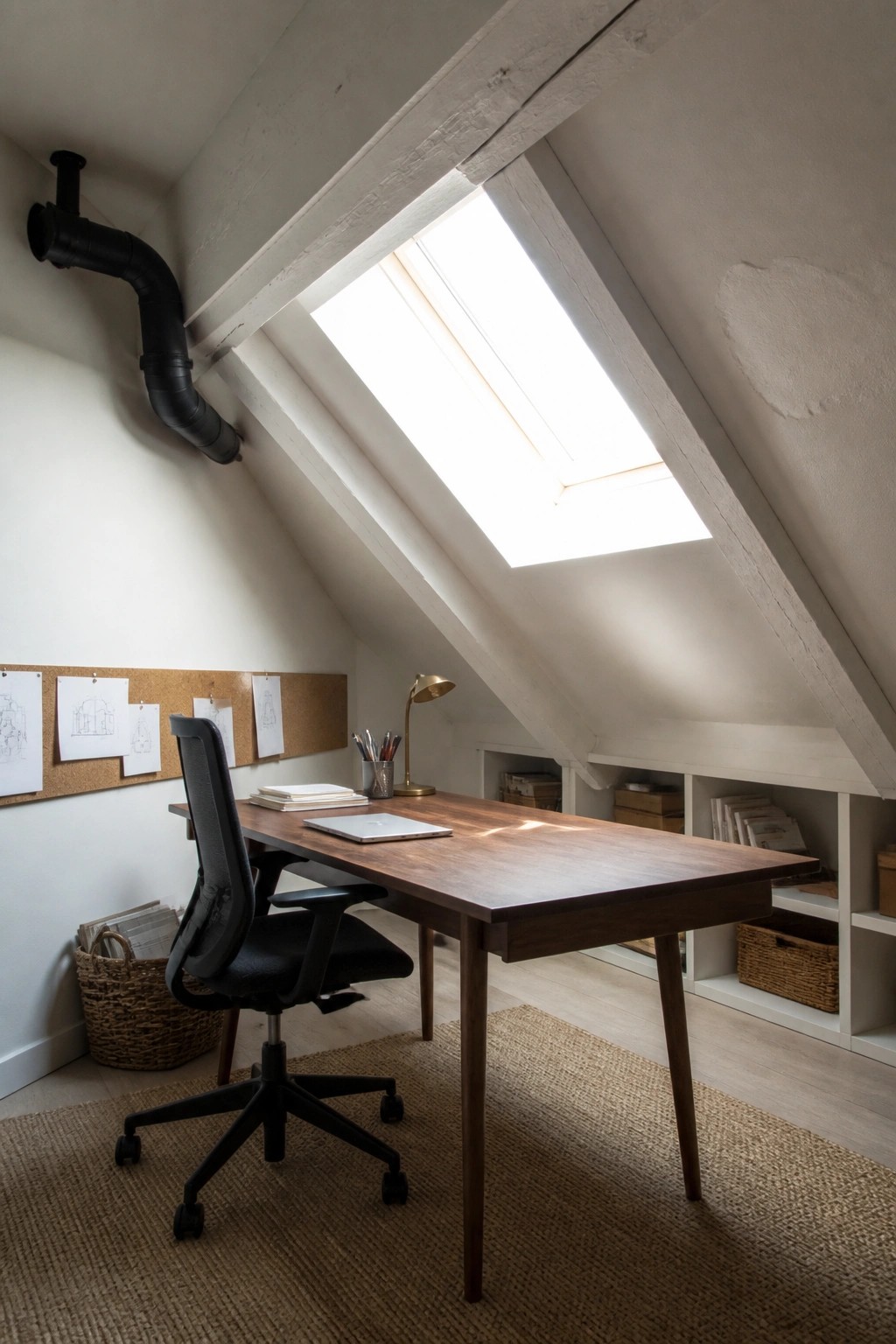
Many attic rooms feel dark and cramped, but a skylight right over the work area changes the feel completely. Natural light comes straight down onto the desk, which helps with focus and keeps the space from feeling closed in even when the ceiling slopes.
This setup works best in homes where the attic has decent headroom and can be insulated properly. Keep the desk clear of clutter so the light stays useful, and add a simple task lamp for evenings when the sun goes down.
Glass Walls To Define Your Office Area

Glass walls work well when you want a dedicated workspace without cutting off the rest of the room. They create a clear boundary that helps with focus while still letting light move through the space and keeping things from feeling boxed in.
This approach suits homes where the office sits near living areas or hallways. You can add a row of plants along the base of the glass if you want a bit of softness without blocking the view. Just keep the rest of the room simple so the separation stays effective.
Place The Desk By A Window

Natural light changes how a workspace feels and how long you can stay focused. Setting the desk right in front of a window brings in steady daylight, cuts down on eye strain, and gives a calm view when you need a quick pause.
This works best in smaller rooms or shared spaces where artificial lighting can feel harsh by midday. Keep the sill fairly clear so the light stays open, and add just a few plants if you want a bit of greenery without blocking the view.
Mount Monitors On The Wall For A Cleaner Desk

A wall of monitors keeps your main work surface open and makes it easier to track multiple programs or data sets at once. The blue backlighting behind the screens also helps reduce eye strain during long hours.
This approach works best in a dedicated office space where you can run cables neatly and adjust the height for your chair. Tuck storage bins under the desk to hold extra supplies so the top stays clear for daily tasks.
Peg Rails Keep Tools And Supplies Within Reach

A peg rail mounted above a desk gives you a simple way to store the things you use every day without crowding the work surface. It works especially well in a one-room office where space is limited and you need quick access to items like cords, notebooks, or small tools. The rail keeps everything visible and easy to grab while the desk itself stays clear for actual work.
This setup suits homes with a more rustic or practical style and works best when you choose a rail long enough to hold what you reach for often. Place it at a comfortable height so you are not stretching, and use sturdy hooks that can handle the weight of whatever you plan to hang. Avoid overloading it, or the look can quickly turn cluttered.
Anchor The Office With A Live Edge Desk

A big live edge wood desk gives the whole room a grounded feel that helps with focus. The natural grain and solid shape stand out without needing much else around it, and the surface has plenty of room for daily work without feeling cramped.
This kind of desk works best in smaller or medium home offices where you want one strong piece to carry the space. Pair it with simple storage nearby so papers and supplies stay close but out of the way, and keep the rest of the room light so the wood stays the main feature.
Fold-Down Desk Fits Into A Storage Wall
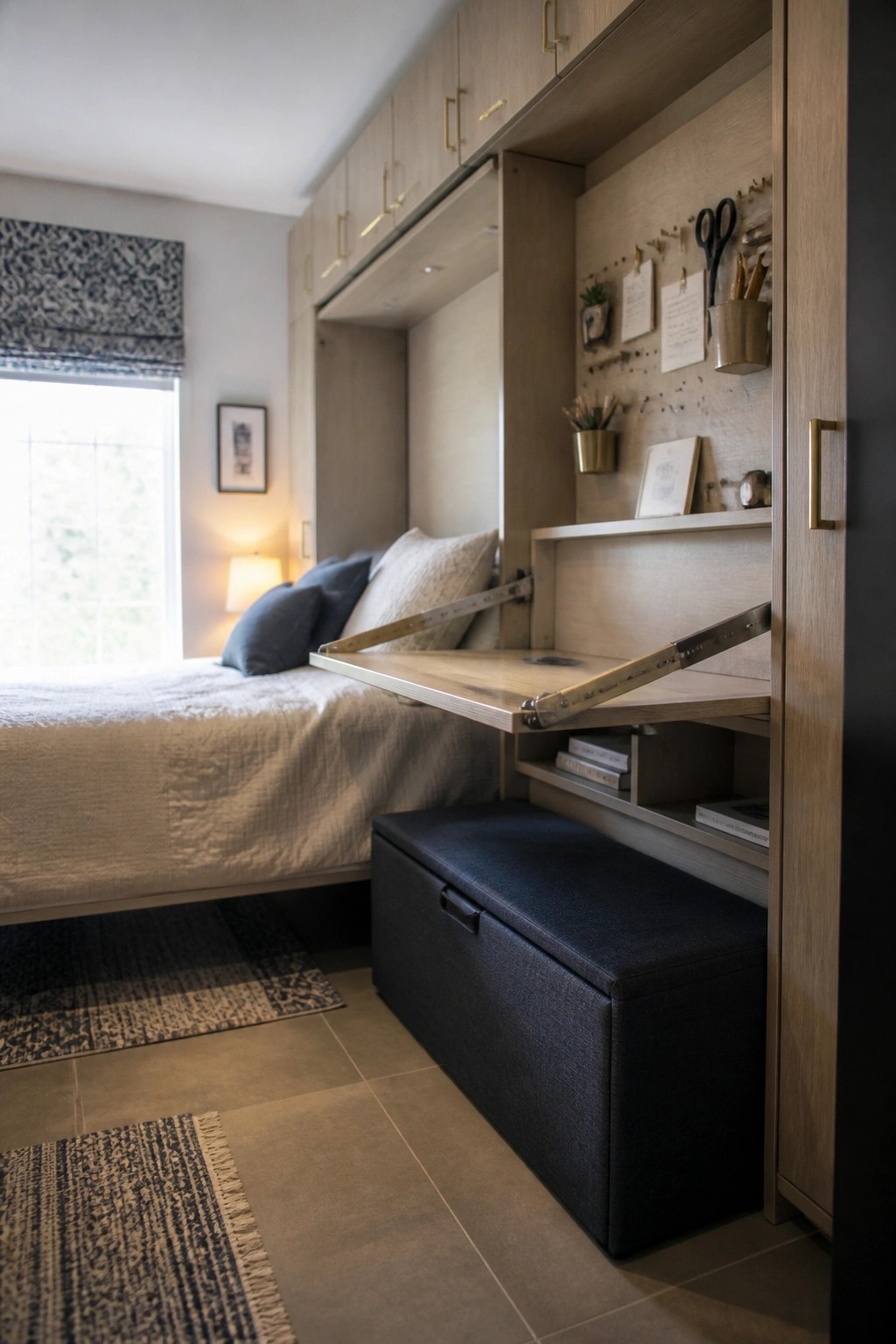
A fold-down desk built into a wall unit gives you a real workspace without taking over the room when it is not needed. It works especially well in bedrooms or guest rooms that double as offices since the desk can stay hidden most of the time.
This idea suits smaller homes where floor space matters. The surrounding shelves and compartments keep supplies close by, and the whole unit can be sized to match the room so it feels like part of the furniture rather than an added office.
Long Desk With Base Cabinets
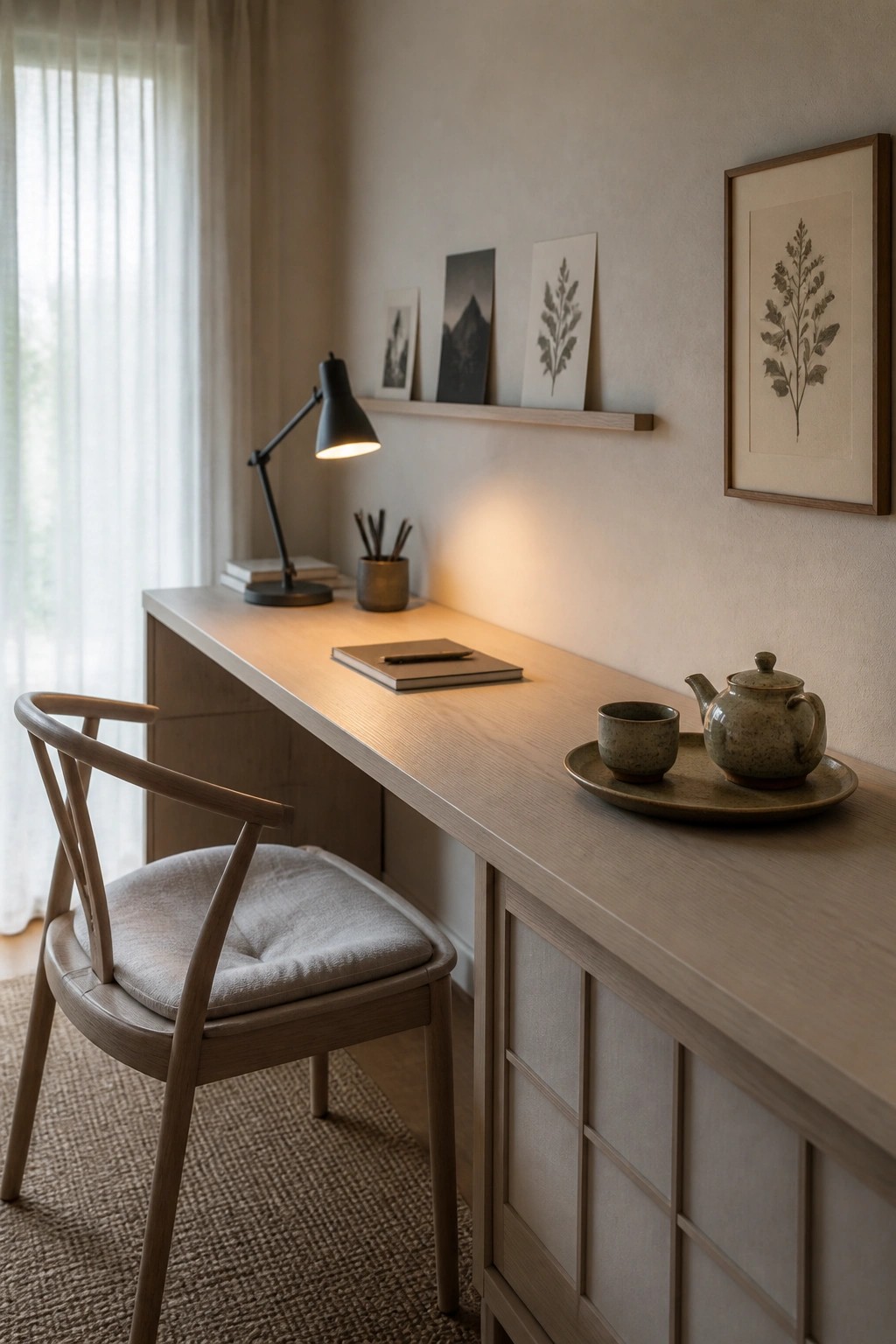
A long desk with cabinets built right underneath gives you a solid work surface and hidden storage in one piece. This keeps the room from feeling crowded while still offering places to tuck away papers and supplies.
It works best in smaller rooms or spaces that need to serve more than one purpose. The cabinets stay out of the way but keep daily items within reach so the top of the desk stays clear for actual work.
Fit a Desk into a Narrow Hallway Alcove

A narrow hallway spot can work well as a simple office when you keep the layout tight and focused. The vertical wood slats on the back wall add texture without crowding the space, while a slim desk and tucked stool leave the floor clear for easy movement. Wall pockets on the side hold papers and supplies so nothing spills onto the work surface.
This setup suits homes where a full room is not available. It works best when the desk fits the width exactly and the lighting stays low and direct. Avoid filling the area with too many extras, since the main goal is a quiet place to sit and work without distractions.
Built-In Shelving That Keeps An Office Organized

Built-in shelving and cabinets give a home office steady storage without adding extra furniture that eats up floor space. The shelves sit right above the desk area so books, supplies, and small items stay close but still look tidy.
This approach suits smaller rooms or any space that needs to stay calm during the workday. Match the cabinet color to the walls so the whole wall reads as one clean unit instead of separate pieces.
Frequently Asked Questions
Q: How do I stop work from spilling into my relaxation time in the same room?
A: Create a shutdown ritual like covering the desk or turning off specific lights. This signals the end of the day without needing separate rooms. Stick with it for a week and it becomes automatic.
Q: What storage tricks work best when you have limited floor space?
A: Mount shelves above the desk for papers and supplies you use daily. Tuck less used items into rolling carts that slide under or beside furniture. Keep only the essentials visible to maintain focus.
Q: My desk faces the bed and it kills my concentration. Ideas?
A: Rearrange to face a window or blank wall instead. But test a few setups first to see what fits your flow. The change often makes a big difference in how long you stay on task.
