

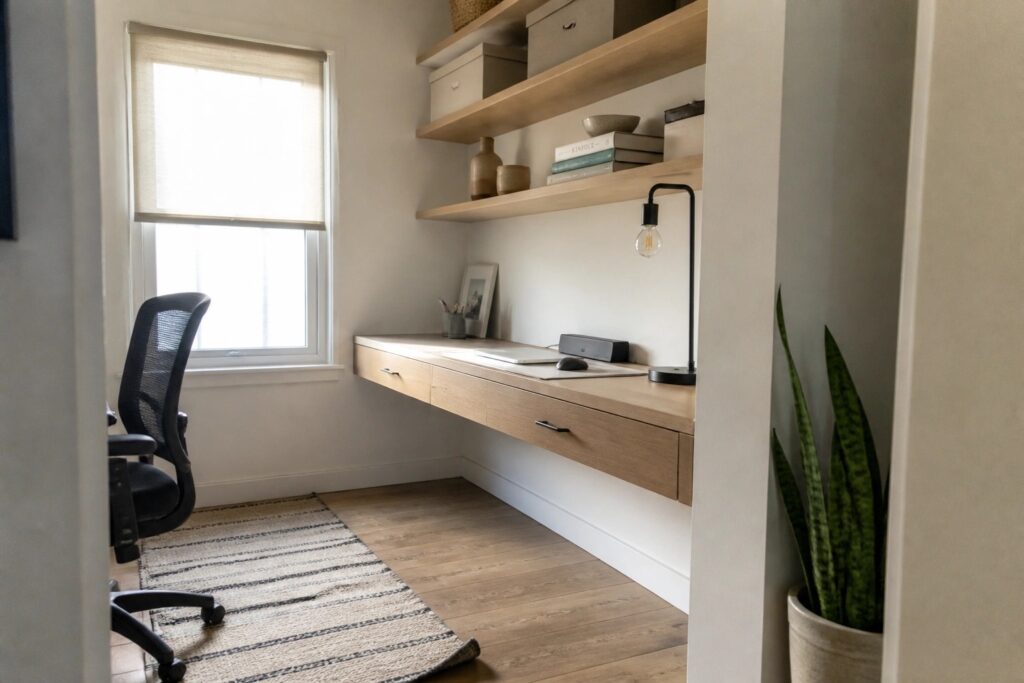
I have noticed that an office only stays usable when the basic plan matches how I actually move from chair to shelf and back again during a normal workday.
Papers and cords pile up fast if there is no built-in spot for them right where I reach most often.
A few small plan changes can stop that buildup before it starts.
I like to walk through my own routine with any new layout in mind before I commit to it.
That step shows me which ideas will hold up once the week gets busy.
Add Storage Right Beside The Desk
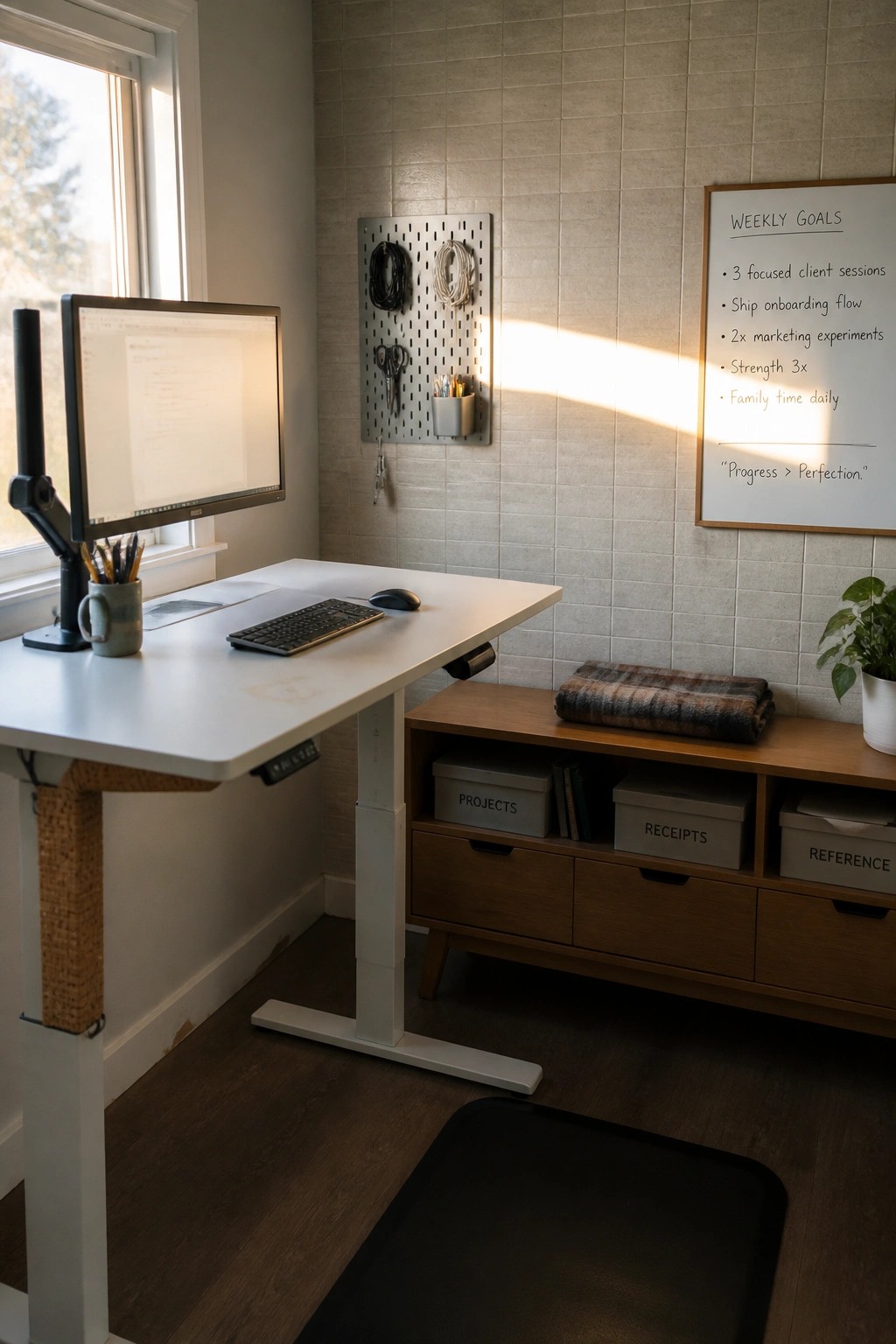
A low cabinet placed next to a standing desk gives you extra surface space without crowding the main work area. It also hides away papers and supplies so the desk itself stays clear for daily use. Many people find this setup helps them keep the room feeling open even when they have quite a few things to store.
This works especially well in smaller home offices where floor space is limited. Choose a cabinet that sits at a comfortable height so you can reach what you need without standing up from the desk. Keep the top mostly clear except for a few items you use often.
Built-In Workspaces That Close Away
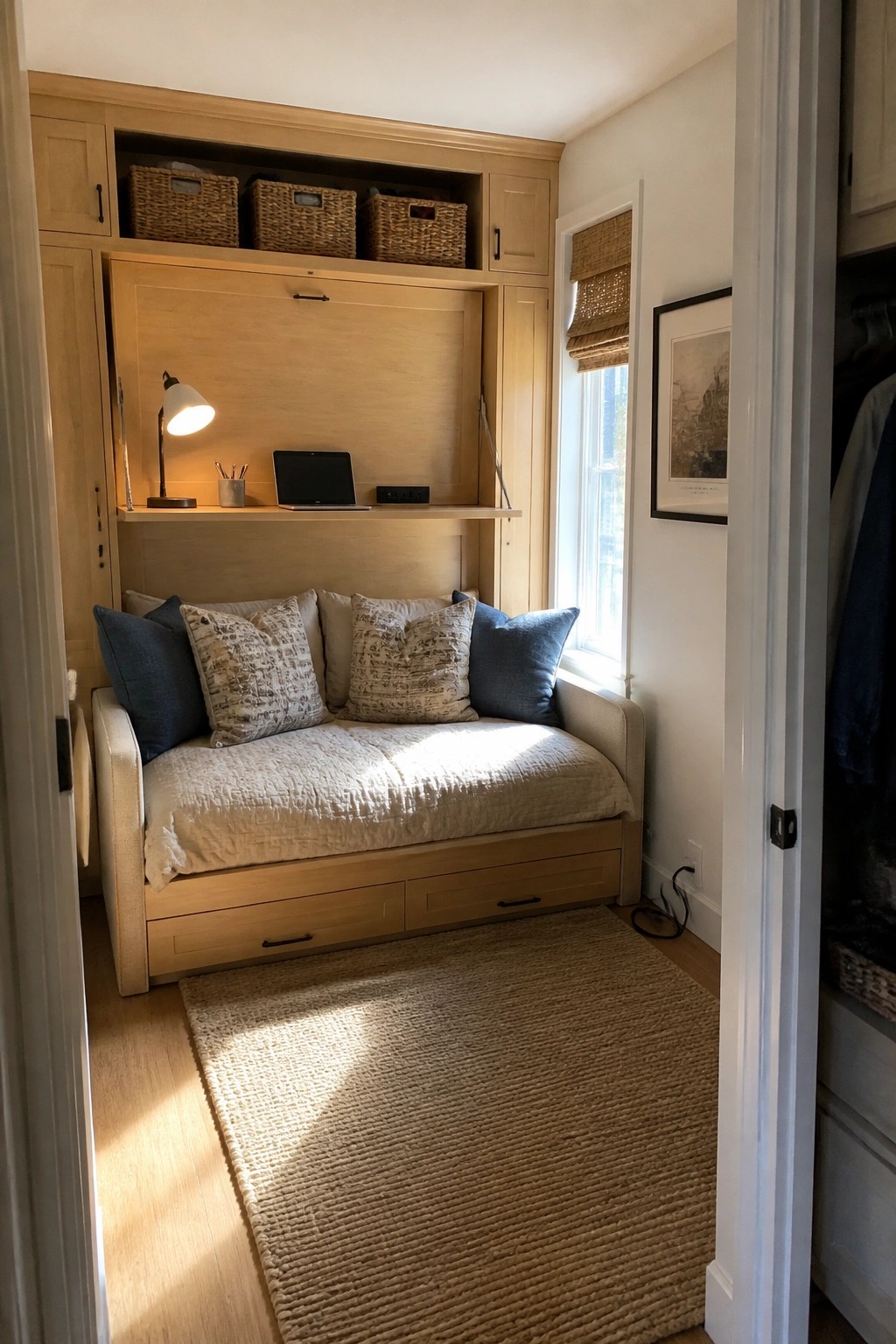
One useful way to keep an office from cluttering up a room is to build the workspace into cabinetry that can shut when the day ends. A fold-down or enclosed setup lets you tuck the desk, laptop, and supplies out of sight without needing a separate room. It works especially well in smaller homes where space has to serve more than one purpose.
Add storage drawers below a daybed for files or extra supplies, and keep the upper cabinet simple so it blends with the rest of the room. This kind of built-in suits guest rooms or multi-use spaces that need to look calm once work is done.
Built-In Storage Keeps An Office Tidy
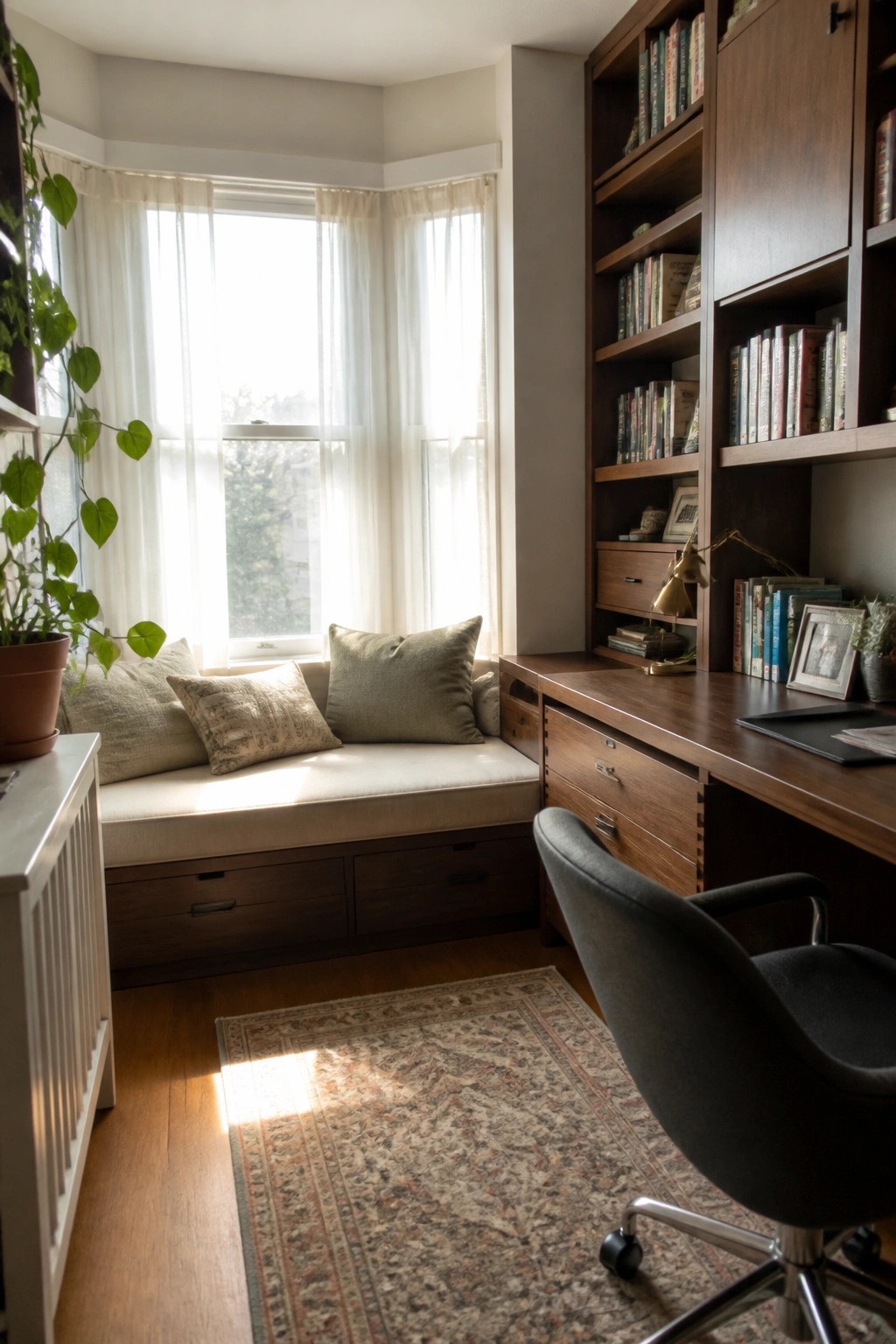
Built-in desks with drawers and shelves help an office stay cleaner because everything has a place right at hand. Papers, books, and supplies go into the unit instead of piling up on the work surface or floor.
This approach suits smaller rooms or corners where freestanding furniture would crowd the space. It works best when the built-ins run along one wall and make use of under-window storage too, so seating and organization happen in the same area without extra pieces.
Built-In Storage Keeps A Desk From Getting Cluttered
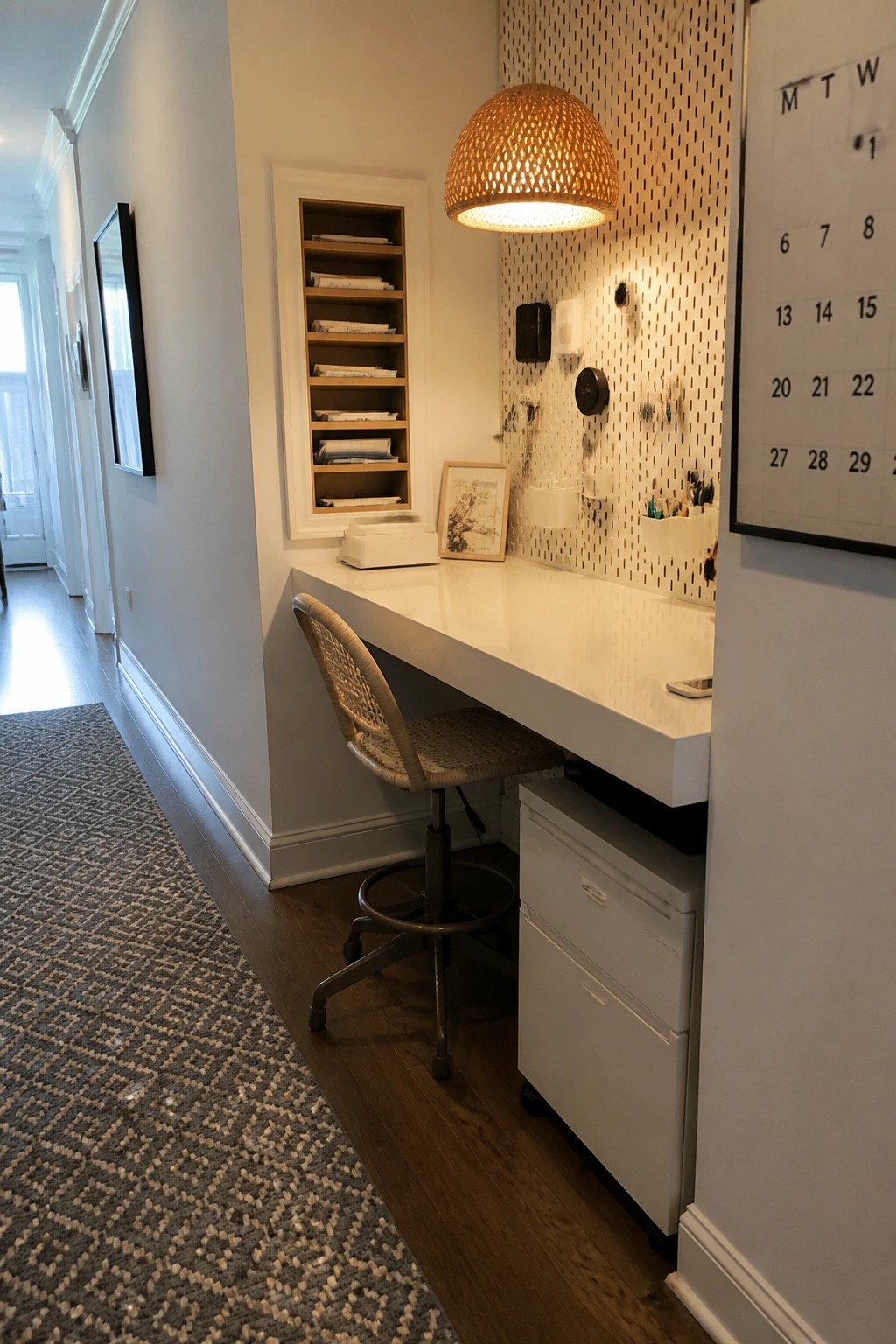
One useful approach in a home office is to combine a built-in desk with recessed shelves and a pegboard wall. This gives you storage that stays off the floor and keeps papers and supplies from spreading across the work surface.
It works well in narrow spaces or rooms where you want the desk to stay clear for daily use. The pegboard lets you hang small tools and notes within reach, while the shelves hold folders without adding extra furniture.
Add An Integrated Planter To The Desk

One way to keep a workspace feeling calm is to build the plants straight into the desk. A long trough down the center holds several small plants without taking up surface space or creating extra clutter around the room.
This works best in a home office that gets steady light and already uses a solid wood desk. It keeps the top clear for daily work while still giving you some greenery nearby. Just make sure the planter is lined properly so moisture does not affect the wood.
Turn A Closet Into A Compact Office
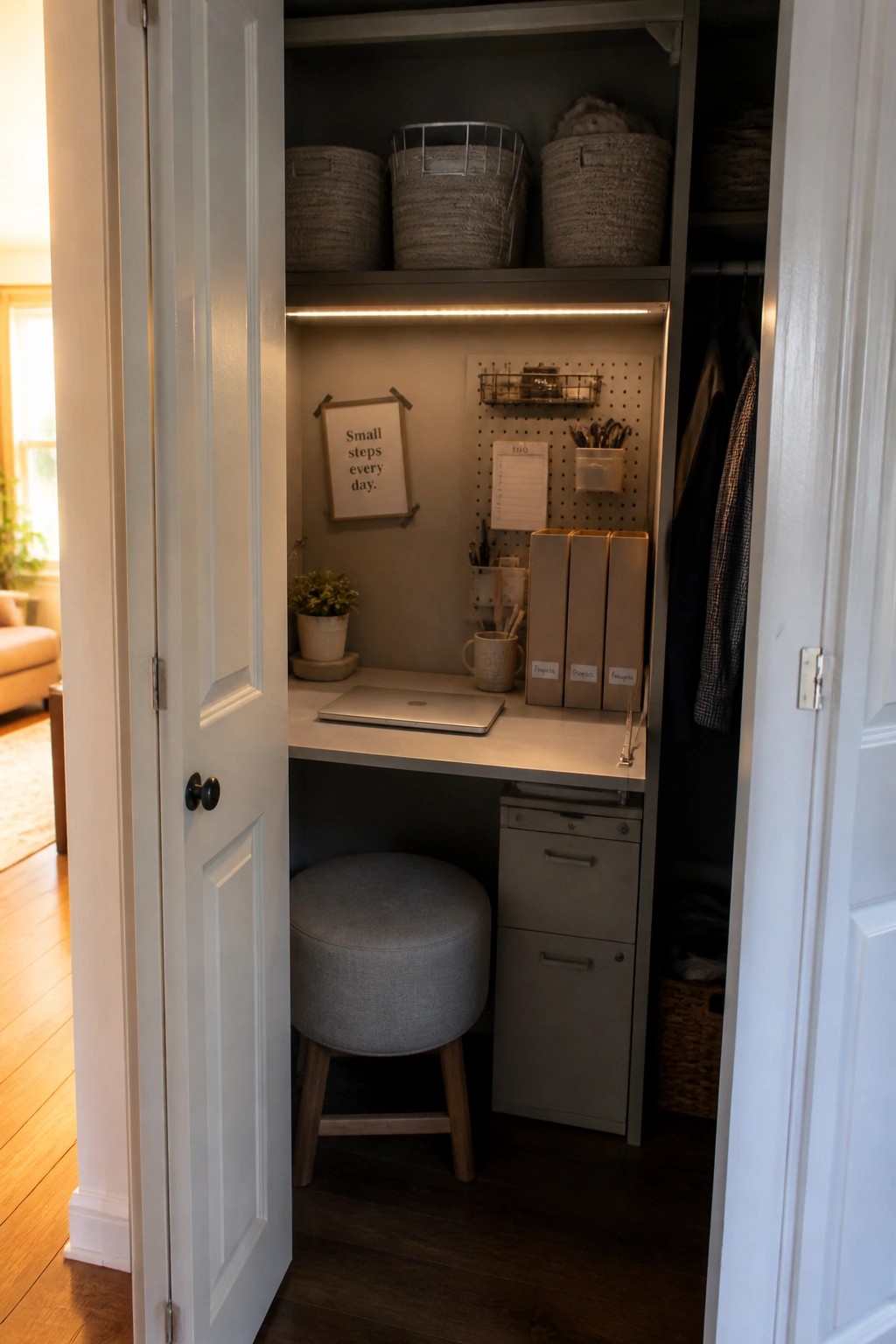
Many homes have a closet that sits empty most of the time. Turning it into a small workspace keeps the desk and supplies tucked away while still giving you a quiet place to work.
This idea suits apartments or smaller houses where rooms need to do more than one job. A simple pegboard and a few bins help hold papers and tools so the surface stays clear at the end of the day.
Build A Desk Into The Space Under The Stairs

Many homes leave the area under the stairs empty, but it can easily become a small workspace. A built-in desk here creates a quiet spot for daily tasks without needing a separate room.
This works well in smaller houses or any place where you want to keep the main living areas clear. Add simple shelves nearby for papers and supplies so the surface stays usable.
Create A Built-In Desk With Storage Shelves
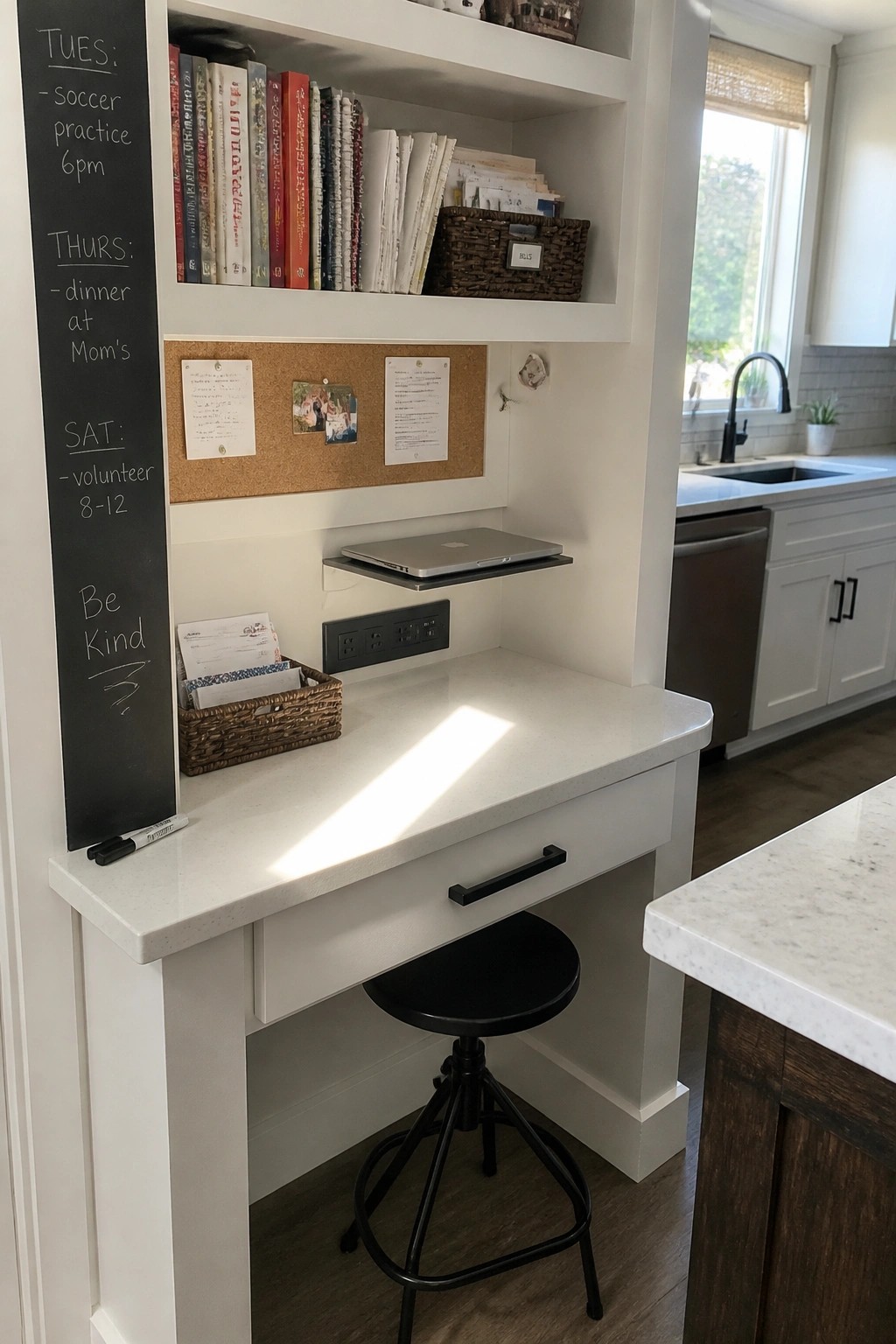
A built-in desk works well when you want a workspace that stays out of the way but still feels ready to use. It fits into the flow of the house instead of taking up floor space with a separate piece of furniture.
This setup suits homes where the office shares space with a kitchen or hallway. Shelves above the desk keep books and papers off the surface, and a pull-out shelf holds the laptop when it is not needed.
Roll-Top Desks Hide The Daily Mess
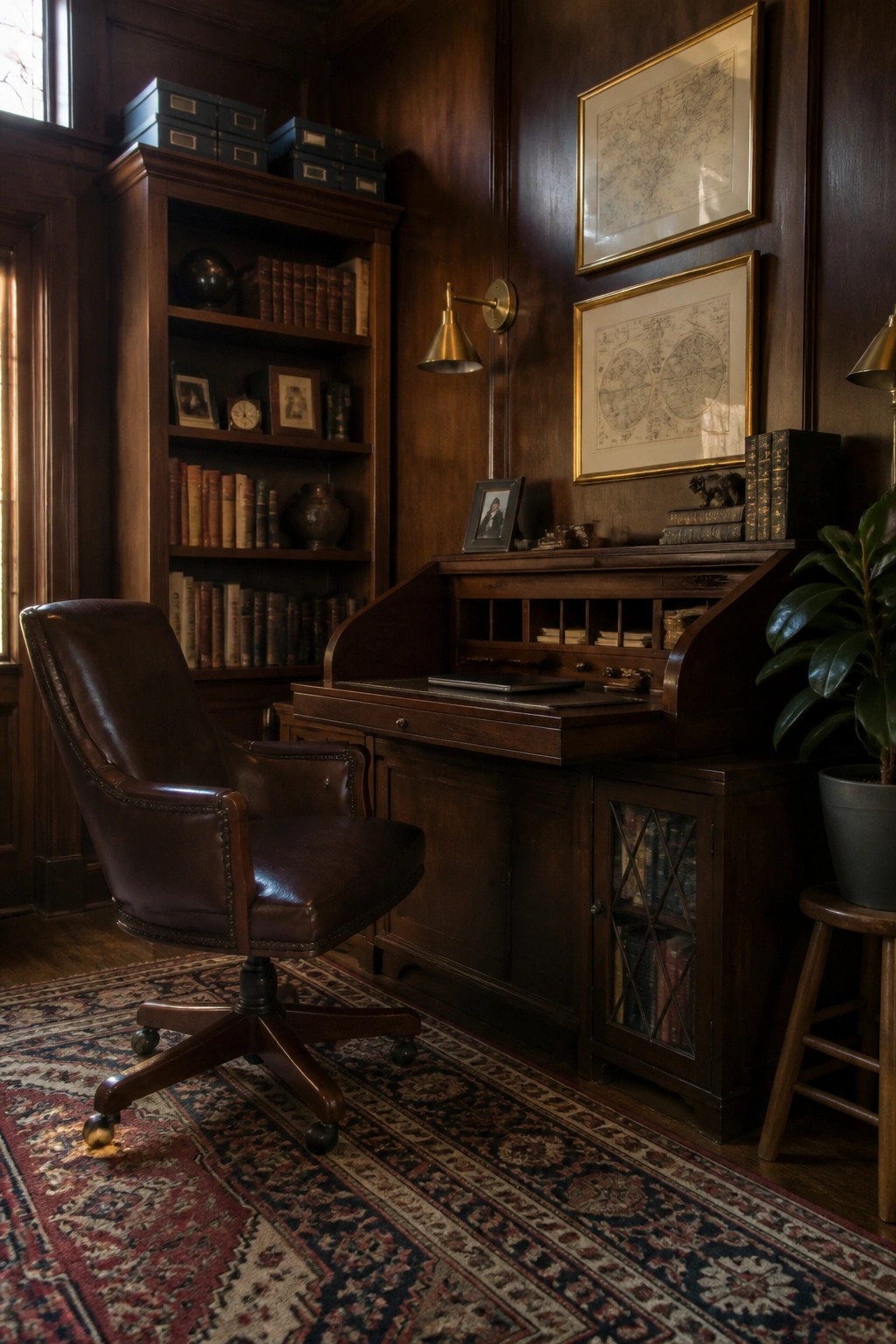
A roll-top desk gives you a quick way to close up your work at the end of the day. The sliding cover tucks away the laptop, papers, and small items so the surface stays clear without extra effort.
This setup works best in a home office that doubles as another room or in any space where you want things to look finished when you’re not using them. Look for one with built-in slots and drawers so everything has a spot before the top comes down.
Add Overhead Shelving For A Cleaner Desk
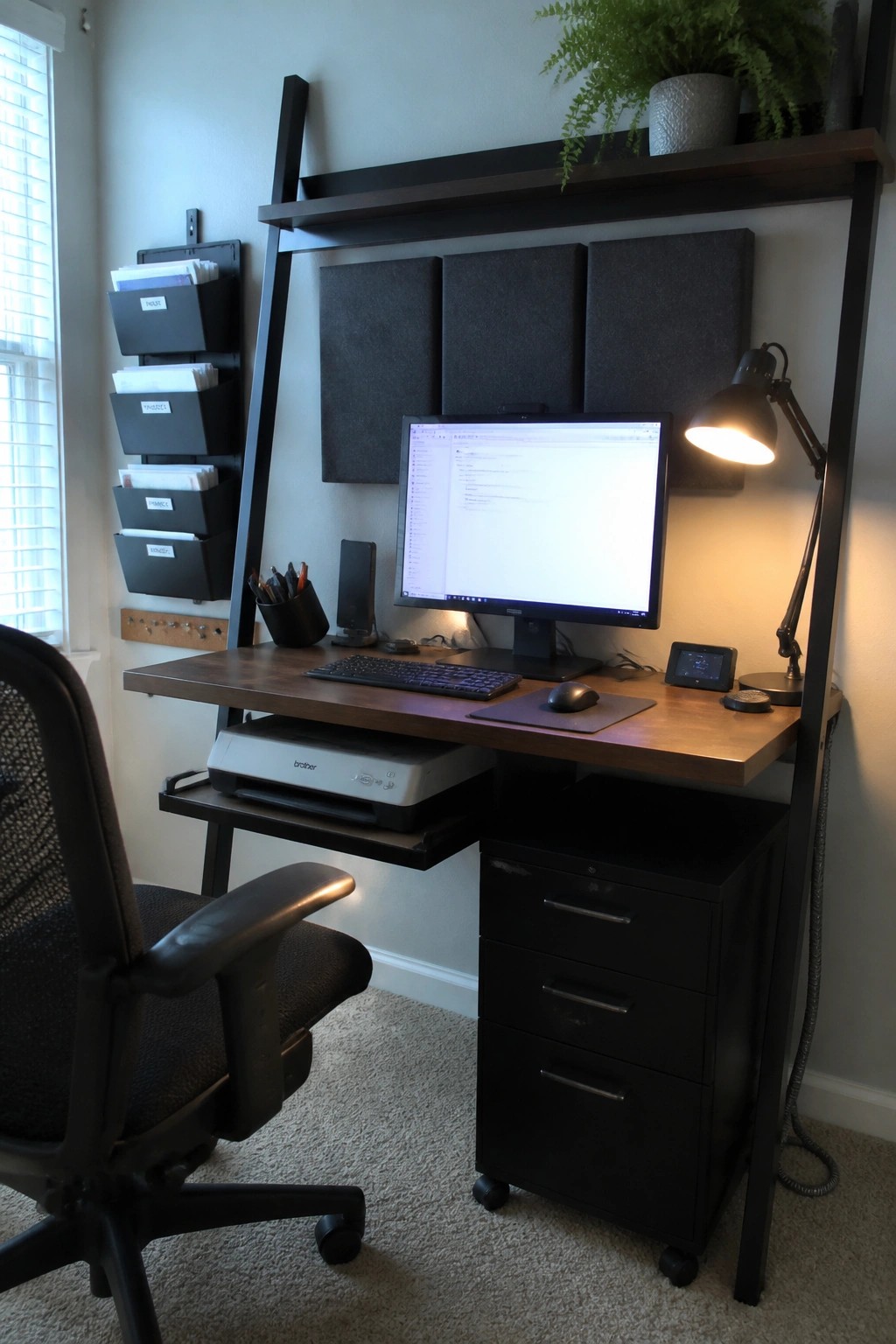
One simple way to cut down on desk clutter is to run a shelf right above the work surface. It holds supplies and papers you reach for often without taking up the space where your keyboard and monitor sit.
This approach fits small rooms especially well. Pair the shelf with a low rolling cabinet underneath so everything stays tucked away when you are done for the day.
Built-In Desks With Open Shelving Keep Work Areas Organized
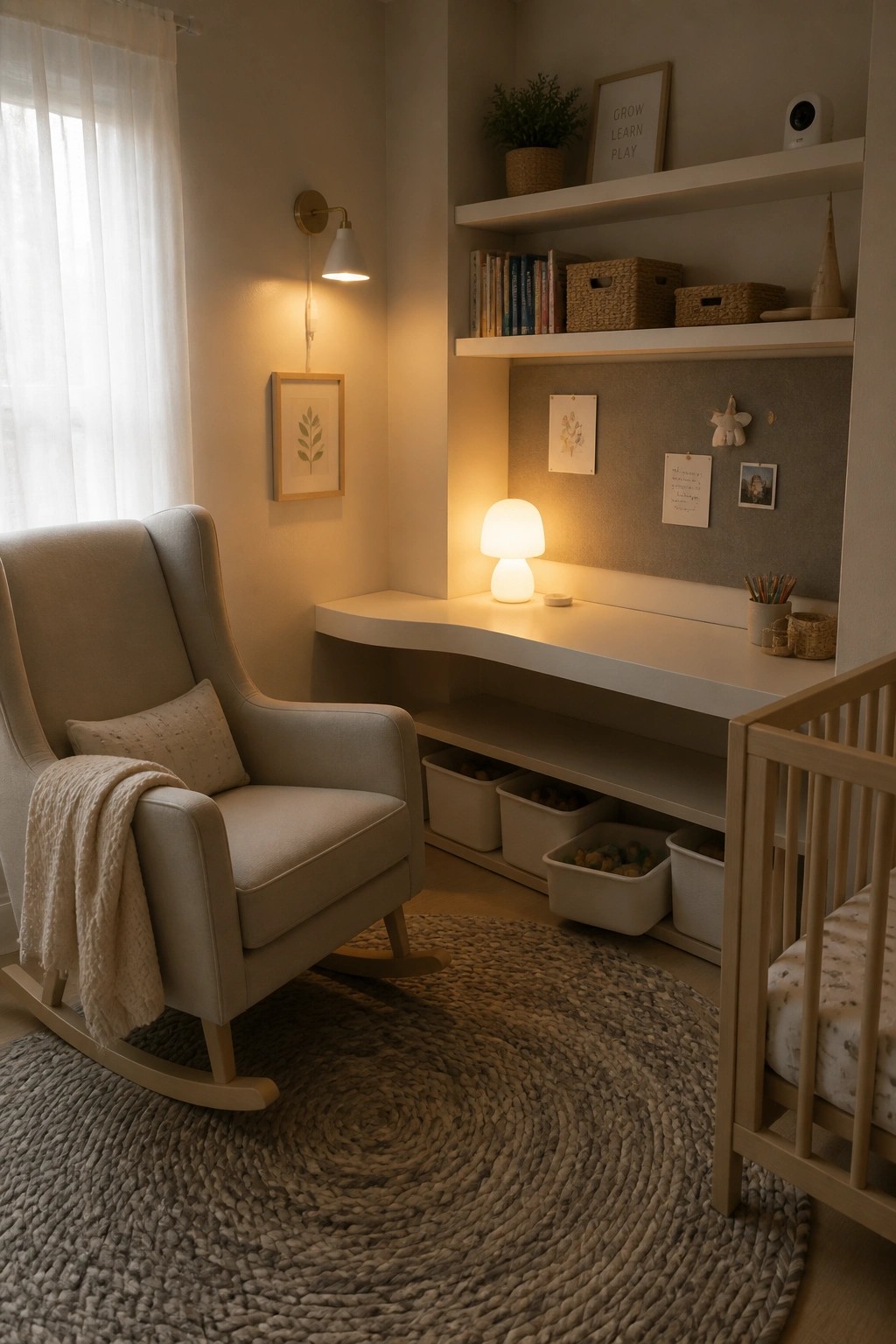
A built-in desk with shelves right above it puts storage where you actually need it during the day. This keeps papers, books, and supplies close without adding extra furniture that crowds the room.
Bins tucked under the desk handle the rest of the clutter. It works best in smaller homes where the office shares space with another room and you want the surface to stay clear for daily use.
Turn A Sunroom Into Your Daily Office

A sunroom office works well because the extra light and views keep the space from feeling boxed in. The open floor and simple furniture layout make it easier to move around and keep surfaces clear during the day.
This setup suits homes that already have a porch or enclosed porch area with good windows. Keep the desk small, add a few plants for some softness, and use light window coverings so you can adjust the brightness without blocking the view.
Run A Desk Along One Wall
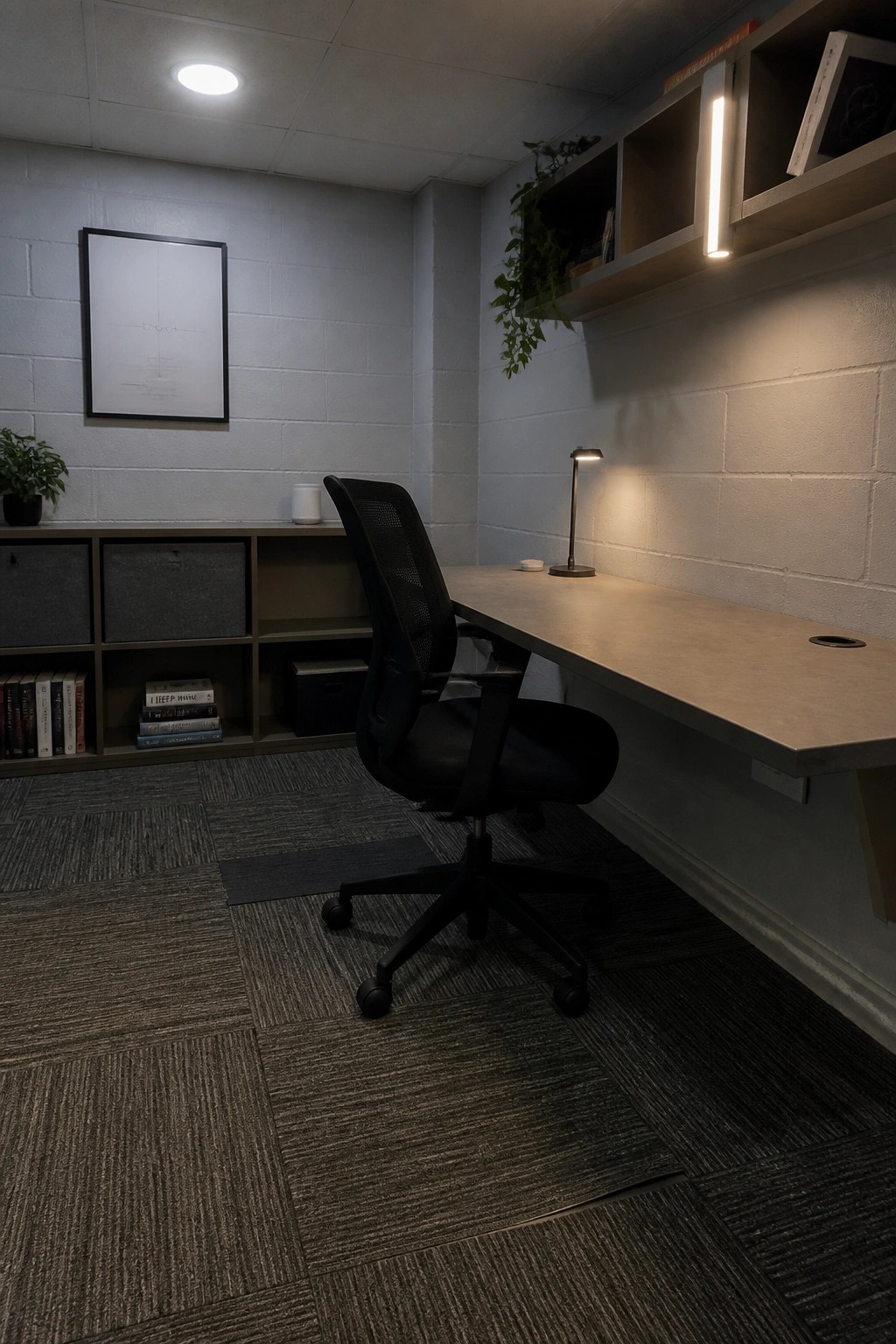
A long desk against one wall gives you plenty of work surface while leaving the rest of the room open. It also makes it easier to add storage right where you need it, so papers and supplies do not end up scattered.
Place simple shelves above the desk for books and a few bins or cubbies below for things you want tucked away. This setup works best in smaller offices or any space where you want the room to feel less crowded during the day.
Built-In Shelves For Sloped Walls
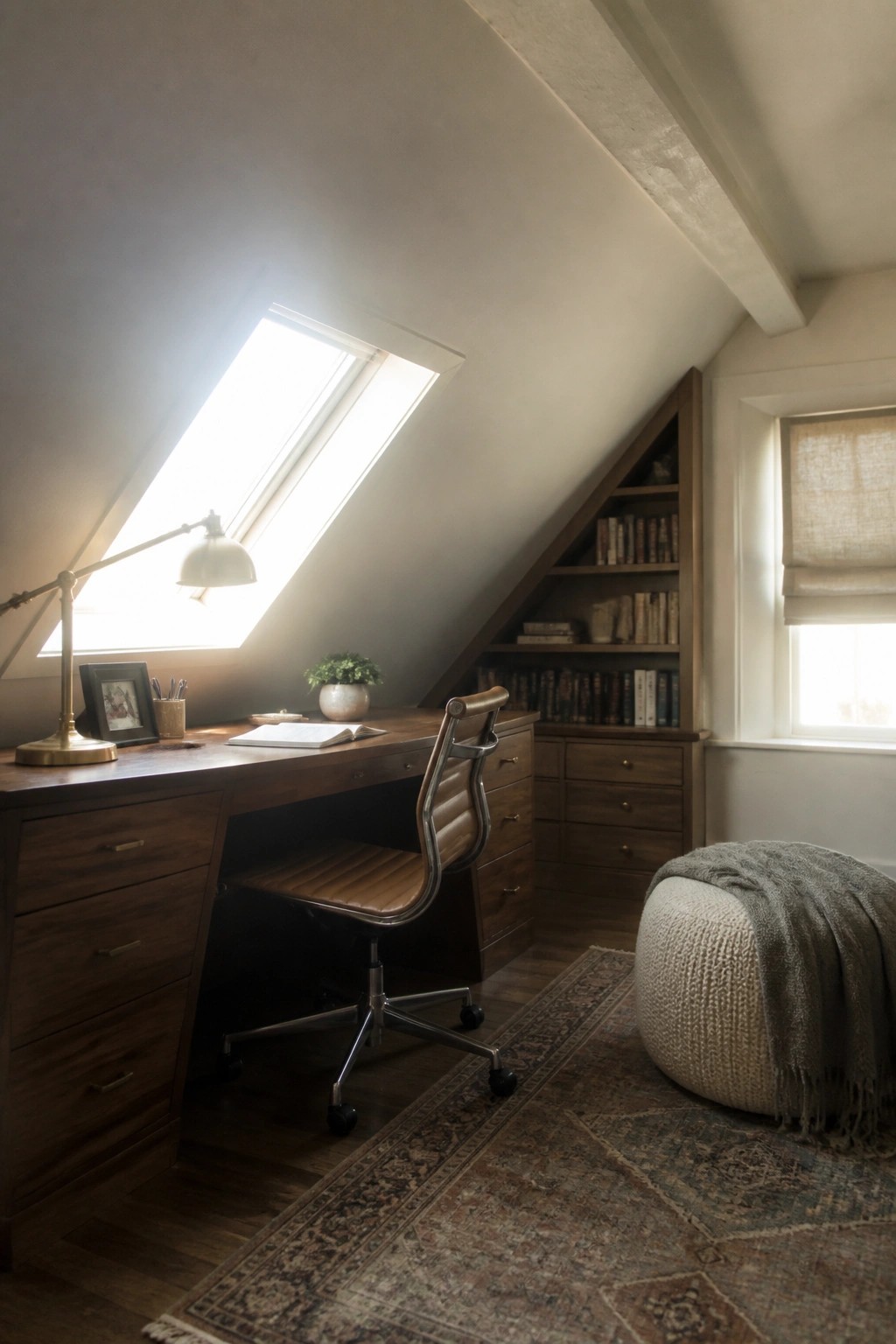
Built-ins along a slanted wall give you real storage without eating up floor space. In rooms where the ceiling drops, this approach turns what could feel like wasted area into useful shelves that keep books, files, and supplies in reach while the desk stays clear.
This works best in attic offices or any room with angled ceilings. Measure the wall carefully so the shelves sit flush with the slope, and keep the finish simple so the storage blends in rather than dominates the room.
Frosted Glass Doors Define A Home Office
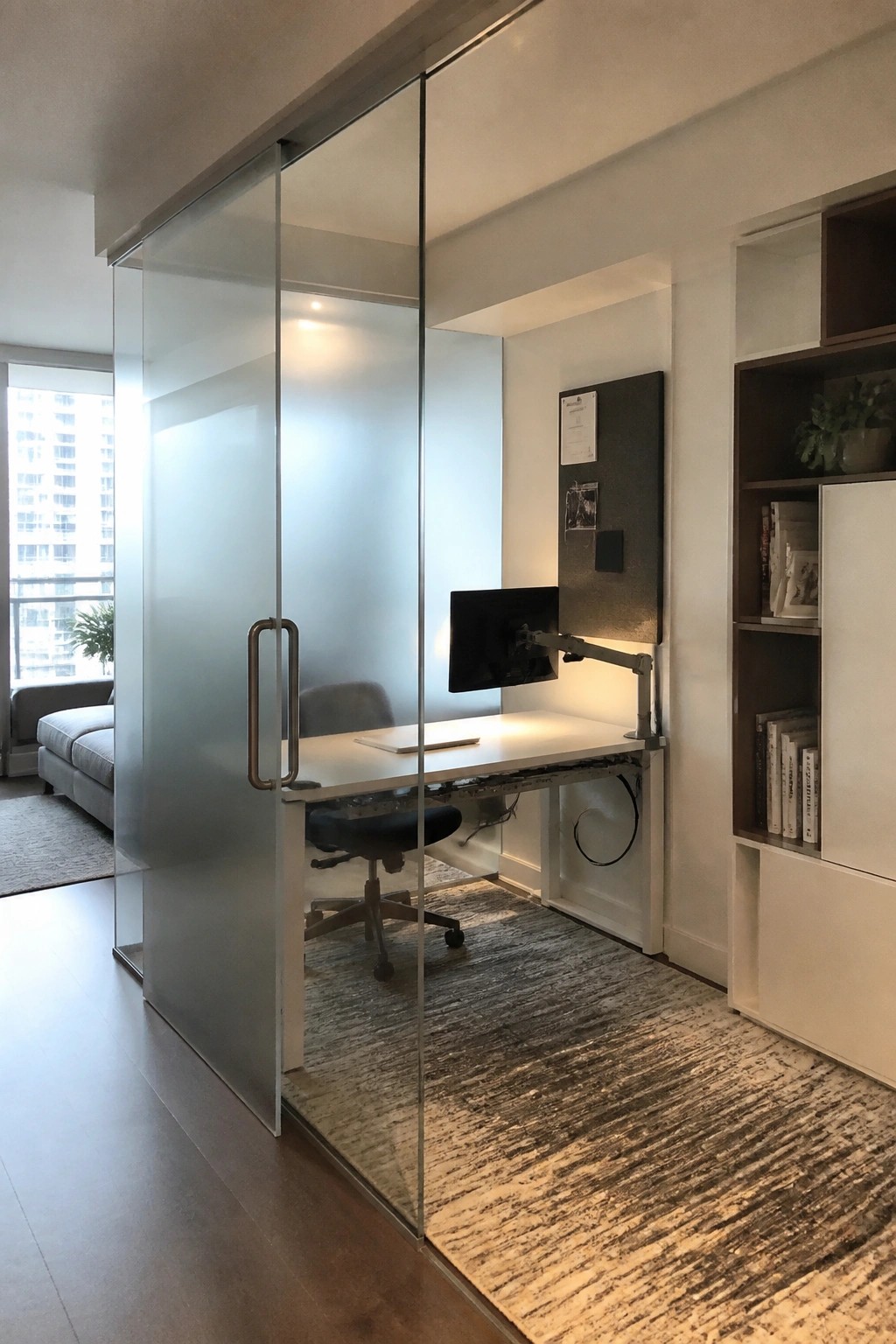
Frosted glass sliding doors give you a real workspace without cutting off the rest of the room. They block distractions and keep papers out of sight while still letting light through, which helps the whole area feel open instead of cramped.
This works best in smaller homes or apartments where you need one room to do double duty. Pick doors that slide fully open during the day and close easily at the end of work so the space stays practical.
Add Storage Under The Workbench
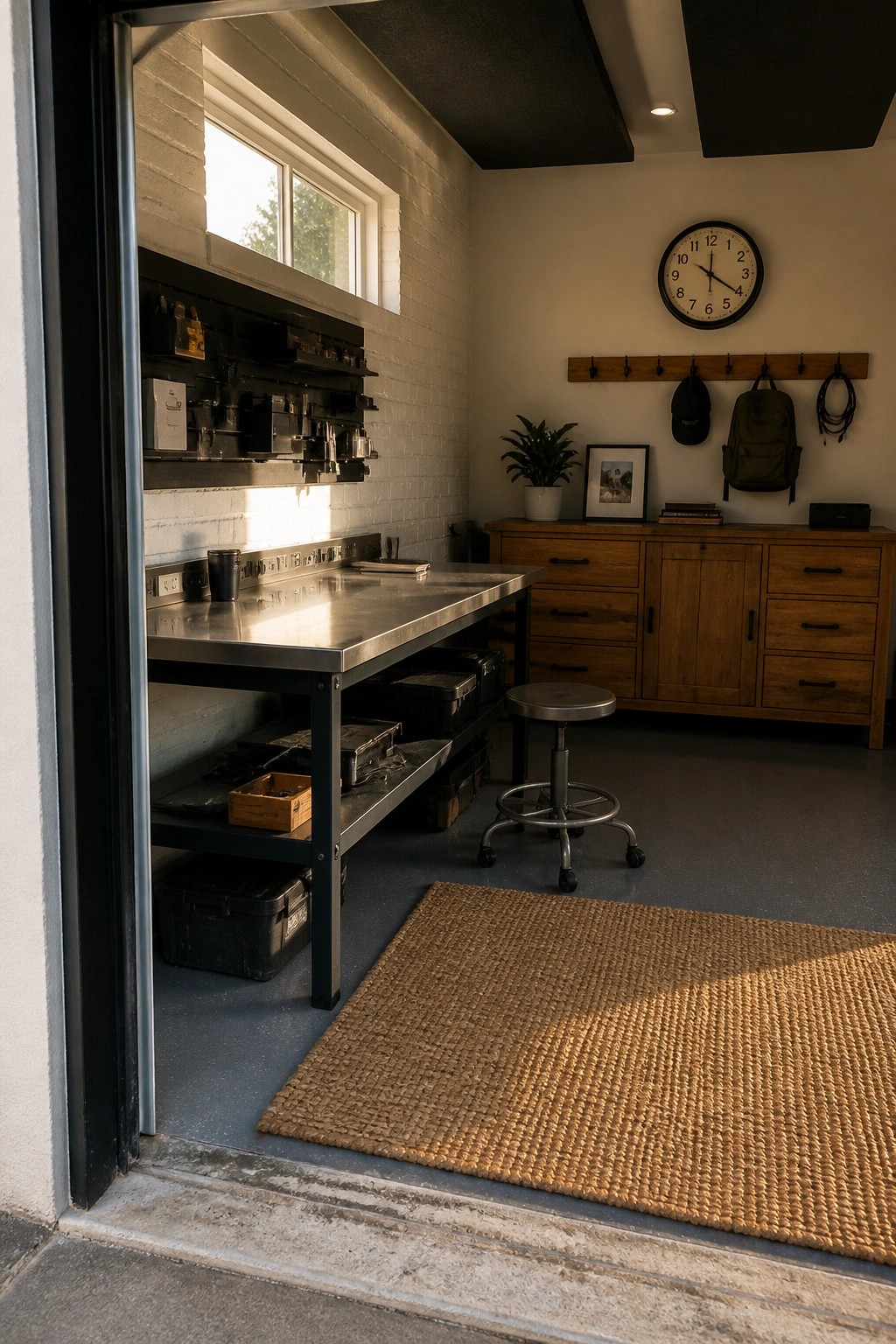
A workbench with open lower shelves keeps bins and boxes close without cluttering the floor. This simple choice helps the space stay clear and ready for daily use.
It suits a garage office or home workshop where tools and supplies need to stay organized. Keep the shelves low enough to reach easily but high enough that your legs fit under the bench when seated.
Frequently Asked Questions
Q: Where should I put my trash can so it actually gets used? A: Place it right next to your chair within easy reach. This small shift means you toss wrappers and scraps on the spot instead of letting them sit on the desk.
Q: How do I keep drawers from turning into junk catchers again? A: Use one drawer for daily supplies and label the rest for papers or extras you rarely touch. Check the daily drawer once a week and move anything that does not belong.
Q: What is the simplest way to handle loose notes and receipts? A: Drop them straight into a single folder at the corner of the desk. Sort the folder on Friday so the surface stays clear all week.
