

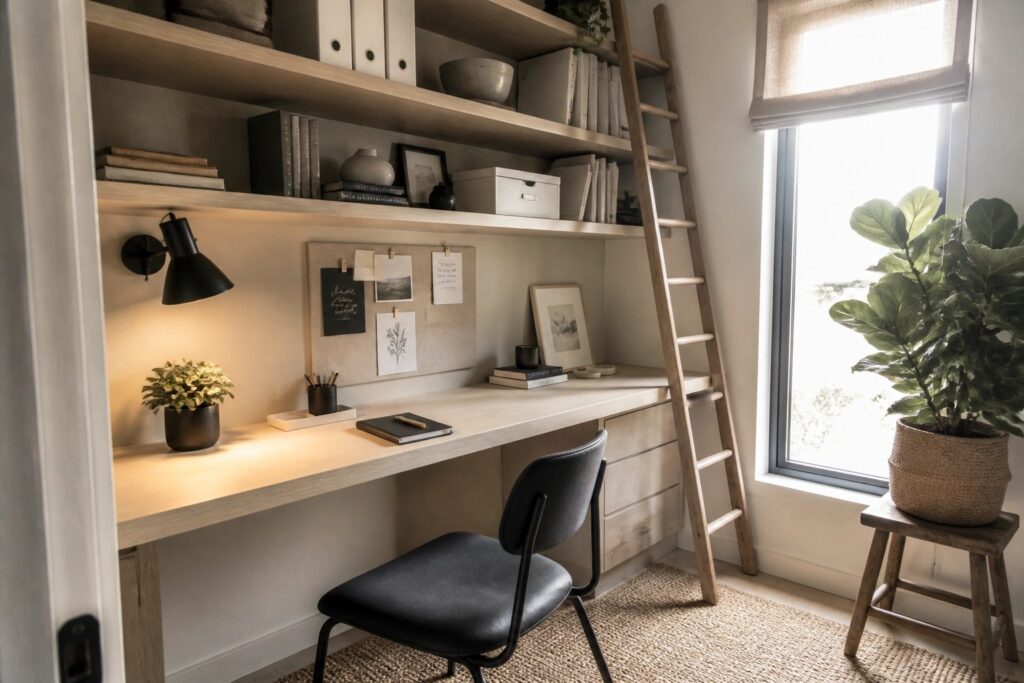
I have noticed that the way an office is laid out often determines whether I can focus for hours or end up distracted by small discomforts.
When furniture placement and lighting come together right, the whole space starts to support the work instead of fighting against it.
Details like that add up fast.
I usually try one or two of these adjustments in my own setup before committing to bigger changes.
Over time these tweaks add up and turn a room that once felt off into one that actually helps the day go smoother.
Built-In Shelving With A Ladder
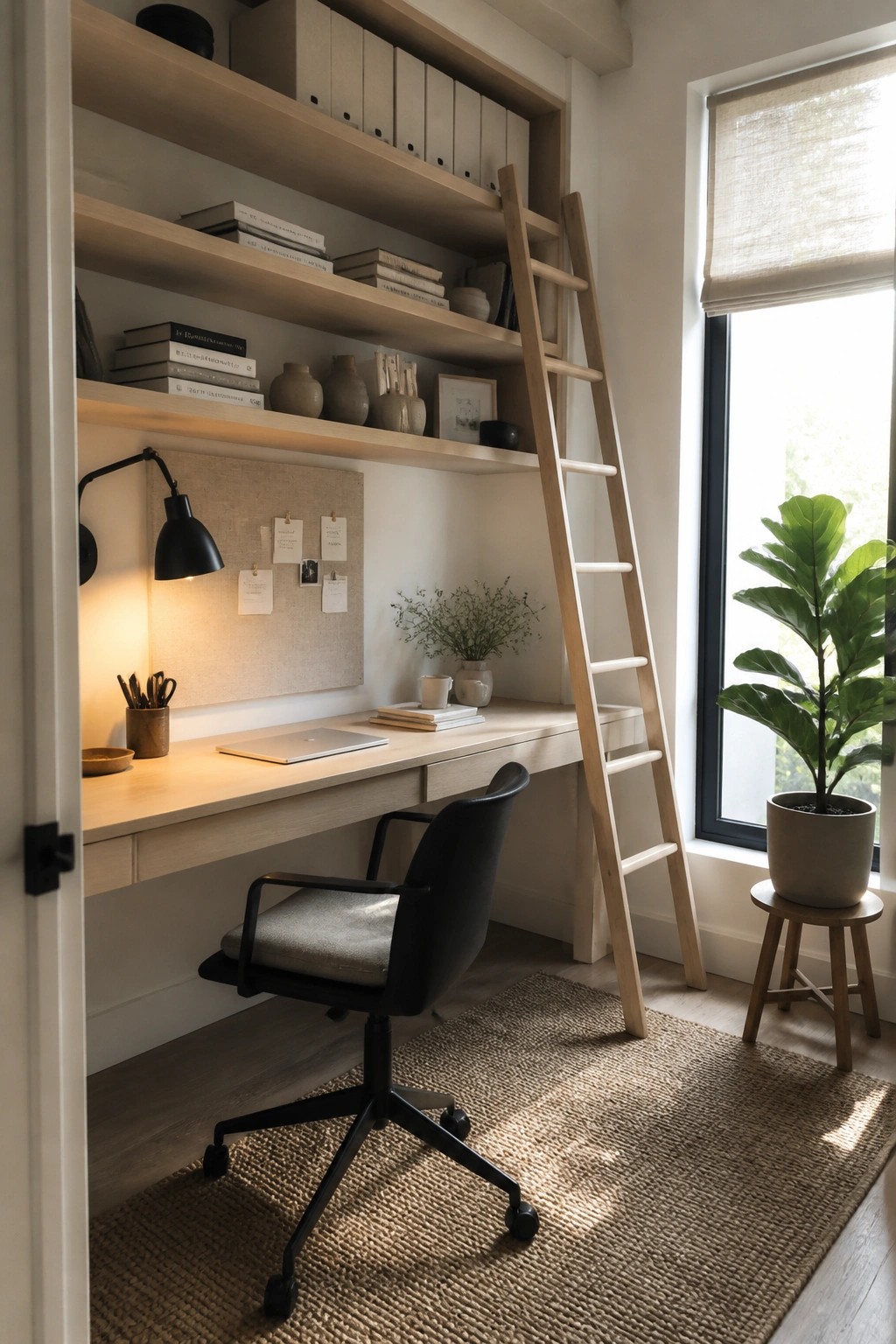
Built-in shelves paired with a ladder give you a lot of storage without crowding the floor. The setup keeps books, supplies, and small items organized in one wall, which helps the room feel open even when it holds quite a bit.
This works best in a smaller office or a room with decent ceiling height. Keep the shelves fairly shallow so nothing feels heavy, and choose a ladder that rolls or slides easily along the wall.
Letting Natural Light Reach Your Desk
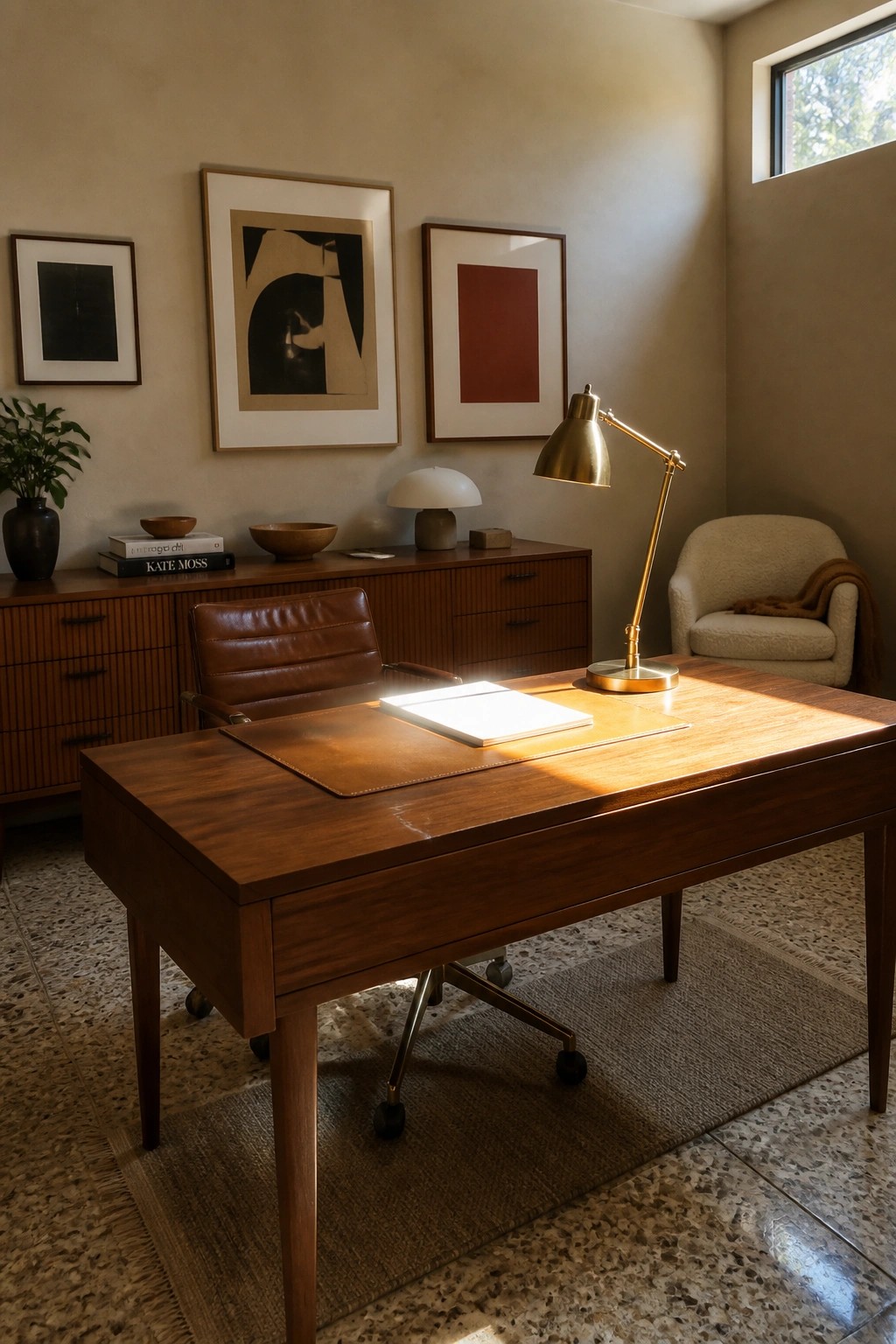
A desk placed where sunlight can fall across the surface makes the whole room feel more open during the day. The wood tones stay visible without needing extra lamps at all hours, and the space feels less like a closed-off work zone.
Try setting the desk perpendicular to a window so light comes in from the side rather than straight on. This works well in smaller rooms where you still want to keep the view and avoid glare on a screen.
Add A Pegboard Wall For Organized Storage
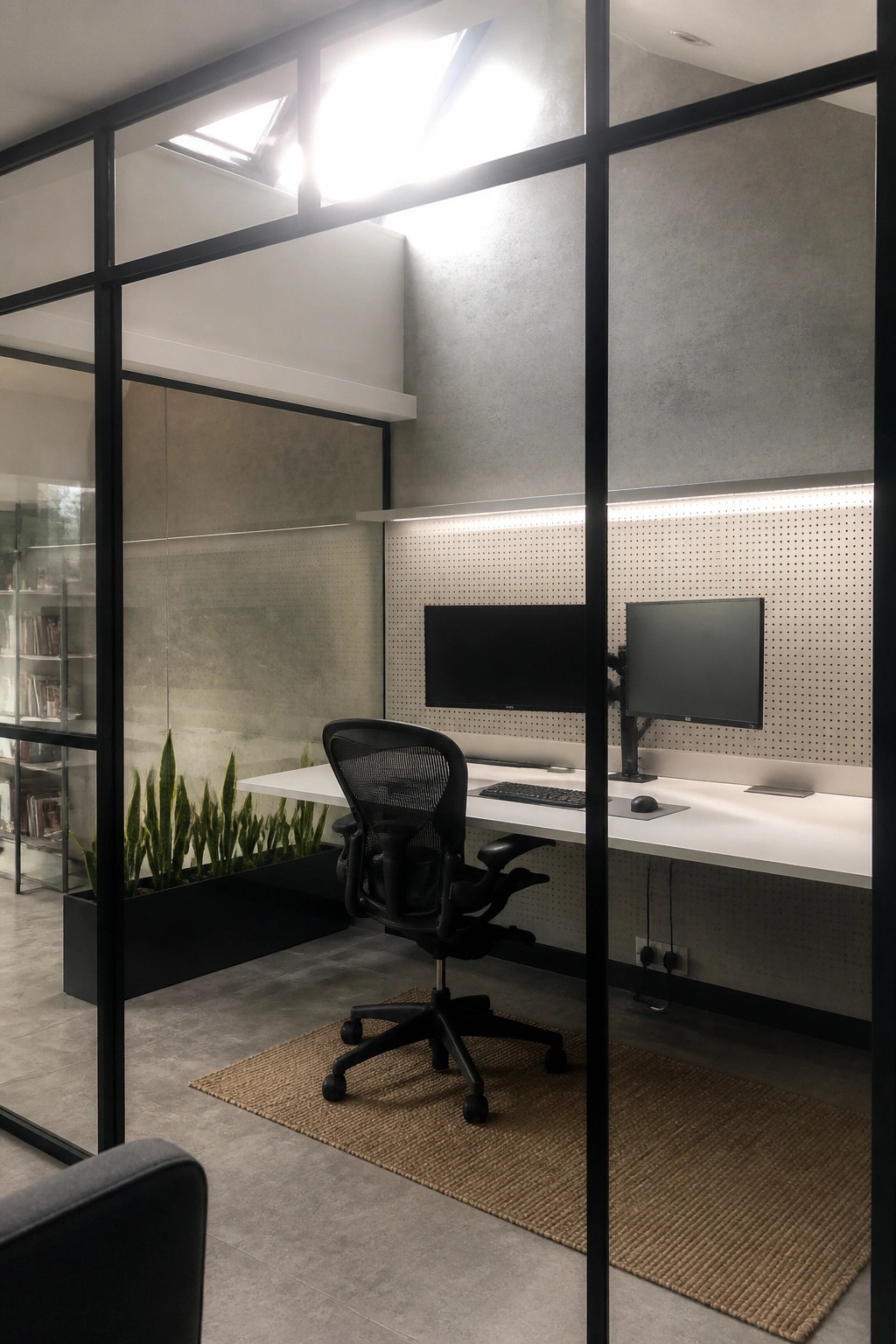
A pegboard wall gives you a simple way to keep tools, cables, and small items off the desk without losing access to them. It works especially well in smaller offices where every surface counts and you want the main workspace to stay clear for actual work.
This setup suits most home offices because you can rearrange hooks and shelves as your needs change. Just make sure the board is mounted at a comfortable height and leave enough space below for monitors or a monitor arm so nothing feels crowded.
Built-In Storage Under the Desk

A desk with built-in drawers and cabinets makes the whole workspace feel more practical. Everything stays close at hand, and you avoid adding separate filing pieces that take up floor space.
This approach works best in smaller rooms or any office that needs to stay open and uncluttered. Keep the storage low so it does not block light or views from nearby windows.
Dark Walls in a Home Office
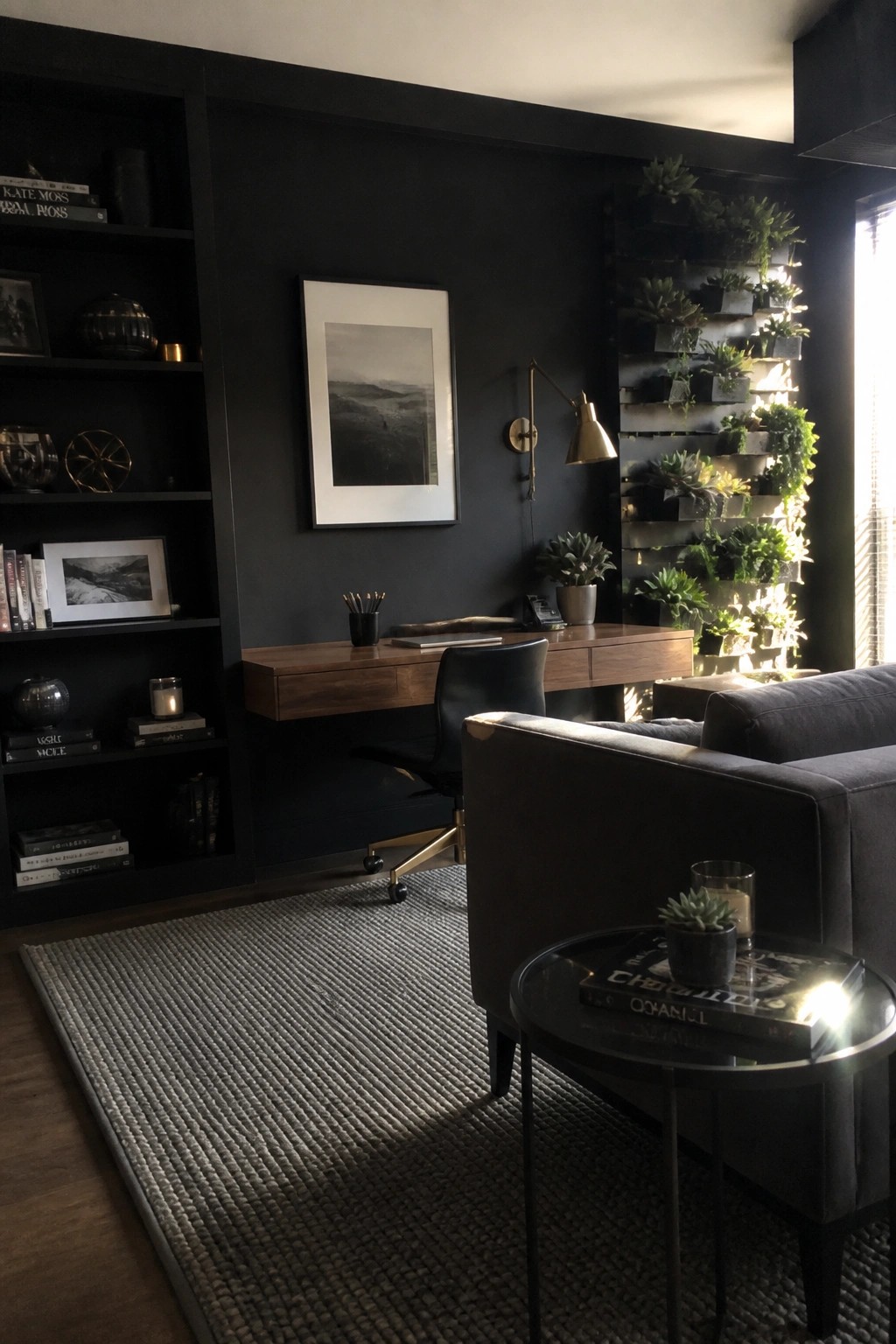
A deep dark wall color can make a home office feel more contained and easier to settle into. The background keeps visual noise down so the desk and chair stay the main focus instead of competing with lighter surroundings.
This approach works well in rooms that get decent daylight or when you balance the dark walls with wood tones and a few simple pieces. Just watch the ceiling and trim. If everything goes dark in a smaller room the space can close in faster than expected.
Set Up Separate Areas For Solo Work And Meetings
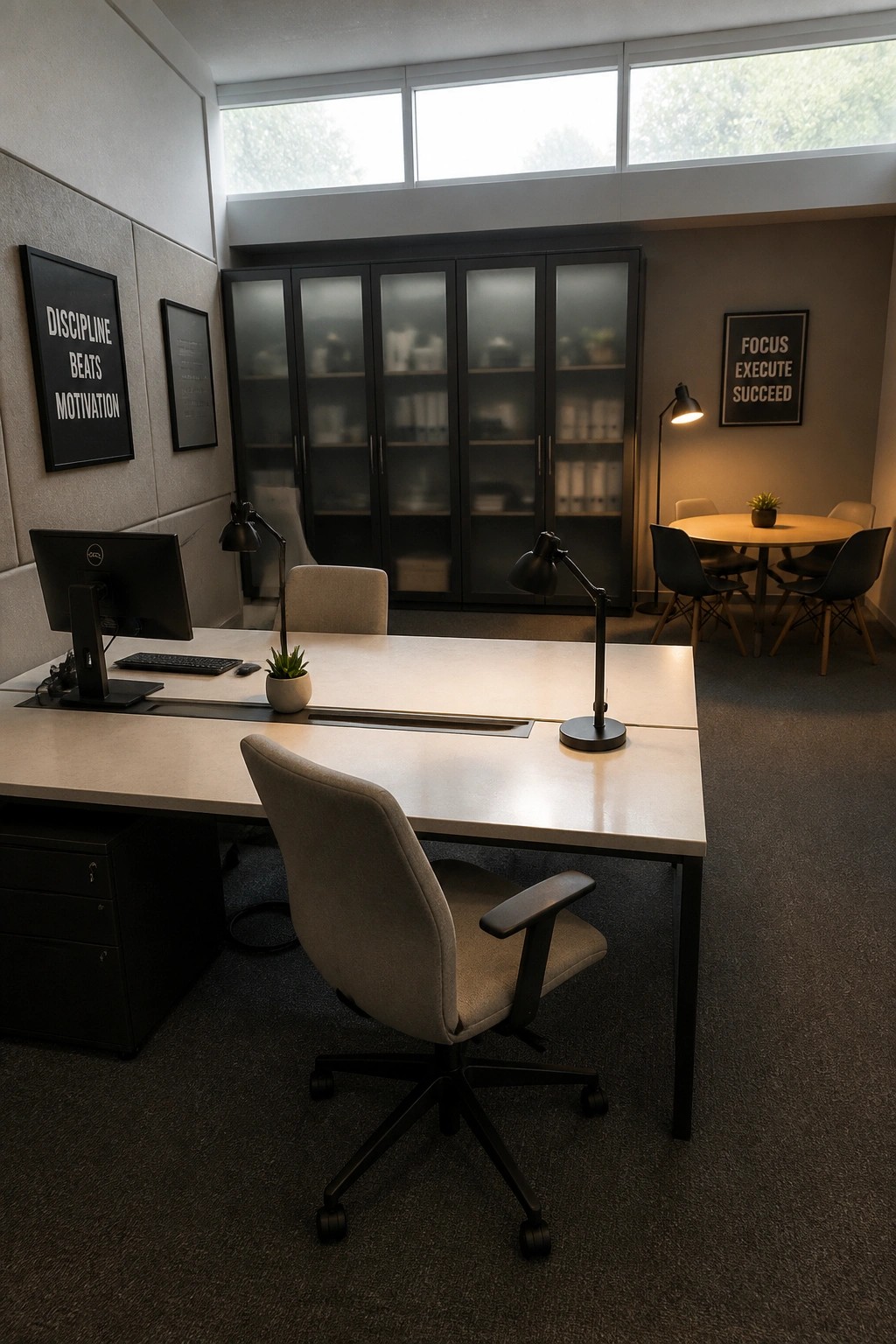
Many offices feel more useful when they split the space into two clear zones. One area handles focused computer work at a large desk, while another holds a round table for quick meetings or reviews without needing to switch rooms.
This setup works best in home offices or small professional spaces that need to serve more than one purpose during the day. Keep the main desk surface clear and place the meeting table near a window or wall so it does not block movement or light.
Built-Ins That Work With Sloped Ceilings

Built-ins can turn the low, angled walls in an attic into real storage instead of wasted space. The key is fitting shelves and cubbies right into the slope so everything stays within reach but stays out of the way of the main work area.
This approach works best in smaller home offices where floor space is tight. Fill the lower sections with baskets or drawers for supplies and papers, then keep the desk surface clear for daily use. It suits older homes or converted attic rooms where standard furniture would leave awkward gaps.
Use Built-In Shelving To Organize Your Office
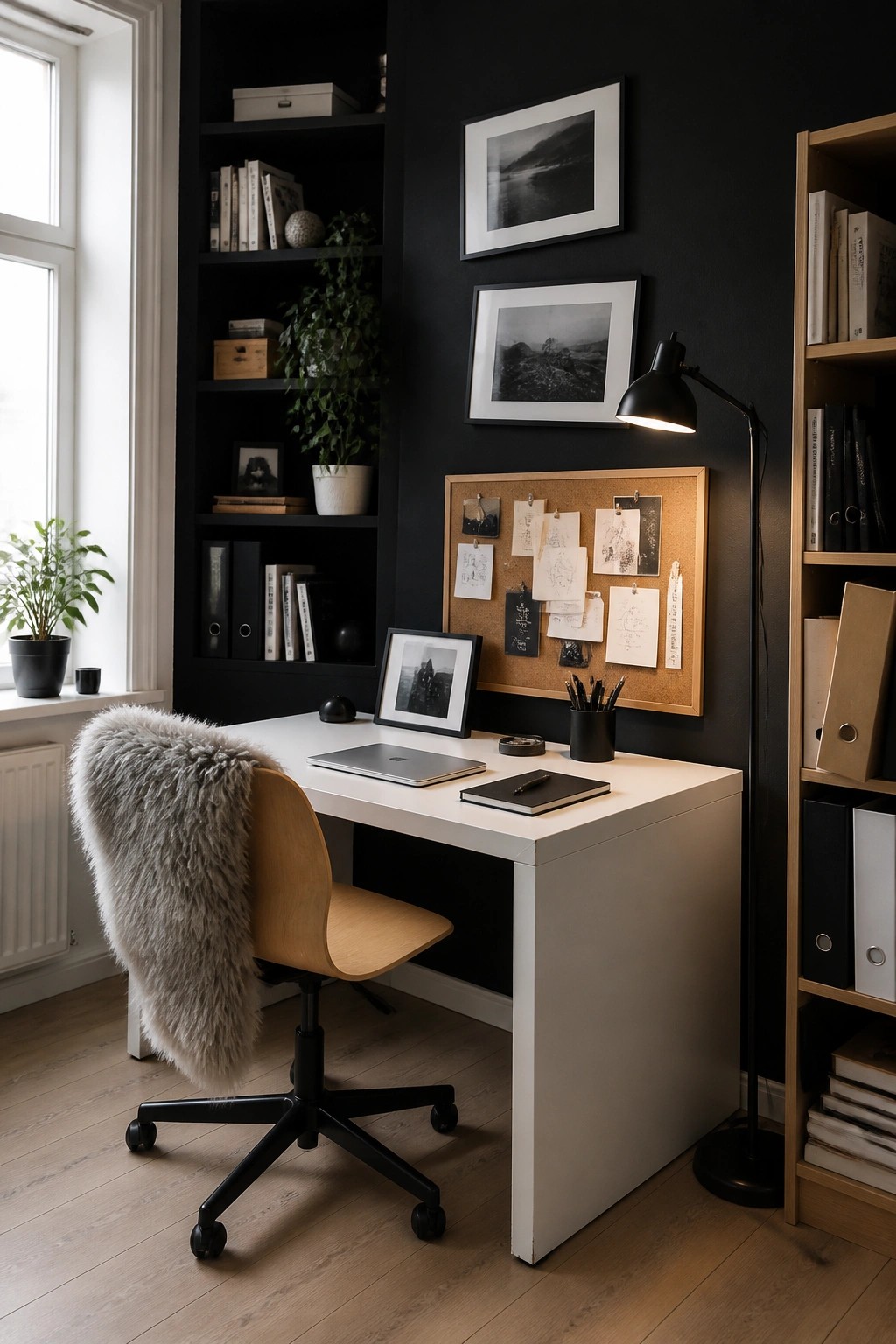
Built-in shelving on either side of a desk gives you a place for books, binders, and supplies without adding extra furniture that crowds the room. It keeps the workspace feeling open while still holding everything within easy reach during the workday.
This setup works best in smaller home offices where floor space is limited. Dark paint on the shelves helps them blend into the wall so the focus stays on the desk surface and the work itself.
Add A Low Credenza For Hidden Storage
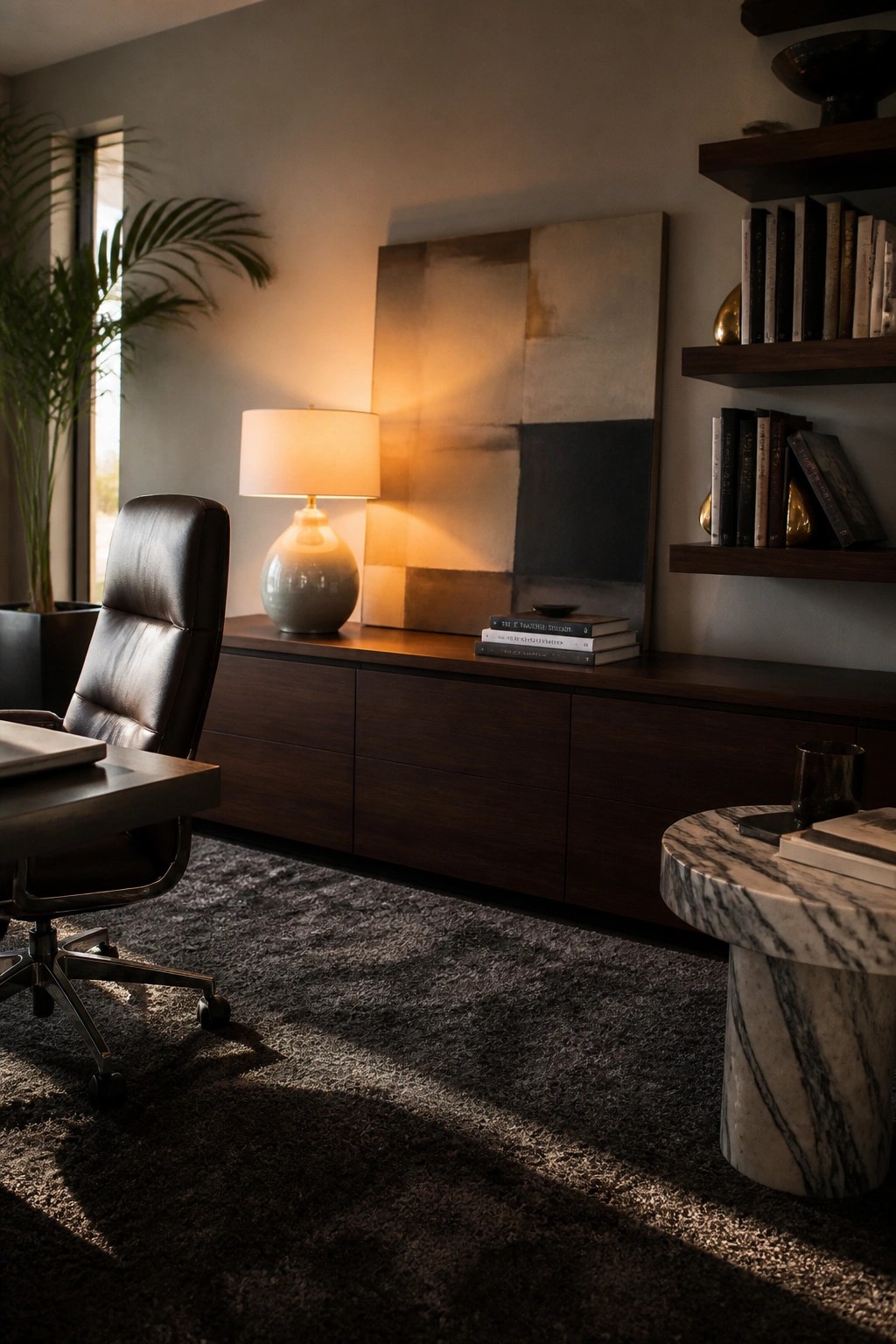
A low credenza along the wall gives you room to store files, supplies, and everyday clutter without crowding the space. It keeps the main work area open so the room feels calmer and easier to move around in.
This works best in home offices that need storage but still want an open feel. Keep the top mostly clear except for a lamp and a few items, and add floating shelves above if you want extra display space without adding bulk.
Pegboard Storage Keeps a Desk Area Organized
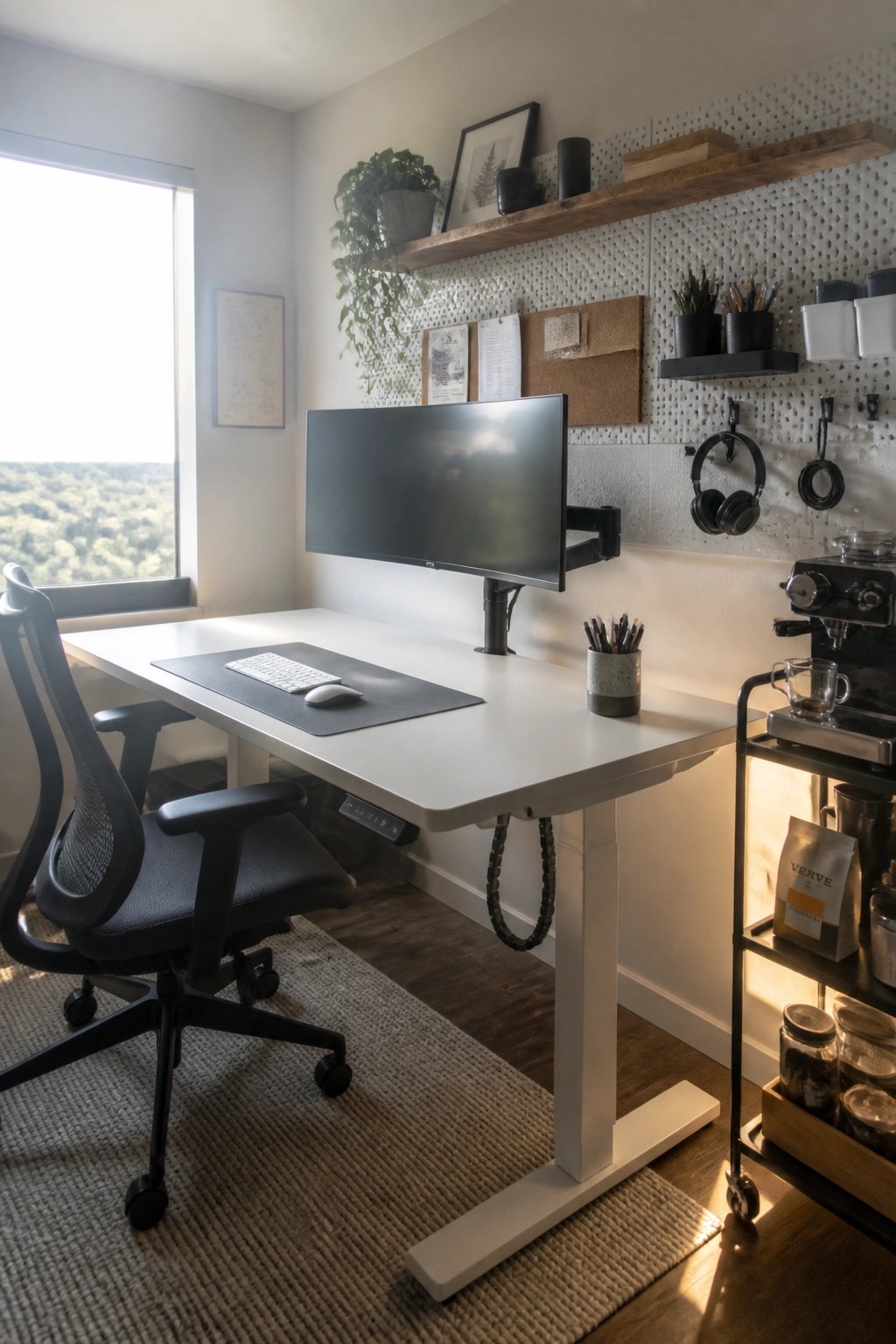
A pegboard wall above the desk gives you a simple way to store tools and accessories without crowding the work surface. It keeps headphones, pens, and small plants in view while leaving plenty of room for a monitor and keyboard.
This approach works best in smaller home offices where every bit of space matters. Mount the board at a comfortable height and add hooks or narrow shelves as you go. Pair it with an adjustable desk so you can change positions without moving everything around.
Use A Floating Desk In Narrow Spaces
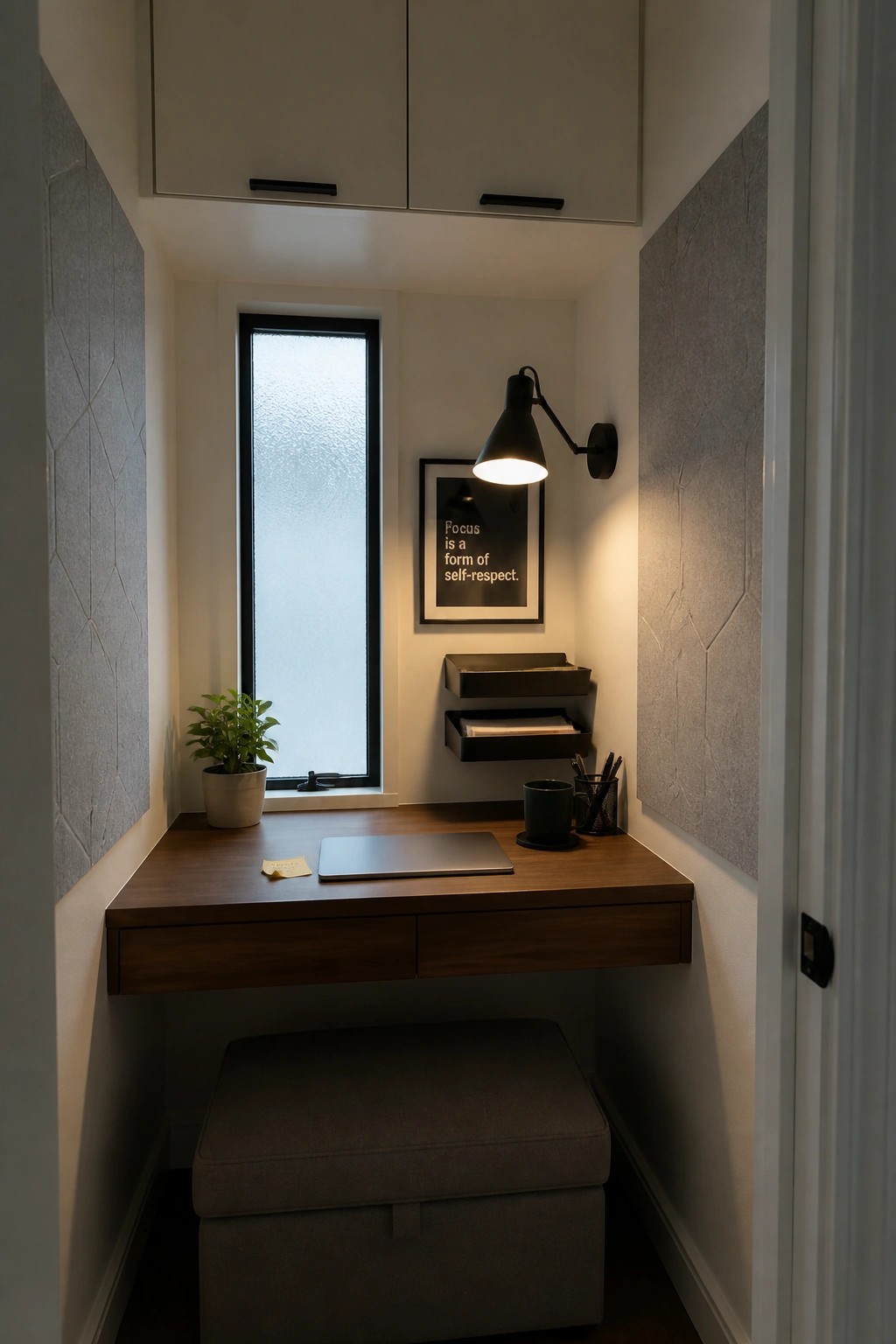
A floating desk keeps the floor clear in a tight spot and turns a narrow alcove into a workable office area. It leaves room underneath for a low stool or nothing at all, so the space does not feel crowded even when the desk is in use.
This approach works best in apartments or small homes where a full desk would block the room. Mount it at a comfortable height, add a single wall lamp, and keep the surface mostly clear so the area stays practical day to day.
Add A Living Wall To Calm Your Home Office
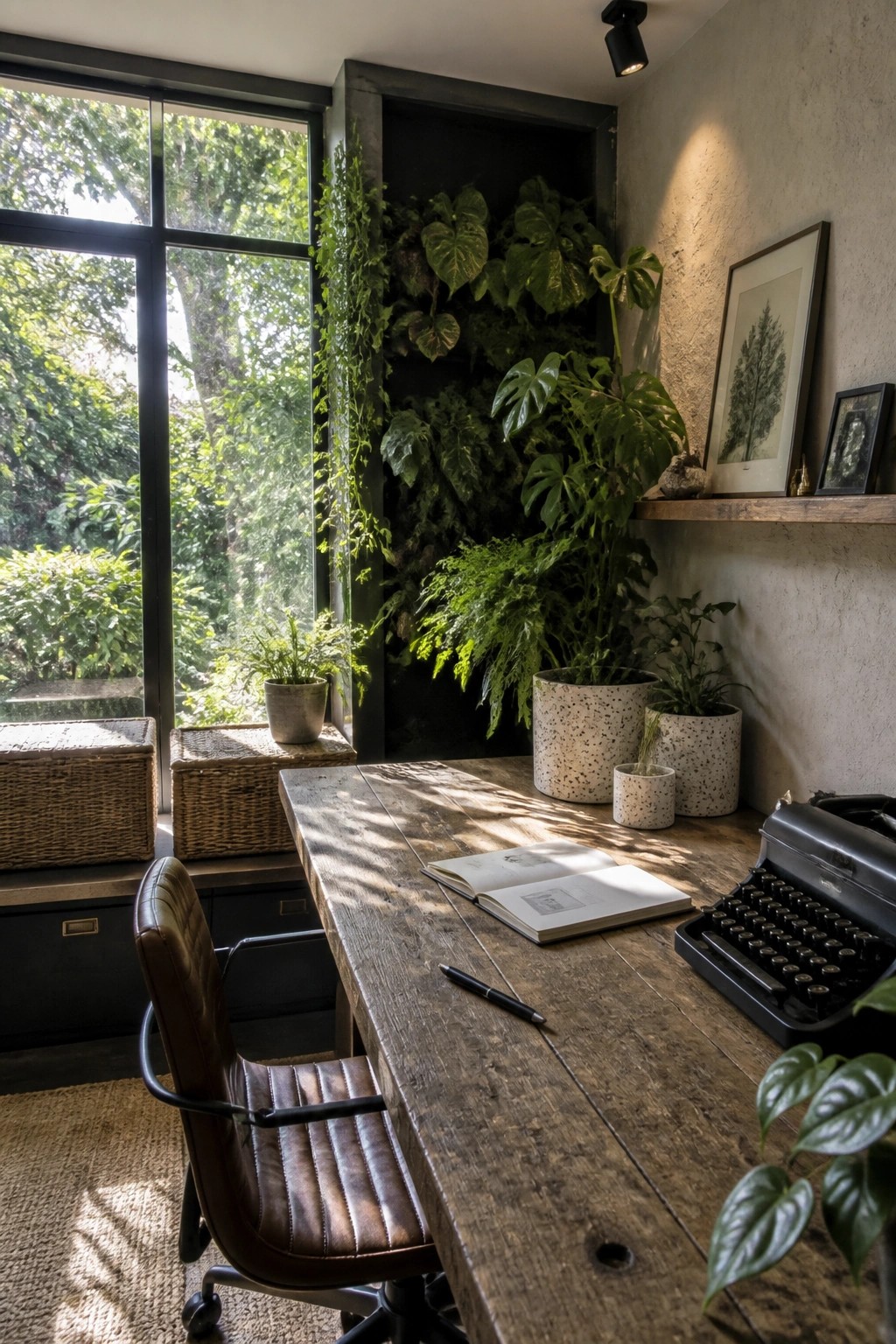
A living wall of plants can make a workspace feel noticeably quieter and more grounded. The mix of textures and greens softens the room and creates a steady connection to the outdoors without needing to step outside.
This idea works well in smaller offices or corners where you spend long hours. Place it where the plants get decent light and pick hardy varieties so the wall stays healthy with basic care.
Round Table Setup Helps Meetings Feel More Open

A round table changes the way people interact in an office because no one sits at the head. Conversations tend to move more freely when everyone can see each other without a clear leader position.
This works especially well in rooms that already have good natural light and a few softer materials like wood. It suits smaller teams or creative offices where quick back-and-forth matters more than formal presentations.
Built-In Desks With Vertical Slats
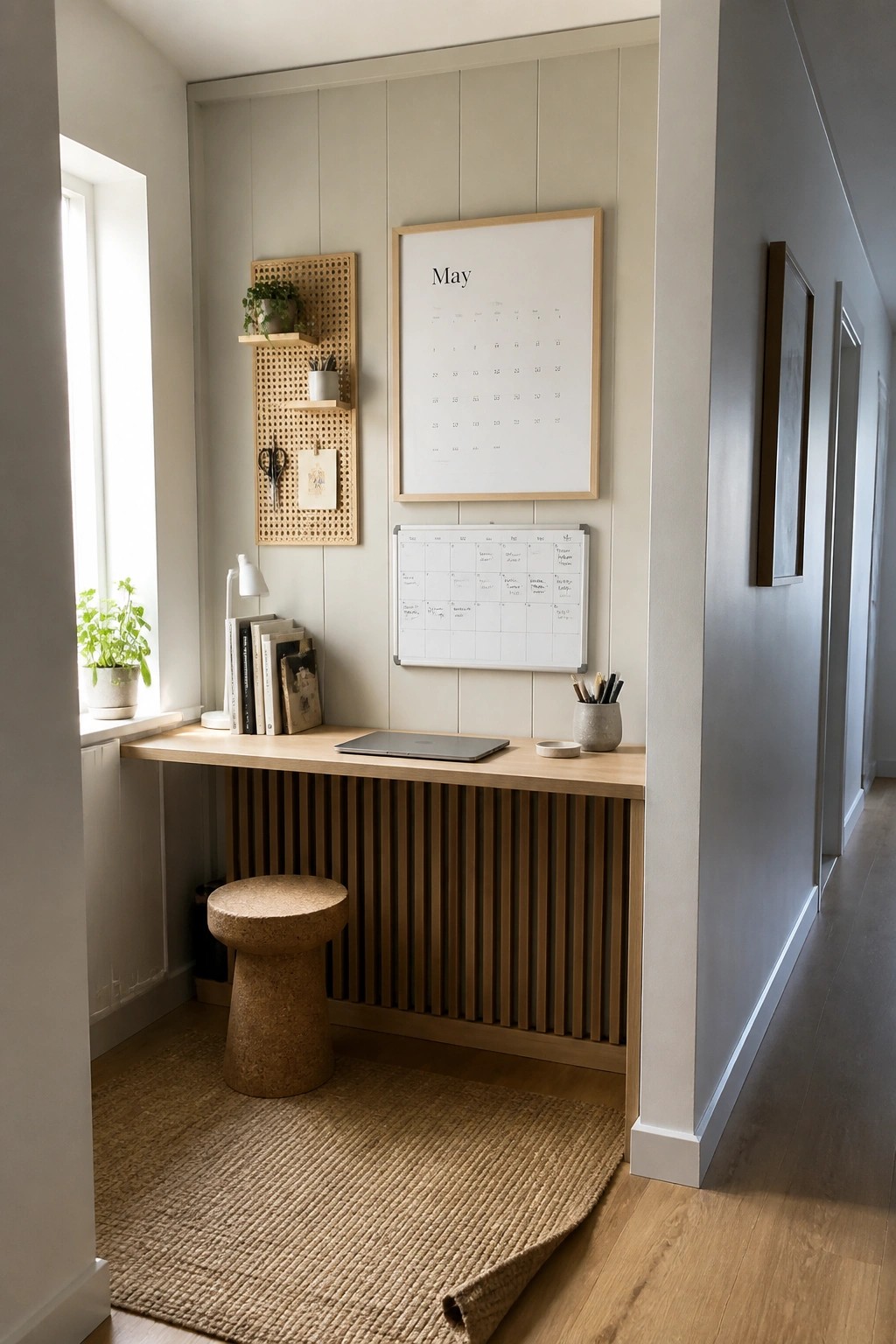
A built-in desk with vertical slats along the front keeps the workspace looking clean and contained. The slats hide the open space underneath while still letting you slide a stool in and out easily, so the room does not feel crowded by furniture legs or random storage.
This approach works best in smaller rooms or alcoves where you want a desk that feels like part of the wall rather than a separate piece. It suits homes with wood tones already in use and helps the desk stay practical without adding visual noise.
Built-In Wall Niches Keep An Office Feeling Open And Organized

Many home offices end up with too many things sitting on the desk or leaning against the wall. Recessed niches cut into the wall give you a place to store and show a few items without adding furniture that takes up floor space. The built-in lighting inside each niche makes the whole area feel calmer and more intentional.
This works best in rooms that already have some wall depth to work with. It suits smaller offices where you want storage but still need the desk area to stay clear for daily work. Keep what you place inside fairly simple so the light and the open wall around the niches stay the main focus.
Built-Ins Turn Small Spaces Into Offices
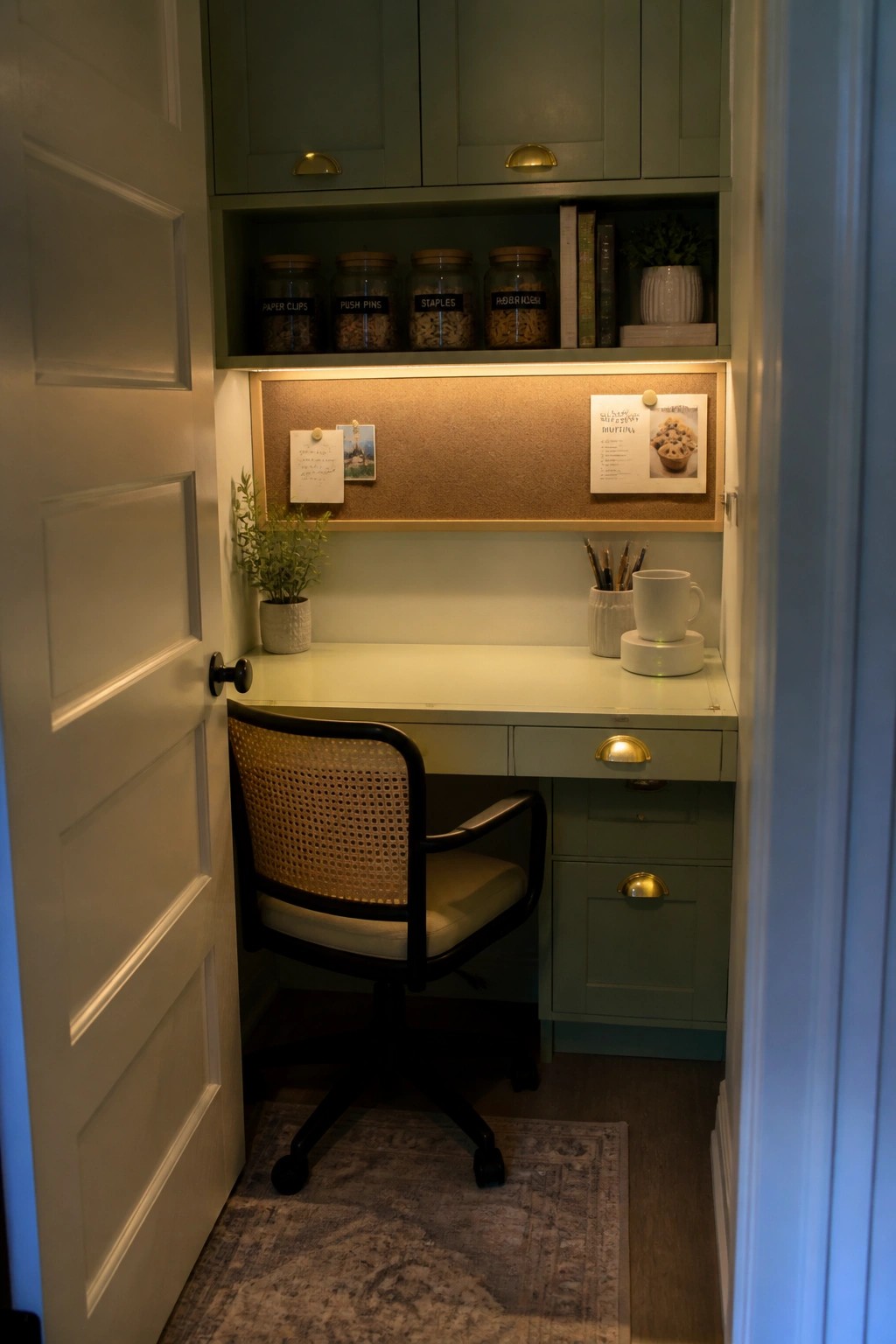
Fitting a desk and storage into a closet or alcove gives you a real workspace without needing a separate room. The built-in shelves and cabinets keep supplies close at hand while hiding clutter when the door closes.
This approach works best in apartments or smaller homes where every square foot counts. Add simple under-shelf lighting and a few open spots for notes or plants so the area feels usable instead of cramped.
An Adjustable Desk Improves Comfort
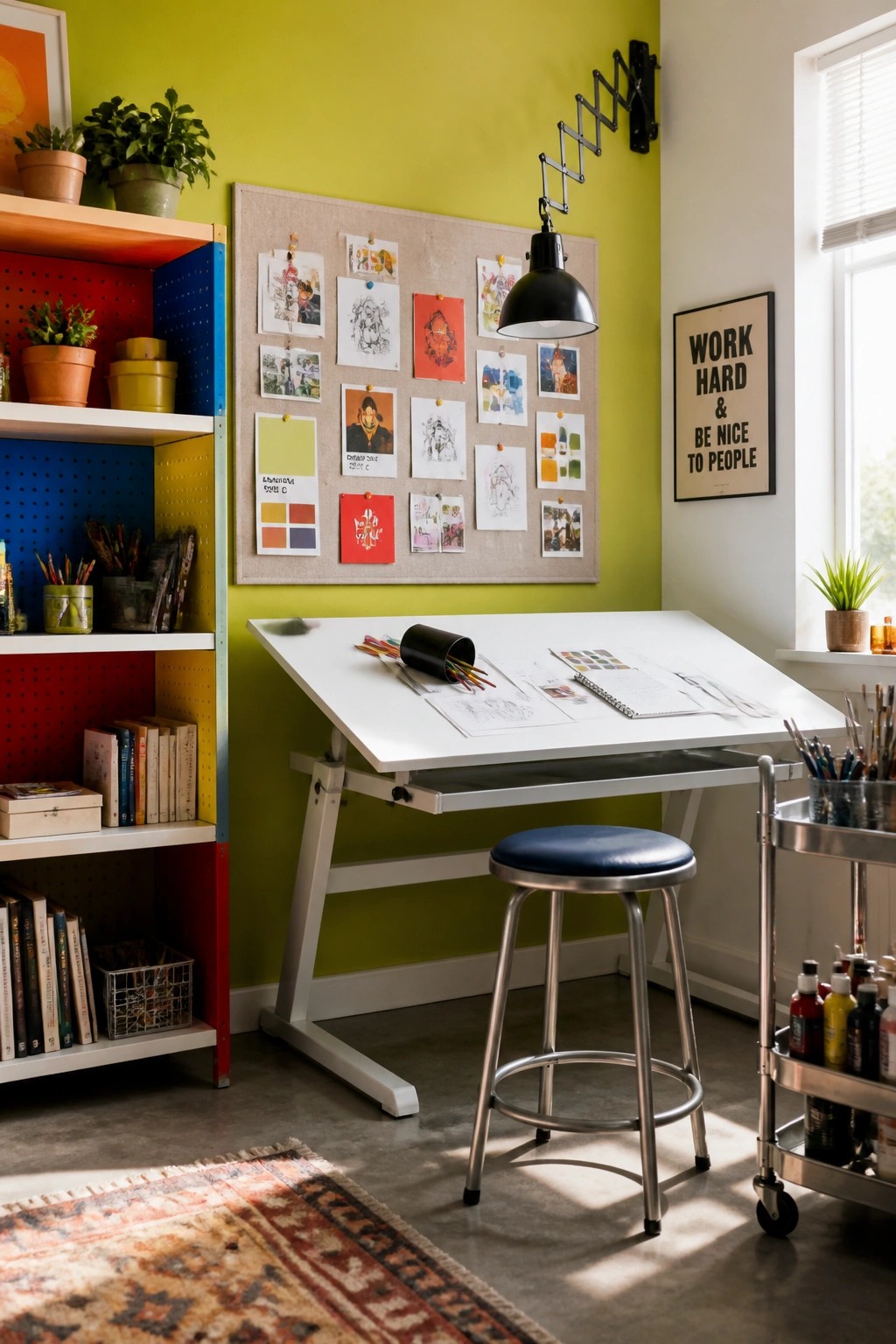
A flat desk can start to feel limiting once you spend hours drawing, sketching, or sorting through papers. An adjustable surface that tilts lets you change the angle to match the task, which often reduces neck strain and makes the work feel less tiring over time.
This setup suits smaller home offices where one piece of furniture needs to handle multiple jobs. Look for a model with a simple crank or lever so you can shift it quickly without tools, and keep the base clear underneath for a stool or chair that tucks away.
Built-In Shelving That Keeps Storage Close At Hand
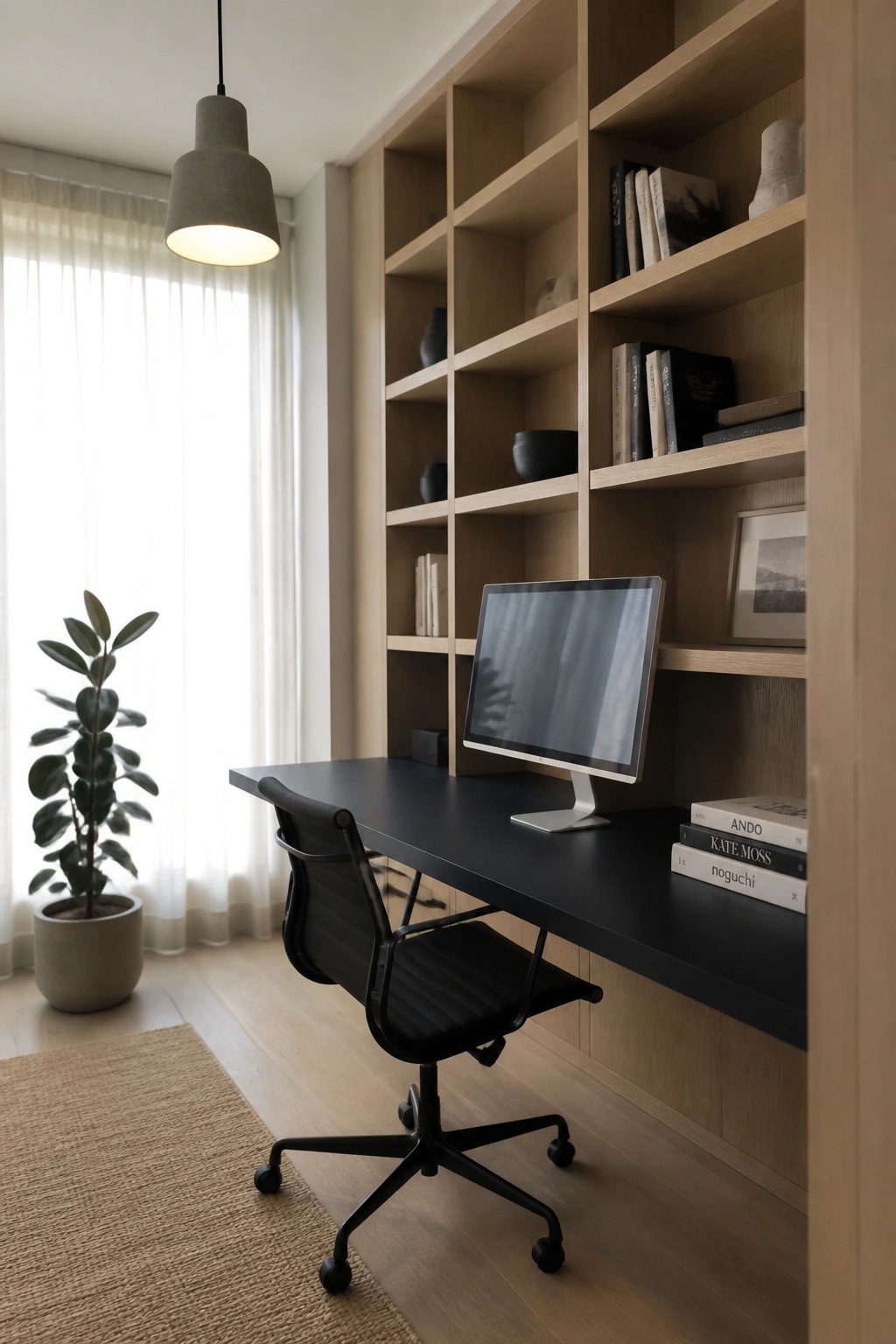
Built-in shelving works well around a desk because it puts books and supplies within reach without adding extra furniture. The shelves fill the wall space above and beside the work surface so the floor stays clear and the room feels less crowded.
This approach suits smaller offices or any space where you want storage that feels part of the room rather than added on later. It helps most when the shelves are sized to hold what you actually use every day instead of filling them just for show.
Built-In Storage Keeps A Home Office Tidy
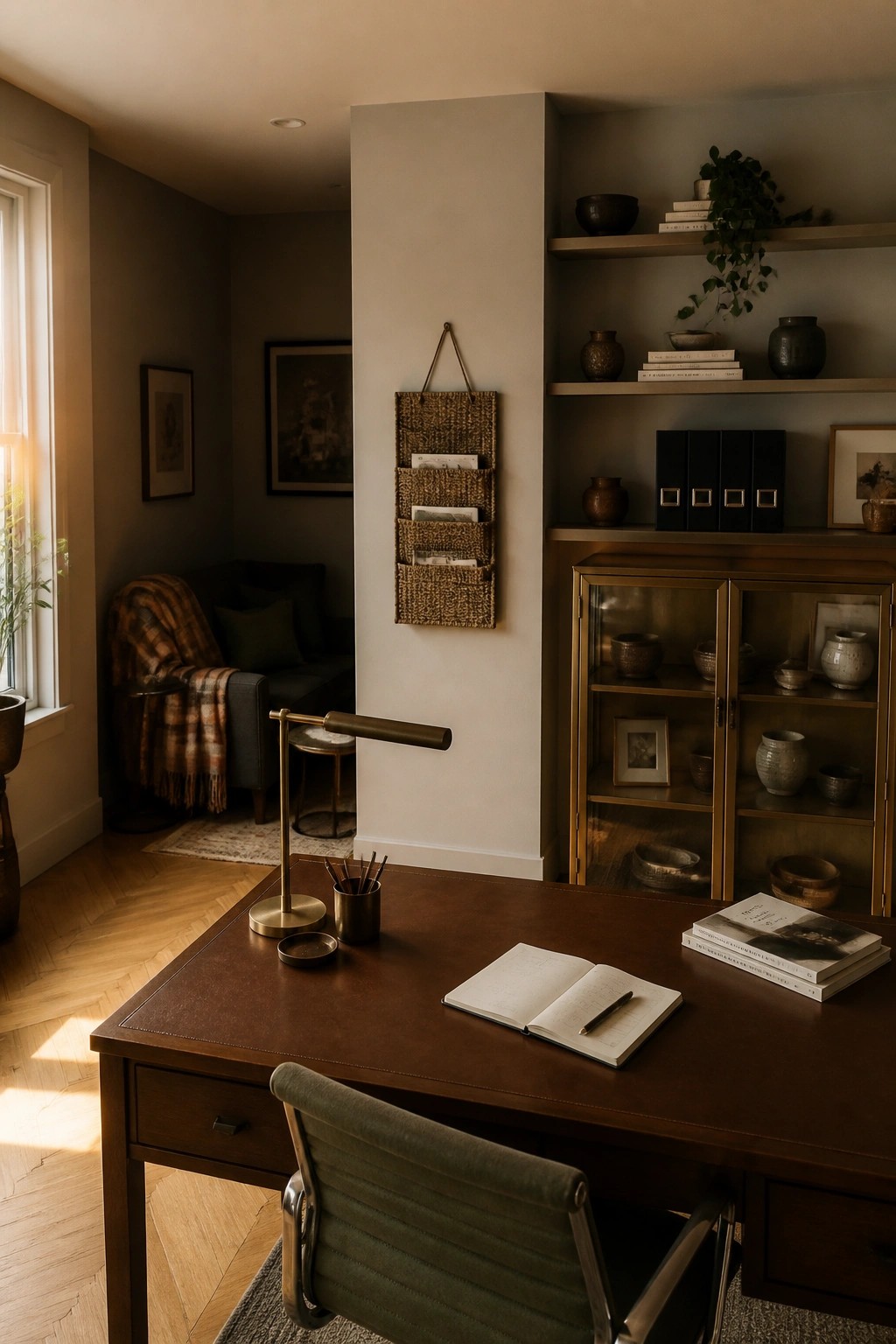
Built-in shelving and cabinets give a home office room to hold books, files, and small decor without crowding the desk. The mix of open shelves and closed doors lets you show a few things while hiding the rest, which keeps the space feeling open and ready for work.
This setup works best in rooms with enough wall space to add cabinetry along one side. It suits smaller homes or anyone who wants the office to blend with the rest of the house rather than look like a separate workspace. Stick to simple finishes so the storage does not overpower the room.
Mix Open Shelving With Closed Storage

Many home offices stay more usable when you combine open shelves with closed cabinets in the same piece. The open areas let you keep books and a few items within reach, while the doors below hide papers and supplies that would otherwise pile up on the desk.
This approach works best in rooms that already have enough wall space but need to stay feeling open. It suits smaller home offices especially, since the vertical storage keeps the floor clear without making the room feel boxed in.
Try A Low Table For Focused Work
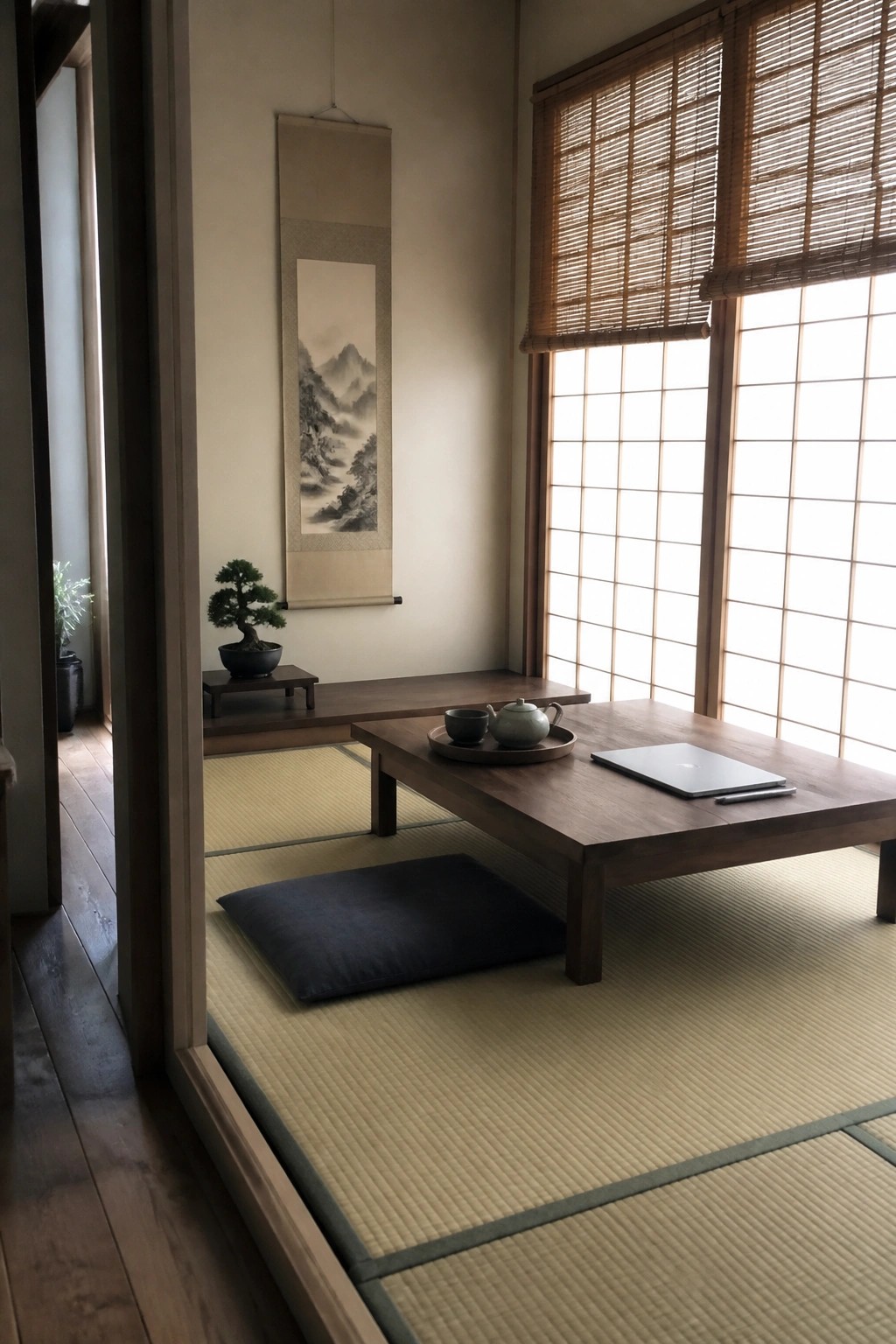
A low table on a simple floor surface can make a workspace feel much quieter. It keeps everything at one level and limits the usual desk clutter, so the eye stays on the task instead of the furniture.
This setup works best in a small room or a corner that already has calm finishes like wood and natural fiber. Place only what you need on the table and keep the rest of the floor clear.
Turn Part Of Your Laundry Room Into A Workspace
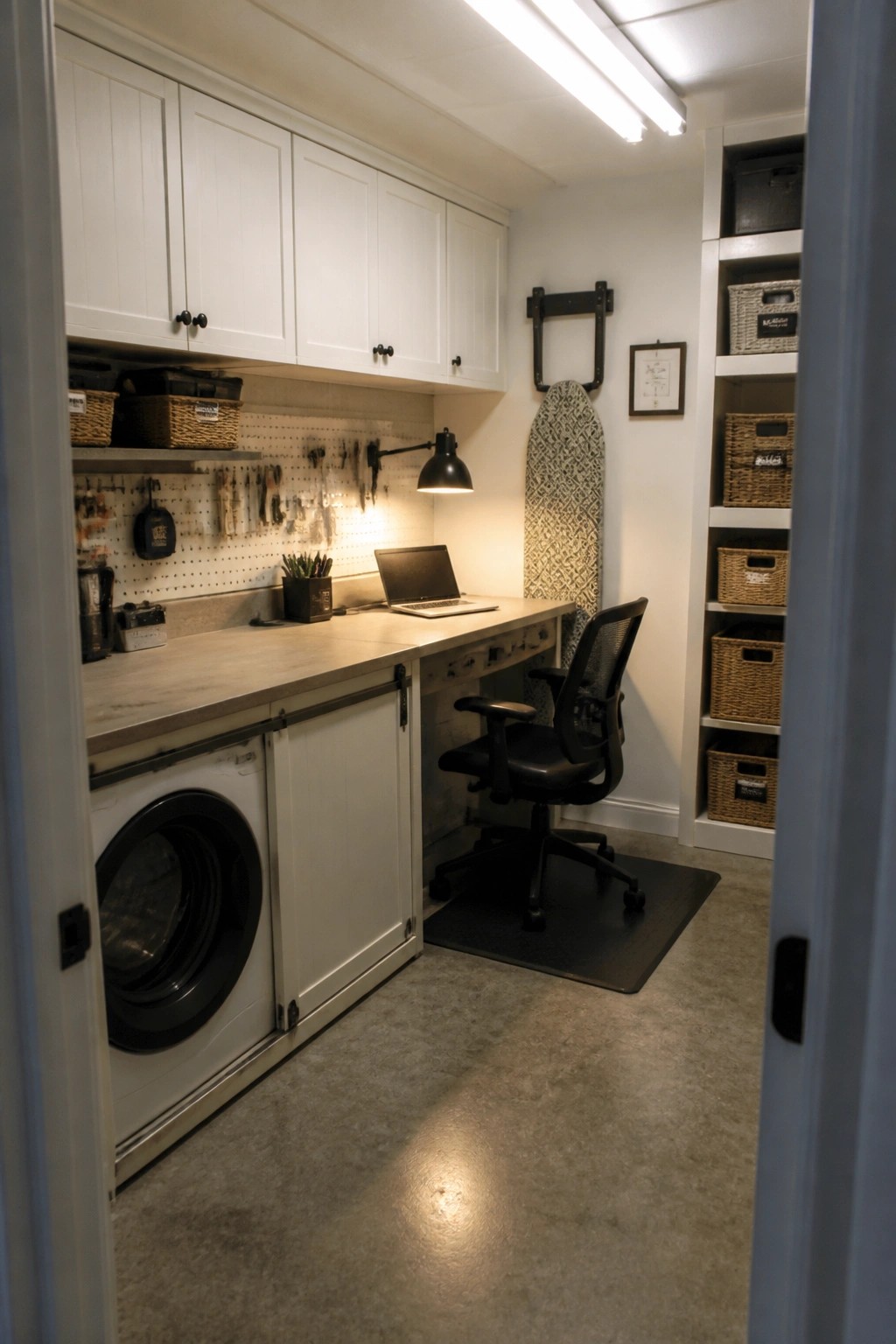
Many homes have a laundry room that sits mostly empty between loads. Adding a simple desk along one wall turns that space into a spot where you can handle quick tasks without needing a separate office.
A long counter gives you room to spread out papers or a laptop, while a pegboard above it keeps tools and supplies within reach. This works best in smaller homes where every room needs to serve more than one purpose. Keep the area clear of clutter so it stays practical for both laundry and work.
Built-In Desks That Save Floor Space

A desk built into surrounding cabinetry keeps the work area contained instead of letting it spread across the room. This setup works well when you need a place to focus but do not want furniture taking over the main floor area.
It suits bedrooms or guest rooms that also serve as offices. Use the surrounding shelves and drawers for books and supplies so the surface stays clear, and add a simple task light so the space remains usable after dark.
Use A Window Planter For Easy Office Greenery
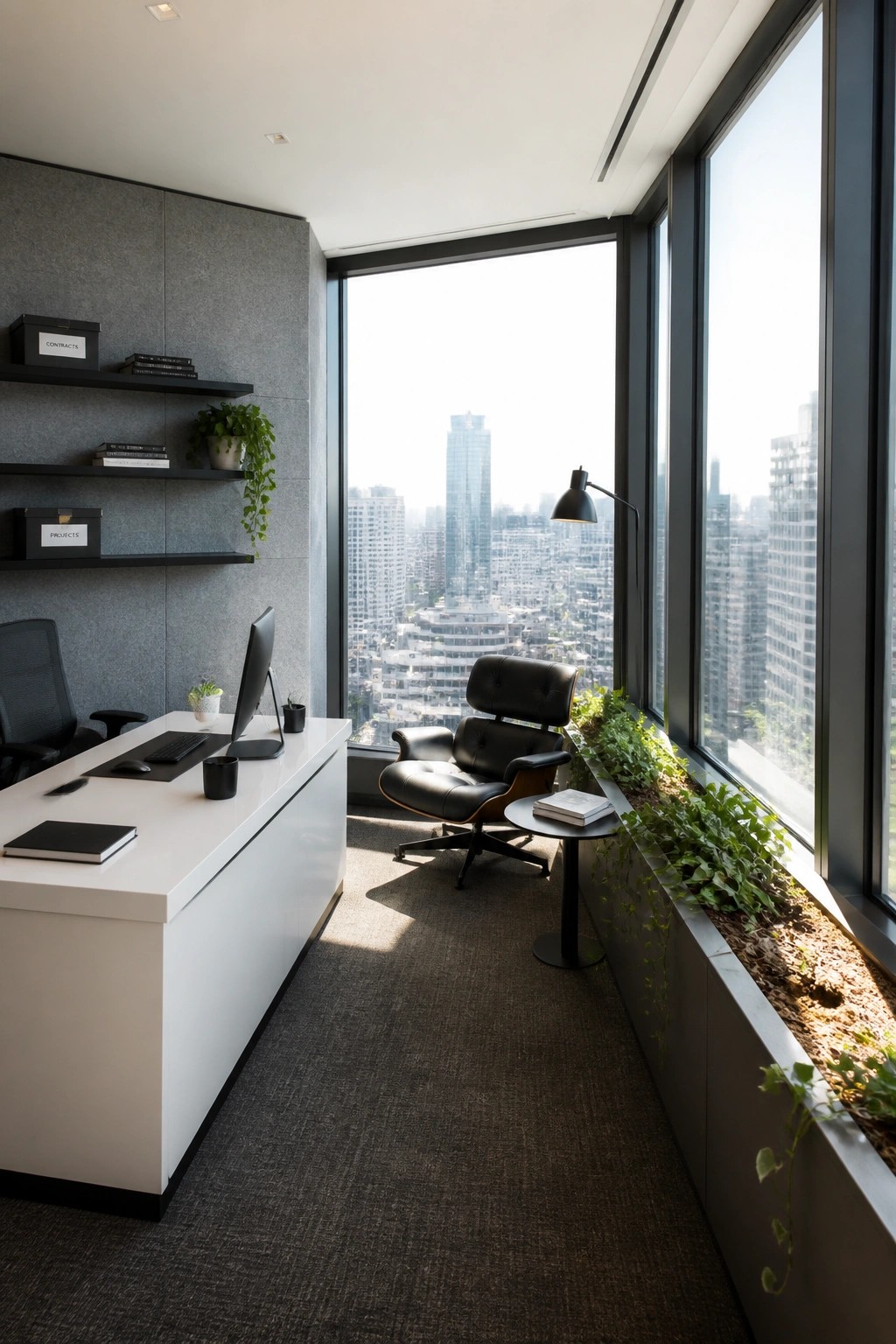
A long planter running along the base of a big window adds living plants without crowding the floor or desk. It brings a bit of nature right into the workspace and helps the room feel less stark, especially when the view outside is mostly buildings.
This works best in offices or work areas that already get strong natural light. Choose trailing or low-care plants so the setup stays simple, and keep the planter depth shallow enough that it does not block the view or get in the way of seating.
Frequently Asked Questions
Q: What if my office has no windows for natural light? A: Add a warm LED floor lamp behind your chair and angle it toward the wall. This bounces soft light around the room and cuts eye strain during long hours. One well placed lamp often works better than overhead bulbs alone.
Q: How do I stop my desk from feeling cluttered with all the modern pieces? A: Keep only the tools you use every hour on the surface and store the rest in a slim drawer unit. A single tray for papers and pens keeps the top clear while still looking polished. Rotate items weekly so nothing stays out longer than needed.
Q: Can I use bold color if the tips lean toward clean and simple? A: Yes, but stick to one accent like a deep green chair or navy mouse pad. Everything else stays neutral so the color feels like a deliberate choice rather than noise. This keeps the space calm and still gives it personality.
