


I’ve spent time in offices where the lighting and layout made every hour feel longer than it should.
The spaces that actually hold up are the ones where seating clusters, color choices, and materials line up with how people really move through the day.
Small tweaks often matter more than a full redesign.
I tend to notice first whether a room encourages conversation or just pushes everyone toward their screens.
When I try these adjustments myself, I start with the areas that get the heaviest use because those changes show up right away.
Use Wood Paneling to Warm Up Office Spaces
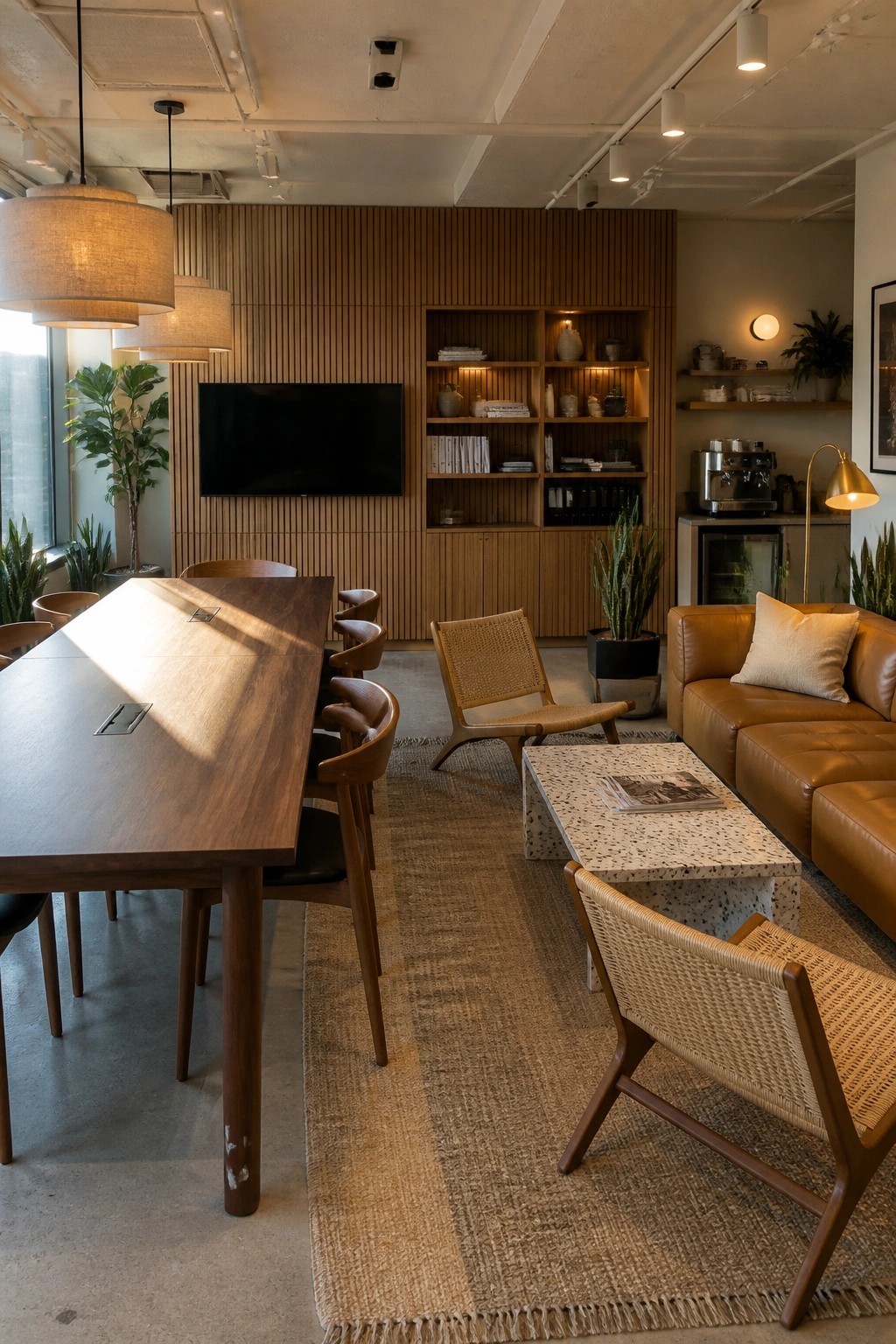
Wood paneling on the walls gives an office a grounded, comfortable feel that standard white walls rarely achieve. It works especially well in shared areas like meeting rooms or lounges where people spend long stretches of time.
This approach suits modern workspaces that want to feel less corporate without losing function. Keep the rest of the room simple with natural materials and you avoid the space feeling too heavy or dark.
Built-In Shelves Around a Fireplace
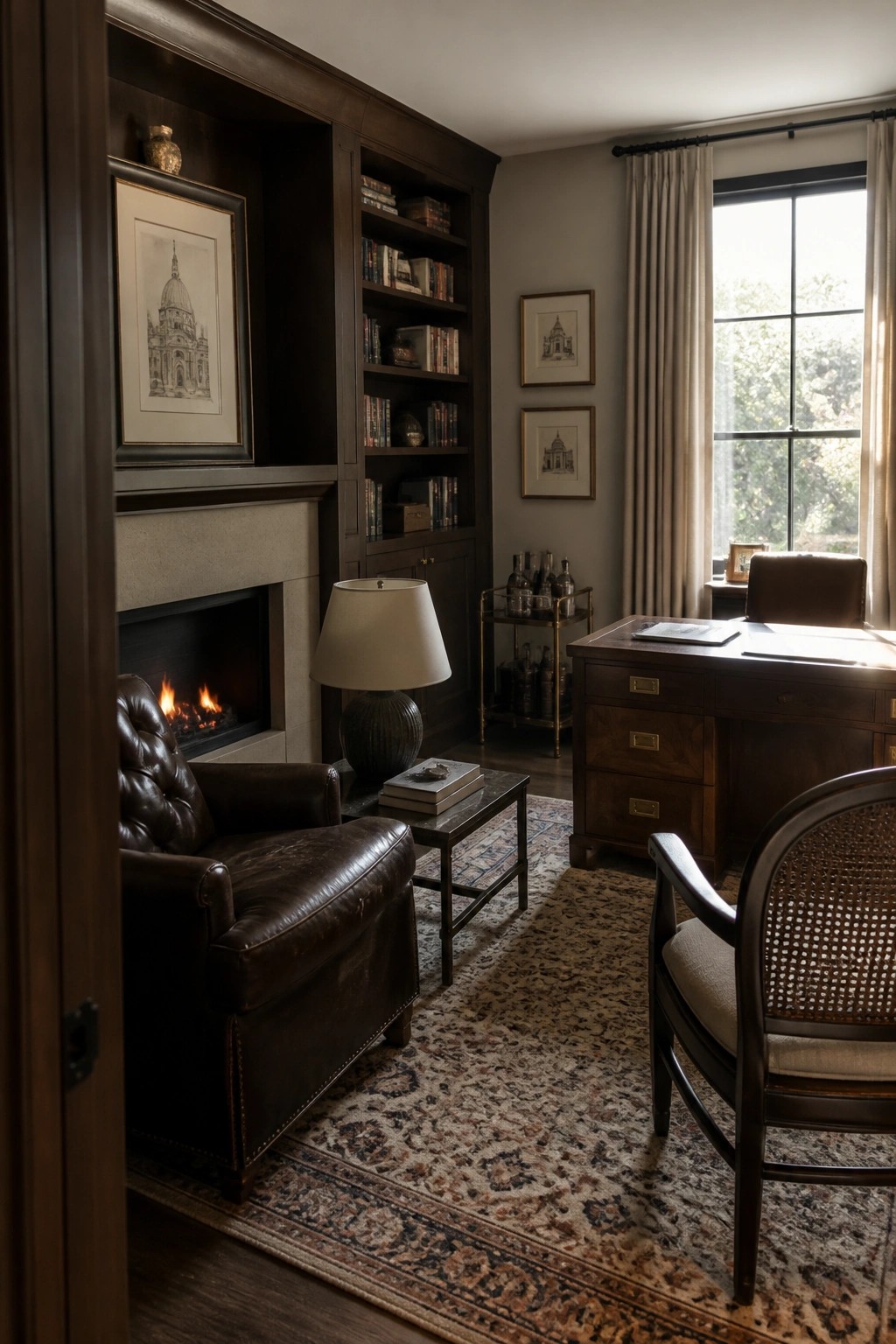
A fireplace with built-in shelving on both sides gives an office a settled, comfortable feeling that most workspaces lack. The dark wood cabinetry holds books and a few objects without looking cluttered, and the fire itself adds a steady point of warmth that makes the room feel used rather than staged.
This setup works best in a room that already has some traditional trim or older architecture. Keep the seating low and the desk simple so the fireplace stays the main feature instead of competing with too many other pieces.
Round Tables Help Meetings Feel More Open

A round table softens the feel of a meeting space right away. It removes the head-of-the-table dynamic and lets everyone see each other without turning sideways, which makes conversations flow more naturally in a work setting.
This layout works best in smaller offices or creative teams where collaboration matters more than formality. Keep the chairs comfortable and varied in tone so the room still feels relaxed even when the table is surrounded by people.
Add a Living Wall to Warm Up a Workspace
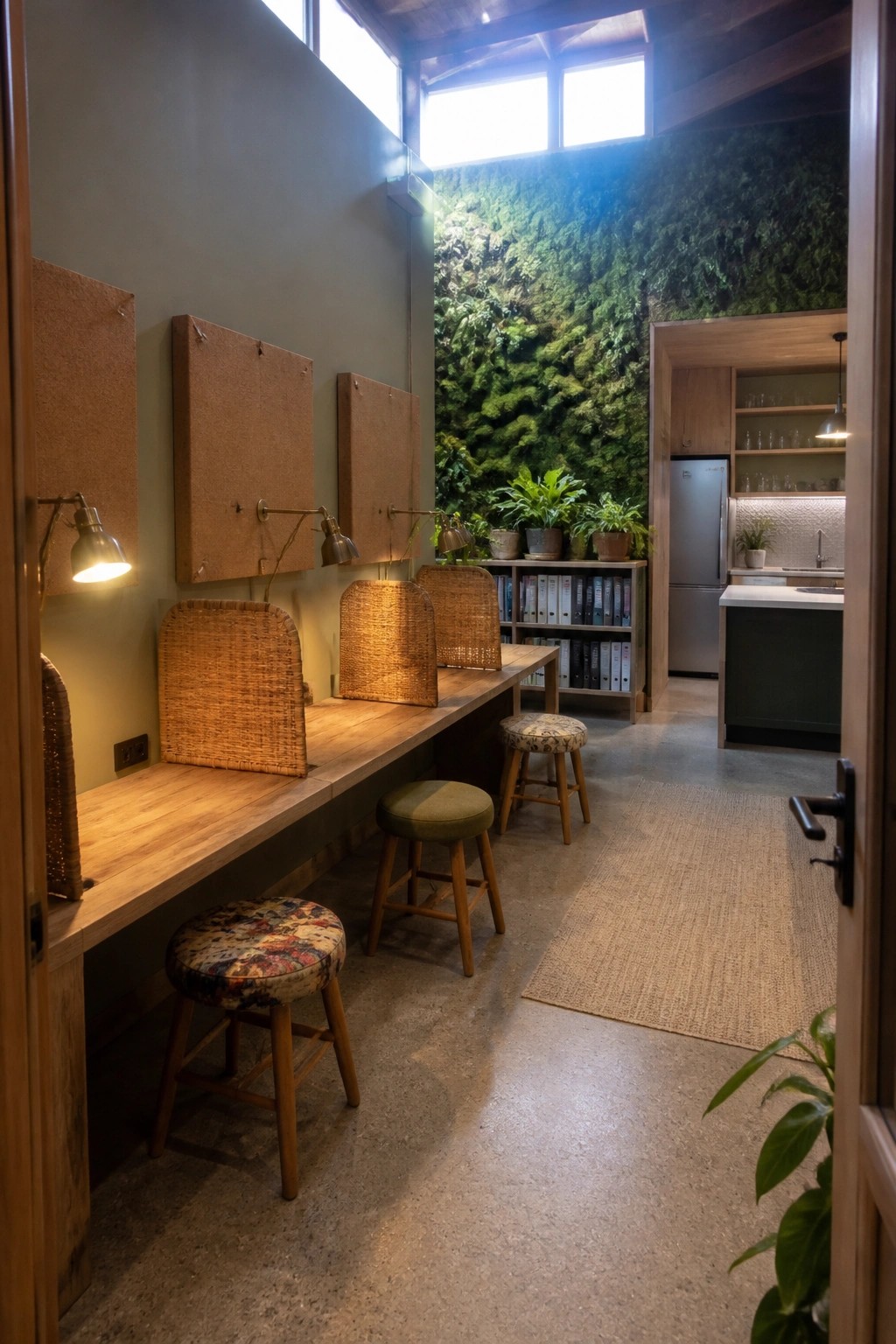
A living wall gives an office that natural touch without taking up floor space. It turns a plain wall into something alive that softens the whole room and makes long hours feel less sterile.
This works best in narrow or shared workspaces where you want a focal point that still leaves room for desks and seating. Keep the rest of the materials simple, like wood and woven pieces, so the green wall stays the main feature rather than competing with too many other textures.
Curved Seating Softens a Corporate Reception Area
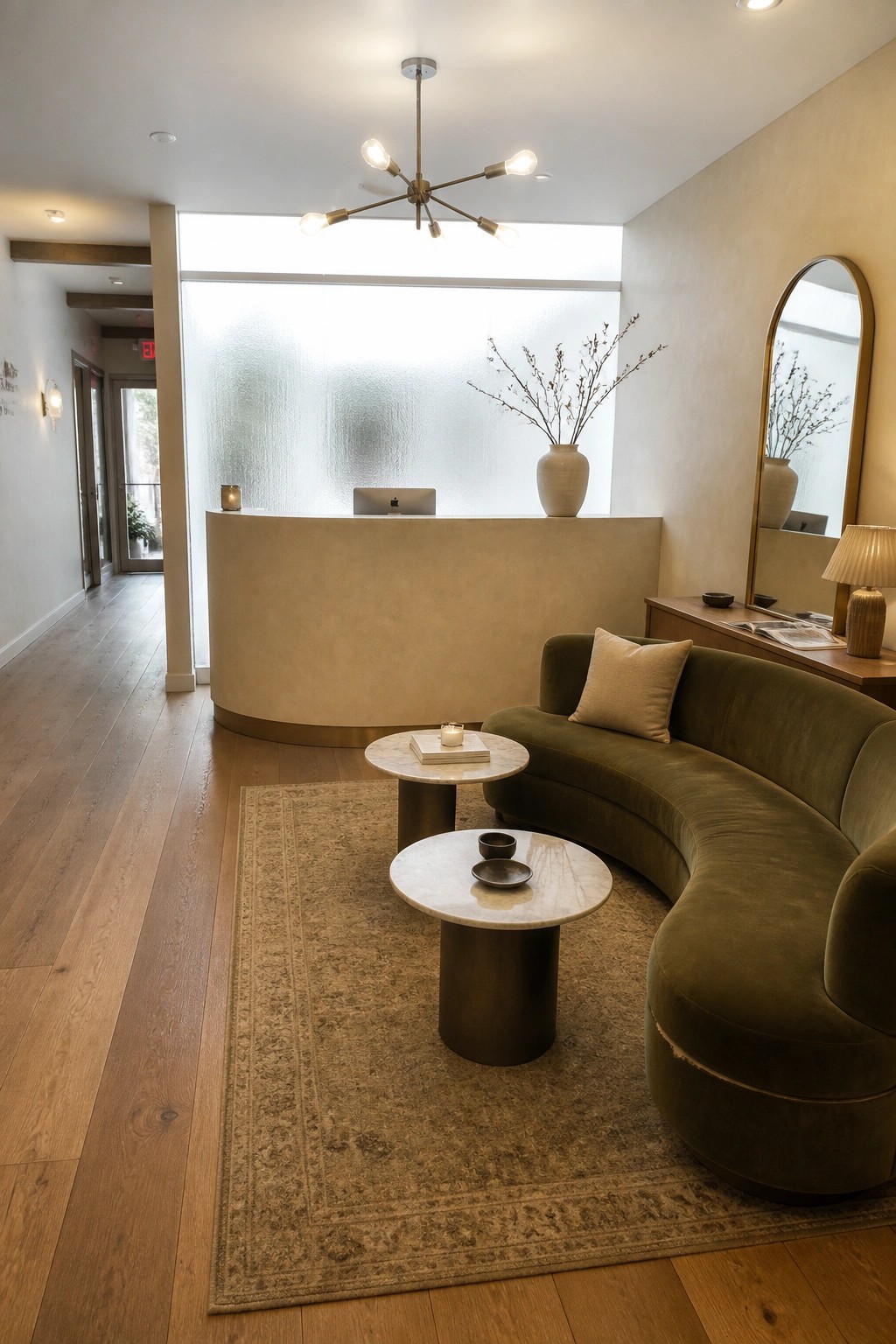
A curved sofa brings an immediate change to how a reception area feels. The rounded shape breaks up the straight lines that often make offices feel stiff and helps the space feel more relaxed for anyone walking in.
This approach works well in smaller offices or any spot where people spend time waiting. Keep the rest of the room simple with wood floors and light walls so the sofa does the main work of making things feel comfortable.
Add a Window Bench to Your Office

A window bench gives an office a place to pause without leaving the room. It turns a plain wall into something useful and much less formal than a standard desk setup. The bench here sits right under the window and holds a row of pillows, which makes the whole corner feel ready for a short break or a change of position.
This works best in smaller offices or rooms that double as workspaces. Keep the bench low and simple so it does not crowd the desk area. Add just enough cushions for comfort and let the natural light do the rest.
A Central Table For Material Samples
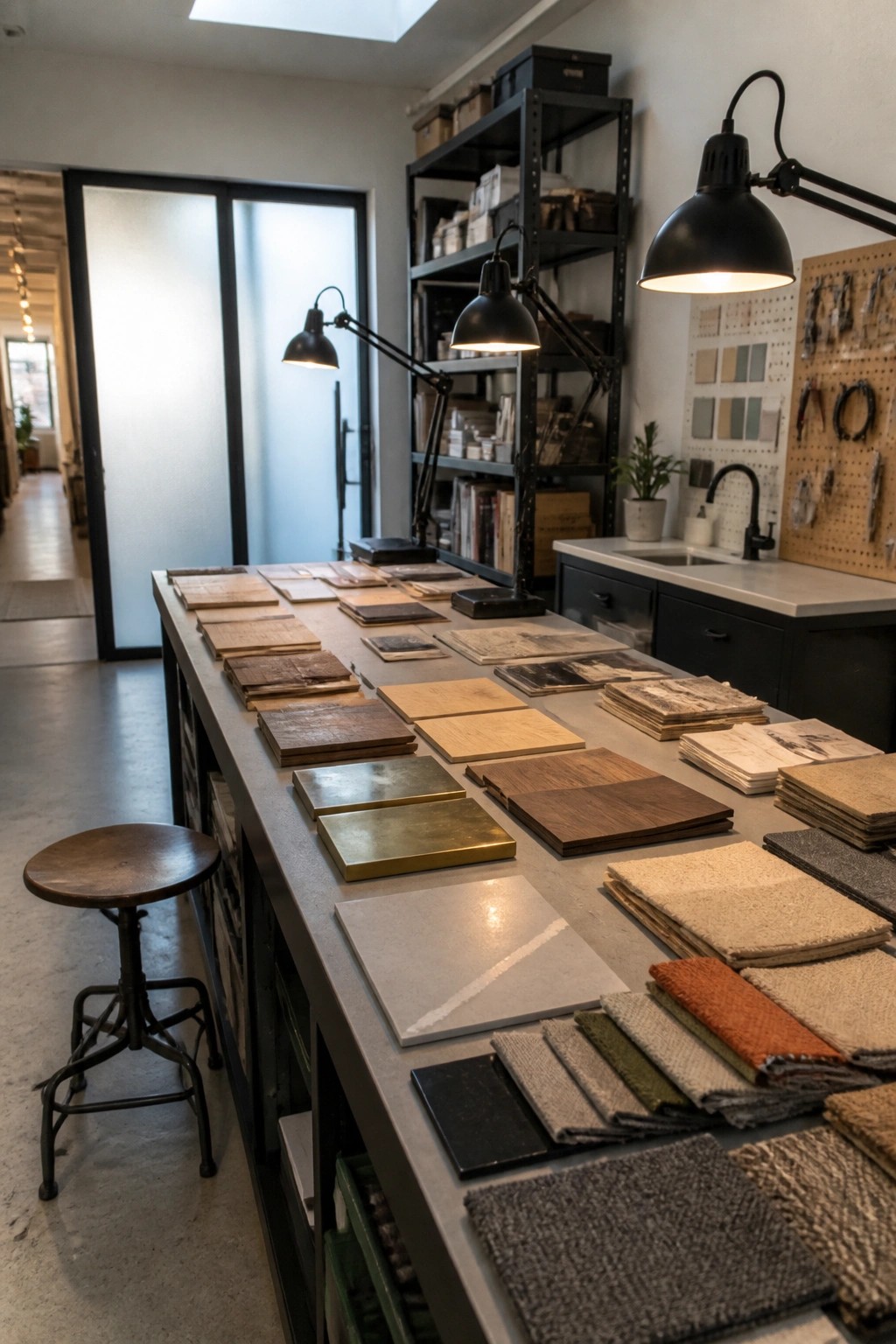
One idea that works well in offices is keeping a long table covered with actual material samples so people can handle and compare them easily. The mix of wood, fabric, metal, and stone laid out together makes the selection process feel more direct and less abstract.
This works best in design studios or corporate spaces where finish decisions happen often. It keeps the room useful and grounded instead of turning into a storage area that stays closed most of the time.
Round Tables Help Meetings Feel Less Formal
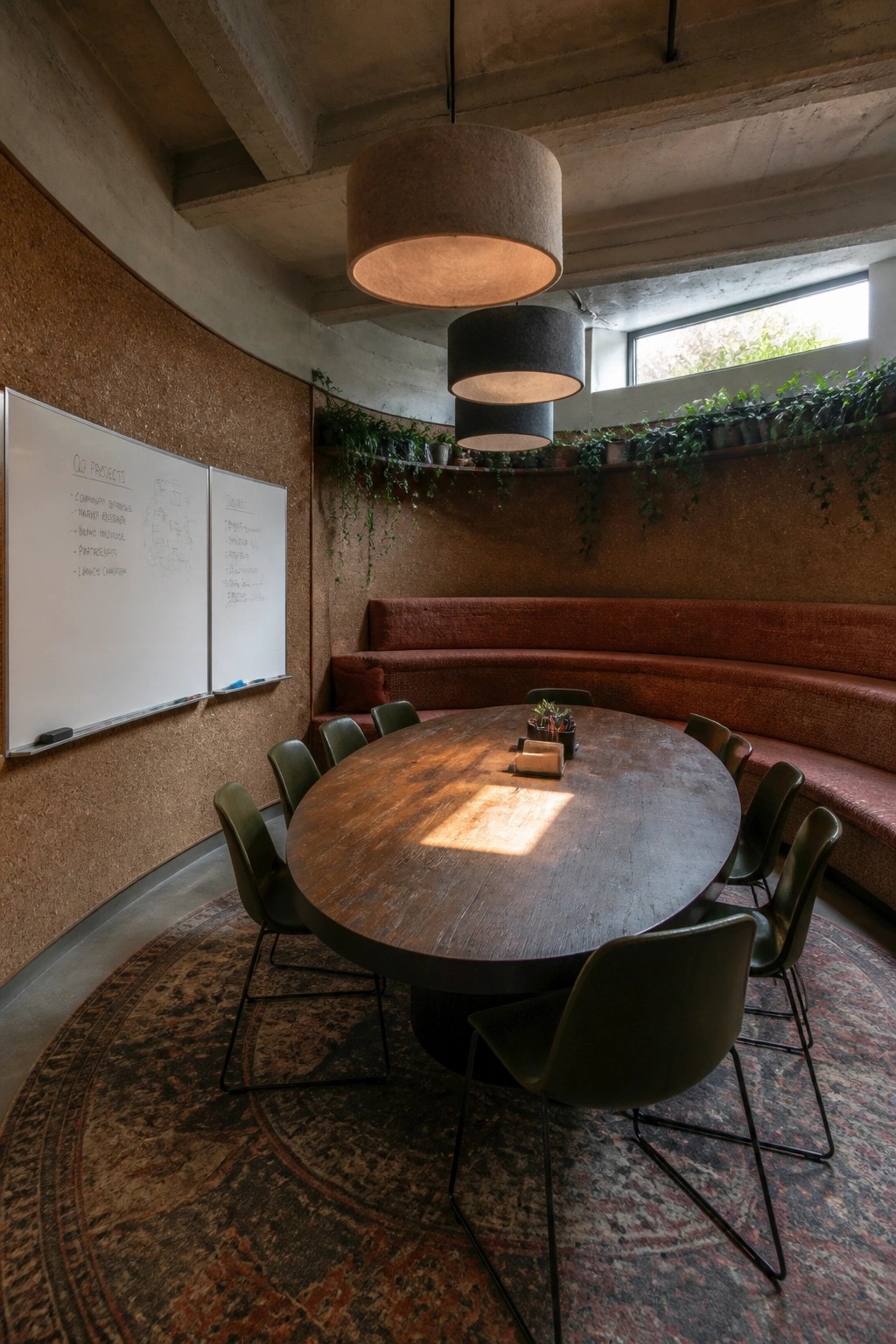
A round table changes the tone of a meeting room right away. Without a clear head of the table, people tend to talk more freely and the whole space feels less stiff than the usual rectangular setup.
This layout works best in smaller conference rooms or team spaces where you want a bit more back and forth. Pair the table with simple chairs and a few softer textures nearby so the room stays practical but still comfortable for longer sessions.
Built-In Seating To Warm Up Open Spaces
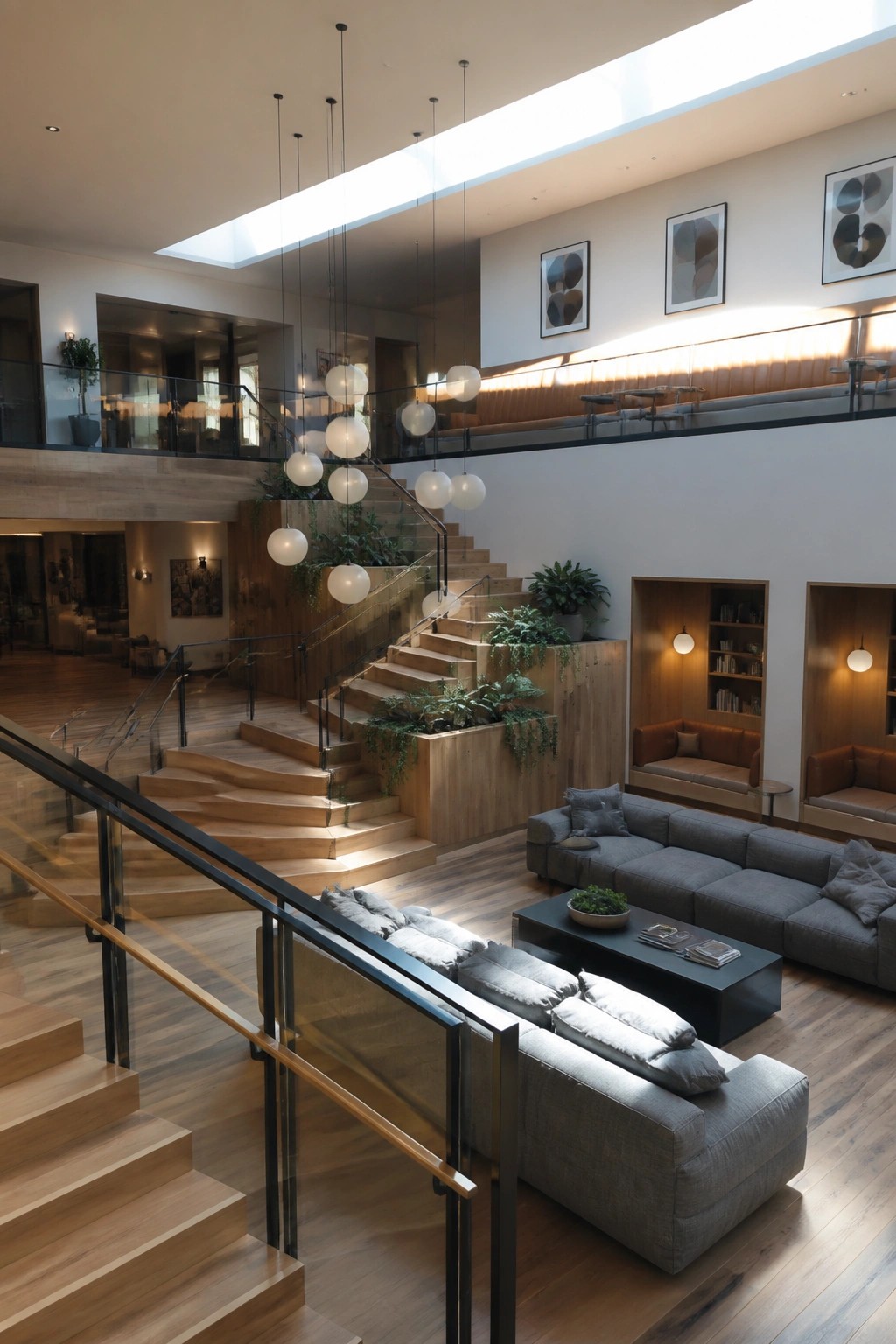
Built-in seating gives a large room a more settled feel without adding clutter. It turns empty wall space into something useful and comfortable, which works especially well in offices that need to feel less formal.
Try placing these along the edges of a main gathering area so people have spots to sit casually. The mix of wood and soft cushions keeps things practical while adding enough texture to make the room feel lived in rather than stark.
Natural Wood Seating Warms Up Meeting Rooms

Many corporate meeting rooms end up feeling stiff because of all the hard surfaces and matching furniture. Wooden chairs with woven seats bring in a softer touch that makes people want to sit longer without losing the professional setting.
This works especially well in rooms used for longer discussions or client meetings. Keep the rest of the space simple so the wood tones and texture stand out without competing with too many other details.
Built-In Bookshelves To Warm Up An Office

Built-in bookshelves give an office a settled, comfortable feeling that plain walls rarely provide. They add texture and depth while offering plenty of room for books, files, and a few personal pieces that make the space feel less corporate.
This setup works especially well in meeting rooms or private offices where people spend long stretches of time. Keep the shelves mostly full and let the wood tones carry through to the table and trim for a cohesive look that feels inviting without extra effort.
Built-In Desks That Keep An Office Feeling Welcoming
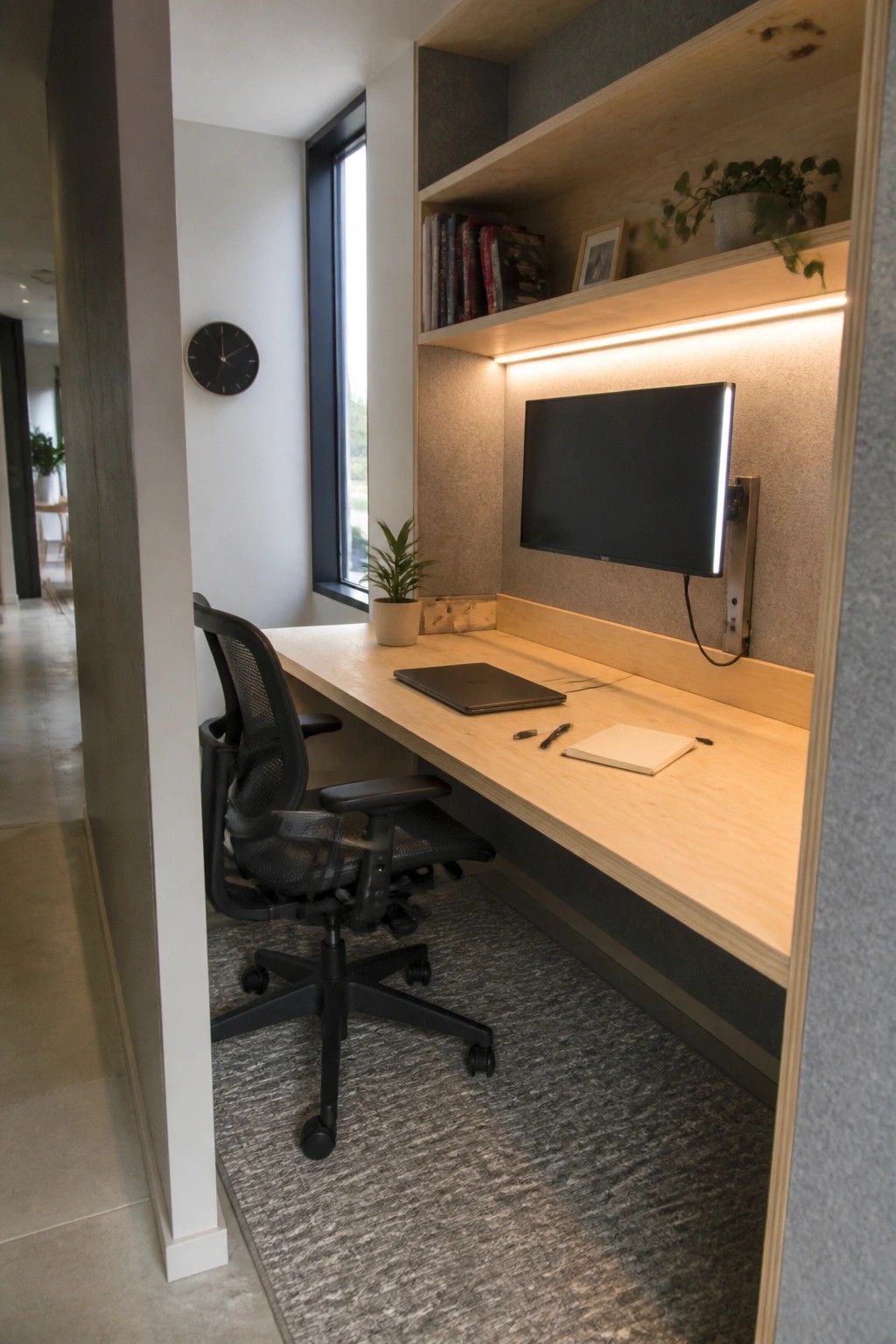
One simple way to make a workspace feel less corporate is to build the desk straight into the wall. It turns the whole area into a single unit instead of a desk just pushed against a surface, so the room stays calm and put together even when papers and a laptop are out.
This setup works best in smaller homes or narrow rooms where you need the floor space to stay open. Choose a light wood tone and add lighting under the shelf above so the desk stays usable without extra lamps cluttering the surface.
Install a Kitchen Island With Bar Stools
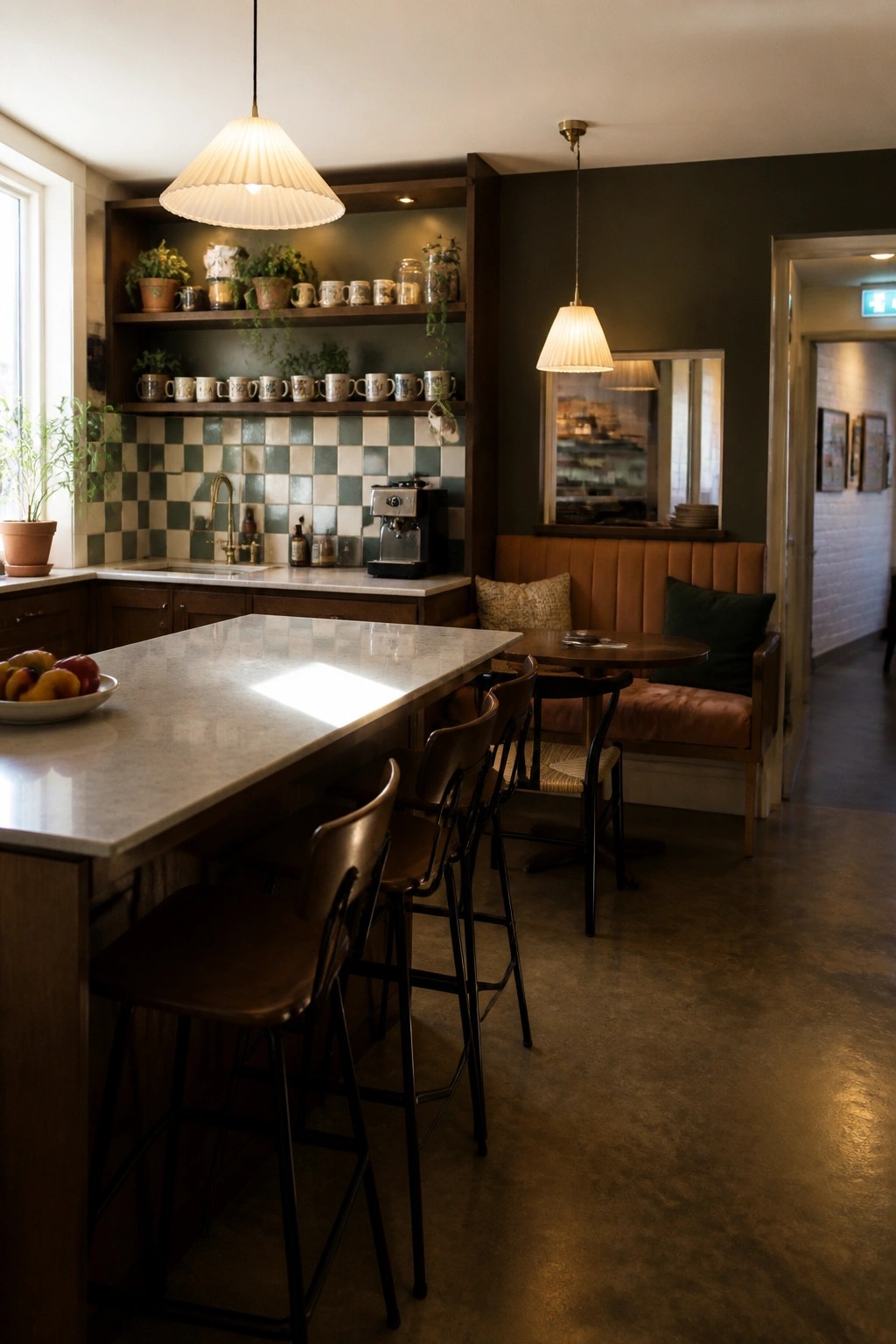
A kitchen island with bar seating gives people a place to pause without feeling like they are stuck at a desk. It turns a basic break area into something more useful and comfortable, especially in offices where employees need quick spots to chat or eat.
This setup works well in smaller offices or open plan spaces that need a residential touch. Keep the island surface simple and pair it with sturdy stools so the area feels practical rather than fussy. The booth seating in the background adds another layer of comfort for longer breaks.
A Long Wooden Table Centers the Office

Many corporate spaces end up feeling stiff because desks are lined up against walls or separated into small cubicles. A single long wooden table changes the feel by giving people a shared surface that invites collaboration without forcing it.
This works well in smaller teams or creative departments where materials need room to spread out. Keep the chairs simple and movable so the table stays the main feature and the room does not get crowded.
Upholstered Walls Warm Up Small Meeting Nooks
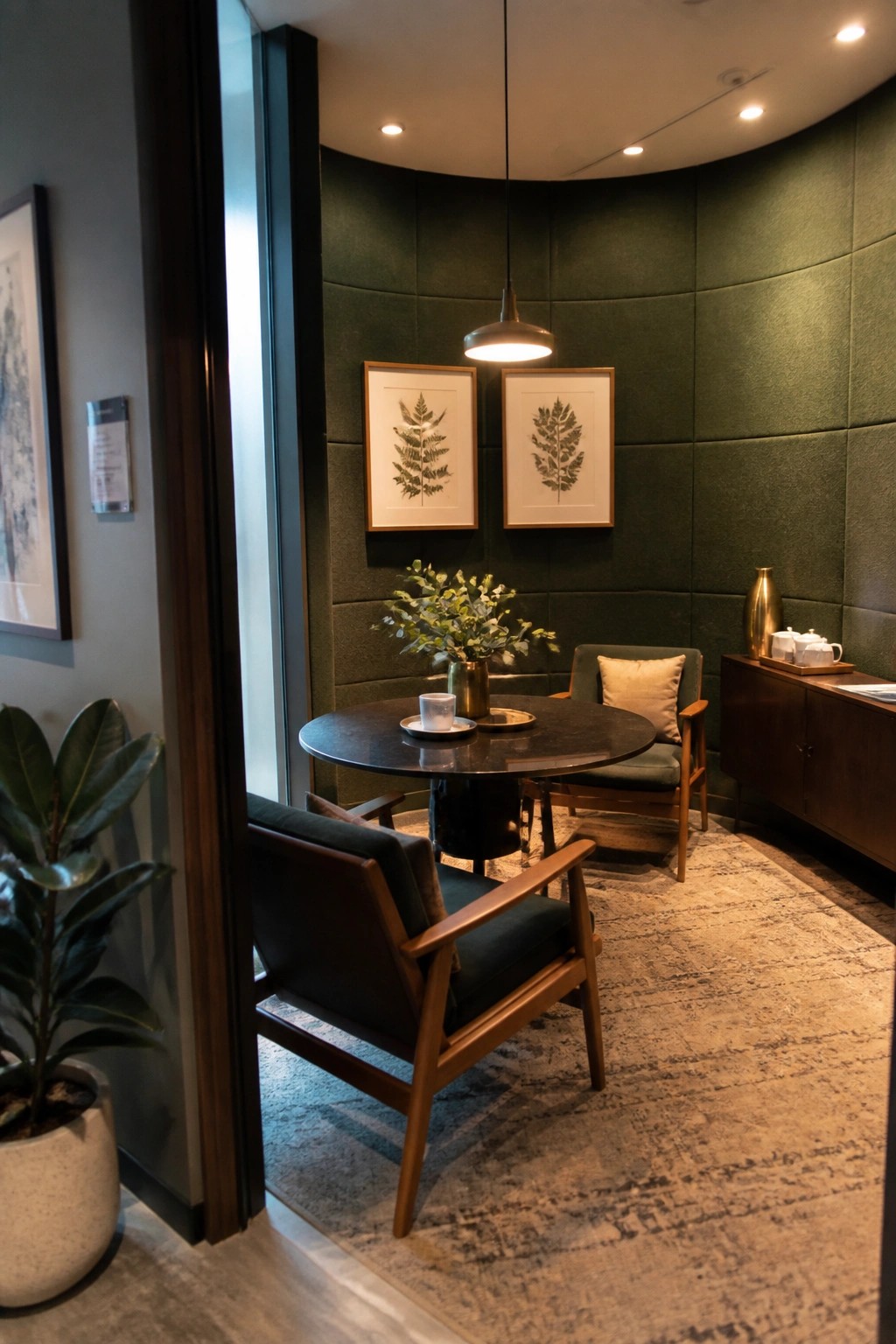
Many offices stick with hard walls and bright lighting that keep things feeling formal. Adding upholstered panels to an alcove or corner changes the mood right away. The fabric softens sound and makes the space feel more settled without needing a lot of extra furniture.
This approach works best in rooms that already have some separation from the main workspace. Keep the rest of the furnishings simple, like a round table and a few comfortable chairs, so the upholstered wall remains the main feature. It suits offices that want private spots without building full rooms.
Built-In Shelving With Warm Lighting
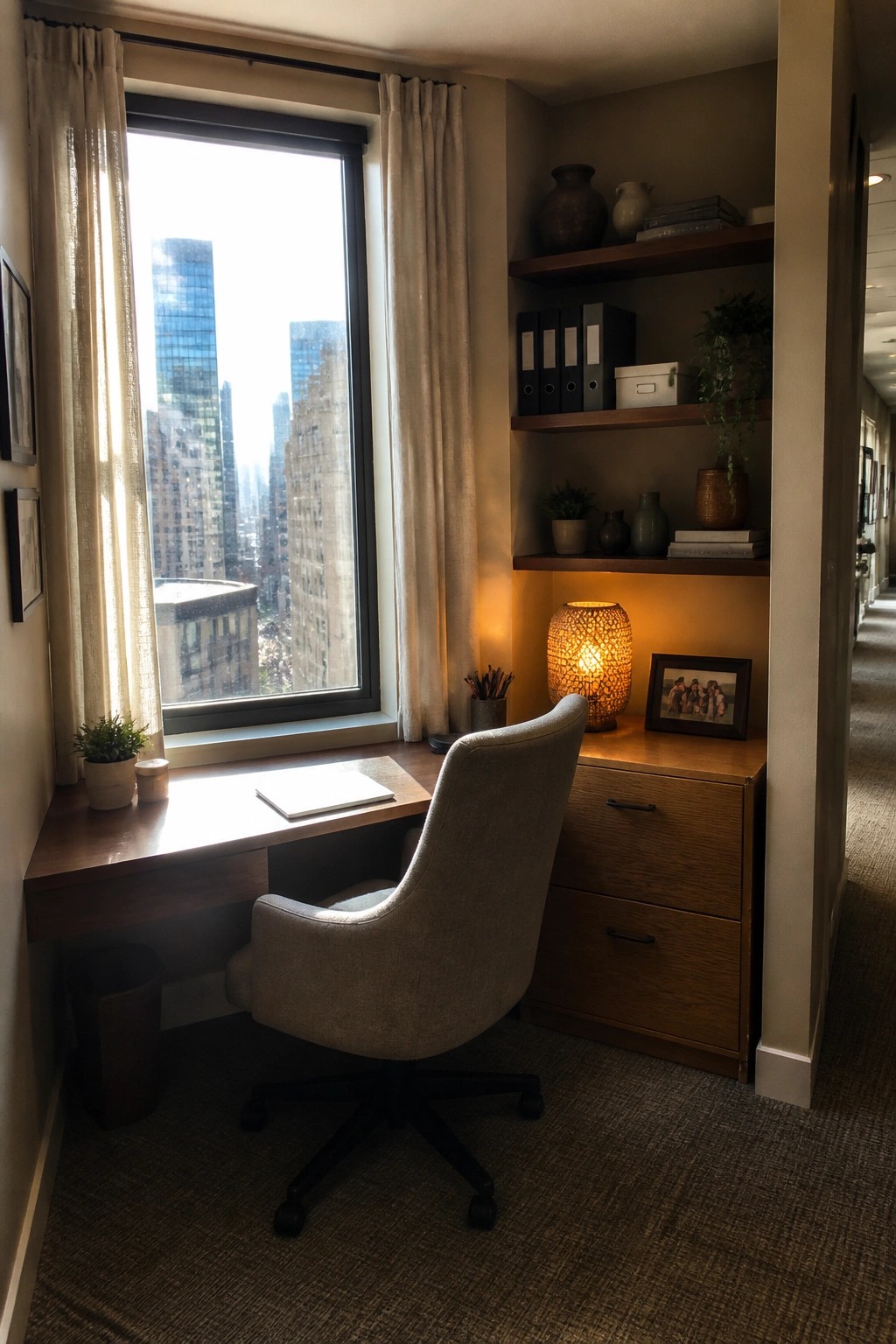
Built-in shelving next to a desk gives an office both storage and a softer look. The wood shelves hold binders and a few personal pieces without making the space feel crowded, and the warm light from a single lamp keeps the whole corner from looking too stark.
This works well in smaller rooms or apartments where you need function without adding more furniture. Keep the shelves fairly open and use one low lamp so the light stays gentle rather than harsh.
Tiered Seating For Media Rooms

Tiered seating makes a big difference when a group needs to watch something together. Everyone gets a clear sight line without anyone blocking the screen, and the setup feels more intentional than a bunch of chairs lined up on a flat floor.
This approach works especially well in corporate media rooms or training spaces where presentations and videos happen often. Keep the steps low and lit, choose wide chairs with cup holders, and use soft wall panels to control sound so the room stays comfortable even during longer sessions.
Built-In Bench Seating In Office Corridors
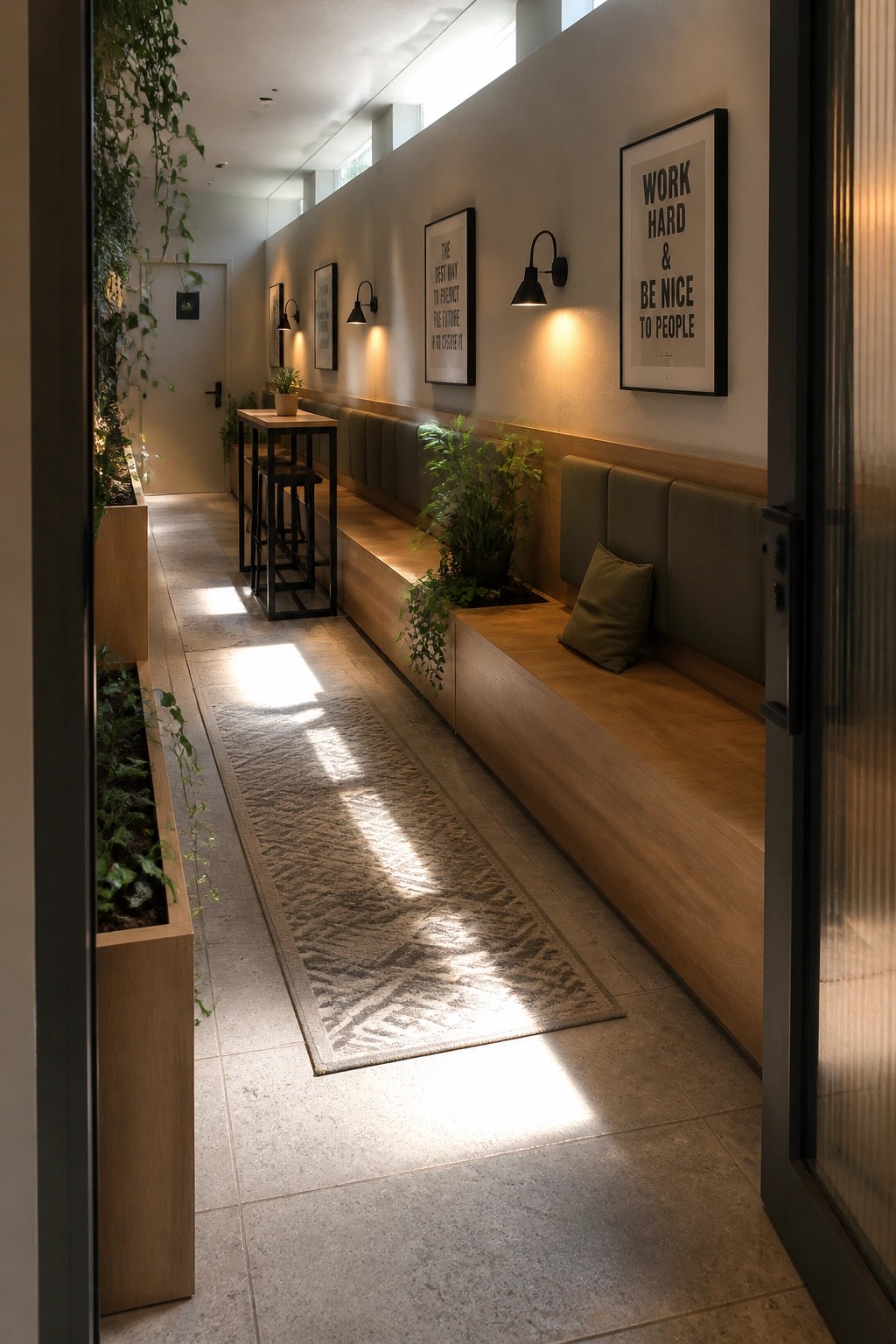
One idea that helps corporate hallways feel less stark is adding a long built-in bench along one wall. The wood base and simple cushions turn the space into a place where people can pause or talk without pulling up extra chairs.
This works best in narrow corridors that already have decent natural light. Keep the wood light and add a few plants at the base so the seating feels practical rather than decorative.
Use Natural Materials to Warm Up the Space

Natural materials stand out in this kind of setting because they soften what would otherwise feel like a plain commercial room. Wood tones, stone samples, and woven rugs bring in texture and a grounded quality that makes the space easier to spend time in.
Try the same approach in a reception area or small office by choosing a jute runner along the main path and pairing it with wood display pieces or a simple counter. It works best in spaces that see clients or visitors and need to feel approachable without a lot of extra decoration.
Frequently Asked Questions
Q: What if my budget is tight and I can’t buy new furniture? A: Repurpose what you already have with new pillows or a fresh coat of paint on an old lamp. Add a few cheap plants from the grocery store. These small swaps bring in warmth fast.
Q: How do I keep things professional with personal touches? A: Stick to neutral bases and add color through accessories that can change with the seasons. One or two framed photos or a favorite mug do the trick without going overboard.
Q: My office lacks natural light. What can I do? A: Use mirrors to bounce around artificial light and brighten the room. Layer lamps with different heights instead of relying on one harsh source.
Q: How do these ideas work in a shared open space? A: Suggest group additions like a soft rug under a meeting table or warm lamps in common corners. People often join in once they see how much calmer the area feels.
