

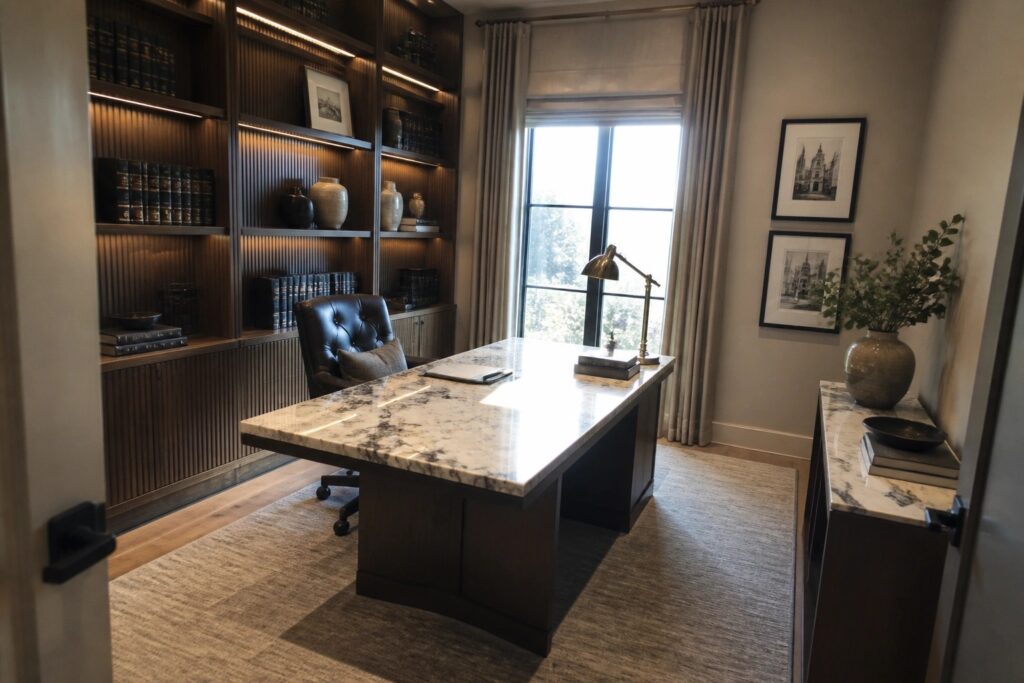
Setting up an office at home taught me that the way a room handles both work tasks and quiet moments determines whether it feels truly comfortable over time.
I tend to notice first how the storage integrates with the seating area since that often decides if papers stay hidden or clutter the surface.
Scale plays a quiet role too because oversized pieces can shrink the sense of space even in larger rooms.
Details add up fast.
Testing a couple of these concepts in my own setup showed me which ones hold up once daily use begins.
Stone Desks In Home Offices
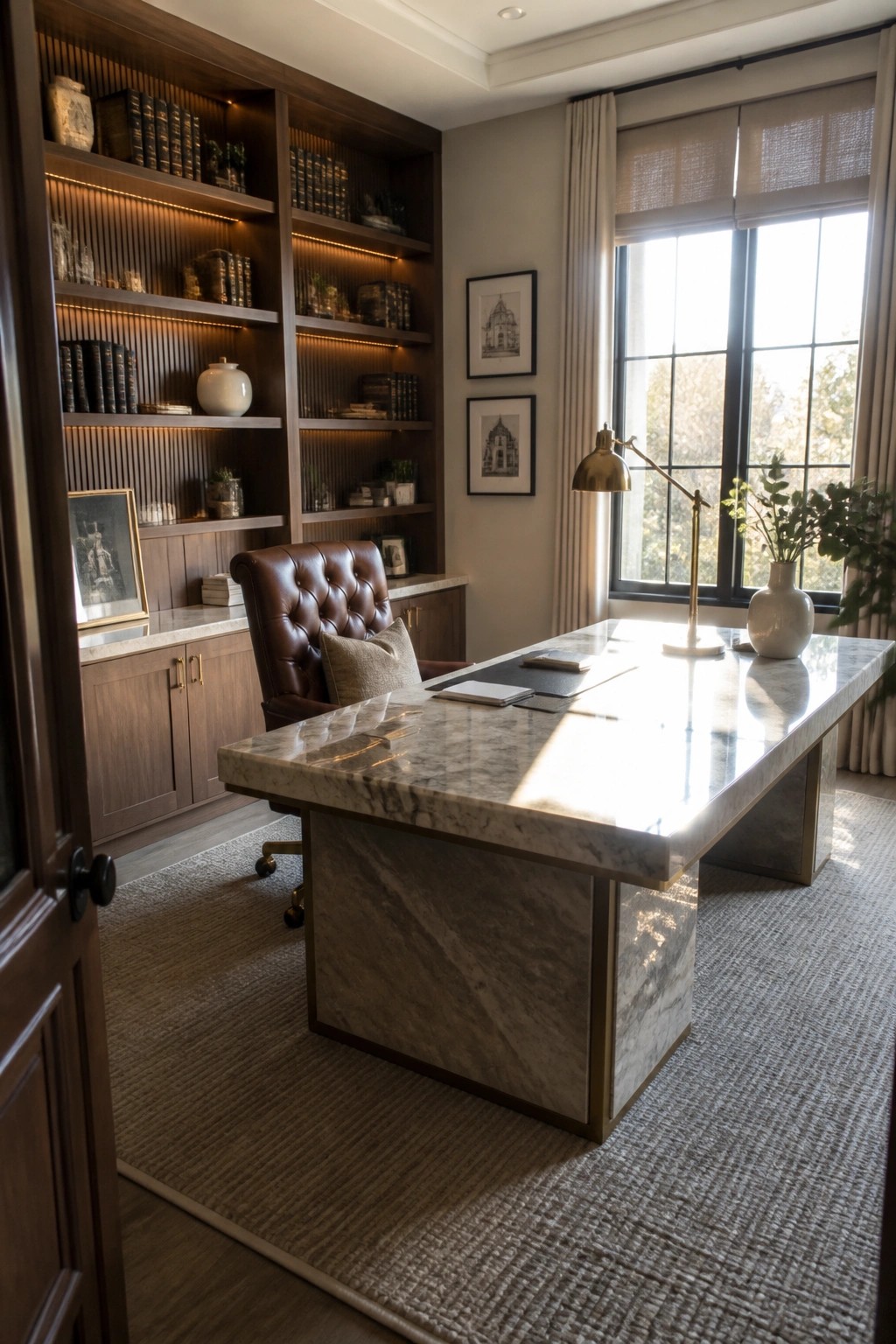
A big stone desk can give a home office real presence without needing a lot of extra pieces. The weight of the material and the simple shape help the room feel settled and finished right away. It works especially well when the rest of the space stays fairly quiet.
This choice suits rooms that already have built-in storage or wood tones nearby. Keep the top fairly clear and let the desk do the main work. It tends to look best in spaces that get good natural light so the surface can show its natural variation.
Floating Shelves Over a Desk

Floating shelves above a desk give you storage without adding another big piece of furniture. They keep the work area feeling open while still giving a spot for books, plants, and a few favorite things.
This works well in smaller offices or rooms that need to stay light. Pair the shelves with a desk that already has some drawers so the open space stays useful instead of crowded.
Add A Long Cabinet Along One Wall
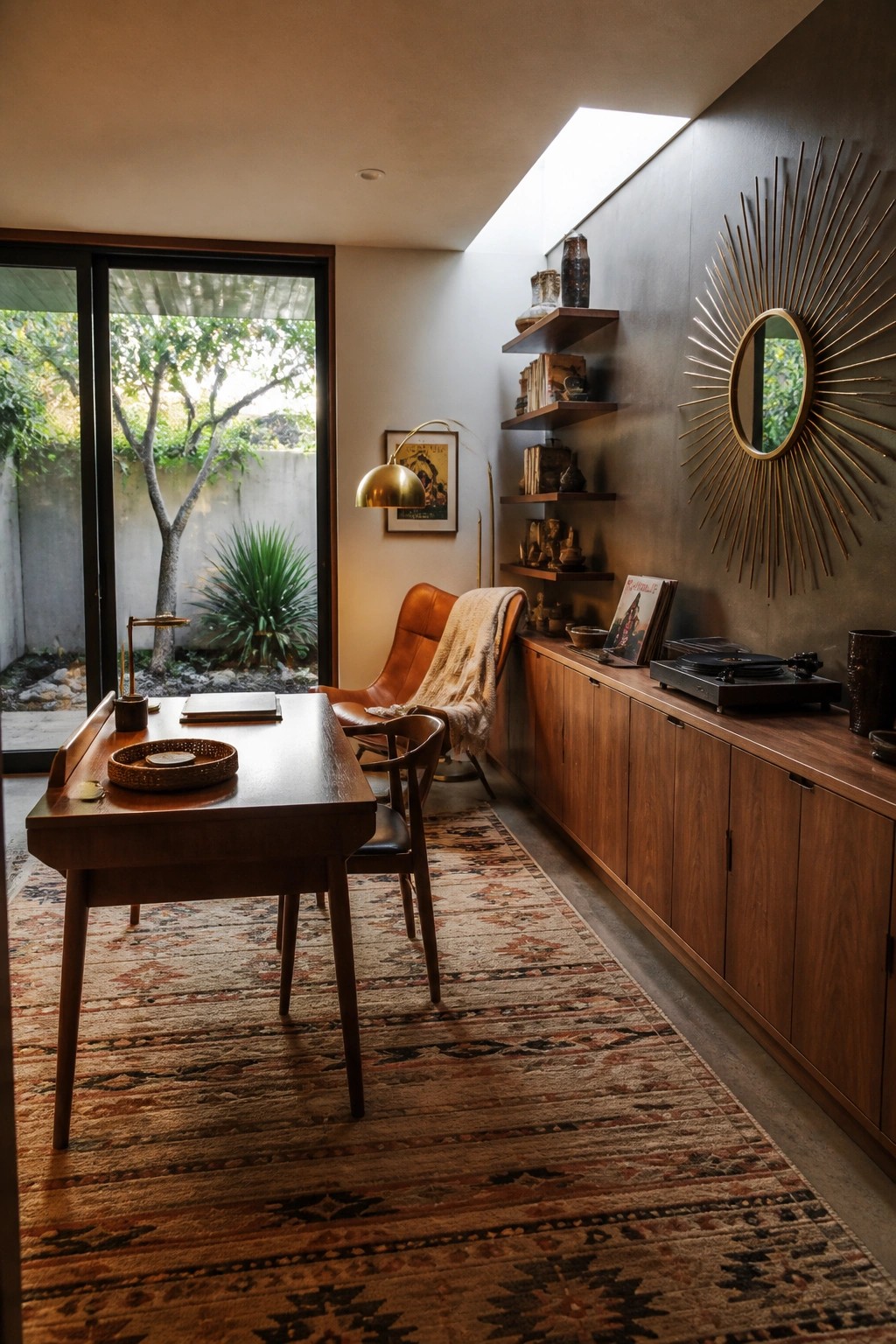
A long cabinet along one wall gives a home office room to breathe while still offering plenty of storage. It keeps the floor clear and turns what could be wasted wall space into something useful for hiding files or gear.
This works best in smaller or medium rooms where you want the desk to stay the main focus. Keep the cabinet low so it does not block light or make the space feel heavy, and use the top for only a few items at a time.
Dark Paneling in a Home Office

Dark paneling gives an office a settled, enclosed feeling that works well for focused work. The wood grain and deep color help the room feel more like a traditional study than a plain workspace, especially when the paneling runs across most of the walls and pairs with built-in shelving.
This look suits homes with older architecture or anyone who wants a quieter, more formal office space. Keep one or two larger windows uncovered so the room does not feel too closed off during the day.
Built-In Shelving Adds Storage Without Clutter
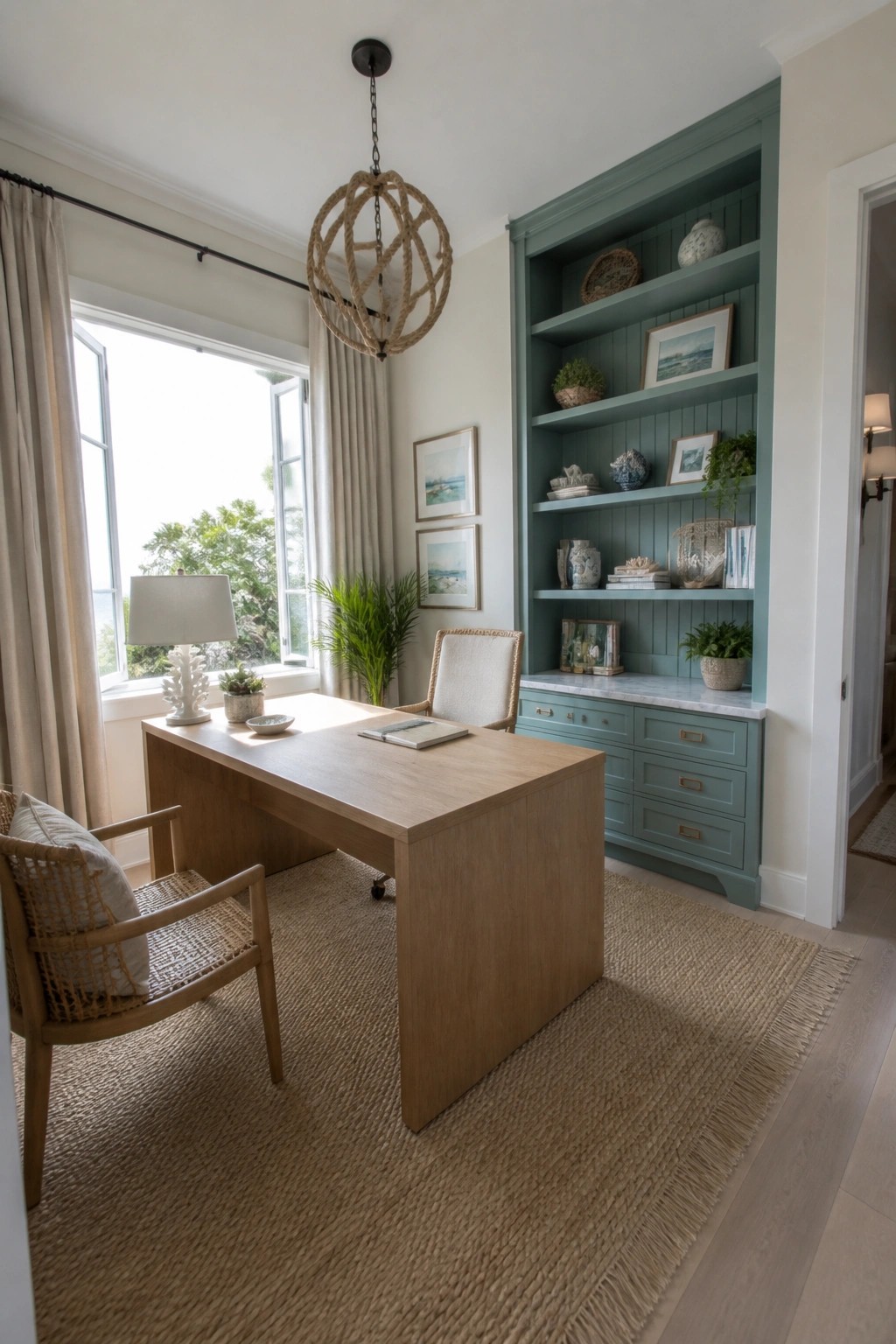
Built-in shelving and cabinetry can give an office a more finished look while solving the usual storage problems. The unit takes up one full wall but leaves the rest of the room open, so the space still feels calm instead of crowded. Painting the built-ins a soft color helps them blend with the walls rather than stand out as separate furniture.
This setup works best in a room that already has decent wall space and needs room for both display and hidden storage. It suits homes where the office gets used often, since files and supplies stay organized but easy to reach. Keep the top shelves lighter and use the lower cabinets for anything that needs to stay out of sight.
Mix Exposed Brick With Wood In An Office

Exposed brick walls bring texture and character that makes an office feel grounded. Pairing that with a solid wood desk softens the industrial edge and adds warmth without losing the clean, structured look. The metal shelves and accents keep everything practical and balanced.
This approach works best in lofts or older buildings where the brick is already there. Keep the desk simple and let the wall do most of the work. Avoid overcrowding the shelves so the space stays open and easy to use.
Using Dark Built-Ins For A Focused Office

Dark built-in cabinetry gives an office a settled, grounded feel that helps the space stay calm during long work hours. The cabinets run floor to ceiling and match the wall color, so the storage disappears visually while still holding everything you need out of sight.
This works best in rooms that double as guest spaces or sit near main living areas. Keep the rest of the room simple, with just a desk and one or two open niches, so the dark surfaces do not make the room feel heavy.
Glossy Black Desks in Home Offices
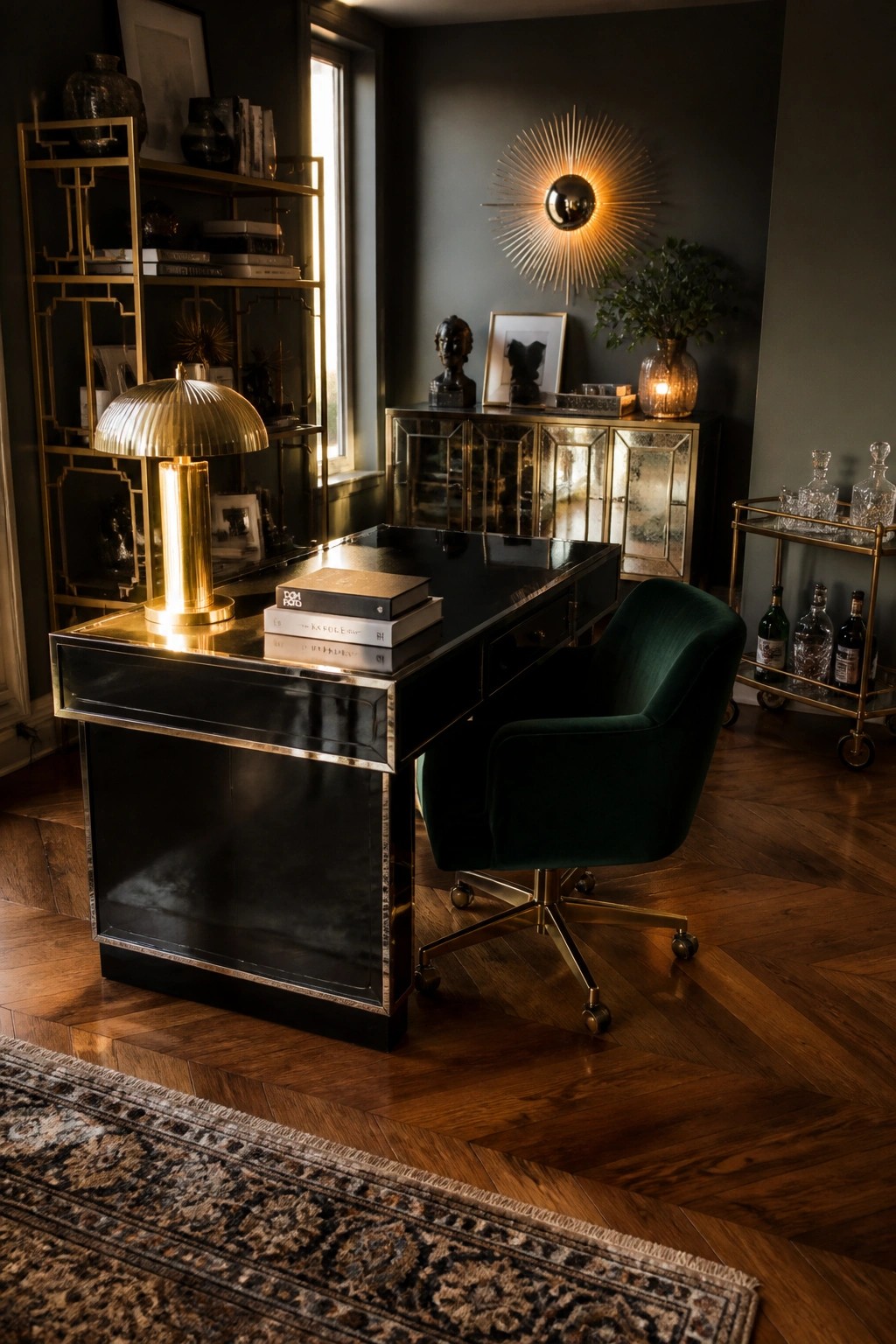
A glossy black desk stands out in a dark office because it reflects light and adds depth without making the room feel smaller. The gold trim around the edges keeps the look from going flat and gives it that finished, high-end touch.
This works best in rooms with deep wall colors and some natural light coming in. Pair it with one or two rich accent pieces, like a velvet chair, and limit the gold to just a few items so the whole space stays balanced.
Built-In Window Seating For Everyday Storage
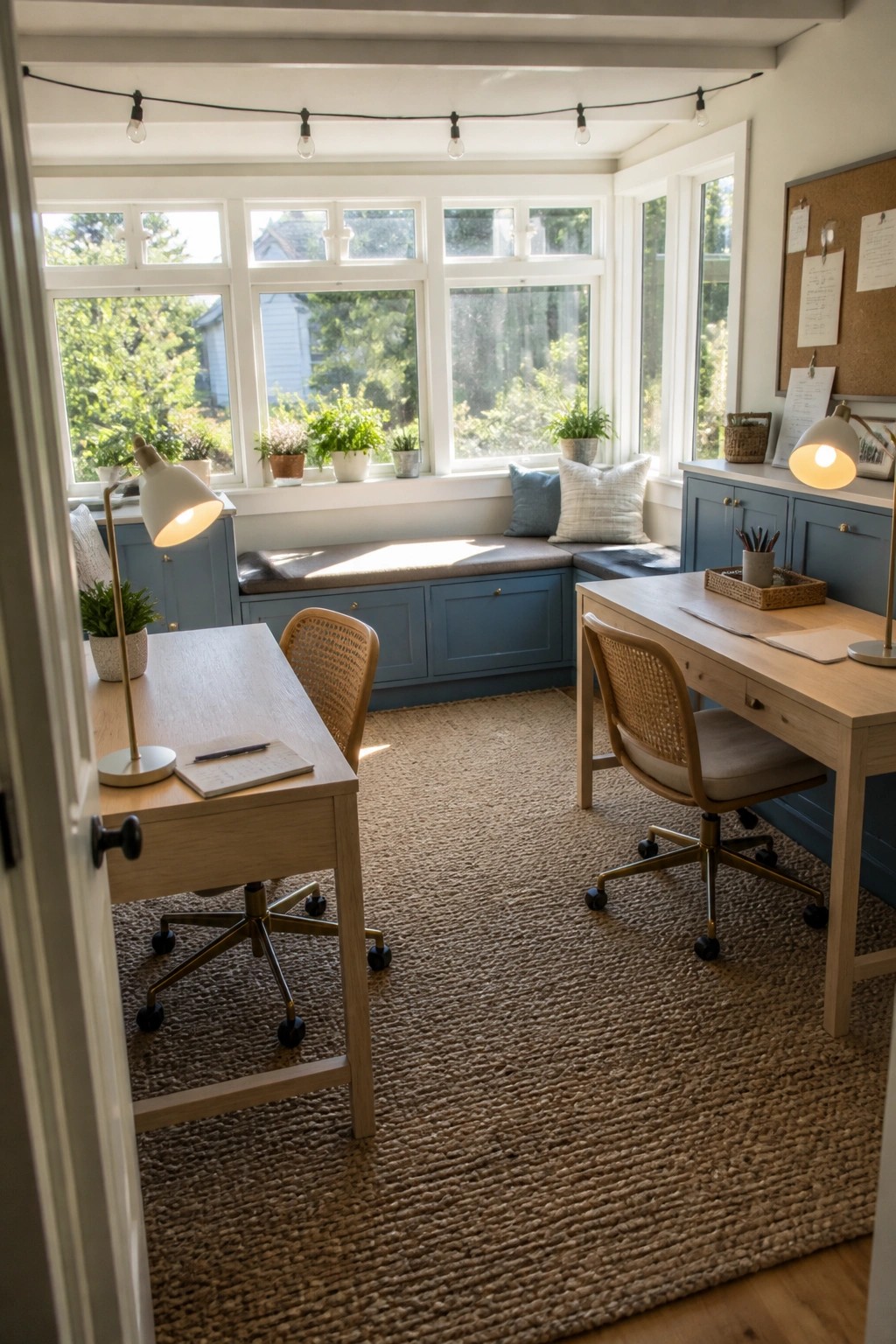
Built-in seating under the windows adds a quiet spot to sit while keeping the floor clear. The cabinets below hold files and supplies without needing extra pieces that crowd the room.
This setup works best in offices that get good natural light and have enough wall space along the windows. It suits homes where you want the room to feel open but still practical for daily work.
Mixing Seating Styles Around A Work Table
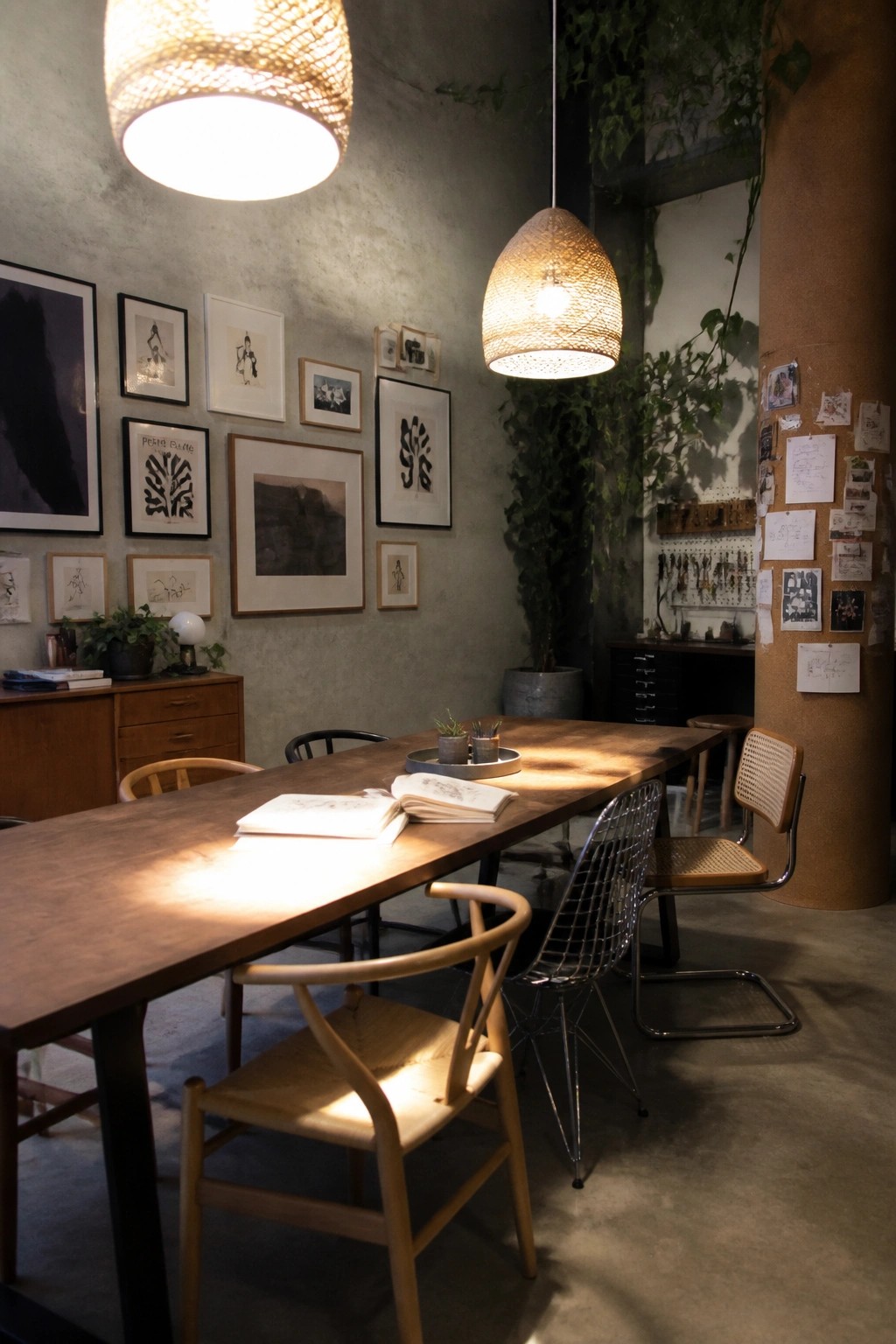
A long work table paired with different chairs gives an office a relaxed but polished feel. It avoids the stiff look of matching desk chairs while still keeping the space functional for daily use.
This approach works well in creative offices or home workspaces where people gather or shift between tasks. Stick to a limited color range for the chairs so the mix feels intentional rather than random.
Built-In Shelving For A Classic Office
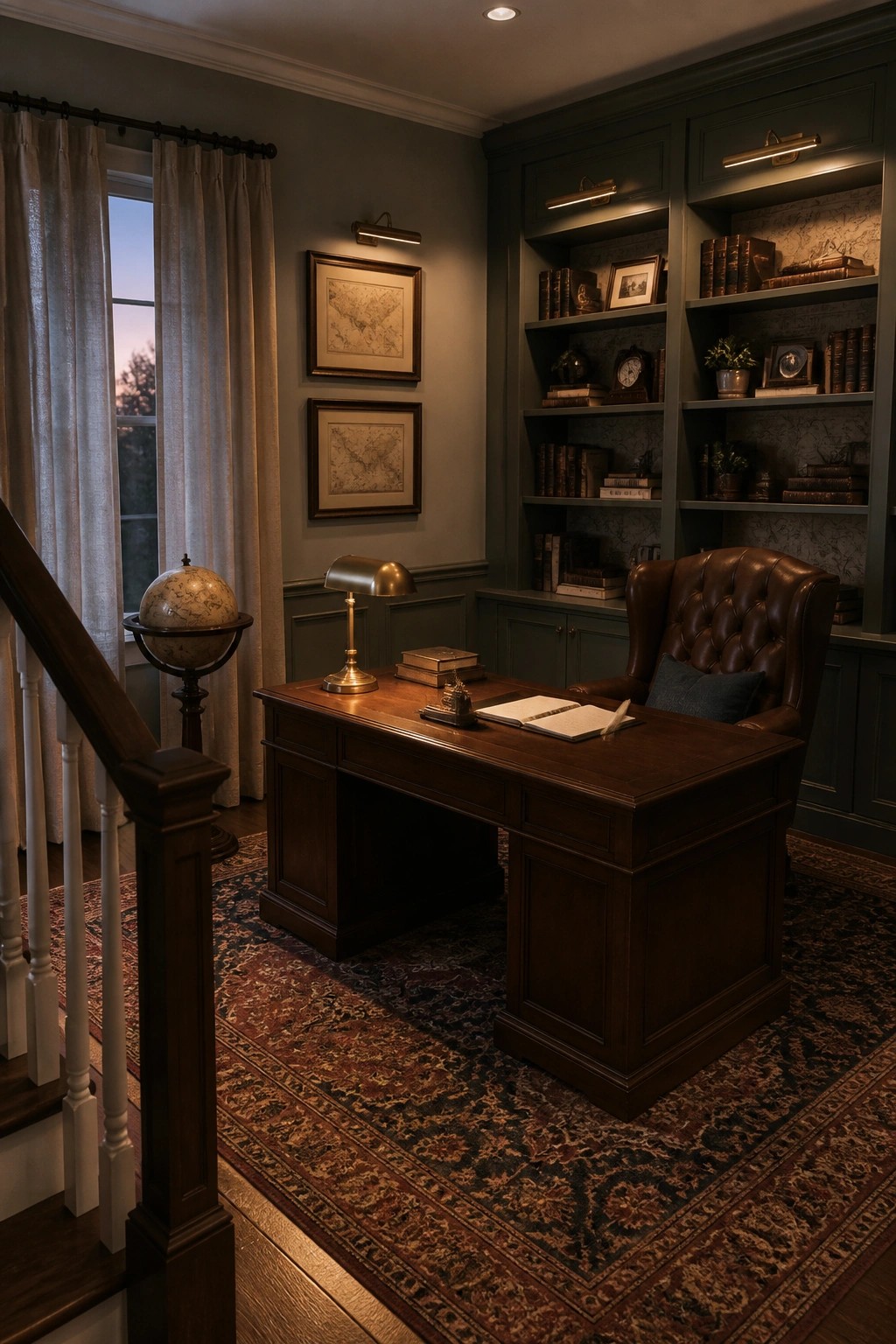
Built-in bookshelves give an office a settled, high-end feel that freestanding units rarely match. They turn empty wall space into something useful and substantial, especially when filled with books and just a few personal items rather than trying to look styled.
This approach works best in homes that already have some trim detail or older architecture. Match the wood tone of the desk to the shelving so the whole room reads as one calm, intentional space instead of separate pieces added over time.
Positioning Your Desk By A Window
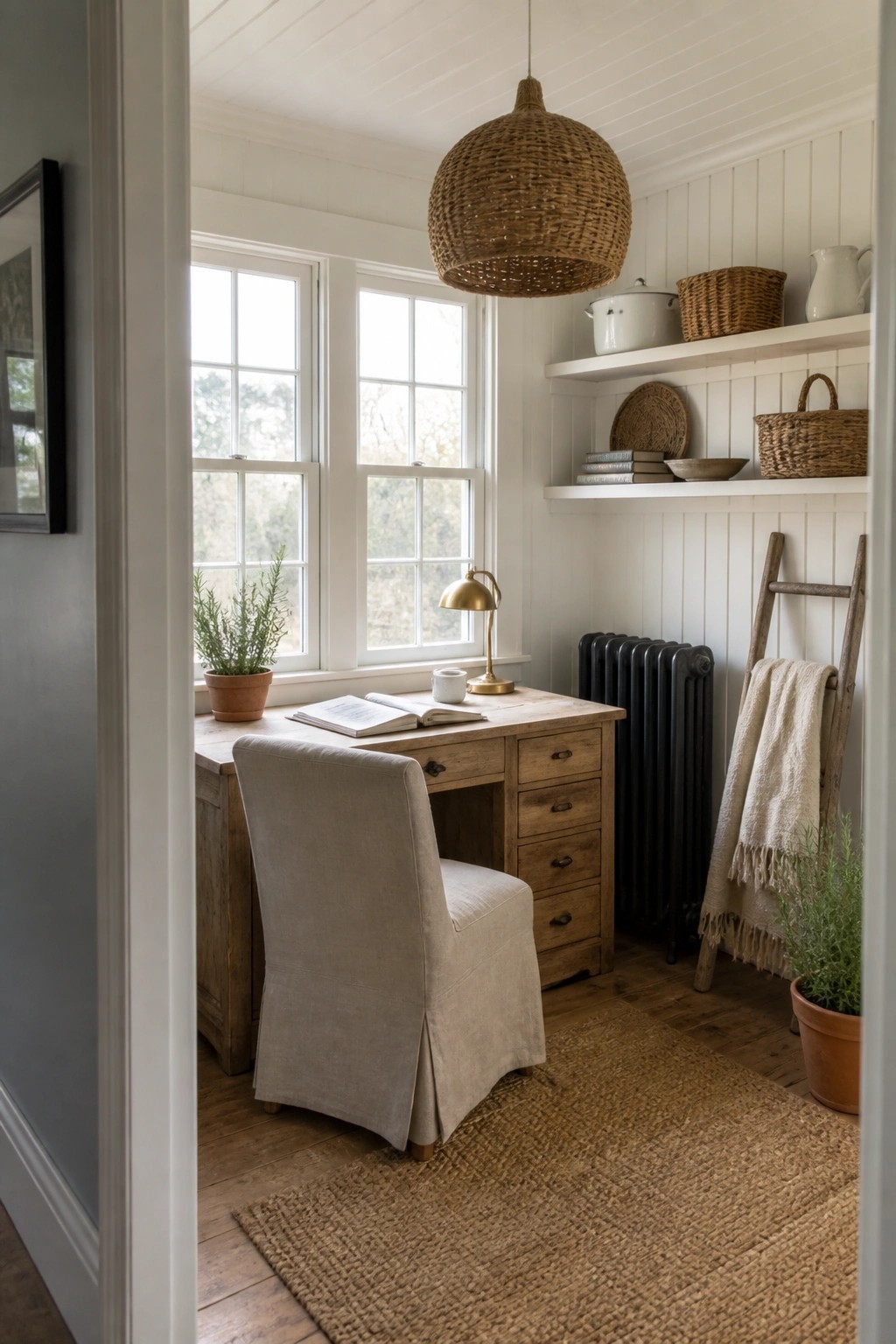
Placing a desk right under the windows brings in steady natural light that makes the whole space feel open and easy to work in. The wood desk in this setup stays simple, which keeps the focus on the view and the light rather than on extra pieces or heavy styling.
This works well in smaller rooms or any home office that needs to feel calm instead of crowded. Keep the rest of the furniture light in tone and avoid filling every wall so the window area stays the main feature.
Pegboard Storage In A Compact Home Office
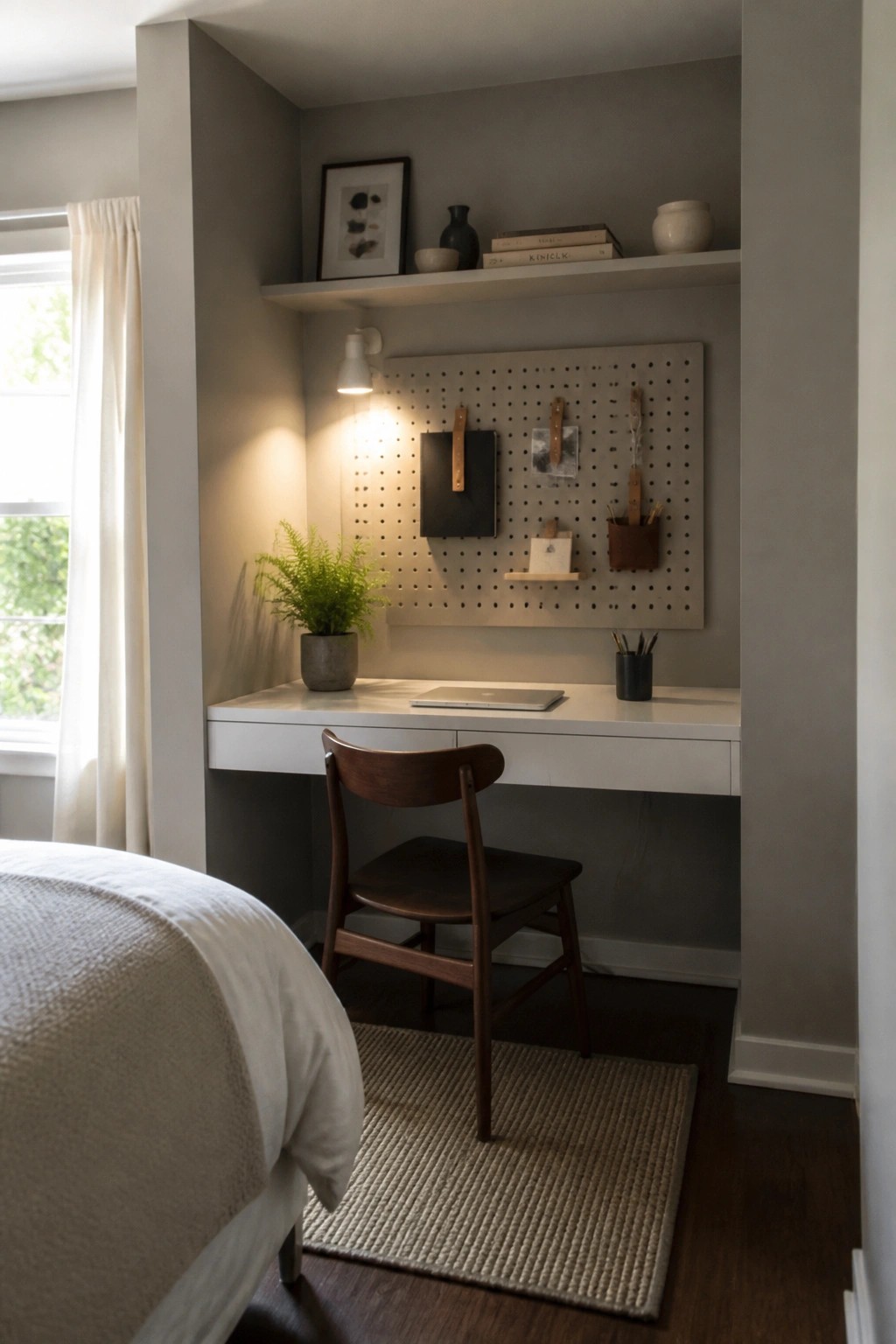
A pegboard lets you keep tools and papers visible without crowding the desk itself. It turns an empty wall into useful space, which helps in smaller rooms where a full cabinet would feel too heavy.
Hang hooks or small shelves at different heights and move them around as your needs change. This works best in alcoves or corners where you already have a built-in desk and want simple daily access without extra furniture.
Dark Walls With Warm Shelf Lighting
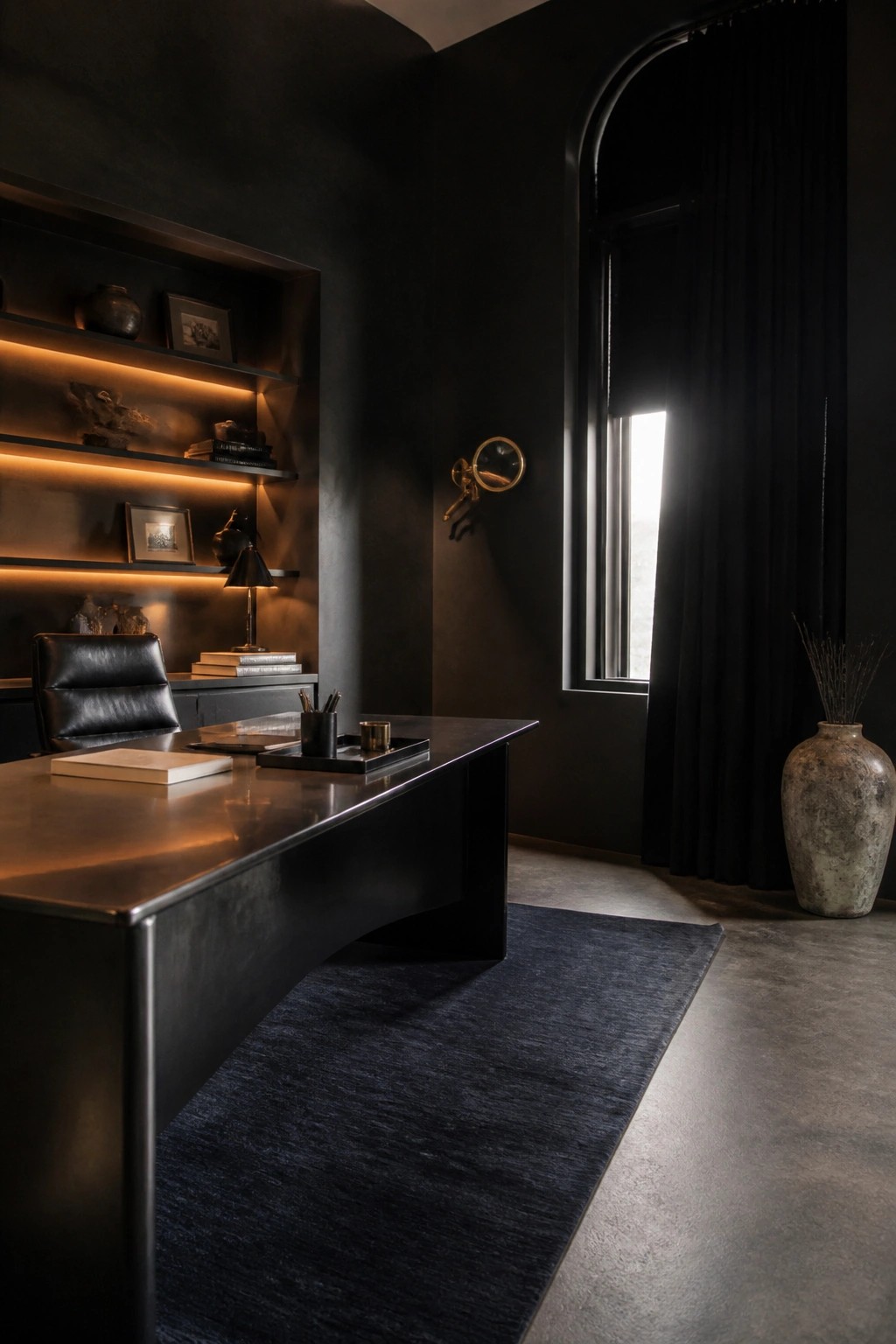
A deep, dark wall color paired with lit built-in shelves gives an office a grounded and expensive feel. The lighting highlights a few items on each shelf while keeping the overall space quiet and focused.
This works well in smaller rooms or studies where you want to create a sense of privacy. Keep the furniture simple so the dark tones and soft light do most of the work.
Bringing Greenery Into a Home Office

Plenty of plants can turn a basic workspace into something that feels calmer and more finished. The mix of wood tones and living greenery keeps things simple while still looking intentional.
Start with a few larger plants on the floor near a window, then fill open shelves with smaller ones. This approach suits homes that already have decent natural light and works especially well when the furniture stays fairly plain.
Built-In Cabinetry For A Home Office
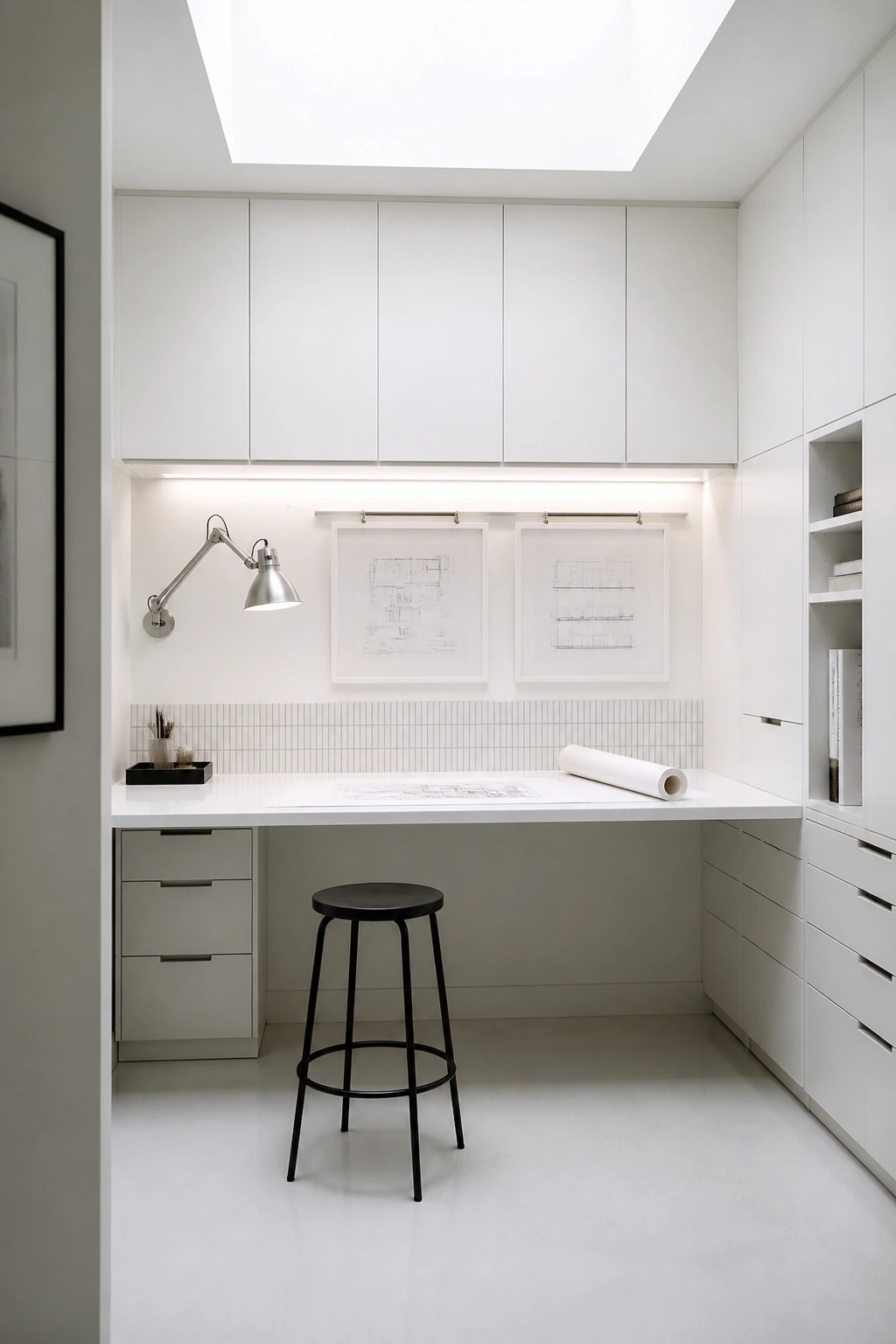
Built-in cabinetry works well in a home office because it adds storage without crowding the room. The cabinets sit flush with the walls and the desk fits right into the setup, so everything stays tucked away and the surface stays clear for work.
This approach suits smaller rooms or any space where you want a calm, simple layout. It works best in homes that already lean toward light colors and clean lines, and it avoids the scattered look that often comes with separate pieces of furniture.
Terracotta Walls In A Creative Office
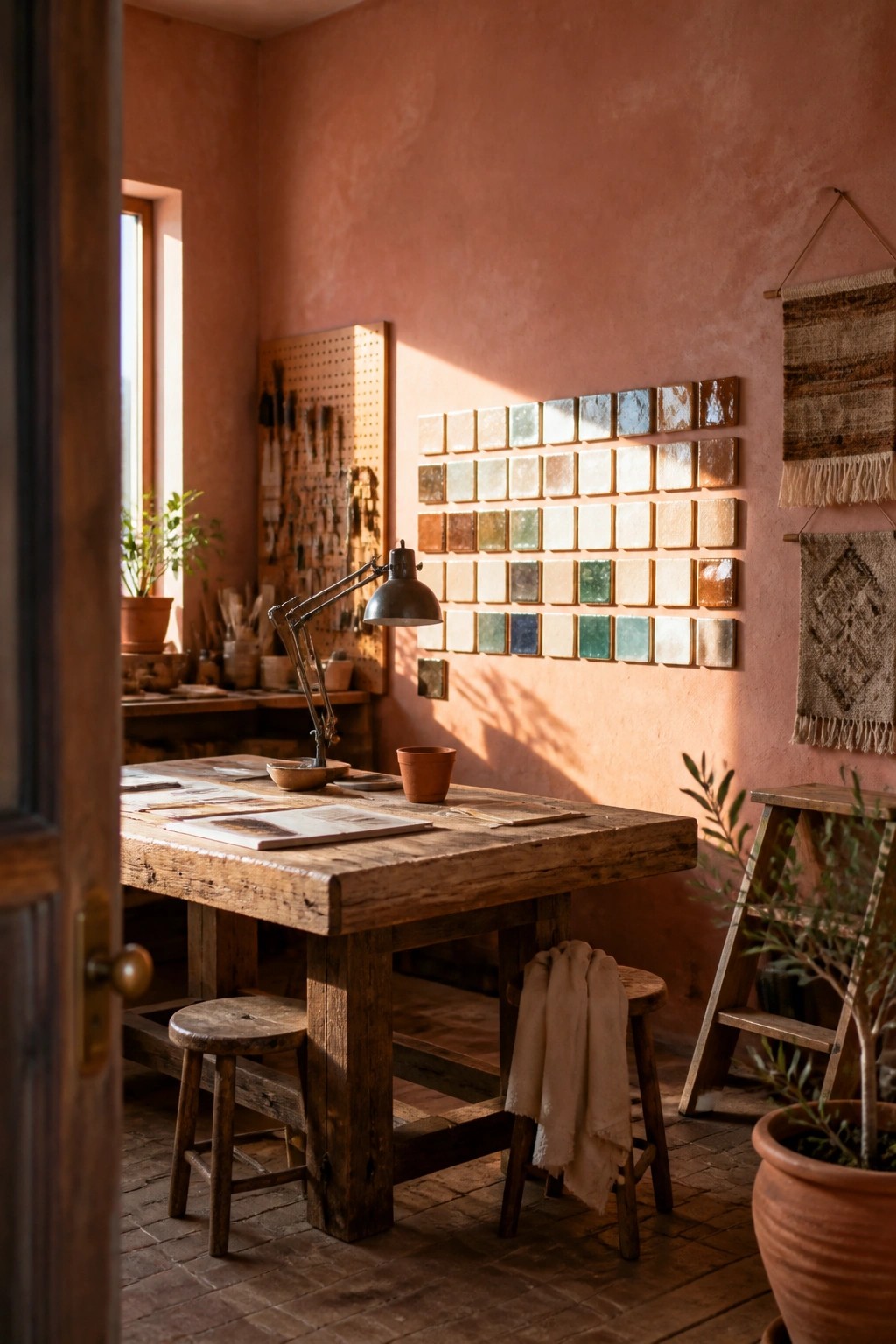
A warm terracotta wall color can give an office a grounded, high-end feel without much effort. It pairs naturally with wood furniture and simple textures, making the space feel finished even when the setup stays fairly minimal.
This works best in rooms that already have some natural light and wood tones. Keep other surfaces light and let the wall carry the warmth. Avoid overcrowding it with too many small items, or the color can start to feel heavy.
Fitting Furniture To An Attic Roofline

An attic office often feels cramped because of the low walls and angled ceiling, but a desk built to follow that slope changes how the space works. The top surface stays flat and usable while the lower drawers and cubbies tuck neatly into the narrower areas, so nothing gets wasted.
This approach suits homes where the attic is the only spare room left for work. Keep the finish simple and match it to the floor or trim so the whole setup blends in rather than fighting the architecture. Avoid adding too many freestanding pieces that would crowd the remaining floor space.
Frequently Asked Questions
Q: How do I choose fabrics that feel luxurious but hold up to daily use? A: Go for linen blends or wool on chairs and cushions. These hold their shape and develop a nice patina with regular use. Feel the sample in person so you know how it drapes.
Q: What if my walls are already painted a neutral color? A: Add one large piece of art with a slim frame. It prevents the space from feeling empty while keeping things simple.
Q: How do plants fit into a high end office setup? A: Go for tall varieties with bold shapes. Set them in matte ceramic pots that tie into your palette. They soften the space nicely over time.
