


A floating desk can make a home office feel more open, but the room still needs enough surface area for the work you actually do.
I find the best designs balance a clean profile with practical details like storage, lighting, and a comfortable place to sit.
The desk’s height and position matter too, especially when it shares a room with a bed or living area.
Small choices in wood tone, brackets, and wall color can help the work surface feel like part of the room rather than an afterthought.
Some of these layouts are worth adapting, even if your space calls for a narrower desk or a different storage setup.
Keep A Floating Desk Simple

A floating desk keeps a home office feeling open by leaving the floor clear beneath the work surface. A slim wood top can still provide enough room for a monitor and keyboard without the bulk of a full desk frame.
This setup works well in a small room or beside a window, where an open layout helps the space feel less crowded. Add a drawer only if you need a place for everyday supplies, and make sure the desk is securely attached to the wall.
Make a Built-In Desk Part Of The Room

A floating desk built into a wall niche can give a home office a proper work surface without taking up much floor space. The uninterrupted wood top keeps the setup simple, while the surrounding cabinetry makes the desk feel like part of the room rather than a separate piece of furniture.
This approach works well in a study nook, hallway, or spare room where space is limited. Leave enough depth for a laptop and enough legroom for a chair, and plan for outlets nearby so cords do not clutter the surface.
Use a Floating Desk To Keep a Bedroom Office Open
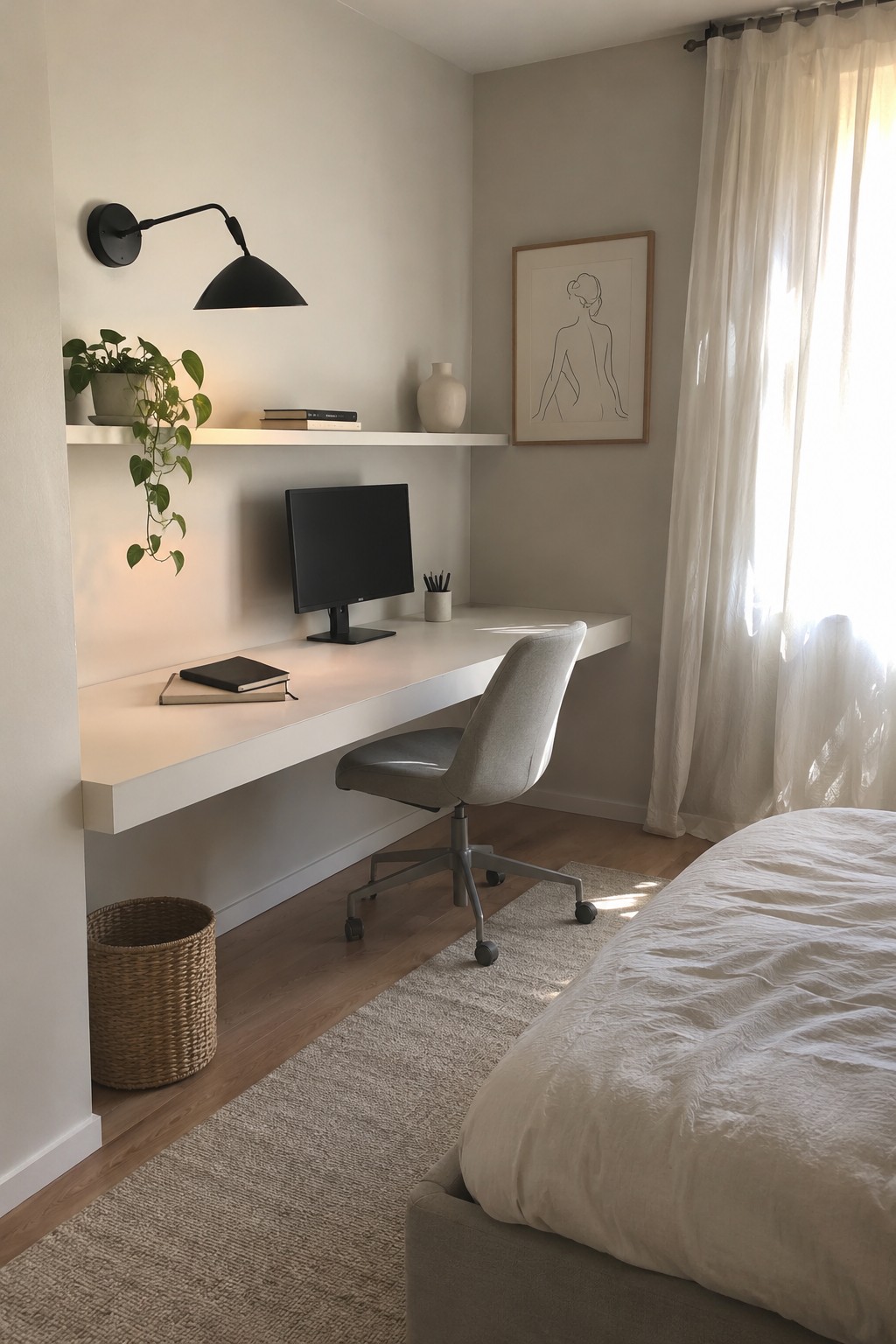
A floating desk gives a bedroom workspace a useful surface without the bulky look of a freestanding desk. Since it extends from the wall, more floor stays visible, which can help a small room feel less crowded.
For a simple setup, mount a sturdy desk at a comfortable height and leave enough space beneath it for a chair to slide in. A slim wall shelf can hold a few everyday items, but keep the surface clear so the work area remains easy to use.
Keep a Floating Desk Visually Light
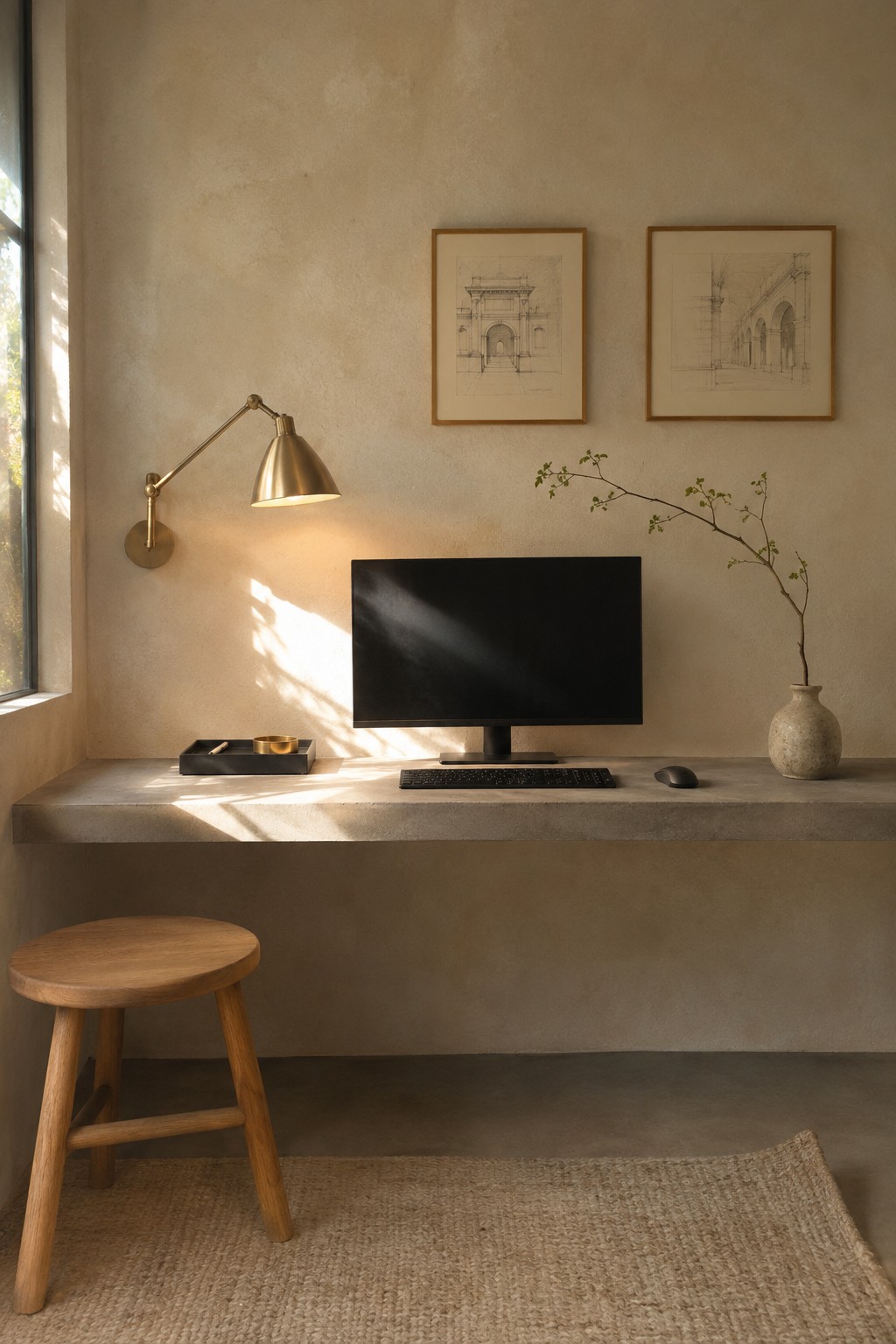
A floating work surface can make a small office feel less crowded because it leaves the floor open beneath the desk. The long, simple surface here gives the workspace room to function without the bulk of a full desk frame.
This approach works well in a nook or along a clear wall. Use sturdy brackets or secure the surface into wall studs, and keep the desktop depth suited to your monitor and chair. A stool can tuck away neatly when the desk is not in use.
Add Shelves Above A Floating Desk

A floating desk can leave room for storage without making a small office feel crowded. Simple wall shelves keep books and everyday items close by while leaving the floor clear.
This setup works well in a spare bedroom or a compact work nook. Keep the shelves shallow and avoid filling every inch, so the desk still feels open and has space for daily work.
Use A Floating Desk To Save Floor Space

A wall-mounted desk keeps a small office open by leaving the floor clear beneath the work surface. The thick wood top here gives the desk enough presence to feel useful without taking up space with legs or a bulky frame.
This setup works well in a narrow room or a corner used for working from home. Add a shallow drawer for supplies, and check that the wall can support the desk before installing it.
Use A Wall-To-Wall Desk For A Clean Work Area

A long, wall-mounted desk gives a home office plenty of workspace without the bulky look of a freestanding table. Its open area underneath also helps a compact room feel less crowded.
This approach works well in a spare room or a quiet corner where you want a practical desk that stays visually simple. A dark green surface gives the work area definition, while keeping the desktop fairly clear makes it easier to use.
Use a Floating Desk Along A Sloped Wall

A floating desk can make good use of the low wall in an attic office without taking up floor space with legs or a bulky base. A thick wood surface also gives you a practical work area while keeping the setup straightforward.
This approach suits a small loft or spare room where the ceiling slope limits furniture choices. Measure the height carefully before fixing the desk in place, and leave enough clearance for a comfortable chair.
Choose a Floating Desk With Rounded Edges

A floating desk can make a small office feel more open because it leaves the floor clear beneath the work surface. Rounded corners are a practical choice, too, especially in a narrow room where people pass close by.
For a home office, mount the desk at a comfortable sitting height and secure it to sturdy wall supports. A warm wood finish can suit a simple room without making the desk feel bulky.
Set Up Two Workstations Along One Wall

A long floating desk can make a shared office feel organized without taking up extra floor space. Keeping both work areas along the same wall also makes it easier to share the room without crowding the center.
Use separate monitors and chairs to give each person a clear place to work, while keeping the desktop itself fairly uncluttered. This layout suits a spare room or a narrow office, especially when you want two workstations but don’t need bulky desks.
Choose a Wood Floating Desk For an Industrial Office

A wall-mounted wood desk is a practical way to add a work area without the bulk of a traditional desk. Here, the thick wood surface stands out against the brick wall, while the open space below keeps the setup feeling uncluttered.
This approach works well in a loft or any room with a sturdy, uninterrupted wall. Check that the wall can support the desk and equipment, and choose a depth that gives you enough room to work without crowding the space.
Add A Floating Desk To An Unused Hallway

A floating desk can turn a narrow hallway alcove into a useful work spot without taking up much floor space. The open area beneath the marble-look surface helps the passage feel less crowded than a full desk would.
This setup suits a hallway, landing, or other small nook that gets some natural light. Keep the work surface shallow enough to leave a clear path, and add a compact stool that can tuck underneath when it is not in use.
Use Glass To Keep A Floating Desk Light

A glass work surface can make a floating desk feel less bulky, especially in a small office. It leaves more of the wall and floor visible, while still giving you a practical place to work.
Keep the setup simple so the clear surface does not become crowded. A wall-mounted desk works well in a compact room or a home office beside a shared living space, where an open feel matters.
Use a Floating Desk To Make A Small Office Feel Open
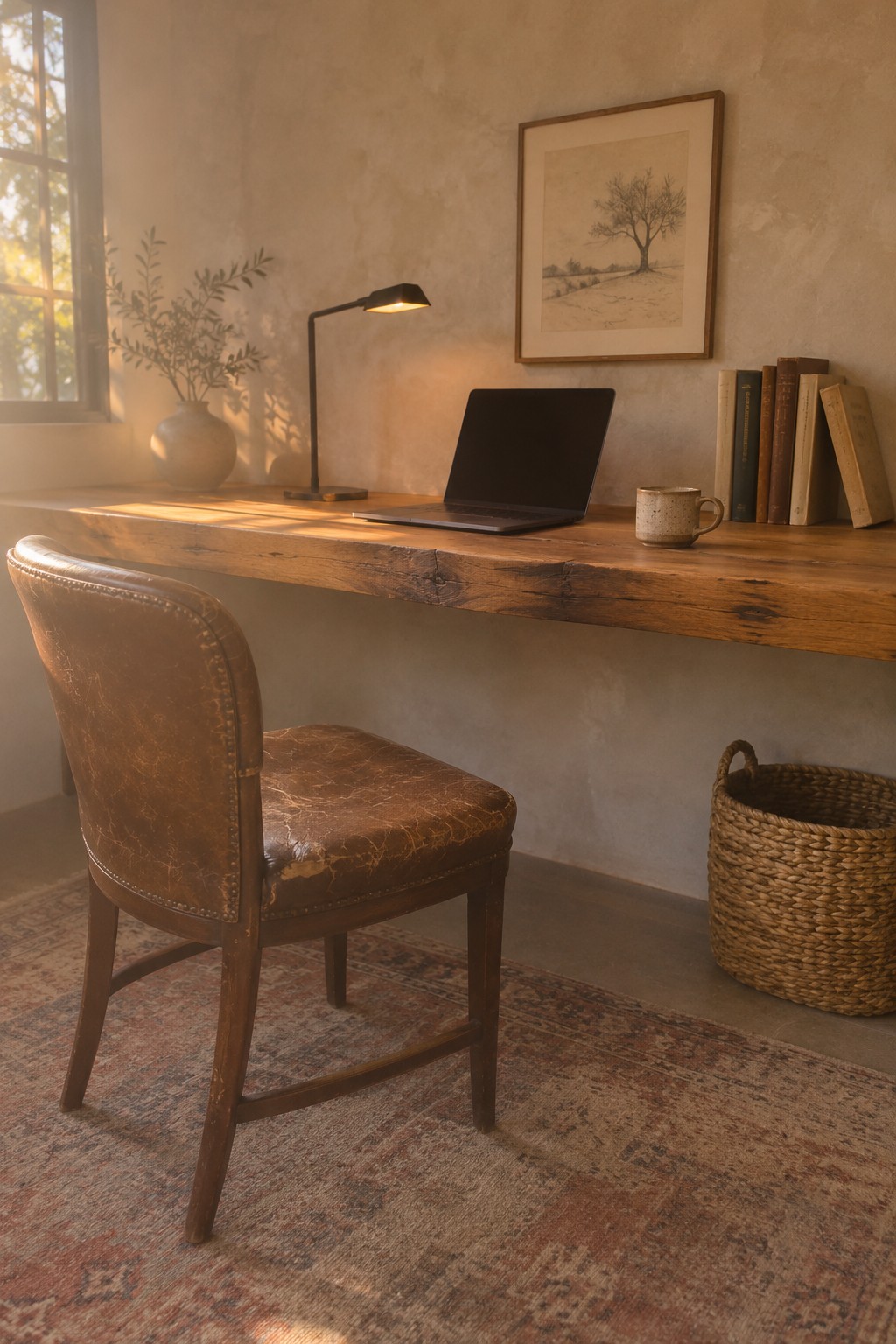
A wall-mounted desk can give a home office a useful work surface without adding bulky legs or cabinets. The thick wood top here keeps the setup practical, while the open space beneath helps the room feel less crowded.
This approach works well in a small study or a quiet corner of a larger room. Keep the desktop deep enough for daily work, and use a sturdy wall fixing so it can safely support a laptop and other essentials.
Use A Floating Desk To Keep A Small Office Open

A wall-mounted desk leaves the floor clear, which can make a compact work area feel less crowded. The long wood surface here gives plenty of room for a computer without the bulk of a full desk with drawers or side panels.
This setup works well in a spare room or an unused nook. Keep everyday supplies in a small basket or on the desk, and leave enough legroom beneath the surface so the open area stays useful.
Choose A Floating Desk Beneath A Window

A floating desk beneath a large window makes a home office feel open while giving the work area a natural focal point. The clear space below the desktop keeps the room from feeling crowded, which is especially helpful in a small office.
A simple wall-mounted surface works well where a full desk and bulky storage would take up too much room. Leave enough depth for a laptop and writing space, and add a drawer only if you need a place to keep small supplies.
Choose A Warm Wood Desk For A Calm Work Area

A simple wood desk can make a home office feel settled without needing much decoration. Here, the broad surface leaves room to work, while the natural finish keeps the setup from feeling too stark.
This approach suits a small study or a quiet corner of a shared room. Keep the desktop fairly clear, and choose a desk depth that gives you enough working space without crowding the room.
Use a Floating Desk To Keep the Work Area Open

A floating desk keeps a home office feeling uncluttered by leaving the floor clear beneath the work surface. The long, wall-mounted top here provides room to work without bulky desk legs taking up space.
This approach suits a small office or a spare room that needs to serve more than one purpose. Keep the desktop limited to daily essentials, and check that the wall and mounting hardware can safely support the desk and equipment.
Use A Floating Desk To Define A Home Office

A floating desk can give a work area a clear place in the room without making it feel crowded. Here, the long wooden surface sits beside the bookcase, while the open floor beneath it keeps the layout feeling less bulky than a freestanding desk.
This approach works well in a study or a shared living space where floor room matters. Choose a sturdy wall-mounted surface and keep the supports discreet, but check that the wall can handle the weight before installation.
Frequently Asked Questions
Q: How do I keep a floating desk from feeling wobbly?
A: Secure it to wall studs or solid masonry, not just drywall. If you plan to use a monitor arm or lean on the desk, choose sturdy brackets and check the weight rating before mounting.
Q: Is a floating desk practical if I need lots of storage?
A: It can be, but keep storage compact so the clean look stays intact. A slim drawer under the work surface or a small cabinet nearby can hold everyday supplies without crowding your legs.
Q: What height should I mount a floating desk?
A: Set it so your forearms rest comfortably near level when you sit, with your shoulders relaxed. If more than one person will use it, test the height with a chair before drilling.
Q: How do I hide cables on a floating work surface?
A: Route cords through a grommet or a discreet cable tray beneath the desk, then guide them down the wall in a cover that matches the paint. This keeps the surface clear without making cables hard to reach.
