


Corner desks can make a home office feel tucked away, but the light often falls unevenly across the work surface.
I find that the first thing I notice in these setups is whether the screen, desk, and surrounding room feel comfortable at the same time.
A single ceiling light may leave one side dim, while a lamp placed too close can create glare or crowd the workspace.
The best lighting choices work with the desk’s position and add useful light without making the room feel harsh.
I’d start by testing where daylight lands during the hours I work, then add task and ambient lighting where the space needs it.
Some of these ideas are easy to adapt, even if your corner is small or serves more than one purpose.
Use A Desk Lamp For Focused Corner Lighting

A desk lamp makes a corner workstation easier to use by putting light right where you read or write. It also lets you keep the rest of the room’s lighting softer, which can be more comfortable in the evening.
Choose an adjustable lamp so you can direct the beam onto your work without shining it into your eyes or onto a screen. A slim base and arm are useful when desk space is limited.
Use Layered Lighting At A Corner Desk

A corner desk can feel dim if it relies on just one light source. Combining a focused desk lamp with softer ambient lighting makes it easier to work without lighting the whole room too harshly.
Place a task lamp where it can light your keyboard or notebook without shining into your eyes. A warm lamp nearby can help in the evening, while daylight from the windows may be enough during the day. Adjust the layers to suit your screen and the time of day.
Combine A Desk Lamp With A Nearby Table Lamp

A corner desk can feel dim when it relies on one lamp, especially if the desk sits away from the window. Using both a focused desk light and a softer lamp nearby gives you more control: the desk light helps with reading and writing, while the second lamp keeps the rest of the work area from feeling too shadowy.
Place the task lamp where it lights your work without shining into your eyes or reflecting off a screen. A nearby table lamp can provide a gentler glow, but keep its shade clear of the desk surface and walkway.
Pair An Adjustable Desk Lamp With Under-Shelf Lighting

A desk lamp can give a corner workspace useful task lighting without making the whole room feel too bright. Here, the adjustable lamp directs light onto the work surface, while an under-shelf strip provides a gentler glow nearby.
Place the lamp so it lights your work without shining into your eyes or reflecting off a screen. If your desk is in a dim corner, add a small indirect light source, such as a shelf strip, and use a warm bulb for a more comfortable feel.
Use A Warm Desk Lamp For Task Lighting

A focused desk lamp makes a corner workspace easier to use, especially when daylight fades or the desk sits away from a window. An adjustable lamp lets you direct light onto your work without lighting the whole room more brightly than needed.
Place the lamp where it lights your keyboard or notebook without shining into your eyes or reflecting off a screen. A warm-toned bulb can feel comfortable in a home office, but make sure it is bright enough for detailed tasks.
Use Dark Built-Ins To Define A Corner Office

Dark built-in shelves and cabinetry can make a corner desk feel like a proper work area, rather than a spare surface tucked into a room. They also keep storage close at hand, which is useful when a small office needs to stay tidy.
For this look, use a desk lamp to put light directly on the work surface, then add a wall light or picture light for softer background illumination. It works especially well in a study or a room with limited floor space. Be sure the desk lamp can reach the full corner of the desk.
Choose Warm Ambient Light for a Corner Desk

A desk lamp is useful for focused work, but a small table lamp can make a corner desk feel more comfortable after dark. The warm glow from a lamp on the desk’s back section helps balance the sharper light you may need for reading or writing.
Use both lights on separate switches so you can adjust them for the task and time of day. A shaded lamp works well when you want softer background light, but keep it out of the way of your work area.
Add A Floor Lamp Beside The Desk
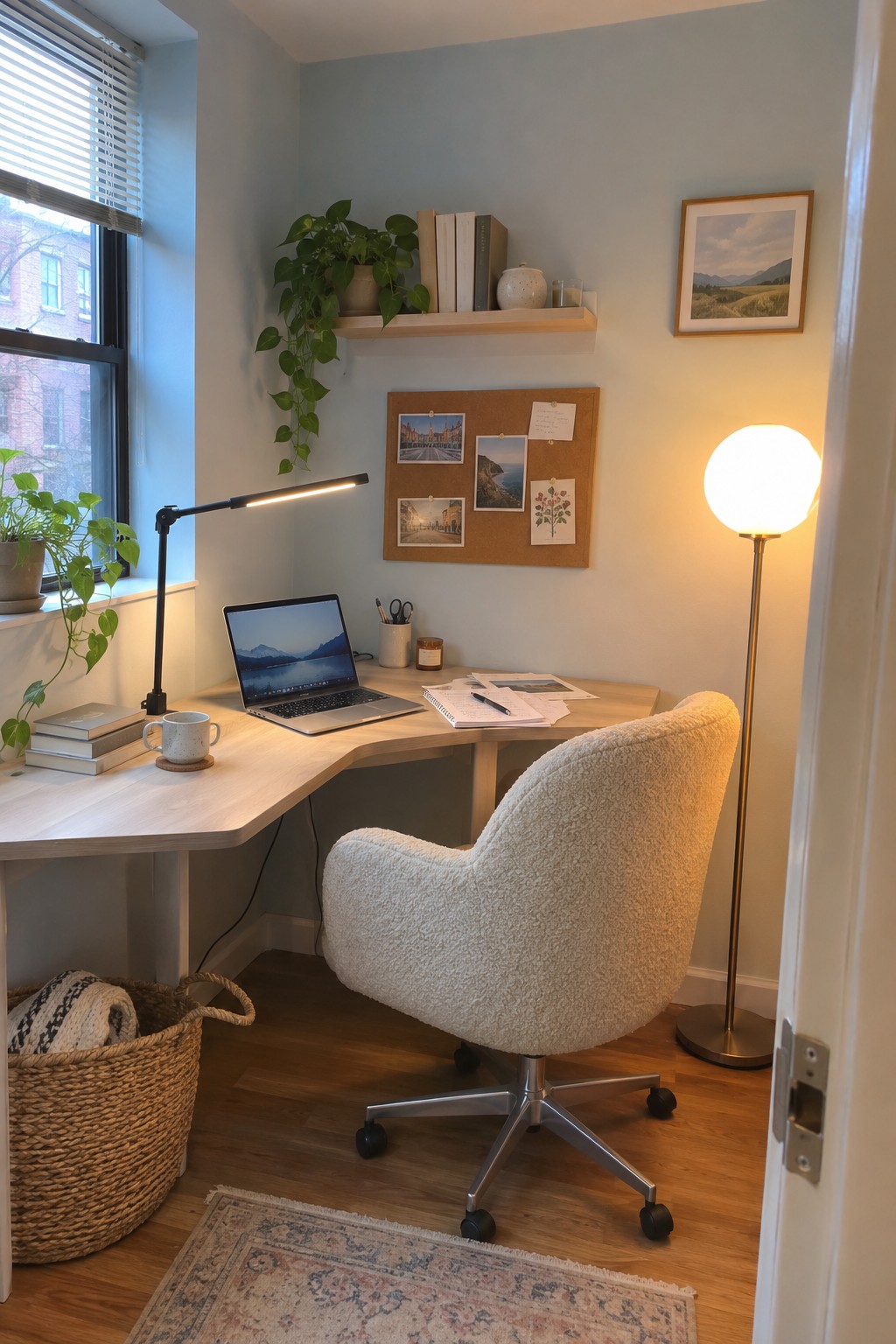
A floor lamp can light the seating area of a corner desk without taking up valuable workspace. Here, a globe shade provides a broad pool of light beside the desk, while a separate task lamp handles closer work.
This setup works well when the desk sits in a bedroom or small office where a little extra ambient light is useful. Choose a lamp with a stable, compact base, and position it so the shade does not cause glare on the computer screen.
Use a Desk Lamp To Light A Corner Workspace

A desk lamp gives you focused light right where you need it, which is especially useful when a corner desk sits away from a window. Here, an adjustable black lamp directs light onto the work surface without taking up much room.
Place the lamp on the side that leaves your main work area clear, and angle it to avoid glare on a screen. A warm bulb can make evening work more comfortable, but keep it bright enough for reading and detailed tasks.
Use A Brass Desk Lamp For Focused Light

A traditional desk lamp is a useful choice for a corner office because it directs light onto the work surface without needing a large fixture. The brass lamp here suits the dark wood desk and gives the setup a clear task-lighting source.
Place a desk lamp where it can light your papers or keyboard without shining into your eyes. In a corner, check that its base and arm leave enough room for everyday work.
Use Window Light To Brighten A Corner Desk

Natural light from a nearby window can make a corner desk more pleasant to work at during the day. Here, the large windows bring in daylight, while a desk lamp provides focused light for the work surface.
Place the desk so daylight reaches it without creating glare on a monitor. Keep a task lamp nearby for cloudy days and evening work, and choose one with an adjustable arm so you can direct light where it is needed.
Use A Wall Lamp To Free Up Desk Space

A wall-mounted task light is a useful choice for a corner desk because it gives you focused light without taking up room on the work surface. Here, the brass lamp reaches over the desk, leaving space for everyday work items.
Place the light where it can shine onto your keyboard or notebook without creating glare on a screen. An adjustable arm is especially handy, since you can move the beam as your tasks change.
Use An Under-Shelf Light To Brighten A Corner Desk

A slim light mounted beneath a shelf can spread even illumination across a desk without taking up work surface space. It also helps fill in the area around a task lamp, which is useful when the desk sits in a dark corner.
Choose a warm, diffused strip and position it toward the front of the shelf so it lights the work area without shining into your eyes. It works especially well above a compact desk with shelving, but avoid placing it where it will reflect off a glossy desktop.
Use A Woven Pendant For Soft Ambient Light

A pendant can provide gentle ambient light for a corner desk, so the workspace doesn’t have to rely on a desk lamp alone. A woven shade lets some light through while keeping the fixture from feeling too stark.
Hang it where it lights the work area without getting in your line of sight. For reading or detailed tasks, add a focused desk lamp too, since a pendant may not give enough direct light on its own.
Use Wall Lighting To Free Up A Corner Desk

A wall sconce can light a corner desk without taking up valuable work space. It also keeps the desktop clear for a laptop, papers, or other everyday tasks.
Place an adjustable wall lamp near the desk so you can direct light where you need it. If you read or write at the desk, add a separate task lamp for closer work.
Let Natural Light Brighten Your Corner Desk

A desk near a window can make a corner workspace feel brighter during the day and reduce the need to keep a lamp on. In this setup, the desk sits beside a large window, while pale curtains let daylight in without leaving the space completely bare.
Place the desk close enough to benefit from the window, but angle your screen to avoid glare. A small desk lamp still helps on cloudy days or when you work in the evening.
Use Shelf Lighting To Brighten A Corner Desk

A light strip beneath a shelf can brighten a corner desk without taking up room on the work surface. It also puts light near the monitor and keyboard, where it is useful for everyday tasks.
Choose a warm, diffused strip and mount it toward the front edge of the shelf so the light reaches the desk evenly. It works especially well when shelves sit above the workspace, but avoid placing a bare LED where it shines directly into your eyes.
Use Wood Paneling To Create A Cozy Office Corner

Dark wood paneling gives a home office a settled, quiet feel, while built-in shelves make good use of the corner. A brass picture light adds a small pool of focused light without taking up desk space.
This approach suits a study or a corner desk in a room with limited floor space. Use a warm picture light for artwork or shelving, then add a task lamp at the desk so the work surface is bright enough for reading.
Install Warm LED Strips Beneath Floating Shelves
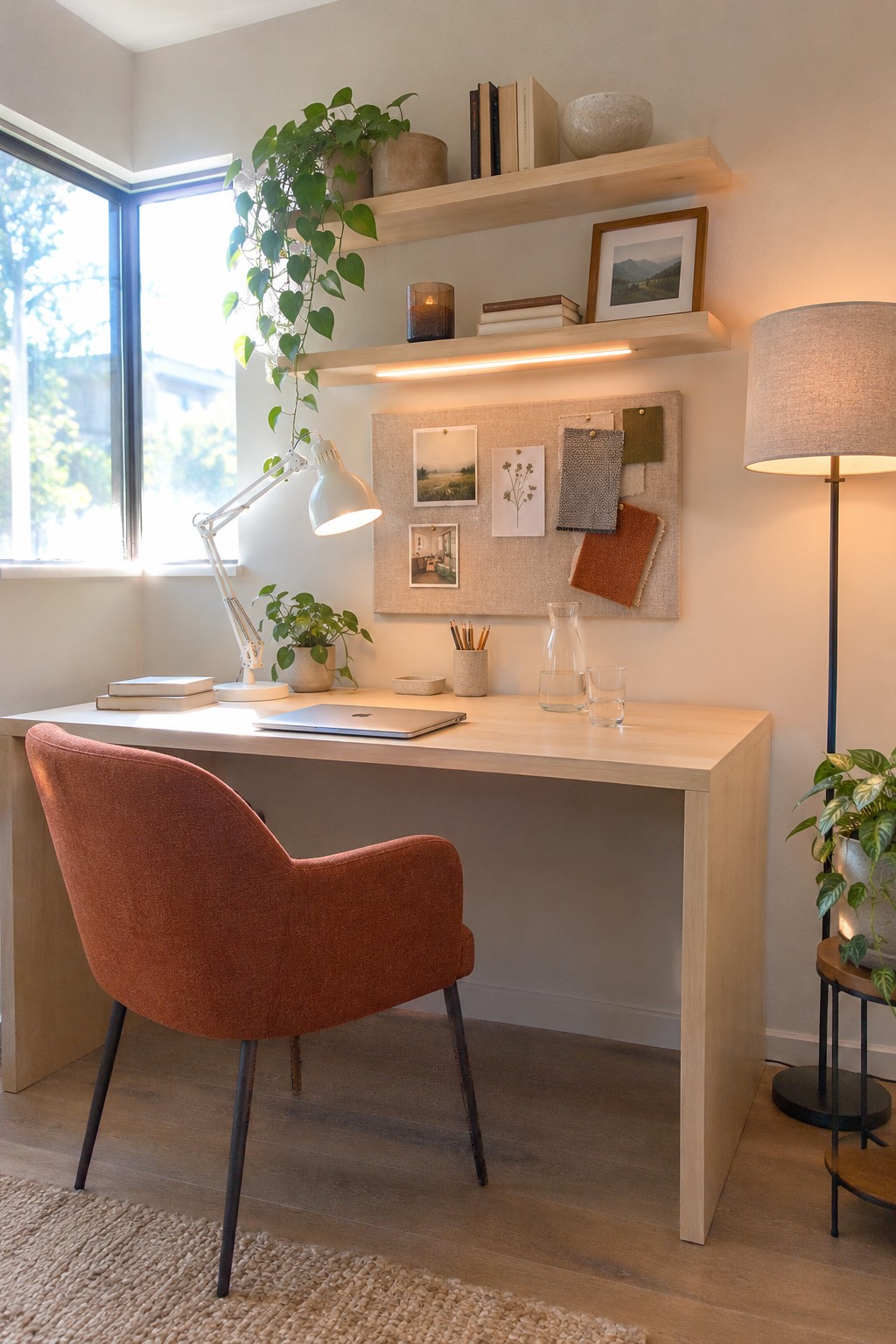
An LED strip beneath a floating shelf gives a corner desk a useful layer of task lighting without taking up space on the work surface. It also helps light the wall, which can make a desk tucked into a corner feel less dim.
Mount the strip near the front edge of the shelf so the light reaches the work area. Choose a warm, diffused option to limit glare, and use a separate desk lamp if you need a stronger beam for detailed tasks.
Add a Small Table Lamp For Gentle Desk Light

A small table lamp can make a corner desk more comfortable to use when the overhead light feels too strong. It gives you a softer pool of light for writing, while a separate task lamp can be aimed where you need sharper focus.
Choose a lamp that fits comfortably beside your work materials and does not crowd the desk. A warm bulb is a good choice for evening work, though it should still be bright enough to read by.
Add A Brass Desk Lamp For Adjustable Task Light

A jointed brass desk lamp lets you direct light where you need it, which is handy when a corner desk gets uneven daylight. It can brighten paperwork or a keyboard without flooding the whole room.
Place the lamp near the back of the desk and angle it toward your work, taking care to avoid glare on a laptop screen. A warm bulb suits a wood desk and gives the workspace comfortable light for evening use.
Frequently Asked Questions
Q: How do I stop my desk lamp from reflecting on my monitor?
A: Move the lamp to the side of your screen rather than placing it behind or directly in front of you. Aim the light down at your work surface, and tilt your monitor slightly if glare still sneaks in.
Q: Is one lamp enough for a corner desk?
A: It can be, especially if the room already has soft, even lighting. If one side of the desk feels gloomy, add a small lamp or indirect light there instead of making your main lamp brighter.
Q: What kind of bulb works well for late-night work?
A: Choose a warm or neutral white bulb that feels comfortable to look at, and use a dimmer if you have one. Lower the brightness in the evening so the desk is lit without making the whole corner feel harsh.
Q: Where should I put a light if my corner desk has shelves above it?
A: Put a slim light under the shelf to brighten the desk without taking up surface space. Check that it lights your keyboard and notes evenly, and keep the bulb out of your direct line of sight.
