


I often notice that home offices work best when the desk area is arranged around daily routines instead of just visual appeal.
It is easy to add too many decorative pieces that end up getting in the way during busy work hours.
Layout comes first.
From there I like to build in personal touches that still leave room for movement and easy access to supplies.
In my own space I have seen how a few thoughtful additions can turn a basic desk into something that actually supports focus over long periods.
Add a Corkboard Above Your Desk
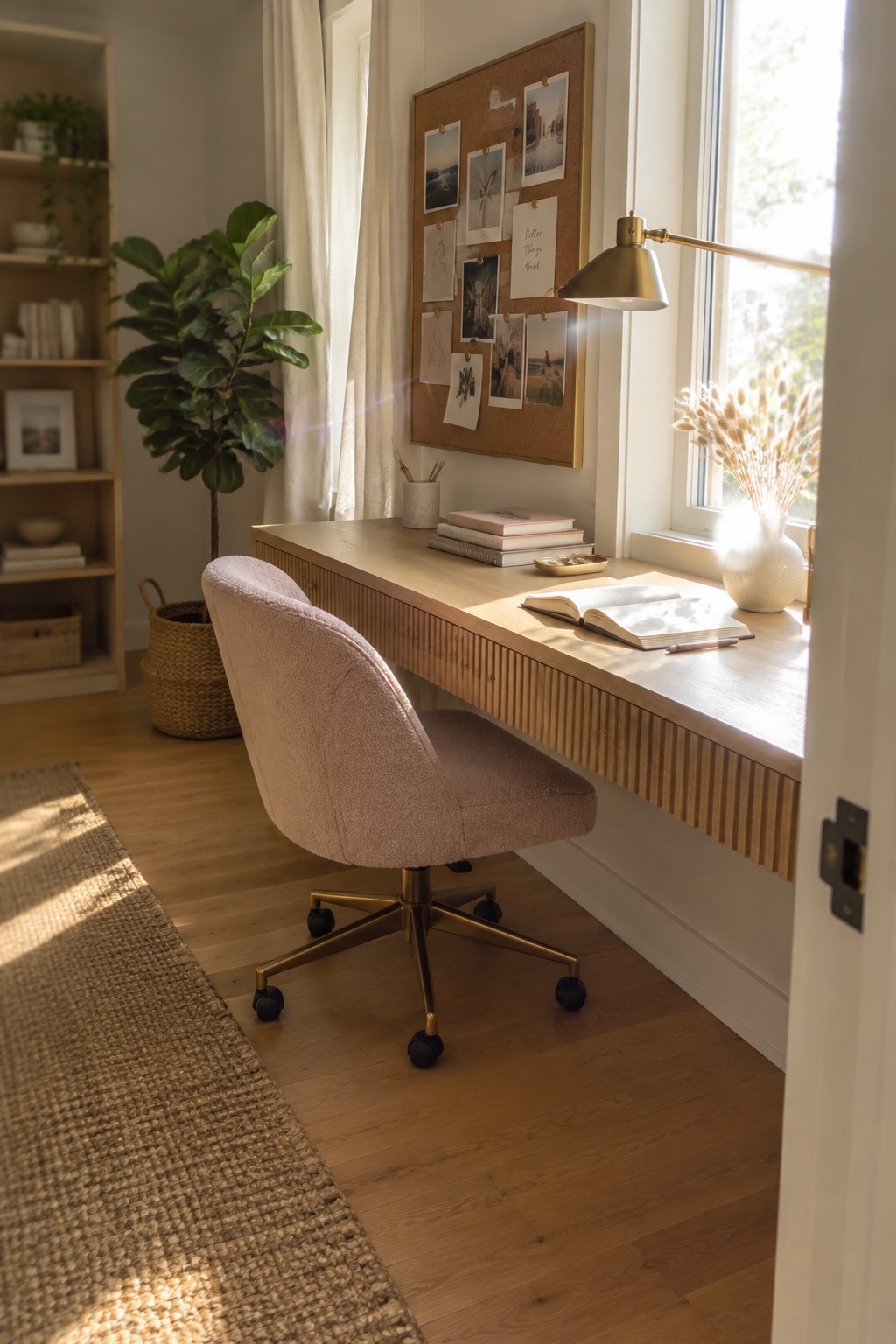
Many women find that a corkboard right over the desk keeps things personal without crowding the work surface. You can pin photos, small prints, and notes that actually mean something, and change them whenever you like.
This approach suits bright rooms with wood desks and simple furniture. It works best when you want easy updates rather than a fixed gallery wall, and it keeps the focus on the things that matter to your day.
Warm Wood Desks in Dark Offices

A dark room can feel heavy fast, but a solid wood desk changes that. The warm grain picks up whatever light comes in and keeps the space from turning too cold or flat. It gives the room something to rest on visually without needing a lot of extra pieces.
This works best in smaller offices or rooms with only one good window. Keep the desk surface fairly clear so the wood stays visible, and let the light hit it during the day. Dark walls already do the heavy work of making the room feel enclosed, so the desk becomes the part that softens it.
Built-In Shelves Above A Desk

A built-in desk with open shelves overhead makes good use of a small corner without crowding the room. The shelves keep books and supplies close at hand while giving you room to add a few personal pieces that make the space feel like yours.
This works best in older homes or any space where you need storage but do not want another piece of furniture taking up floor room. Keep the shelves from getting too full so the desk stays usable and the whole area feels calm rather than busy.
Surround Your Desk With Houseplants

Plenty of women find that adding houseplants around the desk makes the workspace feel more personal and less like a plain work zone. The mix of different plant sizes and leaf shapes brings in color and life without needing a lot of extra decor.
This approach works best near a window where the plants can get light, and it suits rooms with wood furniture that already feels warm. Start with a few larger pots on the floor or desk corners, then fill in with smaller ones on shelves or the windowsill. Just watch that the plants do not crowd your actual work area.
Floating Desks Keep Small Workspaces Feeling Open

A floating desk mounted to the wall gives you a usable workspace without eating up floor space. In tighter rooms this setup leaves the area underneath clear, so the room stays open and easy to move around in.
This kind of desk works best in corners, guest rooms, or any spot where a full desk would feel too heavy. Pair it with a simple shelf above for a few essentials and keep the surface mostly clear so the whole area feels calm rather than crowded.
Soft Seating for a Personalized Desk
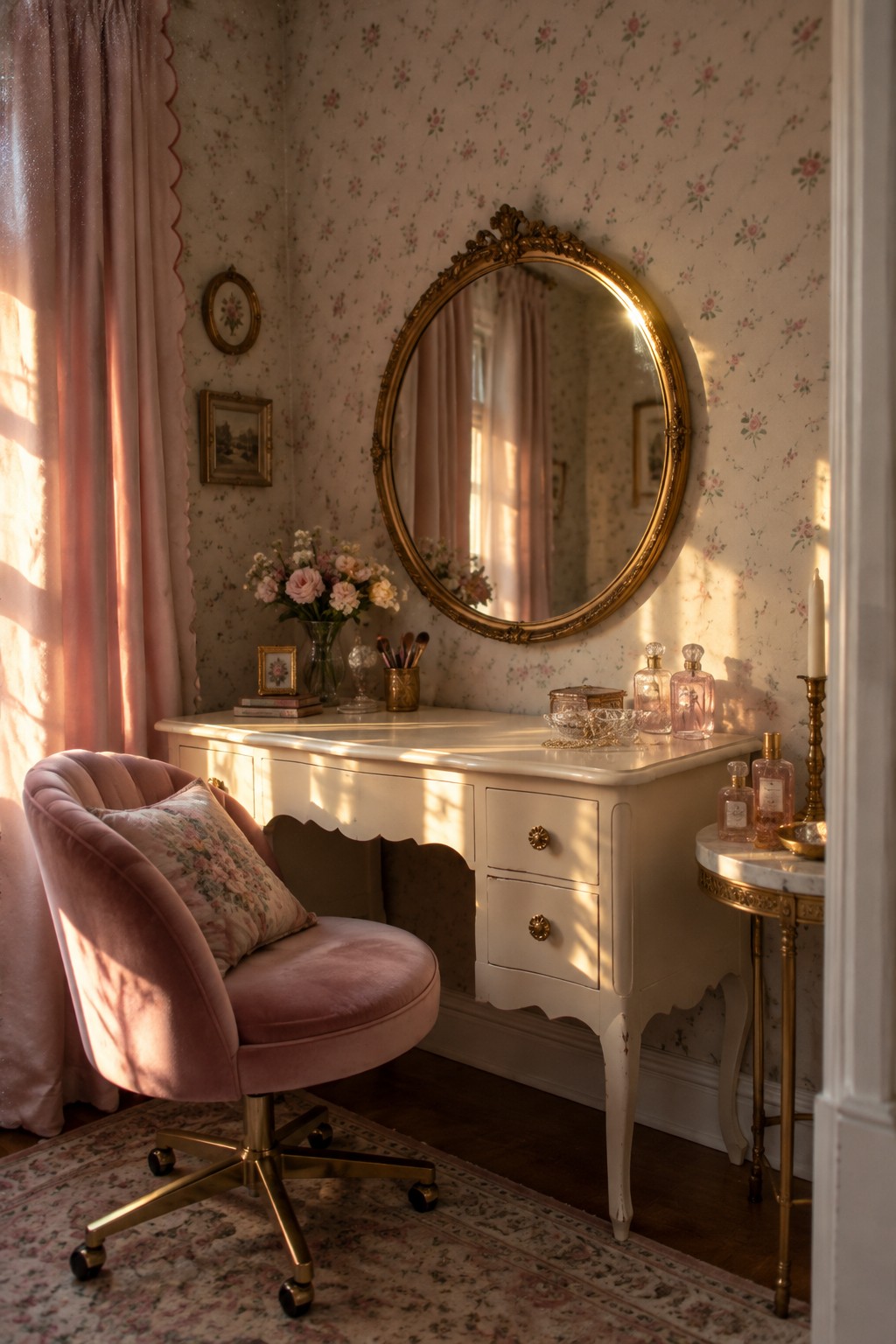
A vintage desk with a curved front can feel much more welcoming than a standard office table. The scalloped edge and soft white finish give it a gentle look that works well when you want the workspace to blend into a bedroom or quiet corner rather than stand out like typical office furniture.
A plush velvet swivel chair in a soft pink tone adds comfort for longer hours at the desk. This setup suits smaller rooms or anyone who prefers a calmer, more personal style over strict office pieces. Keep accessories light so the chair and desk remain the main focus.
Woven Wall Accents Add Texture to an Office

A bare wall above a desk can make the whole workspace feel unfinished. Grouping woven natural pieces together gives the area some depth and a handmade quality that pairs well with wood furniture and simple lighting.
This approach works best in smaller home offices where you want visual interest without crowding the surface. Stick to similar tones and shapes so the arrangement feels collected rather than busy, and leave a little breathing room around the desk itself.
A Substantial Wood Desk And Leather Chair
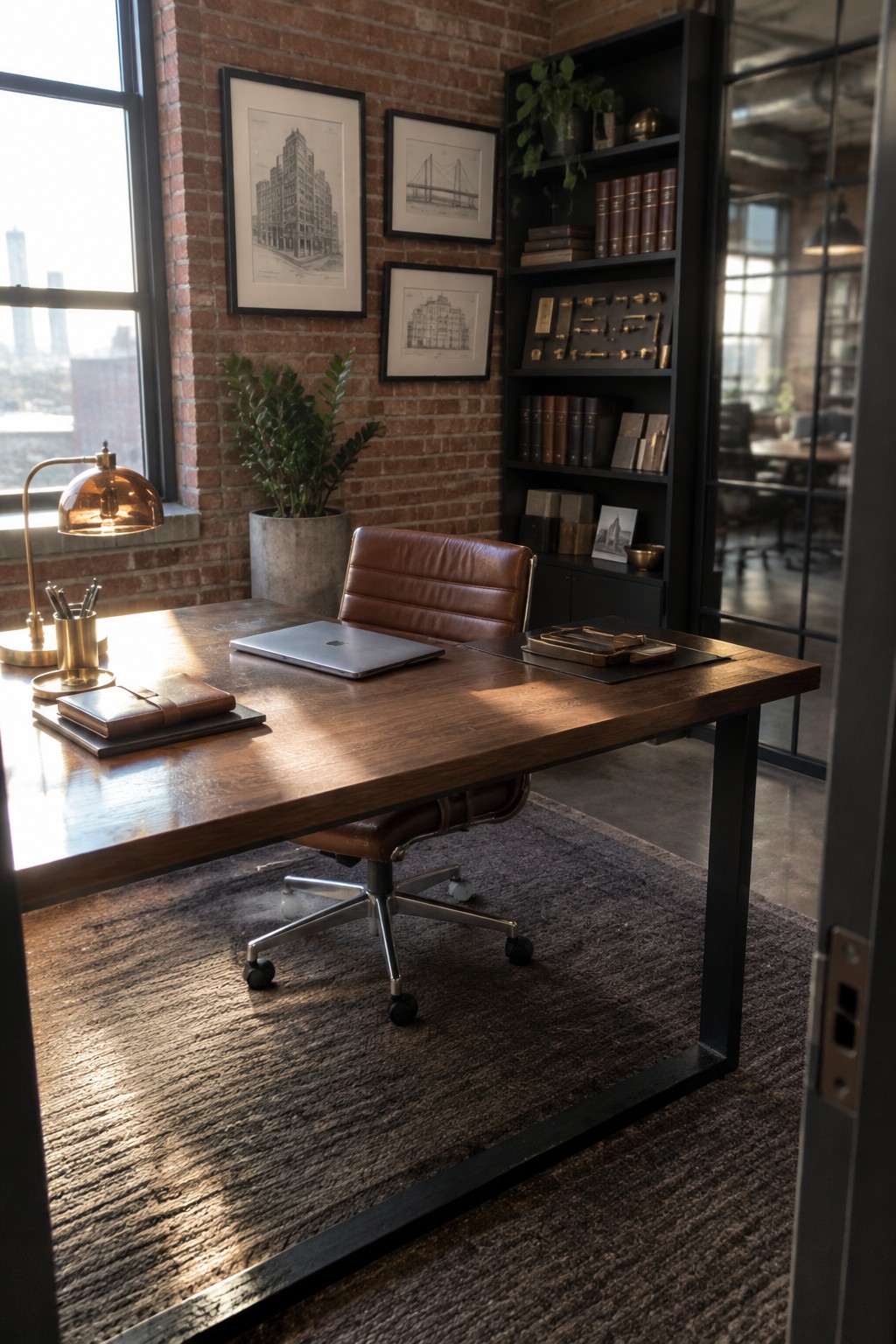
A large wood desk paired with a leather chair gives a home office a solid base that feels both professional and personal. The warm tones of the wood and leather work together without needing much else, and they hold up well against brick or darker shelving.
This setup suits smaller or medium rooms where you want the desk to do most of the work. Keep the surface fairly clear except for a few everyday items like a lamp and notebook so the materials stay the focus.
Floating Shelves Keep Desk Styling Simple

Floating shelves above a desk give you a place to show the things you actually like without crowding the work surface. You can stack a few books, lean a small frame, or set out collected pieces that make the spot feel more like yours. It works because the desk stays open for papers and a laptop while the wall adds the personality.
This approach suits smaller offices or any room where you want the space to feel calm rather than packed. Start with two shelves and group items loosely so nothing feels too arranged. Light colors and a mix of textures keep it from looking heavy.
Built-In Shelving For A Personalized Office

Deep navy built-ins give a home office both storage and a place to show personal style without needing extra furniture. The shelves hold books alongside a few decorative pieces, which keeps the wall from feeling empty while still looking pulled together.
This setup works best in smaller rooms where every surface needs to earn its keep. Keep the arrangement simple by mixing a few taller items with lower stacks and leaving some open space so the shelves do not feel crowded.
Repurpose a Closet Into a Personalized Desk Space

Many people with small homes are finding that an unused closet can become a surprisingly useful desk area. The open shelves above the workspace let you keep everyday items and a few favorite pieces on display, so the spot feels more like a personal corner than a hidden office.
This works especially well in bedrooms or guest rooms where you need a place to work but do not want furniture taking over the floor. Add simple wall boards for notes and small items, and keep the doors so you can shut the whole thing away when you are done.
Adding Houseplants Around Your Desk

Many home offices end up feeling a bit bare without something living in them. Placing plants on shelves, the windowsill, and even tucked beside the desk adds color and softness that makes the space feel more personal and easier to spend time in.
This approach works best in rooms that already get decent natural light. Start with a mix of sizes on open shelving nearby, then add a few smaller pots right on the desk surface so the greenery feels like part of the workspace rather than just decoration.
Painted Desks That Add Personal Character

A painted desk can turn a basic workspace into something that feels like your own. The floral patterns on this green desk give it a handmade quality that stands out without needing a lot of extra pieces around it. Many women enjoy this approach because it lets them bring color and pattern right into the spot where they spend their work hours.
This idea suits smaller home offices or craft rooms where the desk becomes the main feature. Start with an older piece you already own, choose colors and motifs that you like, and keep the surrounding walls and furniture fairly simple so the painted surface stays the focus.
Built-In Shelves With Labeled Baskets

Open shelves above a desk can do more than hold books. When you add woven baskets with simple labels, the whole setup stays useful without turning messy. The baskets keep supplies sorted by category, and the labels make it easy to grab what you need at a glance.
This approach works best in smaller home offices where closed cabinets would feel heavy. Keep the baskets natural in tone so they blend with wood tones and plants, and limit the number to what you actually use often. Avoid overfilling them or the shelves will start to look cluttered again.
Pegboard Storage For A Personalized Desk Area

A pegboard above the desk gives you a simple way to keep supplies visible and within reach while adding your own touch to the space. It turns an empty wall into useful storage without crowding the work surface, and it works especially well if you like switching things around now and then.
This setup suits smaller offices or any room where the desk needs to stay clear for daily tasks. Hang the board at a comfortable height, then move hooks and small shelves as your needs change. Just avoid overloading it so the area still feels open.
Mirrored Desks Brighten Small Workspaces
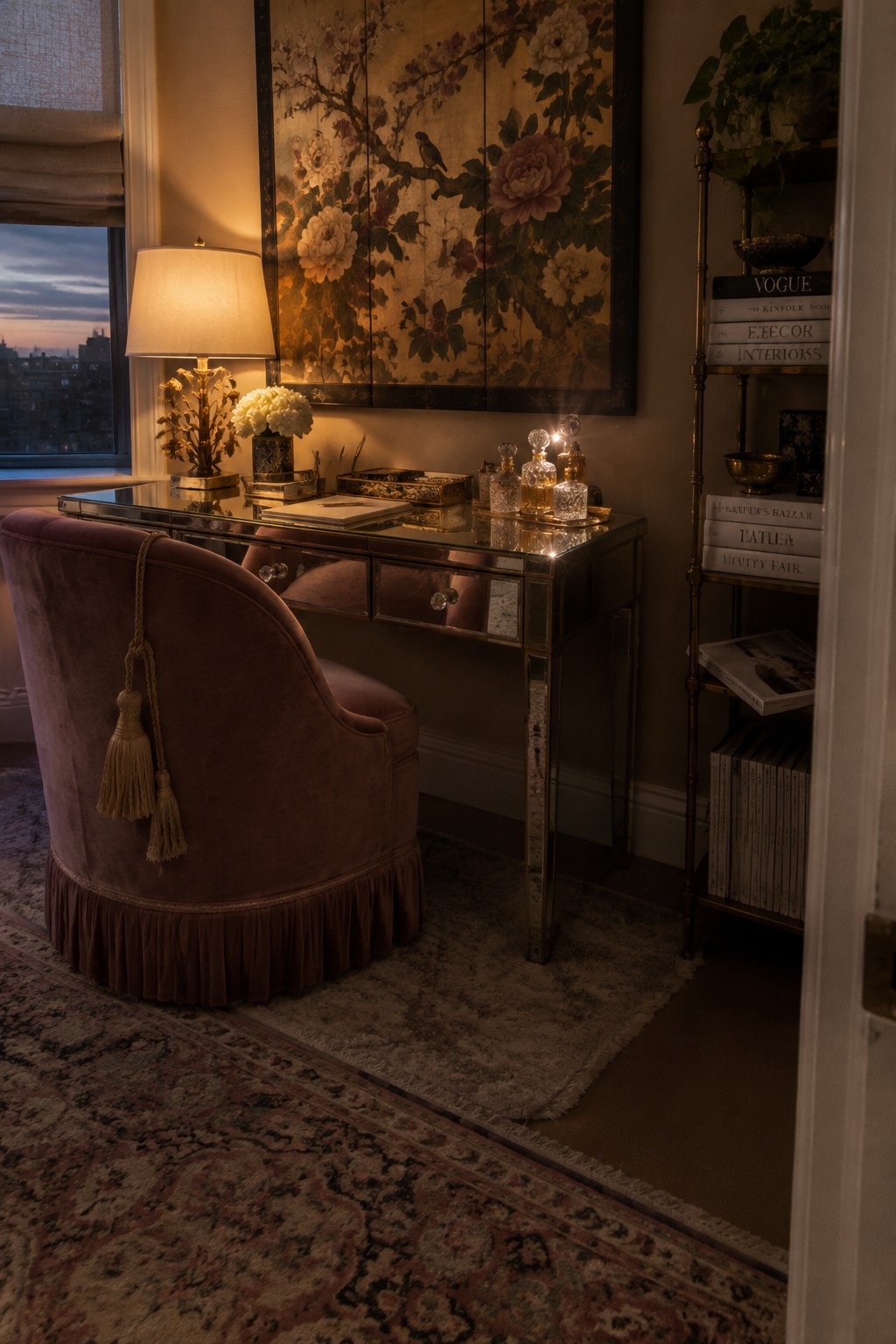
A mirrored desk is a simple way to make a small home office feel lighter and more open. The reflective surface bounces light from a window or lamp across the room, which helps the space feel less cramped even when the desk itself takes up a fair amount of floor area.
This works best in rooms that already have some natural light or a soft lamp nearby. Keep the top fairly clear except for a few personal items so the mirror effect stays noticeable rather than cluttered.
Built-In Bookshelves For A Personal Office

Many home offices feel more inviting when the walls are lined with books instead of left bare. Built-in shelves turn the space into a working library, and the books themselves become the main decoration. This approach works especially well when the desk sits in front of the shelves so everything stays within reach.
It suits rooms that already have some architectural detail or older homes where the woodwork can match. Keep the shelves filled with a mix of books you actually use and a few personal objects so the look stays genuine rather than staged. Avoid cramming every inch if the room is small, since some breathing room helps the space feel calm.
Natural Wood Desks With Minimal Accents

A desk in light natural wood can make a home office feel calmer right away. The simple surface and warm tone give the room a quiet base, and keeping accessories down to just a few personal items helps the whole space stay open and easy to use.
This setup works well in smaller rooms or for anyone who wants their workspace to feel less cluttered. Choose pieces that mean something to you, like a small plant or a soft lamp, and leave the rest of the surface clear so the wood stays the focus.
Vintage Furniture For A Personal Workspace

A vintage desk and chair bring instant character to a home office without needing a lot of extra pieces. The worn finish and simple lines make the space feel lived in rather than styled, which helps it feel more like a place you want to use every day.
Look for old wooden pieces at secondhand shops or auctions and keep the rest of the room quiet so they stand out. This approach works best in smaller rooms where you want function without clutter, and it suits homes that already lean toward softer, traditional styles.
Rounded Desks That Keep A Workspace Feeling Calm
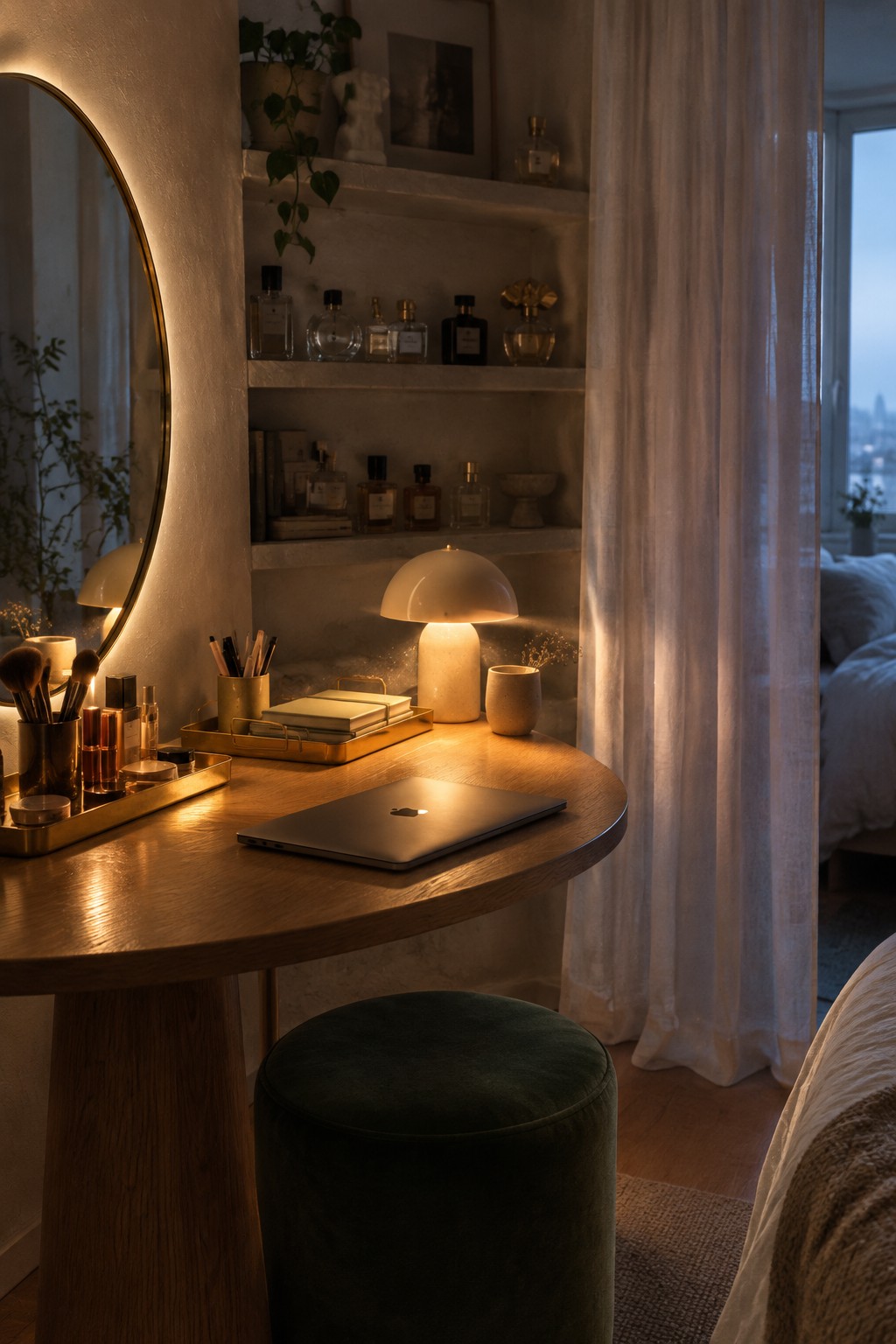
A rounded desk top makes a home office feel less like a work station and more like a regular piece of furniture. The shape softens the lines in the room and leaves a bit more walking space on either side, which helps when the desk sits inside a bedroom or small alcove.
Use one warm lamp on the surface and keep everything else minimal. This works best in homes where the office shares space with living areas, since the curve stops the desk from looking too heavy or official.
Built-In Shelves Around A Window Desk
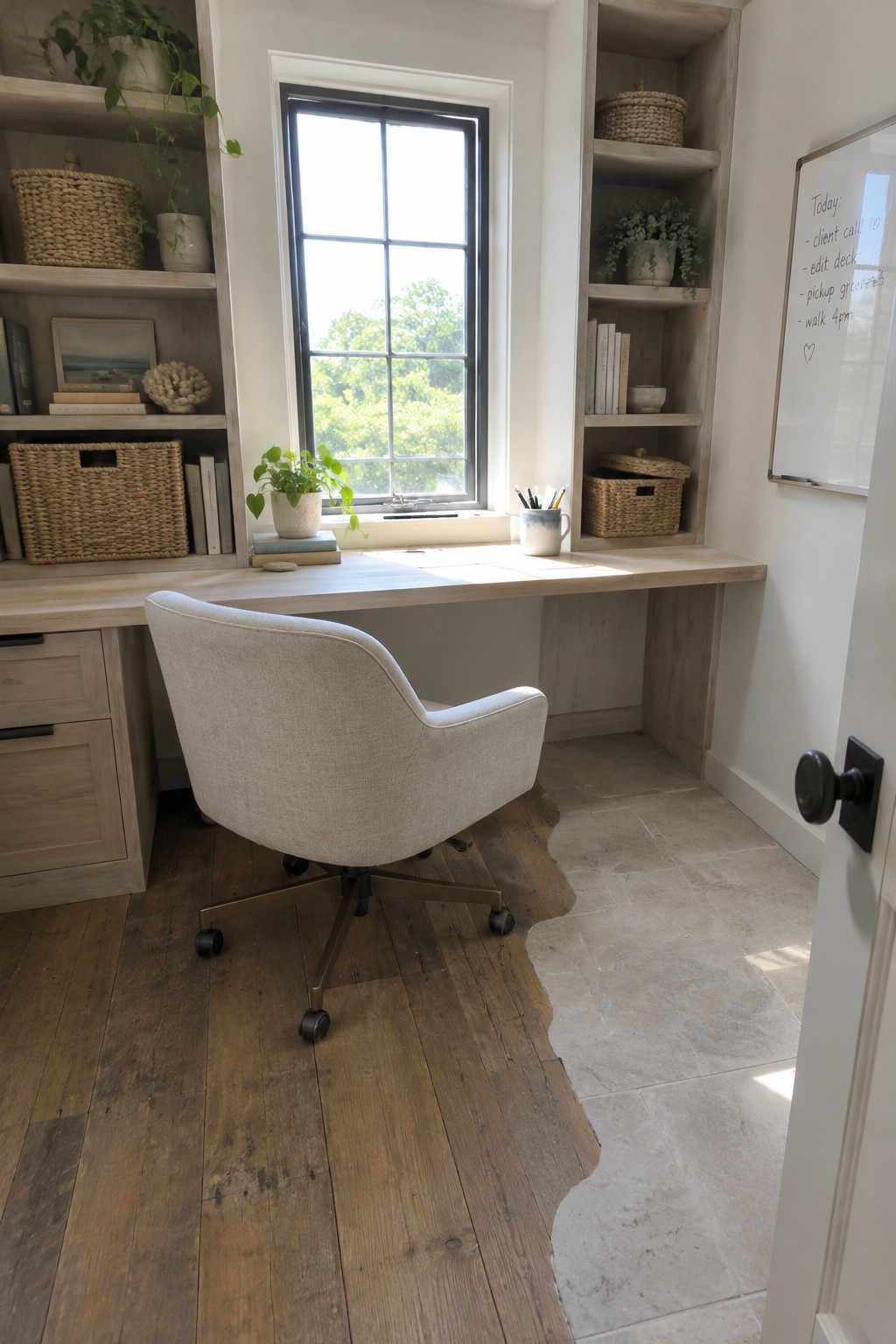
Built-in shelves on either side of a desk make the whole workspace feel more finished and useful. Instead of adding separate bookcases that crowd the room, the shelves become part of the wall and give you plenty of spots for books, baskets, and a few plants without taking up extra floor space.
This approach works well in smaller rooms or any home office where you want the desk to feel like it belongs there. Keep the wood light so the area stays bright, and mix open shelves with a few closed baskets if you need to hide papers or supplies.
Low Tables for a Calmer Workspace

A low table with floor seating can shift the whole feel of a home office. It keeps the surface simple and brings your focus down, which often makes the space feel quieter and more personal than a standard desk setup.
This approach works best in smaller rooms or areas with good natural light. Keep the top mostly clear, add just one or two items that matter to you, and use a firm cushion so the seating stays comfortable for longer stretches.
Frequently Asked Questions
Q: How do I pick desk items that show my personality without ending up with a mess? A: Grab a couple of small things you already love, like a favorite mug or a photo strip from a trip. Place them where you reach often so they feel useful too. Change one out when it stops making you smile.
Q: My space is tiny and I worry extra decor will just get in the way. What works? A: Stick to one slim tray that holds your daily tools and a single plant or candle. Tuck anything else on a narrow shelf above instead of crowding the surface. You still get the personal feel without blocking your arms.
Q: Colors in my room are already set. How do I match new desk styling without a full redo? A: Pull two shades from your existing walls or curtains and use them on smaller accents like a notebook cover or lamp base. Keep the bigger desk pieces simple so nothing fights. The whole area starts to feel pulled together fast.
