


When I rearranged my desk setup last year I realized that even a single extra shelf can make the whole room feel busier than it needs to be.
A workspace tends to support steady focus only when the eye can rest on open surfaces instead of jumping between piles and gadgets.
Layout choices matter more than most people expect at first.
I have watched friends bring in sleek furniture that still left them distracted because the flow between chair and storage never quite settled.
Trying one change at a time in my own office helped me see which details actually kept the space calm enough for real work.
Built-In Desks With Integrated Storage

A built-in desk with cabinets and open shelves on one side gives you workspace without adding extra furniture that can crowd the room. The desk stays low and simple while the surrounding woodwork holds everything from books to supplies, which helps the whole area feel calmer and more focused.
This setup works well in smaller rooms or any space where you want fewer visual distractions during the day. Keep the shelves lightly styled and use the closed cabinets for anything that does not need to stay out.
Anchor the Workspace With a Large Area Rug

A large area rug helps mark off the main work zone in a home office without adding walls or extra furniture. It keeps the desk and chair from feeling like they are floating on a bare floor and gives the space a bit more comfort underfoot.
This approach works best in rooms with hard flooring where you want some softness and sound control. Make sure the rug is big enough for the chair to move freely and choose a pattern that can handle daily use without showing wear too quickly.
Industrial Materials For A Focused Desk

A heavy concrete top paired with a simple metal frame gives the desk real presence without adding clutter. The surface stays clear for work, and the materials hold up to daily use while keeping the look straightforward. Open metal shelves on the wall handle storage without blocking light or making the room feel closed in.
This setup works best in spaces that already have some texture, like brick or concrete floors. It suits smaller offices where you want storage but still need the room to feel open. Skip it if your walls are already busy, since the mix can start to feel heavy.
Built-Ins Under the Desk for Easy Storage

Placing storage right into the desk area helps keep the work surface clear without needing extra furniture around the room. Cabinets painted to match the walls blend in and hold papers, supplies, and other items that would otherwise pile up. This setup works well when the desk sits along a wall with windows, since the lower cabinets stay out of the way of the view.
It suits smaller or shared rooms where every piece needs to serve more than one purpose. Match the cabinet color to the walls and keep the desktop mostly empty except for a lamp and a few essentials. Avoid filling every shelf with decor if the goal is focus rather than display.
Built-In Storage That Keeps Desks Clear

Many home offices feel calmer when storage sits right in the workspace instead of scattered around the room. A tall built-in unit placed along the desk line gives plenty of room for books, baskets, and supplies without piling anything on the work surface. This keeps the focus on the task instead of on managing clutter.
The setup works best in rooms used by more than one person. Position the unit to divide the desk into separate areas while still allowing shared access to what is needed. Keep the open shelves lightly filled so the space stays easy to look at and simple to keep tidy.
Low Desk With Floor Seating
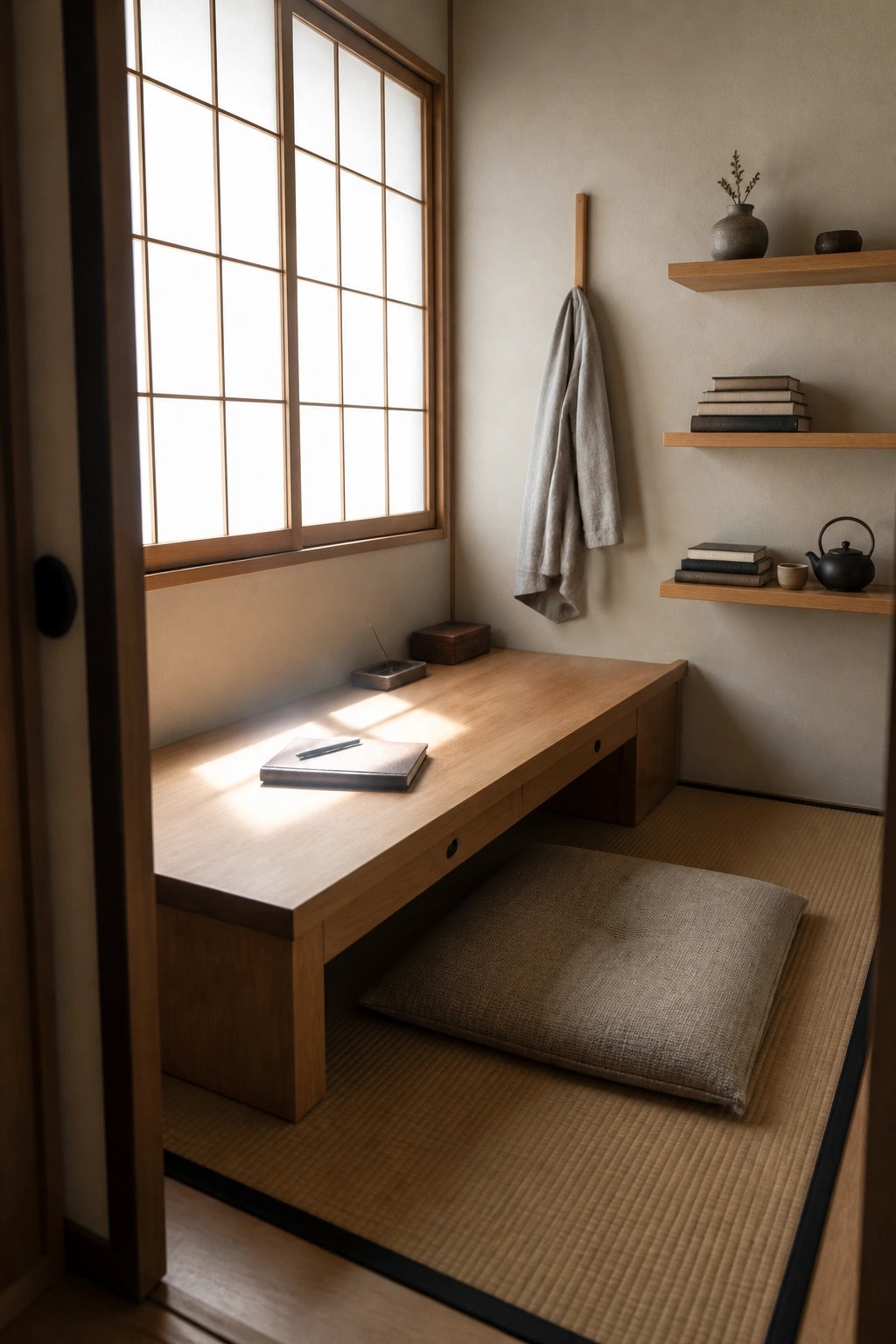
A low desk paired with floor seating keeps the whole room feeling open and uncluttered. The setup lets light move across the floor without interruption, which helps the space stay calm even when you are working for long stretches.
This approach works best in smaller rooms or homes that already lean minimalist. It suits anyone who prefers sitting lower or wants to avoid bulky furniture that can crowd the view. Just make sure the cushion is firm enough for support during longer sessions.
Built-Ins That Support a Focused Desk Setup
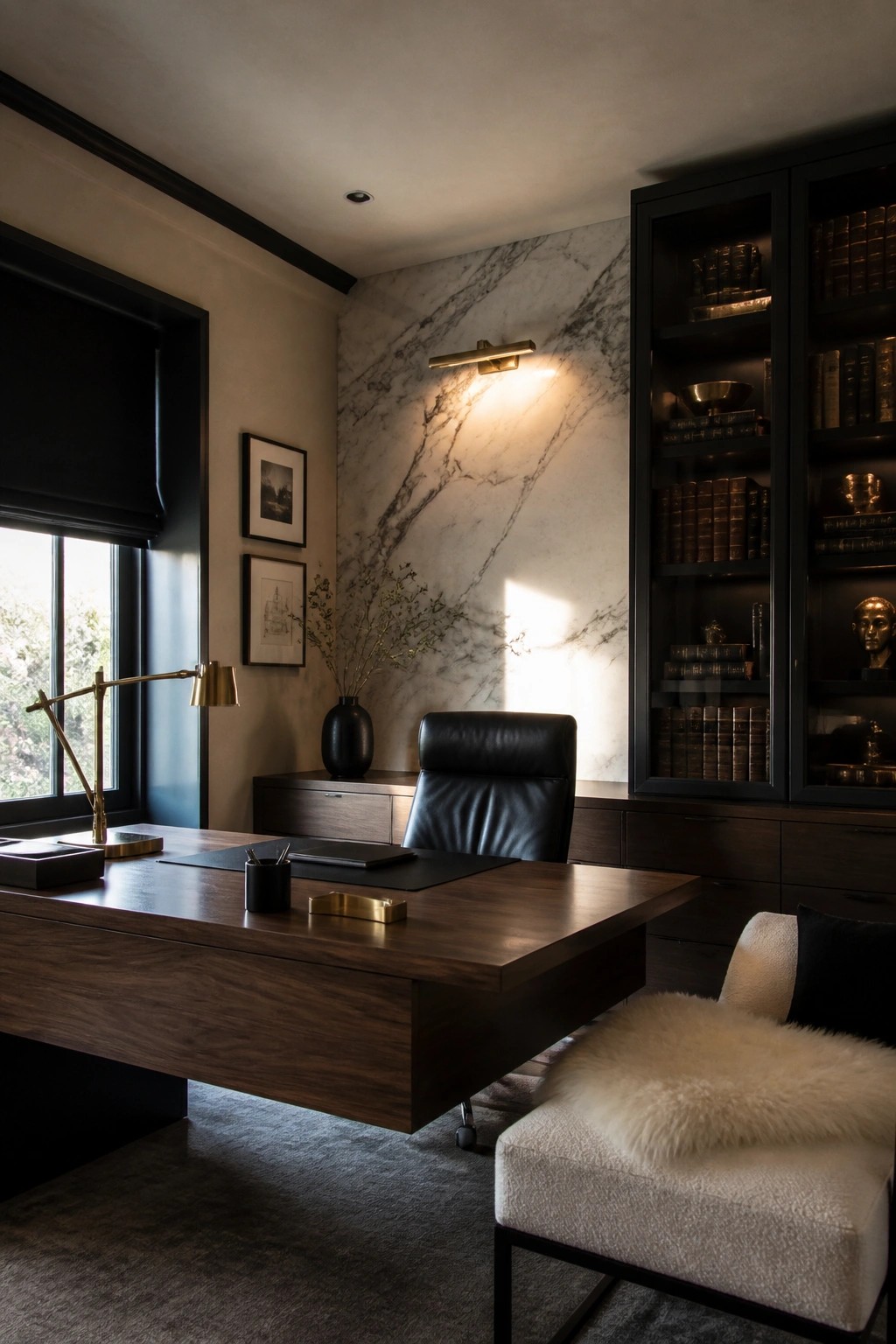
Built-in cabinetry and shelving along the back wall give this office plenty of room for books and supplies without crowding the main workspace. The desk stays clear because most of what needs storing stays out of sight behind doors or on the shelves. That separation helps the room feel calmer and makes it easier to stay on task.
This approach works well in smaller or medium home offices where you want storage but do not want the furniture to take over the floor. Dark wood cabinetry paired with a lighter feature wall keeps the balance from feeling heavy. Just make sure the built-ins are sized to match the scale of your desk so the whole area reads as one working zone rather than separate pieces.
Use Plants to Create a Calm Workspace
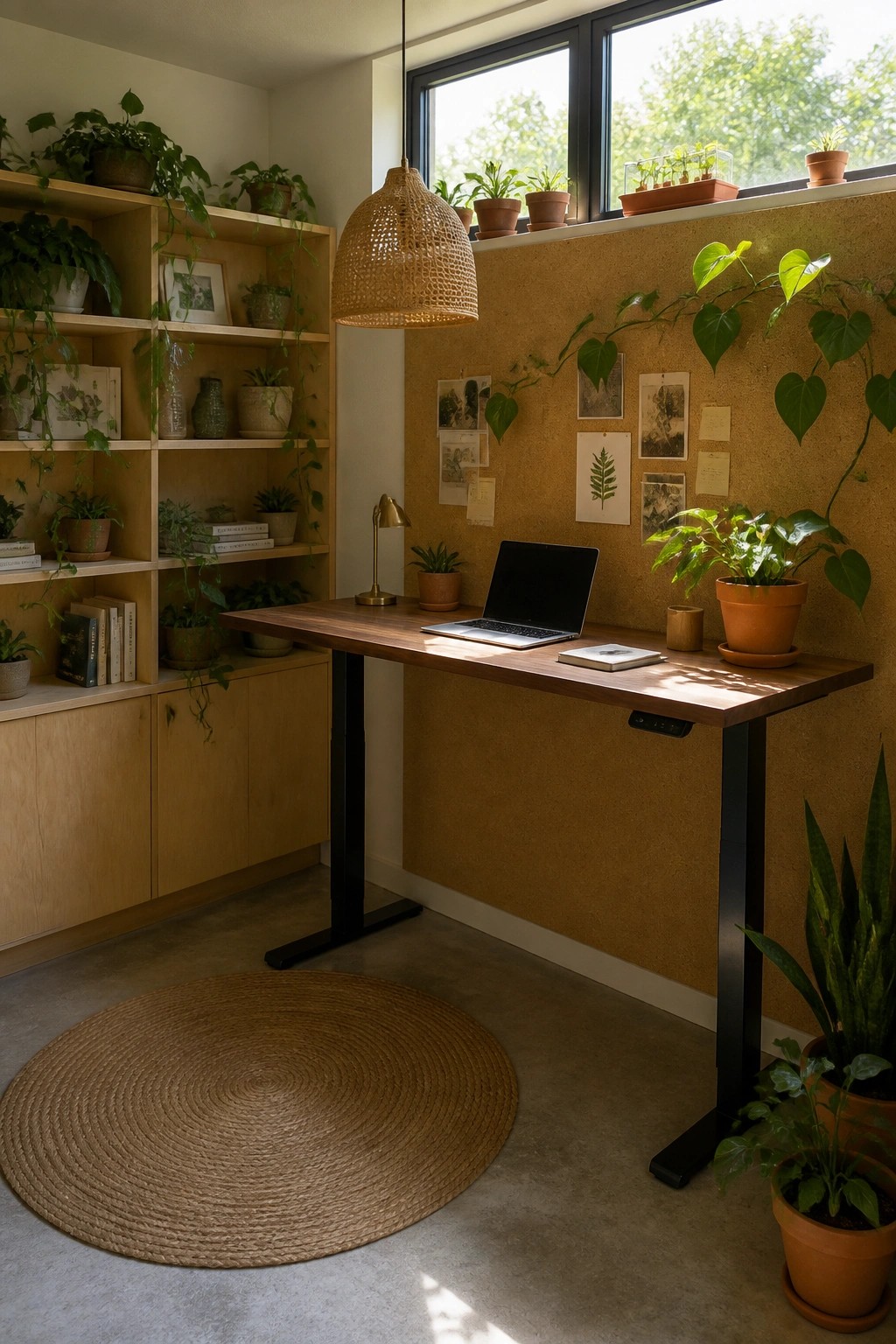
Plenty of houseplants can turn a basic desk setup into something that feels much easier to sit at for long hours. The greenery softens hard surfaces and gives the eyes a few places to rest, which helps keep the mind from wandering during focused work.
This approach works well in smaller rooms or spaces with limited natural light, as long as you choose plants that suit the conditions. Place them on shelves, along the back of the desk, and even on the floor so they feel like part of the room rather than an afterthought. Keep the number of other objects low so the plants stay the main feature.
Dark Walls Help an Office Stay Focused

A deep wall color can make a workspace feel more enclosed and quiet. It cuts down on visual noise from the rest of the house and keeps the eye from wandering. Many people find that darker rooms support longer stretches of concentration because there is less contrast pulling attention elsewhere.
This approach works best in rooms that already have good natural light or a strong desk lamp. Pair the dark paint with a simple desk and minimal wall items so the space does not feel heavy. Avoid it in very small rooms without windows, since the color can start to feel closed in after a while.
Built-In Storage That Fits an Attic Office

Built-in cubbies along a wall make good use of attic space that would otherwise feel wasted. The continuous desk surface stays open for work while the storage below holds supplies without adding extra furniture.
This approach works best in homes where an attic has been turned into a quiet workspace. Match the wood tones and keep the bins simple so the room stays calm rather than crowded.
Built-In Desks That Keep Supplies Close At Hand
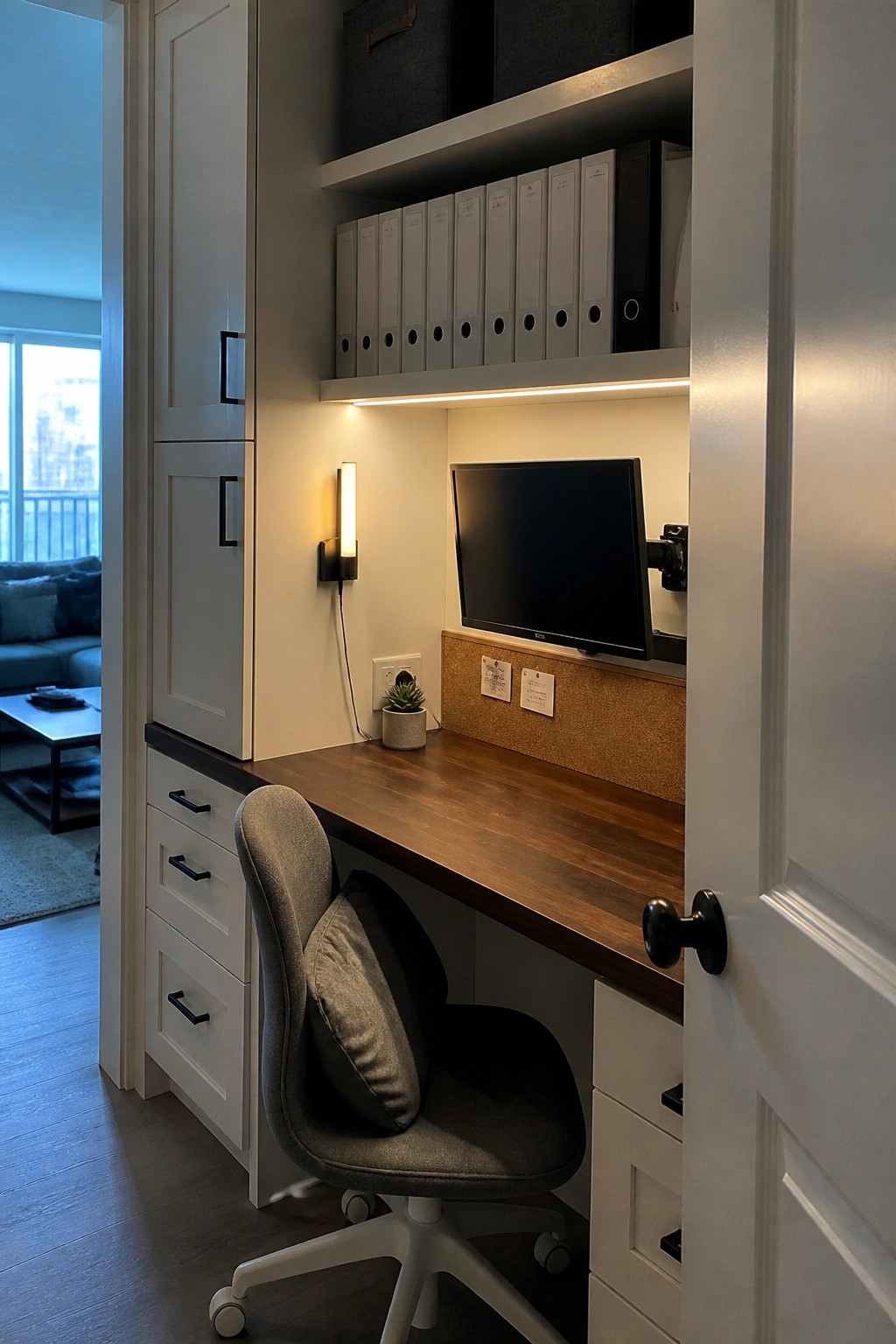
A built-in desk with shelves right above it and drawers underneath makes it easy to stay organized without extra furniture taking up floor space. Everything stays within reach, so the work surface stays clear and the room feels calmer overall.
This kind of setup works well in smaller homes or any spot where you need a dedicated workspace but do not want it to dominate the room. It suits corners or alcoves especially well since the cabinetry can be sized to fit the space exactly.
Glass Doors Keep The Office Focused

Using glass sliding doors to separate a home office from the living area gives the workspace a clear boundary without cutting off light. This setup helps with focus because the room feels separate during work hours while still staying part of the larger space.
It works well in apartments or open homes where the office sits right next to shared rooms. Choose doors that slide open fully when you want the areas to connect again.
Built-In Desks That Close Away

A fold-down desk built into cabinetry gives you a real workspace without leaving the room looking like an office all the time. The doors and drawers keep papers, a laptop, and small supplies out of sight, so the space stays calm when work is done.
This setup works well in bedrooms, guest rooms, or narrow corners where a full desk would crowd the floor. It suits homes that need the room to serve more than one purpose, though you will want enough depth in the cabinet so the lowered surface sits at a comfortable height.
A Long Workbench For Steady Focus

A long workbench gives you one continuous surface to spread out on, which helps keep your attention on the task instead of shifting between separate desks or tables. The simple layout reduces visual noise and makes it easier to move from one step to the next without stopping to clear space.
This kind of bench works best in a room with decent natural light and some wall storage above it so the top stays clear. Keep the stools or chairs low and tuck them underneath when you are done so the floor stays open too.
Try a Standing Desk With a Large Floor Mat

A standing desk can make long workdays feel less tiring when you have space to shift positions. The thick mat under the desk gives your feet and legs some cushion, which helps if you plan to stand for parts of the day instead of sitting the whole time.
This setup works best in a smaller office where you want to keep the floor open and the desk surface clear. Place the mat right in front so you can step on and off easily, and keep a whiteboard or notepad nearby for quick task lists.
Curved Desks Help Create a More Open Office Feel

A desk with a rounded edge changes how the room works. It softens the lines and makes it easier to move around the space without bumping into corners. The shape also keeps the office from feeling boxed in even when the desk itself is large.
This works best in rooms that need to stay light and simple. It suits smaller offices or spaces that double as something else during the day. Just keep the rest of the furniture light so the curve stays the main feature.
Built-In Desks That Add Storage Without Crowding The Room
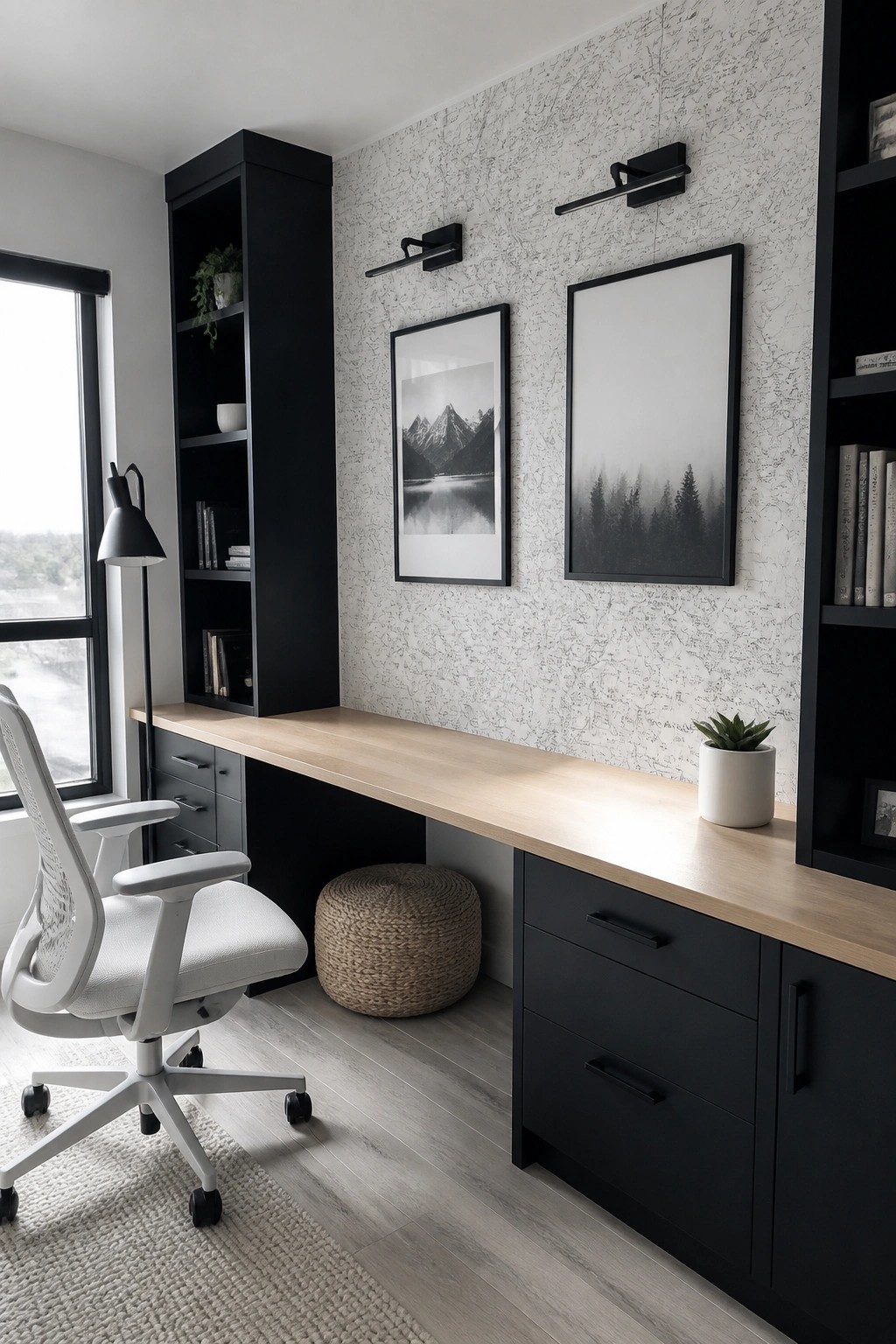
A long built-in desk works well because it turns an empty wall into a full workspace with storage built right in. Cabinets below the surface hold everything from files to supplies, so the top stays clear for daily use.
This kind of setup fits homes where the office shares space with other rooms. It works best along a solid wall with enough length to spread out, and it keeps the floor open for a chair and simple movement.
Dark Open Shelving for Office Storage
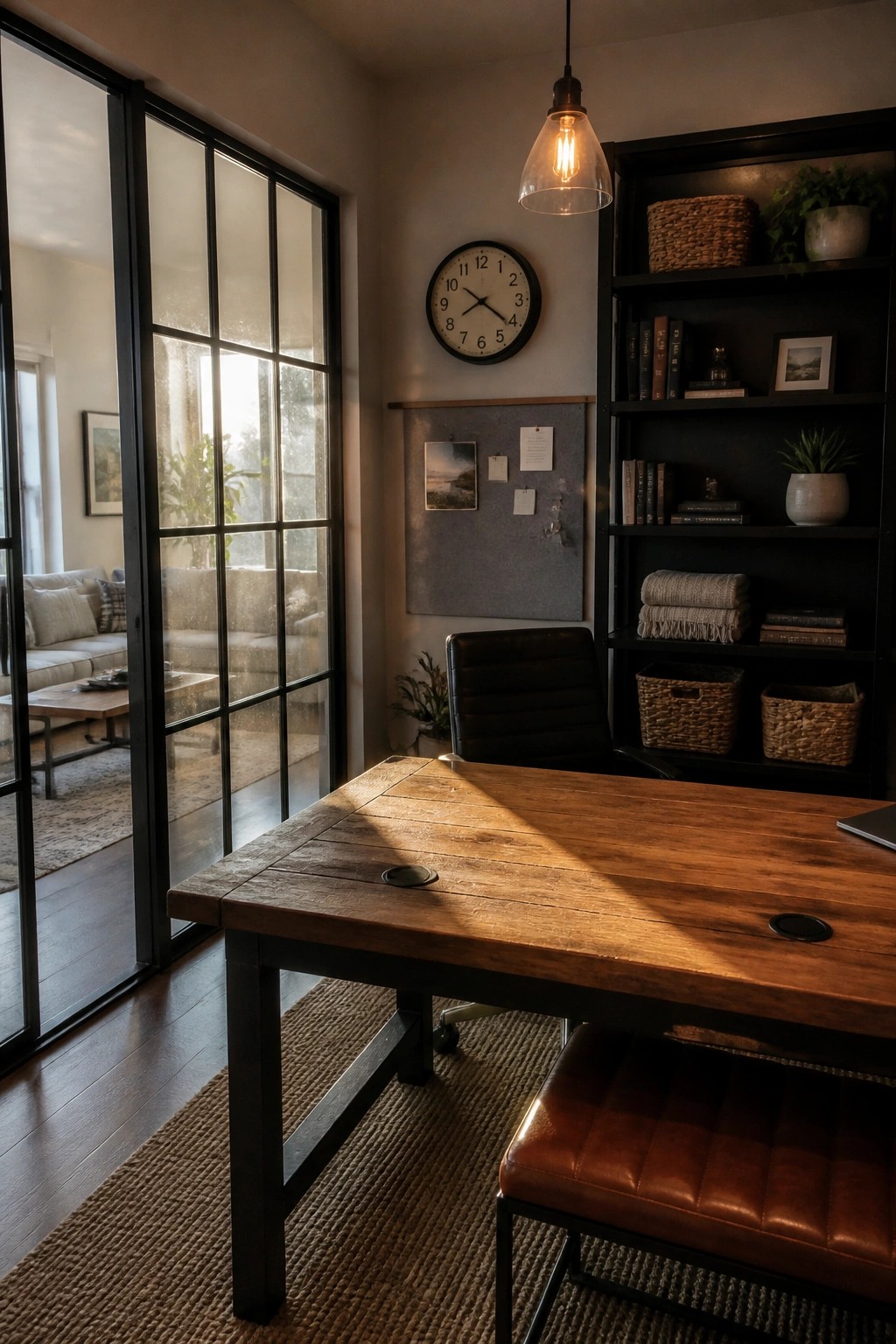
A tall black shelving unit next to the desk gives plenty of room for books, baskets, and a few plants without crowding the work surface. This keeps the focus on the task at hand while still letting the room feel put together.
It works best in smaller offices or spaces that need to stay open to the rest of the house. Keep the shelves from getting too full, and stick to a simple mix of books and a couple of neutral accessories so the storage stays useful rather than distracting.
Floating Desk With Built-In Shelves

A floating desk paired with built-in shelves gives a home office room to breathe. The desk stays light against the wall while the shelves handle storage without taking up floor space, which helps the whole area feel more open and less distracting.
This setup works best in smaller rooms or any space where you want the focus to stay on the work surface itself. Keep the shelves low on items and let the desk remain clear so the room stays calm during long hours.
Frequently Asked Questions
Q: How do I add storage without breaking up the clean lines in a small office?
A: Build shelves into the wall so they sit flush and out of the way. Choose cabinets that match the desk finish to keep the surface looking open. This setup holds everything you need while leaving the main area clear for work.
Q: What is the easiest way to hide cables when you have two monitors on the desk?
A: Run the cords through a grommet in the desktop and down the back of the leg. Secure them with clips along the underside so nothing shows from the front. The monitors stay at eye level and the whole surface stays flat and simple.
Q: Can I bring in a few plants without making the room feel busy?
A: Pick one or two small pots in matte containers that match the wall color. Set them on a single floating shelf rather than spreading them around. They add a bit of life but do not pull attention from the main workspace.
