


When I set up a workspace at home the first thing I notice is how quickly stray papers and gadgets start to crowd the surface and pull my attention in different directions.
Over time I have found that the room itself feels more usable once the eye has fewer spots to land on and the layout supports steady focus instead of constant tidying.
Small adjustments like moving cords out of sight or keeping only the tools I reach for daily can shift how the whole space functions without needing a full overhaul.
Less tends to work better here.
A few of the changes I tried in my own setup ended up staying because they made the room feel calmer and easier to return to each morning.
Install a Floating Desk with Hidden Storage

A floating desk keeps the workspace feeling open because nothing sits on the floor. The built-in slot underneath holds a few flat items without cluttering the surface, which helps the whole area stay calm and easy to focus in.
This kind of desk works best in smaller rooms or tight corners where a regular desk would crowd the space. It suits homes that already favor simple furniture since the clean lines and lack of legs keep the room from feeling busy.
Built-In Shelving Clears Desk Space
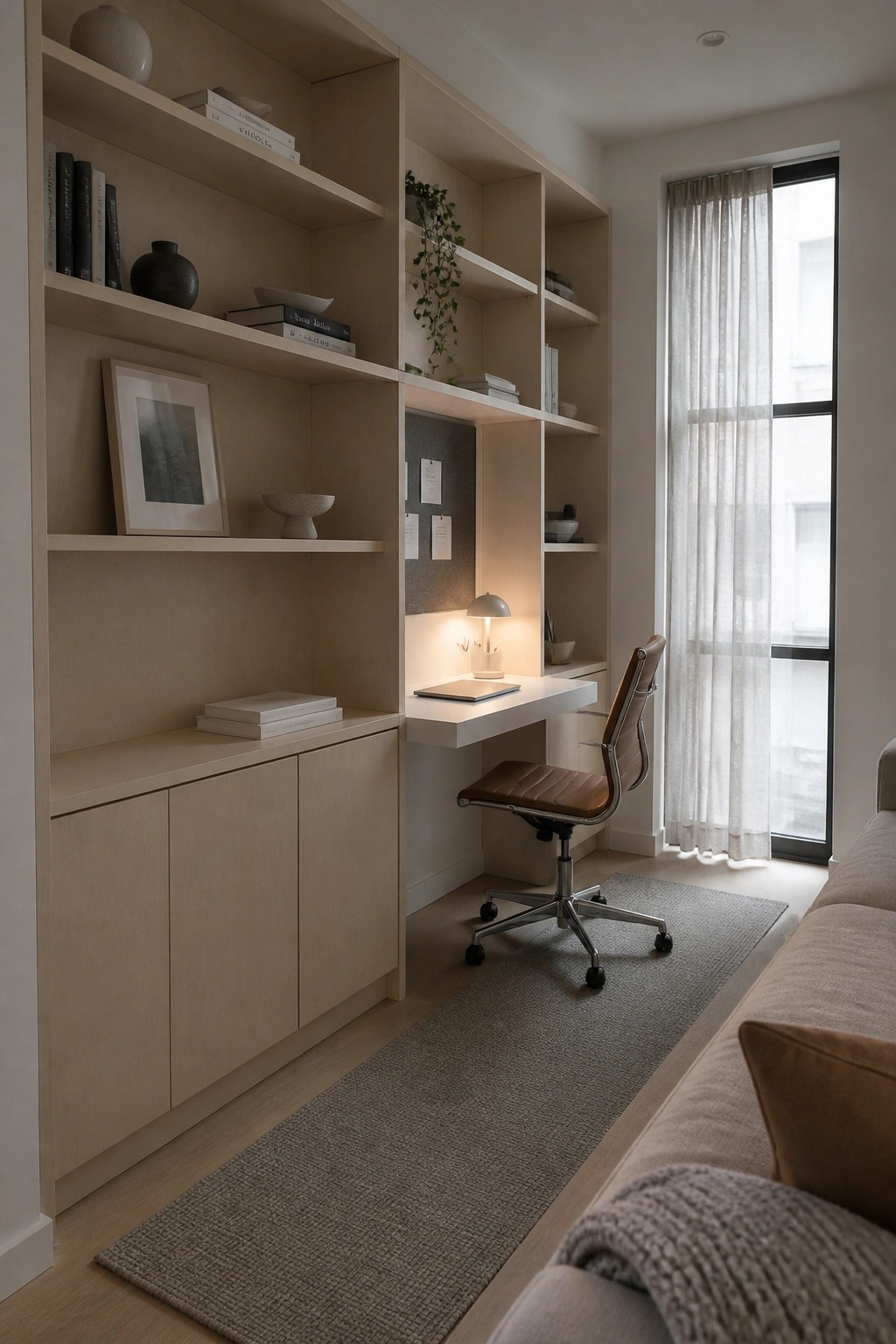
Built-ins work well when you want a workspace that stays tidy without constant effort. The unit here combines open shelves with closed lower cabinets, so books and supplies stay visible but organized while the desk surface stays mostly clear.
This approach suits smaller rooms or apartments where floor space is limited. Match the cabinet color to the walls so the whole thing feels like part of the room rather than extra furniture taking up space.
Hide the Workspace Behind a Sliding Door

A sliding door lets you close off the entire desk area at the end of the day. This keeps papers, screens, and cables out of sight so the room stays calm and open.
It works best in living areas or small homes where a permanent desk would crowd the space. Keep the inside simple with just a few drawers and good lighting so everything stays organized when the door is open.
Built-In Desks Keep Surfaces Clear

A long built-in desk with drawers set into the front gives you storage right where you need it without adding extra furniture. Everything stays tucked away so the work surface stays open and the room feels less busy.
This setup works well in a spare room or along a quiet wall at home. Keep the drawers for daily items and leave the top mostly empty except for a lamp or one small tool.
Low Platform Desks For Less Cluttered Workspaces
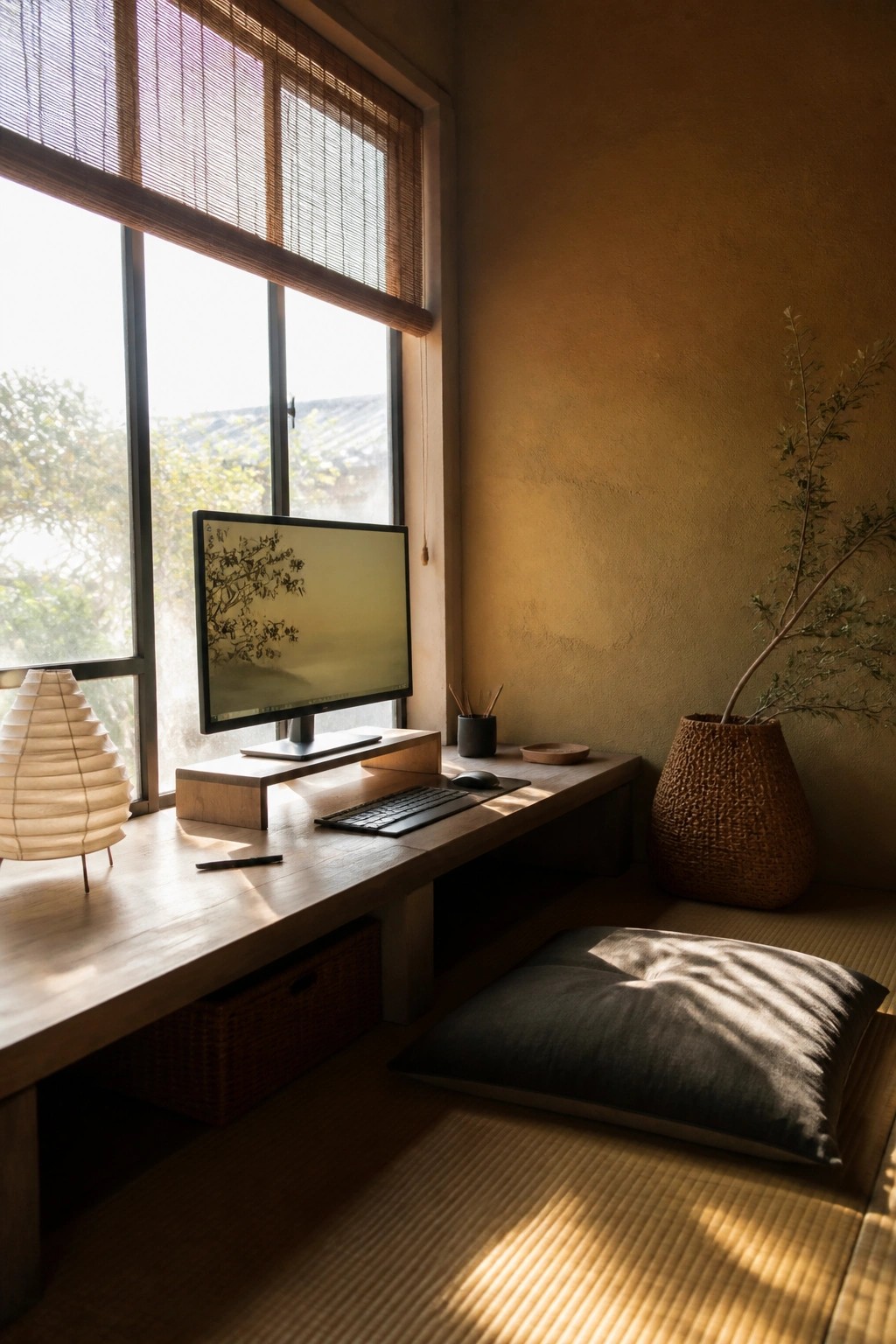
A low wooden platform desk keeps the main workspace close to the floor and removes the need for a bulky desk frame or tall legs. This approach cuts down on vertical lines and leaves the upper part of the room feeling open and quiet.
It works best in smaller rooms or homes that already lean toward floor seating. A simple cushion on a mat replaces a standard office chair, and the whole setup stays low enough that it does not compete with the window or wall surfaces.
Built-In Desks With Hidden Storage
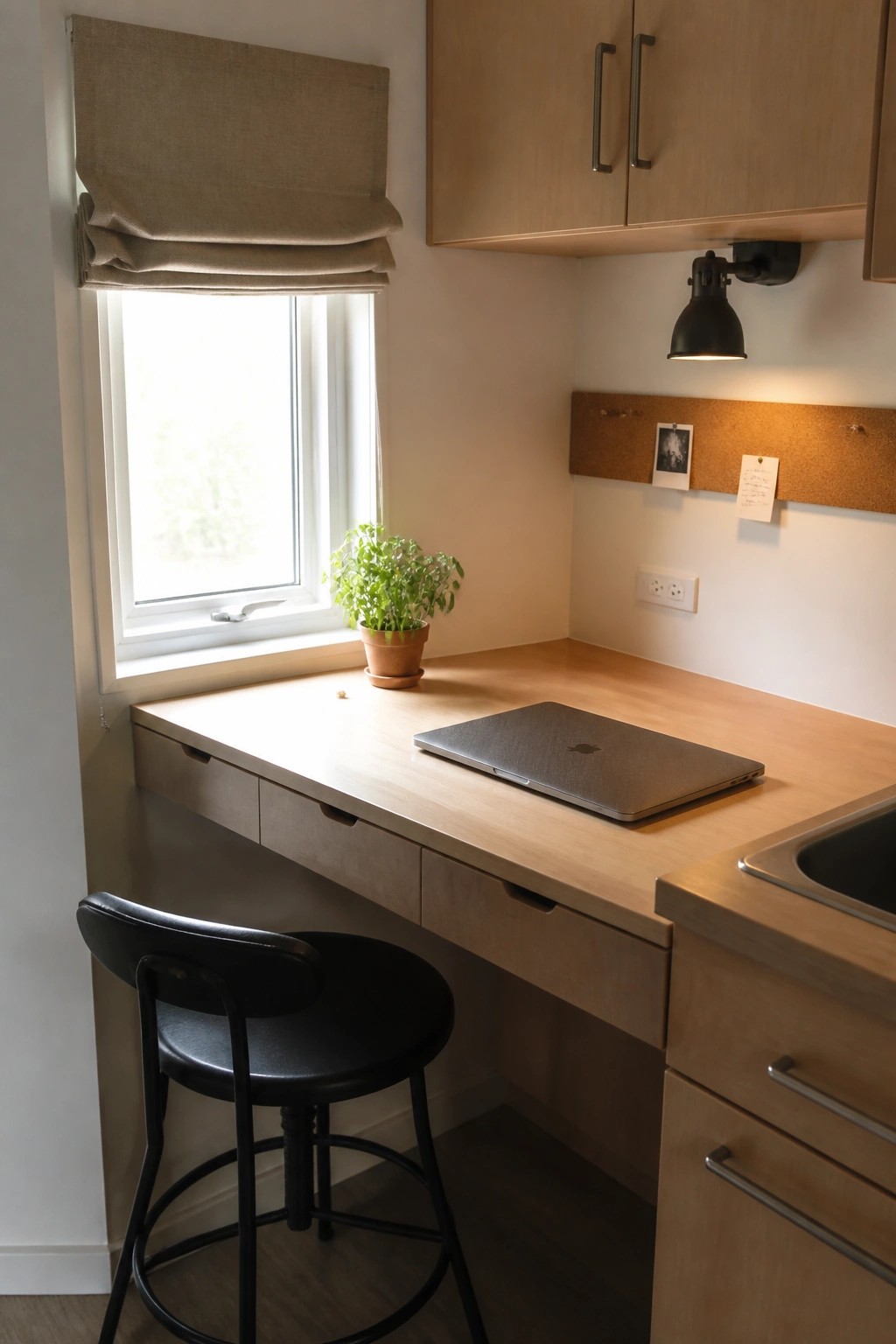
A built-in desk that includes drawers right under the work surface keeps the whole area looking calm. When storage is part of the desk itself, there is less need for extra shelves or bins that add to the clutter.
This works best in small rooms or tight corners where every inch counts. Tuck supplies away in the drawers and leave only the laptop and a plant on top so the space stays simple and easy to use every day.
Tuck A Desk Into An Alcove
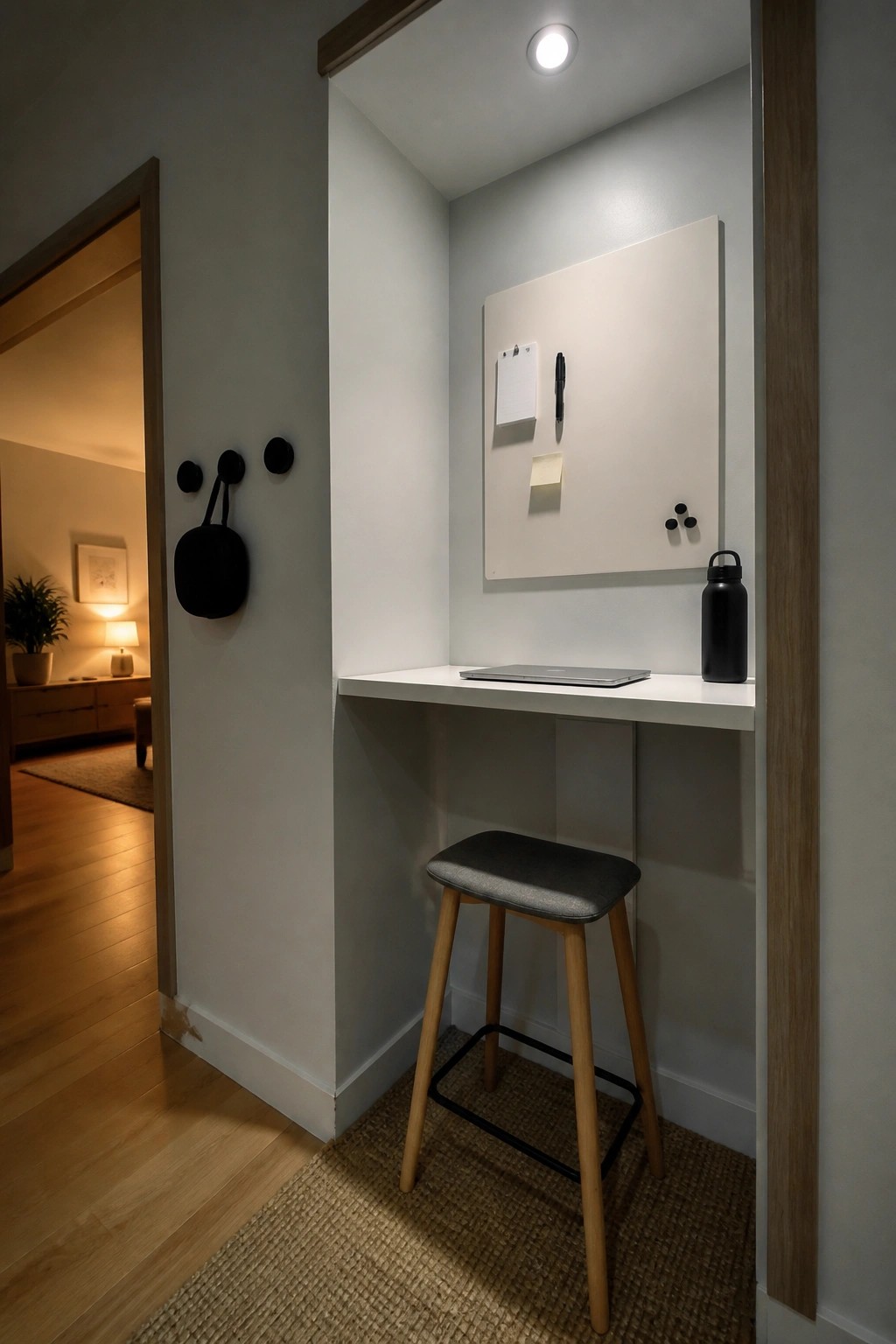
Fitting a desk into a small alcove or wall niche keeps the workspace contained instead of letting it spread into the rest of the room. The walls around it act as natural boundaries so fewer items are needed to define the area.
This setup suits small homes or apartments where every bit of floor space matters. A low stool that slides completely underneath leaves the walkway open when the desk is not in use.
Mount Your Desk To The Wall

Mounting a desk straight to the wall cuts visual clutter fast. It removes extra legs and bases so the floor stays open and the whole space feels calmer. The setup stays simple because nothing crowds the room or blocks movement.
This works best in smaller rooms or homes with wood floors worth showing. Anchor it well to the studs and limit what sits on top to just a few daily items.
Keep Only The Essentials On Your Desk

A mostly bare desk makes it easier to start work without feeling pulled in different directions. When the surface holds little more than a laptop and one light, the eye rests instead of jumping from one thing to the next.
This approach suits small rooms or any home office where you want fewer visual interruptions. Stick to three items or fewer on top and store the rest out of sight.
Built-In Cabinets Keep the Desk Clear
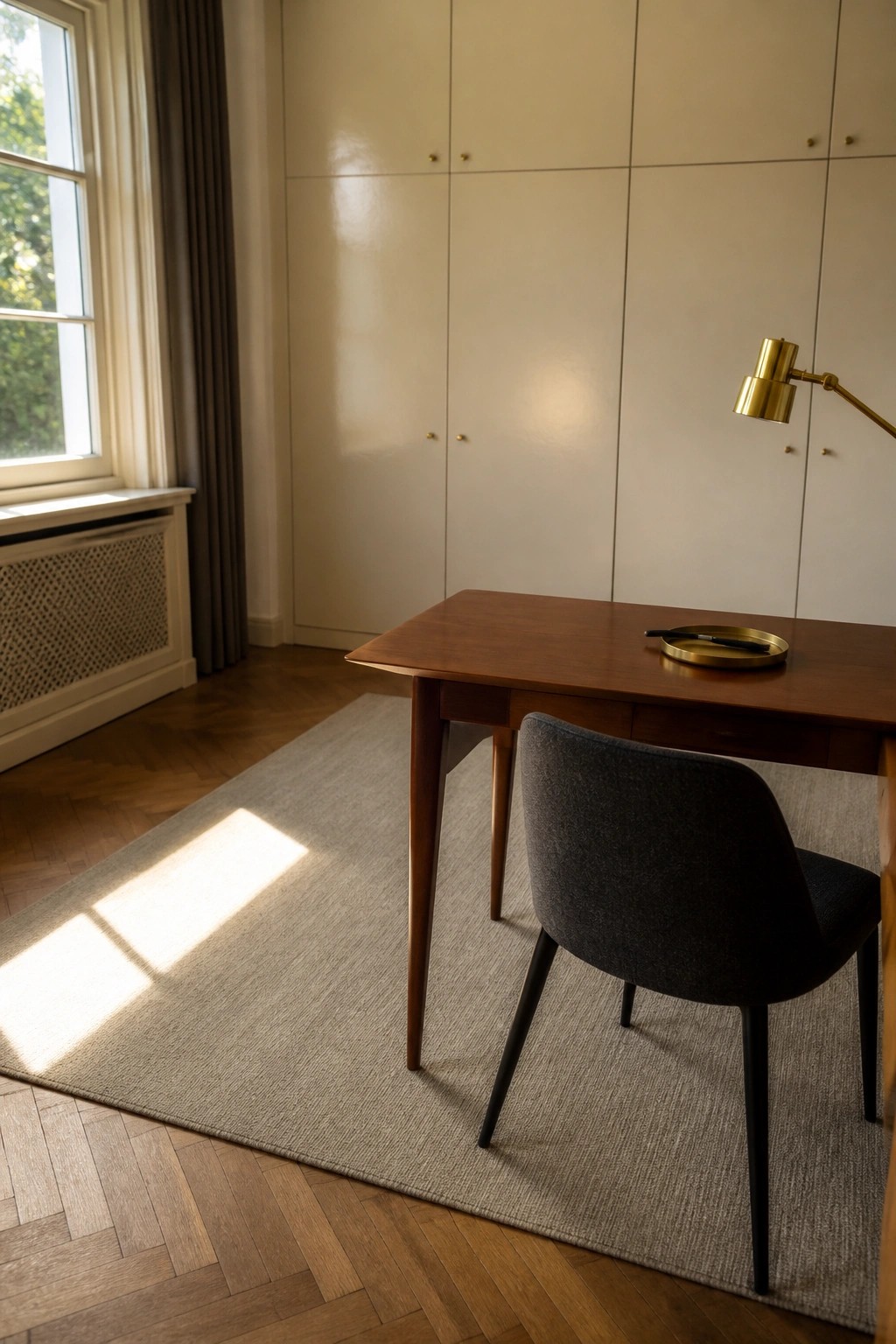
Many workspaces end up cluttered because there is no good place to put things away. Floor-to-ceiling cabinets along one wall solve that by giving you hidden storage without adding more furniture that would crowd the room.
This approach works best in smaller spaces or rooms that serve more than one purpose. Keep the desk surface nearly empty so you have fewer things pulling your attention while you work.
Built-In Drawers Keep The Desk Surface Clear
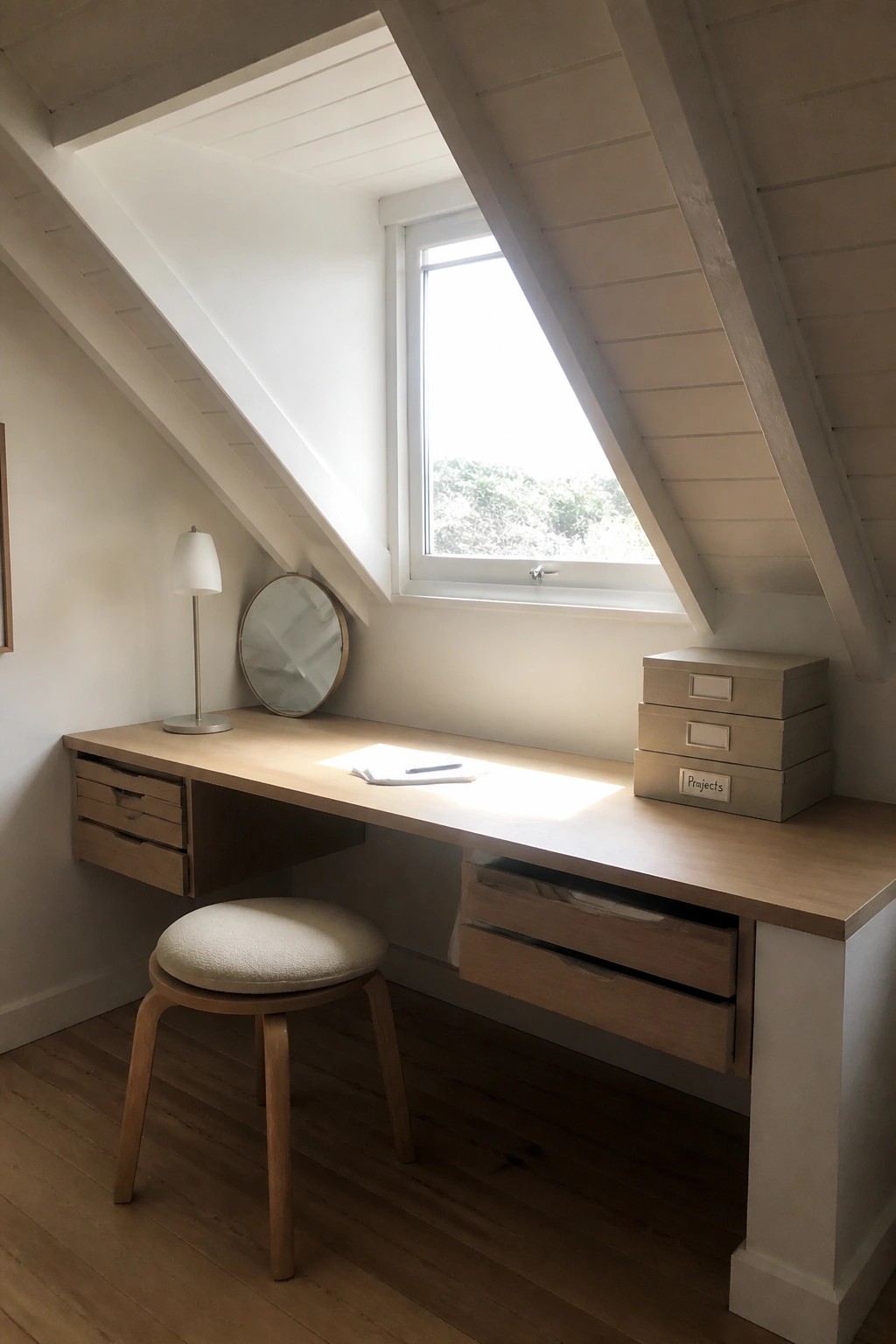
Many people find a workspace easier to use when storage sits inside the furniture rather than spread across the top. Drawers built into the desk hold papers and supplies out of sight while leaving the main surface open for just a few items at a time.
This setup works best in smaller rooms or spaces with sloped ceilings where extra shelves would quickly feel crowded. It suits anyone who wants fewer visual distractions during the workday and prefers furniture that handles the organizing work without extra pieces.
Create a Hidden Workspace With a Fold-Down Desk

A fold-down desk built into cabinetry keeps the surface clear when it is not needed. This setup works well in rooms that serve more than one purpose, since the work area disappears behind a clean front instead of adding another piece of furniture to the floor.
It suits homes that already have deep cabinet runs or utility spaces where a small desk would otherwise stand out. Keep the surrounding storage closed and limit what stays on display so the whole area stays calm when the desk is tucked away.
Built-In Storage Keeps The Desk Clear

A built-in desk with low cabinets running underneath gives you one long work surface without extra pieces of furniture taking up space. The storage stays tucked away, so the room feels less busy and easier to keep clean.
This setup suits smaller rooms or open areas where you want the workspace to stay calm. Match the cabinet fronts to the wall color if you want the whole thing to blend in even more.
Built-In Shelves Keep Supplies Out of Sight
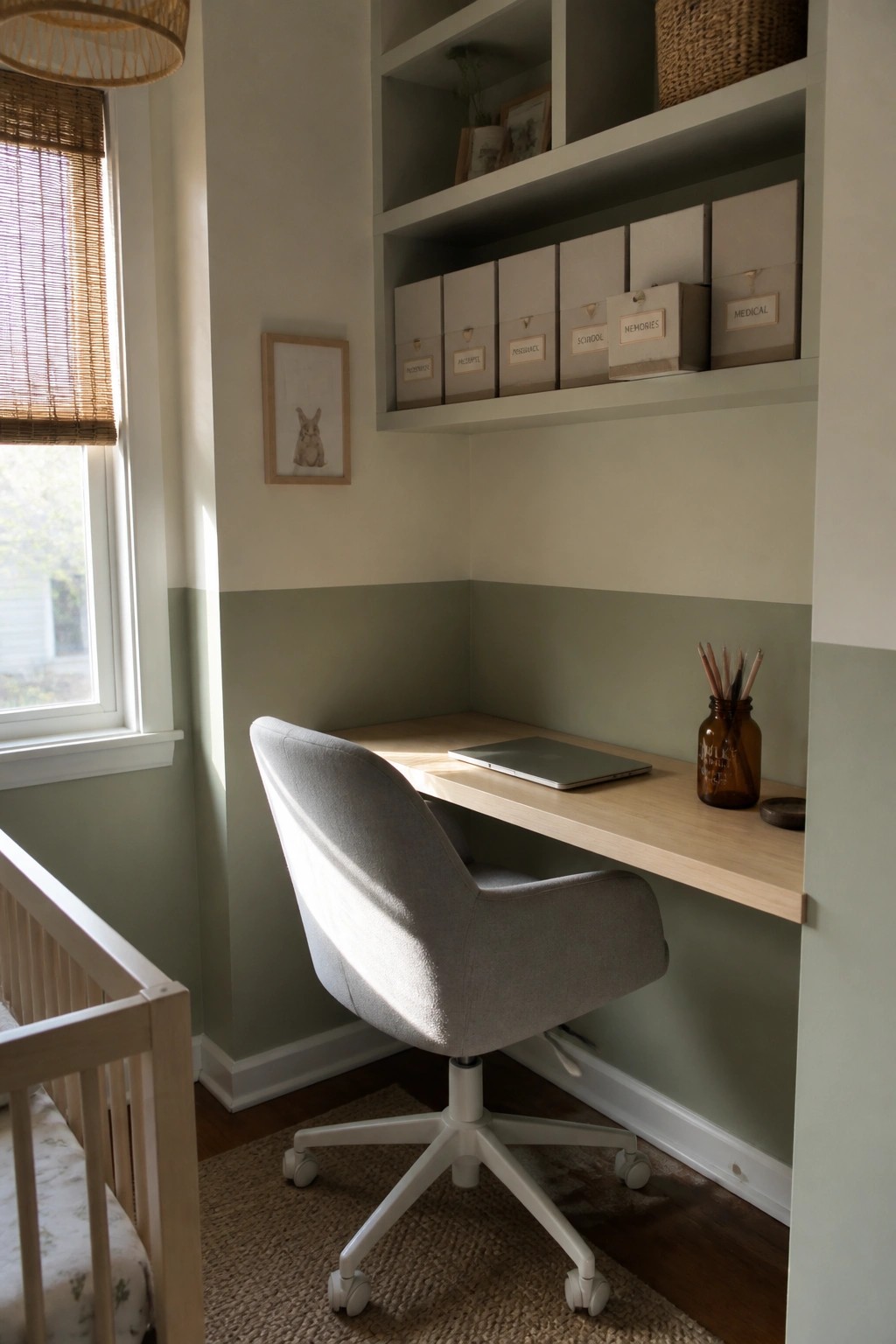
Built-in shelves right above a desk give you a place to store papers and supplies without leaving them scattered across the work surface. The open style still feels light, but everything stays contained so the desk itself stays clear for actual work.
This works especially well in small rooms or corners where floor space is limited. Use matching boxes with simple labels so you can grab what you need without digging through piles. Keep the desk mostly empty except for a laptop and a few daily tools.
Hide Your Workspace Inside a Cabinet

A fold-down desk built into cabinetry lets you close up the whole work area at the end of the day. The surface tucks back in, the laptop disappears, and the room no longer looks like an office. This setup works especially well in living areas or guest rooms where you want the space to feel calm when it is not being used for work.
It suits smaller homes or any room that needs to serve more than one purpose. Keep the cabinet color close to the walls so the unit blends in rather than stands out. Make sure the hinges are sturdy and the surface is deep enough for a keyboard and mouse before you build it in.
Built-In Desks That Match The Surrounding Cabinets

A desk built into the same cabinetry as the rest of the room creates one clean line instead of several separate pieces. The matching finish and hardware keep the wall from feeling busy, which helps the space stay calm even when the desk is in use.
This approach works well in bedrooms or smaller rooms where you want a workspace without adding more furniture. Use the drawers for everything you need so the top stays mostly empty.
A Floating Desk Reduces Workspace Clutter
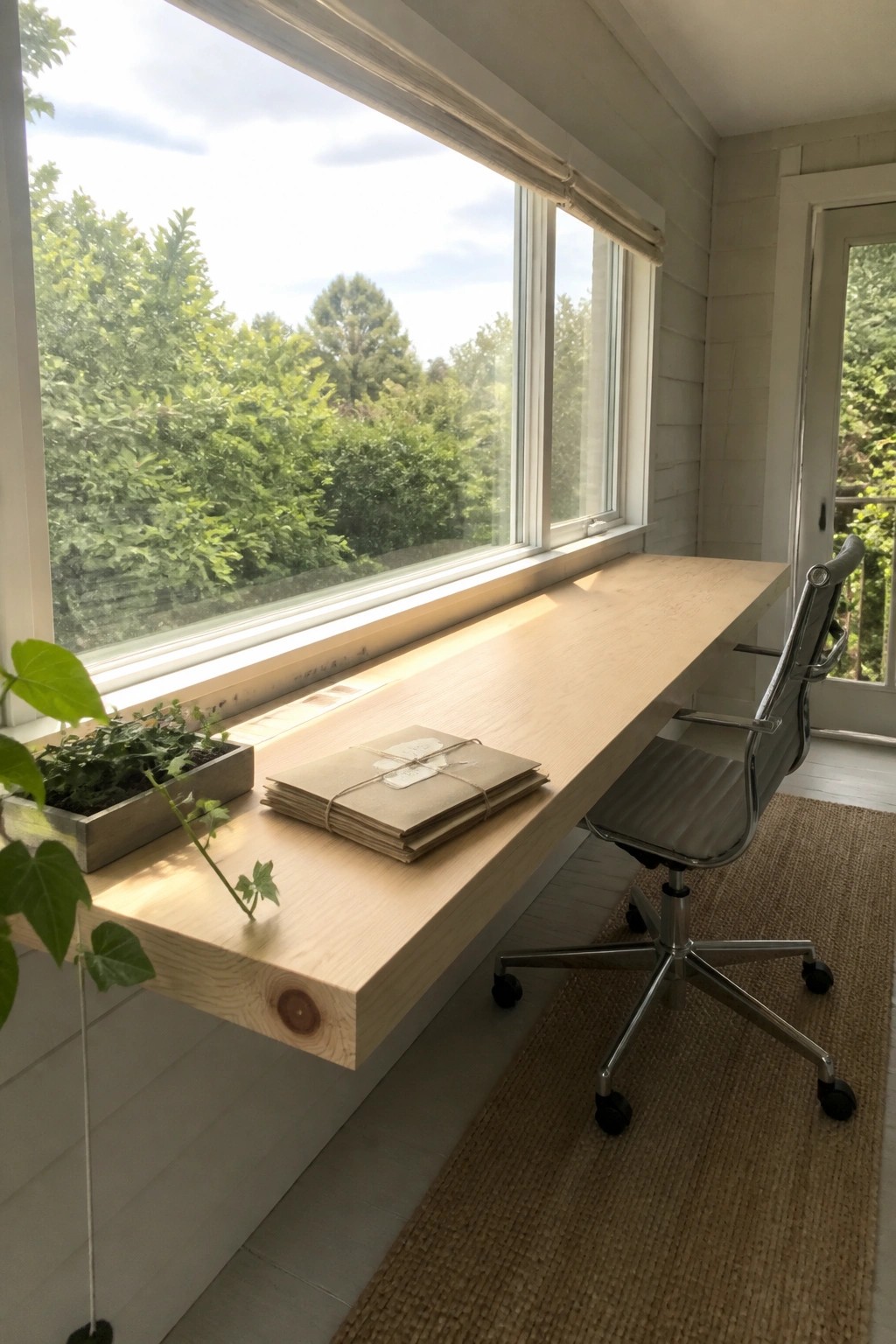
A floating desk mounted under a window keeps the workspace feeling open and simple. Without legs or a bulky base, it frees up floor space and cuts down on the visual noise that usually comes with a standard desk setup. The clean surface also makes it easier to stay focused since there is less room for scattered papers or extra objects.
This approach works best in smaller rooms or homes where every piece of furniture needs to earn its place. Keep only a couple of daily items on top and let the natural light from the window do most of the work. It suits people who want a workspace that feels calm rather than crowded.
Built-In Desks That Stay Clear

A built-in desk tucked into a wall or alcove gives you a fixed workspace without adding extra furniture that can crowd a room. The surface stays low and simple, while a narrow shelf above and a small wall panel handle the extras that would otherwise pile up.
This setup suits smaller bedrooms or shared spaces where you want the desk to feel contained rather than spread out. Mount a corkboard or narrow shelf for papers and books, and keep the top mostly empty so the area stays calm when not in use.
Built-In Cubbies Keep Surfaces Clear
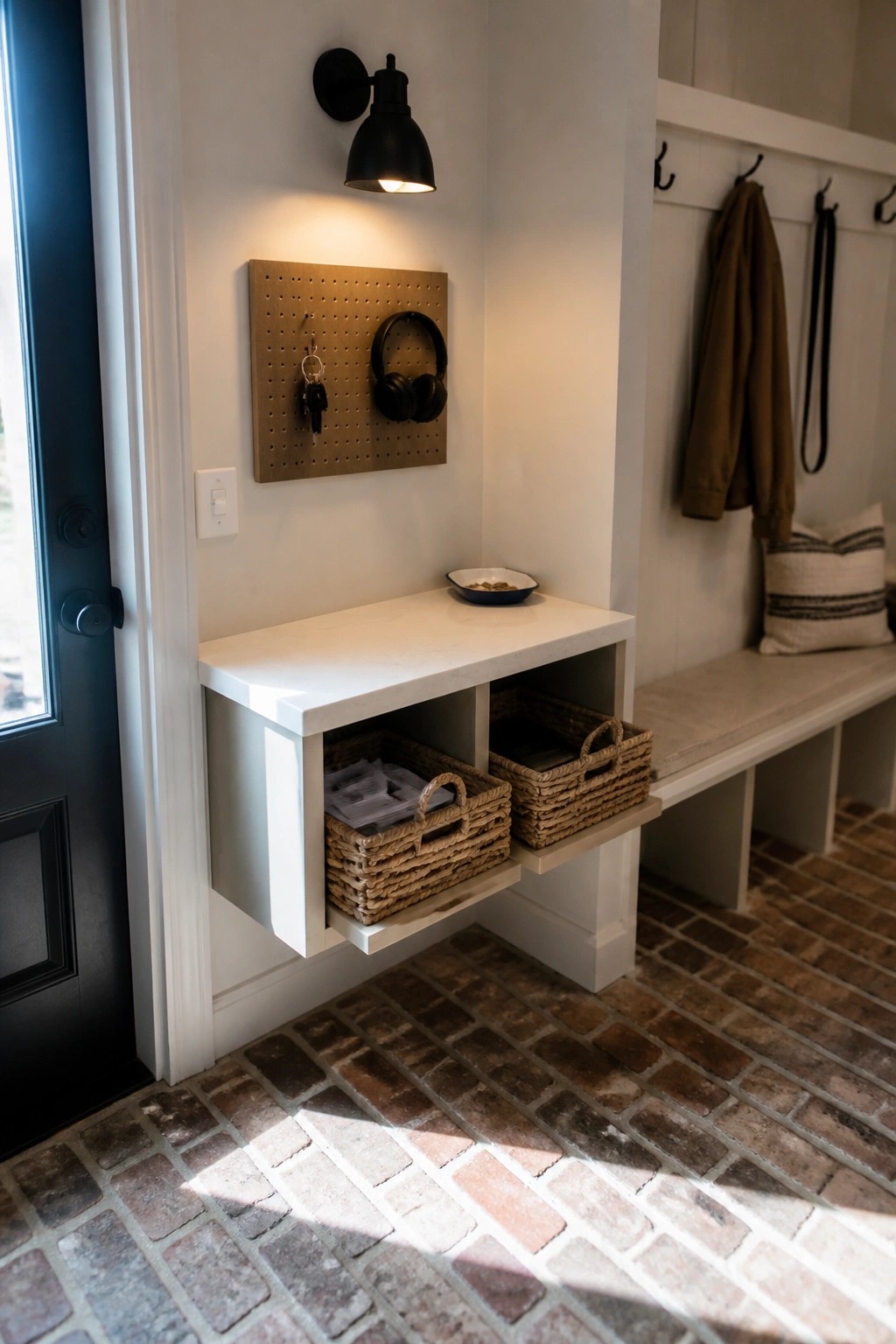
A row of open cubbies tucked under a floating counter gives you a place to drop mail, bags, or daily items without leaving them scattered on top. The baskets slide in and out easily, so nothing stays out in the open. This setup works especially well in smaller homes where every surface quickly turns into a catch-all.
It suits entryways, mudrooms, or even a corner of a home office that sees heavy foot traffic. Keep the wall above simple with just a pegboard or hooks so the whole area stays calm instead of busy.
Place Your Desk Near A Window
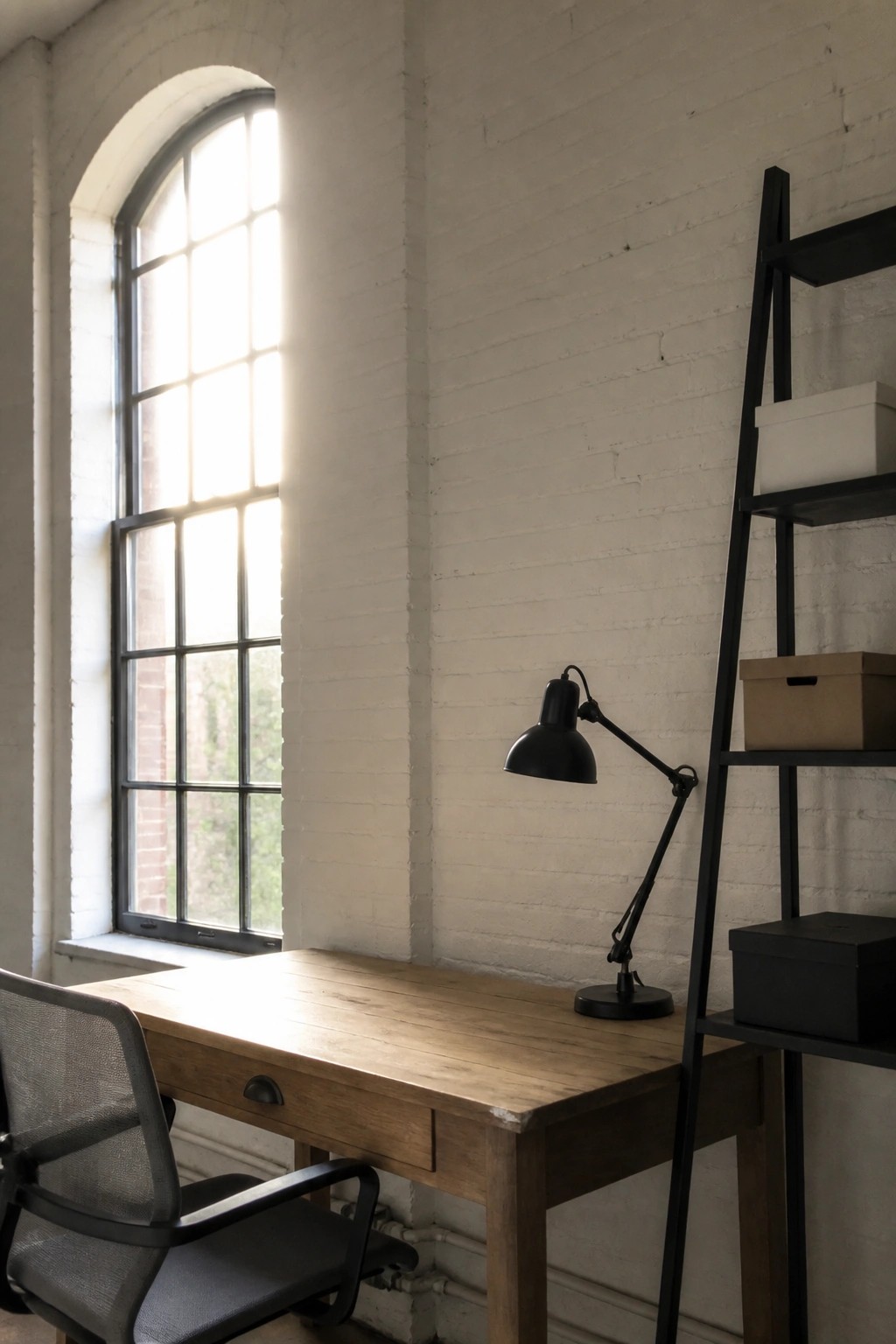
One easy way to cut visual noise in a workspace is to set the desk right by a large window. The light coming in keeps the area feeling open, and you end up needing fewer lamps or extra fixtures during the day.
This setup works best in rooms with steady natural light and when you leave the desk surface clear except for one or two items. It suits small or shared spaces where you want the focus to stay on the work rather than on objects around you.
Mount a Floating Desk to Keep the Floor Clear

A wall-mounted desk takes up almost no visual space because nothing sits on the floor beneath it. That single change keeps the room from feeling crowded and helps the workspace stay calm enough to work in without constant distractions.
This approach fits best in small bedrooms or tight corners where floor space matters. Keep the top surface mostly empty and use one shallow drawer or a simple basket nearby so everyday items stay out of sight.
A Floating Desk Keeps The Workspace Minimal

A floating desk works well when you want a workspace but do not want extra furniture taking up floor space. It stays flat against the wall, so the area feels open and the focus stays on the few items you actually need.
This setup suits hallways or narrow spots where a full desk would feel too heavy. Use only a lamp and a notebook or two on top, and tuck a simple stool underneath when it is not in use.
Overhead Shelves Reduce Visual Clutter On Your Desk
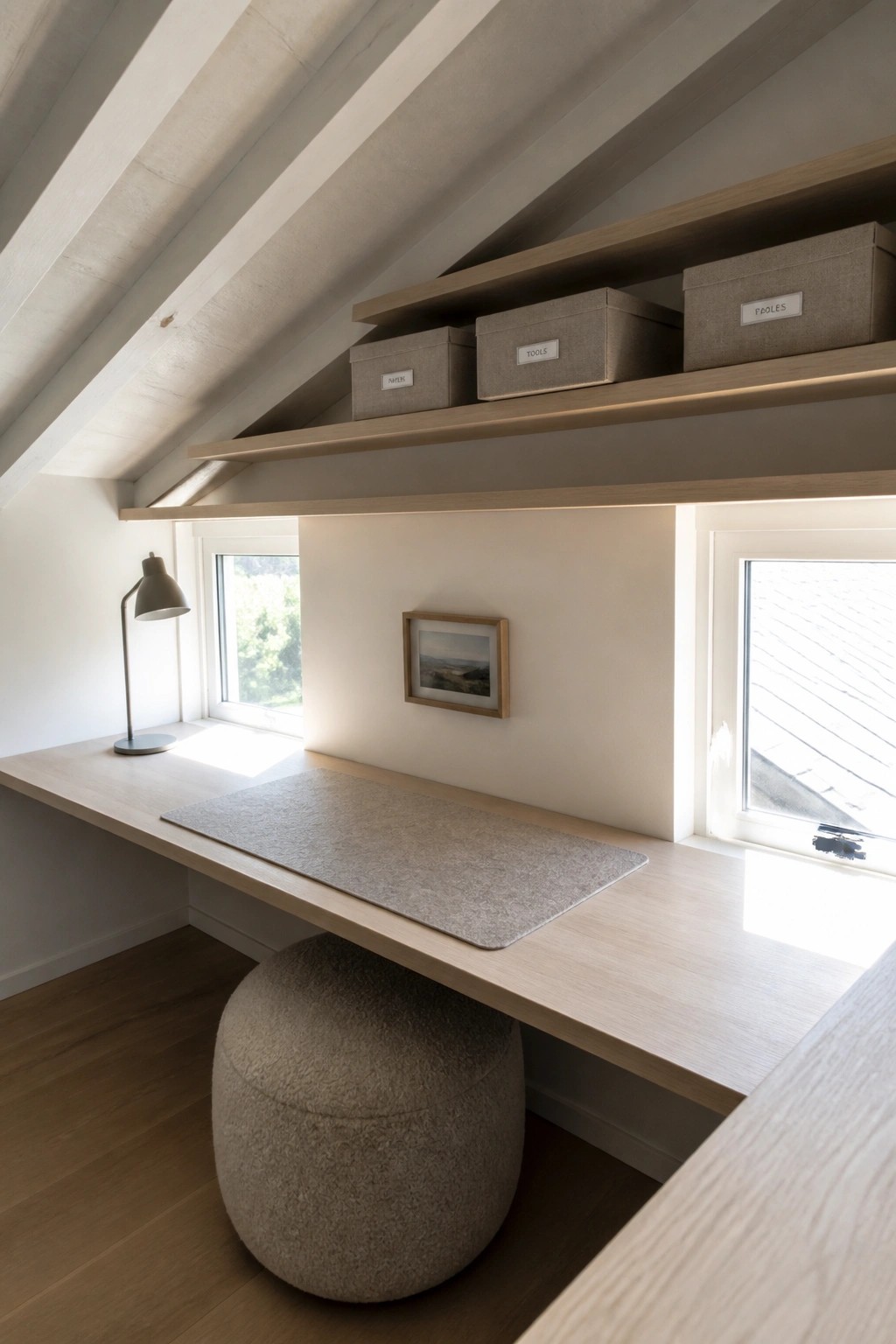
Many workspaces feel busy even when the desk itself is mostly empty. Overhead shelves give you a simple place to store papers, tools, and folders without crowding the surface below.
This approach works best in smaller rooms or spaces with sloped ceilings. Keep the boxes uniform and labeled so you can grab what you need without creating new piles on the desk.
Hide The Desk With A Sliding Door
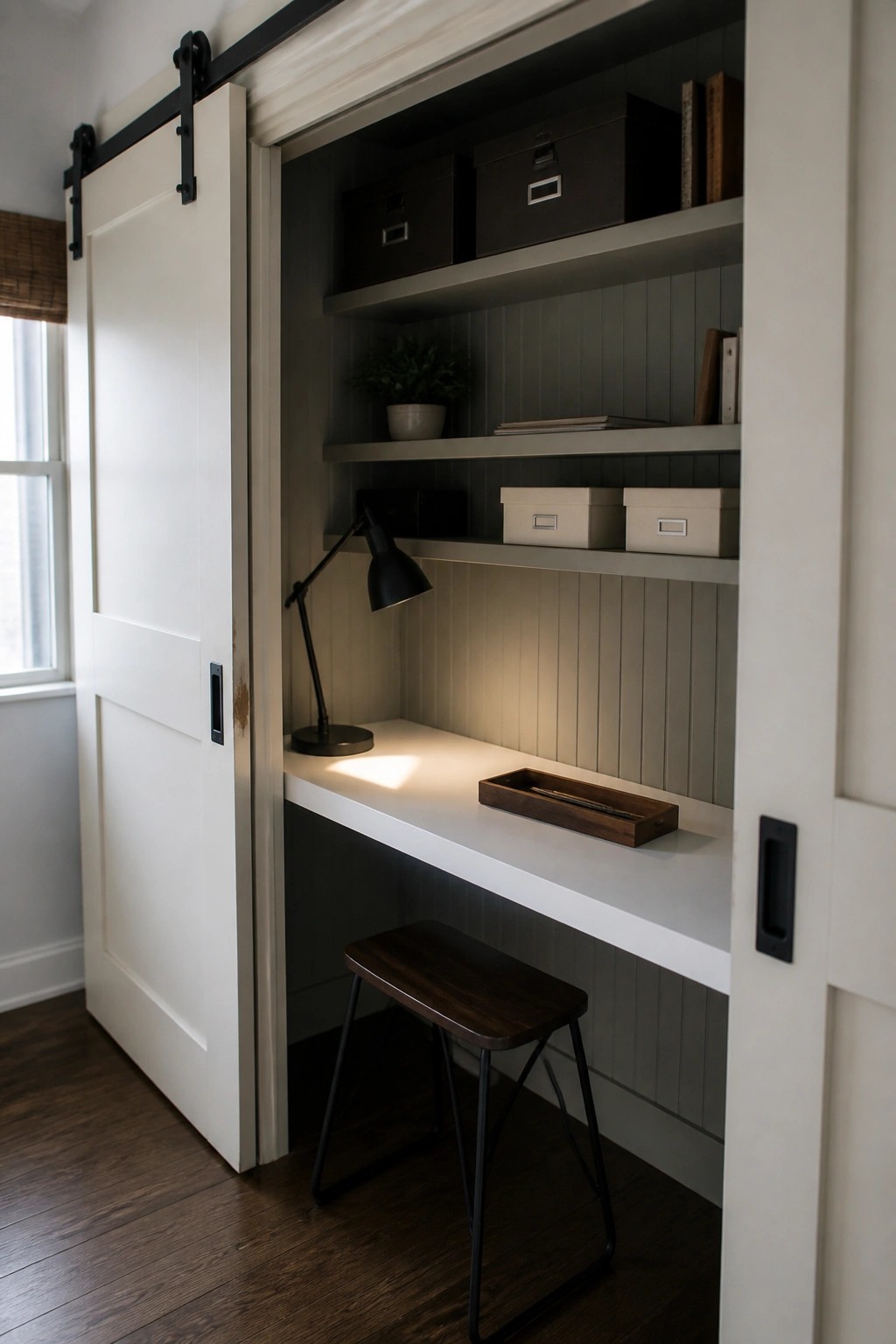
A sliding door can turn an open workspace into something that stays out of sight most of the time. When the door is closed the desk and shelves disappear, so the room feels calmer and less crowded with work stuff.
This setup works well in a spare bedroom, hallway alcove, or any small space where you need the desk during the day but do not want it visible all the time. Keep the shelves simple and limit what stays out on the desk so the area still feels orderly even when the door is open.
Frequently Asked Questions
Q: What if I need to keep some papers and files on hand? A: Store them in a single drawer or box that stays closed when not in use. Pull them out only for the task at hand. This keeps the surface clear without losing access.
Q: How do I handle cables from my devices without visible mess? A: Route them behind the desk or through a simple sleeve. Tuck excess length away so nothing hangs or trails. A tidy cord setup removes one big source of visual noise.
Q: My desk feels empty after decluttering. What now? A: Add one or two items you truly enjoy looking at each day. A small plant or favorite notebook works well. The point is to create calm rather than a bare space.
Q: Does minimalism mean I can’t personalize my space? A: Keep one or two meaningful objects that spark joy. Everything else stays out of sight until needed.
