

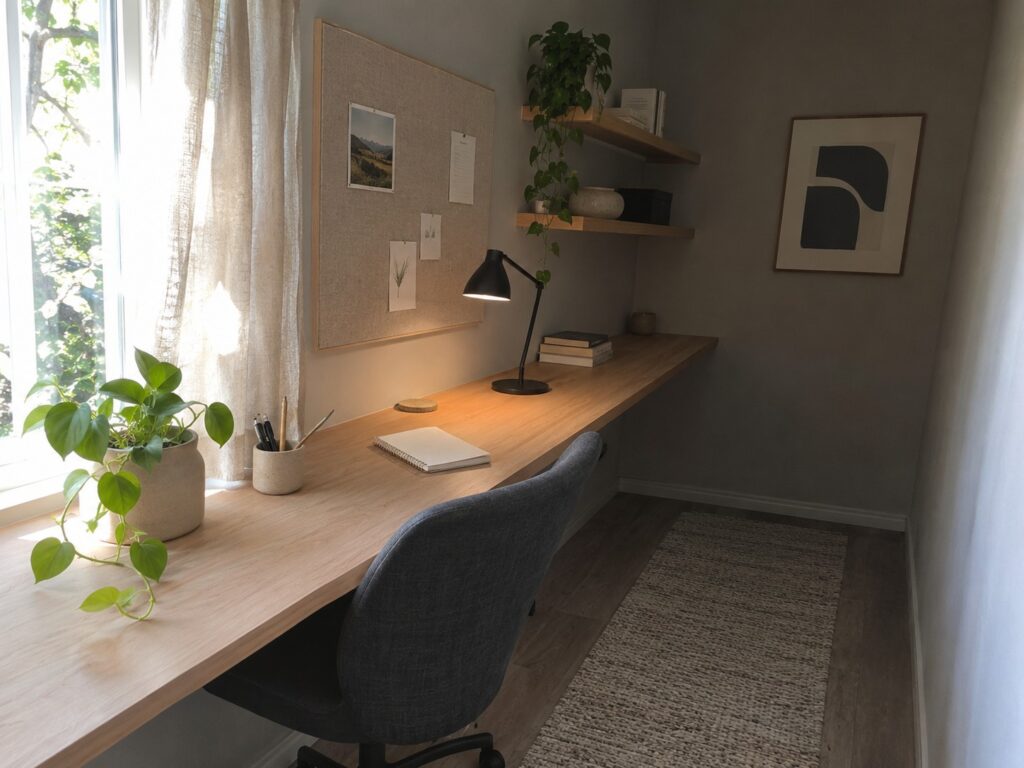
A narrow home office can feel cramped quickly when the desk, chair, and storage all compete for the same stretch of floor.
I find that a clear path and a little breathing room often matter more than adding another piece of furniture.
Simple layouts work best when they suit the way you actually use the room, whether you need space for paperwork, video calls, or a second screen.
Light colors and slim storage can help, but the room still needs practical places to put things away.
I’d start by testing the desk position before committing to shelves or cabinets, since a small shift can change how the whole room feels.
Some of these ideas may be worth adapting to the awkward corners and tight dimensions that make a real office tricky.
Use a Wall-Mounted Desk In a Narrow Room
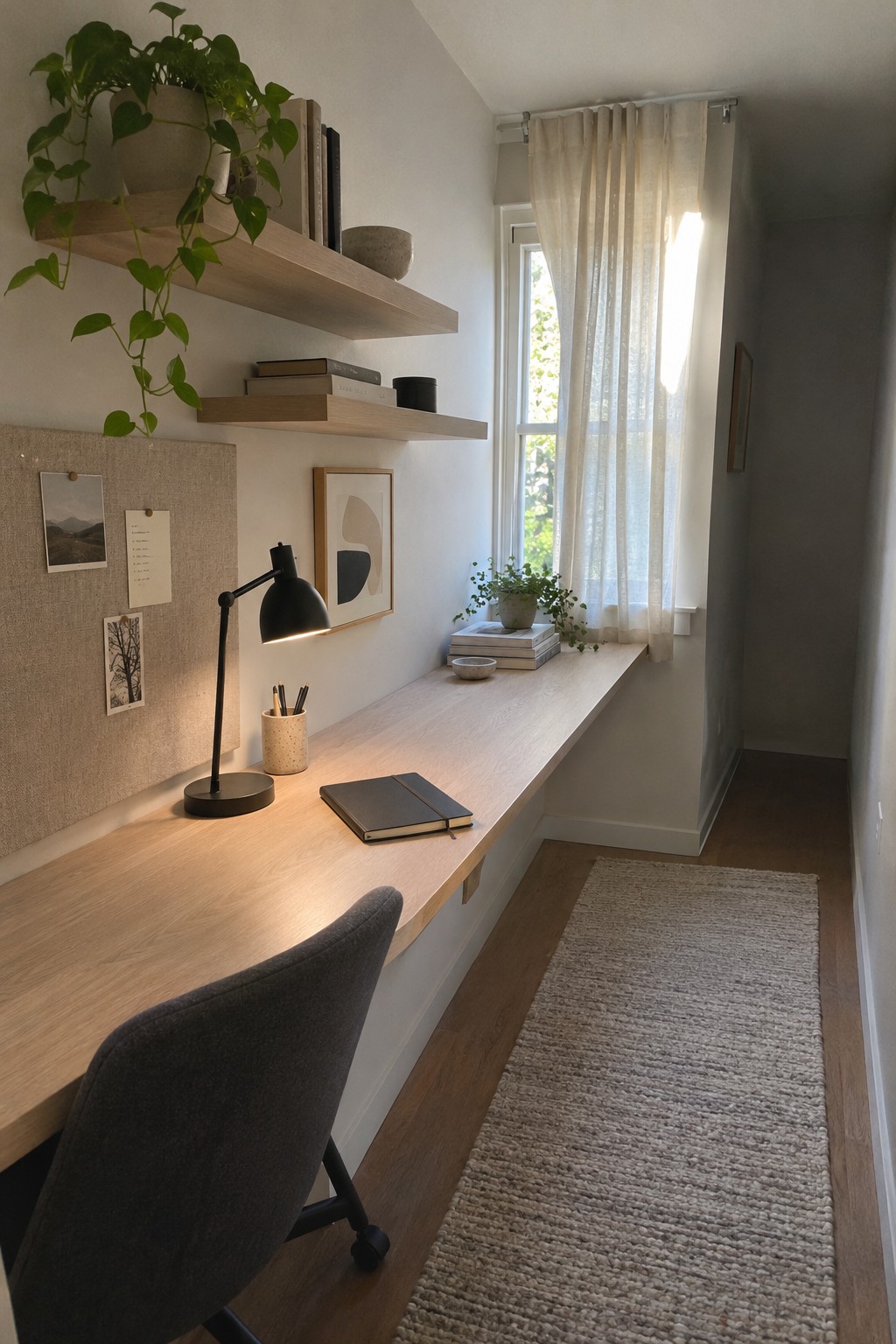
A desk fixed along the wall makes good use of a narrow room without taking up floor space with legs or a bulky base. The long wood surface here provides room to work while keeping the walkway open.
This setup works well in a spare room, hallway nook, or other slim space. Add a chair that can tuck in neatly, and keep the desktop fairly clear so it stays comfortable to use.
Use Built-Ins to Make a Narrow Office Work
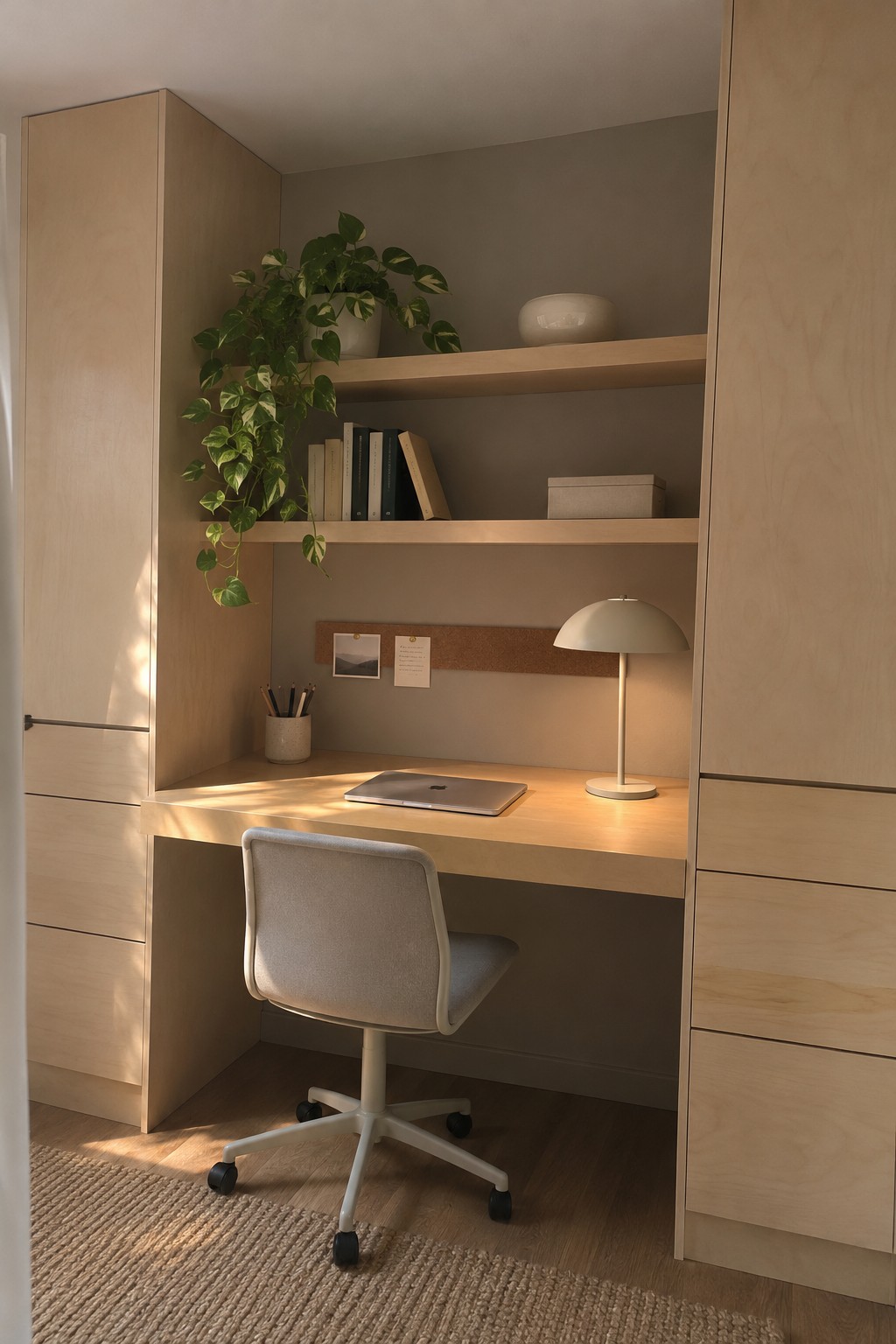
A built-in desk can make better use of a narrow room than a separate desk that takes up valuable floor space. When the work surface fits between cabinets, the office gets a clear work area without adding extra furniture.
Keep the desktop fairly open, and use shelves above it for items you reach often. This setup works well in a small alcove or a compact room, but make sure the chair can pull out comfortably.
Use One Long Desk To Make A Narrow Office Work
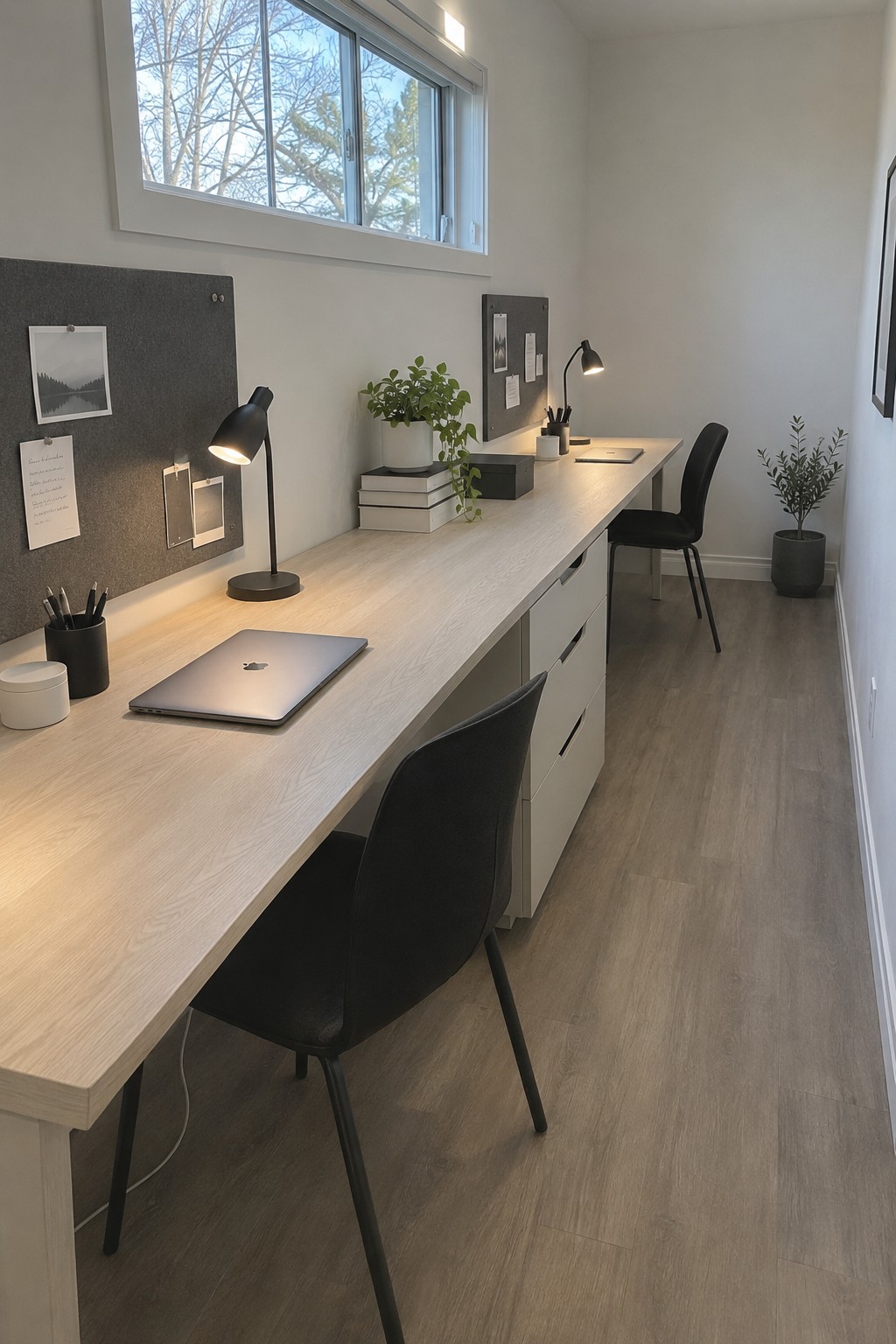
A single desk running along one wall gives a narrow office a clear, useful work area without breaking up the floor space. It can also serve two people, so there is room to work side by side instead of squeezing in separate desks.
Choose a slim top and keep storage underneath or along the wall. This layout suits a long, narrow room, but leave a comfortable walkway so chairs can slide back without blocking the way.
Use a Wall Desk to Save Floor Space
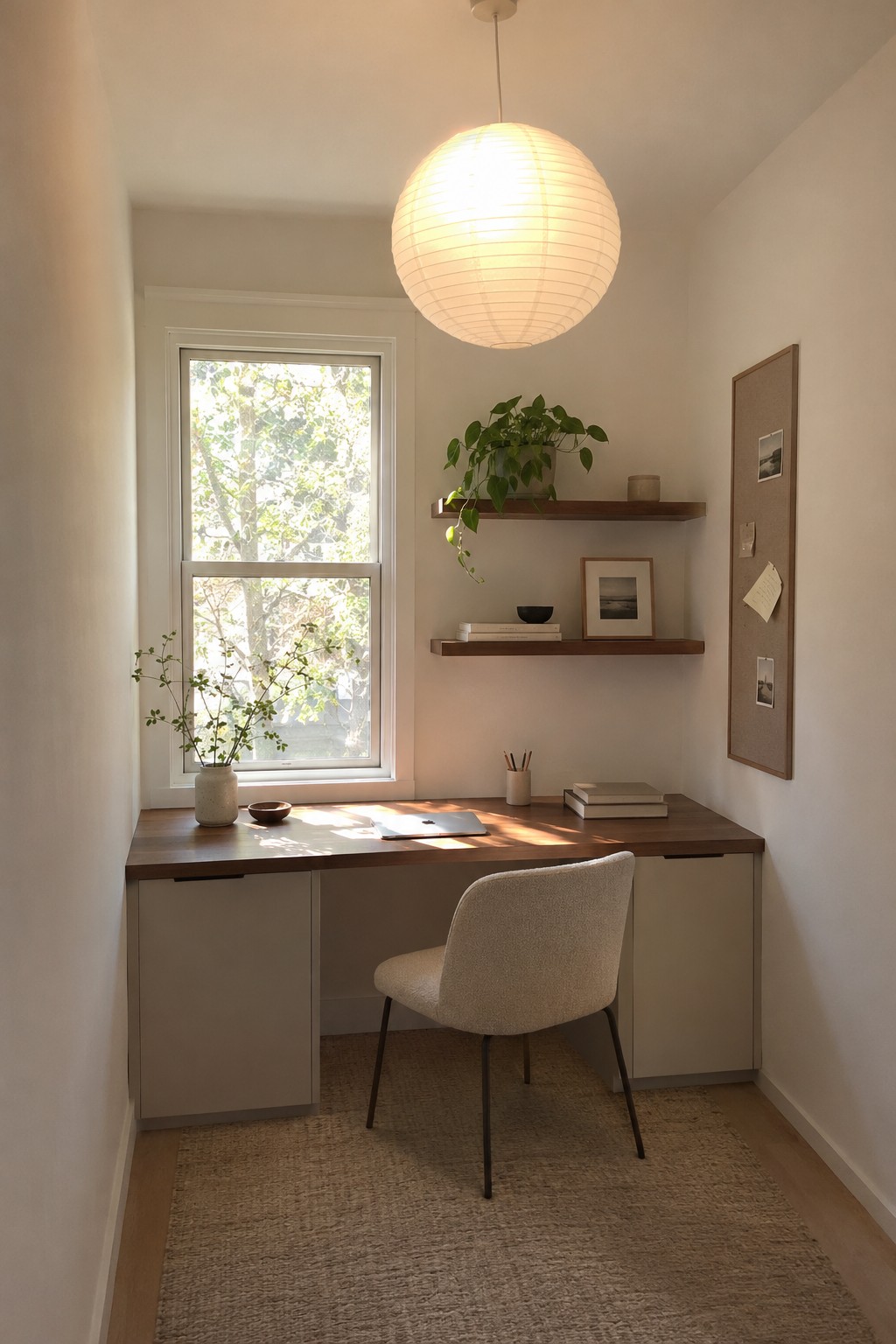
A desk that spans the end of a narrow room can make better use of the available space than a freestanding desk. It leaves the middle of the room open, while the wall above can hold a few shelves for books and everyday supplies.
For a similar setup, choose a slim desktop and keep the shelves within easy reach. A chair that tucks neatly underneath helps preserve walking space, too.
Run a Desk Along the Window Wall
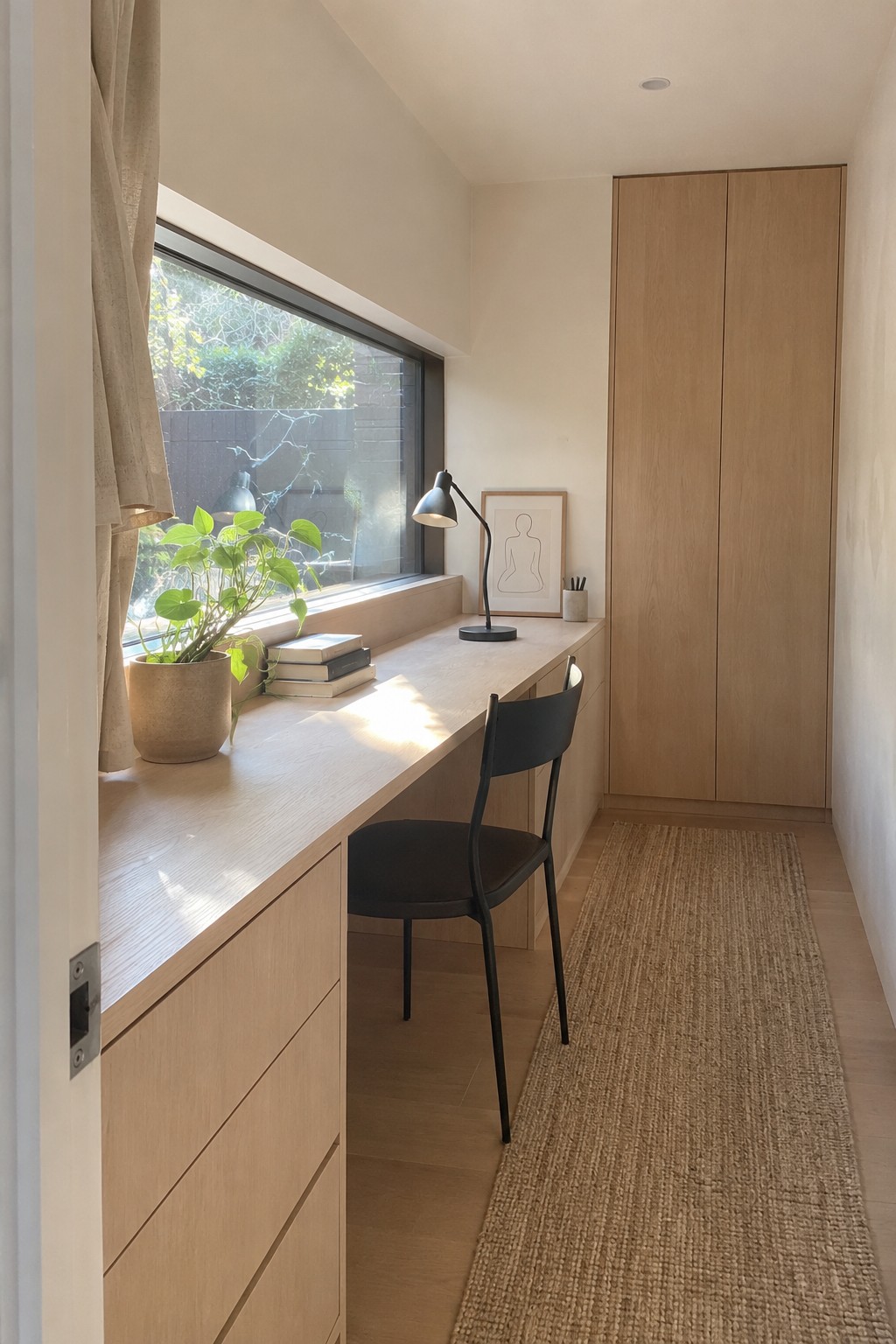
A long desk that follows one wall makes good use of a narrow office without breaking up the walkway. It gives you a generous work surface while keeping the rest of the room open.
This layout works especially well when a window runs along the same wall, since you can use the natural light without placing furniture across the room. Keep the desk shallow enough that the chair can slide in comfortably, and use drawers below for everyday supplies.
Use a Long Desk Along One Wall
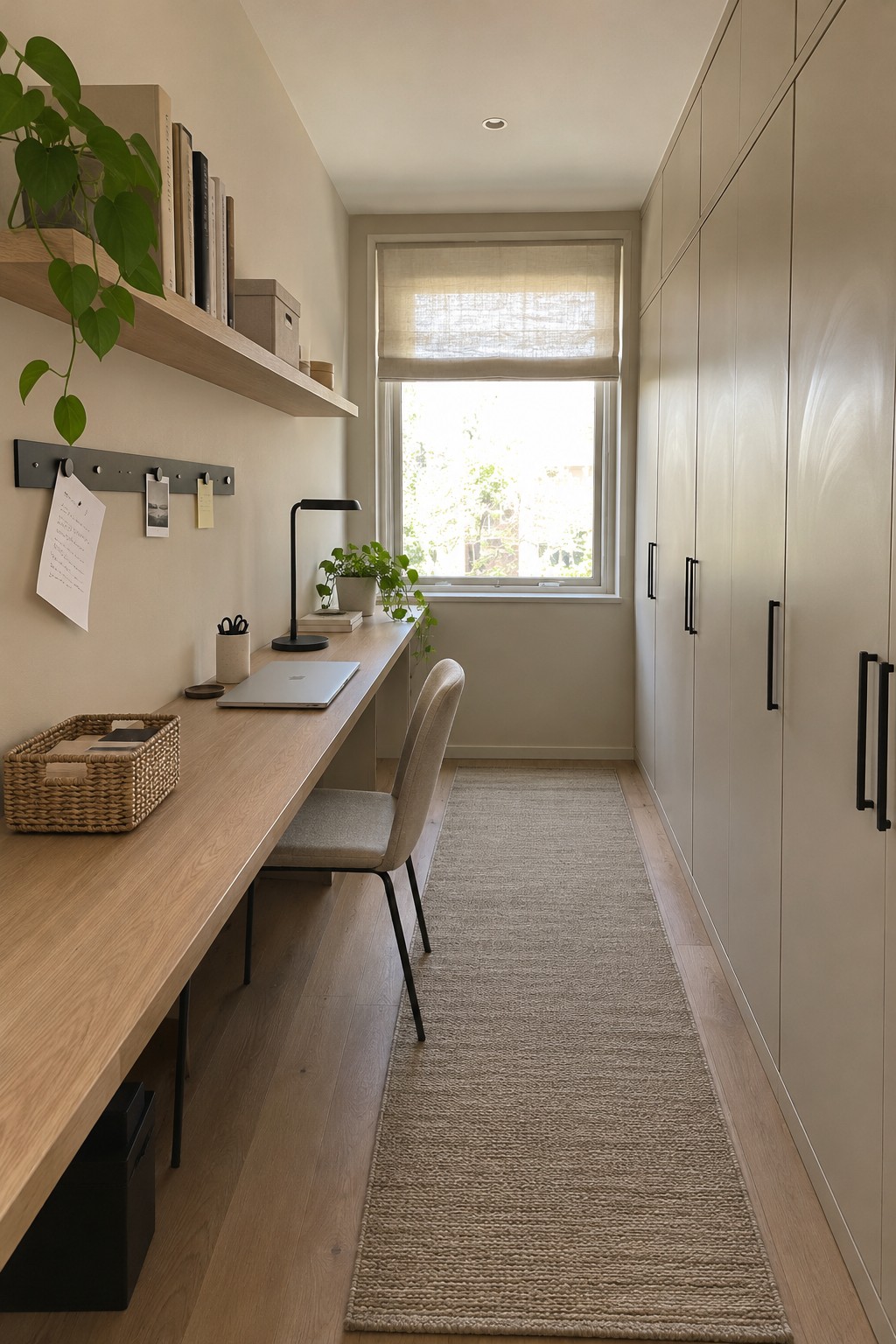
A desk that runs along the length of a narrow room gives you a useful work surface without breaking up the walkway. It also leaves room for a chair to tuck in when the desk is not in use.
A slim desktop works well here, especially when paired with storage on the opposite wall. Keep the aisle clear, and avoid making the desk too deep for the room.
Set Up a Desk Along the Window Wall
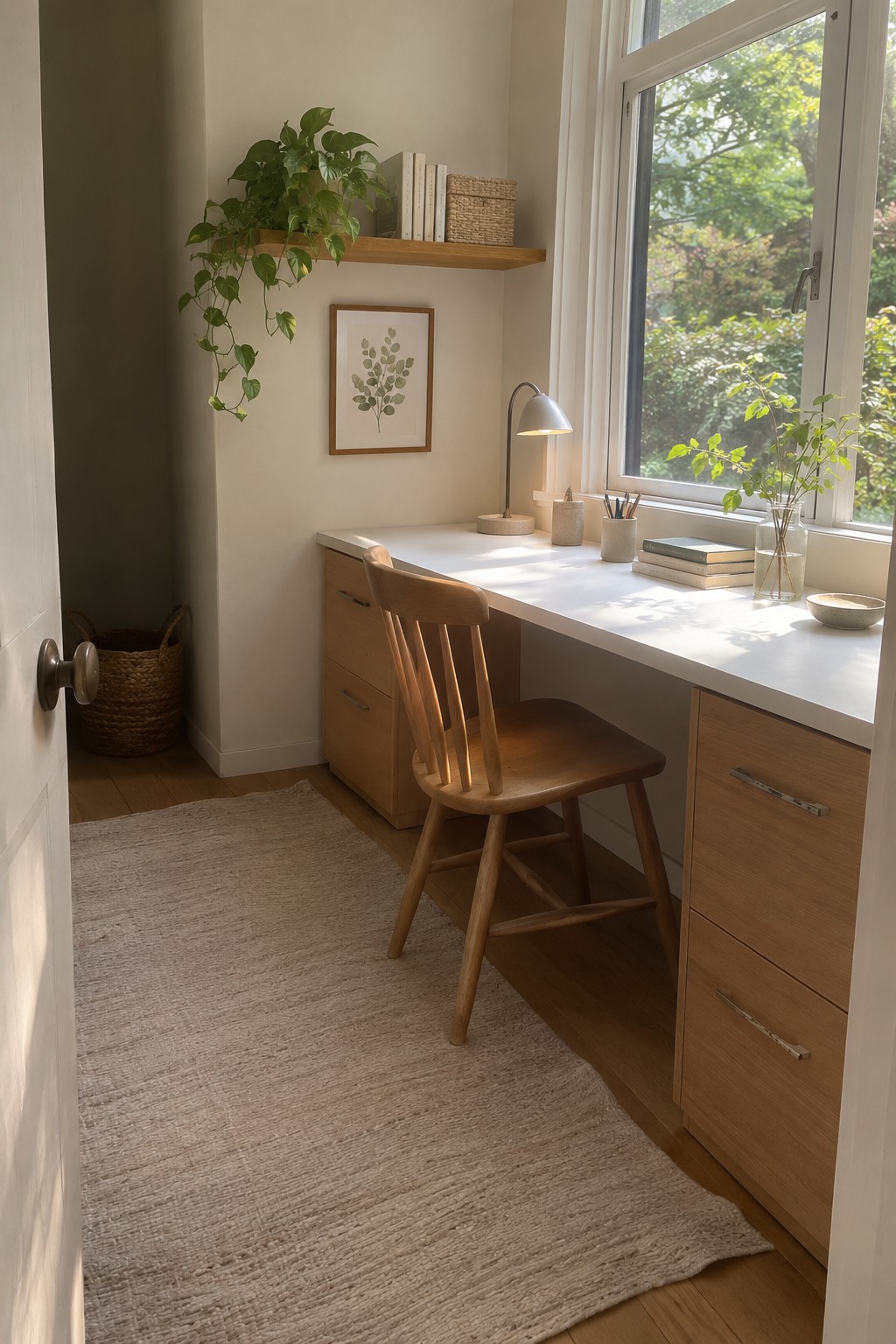
A desk that runs along one wall makes good use of a narrow office. It leaves the middle of the room open, while drawers beneath the work surface provide storage without taking up extra floor space.
This layout works especially well beside a window, where daylight can reach the desk. Keep the chair easy to pull out, and avoid filling the desktop with items you do not use often.
Add Storage Above a Narrow Desk
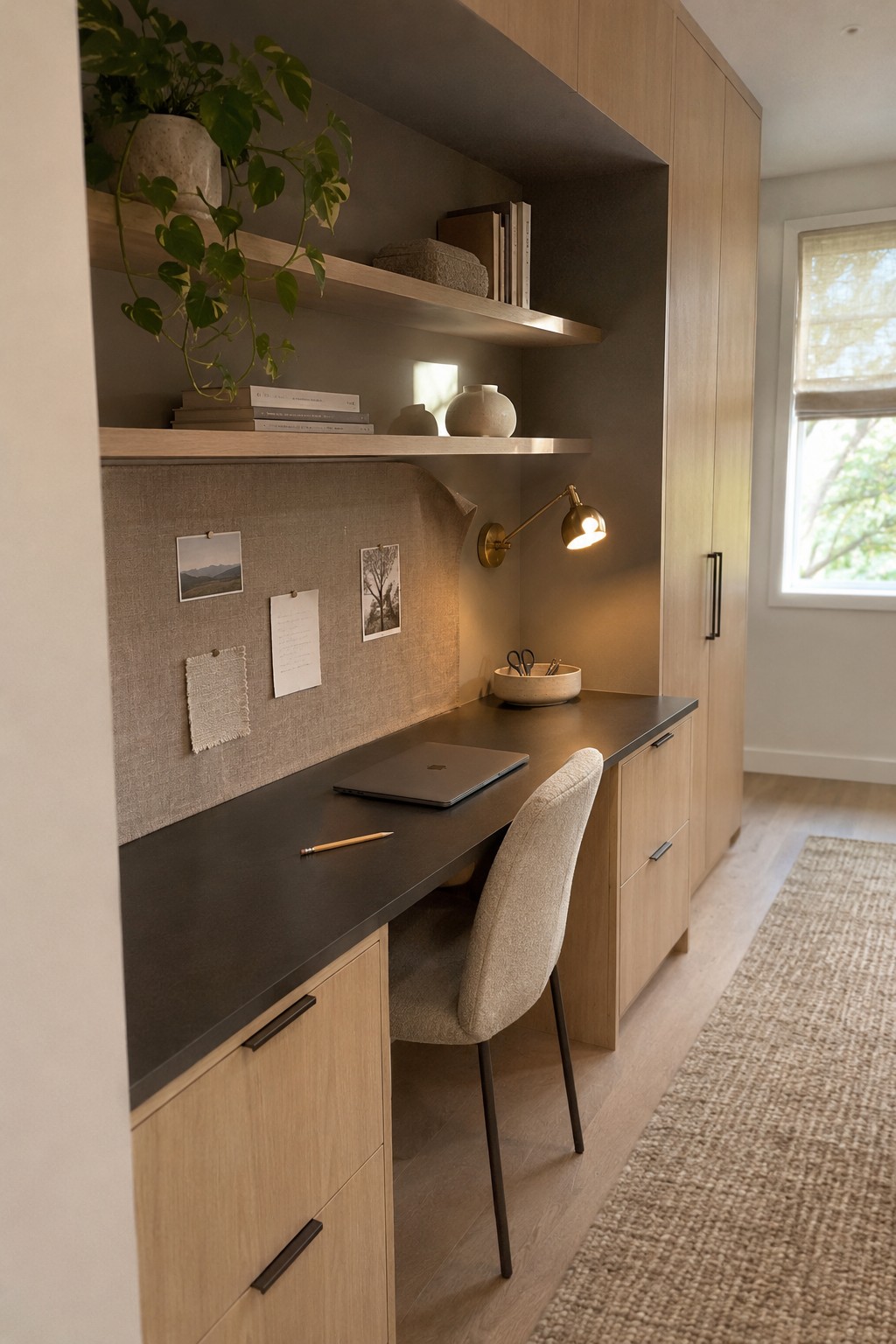
A long desk can make good use of a narrow room, and shelves above it provide storage without taking up more floor space. Built-in cabinets at one end can hold supplies out of sight, so the work surface stays clear.
Keep the shelves shallow and limit what you store on them, especially above the desk where clutter is easy to notice. This setup works well in a spare room or an alcove where every bit of floor space matters.
Use a Fold-Down Desk to Keep the Floor Clear
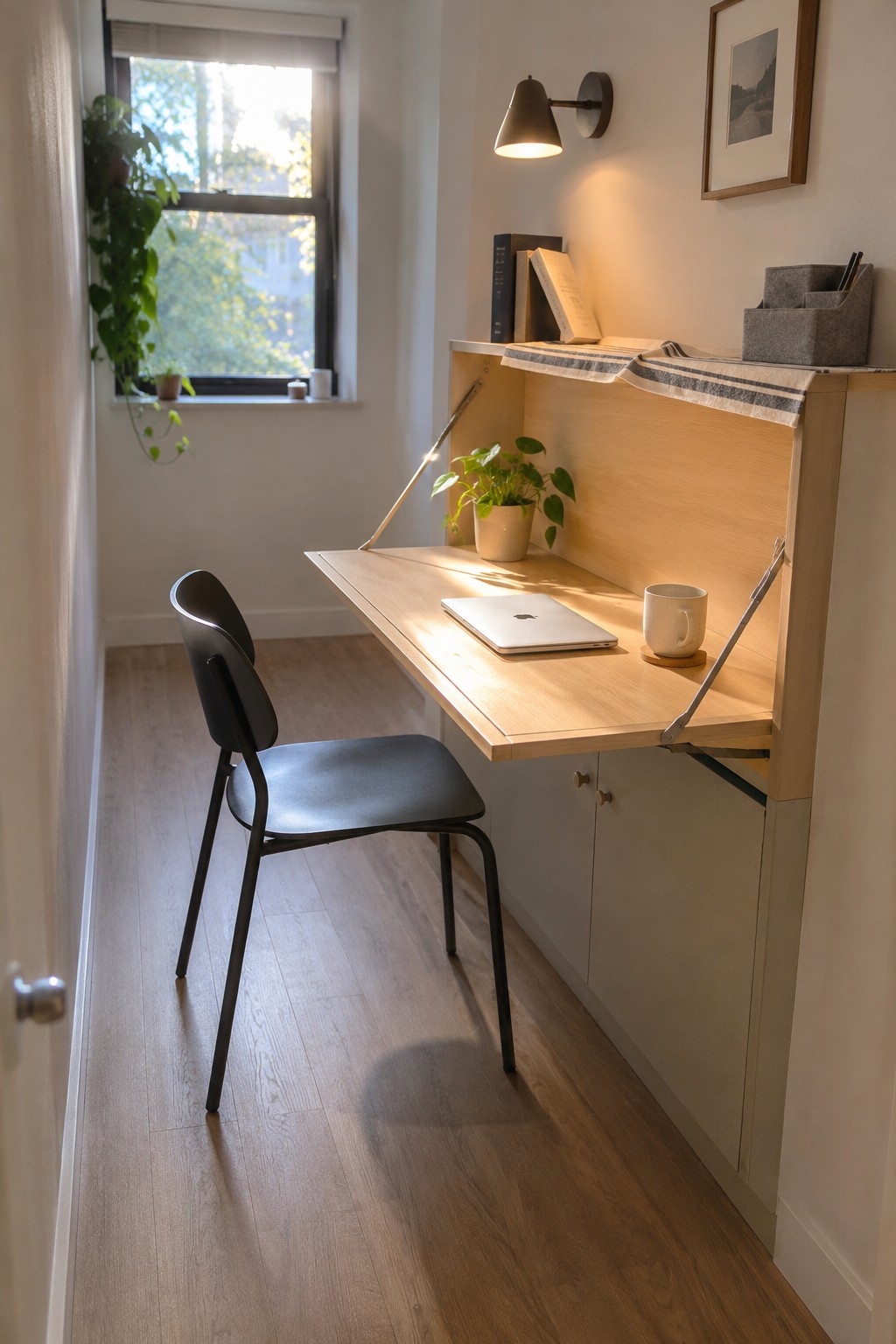
A fold-down desk gives a narrow office a proper work surface without taking up floor space all day. When the desk is open, its hinged panel provides room for a laptop and a few essentials, while the slim wall-mounted design keeps the area from feeling crowded.
This setup works well in a spare room, hallway nook, or other tight spot. Add a support brace sturdy enough for the desk’s weight, and keep the surface simple so it is easy to fold away when work is done.
Use a Shallow Desk To Keep a Narrow Office Open
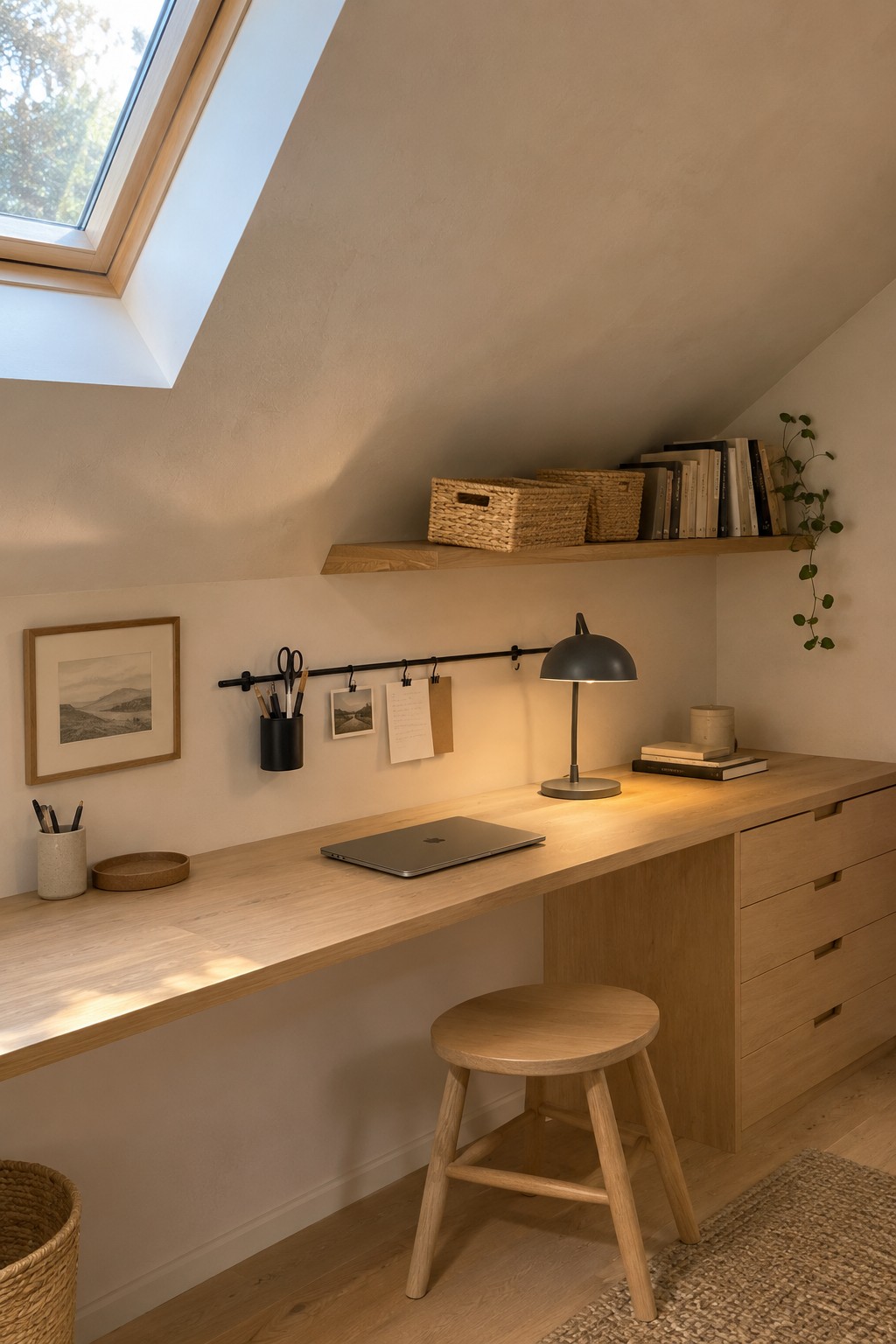
A shallow desk can give a narrow room a proper work surface without taking up too much floor space. A long, slim wood top is enough for a laptop and a few daily supplies, while leaving the area underneath open.
This setup works especially well in an attic office where the sloped ceiling limits furniture choices. Add drawers at one end for papers and equipment, but keep the main stretch of desk clear so it remains comfortable to use.
Use Shelves to Keep a Narrow Office Tidy
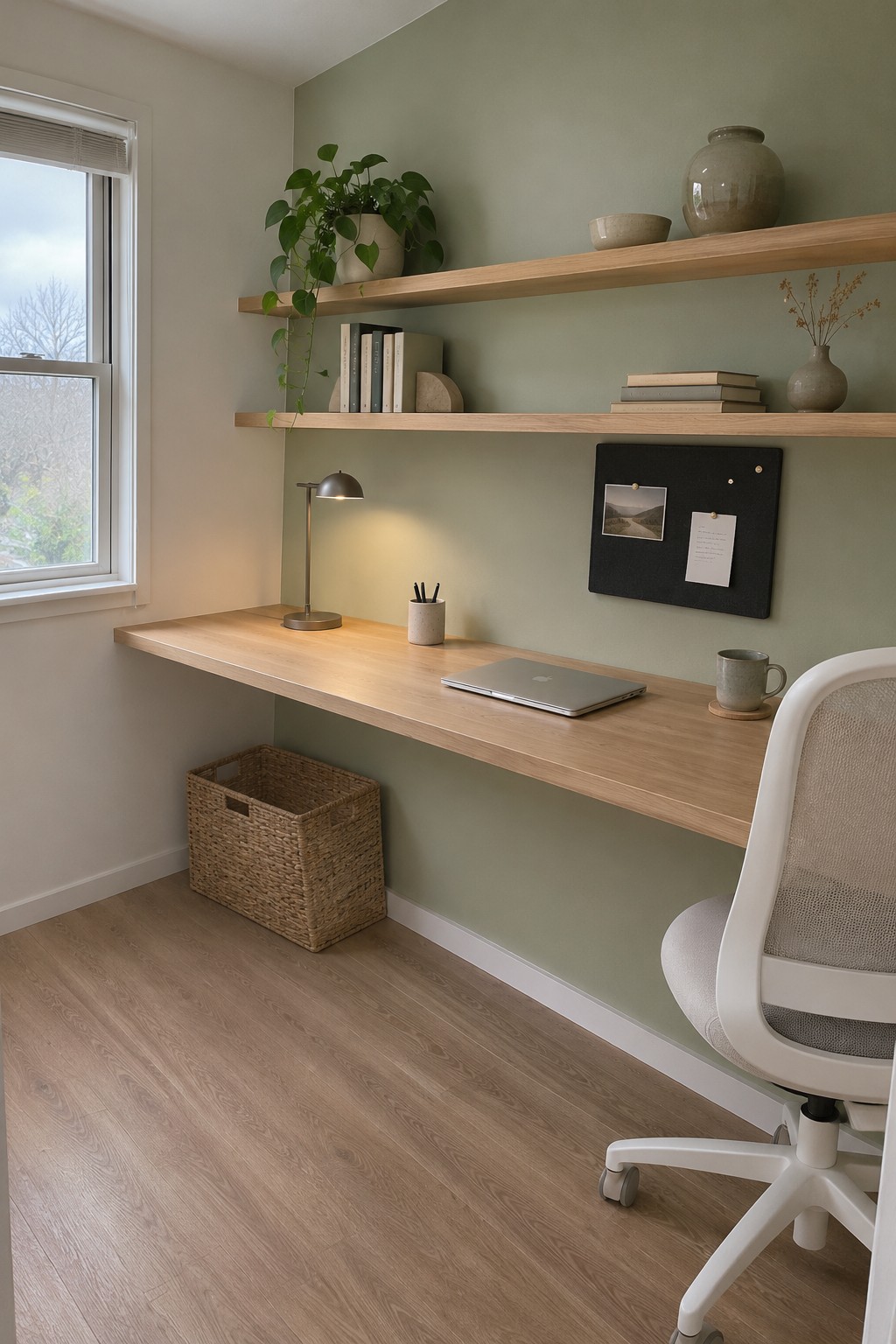
Open shelves above a desk give a narrow office useful storage without taking up floor space. They also leave the work surface clear, which can make a small room easier to use day to day.
Keep the shelves shallow and avoid filling every inch. A few books and baskets can hold everyday items, while leaving room for the desk lamp and laptop below.
Create a Work Area Beside a Window Seat
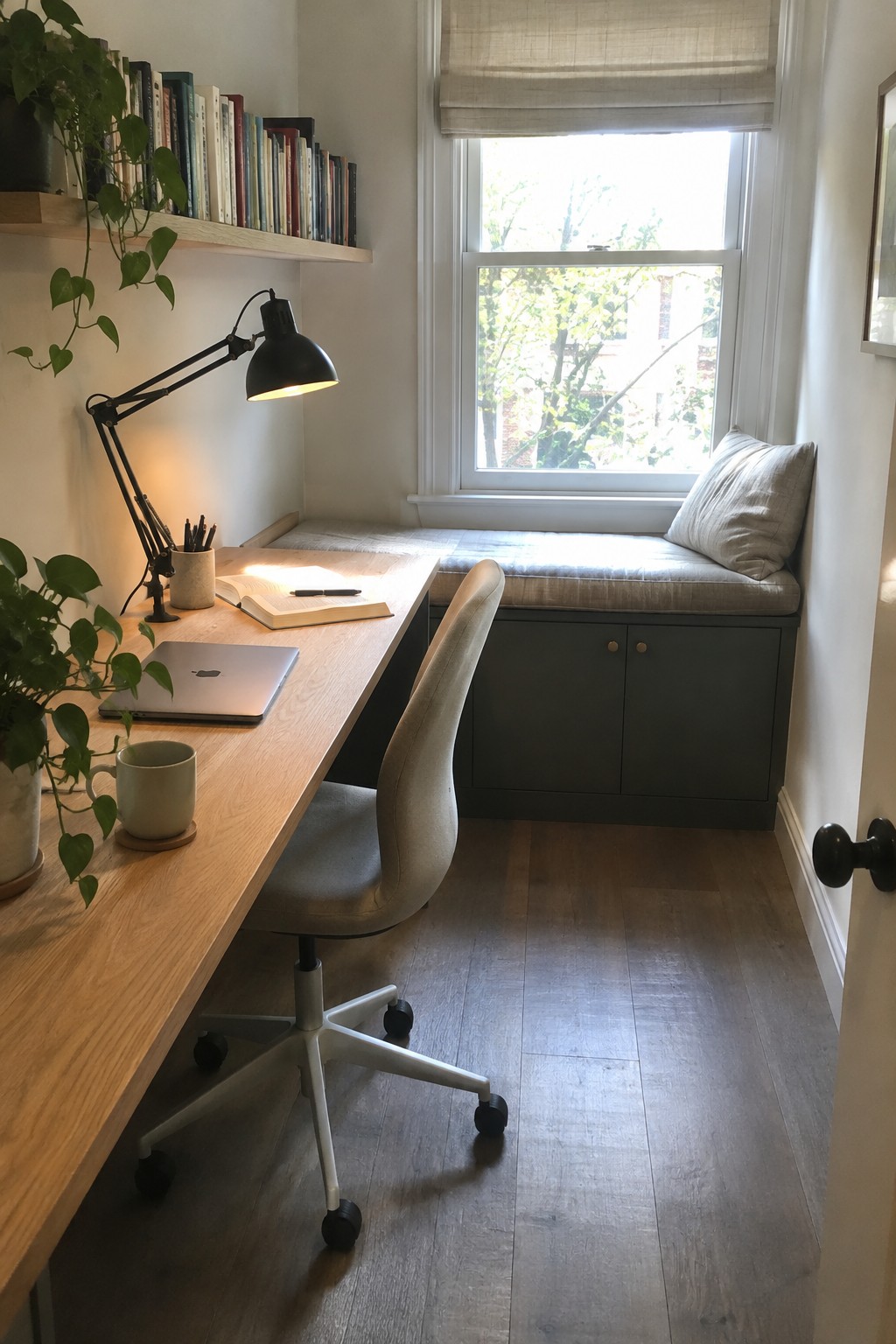
A window seat can make a narrow office more useful without taking up space needed for the desk. It gives the room a second purpose and offers a handy place to sit, read, or take a short break.
If you have a window at the far end of the room, consider building a shallow bench with storage below it. Keep the desk close enough to reach the seat easily, and avoid making the bench too deep for the walkway.
Keep the Desk Surface Clear in a Narrow Office
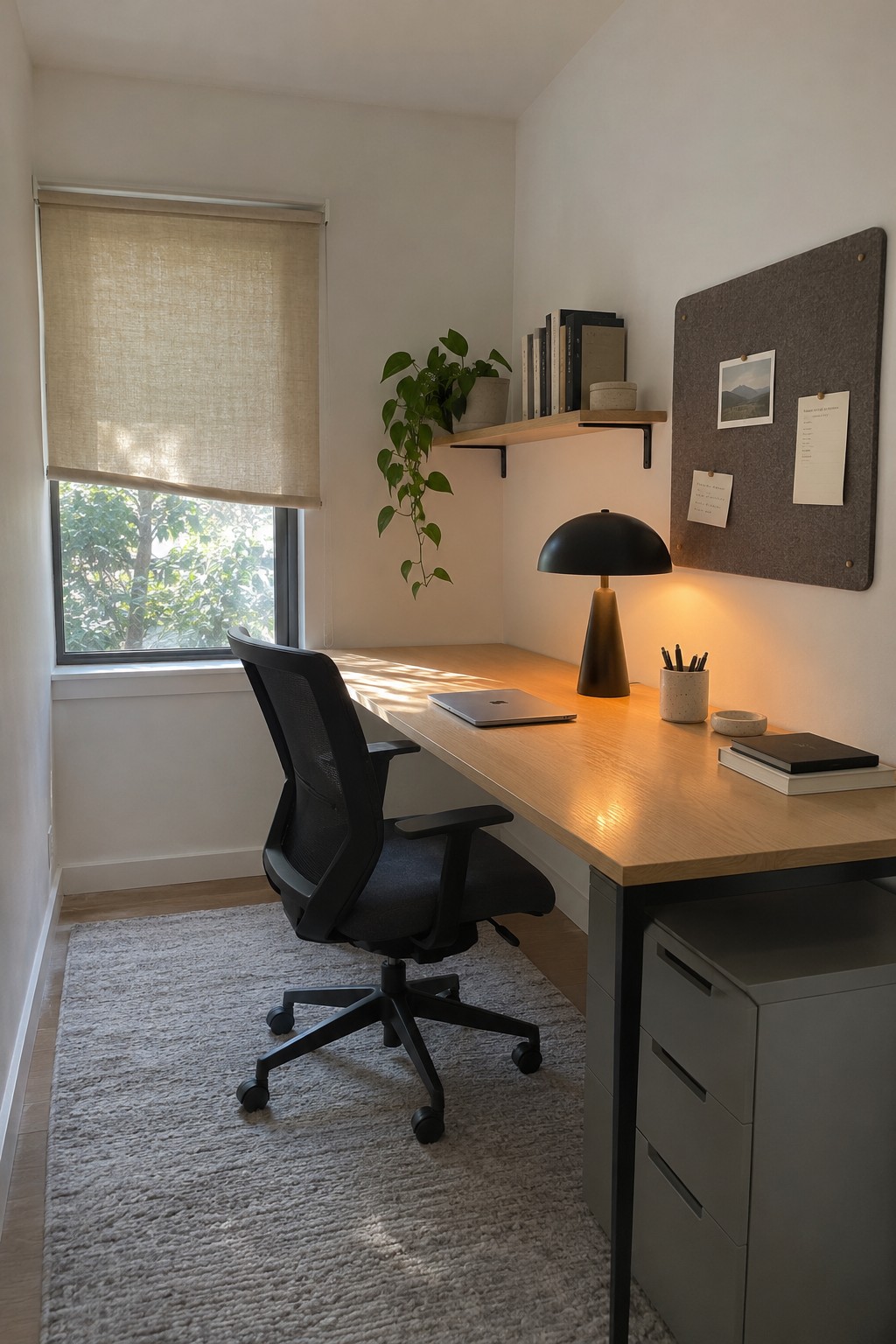
A simple desk setup helps a narrow office feel easier to use. Leaving most of the worktop open gives you room to spread out when needed without making the small space feel crowded.
Keep everyday supplies in a small desk caddy, and use a shelf above the desk for books or items you reach for less often. This approach suits a spare room or compact home office, where a clear surface can make daily work more comfortable.
Keep a Narrow Office Open With a Compact Desk
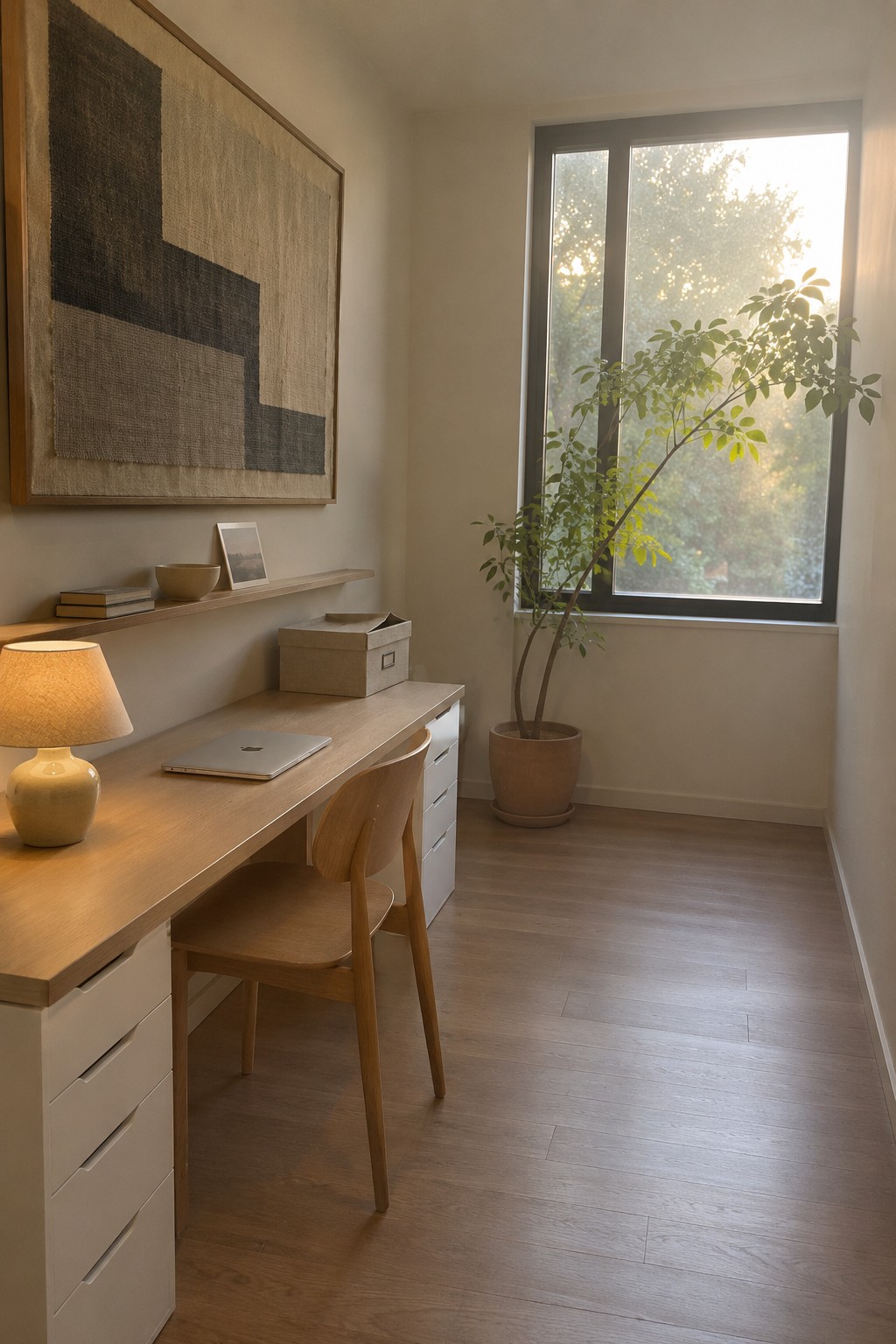
A slim desk leaves more clear floor space in a narrow office, so the room feels easier to move through. A simple desktop and a chair that tucks underneath are often enough for everyday work.
Keep the desktop shallow and use drawers or a small shelf for supplies. This setup suits a spare room or a small home office, especially when you want a useful work area without filling the whole room.
Use a Built-In Desk To Keep a Narrow Office Tidy
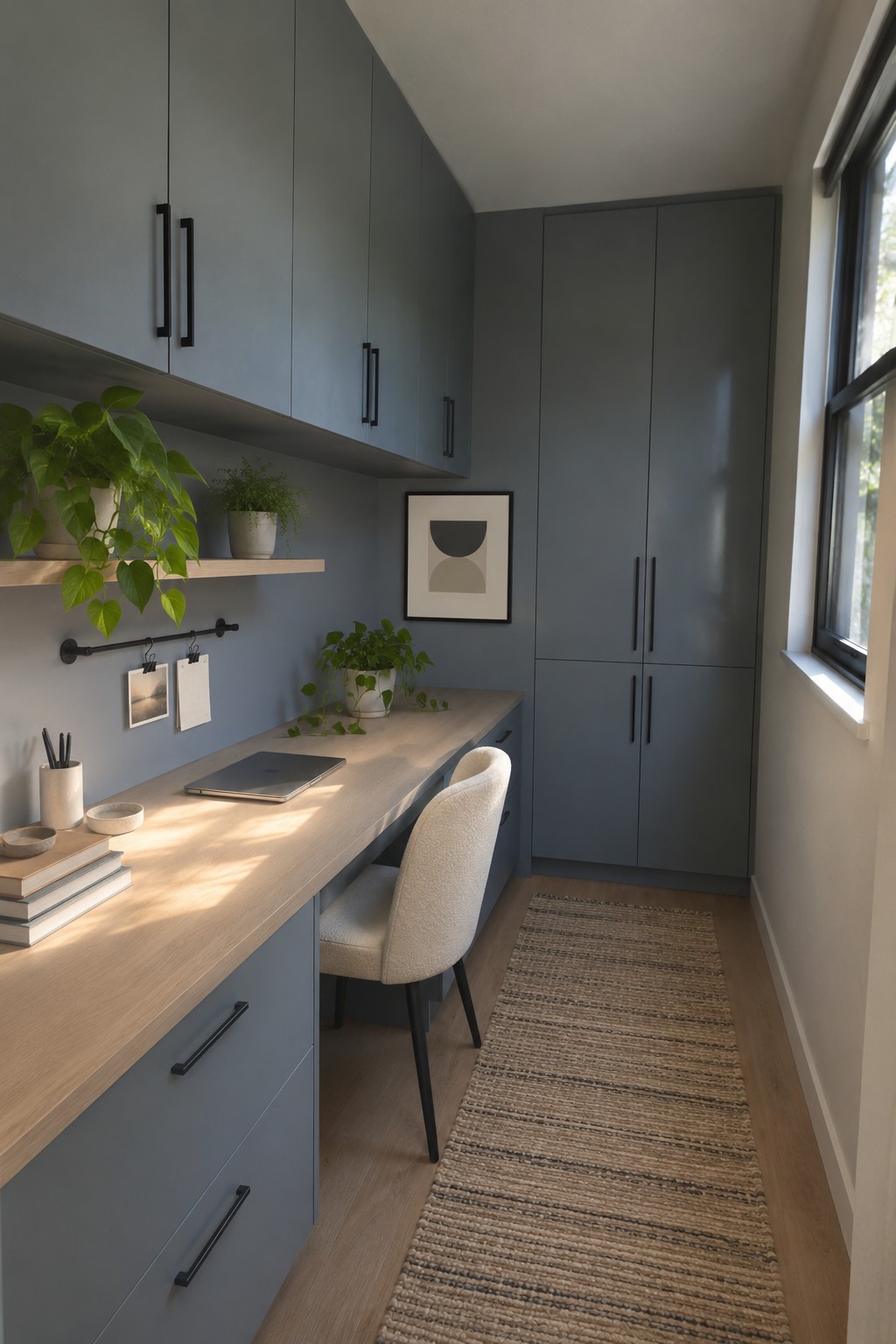
A built-in desk can make a narrow office feel more organized because it uses the wall space that might otherwise go to separate furniture. Here, the desk runs beneath matching cabinets, so work supplies can stay close without taking over the walkway.
This setup works well in a small spare room or an alcove. Keep the desktop fairly shallow and store less-used items in the upper cabinets, leaving the main work surface clear for everyday tasks.
Use a Built-In Desk to Make a Narrow Office Work
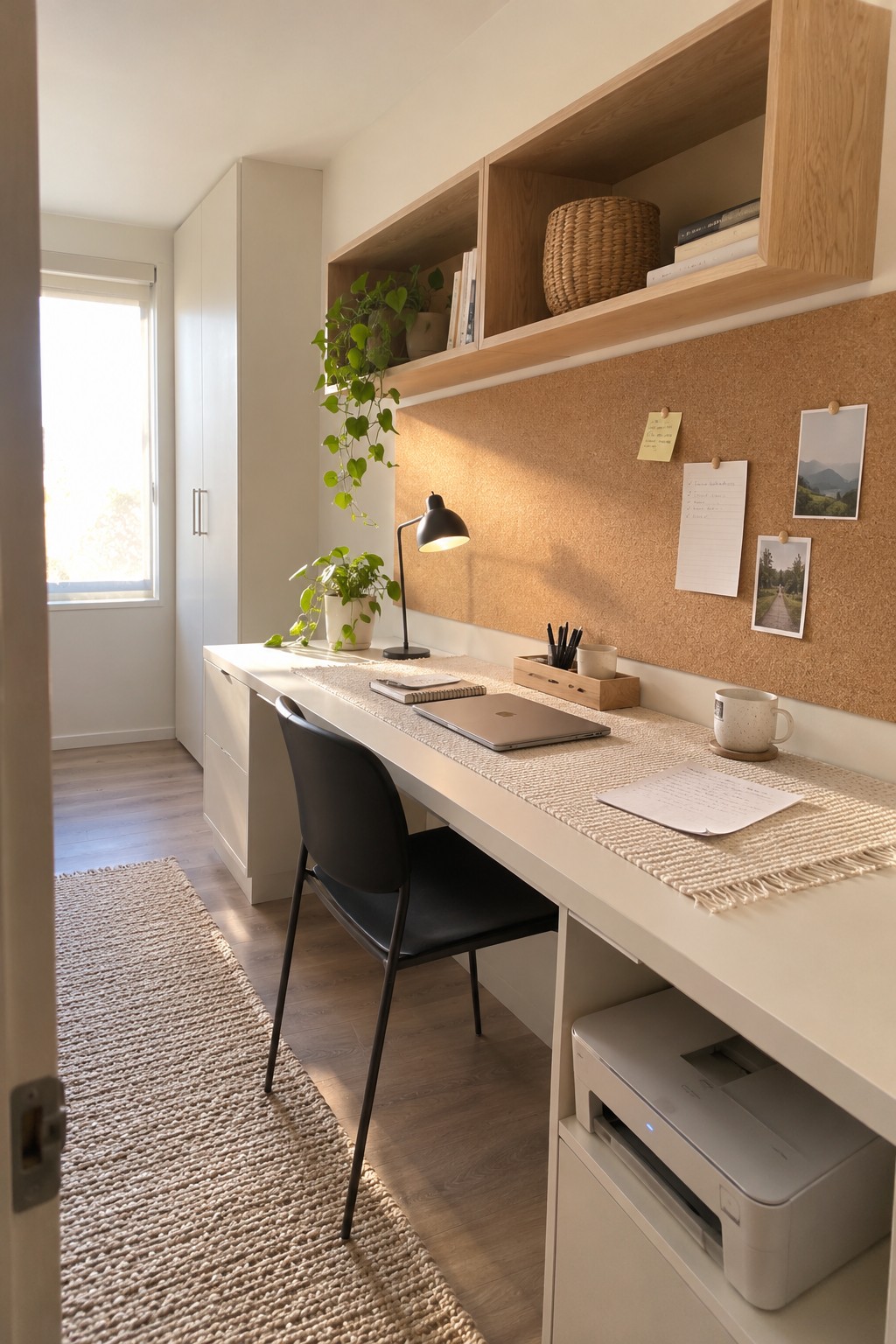
A built-in desk can make a narrow room more useful without crowding it with extra furniture. A long, slim work surface leaves room to move, while storage beneath the desk keeps a printer and supplies out of the way.
This setup works especially well in a small office or a spare room that also needs to serve another purpose. Keep the desktop fairly shallow and use the wall above it for storage, but leave enough clear space for a chair to slide in comfortably.
Use a Wall-to-Wall Desk for Two Work Spots
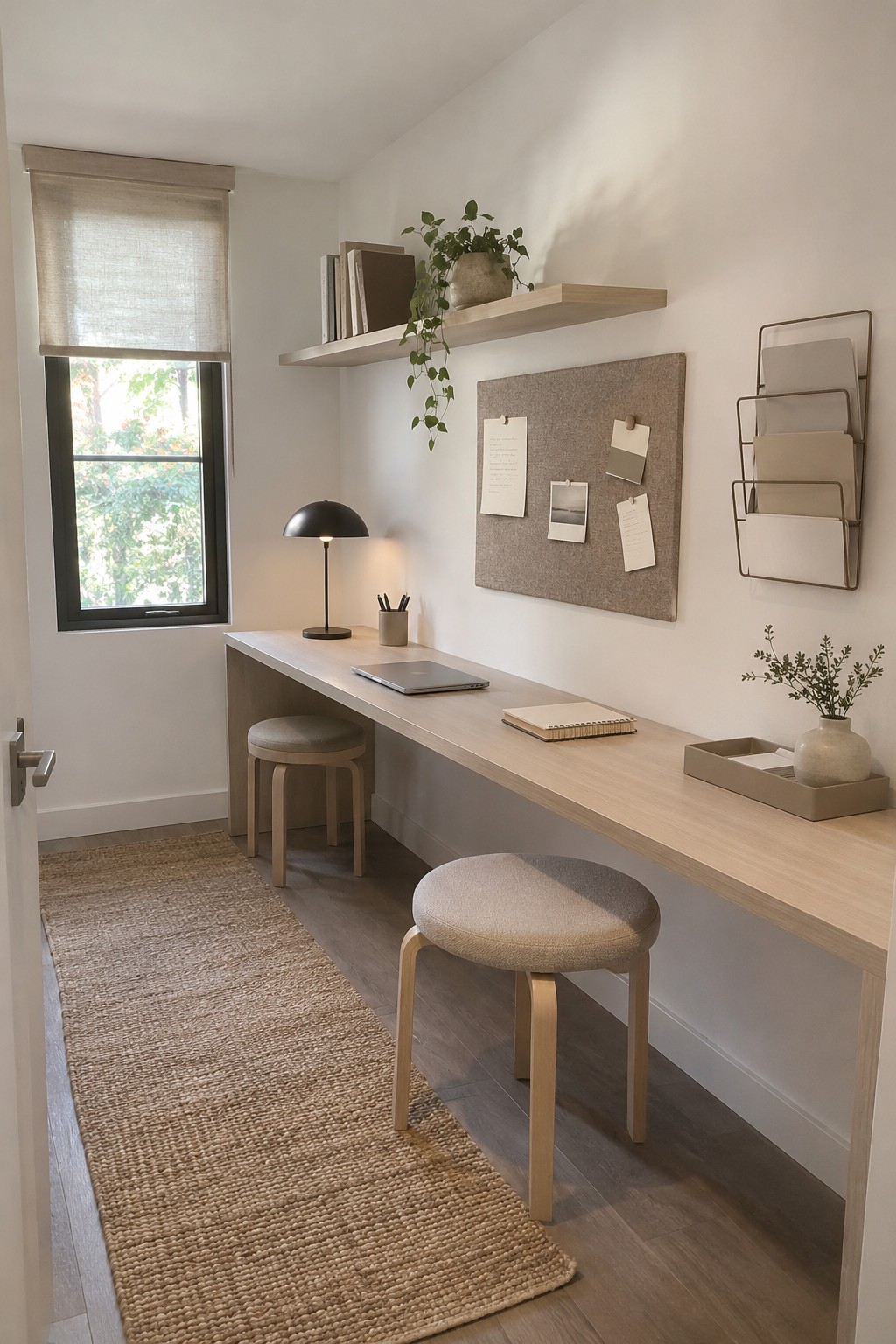
A long desk that runs along one wall makes good use of a narrow room and leaves the middle open for moving around. It can also provide space for two people to work without needing separate desks.
Keep the desk fairly shallow so chairs can tuck in and the walkway stays clear. A simple shelf above the work surface can hold a few essentials without taking up valuable desk space.
Turn the Space Under the Stairs Into an Office
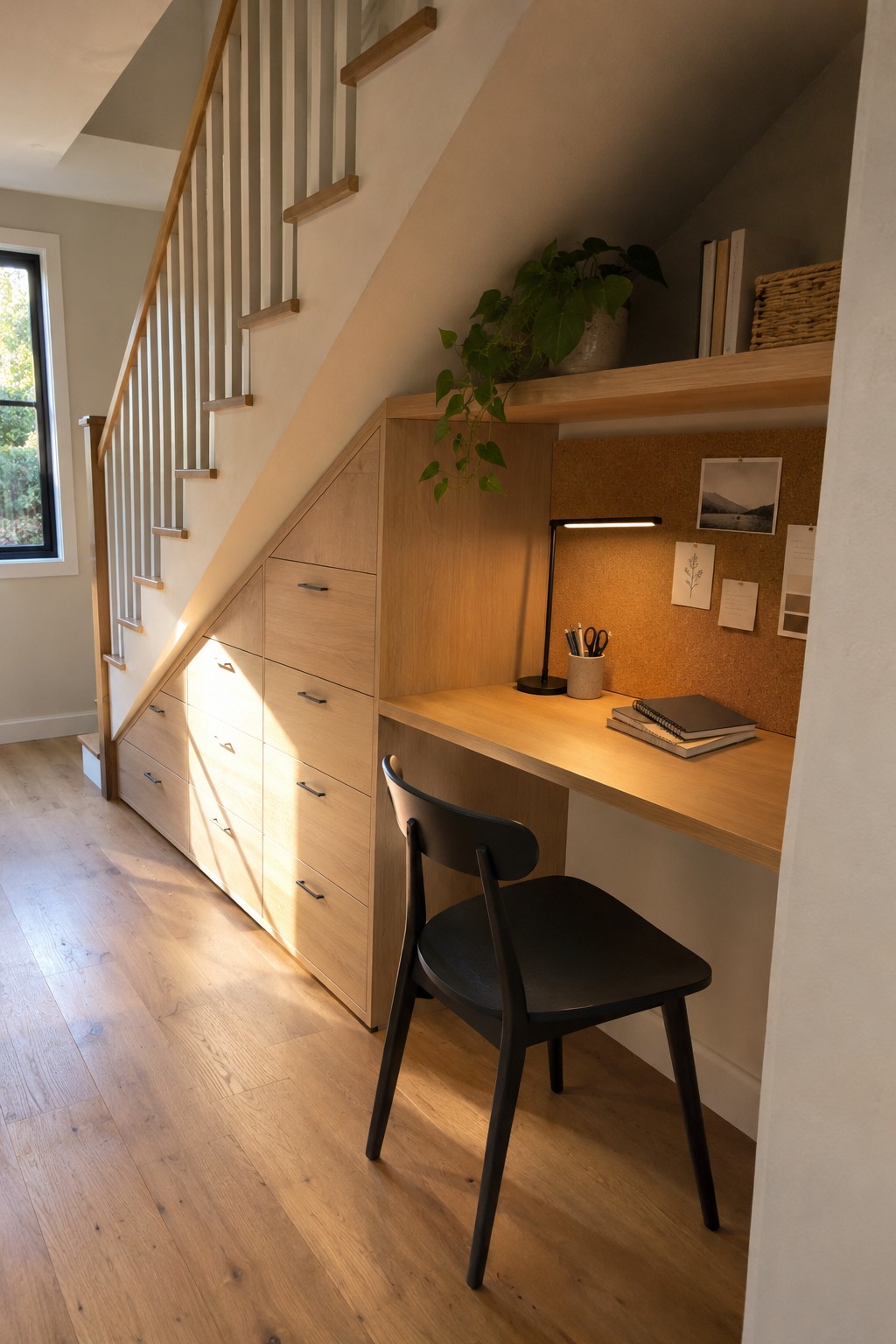
A desk built into the space beneath a staircase makes good use of an area that might otherwise go unused. The fitted drawers provide storage without taking up extra floor space, which is especially helpful in a narrow room.
If you have a similar nook, measure the slope and desk depth carefully so there is enough room to sit comfortably. Keep the work surface simple, and use built-in drawers for supplies you don’t need at hand every day.
Use a Narrow Desk to Keep the Room Open
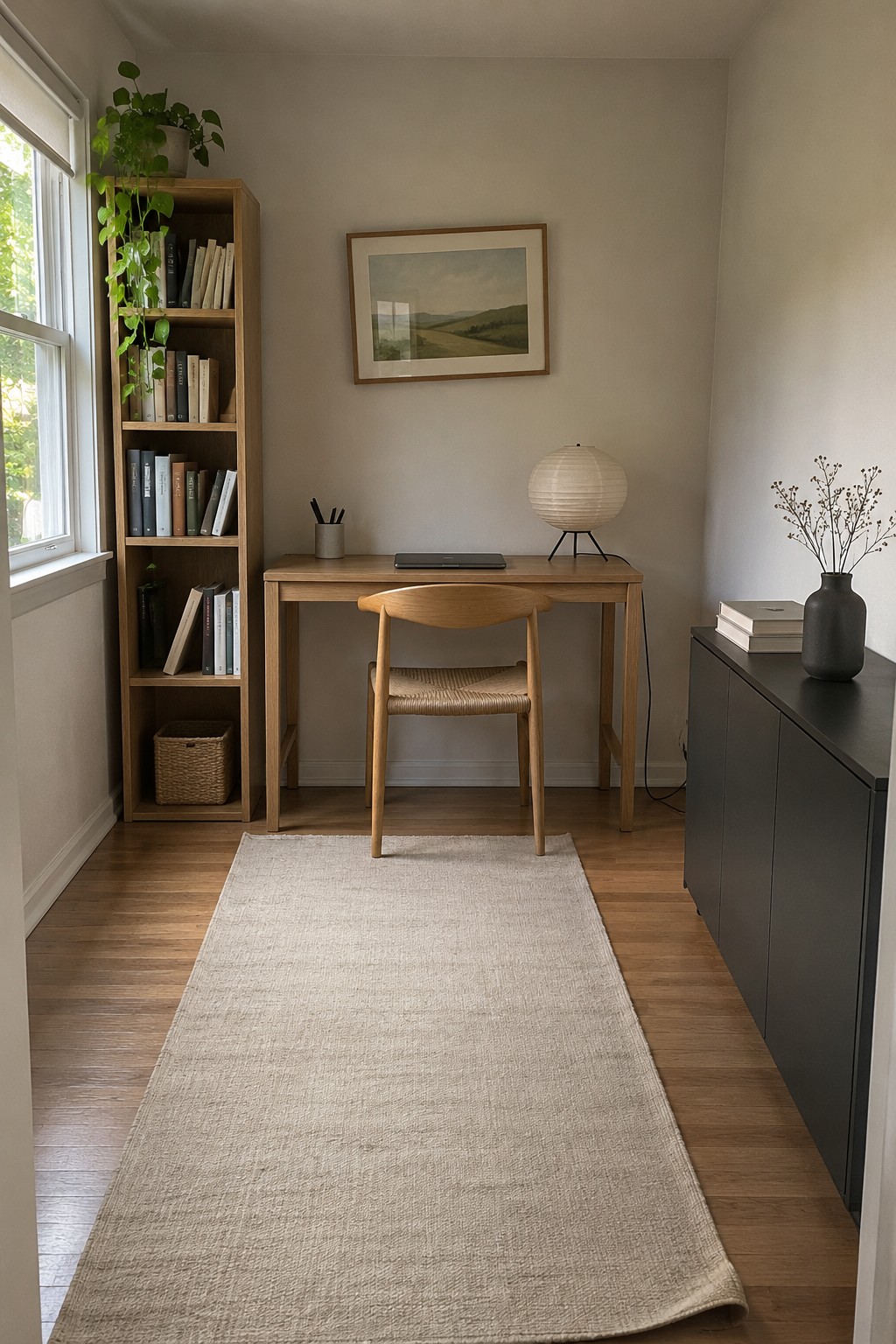
A slim desk can make a narrow office practical without taking up more floor space than needed. Here, the simple wooden desk leaves room for a chair and a clear path through the center of the room.
Look for a desk that is deep enough for your work but not oversized, and keep the surface to a few everyday essentials. This setup works well in a small spare room, especially when you use wall shelves or a bookcase for storage.
Run an L-Shaped Desk Along Two Walls
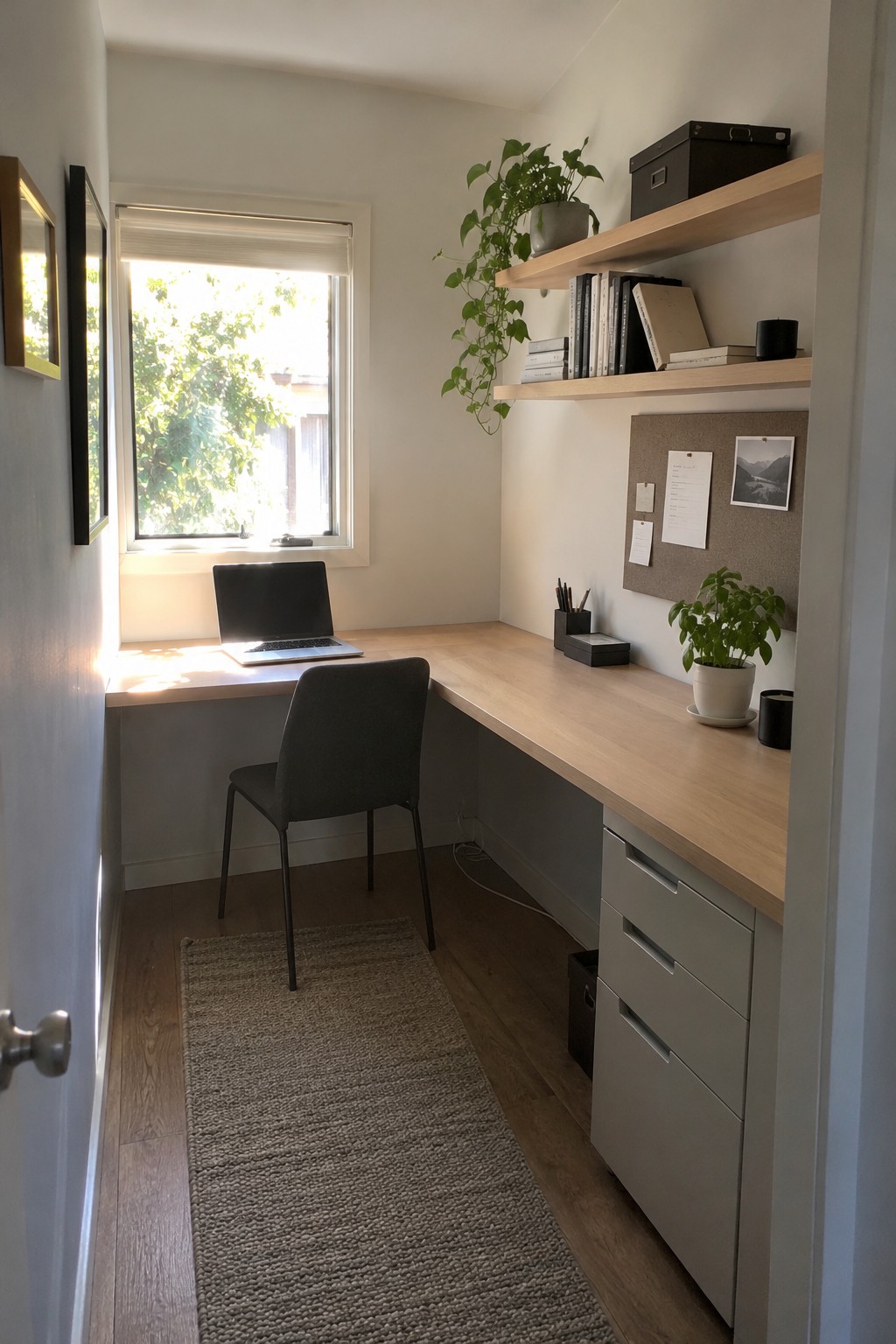
An L-shaped desk makes good use of a narrow office by turning two walls into one continuous work surface. It gives you room to spread out without putting a large desk in the middle of the floor.
This layout works especially well in a small room with a window at one end. Keep the desk fairly shallow so there is still space to pull out a chair and move around, and use drawers at one end for supplies.
Use Drawer Units to Support a Narrow Office Desk
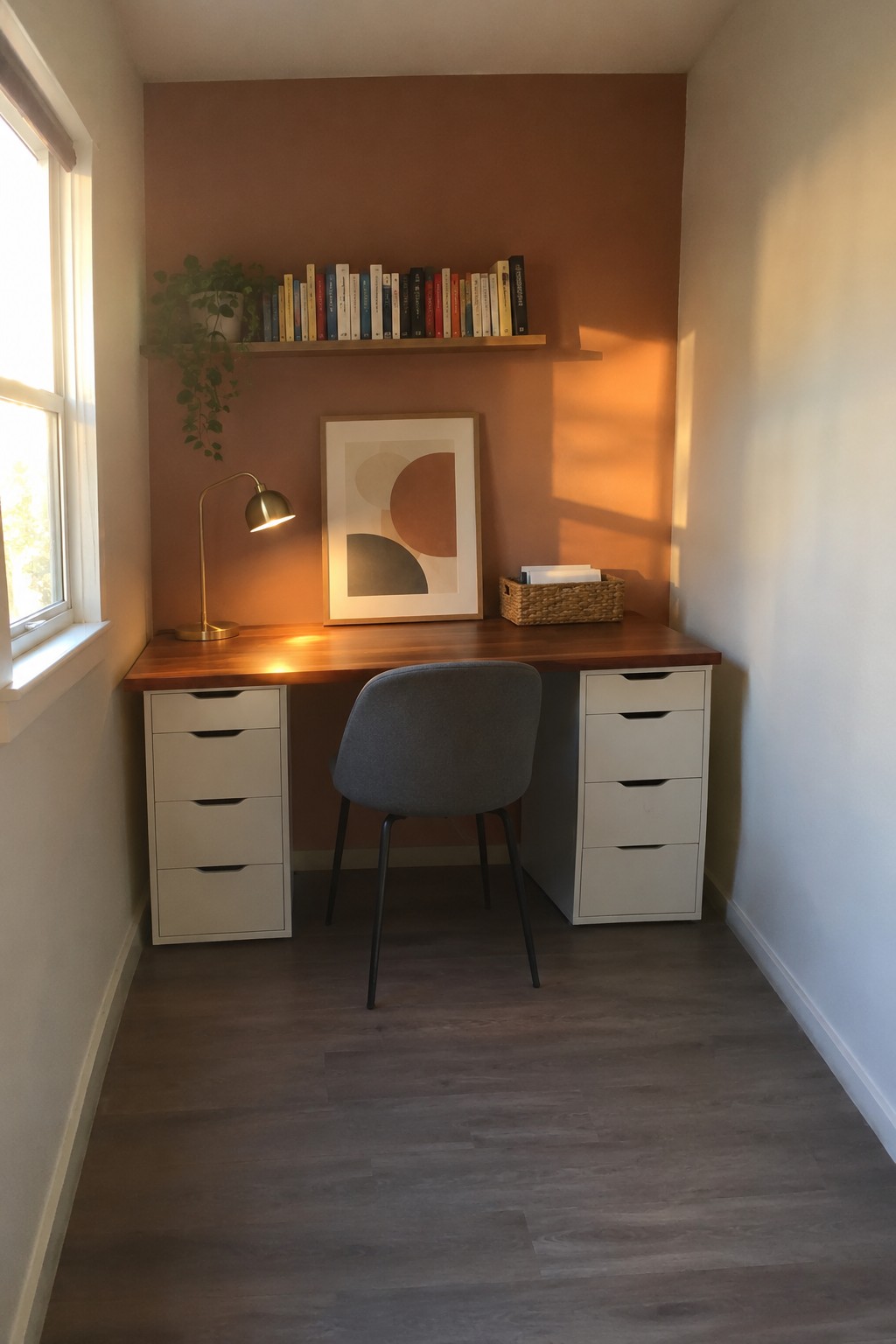
Drawer units at either end of a desk provide storage without taking up extra room elsewhere. This setup leaves the space beneath the center open for a chair, while keeping everyday office items close at hand.
Choose drawer units that fit comfortably under the desktop and keep the chair’s path clear. A simple shelf above the desk can hold books, but avoid filling it so much that the narrow workspace feels crowded.
Fit a Desk Into the Built-In Storage
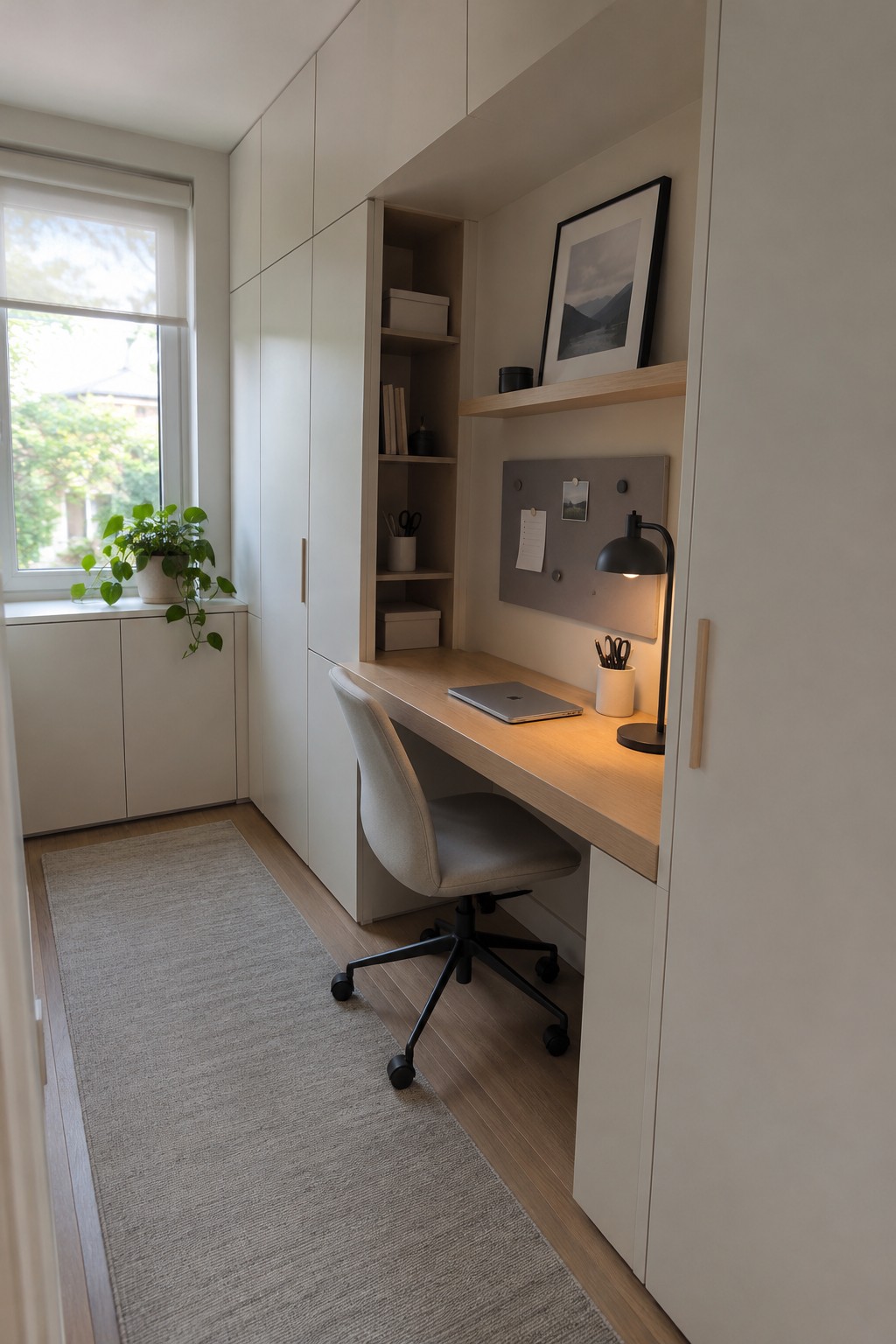
A desk tucked into a run of built-in cabinets makes good use of a narrow room. It gives the office a clear work area without taking up space for a separate desk and storage unit.
A wood desktop set between tall cabinets is a practical way to try this layout. Keep the work surface fairly shallow so there is still room to pull out a chair and move through the room comfortably.
Frequently Asked Questions
Q: Where should I put my desk in a really narrow office?
A: Try placing it along the longest wall so you keep a clear path through the room. If the window is there, turn the desk sideways or use a slim desk nearby to keep natural light without blocking the walkway.
Q: How can I add storage without making the room feel cramped?
A: Use the wall above your desk for a few shelves, and keep bulky storage off the floor. Closed boxes or drawers can hide supplies, so the room feels calmer even when you use it every day.
Q: Is a large office chair a bad choice for a small room?
A: Not necessarily, but check that you can still pull it back and walk past it comfortably. A chair with a compact frame and no arms often gives you more room to move.
Q: How do I make a minimalist office feel less plain?
A: Add one or two personal touches, such as a small plant, a warm desk lamp, or a favorite print. Keeping the rest of the surfaces clear helps those details stand out.
