

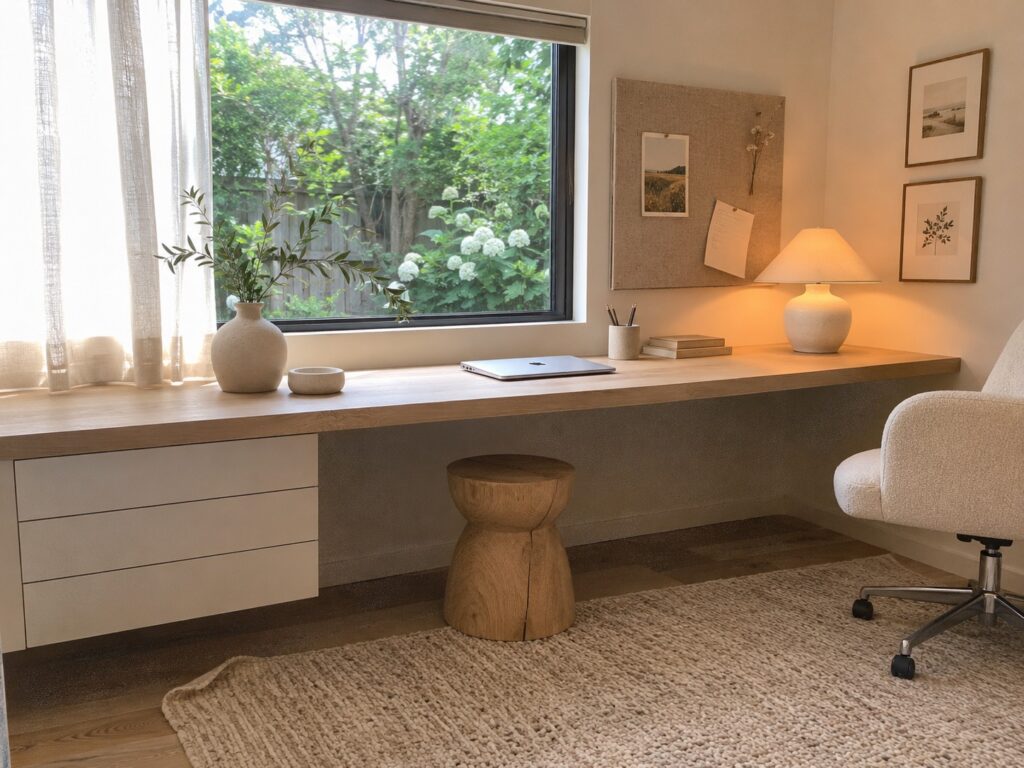
A home office can look calm in a photo but feel awkward once the chair, screens, and everyday clutter are in place.
I find that natural wood brings enough warmth to keep white walls and furniture from feeling stark, while a clear layout makes the room easier to work in.
The first thing I notice is often how the desk sits in relation to the window, storage, and the path through the room.
Small choices, like a wood shelf or a softer white tone, can help the space feel settled without making it busy.
Some of these designs are worth saving as a starting point and adapting to the light, size, and work habits of a real home office.
Make a Simple Desk Feel Built In

A long wood desktop can make a home office feel more settled without adding much furniture. Here, the pale wood surface runs above white drawers, giving the desk useful storage while keeping the setup open and uncomplicated.
This idea works well in a spare room or a small office where every bit of floor space matters. Choose a durable wood top and leave enough clear surface for daily tasks; a few drawers can handle supplies without crowding the desk.
A Long Desk Makes a Shared Office More Practical

A desk that runs along the wall gives two people room to work without crowding each other. The pale wood surface keeps the built-in workspace from feeling too heavy, while drawers below provide storage close at hand.
This layout works well in a spare room or a wide hallway nook. Leave enough legroom beneath the desk, and measure carefully before adding chairs so the walkway stays clear.
Use a Wall Nook For A Simple Home Office
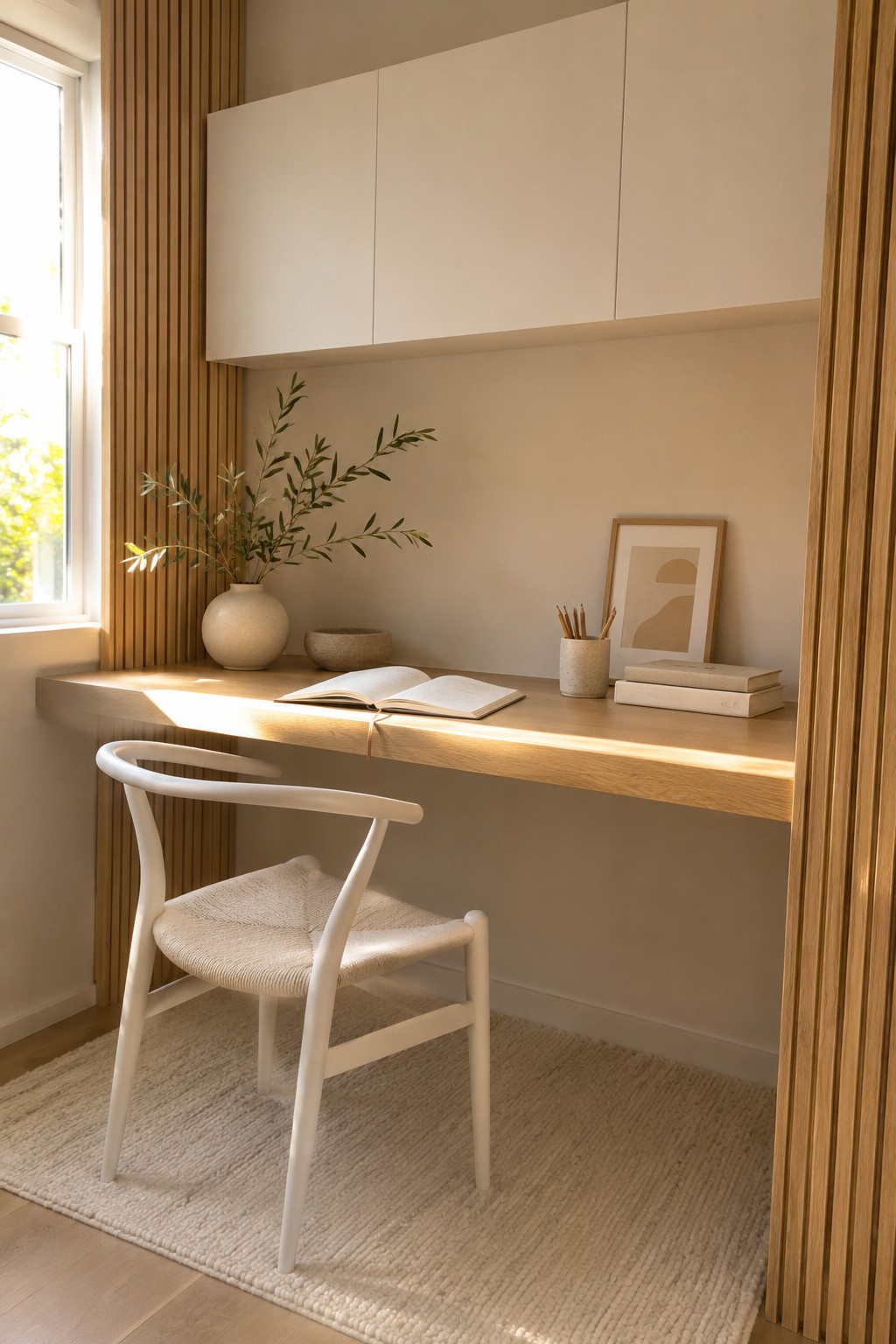
A built-in desk can make a small work area feel like part of the home instead of an extra piece of furniture. The long wood surface in this nook gives enough room to write or use a laptop, while the open space below keeps the setup from feeling bulky.
This approach works well in a spare corner or along a wall near a window. Keep the desk depth suited to how you work, and use closed cabinets above it for supplies you do not need every day.
Keep A Home Office Simple And Useful

An uncluttered desk helps a home office feel calmer and easier to work in. A pale wood worktop and a few everyday items are enough to make the space feel cared for without crowding the surface.
Try this approach in a small office or a shared room where visual clutter can build up quickly. Choose a desk with a clear work area, then keep only what you use often within reach.
Use Natural Wood To Warm Up A White Office

A white home office can feel a little plain on its own. A natural wood desktop brings in a warmer surface while keeping the room simple, and it works especially well when the rest of the furniture stays light.
This approach suits a spare room or a small office nook. Choose a desk with enough surface for daily work, then keep nearby accessories modest so the wood remains easy to notice without making the space feel busy.
Use Natural Wood For a Warmer Desk

A simple white desk can feel less stark when its legs are made of natural wood. The mix keeps the work surface light while giving the room a more relaxed, lived-in look.
This approach works well in a small home office or a room that also serves another purpose. Choose a desk with a straightforward shape, then keep the finish close to other wood pieces in the space.
Use Natural Wood To Warm Up A Minimal Desk

A long desk with a wood edge is a simple way to make a white home office feel less plain. The wood brings in a natural touch without taking over the room, so the space can stay open and uncluttered.
This idea works well in a narrow office or a small work nook, where a straightforward desk can run along one wall. Choose a finish that suits the rest of the room, and keep the desktop fairly clear so it remains practical for daily work.
Choose a Simple Wood Desk for a Calm Work Area

A plain wood desk can make a home office feel settled without much extra styling. Its natural finish gives the room some warmth, while white cabinetry and walls keep the overall look clean.
This approach works well in a small office or a quiet corner of a shared room. Choose a desk with a sturdy, open base, and keep the desktop mostly clear so it stays practical for everyday work.
Make a Built-In Desk Feel Like Part of the Room

A desk set into a wall niche can make a home office feel settled without taking over the room. The wood work surface gives the built-in a practical feel, while the simple shape keeps it from looking too formal.
This approach works well in a spare alcove or an unused stretch of wall. A floating shelf above the desk can hold a few books and supplies, but leave enough open space to work comfortably.
Use Low Shelving To Make An Attic Office More Practical
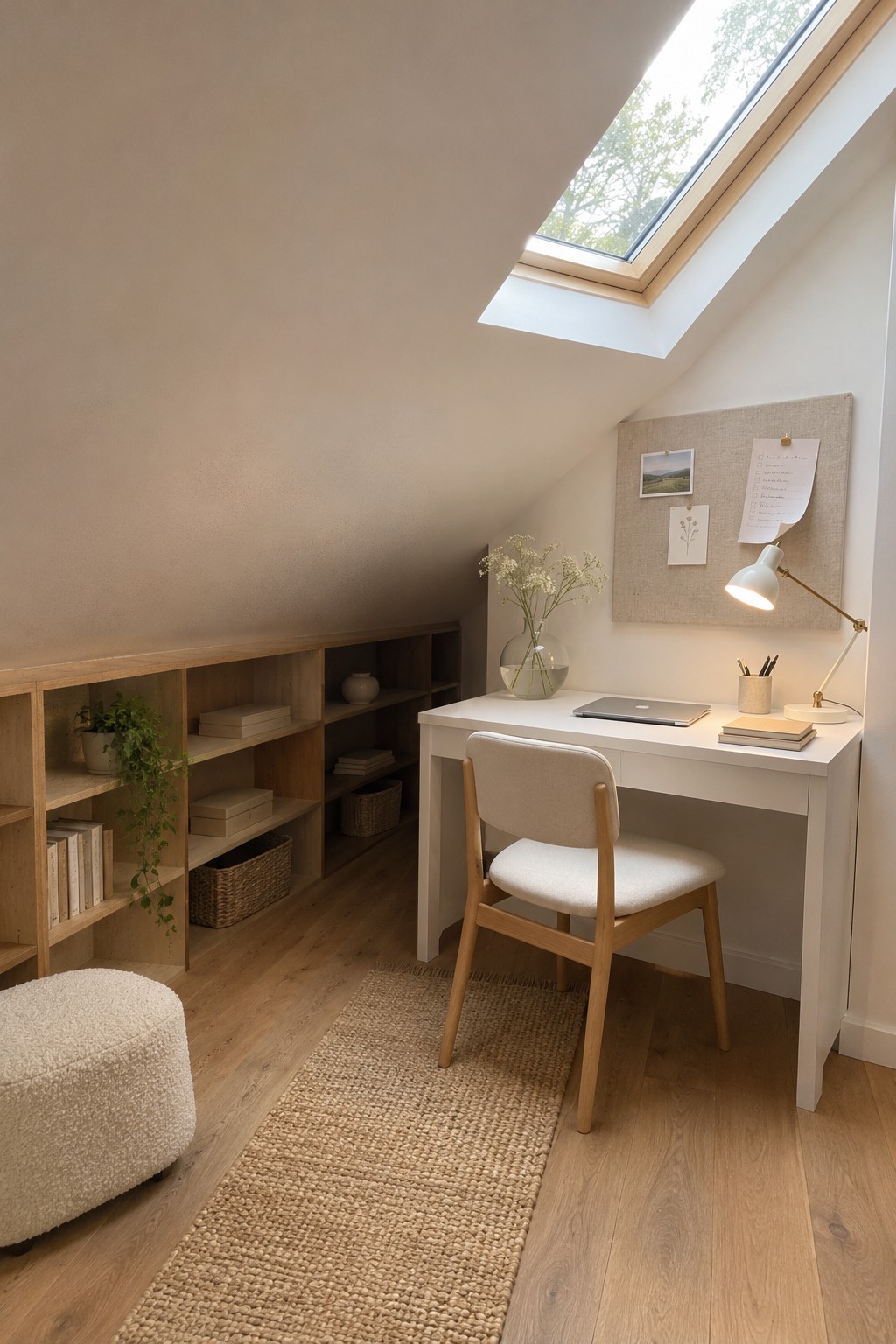
Low built-in shelving makes good use of the sloped wall in an attic office. It provides storage without taking up much floor space, while leaving the work area open and easy to move around in.
This approach suits small rooms where a full-height bookcase would feel awkward. Keep the shelves low enough to fit beneath the slope, and use a few baskets or boxes to tuck away supplies.
Use Built-In Shelves to Keep an Office Tidy

Built-in shelves make a small home office easier to use because books and supplies have a set place, while the desk can stay clear. Open shelves also suit a simple white room without making it feel crowded.
If you have a wall nook, shelves fitted to its width can use the space well. Keep everyday items within reach and leave a little open space so the shelves stay easy on the eyes.
Add Built-In Storage To Keep A Desk Clear
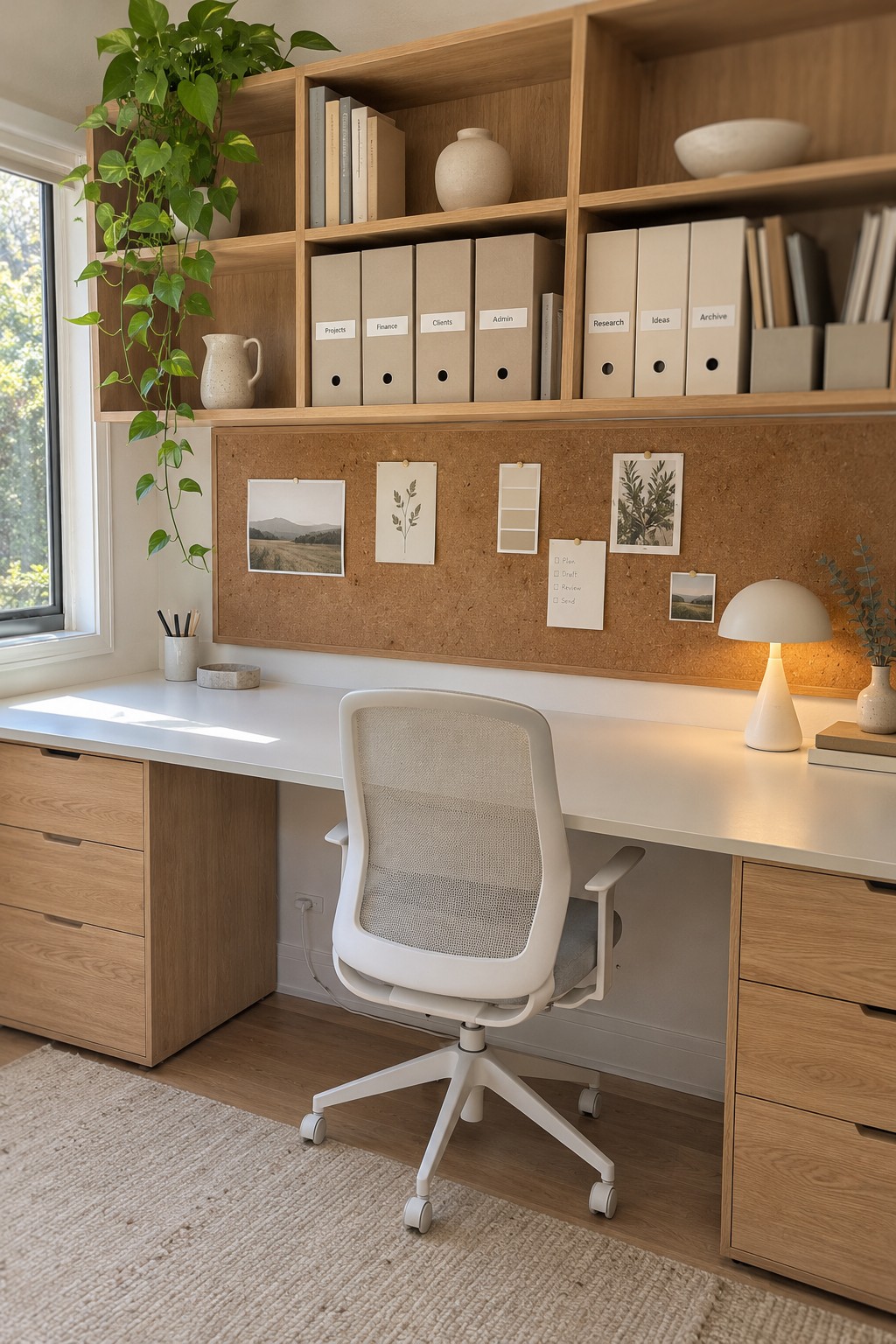
Built-in shelves and drawers make a home office easier to keep tidy without adding extra furniture. Natural wood keeps the storage from feeling too stark beside a white work surface.
This approach works especially well in a small room where floor space is limited. Use closed drawers for everyday clutter and open shelves for files or a few useful items, leaving the desk itself clear for work.
Use A Floating Desk To Save Floor Space

A wall-mounted desk keeps a small work area open, which is useful in a bedroom where a full-size desk might feel bulky. The simple white surface also fits easily with natural wood details, such as the mirror frame.
This setup works best when you only need room for a laptop or a few everyday items. Add a small drawer or box for supplies, and keep the desktop mostly clear so the area stays practical.
Use a Curved Desk to Make a Home Office Feel Less Rigid

A curved desk can make a work area feel more relaxed than a standard rectangular one. Here, the rounded white top and wood base give the desk a softer shape while keeping the overall look simple.
This style works well in a home office where there is enough room for the curved edge to sit freely. Choose a practical surface size, and leave clear space around the desk so the shape does not make the work area awkward to move through.
Use A Long Desk To Create Two Work Areas
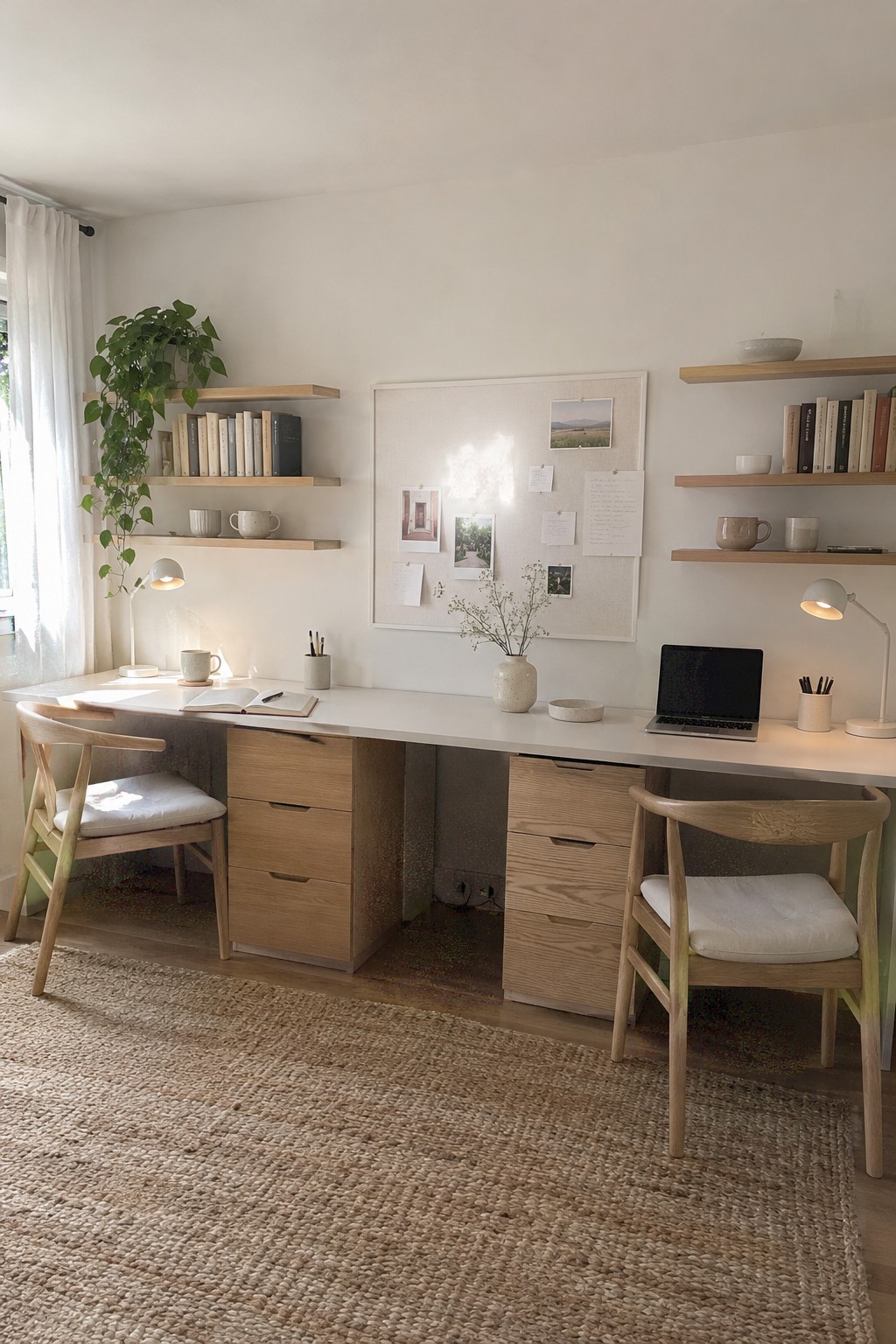
A long desk makes a shared home office easier to use without needing two separate rooms. Here, a single white work surface stretches across the wall, while wood drawer units provide storage and help define each side.
This layout suits a spare room or a wide wall in a larger room. Leave enough space between the chairs so both people can work comfortably, and use matching drawer units to keep supplies close at hand.
Use a White Desk To Keep A Small Office Light
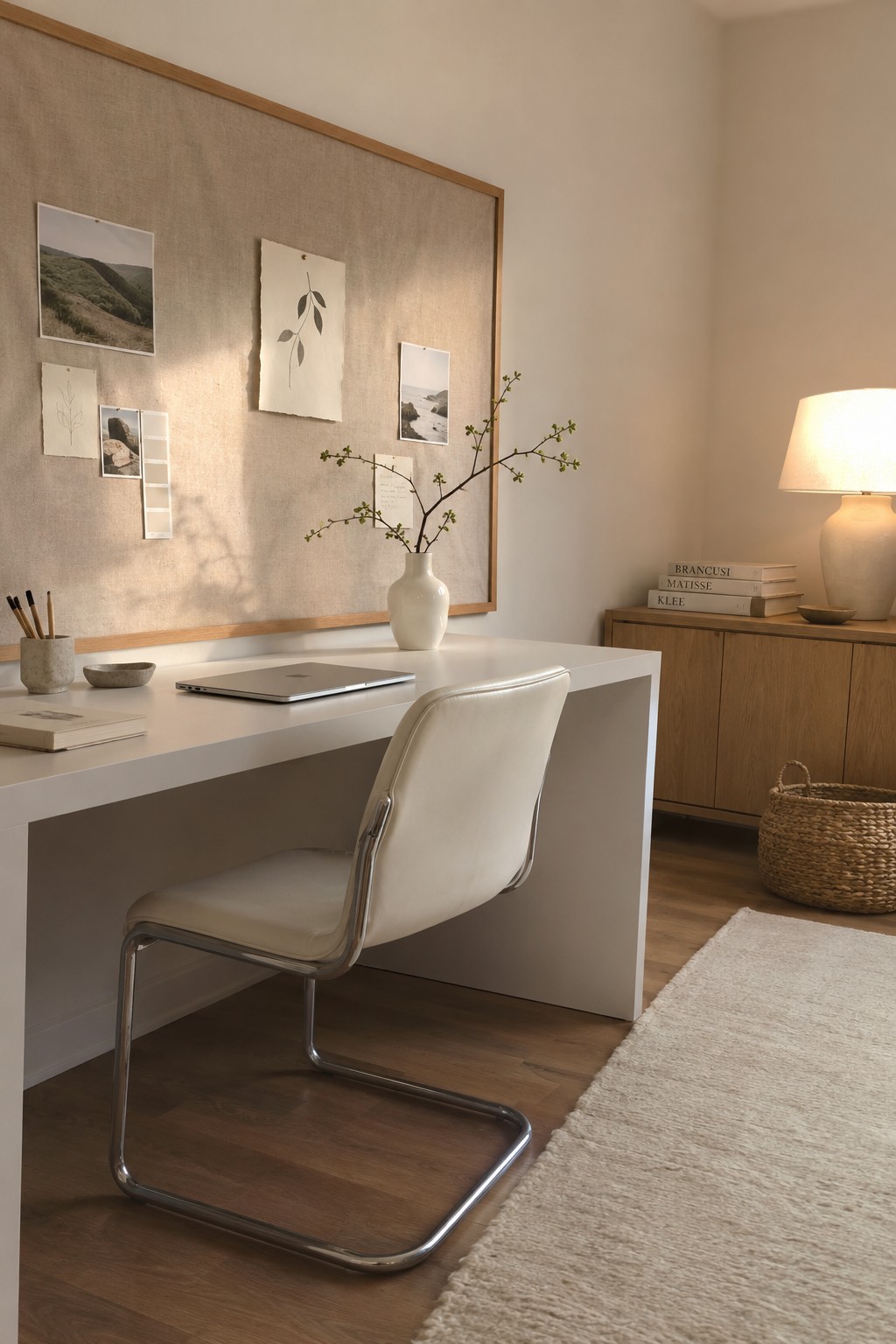
A white desk can make a home office feel open without giving up a proper work surface. It also lets a few natural wood pieces bring in warmth, so the room stays simple rather than stark.
This approach suits a small study or a quiet corner in a bedroom. Keep the desktop mostly clear, and use a wood cabinet or floor as a warmer contrast. A white chair and desk can show scuffs more easily, so choose finishes that are practical to clean.
Use a Reclaimed Wood Desk In A White Office

A thick reclaimed wood desktop gives a simple white office a more natural feel. Its worn grain adds character without needing much extra decoration, while the pale walls keep the work area looking open.
This approach works well in a small office or a quiet corner used for work. Choose a sturdy wood surface and keep nearby furniture and accessories simple so the desk remains practical and easy to live with.
Use Tall Built-Ins To Keep A Small Office Tidy
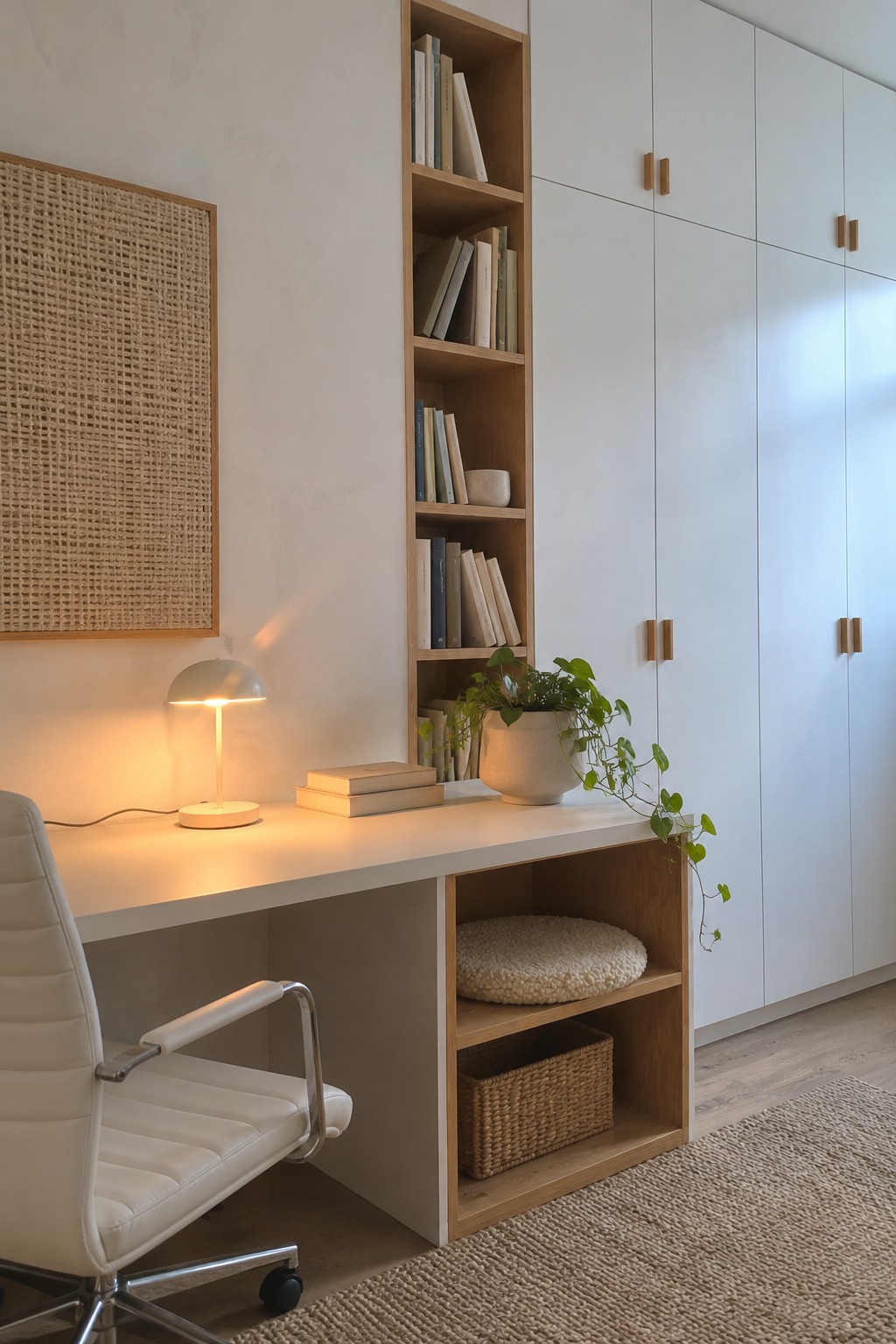
Tall built-in storage makes good use of wall space while keeping a home office from needing extra furniture. Here, closed white cupboards hide everyday items, while a narrow open wood shelf keeps a few books easy to reach.
This approach works well in a small office or a shared room where floor space is limited. Keep most storage behind doors, and leave the open shelves for items you use often.
Use Shelves To Make A Small Office Feel Built In

A desk tucked into a wall niche can feel like a natural part of the room rather than an extra piece of furniture. Simple wood shelves above it provide useful storage without taking up floor space.
This setup works well in a spare corner or a narrow room where a full office would feel too bulky. Keep the shelves lightly styled so there is still room for the things you reach for every day.
Use a Pinboard To Keep A Work Area Flexible
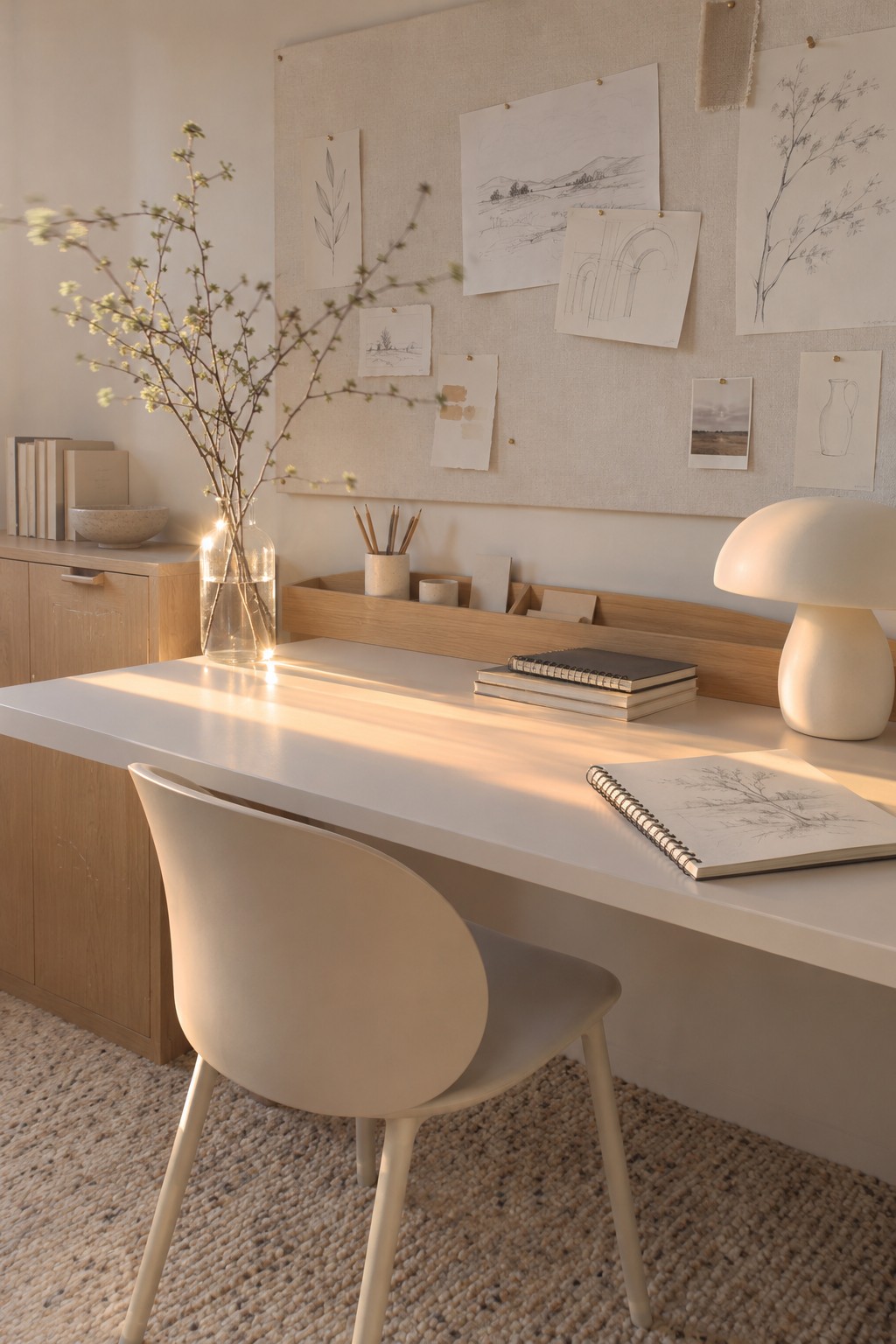
A fabric pinboard gives a home office an easy place to keep sketches and references in view. It makes the wall useful without adding bulky storage, and the pinned papers can change as a project moves along.
This works well above a desk, especially in a small room where floor space is limited. Use a neutral fabric cover to keep the display quiet, and leave a little open space so the board stays easy to update.
Use A Drawer Desk To Keep Work Essentials Close

A desk with built-in drawers gives a home office useful storage without needing a separate cabinet. The simple white fronts keep the desk looking tidy, while supplies can stay close at hand.
This setup works well in a bedroom or small spare room where floor space is limited. Keep everyday items in the top drawer and less-used supplies below, so the work surface stays clear.
Use Built-In Shelves To Add Storage

Built-in shelves make a home office more useful without taking up extra floor space. Here, white dividers keep the shelving orderly, while the wood backing gives the open shelves a simple, natural finish.
This idea works especially well in a narrow office or a spare room where storage is limited. Leave some shelf space open and avoid filling every section, so books and supplies stay easy to reach without making the desk area feel crowded.
Let Daylight Shape a Simple Work Area

A desk near a large window can make a home office feel more pleasant to use without adding much decor. Here, the white tabletop keeps the work area visually simple, while natural wood in the chair and desk legs brings in a little warmth.
This setup works well in a spare room or a quiet corner with good natural light. Keep the desk surface fairly clear, and use a light curtain to filter sun when it becomes distracting.
Use Natural Wood Storage In A White Office

Natural wood cabinetry is a useful way to bring warmth to a white home office without adding much visual clutter. A run of vertical wood slats on the cabinet fronts gives the storage a little texture while keeping the overall look simple.
This approach works well when you need closed storage for office supplies but want the room to feel calm. Pair wood cabinets with a light desk and keep shelf decor fairly sparse. Too many finishes or small accessories can make the simple palette feel busy.
Frequently Asked Questions
Q: How do I keep a white-and-wood office from feeling too plain?
A: Add texture instead of lots of color. A woven basket, linen curtain, or leafy plant brings warmth without taking away from the clean look.
Q: What kind of wood works best with white furniture?
A: Light oak and maple keep the room feeling airy, while walnut adds a richer contrast. Try to repeat your chosen wood tone in a desk, shelf, or small accessory so it feels intentional.
Q: How can I make a small home office feel less cramped?
A: Choose a slim desk, use wall shelves, and keep the desktop clear. A white wall behind natural wood furniture can also help the space feel open.
Q: Do I need to match every wood finish?
A: No. A little variation feels natural, as long as the tones share a similar warmth.
