

A compact home office can feel cramped quickly when the desk, chair, and storage all compete for the same patch of floor.
I find the room works best when each piece has a clear purpose and the layout leaves enough space to move comfortably.
Light, uncluttered surfaces help, but practical details matter just as much, from where cords run to whether supplies are easy to reach.
A simple wall shelf or a desk tucked into an unused corner can make a small room feel more considered without adding visual weight.
Some ideas are worth adapting to the shape of your own room rather than copying exactly.
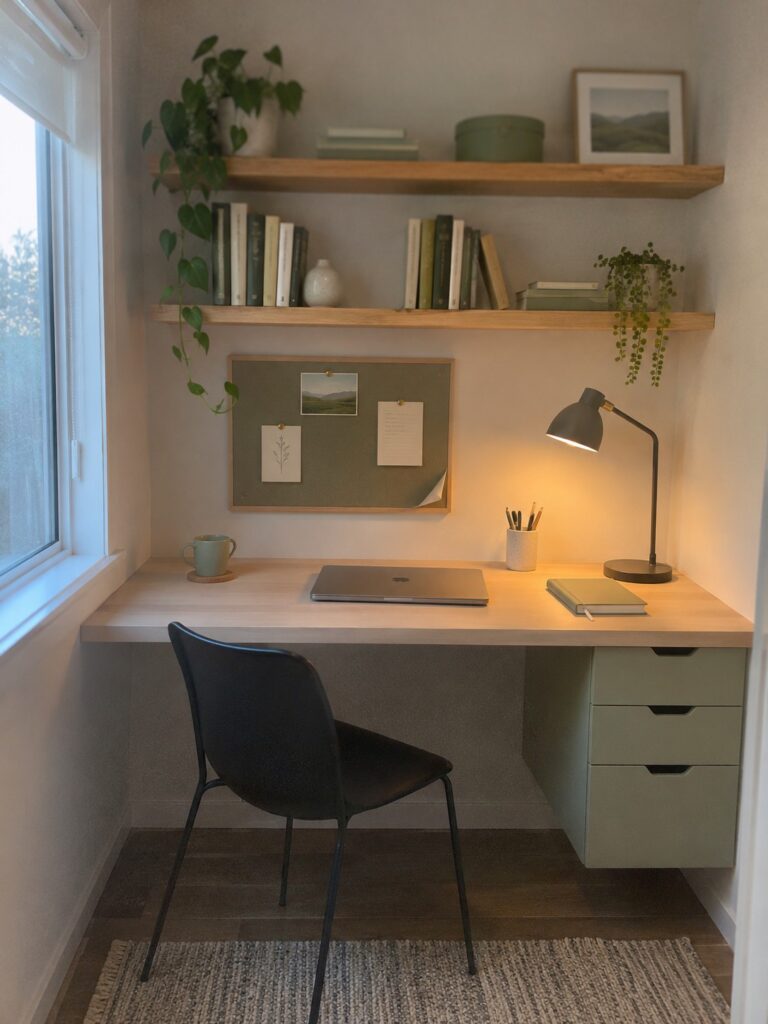
Use Vertical Shelves to Free Up Desk Space

In a compact office, wall shelves can hold books and everyday supplies without taking up valuable floor space. Keeping the desk clear makes a small work area easier to use, while closed storage can hide the bits and pieces you do not need all the time.
Install shelves above the desk, leaving enough room to work comfortably below them. A narrow drawer unit can add storage without needing a separate filing cabinet, but avoid filling every shelf so the area stays practical.
Use a Desk That Fits the Room
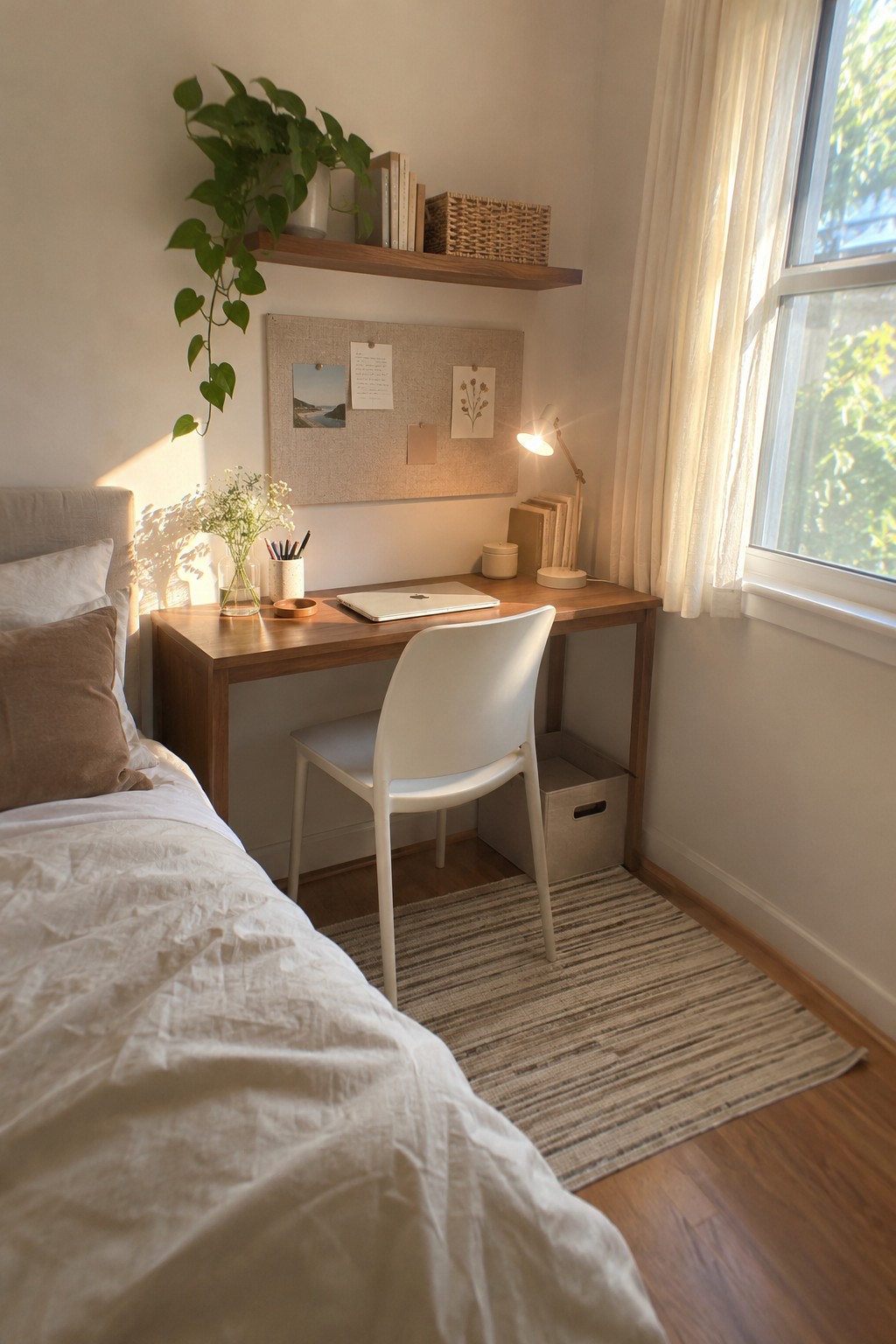
A simple desk tucked into a bedroom corner gives you a place to work without taking over the room. The open space beneath the wooden desk helps keep the area feeling less crowded, which matters in a compact home office.
Choose a desk that leaves enough room to pull out your chair and move around comfortably. A narrow model can work well beside a bed or near a window, but avoid filling the desktop with too many extras.
Use the Sloped Ceiling for a Long Desk
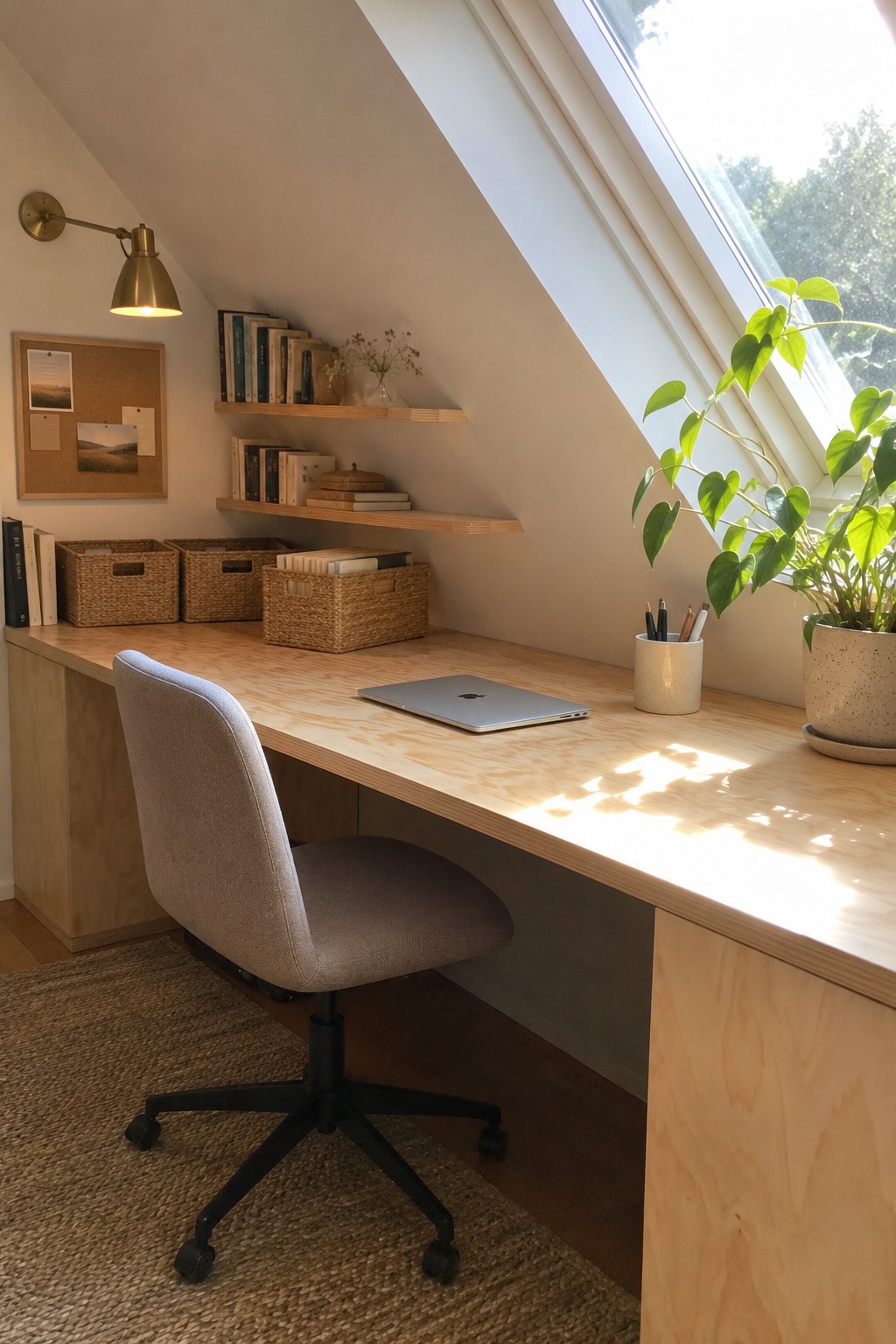
A desk fitted along the low wall makes an awkward attic space useful without taking up the center of the room. The long work surface leaves room for a laptop and supplies, while keeping the office layout simple.
This setup works best when the desk is shallow enough to leave comfortable legroom and the chair can move freely. Add shelves where the ceiling allows, and keep frequently used items within easy reach.
Make a Small Office Work in a Closet

A closet can become a useful home office without taking over a bedroom or living area. A desk fitted across the alcove makes good use of the available width, while a shelf above keeps supplies close at hand.
Keep the work surface clear and use wall storage for small items. This setup suits a compact room, but leave enough space to pull out the chair and open the door comfortably.
Place a Desk Beneath the Window

A desk beneath a window makes good use of a spot that might otherwise go unused. Here, the long wood surface provides room to work without crowding the small office.
This setup works well in a compact room with a wide window. Keep the desk shallow enough to leave space for a chair, and use a simple shade to control glare while still letting in daylight.
Use a Fold-Down Desk to Save Space

A wall-mounted desk gives you a proper place to work without taking up floor space all day. The corkboard inside the hinged panel keeps notes close by, and the desk can fold away when you need more room.
This setup works well in a living room or other shared space where a permanent desk might feel in the way. Keep the desktop simple, and check that the wall and folding supports can handle the desk’s weight.
Make Use of an Awkward Corner

A desk fitted into an unused corner can turn a small room into a useful office without taking over the floor. The long wood desktop follows the shape of the nook, making room to work while keeping the setup contained.
This idea works especially well beneath a sloped ceiling or in an attic room where standard furniture may not fit neatly. Measure the space before choosing a desk, and use shallow shelves to keep everyday supplies close without crowding the work surface.
Set Up a Shared Desk for Two

A long desk can give two people room to work without needing a separate office for each person. The open surface makes it easier to spread out papers and devices, while a drawer unit can provide storage without taking up much extra floor space.
In a compact room, place the desk along a wall and keep each person’s work area fairly simple. Matching chairs and task lamps help define two spots, but leave enough space between them to avoid a cramped feel.
Use a Hallway Nook as a Home Office

A small wall-mounted desk can turn an unused hallway alcove into a practical place to work. It leaves the floor open, which helps a narrow space stay easy to walk through.
Keep the desk shallow and store work supplies on a shelf above it. This setup suits a landing or wide hallway, but leave enough room for people to pass comfortably.
Use a Rug to Define a Small Office

A rug helps a desk area feel like its own workspace, even when it shares a room with the living area. Here, the woven rug sits beneath the desk and chair, marking out a clear spot without adding a divider.
This works well in a compact room where a separate office is not an option. Choose a rug that fits under the desk and chair, leaving enough space to pull the chair back without catching its legs on the edge.
Use Shelves to Keep a Small Desk Clear

Wall shelves make a compact office more useful by moving books and a few supplies off the work surface. That leaves room for the essentials without making the desk feel crowded.
Place shelves above or beside the desk, keeping the items you reach for most within easy reach. A narrow desk and a small lamp are often enough for a simple work setup.
Choose a Compact Desk for a Small Office

A simple desk with a slim top can give a small office enough room to work without crowding the room. This setup keeps the work surface open, while the monitor stand makes use of a little vertical space.
Look for a desk that fits the room’s width and leaves clear space to pull up a chair. A small riser can lift a monitor and tuck a keyboard underneath when it is not in use.
Use an L-Shaped Desk in a Corner Office

An L-shaped desk makes good use of a corner, giving a small office more work surface without taking over the middle of the room. It also keeps the chair tucked neatly into the nook.
This setup works well in a spare corner or a narrow room where a straight desk would leave space unused. Keep the desktop fairly clear so the extra surface stays useful rather than becoming a drop zone.
Use a Slim Desk to Keep the Room Open

A narrow desk can make a home office fit into a living room without taking over the space. This simple wooden desk leaves plenty of floor visible, while still offering room for a laptop and a few everyday supplies.
This setup works well in a small room where a full-size desk would feel bulky. Keep the surface limited to what you use regularly, and choose a chair that can slide neatly underneath when the desk is not in use.
Turn an Unused Hallway Alcove Into a Desk Area
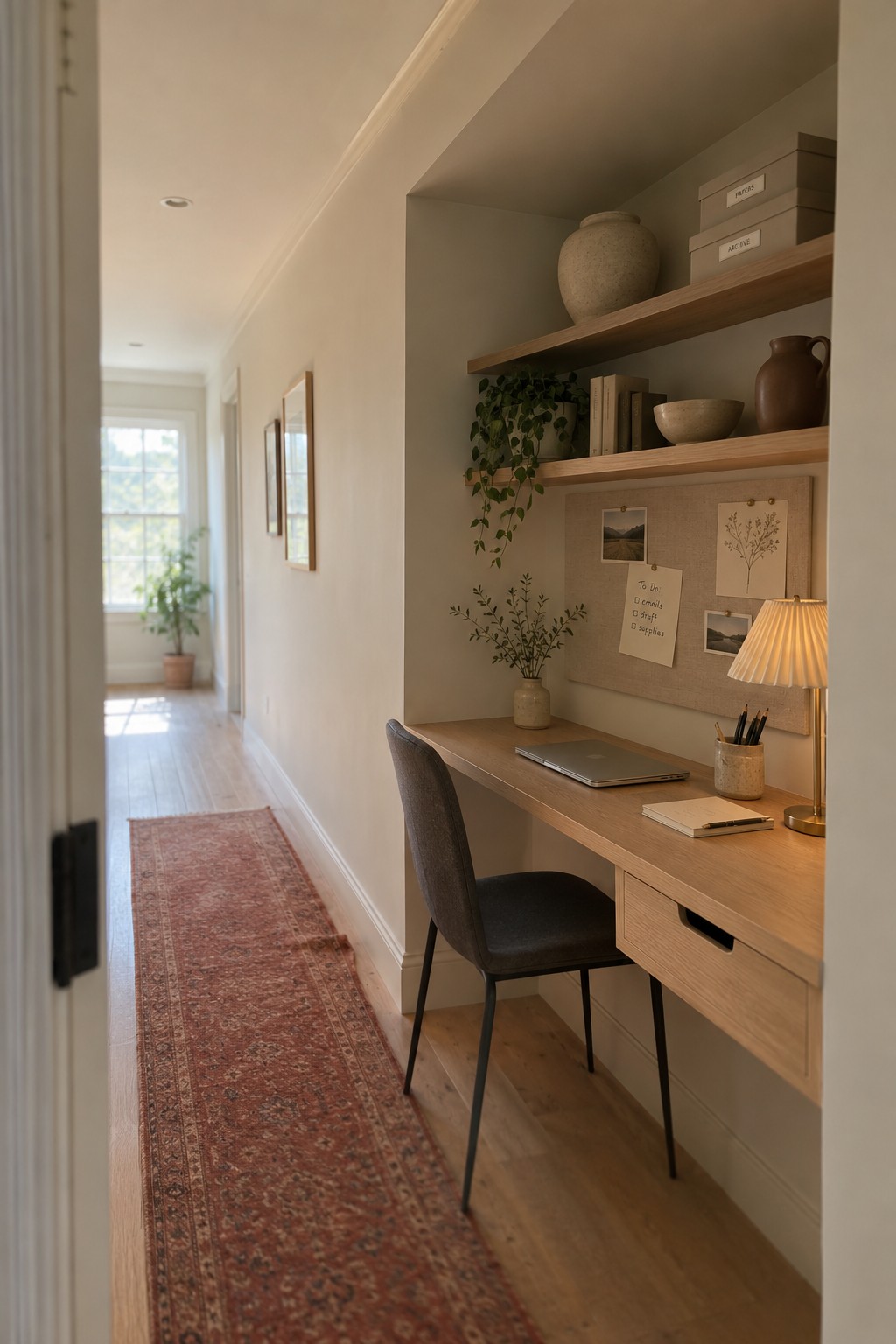
A recessed hallway wall can make a practical home office without taking over a separate room. A desk fitted into the nook uses space that might otherwise go unused, while keeping the work area compact.
Keep the desk shallow enough to leave a clear path through the hall, and use the wall above it for a few shelves or a pinboard. This setup suits a narrow home where a full office is not an option.
Use a Wall-Mounted Desk to Keep the Floor Open

A long desk attached to the wall can give a small office plenty of working room without bulky legs taking up floor space. The drawers at one end provide storage while leaving the area beneath the desk open.
This setup works well in a spare room or a quiet corner where every bit of floor space matters. Keep the desk depth modest, and secure it properly to the wall so it can safely hold everyday work supplies.
Set Up a Desk Nook in the Kitchen

A narrow desk tucked along a kitchen wall makes use of space that might otherwise go unused. The simple wood desk provides a place to work without needing a separate office, and its slim shape keeps the walkway open.
This setup works well in an open-plan home where a desk can share space with the kitchen. Keep the desktop clear and use a small lamp or a wall board for everyday notes so the work area stays practical without spreading into the room.
Use a Window Nook as a Compact Office

A desk tucked beneath a window makes good use of a small room without taking over the wall. The natural light is useful for everyday work, and a simple desk keeps the setup from feeling crowded.
This arrangement suits an attic room or any space with a window and limited floor area. Choose a desk that leaves enough room to pull out the chair, and keep the desktop fairly clear so the work area stays practical.
Add a Curved Desk to a Small Office

A desk with a curved front can make a compact office easier to use without taking up more room than necessary. The rounded edge gives you a little extra space to pull in a chair and move around, while the desk still fits neatly into a nook.
This shape works well where a standard rectangular desk would feel cramped, especially near a window or along a short wall. Keep the desktop fairly clear so the curved work area stays useful.
Add a Window Seat to Make a Small Office More Useful

A built-in window seat can give a compact office a second purpose without taking up much floor space. Here, drawers beneath the seat provide handy storage, while the cushioned top offers a spot to sit away from the desk.
This idea works well in a narrow room where a window recess might otherwise go unused. Keep the seat depth modest, and use drawers or lift-up storage below so the extra seating earns its place.
Use Built-In Storage to Keep a Small Office Tidy
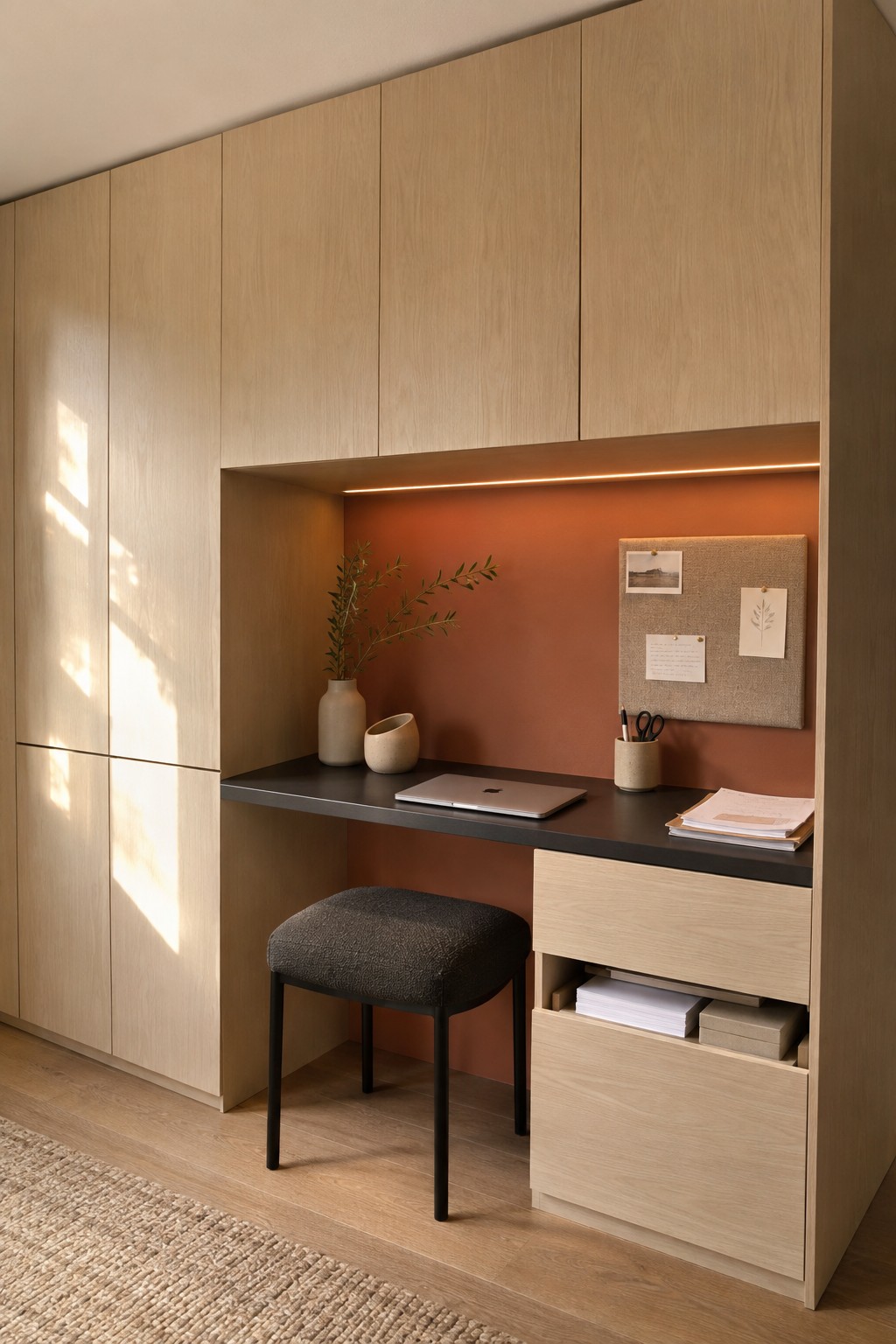
A built-in desk makes good use of a compact room by fitting work space and storage into one wall. The cabinets above keep supplies out of sight, while the open desk area stays clear enough to work comfortably.
This setup suits a spare-room nook or a home office built into a larger storage unit. Plan the desk depth around your everyday needs, and include a drawer or shelf nearby for papers you want close at hand.
Frequently Asked Questions
Q: How can I fit a desk into a really small room without making it feel cramped?
A: Try a slim desk against a wall or a floating shelf that doubles as a work surface. Keep the floor clear with a chair that tucks underneath, and use the wall above the desk for storage.
Q: What should I keep on my desk in a minimalist home office?
A: Keep only what you reach for every day, like your laptop, a lamp, and a notebook. Put occasional-use supplies in a drawer or nearby box so the work surface stays easy to use.
Q: How do I make a small office feel less like a corner of the bedroom?
A: A rug, a different wall color, or a small screen can give the work area its own boundary without taking up much space. At the end of the day, put away work items so the room feels restful again.
Q: Is a minimalist office still practical if I have lots of paperwork?
A: Yes. Use a narrow file box or a small drawer unit, and sort papers into a few clear categories. A simple weekly tidy-up keeps the storage from spilling onto your desk.
