

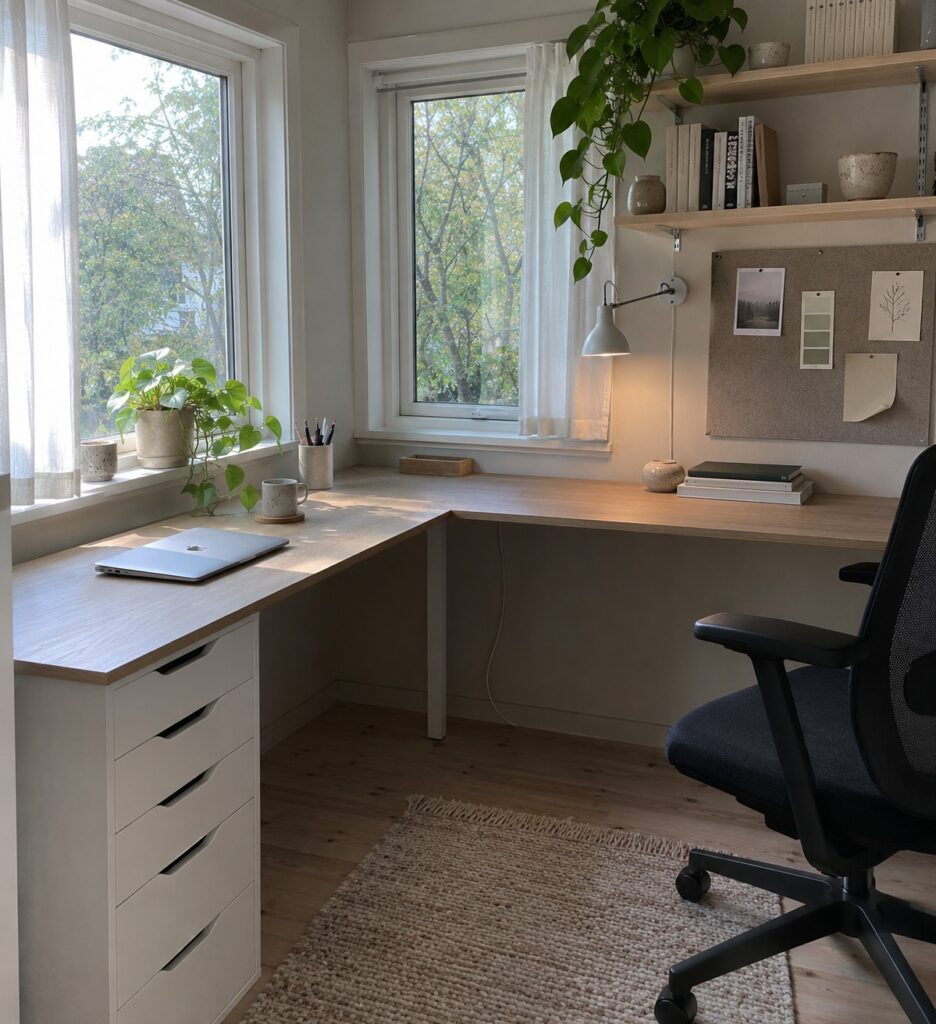
A corner desk can make a small home office feel more settled, but only when it leaves enough room to move and keeps everyday work within reach.
I notice the difference first in how the desk meets the walls and whether the chair, storage, and lighting fit without making the room feel crowded.
Minimalist spaces rely on those practical choices as much as on a clear surface, since a few visible items can shape the whole mood of a room.
These designs show useful ways to work with awkward corners, and I’d borrow the layouts that make the most of the space without making the office feel bare.
A good corner can do more than hold a desk.
Use a Corner Desk To Make Better Use of Space
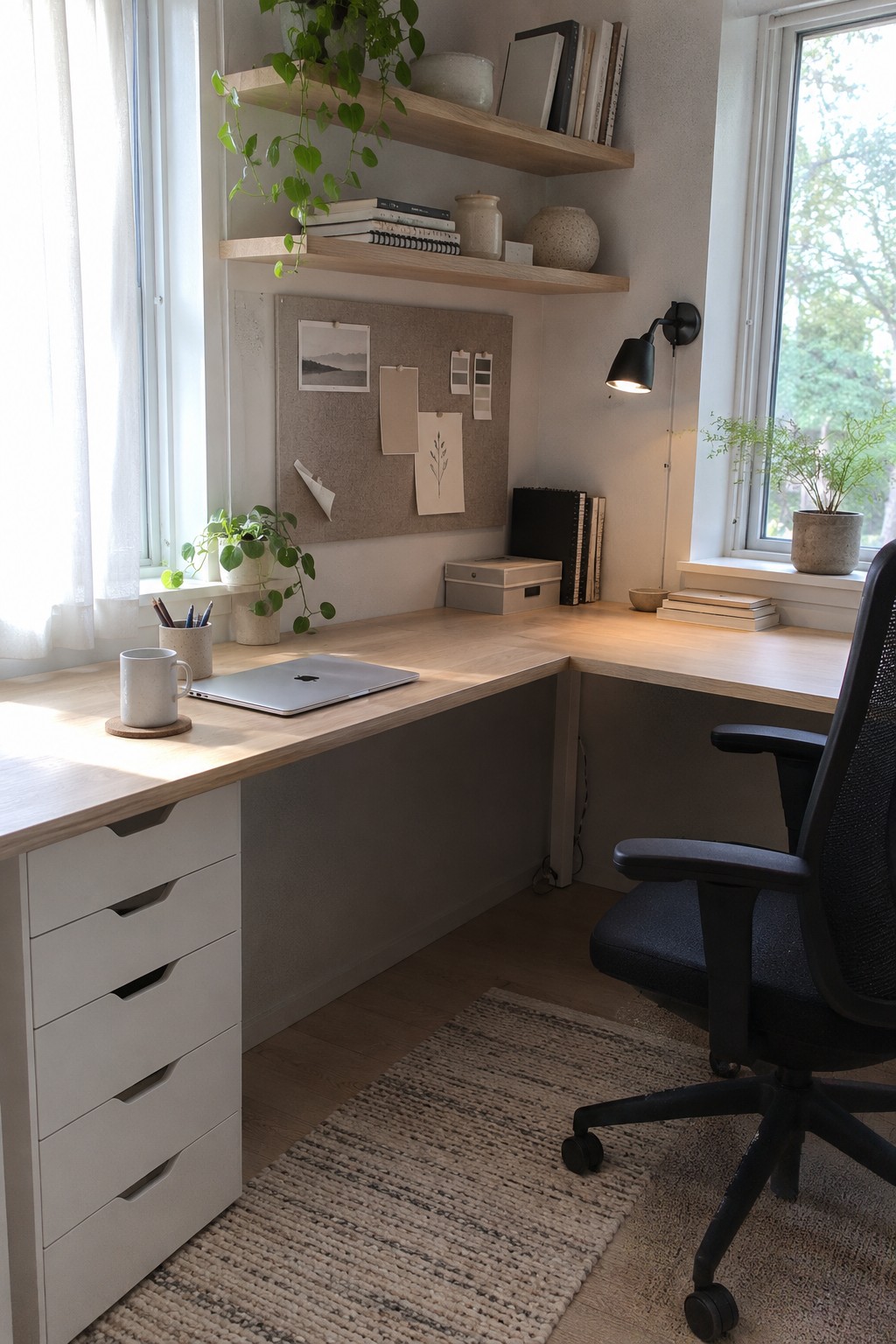
A corner desk gives you a generous work surface without taking over the middle of the room. It also makes use of an area that can be awkward to furnish, while keeping everyday work close at hand.
This layout works well in a small home office or a spare room that needs to serve more than one purpose. Choose a desk that fits the corner without blocking windows or drawers, and keep the surface fairly clear so there is still room to work.
Make a Corner Desk Work Harder
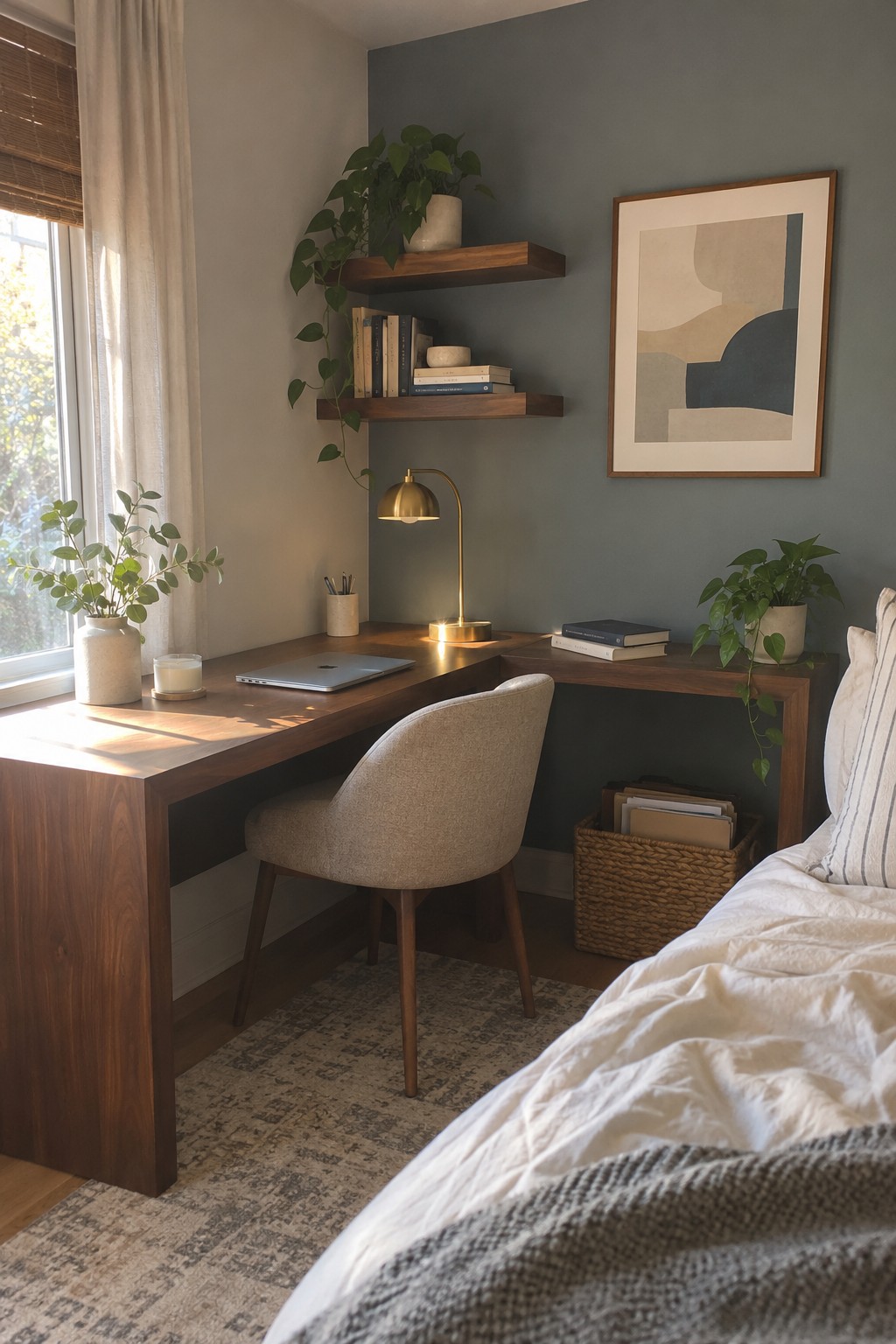
A corner desk can turn an unused stretch of wall into a useful work area without taking over the room. The wraparound surface gives you space for a laptop and a few everyday supplies while keeping the center of the room open.
For a small bedroom or home office, choose a desk that fits snugly into the corner and leaves enough room to pull out a chair. Wall shelves can hold books and small items above the desk, but keep them simple so the work area does not feel crowded.
Use Built-Ins To Make A Desk Fit

A built-in desk can turn an unused wall or corner into a practical work area without taking up extra floor space. Here, the desk is part of a run of sage-green cabinetry, so the workspace feels like a natural part of the room rather than a separate piece of furniture.
For a similar setup, have the desk meet the cabinets at a corner or continue along one wall, and use drawers below for office supplies. This approach works especially well in apartments or shared rooms where every bit of floor space matters. Just leave enough legroom and keep the work surface deep enough for your usual tasks.
Use Wall Shelves To Free Up Desk Space

Wall shelves keep books and small supplies off a compact desk, leaving more room to work. In a corner office, this is a handy way to use the wall above the desk without adding another piece of furniture.
Keep everyday items within easy reach, but leave some shelf space open so the area does not feel crowded. A trailing plant or a few books can make the shelves feel lived-in without taking over.
Add Storage Beneath a Corner Desk
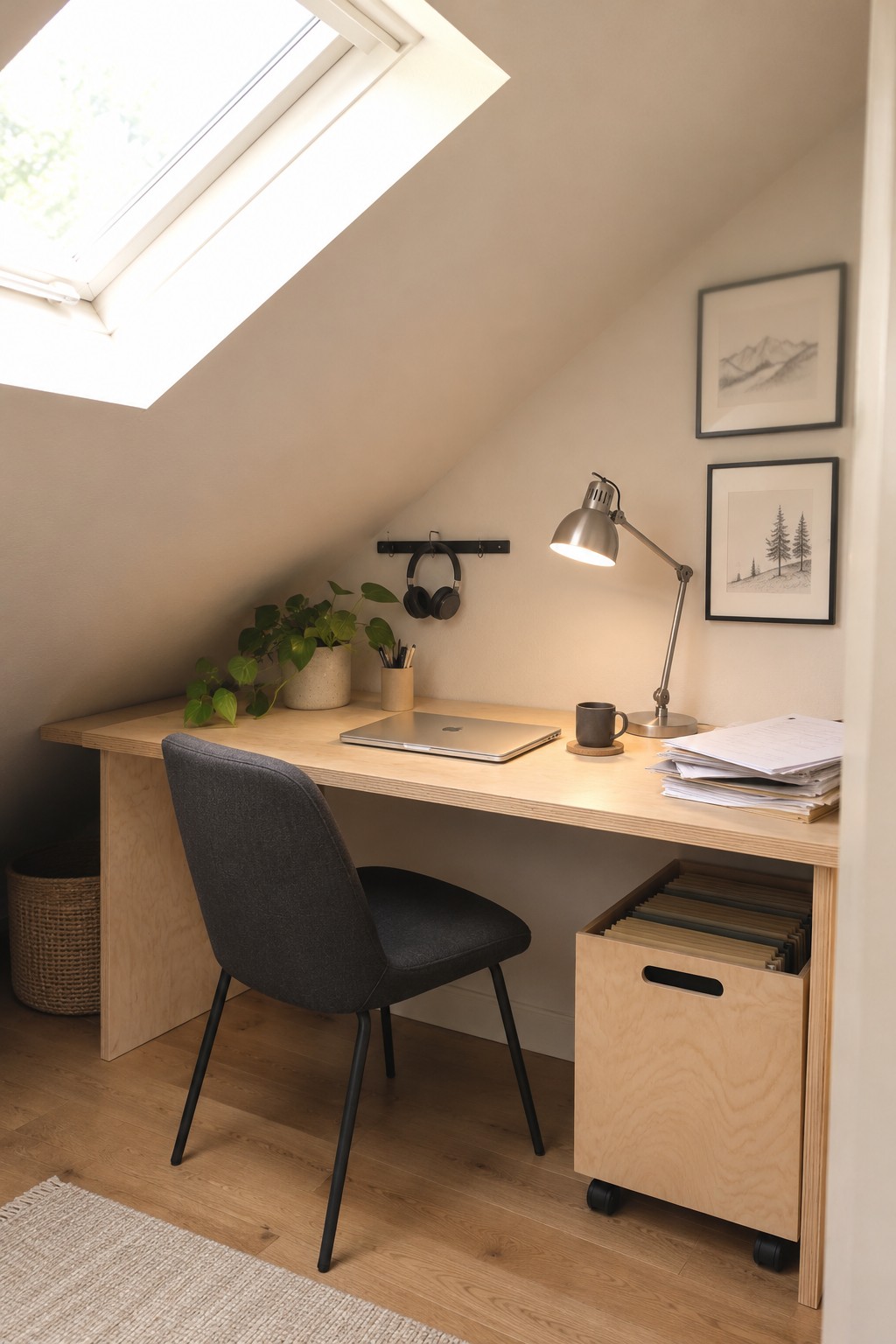
A desk that fits into an awkward attic nook can make space that might otherwise go unused feel practical. Keeping storage beneath the work surface, like the rolling file box shown here, leaves the desktop clear for everyday tasks.
This setup suits a small office or a room with a sloped ceiling. Choose storage that fits under the desk without blocking the chair, and use wheels if you may need to move it around.
Add Storage Above a Corner Desk

A corner desk can feel much less crowded when everyday storage moves onto the wall above it. A shelf for labeled files keeps paperwork close at hand without taking up the work surface.
This works especially well in a small office or a spare-room nook. Keep the shelf high enough to leave comfortable room for working, and reserve the desk for the items you use most.
Keep a Corner Desk Clear With Nearby Storage

A corner desk can stay useful for focused work when everyday supplies have a nearby home. Here, the small drawer unit sits at the desk’s edge, while the bookcase keeps books and boxes off the work surface.
This approach suits a home office where floor space is limited. Keep only the items you use often on the desk, and use shelves or drawers for the rest so the corner remains practical without feeling crowded.
Set Up Two Work Areas Along One Corner Desk

A corner desk can give a small office two useful work zones without taking up space for separate desks. One side can hold a laptop, while the other stays clear for writing or a second task.
This layout works well in a home office shared by two people, or for one person who likes to keep different kinds of work apart. Leave enough room at the corner to move comfortably, and use a drawer unit beneath the desk to keep supplies close by.
Use a Window Seat To Make a Small Office More Useful

A window seat can add a second purpose to a compact office without taking up much floor space. It gives you a place to sit and read, while the desk remains the main work area.
This works especially well in an attic nook or a room with a low window. Keep the seat narrow enough to leave room to pull back the desk chair, and use a simple cushion so it stays comfortable without crowding the area.
Use a Window Corner Desk To Make a Small Office Feel Open

A corner desk set beside a large window can make a compact office feel less boxed in. The L-shaped surface uses two walls efficiently, while the window gives you a pleasant place to look up from your work.
Keep the desk fairly shallow so there is still room to move around, and use a small cabinet or shelves for supplies that would otherwise crowd the work surface. This setup suits a spare room or a quiet corner of the house.
Use a Wall Shelf To Keep the Desk Clear

A wall shelf can give a small office useful storage without taking up any of the floor space. It works especially well above a desk, where books and a basket can stay close by without crowding the work surface.
Keep the shelf for items you reach for often, and leave enough room below it for framed art or a task lamp. In a compact office, a single shelf is usually plenty; too many can make the wall feel busy.
Use a Corner Desk To Set Up a Child’s Study Area
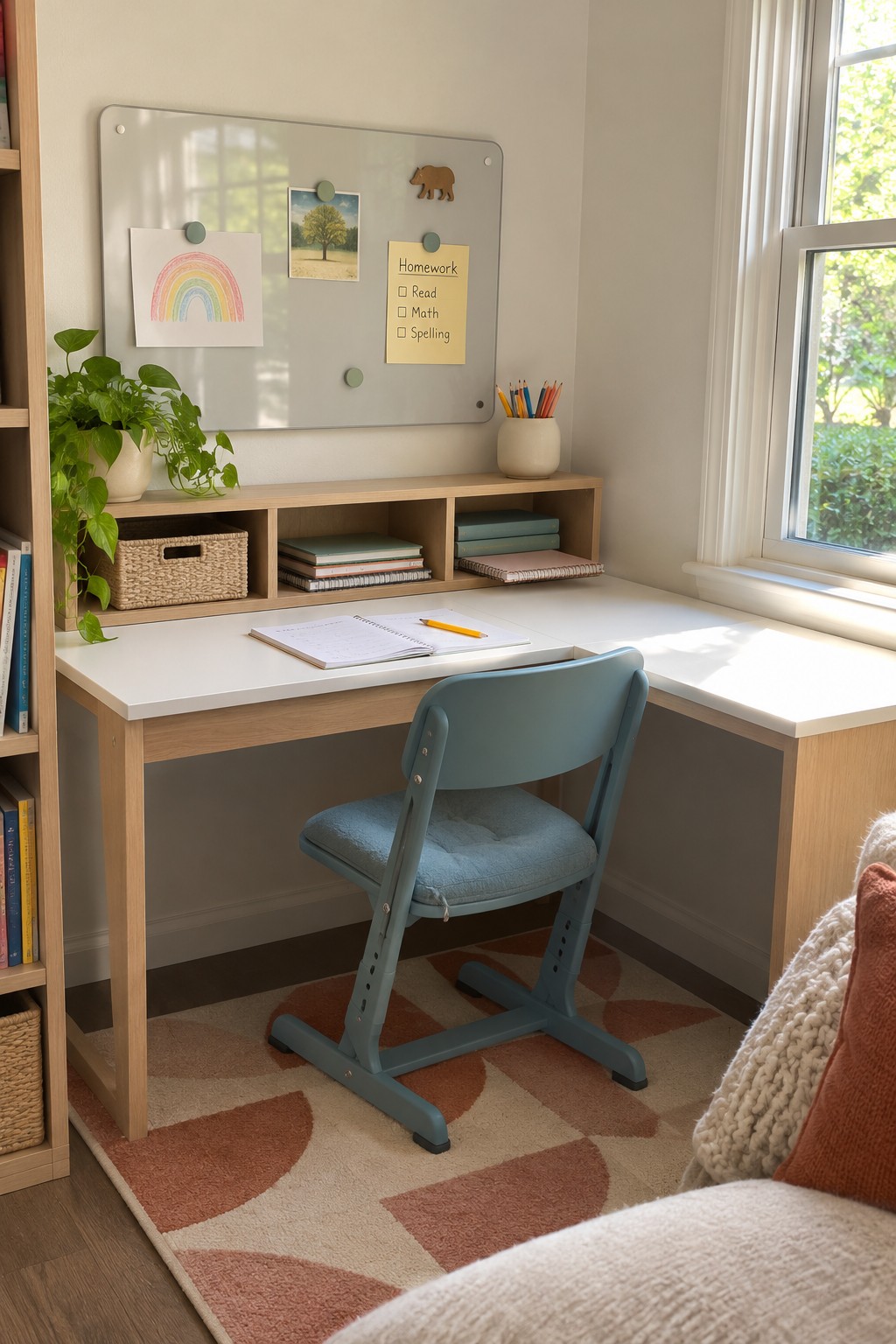
A corner desk can give a child a proper place to work without taking over the room. The L-shaped surface makes use of an otherwise awkward corner and leaves room for a notebook while keeping the rest of the room open.
A low shelf above or beside the desk can hold books and supplies close at hand. Keep the desktop fairly clear, and choose a chair that fits the child and can be adjusted as they grow.
Use a Curved Corner Desk for a Small Office

A curved corner desk can make a small office easier to move around in. Its rounded front gives you more room to slide into the chair, while the desk still makes use of the corner.
This shape works well in a narrow room where a straight desk might feel awkward. Keep the desktop fairly clear, and use a wall shelf for books so the work surface stays practical.
Tuck a Corner Desk Beneath the Stairs

A corner desk can turn the space beneath a staircase into a useful home office instead of leaving an awkward nook unused. The L-shaped wooden surface makes good use of the available walls while leaving the center of the room open.
This setup suits a small home where a separate office is not practical. Keep the work surface simple, and use shelves on the wall for items you reach often. Measure the stair clearance before choosing a desk so there is enough room to sit comfortably.
Keep the Desk Surface Open With a Wall Shelf
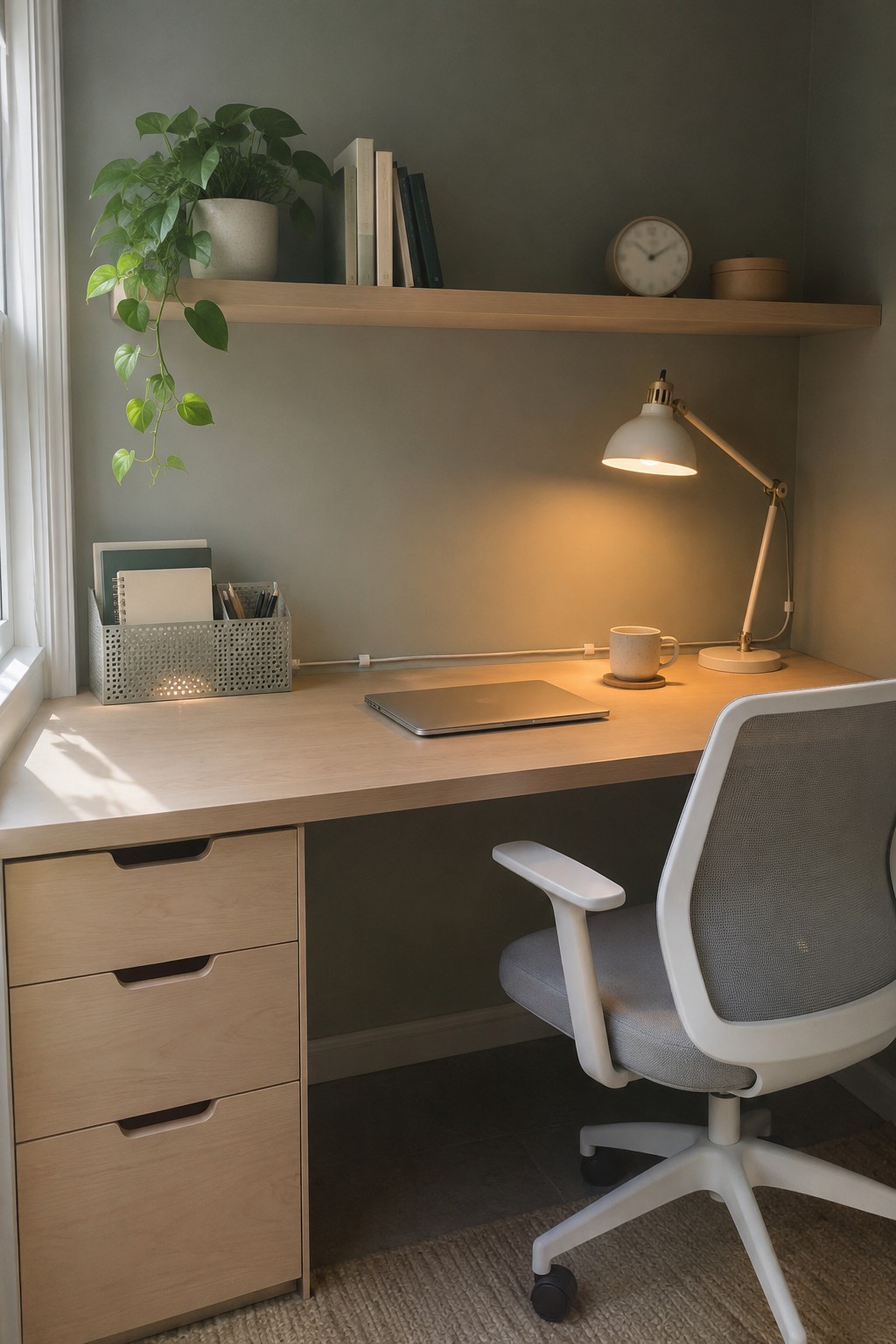
A wall shelf is a useful way to add storage without taking up room on the desk. It keeps books and small supplies close by, while leaving more space for a laptop and everyday work.
This setup suits a compact home office where floor space is limited. Keep the shelf’s contents simple, and place frequently used items within easy reach so the desk stays practical.
Use a Corner Desk To Make a Small Office Feel Complete

A corner desk makes good use of wall space while leaving the middle of a small office open. The L-shaped work surface gives you room for a laptop and a few everyday supplies without needing a large desk in the center of the room.
Try this layout in a spare room or an unused corner, and keep the desk depth modest so the chair can move easily. A short run of shelves above the desk can hold items you do not need at hand.
Give a Small Office a Built-In Feel

A desk tucked into a corner can make a small office feel planned rather than squeezed in. Built-in shelves above the work surface use wall space for books and a few supplies, leaving the desktop clearer.
This setup suits a spare room or an unused nook. Keep the shelves within easy reach, and leave enough open desk space for daily work so the storage doesn’t become clutter.
Frequently Asked Questions
Q: How do I know if a corner desk will fit without crowding the room?
A: Measure both walls the desk will sit against, then check the desk’s full dimensions, including any return or shelves. Leave enough space to pull out your chair and walk past it comfortably.
Q: Can a corner desk work in a small bedroom?
A: Yes. Choose a compact design with open legs or wall-mounted storage so the corner doesn’t feel boxed in. Keeping the desktop clear also helps the room feel more restful.
Q: Where should I put the monitor on a corner desk?
A: Place it where you can sit facing it without twisting your neck or shoulders. If the desk has two sides, use one for your screen and the other for writing or storage.
Q: How can I keep cables from making the desk look messy?
A: Gather cords behind the desk with clips or a simple cable sleeve, and keep the power strip off the floor if you can. A little cable tidying goes a long way.
