

A home office can look well put together and still feel tiring if the light is harsh or falls in the wrong place.
I find that the best setups balance a focused desk lamp with softer light elsewhere in the room, so work feels comfortable without making the space seem stark.
The fixture matters, but so does how it works with the desk, screen, and natural light coming through the windows.
Some designs add a useful task light, while others bring warmth and character to a room that serves more than one purpose.
I’d start by noticing where shadows gather and what the room feels like after dark.
The ideas ahead offer practical details you can adapt to your own space.
Use Focused Task Lighting
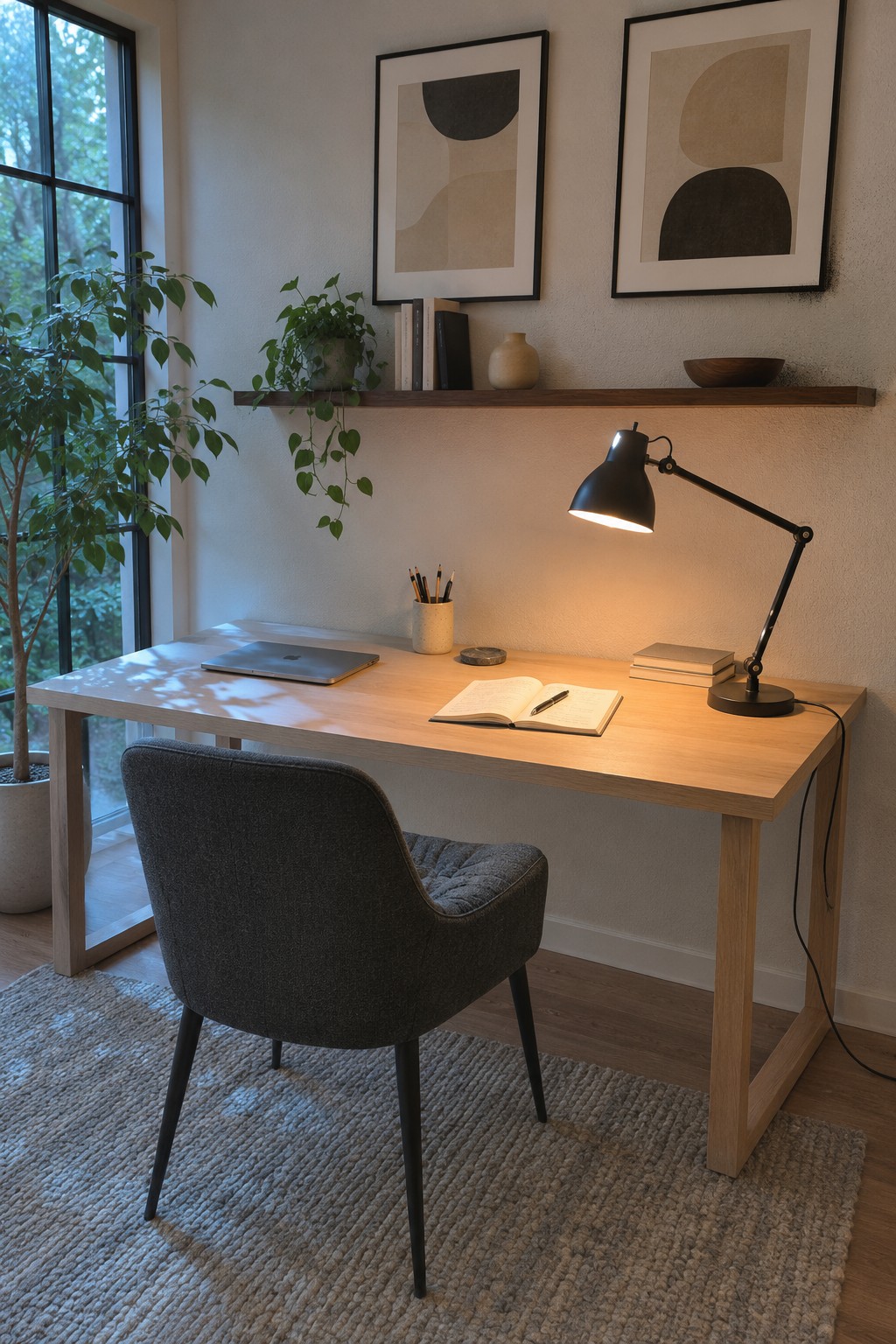
A well-placed desk lamp makes it easier to work without lighting the whole room brightly. An adjustable lamp directs light onto your work surface, which is especially useful for reading or writing in the evening.
Choose a fixture with a movable arm so you can aim the light where you need it. A warm bulb works well in a home office, but make sure it is bright enough for close tasks.
Use a Pendant Light to Brighten a Small Office

A single pendant can give a compact home office useful light without taking up desk space. In this setup, the round fixture hangs over the work surface, while the simple shape suits the room without adding visual clutter.
For a similar effect, hang the light high enough to keep it out of your line of sight, but low enough to light the desk. A dimmable bulb is handy if you use the space for both focused work and quieter tasks.
Use A Linear Pendant For Even Desk Lighting

A slim linear pendant can spread light across a wide desk more evenly than a small ceiling fixture. It also suits a home office where you want the main light to feel simple and unobtrusive.
Hang it so the light reaches the work surface without shining directly into your eyes or reflecting off a laptop screen. A warm metal finish works well with a wood desk, but keep the bulb brightness comfortable for long work sessions.
Use Track Lighting For Adjustable Task Light

Track lighting is a practical choice for a home office because you can aim each fixture where it is needed. It can light a desk clearly without relying on a single ceiling fixture to cover the whole room.
A short track with adjustable heads works well above a desk, especially in a room where the workspace may change over time. Aim the lights at the work surface, and choose bulbs that are bright enough for tasks without causing glare on a monitor.
Layer Different Types of Office Lighting

A home office can feel more comfortable when it has both general light and a focused desk lamp. A pendant provides light across the room, while a shaded table lamp helps illuminate the work surface.
Use this approach in a study where you read or work for long stretches. Choose bulbs with a similar warm tone, and position the desk lamp so it lights your papers without shining directly into your eyes.
Choose an Adjustable Desk Lamp

A slim desk lamp with an adjustable arm puts light where you need it for reading or computer work. It also keeps the desk surface clear, which is useful in a home office that does double duty.
Choose a lamp with joints that let you aim the light without shining it directly at your screen. A simple, narrow design works well on a long desk, especially when you want focused light without adding another overhead fixture.
Use an Arc Floor Lamp for Desk Lighting

An arc floor lamp can bring useful light over a desk without taking up space on the work surface. Its curved arm lets the shade reach above the center of the desk, making it a practical choice when you want overhead light without installing a ceiling fixture.
Choose a spot with enough room for the base and check that the shade clears shelves or cabinets. This style works especially well beside a desk that sits away from the wall, where a standard floor lamp might not reach.
Add Wall Sconces for Desk Lighting

Wall sconces can provide useful task lighting without taking up space on a desk. In a home office, sleek fixtures mounted above the work surface keep the lighting simple and leave room for a laptop and everyday supplies.
Place the sconces where they light the desk without shining directly into your eyes or screen. This approach works especially well in a compact office or a room with a sloped ceiling, where a floor lamp might get in the way.
Use Pendant Lights to Brighten a Worktable

Pendant lights can bring useful task lighting to a home office without taking up desk space. In a room with a long worktable, hanging fixtures help spread light across the surface and keep the setup simple.
Hang them high enough to avoid glare on a laptop screen, and space them to suit the length of the table. Black shades work well with industrial or rustic interiors, while warmer bulbs make the light more comfortable for evening work.
Use a Built-In Desk to Make the Most of a Window

A desk fitted into a window nook can make a home office feel like a natural part of the room, rather than a separate work area. The long countertop provides a generous work surface, while the drawers keep everyday supplies close at hand.
This setup works well in a spare bedroom or any room with an underused window corner. A desk lamp still matters for cloudy days and evening work. Choose one with an adjustable head so you can direct light onto the desk without glare on a screen.
Use a Table Lamp for Warm Desk Lighting

A table lamp can make a home office feel more comfortable without relying on bright overhead lighting. A rounded shade and warm bulb give focused light for reading or writing while keeping the desk area easy on the eyes.
Place the lamp where it lights your work without shining directly into your face or screen. This works especially well in an office with darker walls, where a warm pool of light helps the desk feel separate from the rest of the room.
Choose a Brass Desk Lamp for Focused Light
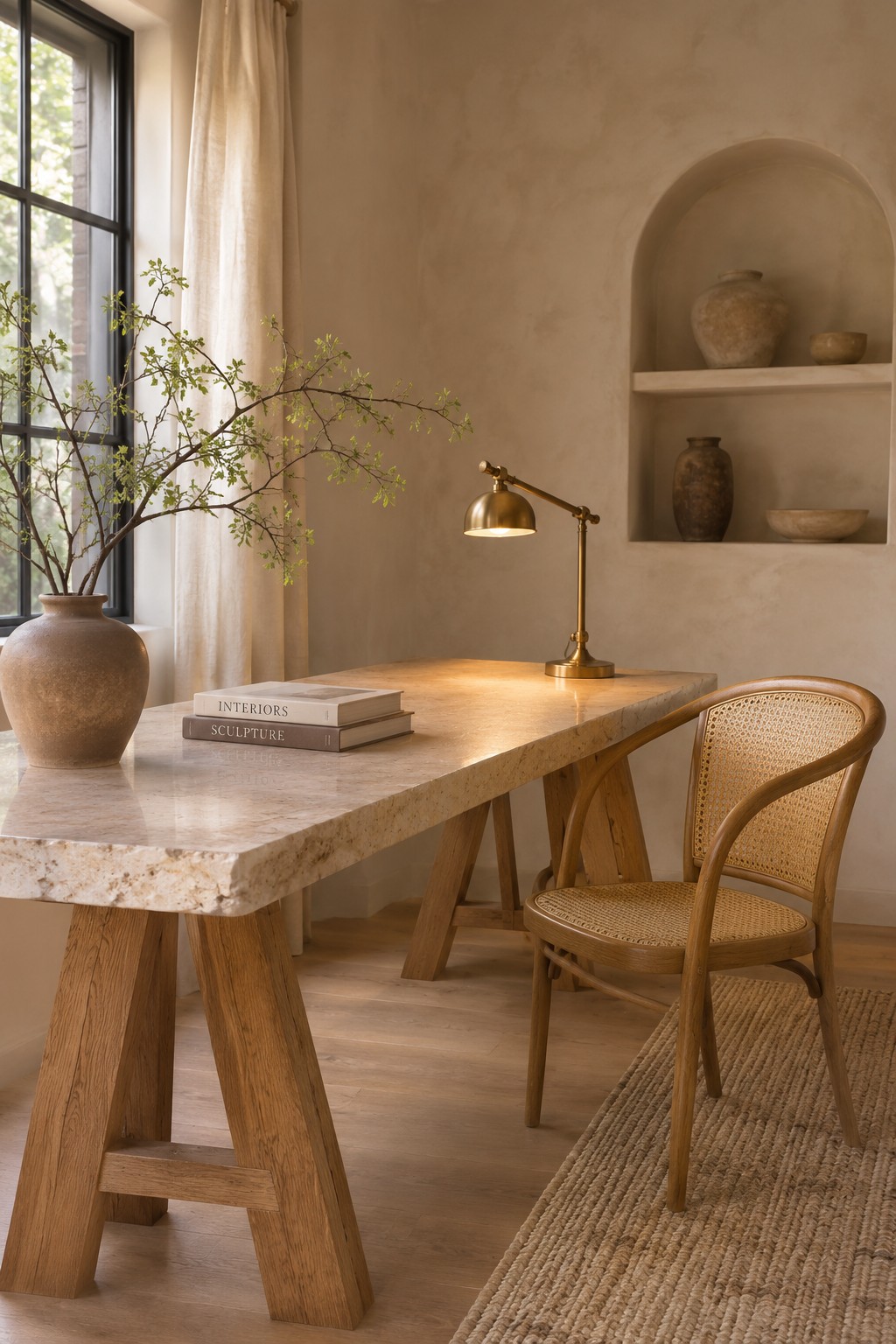
A desk lamp gives you direct light for reading or writing without needing to brighten the whole room. An adjustable brass lamp is a practical choice for a home office, and its compact base leaves plenty of desk space free.
Place it near the work area and aim the shade where you need it. A lamp with an adjustable arm is especially useful if the desk serves more than one purpose.
Use a Globe Floor Lamp for Soft Office Light

A globe floor lamp is an easy way to bring gentle light to a home office without taking up desk space. Its broad shade spreads light around the room, while a simple dark stand keeps the fixture from feeling fussy.
This style works well beside a desk when you want extra light for reading or evening work. Choose a lamp with a dimmer if possible, so you can lower the brightness when the desk is already well lit.
Use a Copper Pendant to Light the Desk
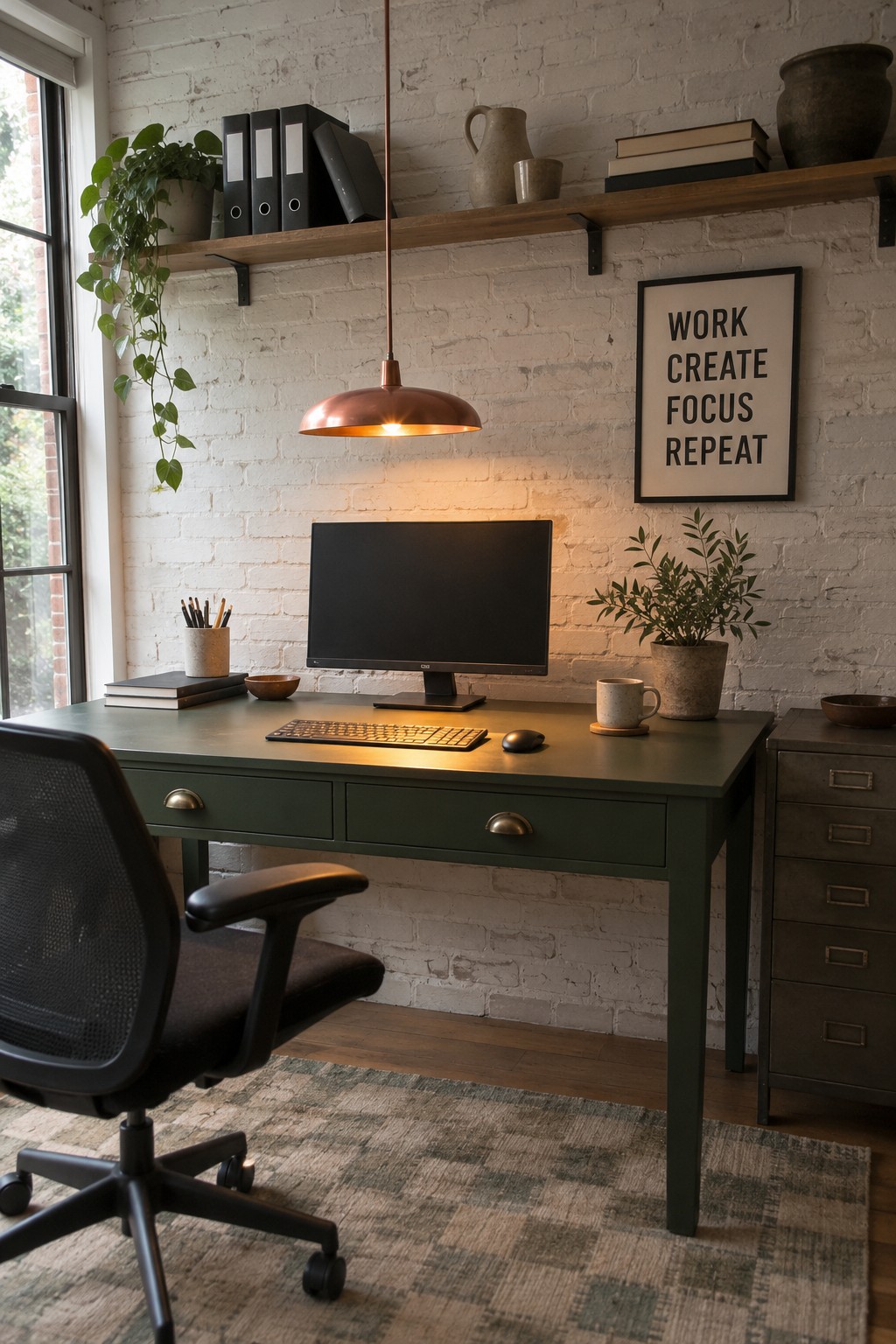
A pendant can give a home office a clear pool of light without taking up space on the desk. A copper shade also suits a room with darker furniture and simple, practical finishes.
Hang it above the main work area, high enough to keep it out of your line of sight. For computer work, add softer ambient light or a dimmer so the desk is not much brighter than the rest of the room.
Use a Slim Floor Lamp for Ambient Office Lighting
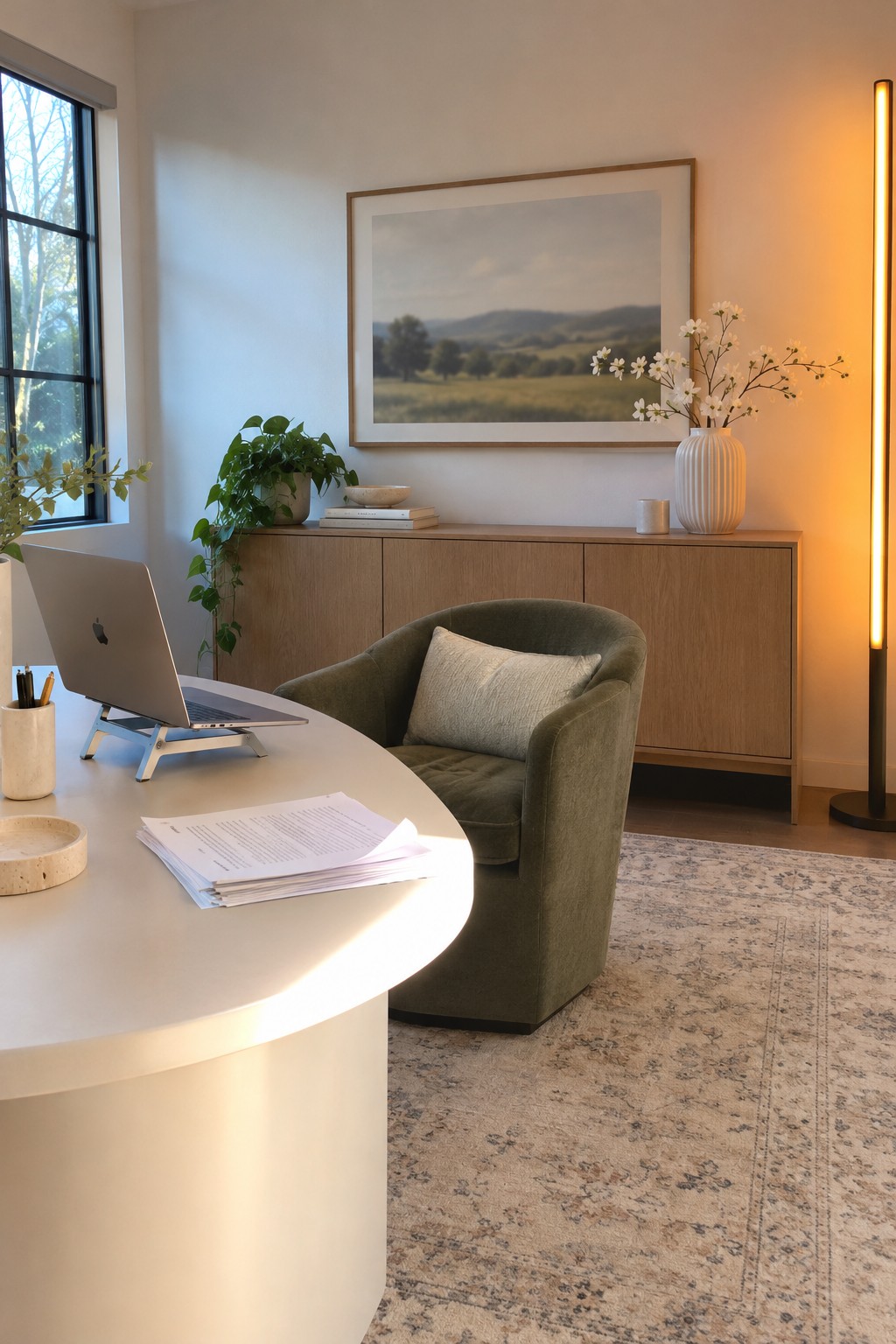
A slim floor lamp can bring useful light to a home office without taking up desk space. Here, a tall fixture sits beside the work area, while its narrow shape leaves the room feeling open.
This approach works well when a desk is already crowded or when you want gentle light beyond the work surface. Choose a lamp with a stable base and place it where it won’t block a walkway or shine directly into your eyes.
Use a Brass Pendant to Light the Desk

A brass pendant can bring focused light to a home office without taking up desk space. An adjustable arm lets you position the shade over the work area, while the warm metal suits a room with colorful furniture or simple finishes.
Hang it where it lights the desk without shining into your eyes or blocking your view. In a smaller office, one well-placed pendant can be enough for general task lighting, though a desk lamp may still help with detailed work.
Add Wall Sconces Above a Shared Desk

Wall sconces are useful in a home office where desk space is limited. Mounted above the work surface, they provide focused light without taking up room for a lamp, and an adjustable arm lets you direct the beam where you need it.
This setup works well above a long desk shared by two people. Place each sconce where it can light a work area without shining into someone’s eyes, and choose a fixture with an arm that moves easily.
Choose a Pleated Pendant for Soft Office Light
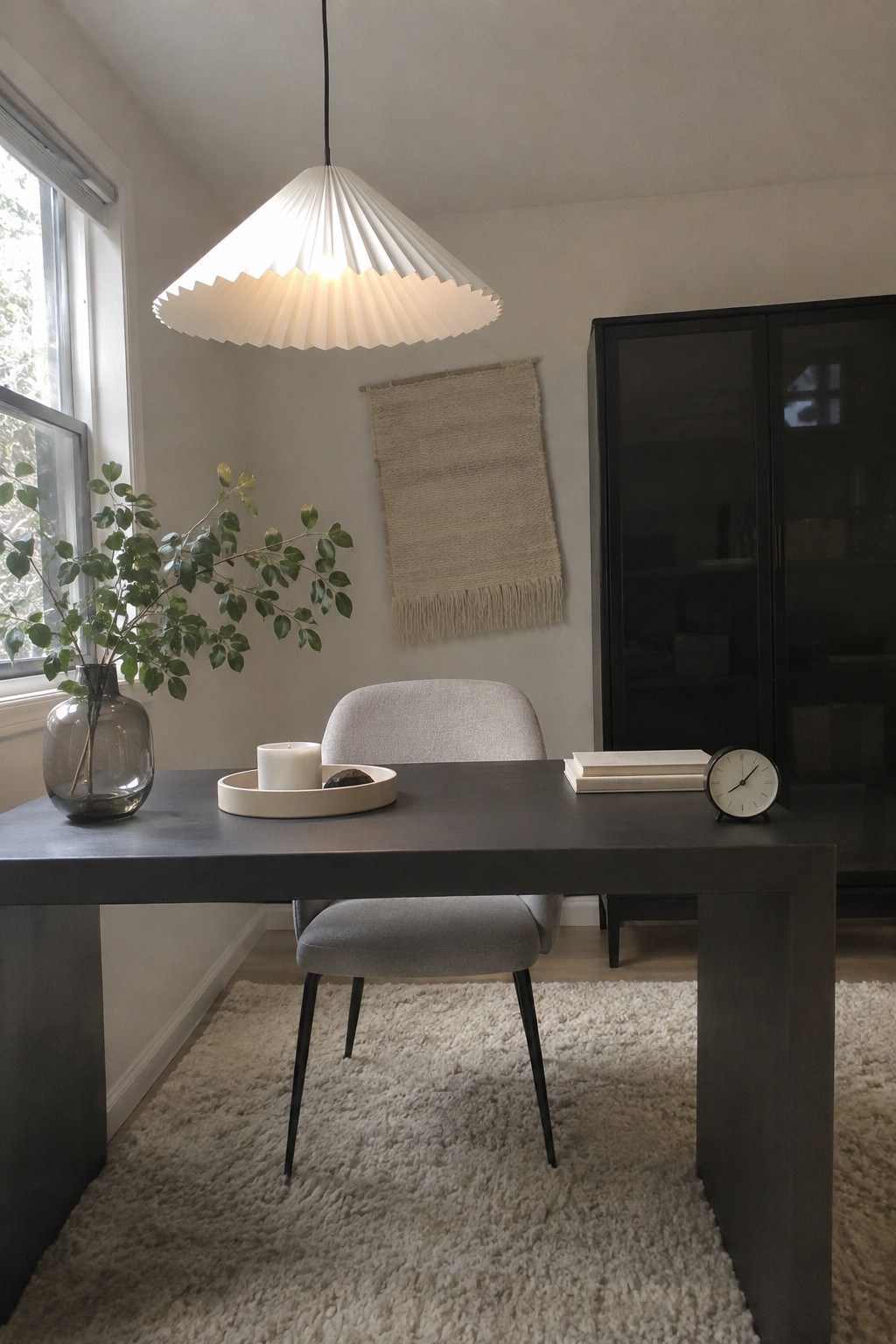
A pleated pendant can provide useful overhead light while giving a home office a softer feel than a bare bulb or rigid metal fixture. Its broad shade helps spread light across a desk rather than concentrating it in one spot.
Hang it above a desk or worktable, and add a task lamp if you need brighter light for close work. A white shade suits many simple interiors, but check that the bulb is comfortable to look at from your seated position.
Use Globe Pendants for Gentle Office Lighting

Globe pendants can give a home office an even, comfortable glow without taking up desk space. Their simple shape suits a room with traditional trim just as well as a more modern workspace.
For a similar setup, hang the fixtures high enough to keep them out of your line of sight, and use warm bulbs for a softer feel. Three pendants work well across a wider desk, but a single globe may be enough in a compact office.
Use a Wall Light to Brighten a Home Office
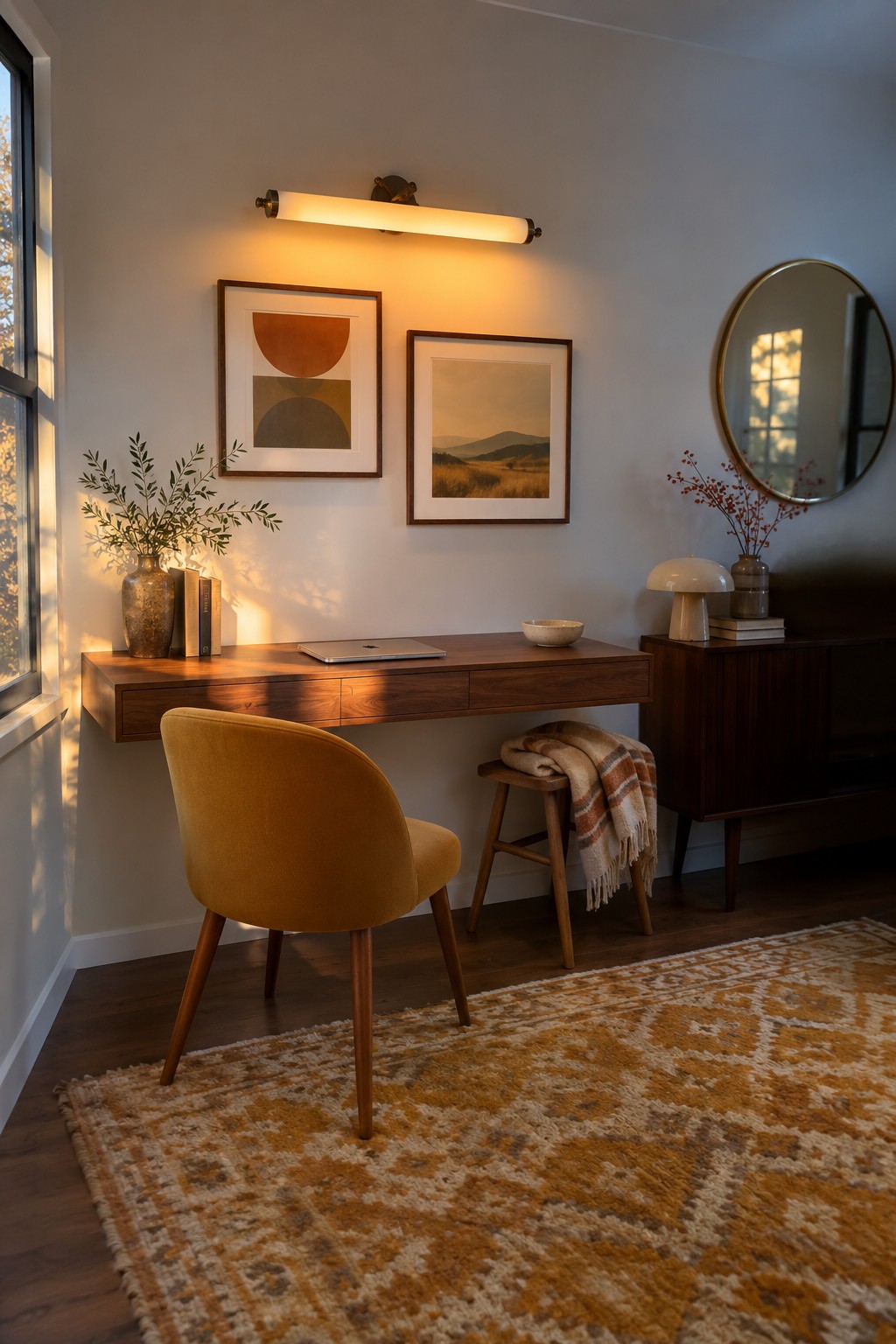
A slim wall light can brighten a desk without taking up space on the work surface. Mounted above the desk, it also spreads light across the wall, which can make a small office feel more comfortable in the evening.
Choose a fixture that gives even light over your work area, and check that it does not create glare on a screen. This approach works especially well with a wall-mounted desk where keeping the desktop clear matters.
Choose a Woven Pendant for Warm Office Lighting

A woven pendant can make office lighting feel less stark while still providing useful light over a desk. The open shade lets the bulb glow through the weave, creating a softer, patterned light on the work surface.
This style works well in a home office with simple furniture and natural materials. Choose a pendant sized for the desk, and use a dimmable bulb so you can lower the brightness when you are reading or working on a screen.
Use a Linear Pendant to Light a Home Office

A slim linear pendant can spread light across a desk more evenly than a single small fixture. It also keeps the work surface clear, which is handy in a compact office.
Hang it lengthwise above the desk and choose a warm, diffused light that feels comfortable during long work sessions. If the room has another light source, use separate controls so you can adjust the desk lighting as needed.
Frequently Asked Questions
Q: What kind of lighting works best for video calls?
A: Put a soft light in front of you, slightly off to one side, so your face looks clear without harsh shadows. A desk lamp with a shade or a slim adjustable light works well.
Q: Is one desk lamp enough for a home office?
A: It may be enough for a small desk, but relying on it alone can make the rest of the room feel gloomy. Add a ceiling light or a floor lamp nearby to spread light more evenly.
Q: How can I reduce glare on my computer screen?
A: Place your lamp beside the screen rather than directly behind or in front of it, and angle the beam toward your work surface. If sunlight causes glare, try a sheer curtain or shift your desk away from the window.
Q: What color light feels comfortable for working?
A: A soft white light is a good everyday choice because it feels clear without being too stark. If you work late, choose a warmer tone to make the room feel more relaxing.
