

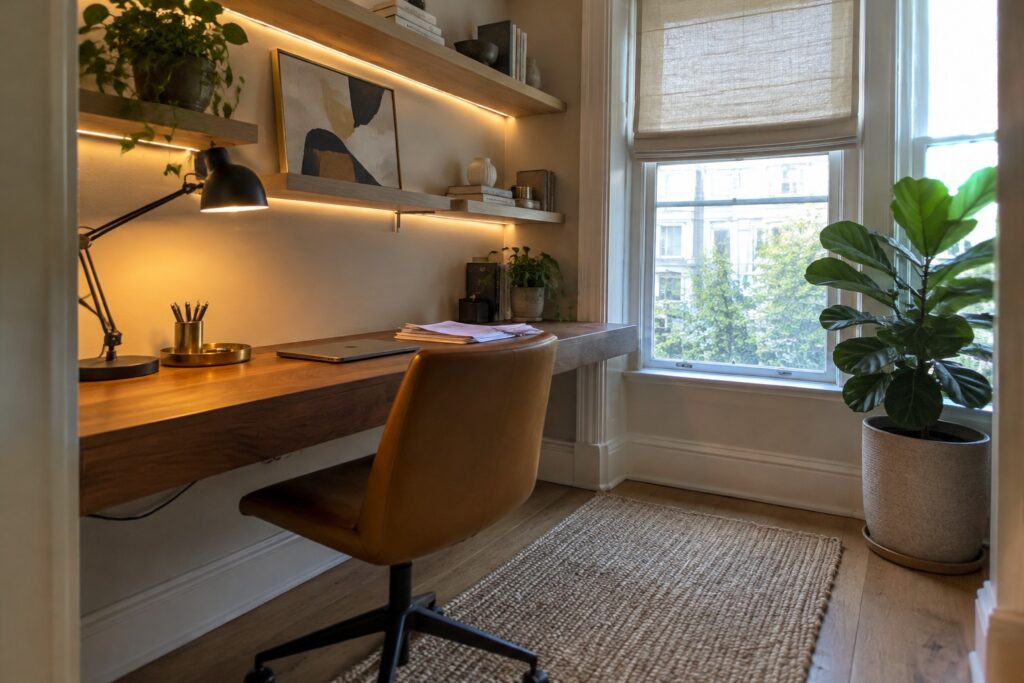
I have found that home offices often end up feeling flat when the only light comes from a single ceiling fixture that casts shadows across the desk.
Many people notice this only after they have spent a full workday trying to read papers or look at a screen in uneven light.
Layered lighting fixes the problem by letting you shift between focused work and softer evening hours without moving furniture.
It is worth testing a few of these setups in your own space.
I would start by adding a floor lamp near the desk before changing anything else.
Layered Lighting Over A Desk Area
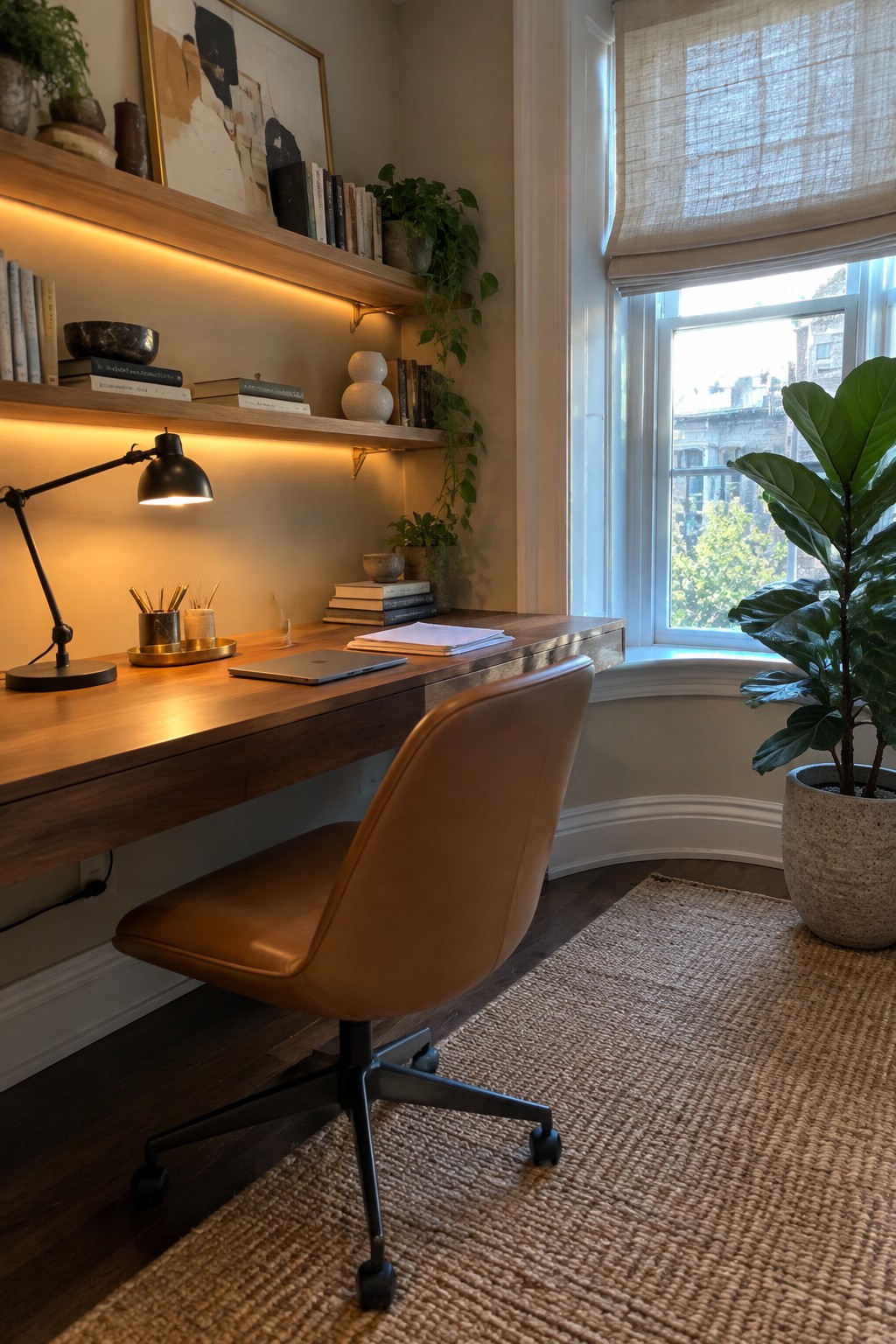
The combination of under-shelf lighting and a simple desk lamp creates a softer, more usable workspace without needing overhead fixtures. The warm glow from the shelves fills the background while the task lamp handles focused work, and the mix keeps the room from feeling flat or overly bright at night.
This approach works especially well in smaller offices or rooms where you want flexible light levels throughout the day. Keep the shelf lights on a dimmer and choose a lamp with adjustable arms so you can shift things as the seasons change or as your work needs shift.
Built-In Nooks With Layered Lighting
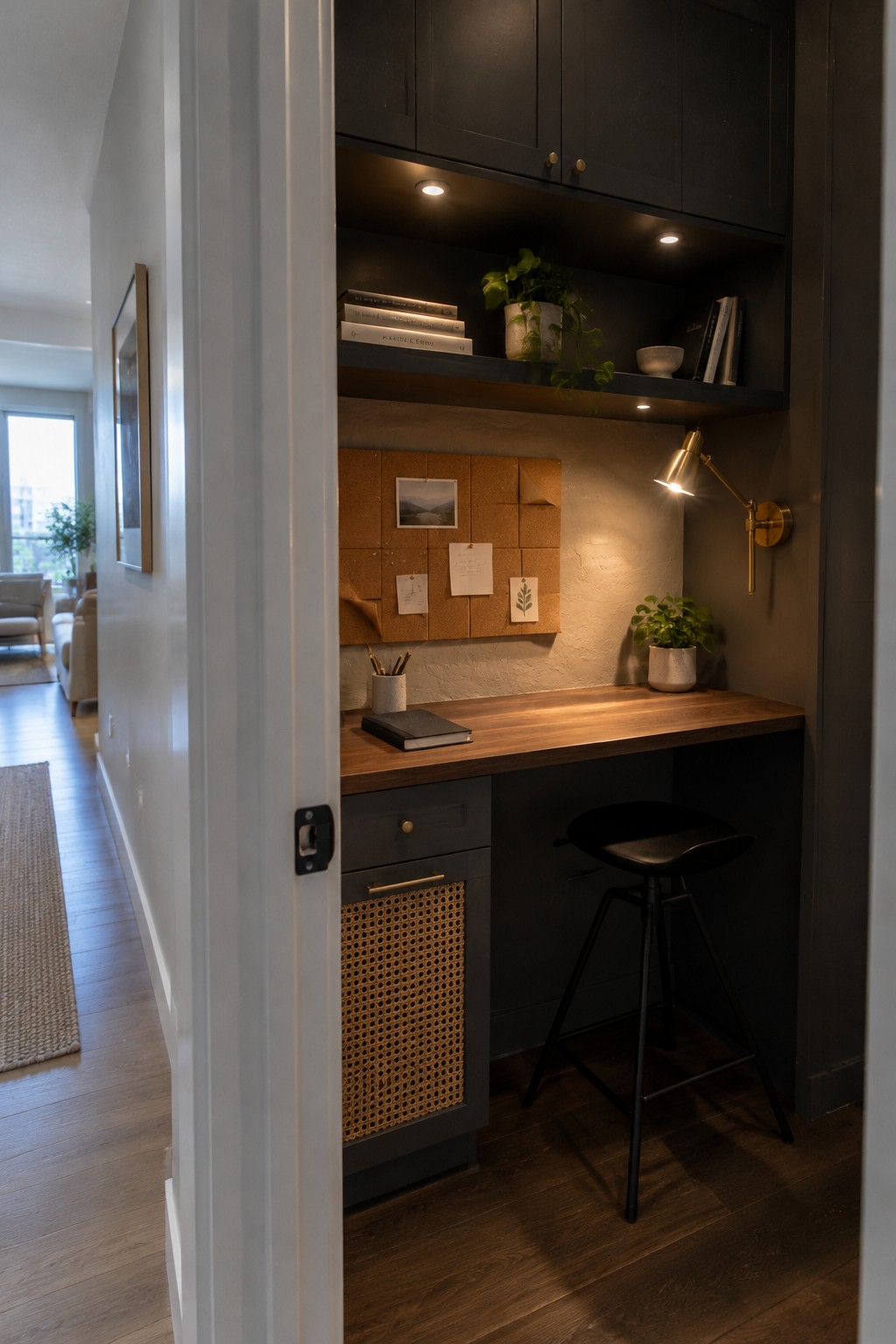
Tucking a desk into a small alcove or closet space works well when you want a dedicated work area without taking over a whole room. Layered lighting makes the difference here. A wall sconce for direct task light paired with under-shelf fixtures keeps the surface usable while the rest of the space stays softly lit.
This setup suits apartments or homes where square footage is limited and you need the workspace to feel separate but not closed off. Keep the desk surface clear and use simple fixtures that match the cabinet color so the lighting does the work without adding visual clutter.
Built-In Shelving That Keeps An Office Organized
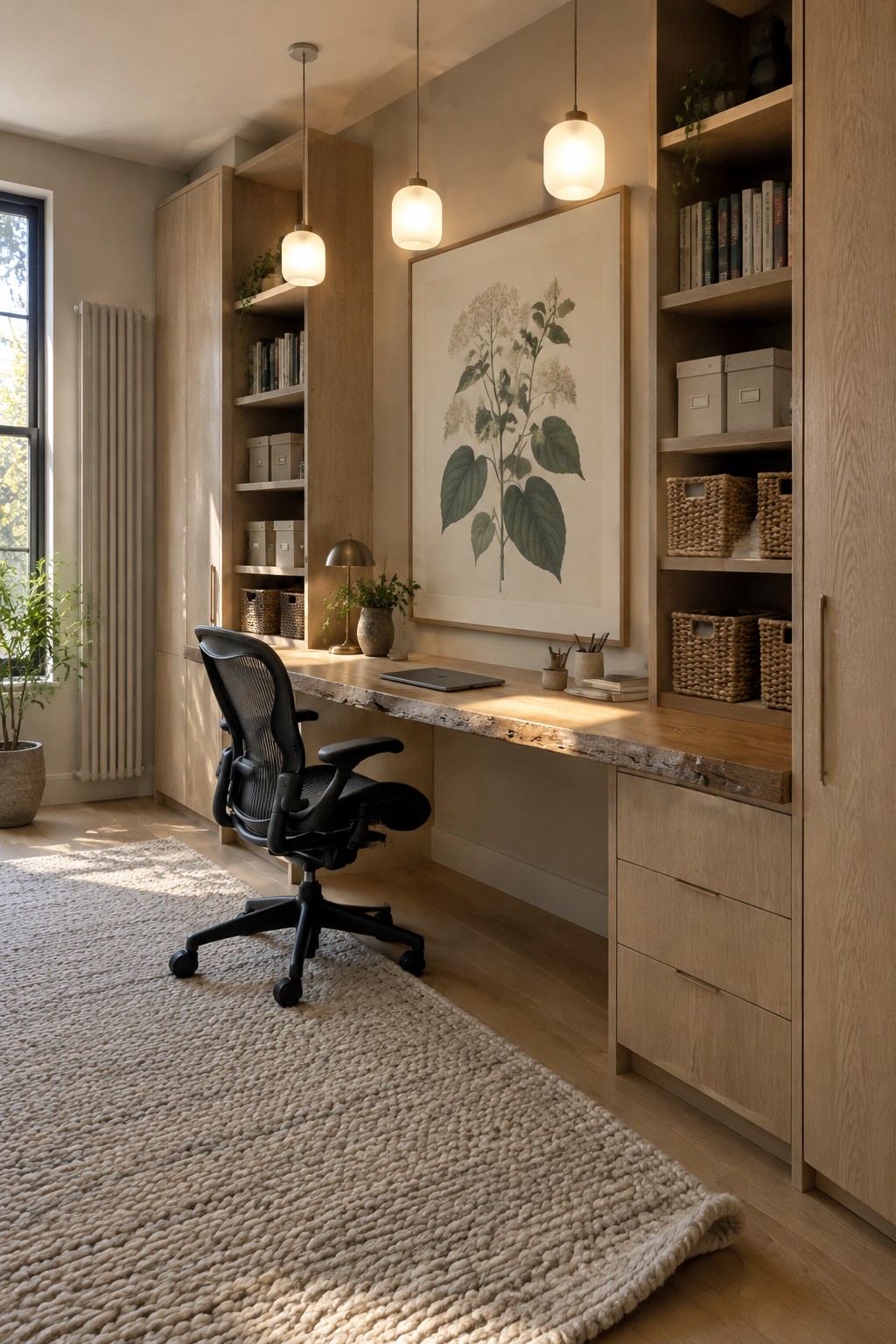
Built-in cabinetry and open shelving around a desk give you storage without adding extra pieces of furniture. The wood blends into the walls so the whole setup feels like part of the room rather than something added later. It works especially well when you want the space to feel calm instead of crowded with standalone bookcases or filing cabinets.
This approach suits smaller offices or any room where you need to keep things off the floor. Leave some shelves open for books and a few baskets, then use the closed cabinets below for anything less tidy. A couple of pendant lights above the desk surface help the area feel finished without needing a big overhead fixture.
Layered Lighting Works Well In An Attic Office
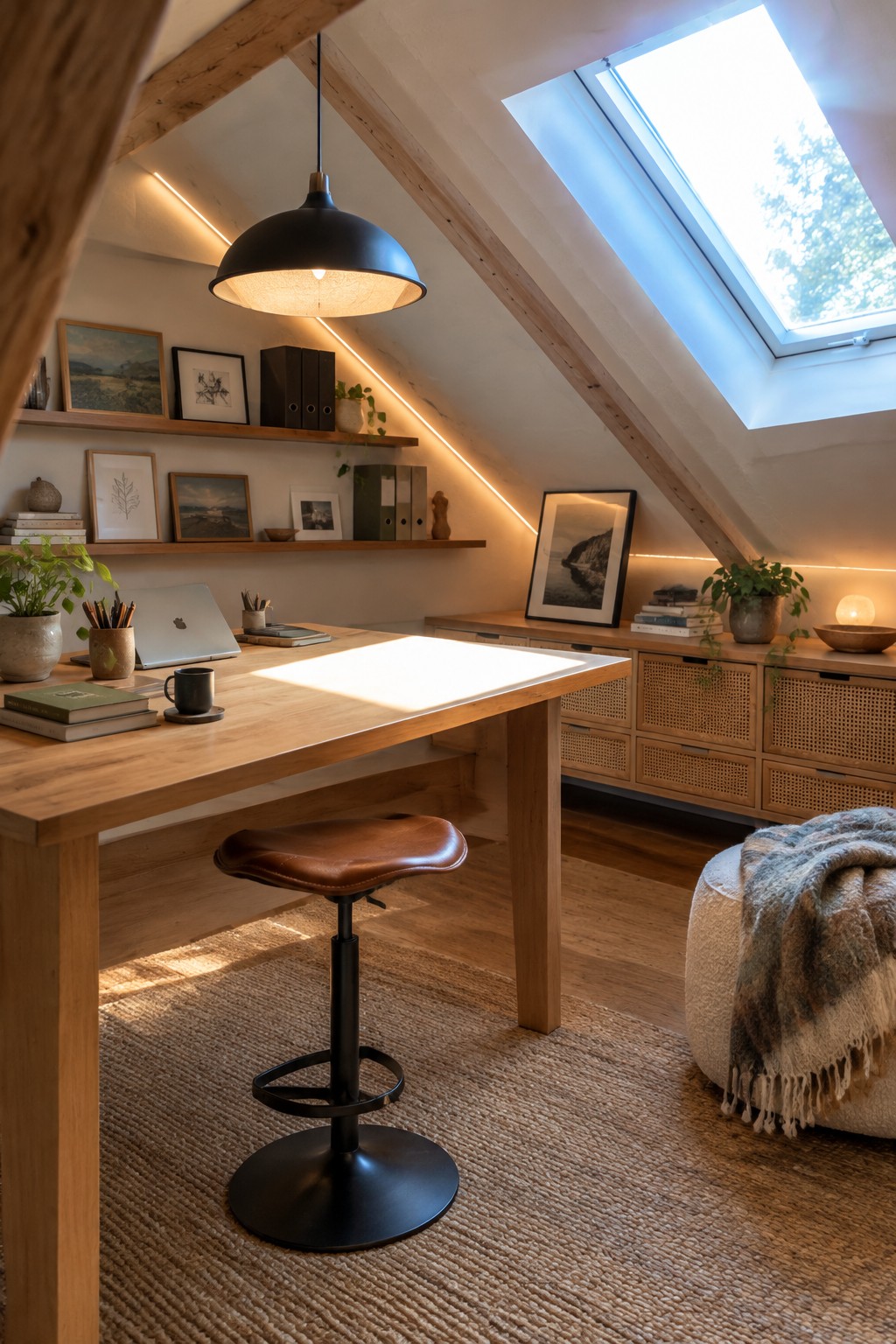
Many home offices in attics struggle with uneven light because of sloped ceilings and limited wall space. This setup uses a skylight for daytime brightness along with a pendant and soft accent strips to keep the room usable into the evening without feeling dim or flat.
The mix works best in smaller or angled rooms where one light source rarely covers everything. Try adding at least three layers so you can adjust brightness depending on the time of day and task.
Layered Lighting Over a Built-In Desk
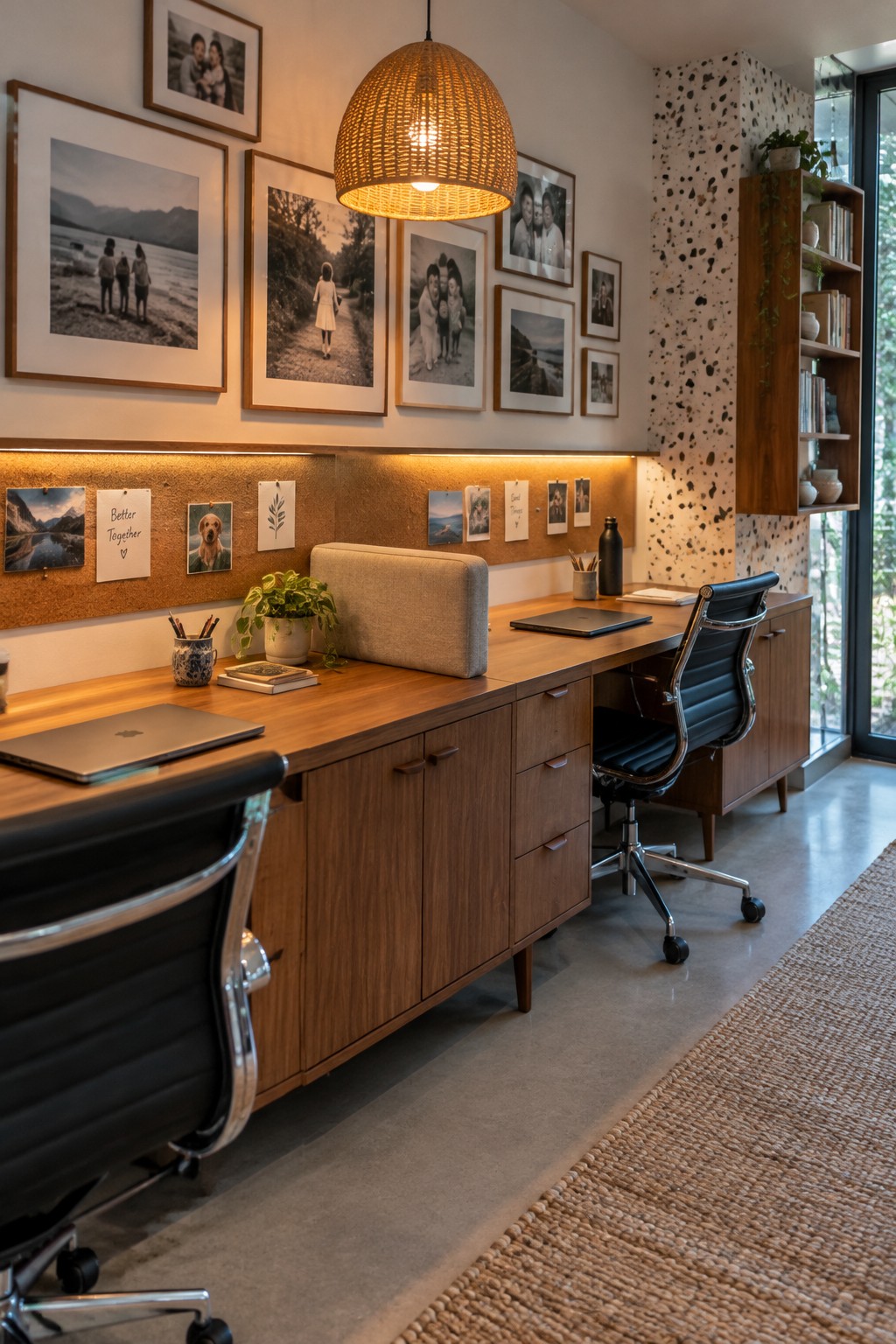
A woven pendant paired with a continuous strip of warm light along the back wall gives the whole desk area a soft, even glow. The overhead light handles general brightness while the lower layer keeps the surface and wall details easy to see without extra lamps cluttering the space.
This setup works best in rooms where the desk runs along a wall and gets used for long stretches. Keep the pendant dimmable so you can adjust it for different tasks, and make sure the lower light stays warm rather than cool so the wood tones stay inviting instead of stark.
Layered Lighting Keeps A Modern Office Feeling Warm
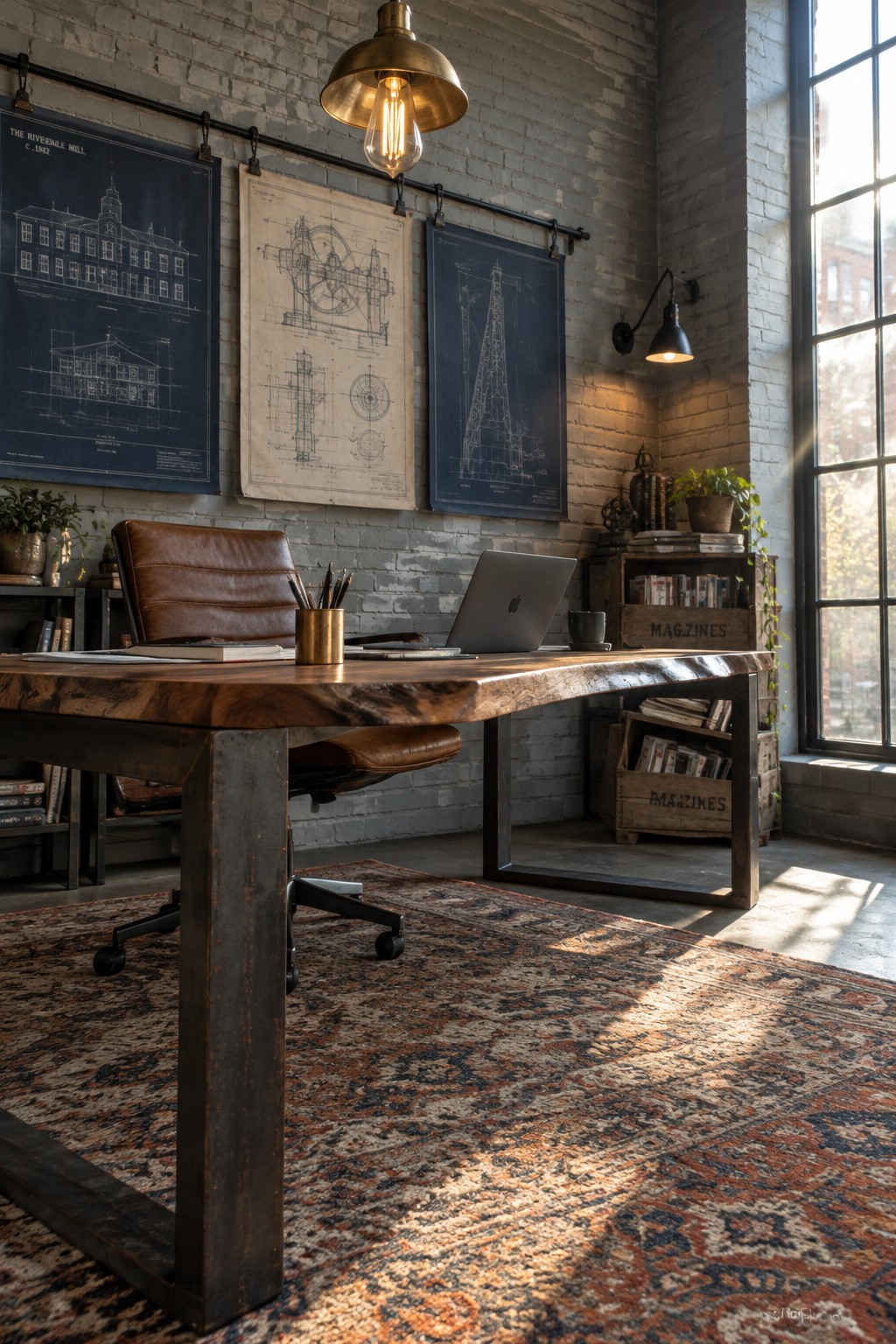
One simple way to make a modern office feel less stark is to use more than one light source at different heights. A hanging pendant over the desk combined with a lower wall sconce creates a softer overall glow that works especially well when the room has hard surfaces like brick or concrete.
This approach suits smaller workspaces that need to feel usable after dark without turning on every overhead light. Keep the fixtures simple in style but vary their placement so the light fills the room from a few directions rather than coming from just one spot.
Built-In Shelf Lighting For Layered Warmth
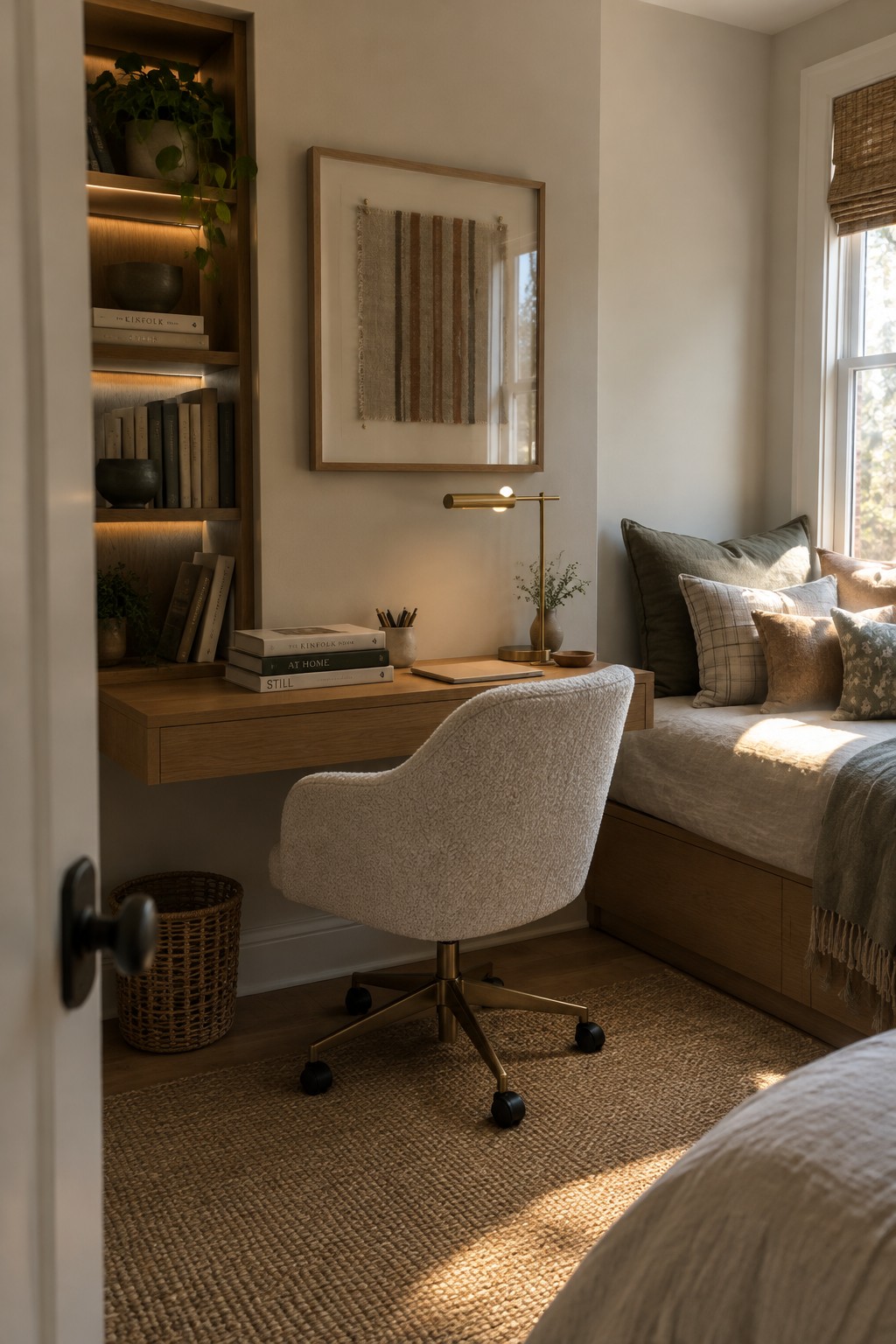
Built-in lighting under shelves gives a home office a soft background layer that feels calmer than overhead fixtures alone. It keeps the space usable in the evening while highlighting books and simple objects without extra lamps everywhere.
This works best in smaller offices or rooms with wood tones where you want warmth without clutter. Add one focused desk lamp for actual work and let the shelf lights handle the rest.
Layered Lighting In A Home Office
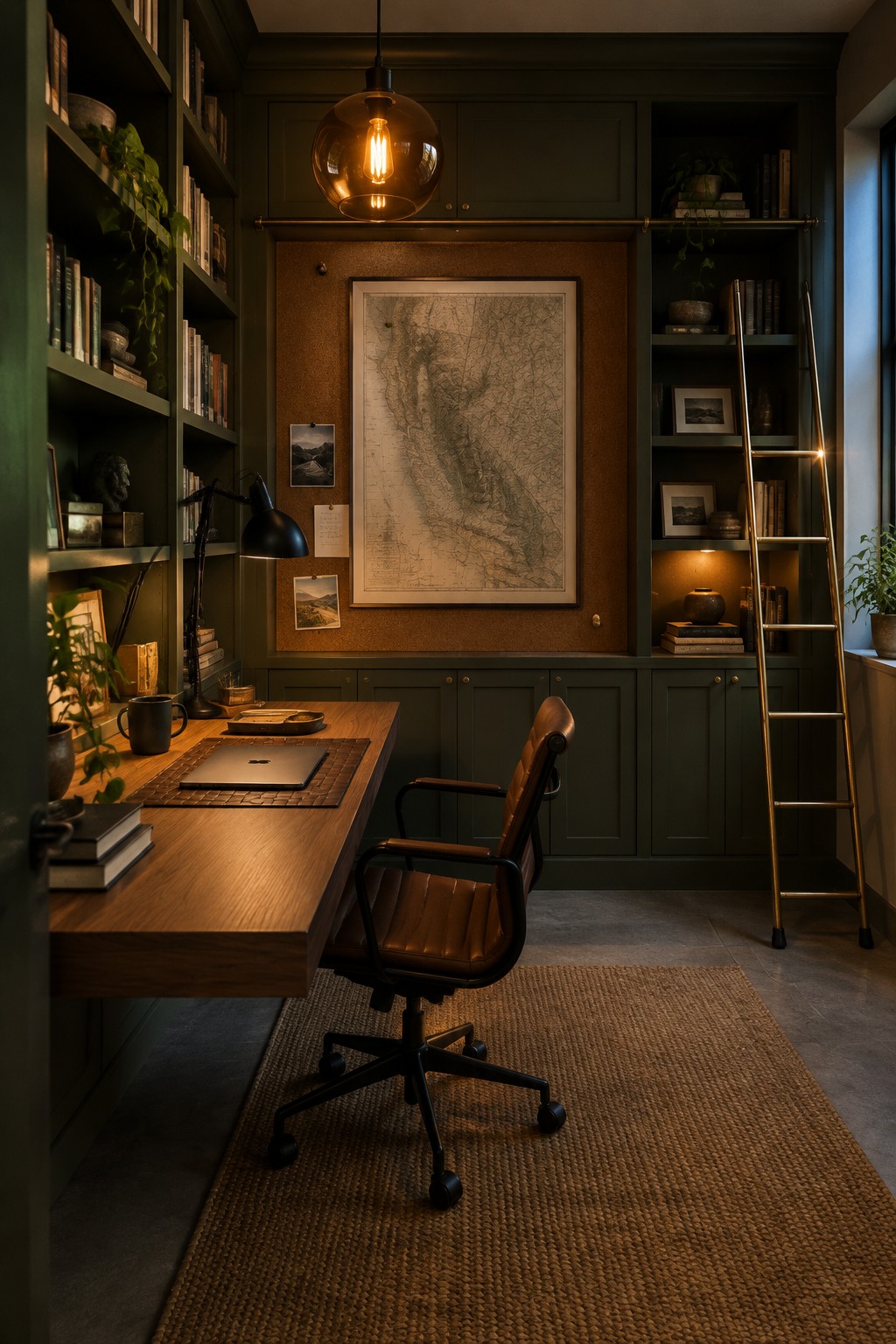
Using more than one light source helps a home office feel warmer and more practical at the same time. A single overhead fixture often leaves the desk surface either too dim or too harsh, so adding a lower task light fills the gap and makes the room easier to work in for longer hours.
A glass pendant hung above the desk gives soft general light while a smaller lamp on the surface handles reading or screen work. Low accent lights tucked into shelves keep the background from going completely dark, which works especially well in smaller rooms or spaces with deep wall colors.
Tuck An Office Under The Stairs
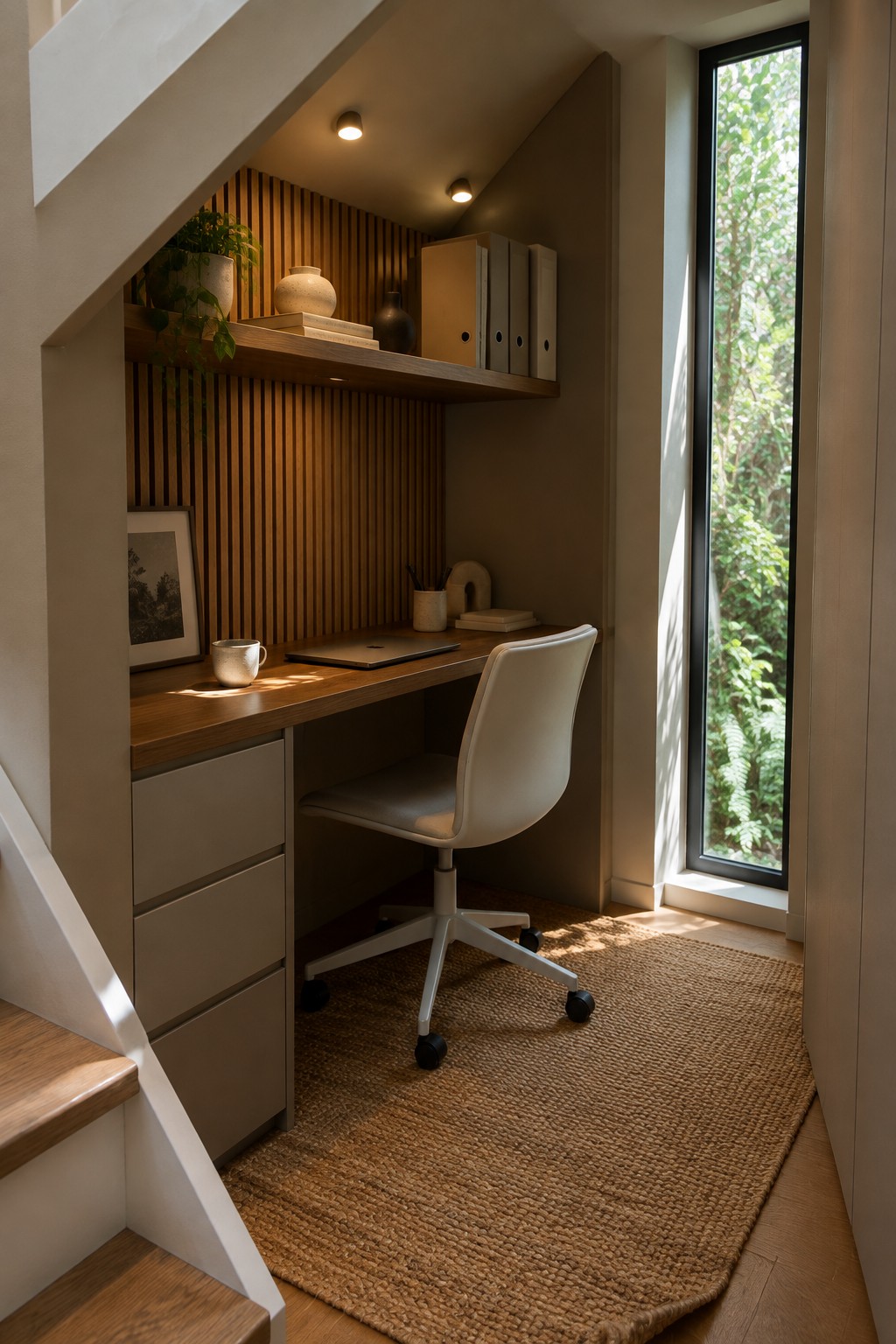
Many homes have leftover space under the stairs that never gets used for much. Turning it into a small office gives you a quiet place to work without losing floor space elsewhere in the house.
This setup works best in homes where the stairs create a natural alcove. Add a couple of overhead lights so the area stays usable even when natural light from a nearby window starts to fade. Keep the desk and storage simple so the space does not feel cramped.
Built-In Lighting Under the Desk
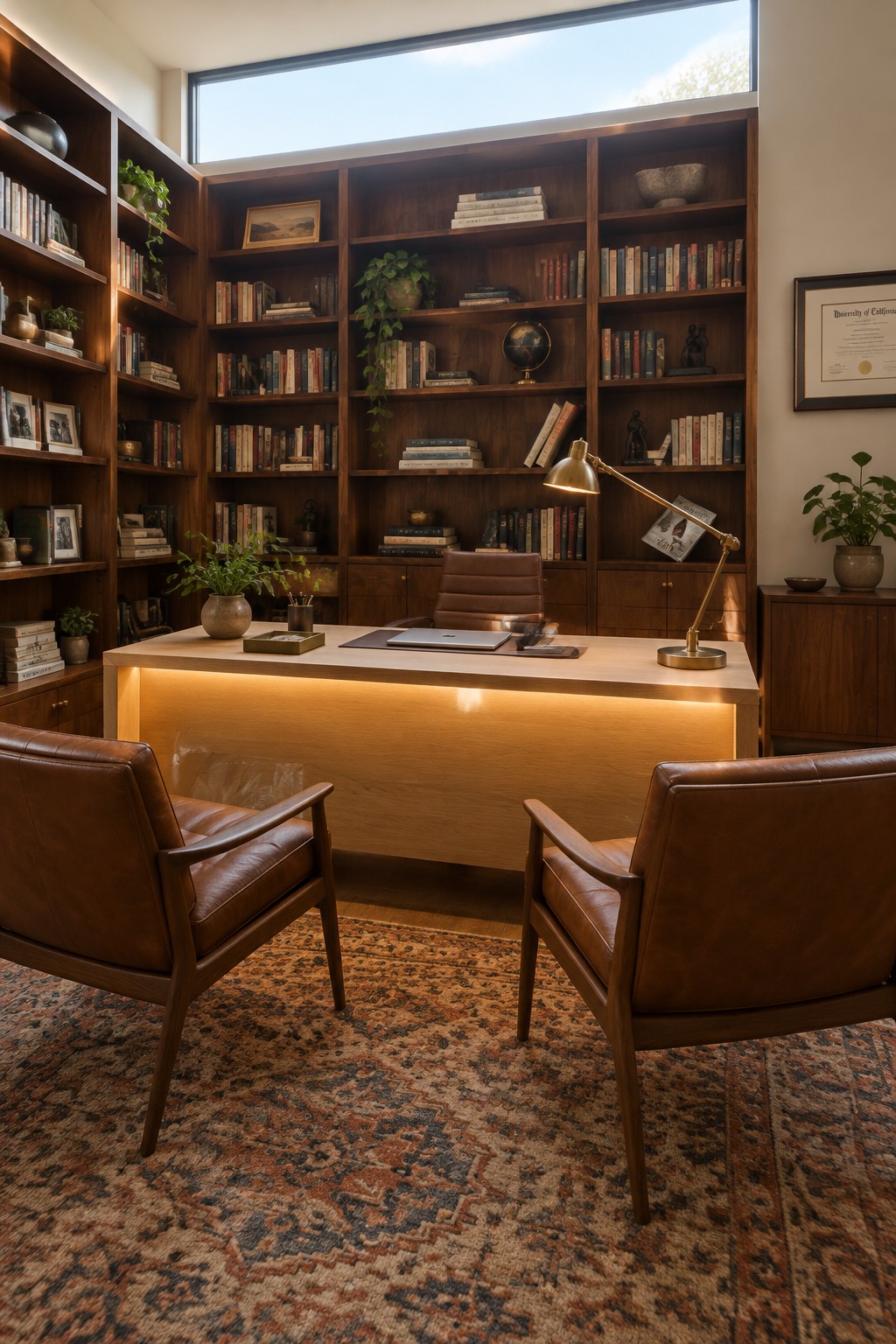
Building a strip of warm light right under the desk gives the whole office a soft glow that feels steady and comfortable. It keeps the surface clear for work while still making the room feel inviting once the sun goes down.
This setup works especially well in offices with wood shelving and darker tones because the light bounces upward and softens the heavy look of the built-ins. Pair it with one good desk lamp for tasks and let the window handle daytime needs. Keep the color temperature warm so the space stays relaxed rather than clinical.
Layered Lighting With A Woven Pendant
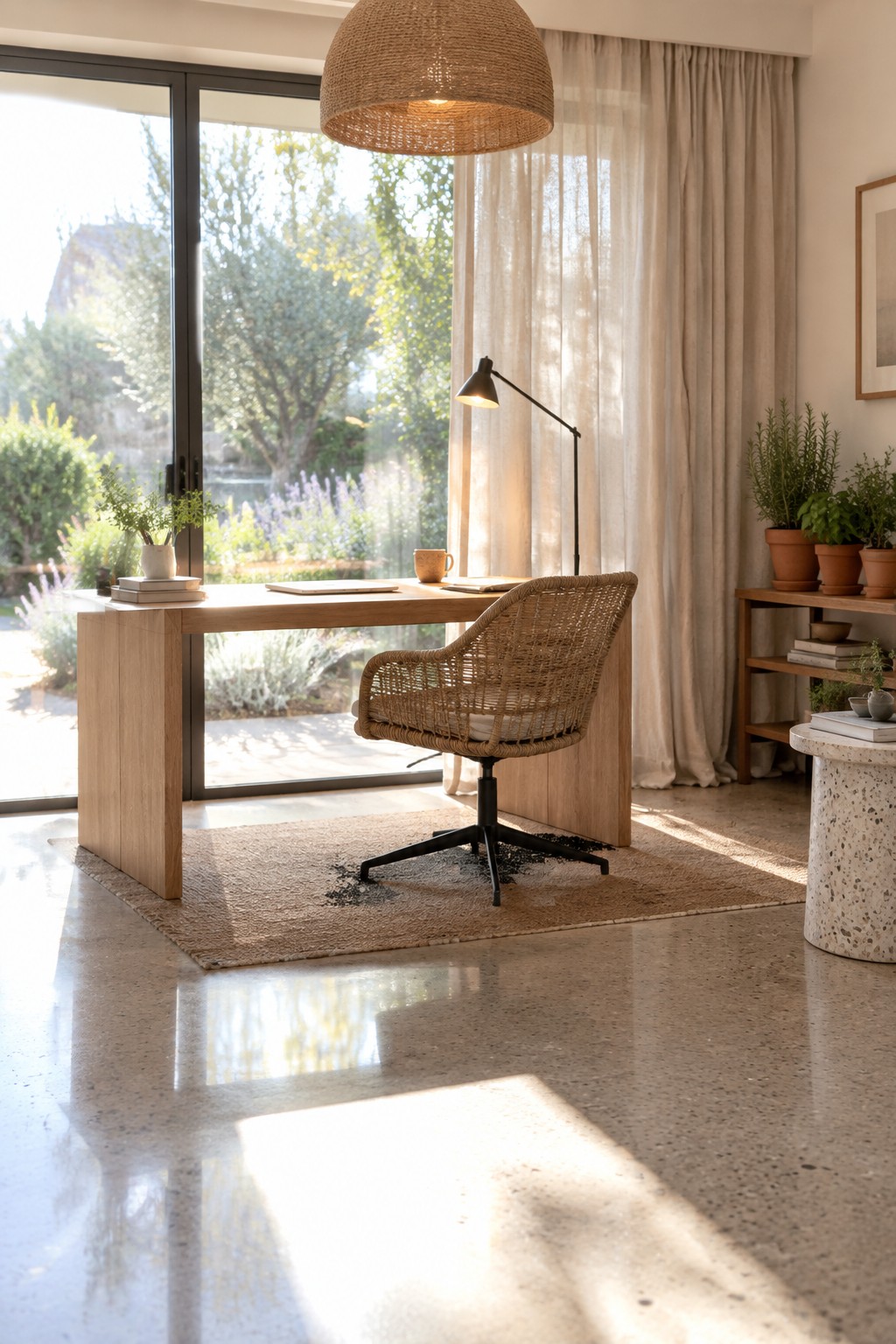
One thing that stands out in this office is how the lighting feels layered rather than flat. The large woven pendant gives a soft overhead glow, while the smaller desk lamp handles the focused work area. Together they create warmth without needing a lot of fixtures.
This approach works best in smaller home offices where you want both function and comfort. Keep the overhead piece simple in texture and let the task light do the rest. It suits spaces that already have good natural light from windows.
Floating Desk With Wall Sconce Lighting
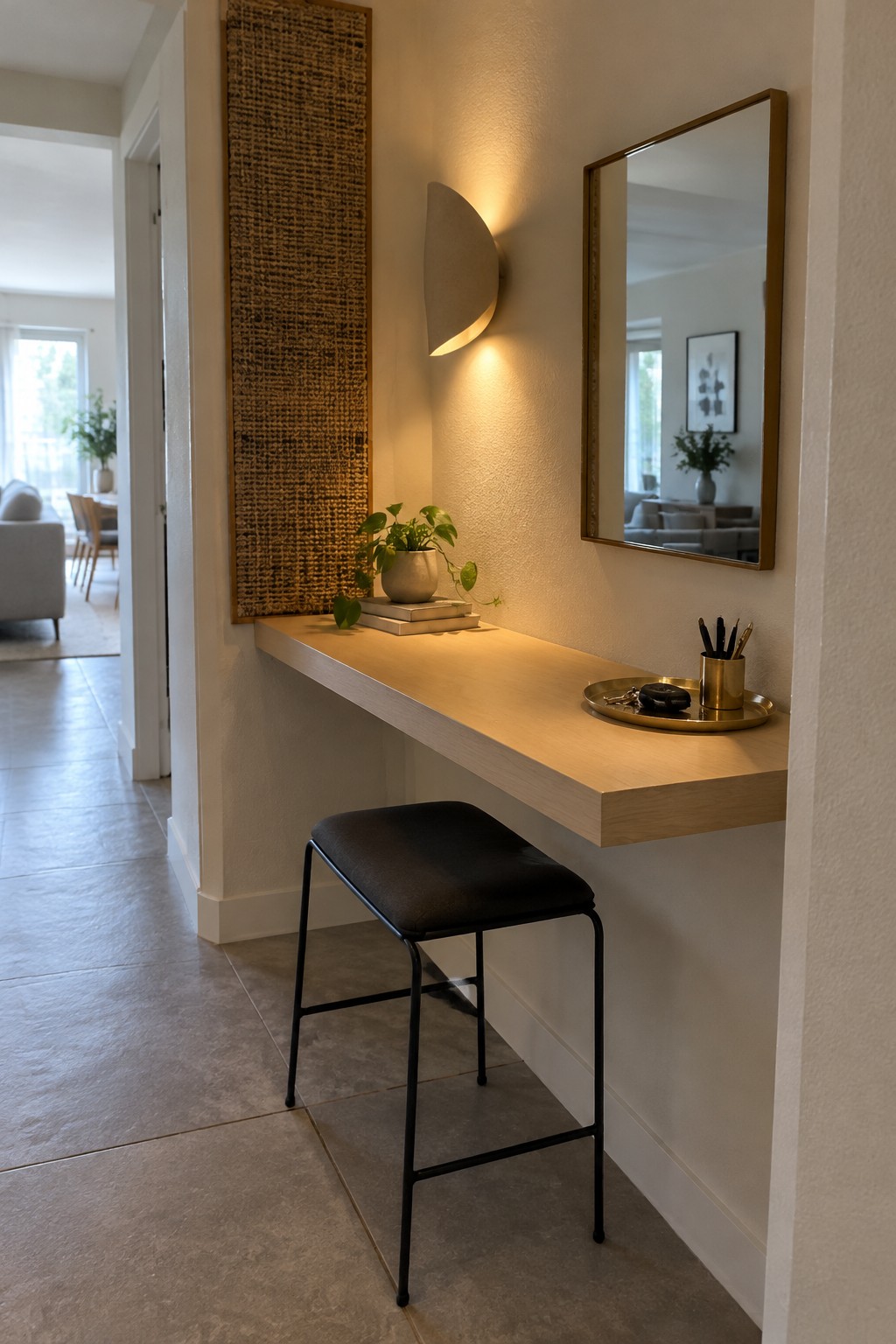
A floating desk keeps the floor clear and works well in narrower spots where a full desk would feel too heavy. Pairing it with a wall sconce adds a layer of warm light that stays focused on the surface without needing extra lamps or clutter.
This approach suits homes that need a workspace in a hallway, guest room, or open area. Choose a slim stool that slides underneath and keep the desk depth modest so the room still feels open.
Add Under-Shelf Lighting To Your Desk Area
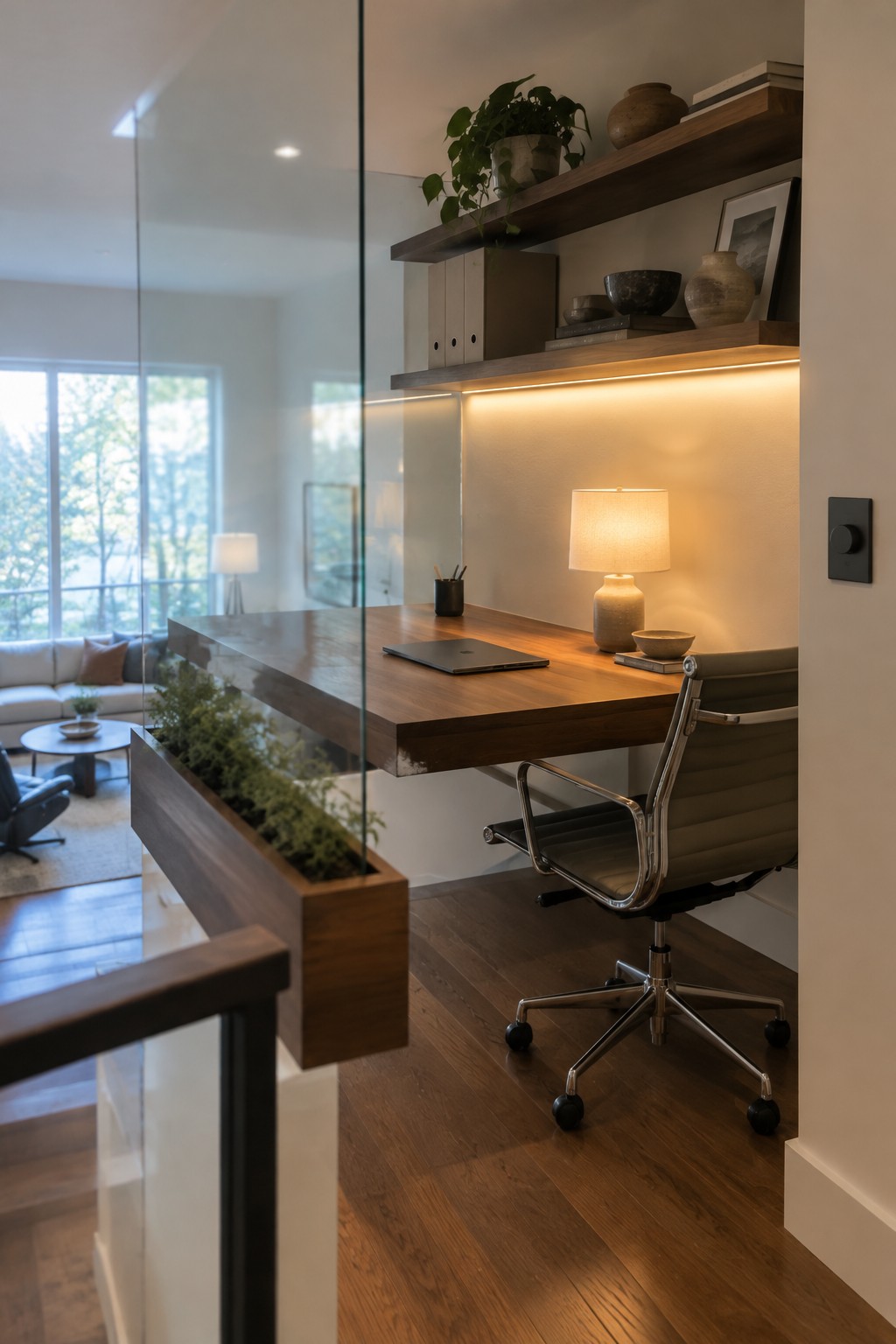
One simple way to warm up a modern office is to run a strip of light under the shelves above the desk. It fills the space with a soft glow that feels much calmer than a single ceiling fixture or bright task light.
This setup works best in smaller rooms or against a wall where you want the desk to feel anchored without looking heavy. Keep the shelf depth shallow and choose a warm bulb so the light blends with wood tones and other materials already in the room.
Layer Pendant And Task Lighting In Your Office
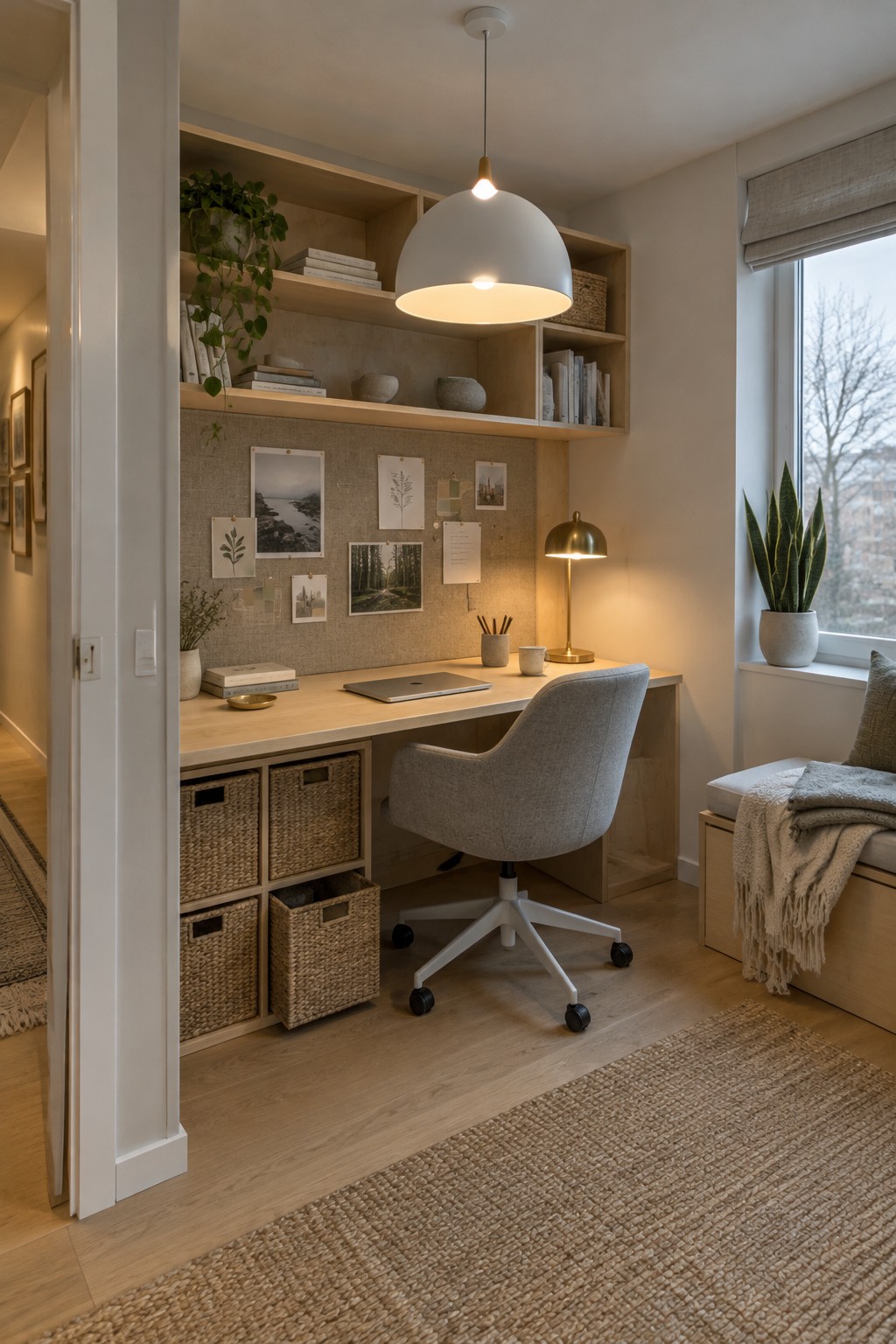
One simple way to warm up a home office is to use two different lights instead of relying on just one. A large overhead pendant spreads soft ambient light across the whole desk area while a smaller lamp on the surface gives you focused light for reading or screen work.
This setup works best in smaller rooms or spaces tucked into a corner of a larger room. Keep the pendant centered above the desk and choose a task lamp with a movable arm so you can adjust the direction without adding more fixtures or overhead cans.
Long Wall Desk With Stools
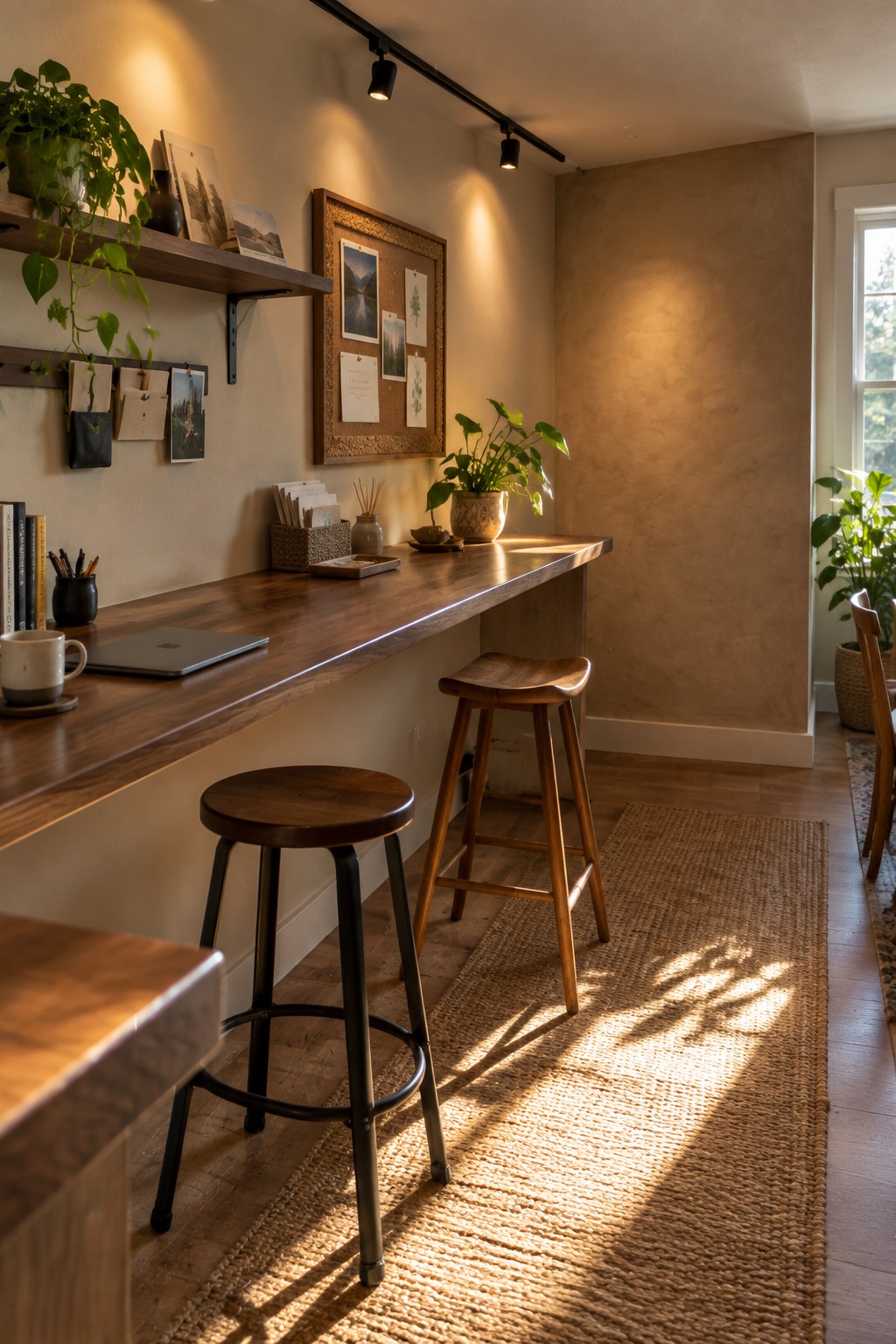
A long desk that runs along one wall gives you a simple way to set up a workspace without crowding the room. The stools slide under when you need the floor space, and the wood surface adds warmth that makes the area feel more like part of the home than a separate office.
This layout works best in rooms where you want flexibility for one or two people. Use it in smaller homes or open areas where a full desk and chair would feel too heavy. Keep the rest of the space light so the desk stays the main feature.
Layered Lighting For A Warm Office Feel
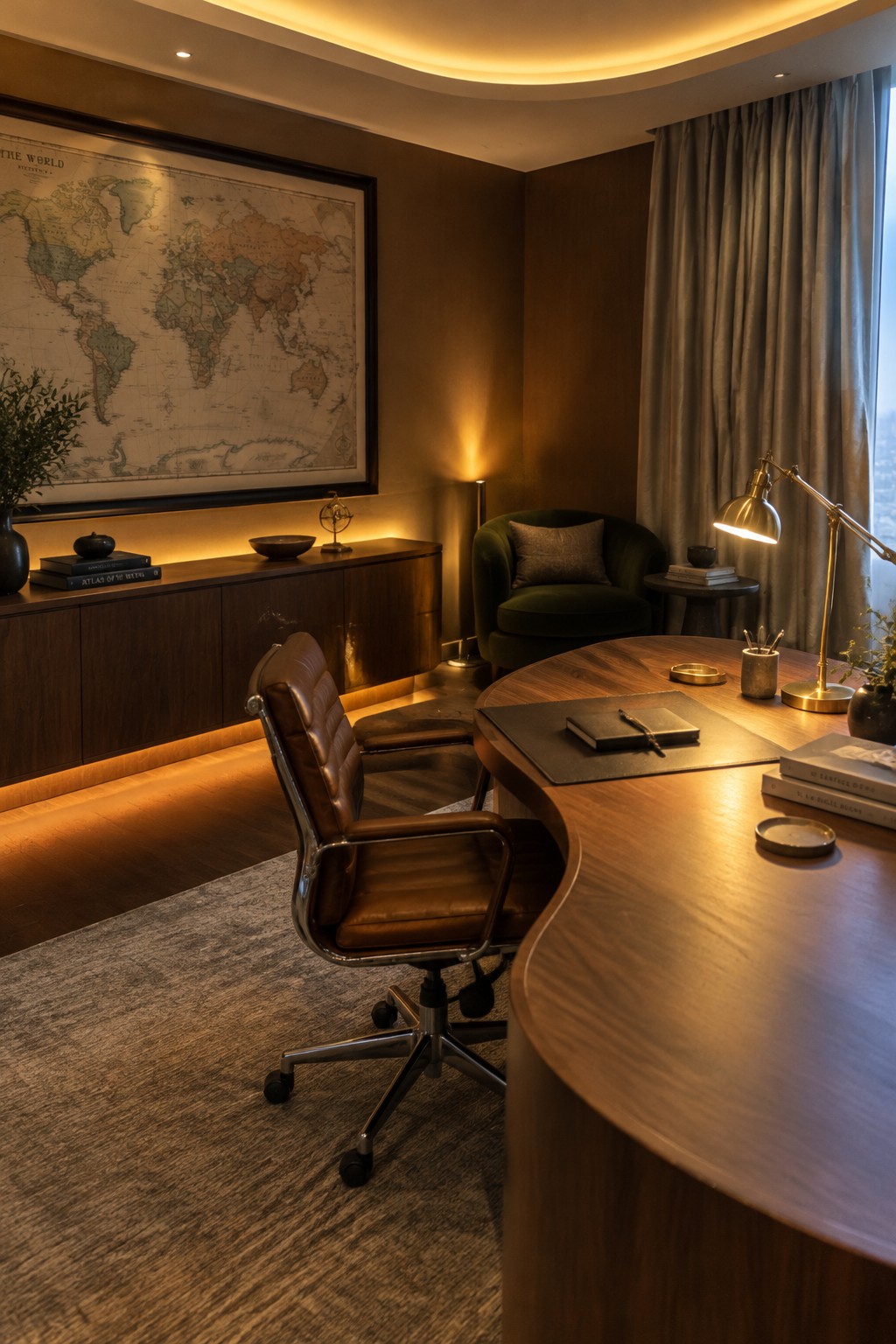
Many home offices end up feeling flat because they rely on one bright ceiling light. Adding light from different heights and angles softens the space and makes it easier to stay there for hours without eye strain.
A simple desk lamp handles focused work while a taller floor lamp fills in the middle of the room. Low lighting tucked under a console or behind a cabinet adds another layer that keeps everything from feeling too stark. This approach works well in medium-sized rooms with wood tones and darker finishes.
Layered Lighting Over a Floating Shelf
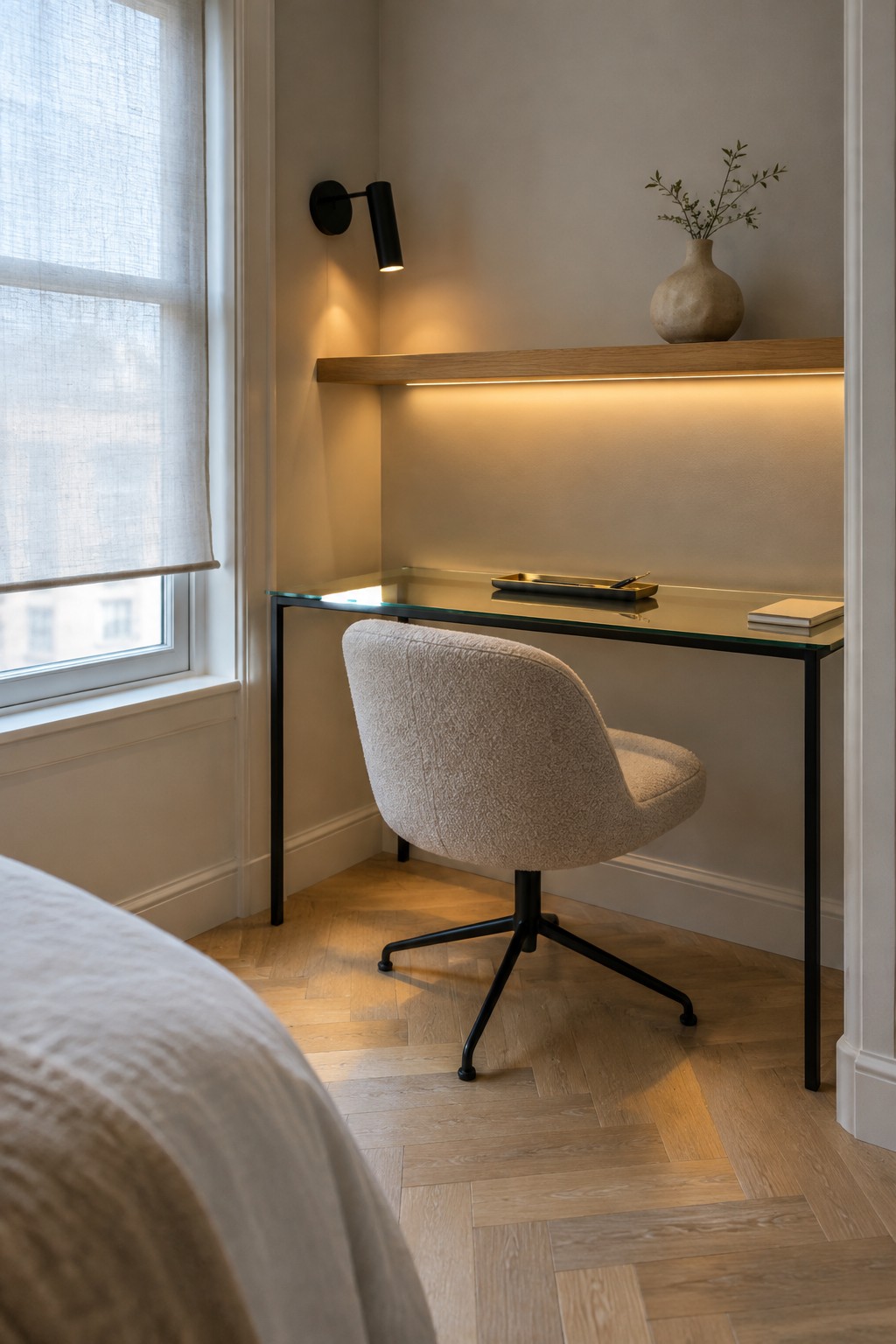
A floating shelf with lights tucked underneath gives a desk area soft, even light that feels warmer than a single overhead fixture. The glow highlights the work surface while the shelf itself stays clean and simple.
This approach works well in small or corner offices where you want light without adding lamps that crowd the floor. Add one wall sconce nearby so you can switch between brighter task lighting and a lower evening glow depending on the time of day.
Layered Lighting Over A Long Desk
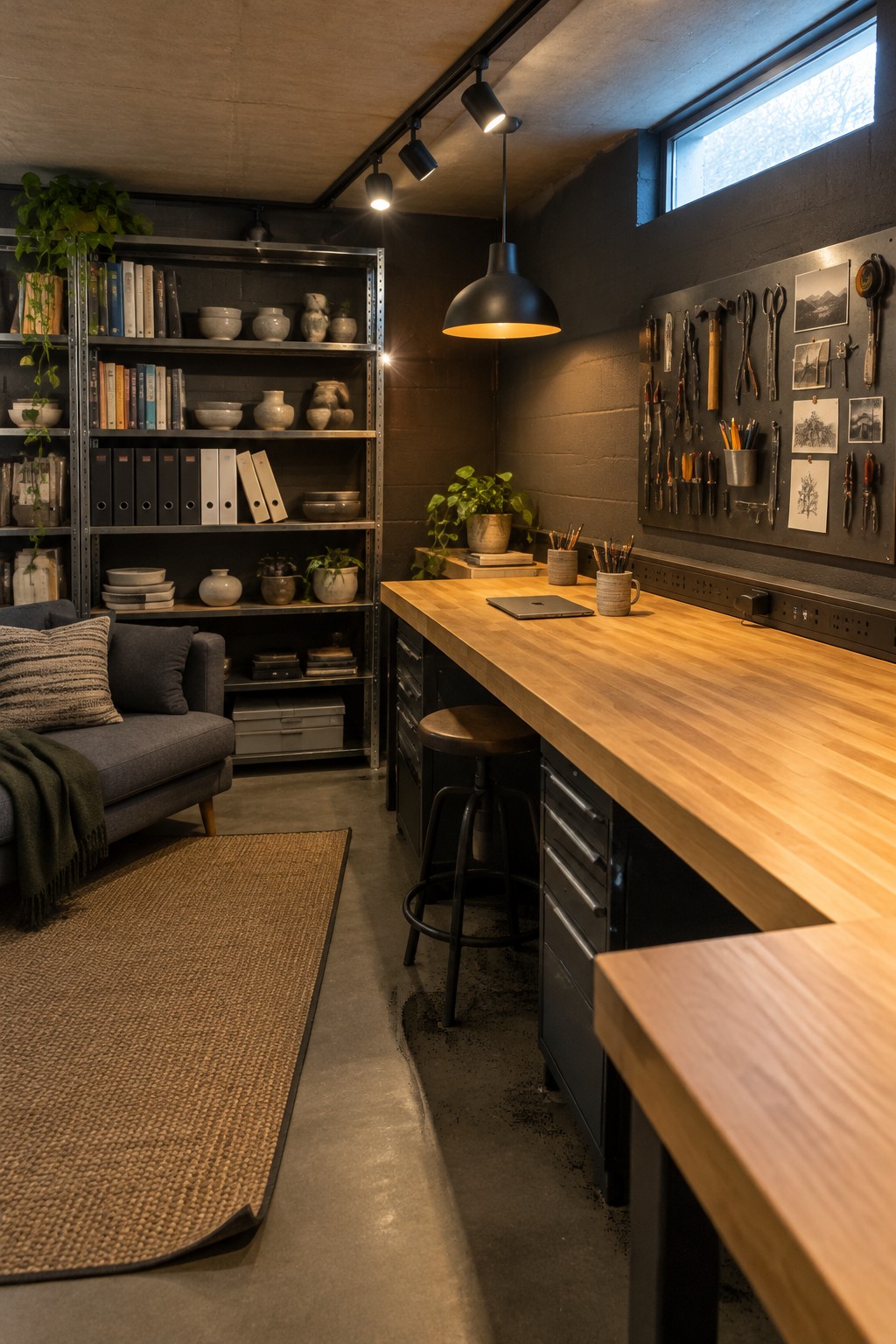
A long wooden workbench makes a strong desk choice because it gives you plenty of surface area and a warm tone that softens the rest of the room. When you add several light sources above it instead of one, the space stays practical for work while still feeling comfortable after dark.
Place a pendant right over the main sitting spot and run track lights along the ceiling so you can aim them where needed. This works especially well in smaller or darker offices where a single overhead light would feel flat or too bright in one spot.
Frequently Asked Questions
Q: How do I start layering lights in a small home office? A: Pick one main light source overhead for general brightness. Add a task light on your desk and maybe a floor lamp in the corner. This setup lets you adjust based on the time of day.
Q: Which type of desk lamp gives off the right warm glow? A: Choose a lamp with a fabric shade. It softens the light and keeps the space feeling warm.
Q: What if I want to add lighting but do not want to rewire anything? A: Plug in lamps work fine for most setups. Place them at different heights around the room. Turn them on in stages as evening comes to build the layers gradually.
