

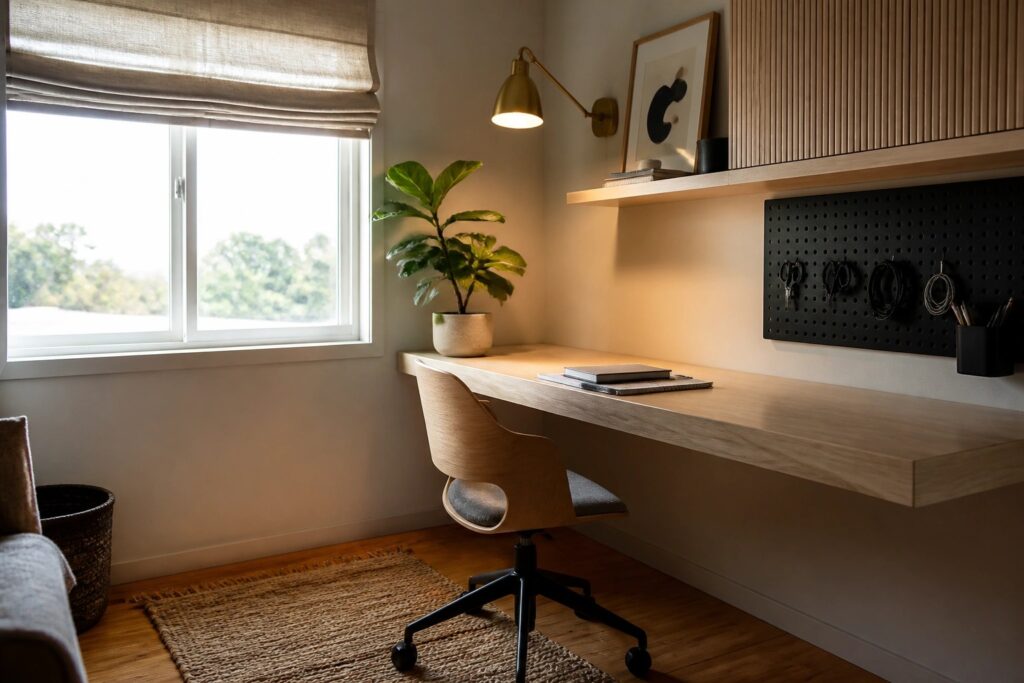
When I first tried to make a small office feel like my own, I realized that every piece had to support the way I actually move through the day or the room would quickly feel off.
Adding personality works best when it grows out of how the space functions rather than from a desire to decorate for its own sake.
Layout decisions shape the rest.
I have noticed that offices often end up more usable when the choices stay tied to real habits instead of trends that look good only in pictures.
A couple of these approaches stand out as ones I would test first to see how they hold up once the work starts.
Use A Pegboard For Wall Storage
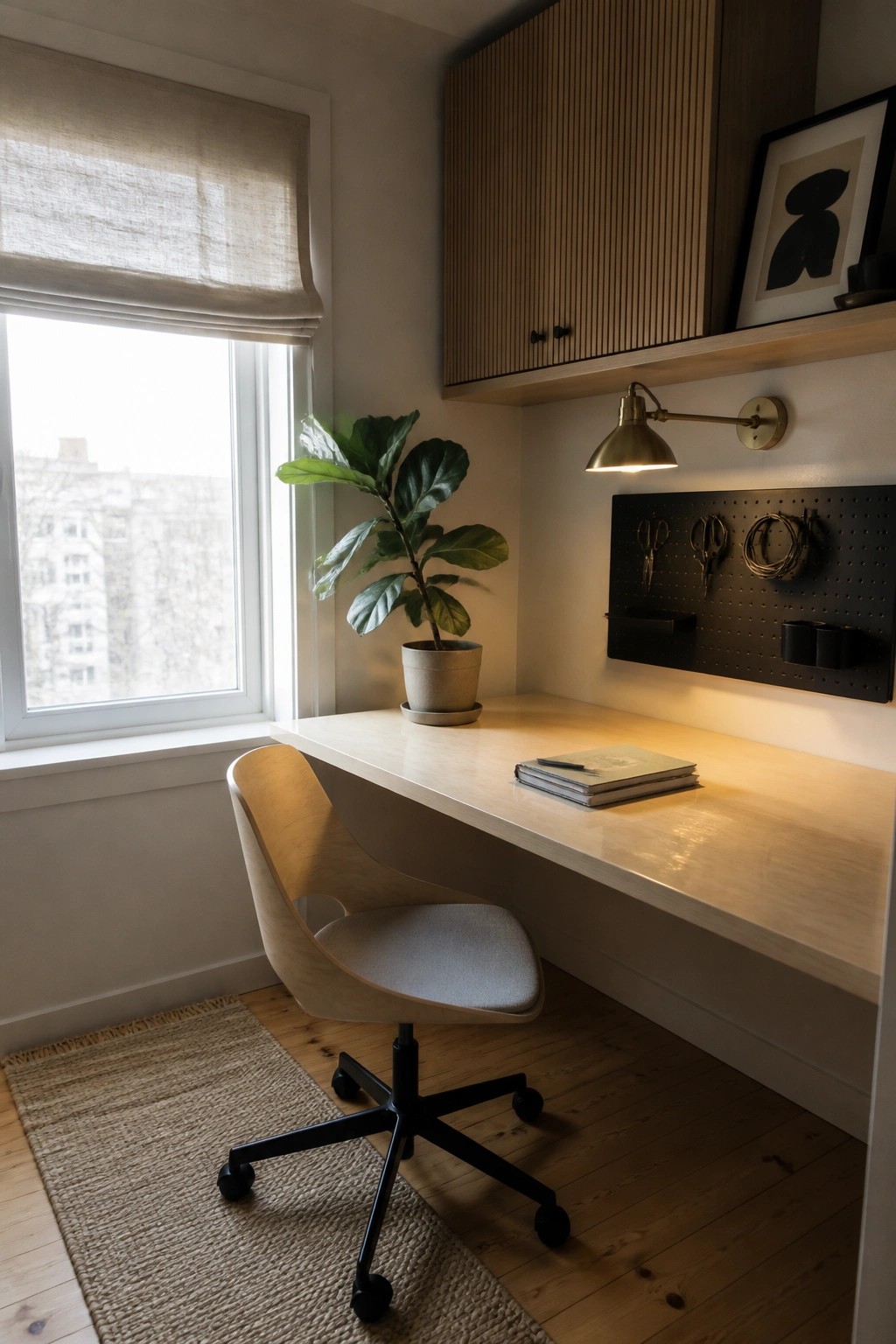
A pegboard gives you a simple way to store tools and supplies right where you need them. In a small office it keeps the desk surface clear while still letting you reach what you use often. The black panel blends into the wall and adds a bit of texture without feeling busy.
Mount it at a comfortable height above the desk and hang only the items you reach for every day. It works well in any room with limited floor space and pairs easily with a plain desk and natural light. Just avoid filling every hole so the wall stays calm.
Dark Walls Add Quiet Character to a Small Office

A dark wall color can give a small office more presence without needing extra pieces or busy patterns. It creates a simple backdrop that lets the furniture and a few personal items stand out while keeping surfaces clear.
This approach works especially well in rooms with decent daylight. Use matte paint and stick to warm wood tones plus one or two natural textures so the space stays grounded rather than heavy.
Built-In Shelving For Small Workspaces
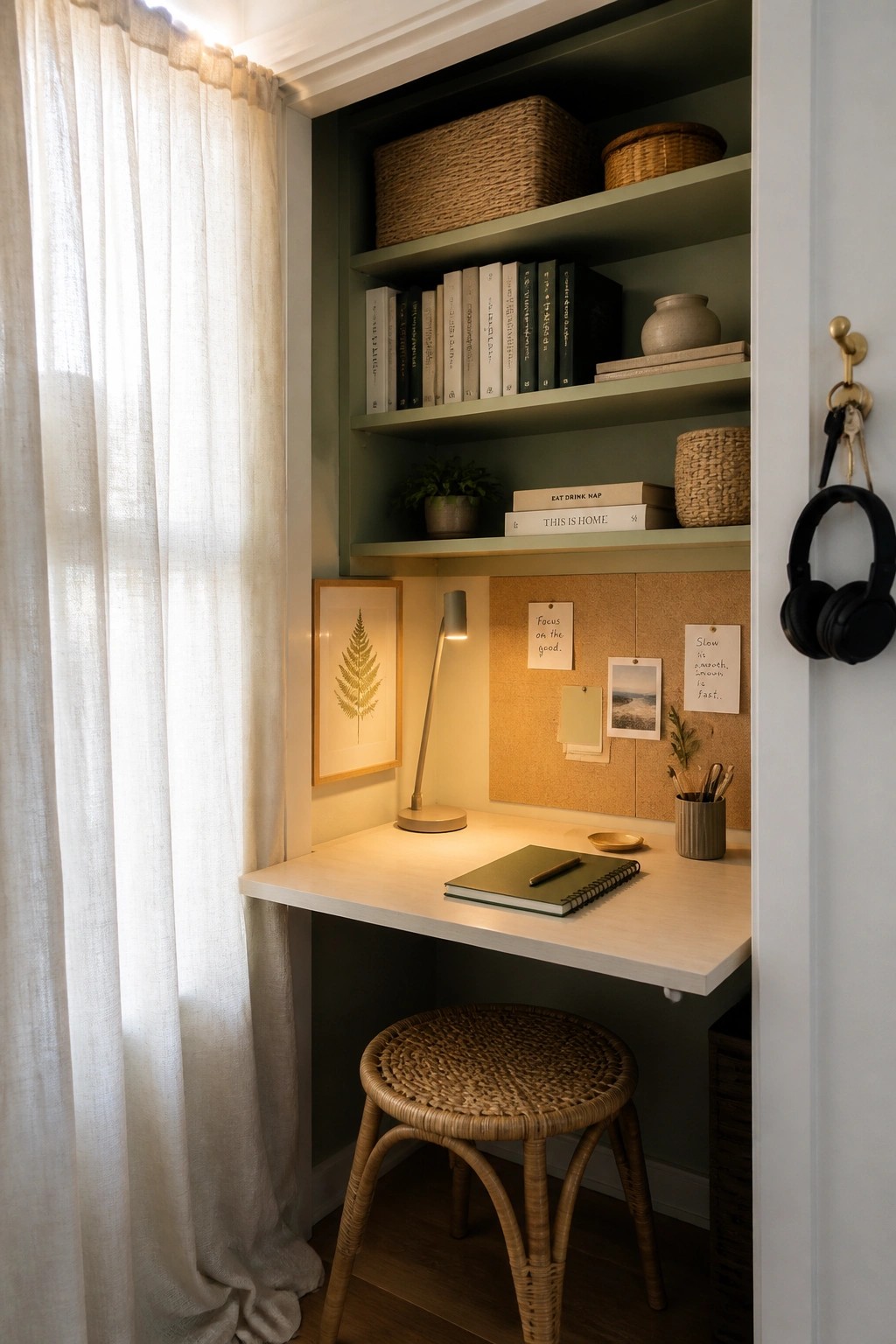
A small desk area gains a lot when you add open shelves right above it. The shelves hold books and a few baskets without taking up floor space, and they keep everyday items within reach. This setup works especially well in tight corners or alcoves where a full desk and separate storage would feel crowded.
It suits homes that need a quiet spot for work but do not have a whole room to spare. Keep the surface clear except for a lamp and one notebook, and use the corkboard for notes and small photos so nothing piles up. The result feels organized even when the rest of the house is busy.
Ground The Desk With A Simple Woven Mat
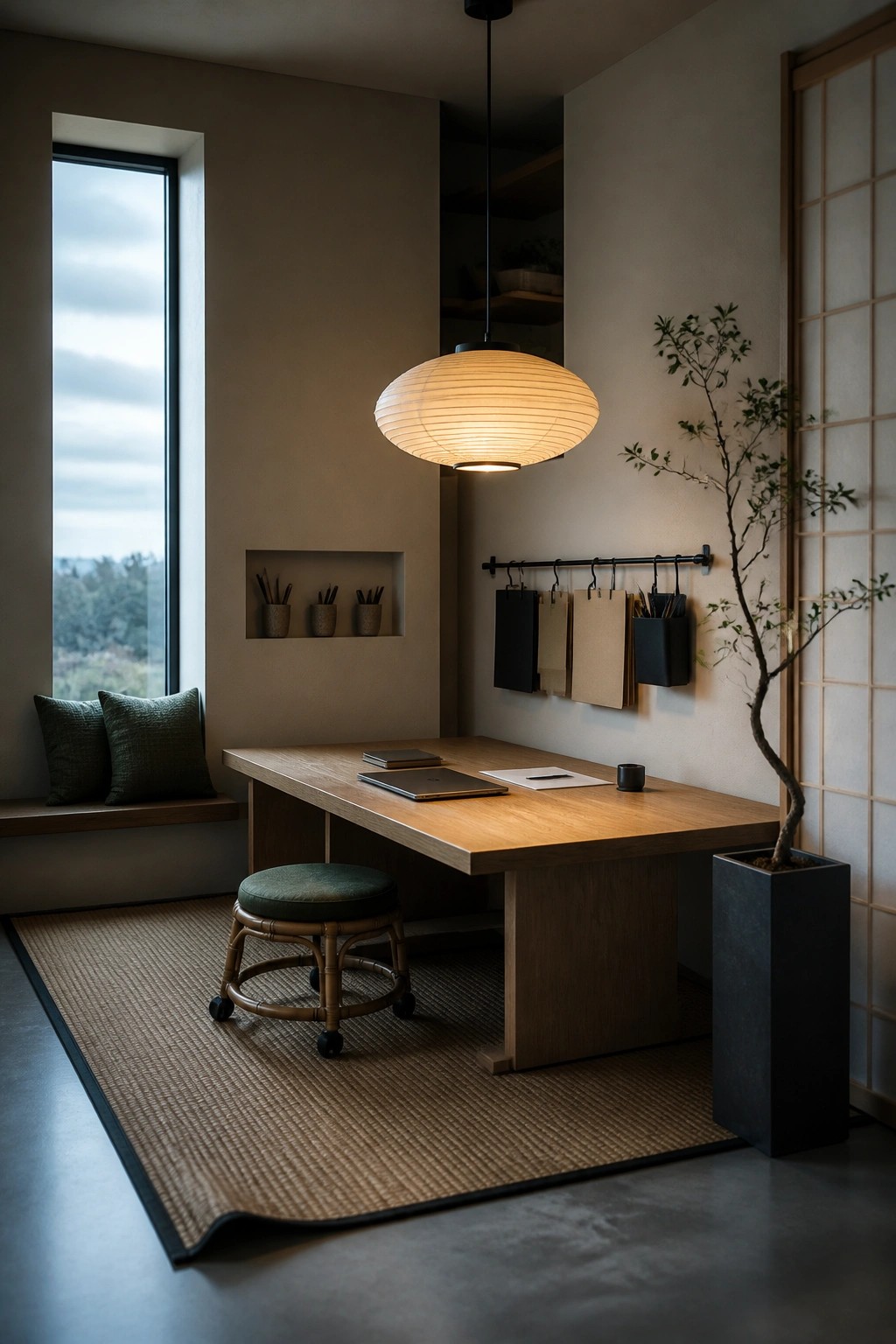
A large woven mat under the desk helps mark off the workspace in a small room. It adds texture and warmth while keeping the floor mostly clear, so the area still feels open instead of crowded.
This works well in rooms that serve more than one purpose. Place the mat so it extends a bit beyond the desk on all sides, then keep everything else off the floor except one simple seat. It suits compact homes where you want the office to feel settled without looking busy.
Hang Simple Prints On The Wall
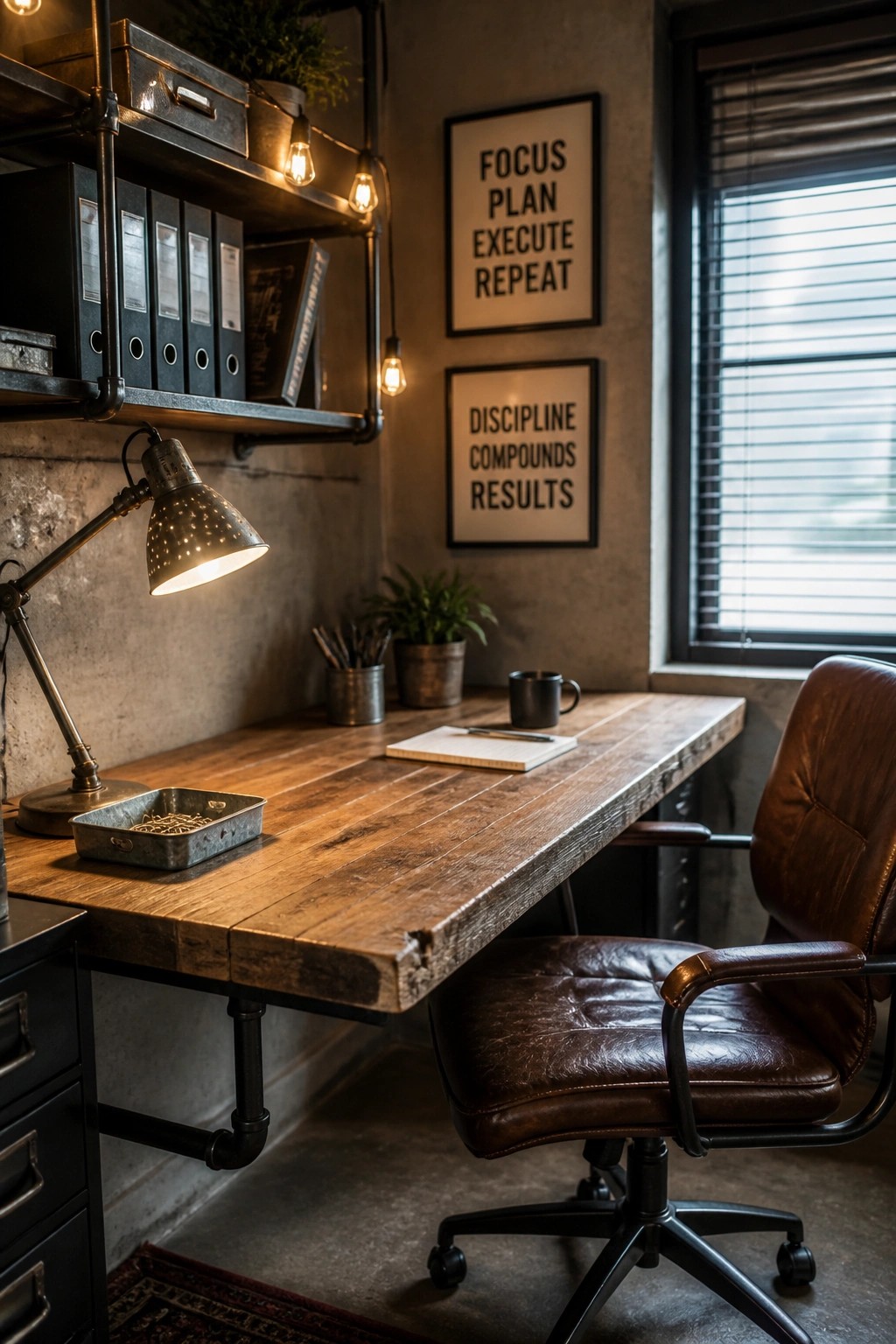
A couple of framed quotes above the desk can give a small office some personality without crowding the workspace. They keep the focus on the wall instead of piling things onto shelves or the desk surface, which helps the room feel more open even when space is tight.
This approach works best in plain or industrial-style rooms where the walls are fairly bare. Stick to two prints at most, keep the frames simple, and choose short phrases that actually mean something to you. Too many words or busy designs can start to feel like clutter again.
Built-In Bench Seating For Small Offices
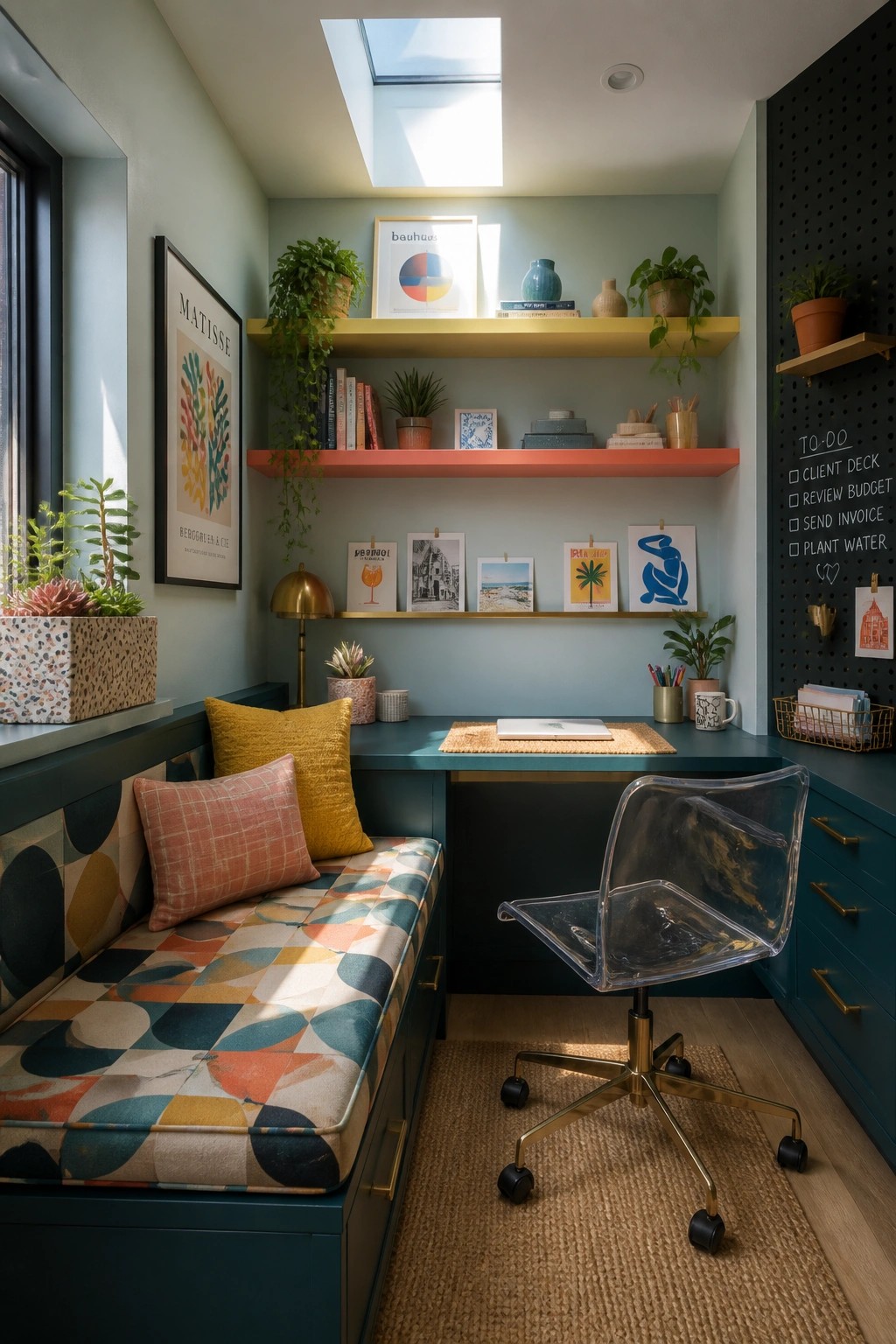
A built-in bench along the wall turns a tight corner into a usable workspace without adding extra furniture. Pairing it with a matching desk keeps the layout simple and leaves the floor clear, which helps the room feel bigger and less crowded.
This works best in apartments or small homes where you need both seating and storage in one piece. Stick to a few colors and keep the surfaces mostly clear so the space stays practical instead of overwhelming.
A Desk With Open Cubbies Works Well In Tight Spaces
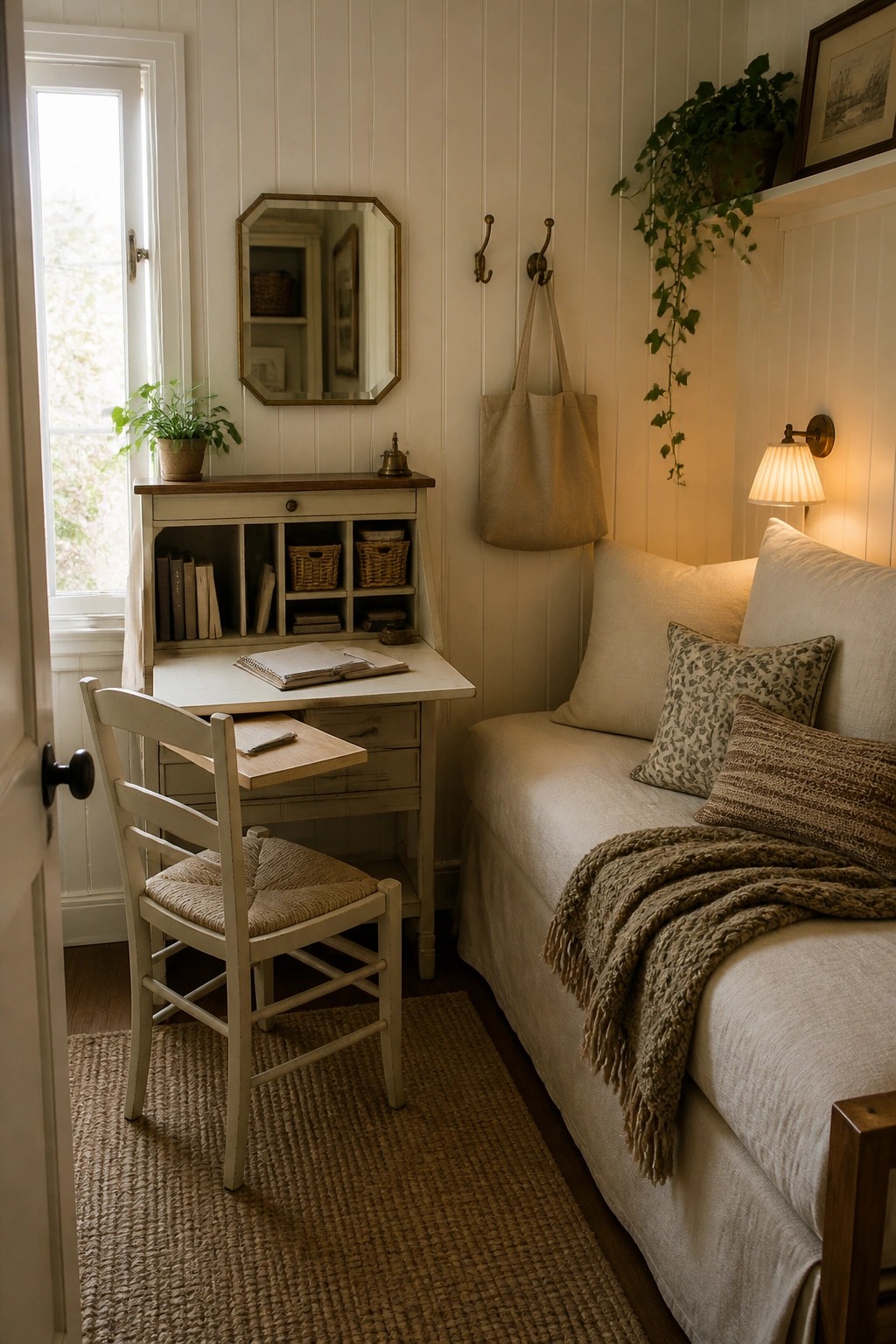
A small desk with open cubbies gives you a place to handle paperwork or writing without needing a full room. The built-in spots keep a few supplies visible but contained, which helps the space feel organized even when it shares room with other furniture.
This works best in guest rooms or living areas where you need a spot to work sometimes but do not want a dedicated office. Stick to a narrow piece with light finishes and only use the cubbies for things you reach for often.
Pegboard Shelves Keep Supplies Handy

A pegboard with a few shelves gives you a place to store the things you use every day without piling them on the desk. In a small office it works well because it uses the wall instead of floor space, and you can move the hooks and shelves around as your needs change. The open style also lets you add a plant or two so the wall feels less bare.
This setup suits any small room where you want quick access to pens, notebooks, or small tools but still need the desk surface clear for work. Keep the items on the board limited to what you actually reach for often, and store the rest out of sight in drawers.
Glass Desks Help Small Offices Stay Open And Uncluttered

A glass desk works well in a small office because it lets the floor show through and keeps the space from feeling blocked in. The see-through surface reduces visual weight, so you can still add a few personal items without the room looking crowded or heavy.
This choice suits compact rooms where you want some warmth and texture but need to avoid bulk. Pair it with a simple rug and one accent wall to bring in character while keeping the top surface mostly clear.
Secretary Desk With Built-In Storage

A secretary desk gives you a real workspace in a small room without spreading out everywhere. The drop-down surface opens when you need it and the drawers and cubbies hold papers and supplies so nothing sits loose on top.
This style works best in older homes or any spot where you want a bit of warmth from wood but still need the area to feel tidy. Keep only a lamp and one or two daily items on the surface and store the rest inside.
Built-In Shelving In Narrow Offices
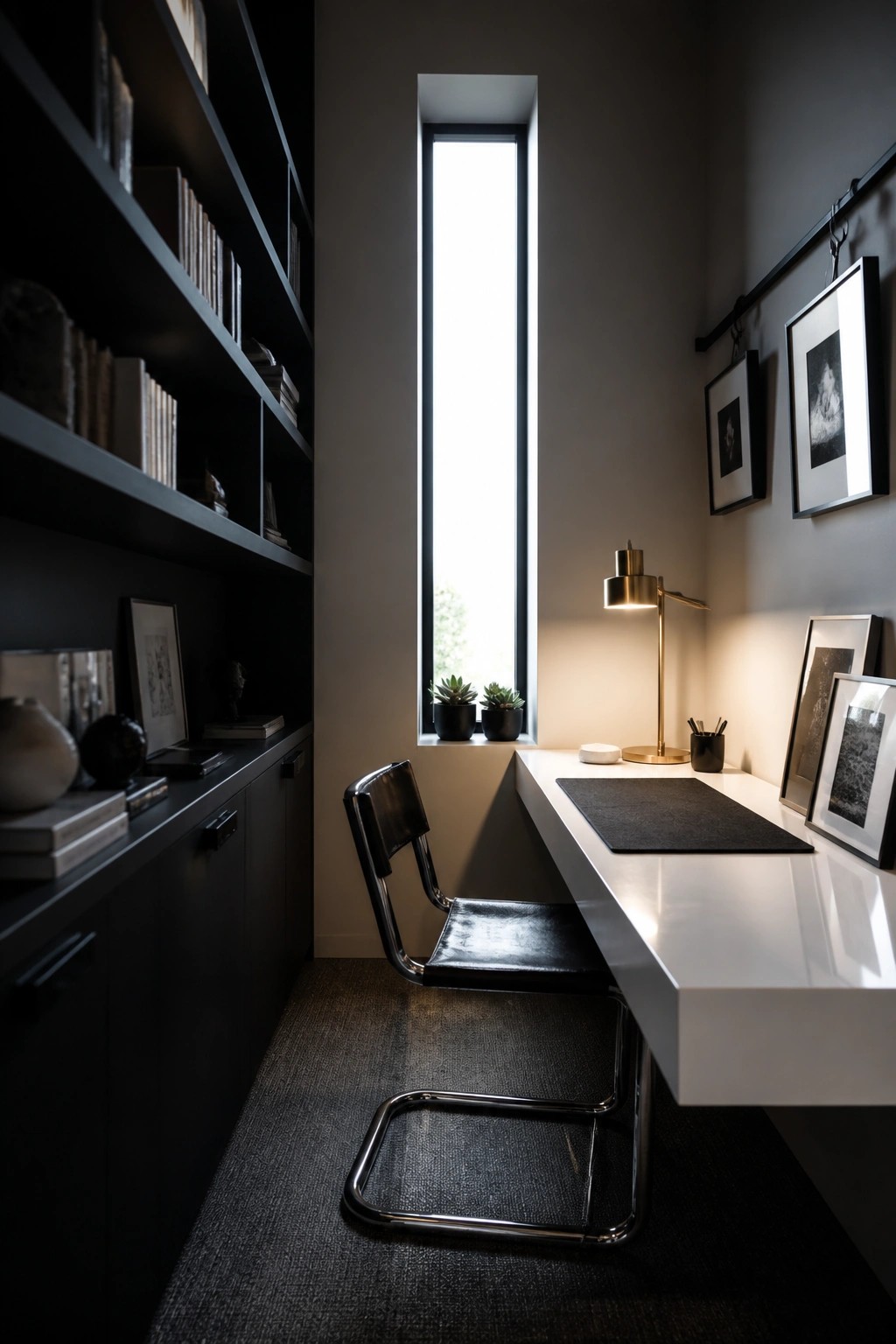
Built-in shelving works well in small offices because it adds storage without taking up floor space. In narrow rooms this keeps the desk area clear and the whole space from feeling crowded.
It suits homes with leftover alcoves or slim rooms that still need a real workspace. Keep the desk simple on the opposite wall and limit what goes on the shelves so the room stays functional rather than busy.
Rope Shelves Add Personality to a Small Office
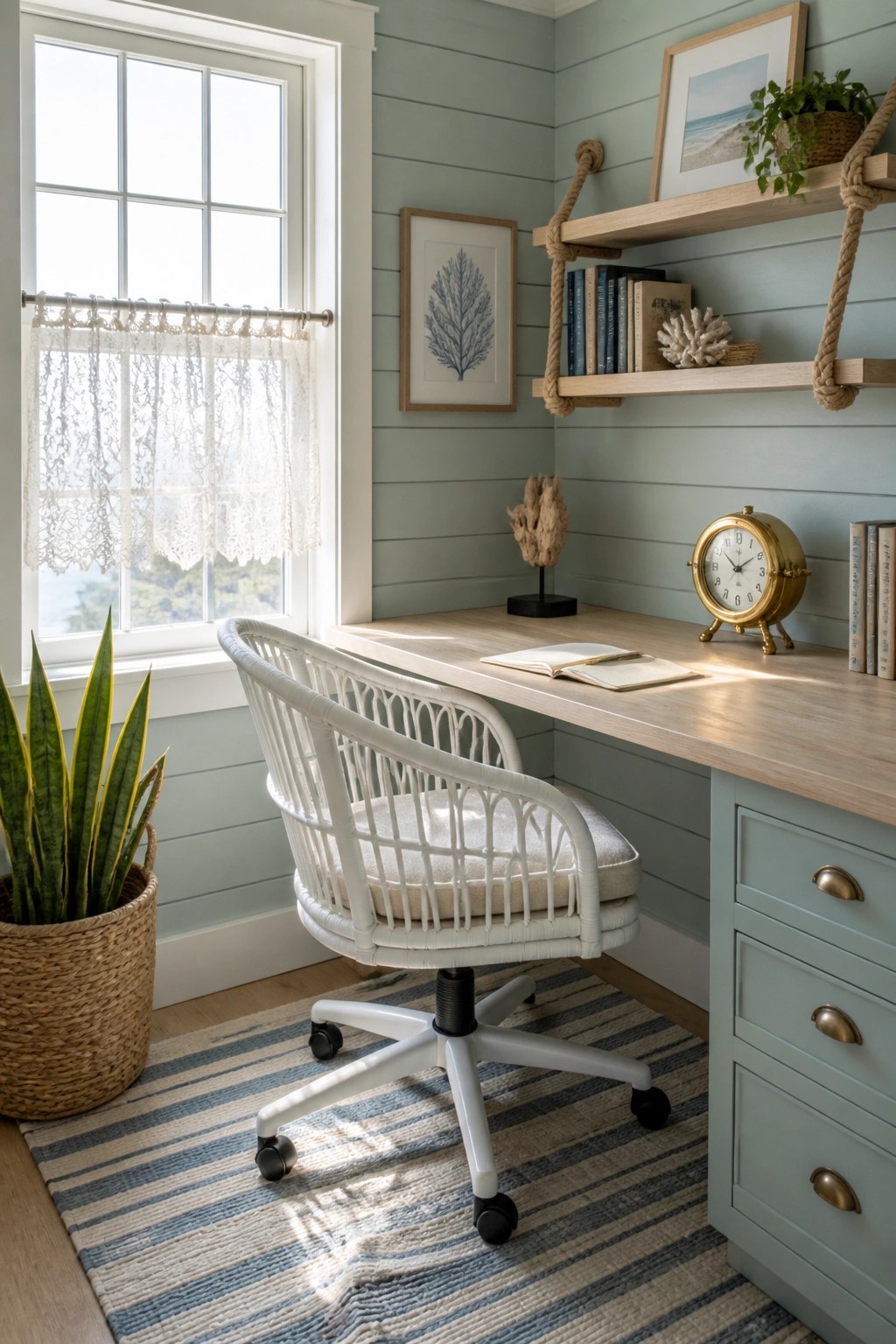
Rope shelves give a small office a bit of character without taking up floor space or feeling heavy. The natural rope and light wood keep the look simple while still adding something interesting above the desk. A few books and small objects are enough to make the wall feel finished.
This works best in rooms with soft wall colors and a calm overall palette. Keep the items on the shelves limited so the space stays open and easy to use. It suits homes that already lean toward natural textures rather than bold patterns or lots of color.
Gallery Wall On Exposed Brick
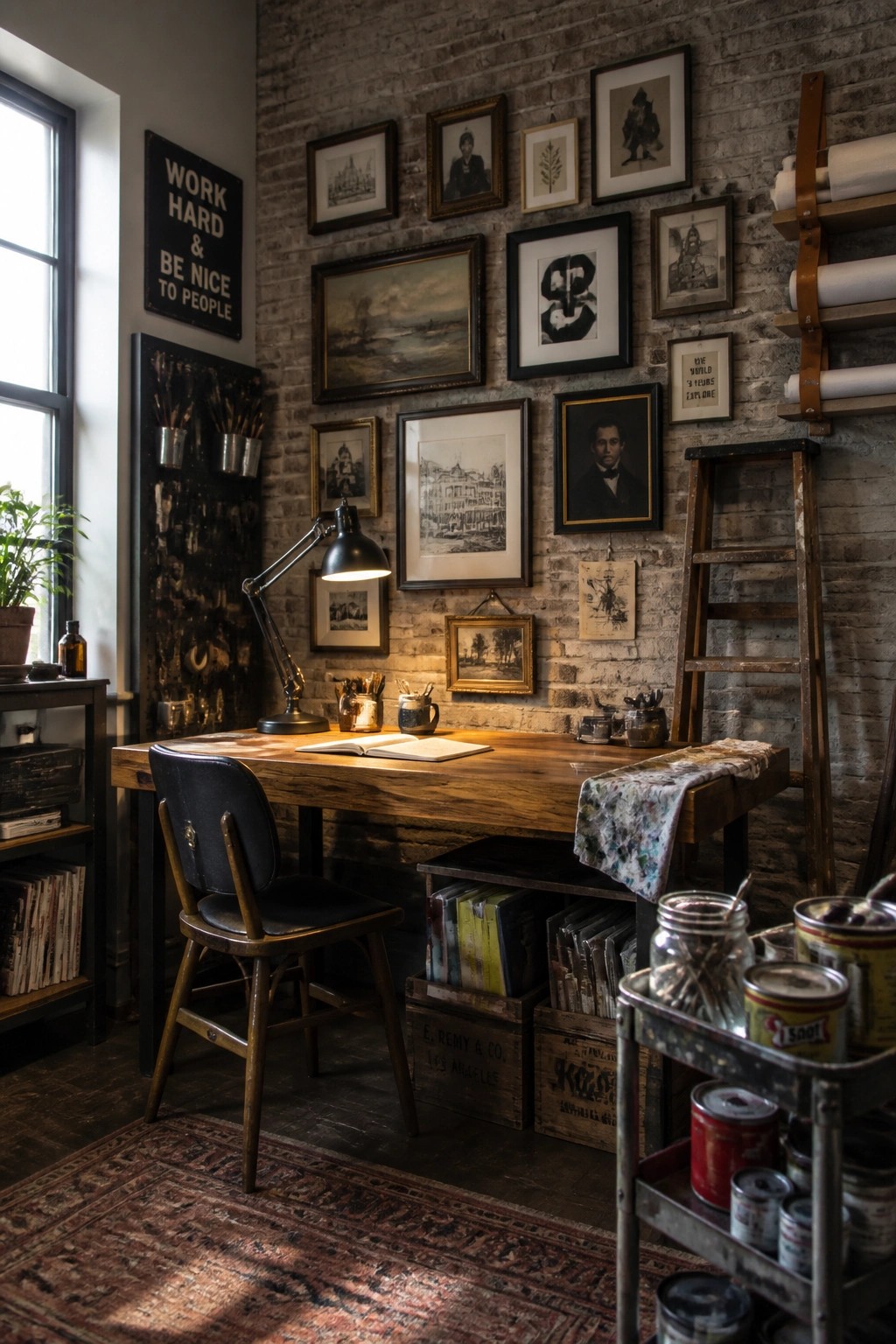
A gallery wall on exposed brick gives a small office personality without adding clutter to the desk or floor. The varied frames sit directly on the textured surface, so the room feels collected rather than crowded.
This approach works best in older homes or spaces with raw walls already in place. Keep the arrangement loose, use mostly similar frame colors, and leave a few inches of brick showing between pieces so the wall stays readable.
Hang One Scroll to Add Quiet Personality

A single hanging scroll works well in a small office because it brings in personality without crowding the desk. The vertical format draws the eye upward and keeps the work surface free for actual use.
This approach suits compact rooms or built-in desks where storage is already limited. Choose one piece that feels personal, place it where it can be seen from the chair, and skip extra frames or shelves so the space stays calm.
Try A Vanity Desk For A Small Workspace
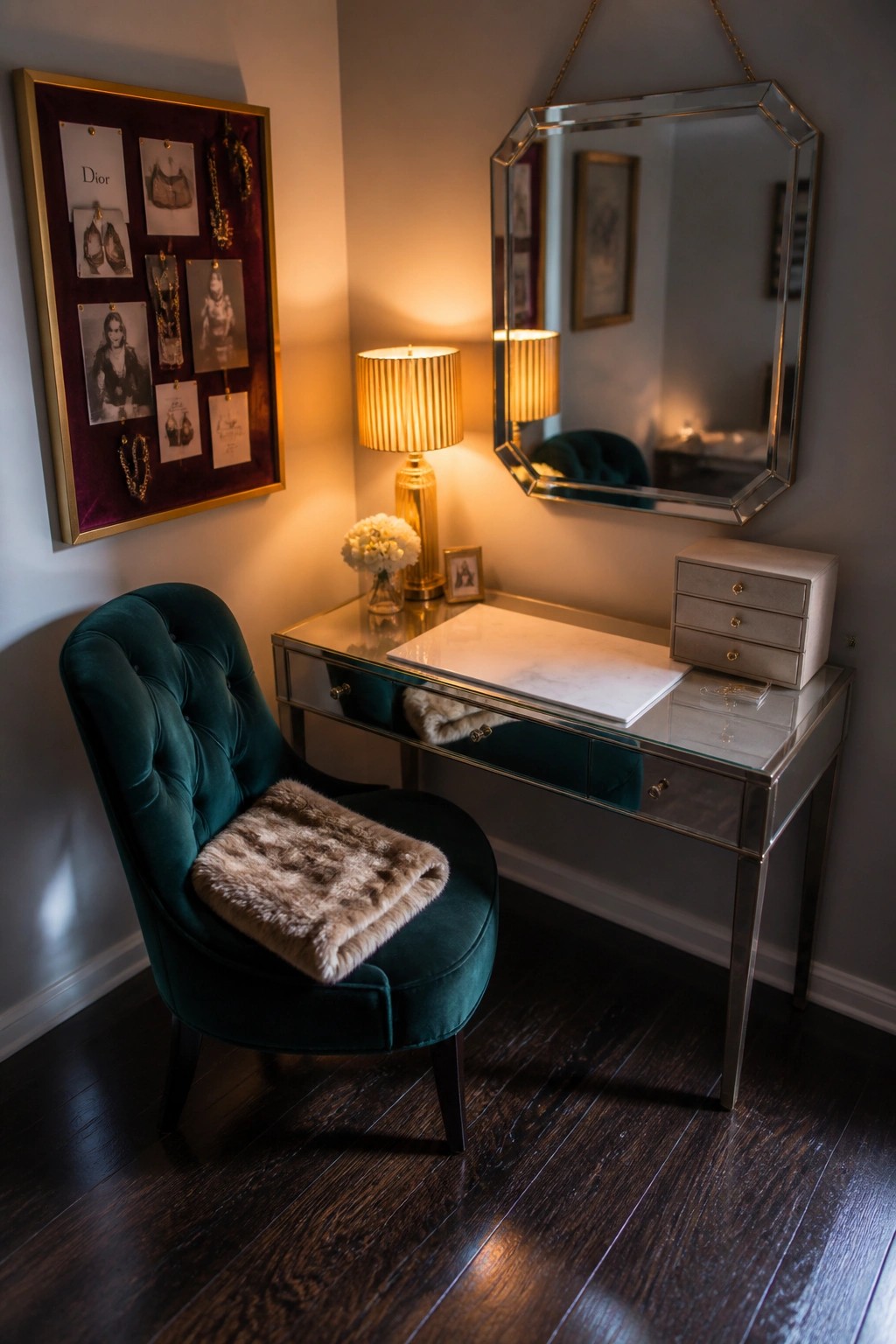
A vanity desk works well in a small office because the mirrored surfaces reflect light and make the area feel larger. It also gives you built-in storage without needing extra pieces that take up floor space.
Place the desk against a wall with a comfortable chair in front. Keep the top mostly clear and use the drawers for supplies so the surface stays open for daily work. This setup suits apartments or any room that doubles as an office.
Woven Textures In A Small Office
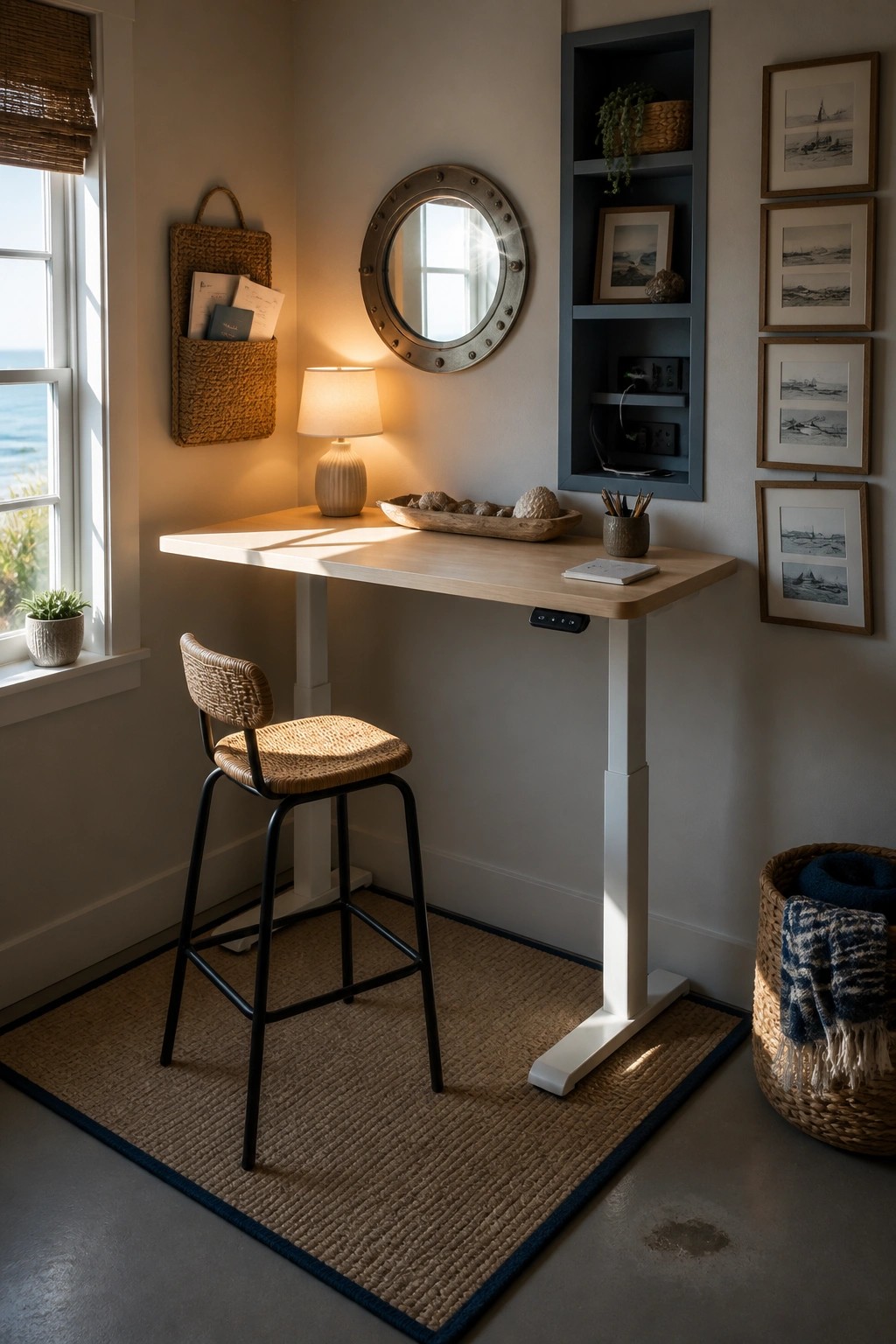
Natural woven pieces give a small workspace some character without adding visual noise. A simple chair with a woven seat and a flat rug on the floor can soften the look while still leaving the desk area open and easy to use. These materials bring warmth that painted walls alone often lack.
They suit compact rooms best when kept to just two or three items. Pair them with plain furniture and a single light source so the space stays practical rather than busy. Too many woven layers can start to feel heavy in tight quarters.
Bold Typography Art In Small Offices

A large graphic print can give a small office real personality while keeping the space clean. One strong piece draws the eye and makes the room feel finished without any extra layers or objects.
Hang it on a darker wall above the desk so it becomes the main focus. This approach suits compact workspaces that already have simple furniture and good storage.
Bench Desks For Small Work Areas
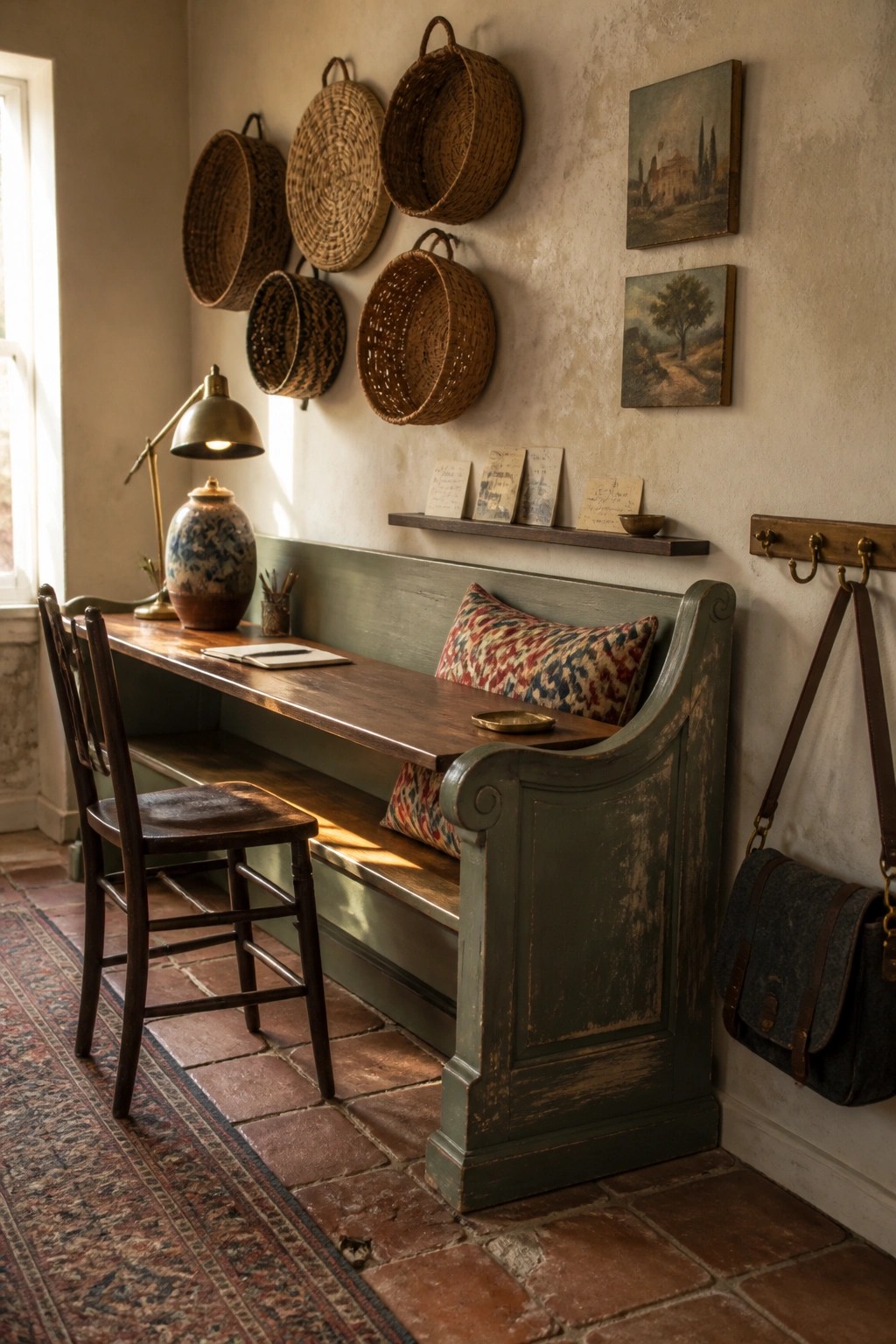
A bench with a flat top can work as a desk while still offering a place to sit. It fits into narrow spots where a standard desk would crowd the room and keeps the setup feeling open.
This approach suits older homes or small apartments where space is tight. Add wall baskets for papers and supplies so the surface stays clear and the look stays simple.
Built-In Shelving Maximizes Storage In Small Offices

Built-in shelving with closed cabinets below gives a small office room for books and supplies while keeping the desk clear. The dark finish helps the units blend into the walls so the space feels larger and calmer.
This approach works best in narrow rooms or converted spaces where floor area is limited. Keep the open shelves lightly filled and let the wood desk provide the main contrast.
Built-In Desks Under Stairs

Many homes have that empty space under the stairs that never gets used for much. Fitting a desk in there turns wasted square footage into a real workspace without crowding the rest of the room.
This approach works best in smaller homes or narrow hallways where a full office would feel too big. Keep the desk shallow with a couple of drawers and add a bench instead of a chair so the area stays open and easy to move around.
Frequently Asked Questions
Q: Where should I start if my desk is already packed with papers and gadgets? A: Clear off everything except what you use daily. Then pick one small item like a colorful mug or a framed photo that makes you smile. Add it back in a spot that catches your eye without crowding the surface.
Q: Can I use plants in a tiny office without them taking over? A: Choose one low-maintenance plant that fits on a shelf or windowsill. Water it when the soil feels dry and trim any dead leaves right away. This keeps the space fresh without extra mess.
Q: How can I organize cables so they do not ruin the look? A: Bundle them with simple ties and tuck them behind furniture. Route the main cord along the wall edge where it blends in.
