

The main table often becomes the center of attention in any room where clients spend time, which is why its proportions need to match how the space is actually used.
I noticed this after rearranging my own office and realizing the previous desk left too little room for spreading out documents during longer meetings.
Materials that hold up under regular contact tend to keep the area looking intentional instead of worn.
It helps to think about storage right from the start so the surface stays clear when visitors arrive.
Scale matters more than bold looks alone.
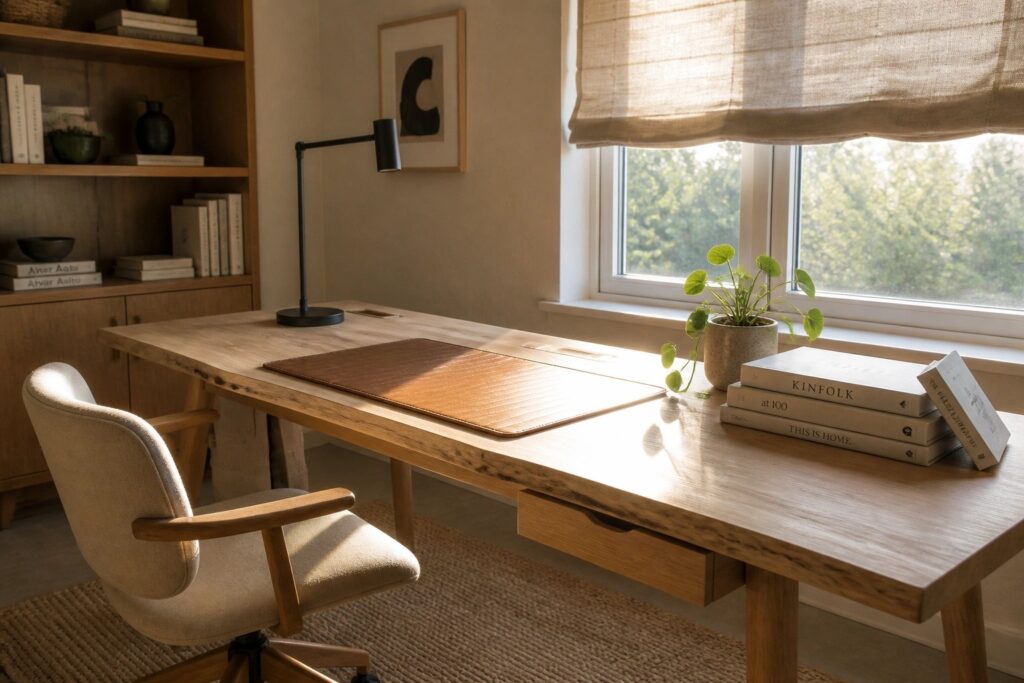
Natural Wood Desk With A Leather Mat

A solid wood desk paired with a leather mat gives an office a grounded feel without trying too hard. The wood brings warmth, while the leather protects the surface and adds a bit of texture that still feels practical.
This setup works best in smaller home offices or client rooms where you want the desk to stand out but not overwhelm the space. Keep the surrounding walls and shelves simple so the natural materials stay the main focus.
Curved Desks With Leather Fronts
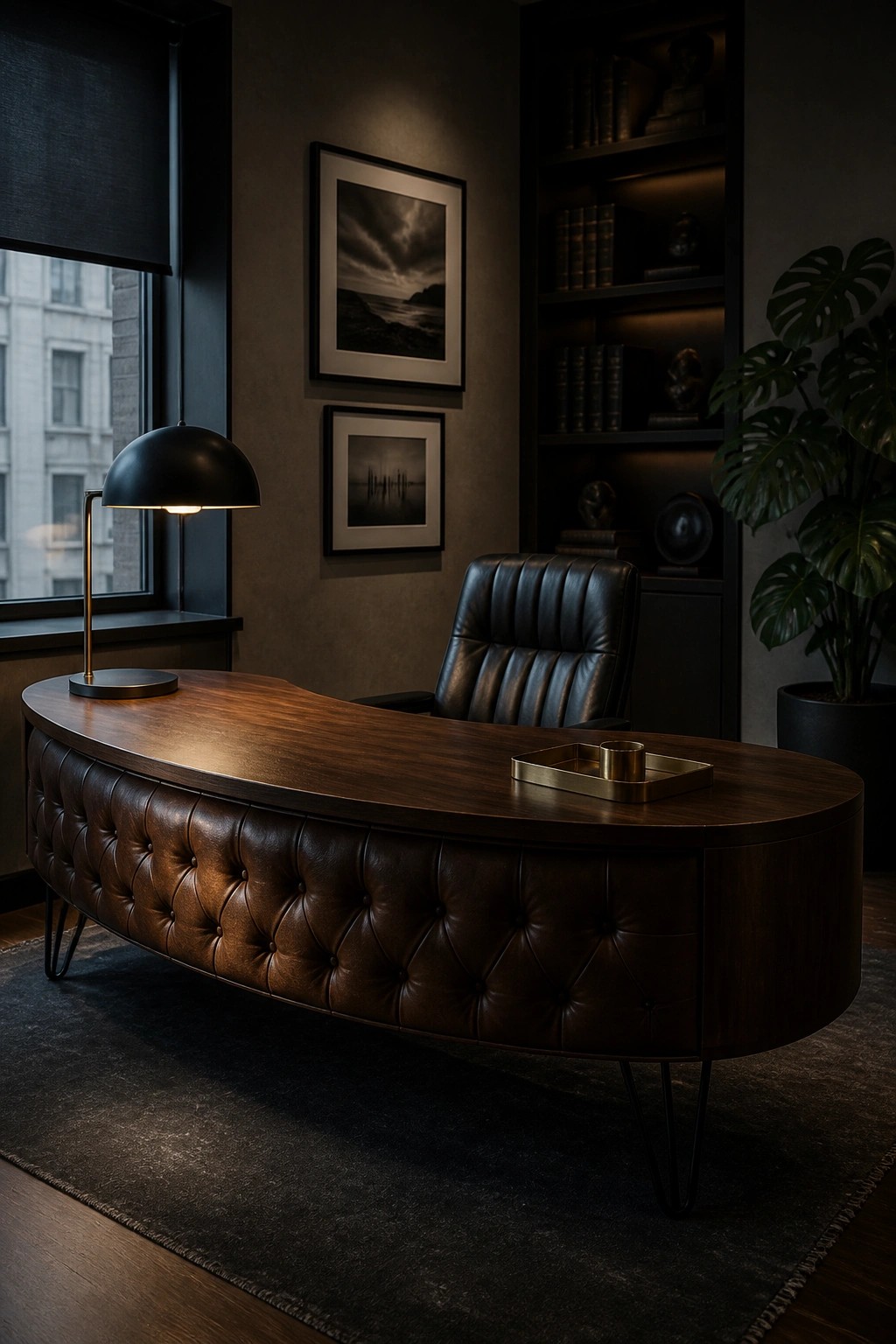
A curved desk shape works well in client-facing offices because it feels more open than a straight rectangle. The rounded edge makes it easier for people to gather around without anyone feeling boxed in at the corners.
This style suits larger rooms where the desk can sit away from the walls. Keep the surface mostly clear and let the material mix on the front do the work. It reads as professional without trying too hard.
Long Wood Tables As Office Desks
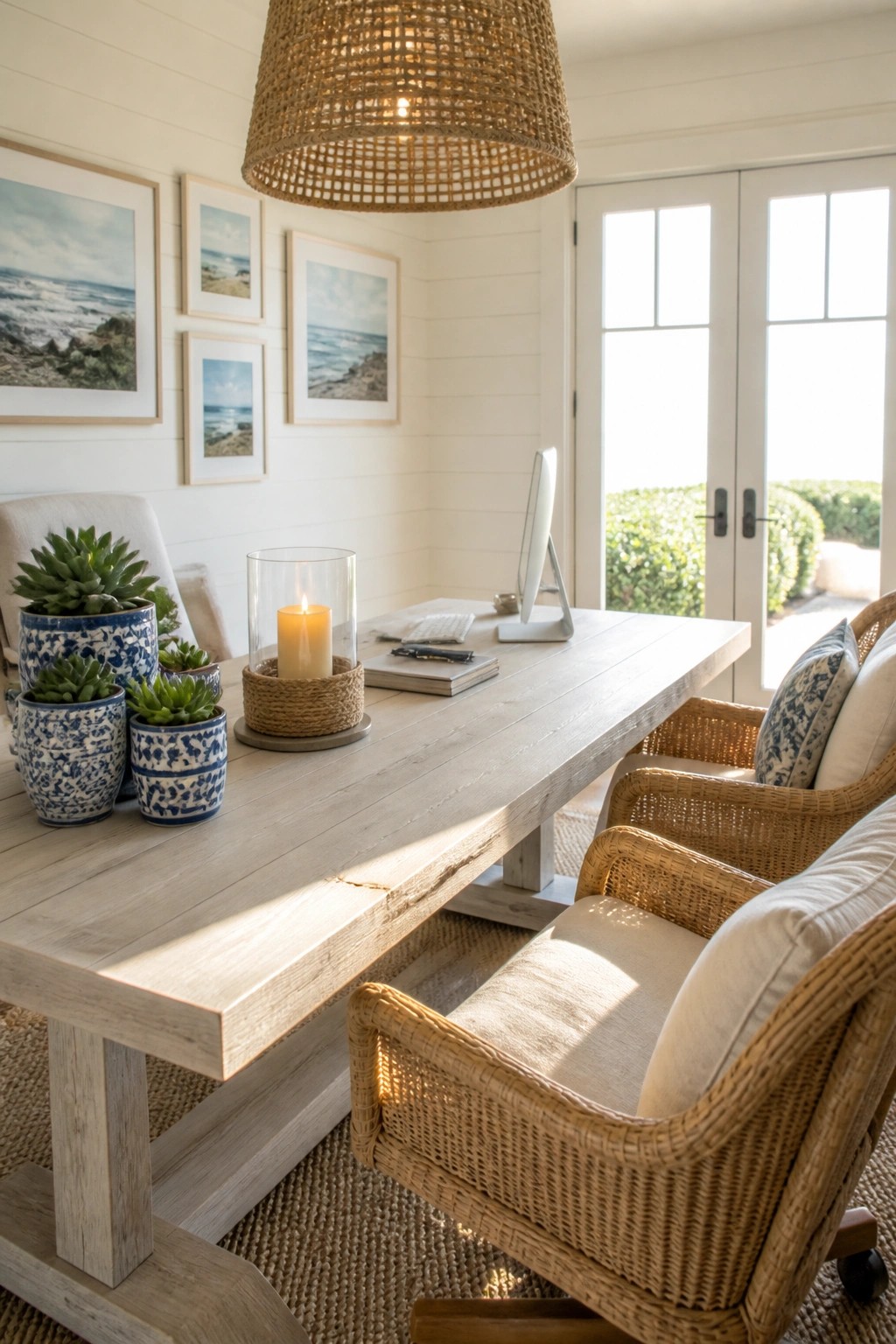
A long wood table works well as a desk when the goal is to keep the room open and easy to use. It gives a solid work surface without making the space feel crowded or overly formal.
This approach suits client rooms best because the natural finish stays warm and simple. Keep the rest of the seating light so the table remains the main focus without competing pieces around it.
Solid Wood Bases For Glass Desk Tops
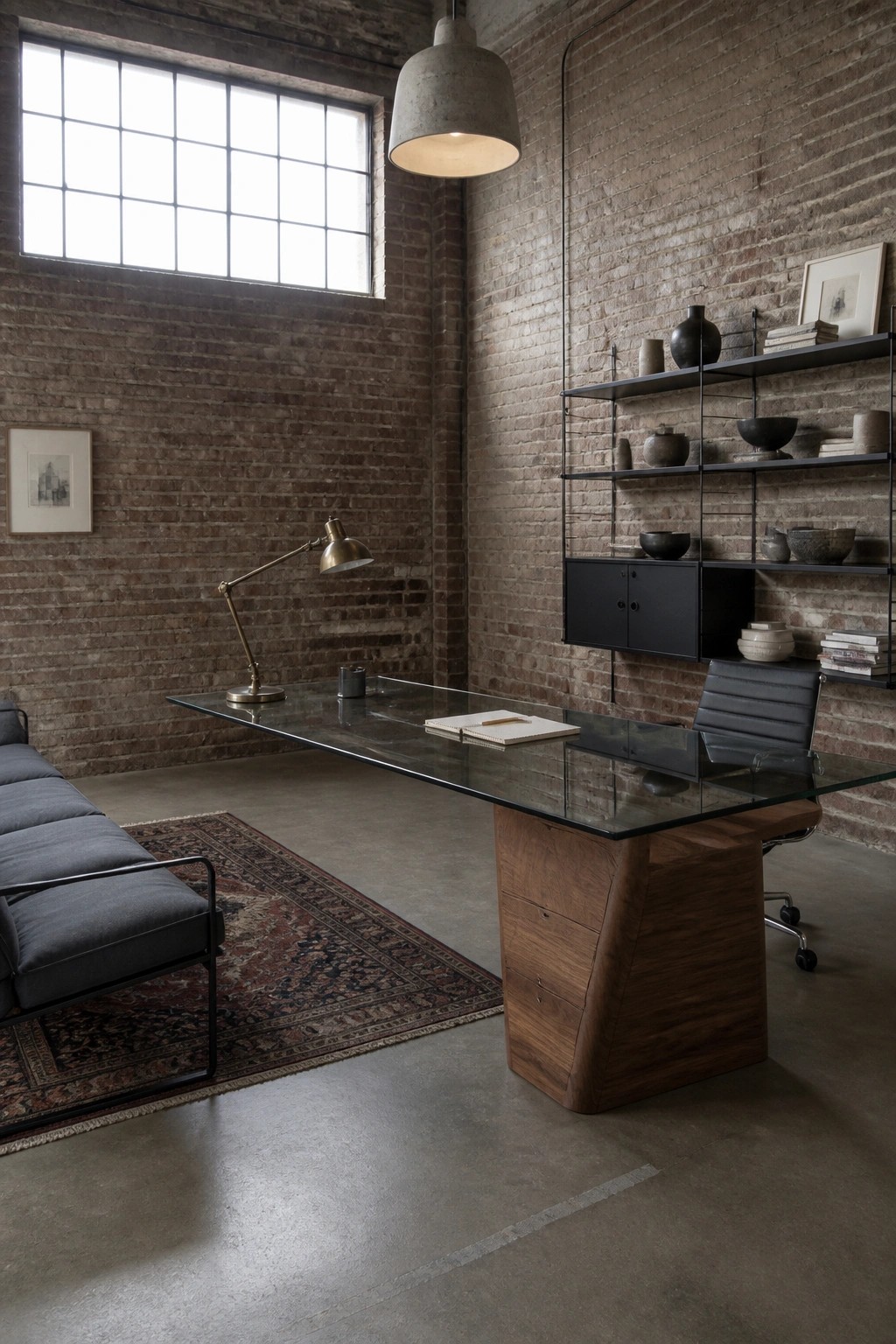
A thick wood base gives a glass desk real presence without weighing down the room. The solid material anchors the piece and creates a strong visual contrast that works especially well in larger offices or client spaces.
This style suits industrial or modern rooms where you want the desk to feel substantial but still keep sight lines open. It works best when the base has clean lines and enough width to balance the glass on top.
Natural Wood Tables With Bold Grain
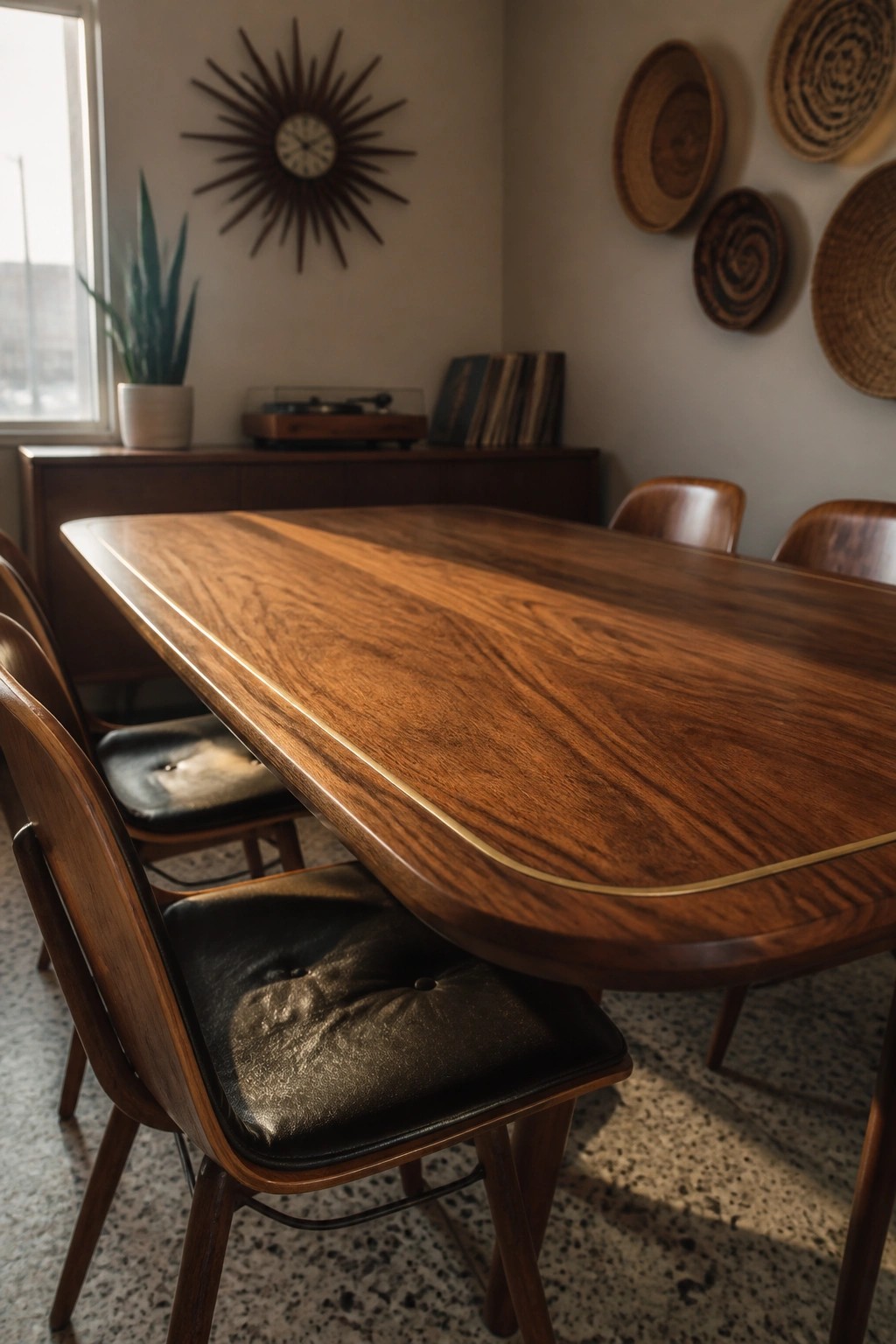
A table made from wood with a clear, strong grain pattern can carry a whole room on its own. It gives weight and presence without extra decoration, which works especially well in offices or client spaces where you want the furniture to feel serious but still warm.
This approach suits rooms that stay fairly simple otherwise. Pair the table with basic seating and keep wall details low so the surface stays the main focus. Watch the scale though, since a big solid piece like this needs enough floor space around it to feel balanced.
Dark Desks That Hold Their Own
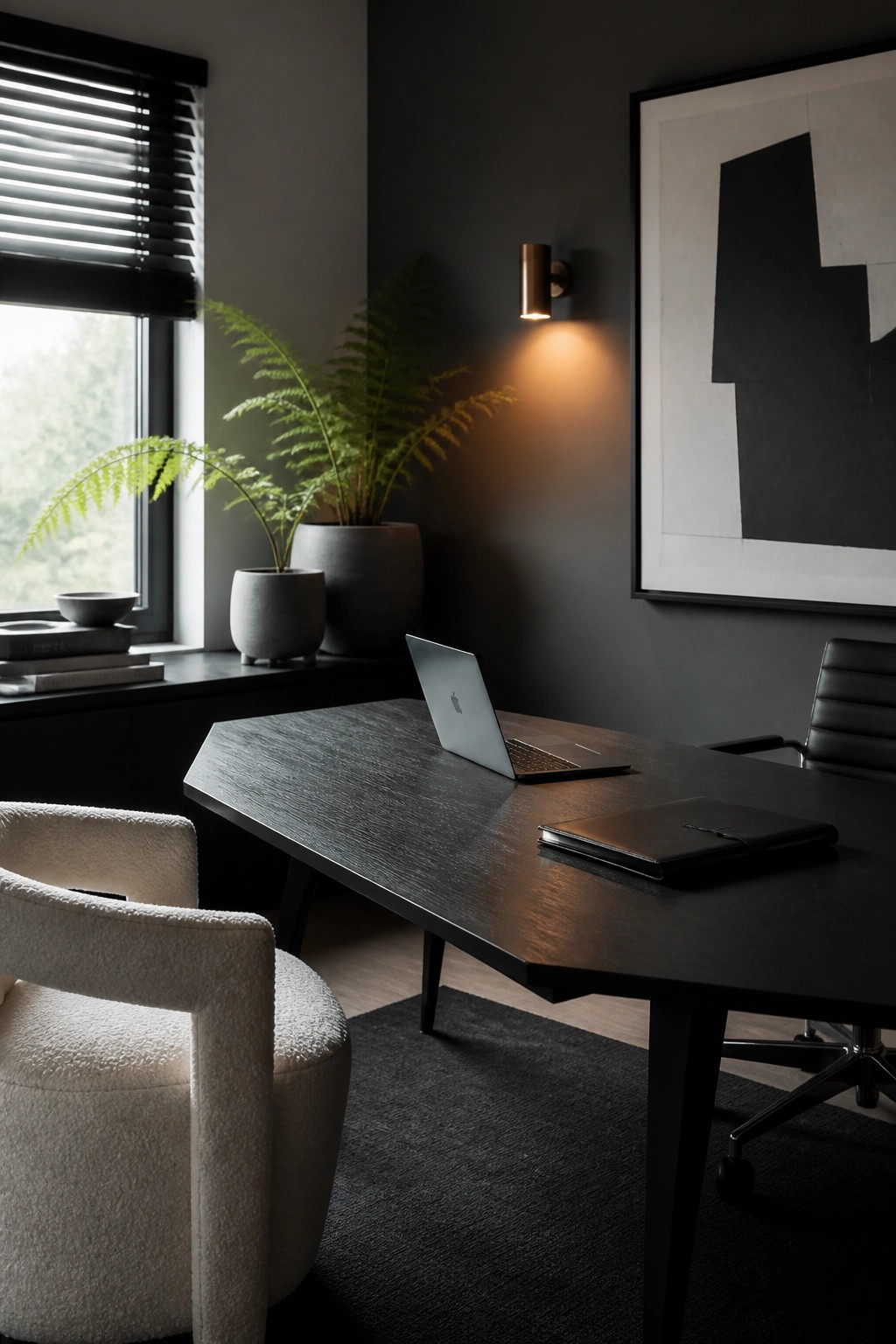
A dark desk works well when the walls are kept dark too. It creates a strong, grounded look that feels intentional rather than heavy.
This approach suits home offices or small client rooms where the table needs to carry the space. Pair it with a few lighter pieces so the room does not feel closed in.
Reclaimed Wood Desks For Strong Office Presence
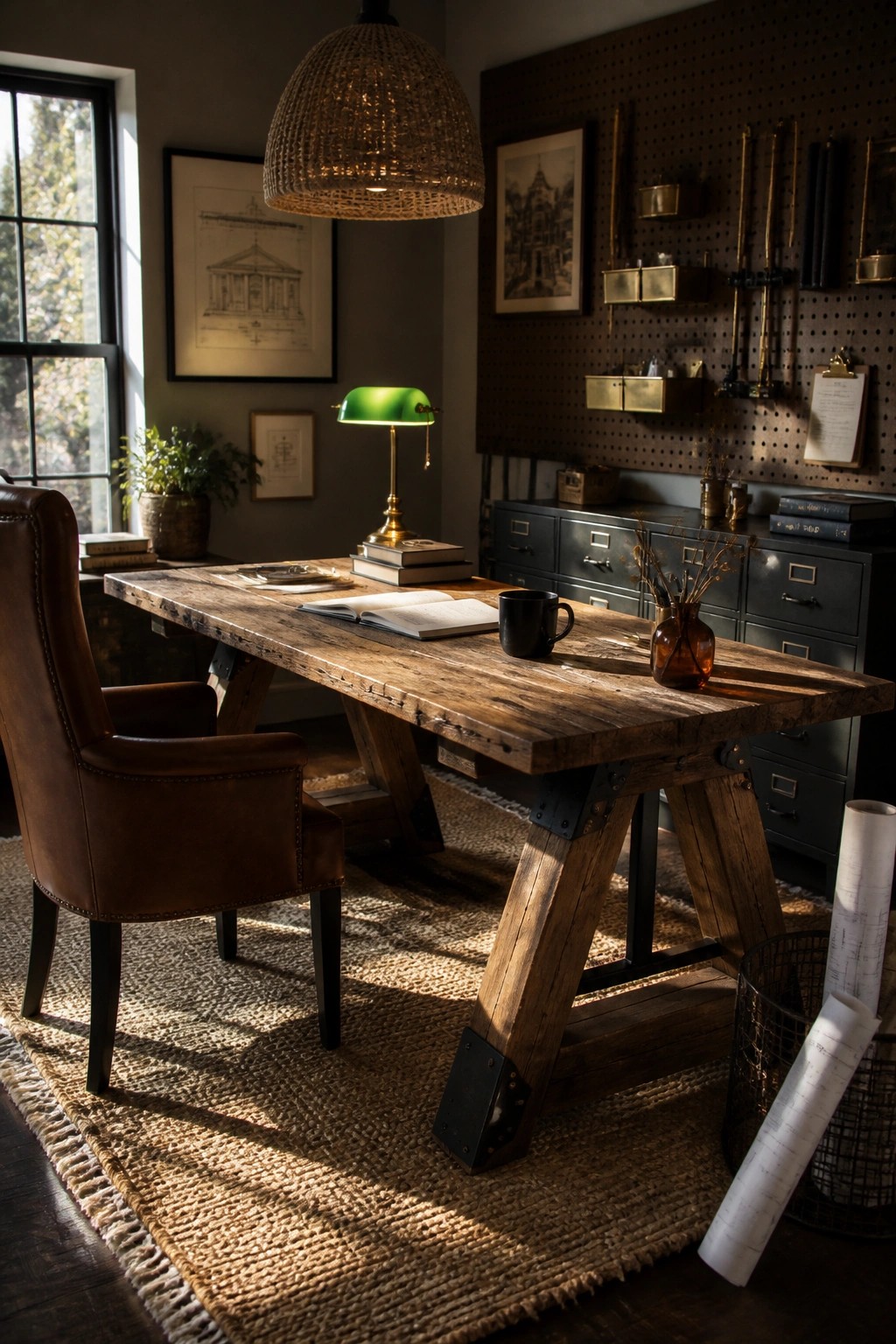
A big reclaimed wood desk gives an office real weight and presence. The thick top and sturdy base make the whole room feel more grounded, especially when the rest of the space stays fairly simple.
This works best in home offices that already lean rustic or industrial. Pair it with basic storage like a pegboard so the desk stays the clear focal point instead of competing with too many other pieces.
Marble Tops with Leather Blotters
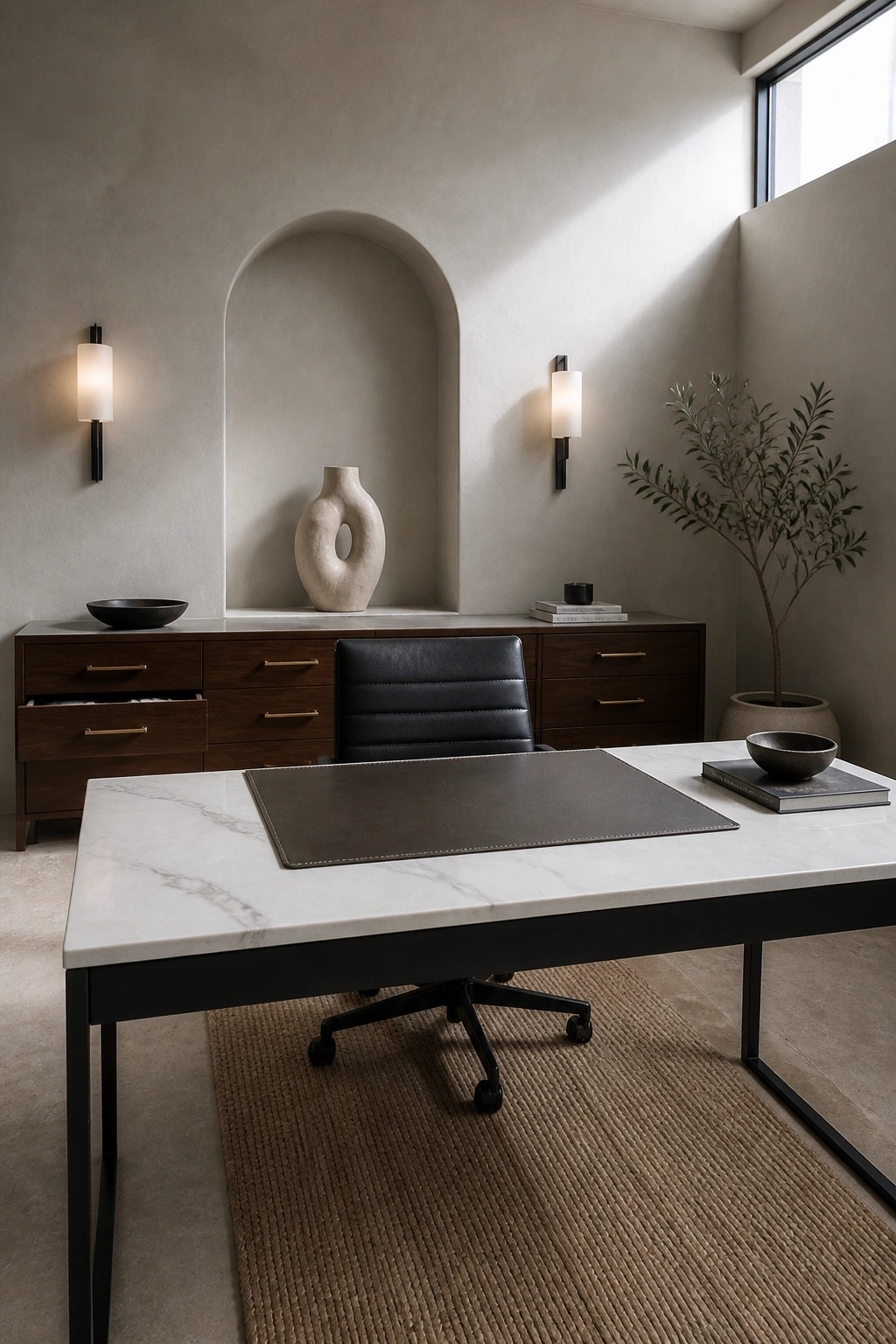
A marble desk surface gives an office a grounded and professional presence. The stone feels substantial and holds up well to daily use, especially when paired with a leather blotter that protects the top and marks out a clear workspace.
This setup works best in client-facing rooms where you want the desk to feel substantial but not overly styled. Keep surrounding surfaces simple so the marble and leather remain the main focus.
Natural Wood Desks For Quiet Offices
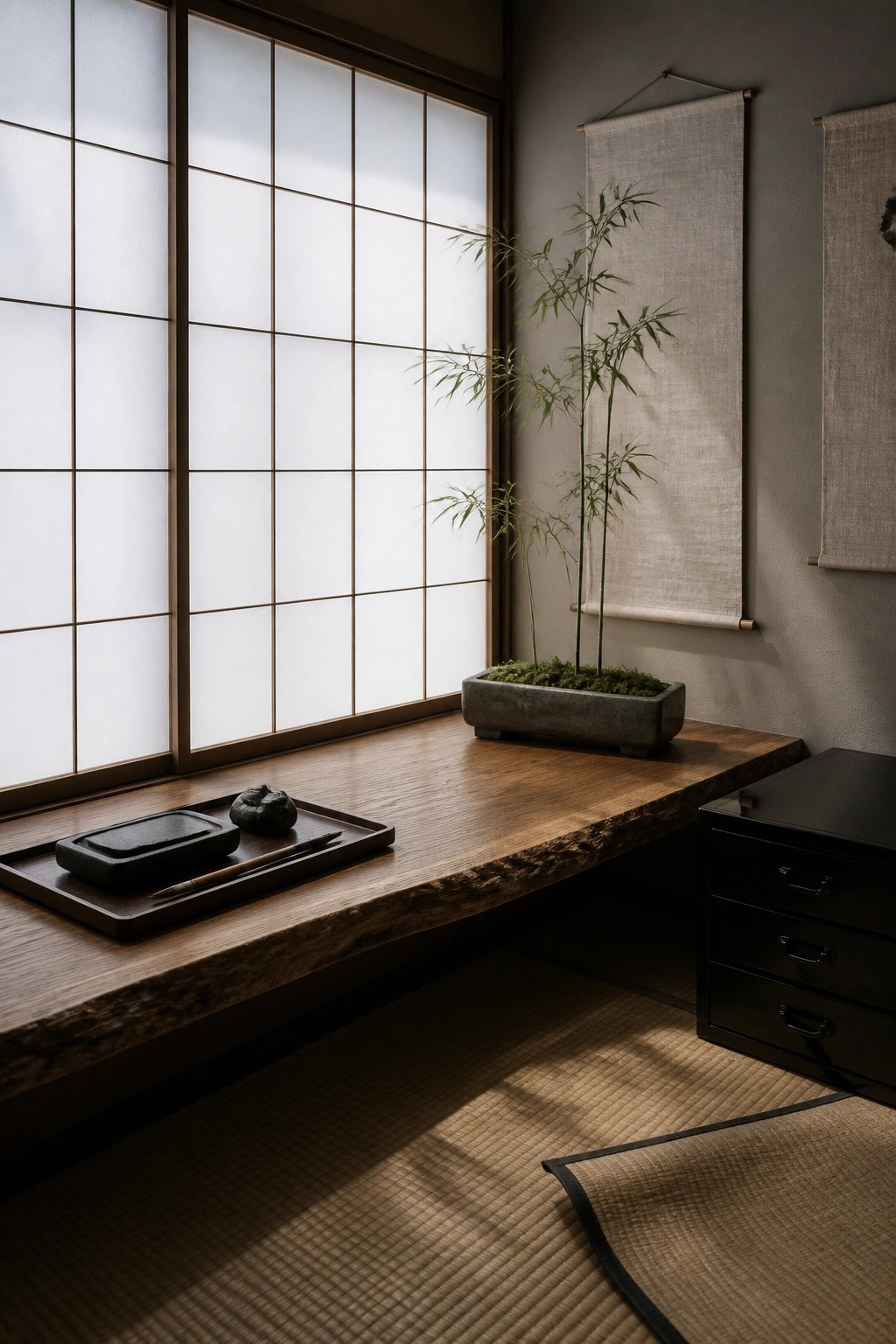
A thick slab of wood makes a strong desk choice because it feels solid without trying too hard. The surface holds up well to daily use and pairs easily with very few other pieces in the room.
This works best in smaller or low-key spaces where you want the desk to stand out on its own. Keep the rest of the setup simple so the wood stays the main focus.
A Large Wood Desk For Client Meetings

A big solid wood desk gives an office real presence without needing lots of extra pieces. It handles both daily work and in-person meetings on the same surface, which keeps the room from feeling split between two functions.
This approach suits a home office that sees clients now and then. Leave enough clear space around the desk so people can pull up a chair easily, and keep surrounding storage low so the wood stays the main feature.
Curved Reception Desks
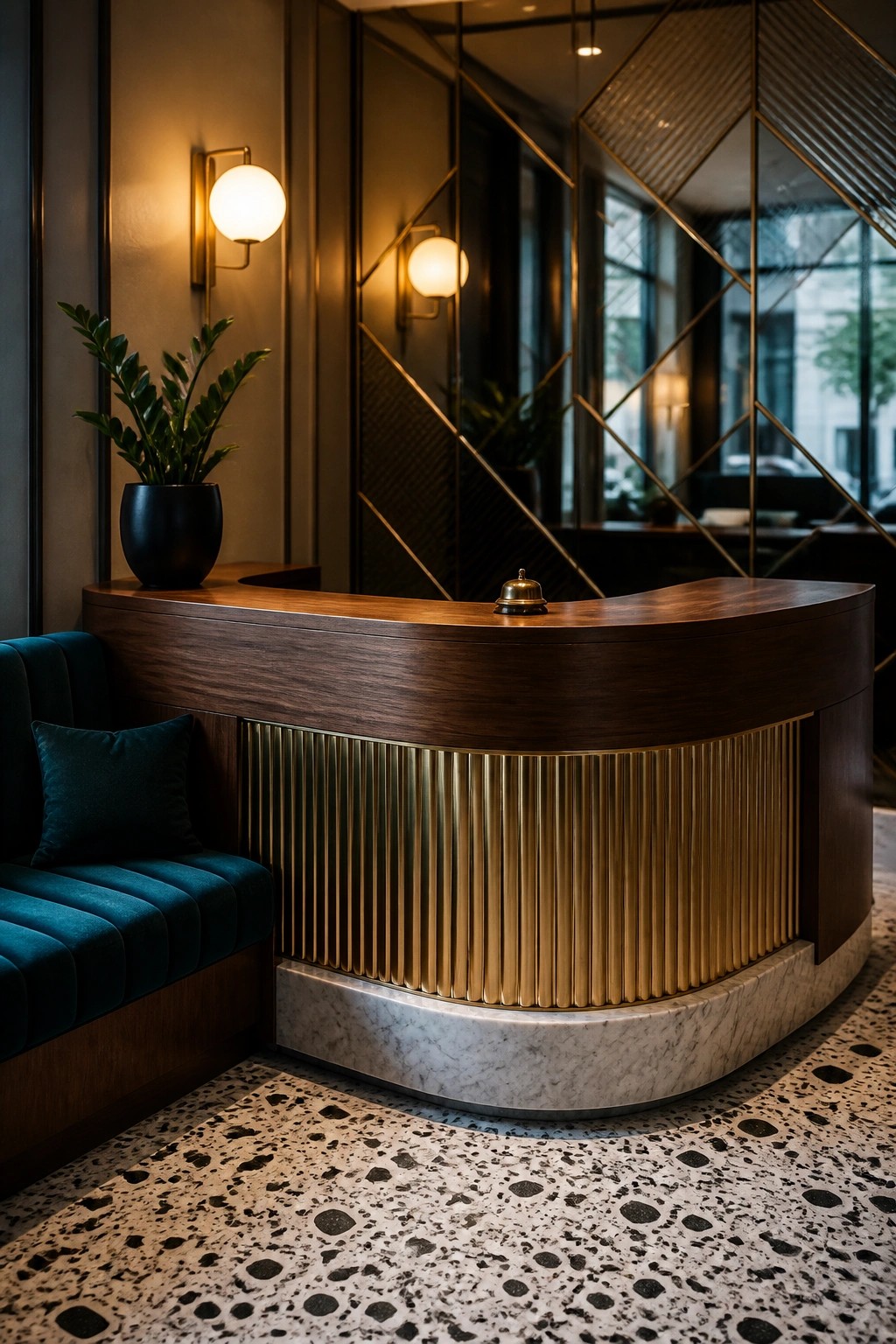
A curved desk works well in reception areas because it softens the boundary between staff and visitors. The rounded shape avoids the stiff barrier a straight desk often creates and makes the space feel more open.
This layout suits smaller lobbies or client rooms where traffic moves in different directions. Pairing a wood top with a lower metal base keeps the desk from feeling too bulky while still giving it presence.
Desk Placement In A Bay Window
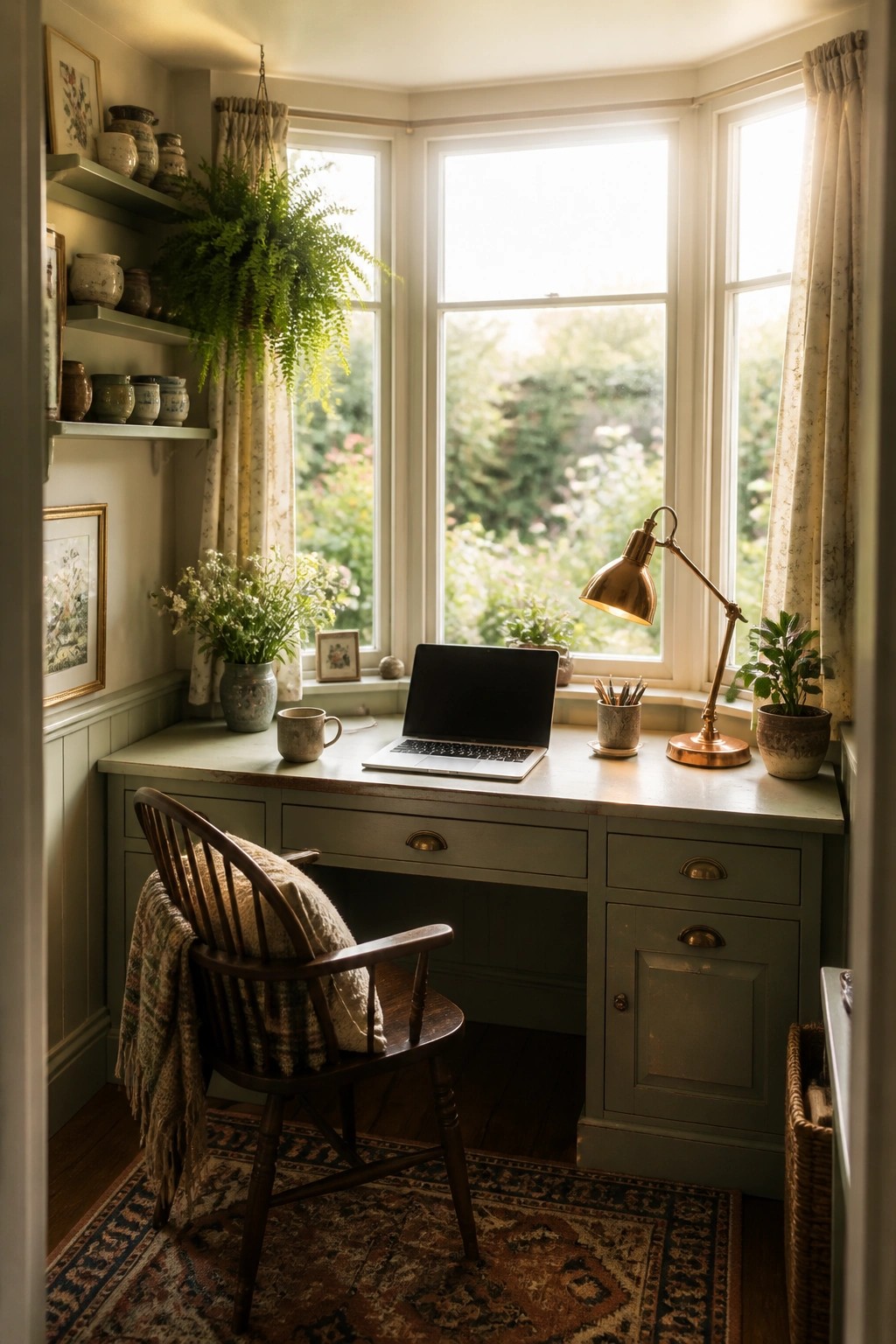
Putting a desk right in a bay window gives the workspace steady natural light all day. The setup feels open without needing extra lamps during working hours, and the view helps the room feel less closed in.
This layout suits smaller home offices or client rooms where space is tight. Keep the desk shallow enough that the chair still has room to pull back, and use light curtains if the sun gets too strong in the afternoon.
Concrete Desks for a Strong Office Statement
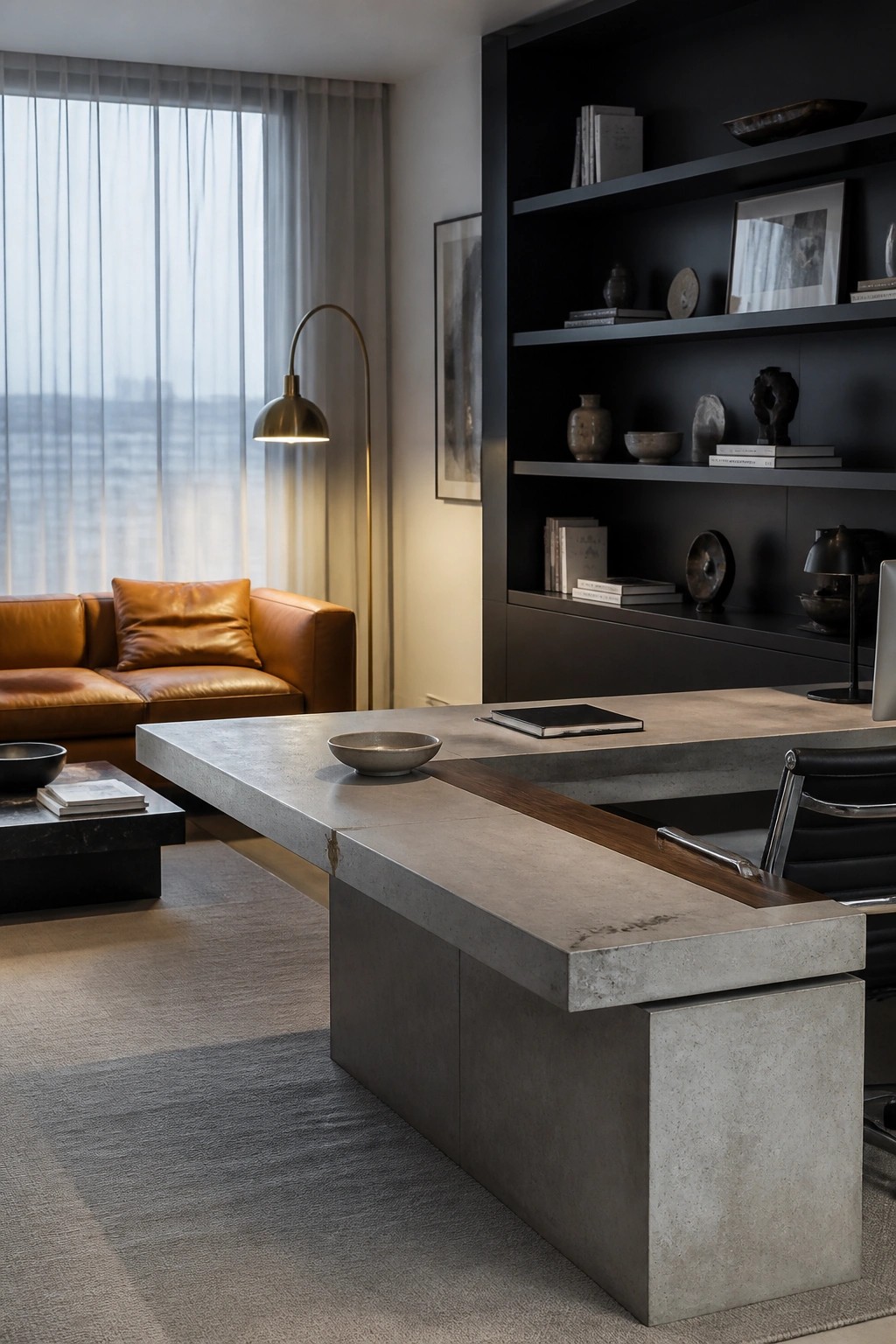
A heavy concrete desk brings real presence to a home office. The material feels solid and permanent, which helps the space read as professional rather than temporary.
This choice works best in rooms used for client meetings or focused work. Keep surrounding pieces simple and let the desk carry the weight of the room.
Painted Cabinets as Desk Bases
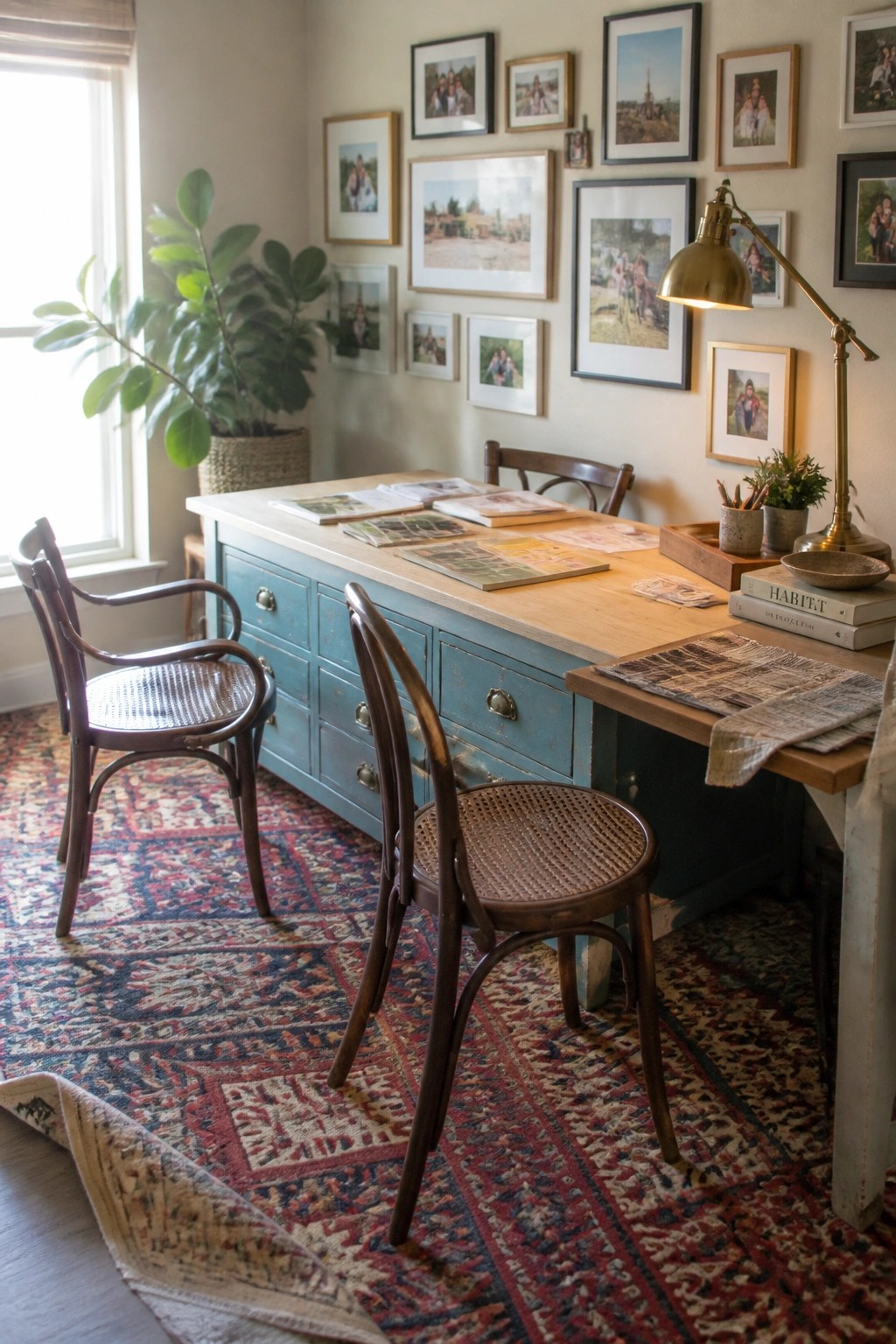
A painted cabinet or sideboard can make a strong base for a desk when you want storage and color in one piece. The solid lower section holds files and supplies while the added wood top gives a smooth work surface that feels more substantial than a standard desk.
This setup works best in a home office that gets some client visits or needs to look put together without feeling too formal. Keep the top fairly clear during the day and choose chairs that sit at a comfortable height so the whole area stays practical for daily use.
Curved Desks Improve Client Meetings
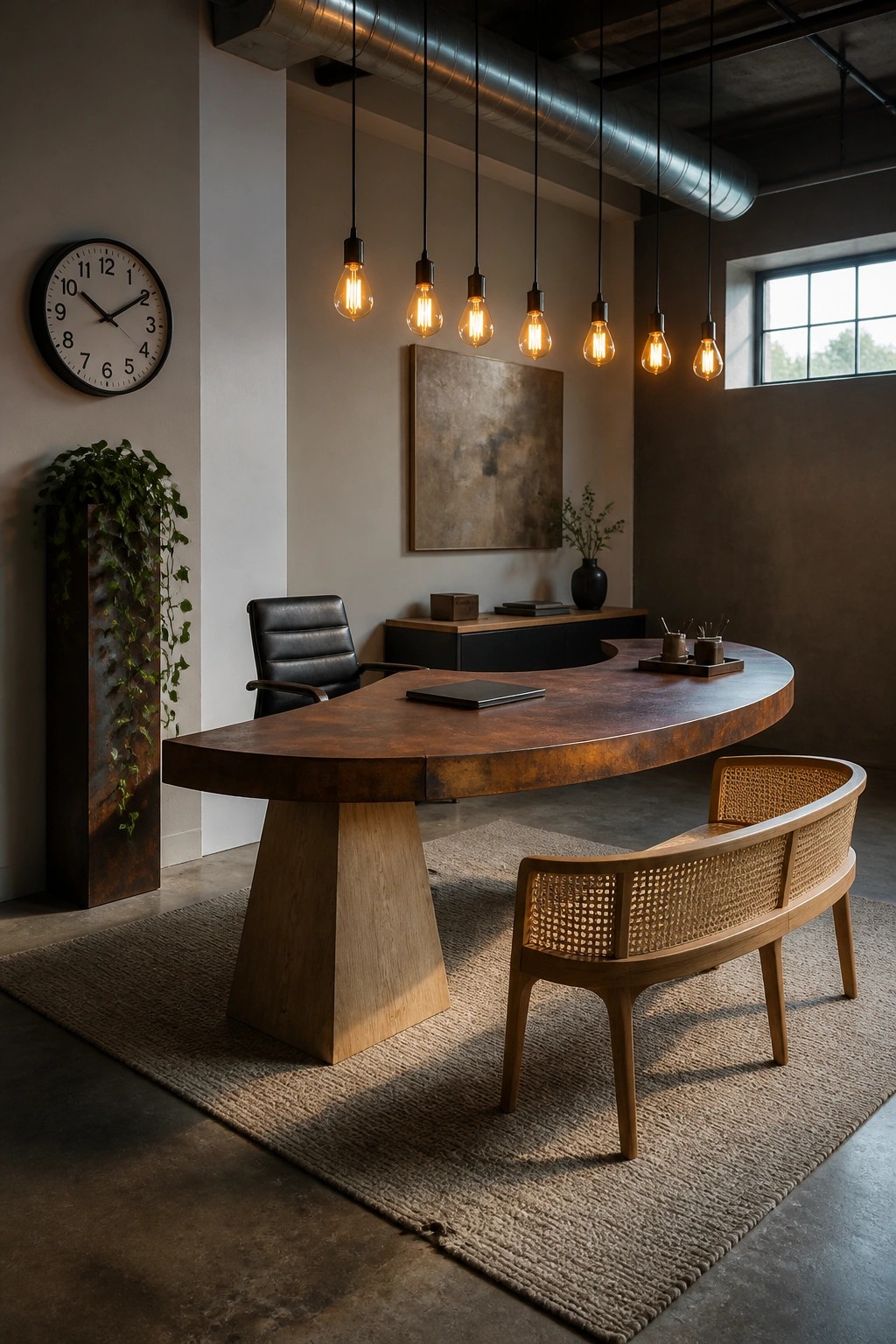
A curved desk changes the feel of a meeting. The rounded shape brings people closer and removes the stiff line of a traditional rectangle, which can make conversations feel more natural.
This layout works well in client facing rooms where discussion matters more than a formal setup. Keep the rest of the space simple so the desk stays the main focus.
Farm Tables Used as Office Desks
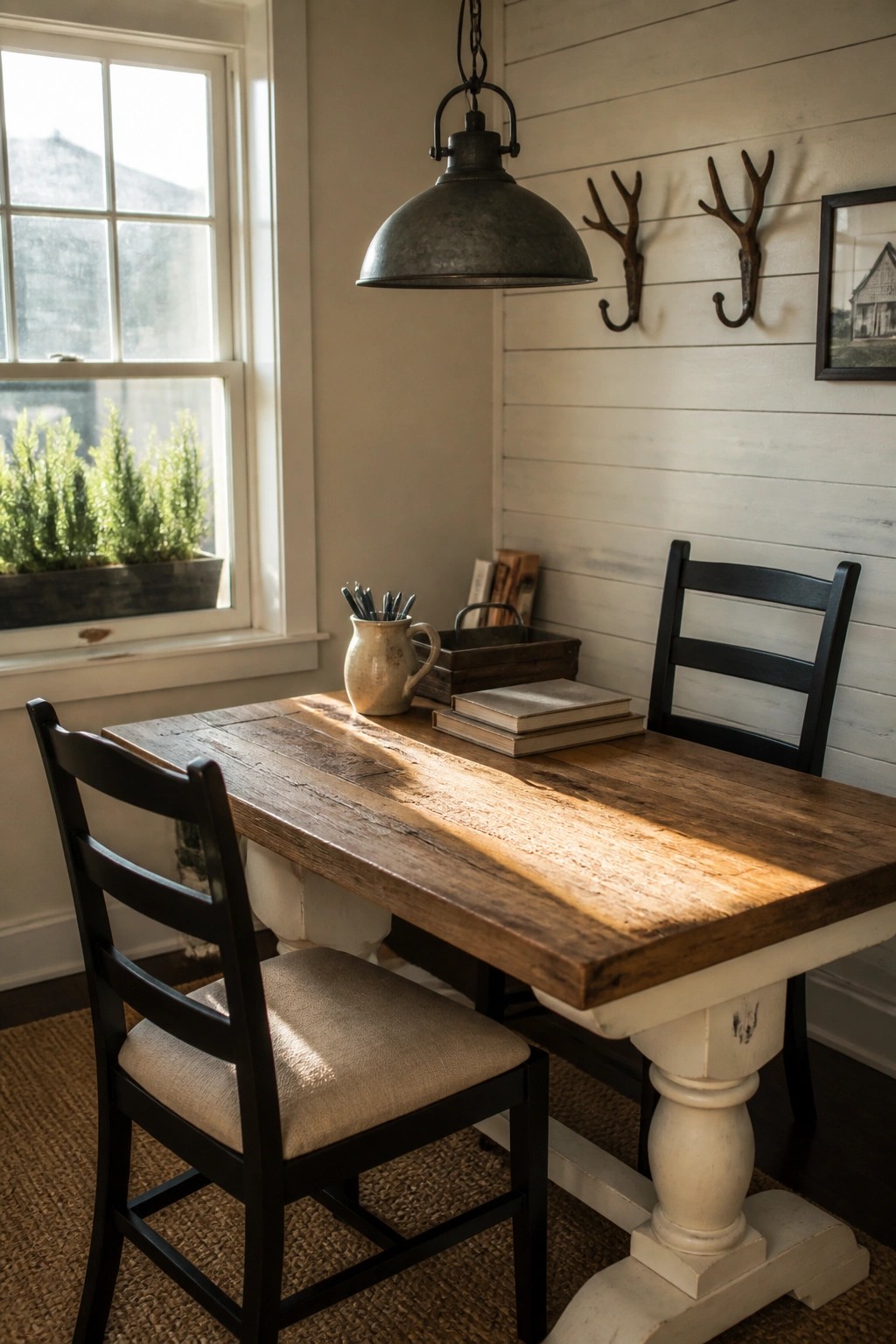
A farm table works well as an office desk because it gives you a wide, solid surface without looking like typical office furniture. The natural wood grain adds character while the simple shape keeps the room from feeling cluttered or overly styled.
This choice suits home offices or client rooms where you want something sturdy and welcoming. Keep the base painted a light color so the wood top stands out, and pair it with plain chairs that do not compete for attention.
A Clean White Desk For A Calm Workspace
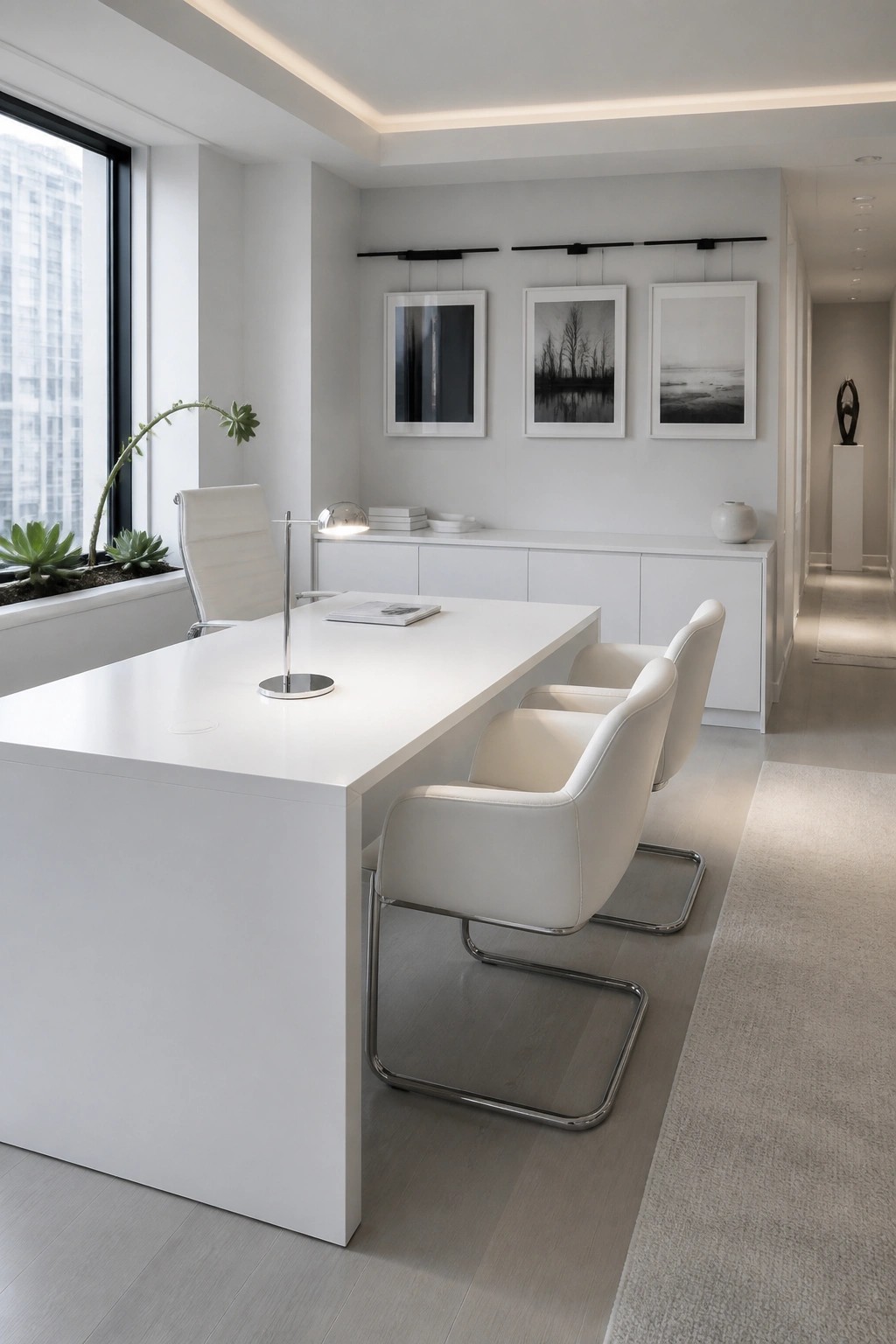
A white desk works well when the goal is to keep an office feeling open and quiet. The simple shape and light color reduce visual noise, which helps during long meetings or focused work.
This approach suits smaller client rooms or home offices where you want the desk to feel substantial without dominating the space. Pair it with matching light chairs and keep wall details minimal so the desk stays the main element.
Live Edge Desks For Natural Character
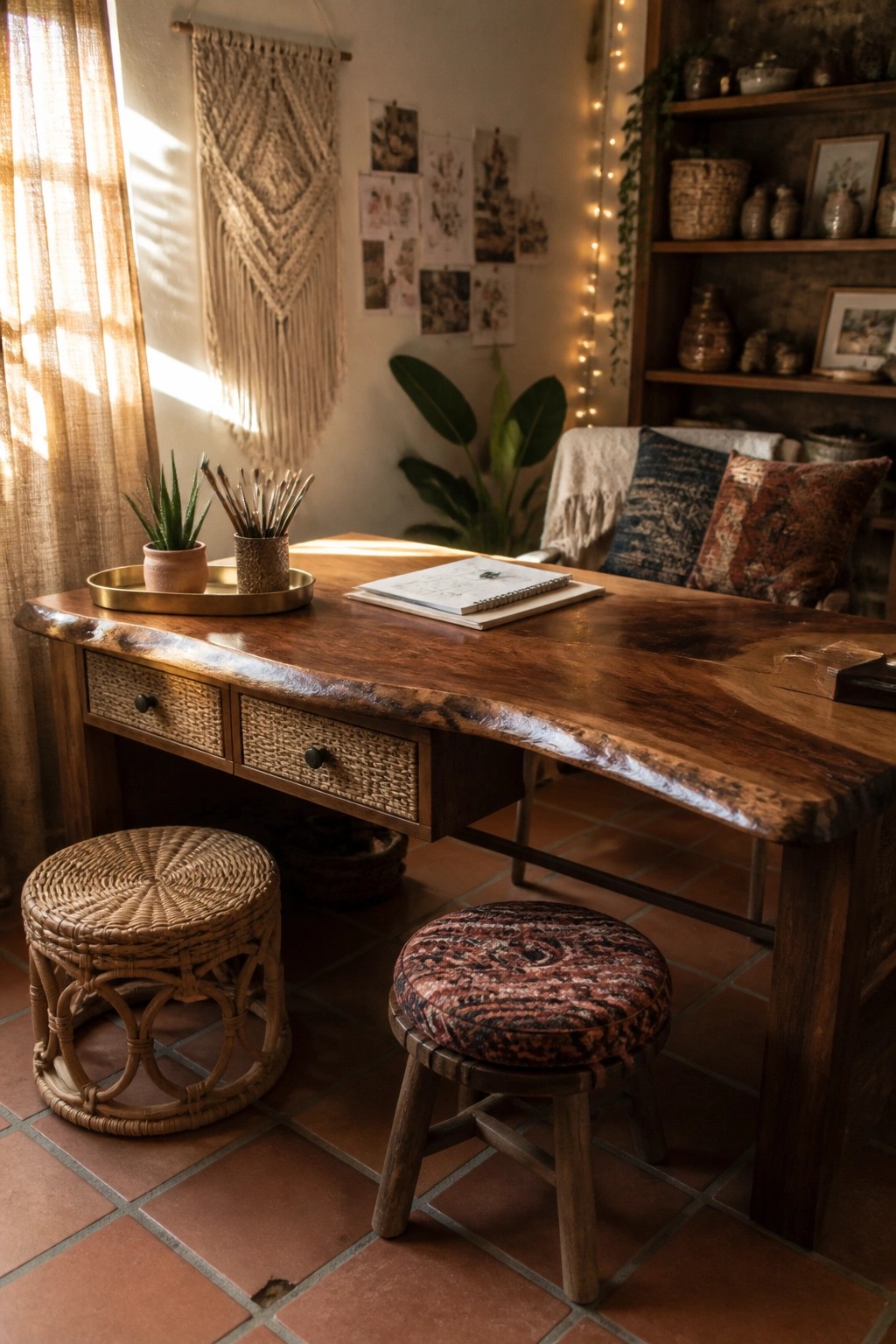
A live edge desk works well when you want the table itself to carry most of the visual weight in a workspace. The uneven wood edge and visible grain keep the piece from feeling like standard office furniture and give the room a steadier, more grounded presence.
This choice suits homes that already use wood and natural textures elsewhere. Keep the surface fairly clear and pair the desk with simple seating so the wood remains the main feature rather than competing with extra decor.
A Large Desk Sets the Office Apart
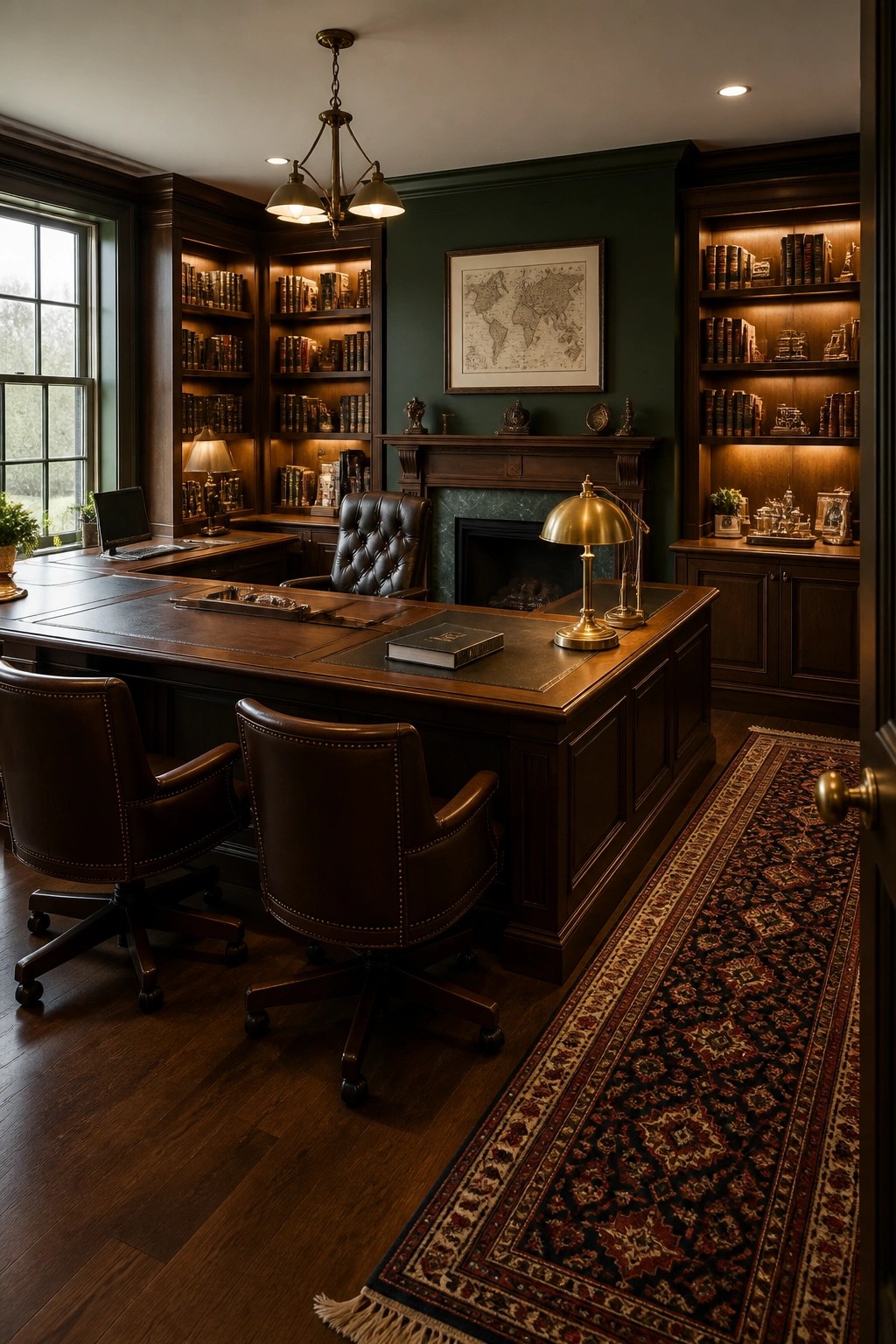
Many home offices benefit from a desk that actually fills the room instead of sitting small against one wall. The size makes the space feel purposeful and ready for work or meetings rather than just an extra room with a table in it.
This layout works best in homes where the office gets used for clients or serious projects. Leave enough floor space on all sides so the desk does not crowd the room, and pair it with built-in storage so the scale stays balanced.
A Glass Top On A Wood Stump Base
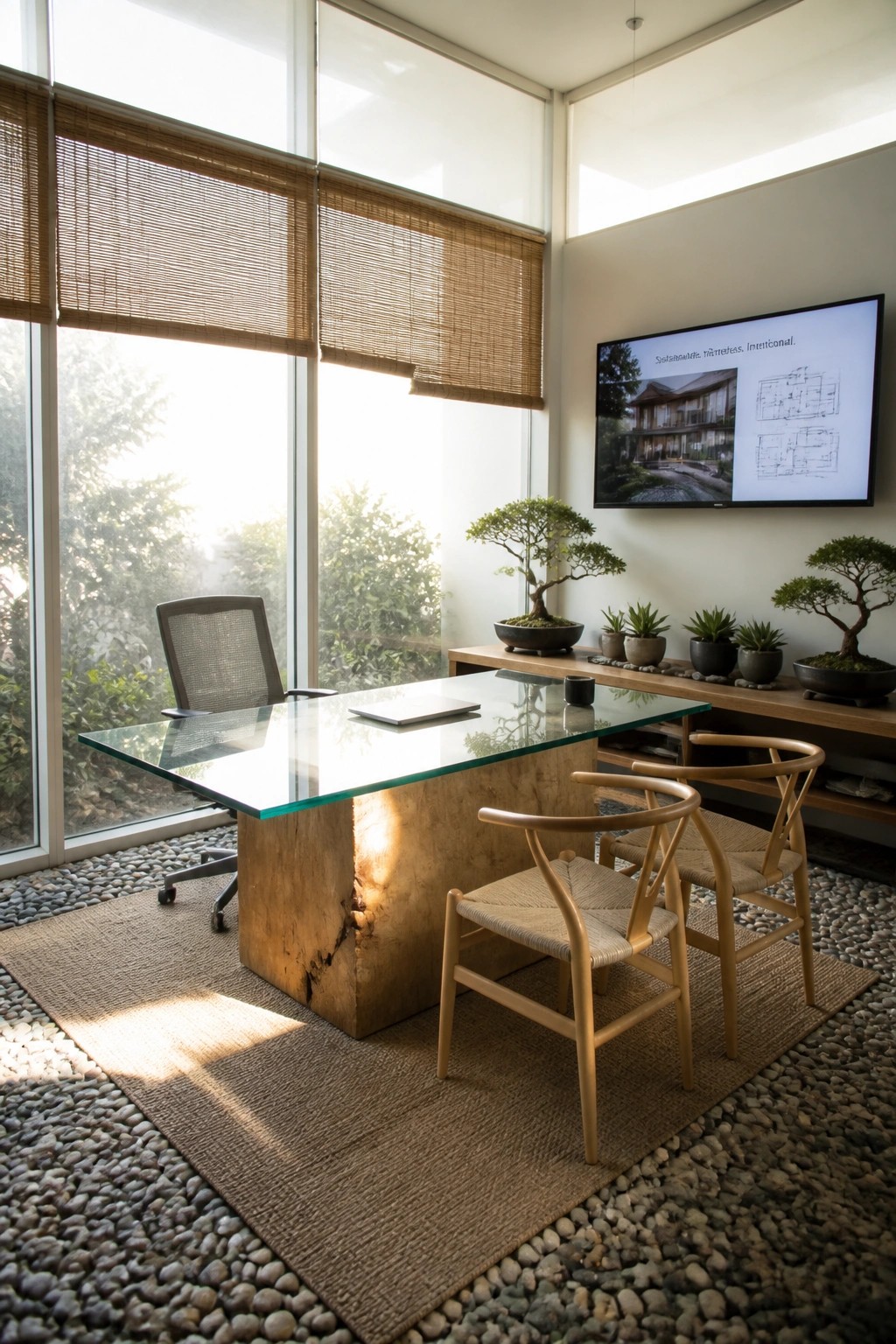
A desk like this catches attention because the base is one solid piece of wood instead of legs or a built-in cabinet. The glass top keeps the surface practical for work while letting the wood grain and shape show through clearly.
This setup suits a home office that already leans natural or has good daylight. It works best when the rest of the room stays simple so the desk can stand out without competing with too many other pieces.
A Heavy Wood Desk for Client Rooms

A solid wood desk brings real presence to any office that sees clients. The material feels permanent and serious in a way that lighter tables rarely do, and it holds up well to daily use without looking worn down quickly.
This approach works best in rooms with deeper wall colors and minimal extra pieces around the desk. Keep the surrounding seating simple so the desk stays the main feature without competing for attention.
Solid Wood Tables For Bold Office Spaces
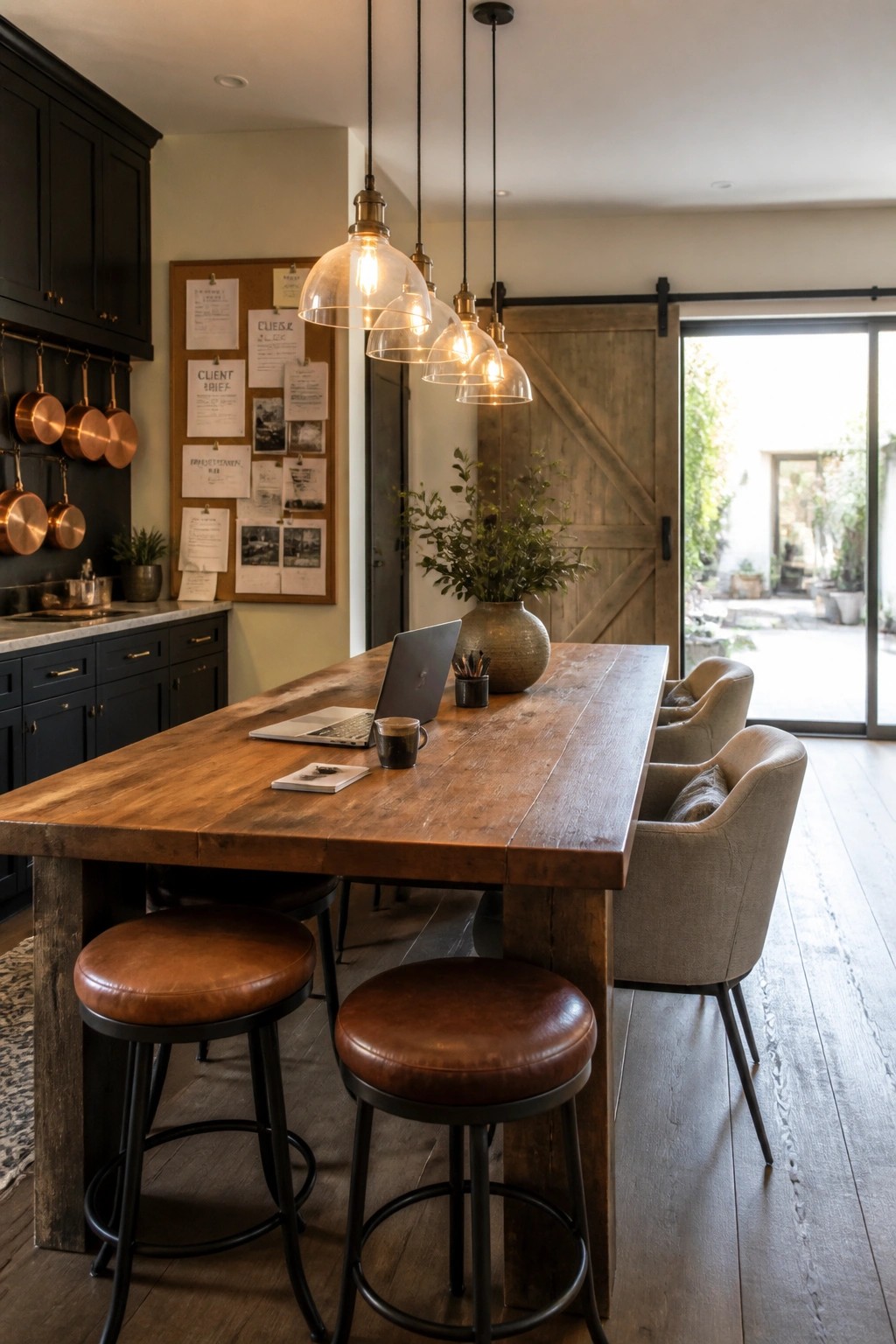
A large wooden table brings real presence to an office that needs to double as a client meeting spot. The thick top and sturdy legs make the whole room feel more grounded without any extra effort.
This setup works best in home offices or creative studios where you want one surface that handles both daily work and occasional meetings. Keep the chairs simple and mix in a few stools so the space stays flexible.
Floating Desks With Under Lighting
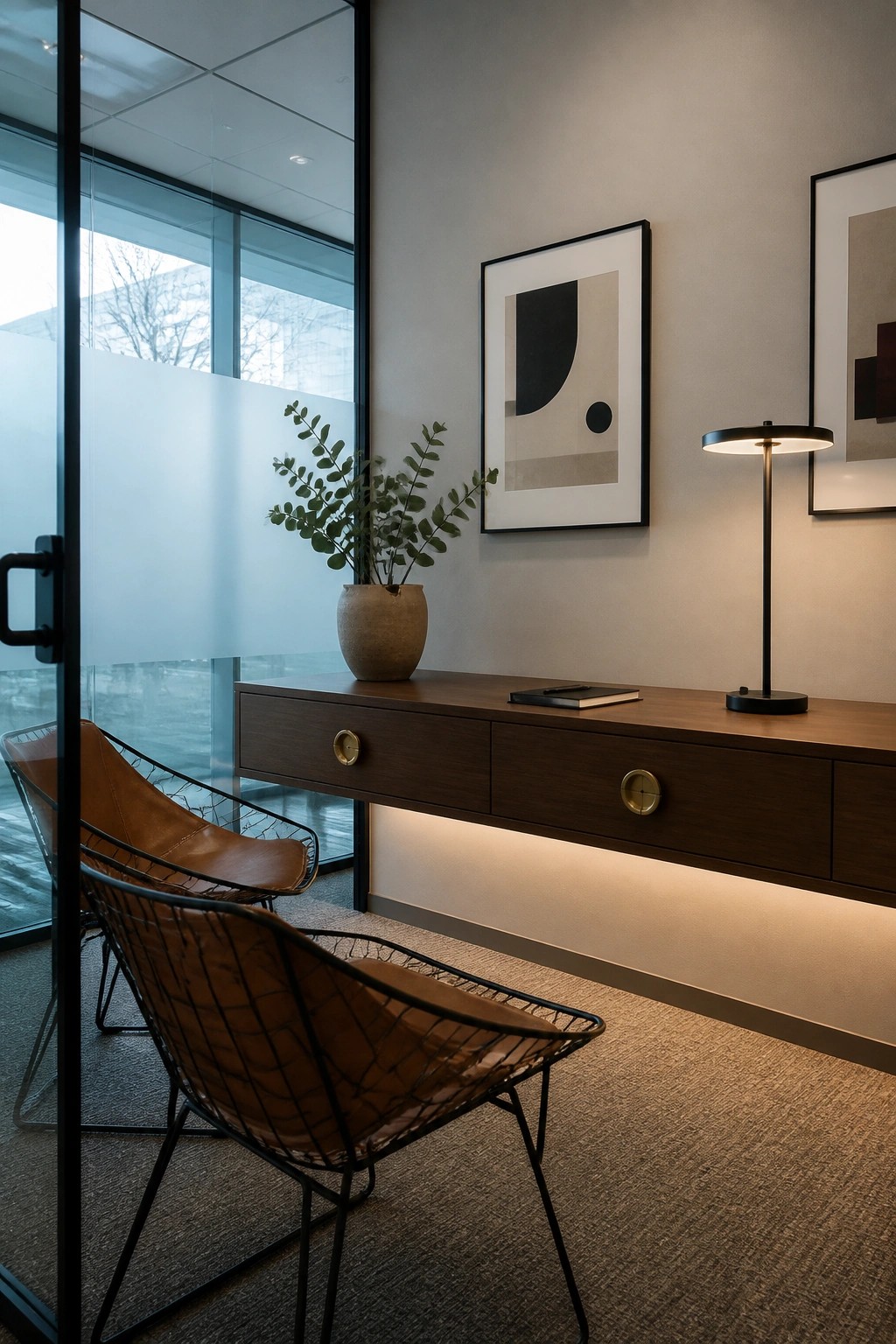
A floating desk gives the room a lighter feel because nothing touches the floor. The strip of light underneath adds just enough glow to make the workspace feel finished and a bit more welcoming at night.
This approach works best in smaller offices or client rooms where you want the space to stay open. Keep the desk surface fairly clear and let the built-in light do most of the work.
Built-In Planters Down The Middle Of A Long Table

A long work table with a narrow planter running through the center keeps plants close without crowding the surface. The greenery stays in one contained line, which makes the table feel more alive while still leaving plenty of room for papers and meetings. It works especially well when the room needs to feel both productive and welcoming.
This approach suits larger home offices or client spaces where the table serves multiple people at once. It helps if the planter sits low enough that chairs can slide in easily on both sides. Keep the plants simple and low-growing so they do not block views across the table.
Large Desks For Client Meetings
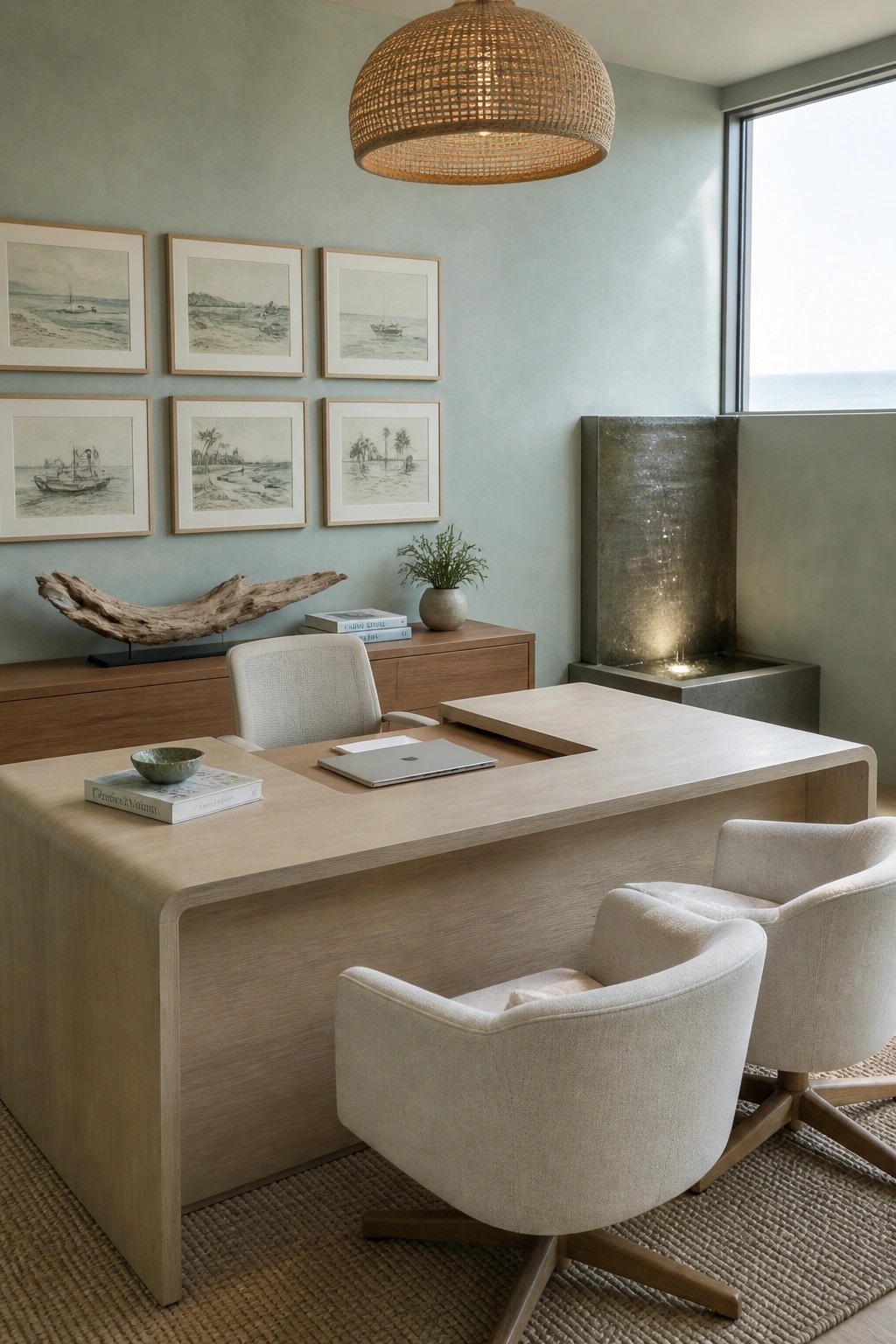
A big desk gives an office real presence. It takes up space in a way that feels solid and ready for work, which helps when clients come in and you want the room to feel serious without trying too hard.
This approach works best in rooms that are already fairly open. Keep the other furniture low and simple so the desk stays the main thing. It suits homes where the office gets used for actual meetings rather than just daily computer work.
Frequently Asked Questions
Q: What size table works best if I need space for both my computer and client presentations?
A: Measure the room and leave room for chairs to pull out easily. A table around 60 inches wide gives you enough surface without crowding the space. Test it with your usual setup to see how it feels during a meeting.
Q: How can I protect a wood statement desk from spills during meetings?
A: Wipe up messes right away with a soft cloth. Choose a desk with a sealed finish to handle light moisture better. Keep coasters handy for drinks that clients bring in.
Q: Should I add storage to a bold desk or keep it minimal?
A: Go minimal if the desk already makes a statement. Extra drawers can clutter the look you want. Use a nearby credenza for files instead.
