

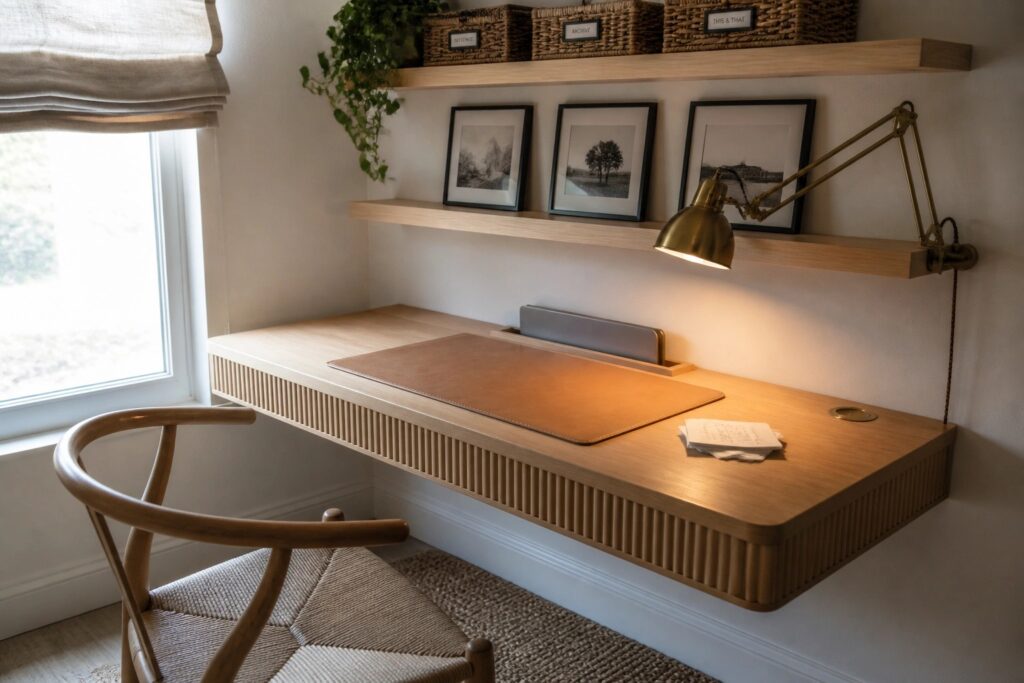
I’ve found that desks tend to collect clutter fast when there is no real plan for where things go at the end of the day.
A workspace only feels calm when the layout actually supports how you move through tasks without reaching for things that are always in the way.
My own setup improved once I added a few hidden spots for daily papers instead of relying on surface trays alone.
Certain designs stand out because they treat storage as part of the desk itself rather than something added later.
I usually try one small change at a time to see if it fits how the room gets used over a full week.
Mount The Desk On The Wall

A wall-mounted desk keeps the floor area open and makes the room feel less crowded. It works well when you want a simple work spot without a bulky piece of furniture taking over the space. The surface stays clear because there are no legs or drawers underneath to collect clutter.
This approach fits smaller rooms or homes that need the area to serve more than one purpose during the day. Add a few shelves above for papers and supplies so the desk itself does not have to hold everything. Make sure the brackets are strong enough to support daily use.
Pull-Out Storage Right Under The Desk
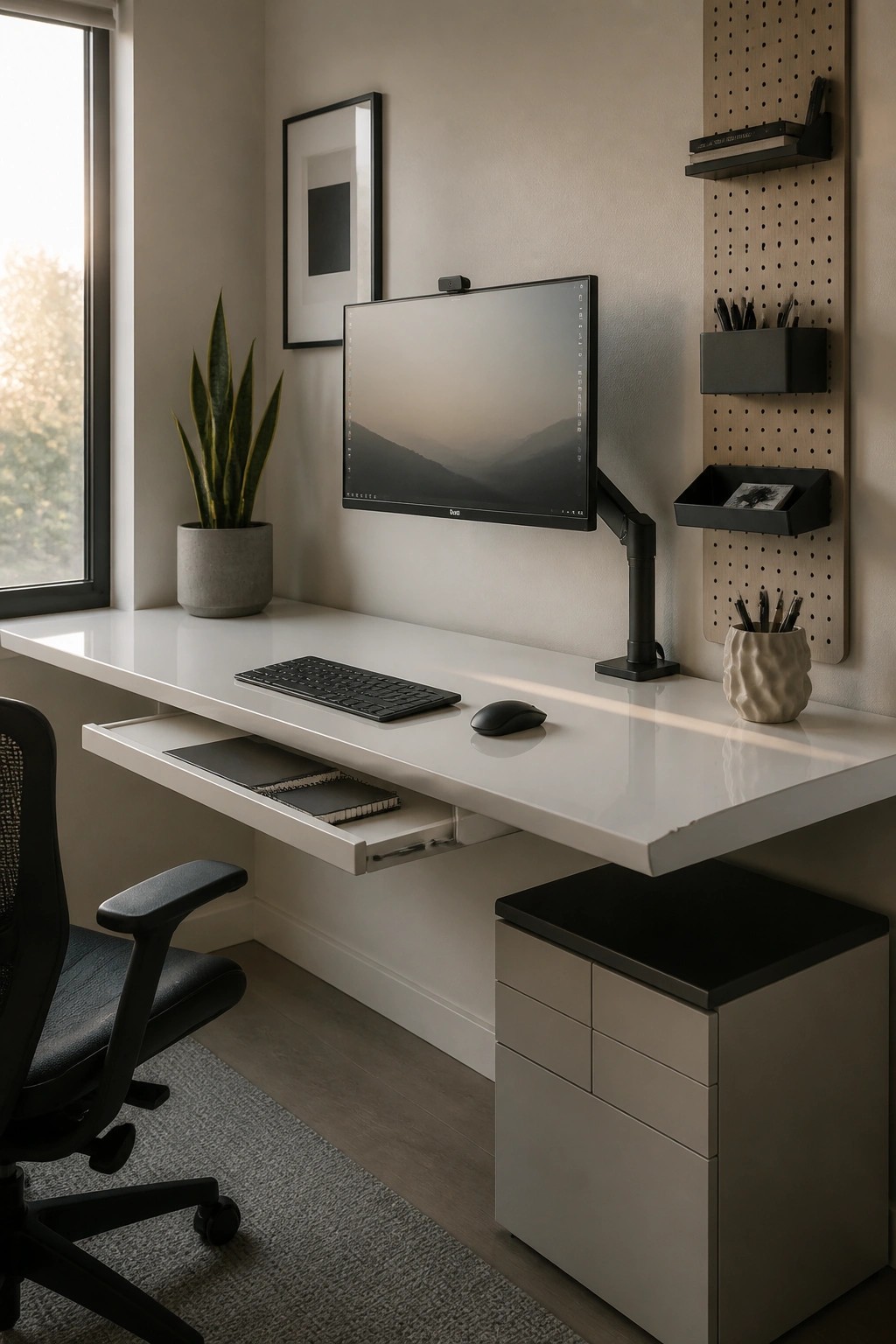
A pull-out tray built into the desk gives you a place to keep notebooks and papers without leaving them spread across the top. It keeps the main surface clear for the keyboard and mouse while still letting you reach what you need during the day.
This works well in smaller home offices where every inch counts. Mount a pegboard above the desk for pens and small items, and the whole setup stays tidy without extra furniture taking up floor space.
Built-In Storage Keeps The Desk Clear

Many desks now include compartments and trays that hold daily items without crowding the work surface. This approach hides keyboards, papers, and small supplies while leaving the top open for actual tasks.
It suits smaller home offices where every inch counts. Choose pieces with matching wood tones so the storage feels like part of the desk instead of extra furniture added later.
Fold-Down Desk With Hidden Storage

A built-in desk with hidden compartments makes it easier to keep the work surface empty at the end of the day. Shelves above and baskets below hold supplies in labeled bins so nothing needs to stay out in the open.
This setup works best in a small room or a space that serves more than one purpose. The fold-down surface gives you a place to work when you need it and tucks away when you do not.
Wall Shelves Keep The Desk Clear

Adding simple shelves right above the desk gives you a place to store baskets, books, and supplies without crowding the work surface. This setup works especially well when you want the desk itself to stay mostly empty for writing or computer work.
It suits smaller rooms where floor space is tight. Keep the shelves at a height you can reach easily from your chair, and avoid overloading them so they stay practical day to day.
Mount Shelves Above The Desk

Many offices end up with a crowded desk because there is nowhere else to put the everyday things you need. Wall shelves above the desk solve that by moving boxes, files, and supplies off the surface and onto the wall.
This works best in smaller rooms or spaces that serve more than one purpose. Keep the shelves at a comfortable height so you can reach what you use often, and choose bins or boxes that close so the area still looks calm.
Keep Storage Within Reach of the Desk

A desk stays clearer when you have storage right beside it. The window seat in this room holds drawers and baskets that can take papers, extra supplies, and anything that does not need to sit out all day. That setup lets the desk itself hold only the lamp and a small stack of notebooks.
This works best in smaller rooms where the desk cannot take on extra furniture. Place the storage unit along the same wall so you can reach it without getting up. Avoid filling every drawer, or the system stops feeling simple.
Desks With Pull-Out Storage Drawers
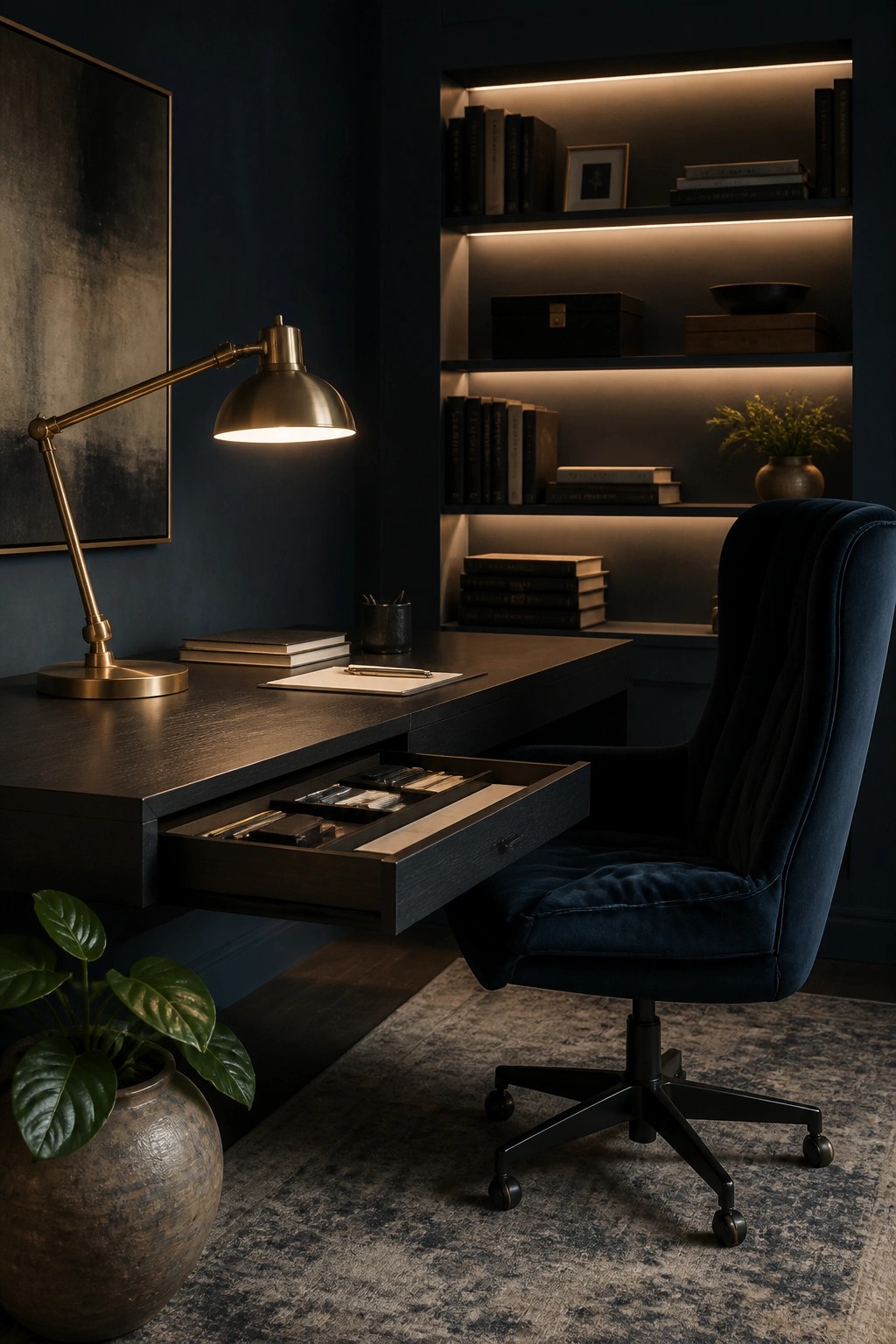
A desk that includes a deep pull-out drawer with built-in compartments makes it easier to keep the main surface clear. You can tuck away pens, notepads, and small supplies without reaching for extra boxes or trays on top.
This style works best in home offices that double as guest rooms or living areas, since everything stays hidden when the drawer is closed. Choose a dark wood finish and a drawer that glides quietly so it feels practical day after day.
Desks With Built-In Hideaway Storage
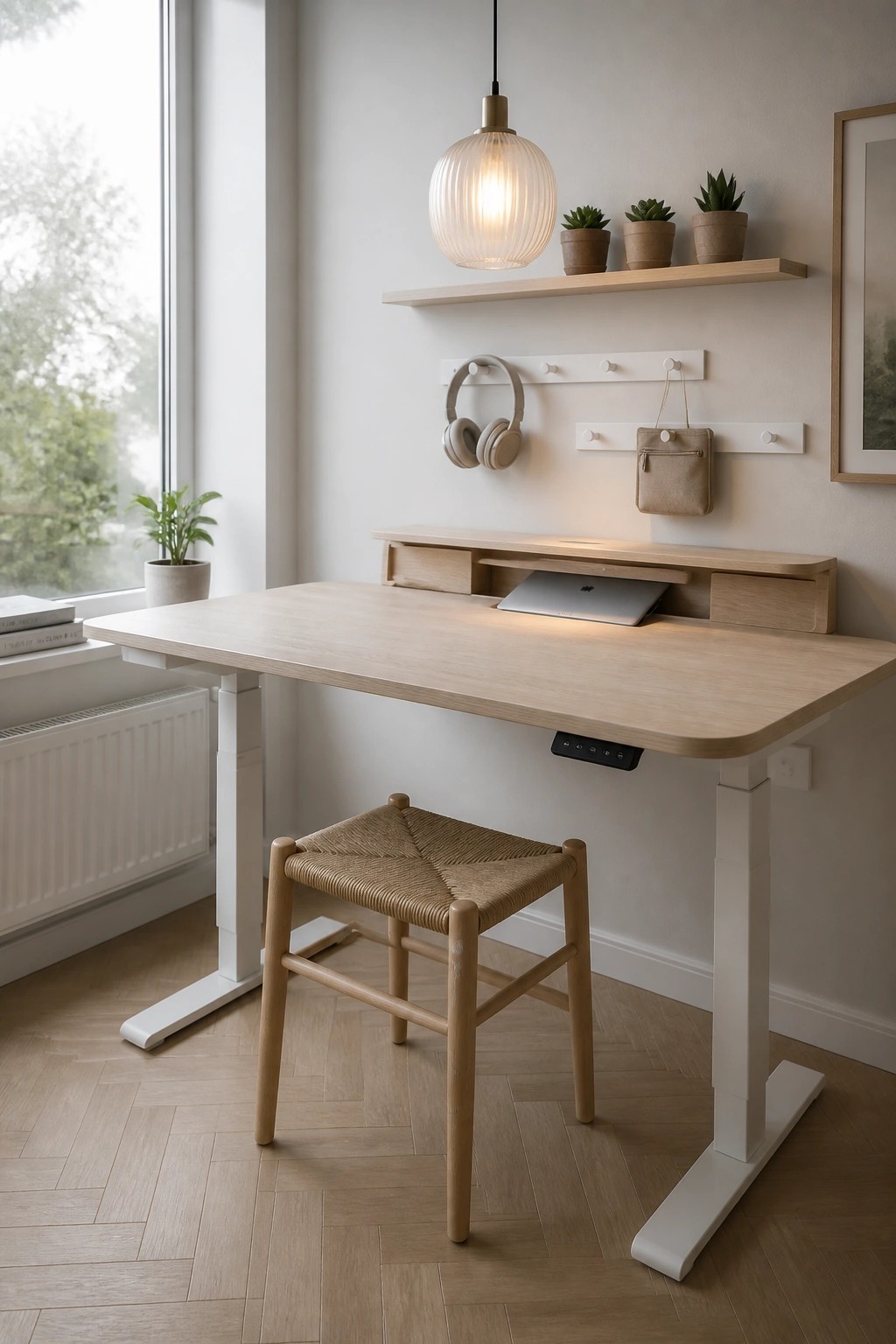
Many desks still leave you with a laptop, charger, and papers spread across the whole surface even after you finish work. A desk with storage built right into the top solves that by giving the laptop a place to slide away without moving everything else around.
This kind of desk works especially well in rooms that double as guest space or dining areas. Look for models where the compartment opens smoothly and the desk height can adjust so the surface stays usable whether you sit or stand.
Drop Down Desks That Hide The Work Area
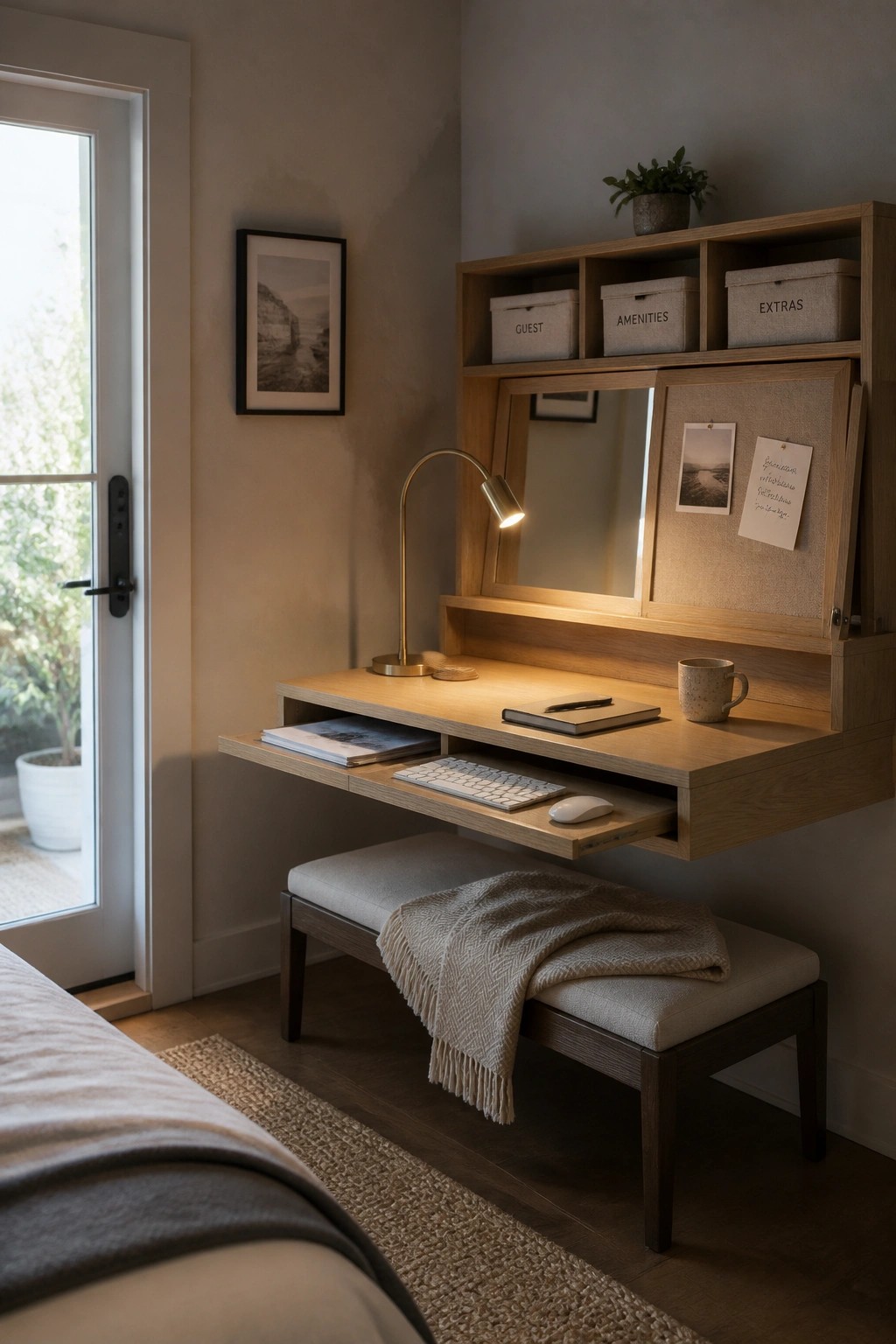
A desk that folds up against the wall gives you a proper workspace without leaving papers and devices out all the time. The closed front keeps the room looking like a regular bedroom or guest space instead of an office.
This works best in smaller homes where one room has to do double duty. Keep the inside stocked with just the basics so opening it takes only a minute and closing it stays simple.
Wall Organizers Keep The Desk Surface Clear

Hanging storage takes the pressure off a desk by moving everyday items up and out of the way. Macrame pockets or similar wall holders can hold mail, notebooks, and small supplies while leaving the actual work surface open for whatever task is at hand.
This setup suits small home offices or tight corners where every inch counts. Pair the wall pockets with a couple of baskets tucked underneath and you gain storage without crowding the room.
Built-In Shelving Keeps The Desk Clear

Built-in shelving above a desk gives you a place for everything that usually ends up piled on the work surface. Books, boxes, and small supplies stay within reach but out of the way, which makes the desk itself feel much more usable day to day.
This approach works well in any home office that has the wall space for cabinetry. Keep only a lamp, a pad, and maybe a mug on the desk itself, and tuck the rest onto the shelves so the surface stays open for actual work.
Under-Desk Baskets Clear The Surface
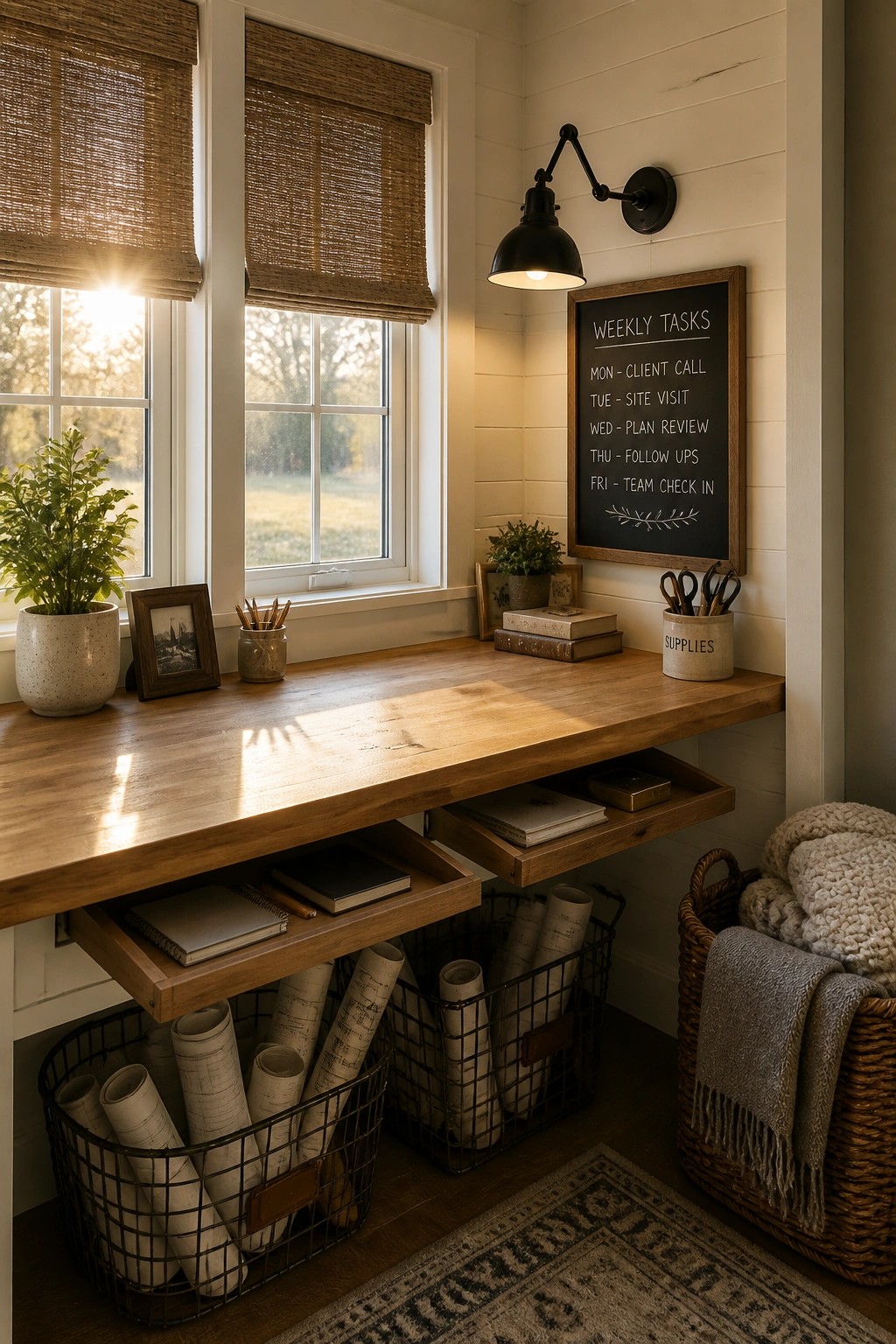
Many home offices end up with papers and plans scattered across the desk because there is nowhere else to put them. Wire baskets tucked below the work surface give those items a dedicated spot that stays out of the way yet remains easy to reach.
This approach works best in smaller rooms or spaces where wall cabinets would feel heavy. It suits anyone who deals with large sheets or rolled documents and wants the desktop left open for daily tasks. Just keep the baskets shallow enough that you can still slide your chair in and out without trouble.
Pegboard Storage Keeps The Work Surface Clear
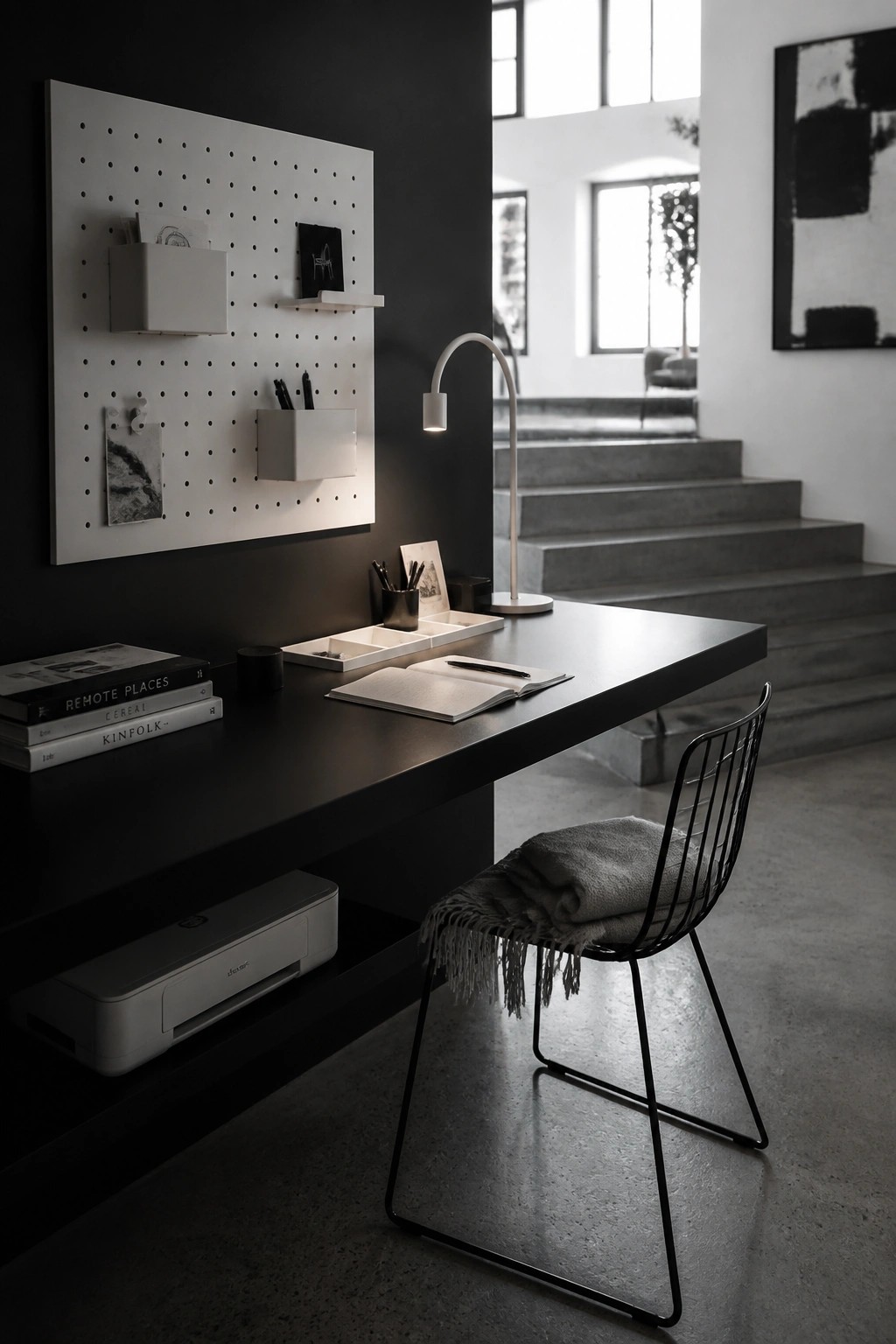
A pegboard above the desk gives you a place to hang or tuck away the things that normally pile up on the surface. Pens, notes, and small supplies stay visible and reachable without taking up room where you actually work.
This idea works well in smaller home offices or any space where the desk needs to stay open for daily tasks. Just make sure the board sits at a comfortable height and that you do not overload it with too many items.
Built-In Drawers Keep The Desktop Clear

A desk that hides its storage along the front edge can stay almost empty on top. Everything has a labeled spot below, so pens, markers, and other small tools do not pile up on the work surface during the day.
This setup works best in a home office that also serves other purposes. Close the drawers when the workday ends and the desk can be used for other tasks without any visible clutter.
Drawers And Shelves That Keep The Desk Clear

Plenty of built-in storage makes it easier to keep a desk surface usable day to day. Instead of piling things on top, the drawers hold supplies and papers while an overhead shelf takes care of boxes and extra items. This setup leaves the actual work area open without much daily tidying.
It works well in smaller rooms where space is tight. A desk with solid drawer storage and one simple shelf above can suit most home offices, as long as the shelf stays within easy reach and is not overloaded.
Built-In Cabinets Beside The Desk
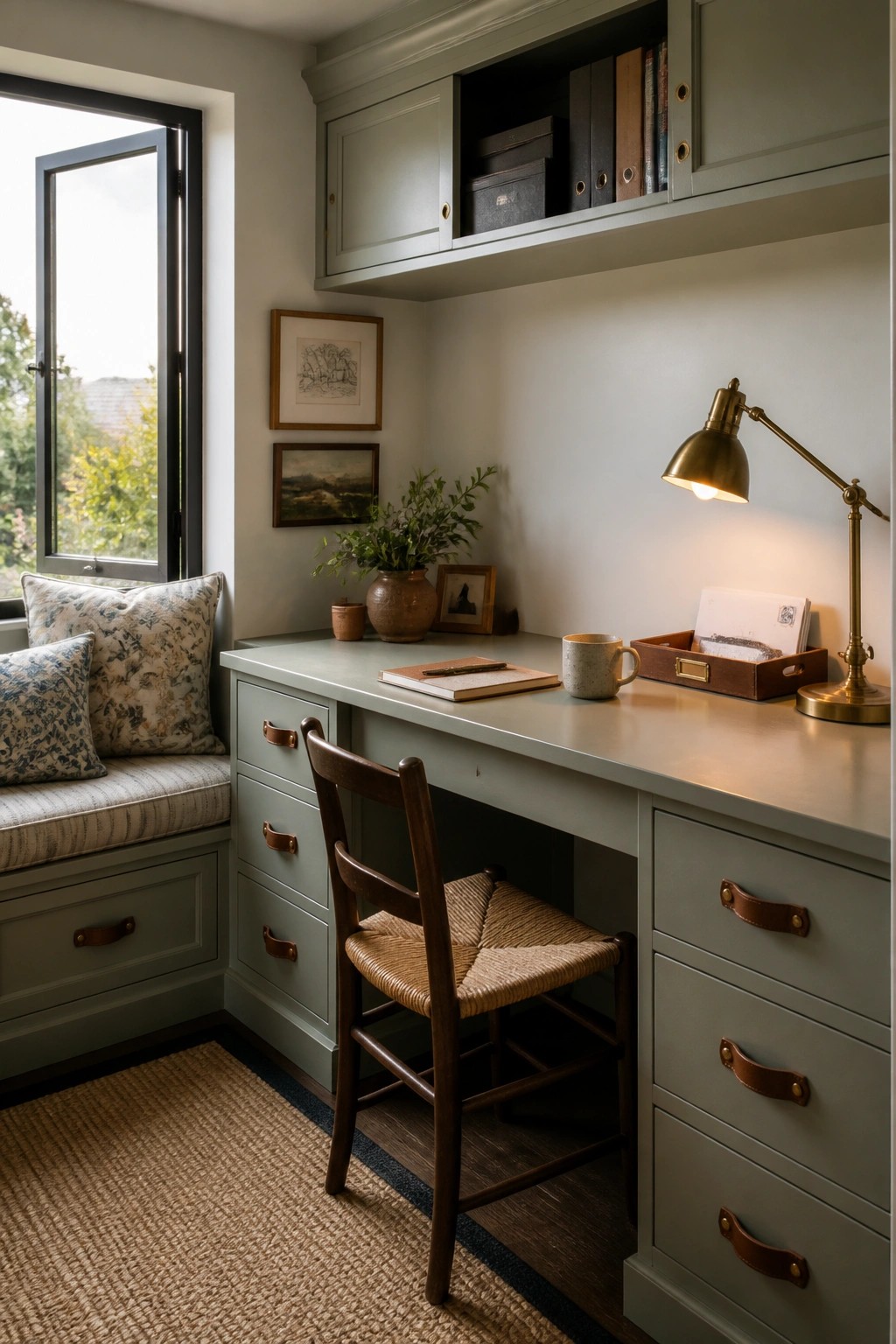
A desk with plenty of built-in drawers and cabinets makes it easier to put things away instead of leaving them out. When storage sits right at the workspace, papers, supplies, and small items can be tucked out of sight quickly.
This approach works best in smaller rooms or alcoves where floor space is tight. It suits homes that already have some built-in millwork or those willing to add simple cabinetry along the walls.
Frequently Asked Questions
Q: Where do I put all the cables from my computer and phone? A: Run them along the back of the desk with a simple cable tray. This keeps the top clear while you still reach everything easily. Check the tray once a month to untangle any knots.
Q: My notes and papers always pile up by the end of the day. A: Keep a slim folder in a drawer right under your main workspace. Drop papers in there as soon as you finish with them. Clear the folder at the end of each week.
Q: I need two screens for work. How do I avoid a crowded desk? A: Mount one screen on an arm that swings out of the way. Leave the other on a low stand so you gain space underneath for a keyboard tray.
