


In an office the conference table often decides whether a meeting room supports easy discussion or creates awkward gaps that people have to work around.
I have rearranged a few workspaces and noticed how the table’s length and width can either pull a group together or leave some voices too far from the center.
Details add up fast.
Thinking about legroom and surface space ahead of time helps avoid the kind of daily friction that shows up once the novelty wears off.
A few shapes seem to handle both small team check-ins and larger presentations without needing extra furniture moved in and out each time.
A Solid Wood Oval Table For The Conference Room

A large oval table made from dark wood gives a conference room real presence without feeling heavy. The shape lets everyone see each other easily during meetings, and the wood adds warmth that metal or glass versions often lack. It works especially well when the rest of the room stays fairly simple.
This kind of table suits medium to large meeting spaces where you want one strong piece to handle both daily team talks and bigger presentations. Keep the surrounding chairs light in number and style so the table stays the main focus. Avoid crowding the surface with too many accessories.
Long Wood Tables For Group Meetings

A long wood table gives everyone at the meeting equal access to the center without feeling cramped. The simple shape and solid surface make it easy to spread out notes, laptops, or samples while still keeping the group connected across the table.
This works best in rooms with enough floor space so chairs can pull back without bumping into walls. Pair it with seating that matches the table length and leave the surrounding area fairly open so the table remains the main working surface.
Modular Tables For Flexible Meetings
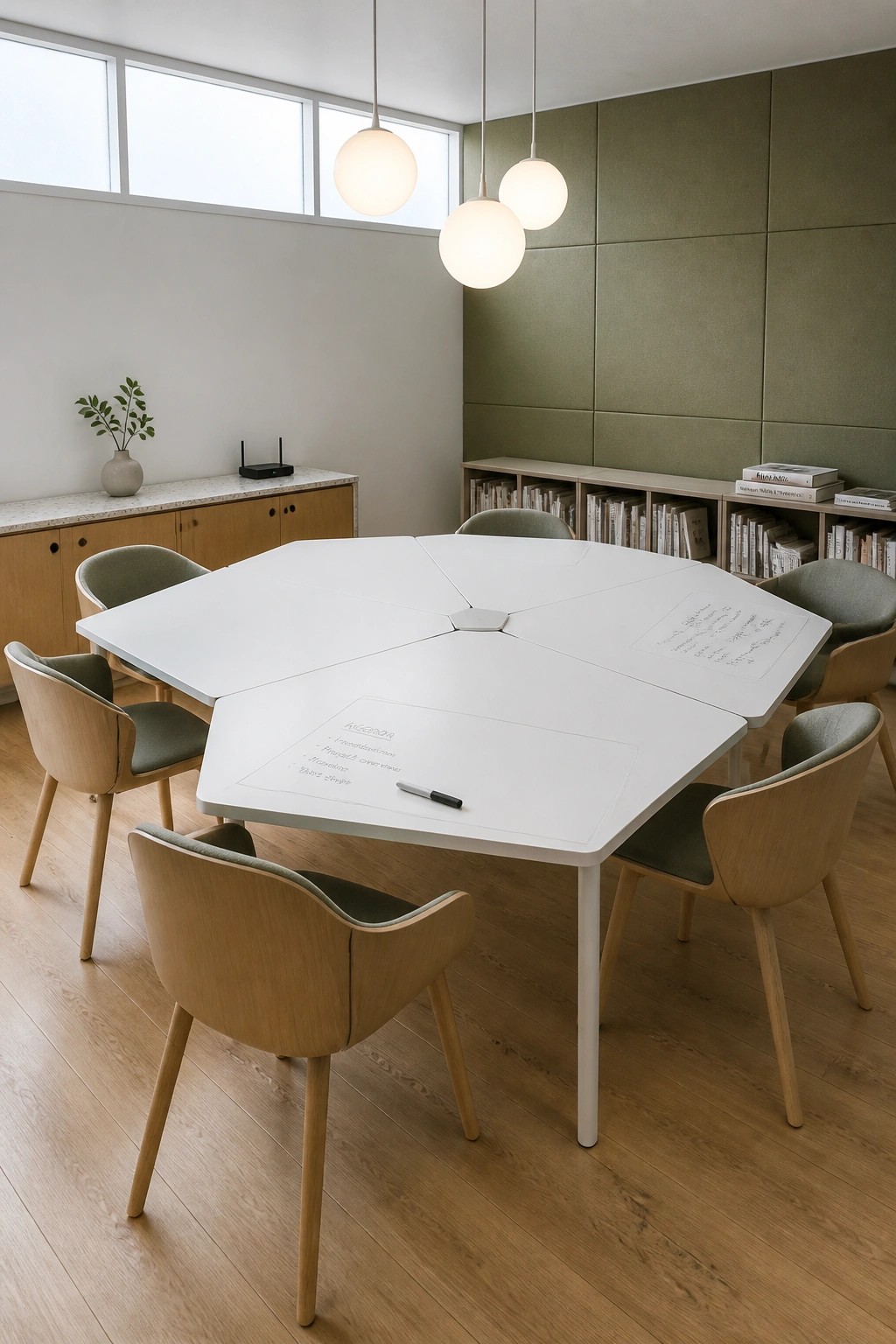
A table made from separate panels that meet in the middle gives teams room to adjust the layout on the spot. This setup works well when meetings shift between large presentations and smaller group work without needing to swap furniture.
It suits offices that host different types of sessions in the same space. Choose a durable surface that can handle markers and laptops, and keep extra sections stored nearby for quick changes.
Marble Tables With Slim Metal Legs

A marble conference table with thin metal legs keeps a meeting room from feeling heavy. The light surface stands out against darker walls and furniture, which helps the whole space feel more open even when the table is long enough to seat a full team.
This setup works best in offices that already have built-in storage or dark paneling. The slim legs leave room for chairs to tuck in easily, and the stone top gives a smooth surface for papers and laptops without needing extra protection.
Conference Tables With Built-In Planters
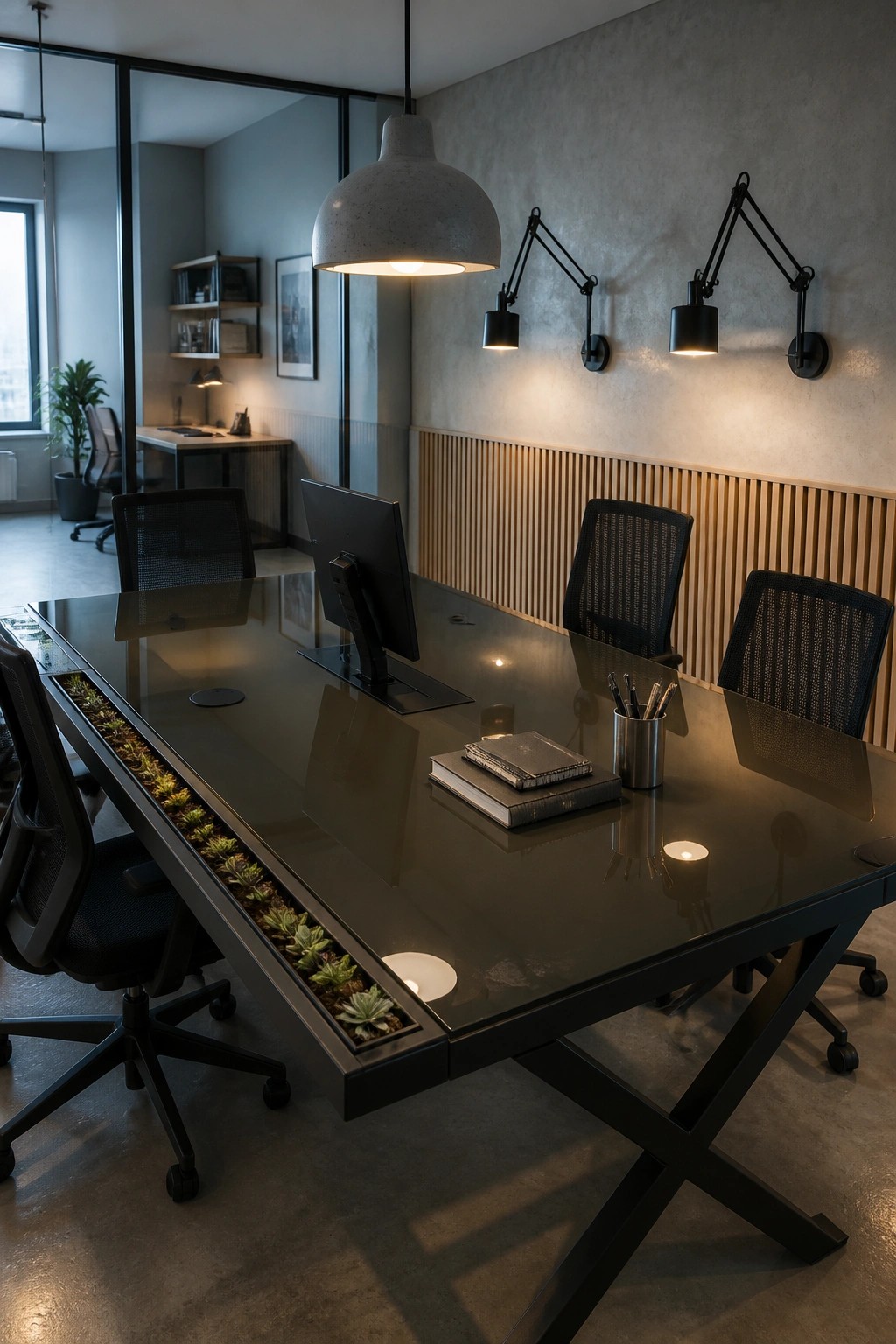
One idea that works well in modern meeting rooms is adding a planter directly into the table itself. It keeps the surface clean while giving the space a touch of living greenery that feels more natural than a separate plant on the floor or a shelf. The low profile means it does not interfere with sight lines or laptop use during long sessions.
This approach suits offices that already use glass or dark finishes and want to avoid a fully hard look. It works best on longer tables where the planter can run along one edge without crowding the seating. Choose low-maintenance plants and make sure there is proper drainage so the table stays in good shape over time.
Light Wood Tables Keep Meetings Practical

A long light wood table brings a calm and useful feel to any meeting room. The natural finish helps the space feel less formal while still giving everyone a clear spot to work.
This style works best in offices that need seating for eight or more people on a regular basis. Keep the rest of the room simple so the table stays the main focus during presentations.
Conference Tables With Built-In Writing Surfaces

Many offices now use tables that include writable panels set right into the top. This lets teams sketch ideas and keep notes visible during meetings without pulling out extra boards or pads.
It suits smaller creative groups that need to work through plans quickly. Choose durable surfaces that match the room size and stand up to regular use.
Round Tables With A Built-In Center Planter

A round table with a plant set directly in the middle helps meetings feel more open. Everyone sits at the same distance from each other, and the greenery breaks up the hard surface without taking up extra floor space.
This works best in smaller conference rooms where teams meet often. Keep the plant low maintenance and make sure the table still has enough flat area around the edges for laptops and notes.
Concrete Conference Tables

A thick concrete conference table gives the room a steady, no-nonsense feel that works well for long meetings. The solid surface stays put, resists scratches, and keeps the focus on the work rather than on fussy details.
This choice suits offices that already lean industrial or minimalist. Pair it with simple leather chairs and a few pendant lights overhead. Skip it in smaller rooms where the weight and scale can feel heavy.
Built-In Planters For Long Conference Tables

A long planter set right into the middle of the table keeps the surface clear while adding a strip of greenery. It works well in rooms that stay in use for hours, since the plants stay out of the way but still soften the space.
This setup suits offices that want a simple natural element without extra furniture or shelves. Choose sturdy, low-care plants and a narrow trough so the table still feels open for spreading out papers or laptops during presentations.
Oval Tables for Smoother Meetings

An oval conference table gives meetings a more natural flow. Everyone can see each other and the screen without anyone stuck at a sharp corner, which helps when the group needs to talk through ideas or review a presentation together.
This shape works best in rooms that double as both meeting and presentation spaces. It keeps the layout flexible, especially when you add a few upholstered chairs so people stay comfortable during longer sessions.
Long Shared Tables For Team Work
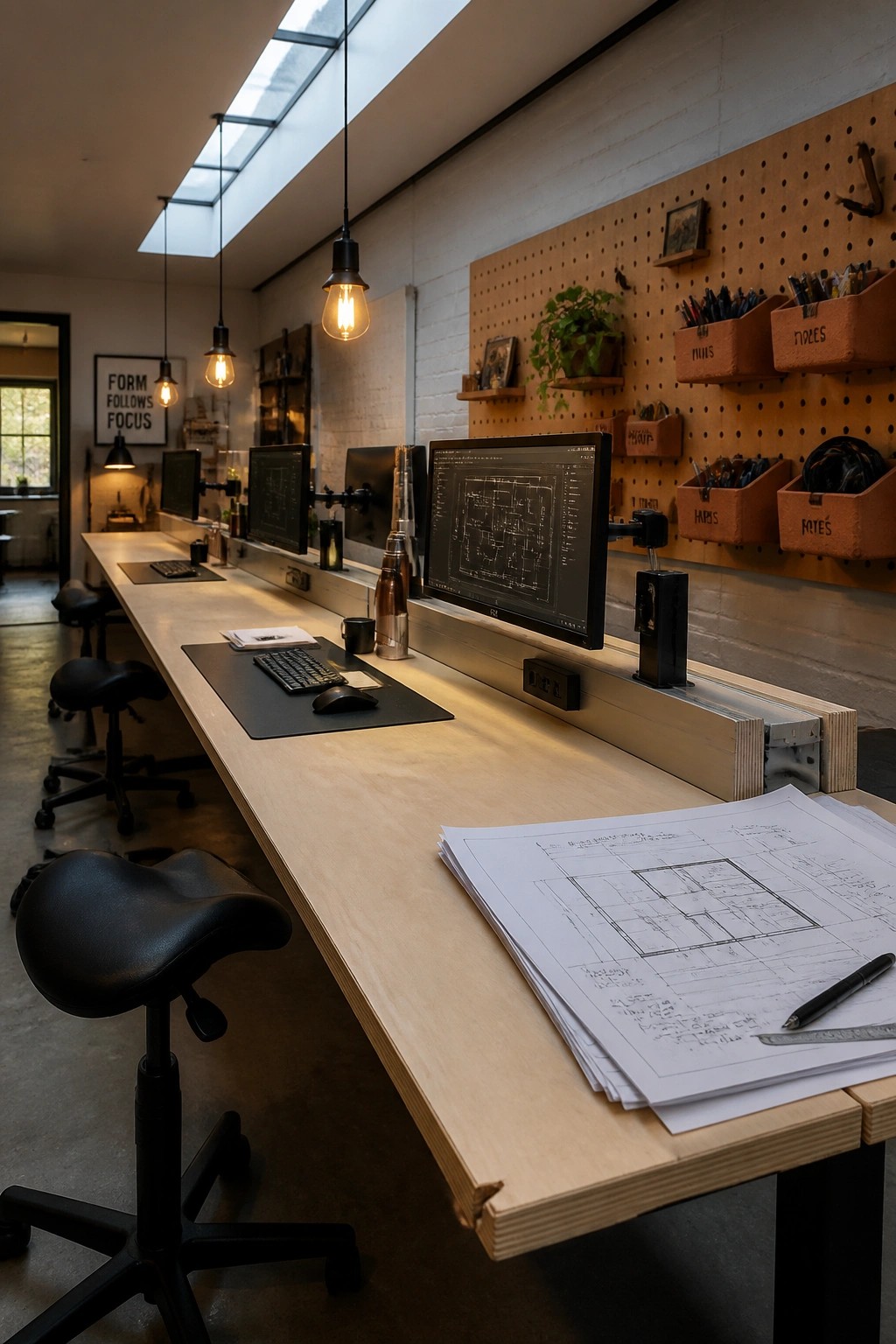
A long continuous table gives a team room to spread out both screens and paper without anyone feeling boxed in. The light wood surface stays simple and functional while letting people sit side by side during reviews or planning sessions.
This works best in studios or smaller offices where daily collaboration matters more than formal meeting setups. Leave enough clear space along the length so drawings and laptops can move around easily as the group shifts focus.
Built-In Planters For Conference Tables
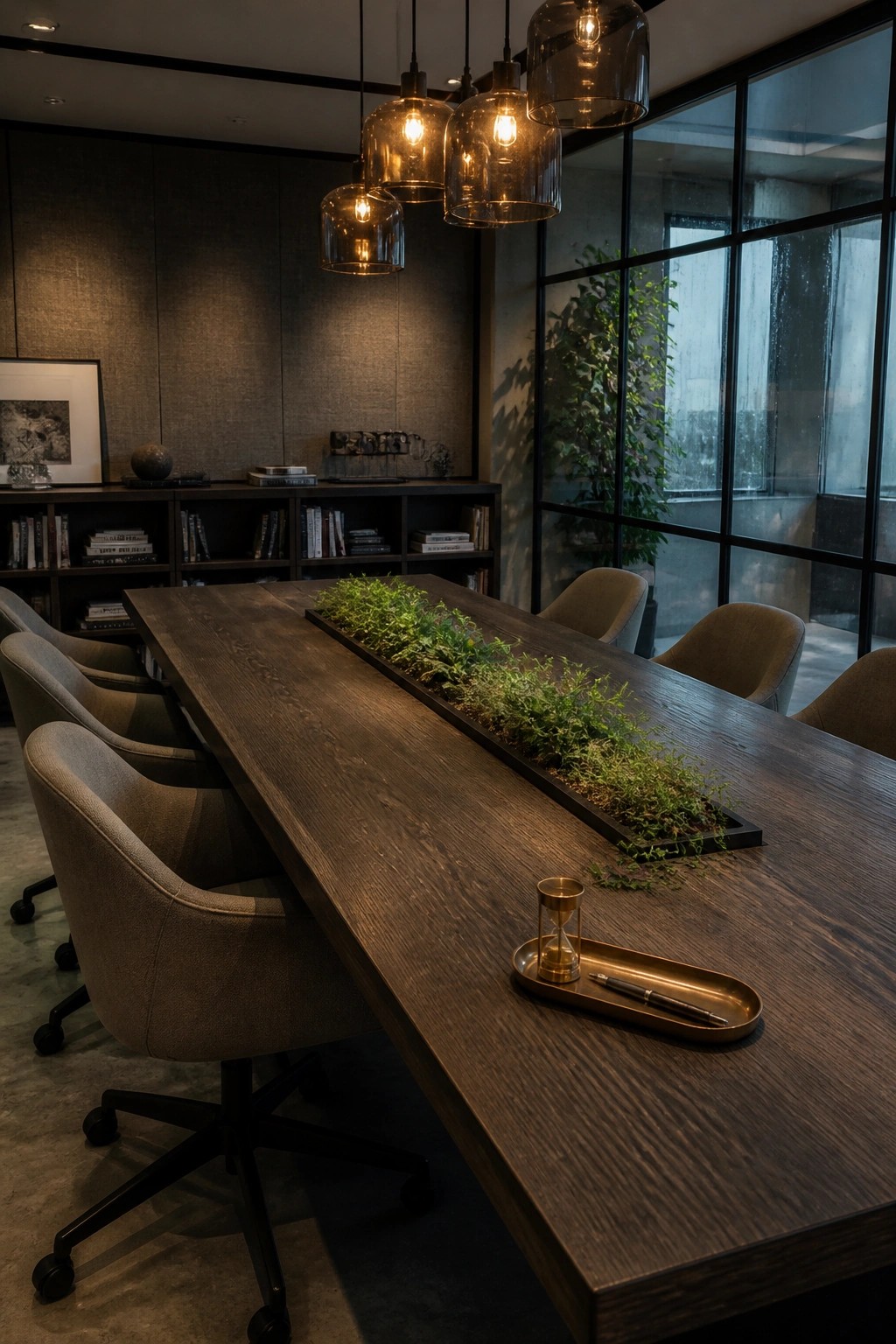
A long table with a narrow planter running right down the middle gives a meeting room a bit of life without adding extra furniture. The greenery stays contained, so it does not crowd the surface or get in the way during presentations. It also softens the look of a big wood slab while keeping the space feeling open.
This works best in rooms that already have decent natural light and a simple color scheme. Choose low plants that do not need much water or trimming, and keep the planter narrow enough that people can still reach across the table easily. Dark wood and neutral chairs help the plants stand out without making the room feel busy.
Tables With Under-Edge Lighting

Many conference tables now include lighting built into the underside of the top. The glow outlines the table and gives the room a clean, modern feel without extra lamps or bright overhead lights that can distract during meetings.
This approach works best in smaller or medium-sized rooms where you want the table to feel like the main feature. Keep the light on a dimmer so it stays soft, and pair it with simple seating so the glow remains the focus rather than competing with other details.
Long Tables With Bar Stools For Casual Team Meetings

A long table with bar stools gives teams room to move around during meetings without feeling stuck in fixed chairs. The higher seating makes it simple to stand up for a quick presentation or lean in when ideas start flowing.
This setup works well in creative offices or open workspaces where meetings shift between sitting and standing. Keep the surface mostly clear and add a few dividers if you need to separate zones along the length.
Terrazzo Tops for Conference Tables

A terrazzo table gives a conference room a durable surface that holds up to daily use without looking worn. The material stays practical while adding a bit of texture that feels more interesting than plain wood or laminate.
This works best in offices with good natural light where the speckled surface can catch some sun. Keep the rest of the room simple so the table stays the main feature.
Long Tables With Benches For Group Meetings

A long table with benches on both sides keeps the focus on the work instead of the furniture. It opens up floor space and lets people move around easily when ideas start flying.
This setup fits best in offices that run frequent team sessions or quick presentations. Add a simple rug underneath to soften the room and reduce noise during longer meetings.
Long Dark Wood Tables For Meetings

A long dark wood table creates a straightforward workspace that feels substantial without trying too hard. It gives everyone room to spread out materials while keeping the focus on the center of the table during presentations.
This works best in offices that hold regular team meetings and need a durable surface that still looks clean. Pair it with simple seating and minimal wall details so the table does not compete with anything else in the room.
A Long Wood Table for Team Meetings

A long wood table gives everyone plenty of surface space to spread out notes and materials during meetings. The natural grain and weight of the wood keep the room from feeling too cold or corporate even when the walls are dark and the lighting is industrial.
This setup works best in offices that need both a polished look and a place where people can actually work comfortably. Make sure the table is wide enough for chairs on both sides and add a few different seating options so the room can shift between formal presentations and casual discussions.
Curved Tables Improve Meeting Flow
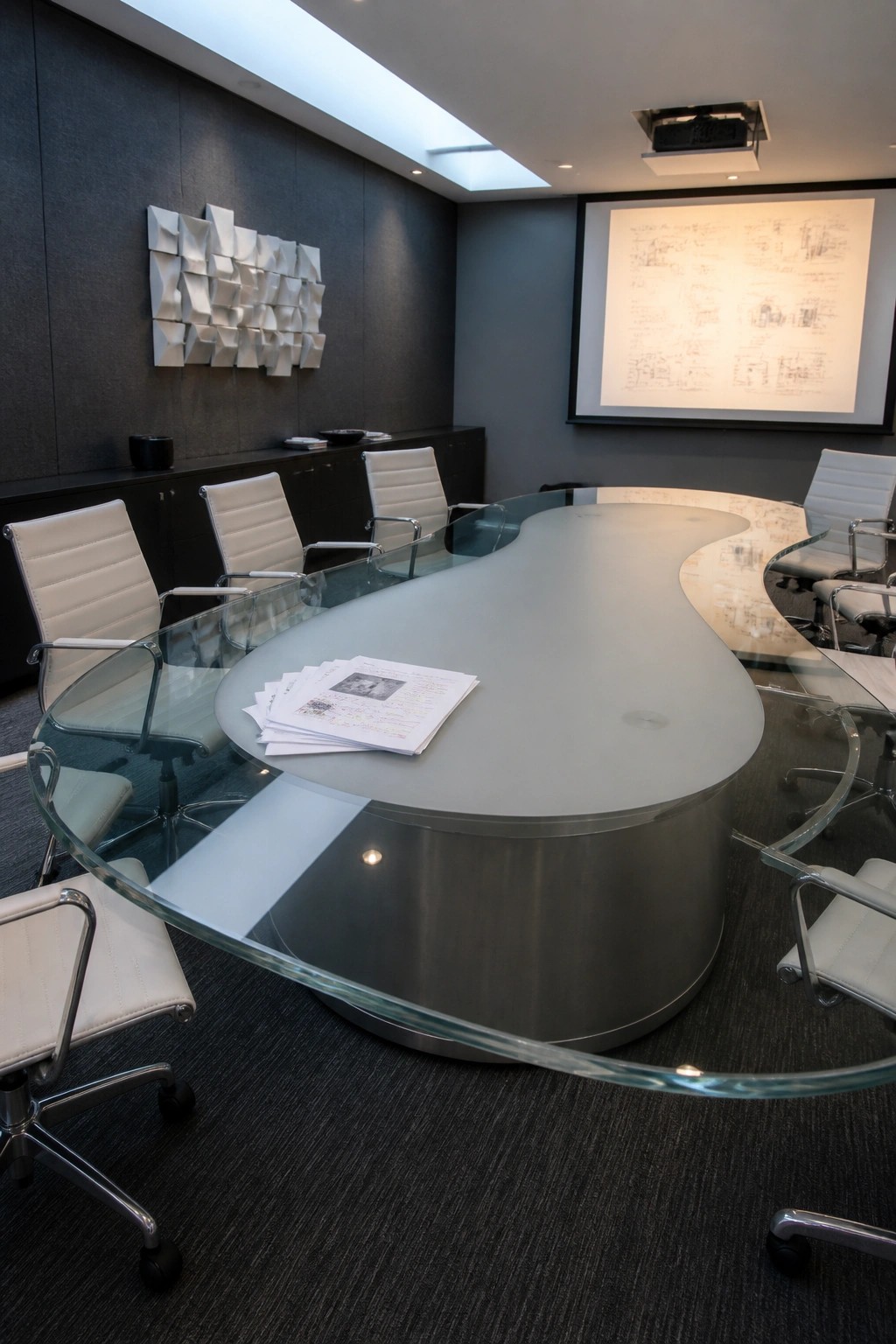
A curved conference table changes how people interact in a meeting room. The shape lets everyone face the center without long stretches of table getting in the way, which helps with both discussion and presentations.
This layout works well in offices that hold regular team meetings and need a table that does not feel too formal or rigid. It suits medium-sized rooms where you want clear sight lines to a screen or whiteboard without forcing everyone into a straight line.
Frequently Asked Questions
Q: How big should my conference table be for a team of eight without taking over the whole room?
A: Pick a table around eight feet long for eight people. This leaves room for chairs and a bit of walking space on each side. Test the layout with tape on the floor first.
Q: What if my team needs to connect multiple devices at once during a presentation?
A: Add a power hub right in the center of the table. This keeps everyone from stretching cords across. Hide the hub under a small cover for a clean look.
Q: Is a long rectangular table better than round for team presentations?
A: Go rectangular when one person leads the meeting at the head. Everyone faces the same direction for slides. Round tables work better for equal discussions instead.
