


I have noticed that the desk often decides whether a home office feels workable or just becomes another spot where clutter gathers after the first week.
Clean surfaces tend to stay that way when the table itself offers places to tuck things out of sight instead of leaving everything in view.
Legroom changes everything.
I keep coming back to tables that let me slide a chair in fully and still reach what I need without rearranging the whole room.
Those small layout details usually matter more than the style of the surface when the day stretches into evening work.
Wood Desk With Leather Desk Pad

A plain wood desk paired with a leather pad gives you a clean surface that stays practical without looking too bare. The pad protects the wood and creates one defined work area, which helps keep daily items from spreading out.
This works well in home offices where space is limited or where you want fewer distractions. Stick to just a few tools on the pad so the desk stays easy to clear at the end of the day.
Use A Monitor Arm To Keep The Desk Clear
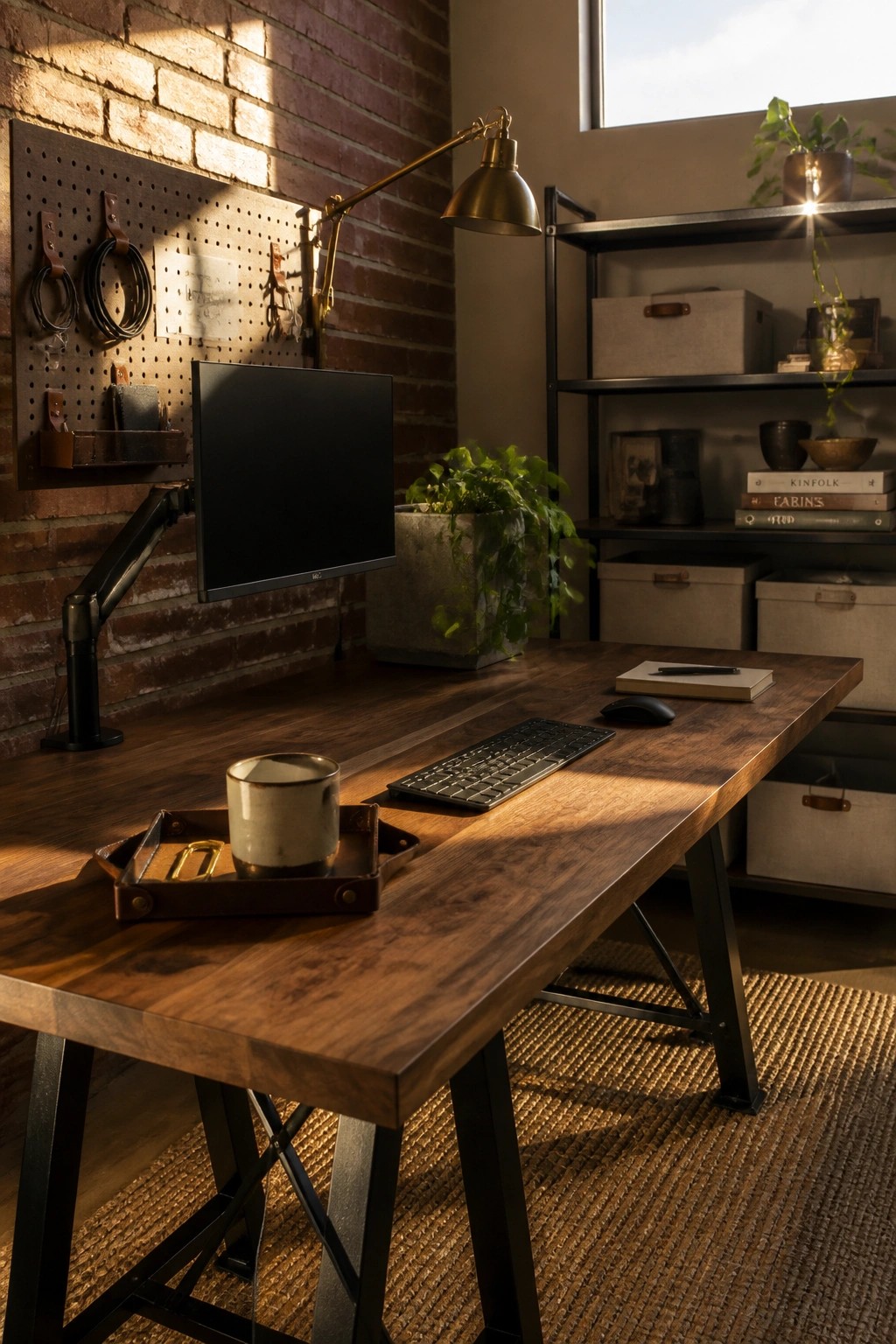
A monitor arm makes a big difference when you want a desk that stays usable day after day. It lifts the screen off the surface so the table itself can stay open for a keyboard, a notebook, and little else. The rest of the space stays free instead of crowded with a stand that takes up room.
This setup works best in smaller home offices or anywhere you need the desk for both screen work and occasional paperwork. It keeps the surface practical without forcing you to rearrange things every time you sit down. Just make sure the arm is sturdy enough for your monitor size before you install it.
Use a Tray for Daily Desk Items
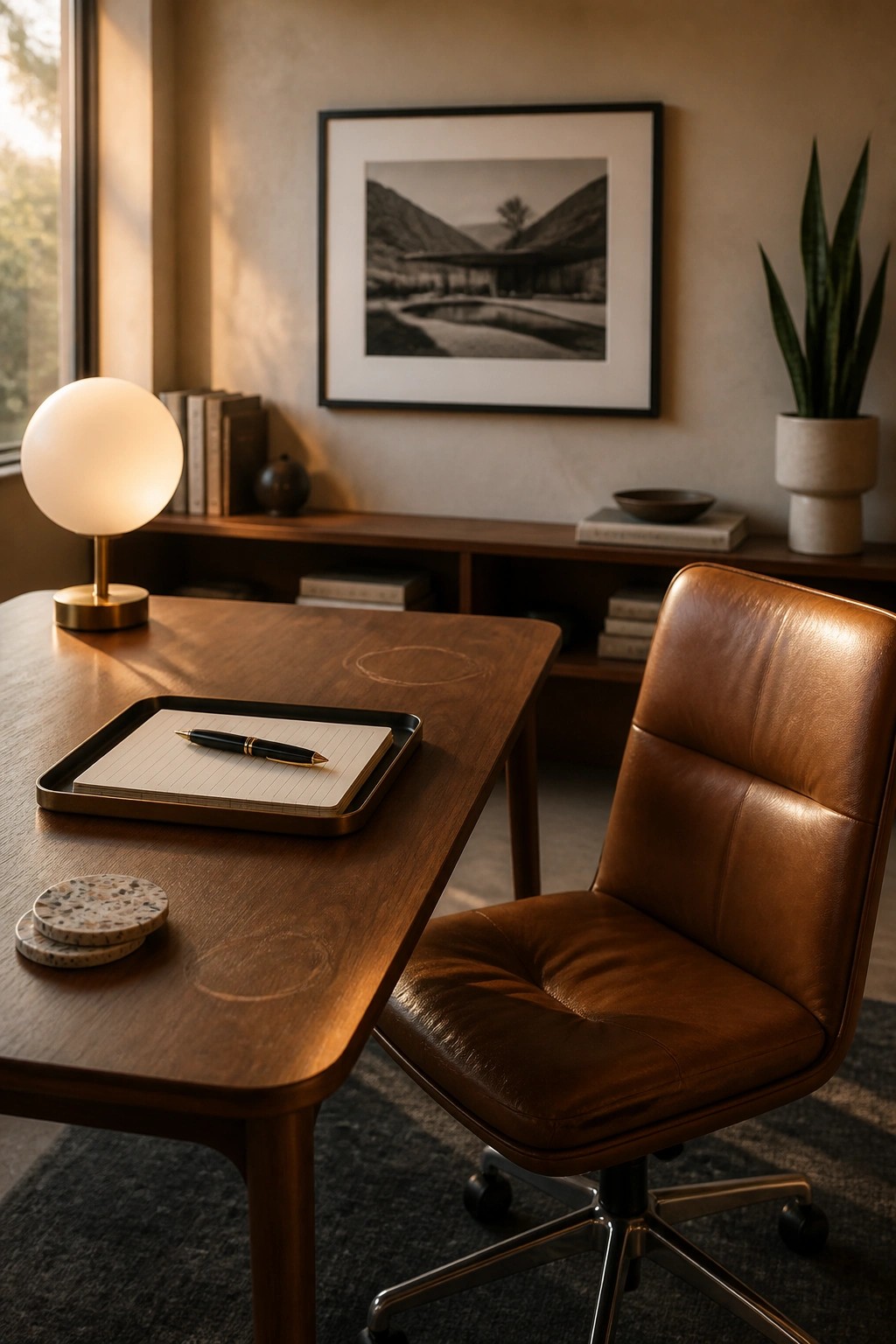
A tray gives you one spot to keep the things you reach for every day without letting them spread across the whole surface. It works well when you want the desk to stay mostly clear but still need a notebook, pen, or a few small tools within reach.
Place the tray on one side of the desk and keep it to just two or three items. This setup works best in home offices that already use wood and simple materials, since the tray adds order without adding clutter.
Live Edge Desks For Clean Daily Use

A live edge wood desk brings a natural surface into the office without making the space feel busy. The solid top gives plenty of room to spread out when needed, yet it stays looking tidy with just a few items in place.
This works well in home offices that need to double as quiet work zones. Keep accessories minimal, use a low monitor stand to free up space, and add a couple of plants along the back edge so the desk stays practical for everyday tasks.
Adding A Corkboard Above The Desk
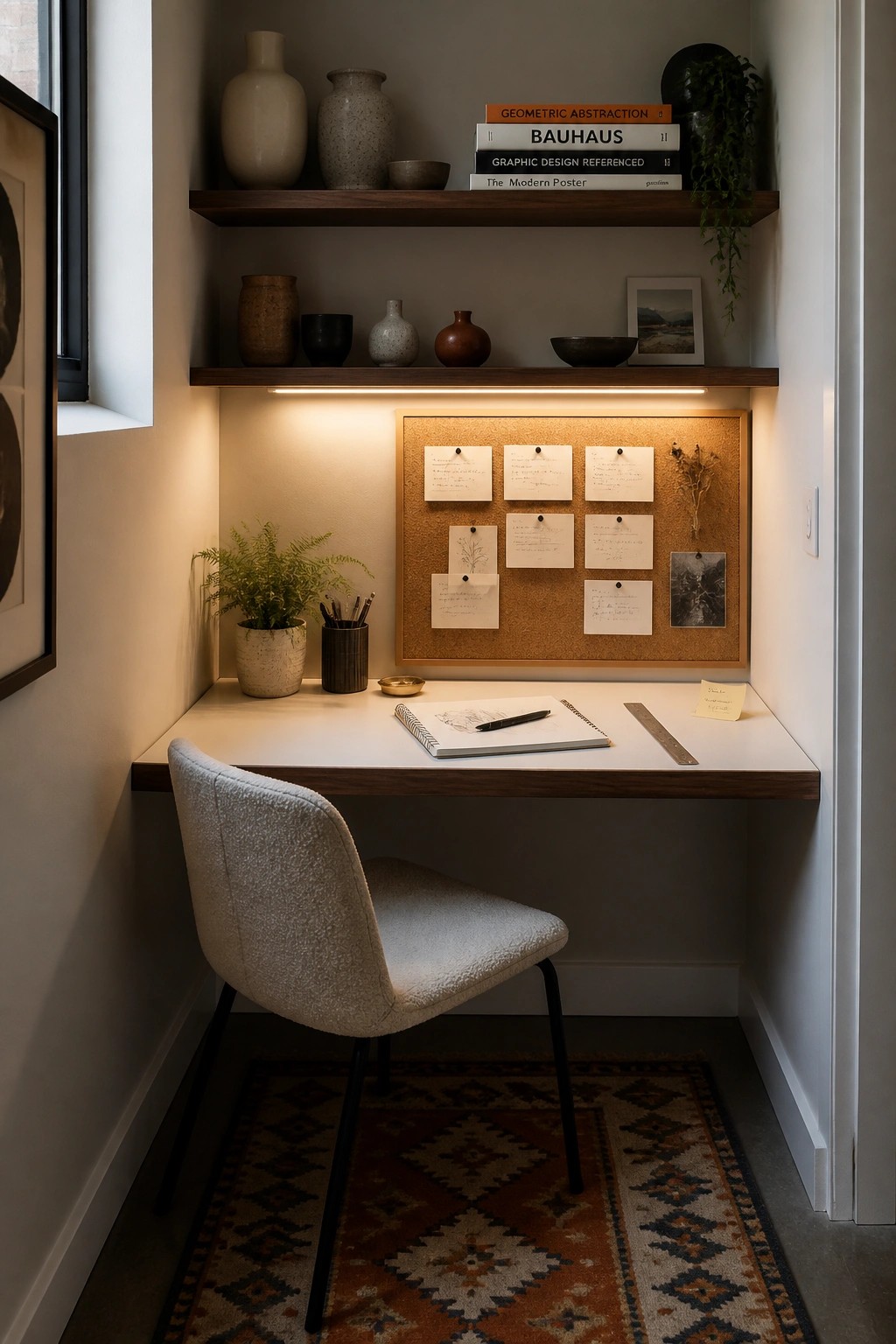
A corkboard mounted right over the desk gives you a place to pin notes, sketches, and reminders without letting them pile up on the work surface. It keeps the desk itself clear for actual tasks and makes the whole setup feel more organized in a small space.
This works best in narrow nooks or corners where wall space is easy to reach from your chair. Keep the board at seated eye level and limit what you pin so it stays useful instead of turning into another layer of clutter.
Built-In Desks With Integrated Storage

Built-in desks make sense when you want the work surface to blend right into the rest of the room. The cabinets and shelves around the desk keep supplies and papers out of sight, so the top stays clear for daily use.
This approach works best in smaller rooms or homes without a separate office. It gives you storage at arm’s reach without adding extra furniture that can crowd the space. Keep the desk surface mostly empty and use the built-ins for everything else.
Mount Equipment Under The Desk

A clean desk surface makes it easier to stay focused and move through the day without distraction. Mounting the computer tower and other larger pieces below the desk keeps the top clear while still keeping everything within reach.
This setup works best in smaller home offices where floor space is limited. It also helps with cable management and leaves the desk free for only the items used most often.
Multi-User Desk Setups With Individual Monitor Positioning
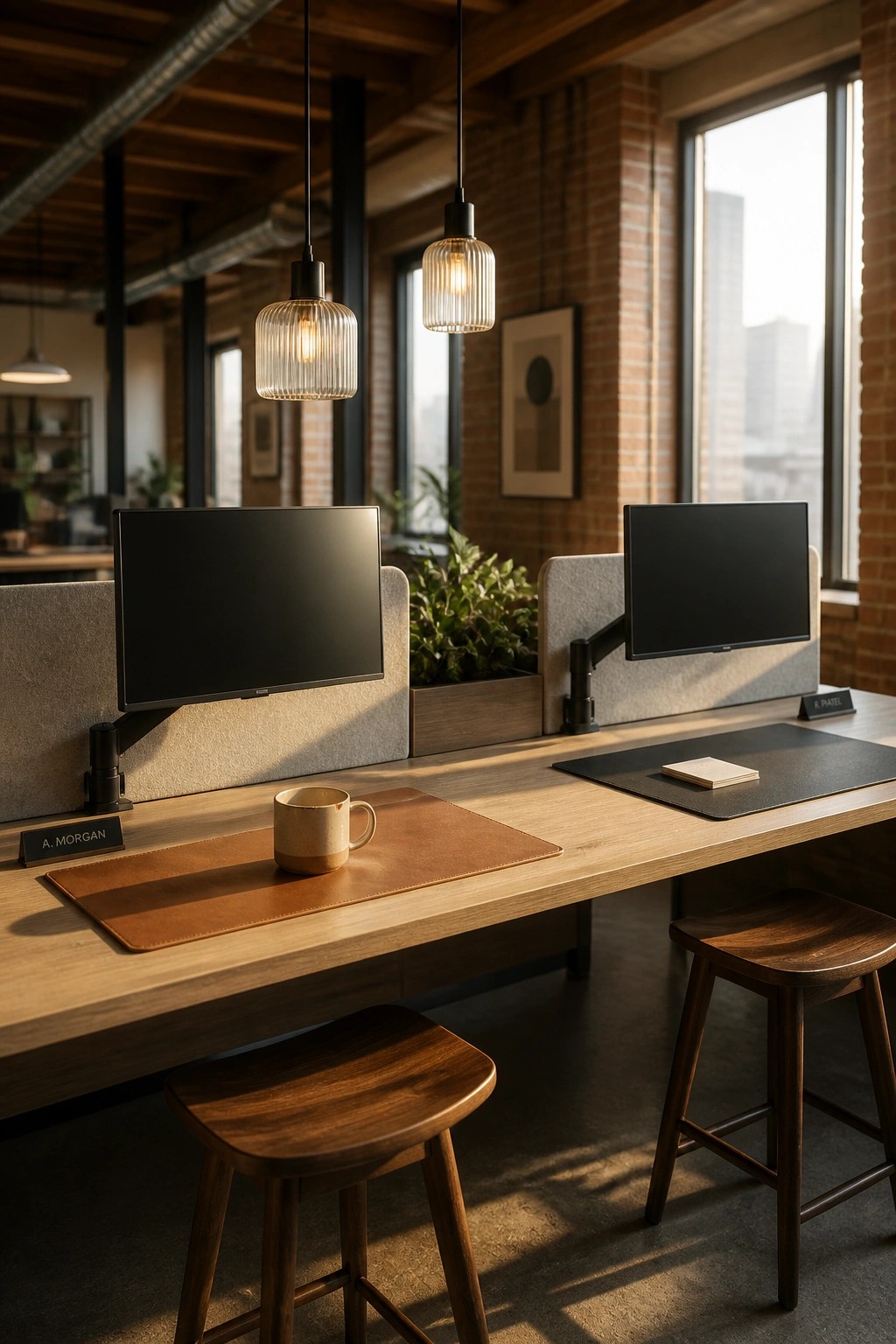
Mounting screens on adjustable arms keeps the main surface free for actual work instead of hardware. In a shared table setup like this, the arms let each person angle their monitor without crowding the wood top or fighting for space with pads and cups. It feels simpler day to day and makes the whole row look less cluttered.
This approach works best in home offices or small team spaces where one long table serves more than one person. Check the arm reach against your seating height so the screens land at a comfortable level without blocking light or views.
Marble Tops Support Cleaner Desk Habits

A wide marble desk surface gives you room to spread out without the clutter building up fast. The smooth, light material shows every item clearly, so it becomes easier to keep only what you need for the day and put the rest away. This setup works especially well when you want the desk to feel calm rather than busy.
Place the desk against a simple wall and limit accessories to a lamp, a vase, and one or two work tools. Dark storage below the marble helps hide papers and chargers, which keeps the top clear for actual work. This approach suits smaller home offices where you need both function and a sense of order.
Pegboard Walls For Keeping A Desk Clear
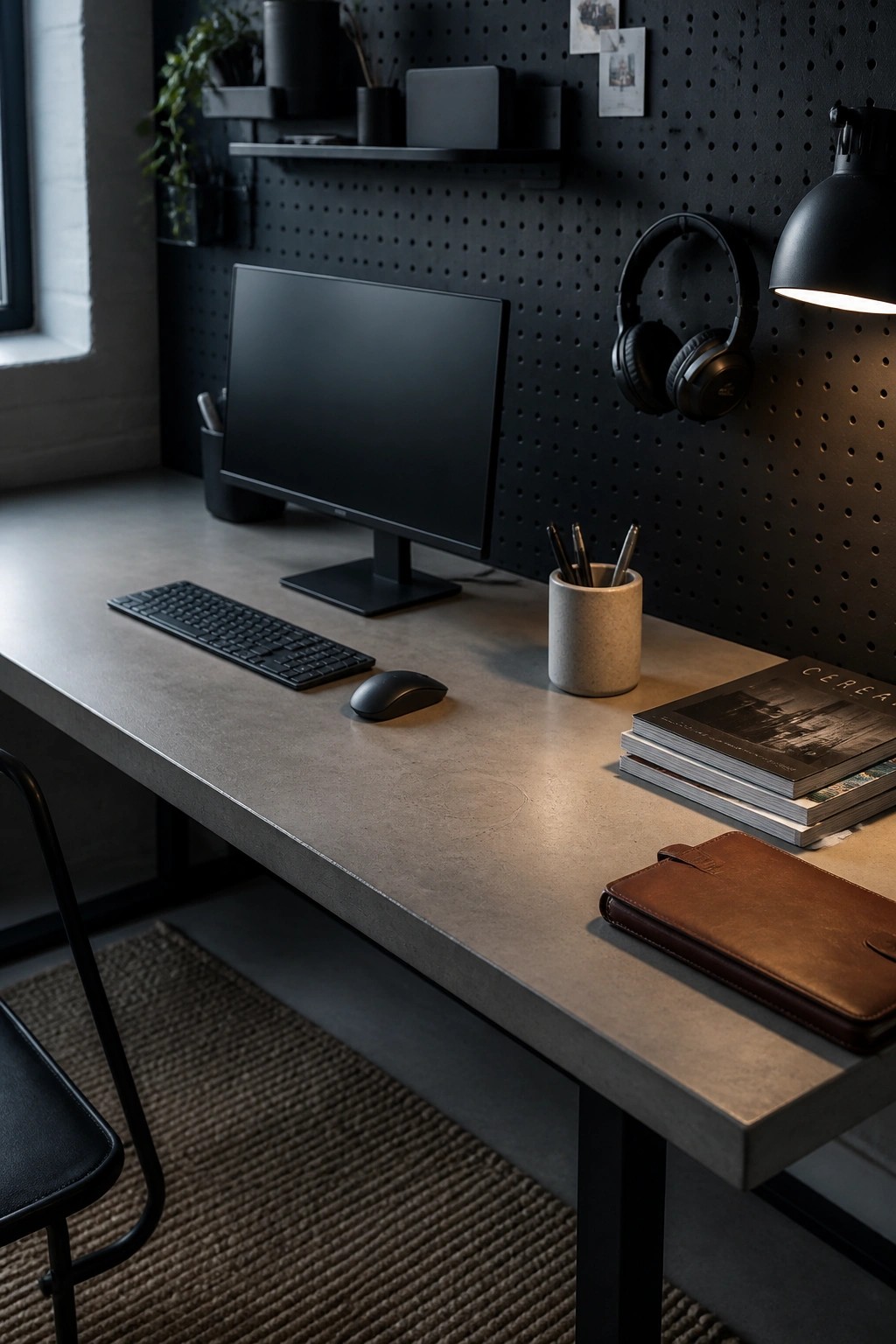
A pegboard wall behind the desk gives you a simple way to store the things you reach for often. Headphones, pens, and small tools stay visible and within reach without taking up surface space, which helps the desk stay open for actual work.
This setup works best in smaller rooms or any office where you want fewer distractions on the table itself. Mount the pegboard at a comfortable height and only hang what you use every day so the rest of the wall stays open.
Floating Desks For Cleaner Workspaces

A floating desk mounted to the wall leaves the floor open underneath. This setup reduces visual clutter and makes the room feel more open, which helps during long workdays when you want the space to stay simple and easy to move around.
It works best in smaller rooms or modern homes where you need every bit of floor space. Stick to a few desk items only so the surface stays practical for daily use without extra pieces getting in the way.
Thick Wood Desks for Steady Daily Work

A thick wood desk gives an office a calm base that holds up to daily use. The natural surface feels steady under papers and devices, and it does not need much else to look finished.
This style works best in smaller home offices where you want the focus on the work itself. Keep the top mostly clear and add only a few practical pieces so the space stays easy to use every day.
Built-In Window Desks

A built-in desk under the windows turns natural light into the main feature of a workspace. It keeps the surface bright during the day and helps the room feel larger because the desk blends into the wall rather than sitting as a separate piece of furniture.
This approach works best in smaller offices or quiet corners where you want steady light without adding lamps. Stick to a simple color on the desk and limit what stays on top so the setup stays easy to keep clear.
Minimal Desk Surfaces For Better Focus

A mostly empty desk helps keep the mind clear during long work hours. The plain white surface and limited items make the space feel open and easy to use without visual clutter getting in the way.
This approach suits small home offices or any room where the desk needs to stay practical rather than decorative. Keep only the monitor, lamp, and one or two tools within reach, and put everything else in a drawer.
Curved Desks For Easier Daily Use

A curved desk softens the look of a workspace and makes movement around the surface feel more natural. The rounded edge gives you extra room to spread out papers or a laptop without the hard corners that can crowd a smaller room.
This shape works best in home offices that need to stay calm and open. Keep the top mostly clear and choose a simple chair so the desk itself becomes the main feature without adding extra bulk.
Built-In Shelving That Keeps The Desk Clear

Built-in shelves above and around a desk give you storage without adding extra furniture. This approach keeps the work surface open while still holding everything you reach for often.
It suits smaller rooms or home offices where space is tight. Place files and supplies in labeled bins on the lower shelves so you can grab what you need without leaving the chair.
Tuck Cables Under The Desk

A clean desk surface helps most people stay focused during long work hours. Running cables through an under-desk tray keeps the top clear and stops the usual tangle that builds up around monitors and chargers.
This setup works best in smaller home offices where every inch counts. Mount the tray along the back edge and route power and data lines through it so only the keyboard and mouse stay on the desk itself.
Tilted Desk Surfaces For Easier Daily Work

A desk with a tilted top can make long hours at the office feel less tiring. The angled surface keeps drawings and papers right in front of you without forcing you to hunch over, which helps with both comfort and keeping the workspace clear.
This setup suits anyone who sketches, plans, or reviews documents often. Pair it with a simple stool and one good task light so the rest of the desk stays open for whatever you need that day.
Frequently Asked Questions
Q: How do I deal with charging cables on a slim modern table without creating a tangle on top?
A: Run them through any built-in grommets or channels along the back edge. Tuck a slim power strip underneath the surface so only one cord reaches the wall. This keeps the desktop free for actual work instead of cords.
Q: My space is tight. Which table ideas still let me spread out papers during a busy day?
A: Go for a rectangular top at least 48 inches wide with minimal legs in the way. Push it against the wall to free up floor space on one side. You can then slide a single folder or laptop aside quickly when you need room to sketch or sort.
Q: Do I need special storage on the table itself to stay organized?
A: Skip drawers built into the desk if they just fill up with junk. Use one small tray or holder for the few items you touch every hour. Everything else stays in a separate cabinet so the surface stays clear for your current task.
